1. Introduction
Alphaviruses are arthropod borne viruses (arboviruses) predominantly vectored between vertebrates by mosquitoes that are split into two main groups based on the disease they cause. The first group is the arthritogenic viruses, such as the Sindbis virus (SINV) and the chikungunya virus (CHIKV) that cause debilitating but non-life-threatening polyarthritis. The second group is the encephalitogenic viruses, such as the Venezuelan and the Eastern equine encephalitis virus (VEEV and EEEV, respectively) that can cause fatal encephalitis. There are currently no effective vaccines for alphaviruses and outbreaks, particularly of CHIKV, occur regularly around the world. Therefore, in order to develop effective transmission intervention strategies, it is important to improve our understanding of alphavirus replication and interaction with both vertebrate and insect hosts.
SINV is a member of the Togaviridae family and is the type species of the Alphavirus genus. SINV is an enveloped, single-stranded, positive-sense RNA virus with a genome of 11.7 kb. In vertebrate cells, SINV causes an acute, cytolytic infection, whereas in arthropod cells the infection is persistent and non-cytolytic. The enzootic alphavirus transmission cycle consists of a series of stepwise events that alternate between the hematophagous mosquito vector and the vertebrate host. For vertebrate infection, an arbovirus-infected mosquito vector bites a naïve vertebrate while blood feeding. The introduction of virus into the vertebrate host is accompanied by mosquito saliva which contains various proteins with angiogenic, antihemostatic, anti-inflammatory, and immunomodulatory properties, some of which may play a role in facilitating viral transmission [
1,
2,
3]. In the preliminary stages of infection in a vertebrate, the virus encounters multiple cell types, including epithelial cells, dendritic cells (DCs), and various immune cells. While the initial site of infection is not clearly defined for each alphavirus, there is evidence of CHIKV infecting dermal fibroblasts initially while for VEEV it appears to be dermal DCs, Langerhans cells, or keratinocytes [
4,
5,
6,
7]. Regardless of the site of initial infection, the infection and subsequent replication in dermal immune cells appears to be an important early step for most arboviruses in establishment and dissemination of infection [
4,
6,
7,
8]. Once the virus establishes infection in these dermal immune cells, dissemination is achieved through viral release in the blood stream, as well as drainage of infected plasmacytoid DCs to the lymph nodes which grants access to the entirety of the vertebrate host, where the virus goes on to infect various tissues, muscles, and organs [
4,
6,
7,
9]. For arthritogenic viruses, cells in the joints are infected, and disease manifests through active replication of the virus in the area driving the expression of proinflammatory chemokines and cytokines leaving the joint in a constant state of inflammation [
4,
10,
11,
12].
The viral transmission cycle mandates that arboviruses are adept at interacting with two very distinct hosts. Currently, there is no evidence to suggest a selection and reselection process occurring during transmission between insect and vertebrate hosts. However, we and others have published work indicating that the viruses produced in insect cells do differ from those produced in vertebrate cells, albeit not at the genetic level [
13,
14,
15,
16,
17,
18]. There is good evidence of arbovirus capabilities to prime the progeny produced in arthropod cells for infection in vertebrate cells as it has been shown that arthropod-derived alphaviruses have increased infectivity on vertebrate cells, and vice versa [
13]. Similarly, it has been shown that alphaviruses acquire host-specific alterations that improve their ability to establish infection in the new host; these host-specific alterations range from differential packaging of host components such as 18s rRNAs that improve the viral kinetics in mammalian cells to specific glycosylation of the virus that allows the targeted infection of certain mammalian cell types [
13,
14,
15,
16,
17]. Also, though it is a finding of a newer field of study, there is evidence of specific RNA modifications of viral RNA in the host that have been shown to have various effects on viral replication. For instance, it has been shown that N6-methyladenosine (m6A) post-transcriptionally regulates the RNA function of the flavivirus HCV in a negative manner in mammalian cells [
19]. There is also evidence of another RNA modification, 5-methycytosine (m5C), that SINV acquires in arthropod cells and that has been shown to be pro-viral for infection back onto mammalian cells [
20]. Finally, our previous study showed that mosquito- and mammalian-derived SINV have significantly different genomic RNA modification profiles and that those differences appear to influence the translation of the viral RNA and viral growth in HEK-293 cells [
18].
When infecting vertebrate hosts, arboviruses must overcome the innate immune response that is triggered in defense. Alphaviruses specifically counteract this response in a few ways; by shutting off host transcription and translation separately as well as by specifically targeting steps in the activation of type-I interferons (IFNs) [
21,
22,
23,
24]. Host transcriptional shutoff by alphaviruses is caused by the nonstructural protein 2, nsP2. NsP2 is translocated to the nucleus where it shuts off host transcription by degrading the RNA polymerase subunit RPB1 [
22,
23,
24]. Some alphaviruses have been shown to shut off host translation through PKR activation and phosphorylation of eukaryotic initiation factor 2 (eIF2α), though there is evidence of additional mechanisms by which alphaviruses shut-off translation such as the recent identification of host translational shut-off being driven by phosphorylation of eukaryotic translation elongation factor 2 (eEF2) [
22,
23,
25,
26]. Finally, in addition to host transcriptional and translational shutoff, alphaviruses have been shown to directly antagonize type I IFN response by preventing the phosphorylation and nuclear translocation of signal transducers and activators of transcription 1 and 2 (STAT1 and STAT2) [
21].
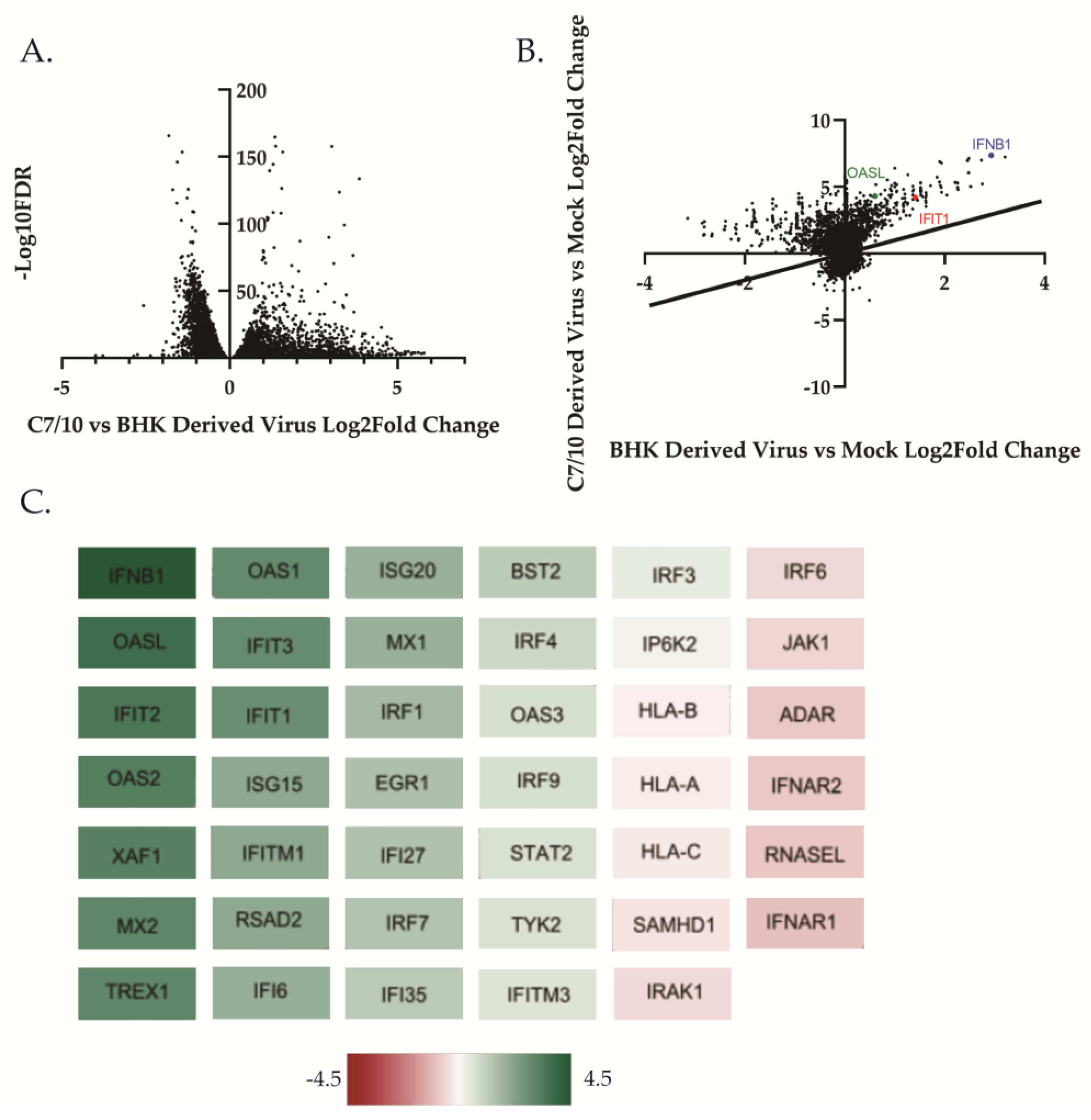
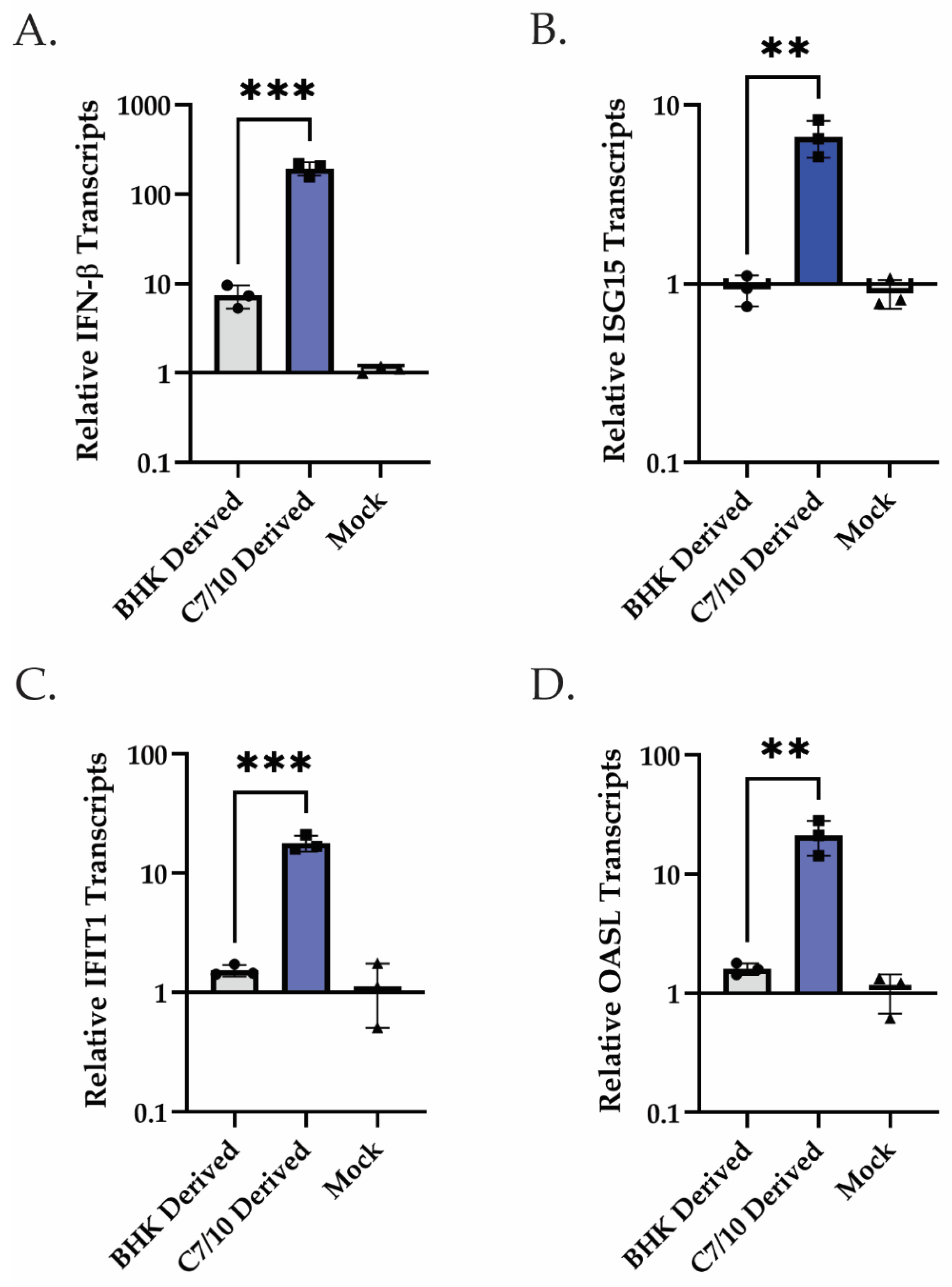
In this study, we investigate a human epithelial cell line that is capable of innate immune signaling in response to infection with mosquito- or mammalian-derived SINV. We hypothesize that the establishment of infection in epithelial cells may also play a role in the dissemination of alphavirus in a mammalian host alongside dendritic cell infection. Here, we performed the RNA sequencing analysis of Human Embryonic Kidney cells (HEK-293s) to elicit the differences in response to alphavirus infection derived from either vertebrate (Baby Hamster Kidney-21, BHK-21) cells or mosquito (Aedes albopictus C7/10) cells. We show that the mosquito-derived virus significantly alters the host response compared to the mammalian-derived virus. Interestingly, the mosquito-derived virus also induces more IFN-β and ISG mRNAs than the mammalian-derived virus. However, we show that while there are more IFN- β and ISG transcripts produced in the mosquito-derived virus infection, this is counteracted by rapid translational shutoff.
2. Materials and Methods
2.1. Insect and Mammalian Cell Culture
C7/10 Aedes albopictus cells were grown at 28 °C under 5% ambient CO2 in 1× Minimal Essential Media (Corning, Corning, NY, USA) supplemented with 10% heat-inactivated fetal bovine serum (Corning, Corning, NY, USA), 1% L-glutamine (Corning, Corning, NY, USA), 1% non-essential amino acids (Corning, Corning, NY, USA), and 1% antibiotic–antimycotic solution (Corning, Corning, NY, USA). Vertebrate baby hamster kidney fibroblast or BHK-21 cells as well as human embryonic kidney epithelial or HEK-293 cells were grown at 37 °C under 5% ambient CO2 in the same 1× Minimal Essential Media (Corning, Corning, NY, USA) as the C7/10 cells.
2.2. Virus Generation and Growth
BHK-21-derived viruses were obtained by in vitro transcription of pToto1101 SINV full-length plasmid using SP6 RNA polymerase (NEB, Ipswich, MA, USA). IVTs were then transfected into confluent BHK cells using the LTX transfection mix (Invitrogen, Waltham, MA, USA), following the manufacturer’s protocol, in a T25 flask (Greiner Bio-One CellStar, Monroe, NC, USA) with serum-free virus production media (SF-VPM) (Gibco, Waltham, MA, USA). Four hours after transfection, the SF-VPM was removed and replaced with fresh 1× MEM supplemented with 10% FBS. A total of 24 h after transfection, the viral supernatant was harvested and purified by centrifugation at 43,000× g for 2.5 h over a 27% w/v sucrose cushion in an HNE buffer (150 mM NaCl, 20 mM HEPES, 0.1 mM EDTA). The media was discarded, and the viral pellet was resuspended in 500 µL of HNE buffer. Plaque assays on BHK-21 cells were then performed to determine viral titer.
The C7/10-derived virus was obtained by infecting confluent C7/10 cells in a 150 mm dish (CellStar) with a P0 BHK-derived virus at an MOI of 0.1 PFU/cell. The inoculum was left on for 3 h, after which the media was replaced, cells were washed with 1× PBS (Phosphate Buffered Saline), and fresh 1× MEM was added. A total of 48 h after infection, the viral supernatant was harvested, purified and plaque assayed as previously described. All viruses were titered on BHK-21 cells and that titer was used for assay on HEK-293 cells.
2.3. RNA Sequencing
HEK-293 cells were infected in a 24-well plate with SINV at an MOI of 5 PFU/cell (three independent biological replicates per experimental condition). Cells were harvested at 8 h after infection and RNA was isolated using the BioRad (Hercules, CA, USA) Aurum Total RNA mini kit. Equimolar amounts of total RNA were submitted to Indiana University’s Center for Genomics and Bioinformatics for cDNA library construction using a TruSeq Stranded mRNA LT Sample Prep Kit (Illumina, San Diego, CA, USA) following the standard manufacturing protocol. Sequencing was performed using an Illumina NextSeq500 platform with a 75 bp cycle module generating 42 bp paired-end reads. After the sequencing run, demultiplexing was performed with bcl2fastq v2.20.0.422. NextSeq reads were trimmed using fastp (version 0.20.1) with parameters “-l17--detect_adapter_for_pe-g-p” [
27]. The resulting reads were mapped against GRCh38 using HISAT2 (version 2.2.1) with parameters “--rna-strandness F” [
28]. HISAT uses Bowtie2, which is based on the Burrows–Wheeler transformation algorithm, for sequence alignment and allows mapping across exon junctions [
29]. Read counts for each gene were created using featureCounts from the Subread package (version 1.6.4) with the parameters “-O-M--primary-p--largestOverlap-s2-B” and Gencode v37 as the annotation [
30,
31]. Differential expression analysis was performed using the DESeq2 package (version 1.30.1) in R/Bioconductor (R version 4.0.4) [
32]. Gene Ontology (GO) terms were assigned to genes using the Bioconductor package biomaRt (version 2.46.3) [
33,
34]. Cytoscape v3.9.1 was used to visualize genes corresponding to the GO term Type I Mediated Interferon Response and color was assigned to each gene based on the difference of log2 fold change between the mosquito-derived virus infection and the mammalian-derived virus infection. Full RNAseq data set was deposited in NCBI GEO. Accession numbers are GSE234344, and GSM7465398 through GSM7465406.
2.4. Real-Time Quantitative RT-PCR and Relative Expression Analyses
HEK-293 cells were infected in a 24-well plate with SINV at an MOI of 5 PFU/cell or mock infected. At 8 h after infection, the HEK-293 cells were resuspended in the media and spun down at 8000× g for 5 min. Cellular pellets were then RNA extracted using the BioRad Aurum Total RNA mini kit according to the manufacturer’s protocol. The extracted cellular RNA was then used as a template to synthesize cDNA using MMuLV Reverse Transcriptase (NEB) with random hexamer primers (Integrated DNA Technologies, Coralville, IA, USA) or primers specific to SINV E1. Quantitative RT-PCR analyses were performed using the Brilliant III SYBR green QPCR master mix (Thomas Scientific, Swedesboro, NJ, USA) with gene-specific primers according to the manufacturer’s protocol and with the Applied Bioscience StepOnePlus qRT-PCR machine (Life Technologies, Carlsbad, CA, USA). The expression levels were normalized to the endogenous GAPDH expression using the delta–delta comparative threshold method (ΔΔCT). Relative fold changes were determined using the comparative threshold cycle (CT) method compared back to the mock-infected cells for each gene assayed. For quantification of viral genomes, equal weight of RNA was added to each RT reaction using SINV E1-specific primers, and a standard curve comprising linearized SINV infectious clone containing the full-length genome. A minimum of three independent biological replicates were analyzed. Each biological replicate was measured as described above three times (technical replicates), and the average of these measurements for each biological replicate was used in the analyses shown.
2.5. IFN Bioassay
Type I interferon levels in cell culture supernatants were measured by interferon bioassay as described previously [
35,
36,
37]. HEK-293 cells were seeded in a 24-well plate and infected with mosquito- or mammalian-derived SINV at an MOI of 5 PFU/cell. The entire supernatant was removed at each time indicated. All supernatant samples were acidified to a pH of 2.0 for 24 h and then neutralized to pH 7.4. The samples were then further inactivated by UV light for 10 min. Treated supernatant was then added to naïve HEK-293 cells seeded in a 96-well plate and titrated by twofold dilutions down the plate. Twenty-four hours after the addition of the treated supernatant, the interferon-sensitive SINV with an nsP3 fused GFP was added to each plate at an MOI of 10 PFU/cell. Twenty-four hours after the addition of the virus, the infected cells were measured by green object count using an IncuCyte live-cell analyses system (Essen Biosciences, Ann Arbor, MI, USA). An IFN-β standard was added to each plate to determine inhibitory units/mL based on green object count (virus-positive cells). Three independent biological replicates for each virus infection were analyzed.
2.6. Western Blotting
HEK-293 cells were synchronously infected at 4 °C for 30 min with C7/10- or BHK-derived SINV at an MOI of 5 PFU/cell. At the indicated times after infection, HEK-293 cells were treated with whole cell lysis buffer (1% NP-40, 10 mM Tris pH 7.4, 20 mM NaCl, 1 mM EDTA, 1× SDS buffer) before being boiled at 95 °C for 30 min. Equal volumes of whole cell lysates were analyzed via 10% SDS-PAGE using the antibodies indicated. The gel was transferred to a PVDF membrane and blocked in a 5% TBSM (Tris Buffered Saline 1× + 5% Dry Milk) for 1 h at room temperature. Following blocking, the membrane was incubated with Anti-IFIT1 (#14769), anti-beta-actin (#4967), anti-eEF2 (#2332), or anti-phospho-eEF2 (# 2331) all Cell Signaling Technology at 4 °C overnight. Following incubation with the primary antibody, the membrane was washed with the TBST (Tris Buffered Saline 1× + 0.1% Tween-20) prior to incubation with goat anti-rabbit AlexaFluor 750 (#A-21039 ThermoFisher, Waltham, MA, USA) or anti-rabbit IgG, HRP-linked antibody (#7074 Cell Signaling, Danvers, MA, USA) for 1 h at room temperature. Following secondary antibody incubation, the membrane was imaged with radiography film (for HRP-linked antibody) or using a BioRad ChemiDoc MP Imaging System (for AlexaFluor antibody). Band intensity was determined using ImageStudio Lite Ver. 5.2. Band intensity is represented as a ratio of IFIT1 over actin standardized to the BHK-derived virus signal or as a ratio of eEF2 or phospho-eEF2 over actin and finally as a ratio of phospho-eEF2/actin over eEF2/actin. For each protein, a minimum of three biological replicates were analyzed.
2.7. Translational Activity Measured by [35S] Methionine Radiolabeling
HEK-293 cells were synchronously infected for 30 min at 4 °C with either BHK-21 or C7/10-derived SINV at an MOI of 5 PFU/cell in a 24-well plate. A total of 30 min prior to the labeling period, the infected cells were washed with 1× PBS and incubated with methionine/cysteine-free DMEM. After the depletion period, the media were removed and replaced with fresh methionine/cysteine-free DMEM supplemented with [35S]-labeled methionine and cysteine (Express Protein Labeling Mix, Perkin Elmer, Waltham, MA, USA) at a specific activity of 50 µCi/mL and incubated for one additional hour. Cells were treated with a cytoplasmic lysis buffer (1% Triton-X100, 10 mM Tris pH 7.4, 20 mM NaCl, 1 mM EDTA, 1× PMSF), then incubated on ice for 10 min while vortexing intermittently every 2 min. Samples were then spun down for 10 min at 10,000× g before the supernatant was removed and placed in a new tube. A 6× SDS running buffer was then added to the cytoplasmic lysates to a concentration of 1× and the lysates were boiled for 5 min. Equal volumes of cytoplasmic lysates were analyzed via 10% SDS-PAGE, and radiolabeled proteins were detected by autoradiography. Actin was used as a proxy for host translation. Band and lane intensities were determined using ImageStudio Lite Ver. 5.2. All comparisons in this manuscript are made only within the lanes from the same gel on a single autoradiographic exposure. Three independent infections per virus sample were performed and assayed as described (n = 3) to generate the data shown.
2.8. Statistical Analysis of Experimental Data
All statistical analyses were performed using GraphPad Prism 9 (GraphPad Software Inc., San Diego, CA, USA).
4. Discussion
Arboviruses are defined by their capacity to replicate and infect both vertebrate and arthropod hosts. Understanding the differences in insect- and vertebrate-derived arboviruses and how those differences determine outcome of infection may inform the development of transmission interventions. To our knowledge, there has not been an in-depth look at the differences in response in a mammalian epithelial cell infected with alphaviruses derived from mosquito or mammalian cells. Here, we show that in HEK-293 cells, mosquito-derived SINV elicits a more robust transcriptional response than the BHK-21-derived counterpart, yet it counters the innate immune response through translational inhibition.
Along with other known differences in host-acquired modifications of arboviruses, such as differential glycosylation or packaging of host molecules, we showed that differential modifications of the viral RNA genome also influence the outcome of infection for SINV [
13,
14,
18]. Cell type plays a strong role in the outcome and response to arbovirus infection, and while studies have been conducted that show a similar, though not identical, phenotype of mosquito- and mammalian-derived arboviruses, the differential response of these two viral origins has only been examined in immune cells [
35]. We showed a response in epithelial cells capable of innate immune signaling. A different response has been observed in immune cells, and this may reveal more about the timing of the infection [
35]. Mosquito-derived virus on myeloid dendritic cells (mDCs) has been shown to replicate better than its mammalian-derived counterpart, similar to our observations in epithelial cells, though the difference we observed in the transcriptional response of IFN-β is starkly contrasting [
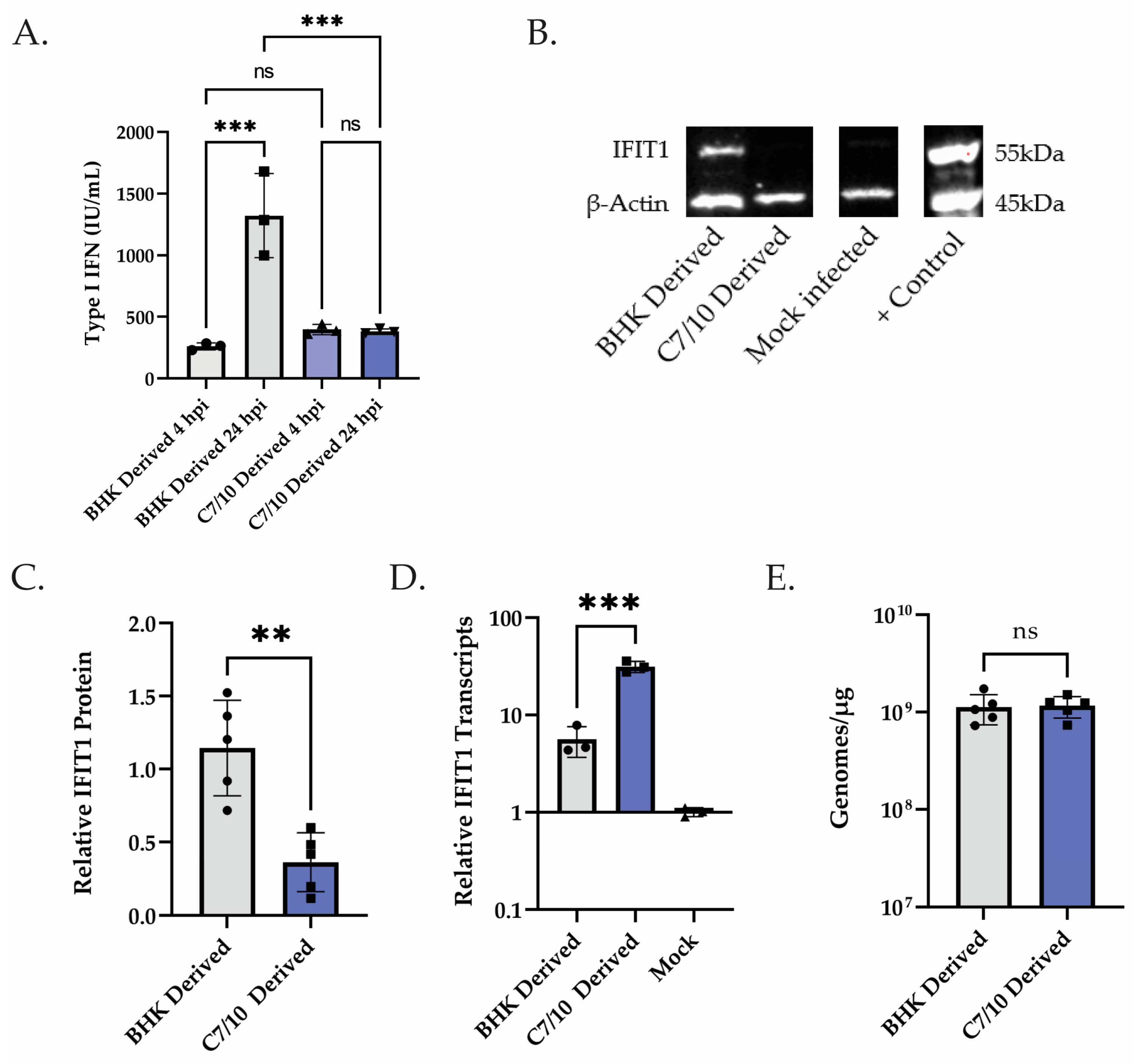
35]. It is important to point out, however, that our observed type I IFN production from the IFN bioassay at 24 hpi very closely resembles what was previously shown (
Figure 3A) [
35]. Meanwhile, we observed surprising differences at earlier timepoints in infection (
Figure 1,
Figure 2 and
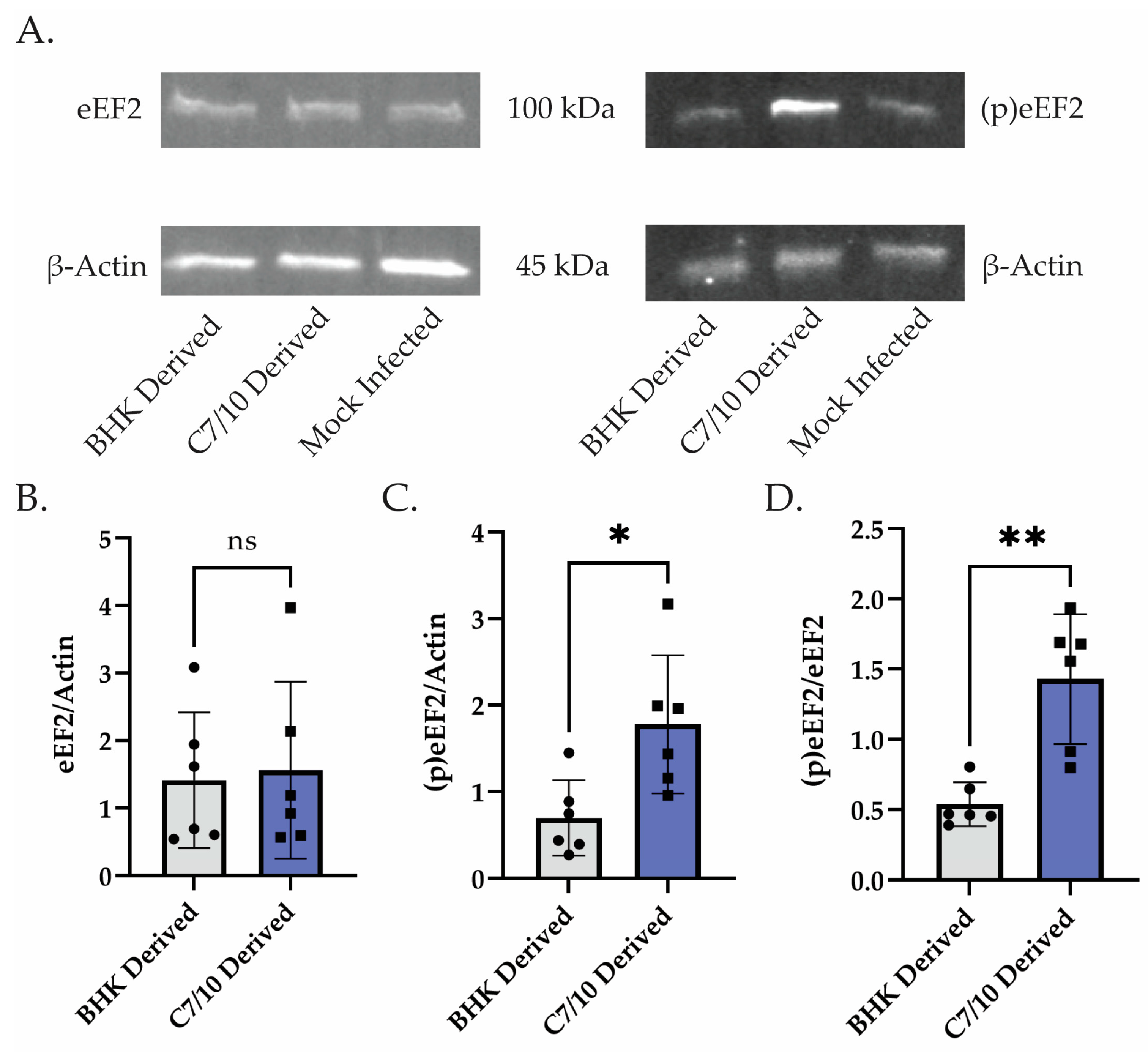
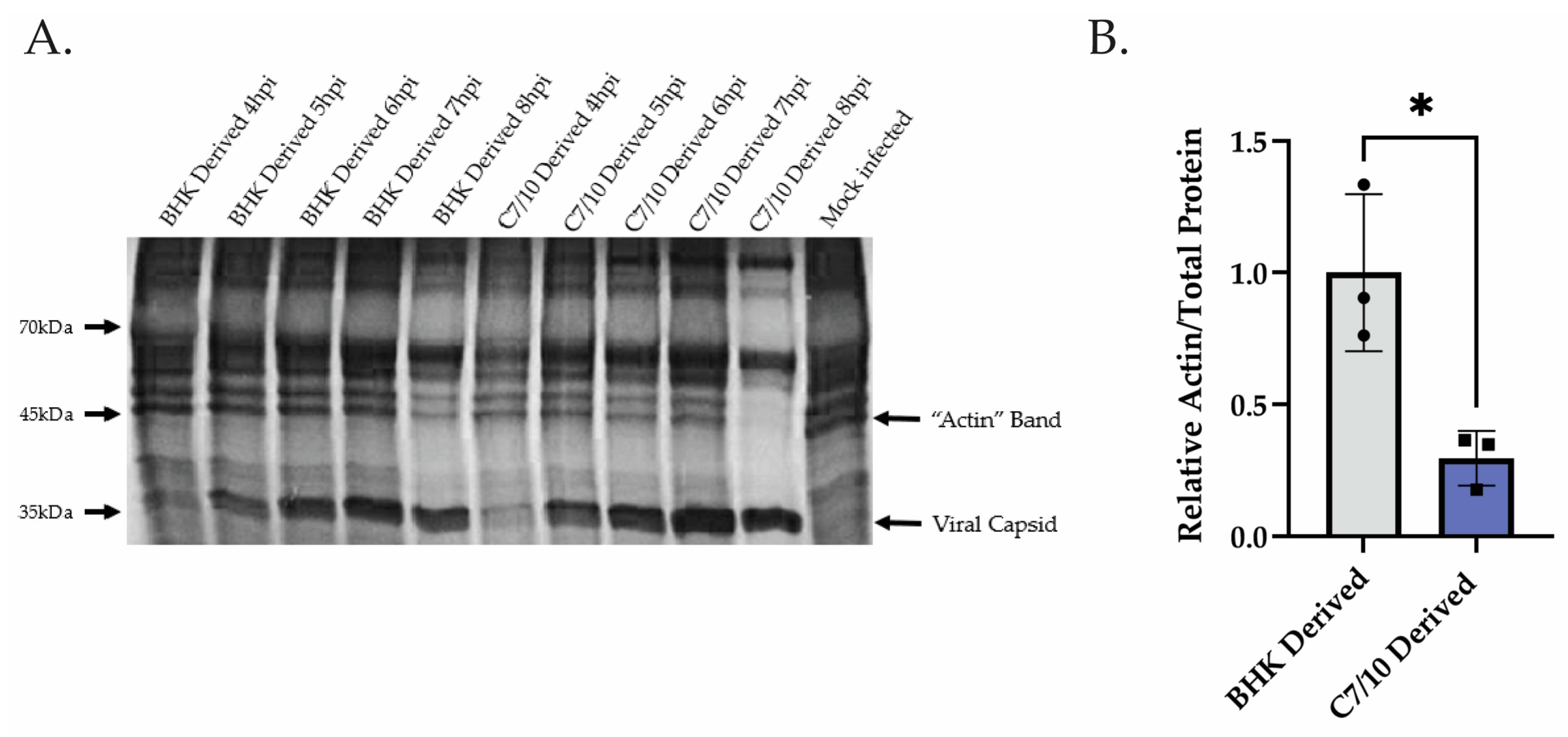
Figure 3A). These results may shed light on the complexity of studying the differences in mosquito- and mammalian-derived arboviruses and clarify the importance of timing for future studies. We show that while the mosquito-derived virus is causing a drastic increase in the amount of IFN-β and ISG mRNA, it is counteracting this increase in transcripts by shutting off host translation sooner. This more rapid translational shut-off can be, at least partially, attributed to the increased amount of phosphorylated eEF2 present in the cells infected with the mosquito-derived virus. Future studies will look to determine a more detailed mechanism of the ways in which the mosquito-derived virus is shutting off host translation sooner and could explore the role of the differential RNA modification profile’s impact on this observed phenotype. From these results, we hypothesize that the mosquito-derived virus enhances replication kinetics in the mammalian host, which leads to increased PAMPs that are detected in the early stages of infection, resulting in the enhanced type I mediated IFN transcriptional response at 4 and 8 hpi (
Figure 1,
Figure 2 and
Figure 3). However, this enhanced transcriptional response appears to be quickly counteracted by the more rapid shut-off of host translation by the mosquito-derived virus, as we observed reduced type I IFN produced at 24 hpi, as well as reduced IFIT1 protein expression at 12 hpi, and finally a greater accumulation of phosphorylated eEF2 at 10 hpi (
Figure 3A,
Figure 4 and
Figure 5).
This altered host response to infection by mosquito- or mammalian-derived virus may shed light on the complex initial bite from an infected mosquito. Infection of mDC’s and other local skin immune cells are known to be an important step in dissemination of the virus throughout the mammalian host [
4,
5,
6,
7]. These cells may be directly infected by the incoming mosquito-derived virus or by the virus produced in epithelial cells infected following the mosquito bite. Recruitment of epidermal immune cells to the site of the bite and hence virus deposition is enhanced by the inflammatory response evoked through the bite and the components of the mosquito saliva [
3,
4,
7,
8,
9]. Therefore, we hypothesize that turning off the innate immune response enhances virus replication in the initially infected epithelial cells, increasing virus presence in the area of the bite and consequently increasing the chances of infecting mDCs and dissemination.
Mosquito- and mammalian-derived alphaviruses differ in their efficiency of infection in mammalian cells, suggesting they have been “primed” for future infection by the host in which they were produced in. We know that the particles produced in mosquito cells differ from those produced in mammalian cells. The glycosylation of the surface glycoproteins of the mosquito-produced virus leads to increased binding and infectivity of cells expressing C-type lectins, such as dendritic cells [
14]. There is also evidence in the Ross River Virus that N-linked glycans were essential for induction of IFN by the mammalian-derived virus [
39]. However, it seems unlikely that this acquisition is playing a role in the phenotypes we report here and previously [
18]. We also know that a sub-population of the mammalian-derived virus and the mosquito-derived virus contain host ribosomal components which could be influencing the replication differences between the viruses from different hosts and/or the host response to infection by either virus [
15]. It is possible that these host ribosomal components are playing a role in host response; however, we have previously reported that purified vRNA obtained from mosquito-derived virions has increased translational activity compared to vRNA obtained from mammalian-derived virions [
18]. It is important to note, however, that while the translation of the vRNA appears to be enhanced independent of host ribosomal components, it is possible that these ribosomal components are influencing the host response to infection with virions derived from mosquito or mammalian cells [
18]. Another possibility is that the viruses from different hosts encapsidate vRNA that differ in structure such as defective genomes. Additionally, the proportion of capped genomic RNA has been shown to differ between mosquito-derived and mammalian-derived SINV [
40]. Finally, we have recently shown that the RNA modification profile of the genomic vRNA derived from mosquito and mammalian cells is significantly different, indicating that SINV acquires host-specific modifications of its genomic RNA [
18]. N6-methyladenosine (m6A) has previously been shown to influence flavivirus replication in mammalian cells, and 5-methylcytosine (m5C) modifications have been shown to influence alphavirus replication in arthropod cells [
19,
20]. RNA modifications have been shown to reduce innate immune signaling by disrupting RIG-I detection of RNA [
41]. For instance, m6A modifications specifically have been shown to enable human metapneumovirus to escape recognition by RIG-I [
42]. It is therefore possible that the differences in RNA modification profile we reported between mosquito- and mammalian-derived SINV is also influencing the transcriptional response to infection that we show here [
18]. The main molecular consequences of infection with the mosquito-derived virus we observed are the increased translation of viral RNA [
18] and a more rapid shut-off of host cell translation. In the future, it will be interesting to determine whether and in what ways the RNA modification profile of infecting viral RNA impacts these processes directly.