A Digital Twin-Driven Dual-Stage Adversarial Transfer Learning Method for Lamb Wave-Based Structural Damage Localization Under Limited Sensing Data


Abstract
1. Introduction
2. Methodology
2.1. Digital Modeling of PZT-Based Guided Wave Sensing Signals
2.1.1. Dispersion Analysis of Guided Waves
2.1.2. Finite Element Simulation of Guided Wave Propagation
2.2. Physics-Informed Sensing Signal Feature Enhancement Strategy
2.2.1. Hierarchical Decomposition of Sensing Signals and Feature Alignment
2.2.2. Conditional Adversarial Feature Augmentation and Selection
2.3. Structural Damage Localization Model Across Domains
2.3.1. Adversarial Transfer Between Domains with BiGRU-Attention
| Algorithm 1: Hybrid BiGRU-Attention regression and domain-adversarial learning. |
| Input: Aligned digital domain Aligned physical domain Output:
|
2.3.2. Pareto-Optimized Damage Localization Using Sensing Features
3. Case Study
3.1. Experiment Sensor Signal Acquisition in Physical Domain
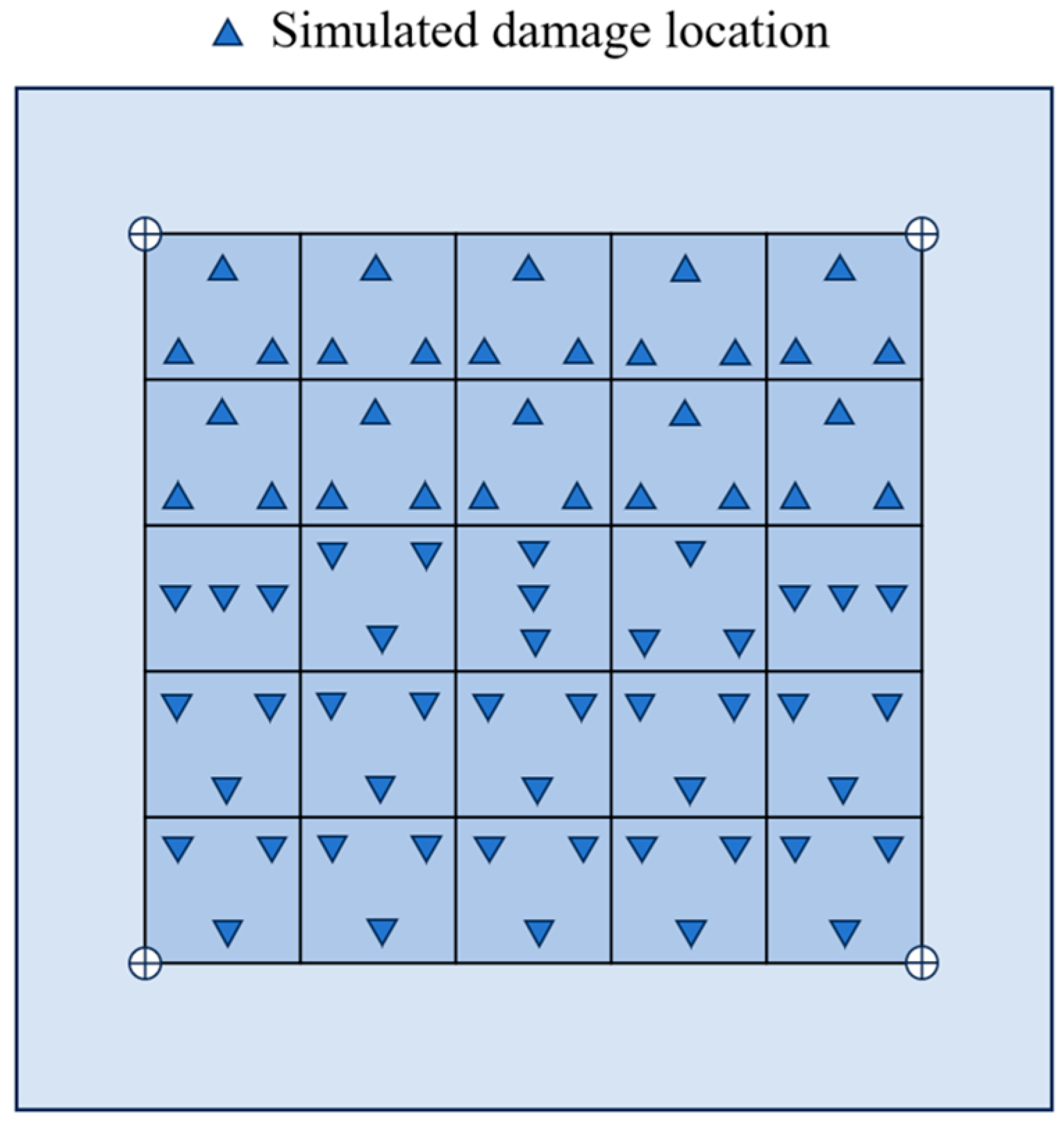
3.2. Simulated Sensor Signal Generation in Digital Domain
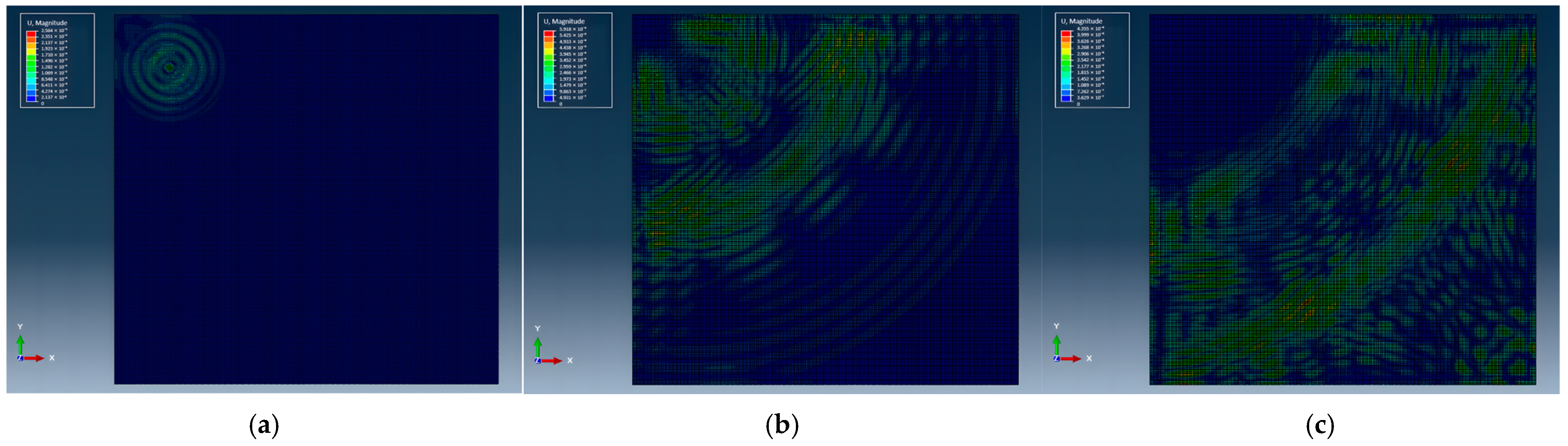
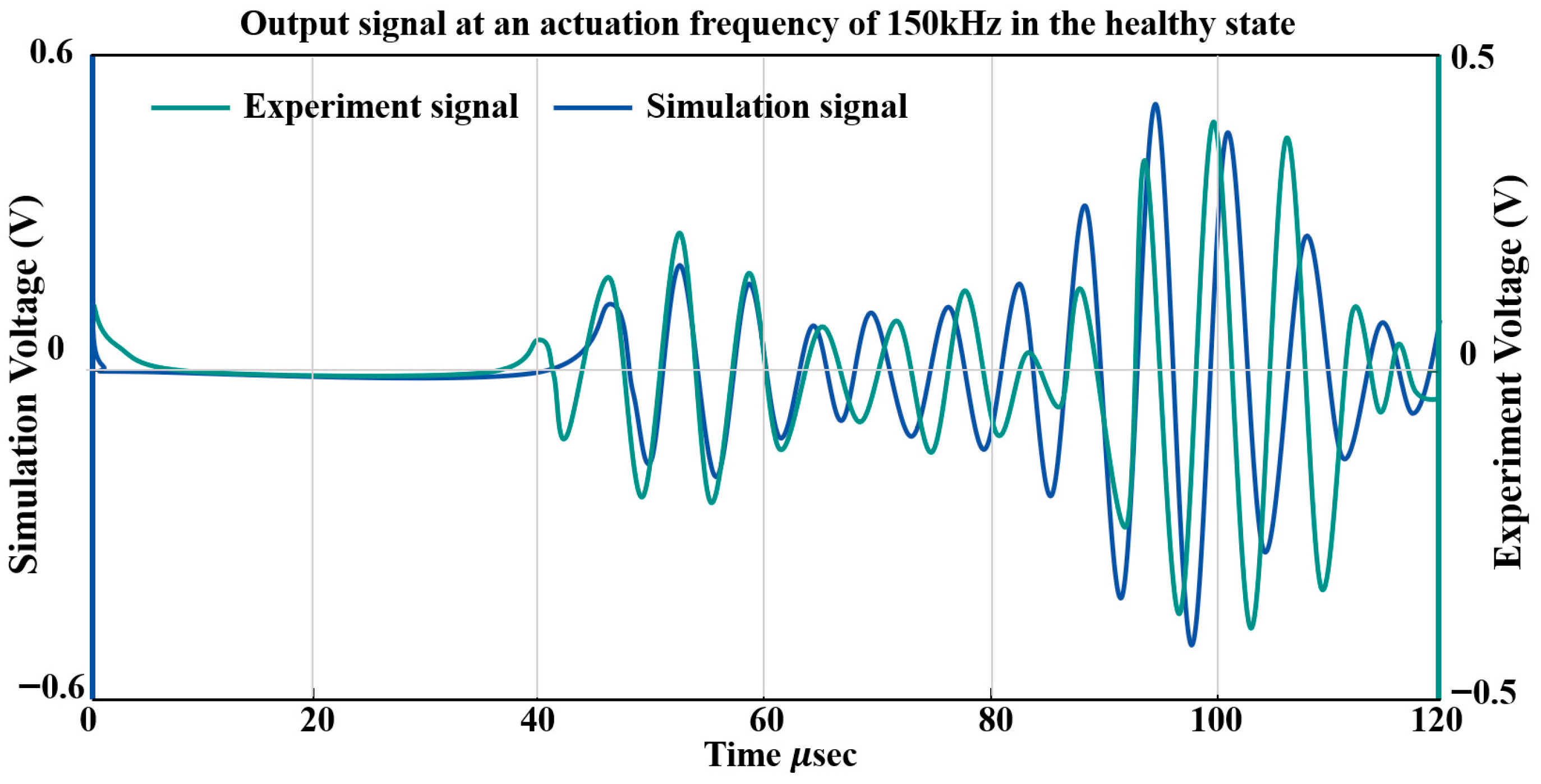
3.2.1. Signal Simulation in Healthy State
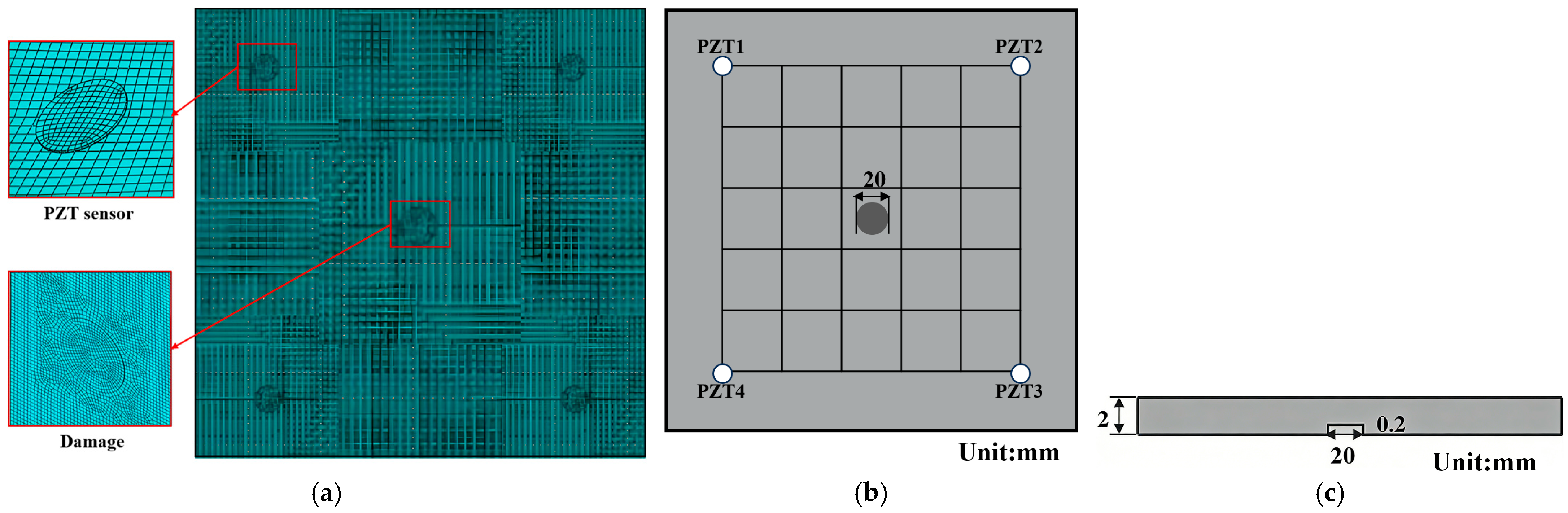
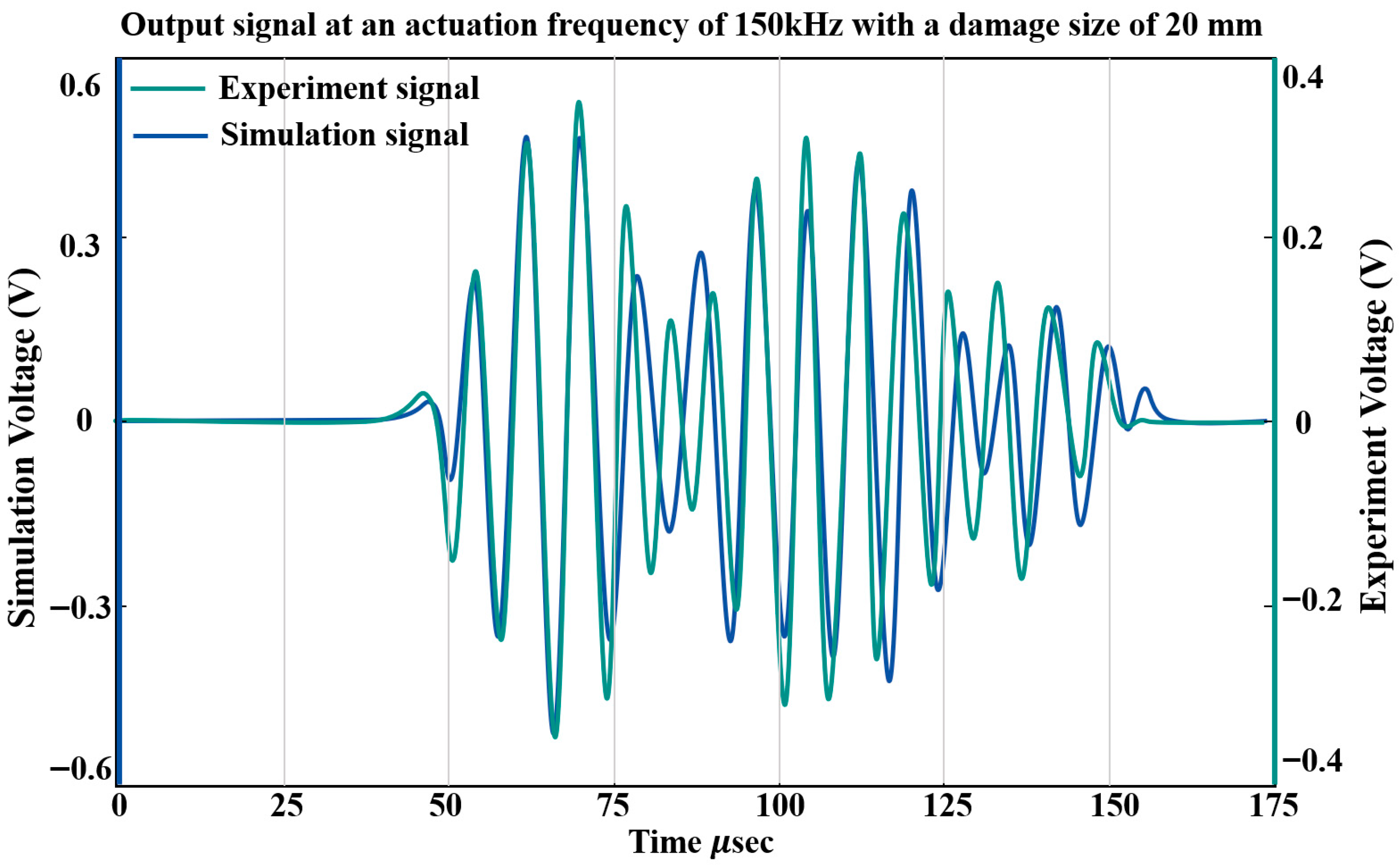
3.2.2. Signal Simulation in Damaged State
3.3. Baseline Methods for Comparative Study
4. Discussion
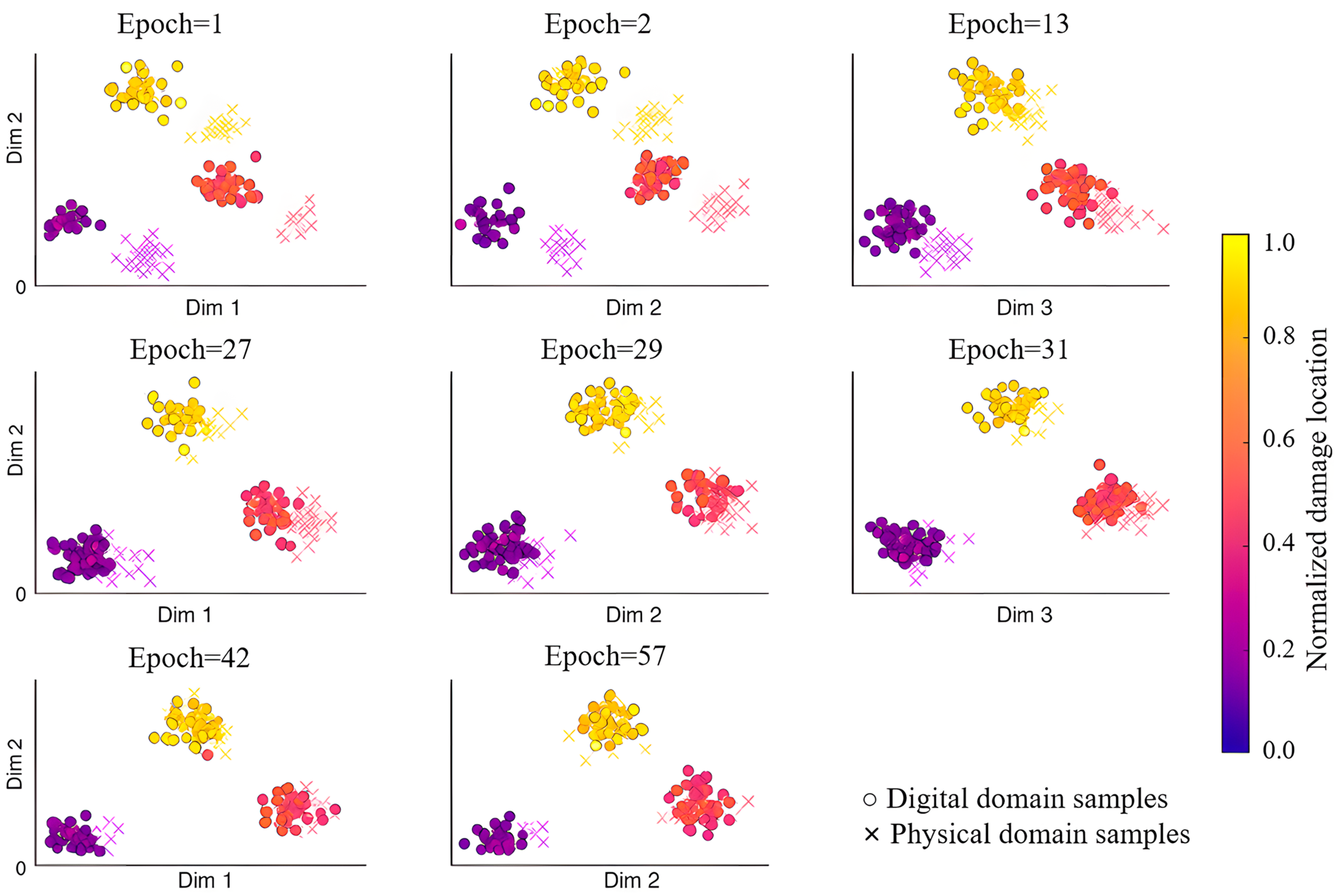
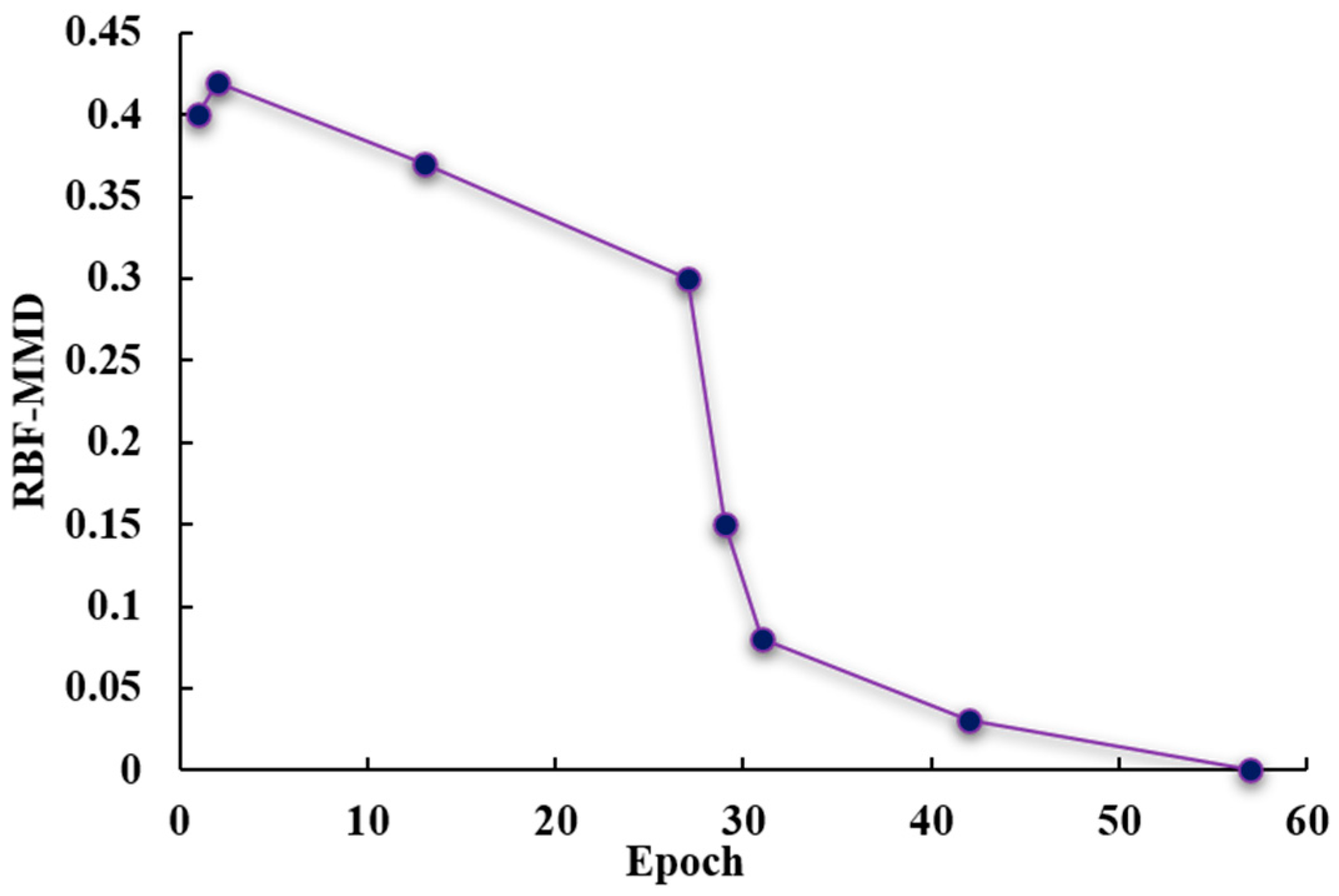
4.1. Feature Distributions Across the Two Domains
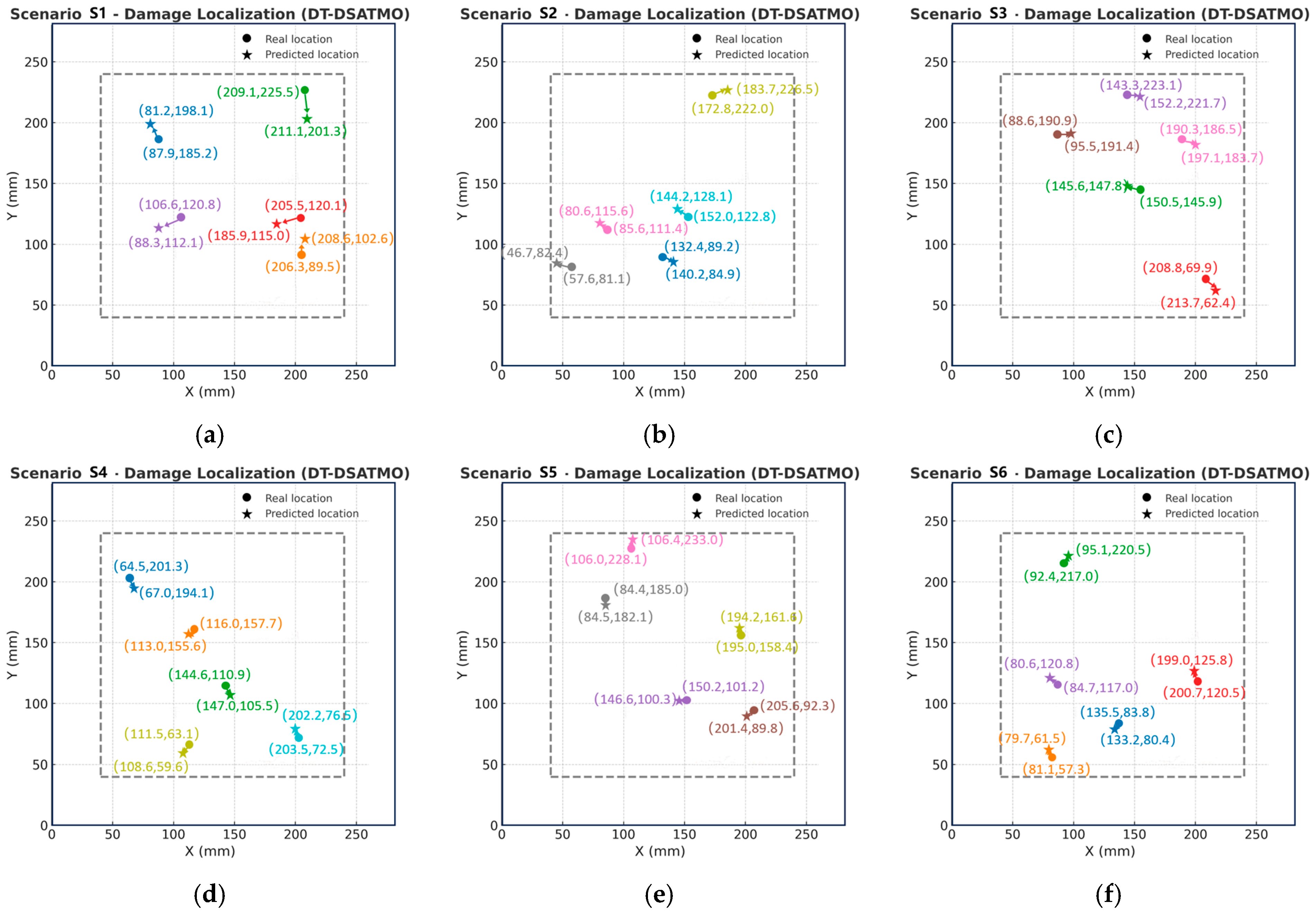
4.2. Damage Localization Under Various Scenarios
4.3. Ablation Analysis on Stage-Wise Contributions
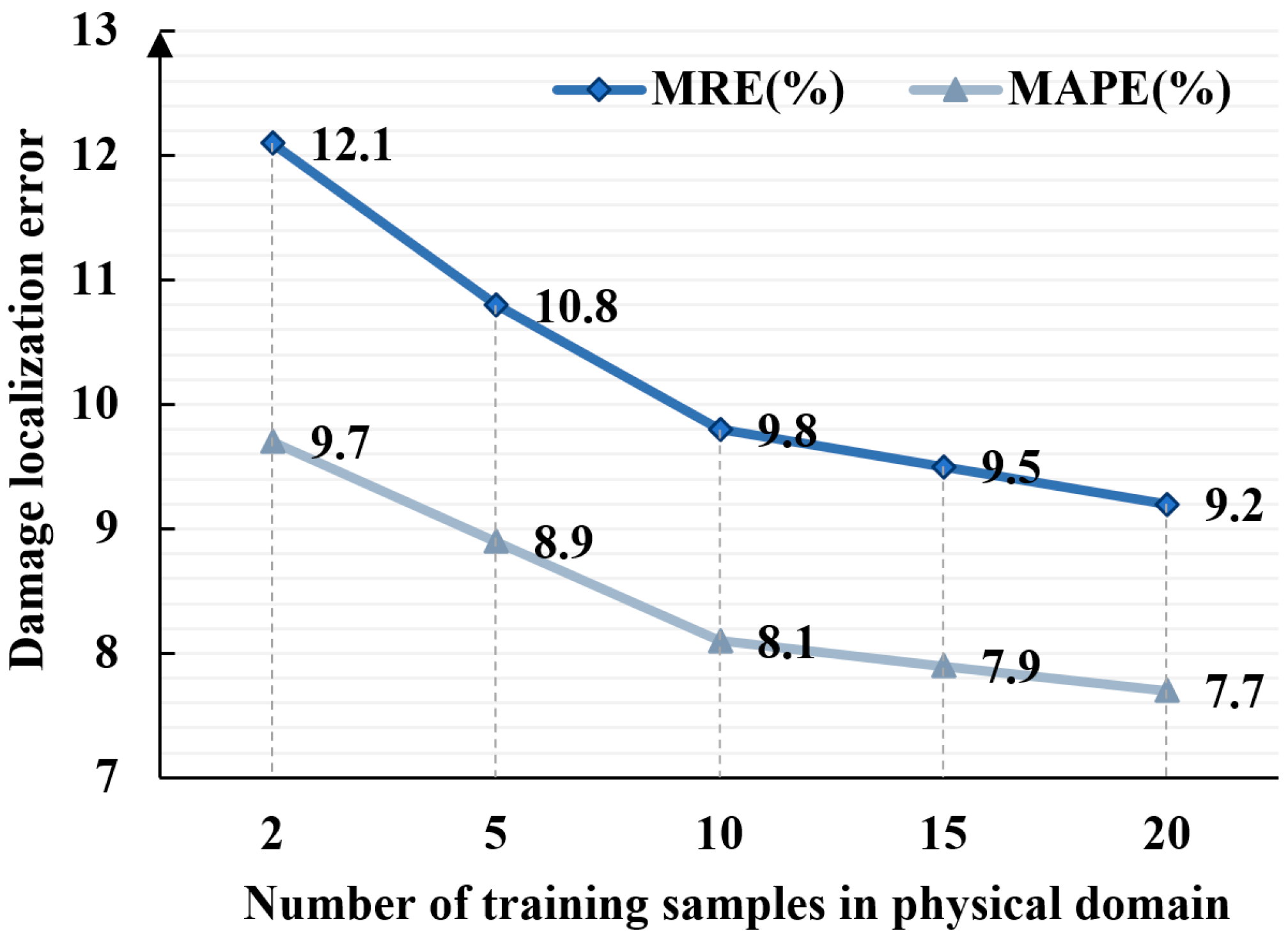
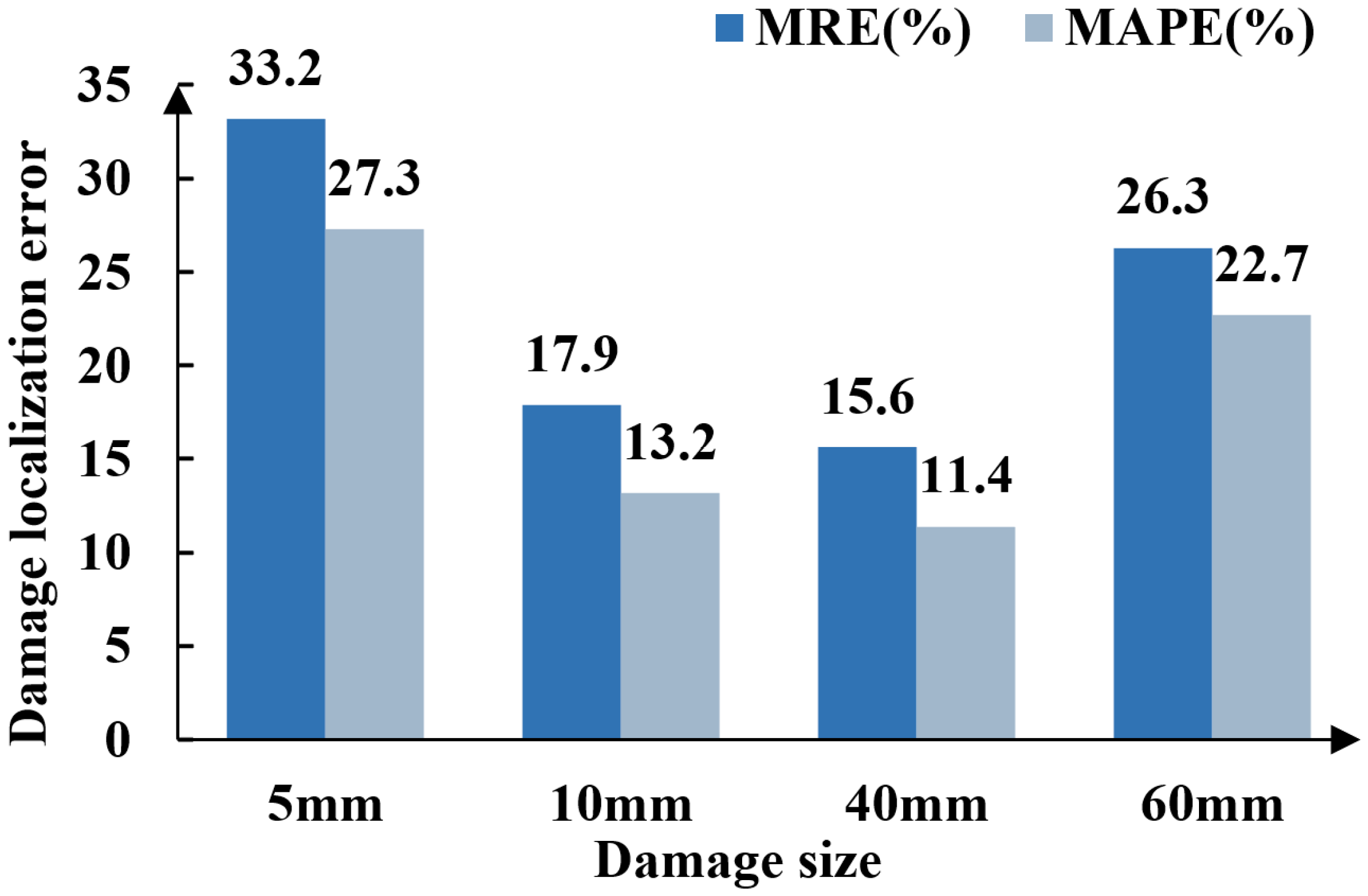
4.4. Model Generalization Under Extreme Small-Sample and Different Damage Sizes
5. Conclusions
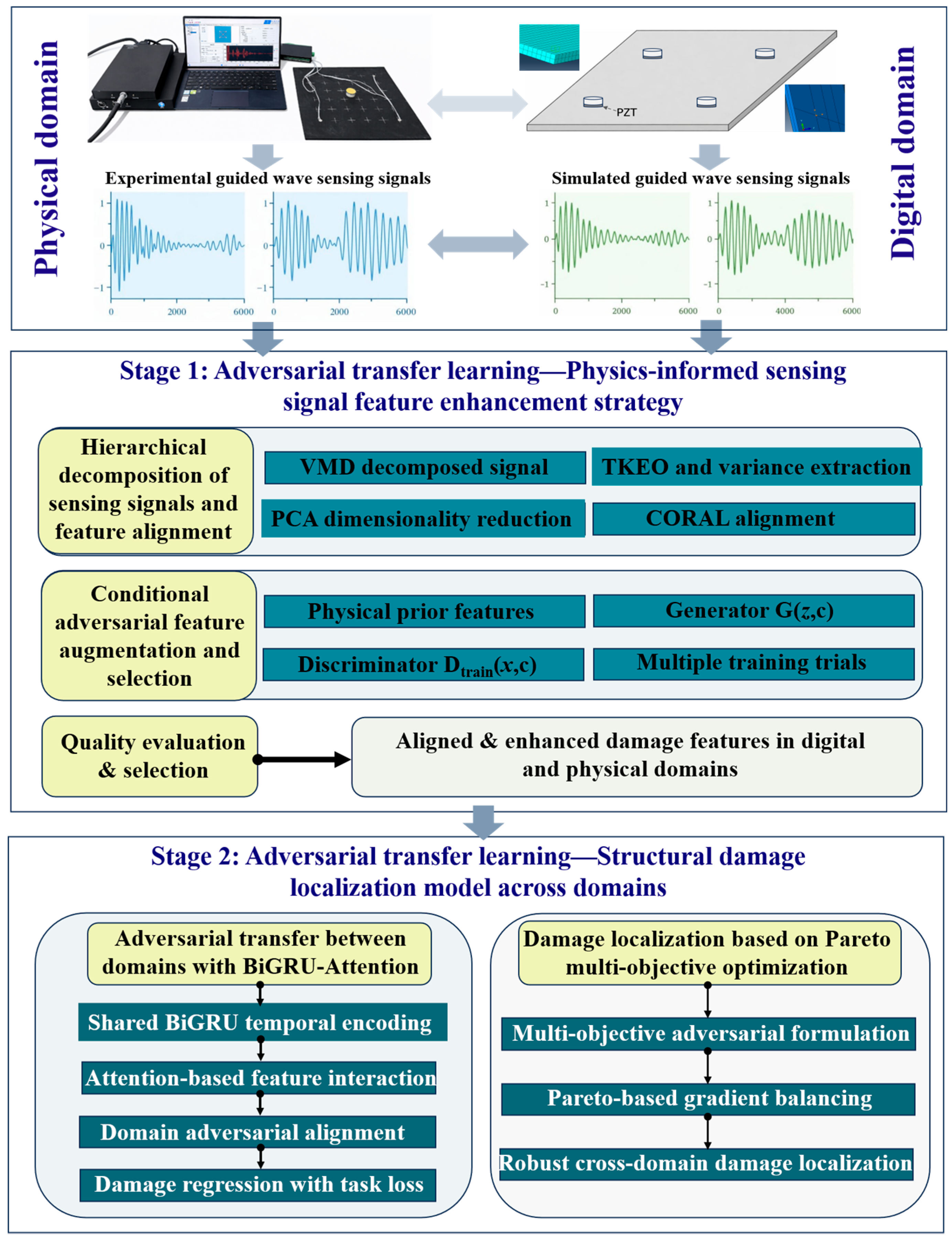
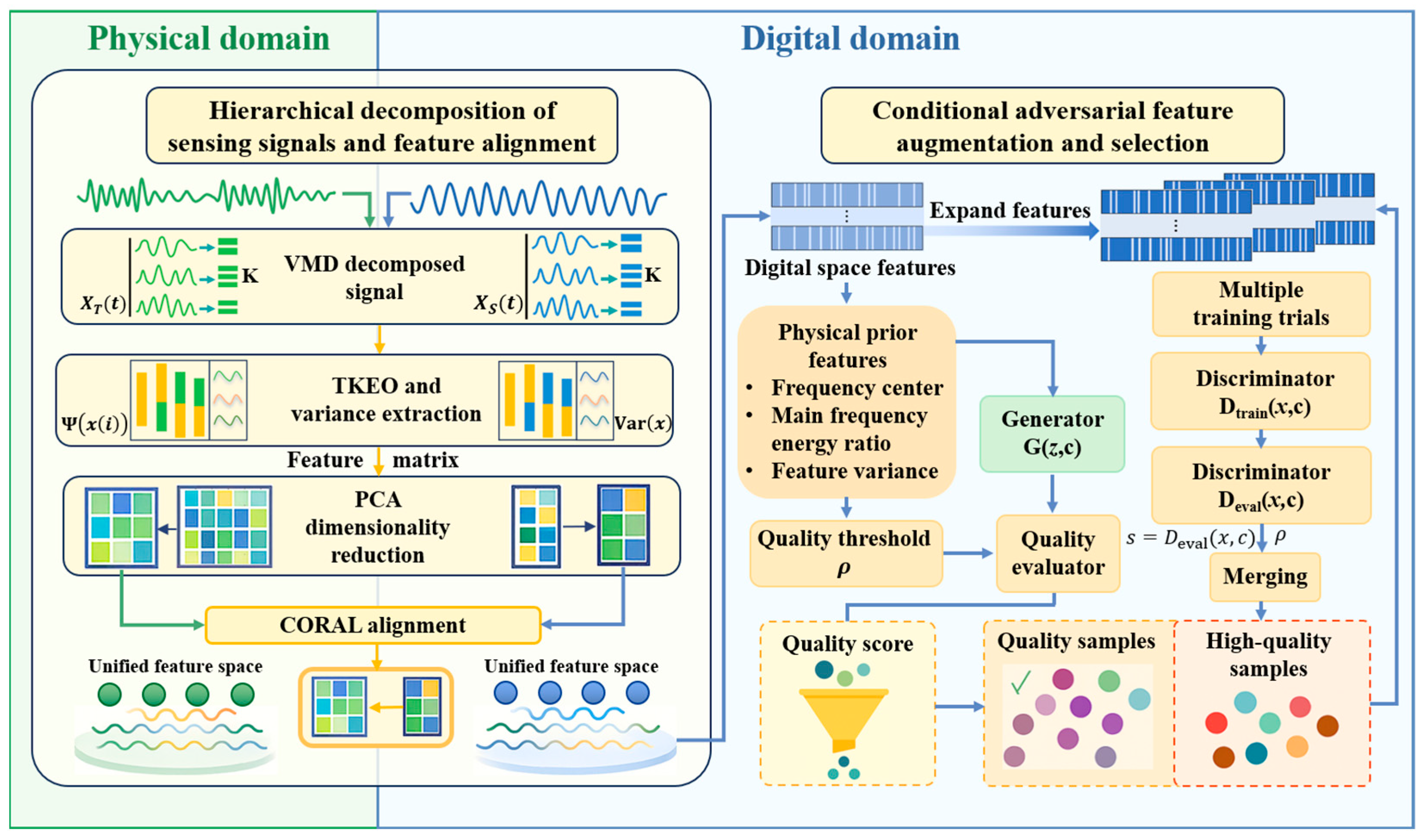
- Digital-twin modeling: A physics-guided simulation-sensing data augmentation framework is introduced to enhance the quality of digital-domain features. This approach embeds guided-wave propagation knowledge into a hierarchical augmentation strategy, generating damage-sensitive features that maintain physical interpretability.
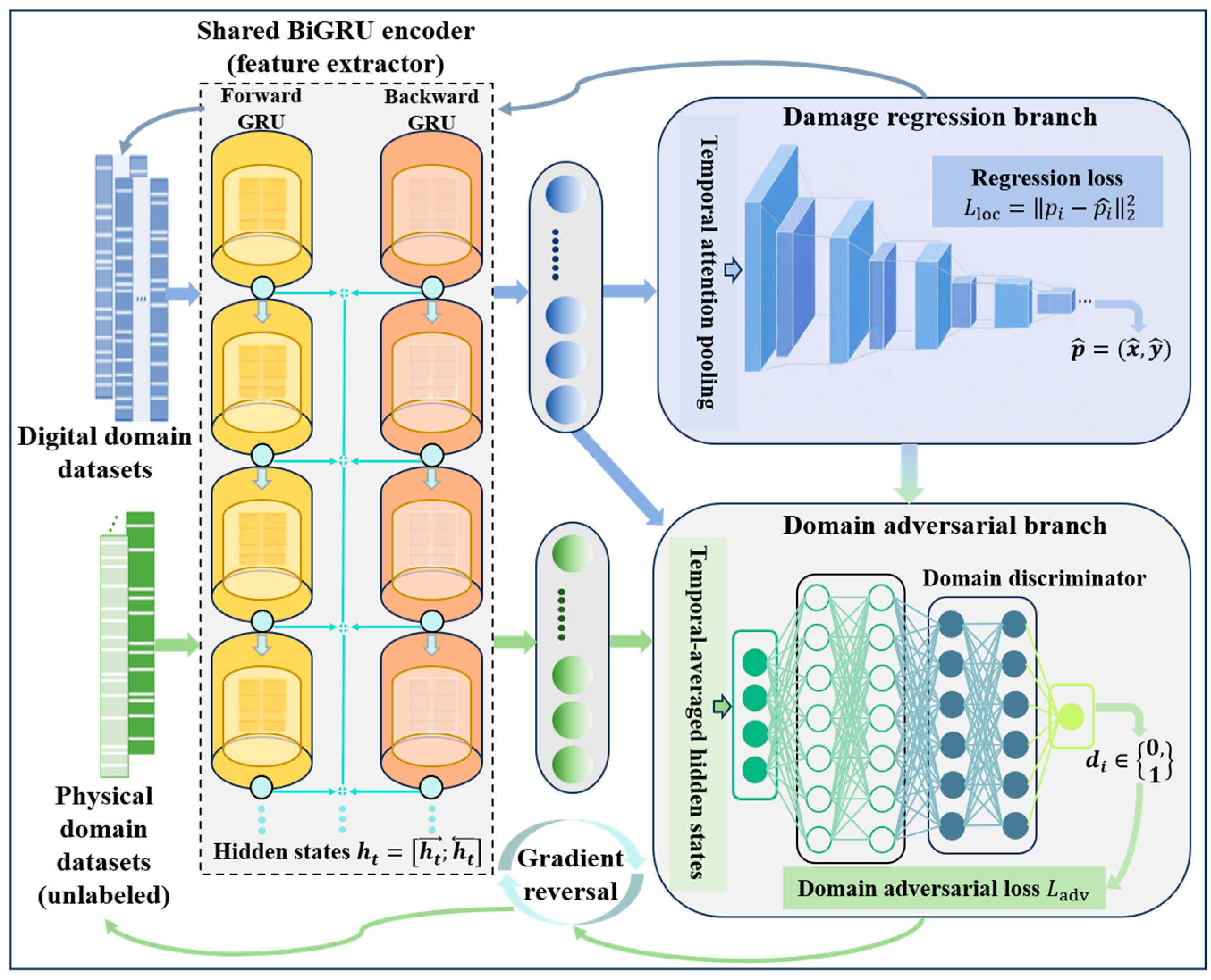
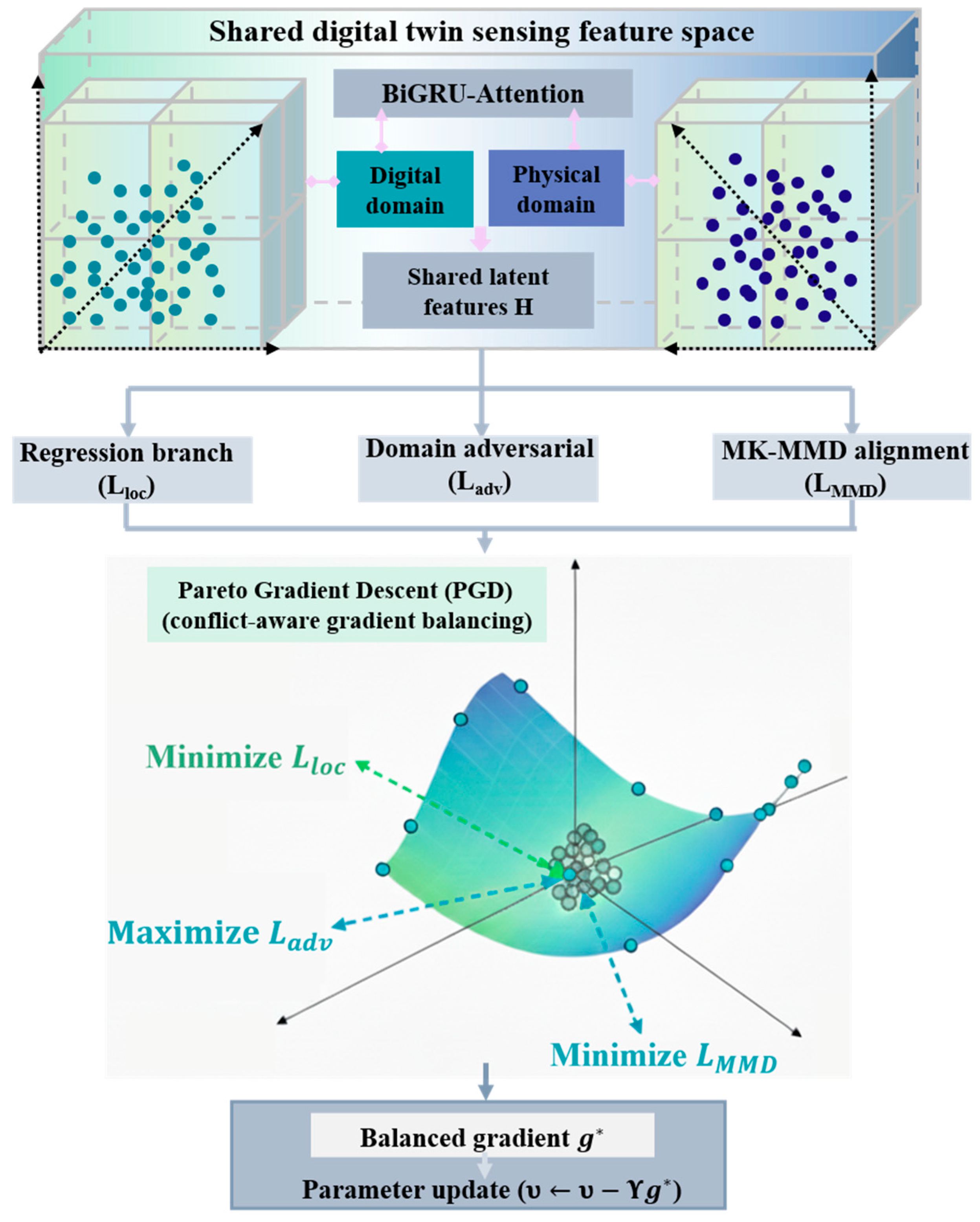
- Cross-domain localization: A two-stage adversarial transfer framework is introduced to bridge simulated and experimental perception domains, enabling reliable damage localization. The first stage enhances simulated features, while the second stage improves cross-domain consistency through a shared encoder adversarial network. A multi-objective optimization strategy balances accuracy and alignment, ensuring robust localization with scarce sensing data.
- Case results: DT-DSATMO achieved reductions of approximately 71% in MAPE and MRE across diverse damage scenarios. Despite minor alignment-induced degradation observed in only two experimental sensor samples, the model maintained strong cross-domain performance and practical applicability.
Author Contributions
Funding
Institutional Review Board Statement
Informed Consent Statement
Data Availability Statement
Conflicts of Interest
References
- Tu, J.; Yan, J.; Ji, X.; Liu, Q.; Qing, X. Damage Severity Assessment of Multi-Layer Complex Structures Based on a Damage Information Extraction Method with Ladder Feature Mining. Sensors 2024, 24, 2950. [Google Scholar] [CrossRef] [PubMed]
- Liu, H.; Huang, M.; Zhang, Q.; Liu, Q.; Wang, Y.; Qing, X. Ultrasonic guided wave damage localization method for composite fan blades based on damage-scattered wave difference. Smart Mater. Struct. 2024, 33, 105011. [Google Scholar] [CrossRef]
- Mei, L.-F.; Yan, W.-J.; Yuen, K.-V.; Beer, M. Streaming variational inference-empowered Bayesian nonparametric clustering for online structural damage detection with transmissibility function. Mech. Syst. Signal Process. 2025, 222, 111767. [Google Scholar] [CrossRef]
- Zhang, Y.; Wu, X.; Guo, Q.; Zhang, D.; Li, C.; Li, D.; Liu, Y.; Zhang, J.; Zhang, P.; Yan, Y.; et al. Advances in sensors technologies for composites structural health monitoring. Compos. Struct. 2025, 370, 119448. [Google Scholar] [CrossRef]
- Qing, X.P.; Beard, S.J.; Kumar, A.; Ooi, T.K.; Chang, F.-K. Built-in Sensor Network for Structural Health Monitoring of Composite Structure. J. Intell. Mater. Syst. Struct. 2007, 18, 39–49. [Google Scholar] [CrossRef]
- Liu, H.; Liu, Q.; Zhang, Q.; Huang, M.; Wang, Y.; Qing, X. Crest sequence compensation method for improving the accuracy of ultrasonic guided wave based damage detection under variable temperatures. Measurement 2026, 257, 119044. [Google Scholar] [CrossRef]
- Balasubramaniam, K.; Sikdar, S.; Ziaja, D.; Jurek, M.; Soman, R.; Malinowski, P. A global-local damage localization and quantification approach in composite structures using ultrasonic guided waves and active infrared thermography. Smart Mater. Struct. 2023, 32, 35016. [Google Scholar] [CrossRef]
- Bosse, S.; Lehmhus, D.; Kumar, S. Automated Porosity Characterization for Aluminum Die Casting Materials Using X-ray Radiography, Synthetic X-ray Data Augmentation by Simulation, and Machine Learning. Sensors 2024, 24, 2933. [Google Scholar] [CrossRef]
- Puder, A.; Zink, M.; Seidel, L.; Sax, E. Hybrid Anomaly Detection in Time Series by Combining Kalman Filters and Machine Learning Models. Sensors 2024, 24, 2895. [Google Scholar] [CrossRef]
- Sapidis, G.M.; Naoum, M.C.; Papadopoulos, N.A. Electromechanical Impedance-Based Compressive Load-Induced Damage Identification of Fiber-Reinforced Concrete. Infrastructures 2025, 10, 60. [Google Scholar] [CrossRef]
- Huang, X.; Han, M.; Deng, Y. A Hybrid GAN-Inception Deep Learning Approach for Enhanced Coordinate-Based Acoustic Emission Source Localization. Appl. Sci. 2024, 14, 8811. [Google Scholar] [CrossRef]
- Nie, Q.; Geng, J.; Liu, C. A Review of Fault Diagnosis Methods: From Traditional Machine Learning to Large Language Model Fusion Paradigm. Sensors 2026, 26, 702. [Google Scholar] [CrossRef] [PubMed]
- Lai, X.; Yang, L.; He, X.; Pang, Y.; Song, X.; Sun, W. Digital twin-based structural health monitoring by combining measurement and computational data: An aircraft wing example. J. Manuf. Syst. 2023, 69, 76–90. [Google Scholar] [CrossRef]
- Sun, L.; Sun, H.; Zhang, W.; Li, Y. Hybrid monitoring methodology: A model-data integrated digital twin framework for structural health monitoring and full-field virtual sensing. Adv. Eng. Inform. 2024, 60, 102386. [Google Scholar] [CrossRef]
- Aliakbari, M.; Mahmoudi, M.; Vadasz, P.; Arzani, A. Predicting high-fidelity multiphysics data from low-fidelity fluid flow and transport solvers using physics-informed neural networks. Int. J. Heat Fluid Flow 2022, 96, 109002. [Google Scholar] [CrossRef]
- Ritto, T.G.; Rochinha, F.A. Digital twin, physics-based model, and machine learning applied to damage detection in structures. Mech. Syst. Signal Process. 2021, 155, 107614. [Google Scholar] [CrossRef]
- Huang, Y.; Qing, X.; Xie, M. Balanced fidelity digital twin for structural damage monitoring based on Lamb wave multilevel feature enhancement and adaptive space interaction. Struct. Health Monit. 2025, 14759217251358536. [Google Scholar] [CrossRef]
- Nerlikar, V.; Miorelli, R.; Recoquillay, A.; d’Almeida, O. A physics-embedded deep-learning framework for efficient multi-fidelity modeling applied to guided wave based structural health monitoring. Ultrasonics 2024, 141, 107325. [Google Scholar] [CrossRef]
- Absi, G.N.; Mahadevan, S. Multi-fidelity approach to dynamics model calibration. Mech. Syst. Signal Process. 2016, 68–69, 189–206. [Google Scholar] [CrossRef]
- Liao, Y.; Wang, Y.; Fang, C.; Yang, X.; Zeng, X.; Chronopoulos, D.; Qing, X. Baseline-free damage detection and localization on composite structures with unsupervised Kolmogorov-Arnold autoencoder and guided waves. Mech. Syst. Signal Process. 2025, 239, 113356. [Google Scholar] [CrossRef]
- Ahmadzadeh, M.; Zahrai, S.M.; Bitaraf, M. An integrated deep neural network model combining 1D CNN and LSTM for structural health monitoring utilizing multisensor time-series data. Struct. Health Monit. 2025, 24, 447–465. [Google Scholar] [CrossRef]
- Das, T.; Guchhait, S. A hybrid GRU and LSTM-based deep learning approach for multiclass structural damage identification using dynamic acceleration data. Eng. Fail. Anal. 2025, 170, 109259. [Google Scholar] [CrossRef]
- Zhao, B.; Qing, X.; Wang, Y.; Liu, Q.; Yan, J.; Wang, Y.; Liao, Y. Impact monitoring based on domain adversarial transfer learning strategies. Smart Mater. Struct. 2025, 34, 35017. [Google Scholar] [CrossRef]
- Soleimani-Babakamali, M.H.; Soleimani-Babakamali, R.; Nasrollahzadeh, K.; Avci, O.; Kiranyaz, S.; Taciroglu, E. Zero-shot transfer learning for structural health monitoring using generative adversarial networks and spectral mapping. Mech. Syst. Signal Process. 2023, 198, 110404. [Google Scholar] [CrossRef]
- Liu, C.; Chen, Y.; Xu, X. Structural digital Twin for damage detection of CFRP composites using meta transfer Learning-based approach. Expert Syst. Appl. 2025, 261, 125458. [Google Scholar] [CrossRef]
- Sheng, H.Y.; Ye, J.Q. A semi-analytical finite element for laminated composite plates. Compos. Struct. 2002, 57, 117–123. [Google Scholar] [CrossRef]
- Tannhäuser, K.; Serrao, P.H.; Kozinov, S. Second-Order Collocation-Based Mixed FEM for Flexoelectric Solids. Solids 2023, 4, 39–70. [Google Scholar] [CrossRef]
- Ozgun, O.; Kuzuoglu, M.; Mittra, R. Self-Tuning Locally Conformal PML Mesh Truncation for 3-D Vector Finite Element Method. IEEE Trans. Antennas Propag. 2024, 72, 2036–2040. [Google Scholar] [CrossRef]
- Ni, Q.; Ji, J.C.; Feng, K.; Halkon, B. A fault information-guided variational mode decomposition (FIVMD) method for rolling element bearings diagnosis. Mech. Syst. Signal Process. 2022, 164, 108216. [Google Scholar] [CrossRef]
- Rubio-González, C.; del Pilar de Urquijo-Ventura, M.; Rodríguez-González, J.A. Damage progression monitoring using self-sensing capability and acoustic emission on glass fiber/epoxy composites and damage classification through principal component analysis. Compos. Part B Eng. 2023, 254, 110608. [Google Scholar] [CrossRef]
- Li, R.; Li, S.; Xu, K.; Li, X.; Lu, J.; Zeng, M.; Li, M.; Du, J. Adversarial domain adaptation of asymmetric mapping with CORAL alignment for intelligent fault diagnosis. Meas. Sci. Technol. 2022, 33, 55101. [Google Scholar] [CrossRef]
- Zeng, H.; Ren, B.; Zhang, L.; Zhang, H.; Cui, L.; Guo, J. Enhanced small-sample aviation accident prediction via an improved WCGAN incorporating neuralprophet and gradient penalty. Reliab. Eng. Syst. Saf. 2026, 265, 111524. [Google Scholar] [CrossRef]
- Huang, Y.; Kang, J.; Liu, L.; Zhong, X.; Lin, J.; Xie, S.; Meng, C.; Zeng, Y.; Shah, N.; Brandon, N.; et al. A hierarchical coupled optimization approach for dynamic simulation of building thermal environment and integrated planning of energy systems with supply and demand synergy. Energy Convers. Manag. 2022, 258, 115497. [Google Scholar] [CrossRef]
- Shan, S.; Qiu, J.; Zhang, C.; Ji, H.; Cheng, L. Multi-damage localization on large complex structures through an extended delay-and-sum based method. Struct. Health Monit. 2016, 15, 50–64. [Google Scholar] [CrossRef]
- Tian, J.; Liu, M.; Xiao, H.; Zhang, Z.; Yang, W.; Long, Z.; Leung, C.M. Optimized ultrasonic total focusing imaging of diverse and multiple defects in crossply CFRP: Floquet wave theory, numerical simulation, and experimental validation. Mech. Syst. Signal Process. 2023, 199, 110486. [Google Scholar] [CrossRef]
- Leckey, C.A.C.; Wheeler, K.R.; Hafiychuk, V.N.; Hafiychuk, H.; Timuçin, D.A. Simulation of guided-wave ultrasound propagation in composite laminates: Benchmark comparisons of numerical codes and experiment. Ultrasonics 2018, 84, 187–200. [Google Scholar] [CrossRef] [PubMed]
- Asadzadeh, M.; Zouraris, G.E. On the convergence of a linearly implicit finite element method for the nonlinear Schrödinger equation. Stud. Appl. Math. 2024, 153, e12743. [Google Scholar] [CrossRef]
- Sun, B.; Wu, Z.; Feng, Q.; Wang, Z.; Ren, Y.; Yang, D.; Xia, Q. Small Sample Reliability Assessment With Online Time-Series Data Based on a Worm Wasserstein Generative Adversarial Network Learning Method. IEEE Trans. Ind. Inform. 2023, 19, 1207–1216. [Google Scholar] [CrossRef]



| Parameters | Values | Units | |
|---|---|---|---|
| Elastic modulus | E1 | 135 | Gpa |
| E2 | 8.8 | Gpa | |
| E3 | 8.8 | Gpa | |
| Shear modulus | G12 | 4.7 | Gpa |
| G13 | 4.7 | Gpa | |
| G23 | 3 | Gpa | |
| Poisson’s ratio | v12 | 0.3 | - |
| v13 | 0.3 | - | |
| v23 | 0.3 | - | |
| Density | 1570 | kg/m3 | |
| Layers | 16 | - | |
| Layering directions | [0/90/0/90/0/90/0/90]s | - | |
| Type | Parameters | Values | Units | |
|---|---|---|---|---|
| PZT | Elastic modulus | E1 | 71 | Gpa |
| E2 | 71 | Gpa | ||
| E3 | 62 | Gpa | ||
| Shear modulus | G12 | 20 | Gpa | |
| G13 | 20 | Gpa | ||
| G23 | 21 | Gpa | ||
| Poisson’s ratio | v12 | 0.4 | - | |
| v13 | 0.4 | - | ||
| v23 | 0.35 | - | ||
| Piezoelectric strain constants | d31 | −160 | pc/N | |
| d32 | −160 | pc/N | ||
| d33 | 362 | pc/N | ||
| d15 | 561 | pc/N | ||
| Dielectric permittivity | 11 | 1650 | - | |
| 33 | 1600 | - | ||
| Density | 6720 | kg/m3 | ||
| Adhesive | Young’s modulus | 2.6 | Gpa | |
| Poisson’s ratio | 0.3 | - | ||
| Density | 1100 | kg/m3 | ||
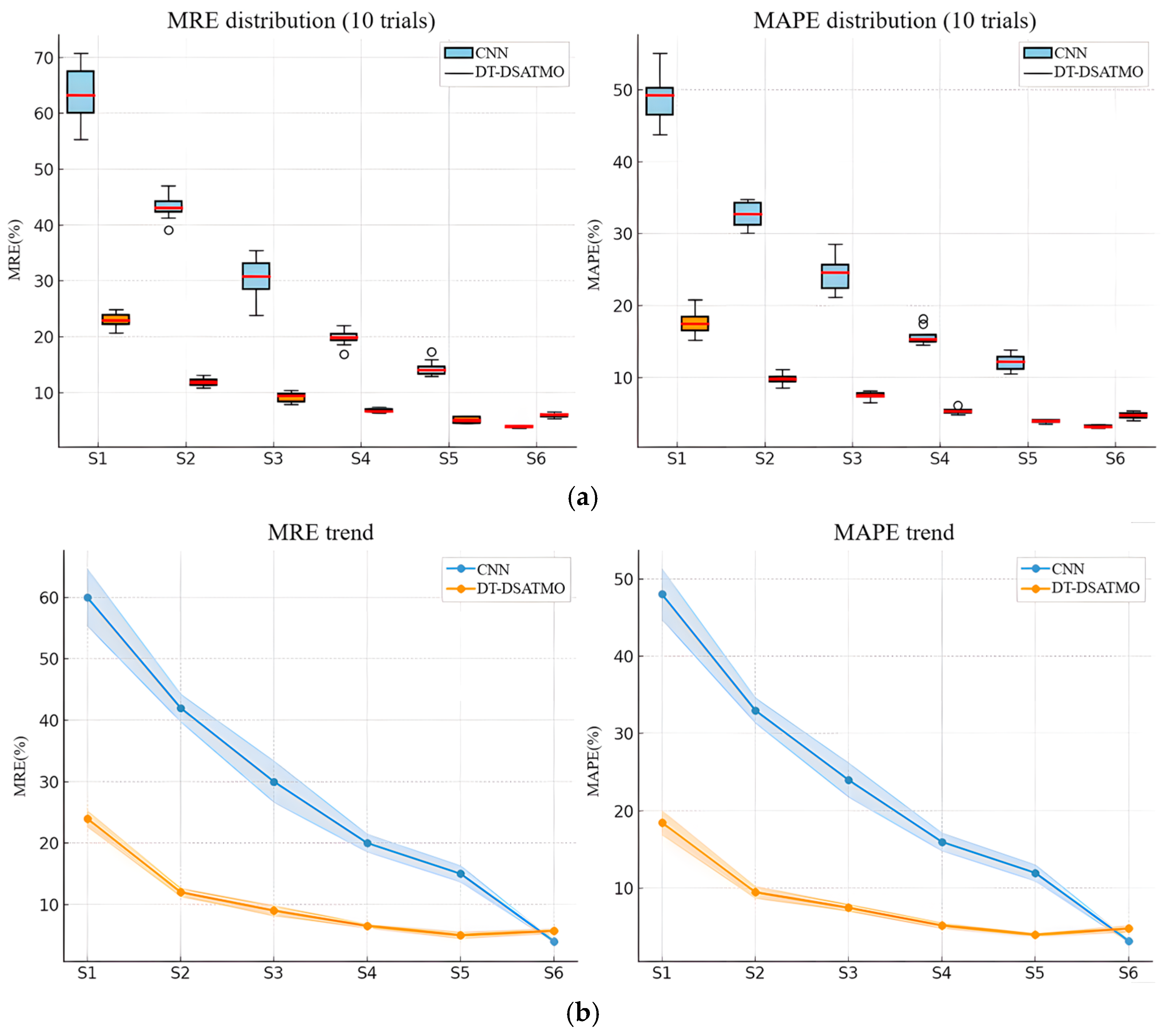
| Scenario | Digital Domain Training Samples | Physical Domain Training Samples |
|---|---|---|
| S1 | 75 | 0 |
| S2 | 400 | 0 |
| S3 | 400 | 25 |
| S4 | 400 | 50 |
| S5 | 400 | 75 |
| S6 | 400 | 100 |
| Quantitative Damage Indicators | Equation |
|---|---|
| Mean absolute percentage error (MAPE) | |
| Mean relative error (MRE) |
| Traditional Method | Damage Sample | Real Location | Predicted Location | MRE (%) | MAPE (%) |
|---|---|---|---|---|---|
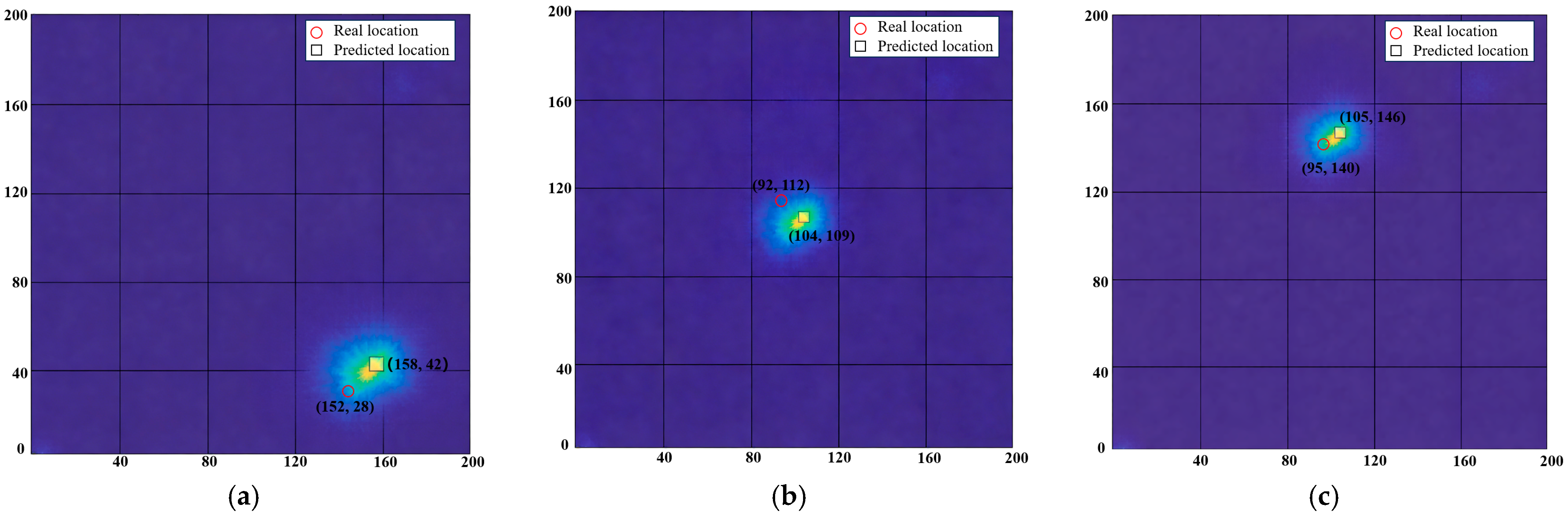
| DAS | D1 | (152, 28) | (158, 42) | 58 | 52 |
| D2 | (92, 112) | (104, 109) | |||
| D3 | (95, 140) | (105, 146) | |||
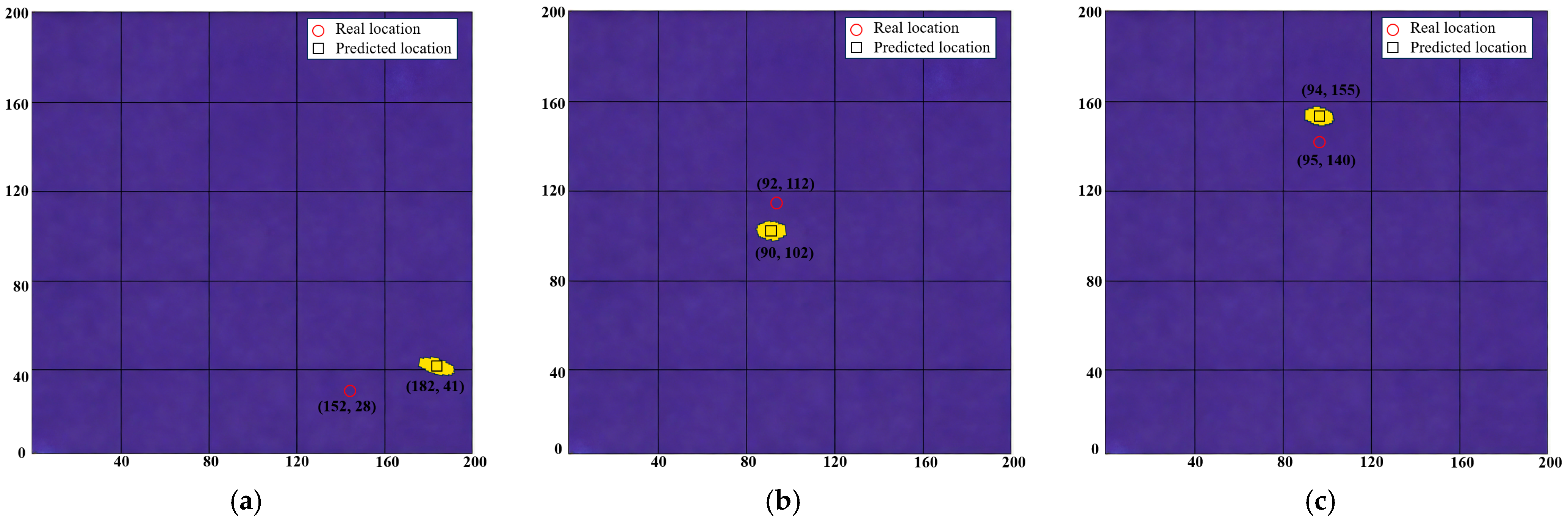
| EPI | D1 | (152, 28) | (182, 41) | 50 | 45 |
| D2 | (92, 112) | (90, 102) | |||
| D3 | (95, 140) | (94, 155) |
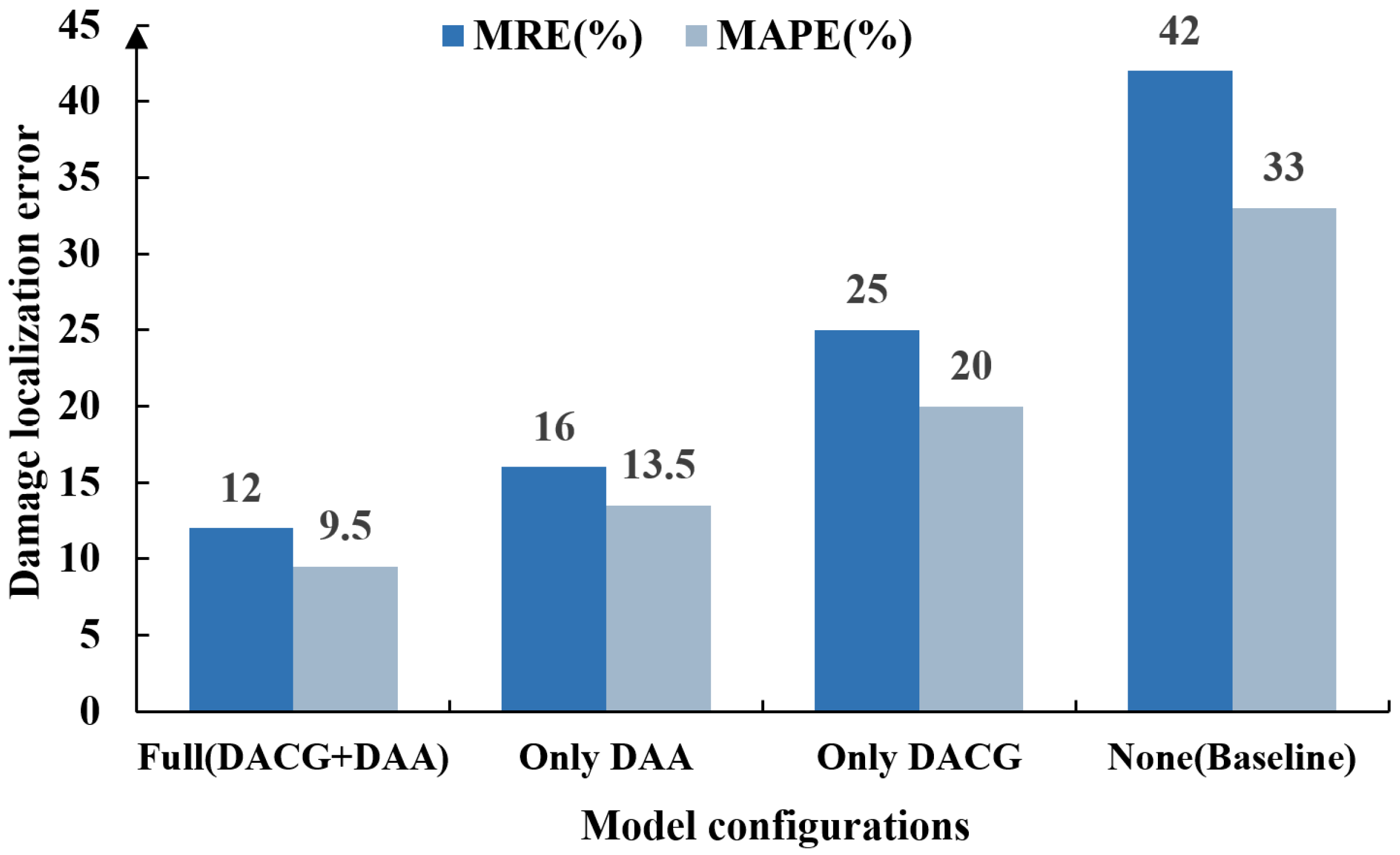
| Model Configuration | Includes DACG | Includes DAA |
|---|---|---|
| Full (DACG + DAA) | Yes | Yes |
| Only DAA | No | Yes |
| Only DACG | Yes | No |
| None (Baseline) | No | No |
Disclaimer/Publisher’s Note: The statements, opinions and data contained in all publications are solely those of the individual author(s) and contributor(s) and not of MDPI and/or the editor(s). MDPI and/or the editor(s) disclaim responsibility for any injury to people or property resulting from any ideas, methods, instructions or products referred to in the content. |
© 2026 by the authors. Licensee MDPI, Basel, Switzerland. This article is an open access article distributed under the terms and conditions of the Creative Commons Attribution (CC BY) license.
Share and Cite
Huang, Y.; Yan, J.; Liu, Q. A Digital Twin-Driven Dual-Stage Adversarial Transfer Learning Method for Lamb Wave-Based Structural Damage Localization Under Limited Sensing Data. Sensors 2026, 26, 1479. https://doi.org/10.3390/s26051479
Huang Y, Yan J, Liu Q. A Digital Twin-Driven Dual-Stage Adversarial Transfer Learning Method for Lamb Wave-Based Structural Damage Localization Under Limited Sensing Data. Sensors. 2026; 26(5):1479. https://doi.org/10.3390/s26051479
Chicago/Turabian StyleHuang, Yuan, Jiajia Yan, and Qijian Liu. 2026. "A Digital Twin-Driven Dual-Stage Adversarial Transfer Learning Method for Lamb Wave-Based Structural Damage Localization Under Limited Sensing Data" Sensors 26, no. 5: 1479. https://doi.org/10.3390/s26051479
APA StyleHuang, Y., Yan, J., & Liu, Q. (2026). A Digital Twin-Driven Dual-Stage Adversarial Transfer Learning Method for Lamb Wave-Based Structural Damage Localization Under Limited Sensing Data. Sensors, 26(5), 1479. https://doi.org/10.3390/s26051479