


Diatoms as Bark Epiphytes in the Tropical Lowlands of Panama



Abstract
1. Introduction
2. Materials and Methods
3. Results
3.1. Density Estimates
3.2. Alive or Not?
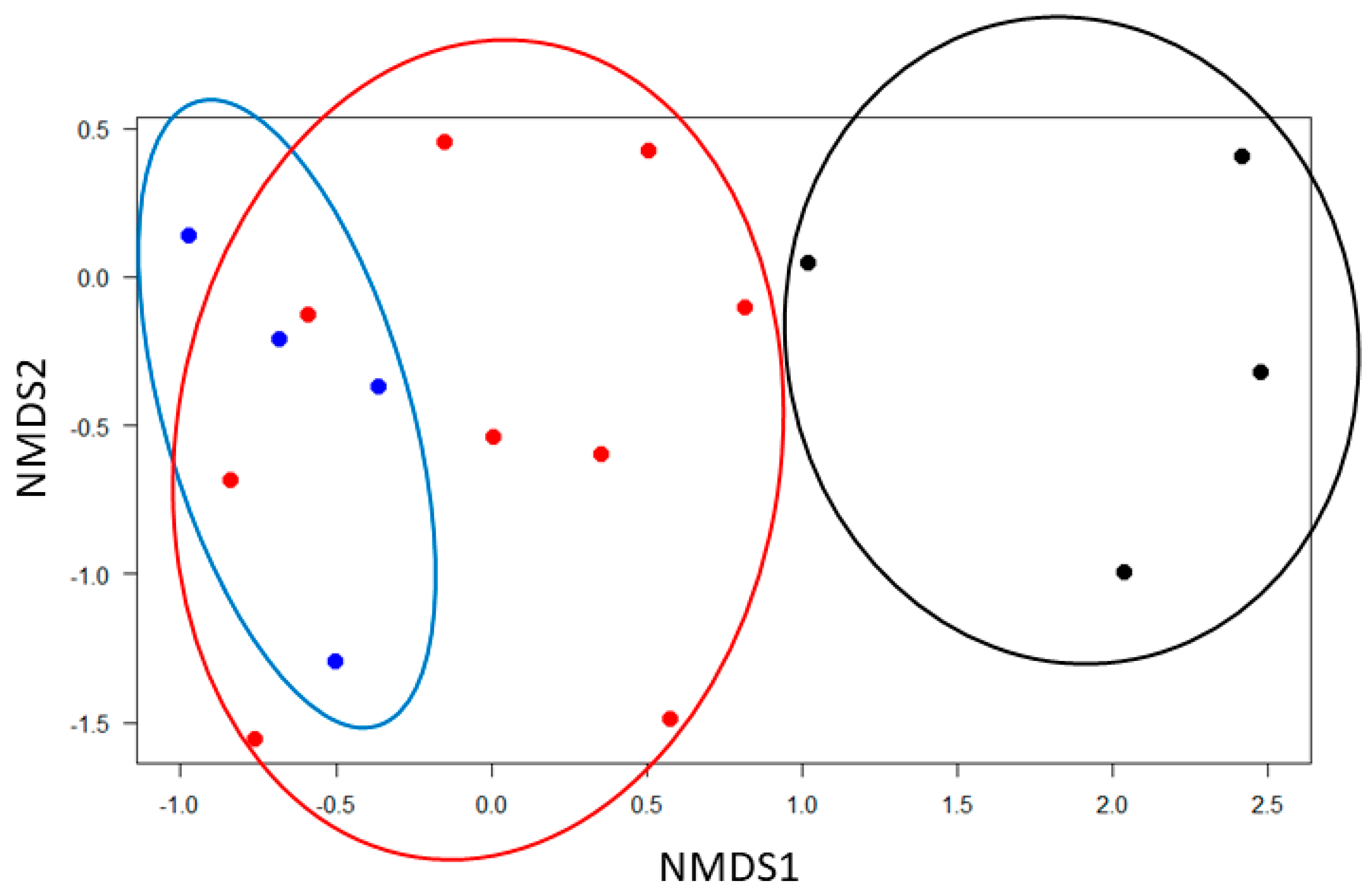
3.3. Taxonomic Composition of Diatom Assemblages
4. Discussion
Author Contributions
Funding
Data Availability Statement
Acknowledgments
Conflicts of Interest
References
- Graham, L.F.; Graham, J.M.; Wilcox, L.W. Algae; Prentice Hall: Upper Saddle River, NJ, USA, 2009. [Google Scholar]
- Neustupa, J.; Škaloud, P. Diversity of subaerial algae and cyanobacteria growing on bark and wood in the lowland tropical forests of Singapore. Plant Ecol. Evol. 2010, 143, 51–62. [Google Scholar] [CrossRef]
- Neustupa, J.; Škaloud, P. Diversity of subaerial algae and cyanobacteria on tree bark in tropical mountain habitats. Biol. Futur. 2008, 63, 806–812. [Google Scholar] [CrossRef]
- Pandkar, J.T.; Kamble, A.K. Freshwater, terrestrial and sub-aerial algal flora of Bhuleshwar and Baneshwar temples. Ann. Biol. 2020, 36, 430–435. [Google Scholar]
- Wylie, P.A.; Schlichting, H.E., Jr. A floristic survey of corticolous subaerial algae in North Carolina. J. Elisha Mitchell Sci. Soc. 1973, 89, 179–183. [Google Scholar]
- Saraphol, S.; Rindi, F.; Sanevas, N. Diversity of epiphytic subaerial algal communities in bangkok, thailand, and their potential bioindicator with air pollution. Diversity 2024, 16, 55. [Google Scholar] [CrossRef]
- Geissler, U.; Kusber, W.-H.; Jahn, R. The diatom flora of Berlin (Germany): A spotlight on some documented taxa as a case study on historical biodiversity. In Proceedings of the Eighteenth International Diatom Symposium, Międzyzdroje, Poland, 2–7 September 2004; Biopress Limited: Bristol, UK, 2006; pp. 91–105. [Google Scholar]
- Kharkongor, D.; Ramanujam, P. Diversity and species composition of subaerial algal communities in forested areas of Meghalaya, India. Int. J. Biodivers. 2014, 2014, 456202. [Google Scholar] [CrossRef]
- Qin, B.; Zheng, M.; Chen, X.; Yang, X. Diatom composition of epiphytic bryophytes on trees and its ecological distribution in Wuhan City. Chin. J. Ecol. 2016, 35, 2983–2990. [Google Scholar]
- Rao, N.B.; Bondugula, V.; Kola, S.G.; Gajula, R.G. Study of algal flora of algae-moss association on selected tree species existing in forest regions of Vikarabad and Nizamabad in Telangana State, India. Ecol. Environ. Conserv. 2016, 22, 507–510. [Google Scholar]
- Round, F.E.; Crawford, R.M.; Mann, D.G. The Diatoms: Biology & Morphology of the Genera; Cambridge University Press: Cambridge, UK, 1990; p. 747. [Google Scholar]
- Benito, X.; Fritz, S.C. Diatom diversity and biogeography across tropical South America. In Neotropical Diversification: Patterns and Processes; Rull, V., Carnaval, A.C., Eds.; Springer: Cham, Switzerland, 2020; pp. 121–143. [Google Scholar]
- Bock, W. Diatomeen extrem trockener Standorte. Nova Hedwig. 1963, 5, 199–254. [Google Scholar]
- Rybak, M.; Czarnota, P.; Noga, T. Study of terrestrial diatoms in corticolous assemblages from deciduous trees in Central Europe with descriptions of two new Luticola DG Mann taxa. PhytoKeys 2023, 221, 1. [Google Scholar] [CrossRef] [PubMed]
- Štifterová, A.; Neustupa, J. Community structure of corticolous microalgae within a single forest stand: Evaluating the effects of bark surface pH and tree species. Fottea 2015, 15, 113–122. [Google Scholar] [CrossRef]
- Bermudes, D.; Benzing, D.H. Nitrogen fixation in association with Ecuadorian bromeliads. J. Trop. Ecol. 1991, 7, 531–536. [Google Scholar] [CrossRef]
- Ramos, G.J.P.; Branco, L.H.Z.; Moura, C.W.D. Cyanobacteria from bromeliad phytotelmata: New records, morphological diversity, and ecological aspects from northeastern Brazil. Nova Hedwig. 2019, 108, 51–72. [Google Scholar] [CrossRef]
- Lyra, L.T.d. Algumas diatomáceas encontradas em Bromeliáceas, Brasil. Memórias Do Inst. Oswaldo Cruz 1971, 69, 129–139. [Google Scholar] [CrossRef]
- Neves, K.M.S.d.; Tavares, A.R.; Vercellino, L.S.; Ferragut, C. Biomass and abiotic variables change in phytotelmic environment in the tank-bromeliad Nidularium longiflorum Ule in tropical forest. Acta Limnol. Bras. 2019, 31, e24. [Google Scholar] [CrossRef]
- Laessle, A.M. A micro-limnological study of Jamaican bromeliads. Ecology 1961, 42, 499–517. [Google Scholar] [CrossRef]
- León, N.; Espinosa, H.; Soler, B.A. Estudio florístico de las diatomeas epilíticas en el río Fonseca, provincia de Chiriquí, Panamá. Centros 2015, 4, 188–203. [Google Scholar]
- Metzeltin, D.; Lange-Bertalot, H. Tropische Diatomeen in Sudamerika: Tropical Diatoms of South America I; Koeltz Scientific: Königstein, Germany, 1998; Volume 5. [Google Scholar]
- Soler, B.A.; Pérez Aparicio, M.I.; Aguilar, E.; Batista, I.V. Diatomeas del Canal de Panamá: Bioindicadores y Otros Estudios Pioneros; Autoridad del Canal de Panamá—Universidad de Panamá: Panama City, Panama, 2012. [Google Scholar]
- Lakatos, M.; Fischer-Pardow, A. Nonvascular epiphytes: Functions and risks at the tree canopy. In Treetops at Risk; Lowman, M., Ed.; Springer: New York, NY, USA, 2013; pp. 223–236. [Google Scholar]
- Lakatos, M.; Lange-Bertalot, H.; Büdel, B. Diatoms living inside the thallus of the green algal lichen Coenogonium linkii in neotropical lowland rain forests. J. Phycol. 2004, 40, 70–73. [Google Scholar] [CrossRef]
- Foerster, J.W. The ecology of an elfin forest in Puerto Rico, 14. The algae of Pico del Oeste. J. Arnold Arbor. 1971, 52, 86–109. [Google Scholar] [CrossRef]
- Kolkwitz, R.; Krieger, W. Zur Ökologie der Pflanzenwelt, insbesondere der Algen, des Vulkans Pangerango in West-Java. Berichte Der Dtsch. Bot. Ges. 1936, 54, 65–91. [Google Scholar]
- Tay, J.; Zotz, G.; Einzmann, H.J.R. Smoothing out the misconceptions of the role of bark roughness in vascular epiphyte attachment. New Phytol. 2023, 238, 983–994. [Google Scholar] [CrossRef]
- Tay, J.; Zotz, G.; Gorb, S.N.; Einzmann, H.J.R. Getting a grip on the adhesion mechanism of epiphytic orchids—Evidence from histology and Cryo-SEM. Front. For. Glob. Change—For. Ecophysiol. 2021, 4, 764357. [Google Scholar] [CrossRef]
- Holdridge, L.R.; Grenke, W.C.; Hatheway, W.H.; Liang, T.; Tosi, J.A., Jr. Forest Environments in Tropical Life Zones: A Pilot Study; Pergamon Press: Oxford, UK, 1971; p. 747. [Google Scholar]
- Paton, S. Yearly Reports Barro Colorado Island. Smithsonian Tropical Research Institute. Dataset. Available online: https://smithsonian.figshare.com/articles/dataset/Yearly_Reports_Barro_Colorado_Island/11799111/3 (accessed on 18 March 2025). [CrossRef]
- Croat, T.B. Flora of Barro Colorado Island; Stanford University Press: Stanford, CA, USA, 1978; p. 943. [Google Scholar]
- Leigh, E.G., Jr.; Rand, A.S.; Windsor, D.M. (Eds.) The Ecology of a Tropical Forest. Seasonal Rhythms and Long-Term Changes; Smithsonian Institution Press: Washington, DC, USA, 1982; p. 468. [Google Scholar]
- Einzmann, H.J.R.; Zotz, G. A grey-green band around BCI—The population structure of the inundation-tolerant tree Annona glabra. In the First 100 Years of Research on Barro Colorado Island—Plant and Ecosystem Science; Muller-Landau, H.C., Wright, S.J., Eds.; Smithsonian Institution Scholarly Press: Washington, DC, USA, 2024; pp. 665–670. [Google Scholar]
- Hale, M.E., Jr. The lichen line and high water levels in a freshwater stream in Florida. Bryologist 1984, 87, 261–265. [Google Scholar] [CrossRef]
- Gutowski, A.; Stelzer, D.; Schönfelder, I.; Müller, A. Verfahrensanleitung für die ökologische Bewertung von Fließgewässern zur Umsetzung der EG-Wasserrahmenrichtlinie: Makrophyten und Phytobenthos. Phylib Fließgewässer: 2024. Available online: https://gewaesser-bewertung-berechnung.de/files/downloads/phylib/LFP_O623_A3_Verfahrensanleitung%20Phylib_FG_2024.pdf (accessed on 12 November 2025).
- Hofmann, G.; Werum, M.; Lange-Bertalot, H. Diatomeen im Süßwasser-Benthos von Mitteleuropa. In Bestimmungsflora Kieselalgen für die Ökologische Praxis. Über 700 der Häufigsten Arten und Ihre Ökologie; A.R.G. Gantner: Rugell, Liechtenstein, 2011. [Google Scholar]
- Krammer, K.; Lange-Bertalot, H. Süßwasserflora von Mitteleuropa, Bacillariophyceae. 2/2: Bacillariaceae, Epithemiaceae, Surirellaceae; Spektrum: Berlin/Heidelberg, Germany, 1988. [Google Scholar]
- Krammer, K.; Lange-Bertalot, H. Süßwasserflora von Mitteleuropa, Bacillariophyceae. 2/3: Centrales, Fragilariaceae, Eunotiaceae; Spektrum: Berlin/Heidelberg, Germany, 1991. [Google Scholar]
- Krammer, K.; Lange-Bertalot, H. Süßwasserflora von Mitteleuropa, Bacillariophyceae. 2/1: Naviculaceae; Spektrum: Berlin/Heidelberg, Germany, 1997. [Google Scholar]
- Krammer, K.; Lange-Bertalot, H. Süßwasserflora von Mitteleuropa, Bacillariophyceae. 2/4: Achnanthaceae (Ergänzter Nachdruck); Spektrum: Berlin/Heidelberg, Germany, 2004. [Google Scholar]
- Lange-Bertalot, H.; Metzeltin, D. Oligotrophie-Indikatoren. 800 Taxa Repräsentativ für Drei Diverse Seen-Typen; Koeltz Scientific: Königstein, Germany, 1996. [Google Scholar]
- Levkov, Z.; Lange-Bertalot, H.; Mitić-Kopanja, D.; Reichardt, E. The diatom genus Gomphonema from the Republic of Macedonia. In Diatoms of Europe; Lange-Bertalot, H., Ed.; Koeltz Botanical: Oberreifenberg, Germany, 2016; Volume 8. [Google Scholar]
- Metzeltin, D.; Lange-Bertalot, H. Tropical Diatoms of South America I: About 700 Predominantly Rarely Known or New Taxa Representative of the Neotropical Flora; Koeltz Scientific: Königstein, Germany, 1998. [Google Scholar]
- Metzeltin, D.; Lange-Bertalot, H. Tropical Diatoms of South America II: Special Remarks on Biogeography Disjunction; Koeltz Scientific: Königstein, Germany, 2007. [Google Scholar]
- Novais, M.H.; Juettner, I.; Van de Vijver, B.; Morais, M.M.; Hoffmann, L.; Ector, L. Morphological variability within the Achnanthidium minutissimum species complex (Bacillariophyta): Comparison between the type material of Achnanthes minutissima and related taxa, and new freshwater Achnanthidium species from Portugal. Phytotaxa 2015, 224, 101–139. [Google Scholar] [CrossRef]
- Reichardt, E. Zur Revision der Gattung Gomphonema; A.R.G. Gantner: Ruggell, Liechtenstein, 1999. [Google Scholar]
- Levkov, Z. Amphora sensu lato. In Diatoms of Europe; Lange-Bertalot, H., Ed.; A.R.G. Gantner: Ruggell, Liechtenstein, 2009; Volume 5. [Google Scholar]
- Lange-Bertalot, H. Navicula sensu stricto, 10 genera separated from Navicula sensu lato, Frustulia. In Diatoms of Europe; Lange-Bertalot, H., Ed.; A.R.G. Gantner: Ruggell, Liechtenstein, 2001; Volume 2. [Google Scholar]
- Oksanen, J.F.; Blanchet, F.G.; Kindt, R.; Legendre, P.; Minchin, P.R.; O’Hara, R.B.; Simpson, G.L.; Sólymos, P.; Henry, M.; Stevens, H.; et al. Package ‘vegan’. Community Ecology Package. R Cran Repository. 2025. Available online: https://cran.r-project.org/web/packages/vegan/index.html (accessed on 12 November 2025). [CrossRef]
- R Core Team. R: A Language and Environment for Statistical Computing; R Foundation for Statistical Computing: Vienna, Austria, 2025; Available online: http://www.R-project.org (accessed on 12 November 2025).
- Arguelles, E.D.L.R. Phytotelm algae of Pandan [Pandanus amaryllifolius Roxb.] (Pandanaceae) leaf axil tanks from Laguna (Philippines). Trop. Nat. Hist. 2021, 21, 167–183. [Google Scholar] [CrossRef]
- Neto, J.T.X. Algas (Chlorophyta, Bacillariophyta, Euglenophyta) de ambientes fitotelmatas bromelícolas de uma área de Restinga de Guarajuba, município de Camaçari, Bahia. An. Dos Semin. De Iniciação Científica 2019, 23, 1–4. [Google Scholar]
- Wagner, K.; Bogusch, W.; Zotz, G. The role of the regeneration niche for the vertical stratification of vascular epiphytes. J. Trop. Ecol. 2013, 29, 277–290. [Google Scholar] [CrossRef]
- Johansen, J.R. Cryptogamic crusts of semiarid and arid lands of North America. J. Phycol. 1993, 28, 140–147. [Google Scholar] [CrossRef]
- Johansen, J.R. Diatoms of aerial habitats. In The Diatoms: Applications for the Environmental and Earth Sciences; Smol, J.P., Stoermer, E.F., Eds.; Cambridge University Press: Cambridge, UK, 2010; pp. 465–472. [Google Scholar]
- Lowe, R.L.; Kociolek, P.; Johansen, J.R.; Vijver, B.V.D.; Lange-Bertalot, H.; Kopalová, K. Humidophila gen. nov., a new genus for a group of diatoms (Bacillariophyta) formerly within the genus Diadesmis: Species from Hawai’i, including one new species. Diatom Res. 2014, 29, 351–360. [Google Scholar] [CrossRef]
- Levkov, Z.; Metzeltin, D.; Pavlov, A. Luticola and Luticolopsis. In Diatoms of Europe; Lange-Bertalot, H., Ed.; Koeltz Scientific: Königstein, Germany, 2013; Volume 7. [Google Scholar]
- Van de Vijver, B.; De Haan, M.; Lange-Bertalot, H. Revision of the genus Eunotia (Bacillariophyta) in the Antarctic Region. Plant Ecol. Evol. 2014, 147, 256–284. [Google Scholar] [CrossRef]
- Rybak, M.; Noga, T.; Zubel, R. The aerophytic diatom assemblages developed on mosses covering the bark of Populus alba L. J. Ecol. Eng. 2018, 19, 113–123. [Google Scholar] [CrossRef] [PubMed]
- Lange-Bertalot, H.; Hofmann, G.; Werum, M.; Cantonati, M.; Kelly, M.G. Freshwater Benthic Diatoms of Central Europe: Over 800 Common Species Used in Ecological Assessment; Koeltz Botanical Books: Schmitten-Oberreifenberg, Germany, 2017; Volume 942. [Google Scholar]
- Mora, D.; Carmona, J.; Jahn, R.; Zimmermann, J.; Abarca, N. Epilithic diatom communities of selected streams from the Lerma-Chapala Basin, Central Mexico, with the description of two new species. PhytoKeys 2017, 88, 39. [Google Scholar] [CrossRef]
- Sharma, N.K.; Rai, A.K.; Singh, S.; Brown, R.M., Jr. Airborne algae: Their present status and relevance. J. Phycol. 2007, 43, 615–627. [Google Scholar] [CrossRef]
- Hustedt, F. Aërophile Diatomeen in der nordwestdeutschen Flora. Berichte Der Dtsch. Bot. Ges. 1942, 60, 55–73. [Google Scholar]
- Beger, H. Beitrage zur Ökologie und Soziologie der luftlebigen (atmophytischen) Kieselalgen. Berichte Der Dtsch. Bot. Ges. 1927, 45, 385–407. [Google Scholar]
- Bertrand, J.; Coste, C.; Garrigue, J. Première contribution à l’étude des diatomées de la réserve naturelle nationale de la forêt de la Massane (Pyrénées-Orientales). Carnets Nat. 2022, 9, 45–66. [Google Scholar]
- Nußer, R.; Bianco, G.; Kraus, D.; Larrieu, L.; Feldhaar, H.; Schleuning, M.; Mueller, J. An adapted typology of tree-related microhabitats including tropical forests. Ecol. Indic. 2024, 167, 112690. [Google Scholar] [CrossRef]
- Yanoviak, S.P. Community structure in water-filled tree holes of Panama: Effects of hole height and size. Selbyana 1999, 20, 106–115. [Google Scholar]
- Malkmus, R.; Dehling, J.M. Anuran amphibians of Borneo as phytotelm breeders—A synopsis. Herpetozoa 2008, 20, 165–172. [Google Scholar]
- Zotz, G.; Traunspurger, W. What’s in the tank? Nematodes and other major components of the meiofauna of bromeliad phytotelms in lowland Panama. BMC Ecol. 2016, 16, 9. [Google Scholar] [CrossRef]
- Janetzky, W.; Martínez Arbizu, P.; Reid, J.W. Attheyella (Canthosella) mervini sp. n. (Canthocamptidae, Harpacticoida) from Jamaican bromeliads. Hydrobiologia 1996, 339, 123–135. [Google Scholar] [CrossRef]
- Foissner, W.; Struder-Kypke, M.; van der Staay, G.W.M.; Moon-van der Staay, S.Y.; Hackstein, J.H.P. Endemic ciliates (Protozoa, Ciliophora) from tank bromeliads (Bromeliaceae): A combined morphological, molecular, and ecological study. Eur. J. Protistol. 2003, 39, 365–372. [Google Scholar] [CrossRef]
- Fiore, M.F.; Sant’Anna, C.L.; Azevedo, M.T.d.P.; Komarek, J.; Kastovsky, J.; Sulek, J.; Lorenzi, A.S. The cyanobacterial genus Brasilonema, gen. nov., a molecular and phenotypic evaluation. J. Phycol. 2007, 43, 789–798. [Google Scholar] [CrossRef]
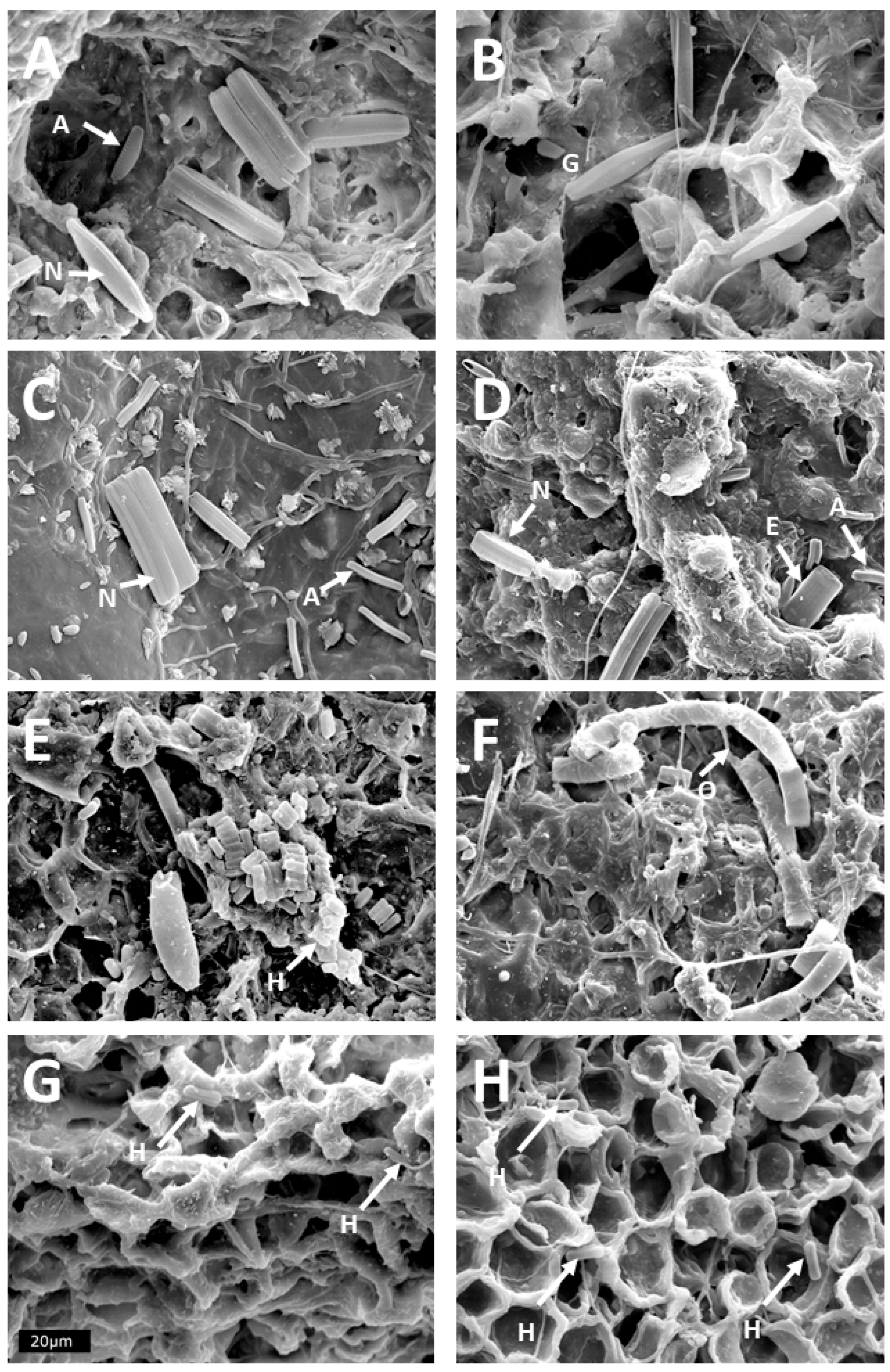
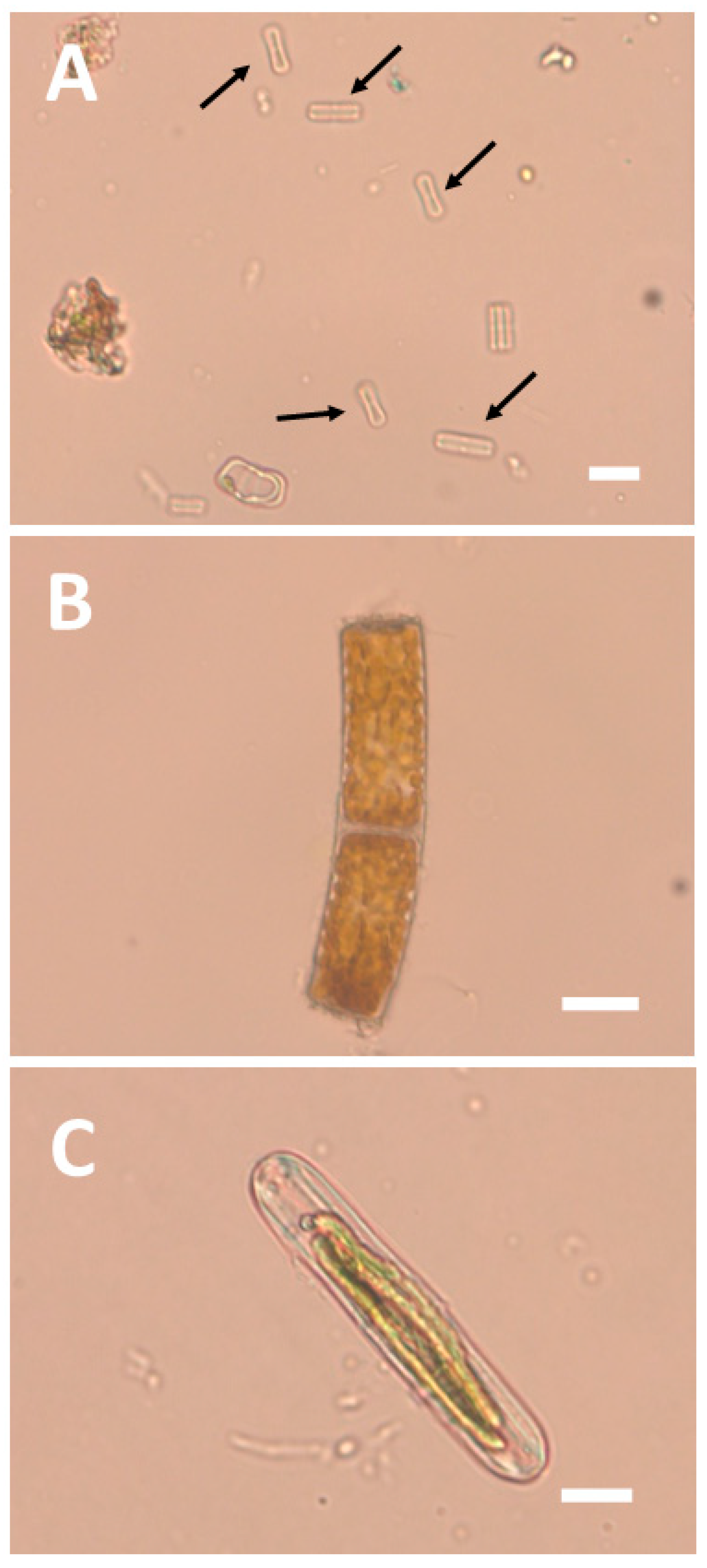
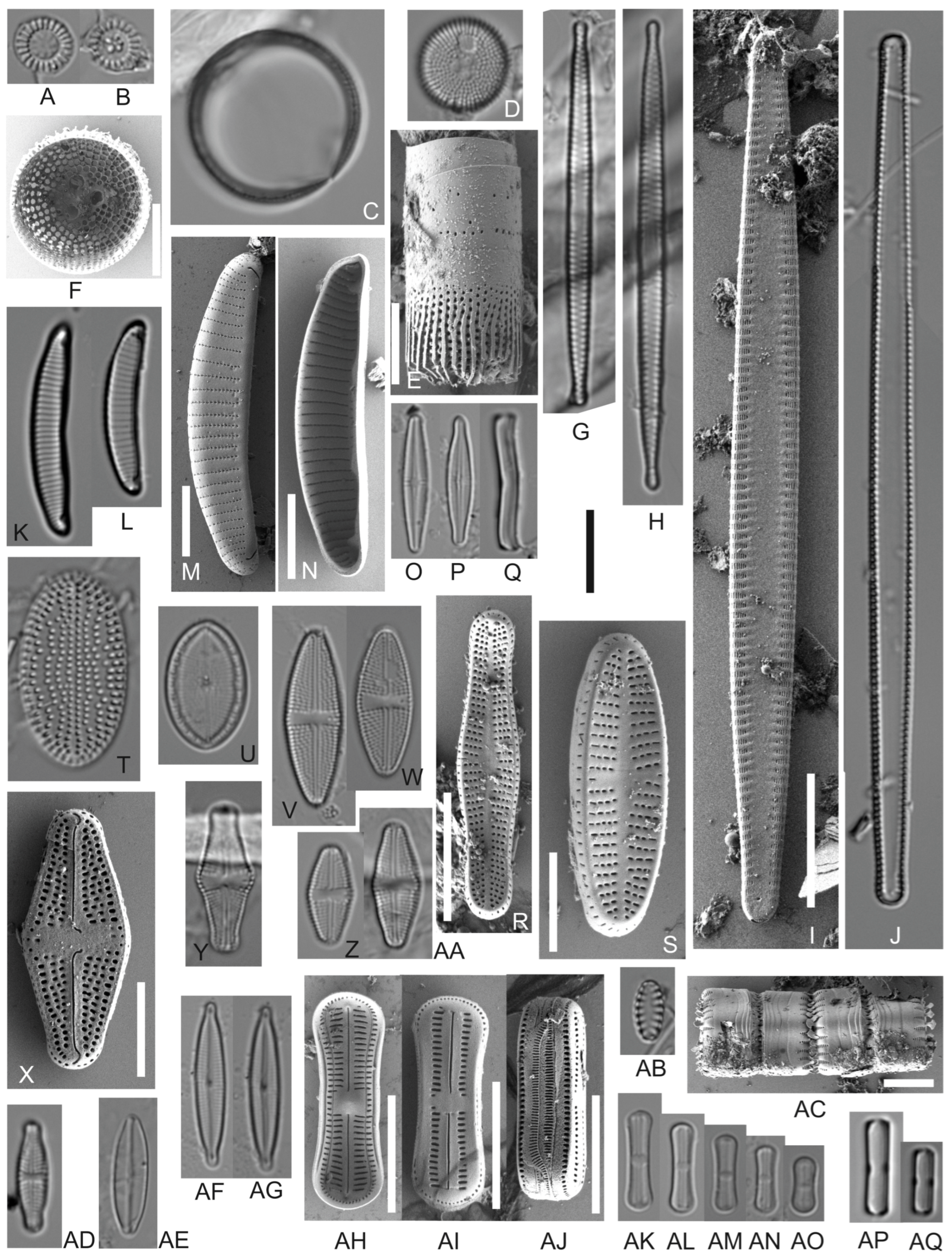
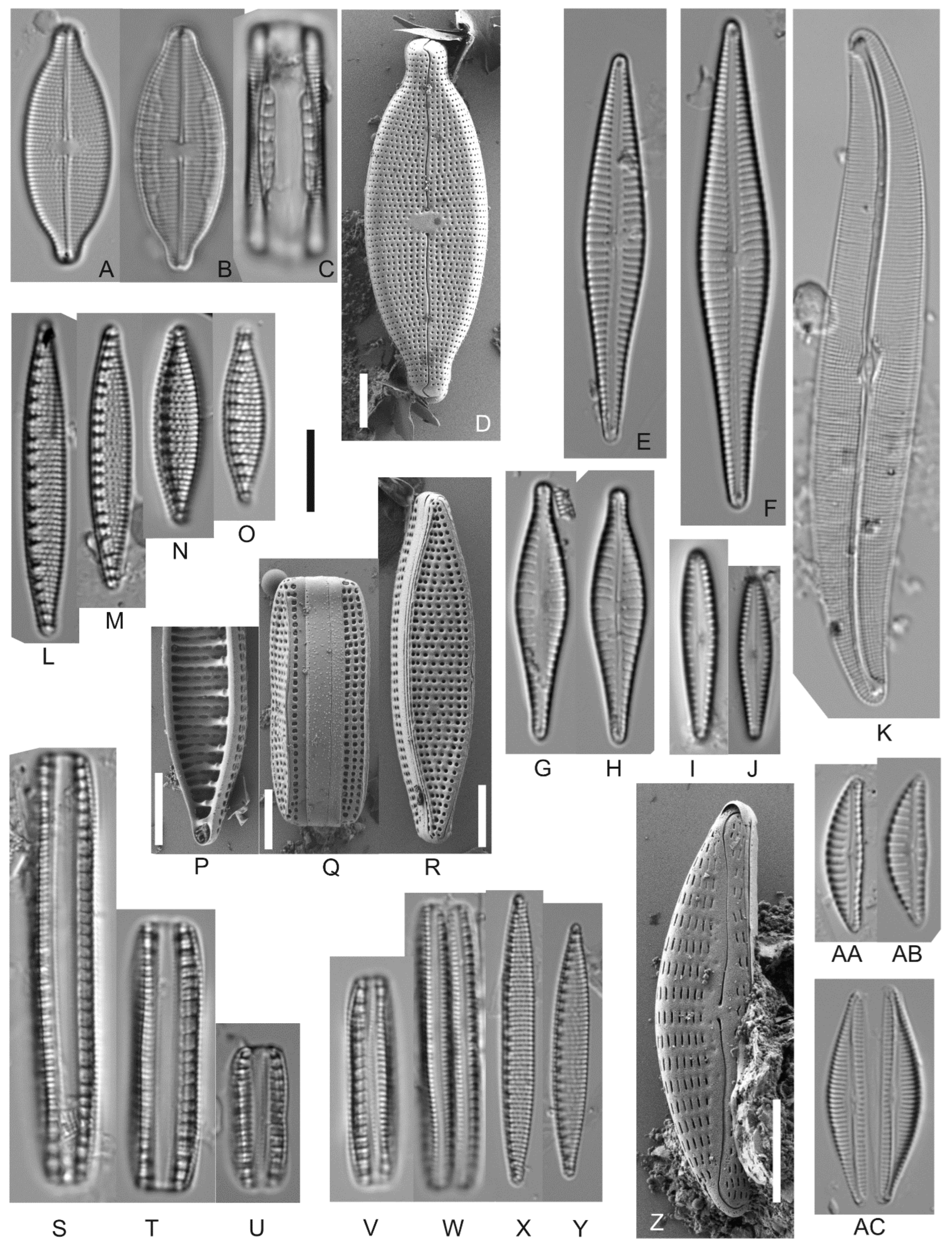

| # | Sample Description | Habitat Type | Density (# mm−2) | Species (#) |
|---|---|---|---|---|
| 1 | Annona bark below the water table | S—Tree in Lake Gatun, Aojeta Bay | 307 ± 237 | 11 |
| 2 | Annona bark below the water table | S—Tree in Lake Gatun, Aojeta Bay | 333 ± 284 | 31 |
| 3 | Annona bark below the water table | S—Tree in Lake Gatun, Aojeta Bay | 357 ± 233 | 5 |
| 4 | Annona bark below the water table | S—Tree in Lake Gatun, Aojeta Bay | 423 ± 333 | 10 |
| 5 | Annona bark at 50 cm above the water table | A—Tree in Lake Gatun, Aojeta Bay | 0 ± 0 | 4 |
| 6 | Annona bark at 50 cm above the water table | A—Tree in Lake Gatun, Aojeta Bay | 0 ± 0 | 3 |
| 7 | Annona bark at 50 cm above the water table | A—Tree in Lake Gatun, Aojeta Bay | 7 ± 15 | 9 |
| 8 | Annona bark at 50 cm above the water table | A—Tree in Lake Gatun, Aojeta Bay | 17 ± 37 | 0 |
| 9 | Annona bark at 50 cm above the water table | A—Tree in Lake Gatun, Aojeta Bay | 30 ± 67 | 8 |
| 10 | Annona bark at 50 cm above the water table | A—Tree in Lake Gatun, Aojeta Bay | 43 ± 97 | 1 |
| 11 | Annona bark at 50 cm above the water table | A—Tree in Lake Gatun, Aojeta Bay | 80 ± 121 | 9 |
| 12 | Annona bark at 50 cm above the water table | A—Tree in Lake Gatun, Aojeta Bay | 93 ± 164 | 9 |
| 13 | Annona bark at 50 cm above the water table | A—Tree in Lake Gatun, Aojeta Bay | 390 ± 484 | 30 |
| 14 | Annona bark at 50 cm above the water table | A—Tree in Lake Gatun, Aojeta Bay | 527 ± 171 | 10 |
| 15 | Bark from large liana in the forest at 1.4 m height | F—Forest understory, Fausto 1.4 | 0 ± 0 | 1 |
| 16 | Bark of Anacadium excelsum at 1.4 m | F—Forest understory, Fairchild 1.2 | 13 ± 22 | 3 |
| 17 | Bark of Anacadium excelsum at 1.4 m | F—Forest understory, Fairchild 1.3 | 33 ± 26 | 0 |
| 18 | Tree bark at 1.4 m | F—Forest understory, AMNH 1.5 | 47 ± 104 | 0 |
| 19 | Tree bark at 1.4 m | F—Forest understory, AMNH 1.5 | 113 ± 85 | 9 |
| 20 | Bark from large liana in the forest at 1.4 m height | F—Forest understory, Fausto 1.4 | 850 ± 574 | 4 |
| Microhabitat Type | S | S | S | S | A | A | A | A | A | A | A | A | A | A | F | F | F | F | F | F | Constancy |
|---|---|---|---|---|---|---|---|---|---|---|---|---|---|---|---|---|---|---|---|---|---|
| Sample number | 1 | 2 | 3 | 4 | 5 | 6 | 7 | 8 | 9 | 10 | 11 | 12 | 13 | 14 | 15 | 16 | 17 | 18 | 19 | 20 | |
| Species total | 11 | 31 | 5 | 10 | 4 | 3 | 9 | 0 | 8 | 1 | 9 | 9 | 30 | 10 | 1 | 3 | 0 | 0 | 9 | 4 | |
| Achnanthidium cf. exile | 1 | 1 | 1 | 1 | 1 | 5 | |||||||||||||||
| Achnanthidium cf. minutissimum | 1 | 1 | 1 | 1 | 1 | 1 | 6 | ||||||||||||||
| Achnanthidium cf. saprophilum | 1 | 1 | 1 | 3 | |||||||||||||||||
| Achnanthidium sp. | 1 | 1 | 2 | ||||||||||||||||||
| Adlafia sp. | 1 | 1 | 2 | ||||||||||||||||||
| Aulacoseira granulata (Ehrenberg) Simonsen | 1 | 1 | |||||||||||||||||||
| Aulacoseira sp. 1 | 1 | 1 | |||||||||||||||||||
| Aulacoseira sp. 2 | 1 | 1 | |||||||||||||||||||
| Brachysira sp. | 1 | 1 | 1 | 3 | |||||||||||||||||
| Caloneis silicula (Ehrenberg) Cleve | 1 | 1 | |||||||||||||||||||
| Cocconeis fluviatilis J.H.Wallace | 1 | 1 | |||||||||||||||||||
| Cocconeis sp. | 1 | 1 | |||||||||||||||||||
| Cyclotella sp. 1 | 1 | 1 | |||||||||||||||||||
| Cyclotella sp. 2 | 1 | 1 | |||||||||||||||||||
| Cyclotella stelligera (Cleve & Grunow) Van Heurck | 1 | 1 | 2 | ||||||||||||||||||
| Encyonema sp. 1 | 1 | 1 | 1 | 3 | |||||||||||||||||
| Encyonema sp. 2 | 1 | 1 | 2 | ||||||||||||||||||
| Encyonopsis cf. subminuta | 1 | 1 | 1 | 1 | 1 | 1 | 1 | 7 | |||||||||||||
| Encyonopsis sp. | 1 | 1 | |||||||||||||||||||
| Eunotia camelus Ehrenberg | 1 | 1 | 2 | ||||||||||||||||||
| Eunotia cf. salamancensis | 1 | 1 | 2 | ||||||||||||||||||
| Eunotia cf. veneris | 1 | 1 | 1 | 1 | 1 | 5 | |||||||||||||||
| Eunotia sp. 1 | 1 | 1 | 1 | 1 | 4 | ||||||||||||||||
| Eunotia sp. 2 | 1 | 1 | |||||||||||||||||||
| Eunotia sp. 3 | 1 | 1 | 1 | 1 | 4 | ||||||||||||||||
| Fragilaria cf. tenera sec. Metzeltin et al. 2005 | 1 | 1 | 1 | 1 | 4 | ||||||||||||||||
| Fragilaria sp. | 1 | 1 | 1 | 3 | |||||||||||||||||
| Gomphonema brasiliense Grunow | 1 | 1 | 1 | 1 | 1 | 5 | |||||||||||||||
| Gomphonema cf. pantropicum | 1 | 1 | |||||||||||||||||||
| Gomphonema cf. pumilum | 1 | 1 | 2 | ||||||||||||||||||
| Gomphonema naviculoides W.Smith | 1 | 1 | 1 | 3 | |||||||||||||||||
| Gomphonema parvulum (Kützing) Kützing | 1 | 1 | |||||||||||||||||||
| Gomphonema sp. | 1 | 1 | 2 | ||||||||||||||||||
| Gyrosigma cf. obtusatum | 1 | 1 | 2 | ||||||||||||||||||
| Humidophila cf. pantropica | 1 | 1 | 2 | ||||||||||||||||||
| Humidophila contenta (Grunow) R.L.Lowe, Kociolek, Johansen, Van de Vijver, Lange-Bertalot & Kopalová | 1 | 1 | 1 | 1 | 1 | 1 | 1 | 1 | 8 | ||||||||||||
| Luticola cf. intermedia | 1 | 1 | 1 | 1 | 1 | 5 | |||||||||||||||
| Luticola cf. muticoides | 1 | 1 | 2 | ||||||||||||||||||
| Luticola hustedtii Levkov, Metzeltin & A.Pavlov | 1 | 1 | 2 | ||||||||||||||||||
| Luticola sp. 1 | 1 | 1 | |||||||||||||||||||
| Luticola sp. 2 | 1 | 1 | |||||||||||||||||||
| Mastogloia sp. 1 | 1 | 1 | 1 | 3 | |||||||||||||||||
| Mastogloia sp. 2 | 1 | 1 | 2 | ||||||||||||||||||
| Mastogloia sp. 3 | 1 | 1 | |||||||||||||||||||
| Mastogloia sp. 4 | 1 | 1 | |||||||||||||||||||
| Navicula cf. teneloides | 1 | 1 | 2 | ||||||||||||||||||
| Navicula erifuga Lange-Bertalot | 1 | 1 | 2 | ||||||||||||||||||
| Navicula radiosa Kützing | 1 | 1 | |||||||||||||||||||
| Naviculadicta sp | 1 | 1 | 2 | ||||||||||||||||||
| Nitzschia amphibia Grunow | 1 | 1 | 2 | ||||||||||||||||||
| Nitzschia cf. frustulum | 1 | 1 | |||||||||||||||||||
| Nitzschia cf. inconspicua | 1 | 1 | 2 | ||||||||||||||||||
| Nitzschia cf. nana | 1 | 1 | 2 | ||||||||||||||||||
| Nitzschia cf. paleacea | 1 | 1 | |||||||||||||||||||
| Nitzschia semirobusta Lange-Bertalot | 1 | 1 | 1 | 1 | 1 | 1 | 1 | 1 | 8 | ||||||||||||
| Nitzschia sp. 1 | 1 | 1 | |||||||||||||||||||
| Nitzschia sp. 2 | 1 | 1 | 2 | ||||||||||||||||||
| Orthoseira cf. dendroteres | 1 | 1 | |||||||||||||||||||
| Orthoseira roeseana (Rabenhorst) Pfitzer | 1 | 1 | 1 | 3 | |||||||||||||||||
| Orthoseira sp. 2 | 1 | 1 | |||||||||||||||||||
| Pleurosira sp | 1 | 1 | |||||||||||||||||||
| Sellaphora sp. 1 | 1 | 1 | |||||||||||||||||||
| Sellaphora sp. 2 | 1 | 1 | |||||||||||||||||||
| Seminavis cf. strigosa | 1 | 1 | |||||||||||||||||||
| Staurosira sp. | 1 | 1 | 1 | 1 | 4 | ||||||||||||||||
| Tabularia cf. tabulata | 1 | 1 | |||||||||||||||||||
| Tabularia sp. | 1 | 1 | |||||||||||||||||||
| Tetracyclus sp. 1 | 1 | 1 | |||||||||||||||||||
| Tetracyclus sp. 2 | 1 | 1 | |||||||||||||||||||
| Ulnaria ulna (Nitzsch) Compère | 1 | 1 | |||||||||||||||||||
Disclaimer/Publisher’s Note: The statements, opinions and data contained in all publications are solely those of the individual author(s) and contributor(s) and not of MDPI and/or the editor(s). MDPI and/or the editor(s) disclaim responsibility for any injury to people or property resulting from any ideas, methods, instructions or products referred to in the content. |
© 2025 by the authors. Licensee MDPI, Basel, Switzerland. This article is an open access article distributed under the terms and conditions of the Creative Commons Attribution (CC BY) license (https://creativecommons.org/licenses/by/4.0/).
Share and Cite
Zotz, G.; Zimmermann, J.; Tay, J.Y.L.; Abarca, N. Diatoms as Bark Epiphytes in the Tropical Lowlands of Panama. Diversity 2025, 17, 849. https://doi.org/10.3390/d17120849
Zotz G, Zimmermann J, Tay JYL, Abarca N. Diatoms as Bark Epiphytes in the Tropical Lowlands of Panama. Diversity. 2025; 17(12):849. https://doi.org/10.3390/d17120849
Chicago/Turabian StyleZotz, Gerhard, Jonas Zimmermann, Jessica Y. L. Tay, and Nélida Abarca. 2025. "Diatoms as Bark Epiphytes in the Tropical Lowlands of Panama" Diversity 17, no. 12: 849. https://doi.org/10.3390/d17120849
APA StyleZotz, G., Zimmermann, J., Tay, J. Y. L., & Abarca, N. (2025). Diatoms as Bark Epiphytes in the Tropical Lowlands of Panama. Diversity, 17(12), 849. https://doi.org/10.3390/d17120849

