Phytoremediation of Antimony Contaminated Soils Using the Bioenergy Plant Cynara cardunculus




Abstract
1. Introduction
2. Materials and Methods
2.1. Experimental Design
2.2. Soil
2.3. Application of Plants and Artificial Contamination of Soils
2.4. Harvest and Analysis of Plants
2.5. Determination of the Water-Soluble Antimony in Soils
2.6. Calculation of Translocation and Bioconcentration Factors
2.7. Statistical Analysis
3. Results
3.1. Biomass Production
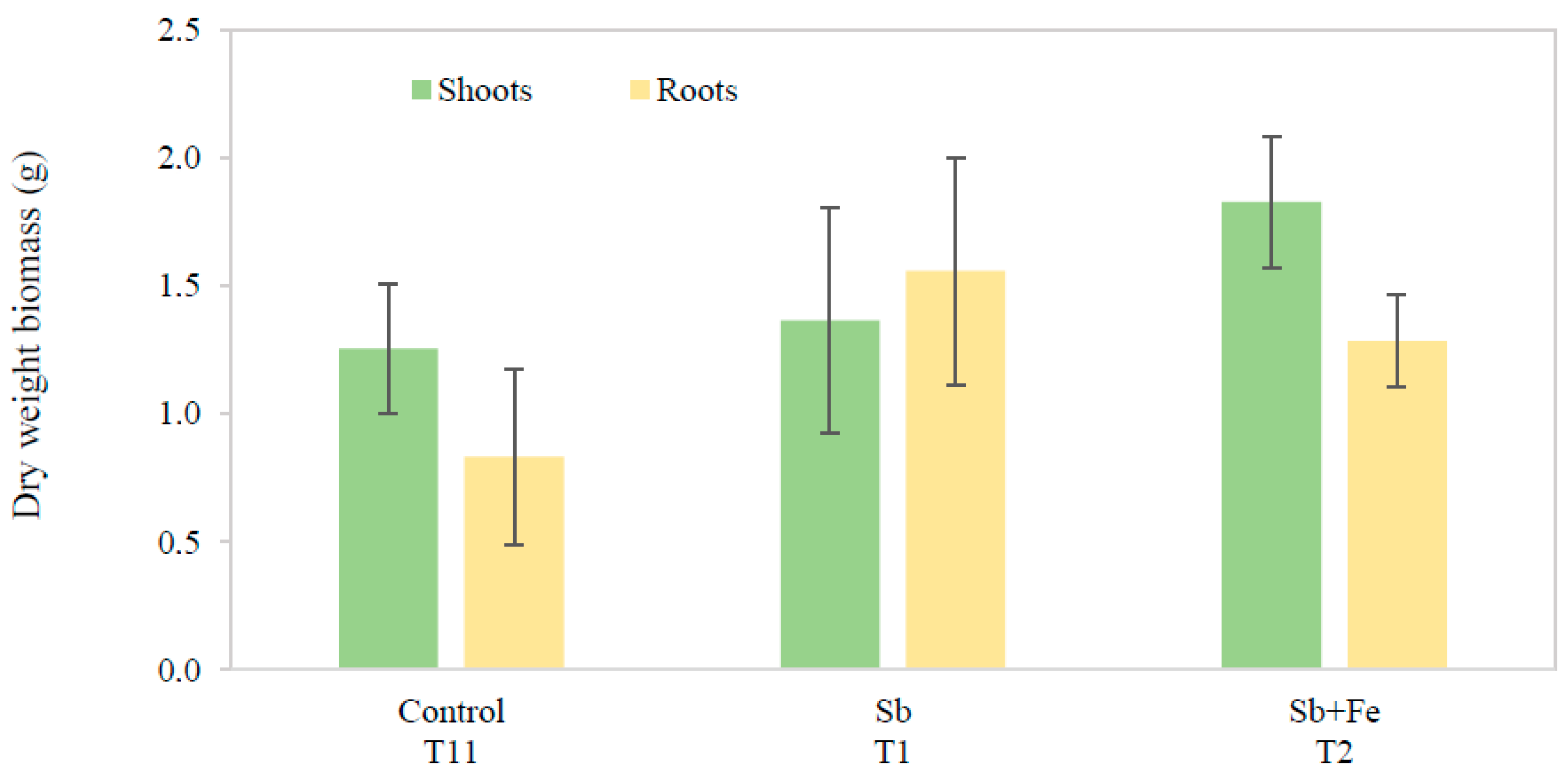
3.1.1. Effect of Addition Sb and Sb + Fe on Biomass Production
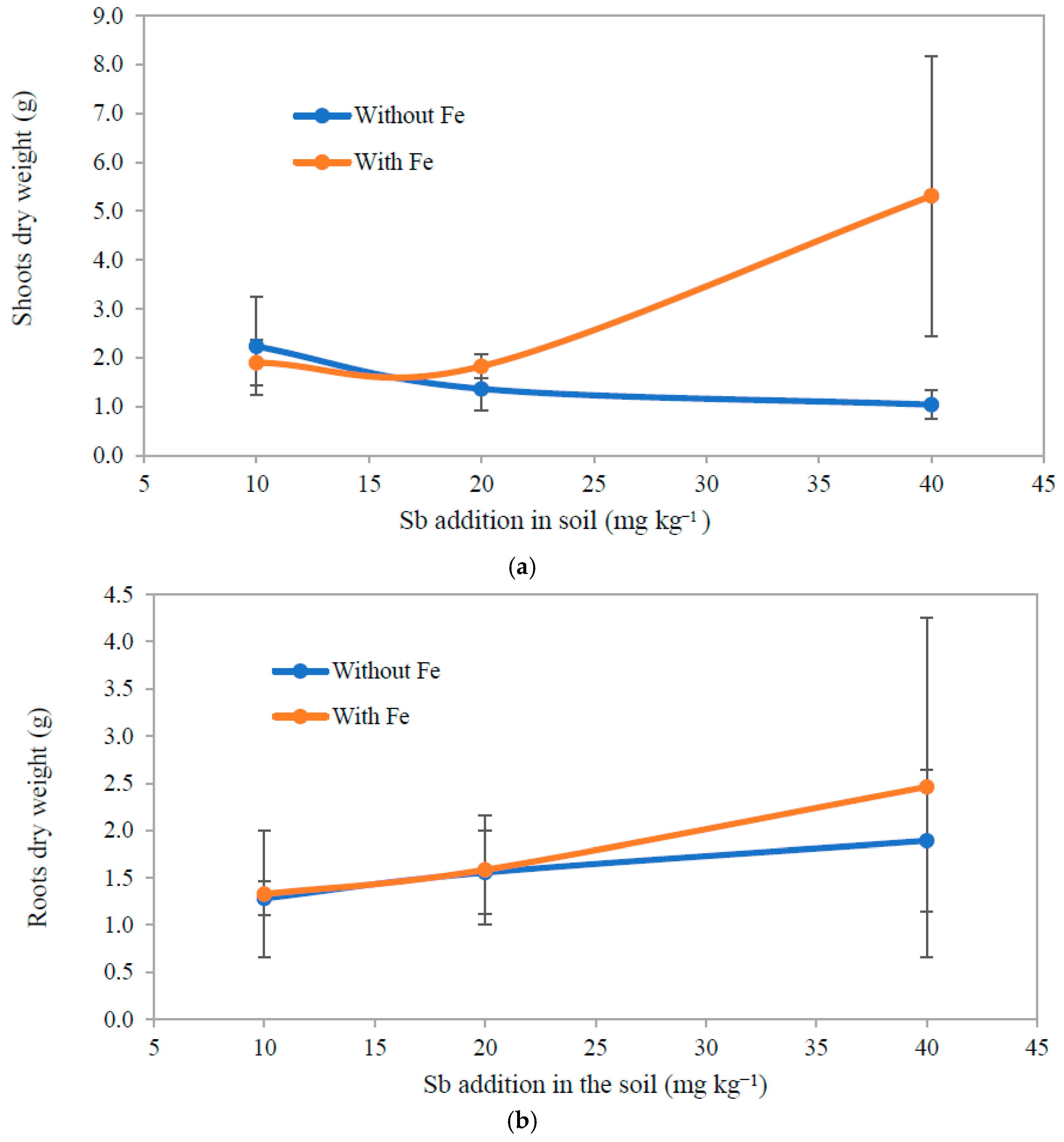
3.1.2. Effect of Pollution Levels on Biomass Production
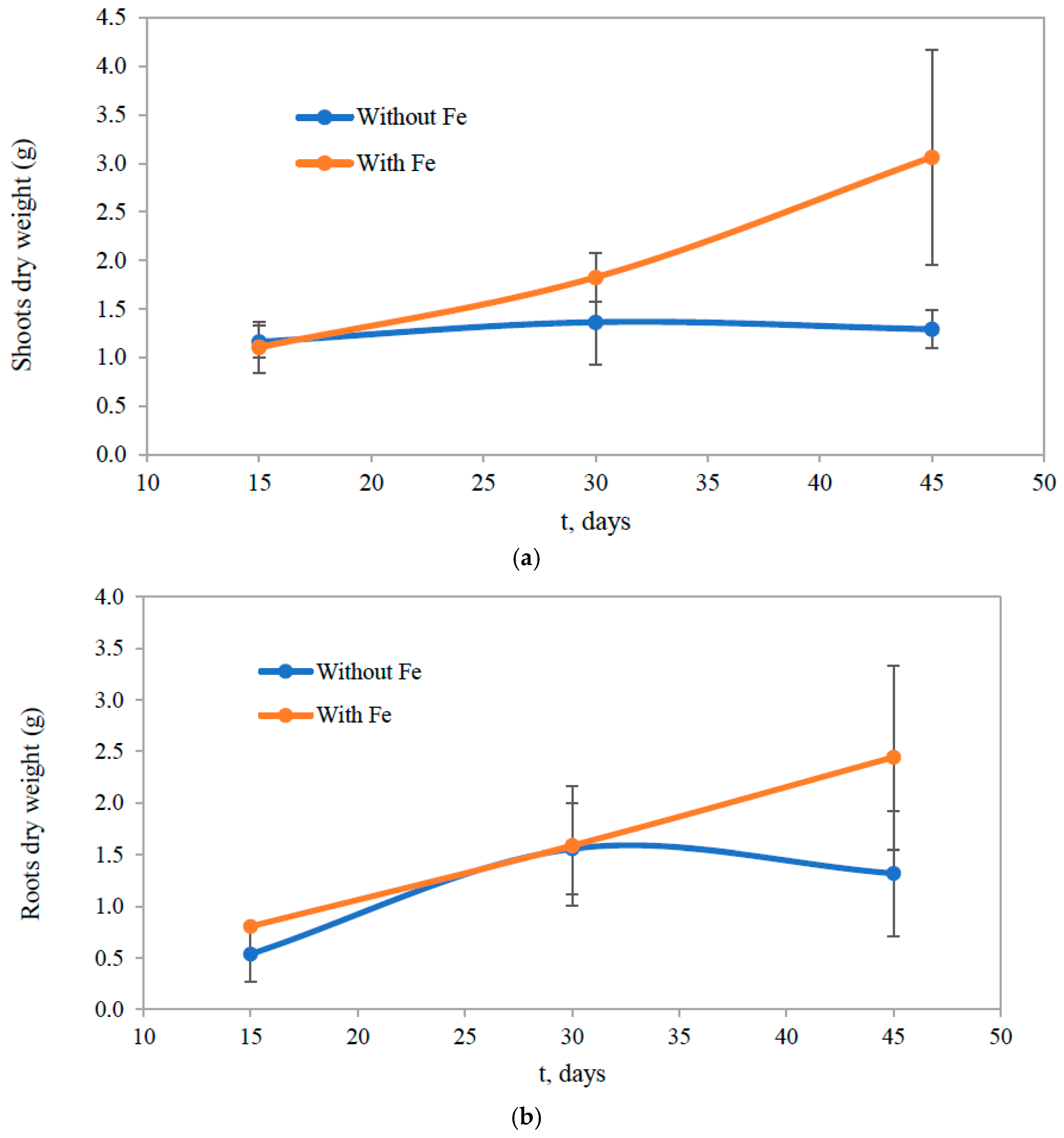
3.1.3. Effect of Exposure Duration to Sb Contamination
3.2. Antimony Phytoaccumulation
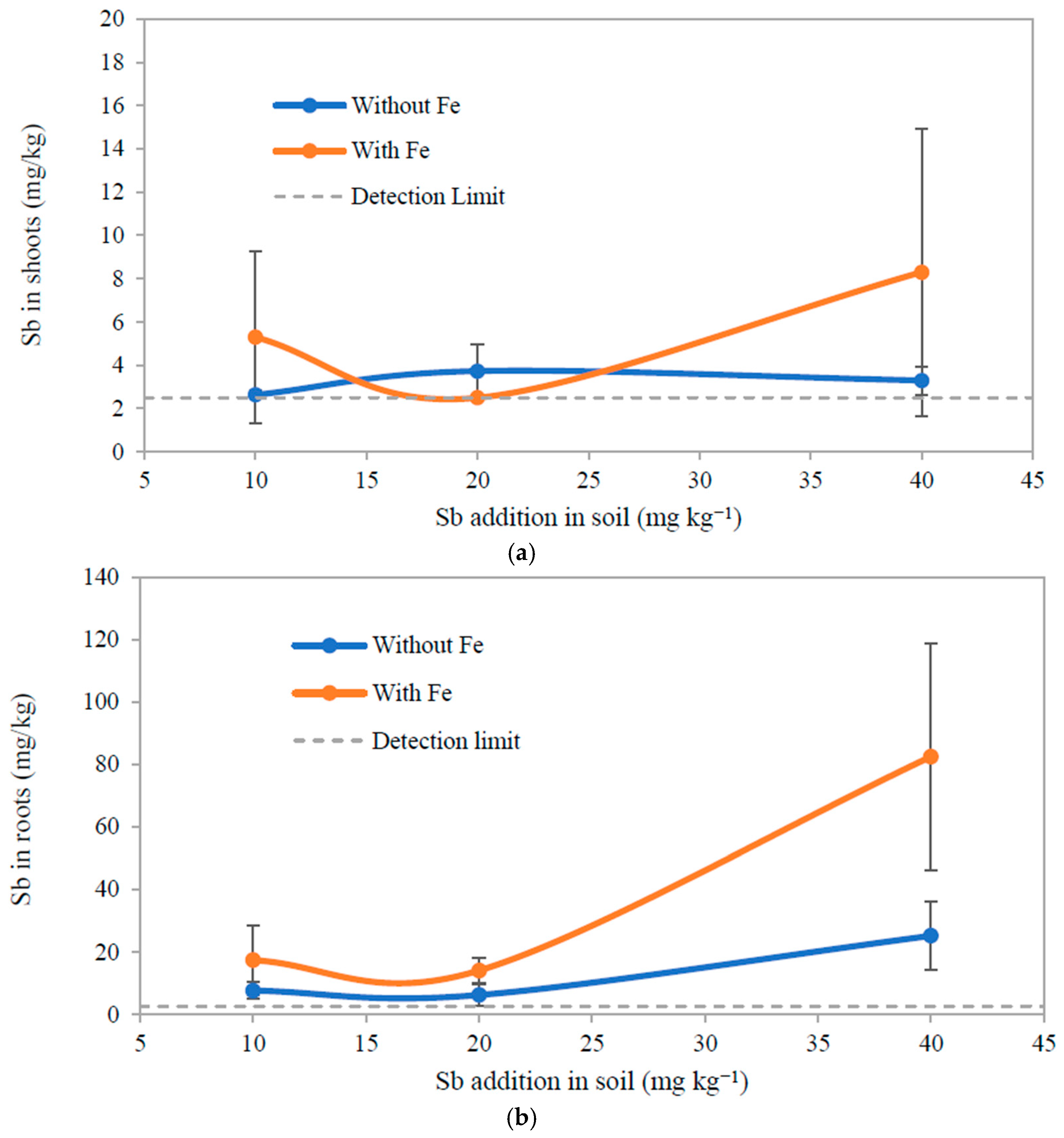
3.2.1. Effect of Contamination Levels
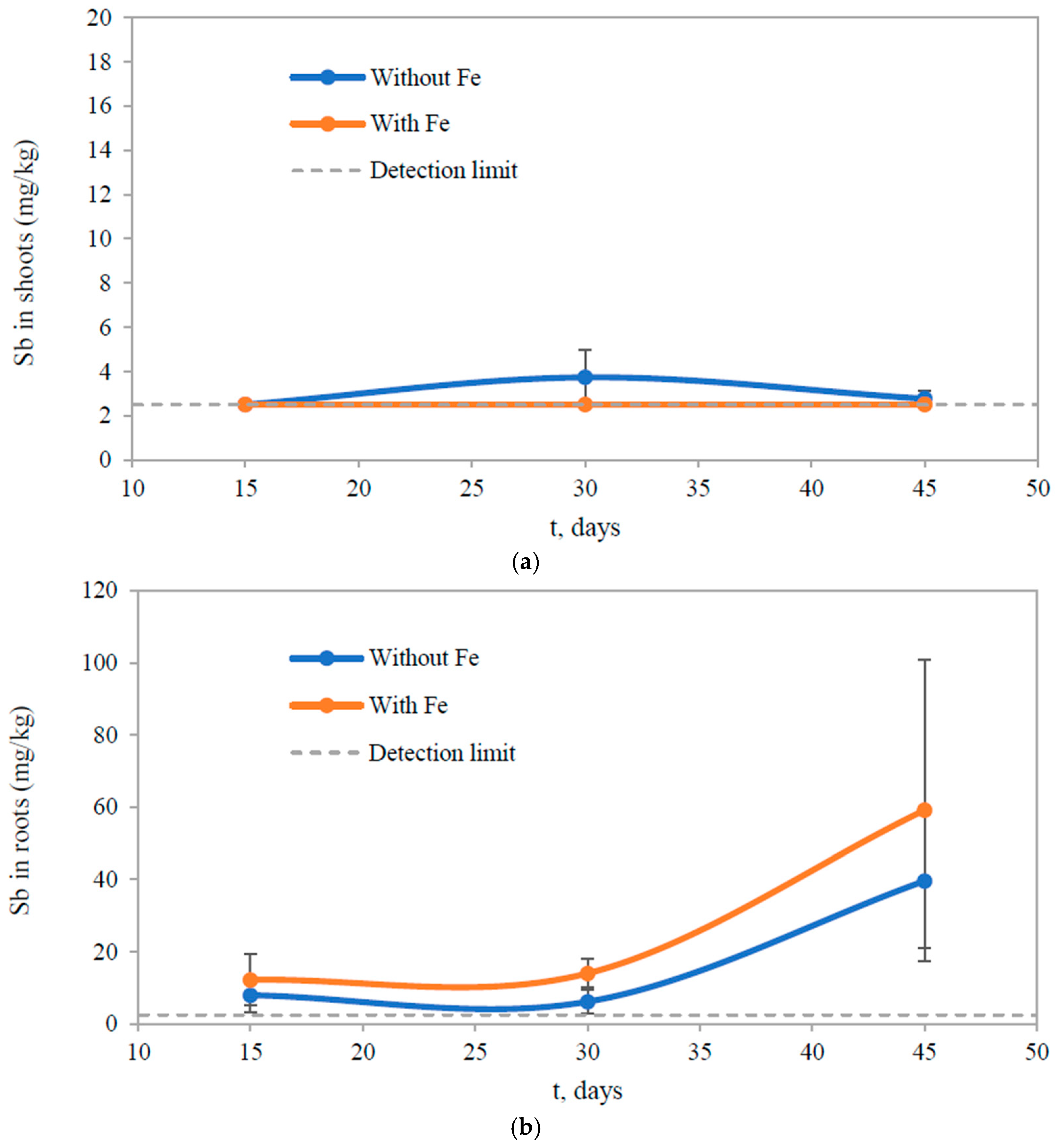
3.2.2. Time-Dependent Sb Accumulation in Shoots and Roots
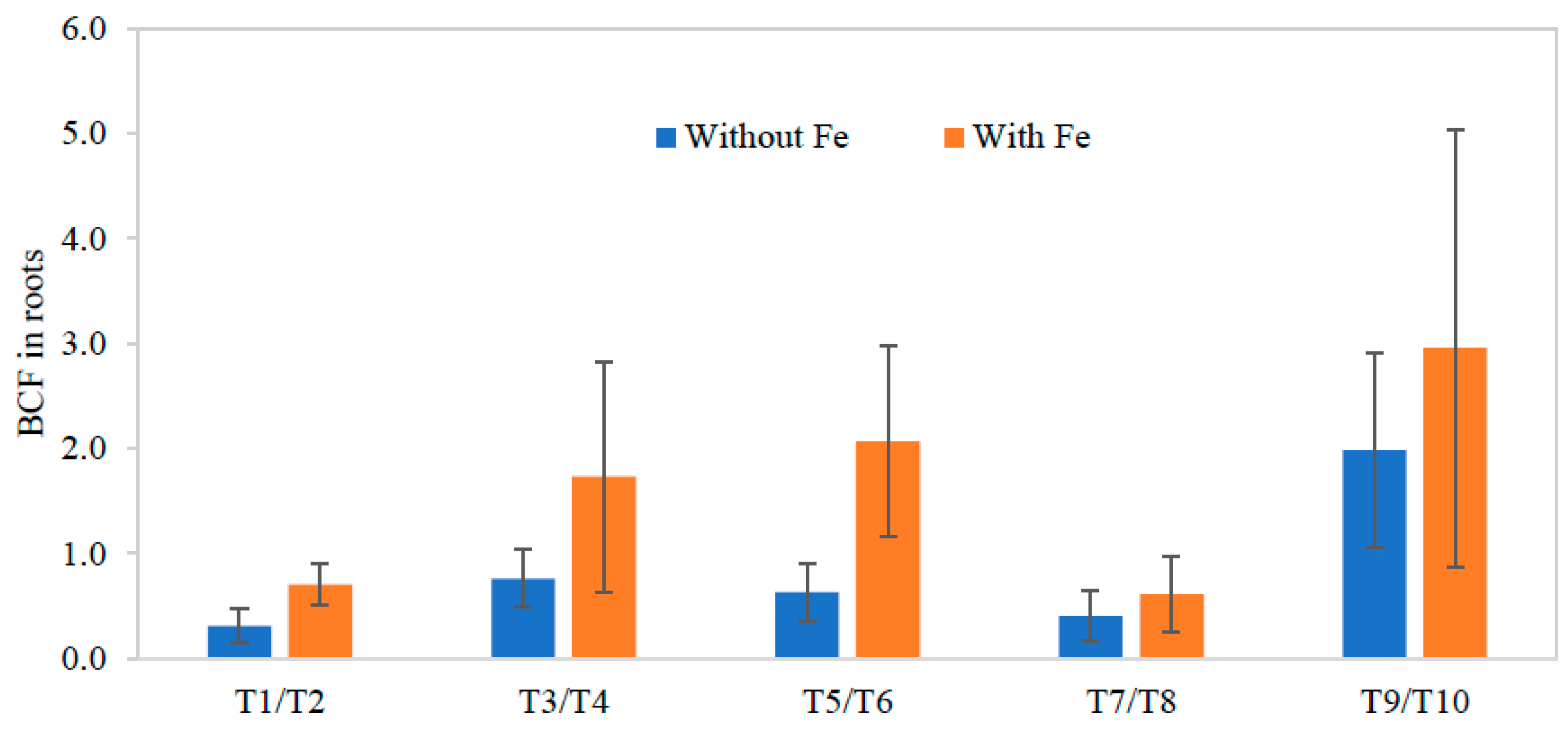
3.2.3. Translocation and Bioconcentration Factors
3.3. Water Soluble Antimony
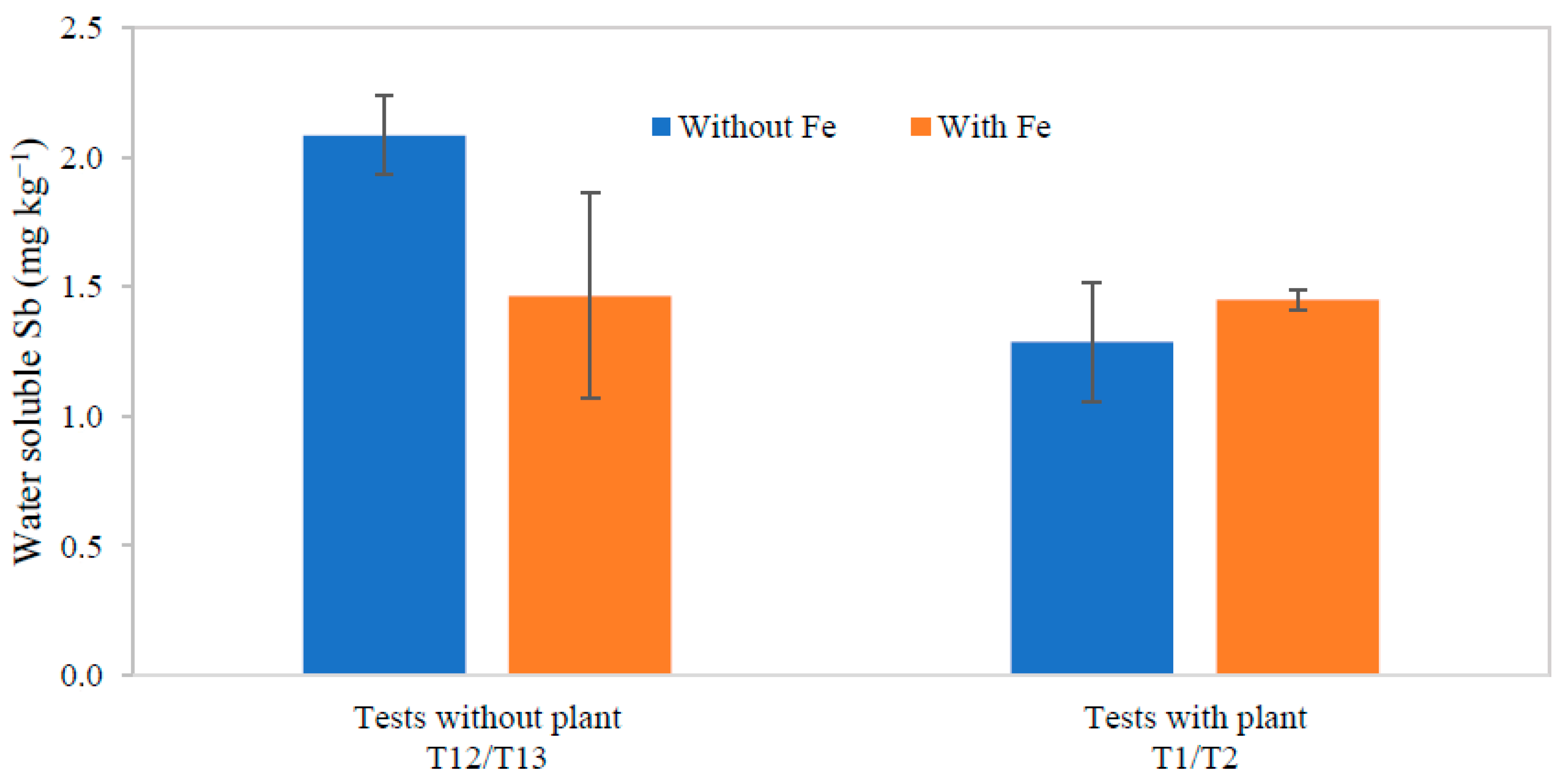
3.3.1. Comparison of Tests with and Without Plants
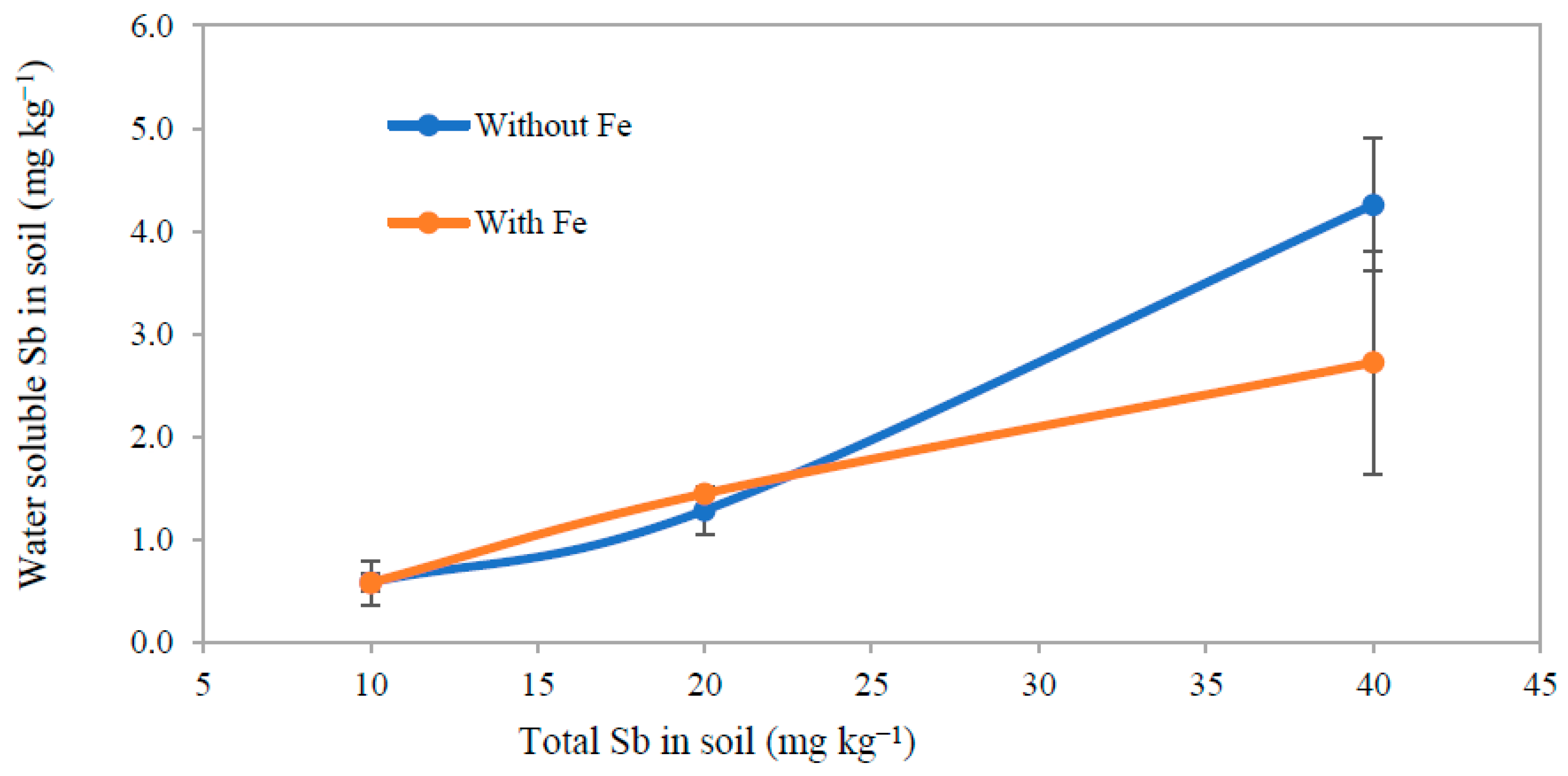
3.3.2. Effect of Total Antimony Levels
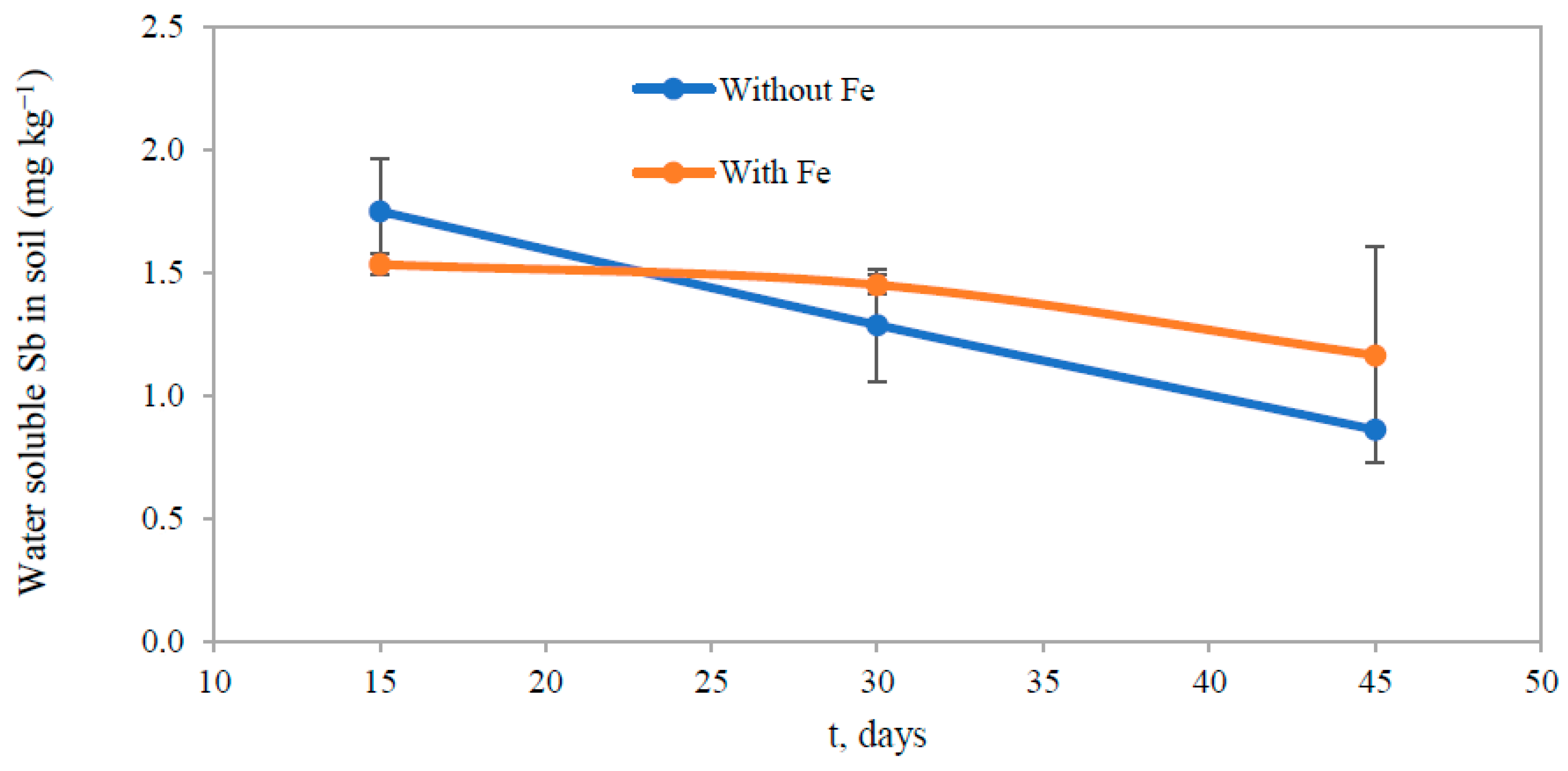
3.3.3. Temporal Evolution of Water-Soluble Antimony
4. Discussion
5. Conclusions
Supplementary Materials
Author Contributions
Funding
Institutional Review Board Statement
Informed Consent Statement
Data Availability Statement
Conflicts of Interest
References
- Bolan, N.; Kumar, M.; Singh, E.; Kumar, A.; Singh, L.; Kumar, S.; Keerthanan, S.; Hoang, S.A.; El-Naggar, A.; Vithanage, M.; et al. Antimony contamination and its risk management in complex environmental settings: A review. Environ. Int. 2022, 158, 106908. [Google Scholar] [CrossRef] [Scilit] [PubMed]
- Vidya, C.S.N.; Shetty, R.; Vaculíková, M.; Vaculík, M. Antimony toxicity in soils and plants, and mechanisms of its alleviation. Environ. Exp. Bot. 2022, 202, 104996. [Google Scholar] [CrossRef] [Scilit]
- Leverett, P.; Reynolds, J.K.; Roper, A.J.; Williams, P.A. Tripuhyite and schafarzikite: Two of the ultimate sinks for antimony in the natural environment. Mineral. Mag. 2012, 76, 891–902. [Google Scholar] [CrossRef] [Scilit]
- Majzlan, J.; Tuhý, M.; Dachs, E.; Benisek, A. Thermodynamics of schafarzikite (FeSb2O4) and tripuhyite (FeSbO4). Phys. Chem. Miner. 2023, 50, 24. [Google Scholar]
- Salminen, R. Geochemical Atlas of Europe. 2005. Available online: http://weppi.gtk.fi/publ/foregsatlas/ (accessed on 3 February 2026).
- Argyraki, A.; Kelepertzis, E. Urban soil geochemistry in Athens, Greece: The importance of local geology in controlling the distribution of potentially harmful trace elements. Sci. Total Environ. 2014, 482–483, 366–377. [Google Scholar] [CrossRef] [Scilit] [PubMed]
- Zhao, S.; Shi, T.; Terada, A.; Riya, S. Evaluation of Pollution Level, Spatial Distribution, and Ecological Effects of Antimony in Soils of Mining Areas: A Review. Int. J. Environ. Res. Public Health 2023, 20, 242. [Google Scholar] [CrossRef] [Scilit] [PubMed]
- Tokunaga, S.; Park, S.W.; Ulmanu, M. Extraction behaviour of metallic contaminants and soil constituents from contaminated soils. Environ. Technol. 2005, 26, 673–682. [Google Scholar] [CrossRef] [Scilit] [PubMed]
- Guemiza, K.; Mercier, G.; Blais, J.F. Pilot-scale counter-current acid leaching process for Cu, Pb, Sb, and Zn from small-arms shooting range soil. J. Soils Sediments 2014, 14, 1359–1369. [Google Scholar] [CrossRef] [Scilit]
- Tan, D.; Long, J.; Li, B.; Ding, D.; Du, H.; Lei, M. Fraction and mobility of antimony and arsenic in three polluted soils: A comparison of single extraction and sequential extraction. Chemosphere 2018, 213, 533–540. [Google Scholar] [CrossRef] [Scilit] [PubMed]
- Li, S.; Pan, W.; Tong, L.; Hu, Y.; Zou, Y.; Huang, H. Remediation of Sb-Contaminated Soil by Low Molecular Weight Organic Acids Washing: Efficiencies and Mechanisms. Sustainability 2023, 15, 4147. [Google Scholar] [CrossRef] [Scilit]
- Tang, H.; Hassan, M.U.; Nawaz, M.; Yang, W.; Liu, Y.; Yang, B. A review on sources of soil antimony pollution and recent progress on remediation of antimony polluted soils. Ecotoxicol. Environ. Saf. 2023, 266, 115583. [Google Scholar] [CrossRef] [Scilit] [PubMed]
- Aryal, M. Phytoremediation strategies for mitigating environmental toxicants. Heliyon 2024, 10, e38683. [Google Scholar] [CrossRef] [Scilit] [PubMed]
- Reimann, C.; Matschullat, J.; Birke, M.; Salminen, R. Antimony in the environment: Lessons from geochemical mapping. Appl. Geochem. 2010, 25, 175–198. [Google Scholar] [CrossRef] [Scilit]
- Multani, R.S.; Feldmann, T.; Demopoulos, G.P. Removal of antimony from concentrated solutions with focus on tripuhyite (FeSbO4) synthesis, characterization and stability. Hydrometallurgy 2017, 169, 263–274. [Google Scholar] [CrossRef] [Scilit]
- He, M.; Wang, N.; Long, X.; Zhang, C.; Ma, C.; Zhong, Q.; Wang, A.; Wang, Y.; Pervaiz, A.; Shan, J. Antimony speciation in the environment: Recent advances in understanding the biogeochemical processes and ecological effects. J. Environ. Sci. 2019, 75, 14–39. [Google Scholar] [CrossRef] [Scilit] [PubMed]
- Okkenhaug, G.; Zhu, Y.G.; Luo, L.; Lei, M.; Li, X.; Mulder, J. Distribution, speciation and availability of antimony (Sb) in soils and terrestrial plants from an active Sb mining area. Environ. Pollut. 2011, 159, 2427–2434. [Google Scholar] [CrossRef] [Scilit] [PubMed]
- Ning, Z.; Xiao, T.; Xiao, E. Antimony in the Soil-Plant System in an Sb Mining/Smelting Area of Southwest China. Int. J. Phytoremediation 2015, 17, 1081–1089. [Google Scholar] [CrossRef] [Scilit] [PubMed]
- Baroni, F.; Boscagli, A.; Protano, G.; Riccobono, F. Antimony accumulation in Achillea ageratum, Plantago lanceolata and Silene vulgaris growing in an old Sb-mining area. Environ. Pollut. 2000, 109, 347–352. [Google Scholar] [CrossRef] [Scilit] [PubMed]
- Seridou, P.; Fyntrilakis, K.; Syranidou, E.; Kalogerakis, N. Hydroponic phytoremediation of antimony by Tamarix smyrnensis and Nerium oleander. J. Chem. Technol. Biotechnol. 2023, 98, 2214–2223. [Google Scholar] [CrossRef] [Scilit]
- Sharma, J.K.; Kumar, N.; Singh, N.P.; Santal, A.R. Phytoremediation technologies and their mechanism for removal of heavy metal from contaminated soil: An approach for a sustainable environment. Front. Plant Sci. 2023, 14, 1076876. [Google Scholar] [CrossRef] [Scilit] [PubMed]
- Radziemska, M.; Koda, E.; Bilgin, A.; Vaverková, M. Concept of Aided Phytostabilization of Contaminated Soils in Postindustrial Areas. Int. J. Environ. Res. Public Health 2018, 15, 24. [Google Scholar] [CrossRef] [Scilit] [PubMed]
- Bakshe, P.; Jugade, R. Phytostabilization and rhizofiltration of toxic heavy metals by heavy metal accumulator plants for sustainable management of contaminated industrial sites: A comprehensive review. J. Hazard. Mater. Adv. 2023, 10, 100293. [Google Scholar] [CrossRef] [Scilit]
- Llugany, M.; Miralles, R.; Corrales, I.; Barceló, J.; Poschenrieder, C. Cynara cardunculus a potentially useful plant for remediation of soils polluted with cadmium or arsenic. J. Geochem. Explor. 2012, 123, 122–127. [Google Scholar] [CrossRef] [Scilit]
- Papazoglou, E.G. Responses of Cynara cardunculus L. to single and combined cadmium and nickel treatment conditions. Ecotoxicol. Environ. Saf. 2011, 74, 195–202. [Google Scholar] [CrossRef] [Scilit] [PubMed]
- Leonardi, C.; Toscano, V.; Genovese, C.; Mosselmans, J.F.W.; Ngwenya, B.T.; Raccuia, S.A. Evaluation of cadmium and arsenic effects on wild and cultivated cardoon genotypes selected for metal phytoremediation and bioenergy purposes. Environ. Sci. Pollut. Res. 2021, 28, 55102–55115. [Google Scholar] [CrossRef] [Scilit] [PubMed]
- Bouyoucos, G.J. Hydrometer Method Improved for Making Particle Size Analyses of Soils 1. Agron. J. 1962, 54, 464–465. [Google Scholar] [CrossRef] [Scilit]
- FAO. Standard Operating Procedure for Soil Organic Matter Using the Loss on Ignition Method. 2026. Available online: https://www.fao.org/publications (accessed on 3 February 2026).
- EN 12457-2:2002; Characterisation of Waste—Leaching—Compliance Test for Leaching of Granular Waste Materials and Sludges—Part 2: One Stage Batch Test at a Liquid to Solid Ratio of 10 L/kg for Materials with Particle Size below 4 mm (without or with Size Reduction). European Committee for Standardization: Brussels, Belgium, 2002.
- Kroh, G.E.; Pilon, M. Regulation of iron homeostasis and use in chloroplasts. Int. J. Mol. Sci. 2020, 21, 3395. [Google Scholar] [CrossRef] [Scilit] [PubMed]
- Seridou, P.; Monogyiou, S.; Syranidou, E.; Kalogerakis, N. Capacity of Nerium oleander to Phytoremediate Sb-Contaminated Soils Assisted by Organic Acids and Oxygen Nanobubbles. Plants 2023, 12, 91. [Google Scholar] [CrossRef] [Scilit] [PubMed]
- Jurkovič, Ľ.; Majzlan, J.; Hiller, E.; Klimko, T.; Voleková-Lalinská, B.; Méres, Š.; Göttlicher, J.; Steininger, R. Natural attenuation of antimony and arsenic in soils at the abandoned Sb-deposit Poproč, Slovakia. Environ. Earth Sci. 2019, 78, 672. [Google Scholar] [CrossRef] [Scilit]
- Filella, M.; May, P.M. Critical appraisal of available thermodynamic data for the complexation of antimony(III) and antimony(V) by low molecular mass organic ligands. J. Environ. Monit. 2005, 7, 1226–1241. [Google Scholar] [CrossRef] [Scilit] [PubMed]
- Tella, M.; Pokrovski, G.S. Antimony(III) complexing with O-bearing organic ligands in aqueous solution: An X-ray absorption fine structure spectroscopy and solubility study. Geochim. Cosmochim. Acta. 2009, 73, 268–290. [Google Scholar] [CrossRef] [Scilit]
- Hasanuzzaman, M.; Bhuyan, M.H.M.B.; Zulfiqar, F.; Raza, A.; Mohsin, S.M.; Mahmud, J.A.; Fujita, M.; Fotopoulos, V. Reactive Oxygen Species and Antioxidant Defense in Plants under Abiotic Stress: Revisiting the Crucial Role of a Universal Defense Regulator. Antioxidants 2020, 9, 681. [Google Scholar] [CrossRef] [Scilit] [PubMed]
- Tang, H.; Meng, G.; Xiang, J.; Mahmood, A.; Xiang, G.; SanaUllah; Liu, Y.; Huang, G. Toxic effects of antimony in plants: Reasons and remediation possibilities—A review and future prospects. Front. Plant Sci. 2022, 13, 1011945. [Google Scholar] [CrossRef] [Scilit] [PubMed]
- Vasilakoglou, I.; Dhima, K.; Tsiaousi, A.; Gravalos, I. Long-term cardoon (Cynara cardunculus) productivity under reduced irrigation and weed control inputs. Arch. Agron. Soil Sci. 2023, 69, 2340–2355. [Google Scholar] [CrossRef] [Scilit]
- Ma, Y.; Ankit, T.J.; Bauddh, K. Plant-Mycorrhizal Fungi Interactions in Phytoremediation of Geogenic Contaminated Soils. Front. Microbiol. 2022, 13, 843415. [Google Scholar] [CrossRef] [Scilit] [PubMed]
- Lbqmi, M.; Selim, S.; Bouqellah, N.A.; Alnusaire, T.S.; Almuhayawi, M.S.; Al Jaouni, S.K.; Hussein, S.; Warrad, M.; Al-Sanea, M.M.; Abdelgawad, M.A.; et al. Improving plant adaptation to soil antimony contamination: The synergistic contribution of arbuscular mycorrhizal fungus and olive mill waste. BMC Plant Biol. 2024, 24, 364. [Google Scholar] [CrossRef] [Scilit] [PubMed]
- Shen, X.; Dai, M.; Yang, J.; Sun, L.; Tan, X.; Peng, C.; Ali, I.; Naz, I. A critical review on the phytoremediation of heavy metals from environment: Performance and challenges. Chemosphere 2022, 291, 132979. [Google Scholar] [CrossRef] [Scilit] [PubMed]
- Mench, M.; Lepp, N.; Bert, V.; Schwitzguébel, J.P.; Gawronski, S.W.; Schröder, P.; Vangronsveld, J. Successes and limitations of phytotechnologies at field scale: Outcomes, assessment and outlook from COST Action 859. J. Soils Sediments 2010, 10, 1039–1070. [Google Scholar] [CrossRef] [Scilit]
- Moreira, H.; Pereira, S.I.A.; Mench, M.; Garbisu, C.; Kidd, P.; Castro, P.M.L. Phytomanagement of Metal(loid)-Contaminated Soils: Options, Efficiency and Value. Front. Environ. Sci. 2021, 9, 661423. [Google Scholar] [CrossRef] [Scilit]
- Wijekoon, W.; Priyashantha, H.; Gajanayake, P.; Manage, P.; Liyanage, C.; Jayarathna, S.; Kumarasinghe, U. Review and Prospects of Phytoremediation: Harnessing Biofuel-Producing Plants for Environmental Remediation. Sustainability 2025, 17, 822. [Google Scholar] [CrossRef] [Scilit]
- Lacalle, R.G.; Bernal, M.P.; Álvarez-Robles, M.J.; Clemente, R. Phytostabilization of soils contaminated with As, Cd, Cu, Pb and Zn: Physicochemical, toxicological and biological evaluations. Soil Environ. Health 2023, 1, 100014. [Google Scholar] [CrossRef] [Scilit]
- Clemente, R.; Álvarez-Robles, M.J.; Lacalle, R.G.; Fernández-Guerrero, A.; Bernal, M.P. A circular approach for the phytostabilization of soils containing potentially toxic elements at different levels of contamination. J. Hazard. Mater. 2025, 496, 139276. [Google Scholar] [CrossRef] [Scilit] [PubMed]
- Clemente, R.; Arco-Lázaro, E.; Pardo, T.; Martín, I.; Sánchez-Guerrero, A.; Sevilla, F.; Bernal, M.P. Combination of soil organic and inorganic amendments helps plants overcome trace element induced oxidative stress and allows phytostabilisation. Chemosphere 2019, 223, 223–231. [Google Scholar] [CrossRef] [Scilit] [PubMed]



| Sb | Fe | Duration | Plant | Description | |
|---|---|---|---|---|---|
| mg kg−1 | mg kg−1 | Days | |||
| T1 | 20 | 0 | 30 | Yes | Central conditions (Sb and plant) |
| T2 | 20 | 13.8 | 30 | Yes | Central conditions with Fe (Sb, Fe and plant) |
| T3 | 10 | 0 | 30 | Yes | Effect of Sb contamination levels with plant |
| T4 | 10 | 6.9 | 30 | Yes | Effect of Sb contamination levels with Fe addition and with plant |
| T5 | 40 | 0 | 30 | Yes | Effect of Sb contamination levels with plant |
| T6 | 40 | 27.5 | 30 | Yes | Effect of Sb contamination levels with Fe addition and with plant |
| T7 | 20 | 0 | 15 | Yes | Effect of duration only with Sb and plant |
| T8 | 20 | 13.8 | 15 | Yes | Effect of duration with Sb, Fe and plant |
| T9 | 20 | 0 | 45 | Yes | Effect of duration only with Sb and plant |
| T10 | 20 | 13.8 | 45 | Yes | Effect of duration with Sb, Fe and plant |
| T11 | 0 | 0 | 30 | Yes | Control test without Sb addition and with plant |
| T12 | 20 | 0 | 30 | No | Control test with Sb and without plant |
| T13 | 20 | 13.8 | 30 | No | Control test with Sb and Fe addition and without plant |
| Parameter | Value |
|---|---|
| Size fractions (%) | |
| Sand | 62 |
| Silt | 18 |
| Clay | 20 |
| pH | 8.2 |
| EC (μS/cm) | 6.15 |
| Loss of Ignition, LOI (%) | 15.9 |
| Soil Organic Carbon, SOC (%) | 2.9 |
| Main components (%) | |
| SiO2 | 39.5 |
| CaO | 18.4 |
| Al2O3 | 11.5 |
| Fe2O3 | 5.9 |
| Total Sb (mg kg−1) | 12.7 |
| Water soluble Sb (mg kg−1) | <0.05 |
Disclaimer/Publisher’s Note: The statements, opinions and data contained in all publications are solely those of the individual author(s) and contributor(s) and not of MDPI and/or the editor(s). MDPI and/or the editor(s) disclaim responsibility for any injury to people or property resulting from any ideas, methods, instructions or products referred to in the content. |
© 2026 by the authors. Licensee MDPI, Basel, Switzerland. This article is an open access article distributed under the terms and conditions of the Creative Commons Attribution (CC BY) license.
Share and Cite
Tseliou, E.; Mystrioti, C.; Papassiopi, N.; Xenidis, A. Phytoremediation of Antimony Contaminated Soils Using the Bioenergy Plant Cynara cardunculus. Environ. Remediat. 2026, 1, 8. https://doi.org/10.3390/environremediat1020008
Tseliou E, Mystrioti C, Papassiopi N, Xenidis A. Phytoremediation of Antimony Contaminated Soils Using the Bioenergy Plant Cynara cardunculus. Environmental Remediation. 2026; 1(2):8. https://doi.org/10.3390/environremediat1020008
Chicago/Turabian StyleTseliou, Elpida, Christiana Mystrioti, Nymphodora Papassiopi, and Anthimos Xenidis. 2026. "Phytoremediation of Antimony Contaminated Soils Using the Bioenergy Plant Cynara cardunculus" Environmental Remediation 1, no. 2: 8. https://doi.org/10.3390/environremediat1020008
APA StyleTseliou, E., Mystrioti, C., Papassiopi, N., & Xenidis, A. (2026). Phytoremediation of Antimony Contaminated Soils Using the Bioenergy Plant Cynara cardunculus. Environmental Remediation, 1(2), 8. https://doi.org/10.3390/environremediat1020008