
Systematic Review

Zero- and Ultra-Low-Contrast Percutaneous Coronary Intervention Versus Conventional PCI in Advanced Chronic Kidney Disease: A Systematic Review and Meta-Analysis

1
Jersey Shore University Medical Center, Neptune, NJ 07753, USA
2
Memorial Healthcare System, Pembroke Pines, FL 33025, USA
3
Department of Medicine, Dow University of Health and Sciences, Karachi 74200, Pakistan
4
Department of Medicine, Karachi Medical and Dental College, Karachi 74700, Pakistan
5
Department of Medicine, Peoples University of Medical and Health Sciences, Nawabshah 67450, Pakistan
6
Geisinger Medical Center, Danville, PA 17822, USA
7
Department of Medicine, Punjab Medical College, Faisalabad 38800, Pakistan
8
Department of Medicine, Liaquat University of Medical & Health Sciences, Jamshoro 76090, Pakistan
9
Department of Medicine, King Edward Medical University, Lahore 54000, Pakistan
10
Department of Medicine, Al-Aleem Medical College, Lahore 54600, Pakistan
11
Preventive Medicine, Biopharma Informatics, Child Health and Preventive Services, Baqai Medical University, Karachi 74100, Pakistan
12
Department of Cardiology, Duke University, Durham, NC 27710, USA
*
Author to whom correspondence should be addressed.
J. CardioRenal Med. 2026, 2(1), 3; https://doi.org/10.3390/jcrm2010003
Submission received: 21 December 2025 / Revised: 2 February 2026 / Accepted: 3 February 2026 / Published: 10 February 2026

Abstract

Introduction: Advanced chronic kidney disease (CKD) patients undergoing percutaneous coronary intervention (PCI) face a high risk of renal injury. Given this vulnerability, zero- and ultra-low-contrast PCI techniques have been proposed to minimize renal damage while still enabling effective revascularization. On this basis, this meta-analysis tests whether these contrast-sparing strategies yield better clinical and renal outcomes compared with conventional PCI in CKD patients. Methods: A total of 3939 records were retrieved from PubMed, Embase, Scopus, ScienceDirect, and Cochrane from inception till November 2025. Eligible RCTs and comparative observational studies reporting renal or cardiovascular outcomes were included. Pooled analyses were conducted in RevMan Web using a random-effects model with p < 0.05 considered statistically significant. Results: Across nine included studies (464,815 patients) evaluating zero-contrast or ultra-low-contrast PCI versus conventional PCI, zero-contrast PCI significantly reduced contrast-induced acute kidney injury (CI-AKI) (OR 0.24, 95% CI 0.12–0.49; p = 0.002), decreased contrast volume (MD −110 mL, 95% CI −168.6 to −51.8; p = 0.005), lowered the need for repeat revascularization (OR 0.26, 95% CI 0.09–0.77; p = 0.005), and reduced the incidence of emergent hemodialysis (OR 0.25, 95% CI 0.13–0.49; p < 0.0001). All-cause mortality and repeat myocardial infarction were initially nonsignificant but became significant after excluding outlier studies (OR 0.49, 95% CI 0.47–0.51; p < 0.00001; OR 0.19, 95% CI 0.10–0.35; p = 0.007, respectively). No significant differences were observed for major adverse cardiovascular events, cardiovascular or non-cardiovascular mortality, renal replacement therapy, or dialysis requirement. Conclusions: Our findings demonstrate that zero- and ultra-low-contrast PCI significantly reduces the risk of CI-AKI while preserving cardiovascular and renal outcomes, supporting its use as a safe and effective alternative to conventional PCI in high-risk CKD patients.

1. Introduction

Contrast agents represent iodine-based solutions used in angiography to produce radiographic contrast between the vessel lumen and surrounding tissues, thus allowing for accurate identification, assessment, and intervention in the lesion [1]. Despite the fact that contrast media are used daily in a wide array of radiological procedures, there is a well-recognized risk for their administration, which includes allergic reactions, nephrotoxicity, and CIN [2].
CI-AKI represents a serious complication after PCI in patients with CKD that often results in worsening renal function, new dialysis requirements, prolonged hospitalization, and increased mortality [3,4]. The most significant predisposing condition is pre-existing renal impairment; the incidence of CI-AKI was reported to vary from 3.3% to 14.5% in the literature [5]. Results from the NCDR-CathPCI registry reported an incidence of 7.1%, whereas 0.3% of patients needed dialysis after PCI [4]. In this context, minimizing contrast exposure has become a central strategy for reducing CI-AKI risk. Contrast volume is one of the most modifiable determinants of renal injury [6], and a contrast volume-to-creatinine clearance (CV/CrCl) ratio > 2 has been identified as an independent predictor of CI-AKI in patients with an estimated glomerular filtration rate (eGFR) < 30 mL/min/1.73 m2 [7].
Zero-contrast PCI (zero-PCI) is a new emerging method for preventing AKI among patients with CKD [1]. More recently, ultra-low contrast PCI (ULC-PCI) has emerged as a practical and safer alternative for patients who cannot tolerate the standard volume of contrast [8]. While zero-contrast PCI eliminates dye exposure entirely, ULC-PCI represents a contrast-minimizing strategy tailored for high-risk CKD patients in whom coronary intervention is necessary but conventional dye use poses significant renal hazard. For the purpose of this analysis, ULC-PCI serves as the intervention arm, defined as procedures performed with a contrast volume-to-eGFR ratio < 1, supported where feasible by intravascular ultrasound (IVUS) or optical coherence tomography (OCT) to guide wiring, stent deployment, lesion preparation, and final optimization without reliance on fluoroscopic contrast [9,10,11,12]. Conventional PCI serves as the control arm, performed with standard operator-determined contrast dosing, typically without a predefined CV/eGFR threshold or mandatory intravascular imaging [13].
However, evidence to date is fragmented and inconsistent. Most published cohorts are single-center, non-randomized, small-sample, and utilize different criteria for the definition of contrast restriction and CI-AKI endpoints. Critically, no prior structured review or meta-analysis has directly compared ULC-PCI versus conventional PCI in CKD, and the reporting of renal outcomes, including dialysis requirements and procedural success, is highly variable between studies [14,15].
Therefore, the aim of this meta-analysis is to be the first one comparing, in a systematic manner, ULC-PCI versus conventional PCI across CKD populations, quantifying renal protection, dialysis-related outcomes, contrast-volume requirements, and key clinical events. By doing so, this review aims to pool fragmented evidence, clarify inconsistent reporting, and provide the first unified evidence base to inform the selection of PCI strategy in renally vulnerable patients.

2. Methods

2.1. Study Design and Protocol Registration

The study protocol for this meta-analysis was registered with the International Prospective Register of Systematic Reviews (PROSPERO) [ID: CRD420251252434]. This study was conducted in line with the established guidelines of the updated 2020 version of the Preferred Reporting Items for Systematic Reviews and Meta-Analyses (PRISMA) [16]. The PICO (Population, Intervention, Comparison, and Outcomes) framework was used to help structure the research question and the eligibility criteria.

2.2. Search Strategy and Data Sources

A comprehensive search was conducted across PubMed, Embase, Scopus, ScienceDirect, and the Cochrane Library, covering all literature available up to November 2025, with no restrictions on language or publication status. Reference lists of eligible studies were also screened to identify additional relevant articles. The search strategy combined MeSH terms and keywords to capture relevant studies including (“percutaneous coronary intervention” [MeSH Terms] OR “coronary angioplasty” [MeSH Terms] OR “percutaneous coronary intervention” OR PCI OR “coronary angioplasty” AND (“chronic kidney disease” [MeSH Terms] OR “kidney failure, chronic” [MeSH Terms] OR “renal insufficiency” [MeSH Terms] OR “acute kidney injury” OR “chronic kidney disease” OR CKD OR “renal failure” OR “renal impairment” OR dialysis OR AKI OR “contrast-induced nephropathy” OR “contrast-associated acute kidney injury” AND (“contrast” OR “low contrast” OR “ultra-low contrast” OR “zero contrast” OR “minimal contrast” OR “IVUS-guided” OR “OCT-guided” OR “image-guided” OR “intravascular ultrasound” AND (“conventional PCI” OR “standard PCI” OR “angiography-guided PCI” OR “angiography guided PCI” OR “routine PCI” OR “usual PCI” OR PCI). The search strategies employed for each database are detailed in Supplementary Table S1.

2.3. Study Selection and Eligibility Criteria

All articles retrieved through the systemic search were imported into the Rayyan AI reference library, where the duplicates were thereafter omitted. Two authors independently examined and chose the studies, and any differences were handled by a third author. Selected studies were retrieved for full-text review to ensure the relevance.
The inclusion criteria were defined using the Population, Intervention, Control, and Outcomes (PICO) methodology for the systemic review, where: (1) Adult patients with stage 4–5 Chronic Kidney Disease (CKD) or the dialysis undergoing PCI (2) Zero-contrast PCI (typically IVUS-guided, non-contrast until final angiogram)/Ultra-low contrast PCI (contrast) volume/eGFR < 1 or equivalent definition. (3) Key outcomes assessed are contrast-induced acute kidney injury (CI-AKI), total contrast volume used, all-cause mortality, cardiovascular and non-cardiovascular mortality, major adverse cardiac events (MACE), repeat myocardial infarction (MI), vessel revascularization, dialysis requirement, emergent hemodialysis, and the need for renal replacement therapy (RRT).
The exclusion criteria included (1) LTE, animal studies, or clinical guidelines, case reports, and case series, (2) Populations other than chronic kidney disease patients, (3) Studies focusing on other modalities of intervention, and (4) Single-arm studies with no comparator group. This systematic review and meta-analysis included the observational prospective or retrospective cohort studies including advanced chronic kidney disease (stage 4–5 CKD or those on dialysis) undergoing percutaneous coronary intervention and compared outcomes between zero-contrast or ultra-low-contrast PCI (typically IVUS-guided) and conventional angiography-guided PCI.

2.4. Data Extraction

On a pre-piloted Google sheet, two authors independently evaluated the data and supplemental resources; disagreements were settled by consulting a third author. From the selected studies, the following information was extracted: study labels, year of publication, study design, country, number of participants in each arm, baseline patient characteristics (e.g., age, sex, CKD stage, dialysis demographic, PCI/lesions, imaging guidance), duration of follow-up, and results about the effectiveness and safety profile.

2.5. Quality Assessment

Two authors independently assessed the quality and risk of bias of the included studies. For Randomized Control Trials (RCTs), the Cochrane Risk of Bias tool 2.0 (RoB 2.0) [17] was used. This tool assesses the risk of bias associated with the randomization process, deviations from intended interventions, missing outcome data, measurement of the outcome, and selection of the reported result. Judgments were categorized as ‘Low risk’, ‘High risk’, or ‘Some concerns’. For observational studies, the Newcastle and Ottawa Scale was utilized, focusing on aspects such as patient selection, comparability of groups (e.g., confounding control methods like propensity score matching), ascertainment of exposures and outcomes, and completeness of follow-up. The two independent researchers conducted the assessments, and any conflicts or disagreements were resolved through discussion. A third reviewer was consulted when consensus could not be reached. This rigorous appraisal ensured the credibility and reliability of the included studies.

2.6. Statistical Analysis

All statistical analysis was performed using RevMan Web (https://revman.cochrane.org/info, accessed on 20 December 2025). The data were pooled using a random effects model according to the Mantel–Haenszel model. The effect size of the measurement data was expressed by standard mean difference, and 95% confidence intervals (CI) were used to estimate the interval range of the effect size. For dichotomous outcomes, we calculated pooled Odds ratio (OR) with their 95% confidence intervals (CI). For continuous outcomes, Mean Difference (MD) with 95% CI was computed. Forest plots were created to visualize the results. This study evaluated heterogeneity among studies using Cochran’s Q statistic and the I2 index. I2 values below 25%, between 25% and 50%, or above 50% indicated low, moderate, or high heterogeneity, respectively [18]. The DerSimonian and Laird random-effects model was applied to all outcomes [19]. A p-value of <0.05 indicates statistical significance for clinical endpoints. An influential post-hoc analysis was conducted to explore the impact of study exclusion on the pooled estimates and between-study heterogeneity. Studies were removed sequentially, including the exclusion of more than one study when applicable, to examine changes in the statistical significance of the pooled effect or heterogeneity. Changes in statistical significance or meaningful reductions in heterogeneity after study exclusion were considered to have a substantial influence on the pooled results. As this analysis was not pre-specified, the findings should be interpreted with caution and considered exploratory.

3. Results Section

3.1. Search Results

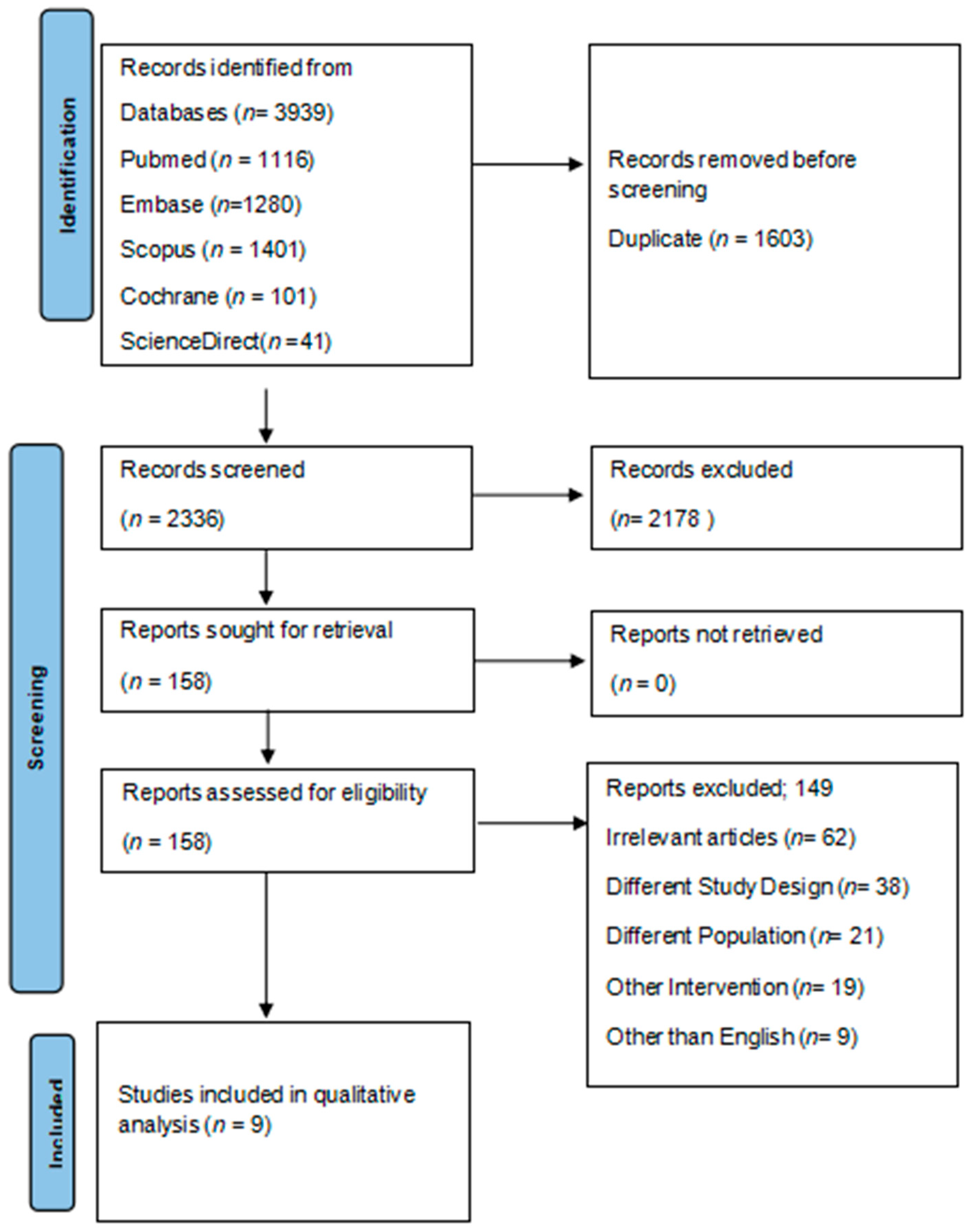
A total of 3939 records were identified through database searching (PubMed = 1116; Cochrane = 101; Scopus = 1401; Embase = 1280; ScienceDirect = 41). After removing 1603 duplicate records, 2336 studies remained for title and abstract screening. Of these, 2178 studies were excluded, leaving 158 articles for full-text assessment. Following the eligibility evaluation, 149 articles were excluded due to reasons such as being irrelevant, having a different study design, involving a different population, evaluating other interventions, or being published in languages other than English. Ultimately, 9 studies met the inclusion criteria and were included in the qualitative synthesis [9,20,21,22,23,24,25,26,27]. The detailed screening process is presented in the PRISMA flowchart (Figure 1).

3.2. Study Characteristics

Among the nine studies included in this meta-analysis, each comparing reduced-contrast PCI techniques with conventional contrast-guided PCI, two evaluated exclusively zero-contrast or non-contrast PCI techniques [23,24]. Five studies implemented an ultra-low contrast PCI strategy [9,22,25,26,27] The remaining trials assessed IVUS-guided minimized-contrast approaches [20,21]. Across studies, the mean age of participants generally ranged from the mid-60s to mid-70s, with moderate variability in sex distribution. Follow-up duration varied across studies, ranging from 30 days to 32 months, while two studies did not report follow-up time [9,26]. Baseline kidney-related parameters and cardiovascular comorbidities were variably reported across the included studies and are summarized in Table 1 and Table 2.

3.3. Quality Appraisal

For randomized controlled trials (RCTs), the Cochrane Risk of Bias 2.0 (RoB 2.0) tool was used, and for observational studies, the Newcastle–Ottawa Scale (NOS) was applied. Both RCTs [21,27] were evaluated across five RoB 2.0 domains. Mariani et al. [21] demonstrated an overall low risk of bias, with low risk in four domains and some concerns in domain 2. Shrivastava et al. [27] showed an overall rating of “some concerns,” primarily due to issues in the randomization process (D1) and selective reporting (D5), while the remaining domains were rated as low risk. Among the observational studies, most demonstrated good methodological quality. Six studies received high NOS scores and were classified as having a low risk of bias, reflecting strong cohort selection, acceptable comparability, and robust outcome assessment [9,20,22,23,24,26]. Sawant et al. [25] was rated as having a moderate risk of bias, mainly due to limitations in the comparability domain, although the selection and outcome domains were adequate. Overall, the risk of bias across all included studies ranged from low to moderate, with the majority falling within the low-risk category. A detailed domain-level scoring for both RoB 2.0 and NOS is provided in Supplementary Figure S1 and Supplementary Table S2.

3.4. Outcomes

3.4.1. Primary Outcomes

Contrast-Induced Acute Kidney Injury (CI-AKI)
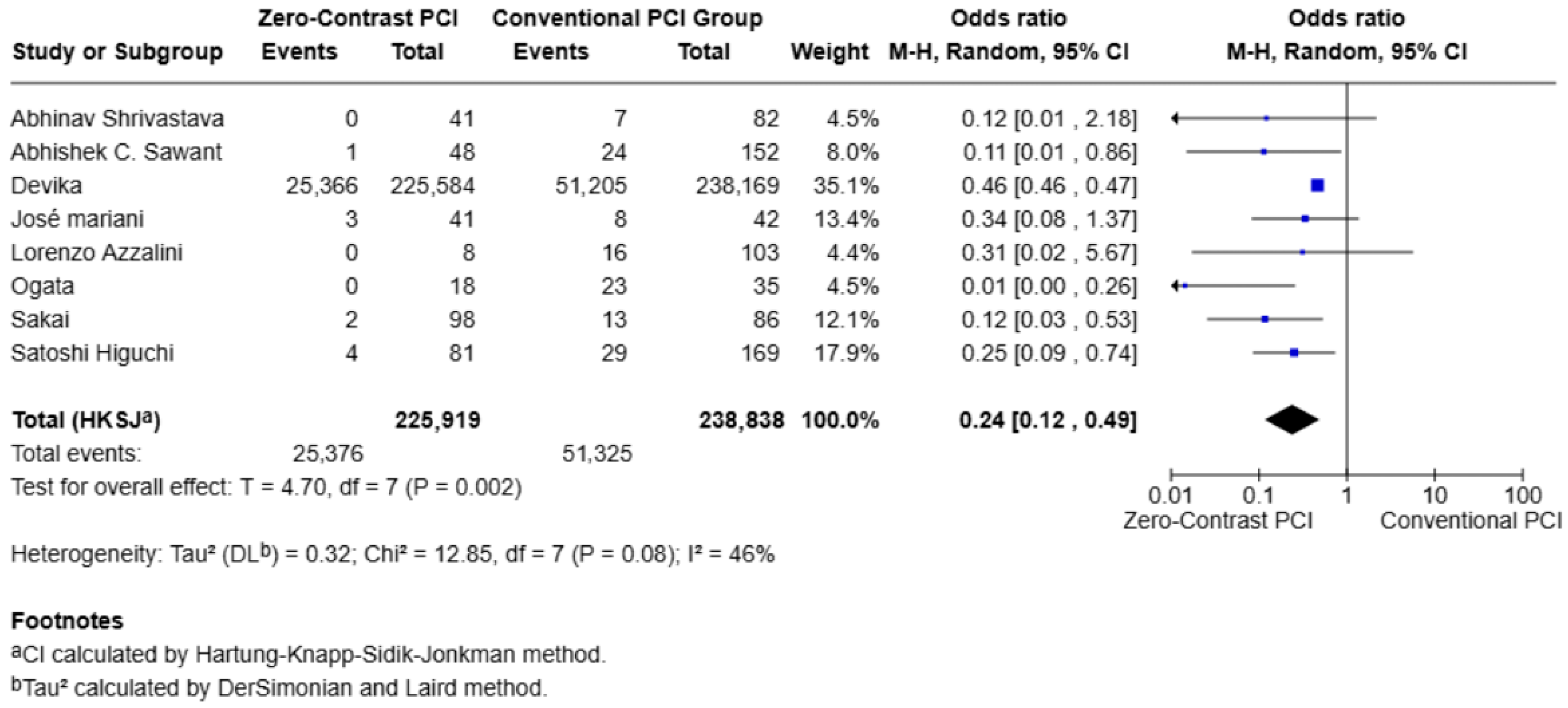
A total of seven studies (total N = 225,919 patients in the zero-contrast PCI group and 238,838 in the conventional PCI group) reported AKI. There were 25,376 AKI events in the zero-contrast arms and 51,325 events in the conventional arms. Zero-contrast PCI was associated with a significant decrease in the risk of CI-AKI as compared to conventional PCI (OR 0.24, 95% CI 0.12–0.49, p = 0.002). The analysis revealed moderate heterogeneity (I2 = 46%) (Figure 2).
After exclusion of the large Devika study, results revealed the persistent protective effect of zero-contrast PCI. Pooled analysis demonstrated significantly lower incidence of CI-AKI (OR 0.18, 95% CI 0.09–0.37, p = 0.001) with no heterogeneity (I2 = 0%), as compared to conventional PCI (Supplementary Figure S2).
All-Cause Mortality
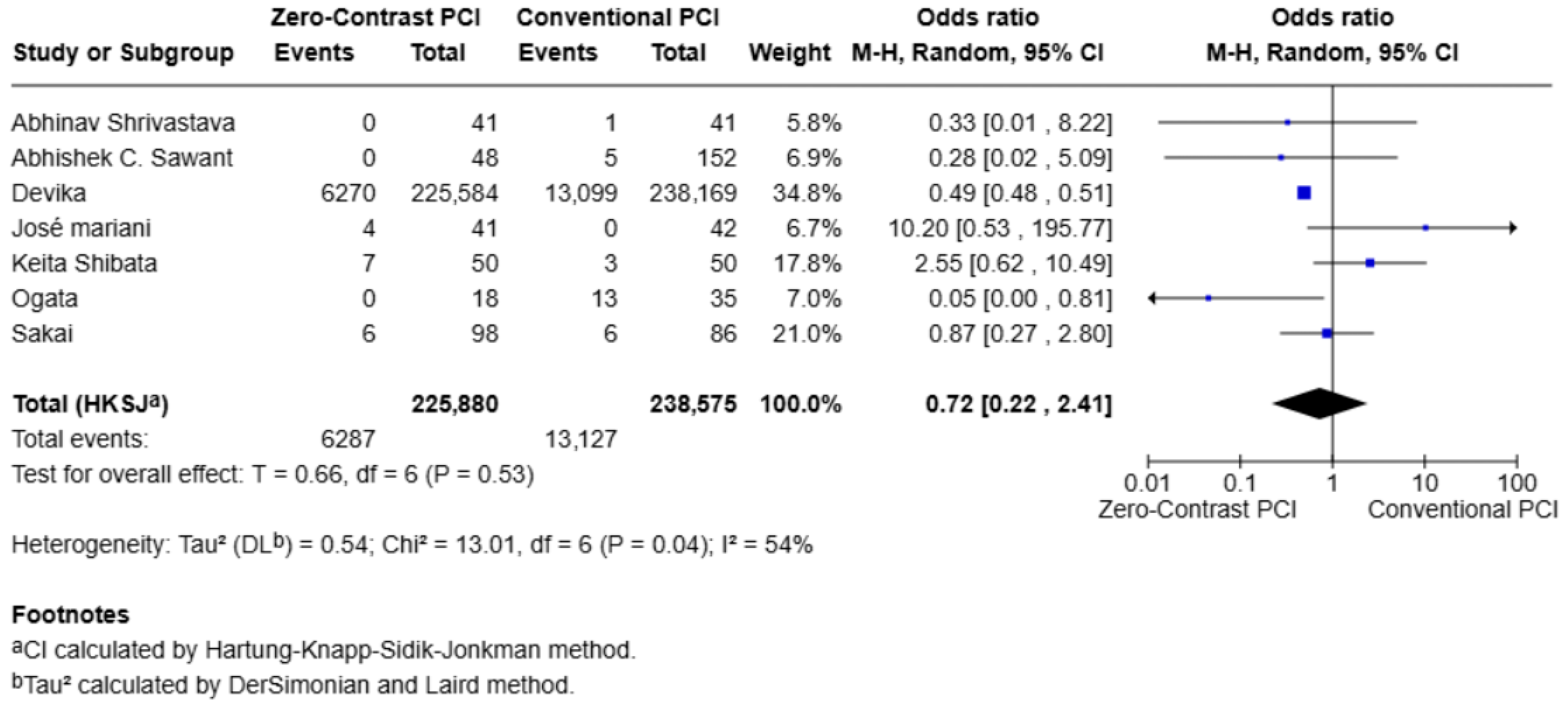
In seven studies, 225,880 patients underwent zero-Contrast PCI compared with 238,675 patients treated conventionally. There was no statistically significant difference between the two groups (OR 0.72, 95% CI 0.22–2.41, p = 0.53). Although moderate heterogeneity was noticed (I2 = 54%, T2 = 0.54), reflecting variability across the studies (Figure 3).
To evaluate the influence of outlier data, the studies by Jose Mariani and Keita were sequentially excluded. In total, 225,789 patients undergoing zero-contrast PCI and 238,483 patients treated with conventional PCI across five studies were included. Exclusion of these studies revealed that Zero-Contrast PCI was significantly associated with reduced all-cause mortality relative to conventional PCI (OR 0.49, 95%CI 0.47–0.51, p < 0.001). More importantly, heterogeneity was fully eliminated (I2 = 0%), but the pooled effect estimates remained non-significant, supporting the robustness of the primary conclusions (Supplementary Figure S3).
Total Contrast Volume (mL)
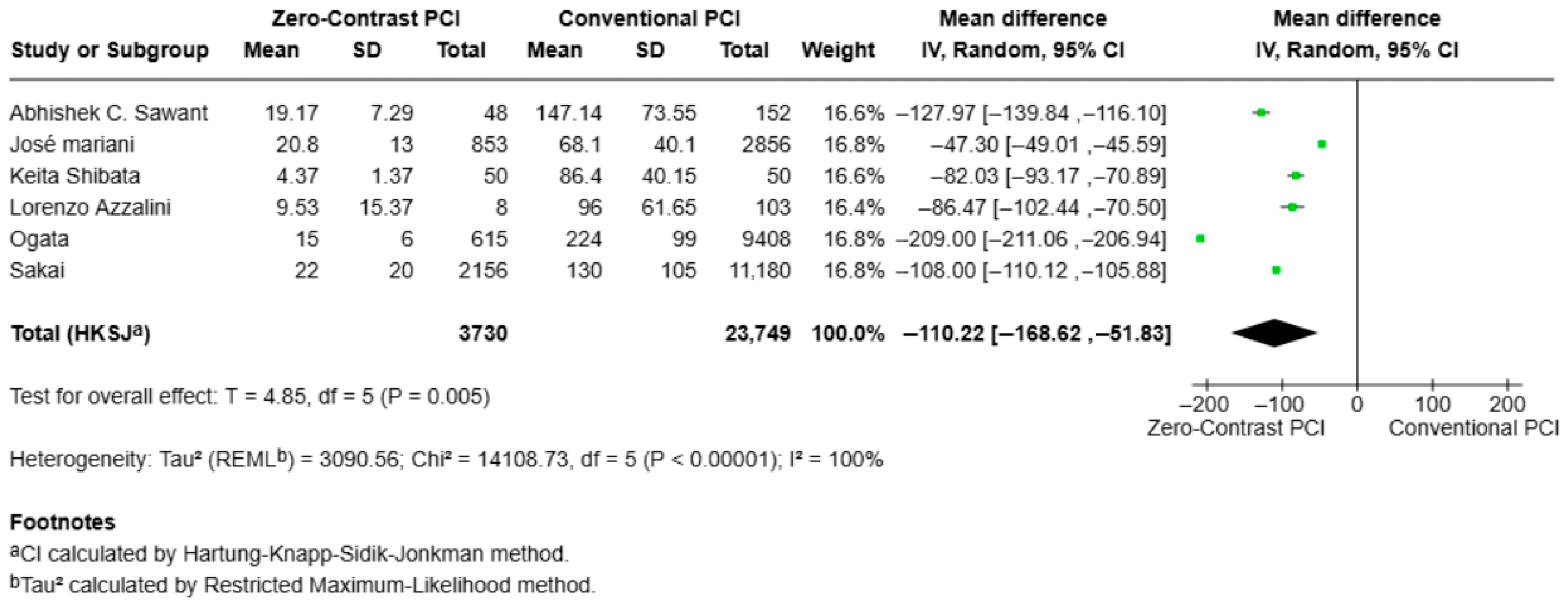
Six studies (Sawant, Mariani, Shibata, Azzalini, Ogata, and Sakai) reported the use of contrast volume. Zero-contrast PCI was associated with a considerable decline in contrast volume in contrast to conventional PCI, demonstrating a pooled mean difference of −110.22 mL (95% CI −168.62 to −51.83; p = 0.005). Heterogeneity was significant (I2 = 100%), likely demonstrating variability in procedural methods and patient cohorts across the included studies (Figure 4).

3.4.2. Secondary Outcomes

Major Adverse Cardiac Events (MACE)
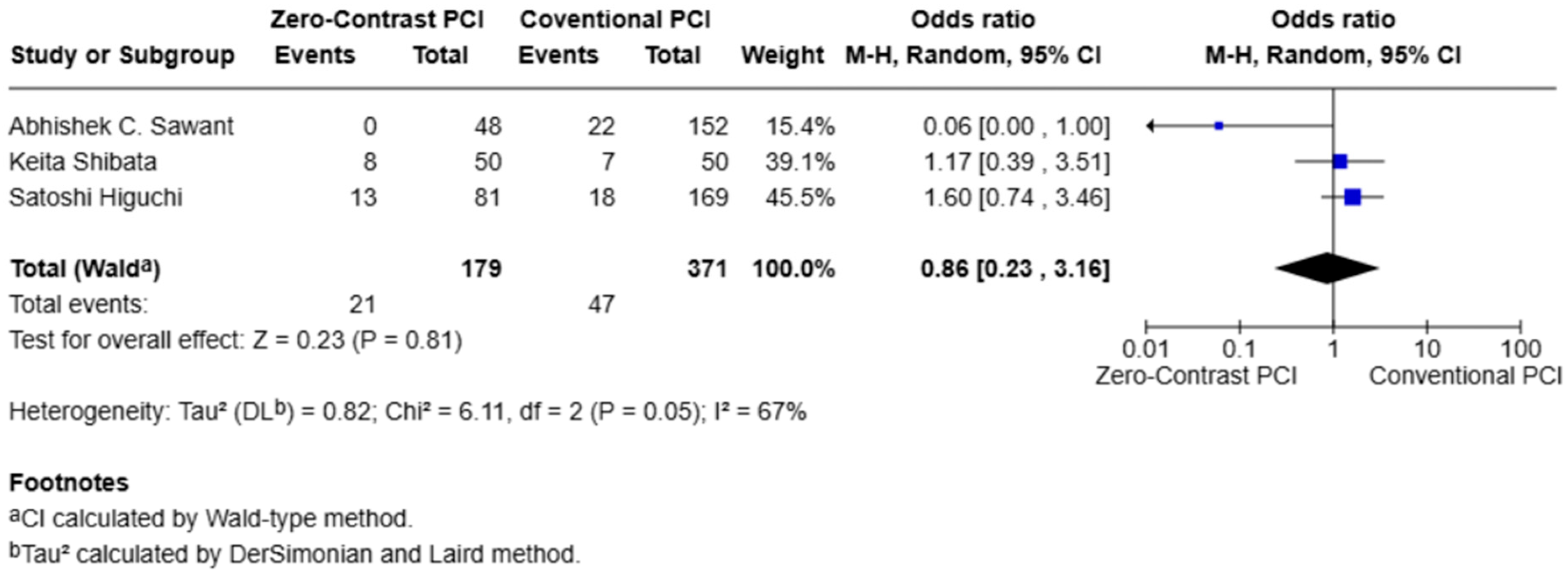
Across three studies (Sawant, Shibata, and Higuchi), zero-contrast PCI showed no statistically significant reduction in MACE (21 vs. 47 events), with a pooled OR of 0.86 (95% CI 0.23–3.16; Z = 0.23; p: 0.81) and moderate heterogeneity (I2 = 67%, τ2 = 0.82), as compared to conventional PCI (Figure 5).
To address this heterogeneity, the Sawant study was excluded from the analysis. The pooled analysis of two studies (Shibata, Higuchi) showed no significant difference in MACE (21 vs. 25 events) between the two groups (OR 1.45; 95% CI 0.77–2.72; p = 0.65), but heterogeneity reduces to zero (I2 = 0%) (Supplementary Figure S4).
Repeat Myocardial Infarction (MI)
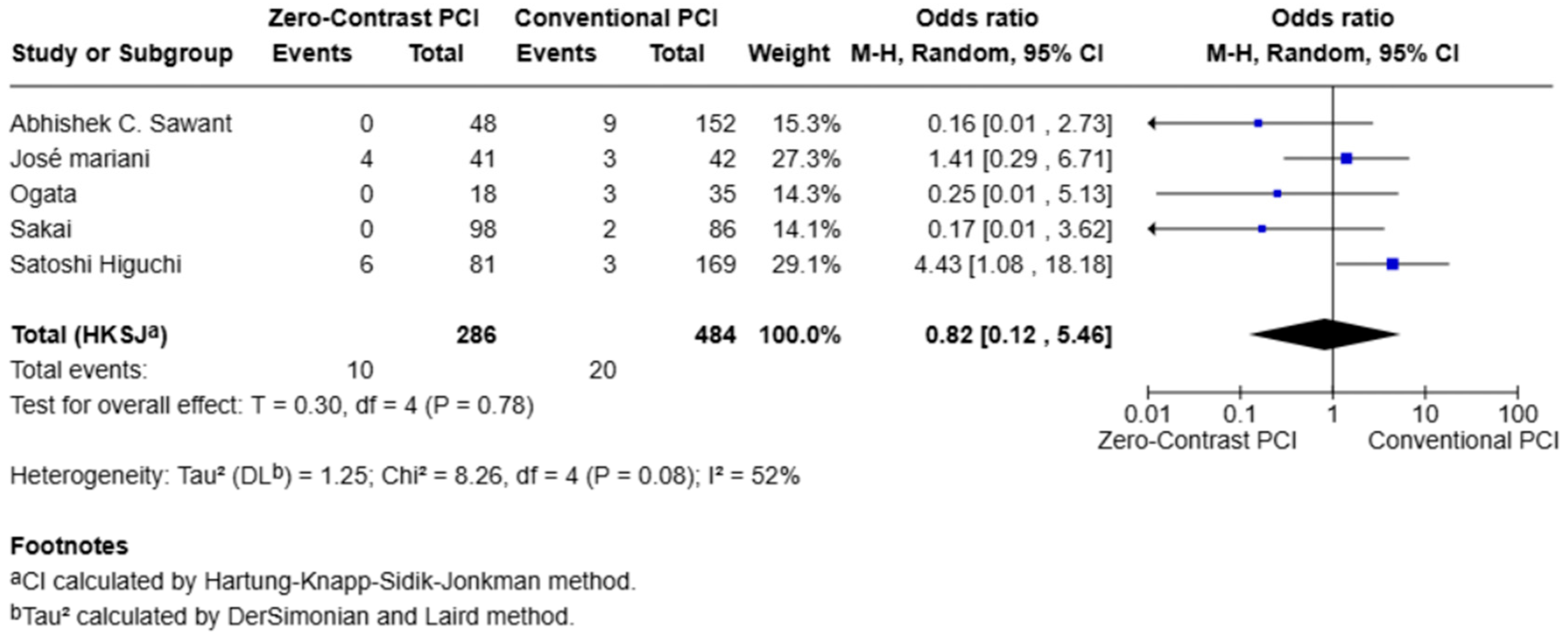
Analysis of five studies revealed a low incidence of repeat MI, reporting 10 events among 286 patients in the zero-contrast PCI group and 20 events among 484 patients in the conventional PCI group. No statistically significant differences were noticed between the two strategies (OR 0.82, 95% CI 0.12–5.46, p = 0.78), and they showed moderate heterogeneity (I2 = 52%) (Figure 6).
The analysis was repeated with sequential exclusion of the studies by Satoshi Higuchi and Jose Mariani. Exclusion of these studies demonstrated a reduced statistical heterogeneity (I2 = 0%). However, no repeat MI events were observed in either treatment group among the remaining studies. These findings should be interpreted with caution and do not alter the conclusions of the primary analysis due to the small number of studies, very low event rates, and post-hoc nature of this analysis (Supplementary Figure S5).
Vessel Revascularization
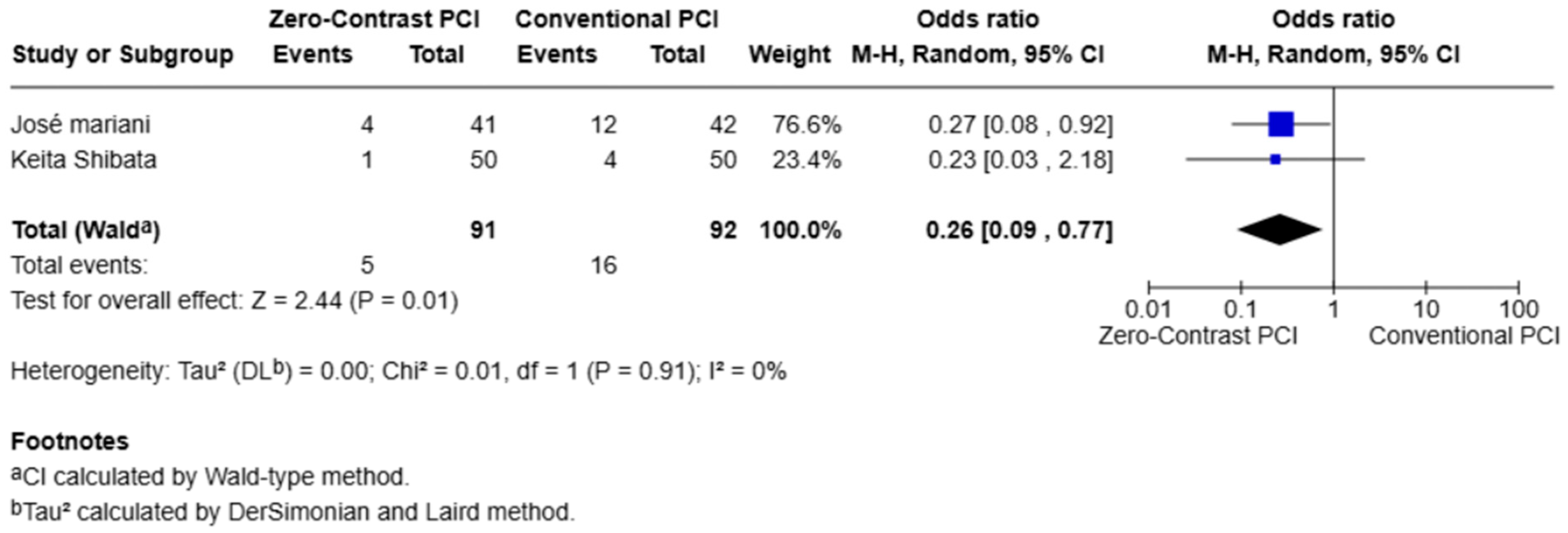
Analysis of studies (Jose et al. and Shibata et al.) assessing the risk of vessel revascularization revealed statistically significant outcomes (p = 0.01) favoring zero-contrast PCI. A pooled odds ratio demonstrated that zero-contrast PCI was associated with significantly reduced risk of vessel revascularization (OR 0.26; 95% CI 0.09 to 0.77) as compared to conventional PCI. Although there was no evidence of significant heterogeneity across the included studies for this outcome (I2 = 0%) (Figure 7).
Renal Replacement Therapy (RRT)
Analysis of the two studies (Shibata et al. and Sakai et al.) performed to evaluate the need for RRT revealed no statistically significant difference between zero-contrast and conventional PCI (OR 0.83; 95% CI 0.04 to 15.48; p = 0.90). Substantial heterogeneity was noted for this outcome (I2 = 81%) (Supplementary Figure S6).
Dialysis Requirement
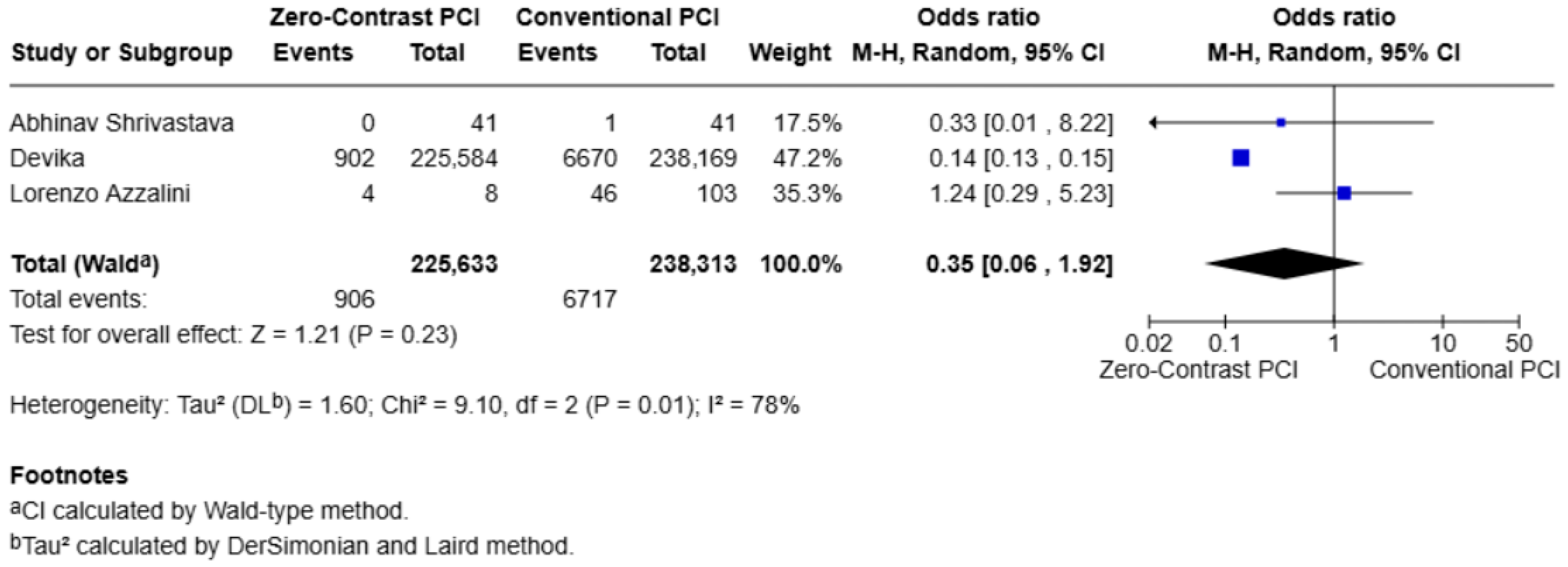
A total of three studies (Shrivastava, Devika, and Azzalini) evaluated the outcome of the dialysis requirement. The pooled analysis showed no significant difference between zero-contrast and conventional PCI with the pooled OR of 0.35 (95% CI 0.06–1.92; p= 0.23) and revealed substantial heterogeneity (I2 =78%) (Figure 8).
To address this heterogeneity, the Azzalin study was excluded from the analysis. Two studies (Shrivastava, Devika) showed a significant difference between the two groups with a pooled OR of 0.14 (95% CI 0.13–0.15; Z = 55.36; p = 0.61), and heterogeneity was eliminated (I2 =0%) (Supplementary Figure S7).
Cardiovascular Mortality
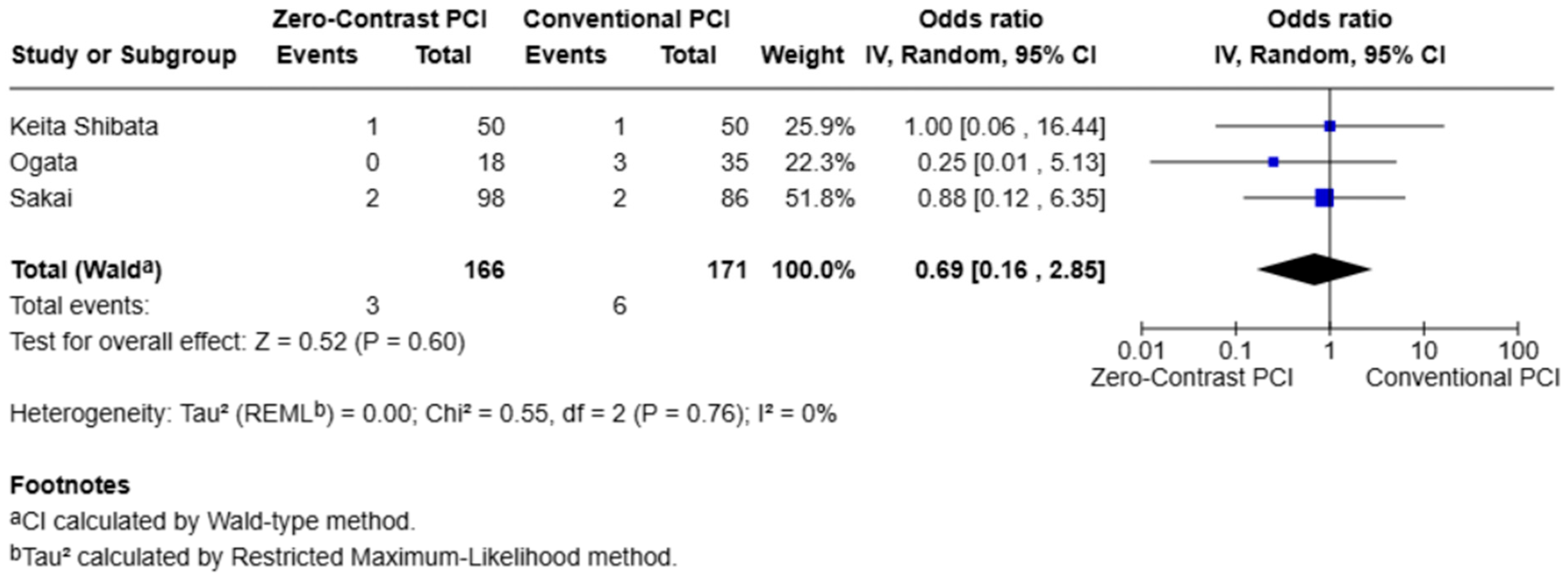
Cardiovascular mortality was assessed through three-study analyses (Shibata, Ogata, and Sakai). The results demonstrated no significant difference between the zero contrast and conventional PCI, with an OR of 0.69 (95% CI: 0.16–2.85; p = 0.60) and no heterogeneity (I2 = 0%) (Figure 9).
Non-Cardiovascular Mortality
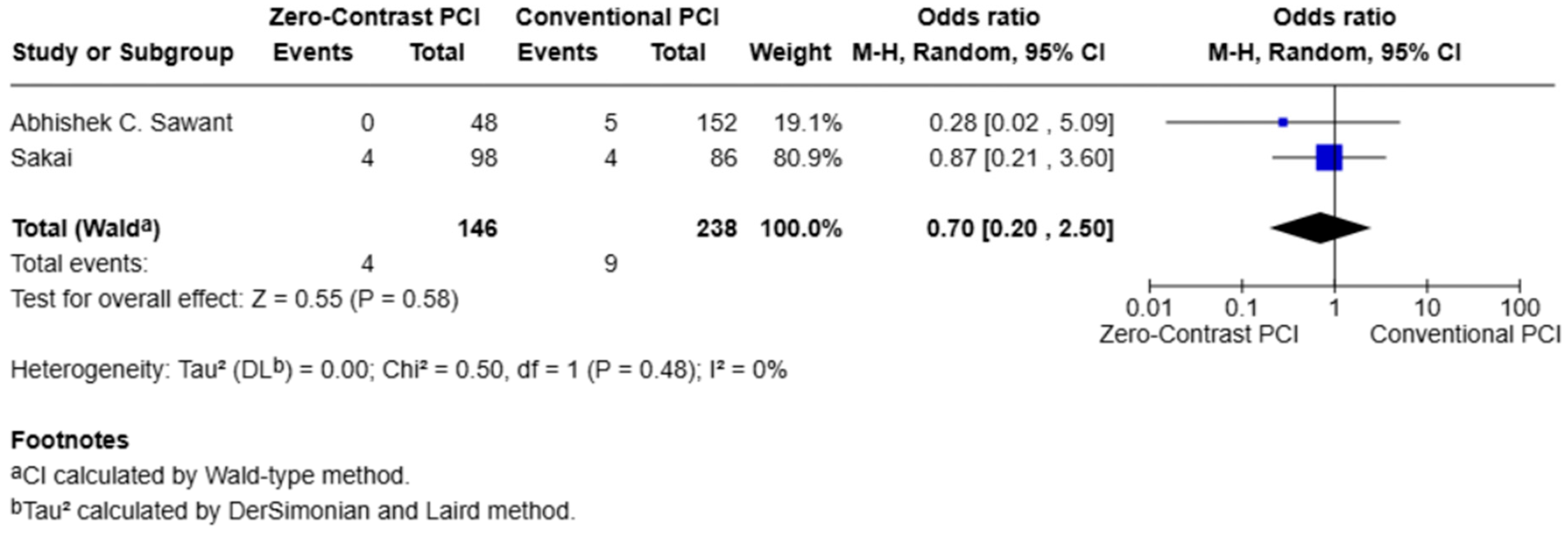
For non-cardiovascular death, a two-study analysis (Sawant and Sakai) was conducted. The findings show no significant difference between the two groups, with an OR of 0.70 (95% CI 0.20–2.50, p = 0.58) and no heterogeneity (I2 = 0%) (Figure 10).
Emergent Hemodialysis
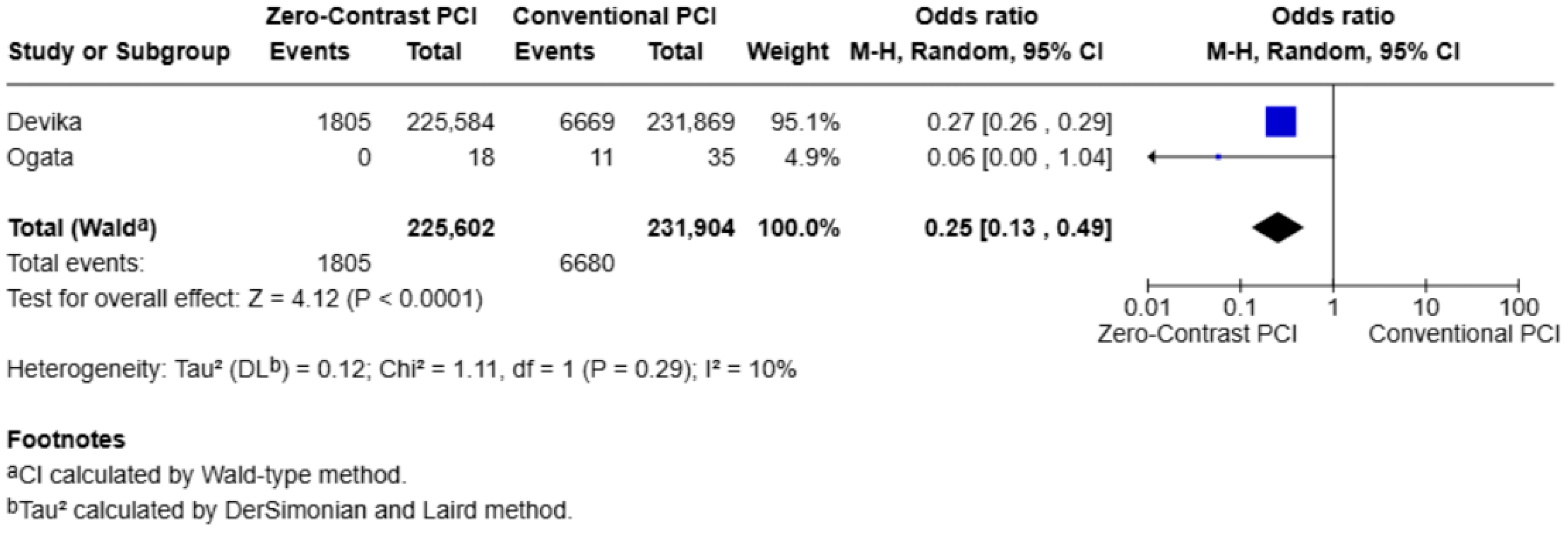
Pooled analysis using two studies (Devika and Ogata) demonstrated a significantly lower risk of emergent hemodialysis in the zero-contrast group (OR 0.25, 95% CI 0.13–0.49; p < 0.001) compared to conventional PCI. Heterogeneity was low (I2 = 10%) (Figure 11, Table summary of the outcomes given in Table 3).

4. Discussion

This meta-analysis aimed to assess the safety and clinical outcomes of zero-contrast and ultra-low-contrast percutaneous coronary intervention (PCI) in patients with advanced chronic kidney disease (CKD), a group for whom the risks associated with conventional PCI are especially significant. Patients with CKD undergoing PCI are at greater risk of developing renal and other cardiovascular complications [28]. By reviewing studies that included adults with CKD or those on dialysis, our objective was to determine whether contrast-reducing strategies can effectively reduce renal complications without compromising procedural success or overall cardiovascular outcomes.
By combining data from randomized control trials and observational studies, our results show that zero- and ultra-low-contrast PCI consistently reduced the risk of contrast-induced kidney injury compared with conventional PCI [29]. The pooled results did show some moderate heterogeneity across studies, which is likely due to differences in patient groups and clinical settings. To further explore the influence of individual studies, a post-hoc exclusion of the study by Devika et al. was performed; the findings became more stable, the protective effect of contrast-sparing PCI continued, and the heterogeneity, which had been driven by Devika’s large statistical weight and relatively weak protective effect, decreased to zero. The persistence benefit of contrast-reduced PCI observed across studies highlights it as a safer strategy in high-risk CKD patients [5]. In the case of all-cause mortality, our results showed no significant difference between zero contrast and conventional PCI, and moderate heterogeneity was seen. To explore the possible influence of outlier data, the studies by Jose Mariani and Kieta were sequentially excluded. Exclusion of these studies demonstrated remarkably lower risk of all-cause mortality with zero-contrast PCI, and heterogeneity was reduced to null [30]. Both these studies depicted differences in methodology; Mariani was a small randomized trial handling confounding bias through randomization, whereas Kieta was a large cohort study addressed post hoc using propensity score matching. These methodological differences explain their disproportionate impact on heterogeneity. These findings highlight the possible increase in survival of high-risk CKD patients when treated with low-contrast PCI.
During analysis, a substantial decrease in contrast volume use was noticed in zero-contrast PCI as compared to conventional PCI. All included studies in the analysis depicted a decrease in contrast use, highlighting the anticipated effect of contrast-sparing or imaging-guided PCI techniques [31]. The variability observed across studies likely explains the differences in procedural methods and inclusion of both ultra-low contrast and zero contrast trials. The result for repeated MI, which initially showed no difference between the two groups with moderate heterogeneity, shifted in favor of ultra-low contrast PCI [20]. When Higuchi and Mariani were excluded from consideration. This change in result likely occurred because of variations in design and baseline renal profiles of these studies, which led to unstable estimates. The reduction in recurrent MI highlights the impact of contrast-sparing PCI strategies in improving long-term cardiovascular outcomes in high-risk patients. In relation to the need for dialysis, conventional PCI has been associated with increased requirements [32]. Our initial pooled result did not demonstrate a significant difference between zero contrast and conventional PCI and exhibited high variability in effect estimates; however, removing Azzalini, a smaller and clinically unique cohort, completely resolved the heterogeneity and revealed a noteworthy benefit of zero-contrast PCI in contrast to conventional PCI and strengthened the renal-sparing benefit of contrast reduction. Collectively, these findings indicate that outlier studies with methodological or clinical variations may obscure the more consistent trends observed across the broader body of evidence.
Emergent hemodialysis was reported in two studies (Devika and Ogata). Pooled analysis incorporating both of these showed the protective benefit of zero-contrast PCI with a substantial decrease in emergent dialysis. A similar pattern was noticed in the case of the vessel revascularization outcome. Findings from two studies, Jose Mariani and Shibata, consistently favored zero-contrast PCI compared to conventional PCI [12]. Across the remaining clinical outcomes, the overall pattern was consistent. For MACE, the three studies’ analysis (Sawant, Shibata, and Higuchi) did not show a meaningful reduction with zero-contrast PCI [15], and the initial heterogeneity disappeared entirely once the Sawant study was excluded from the analysis, referring to the differences in event definitions and follow-up duration in the study. For the need of renal replacement therapy, our findings from Shibata and Sakai did not show any statistically significant difference between the two comparison groups with substantial heterogeneity, which may refer to their small sample size and overall low event rate. Cardiovascular mortality was assessed through three study analyses (Shibata, Ogata, and Sakai). And non-cardiovascular mortality was analyzed, including two studies (Sawant, Sakai). Both outcomes showed no difference between the two groups, with no signal of benefit or harm [22]. The larger registry datasets, although different in design from the smaller studies, gave much more stable estimates and continued to show fewer adverse events with zero-contrast PCI. This pattern suggests that the advantages seen in more controlled research settings may also hold up in everyday clinical practice.
Our findings are consistent with the previous literature showing that minimizing the contrast exposure in CKD patients not only reduces the chances of kidney injury but also renal complications and cardiovascular events. Large registries [26,33] observed a similar trend in the reduction in AKI and other adverse events in patients with CKD, favoring the findings of our meta-analysis.
This meta-analysis consolidates current evidence on zero- or low-contrast PCI using a meticulous and transparent methodology. A key strength lies in the incorporation of studies that represent real-world practice, encompassing a wide range of patient risk profiles and procedural methodologies. The analyses encompassed multiple clinically significant outcomes, such as mortality and CI-AKI, and additional exploratory analyses were undertaken to assess the stability of our findings and to ensure that results were not driven by a single large study. No complications or adverse effects were observed associated with this technique. Moreover, the emphasis on outcomes significant to both clinicians and high-risk patients, such as CI-AKI, recurrent MI, dialysis, and overall safety, offers a substantial contribution to the present literature.

Limitations

Several limitations should also be acknowledged. Firstly, most of the included studies were observational in nature, which increases the probability of residual confounding bias. Second, across the studies, there was variation and a lack of uniformity in the reporting of key baseline characteristics, like renal function, contrast protocols, and the degree of procedural complexity. Third, disproportionate statistical weight was contributed by a single large study that received greater significance owing to its considerably larger sample size. Finally, one included retrospective cohort showed substantial arm imbalance due to its nonrandomized, operator-driven allocation, resulting in inherent selection bias.
The incorporation of extensive registry-based studies enhances precision; nevertheless, such predominance may influence pooled findings and may mask variability in other studies. Furthermore, the inclusion of cohort studies limits causal inference due to nonrandomized allocation and potential confounding, consequently resulting in residual bias despite statistical adjustment.
Finally, some outcomes were reported by a few studies or low event rates, which resulted in wide confidence intervals with low precision.

5. Conclusions

In summary, this analysis indicates that for high-risk CKD patients, ultra-low or zero contrast PCI may reduce the risk of contrast-induced AKI; however, no statistically significant differences were observed for all-cause mortality or recurrent myocardial infection, and evidence for other clinical outcomes remains limited. Contrast-sparing PCI strategies appear safe and feasible in patients. However, the overall findings should be interpreted with caution given the small number of included studies, low event rates, and heterogeneity across the study design. Further large-scale, well-designed RCTs are required to clarify the impact of these techniques on long-term renal and cardiovascular outcomes.

Supplementary Materials

The following supporting information can be downloaded at: https://www.mdpi.com/article/10.3390/jcrm2010003/s1, Table S1: Search Strategy Table; Table S2: Risk of Bias Assessment using Newcastle Ottawa Scale; Figure S1: Risk of Bias Assessment using ROB tool; Figure S2: Forest Plot of Contrast-Induced Acute Kidney Injury after Sensitivity Analysis; Figure S3: Forest Plot of All-Cause Mortality after Sensitivity Analysis; Figure S4: Forest Plot of Major Adverse Cardiac Events (MACE) after Sensitivity Analysis; Figure S5: Forest Plot of Repeat Myocardial Infarction after Sensitivity Analysis; Figure S6: Forest Plot of Renal Replacement Therapy (RRT); Figure S7: Forest Plot of Dialysis Requirement after Sensitivity Analysis.

Author Contributions

Conceptualization, F.A. (Faizan Ahmed) and R.A. (Rubiya Ali); methodology, A.A.; validation, F.A. (Faizan Ahmed), S.A.R. and A.Z.; formal analysis, M.U.; investigation, S.A.R., R.A. (Ramsha Ali) and A.Z.; data curation, S.A.R., S.S., A.S. and M.A.; writing—original draft preparation, S.S., A.A. and L.K.; writing—review and editing, R.A. (Ramsha Ali), A.Z., M.S. and K.P.; visualization, A.R.M. and H.A.; supervision, F.A. (Faizan Ahmed), A.Z. and F.A. (Fawaz Alenezi); project administration, S.A.R.; funding acquisition, F.A. (Faizan Ahmed). All authors have read and agreed to the published version of the manuscript.

Funding

This research received no external funding.

Institutional Review Board Statement

Not applicable. This study is a systematic review and meta-analysis of previously published data.

Informed Consent Statement

Not applicable.

Data Availability Statement

All data analyzed in this study are derived from previously published articles. The extracted datasets are available from the corresponding author upon reasonable request.

Conflicts of Interest

The authors declare no conflicts of interest.

References

  1. Nayak, K.R.; Mehta, H.S.; Price, M.J.; Russo, R.J.; Stinis, C.T.; Moses, J.W.; Mehran, R.; Leon, M.B.; Kandzari, D.E.; Teirstein, P.S. A novel technique for ultra-low contrast administration during angiography or intervention. Catheter. Cardiovasc. Interv. 2010, 75, 1076–1083. [Google Scholar] [CrossRef]
  2. Rozenbaum, Z.; Benchetrit, S.; Rozenbaum, E.; Neumark, E.; Mosseri, M.; Pereg, D. Ultra-Low Contrast Volume for Patients with Advanced Chronic Kidney Disease Undergoing Coronary Procedures. Nephron 2018, 138, 296–302. [Google Scholar] [CrossRef]
  3. Azzalini, L.; Spagnoli, V.; Ly, H.Q. Contrast-Induced Nephropathy: From Pathophysiology to Preventive Strategies. Can. J. Cardiol. 2016, 32, 247–255. [Google Scholar] [CrossRef]
  4. Tsai, T.T.; Patel, U.D.; Chang, T.I.; Kennedy, K.F.; Masoudi, F.A.; Matheny, M.E.; Kosiborod, M.; Amin, A.P.; Messenger, J.C.; Rumsfeld, J.S.; et al. Contemporary Incidence, Predictors, and Outcomes of Acute Kidney Injury in Patients Undergoing Percutaneous Coronary Interventions. JACC Cardiovasc. Interv. 2014, 7, 1–9. [Google Scholar] [CrossRef]
  5. Almendarez, M.; Gurm, H.S.; Mariani, J.; Montorfano, M.; Brilakis, E.S.; Mehran, R.; Azzalini, L. Procedural Strategies to Reduce the Incidence of Contrast-Induced Acute Kidney Injury During Percutaneous Coronary Intervention. JACC Cardiovasc. Interv. 2019, 12, 1877–1888. [Google Scholar] [CrossRef]
  6. Silver, S.A.; Shah, P.M.; Chertow, G.M.; Harel, S.; Wald, R.; Harel, Z. Risk prediction models for contrast induced nephropathy: Systematic review. BMJ 2015, 351, h4395. [Google Scholar] [CrossRef] [PubMed]
  7. Gurm, H.S.; Dixon, S.R.; Smith, D.E.; Share, D.; LaLonde, T.; Greenbaum, A.; Moscucci, M.; BMC2 (Blue Cross Blue Shield of Michigan Cardiovascular Consortium) Registry. Renal Function-Based Contrast Dosing to Define Safe Limits of Radiographic Contrast Media in Patients Undergoing Percutaneous Coronary Interventions. J. Am. Coll. Cardiol. 2011, 58, 907–914. [Google Scholar] [CrossRef] [PubMed]
  8. Hennessey Shabbir, A.; Travieso, A.; Gonzalo, N.; Escaned, J. Procedural and Technological Innovations Facilitating Ultra-low Contrast Percutaneous Coronary Interventions. Interv. Cardiol. Rev. Res. Resour. 2023, 18, e09. [Google Scholar] [CrossRef]
  9. Azzalini, L.; Laricchia, A.; Regazzoli, D.; Mitomo, S.; Hachinohe, D.; Bellini, B.; Demir, O.M.; Poletti, E.; Maccagni, D.; Colombo, A. Ultra-Low Contrast Percutaneous Coronary Intervention to Minimize the Risk for Contrast-Induced Acute Kidney Injury in Patients With Severe Chronic Kidney Disease. J. Invasive Cardiol. 2019, 31, 176–182. [Google Scholar] [CrossRef]
  10. Truong, T.; Boukhris, M.; Tuffreau-Martin, A.S.; Molho, A.; Chiaroni, P.M.; Zamora, P.; De Pommereau, A.; Rostain, L.; Mangiameli, A.; Cianci, A.; et al. Ultra-Low Contrast IVUS-Guided PCI in Patients With Severe Chronic Kidney Disease: An Observational Prospective Study. Circ. Cardiovasc. Interv. 2025, 18, e014854. [Google Scholar] [CrossRef]
  11. Kumar, P.; Jino, B.; Roy, S.; Shafeeq, A.; Rajendran, M. Absolute zero-contrast percutaneous coronary intervention under intravascular ultrasound guidance in chronic kidney disease patients—From despair to hope? IJC Heart Vasc. 2022, 40, 101052. [Google Scholar] [CrossRef]
  12. Sacha, J.; Gierlotka, M.; Lipski, P.; Feusette, P.; Dudek, D. Zero-contrast percutaneous coronary interventions to preserve kidney function in patients with severe renal impairment and hemodialysis subjects. Adv. Interv. Cardiol. 2019, 15, 137–142. [Google Scholar] [CrossRef]
  13. Mehran, R.; Aymong, E.D.; Nikolsky, E.; Lasic, Z.; Iakovou, I.; Fahy, M.; Mintz, G.S.; Lansky, A.J.; Moses, J.W.; Stone, G.W.; et al. A simple risk score for prediction of contrast-induced nephropathy after percutaneous coronary intervention. J. Am. Coll. Cardiol. 2004, 44, 1393–1399. [Google Scholar] [CrossRef] [PubMed]
  14. Dimitriadis, K.; Pyrpyris, N.; Papanikolaou, A.; Beneki, E.; Tsioufis, P.; Antonopoulos, A.; Fragoulis, C.; Tatakis, F.; Koutsopoulos, G.; Aznaouridis, K.; et al. Intravascular Imaging in Ultra-Low or Zero-Contrast Percutaneous Coronary Interventions: The Time Is Now? J. Clin. Med. 2023, 12, 7499. [Google Scholar] [CrossRef] [PubMed]
  15. Sekerak, R.; Lerner, J.B.A.; Garnett, C.; McEntegart, M.; Maehara, A.; Ali, Z.; Fall, K.; Mohan, S.; Ratner, L.E.; Leon, M.B.; et al. Outcomes of ultra-low contrast percutaneous coronary intervention in patients with advanced chronic kidney disease. Catheter. Cardiovasc. Interv. 2024, 104, 227–233. [Google Scholar] [CrossRef]
  16. Page, M.J.; McKenzie, J.E.; Bossuyt, P.M.; Boutron, I.; Hoffmann, T.C.; Mulrow, C.D.; Shamseer, L.; Tetzlaff, J.M.; Akl, E.A.; Brennan, S.E.; et al. The PRISMA 2020 statement: An updated guideline for reporting systematic reviews. BMJ 2021, 372, n71. [Google Scholar] [CrossRef]
  17. Sterne, J.A.; Savović, J.; Page, M.J.; Elbers, R.G.; Blencowe, N.S.; Boutron, I.; Cates, C.J.; Cheng, H.Y.; Corbett, M.S.; Eldridge, S.M.; et al. RoB 2: A revised tool for assessing risk of bias in randomised trials. BMJ 2019, 366, l4898. [Google Scholar] [CrossRef]
  18. Higgins, J.P.T. Measuring inconsistency in meta-analyses. BMJ 2003, 327, 557–560. [Google Scholar] [CrossRef]
  19. DerSimonian, R.; Laird, N. Meta-analysis in clinical trials. Control. Clin. Trials 1986, 7, 177–188. [Google Scholar] [CrossRef] [PubMed]
  20. Ogata, N.; Ikari, Y.; Nanasato, M.; Okutsu, M.; Kametani, R.; Abe, M.; Uehara, Y.; Sumitsuji, S. Safety margin of minimized contrast volume during percutaneous coronary intervention in patients with chronic kidney disease. Cardiovasc. Interv. Ther. 2014, 29, 209–215. [Google Scholar] [CrossRef]
  21. Mariani, J.; Guedes, C.; Soares, P.; Zalc, S.; Campos, C.M.; Lopes, A.C.; Spadaro, A.G.; Perin, M.A.; Filho, A.E.; Takimura, C.K.; et al. Intravascular Ultrasound Guidance to Minimize the Use of Iodine Contrast in Percutaneous Coronary Intervention. JACC Cardiovasc. Interv. 2014, 7, 1287–1293. [Google Scholar] [CrossRef]
  22. Sakai, K.; Ikari, Y.; Nanasato, M.; Umetsu, H.; Okutsu, M.; Takikawa, T.; Sumitsuji, S.; Sadamatsu, K.; Takada, M.; Kato, Y.; et al. Impact of intravascular ultrasound-guided minimum-contrast coronary intervention on 1-year clinical outcomes in patients with stage 4 or 5 advanced chronic kidney disease. Cardiovasc. Interv. Ther. 2019, 34, 234–241. [Google Scholar] [CrossRef]
  23. Higuchi, S.; Kabeya, Y.; Nishina, Y.; Miura, Y.; Shibata, S.; Hata, N.; Suda, T.; Hirabuki, K.; Hasegawa, H.; Yoshino, H.; et al. Clinical impact of noncontrast percutaneous coronary intervention in patients with acute coronary syndrome. J. Med. Investig. 2022, 69, 57–64. [Google Scholar] [CrossRef]
  24. Shibata, K.; Wakabayashi, K.; Ishinaga, T.; Morimura, M.; Aizawa, N.; Suzuki, T.; Furuya, T.; Sato, C.; Nishikura, T.; Ikeda, N.; et al. Feasibility, Safety, and Long-Term Outcomes of Zero-Contrast Percutaneous Coronary Intervention in Patients With Chronic Kidney Disease. Circ. J. 2022, 86, 787–796. [Google Scholar] [CrossRef]
  25. Sawant, A.C.; Patel, N.; Pershad, A. Safety, feasibility, and incremental value of ultralow and zero contrast PCI in an all-comers registry. Catheter. Cardiovasc. Interv. 2024, 104, 648–654. [Google Scholar] [CrossRef]
  26. Aggarwal, D.; Young, R.; Seth, M.; Wojdyla, D.M.; Sukul, D.; Wang, T.Y.; Dixon, S.R.; Rudnick, M.R.; Bansal, S.; Briguori, C.; et al. Contemporary Contrast Media Dosing During Percutaneous Coronary Intervention in Patients With Pre-existing Renal Impairment. J. Invasive Cardiol. 2025, 37. [Google Scholar] [CrossRef] [PubMed]
  27. Shrivastava, A.; Nath, R.K.; Mahapatra, H.S.; Pandit, B.N.; Raj, A.; Sharma, A.K.; Kumar, T.; Kuber, D.; Aggarwal, P. Ultra-low CONtraSt PCI vs. conVEntional PCI in patients of ACS with increased risk of CI-AKI (CONSaVE-AKI). Indian Heart J. 2022, 74, 363–368. [Google Scholar] [CrossRef] [PubMed]
  28. Postalian, A.; Krajcer, Z. The relationship between chronic kidney disease and “complex” percutaneous coronary intervention: Uncovering the details. Catheter. Cardiovasc. Interv. 2023, 101, 949–950. [Google Scholar] [CrossRef] [PubMed]
  29. Fahmi, H.; Elshenawy, H.; Diab, Z.; Ayobami, O.; Alawami, M. Zero Contrast and Ultra-Low Contrast Percutaneous Coronary Intervention. Heart Lung Circ. 2023, 32, S84–S85. [Google Scholar] [CrossRef]
  30. Burlacu, A.; Tinica, G.; Brinza, C.; Crisan-Dabija, R.; Popa, I.V.; Covic, A. Safety and Efficacy of Minimum- or Zero-Contrast IVUS–Guided Percutaneous Coronary Interventions in Chronic Kidney Disease Patients: A Systematic Review. J. Clin. Med. 2021, 10, 1996. [Google Scholar] [CrossRef]
  31. Kumar, P.; Jino, B.; Rajendran, M. Zero Contrast Percutaneous Coronary Intervention—A novel approach to reduce Contrast Induced Acute Kidney Injury. Med. Res. Arch. 2022, 10. [Google Scholar] [CrossRef]
  32. Elshafey, W.E.; Aziz, W.F.A.; Eldin, A.M.K.; Khattab, M.M. Clinical Outcome of Low Dose Contrast during Percutaneous Coronary Intervention in Patients with Moderate to Severe Kidney Impairment. World J. Cardiovasc. Dis. 2019, 9, 781–795. [Google Scholar] [CrossRef]
  33. Garnett, C.; Sekerak, R.; Ben-Ami, J.; Fall, K.N.; Madhavan, M.; Maehara, A.; McEntegart, M.; Moses, J.W.; Leon, M.B.; Kirtane, A.J.; et al. Near-zero contrast vs. Ultra-low contrast PCI in patients with advanced CKD: Safety and long-term outcomes. J. Am. Coll. Cardiol. 2024, 83, 827. [Google Scholar] [CrossRef]
Figure 1. Prisma Flow Chart.
Jcrm 02 00003 g001
Figure 2. Forest Plot of Contrast-Induced Acute Kidney Injury [9,20,21,22,23,25,26,27].
Jcrm 02 00003 g002
Figure 3. Forest Plot of All-Cause Mortality [20,21,22,24,25,26,27].
Jcrm 02 00003 g003
Figure 4. Forest Plot of Total Contrast Volume (mL) [9,20,21,22,24,25].
Jcrm 02 00003 g004
Figure 5. Forest Plot of Major Adverse Cardiac Events (MACE) [23,24,25].
Jcrm 02 00003 g005
Figure 6. Forest Plot of Repeat Myocardial Infarction [20,21,22,23,25].
Jcrm 02 00003 g006
Figure 7. Forest Plot of Vessel Revascularization [21,24].
Jcrm 02 00003 g007
Figure 8. Forest Plot of Dialysis Requirement [9,26,27].
Jcrm 02 00003 g008
Figure 9. Forest Plot of Cardiovascular Mortality [20,22,24].
Jcrm 02 00003 g009
Figure 10. Forest Plot of Non-Cardiovascular Mortality [22,25].
Jcrm 02 00003 g010
Figure 11. Forest Plot of Emergent Hemodialysis [20,26].
Jcrm 02 00003 g011
Table 1. Study Characteristics of Included Studies.
Author, YearCountryStudy DesignTotal Population
(n)
Age (% Female)InterventionComparatorFollow-Up DurationOutcomes Reported
(I)(C)(I)(C)
Ogata, 2014 [20]JapanRetrospective Study183571 ± 8
(17)
74 ± 8
(49)
IVUS-guided minimized contrast (CV/eGFR < 1)High contrast volume12 monthsAKI, Dialysis, All Cause Deaths.
Jose Mariani, 2014 [21]FranceProspective Randomized Control Trail414267 ± 9.9
(39)
64.5 ± 10.9
(42.9)
IVUS-GuidedAngiography guided PCI12 monthsTotal Contrast Volume, AKI, MACE.
Sakai., 2018 [22]JapanProspective Non-Randomized Trail988676 ± 974 ± 7Ultra-low contrast PCIHigh (CV/CC > 3)12 monthsAKI, Dialysis, MACE.
Lorenzo Azzalini, 2019 [9] Retrospective Study 810376 ± 7.5176 ± 7.51Ultra-low contrast PCI (8.8 mL)Convention 90 mL [IQR, 58–140 mL]--
Satoshi Higuchi, 2021 [23]JapanRetrospective Study 8116975 ± 1273 ± 12Non-contrast PCI (17 mL)Conventional PCI12 monthsAKI.
Keita Shibata, 2021 [24]JapanRetrospective Study 505072.3 ± 12.4
(14)
70.7 ± 12
(12)
Zero contrast PCI (4.3 mL)Conventional PCI (80.8 mL)32 monthsAKI, Emergent Hemodialysis, MACE, All Cause Deaths, CVS-Related Deaths, MI, RRT, TLR.
Abhishek C. Sawant, 2024 [25]USARetrospective Study2004869 ± 9-Ultra-low contrast PCIRoutine PCI6 monthsAKI, All Cause Death, MI, Major bleed.
Devika, 2025 [26] USAObservational Cohort Study225,584238,16974
(41)
74
(40.4)
Low or Ultra-low contrast volume PCIHigh contrast PCI--
Abhinav Shrivastava, 2022 [27]IndiaProspective Randomized Control Trail414161.44 ± 8.8
(24)
60.17 ± 8.17
(27)
Ultra-low contrast PCI (IVUS CV/eGFR ratio 1:1)Standard PCI (CV/eGFR RATIO 3:1)30 daysAKI, Dialysis, MI, All Cause Death, Unplanned Coronary Re-intervention.
I: Intervention; C: Control; AKI: acute kidney injury; MACE: major adverse cardiac event; MI: myocardial infraction; RRT: Renal Replacement Therapy; TLR: Target Lesion Revascularization.
Table 2. Patient Characteristics.
CVS-Related Variables
StudyHistory of CVD
(%)
Hypertension
(%)
Diabetes
(%)
Previous MI
(%)
Previous PCI
(%)
Heart Failure
(%)
(I)(C)(I)(C)(I)(C)(I)(C)(I)(C)(I)(C)
Ogata, 2014 [20]61789914434----2837
Jose Mariani, 2014 [21]12.24.897.610073.28114.616.726.811.9--
Sakai., 2018 [22]171690922120353458473730
Lorenzo Azzalini, 2019 [9]------------
Satoshi Higuchi, 2021 [23]--76.573.343.244.914.853.2--3731
Keita Shibata, 2021 [24]243072685854222424263428
Abhishek C. Sawant, 2024 [25]48.5351.5591.796.754.248.77567.172.961.2--
Devika, 2025 [26]23.521.993.392.155.653.836.630.350.741.350.440.8
Abhinav Shrivastava, 2022 [27]--68888378----100100
Kidney-Related Variables
StudySerum Creatinine (mg/dL)eGFR (ml/min/1.73 m2)BNP (pg/mL)
Intervention (I)Control (C)Intervention (I)Control (C)Intervention (I)Control (C)
Ogata, 2014 [20]------
Jose Mariani, 2014 [21]------
Sakai, 2018 [22]2.0 ± 0.62.3 ± 0.621 ± 619 ± 6186 ± 204245 ± 300
Lorenzo Azzalini, 2019 [9]------
Satoshi Higuchi, 2021 [23]1.2 ± 0.81.1 ± 0.455 ± 2557 ± 23220 ± 316191 ± 250
Keita Shibata, 2021 [24]0.83 ± 0.171.41 ± 0.4672.6 ± 13.638.9 ± 15.273.6 ± 95.9119.5 ± 152
Abhishek C. Sawant, 2024 [25]1.30 ± 0.441.00 ± 0.30----
Devika, 2025 [26]------
Abhinav Shrivastava, 2022
[27]
1.644 ± 0.4261.62 ± 0.50442.20 ± 9.9641.87 ± 9.34--
Table 3. Outcomes Summary Table.
No. of Studies IncludedTotal Population (Intervention)
(N)
Total Events
(N)
Effect Size
(OR) (MD)
95% CII2% (p Value)
(I)(C)
Primary Outcomes
CI-AKI8464,757 (225,919)25,37651,3250.240.12–0.4946% (0.002)
Total volume of contrast627,479 (3730)-−110.22−168.62–−51.83100% (0.005)
All Cause Death7464,455 (225,880)628713,1270.720.22–2.4154% (0.53)
Secondary Outcomes
Need for dialysis3463,946 (225,633)90667170.350.06–1.9278% (0.23)
RRT2284 (148)7120.830.04–15.4881% (0.90)
Emergent Hemodialysis2457,506 (225,602)180566800.250.13–0.4910% (<0.001)
MACE3550 (179)21470.860.23–3.1667% (0.81)
Repeat MI5770 (286)10200.820.12–5.4652% (0.78)
Revascularization2183 (91)5160.260.09–0.770% (0.01)
CVS-Related Deaths3337 (166)360.690.16–2.850% (0.60)
Non-CVS Deaths2384 (146)490.700.20–2.500% (0.58)
I: Intervention; C: control; OR: Odds Ratio; MD: Mean Difference; CI-AKI: Contrast-Induced Acute Kidney Disease; MACE: Major Adverse Cardiac Event; MI: Myocardial Infraction; RRT: Renal Replacement Therapy.
Disclaimer/Publisher’s Note: The statements, opinions and data contained in all publications are solely those of the individual author(s) and contributor(s) and not of MDPI and/or the editor(s). MDPI and/or the editor(s) disclaim responsibility for any injury to people or property resulting from any ideas, methods, instructions or products referred to in the content.