1. Introduction
The estimated overall incidence and prevalence of HF, according to the HFA Atlas developed by the European Society of Cardiology, was 1 to 4 cases per 1000 person-years and 10 to 30 cases per 1000 persons, accordingly [
1]. The dysregulation of crucial neurohormonal systems as HF progresses leads to both a reduction in free water clearance and the subsequent dilution and depletion of important electrolytes such as sodium and chloride. Electrolyte disturbances remain a commonly encountered abnormality in HF patients. The clinical significance of hyponatremia has been the major focus of research for decades, being associated with adverse outcomes and increased mortality in HF. Sodium’s anionic counterpart, chloride, has recently emerged as a potential treatment target given its significant value for predicting adverse outcomes [
2,
3,
4]. The singularity of chloride lies in the fact that fluctuation in its levels reflects a combination of maladaptive neurohormonal, renal and acid–base disturbances. Interestingly, several HF studies have established serum chloride to be a more accurate predictor of adverse outcomes than sodium [
5]. Apart from mortality, hypochloremia has been associated with an increased risk of HF hospitalization as well as poor diuretic efficiency and incomplete decongestion [
6,
7].
The purpose of this review is to summarize current evidence concerning serum chloride. The sodium–chloride interplay, the impact of acute vs. chronic chloride disturbances, the temporary vs. persistent nature of hypochloremia and the distinct role of hypochloremia across the HF spectrum (HFpEF vs. HFrEF) will be discussed in detail. Practical and easy-to-implement-in-clinical-practice flowcharts for the classification and management of hypochloremia according to the underlying mechanism will also be presented.
2. Literature Review Methodology
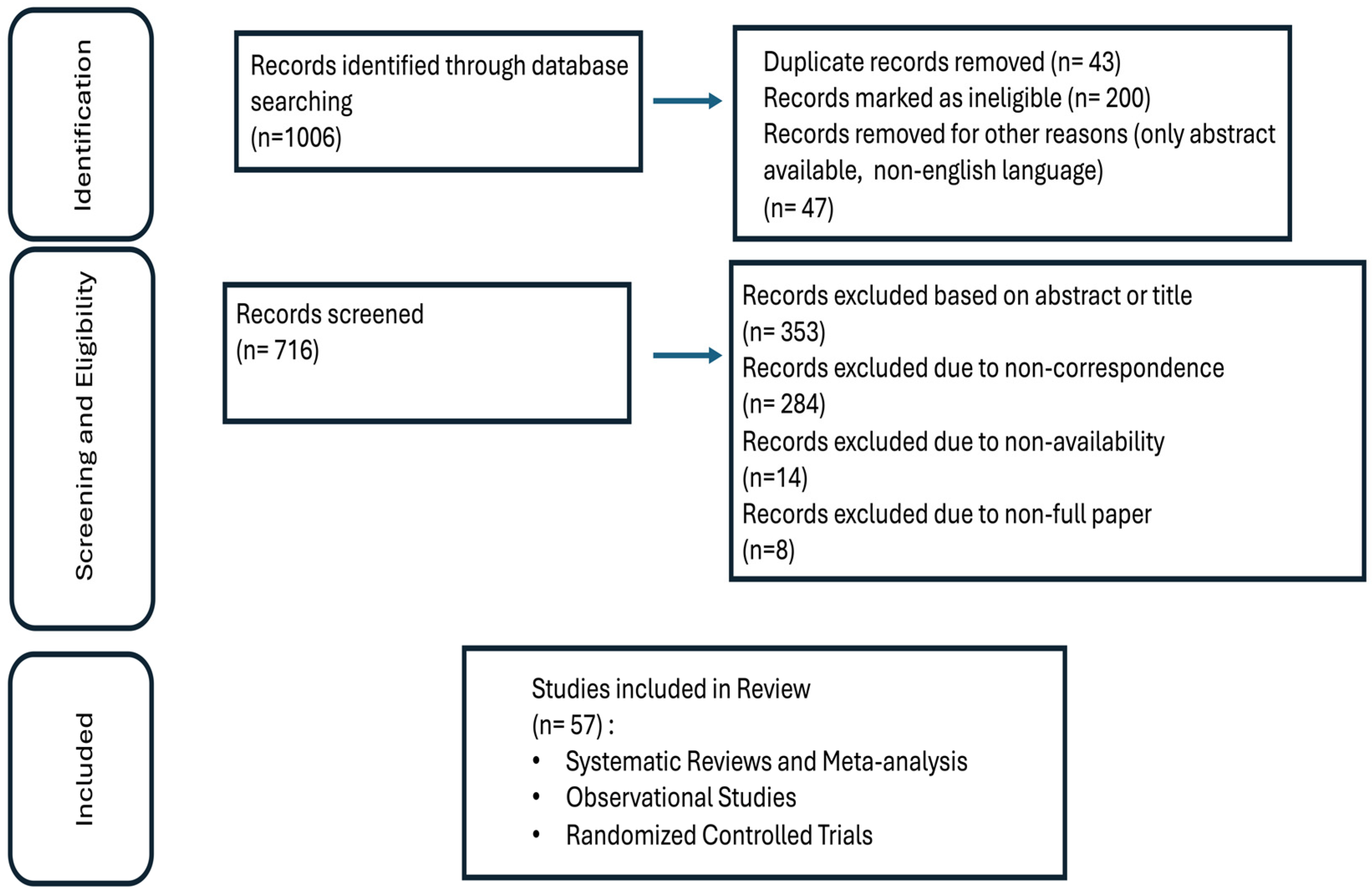
To inform this narrative review, a systematic literature search was carried out using PubMed through June 2025. The search was limited to English-language publications, with no restrictions on publication date. Relevant studies were identified using a set of predefined keywords and their combinations (
Figure 1).
Keywords were selected for their relevance to chloride disturbances in heart failure and cardiorenal syndrome. Additional studies were identified by screening references of key articles and reviews, with priority given to original research, large cohorts, meta-analyses, and clinical trials. References were managed using Zotero v6.0 (George Mason University, Fairfax, VA, USA).
3. Hypochloremia Across the Spectrum of Heart Failure
The incidence of hypochloremia has been estimated to be up to 17% in acute heart failure (AHF) registries, ranging from 13 to 21% [
8]. Numerous studies have demonstrated the strong and sodium-independent association existing between hypochloremia and mortality, in the settings of both acute and chronic HF. Lower baseline chloride levels have also been related to poor diuretic response and impaired decongestion. According to a study by Maaten et al., based on the population of the PROTECT trial (Placebo-controlled Randomized Study of the Selective A1 antagonist Rolofylline for Patients Hospitalized with Acute Decompensated Heart Failure and Volume Overload to Assess Treatment Effect on Congestion and Renal Function), lower chloride concentration on admission was related to less weight loss, a need for higher diuretic doses and adjuvant use of thiazide diuretics, smaller percentage change in N-terminal pro-B-type natriuretic peptide (NT-proBNP) levels compared to baseline values, and greater need for inotropes therapy. Also, hypochloremic patients presented an impaired response in the reduction in intravascular volume (based on the percentage of hemoconcentration achieved during hospitalization). The association of chloride with diuretic response remained significant even after adjustment for sodium and bicarbonate levels [
9]. Similarly, admission chloride was inversely and independently associated with mortality, with every unit increase in its levels associated with a 6% improvement in survival, based on another study including patients with systolic dysfunction hospitalized for acute decompensated heart failure (ADHF) [
4].
Based on the findings of a study by Grodin et al., including patients undergoing elective diagnostic coronary angiography with stable heart failure, hypochloremia was associated with an increase in 5-year mortality risk. Among sex and comorbidities such as diabetes, coronary artery disease (CAD), HFpEF or HFrEF, and impaired renal function [estimated Glomerular Filtration Rate (eGFR) ≤ 60 mL/min], only diuretic use seemed to interfere significantly with the hypochloremia-risk association [
10]. The strong association of serum chloride with prognosis in HF was shown by a study conducted in a Chinese cohort [
11]. Patients belonging to the lowest chloride quartile (chloride ≤ 101.2 mmol/L) presented a more adverse profile with lower values of LVEF; lower sodium and albumin levels; and higher values of NT-proBNP, total bilirubin, urea, uric acid and inflammatory markers such as High-Sensitivity C-Reactive Protein (hs-CRP).
Based on the above published data, hypochloremia is associated with a greater disease burden, diuretic-resistant cardiorenal disease, and increased markers of adverse prognosis, reflecting an overall advanced disease state.
4. Clinical Significance of Hypochloremia in Patients with HFpEF vs. HFrEF
Most of the above findings have been established in specific populations, mainly including patients with HFrEF. The clinical implications of serum chloride levels in patients with HFpEF were investigated in a study including participants from the TOPCAT trial (Treatment of Preserved Cardiac Function Heart Failure with an Aldosterone Antagonist Trial) [
6]. The association of hypochloremia with all-cause mortality and cardiovascular mortality was found to be similar to the one shown in patients with HFrEF. Severe HF symptoms (New York Heart Association -NYHA class III/IV), increased filling pressures (E/e’) estimated by echocardiography, and higher loop and thiazide diuretic use were more prevalent in patients presenting with lower baseline chloride levels. As expected, higher loop diuretic doses were associated with lower chloride levels. Additional echocardiographic data were presented in a study including patients extracted from the PURSUIT HFpEF study who were hospitalized for ADHF with a HFpEF phenotype. Patients in the low chloride group (73–101 mEq/L) presented with lower stroke volume indices, cardiac indices and lower TAPSE values. The above findings indicate right ventricular systolic function as the main cause of hypochloremia in patients with HFpEF [
12]. A study by Wenyi Gu et al. sought to investigate the prognostic value of hypochloremia across the three different HF phenotypes, given that LVEF remains a major determinant for prognosis in HF patients. As expected, hypochloremia was found to be an independent predictor of mortality in all three subtypes of HF. However, the coexistence of hypochloremia with low serum sodium levels was more frequent in patients with HFrEF compared to patients with HFpEF and HFmrEF, implying that, across the HF spectrum, the sodium–chloride correlation differs. The association of serum chloride with mortality was strong and independent for all different phenotypes of HF. However, there was a greater increase in mortality for each unit decrease in chloride for patients with LVEF ≥ 40% compared to those with LVEF (Left Ventricular Ejection Fraction) < 40% (17.3% vs. 10.2%).
Based on the above, it becomes evident that distinct pathophysiologic mechanisms associated with hypochloremia dominate each HF subtype, depending on the extent of neurohormonal activation, the different dosing and type of therapy, and the predominant dysfunction of left ventricular vs. bi-ventricular dysfunction [
13].
5. Pathophysiologic Role of Hypochloremia in Heart Failure Progression
Chloride, being the main anion in plasma and extracellular fluid, holds a central role in regulating vascular refill, osmotic pressure, acid–base balance and renin secretion [
14]. The role of chloride in the preservation of fluid homeostasis is crucial and distinct from sodium, being implicated in important cardiac, renal and neurohormonal systems. In the context of hypochloremia, renin secretion from the juxtaglomerular apparatus is increased due to decreased chloride sensing in the macula densa, which is interpreted by the macula densa as reduced tubular flow, thereby triggering exaggerated tubuloglomerular feedback (TGF). This increase in circulating renin levels leads to inappropriate activation of RAAS, resulting in increased renal sodium reabsorption and systemic congestion. In HF this TGF response becomes maladaptive, as persistently reduced chloride delivery perpetuates chronic renin release, afferent arteriolar vasoconstriction and impaired glomerular hemodynamics, further aggravating renal sodium retention [
15].
A central contributor to these maladaptive responses is impaired sodium handling in the thick ascending limb (TAL) of the loop of Henle. Under physiological circumstances, the apical Na-K-2Cl (NKCC2) co-transporter is the main mediator of sodium and chloride reabsorption in the TAL. It couples the entry of sodium, potassium and two chloride ions into epithelial cells. Chloride then exits the basolateral membrane via the ClC-Kb channels, a crucial step for maintaining the electrochemical gradient that drives continuous NKCC2 activity. The dysfunction of either the NKCC2 or ClC-Kb channels—due to reduced renal perfusion, neurohormonal activation or chronic diuretic exposure in heart failure—can impair effective sodium reabsorption, reduce chloride delivery to the macula densa, and further exaggerate RAAS activation and thus diuretic resistance [
16,
17].
Congestion state is further impaired by the activation of the sympathetic nervous system, causing vascular contraction and therefore further decreasing natriuresis and diuresis. Additionally, chloride is a key regulator of sodium transport pathways located in the loop of Henle and the distal convoluted tubule. Serine–threonine kinases-WNK (with-no-lysine protein kinases) are also known as chloride-sensing kinases, detecting changes in chloride concentration, intracellular volume and plasma osmolarity. Hypochloremia triggers the upregulation of WNK kinases, leading to the increased activity of the Na-K-2Cl
− co-transporter and Na-Cl
− symporters in the thick ascending limb of the loop of Henle and in the distal convoluted tubule, accordingly, thus facilitating chloride and sodium reabsorption [
18,
19]. These coordinated alterations in NKCC2, ClC-Kb and WNK signaling induce salt conservation responses and contribute to the vicious cycle of congestion and diuretic resistance in HF.
Diuretic resistance is also a primary mechanism via which hypochloremia perpetuates congestion. This occurs partly because chloride normally binds to WNK kinases and suppresses their activation; when chloride levels fall, WNK signaling becomes overactive, driving distal sodium retention and opposing the action of diuretics. Furthermore, the inhibition of NKCC2 by loop diuretics disrupts chloride entry into the macula densa, impairing chloride sensing and further stimulating renin release. This pharmacologic interference with chloride-dependent TGF amplifies neurohormonal activation and contributes to loop-diuretic resistance in hypochloremic patients. Therefore, hypochloremia completes the primary mechanism of action of loop and thiazide diuretic agents [
20]. Indeed, according to the results of the Renal Optimization Strategies Evaluation in Acute Heart Failure [ROSE-AHF trial], lower baseline chloride levels were associated with lower diuretic efficiency and higher in-hospital intravenous furosemide dose, independent of sodium levels, bicarbonate and Cystatin-C. Chloride-depletion alkalosis, a common acid–base abnormality in heart failure, is also considered to further impair diuretic resistance. The etiology for this lies in the fact that insufficient chloride leads to decreased excretion of bicarbonate in the lumen from pendrin, a luminal Cl
−/HCO
3− exchanger located in the apical membrane of the collecting duct [
21].
6. Mechanisms Linking HF to Hypochloremia
Hypochloremia, along with hyponatremia, is a frequently encountered electrolyte disturbance in HF, occurring in the context of volume overload due to chloride depletion. Increased water reabsorption is a key pathophysiologic mechanism in HF resulting from an increased non-osmotic release of arginine vasopressin, leading to dilution-induced hypochloremia. The other potent mechanism causing depletional hypochloremia is the diuretic-mediated chloride loss, which leads to much greater relative wasting of chloride compared to sodium, as well as enhanced neurohormonal response, thus creating a vicious cycle [
2]. Indeed, loop diuretic agents can increase chloride excretion by up to 20 times. Loop diuretics mainly act in the thick ascending limb of Henle by inhibition of Na-K-Cl cotransporters. In contrast to sodium, which is reabsorbed more distally in the nephron, chloride reabsorption is less possible more distally in the nephron, resulting in a higher incidence of hypochloremia compared to hyponatremia. This lack of distal compensatory chloride reabsorption intensifies the macula densa chloride depletion and sustains maladaptive TGF and RAAS activation [
22].
Although the theory-based restriction of dietary salt intake is a common practice in HF patients, recent studies imply its potential adverse impact. The electrolyte disturbances, mainly hyponatremia and hypochloremia, provoked by rigorous sodium restriction induce neurohormonal activation and thus further evoke HF progression [
19,
23]. Increasing sodium intake in ADHF patients may even be beneficial, provided that a negative sodium balance is achieved via diuresis [
19]. Interestingly, researchers have shown that the combination of hypertonic saline with high-dose loop diuretics resulted in greater natriuresis and diuresis compared to high-dose loop diuretics alone [
24,
25].
There are two distinct pathophysiological patterns of hypochloremia based on the underlying mechanism: dilutional vs. depletional. In the first scenario, ADH overactivation dominates, leading to increased water retention and, therefore, the occurrence of hypochloremia. Hypochloremia causes persistent TGF activation, sympathetic stimulation, and maladaptive RAAS upregulation [
26]. The above processes lead to impaired aortic filling and HF progression. In this context, hypochloremia and hyponatremia coexist, with hemodilution being the main contributor. Fluid restriction and the concomitant use of thiazide diuretics and/or furosemide are the appropriate strategies in this case. In the second scenario, an increased secretion of both vasopressin and aldosterone exists. This leads to an increased detention of bicarbonates, with a simultaneous loss of potassium chloride (KCL) in the urine. Also, because of the hypochloremia, the regulation of key sodium transporters in the distal tubule by WNK] is lost, which leads to their overactivation, promoting sodium reabsorption and enhancing diuretic resistance. The key strategy for this phenotype is the use of MRAs (mainly spironolactone); intense repletion of electrolytes, mainly chloride; and use of acetazolamide [
19,
27,
28].
WNK kinases play a critical role in the context of hypochloremia. The WNK kinase family consists of four serine–threonine protein kinases, each of which has a different sensitivity to chloride. They regulate blood pressure regulators that mediate post-translational modifications to several downstream ion channel substrates, such as the sodium chloride co-transporter (NCC), epithelial sodium chloride (ENaC), renal outer medullary potassium channel (ROMK) and Na/K/2Cl co-transporters (NKCCs). Mutations of the WNK result in the overactivation of the target renal ion channels mentioned above, which leads to enhanced sodium reabsorption in the distal convoluted tubule. WNK kinases act as intracellular chloride sensors. Their activity is inhibited by chloride, thus making them crucial components of the chloride–blood pressure association. A chloride-binding pocket in the WNK kinase domain binds specifically with chloride and therefore prevents WNK autophosphorylation, maintaining WNKs in an inactive state. When hypochloremia occurs, WNK kinases activate the SPAK/OSR1 pathway, undergo autophosphorylation and activation, trigger the downstream signaling of renal ion channels (mainly NCC but also NKCC2 and ROMK) and enhance sodium reabsorption and diuretic resistance [
29].
7. Hypochloremia and Its Contribution to Diuretic Resistance
Diuretic resistance is defined as a dissatisfying rate of natriuresis and diuresis despite escalating doses of diuretic therapy. Yet its definition remains subjective and problematic to measure in clinical practice.
Mechanisms of diuretic resistance are complex and are both extra-tubular and tubular, with the latter being the primary driver of poor diuretic response. Distal nephron sodium reabsorption significantly contributes to the development of diuretic resistance. The interaction of chloride with a family of serine/threonine protein kinases, known as with-no-lysine kinases, is crucial for the function of serum/chloride (NCC) and serum/chloride/potassium (NKCC2) co-transporters (located in the thick ascending Henle’s loop and the distal convoluted tubule, accordingly). Hypochloremia results in the upregulation of these transporters via the activation of WNK kinases, resulting in the activation of channels that are pharmacologically inhibited by diuretics, thus leading to diuretic resistance. Another possible mechanism linking hypochloremia and hypochloremic alkalosis with worse diuretic response may be explained by their effect on distal tubular sodium handling. Metabolic alkalosis is a known contributor to diuretic resistance. Pendrin is a luminal exchanger located in the collecting duct modulating bicarbonate excretion in parallel with chloride reabsorption. In the presence of chloride depletion, there is insufficient substrate in the tubular lumen for pendrin to exchange with bicarbonate. Therefore, contraction alkalosis is maintained, further decreasing diuretic efficacy [
2,
30,
31].
Several studies have investigated the role of hypochloremia in the genesis of diuretic resistance. A study by Hanberg et al. [
32] included two separate HF populations: one group receiving loop diuretics and another group of stable outpatients receiving a standard dose of furosemide on top of lysine chloride supplementation. The primary aim of the study was to investigate whether an association existed between serum chloride levels and diuretic efficiency, as well as to investigate whether changes in chloride levels would have an impact on laboratory and clinical parameters. Among the first group, patients with hypochloremia were under treatment with a higher standard loop diuretic dose and use of adjuvant therapy with thiazide diuretics compared with those with normal chloride levels. A modest association was also found between serum chloride and diuretic efficiency (defined as the increase in serum sodium output per doubling of loop diuretic dose, with a reference dose of 40 mg of intravenous furosemide equivalents), with the odds of low diuretic efficiency being substantially high in patients with hypochloremia, even after adjustment for serum sodium and bicarbonate levels. In addition to that, the relative excretion of diuretic and the total quantity of diuretic in urine were both decreased in hypochloremic patients, implicating reduced diuretic tubular delivery and impaired tubular response to the amount of diuretic delivered as primary mechanisms of diuretic resistance. Similar findings from numerous studies have confirmed the association of hypochloremia with markers of poor decongestion, such as reduced weight change and limited improvement in intravascular volume as estimated by percentage of hemoconcentration achieved [
17].
8. Special Issues to Be Considered in Hypochloremia Management
8.1. Serum Chloride Alterations in AHF Decongestion and Clinical Prognosis
Although the association of hypochloremia with worse clinical outcomes is known, we have little knowledge concerning the impact of the timing and duration of hypochloremia on the prognosis of AHF patients.
A retrospective study by Kurashima et al. [
9], including 2798 patients admitted for AHF, sought to investigate the effect of a change in serum chloride levels during decongestion therapy. For this purpose, the study population was divided into four separate groups: patients with normochloremia (≥98 mEq/L) during the investigation period, patients developing hypochloremia throughout treatment (normochloremia on presentation with a following decrease in serum chloride levels <98 mEq/L), those with transient hypochloremia present on admission but disappearing at discharge and persistent hypochloremia existing both on admission and on discharge. In total, most patients (78%) presented with hypochloremia, 12% with treatment-induced hypochloremia, 5% with resolved hypochloremia and the remaining 5% with persistent hypochloremia. Interestingly, the presence of constant hypochloremia was associated with more severe dyspnoea on discharge (estimated by NYHA class), lower levels of systolic blood pressure (SBP), more frequent use of diuretics and lower serum sodium levels both at admission and discharge. Also, discharge-only B-Type-natriuretic-Peptiden (BNP) levels were found to be significantly higher in the persistent hypochloremia group. When associating hypochloremia status with primary (all-cause death) and secondary outcomes (cardiovascular death and the combined outcome of cardiovascular death and rehospitalization for HF), persistent hypochloremia had a statistically significant correlation with both outcomes. Apparently, patients presenting with resolved hypochloremia had a similar favorable prognosis to those patients presenting with normal chloride levels. However, patients presenting with evolving hypochloremia during diuretic therapy had better prognosis compared to those with persistent hypochloremia but worse outcomes compared to those with resolved hypochloremia or normochloremia. The above observations highlight the possible prognostic significance of improved hypochloremia at discharge being a marker of favorable outcomes. Another similar retrospective study by Maaten et al. [
33], including a cohort of patients from the PROTECT study (Placebo-controlled Randomized study of the Selective A1 antagonist Rolofylline for Patients Hospitalized with Acute Decompensated Heart Failure and Volume Overload to Assess Treatment Effect on Congestion and Renal Function) [
9], aimed to investigate the presence of an association between changing chloride levels and diuretic efficiency, decongestion and mortality. Low chloride levels measured at day 7 and at day 14 were both associated with a higher risk of mortality, whereas admission chloride levels were no longer predictive of mortality after adjustment for baseline sodium levels. Interestingly, a decrease in chloride levels observed either on day 7 or on day 14 was associated with an increased risk of mortality. A similar significant extent of increase in the mortality rate was observed in patients presenting with persistent hypochloremia. Similarly to the findings of the previous study from Kurashima et al., patients with resolved hypochloremia and patients with normochloremia exhibited similar prognosis. Moreover, the association of admission hypochloremia with adverse outcomes was attenuated after correction for chloride levels achieved in subsequent measurements [i.e., Day 7 or Day 14], implying that the final chloride measurement portends stronger prognostic significance than the change observed itself. The above observations highlight new aspects in chloride evaluation, implying that the timepoint at which hypochloremia occurs probably has a greater prognostic significance than the presence of hypochloremia itself.
8.2. Sodium and Chloride: A Linked Electrolyte Axis
Numerous studies have found a well-established and strong association of hyponatremia with increased mortality risk in chronic and acutely decompensated heart failure [
34,
35,
36]. However, therapeutic strategies aiming to increase serum sodium levels, such as vasopressin antagonists, did not have a significant impact on outcomes as shown by the TACTICS-HF (Targeting Acute Congestion with Tolvaptan in Congestive Heart Failure) study [
37]. On the other hand, chloride, known as the anion counterpart of sodium in salt, is an emerging predictor of adverse outcomes in heart failure. Hypochloremia frequently presents with concomitant hyponatremia, probably reflecting a more serious homeostatic impairment. Given that sodium and chloride are both subject to kidney metabolism, it is likely that they carry relevant information [
38].
Therefore, it is of paramount importance to clarify whether these two electrolytes have a different and independent role from one another before considering hypochloremia as a separate treatment target.
A Chinese study by Zhang et al. [
39] aimed to investigate the prognostic significance of serum chloride for all-cause mortality in patients with chronic heart failure. According to the results, serum chloride levels were independently and inversely associated with mortality both in the univariate association and after multivariable adjustment for age, sex, LVEF, loop diuretic use, eGFR and NT-proBNP. However, when sodium was added to the adjustment, the relation between chloride and mortality no longer existed. When the cohort of patients was divided into separate groups based on the median concentration of serum sodium and chloride, Kaplan–Meier survival curves showed the worst survival for the group with the lower sodium and chloride concentration, whereas the patient group with high serum sodium but low serum chloride had a better survival but still a worse prognosis as compared to the group with low serum sodium and high chloride levels (HR for mortality: 4.334, 1.624, 1.166 accordingly). Moreover, the Na/Cl ratio was also calculated, and the survival curves were analyzed across Na/Cl quartiles. Those patients with a higher Na/Cl ratio had a higher mortality rate. The above findings point towards the hypothesis that the prognostic role of chloride is probably affected by sodium concentration, implying that hypochloremia can serve as an additive prognostic marker of sodium for mortality. Felker et al. studied symptomatic patients with chronic heart failure to identify novel biomarkers associated with all-cause mortality in HF. Among them, serum chloride was found to be a statistically stronger parameter of all-cause mortality when compared to sodium in a multivariable model [
40].
In contrast, Grodin et al. [
4], investigating the prognostic role of chloride in patients hospitalized for ADHF, showed an inverse association of serum chloride and sodium with mortality. However, chloride levels on admission showed a greater discrimination for mortality as compared to sodium, and when chloride values were added to the multivariable adjustment, serum sodium was no longer associated with mortality. Also, Kaplan–Meier survival curves classified by levels of chloride and sodium demonstrated the lowest survival rate when both chloride and sodium were low (<96 mEq/L and <134 mEq/L, accordingly), with the second-worst survival rate for those patients with hypochloremia (<96 mEq/L) but with normal serum sodium levels (≥134 mEq/L). Similar findings were described by another study carried out in stable chronic heart failure patients [
41].
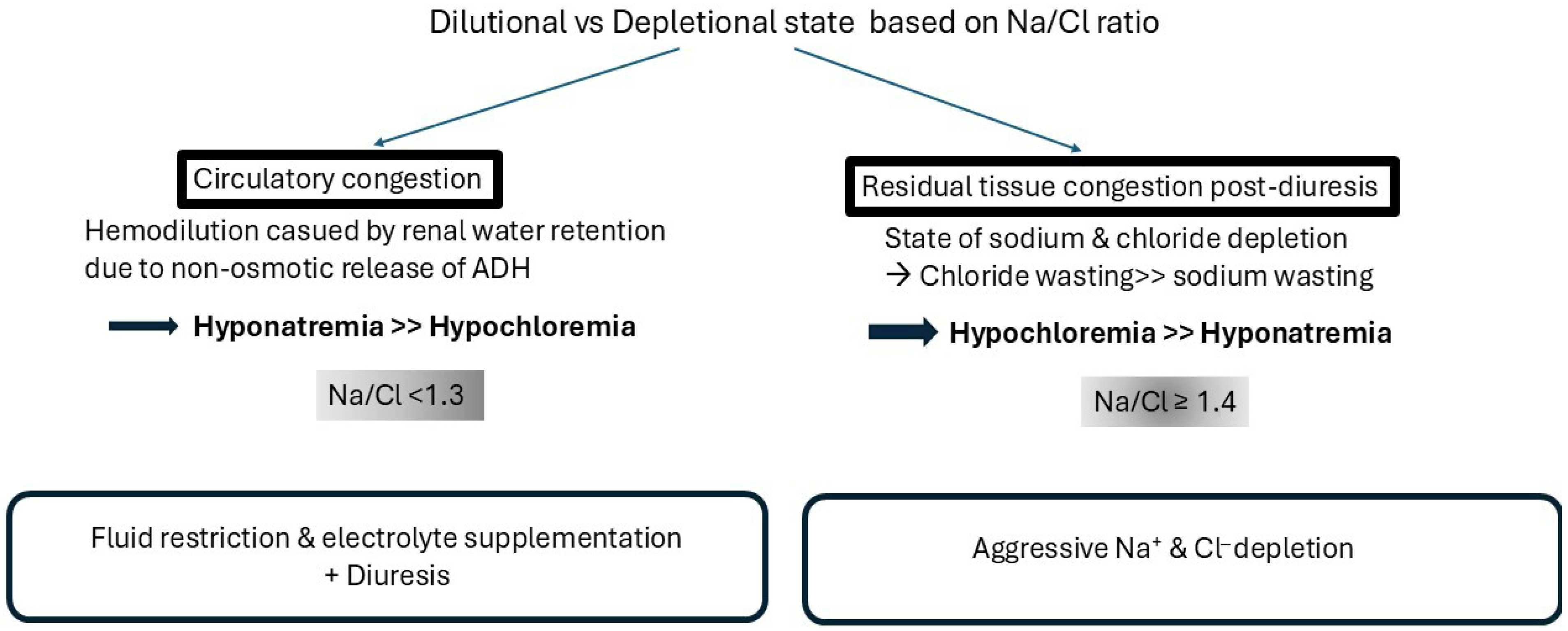
In the context of HF, the relative concentrations of sodium and chloride can be lowered symmetrically or asymmetrically. This Na/Cl relation may have diagnostic utility in HF therapy. A study by Zhiqing et al. [
10] sought to evaluate the clinical utility of the above ratio in patients with acute heart failure and its possible association with mortality. It was a single-center retrospective study enrolling 2008 patients admitted for acute HF, with the primary outcome being all-cause mortality at 3 months after discharge. Three patient groups were analyzed according to Na/Cl ratio values (<1.3, 1.3–1.4 and ≥1.4), with the values between 1.3 and 1.4 used as the reference group. Patients with a ratio below 1.3 and above or equal to 1.4 had the highest adjusted HR for mortality (3.58 and 2.66, accordingly), with the value of 1.34 carrying the lowest mortality risk. Also, the Na/Cl ratio when associated with 3-month mortality created a U-shaped curve. The significant association found between Na/Cl and mortality was independent of age, sex, LVEF and the absence or presence of hyponatremia or hypochloremia. The use of the Na/Cl ratio can help categorize patients into distinct risk groups and therefore customize decongestive strategies. When the Na/Cl ratio is low (i.e., <1.3), hyponatremia is more frequent, pointing towards circulatory congestion and dilution as an etiology of electrolyte disturbance. When the Na/Cl ratio is high (i.e., ≥1.4), hypochloremia is present, implying that there is residual tissue congestion after aggressive diuresis, which in turn leads to electrolyte depletion. So in the first case, the appropriate strategy is fluid restriction combined with electrolyte supplementation, whereas in the second case, therapy includes intense chloride and sodium supplementation, which will restore plasma osmotic pressure and thus improve tissue congestion (
Figure 2).
8.3. Pathophysiologic Role of Bicarbonate in Hypochloremia
Bicarbonate is the most abundant anion in the human body after chloride. Its main role is to maintain acid–base balance and charge balance, correlated negatively with chloride. This inverse relation between chloride and bicarbonate is actually beneficial, helping in maintaining cation–anion balance [
14]. Metabolic alkalosis is a very common electrolyte disturbance in the context of HF. The activation of the sympathetic nervous system and RAAS leads to an increase in noradrenaline and aldosterone levels, which subsequently results in enhanced reabsorption of bicarbonate in the proximal convoluted tubule. Meanwhile, aldosterone activates the H
+-ATPase pump in the collecting duct, thus increasing the H
+ concentration in urine, resulting in a positive balance of bicarbonate. The relationship between bicarbonate and chloride is governed by the requirement for electro-neutrality. A loss of chloride anions should be accompanied either by a proportional loss of cations such as sodium or, if sodium is retained, chloride must be replaced by alternative anions such as bicarbonate. This compensatory substitution increases the strong-ion difference and raises serum pH, thereby promoting metabolic alkalosis. Thus, chloride depletion directly drives bicarbonate elevation, independent of renal acid secretion, by forcing the redistribution of anions to maintain electrical neutrality [
42,
43].
Patients are entrapped in a vicious cycle of metabolic alkalosis and hypochloremia, attributed mainly to the HF pathophysiology but also to the use of loop diuretics. Given its significant association with serum chloride, it is possible that the effect of chloride in HF prognosis may be partly influenced by serum bicarbonate concentration. Moreover, the presence of hypochloremia occurring due to either increased bicarbonate absorption or to aggressive diuresis further sustains alkalosis, as there is less chloride in the urine to be exchanged with bicarbonate. The reduced delivery of chloride to the distal nephron limits the activity of pendrin, a luminal Cl
−/HCO
3—exchanger in the collecting duct, thereby decreasing bicarbonate secretion and further worsening alkalosis. The above further contributes to diuretic resistance associated with pendrin [
44].
A study by Zhaochong et al. [
45], investigated the presence and the degree of impact of serum bicarbonate levels in the association of hypochloremia with in-hospital mortality. Patients admitted to the intensive care unit [ICU] with a principal diagnosis of HF were included in this study. Patients’ laboratory parameters were divided based on serum chloride and bicarbonate levels into three groups for different levels of each electrolyte: hypochloremia (<96 mEq/L), normochloremia (96–108 mEq/L) and hyperchloremia (>108 mEq/L), and low bicarbonate (<22 mEq/L), medium bicarbonate (22–26 mEq/L) and high bicarbonate (>26 mEq/L). Based on the results, patients with hypochloremia tended to have higher bicarbonate levels and an inverse correlation was found between serum chloride and serum bicarbonate, (R = −0.334), as expected. In association with serum bicarbonate groups, serum chloride was linearly associated with in-hospital mortality only when bicarbonate levels were in the low and medium range. Therefore, increasing serum chloride levels in the above patient groups resulted in a decrease in in-hospital mortality. However, when bicarbonate levels were high, hyperchloremia was not a predictor for in-hospital mortality. Interestingly, when the prognostic risk of HF patients with hypochloremia was analyzed according to different bicarbonate concentrations, the in-hospital mortality was found to be greater in those patients with hypochloremia accompanied by low serum bicarbonate levels. The latter finding confirms the rule that chloride needs to be inversely related to bicarbonate to maintain cation–anion balance. When these two electrolytes increase or decrease simultaneously, the prognosis of the patient becomes poor. These findings reinforce the physiological principle that chloride depletion without proportional sodium loss leads to a rise in alternative anions, mainly bicarbonate, leading to hypochloremic metabolic alkalosis. If both chloride and bicarbonate fall simultaneously, electro-neutrality is disrupted, reflecting a more severe derangement in acid–base homeostasis [
46].
On the other hand, alkalosis may have a prognostic role when occurring in the context of effective diuresis by being a prognostic indicator of improved volume status and therefore useful in clinical practice. Khan et al. [
47] sought to investigate the prognostic role of chloride-associated depletion alkalosis in acute decompensated heart failure. The population of interest was divided into two categories based on the change in serum bicarbonate values on admission and on discharge. A change of ≥3 mmol/L in serum bicarbonate levels was defined as contraction-depletion alkalosis (CDA). The primary endpoints of the study were in-hospital mortality as well as all-cause mortality within 30 days, and need for hospital readmission. In-hospital mortality was significantly higher in the group without CDA, whereas no statistically significant difference concerning the other endpoints of the trial was found between the two groups. Also, the group that developed CDA also presented with a slight improvement in serum creatinine. CDA reflects a state of decreased volume due to effective decongestion. Therefore, it may be useful in conjunction with other parameters as a marker of favorable prognosis and adequate diuresis.
9. Urinary Chloride: A Marker and Tool in Heart Failure Management
The accurate assessment of fluid overload and the implementation of adequate diuretic therapy in acute heart failure have been the main interests so far. However, research has now focused not only on the total urine volume as a marker of successful decongestion but also on urine composition analysis to estimate therapy response and overall outcome. Low urinary sodium has been recently identified as a marker of poor diuretic response and increased mortality in acute heart failure [
48,
49,
50]. Based on chloride’s pathophysiological significance in renal salt sensing, in the TGF and regulation of renin secretion at the macula densa [
51], it seems reasonable to investigate the potential utility of urinary chloride in the determination of prognosis, as a marker of renal response adjustment and diuresis in acute and chronic heart failure.
Under this prospect, a Polish study [
52] aimed to record the trajectory of urinary sodium and chloride in 50 patients with ADHF undergoing intensive diuretic treatment. Both UCl and urinary sodium levels (UNa) reached their peak values simultaneously, that is, two hours after implementation of intravenous diuretic therapy. UCl excretion at this timepoint and at all subsequent timepoints was significantly higher compared to UNa concentration. Additionally, a strong linear correlation was shown between UCl and UNa at all timepoints, with its strongest value observed at 1 h after diuretic administration. Moreover, a UCl < 72 mmol/L was associated with greater odds for poor diuretic response compared to UNa concentration <50–70 mmol/L.
Similarly, another study by Nawrocka-Millward et al. [
53] enrolled patients with AHF and divided them into two separate groups of low and high UCl, based upon urinary chloride levels. The group with low UCls presented lower levels of blood pressure [systolic and diastolic], higher incidence of hypochloremia and hyponatremia, and higher NT-proBNP levels at discharge. Also, creatinine and urea on admission and creatinine levels 24 h after admission were statistically significantly higher compared to the high-UCl group. Renin and aldosterone levels were estimated on admission and on the first day of hospitalization, both being significantly increased in the low-UCl group. In terms of outcomes, the in-hospital mortality, need for inotropic support, worsening of HF during therapy and need for treatment in an intensive cardiac unit were all increased in the low-UCl group. One-year mortality and the combined outcome of one-year mortality and rehospitalization for HF were both significantly higher in the low-UCl group (HR: 2.42 and 2.20, accordingly). In a multivariable model including urinary and serum chloride levels, UCl was found to be an independent prognostic marker along with serum creatinine levels.
The achievement of normovolemia is the goal of therapy during HF decongestion, as residual congestion has been associated with poor outcomes. The assessment of urinary composition during decongestive treatment combined with clinical examination and monitoring of urine output could help in reaching euvolemia. The validity of this hypothesis was examined in a study by Verbrugge et al. [
54]. Patients with HFrEF who were hospitalized for an episode of acute decompensation underwent analysis of 24 h urinary samples collected for three consecutive days during decongestive therapy with combinational diuretic therapy. While the urine output remained stable during the study period (after adjustment for loop diuretic dose), urinary sodium and chloride excretion both presented a significant decline in the first 24 h of therapy and stabilized thereafter. Interestingly, the ratio of Na
+/Cr and Cl
−/Cr was found to be a predictor of negative fluid balance (urine output lower than total daily fluid intake of 1.5 L). Moreover, 26% of patients developed acute kidney injury (defined as a rise in creatinine ≥ 0.3 mg/dL). The total 24 h UNa and UCl were statistically significantly lower in this patient group. Similarly, another study by Xanthopoulos et al. [
55] aimed to assess the predictive value of urinary sodium and chloride values during decongestion in acutely decompensated patients with advanced HF. UCl values were estimated at baseline, 2 h and 24 h after administration of diuretic therapy. The 2 h UCl value presented good discrimination with a cut-off value ≤ 99.8 meq/L having 13 times higher odds for the primary study outcome (all-cause mortality and/or HF rehospitalization), with UCl values at admission and at 24 h having no prognostic significance. In a univariate logistic regression analysis, UNa and UCl levels at 2 h were among those factors associated with the primary study outcome.
The appropriate combination and dosing of diuretics, as well as the correct timing of down-titration once euvolemia has been reached, remain questionable in HF management. Urinary chloride combined with urinary sodium assessment can potentially serve as a marker of effective decongestion and no further need for up-titration of diuretics. Especially when these values are corrected for urinary creatinine compared to absolute ion concentrations alone, they account better for changes in renal function. Based on the above, there is accumulating evidence that urinary chloride could be implemented in everyday clinical practice, similarly to urinary sodium-guided diuresis, as a marker of response to HF treatment and as a predictor of a more advanced disease state.
10. Emerging Therapeutic Strategies in the Management of Hypochloremia and a Practical Framework for Serum and Urinary Chloride Disorders
According to the chloride theory, chloride plays a key role in regulating body fluid distribution. An attractive strategy would be to use diuretics that have an impact on serum chloride levels. Sodium-Glucose Cotransporter-2 Inhibitors (SGLT2i) are known for their natriuretic and osmotic diuretic effects, leading to significant diuresis through decreases in plasma volume [
56]. However, little is known concerning their effect on serum chloride concentration. This knowledge gap was investigated by a small retrospective single-center study [
57]. Ten patients with type 2 diabetes mellitus, without a known history of HF, receiving therapy with empagliflozin were enrolled. Serum and urinary chloride levels were evaluated for each patient. Treatment with SGLT2i led to a statistically significant increase in serum chloride levels. This chloride-regaining effect may be attributed to several SGLT2i-associated mechanisms such as aquaresis-mediated hemoconcentration, impact on RAAS activity and decrease in serum bicarbonate concentration. However, this study included a small number of diabetic, non-HF patients; therefore, larger observational studies are needed to further elucidate the effect of SGLT2i on chloride regulation.
Acetazolamide (ACTZ) is a carbonic anhydrase inhibitor that has recently gained attention as a chloride-regaining diuretic. The inhibition of carbonic anhydrase increases the bicarbonate concentration in proximal renal tubules and creates the necessary electrochemical gradient that subsequently promotes chloride reabsorption and reduces activity of the chloride/bicarbonate exchanger located at the proximal convoluted tubule. ACTZ enhances sodium and bicarbonate excretion and chloride reabsorption, thus preventing the development of both metabolic alkalosis and hypochloremia [
58]. The addition of acetazolamide in standard intravenous loop diuretic therapy in ADHF patients has been associated with increased odds of successful decongestion and reduced hospital stays, irrespective of baseline chloride levels, based on a post hoc analysis of the ADVOR trial (Acetazolamide in Decompensated Heart Failure With Volume Overload). The decongestive property of ACTZ is probably attributed to its chloride-preserving effect. Chloride depletion can also be achieved either by oral administration of lysine chloride or intravenous hypertonic saline solution. Indeed, the possible beneficial impact of the intravenous administration of hypertonic saline in conjunction with loop diuretics has been shown by several studies, as it leads to an increase in urine output, sodium excretion, urine furosemide delivery and greater weight loss [
24]. Sodium-free chloride supplementation with orally administered lysine chloride has been tested in a pilot study of 10 patients. The results were favorable concerning the improvement of markers of fluid overload, such as serum albumin and weight loss, following treatment with lysine chloride combined with loop diuretics [
32].
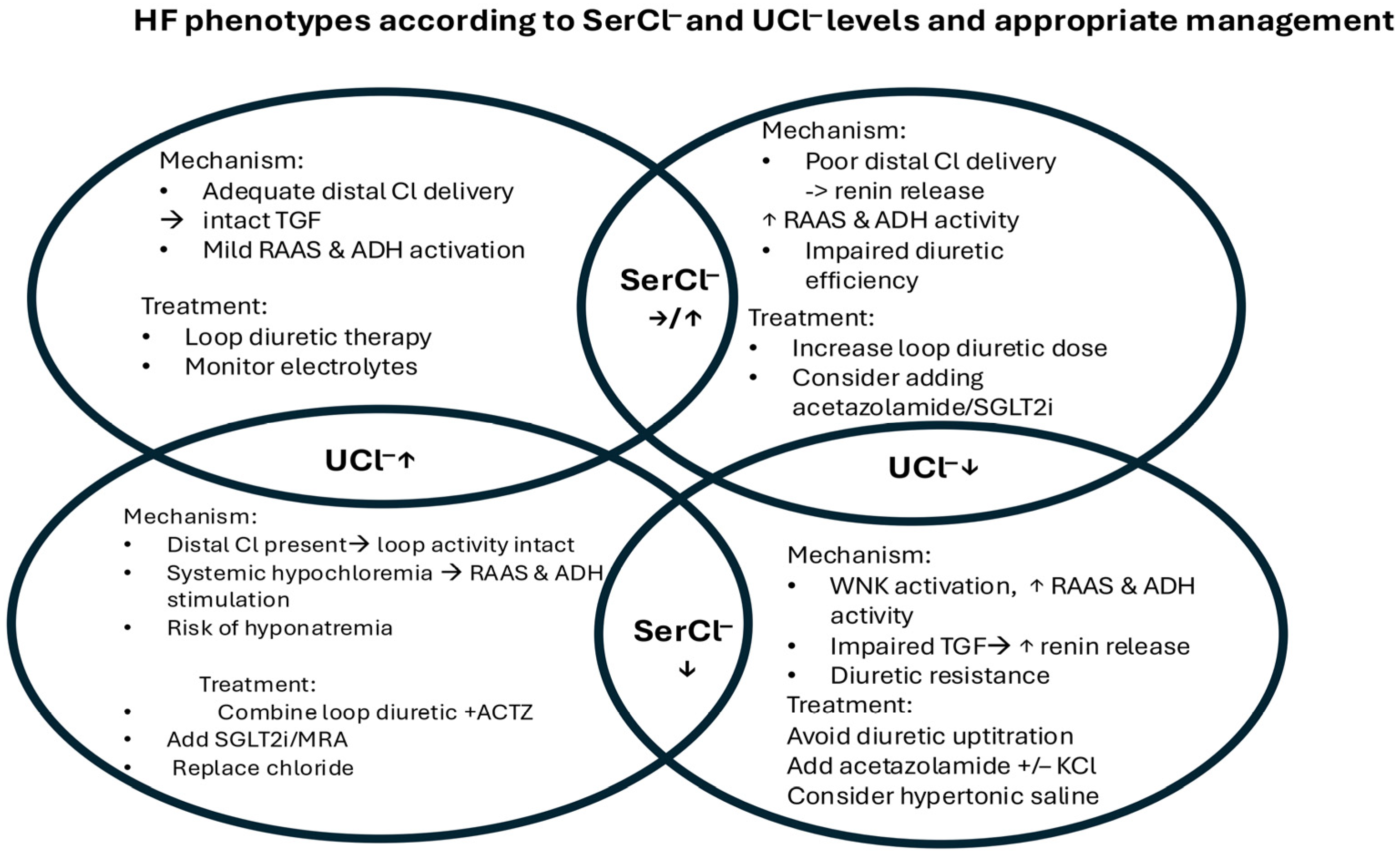
Based on serum and urinary chloride levels, four distinct phenotypes of HF exist. The underlying pathophysiology and appropriate therapeutic management are illustrated in
Figure 3.
When serum chloride levels are within normal range or increased, plasma volume is maintained or even increased, with a tendency for fluid accumulation into the blood vessels due to the increase in serum osmolality. Adequate chloride is being delivered to the distal parts of the nephron. Therefore, the TGF remains intact, and RAAS and ADH activity are only mildly activated. The optimal strategy is to continue the titration of loop diuretics and monitor electrolytes. However, in cases where normochloremia with low UCl− occurs, the distal delivery of chloride is impaired, which subsequently leads to enhanced renin release and neurohormonal activation. The loop diuretic effect is inadequate, which mandates further increase in loop diuretic dose while considering also adding acetazolamide or SGLT2i.
When hypochloremia is present, vascular contraction and the extravasation of extravascular fluid into the interstitial space occur due to the decreased serum osmolality as well as the decreased supply of chloride to the macula densa, resulting in decreased reabsorption of filtered sodium from the tubular space towards the extracellular space and an increase in RAAS activity. In addition, as a response to arterial under-filling, ADH and RAAS activity are increased, leading to excess water retention relatively greater in relation to serum chloride. Despite enhanced RAAS activity, reabsorption of filtered sodium and chloride is not increased, as their supply in the urinary tubules is reduced.
If hypochloremia coexists with high UCl−, it means that adequate chloride is present in the distal tubule. In this case, therapy should focus on chloride depletion in parallel with decongestion. Thus, a combination of loop diuretics with chloride-gaining diuretics such as ACTZ and SGLT2i with concomitant chloride supplementation would be advisable in this setting. If serum and urinary chloride levels are both suppressed, TGF is impaired, resulting in increased renin release, which further worsens diuretic resistance. In this scenario, the correction of hypochloremia is the key, either by using ACTZ or via the intravenous administration of chloride with hypertonic saline solution or free-sodium chloride supplementation.
11. Conclusions
Maintaining electrolyte balance and reducing cardiorenal damage remain central goals in the management of heart failure. Chloride—sometimes called the “queen of electrolytes”—is the body’s main anion and plays a key role in maintaining electrical neutrality, osmotic pressure, and acid–base balance. Current evidence shows that low serum chloride levels are linked to a more advanced disease stage, higher diuretic use and greater comorbidity burden. While chloride itself may not be a direct therapeutic target in HF, it can serve as a valuable tool for prognosis and clinical decision-making. For these reasons, advancing our understanding of its regulatory and homeostatic role in HF remains important.
More evidence is needed to clarify the prognostic value of serum and urinary chloride in larger, more diverse patient groups receiving modern guideline-based therapies, with outcomes measured for both survival and non-survival endpoints. The mechanisms behind hypochloremia may also hold prognostic significance and should be explored further using direct urinary electrolyte measurements. In addition, considering total cations and other major anions—particularly bicarbonate and albumin—is essential for accurately interpreting the clinical consequences of hypochloremia.
Author Contributions
Conceptualization, T.G. and K.S.; methodology, T.G.; software, T.G.; validation, M.S., E.F., I.P., M.M. and E.S.; formal analysis, T.G. and G.A.; investigation, M.S. and E.F.; resources, K.S., T.G., I.P. and G.A.; data curation, M.M. and E.S.; writing—original draft preparation, T.G.; writing—review and editing, K.S., I.P., E.F., M.M. and E.S.; visualization, K.S. and I.P.; supervision, K.S., I.P., E.F., M.M., M.S. and E.S.; project administration, K.S.; funding acquisition, K.S. All authors have read and agreed to the published version of the manuscript.
Funding
This research received no external funding.
Data Availability Statement
No new data were created or analyzed in this study. Data sharing is not applicable to this article.
Conflicts of Interest
The authors declare no conflicts of interest.
Abbreviations:
The following abbreviations are used in this manuscript:
| ACTZ | Acetazolamide |
| ADH | Anti-Diuretic Hormone |
| ADHF | Acute Decompensation of Heart Failure |
| AHF | Acute Heart Failure |
| CAD | Coronary Artery Disease |
| CDA | Contraction Depletion Alkalosis |
| eGFR | Estimated Glomerular Filtration Rate |
| ENaC | Epithelial Sodium Chloride |
| HF | Heart Failure |
| HFmrEF | Heart Failure with Mildly Reduced Ejection Fraction |
| HFpEF | Heart Failure with Preserved Ejection Fraction |
| HFrEF | Heart Failure with Reduced Ejection Fraction |
| hs-CRP | High-sensitivity-C-reactive protein |
| LVEF | Left Ventricular Ejection Fraction |
| NCC | Sodium/Chloride Co-transporters |
| NKCC2 | Sodium/Chloride/Cotassium Co-transporters |
| NT-proBNP | NT-pro-B-type Natriuretic peptide |
| NYHA | New York Heart Association class |
| RAAS | Renin–Angiotensin–Aldosterone System |
| ROMK | Renal Outer Medullary Potassium channel |
| SBP | Systolic Blood Pressure |
| SGLT2i | Sodium-Glucose Cotransporter 2 inhibitors |
| TAPSE | Tricuspid Annular Plane Systolic Excursion |
| TGF | Tubuloglomerular Feedback |
| uCl− | Urinary Chloride |
| UNa | Urinary Na |
| WNK | With-no-lysine-kinases |
| Na-K-Cl cotransporters | Sodium-Potassium-Chloride cotransporters |
| Na-Cl symporters | Sodium-Chloride Symporters |
| H+-ATPase | Hydrogen ion–Potassium ion exchanger |
References
- Seferović, P.M.; Vardas, P.; Jankowska, E.A.; Maggioni, A.P.; Timmis, A.; Milinković, I.; Polovina, M.; Gale, C.P.; Lund, L.H.; Lopatin, Y.; et al. The Heart Failure Association Atlas: Heart Failure Epidemiology and Management Statistics 2019. Eur. J. Heart Fail. 2021, 23, 906–914. [Google Scholar] [CrossRef] [PubMed]
- Arora, N. Serum Chloride and Heart Failure. Kidney Med. 2023, 5, 100614. [Google Scholar] [CrossRef] [PubMed]
- Cuthbert, J.J.; Pellicori, P.; Rigby, A.; Pan, D.; Kazmi, S.; Shah, P.; Clark, A.L. Low serum chloride in patients with chronic heart failure: Clinical associations and prognostic significance. Eur. J. Heart Fail. 2018, 20, 1426–1435. [Google Scholar] [CrossRef] [PubMed]
- Grodin, J.L.; Simon, J.; Hachamovitch, R.; Wu, Y.; Jackson, G.; Halkar, M.; Starling, R.C.; Testani, J.M.; Tang, W.W. Prognostic Role of Serum Chloride Levels in Acute Decompensated Heart Failure. J. Am. Coll. Cardiol. 2015, 66, 659–666. [Google Scholar] [CrossRef]
- Testani, J.M.; Hanberg, J.S.; Arroyo, J.P.; Brisco, M.A.; ter Maaten, J.M.; Wilson, F.P.; Bellumkonda, L.; Jacoby, D.; Tang, W.W.; Parikh, C.R. Hypochloraemia is strongly and independently associated with mortality in patients with chronic heart failure. Eur. J. Heart Fail. 2016, 18, 660–668. [Google Scholar] [CrossRef]
- Grodin, J.L.; Testani, J.M.; Pandey, A.; Sambandam, K.; Drazner, M.H.; Fang, J.C.; Tang, W.W. Perturbations in serum chloride homeostasis in heart failure with preserved ejection fraction: Insights from TOPCAT. Eur. J. Heart Fail. 2018, 20, 1436–1443. [Google Scholar] [CrossRef]
- Grodin, J.L.; Sun, J.-L.; Anstrom, K.J.; Chen, H.H.; Starling, R.C.; Testani, J.M.; Tang, W.W. Implications of Serum Chloride Homeostasis in Acute Heart Failure [from ROSE-AHF]. Am. J. Cardiol. 2017, 119, 78–83. [Google Scholar] [CrossRef]
- Wu, F.; Lan, Q.; Yan, L. Prognostic impact of serum chloride concentrations in acute heart failure patients: A systematic Rreview and meta-analysis. Am. J. Emerg. Med. 2023, 71, 109–116. [Google Scholar] [CrossRef]
- Ter Maaten, J.M.; Damman, K.; Hanberg, J.S.; Givertz, M.M.; Metra, M.; O’cOnnor, C.M.; Teerlink, J.R.; Ponikowski, P.; Cotter, G.; Davison, B.; et al. Hypochloremia, Diuretic Resistance, and Outcome in Patients with Acute Heart Failure. Circ. Heart Fail. 2016, 9, e003109. [Google Scholar] [CrossRef]
- Grodin, J.L.; Verbrugge, F.H.; Ellis, S.G.; Mullens, W.; Testani, J.M.; Tang, W.H.W. Importance of Abnormal Chloride Homeostasis in Stable Chronic Heart Failure. Circ. Heart Fail. 2016, 9, e002453. [Google Scholar] [CrossRef]
- Zhang, Y.; Peng, R.; Li, X.; Yu, J.; Chen, X.; Zhou, Z. Serum chloride as a novel marker for adding prognostic information of mortality in chronic heart failure. Clin. Chim. Acta 2018, 483, 112–118. [Google Scholar] [CrossRef] [PubMed]
- Seo, M.; Watanabe, T.; Yamada, T.; Yano, M.; Hayashi, T.; Nakagawa, A.; Nakagawa, Y.; Tamaki, S.; Yasumura, Y.; Sotomi, Y.; et al. Prognostic significance of serum chloride level in heart failure patients with preserved ejection fraction. ESC Heart Fail. 2022, 9, 1444–1453. [Google Scholar] [CrossRef] [PubMed]
- Gu, W.; Zhou, J.; Peng, Y.; Cai, H.; Wang, H.; Wan, W.; Li, H.; Xu, C.; Chen, L. Prognostic Significance of Serum Chloride Level Reduction in Patients with Chronic Heart Failure with Different Ejection Fractions. Int. Heart J. 2023, 64, 700–707. [Google Scholar] [CrossRef] [PubMed]
- Cuthbert, J.J.; Bhandari, S.; Clark, A.L. Hypochloraemia in Patients with Heart Failure: Causes and Consequences. Cardiol. Ther. 2020, 9, 333–347. [Google Scholar] [CrossRef]
- Kazory, A.; Ronco, C. Emergence of Chloride as an Overlooked Cardiorenal Connector in Heart Failure. Blood Purif. 2020, 49, 219–221. [Google Scholar] [CrossRef]
- Zandijk, A.J.; van Norel, M.R.; Julius, F.E.; Sepehrvand, N.; Pannu, N.; McAlister, F.A.; Voors, A.A.; Ezekowitz, J.A. Chloride in Heart Failure. JACC Heart Fail. 2021, 9, 904–915. [Google Scholar] [CrossRef]
- Hanberg, J.S.; Rao, V.; ter Maaten, J.M.; Laur, O.; Brisco, M.A.; Wilson, F.P.; Grodin, J.L.; Assefa, M.; Broughton, J.S.; Planavsky, N.J.; et al. Hypochloremia and Diuretic Resistance in Heart Failure: Mechanistic Insights. Circ. Heart Fail. 2016, 9, e003180. [Google Scholar] [CrossRef]
- Luke, R.G.; Galla, J.H. It Is Chloride Depletion Alkalosis, Not Contraction Alkalosis. J. Am. Soc. Nephrol. JASN 2012, 23, 204. [Google Scholar] [CrossRef]
- Kataoka, H. Treatment of hypochloremia with acetazolamide in an advanced heart failure patient and importance of monitoring urinary electrolytes. J. Cardiol. Cases 2018, 17, 80–84. [Google Scholar] [CrossRef]
- Gupta, D.; Georgiopoulou, V.V.; Kalogeropoulos, A.P.; Dunbar, S.B.; Reilly, C.M.; Sands, J.M.; Fonarow, G.C.; Jessup, M.; Gheorghiade, M.; Yancy, C.; et al. Dietary sodium intake in heart failure. Circulation 2012, 126, 479–485. [Google Scholar] [CrossRef]
- Licata, G.; Di Pasquale, P.; Parrinello, G.; Cardinale, A.; Scandurra, A.; Follone, G.; Argano, C.; Tuttolomondo, A.; Paterna, S. Effects of high-dose furosemide and small-volume hypertonic saline solution infusion in comparison with a high dose of furosemide as bolus in refractory congestive heart failure: Long-term effects. Am. Heart J. 2003, 145, 459–466. [Google Scholar] [CrossRef] [PubMed]
- Paterna, S.; Di Pasquale, P.; Parrinello, G.; Amato, P.; Cardinale, A.; Follone, G.; Giubilato, A.; Licata, G. Effects of high-dose furosemide and small-volume hypertonic saline solution infusion in comparison with a high dose of furosemide as a bolus, in refractory congestive heart failure. Eur. J. Heart Fail. 2000, 2, 305–313. [Google Scholar] [CrossRef] [PubMed]
- Grodin, J.L. Pharmacologic Approaches to Electrolyte Abnormalities in Heart Failure. Curr. Heart Fail. Rep. 2016, 13, 181–189. [Google Scholar] [CrossRef] [PubMed]
- Kataoka, H. The ‘chloride theory’, a unifying hypothesis for renal handling and body fluid distribution in heart failure pathophysiology. Med. Hypotheses 2017, 104, 170–173. [Google Scholar] [CrossRef]
- Kataoka, H. Biochemical Determinants of Changes in Plasma Volume After Decongestion Therapy for Worsening Heart Failure. J. Card. Fail. 2019, 25, 213–217. [Google Scholar] [CrossRef]
- Kataoka, H. Proposal for heart failure progression based on the ‘chloride theory’: Worsening heart failure with increased vs. non-increased serum chloride concentration. ESC Heart Fail. 2017, 4, 623–631. [Google Scholar] [CrossRef]
- Boegehold, M.A.; Kotchen, T.A. Importance of dietary chloride for salt sensitivity of blood pressure. Hypertension 1991, 17, I158–I161. [Google Scholar] [CrossRef]
- Morisawa, D.; Hirotani, S.; Oboshi, M.; Sugahara, M.; Fukui, M.; Ando, T.; Okuhara, Y.; Nakabo, A.; Naito, Y.; Masuyama, T. Combination of hypertonic saline and low-dose furosemide is an effective treatment for refractory congestive heart failure with hyponatremia. J. Cardiol. Cases 2014, 9, 179–182. [Google Scholar] [CrossRef]
- Jujo, K.; Saito, K.; Ishida, I.; Furuki, Y.; Kim, A.; Suzuki, Y.; Sekiguchi, H.; Yamaguchi, J.; Ogawa, H.; Hagiwara, N. Randomized pilot trial comparing tolvaptan with furosemide on renal and neurohumoral effects in acute heart failure. ESC Heart Fail. 2016, 3, 177–188. [Google Scholar] [CrossRef]
- Soleimani, M. The multiple roles of pendrin in the kidney. Nephrol. Dial. Transplant. 2015, 30, 1257–1266. [Google Scholar] [CrossRef]
- Cox, Z.L.; Rao, V.S.; Testani, J.M. Classic and Novel Mechanisms of Diuretic Resistance in Cardiorenal Syndrome. Kidney360 2022, 3, 954–967. [Google Scholar] [CrossRef] [PubMed]
- Kotchen, T.A.; Welch, W.J.; Lorenz, J.N.; Ott, C.E. Renal tubular chloride and renin release. J. Lab. Clin. Med. 1987, 110, 533–540. [Google Scholar] [PubMed]
- Kurashima, S.; Kitai, T.; Matsue, Y.; Nogi, K.; Kagiyama, N.; Oishi, S.; Akiyama, E.; Suzuki, S.; Yamamoto, M.; Kida, K.; et al. Trajectory of serum chloride levels during decongestive therapy in acute heart failure. Int. J. Cardiol. 2023, 375, 36–43. [Google Scholar] [CrossRef] [PubMed]
- Massie, B.M.; O’COnnor, C.M.; Metra, M.; Ponikowski, P.; Teerlink, J.R.; Cotter, G.; Weatherley, B.D.; Cleland, J.G.; Givertz, M.M.; Voors, A.; et al. Rolofylline, an adenosine A1-receptor antagonist, in acute heart failure. N. Engl. J. Med. 2010, 363, 1419–1428. [Google Scholar] [CrossRef]
- Balling, L.; Schou, M.; Videbæk, L.; Hildebrandt, P.; Wiggers, H.; Gustafsson, F. Prevalence and prognostic significance of hyponatraemia in outpatients with chronic heart failure. Eur. J. Heart Fail. 2011, 13, 968–973. [Google Scholar] [CrossRef]
- Klein, L.; O’Connor, C.M.; Leimberger, J.D.; Gattis-Stough, W.; Piña, I.L.; Felker, G.M.; Adams, K.F., Jr.; Califf, R.M.; Gheorghiade, M.; OPTIME-CHF Investigators. Lower serum sodium is associated with increased short-term mortality in hospitalized patients with worsening heart failure: Results from the Outcomes of a Prospective Trial of Intravenous Milrinone for Exacerbations of Chronic Heart Failure [OPTIME-CHF] study. Circulation 2005, 111, 2454–2460. [Google Scholar]
- Rusinaru, D.; Tribouilloy, C.; Berry, C.; Richards, A.M.; Whalley, G.A.; Earle, N.; Poppe, K.K.; Guazzi, M.; Macin, S.M.; Komajda, M.; et al. Relationship of serum sodium concentration to mortality in a wide spectrum of heart failure patients with preserved and with reduced ejection fraction: An individual patient data meta-analysis †: Meta-Analysis Global Group in Chronic heart failure [MAGGIC]. Eur. J. Heart Fail. 2012, 14, 1139–1146. [Google Scholar]
- Felker, G.M.; Mentz, R.J.; Cole, R.T.; Adams, K.F.; Egnaczyk, G.F.; Fiuzat, M.; Patel, C.B.; Echols, M.; Khouri, M.G.; Tauras, J.M.; et al. Efficacy and Safety of Tolvaptan in Patients Hospitalized with Acute Heart Failure. J. Am. Coll. Cardiol. 2017, 69, 1399–1406. [Google Scholar] [CrossRef]
- Kataoka, H. Chloride in Heart Failure Syndrome: Its Pathophysiologic Role and Therapeutic Implication. Cardiol. Ther. 2021, 10, 407–428. [Google Scholar] [CrossRef]
- Felker, G.M.; Allen, L.A.; Pocock, S.J.; Shaw, L.K.; McMurray, J.J.V.; Pfeffer, M.A.; Swedberg, K.; Wang, D.; Yusuf, S.; Michelson, E.L.; et al. Red cell distribution width as a novel prognostic marker in heart failure: Data from the CHARM Program and the Duke Databank. J. Am. Coll. Cardiol. 2007, 50, 40–47. [Google Scholar] [CrossRef]
- Fu, Z.; Zhang, X.; Zhao, X.; Wang, Q. U-Shaped Relationship of Sodium-to-chloride Ratio on admission and Mortality in Elderly Patients with Heart Failure: A Retrospective Cohort Study. Curr. Probl. Cardiol. 2023, 48, 101419. [Google Scholar] [CrossRef] [PubMed]
- Vaduganathan, M.; Pallais, J.C.; Fenves, A.Z.; Butler, J.; Gheorghiade, M. Serum chloride in heart failure: A salty prognosis. Eur. J. Heart Fail. 2016, 18, 669–671. [Google Scholar] [CrossRef] [PubMed]
- Tan, Z.; Liu, Y.; Hong, K. The association between serum chloride and mortality in ICU patients with heart failure: The impact of bicarbonate. Int. J. Cardiol. 2024, 399, 131672. [Google Scholar] [CrossRef] [PubMed]
- Khan, N.N.S.; Nabeel, M.; Nan, B.; Ghali, J.K. Chloride Depletion Alkalosis as a Predictor of Inhospital Mortality in Patients with Decompensated Heart Failure. Cardiology 2015, 131, 151–159. [Google Scholar] [CrossRef]
- Biegus, J.; Zymliński, R.; Sokolski, M.; Todd, J.; Cotter, G.; Metra, M.; Jankowska, E.A.; Banasiak, W.; Ponikowski, P. Serial assessment of spot urine sodium predicts effectiveness of decongestion and outcome in patients with acute heart failure. Eur. J. Heart Fail. 2019, 21, 624–633. [Google Scholar] [CrossRef]
- Mullens, W.; Damman, K.; Harjola, V.; Mebazaa, A.; Rocca, H.B.; Martens, P.; Testani, J.M.; Tang, W.W.; Orso, F.; Rossignol, P.; et al. The use of diuretics in heart failure with congestion—A position statement from the Heart Failure Association of the European Society of Cardiology. Eur. J. Heart Fail. 2019, 21, 137–155. [Google Scholar] [CrossRef]
- McDonagh, T.A.; Metra, M.; Adamo, M.; Gardner, R.S.; Baumbach, A.; Böhm, M.; Burri, H.; Butler, J.; Čelutkienė, J.; Chioncel, O.; et al. 2021 ESC Guidelines for the diagnosis and treatment of acute and chronic heart failure: Developed by the Task Force for the diagnosis and treatment of acute and chronic heart failure of the European Society of Cardiology [ESC]. With the special contribution of the Heart Failure Association [HFA] of the ESC. Eur. J. Heart Fail. 2022, 24, 4–131. [Google Scholar]
- Kataoka, H. Clinical Significance of Spot Urinary Chloride Concentration Measurements in Patients with Acute Heart Failure: Investigation on the Basis of the TubuloGlomerular Feedback Mechanism. Cardiol. Open Access 2021, 6, 115–123. [Google Scholar]
- Guzik, M.; Zymliński, R.; Ponikowski, P.; Biegus, J. Urine chloride trajectory and relationship with diuretic response in acute heart failure. ESC Heart Fail. 2025, 12, 133–141. [Google Scholar] [CrossRef]
- Nawrocka-Millward, S.; Biegus, J.; Fudim, M.; Guzik, M.; Iwanek, G.; Ponikowski, P.; Zymliński, R. The role of urine chloride in acute heart failure. Sci. Rep. 2024, 14, 14100. [Google Scholar] [CrossRef]
- Verbrugge, F.H.; Nijst, P.; Dupont, M.; Penders, J.; Tang, W.H.W.; Mullens, W. Urinary composition during decongestive treatment in heart failure with reduced ejection fraction. Circ. Heart Fail. 2014, 7, 766–772. [Google Scholar] [CrossRef] [PubMed]
- Xanthopoulos, A.; Christofidis, C.; Pantsios, C.; Magouliotis, D.; Bourazana, A.; Leventis, I.; Skopeliti, N.; Skoularigki, E.; Briasoulis, A.; Giamouzis, G.; et al. The Prognostic Role of Spot Urinary Sodium and Chloride in a Cohort of Hospitalized Advanced Heart Failure Patients: A Pilot Study. Life 2023, 13, 698. [Google Scholar] [CrossRef] [PubMed]
- Heerspink, H.J.; Perkins, B.A.; Fitchett, D.H.; Husain, M.; Cherney, D.Z.I. Sodium Glucose Cotransporter 2 Inhibitors in the Treatment of Diabetes Mellitus. Circulation 2016, 134, 752–772. [Google Scholar] [CrossRef]
- Kataoka, H.; Yoshida, Y. Enhancement of the serum chloride concentration by administration of sodium–glucose cotransporter-2 inhibitor and its mechanisms and clinical significance in type 2 diabetic patients: A pilot study. Diabetol. Metab. Syndr. 2020, 12, 5. [Google Scholar] [CrossRef]
- Martens, P.; Verbrugge, F.H.; Dauw, J.; Nijst, P.; Meekers, E.; Augusto, S.N.; Ter Maaten, J.M.; Heylen, L.; Damman, K.; Mebazaa, A.; et al. Pre-treatment bicarbonate levels and decongestion by acetazolamide: The ADVOR trial. Eur. Heart J. 2023, 44, 1995–2005. [Google Scholar] [CrossRef]
- Lafrenière, G.; Béliveau, P.; Bégin, J.-Y.; Simonyan, D.; Côté, S.; Gaudreault, V.; Israeli, Z.; Lavi, S.; Bagur, R. Effects of hypertonic saline solution on body weight and serum creatinine in patients with acute decompensated heart failure. World J. Cardiol. 2017, 9, 685–692. [Google Scholar] [CrossRef]
- Galla, J.H. Metabolic Alkalosis. J. Am. Soc. Nephrol. 2000, 11, 369–375. [Google Scholar] [CrossRef]
- E Marik, P.; Kussman, B.D.; Lipman, J.; Kraus, P. Acetazolamide in the treatment of metabolic alkalosis in critically ill patients. Heart Lung 1991, 20, 455–459. [Google Scholar]
| Disclaimer/Publisher’s Note: The statements, opinions and data contained in all publications are solely those of the individual author(s) and contributor(s) and not of MDPI and/or the editor(s). MDPI and/or the editor(s) disclaim responsibility for any injury to people or property resulting from any ideas, methods, instructions or products referred to in the content. |
© 2025 by the authors. Licensee MDPI, Basel, Switzerland. This article is an open access article distributed under the terms and conditions of the Creative Commons Attribution (CC BY) license (https://creativecommons.org/licenses/by/4.0/).




 ,
,