1. Introduction
Pancreatic cancer (PC) is among the most lethal malignancies worldwide. As of 2022, it ranks as the seventh leading cause of cancer-related deaths globally [
1] with projections indicating an approximately 80% increase in incidence over the coming decades [
2]. PC encompasses a diverse group of neoplasms, including both exocrine (i.e., Pancreatic Ductal Adenocarcinoma, PDAC) and endocrine types (i.e., Pancreatic Neuroendocrine Tumor, PNET) The most common and aggressive form is PDAC (95% of cases). Understanding the etiology of these neoplasms is essential, particularly in relation to potential dietary risk factors.
In the specific context of Italy, PC is responsible for approximately 15,000 deaths every year. The current standardized mortality rate (SMR) stands at 1.78 per 10,000 residents, a figure expected to climb to 1.92 by the year 2040.
Dietary practices, lifestyle-related metabolic variables, and PC mortality have all been linked in a number of epidemiological studies. While diets high in processed foods, saturated fats, and refined sugars—which are frequently accompanied by obesity and insulin resistance—have been linked to an increased risk of PC, Mediterranean-style eating habits seem to have a preventive effect [
2,
3,
4,
5,
6].
While the ethology of PC remains poorly understood, several risk factors have been identified. These including tobacco smoking, diabetes mellitus, obesity, ethnicity, genetic predisposition, family history, occupational exposure (i.e., Ni, Cd and As),
Helicobacter pylori infection, and chronic pancreatitis [
4]. Dietary pattern has also been investigated, with evidence that a diet high in sugar, fats, red meat and processed meat may increase the risk of PC [
4,
7].
Dietary habits have become a major field of study. Diets heavy in fats, sweets, and red or processed meats may increase the risk of PC, according to research. Although the Mediterranean diet (MeD) has historically been linked with Italy, there are significant geographical variances in mortality rates that indicate nutrition may be a significant factor. In order to better understand these health disparities, recent research emphasizes the importance of integrating social and spatial variables.
The current study used PC-SMR and household food spending data to examine the relationship between regional food consumption trends and PC mortality across Italian regions, with regards to the MeD [
4,
5,
6]. Recent research highlights the importance of integrating geographic and social determinants to better understand health disparities.
In order to achieve this, we analyzed 2016 food spending data that was transformed into yearly consumption amounts for 56 different food groups. The National Institute of Statistics’ (ISTAT) PC-SMRs for the years 2003–2022 were then compared with this data. For a more comprehensive review, nutrient composition data from the National Research Institute for Food and Nutrition (NRIFN) was analyzed as well.
3. Results
The standardized and publicly accessible datasets (ISTAT, NRIFN/INRAN) that provide comprehensive food spending data for 2016—the most recent year with full nationwide coverage for all 56 food categories—were the foundation of the current analysis. By mapping health outcomes across different spatial contexts, we can identify areas of heightened vulnerability and inform targeted interventions.
Although a rigorous longitudinal analysis was not feasible since there were no consistent annual statistics for every region, there are a number of reasons why eating patterns in Italian macro-regions have remained stable throughout time:
Cultural persistence of dietary habits: Regional dietary patterns in Italy, especially those associated with the Mediterranean diet, have been found to be remarkably stable over the years, with only minor variations in the consumption of particular foods (such as meat or beverages) [
5,
6,
9,
12].
Consistency between adjacent years: ISTAT surveys conducted between 2014 and 2018 corroborate the durability of regional patterns by revealing variances in household spending for the primary food categories of less than 5–10% [
8,
11].
Temporal plausibility: For chronic diseases like PC, which usually develop over prolonged latency periods, a 6-year lag (2016 dietary data vs. 2022 mortality) is epidemiologically trustworthy [
13].
Internal verification: Despite interannual fluctuations, the correlations generated for the 2019–2022 SMR values demonstrated consistency in both direction and magnitude, confirming the strength of the correlations.
In considering these considerations, the stability concept is a strong methodological hypothesis, and the dietary patterns discussed in this session for 2016 are a reliable predictor of the medium-term dietary environment that will affect the outcomes of PC in 2022.
3.1. PC-SMRs in Italy
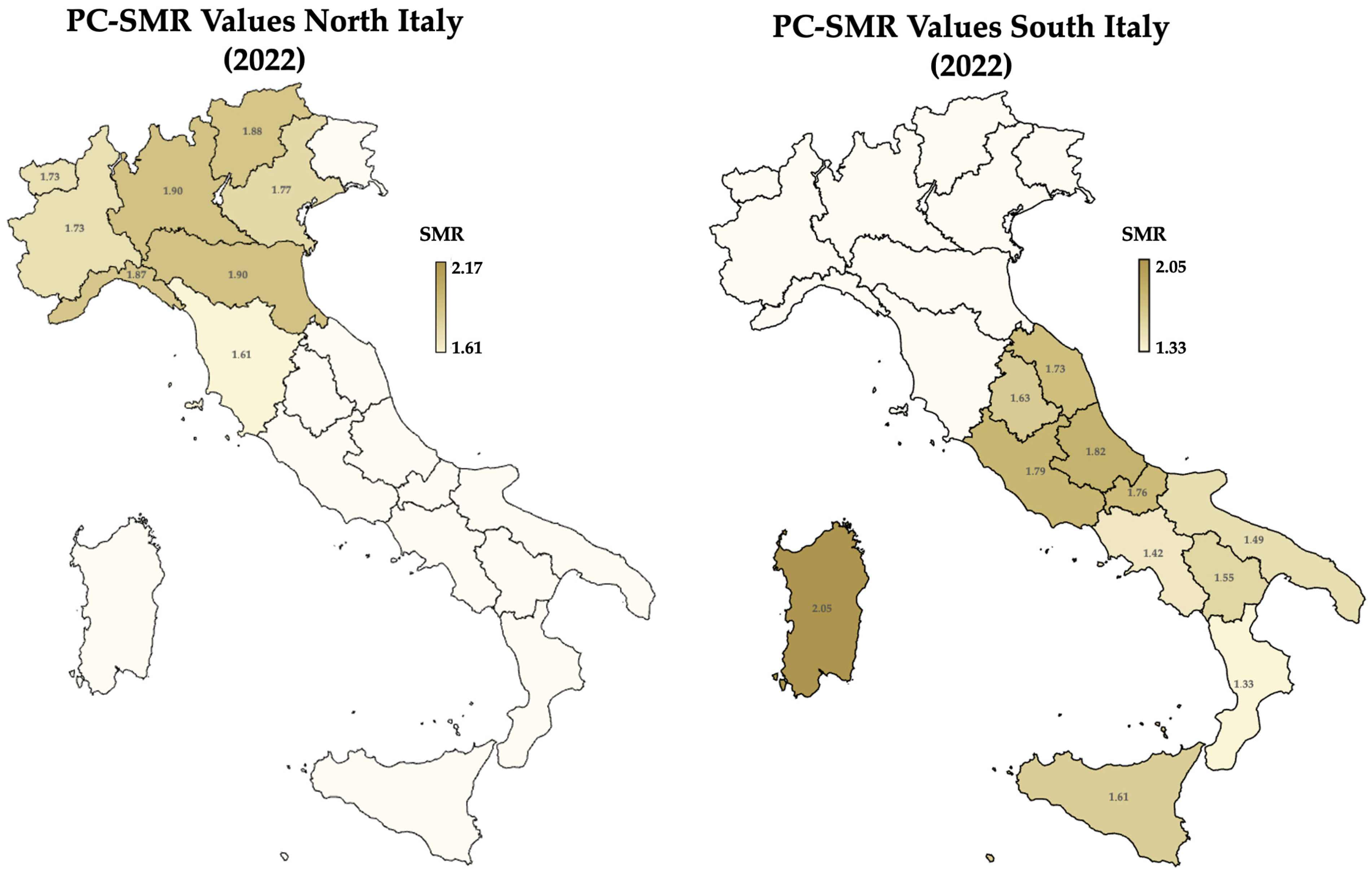
The mortality rate in 2022 for PC as deaths/10,000 residents (PC-SMRs) in northern and southern Italy is reported in
Table S1. Historical data since 2003 confirm that PC-SMR values remained lower in southern Italy compared to the North of Italy. The data of PC-SMRs from 2003 up to 2022 are reported in
Table S2 divided into the two macro-regions North and South of Italy. It is evident that the gap between the North and the South is narrowing, particularly in the past seven years.
Figures S1 and S2 provide the “heatmap” and “box plot, respectively, that illustrate the PC-SMRs’ differential increase across Italy’s 19 regions.
The geographical gradient is clearly visible in
Figures S1 and S2, where the northern Italian regions have the highest PC-SMR values, the average values, and the longest continuity of years. The North has the highest median and interquartile range (IQR,
Figure S2), whereas the South has lower central values and less dispersion, with Sardinia being the highest outlier. Regarding northern Italy, there is a North-oriental bloc (Friuli Venice Julia, Veneto, and Lombardy) with the highest values, while Tuscany and Piedmont/Aosta Valley behave as the least powerful countries within the northern bloc. In southern Italy, they maintain relatively low PC-SMR values, with Sardinia as an exception at a high level and Lazio in an intermediate-high scale.
Differences between the North and South of Italy are highlighted in
Figure 1 by displaying the map of Italy together with the PC-SMR values in 2022. Clearly, in both scenarios, the SMR values determine how intense the brown color is.
3.2. Correlations of PC and Food Categories
Table 1 exhibits the Spearman correlations (r
S) between the 2022 PC-SMR values and the 2016 food expenditure patterns. The r
S values were categorized as either positive or negative correlation, using a two-tailed cutoff of ±0.433 (statistically significant threshold).
Throughout 2019–2022, correlations were found to be nearly constant in terms of positive or negative values (the COVID-19 effect did not change the trend); in none of the years examined, 43 food categories ever achieved the cut-off of ±0.433 (Spearman’s rS).
3.3. Food Expenditure in Northern and Southern Italy
For the purpose of comparing northern and southern Italy, food expenditure data gathered in 2016 across different Italian regions has been converted into amounts (kg/year).
Table S3 and
Figure S3 present the data. Average yearly consumption per household, split down by macro-region and food category, is presented in
Figure S3. Quantities (in kilograms/year) are based on the standard classification that is frequently used when creating food pyramids. It should be mentioned that patterns vary slightly amongst macro-regions, and no statistically significant differences were found within the single categories due to the high variance and/or limited number of components.
Table 2 provides aggregate data that differentiates between the two macro-regions’ consumption trends. Using standard pricing coefficients, the expenditure values (€) from the CAPI system were converted into physical quantities [
9,
11]. Significant disparities in the consumption patterns of various food categories between northern and southern Italy were found. These differences offer a framework for evaluating possible associations with the risk of PC.
Most food categories have regional cost disparities of no more than 10%, with southern Italy often having cheaper pricing. These cost differences were taken into account when transforming data on expenditures into consumption amounts (kg/year). Overall, there was a noticeable difference in the eating habits of northern and southern Italy. 27 (48.2%) of the 56 food categories that were examined had mean intake variations that were statistically significant.
In southern Italy, “positively correlated” foods like beef, processed meat, yogurt, fresh vegetables, and wine were consumed in far smaller amounts than “negatively correlated” foods like sugar, flour, tomatoes, legumes, lamb, and veal. When evaluating geographical differences in PC-SMRs, these variances may have epidemiological significance and are compatible with historically ingrained behaviors.
3.4. Essential Elements (Micronutrients) in Northern and Southern Italy
The composition of food and micronutrients is reported in
Table 3 and distinguishes the regions of southern and northern Italy.
The pro capita value corresponds to the total value 2.3 (average number of family members).
Since vitamin B12 was absent from some food category data, it was not taken into consideration. Only sugar, alcohol, and Se showed direct relationships with PC-SMRs among the dietary components examined. In particular, southern Italy had considerably lower intakes of alcohol, a known carcinogenic component in the pathophysiology of PC, and significantly greater intakes of Se, a micronutrient linked to a preventive antioxidant effect.
The observed variation in the mean Se concentration between northern Italy (35 μg/day) and southern Italy (45 μg/day) has been explained by means of the known immunomodulatory, DNA repair, and antioxidant properties of this micronutrient. Selenium is an essential cofactor for several seleno-proteins, such as thioredoxin reductase and glutathione peroxidase, which limit oxidative stress and lower lipid peroxidation, two important processes in pancreatic carcinogenesis [
14,
15,
16]. According to epidemiological research and meta-analyses, there is a correlation between a lower incidence of PC and greater plasma selenium concentrations [
17,
18].
Although the absolute difference in selenium intake between northern and southern Italy appears modest (approximately 10 μg/day), it corresponds to nearly 28% of the European Food Safety Authority (EFSA) recommended intake (55 μg/day) and therefore carries plausible biological relevance. At the population level, such a difference may be meaningful, particularly through selenium’s interactions with alcohol consumption, oxidative stress, and inflammatory pathways implicated in PC [
15,
17].
From a clinical standpoint, this difference is unlikely to cover a direct pharmacological effect at the individual level, but it is compatible with a population-level risk-modulating effect, particularly when combined with other protective elements of the Mediterranean diet (lower alcohol and unsaturated fat intake, higher vitamin D levels). Consequently, it is an “ecologically significant” difference, which means that it matters when discussing environmental and food epidemiology. Additionally, there was non-random stability suggested by the observed correlations (i.e., Se inversely proportional to SMR) being consistent over several years (2019–2022).
Consistent with the lower SMR values observed, higher intake in southern Italy may therefore lead to a more favorable redox environment and reduced cellular sensitivity to oxidative damage. Lower intakes of saturated fat, Na, and Ca, and greater intakes of vitamin D were found to be associated with oxidative stress and cellular integrity, albeit these changes were not directly linked to PC risk. According to these findings, southern Italy may have a more protective dietary profile that influences oxidative balance and systemic inflammatory states, which may help explain the macro-region’s lower PC-SMRs.
Tables S4–S9 in the Supplementary Information Material file provide detailed information relevant to each region and food/macro-micronutrient, in correlation with the PC-SMRs.
4. Discussion
The present findings provide several important insights into regional disparities in PC mortality in Italy. These results highlight the need to evaluate overall dietary patterns rather than isolated nutrients or individual food items. Approximately half of the food categories under analysis were consumed in considerably different amounts in the North and the South of Italy, indicating that dietary habits may have a compounding influence on long-term results. Margarine, powdered milk, and crustaceans showed low consumption and were not included in the analysis because of their weak epidemiological significance. Our findings underscore the significance of place in shaping health, suggesting that interventions must consider the local social and environmental context. Health disparities are largely influenced by structural and environmental factors, according to the spatial clustering of health outcome. Correlations between diet and cancers other than PC are certainly possible. We chose to focus on PC because, in Italy—together with central nervous system tumors—its prevalence has been increasing steadily and significantly, whereas the incidence of most other malignant tumors is declining [
2,
4]. Given the ecological design of the study, the observed associations should not be interpreted as casual relationship at the individual level. These findings rather reflect population-level correlations that may also apply to other chronic diseases and malignancies exhibiting North–South gradients in Italy. Genetic susceptibility, environmental exposures, lifestyle factors, and healthcare access remain important contributors that could not be excluded in the present design. Therefore, the results should be considered hypothesis-generating and supportive of further individual-level epidemiological investigations [
2,
4].
Similar North–South gradients for cardiovascular mortality and other cancers, such as colorectal, breast, and lung cancer, have been documented in Italy. These trends point to common underlying factors like industrialization, dietary Westernization, exposure to the environment, and socioeconomic level [
5,
6,
19].
4.1. Analysis of the Heatmap and Boxplot Graph
Previous studies have demonstrated that adherence to the traditional Mediterranean diet—which features a low intake of processed meats and sweets and a high intake of fruits, vegetables, legumes, whole grains, and olive oil—is inversely related to PC risk in cohorts.
The interpretation of lower PC-SMRs in southern Italian regions with higher adherence to traditional dietary patterns is supported by prior cohort and population-based studies that consistently reported an inverse relationship between adherence to the Mediterranean diet and PC risk and mortality [
4,
5,
6]. Historically, adherence has been higher in several southern regions (Basilicata, Calabria, and Apulia), which may be the reason for lower SMR values; in contrast, dietary Westernization and higher consumption of processed meats and alcohol in some social strata have occurred in northern areas and large conurbations (
Figure S1). By contrast, Lazio (metropolitan Rome zone) represents a predominantly urban setting with risk profiles more closely resembling those of northern regions. Sardinia blends a special dietary tradition with modern improvements and distinct metabolic profiles. Sardinia and Lazio are examples of regional outliers that point to the impact of confounding variables other than nutrition. Different regions of Italy have different levels of industrialization, urbanization, occupational exposures, and environmental pollution. These factors may interact with dietary practices by promoting oxidative stress, inflammation, and metabolic dysfunction, all of which are linked to the development of PC. Regional variations in PC-SMRs may also be influenced by internal migration and demographic composition. Furthermore, due to better diagnostic capabilities and cancer registration, locations with sizable urban areas, like Lazio, may have greater reported mortality, which could inflate SMR estimations. The idea that nutrition functions as a modulating component within a larger environmental and socioeconomic context rather than as an isolated determinant is supported by these discrepancies, which underscore the multifaceted character of PC [
20].
The role of industrialization across Italian regions represents a crucial contextual factor. Due to decades of high industrial density, northern Italy (Lombardy, Veneto, Friuli Venice Julia, Emilia-Romagna) has experienced cumulative exposure to air pollutants (PM
2.5, NO
x), occupational pollutants (such as metals, solvents, and polycyclic aromatic hydrocarbons, PAHs), and dense urban areas. Chronic inflammation, oxidative stress, and diabetes/obesity have all been linked to these exposures as intermediary comorbidities in PC. The lower industrial concentration in southern Italy (with particular hotspots like steel and petrochemical areas) may contribute to lower rates; however, in Sardinia, where local exposures, lifestyles, and demographic patterns converge, the risk may rise (as indicated by the boxplot graph,
Figure S2).
Other significant factors that vary the burden include age, physical inactivity, diabetes mellitus, obesity, tobacco use (a major risk factor), and their regional prevalence, which may support the gradient that has been identified. An additional element is availability to medical facilities and diagnostics; wealthier areas are better equipped to identify and code cases, which raises observed SMR values; this could be a bias in surveillance. Regional age composition and internal migration are additional factors that should be taken into account in models since they might affect SMRs.
By lowering chronic inflammation, obesity, and type 2 diabetes, the traditional Mediterranean diet—which includes whole grains, legumes, fruits, vegetables, seafood, and olive oil—generally protects against PC.
Due to modernization, Lombardy, Veneto, Friuli-Venezia Giulia, and Trentino-Alto Adige had the highest risk of CP associated with the foods examined in the present study. Sardinia has a less protective diet (rich in meat and dairy products) and its unique variables. Furthermore, Lazio poses the least risk because of food, as urbanization weakens the Mediterranean pattern. The southern region of Italy (Calabria, Basilicata, Apulia, Sicily) has the lowest dietary risk because of its high adherence to the traditional Mediterranean pattern (lower SMRs). Certain areas, like Umbria and Tuscany, have protective dietary habits.
4.2. Consumption of Red Meat and Its Relation to PC
Analyzing meat intake by type provides more information about how diet affects PC risk. There were no significant differences between the southern and northern regions in terms of the most popular meat type, which was poultry, which is categorized as white meat.
The consumption of red meat, such as beef, veal, lamb, and horse, was comparable in northern and southern Italy. The IARC has designated red meat in general as a Group 2B carcinogen, meaning that it may cause cancer in people [
21]. Interestingly, subtype-specific analysis indicated that lamb and veal were inversely associated with PC mortality. These results highlight how crucial it is to take subtypes into account when examining general eating habits.
Lipid oxidation in red meat is significantly influenced by thermal processing. Endogenous antioxidants are preserved and the production of peroxides and aldehydic secondary products is inhibited by light cooking (rare to medium rare). On the other hand, malondialdehyde, 4-hydroxynonenal, and associated ThioBarbituric Acid-Reactive Substances (TBARS) are significantly increased by high temperature or prolonged cooking, especially in dry heat conditions. According to current research, there is a distinct temperature-dependent gradient, with the maximum oxidative load found in well-done beef [
22,
23]. There is currently a lack of data distinguishing between the adverse effects of beef and the protective properties of lamb and veal.
These findings underscore the importance of moving beyond broad categorizations of red meat to consider into consideration meat subtypes, processing techniques, fat composition, and preservation methods, all of which may have varying effects on oxidative stress and carcinogenic pathways [
22].
4.3. Consumption of Processed Meat and Its Relation to PC
The present study identified a positive association between processed meat consumption and PC mortality, which is commonly attributed to its amount of oxidized lipids, carbonylated proteins, and the preservative nitrite (NO
2) [
22,
24]. Oxidative stress, in particular, has been identified as a primary cause of PC [
6]. Southern Italy had a much lower mean daily consumption (23.5 g/day) than northern Italy (29.2 g/day), indicating that regional dietary variations may mitigate the risk.
Dietary components rarely act independently. It is possible that counterbalancing effects within the total dietary matrix are responsible for the apparent inverse connections found for some items that are typically regarded as bad, such red meats and sugar. High consumption of micronutrients, fibers, unsaturated fats, and antioxidants may reduce the pro-inflammatory and metabolic effects of individual components in Mediterranean-style diets, creating a net beneficial dietary pattern [
5,
6].
Despite making up 8–10% of daily meat consumption, processed meat may have a disproportionately high risk of cancer compared to its quantitative percentage. Nitrites, oxidized lipids, and carbonylated proteins are characteristics of processed meats that can encourage oxidative stress and chronic inflammation, two important processes linked to the development of PC. Processed meat has a high nitrate content, and its use compared with other types of meat is higher by 60% to more than 100%. Cooking techniques like grilling and barbecuing can lower exposure to some preservatives, but they can also increase the production of PAHs and heterocyclic amines, both of which have been shown in experimental and epidemiological studies to have mutagenic and carcinogenic potential [
22,
24].
Thus, when included into more extensive dietary and environmental exposure patterns, the combined impacts of meat processing and high-temperature cooking techniques may amplify the biological impact of comparatively low levels of processed meat consumption.
4.4. Consumption of Sugar and Its Relation to PC
In the literature, there has long been discussion on the connection between sugar consumption and cancer [
25]. The present study reveals an apparent contradiction with much of the existing literature: added sugar was found to have negative correlation with PC mortality, despite the majority of studies in the literature suggesting a positive association, especially in relation to metabolic disorders and insulin resistance.
These findings are consistent with previous analyzes conducted using the same dataset that also suggested a positevely correlated effect against PC [
5]. Free sugar consumption was much greater (65.6 kg/year) in southern Italy than in northern Italy (51.4 kg/year), while PC-SMR is lower in southern Italy.
Rather than indicating a direct protective effect, the inverse association observed for sugar likely reflects broader dietary and cultural contexts. In southern Italy, traditional eating habits that emphasize home-cooked meals, increased fiber intake, and decreased use of ultra-processed items frequently include higher sugar and bread intake. In this scenario, the overall dietary matrix may lessen the metabolic effect of sugars [
7,
25].
Regarding sugar’s “negative correlation,” a number of variables could account for this apparent contradiction:
Ecological confounding: Sugar consumption could not accurately reflect metabolic exposure, but rather more general socioeconomic or cultural patterns. Higher sugar consumption in southern Italy is associated with traditional home-cooked meals (such jams and pastries) and lower consumption of processed foods, which may be a sign of less industrialized diets.
Data structure: Considering the variable assesses spending rather than individual consumption, regions with less costly food costs or larger households may have greater estimates of “consumption” even while per capita sugar intake is lower.
Context of energy balance: Previous studies suggested that sugar’s detrimental metabolic effects might be lessened when ingested as part of a Mediterranean-style diet that is high in antioxidants and low in saturated fats [
25].
4.5. Consumption of Yogurt and Its Relation to PC
Yogurt consumption has been inconsistently associated with cancer risk in the literature, despite the generally accepted health advantages [
6,
26]. Milk can contain aflatoxin M1, a mycotoxin that comes from polluted farms. It has also been demonstrated to persist or even concentrate in dairy products like butter and yogurt [
26]. Strict limits for aflatoxin M1 in raw milk (50 ng/L) have been established by European Union laws enforced by the EFSA [
27,
28], although dairy products do not always meet these criteria, and yogurt in particular seems to be excluded from such monitoring [
26,
29].
Considering how frequently yogurt is consumed and its alleged safety profile, this raises concerns regarding potential long-term exposure. A significant positive correlation was observed between regional yogurt consumption and pancreatic cancer mortality (rs = 0.600). Northern regions, with higher yoghurt intake, also showed the highest SMRs. To ascertain the exact preventive or positively correlated effect of yogurt in PC and other cancers, more biochemical investigations should look into the calcium and vitamin D content as well as the presence of contaminants.
Milk and fermented dairy products, such as yogurt, have been found to contain aflatoxin M1, which may remain during processing. Raw milk is subject to stringent regulations, while fermented dairy products are not as often monitored, and there have been reports of regional variations in contamination [
26,
28]
4.6. Consumption of Fresh Vegetables and Its Relation to PC
Unexpectedly, a positive association was observed between fresh vegetable consumption and PC mortality. Vegetables are generally considered to be protective in relation to cancer risk correlation, but other malignancies have shown similar contradictory results [
30]. The variability of this food group, which covers a wide range of products that are indistinguishable in mass consumption data (save for potatoes and tomatoes), could be a factor.
Vegetables’ “positive correlation” could be the result of ecological or environmental confounding variables rather than a real carcinogenic effect:
Pesticide and contaminant exposure: geographical variations in pesticide residues in leafy vegetables, especially in industrialized northern regions [
27,
28].
Aggregation bias: The category “fresh vegetables” has several subtypes (fruit, root, and leaf vegetables), which obscures protective subgroups like tomatoes and legumes that have demonstrated negative relationships.
Environmental co-exposures: Higher population densities and pollution levels (PM2.5, Nitrogen oxides-NOx) are frequently found in areas with more vegetable availability, which may support a correlation between these factors and the SMRs from PC.
Pesticide residues are one possible explanation for these results; while the EFSA typically deems common agricultural pesticides safe, long-term exposure over a number of years may bring a danger that is not entirely reflected by short-term toxicological evaluation. Environmental contamination may also have an impact; for instance, it has been shown throughout Italy that vegetables with soft skins and leaves are especially susceptible to environmental contamination [
27,
28,
29]. A gap in food safety monitoring surveillance is the current lack of obligatory testing for aflatoxin in fresh vegetables [
30]. Conversely, beans, which are frequently cooked or properly cleaned before eating, seem to be less vulnerable to this risk and may even offer some protection. Legumes may probably be cleaned and boiled well to get rid of most of the contaminants.
4.7. Consumption of Non-Alcoholic Drinks (NaDs) and Its Relation to PC
Consumption levels of non-alcoholic drinks were comparable to those of mineral water intake and to rank second among the most consumed beverages after milk (
Table S7). NaDs and PC mortality were found to be positively correlated, while the underlying mechanisms remain unclear. Numerous NaDs have a high fructose content, which is one tenable theory. Systemic inflammation and metabolic saturation can result from fructose’s quick absorption through the cephalic phase of digestion when taken in between meals, especially when the stomach is empty [
31].
Previous studies have demonstrated that fructose, either by itself or in combination with sucrose, considerably raises plasma triglyceride levels, while glucose has no such effect [
7,
32]. Pro-inflammatory conditions have been associated with the pathophysiology of PC and other chronic diseases, and this lipid modification may make them worse [
33]. Since NaD is widely available and consumed at high rates, more research is necessary to fully understand its possible function in regulating inflammation, particularly in areas where intake is disproportionately high.
The difference between northern Italy and southern Italy (87.8 L/year and 73.5 L/year, respectively) is not statistically significant, but it may be a contributing factor to the greater incidence of PC.
4.8. Consumption of Wine/Alcohol and Its Relation to PC
Based on a comparison between northern and southern Italy, wine (
Table S6) and total alcohol intake were positively associated with PC mortality (
Table S8). While previous studies on wine have shown mixed findings, some have suggested protective effects following moderate wine drinking [
15,
34], while other authors have demonstrated limited positively correlated activity for PC [
35].
Clinical evidence supporting a preventive effect of polyphenols, such as resveratrol and other antioxidant chemicals found in wine, remains limited. Complicating the scenario is the existence of pesticide residues in wine-producing grapes, which have been reported in European winemaking processes [
27]. Even in genetically predisposed individuals, several investigators have observed no correlation between alcohol and alcohol in general [
36].
Oxidative stress, a known mechanism in the pathophysiology of PC, may be exacerbated by the cumulative effect of alcohol intake, particularly when it is consumed in moderation or in conjunction with other dietary and environmental factors.
Table S3 shows that in northern Italy, wine and spirits consumption reach 52.7 L/year and 3.4 L/year, respectively, whereas in southern Italy, the figures are much lower at 38.9 L/year and 2.5 L/year, respectively. Additionally, the mean daily intake of alcohol in southern Italy is 5 mg, while in northern Italy it is 9 mg (
Table 2).
4.9. Consumption of Elemental Food Components and Its Relation to PCC
The only food-related biochemical with a statistically verified positively correlation was alcohol. Conversely, Se intake was inversely associated with PC mortality (
Table 3). Several epidemiological and clinical investigations have examined the activity of Se and its overall impact on cancer. A Cochrane review of 83 studies totaling 27,232 cases found no evidence that a higher intake of Se can shield against cancer in general [
37]. Nevertheless, some authors showed that high Se levels are linked to a decreased risk of PC compared to low levels based on an analysis of six clinical trials carried out in four different countries (USA, UK, Australia, and Finland) [
18].
A daily dosage of roughly 55 μg of Se is advised. The consumption levels determined in northern Italy (35 μg/day) in the current study were substantially lower than those found in southern Italy (45 μg/day). According to this discrepancy, the biological activities of Se, particularly its immune-modulating, DNA-repairing, and antioxidant properties, were more successful in the southern regions of Italy.
4.10. Putative Limitations and Methodological Considerations
The present study is ecological in nature, based on aggregated regional data rather than individual observations. Consequently, the identified correlations between food expenditure and PC-SMRs cannot be interpreted as causal relationships but rather as hypothesis-generating associations that describe population-level trends. This approach enables the integration of large-scale, publicly available datasets from ISTAT and NRIFN/INRAN, although it inherently limits control over individual variability.
A major limitation of this study is the lack of adjustment for individual-level confounders such as age, sex, body mass index (BMI), smoking status, diabetes, and socioeconomic position, which were not accessible with the same temporal or spatial resolution as the dietary data. Nevertheless, demographic and lifestyle characteristics tend to be relatively homogeneous within Italian macro-region (northern and southern Italy), partially mitigating the risk of confounding, though it cannot be entirely excluded. As a result, the correlations observed here should be regarded as indicative rather than definitive, supporting the design of analytical studies at the individual level (case–control or cohort) to verify these ecological findings.
Given the very low survival rate of PC, mortality trends closely mirror incidence patterns. Therefore, PC-SMRs represent a reliable proxy for disease burden at the population level and allow meaningful evaluation of long-term associations with dietary exposure.
Temporal representativeness is another important consideration. The study relies on 2016 household food expenditure data correlated with PC-SMRs for 2022, corresponding to a six-year lag that is epidemiologically plausible for chronic diseases such as PC [
13]. ISTAT surveys (2014–2018) confirm the temporal stability of Italian dietary patterns, with interannual variations below 10% for major food categories [
8,
11]. Moreover, the Mediterranean diet—recognized by UNESCO as an Intangible Cultural Heritage of Humanity [
12]–has shown remarkable persistence in Italy, reinforcing the validity of 2016 data as representative of medium-term dietary exposure influencing PC outcomes in 2022.
The limited number of observational units (19 Italian regions) constrains statistical power and precludes the application of multivariate models. Nonetheless, the dataset covers approximately 45,000 individuals across diverse geographic and cultural contexts, providing substantial representativeness at the national level. Potential biases may arise from regional disparities in diagnostic capacity, cancer registration completeness, and healthcare access, particularly between northern and southern regions, which could partially explain observed SMR gradients. Measurement inaccuracies may also stem from factors such as food waste, intra-household variability, and unrecorded out-of-home consumption (restaurants, catering, or home-made foods) [
9,
11].
Another methodological assumption concerns the proportional relationship between food consumption and risk, which may not follow a linear trend due to nutrient absorption variability and other nonlinear dose–response effects. While such simplifications are inherent to ecological analyses, the internal consistency of correlations across multiple years (2019–2022) supports their robustness. Despite these limitations, the use of standardized, transparent data sources allows for the identification of coherent and biologically plausible associations. Future research integrating individual dietary monitoring, biochemical biomarkers, and clinical data could enhance analytical accuracy and provide mechanistic insight into diet–disease interactions.
Although crustaceans were not considered in a separate chapter in the discussion due to low consumption levels, their potential relevance cannot be entirely dismissed, as even small intakes may contribute to exposure to bio-accumulative contaminants such as heavy metals or microplastics. This represents a limitation of the present analysis.
Northern and southern Italy have different economies and levels of purchasing power, which can affect the selection, quality, and preparation of food. When analyzing consumption data, residual socioeconomic confounding should be taken into account even though regional pricing adjustments occurred [
11,
12].
In summary, this study provides an exploratory framework for understanding regional disparities in PC mortality through dietary patterns. It highlights the methodological value of combining national statistics and nutritional databases to generate hypotheses for future longitudinal and mechanistic studies in nutritional epidemiology.
The assumption behind the risk-benefit analysis of negatively/positively correlation foods was that their effects would grow in direct proportion to consumption levels, even though this relationship is probably nonlinear because of things like nutrient absorption.
Large numbers of independent replicates are statistically necessary for strong inference in traditional epidemiology research. Stochastic strength is, however, limited by the fact that this analysis was based on 19 observational units, which correspond to regions of Italy. Nonetheless, the underlying dataset provided significant geographic range and diversity, encompassing over 45,000 individuals.
5. Potential Future Research and Considerations
Recent research highlights the negative health effects of micro- and nanoplastics (MPs/NPs) [
38,
39,
40], which are increasingly being regarded as a possible risk factor for the development of PC [
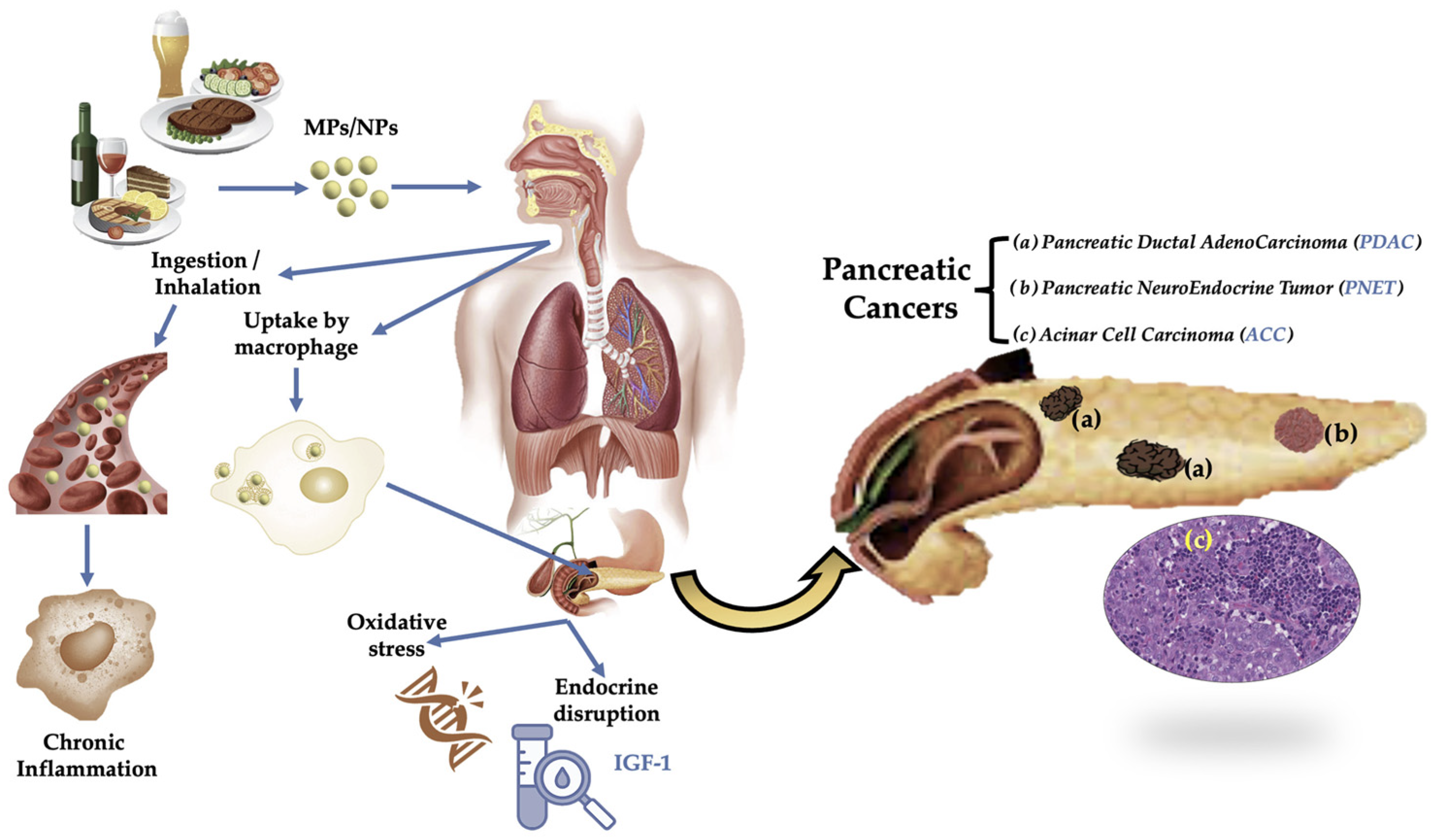
41]. The northern regions (Piedmont, Emilia-Romagna, Veneto, and Lombardy) have higher PC-SMR values (2003–2022), which are likely related to heavy traffic, industrial activity, and air pollution in the Po Valley. SMRs are typically lower in southern locations, though recent rises in Sicily and Puglia might be due to growing ports, industry, and tourism. Metal, pesticide, and solvent exposures at work continue to be significant cofactors. Progressive industrialization is indicated by the closing North–South SMR gap. Other exposures are brought about by MPs/NPs through bottled water, packaged foods, and air deposition of endocrine disruptors (phthalates, bisphenols) (
Figure 2). Gamma radiation has recently been proposed as an effective method for MP remediation, potentially mitigating environmental exposure [
42].
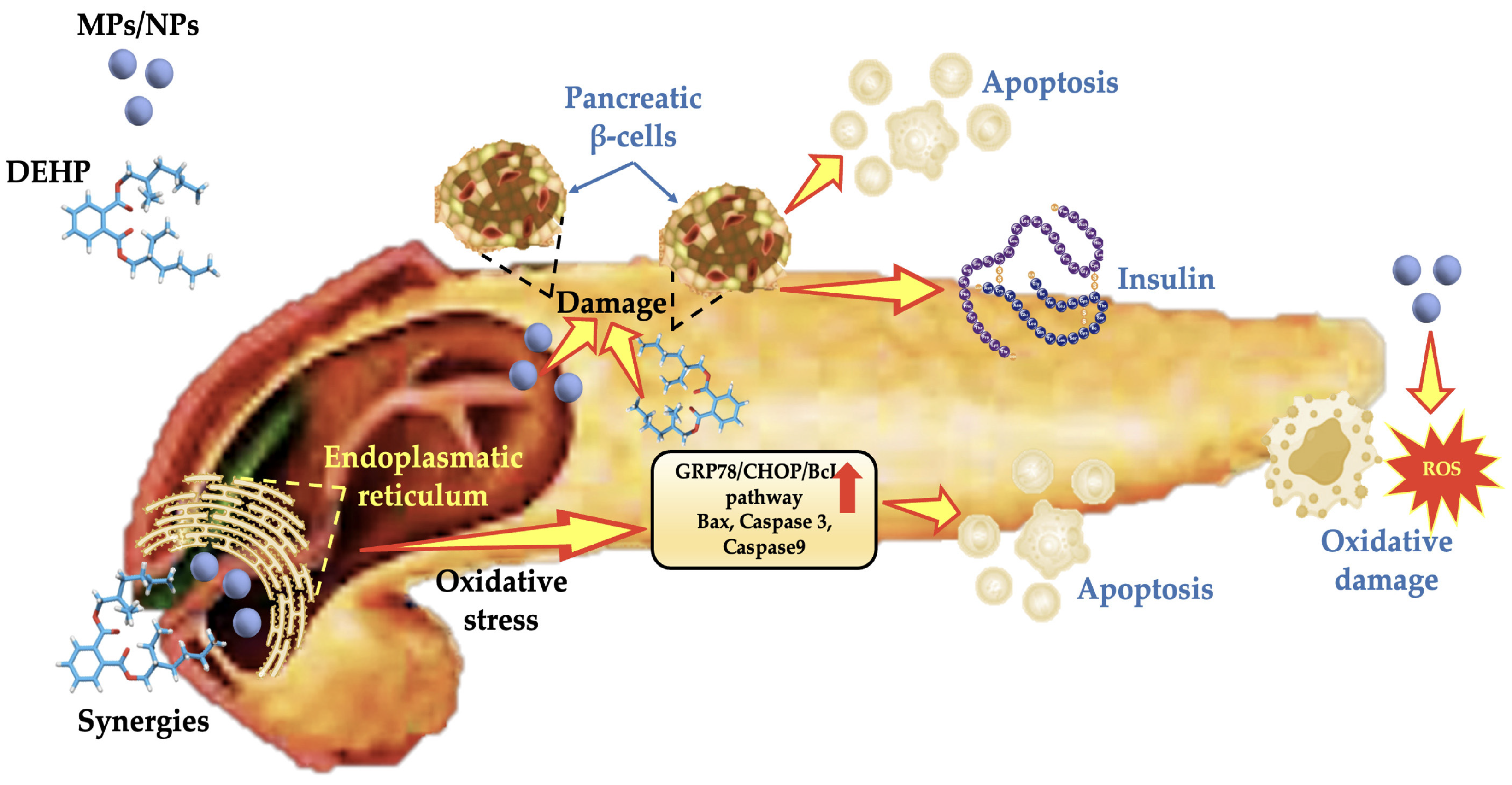
The following are some ways that MPs/NPs may contribute to PC: (i) oxidative stress that causes DNA damage and mutagenesis, especially in polluted, industrialized Italian regions; (ii) endocrine disruption from phthalates/bisphenols that alter insulin and IGF-1 signaling; and (iii) chronic inflammation through cytokine release (IL-6, TNF-α) (
Figure 3).
In vitro and in vivo studies indicate polymers vary in toxicity [
43,
44], and oral cationic fibers may enhance their fecal excretion [
45]. Polystyrene (PS), polyvinyl chloride (PVC), and polycarbonate (PCa) show the strongest PC potential. Sources include packaging, plastics, combustion, and contaminated food, air, or cookware. PS induces oxidative stress, mitochondrial damage, fibrosis, β-cell loss, and apoptosis. PVC releases BPA, dioxins, and phthalates, disrupting endocrine and inflammatory pathways. PCa releases BPA, promoting insulin resistance, metabolic dysfunction, proliferation, and PanIN. Hazards involve oxidative stress, inflammation, and mitochondrial disruption [
20,
40,
45,
46,
47,
48,
49].