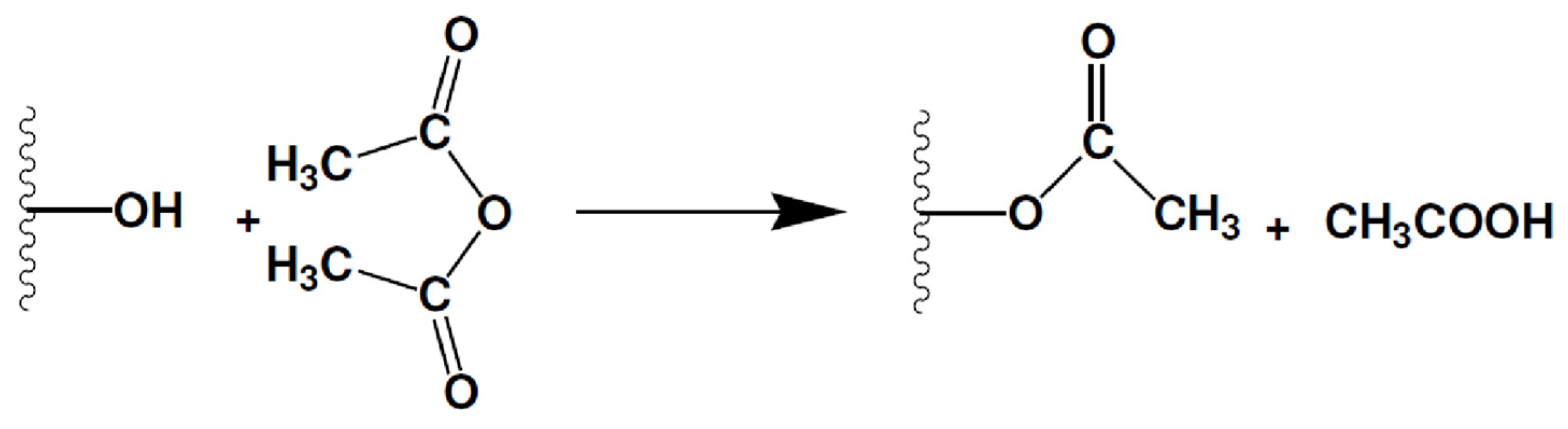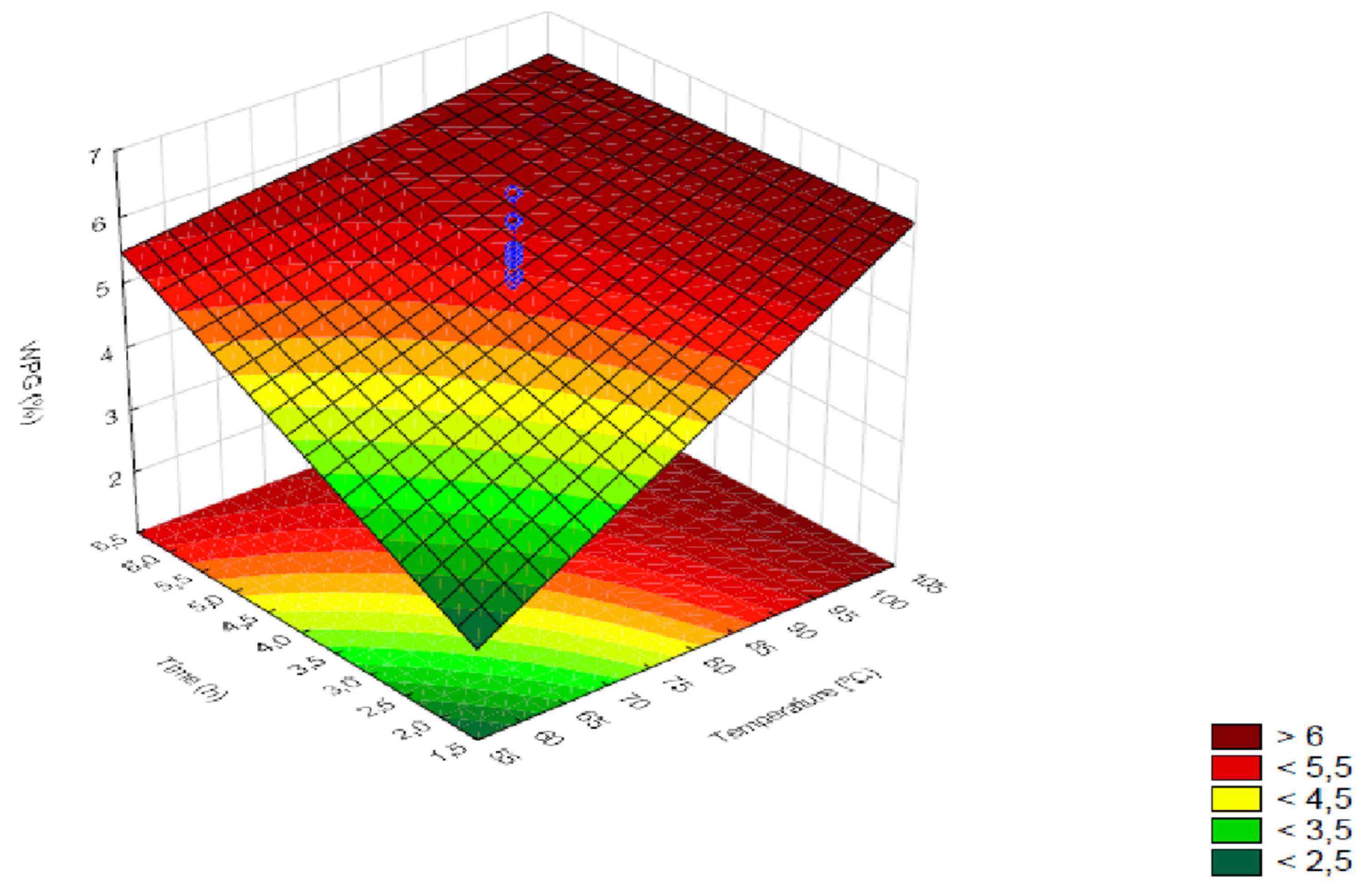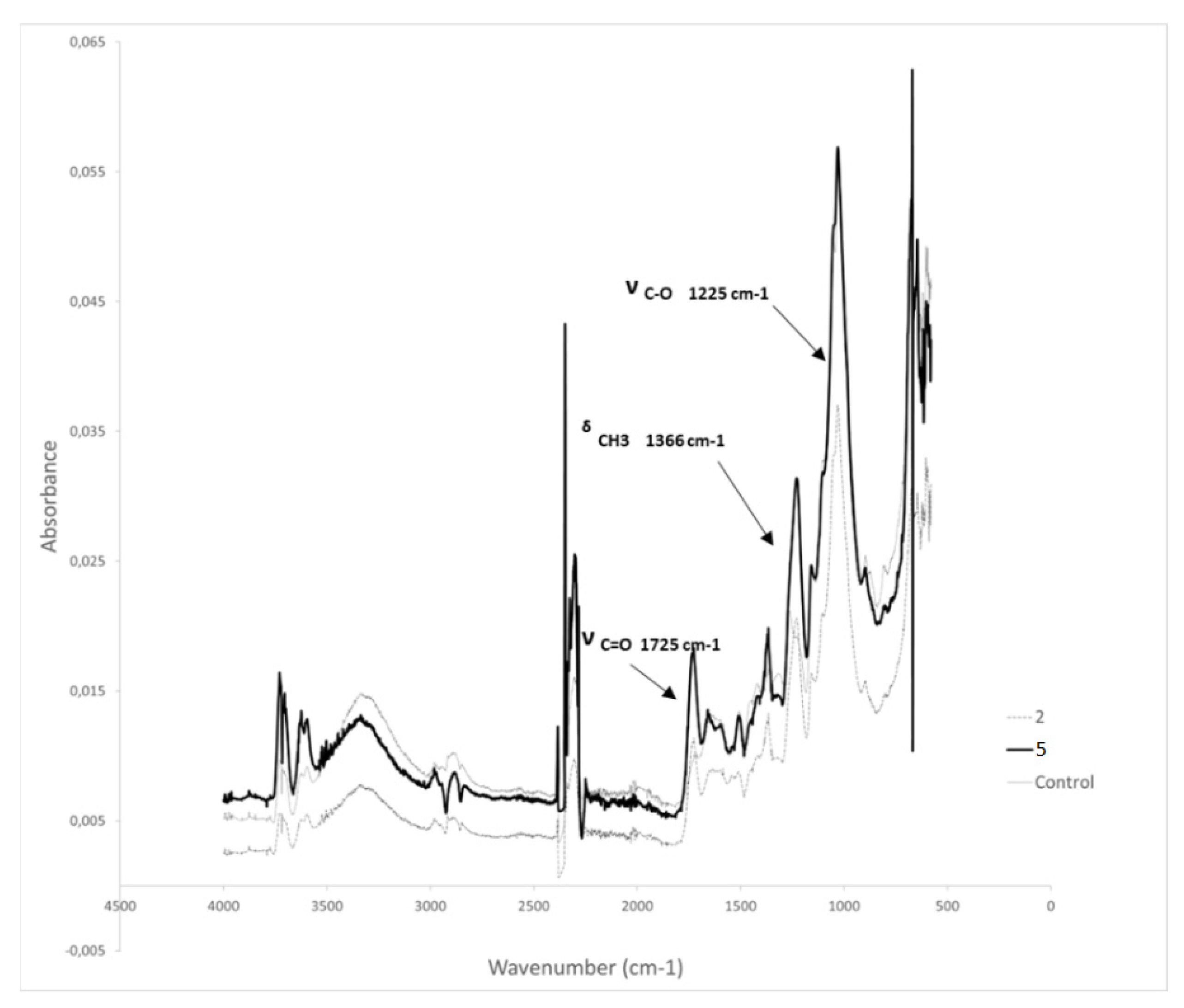

A Study of the Best Conditions for the Acetylation of P. taeda from Uruguay †

Abstract
1. Introduction
2. Evolution of Climate Prediction
2.1. Evolution of General Circulation Models
2.2. Machine Learning & Deep Learning
2.3. AI-Enhanced Modeling
3. Predictive Analytics
3.1. Physics-Based Models
3.2. ML-Based Emulation & Surrogate Modeling

3.3. AI-Enhanced Hybrid Predictive Analytics
3.3.1. Physics-Informed ML
3.3.2. Hybrid Modeling Approaches
4. Comparative Performance
5. Applications in Predictive Climate Science
5.1. Downscaling
5.2. Forecasting
5.3. Extremes
6. Challenges
6.1. Computational Demand & Scalability
6.2. Uncertainty, Interpretability and Data Quality
6.3. Ethical Concerns
7. Future Prospects of Climate Modeling
8. Conclusions
Funding
Data Availability Statement
Conflicts of Interest
References
- Bordoni, S.; Kang, S.M.; Shaw, T.A.; Simpson, I.R.; Zanna, L. The Futures of Climate Modeling. Npj Clim. Atmospheric Sci. 2025, 8, 99. [Google Scholar] [CrossRef]
- Shiru, M.S.; Chung, E.-S. Performance Evaluation of CMIP6 Global Climate Models for Selecting Models for Climate Projection over Nigeria. Theor. Appl. Climatol. 2021, 146, 599–615. [Google Scholar] [CrossRef]
- Amnuaylojaroen, T. Advancements in Downscaling Global Climate Model Temperature Data in Southeast Asia: A Machine Learning Approach. Forecasting 2023, 6, 1–17. [Google Scholar] [CrossRef]
- Camps-Valls, G.; Fernández-Torres, M.-Á.; Cohrs, K.-H.; Höhl, A.; Castelletti, A.; Pacal, A.; Robin, C.; Martinuzzi, F.; Papoutsis, I.; Prapas, I.; et al. Artificial Intelligence for Modeling and Understanding Extreme Weather and Climate Events. Nat. Commun. 2025, 16, 1919. [Google Scholar] [CrossRef]
- Amnuaylojaroen, T. Advancements and Challenges of Artificial Intelligence in Climate Modeling for Sustainable Urban Planning. Front. Artif. Intell. 2025, 8, 1517986. [Google Scholar] [CrossRef]
- Edwards, P.N. History of Climate Modeling. WIREs Clim. Change 2011, 2, 128–139. [Google Scholar] [CrossRef]
- Bjerknes, V. The Problem of Weather Prediction, Considered from the Viewpoints of Mechanics and Physics. Meteorol. Z. 2009, 18, 663–667. [Google Scholar] [CrossRef]
- Eyring, V.; Bony, S.; Meehl, G.A.; Senior, C.A.; Stevens, B.; Stouffer, R.J.; Taylor, K.E. Overview of the Coupled Model Intercomparison Project Phase 6 (CMIP6) Experimental Design and Organization. Geosci. Model Dev. 2016, 9, 1937–1958. [Google Scholar] [CrossRef]
- De Burgh-Day, C.O.; Leeuwenburg, T. Machine Learning for Numerical Weather and Climate Modelling: A Review. Geosci. Model Dev. 2023, 16, 6433–6477. [Google Scholar] [CrossRef]
- Wang, X.; Han, Y.; Xue, W.; Yang, G.; Zhang, G.J. Stable Climate Simulations Using a Realistic General Circulation Model with Neural Network Parameterizations for Atmospheric Moist Physics and Radiation Processes. Geosci. Model Dev. 2022, 15, 3923–3940. [Google Scholar] [CrossRef]
- Schneider, T.; Lan, S.; Stuart, A.; Teixeira, J. Earth System Modeling 2.0: A Blueprint for Models That Learn From Observations and Targeted High—Resolution Simulations. Geophys. Res. Lett. 2017, 44, 12396–12417. [Google Scholar] [CrossRef]
- Soldatenko, S.A. Artificial Intelligence and Its Application in Numerical Weather Prediction. Russ. Meteorol. Hydrol. 2024, 49, 283–298. [Google Scholar] [CrossRef]
- Slater, L.J.; Arnal, L.; Boucher, M.-A.; Chang, A.Y.-Y.; Moulds, S.; Murphy, C.; Nearing, G.; Shalev, G.; Shen, C.; Speight, L.; et al. Hybrid Forecasting: Blending Climate Predictions with AI Models. Hydrol. Earth Syst. Sci. 2023, 27, 1865–1889. [Google Scholar] [CrossRef]
- Materia, S.; García, L.P.; Van Straaten, C.; Sungmin, O.; Mamalakis, A.; Cavicchia, L.; Coumou, D.; De Luca, P.; Kretschmer, M.; Donat, M. Artificial Intelligence for Climate Prediction of Extremes: State of the Art, Challenges, and Future Perspectives. WIREs Clim. Change 2024, 15, e914. [Google Scholar] [CrossRef]
- Huntingford, C.; Jeffers, E.S.; Bonsall, M.B.; Christensen, H.M.; Lees, T.; Yang, H. Machine Learning and Artificial Intelligence to Aid Climate Change Research and Preparedness. Environ. Res. Lett. 2019, 14, 124007. [Google Scholar] [CrossRef]
- Schneider, T.; Behera, S.; Boccaletti, G.; Deser, C.; Emanuel, K.; Ferrari, R.; Leung, L.R.; Lin, N.; Müller, T.; Navarra, A.; et al. Harnessing AI and Computing to Advance Climate Modelling and Prediction. Nat. Clim. Change 2023, 13, 887–889. [Google Scholar] [CrossRef]
- Raju, K.S.; Kumar, D.N. Review of Approaches for Selection and Ensembling of GCMs. J. Water Clim. Change 2020, 11, 577–599. [Google Scholar] [CrossRef]
- Rummukainen, M. State–of–the–art with Regional Climate Models. WIREs Clim. Change 2010, 1, 82–96. [Google Scholar] [CrossRef]
- Donatelli, D.; Juhász, N. The Primitive Equations of the Polluted Atmosphere as a Weak and Strong Limit of the 3D Navier-Stokes Equations in Downwind-Matching Coordinates. Discrete Contin. Dyn. Syst. 2022, 42, 2859. [Google Scholar] [CrossRef]
- Govett, M.; Bah, B.; Bauer, P.; Berod, D.; Bouchet, V.; Corti, S.; Davis, C.; Duan, Y.; Graham, T.; Honda, Y.; et al. Exascale Computing and Data Handling: Challenges and Opportunities for Weather and Climate Prediction. Bull. Am. Meteorol. Soc. 2024, 105, E2385–E2404. [Google Scholar] [CrossRef]
- Azimi, S.M.E.; Sadatinejad, S.J.; Malekian, A.; Jahangir, M.H. Application of Artificial Intelligence Hybrid Models for Meteorological Drought Prediction. Nat. Hazards 2022, 116, 2565–2589. [Google Scholar] [CrossRef]
- Rasp, S.; Pritchard, M.S.; Gentine, P. Deep Learning to Represent Subgrid Processes in Climate Models. Proc. Natl. Acad. Sci. USA 2018, 115, 9684–9689. [Google Scholar] [CrossRef]
- Raissi, M.; Perdikaris, P.; Karniadakis, G.E. Physics-Informed Neural Networks: A Deep Learning Framework for Solving Forward and Inverse Problems Involving Nonlinear Partial Differential Equations. J. Comput. Phys. 2019, 378, 686–707. [Google Scholar] [CrossRef]
- Reddy, B.S.N.; Pramada, S.K.; Roshni, T. Monthly Surface Runoff Prediction Using Artificial Intelligence: A Study from a Tropical Climate River Basin. J. Earth Syst. Sci. 2021, 130, 35. [Google Scholar] [CrossRef]
- Chokkavarapu, N.; Mandla, V.R. Comparative Study of GCMs, RCMs, Downscaling and Hydrological Models: A Review toward Future Climate Change Impact Estimation. SN Appl. Sci. 2019, 1, 1698. [Google Scholar] [CrossRef]
- Maher, N.; Milinski, S.; Ludwig, R. Large Ensemble Climate Model Simulations: Introduction, Overview, and Future Prospects for Utilising Multiple Types of Large Ensemble. Earth Syst. Dyn. 2021, 12, 401–418. [Google Scholar] [CrossRef]
- Citakoglu, H. Comparison of Artificial Intelligence Techniques for Prediction of Soil Temperatures in Turkey. Theor. Appl. Climatol. 2017, 130, 545–556. [Google Scholar] [CrossRef]
- Rummukainen, M. Added Value in Regional Climate Modeling. WIREs Clim. Change 2016, 7, 145–159. [Google Scholar] [CrossRef]
- McGovern, A.; Elmore, K.L.; Gagne, D.J.; Haupt, S.E.; Karstens, C.D.; Lagerquist, R.; Smith, T.; Williams, J.K. Using Artificial Intelligence to Improve Real-Time Decision-Making for High-Impact Weather. Bull. Am. Meteorol. Soc. 2017, 98, 2073–2090. [Google Scholar] [CrossRef]
- Guo, Q.; He, Z.; Wang, Z. Monthly Climate Prediction Using Deep Convolutional Neural Network and Long Short-Term Memory. Sci. Rep. 2024, 14, 17748. [Google Scholar] [CrossRef]
- Yang, T.; Asanjan, A.A.; Welles, E.; Gao, X.; Sorooshian, S.; Liu, X. Developing Reservoir Monthly Inflow Forecasts Using Artificial Intelligence and Climate Phenomenon Information. Water Resour. Res. 2017, 53, 2786–2812. [Google Scholar] [CrossRef]
- Adamidis, P.; Pfister, E.; Bockelmann, H.; Zobel, D.; Beismann, J.-O.; Jacob, M. The Real Challenges for Climate and Weather Modelling on Its Way to Sustained Exascale Performance: A Case Study Using ICON (v2.6.6). Geosci. Model Dev. 2025, 18, 905–919. [Google Scholar] [CrossRef]
- Imanian, H.; Hiedra Cobo, J.; Payeur, P.; Shirkhani, H.; Mohammadian, A. A Comprehensive Study of Artificial Intelligence Applications for Soil Temperature Prediction in Ordinary Climate Conditions and Extremely Hot Events. Sustainability 2022, 14, 8065. [Google Scholar] [CrossRef]
- Bull, J.M.; Coughtrie, A.; Deeptimahanti, D.; Hedley, M.; Laoide-Kemp, C.; Maynard, C.; Shepherd, H.; Van De Bund, S.; Weiland, M.; Went, B. Performance and Scaling of the LFRic Weather and Climate Model on Different Generations of HPE Cray EX Supercomputers. In Proceedings of the Cray User Group; ACM: Perth, Australia, 2024; pp. 1–11. [Google Scholar]
- Abebe, W.T.; Endalie, D. Artificial Intelligence Models for Prediction of Monthly Rainfall without Climatic Data for Meteorological Stations in Ethiopia. J. Big Data 2023, 10, 2. [Google Scholar] [CrossRef]
- Nordgren, A. Artificial Intelligence and Climate Change: Ethical Issues. J. Inf. Commun. Ethics Soc. 2023, 21, 1–15. [Google Scholar] [CrossRef]
- Eyring, V.; Cox, P.M.; Flato, G.M.; Gleckler, P.J.; Abramowitz, G.; Caldwell, P.; Collins, W.D.; Gier, B.K.; Hall, A.D.; Hoffman, F.M.; et al. Taking Climate Model Evaluation to the next Level. Nat. Clim. Change 2019, 9, 102–110. [Google Scholar] [CrossRef]
- Maraun, D. Bias Correcting Climate Change Simulations—A Critical Review. Curr. Clim. Change Rep. 2016, 2, 211–220. [Google Scholar] [CrossRef]
- Alizadeh, O. Advances and Challenges in Climate Modeling. Clim. Change 2022, 170, 18. [Google Scholar] [CrossRef]
- Joshi, M.N.; Dixit, A.K.; Saxena, S.; Memoria, M.; Choudhury, T.; Sar, A. A Study of the Application of AI & ML to Climate Variation, with Particular Attention to Legal & Ethical Concerns. EAI Endorsed Trans. Internet Things 2024, 10, 1–11. [Google Scholar] [CrossRef]
- Giorgi, F. Thirty Years of Regional Climate Modeling: Where Are We and Where Are We Going Next? J. Geophys. Res. Atmospheres 2019, 124, 5696–5723. [Google Scholar] [CrossRef]

| Model/Method | Core Applications | Strength | Limitations |
|---|---|---|---|
| Global Climate Models (GCMs) | Large-scale projections | Global view | Coarse resolution [17] |
| Convection-Permitting Models (CPMs) | High-impact events | Accurate representation | High computational cost [26] |
| Large Ensembles (SMILEs) | Extreme event studies | Probability estimation | Massive data requirements [26] |
| Artificial Neural Networks (ANNs) | Hydrology, temperature | Good for noisy data | Large data needs [17,18]. |
| ANFIS, Hybrid | soil temperature | High accuracy | Computationally intensive [27] |
| Machine Learning (SVM, RF, DL) | Downscaling, bias correction | Fast inference | Model transparency issues [21,24]. |
| Regional Climate Models (RCMs) | Local climate projections | High spatial details | Dependent on GCM [16,20] |
Disclaimer/Publisher’s Note: The statements, opinions and data contained in all publications are solely those of the individual author(s) and contributor(s) and not of MDPI and/or the editor(s). MDPI and/or the editor(s) disclaim responsibility for any injury to people or property resulting from any ideas, methods, instructions or products referred to in the content. |
© 2025 by the author. Licensee MDPI, Basel, Switzerland. This article is an open access article distributed under the terms and conditions of the Creative Commons Attribution (CC BY) license (https://creativecommons.org/licenses/by/4.0/).
Share and Cite
Cardozo, M.E.; Raimonda, P.; Ibáñez, C.M. A Study of the Best Conditions for the Acetylation of P. taeda from Uruguay. Environ. Earth Sci. Proc. 2024, 31, 15. https://doi.org/10.3390/eesp2024031015
Cardozo ME, Raimonda P, Ibáñez CM. A Study of the Best Conditions for the Acetylation of P. taeda from Uruguay. Environmental and Earth Sciences Proceedings. 2024; 31(1):15. https://doi.org/10.3390/eesp2024031015
Chicago/Turabian StyleCardozo, María Eugenia, Pablo Raimonda, and Claudia Marcela Ibáñez. 2024. "A Study of the Best Conditions for the Acetylation of P. taeda from Uruguay" Environmental and Earth Sciences Proceedings 31, no. 1: 15. https://doi.org/10.3390/eesp2024031015
APA StyleCardozo, M. E., Raimonda, P., & Ibáñez, C. M. (2024). A Study of the Best Conditions for the Acetylation of P. taeda from Uruguay. Environmental and Earth Sciences Proceedings, 31(1), 15. https://doi.org/10.3390/eesp2024031015