
Opinion

The Need for Cardiovascular Bioenergetics to Solve Problems in Heart Surgery or What Is the Term “Ischemia” About?

Cardiovascular Research Laboratory for Bioenergetics, Philipps-University Marburg, Universitätsklinikum Gießen und Marburg GmbH, 35043 Marburg, Germany
Clin. Bioenerg. 2026, 2(1), 3; https://doi.org/10.3390/clinbioenerg2010003
Submission received: 22 October 2025 / Revised: 7 January 2026 / Accepted: 9 February 2026 / Published: 14 February 2026

Abstract

The impairment of biological tissue caused by ischemia is a key area of research in both natural sciences and medical research. The utilization of oxygen in the process of tissue respiration is closely linked to mitochondrial function, i.e., the directed transfer of electrons between the enzyme complexes of the respiratory chain. The Cytochrome c oxidase, complex IV of the ETC, represents the so-called “rate-limiting step.” Kadenbach’s theory has described different activity states of this enzyme, which are crucial for the production of oxygen radicals. This mechanism is an important part of understanding ischemic damage to the heart.

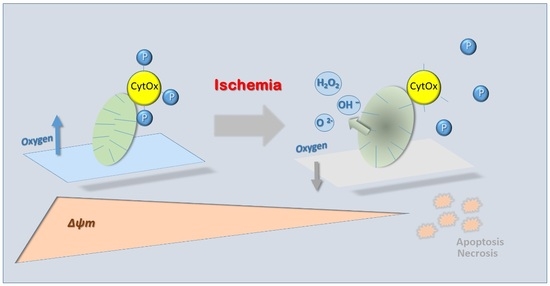
Graphical Abstract

1. Introduction

No other organ has fascinated humans more than the heart: the pulsation in the chest is perceived as a heartbeat and compared and perceived with life, with “being human.” This heartbeat is the mechanical correlate of the contraction of the heart muscle and the synchronous opening of the heart valves. This contraction is based on the interaction of actin and myosin filaments, which require adenosine triphosphate (ATP) after contraction in order to separate from each other again. This is essential for the contraction of the heart muscle.
ATP is the cell’s most important energy currency. This molecule is crucial for all life, from the simplest to the most complex. Kornberg said that a cell contains about one billion ATP molecules (10 to the power of 9) or up to 1023 (sextillions) ATP molecules in an organism. In each ATP molecule, the terminal phosphate is added and removed three times per minute [1,2]. ATP is mostly produced by oxidative phosphorylation and, in this case, by the function of ATP synthase, an enzyme located in the inner mitochondrial membrane that consumes the electrochemical potential generated by the electron transport chain (ETC) for its activity. Interestingly, according to Mitchell’s chemiosmotic theory, the protons essential for the proton motive force must be pumped back into the interior of the mitochondria in order to obtain the energy necessary for a single rotation of the molecular wheel [1,2].
Life requires energy, which is mainly provided by ATP throughout the organism. Energy demand is not a stationary process. Adaptation to the needs of a biological system (e.g., during contraction of the heart or skeletal muscle) is essential. Oxidative phosphor-rylation must be highly regulated, as the range of ATP utilization can vary by a factor of 5–10 in eukaryotic cells, depending on energy requirements [3,4]. Mitochondria are considered the “powerhouse” for ATP production, but occasionally also for the excessive release of ROS. The balance between the two determines the fate of the cell, i.e., life or death [5]. Specifically, the inner membrane of the mitochondria contains the elements of the ETC. The directed electron transfer within the ETC to maintain proton pumping in complexes I, II, and IV generates a mitochondrial (inner) membrane potential to drive ATP synthase (complex V), which is also located on the inner membrane of mitochondria [6]. Here, cytochrome c oxidase (CytOx, E.C. 1.9.3.1.) is at the center of metabolic control, cell signaling, and homeostasis [7].

2. From Electrons to ATP and Contractile Performance

Along its molecular structure, 4 electrons are transferred from cytochrome c2+ (to cytochrome c3+) (CuA-heme a-heme a3-CuB) in order to reduce dioxygen as a reaction partner with hydrogen to water [8]. Protons are pumped through the K, D, and H(?)-channels to generate membrane potential [9,10], so that Cytochrome c–Oxidase (CytOx) can ultimately be considered a regulator of the ETC. By binding different ligands and subsequent molecular conformational changes, the enzyme switches between relaxed and active respiration [11,12,13]. It therefore represents a unique mechanism. Metabolic control analyses showed that Δψm is involved in the control of CytOx via respiration in actively phosphorylating cells [14]. In fact, in vivo respiration is strictly controlled by CytOx [15].
The interaction of molecular oxygen and protons for a membrane gradient and thus subsequent ATP production by ATP synthase (complex V) takes place at this enzyme. This is precisely where the important approach for modern medicine is focussed. From the perspective of cardiac medicine, only three points will be highlighted that demonstrate the practical significance of bioenergetic research:
  • The contractile performance of the heart is proportional to oxygen consumption, which in turn depends on oxygen transport.
  • Impaired contraction, myocardial dysfunction in the case of coronary heart disease and arteriosclerotic narrowing of the coronary vessels (ischemia), is accompanied by local oxygen deprivation of the myocardium due to reduced capillary blood flow.
  • All myocardial protective measures during cardiac surgery are aimed at reducing oxygen demand, conditioning the tissue against ischemia, and, above all, achieving a high degree of contractility repair during reperfusion periods.
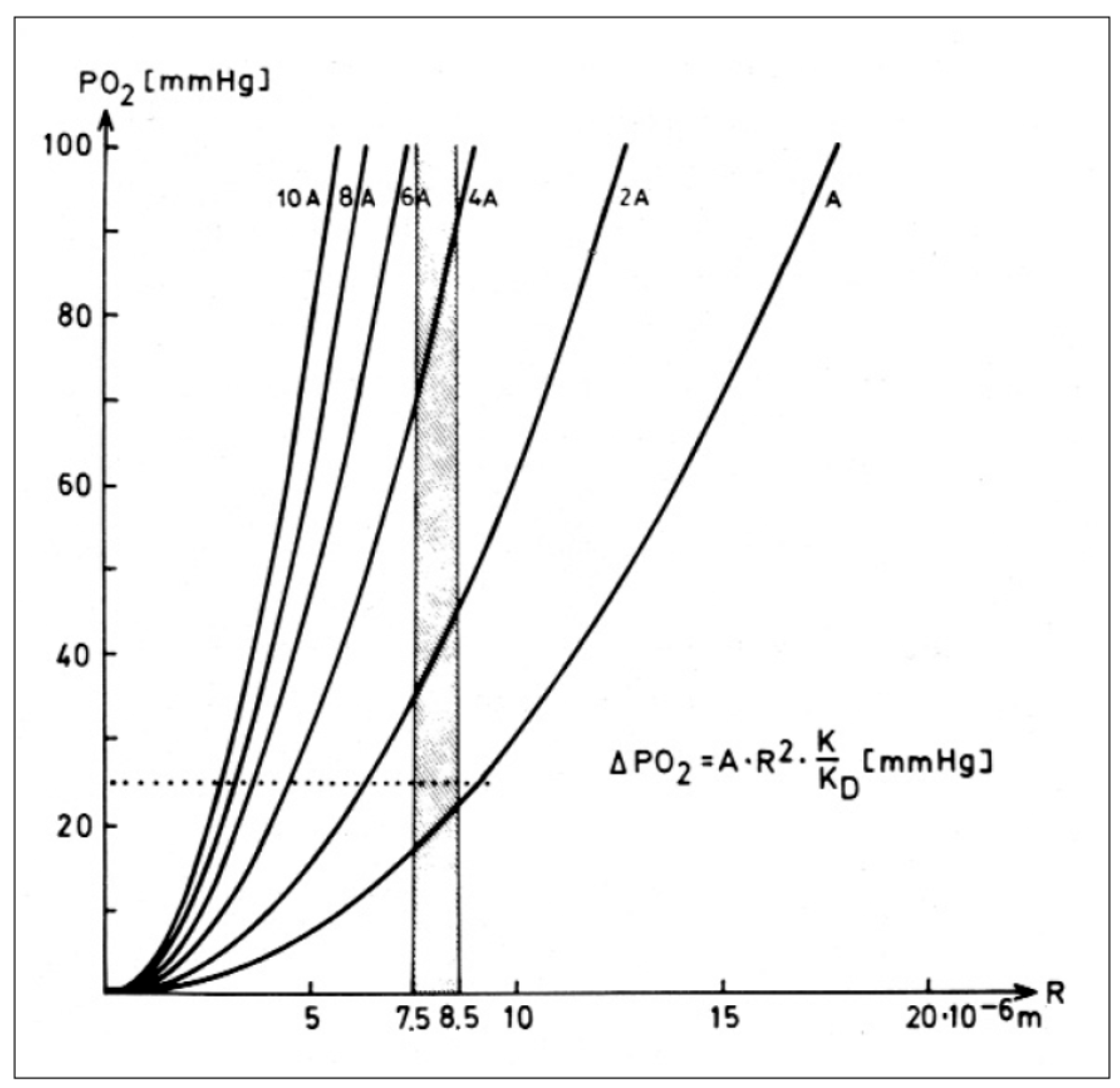
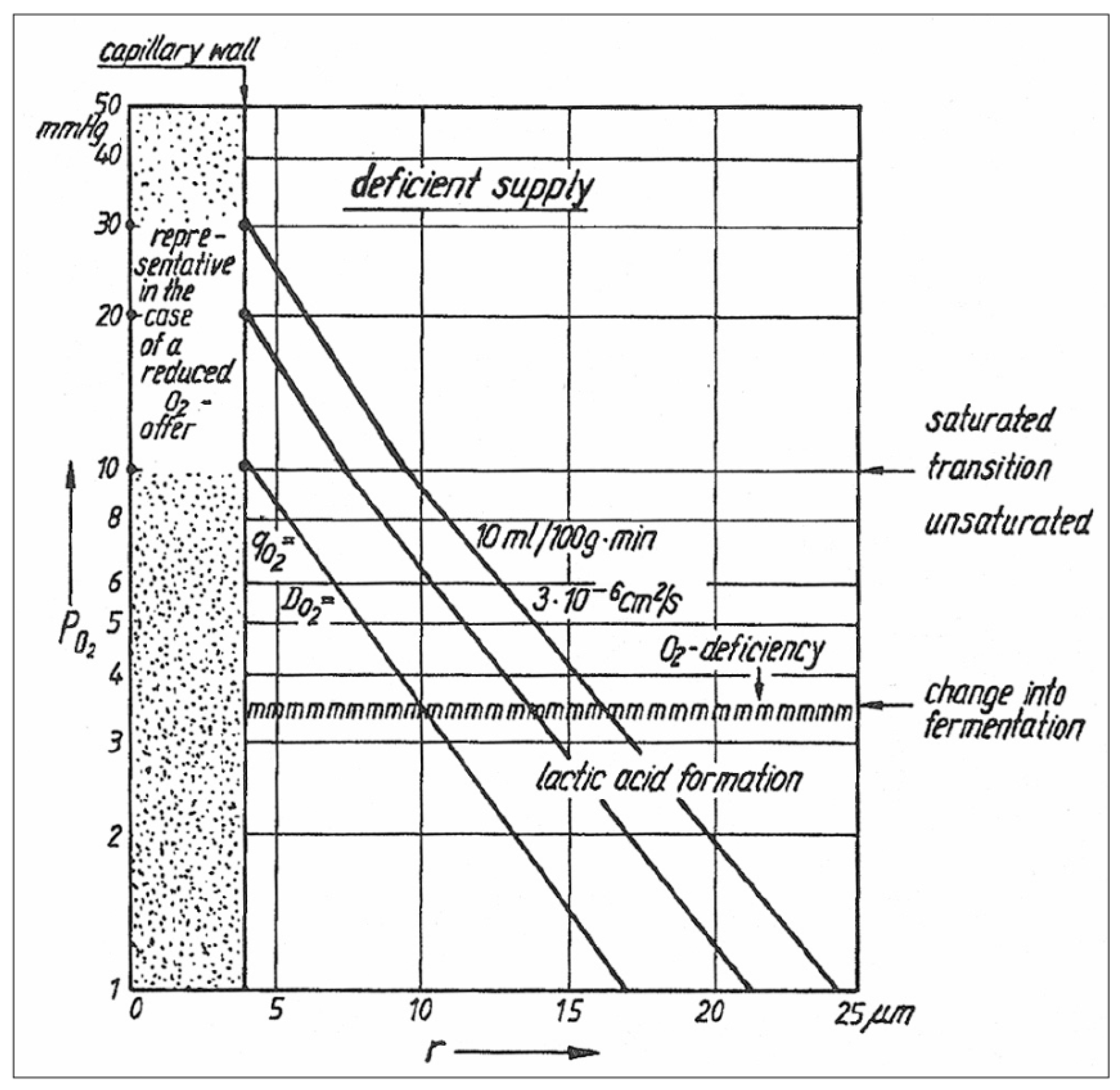
Ischemia (from the ancient Greek ischēn, meaning “to hold back,” and aima, meaning “blood”) is a reduction or absence of blood flow to tissue. When considering the relationship between oxygen supply and capillary blood flow, Krogh’s cylinder model proves to be helpful. This model illustrates the release of oxygen along a capillary to supply an area of tissue. Assuming a certain oxygen content in the blood at the beginning of the capillary, it is easy to understand that oxygen is continuously released to the tissue as the blood flows through the capillary. There is a mathematical relationship between the pericapillary oxygen partial pressure in the tissue, the diameter of the capillary, and the pericapillary myocardial supply area. This relationship is shown for different capillary diameters in Figure 1. It should be noted that this functional relationship is significantly influenced by the flow velocity of the blood in the capillary. If, due to a functionally induced increase in oxygen demand in the terminal capillaries, an autoregulatory widening of the capillary diameter occurs, this results in an increased flow velocity in the middle capillary section and a reduction in the contact time of the erythrocytes, which possibly reduces the partial oxygen pressure in the corresponding tissue area. This impairment of oxygen supply can compromise and reduce metabolic activity. If the oxygen deficiency in the tissue progresses, even structural maintenance can be endangered, resulting in irreversible tissue damage. These changes can be even more pronounced in the event of disturbances in autoregulatory processes and pathological changes in capillary morphology, as are known to occur in coronary heart disease. It is therefore understandable that the increased flow rate of capillary blood to supply a section of tissue with increased work performance (e.g., increased contractility of the myocardium) can additionally lead to metabolic change in another section (see Figure 2).
Cardiac ATP production uses multiple energy substrates, namely fatty acids, carbohydrates (glucose and lactate), ketones and amino acids. The contribution of these individual substrates to ATP production can dramatically change. The normal heart uses different substrates but heavily favors fatty acid oxidation for energy (ATP) as the primary fuel. It also takes glucose, lactate, and ketones. Under reduced oxygen supply, the oxidative metabolism of fats is suppressed, and the heart relies more on anaerobic glycolysis using glucose without oxygen. This kind of metabolic status is less efficient, leading to an energy deficit and potential cell damage due to acidity and lack of ATP. During ischemia, the heart rapidly shifts its fuel source from primarily fatty acids to anaerobic glycolysis to generate some ATP, but this causes lactic acid production and cell damage; this metabolic remodeling involves increased glucose uptake, suppressed fatty acid use, and produces harmful byproducts, with therapeutic strategies focusing on shifting metabolism back to more efficient carbohydrate use.
As an interim conclusion, it can be said that the definition of “ischemia” as a reduction in blood flow, whether absolute or relative, leaves many questions unanswered. The view that insufficient blood flow causes ischemia must also be relativized, since the oxygen demand of tissue cannot be defined absolutely and is determined by the functional state of the tissue. Similarly, the thesis that “lots of oxygen good for tissue” does not apply in absolute terms. Conditions resulting from reduced oxygen supply, such as after induced cardiac arrest in the reperfusion phase, require oxygen supply that meets demand. This is determined by the efficiency of mitochondrial respiratory chain enzymes. Mitochondrial respiration occurs at 90% of its hyperbolic maximum at the p50 value of myoglobin, which indicates a possible significant oxygen limitation even under normoxia in active muscles. Any impairment of oxygen supply therefore leads to oxyconformity, which means that only as much oxygen can be utilized as is available with subsequent kinetic performance. A shift of mitochondrial oxygen kinetics to the right, in particular through competitive inhibition of CytOx, is thought to result in a further reduction in respiration and a compensatory increase in local oxygen pressure. Gnaiger explains that above 1 kPa (approx. 7.5 Torr), mitochondrial oxygen uptake increases beyond hyperbolic saturation, which is probably due to the production of oxygen radicals rather than the kinetics of CytOx [18].
In contrast, however, it should be noted that mitochondrial energy production, although clearly compartmentalized from blood circulation, would not remain unchanged at an arterial oxygen partial pressure of over 100 Torr (approximately 100 mmHg).

3. Energy Demand and Supply

Both programmed cell death and other forms of cell death are likely caused by or accompanied by mitochondrial dysfunction. The key is understanding mitochondrial energy production and, in particular, its regulation. In order to do this, we must return to the starting point and ask what influences the mitochondrial respiratory chain (ETC). Our working group is focusing on complex IV of the ETC–cytochrome c oxidase. We have shown that there are different phosphorylation sites in the enzyme that control its activity [19], certain changes in the enzyme’s subunits alter respiration [20], and binding of ATP limits the mitochondrial membrane potential [21]. This is an important observation, as the steady increase in potential can be accompanied by a significant increase in the formation of reactive oxygen species (ROS). These radicals can cause serious damage to the myocardium. It is interesting to note in this context that certain drugs have a negative effect on this mechanism [22] or can directly interfere with signaling chains [13].
Given the admittedly complex nature of bioenergetic assessment of tissues, organs, and the health status of our patients, the question of clinical relevance often arises in discussions. To answer this question, we can take a brief look at the history of our research profile. In 2000, we were able to report on an interesting observation. At that time, a great deal of work was being done (and continues to be done today) on the topic of “myocardial preconditioning,” i.e., a way of ‘accustoming’ the heart muscle to “oxygen deprivation.” Along with other research groups, we were able to experimentally show that a short-term increase in body temperature before cardioplegic-induced cardiac arrest improves the heart’s ejection fraction during the reperfusion phase [23].
These findings have shown that the induction and accumulation of heat shock proteins through brief exposure to hyperthermia with normothermic recovery is closely associated with temporary resistance to subsequent ischemia–reperfusion damage. This heat shock apparently prevented hyperacidity of the myocardial tissue and, above all, excessive loss of ATP [24]. This effect is apparently linked to altered tissue respiration of the heart [25]. If hsp proteins can be newly expressed on the cell surface, they initially represent neoantigens that trigger antibody formation in the organism. This means that antibodies should also be detectable in the blood of patients whose body temperature is artificially altered in order to achieve cytoprotection of the heart muscle or, in the case of hypoxic stress, hsp’s as chaperones develop their own protective measures for ischemia tolerance.
We therefore examined patients with severe angina pectoris attacks prior to coronary bypass surgery. The sera of patients with severe angina pectoris attacks prior to surgery contained antibodies against hsp70 and had low antioxidant capacity. The intervals between a severe angina pectoris attack and the anti-hsp70 antibody titer were inversely proportional. These patients had better cardiac output and lower pulmonary capillary wedge pressure values after surgery. Severe angina pectoris prior to cardiac surgery was associated with an improvement in hemodynamic variables compared to chronically stable angina pectoris. This finding correlated significantly with low antioxidant capacity and the presence of antibodies against hsp70. The pathophysiological mechanisms could therefore play a role in protecting the heart muscle [26].

4. Moving from Mitochondrial Function to Myocardial Protection

Cell respiration means way more than just a biochemical process for making energy. Especially in the cardiovascular context, particularly in heart surgery, it plays a key role in cell survival, organ function, and also in post-operative regeneration. Cell respiration is the central biochemical process for cells to obtain ATP—the universal energy unit of the cell—from energy-rich substrates such as glucose, fatty acids, or amino acids. The heart muscle is highly dependent on this continuous supply of ATP. In one of his latest articles, Kadenbach pointed out that the cell has a much higher ATP content than previously assumed [27]. He refers to a study by Dobson et al. [28] and states that the [ATP/ADP] ratio in the mitochondrial matrix for a half-maximal inhibition of CytOx activity is 28 to 1, which corresponds to results obtained using 31P NMR analysis, which determined a very high ATP/ADP ratio of 100 to even 1000 [28,29].
However, even short periods of ischemia, such as those that occur during cardiac surgery, can push the cellular energy supply to its limits. At the same time, mitochondrial function is increasingly becoming the focus of current research approaches as a therapeutic target structure. The role of the [ATP/ADP] ratio as a highly sensitive sensor for the adapted working method of the ETC is a recurring topic of discussion. The question of what the benefits of Kadenbach’s extension of Mitchel’s theory are is asked frequently [30]. To answer this question, it is necessary to explain a few key points.
The principle of energy conservation by means of an ion gradient across a membrane was first recognized by Mitchell in 1961 and is now generally accepted as the “chemiosmotic hypothesis” [31] Mitchell defined the proton motive force Δp as the force that promotes movement of protons across membranes. The membrane potential Δψm results from the charge difference between the matrix side and the intermembrane space of the membrane, and an electroosmotic component “2.3 × R × T × ΔpH”, which is caused by the electrochemical potential of the protons (ΔµH+) across the membrane. The following equation illustrates this relationship between the proton motor force, the membrane potential, and the electrochemical potential
Δp = ΔµH+/F = Δψm − (2.3 × R × T × ΔpH),
where (R) is the gas constant, (T) is temperature, and (F) is the Faraday constant, simplified at physiological temperatures (37 °C) to Δp = Δψm − 61.5 ΔpH. This thermodynamic imbalance state generated by proton translocation can only be generated by the complexes of the electron transport chain up to a certain value of the proton motive force Δp. With the increase in the concentration gradient (ΔpH) across the membrane and the electrical membrane potential (Δψm), the translocation of protons is thermodynamically impaired. To address the control of mitochondrial respiration, we have to point out that, in every biochemical reaction, the availability of substrates initially controls the conversion rate of enzymes until the maximum reaction speed is reached. Here, it is the concentrations of NADH, oxygen, and FADH2 that control the activity of the electron transport chain complexes. If the substrates are present in sufficient concentration, further regulatory mechanisms are needed to adapt ATP production to the various forms of loading. The mitochondrial membrane potential plays a crucial role in this process. Kadenbach’s theory addresses precisely this point.
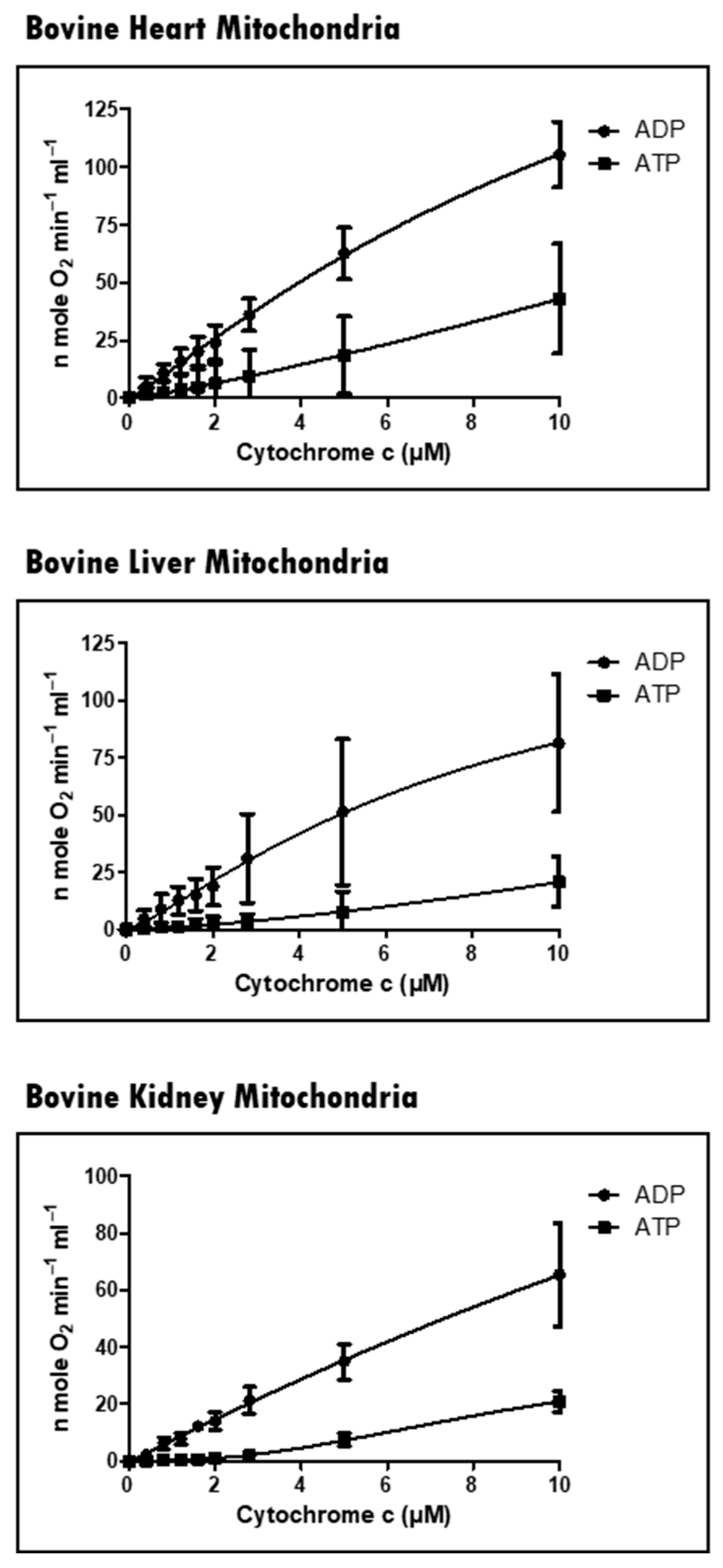
Due to the close coupling of mitochondrial respiration with proton translocation activity, the Mitchell hypothesis (chemiosmotic hypothesis) suggests that mitochondrial respiration is also controlled by proton motive force. In isolated, respiring mitochondria, the membrane potential Δψm at 25 °C is between 170 and 200 mV [32], whereas in vivo, the mitochondrial membrane potential is significantly lower than in isolated mitochondria, at around 110–130 mV [33]. The stimulation of oxygen consumption in isolated mitochondria by ADP (activated respiration, state 3) is consistent with the chemiosmotic hypothesis, which explains it as the result of ADP uptake into the mitochondria and stimulation of ATP synthase. The activation of ATP synthase is accompanied by a decrease in the proton motive force Δp, which increases the activity of the three proton pumps of the respiratory chain, thereby stimulating mitochondrial respiration [32]. This process is followed by a decrease in oxygen consumption (controlled, state 4) after ADP is converted to ATP. The ratio of oxygen consumption in state 3 (activated respiration) and state 4 (controlled respiration) is referred to as the “respiratory control” or acceptor control rate. It depends on the close coupling between electron transfer and energy conservation [34]. In the past, however, various results obtained from measurements of mitochondrial respiration could not be explained by the Mitchell hypothesis [35]. For example, respiration in rat liver mitochondria increased 3.5-fold in state 3 and state 4 while ΔµH+ remained constant [36]. The authors interpreted their observations as incompatible with the Mitchell hypothesis. A second mechanism of respiratory control has been discovered, which is independent of ΔµH+ and is based on the intramitochondrial [ATP/ADP] ratio [37,38,39]. The nucleotides bind to cytochrome c oxidase. A high [ATP/ADP] ratio induces inhibition of cytochrome c oxidase activity in solubilized mitochondria, resulting in sigmoidal substrate/activity kinetics of CytOx activity. Complete inhibition of activity by ATP was observed in the range < 6 µM cytochrome c. The reason for the variable cytochrome c concentration at which complete inhibition is observed remains an important subject of research.
While the staging according Chance refers to substrate availability and the link between oxygen consumption and the conversion of ADP to ATP, the significant advance in Kadenbach’s work is the realization that this reaction must always be considered in dependence on the mitochondrial membrane potential. The level of this potential depends significantly on the enzyme activity of CytOx as a rate-limiting step [15], which can be subject to various changes. According to the personal opinion of the author of this article, this is the key to understanding myocardial protection.

5. Molecular Basics of Cellular Respiration

Cell respiration includes several closely linked processes: glycolysis, the citric acid cycle (TCA), the electron transport chain (ETC), and oxidative phosphorylation (OXPHOS). The focus is on the mitochondrial respiratory chain, in which electrons are transported through complexes I to IV. Complex IV, cytochrome c oxidase, catalyzes the final step: the reduction of oxygen to water. This is not only the final electron acceptor process, but also crucial for ATP synthesis and oxygen utilization in the myocardium.
The molecular processes during myocardial infarction and cardioprotection display variations in mitochondrial membrane potential (Δψm). The low Δψm values of the normally beating heart (100–140 mV) are explained by allosteric ATP inhibition of CytOx through feedback inhibition by ATP at high [ATP/ADP] ratios. During ischemia, the ATP inhibitory effect mechanism on CytOx is reversibly switched off by signaling via reactive oxygen species (ROS). During reperfusion, high Δψm values cause very high ROS production, leading to apoptosis and/or necrosis. It is suggested that ischemic preconditioning causes additional phosphorylation of CytOx, which protects the enzyme from immediate dephosphorylation by ROS signals [40].
Short recurrent episodes of ischemia result in ATP-dependent inhibition of CytOx. Electrophoretic analyses and blotting techniques revealed different phosphorylation patterns of the enzyme, which did not allow for precise classification. Frequent short-term ischemic events and the subsequent compensatory increase in coronary blood flow appear to be responsible for this effect. It can be assumed that preconditioning is probably dependent on the mechanism of ATP-dependent inhibition of CytOx activity. The molecular processes during myocardial infarction and cardioprotection are associated with changes in mitochondrial membrane potential (Δψm). The low Δψm values of the normally beating heart (100–140 mV) are explained by the allosteric ATP inhibition of CytOx through feedback inhibition by ATP at high [ATP/ADP] ratios. During ischemia, the signaling mechanism via reactive oxygen species (ROS) is reversibly switched off. During reperfusion, high Δψm values cause an increase in ROS production, leading to apoptosis and/or necrosis. It is assumed that ischemic preconditioning causes additional phosphorylation of CytOx, which protects the enzyme from immediate dephosphorylation by ROS signals [41].
Oxidative stress means high levels of ROS (reactive oxygen species, mainly superoxide radical anion, hydrogen peroxide, and the super reactive hydroxyl radical) in cells. Small amounts of ROS can act as messenger substances. ROS are produced in cells at various sites, including NADPH oxidase at the plasma membrane, mitochondria, peroxisomes, cytochrome P450, xanthine oxidase, monoamine oxidase, cyclooxygenase, and lipoxygenase. However, the largest amounts of ROS are produced in the mitochondria by the transfer of unpaired electrons from semi-ubiquinone or from semi-reduced flavins of complexes I, II, and III, which are transferred to O2; this produces superoxide radical anions, which are converted to H2O2 by Mn-dependent superoxide dismutases (SDM). In addition to superoxide dismutases (SOD) in the mitochondrial matrix, there are also Cu- and Zn-dependent SODs in the cytosol and intermembrane space.

6. Pathophysiological Role of ROS

Aging and degenerative diseases are associated with increased levels of reactive oxygen species (ROS). These are mainly produced in the mitochondria, and their levels increase with higher mitochondrial membrane potential. Cellular respiration control is based on the inhibition of respiration by high membrane potentials. Kadenbach described a second mechanism of respiratory control [40]. This is based on the allosteric inhibition of cytochrome c oxidase (CytOx), the terminal enzyme of the respiratory chain, at a very high [ATP/ADP] ratio. This mechanism corresponds to the conditions in physiological systems. The mechanism is independent of the membrane potential. Feedback through ATP inhibition of CytOx keeps the membrane potential and ROS production at a low level, thereby preventing damage to cells and tissues. However, various forms of stress switch off the allosteric ATP inhibition of CytOx, leading to increased cellular ROS levels. This mechanism may represent a missing molecular link between stress and degenerative diseases. Understanding the respiratory chain could therefore be central to explaining disease. This mechanism is still under discussion [42].
We meanwhile know about various regulatory pathways that influence the activity of CytOx [43]. An significant example is the differential expression of isoforms of the individual subunits of the enzyme, which is directly relevant to the development of cardiac diseases [44,45].
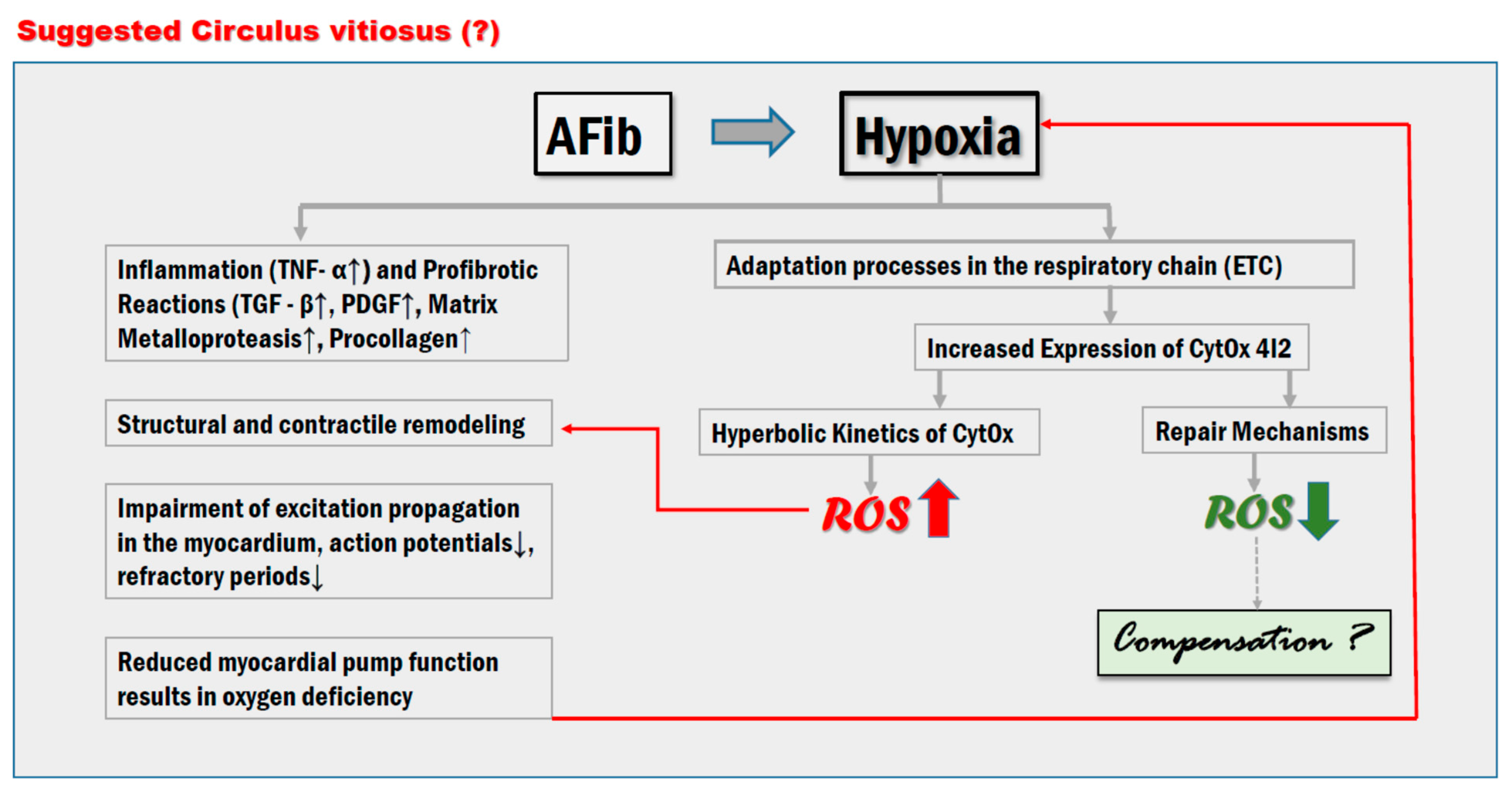
The heart has the maximum number of mitochondria in relation to cell number, and also the maximum amount of CytOx with high catalytic activity. The total capacity of Complex III in the heart is 11 times higher than in the brain. It is therefore evident that the efficiency of electron transfer in the ETC is crucial and directly determines heart function [34]. On the one hand, a change in the molecular structure in the translation of the enzyme is associated with functional changes, such as in the onset of atrial fibrillation and the occurrence of isoform 4I2 (Figure 3) [20,45]. ATP binding and enzymatic inhibition of CytOx is a crucial regulatory process for the energy balance of the tissue in general [7,11,12,30,46] (Figure 4).
The regulation of metabolism is directly linked to the energy status of the tissue. This means the availability of ATP is also controlled by hormones [31]. Due to the proven binding of thyroid hormones (T2, T3, and T4), it can be assumed that this mechanism also has a significant influence on the metabolism of the heart and vice versa, by the activity possibly reflecting the proportional composition of the metabolic pathways in regulation [47,48,49]. Interestingly, T2 appears to reverse the allosteric inhibition of CytOx [50], while the binding of T3 and T4 overall inhibits the activity of the enzyme [49].
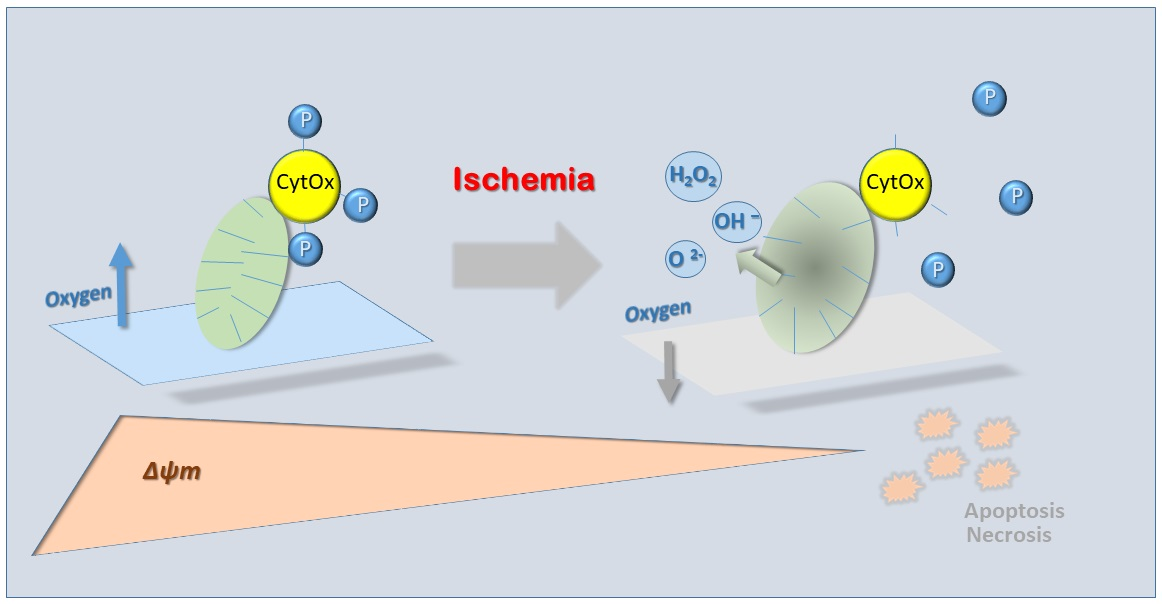
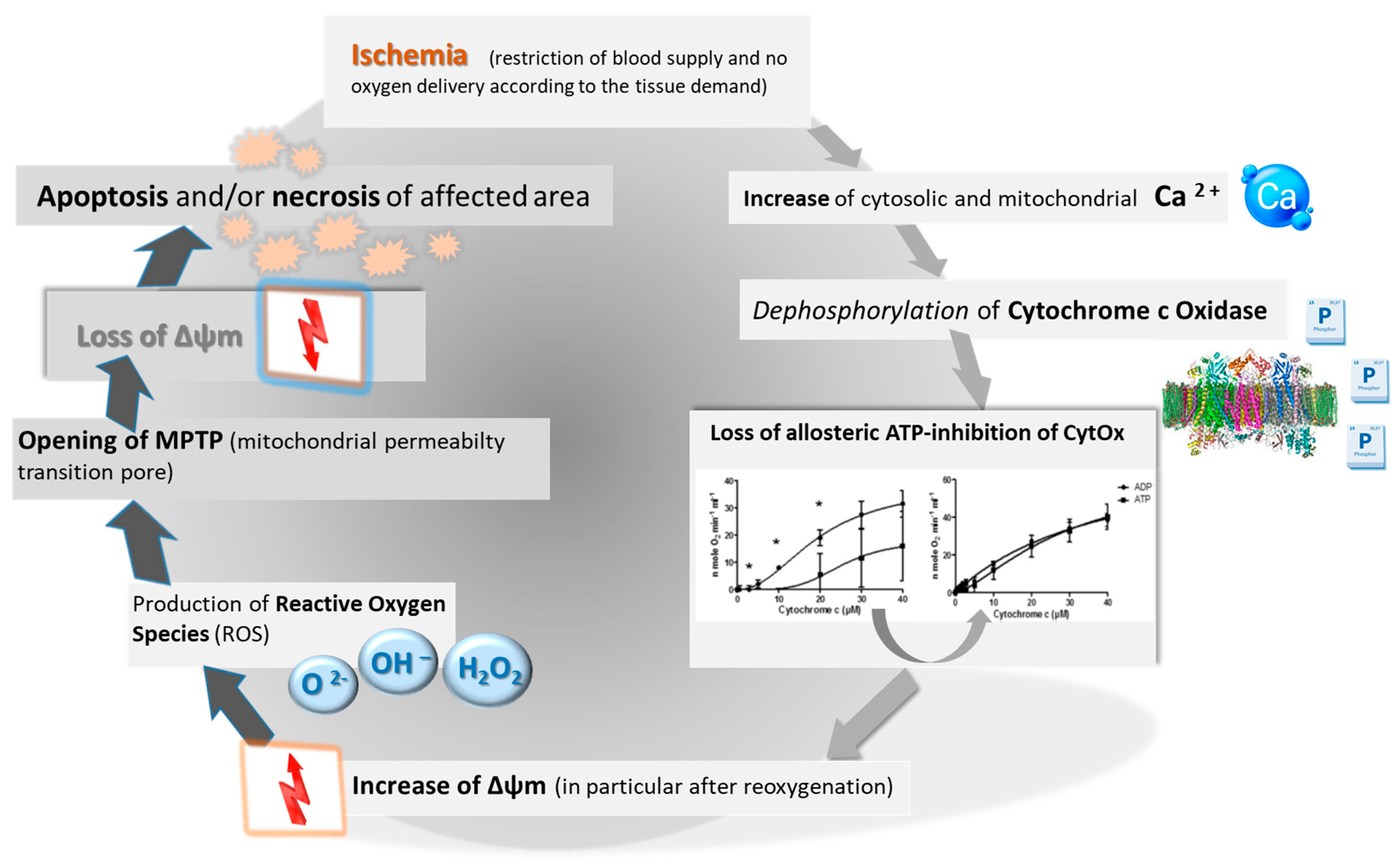
With regard to the beginning of this article, the above explanations should be taken into consideration in terms of the effect of “ischemia” must be viewed in the context of the function of the ETC. Figure 5 shows a diagram developed to summarize the effects of ischemia on the activity states of CytOx. With regard to the “lactate threshold” mentioned in the introduction (Figure 2), it becomes clear that the transitions into a state of oxygen deficiency are fluent and that their pathological consequences depend on the one hand on the tissue’s ability to compensate (oxygen radical scavengers) and on numerous regulatory processes that directly affect complex IV of the ETC. A modern understanding of myocardial protection is therefore not feasible without considering clinical bioenergetics.

7. Bioenergetic Perspective of Ischemia

Optimizing myocardial protection strategies must, of course, be our goal. This includes critically evaluating cardioplegic solutions in terms of their effects and side effects [51], the adjuvant use of drugs [52], and a better understanding of reperfusion [40]. Last but not least, a discussion should be initiated on the extent to which “ischemia” or hypoxia in tissue should be considered a pathological condition, or whether these conditions should rather be understood as a dysfunction of mitochondrial energy supply, which on the one hand is accompanied by massive ROS production and on the other hand can be therapeutically addressed by counterregulating the activity of mitochondrial enzyme complexes. In this context, Hüttemann’s working group reports on the advantage of noninvasive CytOx-inhibitory infrared light therapy for preventing perfusion damage [53].

Funding

This research was funded by the Cardiac Promotion Society Marburg, Germany.

Data Availability Statement

Data are available from the author on request.

Acknowledgments

In memory to my friend Bernhard Kadenbach and our wonderful student Rabia Ramzan, who passed away too soon.

Conflicts of Interest

The author declares no conflict of interest. The author has read and agreed to the published version of the manuscript.

References

  1. Kornberg, A. For the Love of Enzymes; Harvard University Press: Cambridge, MA, USA, 1989; p. 89. [Google Scholar]
  2. Bergman, J. ATP: The Perfect Energy Currency for the Cell. Creat. Res. Soc. Q. 1999, 36, 2–9. [Google Scholar]
  3. Boveris, A.; Chance, B. The mitochondrial generation of hydrogen peroxide. General properties and effect of hyperbaric oxygen. Biochem. J. 1973, 134, 707–716. [Google Scholar] [CrossRef]
  4. Chance, B.; Sies, H.; Boveris, A. Hydroperoxide metabolism in mammalian organs. Physiol. Rev. 1979, 59, 527–605. [Google Scholar] [CrossRef]
  5. Rigoulet, M.; Yoboue, E.D.; Devin, A. Mitochondrial ROS generation and its regulation: Mechanisms involved in H2O2 signaling. Antioxid. Redox Signal. 2011, 14, 459–468. [Google Scholar] [CrossRef]
  6. Lenaz, G.; Genova, M.L. Structure and organization of mitochondrial respiratory complexes: A new understanding of an old subject. Antioxid. Redox Signal. 2010, 12, 961–1008. [Google Scholar] [CrossRef]
  7. Arnold, S. The power of life—Cytochrome c oxidase takes center stage in metabolic control, cell signalling and survival. Mitochondrion 2012, 12, 46–56. [Google Scholar] [CrossRef] [PubMed]
  8. Tsukihara, T.; Aoyama, H.; Yamashita, E.; Tomizaki, T.; Yamaguchi, H.; Shinzawa-Itoh, K.; Nakashima, R.; Yaono, R.; Yoshikawa, S. The whole structure of the 13-subunit oxidized cytochrome c oxidase at 2.8 A. Science 1996, 272, 1136–1144. [Google Scholar] [CrossRef] [PubMed]
  9. Mills, D.A.; Ferguson-Miller, S. Proton uptake and release in cytochrome c oxidase: Separate pathways in time and space? Biochim. Biophys. Acta 1998, 1365, 46–52. [Google Scholar] [CrossRef] [PubMed][Green Version]
  10. Sharma, V.; Jambrina, P.G.; Kaukonen, M.; Rosta, E.; Rich, P.R. Insights into functions of the H channel of cytochrome c oxidase from atomistic molecular dynamics simulations. Proc. Natl. Acad. Sci. USA 2017, 114, E10339–E10348. [Google Scholar] [CrossRef]
  11. Ramzan, R.; Weber, P.; Kadenbach, B.; Vogt, S. Individual biochemical behaviour versus biological robustness: Spotlight on the regulation of cytochrome c oxidase. Adv. Exp. Med. Biol. 2012, 748, 265–281. [Google Scholar]
  12. Kadenbach, B.; Ramzan, R.; Vogt, S. High efficiency versus maximal performance--the cause of oxidative stress in eukaryotes: A hypothesis. Mitochondrion 2013, 13, 1–6. [Google Scholar] [CrossRef] [PubMed]
  13. Vogt, S.; Rhiel, A.; Weber, P.; Ramzan, R. Revisiting Kadenbach: Electron flux rate through cytochrome c-oxidase determines the ATP-inhibitory effect and subsequent production of ROS. Bioessays 2016, 38, 556–567. [Google Scholar] [CrossRef] [PubMed]
  14. Dalmonte, M.E.; Forte, E.; Genova, M.L.; Giuffrè, A.; Sarti, P.; Lenaz, G. Control of respiration by cytochrome c oxidase in intact cells: Role of the membrane potential. J. Biol. Chem. 2009, 284, 32331–32335. [Google Scholar] [CrossRef]
  15. Villani, G.; Attardi, G. In vivo control of respiration by cytochrome c oxidase in human cells. Free Radic. Biol. Med. 2000, 29, 202–210. [Google Scholar] [CrossRef]
  16. Löwe, R. Zur Rolle der Mikrozirkulation beim ischämischen Myokardschaden. Ergebn. Exp. Med. 1987, 48, 167–175. [Google Scholar]
  17. von Ardenne, M. Oxygen Multistep Therapy; Thieme: Stuttgart, Germany; New York, NY, USA, 1990. [Google Scholar]
  18. Gnaiger, E. Oxygen conformance of cellular respiration. A perspective of mitochondrial physiology. Adv. Exp. Med. Biol. 2003, 543, 39–55. [Google Scholar] [CrossRef]
  19. Helling, S.; Vogt, S.; Rhiel, A.; Ramzan, R.; Wen, L.; Marcus, K.; Kadenbach, B. Phosphorylation and kinetics of mammalian cytochrome c oxidase. Mol. Cell. Proteom. 2008, 7, 1714–1724. [Google Scholar] [CrossRef]
  20. Vogt, S.; Ruppert, V.; Pankuweit, S.; Paletta, J.P.J.; Rhiel, A.; Weber, P.; Irqsusi, M.; Cybulski, P.; Ramzan, R. Myocardial insufficiency is related to reduced subunit 4 content of cytochrome c oxidase. J. Cardiothorac. Surg. 2018, 13, 95. [Google Scholar] [CrossRef]
  21. Ramzan, R.; Dolga, A.M.; Michels, S.; Weber, P.; Culmsee, C.; Rastan, A.J.; Vogt, S. Cytochrome c Oxidase Inhibition by ATP Decreases Mitochondrial ROS Production. Cells 2022, 11, 992. [Google Scholar] [CrossRef] [PubMed]
  22. Ramzan, R.; Michels, S.; Weber, P.; Rhiel, A.; Irqsusi, M.; Rastan, A.J.; Culmsee, C.; Vogt, S. Protamine Sulfate Induces Mitochondrial Hyperpolarization and a Subsequent Increase in Reactive Oxygen Species Production. J. Pharmacol. Exp. Ther. 2019, 370, 308–317. [Google Scholar] [CrossRef] [PubMed]
  23. Vogt, S.; Troitzsch, D.; Abdul-Khaliq, H.; Böttcher, W.; Lange, P.E.; Moosdorf, R. Improved myocardial preservation with short hyperthermia prior to cold cardioplegic ischemia in immature rabbit hearts. Eur. J. Cardiothorac. Surg. 2000, 18, 233–240. [Google Scholar] [CrossRef]
  24. Vogt, S.; Troitzsch, D.; Abdul-Khaliq, H.; Moosdorf, R. Heat stress attenuates ATP-depletion and pH-decrease during cardioplegic arrest. J. Surg. Res. 2007, 139, 176–181. [Google Scholar] [CrossRef] [PubMed]
  25. Vogt, S.; Irqsusi, M.; Naraghi, H.; Sattler, A.; Ruppert, V.; Weber, P.; Rhiel, A.; Ramzan, R. Mitochondrial active and relaxed state respiration after heat shock mRNA response in the heart. J. Therm. Biol. 2019, 80, 106–112. [Google Scholar] [CrossRef] [PubMed]
  26. Vogt, S.; Portig, I.; Kusch, B.; Pankuweit, S.; Sirat, A.S.; Troitzsch, D.; Maisch, B.; Moosdorf, R. Detection of anti-hsp70 immunoglobulin G antibodies indicates better outcome in coronary artery bypass grafting patients suffering from severe preoperative angina. Ann. Thorac. Surg. 2004, 78, 883–889. [Google Scholar] [CrossRef] [PubMed]
  27. Kadenbach, B. Regulation of cytochrome c oxidase contributes to health and optimal life. World J. Biol. Chem. 2020, 11, 52–61. [Google Scholar] [CrossRef]
  28. Dobson, G.P.; Himmelreich, U. Heart design: Free ADP scales with absolute mitochondrial and myofibrillar volumes from mouse to human. Biochim. Biophys. Acta 2002, 1553, 261–267. [Google Scholar] [CrossRef][Green Version]
  29. Himmelreich, U.; Dobson, G.P. Detection and quantification of free cytosolic inorganic phosphate and other phosphorus metabolites in the beating mouse heart muscle in situ. NMR Biomed. 2000, 13, 467–473. [Google Scholar] [CrossRef]
  30. Kadenbach, B.; Ramzan, R.; Wen, L.; Vogt, S. New extension of the Mitchell Theory for oxidative phosphorylation in mitochondria of living organisms. Biochim. Biophys. Acta 2010, 1800, 205–212. [Google Scholar] [CrossRef]
  31. Mitchell, P. Coupling of Phosphorylation to Electron and Hydrogen Transfer by a Chemi-Osmotic type of Mechanism. Nature 1961, 191, 144–148. [Google Scholar] [CrossRef]
  32. Nicholls, D.G.; Ferguson, S.J. Bioenergetics 2; Academic Press Limited: London, UK, 1992; pp. 82–87. [Google Scholar]
  33. Wan, B.; Doumen, C.; Duszynski, J.; Salama, G.; Vary, T.C.; LaNoue, K.F. Effects of cardiac work on electrical potential gradient across mitochondrial membrane in perfused rat hearts. Am. J. Physiol. 1993, 265, H453–H460. [Google Scholar] [CrossRef]
  34. Boveris, A.; Costa, L.E.; Cadenas, E.; Poderoso, J.J. Regulation of mitochondrial respiration by adenosine diphosphate, oxygen, and nitric oxide. Methods Enzymol. 1999, 301, 188–198. [Google Scholar] [CrossRef] [PubMed]
  35. Slater, E.C. The mechanism of the conservation of energy of biological oxidations. Eur. J. Biochem. 1987, 166, 489–504. [Google Scholar] [CrossRef]
  36. Padan, E.; Rottenberg, H. Respiratory control and the proton electrochemical gradient in mitochondria. Eur. J. Biochem. 1973, 40, 431–437. [Google Scholar] [CrossRef]
  37. Arnold, S.; Kadenbach, B. Cell respiration is controlled by ATP, an allosteric inhibitor of cytochrome-c oxidase. Eur. J. Biochem. 1997, 249, 350–354. [Google Scholar] [CrossRef]
  38. Arnold, S.; Kadenbach, B. The intramitochondrial ATP/ADP-ratio controls cytochrome c oxidase activity allosterically. FEBS Lett. 1999, 443, 105–108. [Google Scholar] [CrossRef] [PubMed]
  39. Napiwotzki, J.; Kadenbach, B. Extramitochondrial ATP/ADP-ratios regulate cytochrome c oxidase activity via binding to the cytosolic domain of subunit IV. Biol Chem. 1998, 379, 335–339. [Google Scholar] [CrossRef]
  40. Kadenbach, B.; Ramzan, R.; Moosdorf, R.; Vogt, S. The role of mitochondrial membrane potential in ischemic heart failure. Mitochondrion 2011, 11, 700–706. [Google Scholar] [CrossRef] [PubMed]
  41. Vogt, S.; Ramzan, R.; Weber, P.; Troitzsch, D.; Rhiel, A.; Sattler, A.; Irqsusi, M.; Ruppert, V.; Moosdorf, R. Ischemic preconditioning results in an ATP-dependent inhibition of cytochrome c oxidase. Shock 2013, 40, 407–413. [Google Scholar] [CrossRef]
  42. Kadenbach, B.; Ramzan, R.; Vogt, S. Degenerative diseases, oxidative stress and cytochrome c oxidase function. Trends Mol. Med. 2009, 15, 139–147. [Google Scholar] [CrossRef]
  43. Ramzan, R.; Kadenbach, B.; Vogt, S. Multiple Mechanisms Regulate Eukaryotic Cytochrome C Oxidase. Cells 2021, 10, 514. [Google Scholar] [CrossRef]
  44. Sommer, N.; Hüttemann, M.; Pak, O.; Scheibe, S.; Knoepp, F.; Sinkler, C.; Malczyk, M.; Gierhardt, M.; Esfandiary, A.; Kraut, S.; et al. Mitochondrial Complex IV Subunit 4 Isoform 2 Is Essential for Acute Pulmonary Oxygen Sensing. Circ. Res. 2017, 121, 424–438. [Google Scholar] [CrossRef]
  45. Vogt, S.; Ramzan, R.; Cybulski, P.; Rhiel, A.; Weber, P.; Ruppert, V.; Irqsusi, M.; Rohrbach, S.; Niemann, B.; Mirow, N.; et al. The ratio of cytochrome c oxidase subunit 4 isoform 4I1 and 4I2 mRNA is changed in permanent atrial fibrillation. ESC Heart Fail. 2024, 11, 1525–1539. [Google Scholar] [CrossRef]
  46. Benard, G.; Faustin, B.; Passerieux, E.; Galinier, A.; Rocher, C.; Bellance, N.; Delage, J.P.; Casteilla, L.; Letellier, T.; Rossignol, R. Physiological diversity of mitochondrial oxidative phosphorylation. Am. J. Physiol. Cell. Physiol. 2006, 291, C1172–C1182. [Google Scholar] [CrossRef] [PubMed]
  47. Goglia, F.; Lanni, A.; Barth, J.; Kadenbach, B. Interaction of diiodothyronines with isolated cytochrome c oxidase. FEBS Lett. 1994, 346, 295–298. [Google Scholar] [CrossRef]
  48. Goglia, F.; Silvestri, E.; Lanni, A. Thyroid hormones and mitochondria. Biosci. Rep. 2002, 22, 17–32. [Google Scholar] [CrossRef]
  49. Oleynikov, I.P.; Sudakov, R.V.; Azarkina, N.V.; Vygodina, T.V. Direct Interaction of Mitochondrial Cytochrome c Oxidase with Thyroid Hormones: Evidence for Two Binding Sites. Cells 2022, 11, 908. [Google Scholar] [CrossRef]
  50. Arnold, S.; Goglia, F.; Kadenbach, B. 3,5-Diiodothyronine binds to subunit Va of cytochrome-c oxidase and abolishes the allosteric inhibition of respiration by ATP. Eur. J. Biochem. 1998, 252, 325–330. [Google Scholar] [CrossRef]
  51. Irqsusi, M.; Loos, D.; Dielmann, K.; Ramzan, R.; Wulf, H.; Ghazy, T.; Vogt, S.; Rastan, A.J. Influence of cardioplegic solution on incidence of delirium after CABG surgery: Use of Calafiore blood cardioplegia versus HTK-Bretschneider—Solution in a single-center retrospective analysis from 2017 to 2021. J. Card. Surg. 2022, 37, 4670–4678. [Google Scholar] [CrossRef]
  52. Troitzsch, D.; Moosdorf, R.; Hasenkam, J.M.; Nygaard, H.; Vogt, S. Effects of cyclosporine pretreatment on tissue oxygen levels and cytochrome oxidase in skeletal muscle ischemia and reperfusion. Shock 2013, 39, 220–226. [Google Scholar] [CrossRef] [PubMed]
  53. Pham, L.; Arroum, T.; Wan, J.; Pavelich, L.; Bell, J.; Morse, P.T.; Lee, I.; Grossman, L.I.; Sanderson, T.H.; Malek, M.H. Regulation of mitochondrial oxidative phosphorylation through tight control of cytochrome c oxidase in health and disease—Implications for ischemia/reperfusion injury, inflammatory diseases, diabetes, and cancer. Redox Biol. 2024, 78, 103426. [Google Scholar] [CrossRef] [PubMed]
Figure 1. Calculated decrease in oxygen partial pressure (ΔPO2) in a myocardial cylinder supplied by a central capillary (according to Krogh, modified by Löwe). Even with myocardial dysfunction leading to a doubling of oxygen consumption, hypoxic zones appear in the periphery of the supplied tissue cylinder. The hatched zone indicates the capillary reserve area. The dotted line indicates the mean oxygen pressure in the capillary. A: oxygen consumption in the myocardium, R: radius of the supplied tissue cylinder, K: constant according to Henquell, KD: diffusion coefficient for O2 at 37 °C. Original illustration by Löwe (1987) Courtesy of Econ-Ullstein-List Verlag GmbH & Co. KG, Berlin, Germany [16].
Clinbioenerg 02 00003 g001
Figure 2. Calculated oxygen partial pressures in tissue as a function of distance r from the center of the capillary. With increasing distance from the center of the capillary, an oxygen deficit may occur, which can lead to a decrease in the rate of energy metabolism or a switch from aerobic to anaerobic glycogenolysis, even under normal myocardial conditions. The calculation was performed for a diffusion coefficient (kDO2) of 3 × 10⁻⁵ and 9 × 10⁻⁶ cm2/sec and an O2 consumption of 10 mL/100 g × min, or 20 and 5 mL/100 g × min. Illustration from: v. Ardenne (1990) Courtesy of Thieme Verlag [17].
Clinbioenerg 02 00003 g002
Figure 3. Atrial Fibrillations (AFib) cause relative hypoxia. This triggers inflammatory and profibrotic processes, which are mediated via various signaling pathways, resulting in structural remodeling. In turn, this leads to impaired excitation propagation in the myocardium, shortened AP duration, and reduced refractory period. The cardiac output is reduced, resulting in oxygen deprivation (of the myocardium). Parallel to these processes, adaptation processes take place in the respiratory chain. This leads to increased expression of CytOx 4I2. This results either in hyperbolic kinetics with increased oxidative stress and, in return, increased remodeling, OR the switch represents a repair mechanism of the myocardium, which potentially interrupts the vicious circle and improves the bioenergetic situation of the myocardium. A suggestion according [45].
Clinbioenerg 02 00003 g003
Figure 4. In vitro polarographic measurements of CytOx kinetics showing the inhibitory effect of ATP: For kinetic measurements of CytOx activity, the oxygen measurement chamber was filled at 25 °C and standard atmospheric pressure (101.32 kPa) with a kinetic measurement buffer (250 mM sucrose, 10 mM HEPES neutralized with KOH to pH 7.2, 5 mM MgSO4, 0.2 mM EDTA, 5 mM KH2PO4, 0.5% fatty acid-free BSA). 5 µL of mitochondrial suspension are added to the measurement chamber to a total volume of 0.5 mL of kinetic measurement buffer. The activity of CytOx in mitochondria is measured either directly or in the presence of 5 mM ADP or 5 mM ATP + ATP regeneration system (RS) consisting of 160 U/mL pyruvate kinase (PK) and 10 mM phosphoenolpyruvate (PEP). As an electron donor for cytochrome c, 18 mM ascorbate (neutralized to pH 7.0 with KOH) is added to the mitochondrial sample. The rates of oxygen consumption were recorded using the Oxygraph system to determine CytOx activity, expressed as nmol O2 min−1 mL−1, in the substrate concentration range of 0–40 µM cytochrome c. Diagrams showing kinetic values of CytOx activity compared to cytochrome c concentrations are created using GraphPad Prism software (GraphPad Software 6.06, Inc., La Jolla, CA, USA). Experimental procedures according [21].
Clinbioenerg 02 00003 g004
Figure 5. Concept for a detailed bioenergetic understanding of ischemic tissue damage: Calcium release causes dephosphorylation of CytOx, with consequences for molecular conformation, electron transfer, and thus H+/e stoichiometry. In the state of “active respiration” according to Kadenbach, there is an increase in mitochondrial membrane potential (Δψm) and an amplified release of oxygen radicals. Increased leakage of the mitochondrial membranes results in a loss of energy-rich phosphates and cytochrome c. This is followed by a collapse of the membrane potential and subsequent cell death (* p < 0.05).
Clinbioenerg 02 00003 g005
Disclaimer/Publisher’s Note: The statements, opinions and data contained in all publications are solely those of the individual author(s) and contributor(s) and not of MDPI and/or the editor(s). MDPI and/or the editor(s) disclaim responsibility for any injury to people or property resulting from any ideas, methods, instructions or products referred to in the content.