


Simple Summary
Medium-sized felines have not been as extensively studied as their larger counterparts, despite their crucial ecological role. Thus, understanding their distribution and developing suitable conservation strategies is essential. Between 2022 and 2025, we documented 87 records of four feline species in northern Morelos, Mexico. Additionally, we reported for the first time the presence of the ocelot and jaguarundi in Tepozteco National Park, along with several sightings of the margay near highways and urban zones. We also describe the types of vegetation these species inhabit and analyze the impact of altitude, roads, and urban areas on their presence in three protected natural areas. Our findings indicate that the bobcat predominantly resides at higher altitudes, especially in pine forests, while the margay occupies lower elevations and utilizes a wider range of vegetation types. Although roads and urban areas did not show a significant effect on feline distribution, further information is needed to fully understand how these species respond to human activities in the region.
Abstract
Medium-sized felines play an essential role in ecosystems by contributing to the maintenance of ecological dynamics and the balance of biological communities. However, the available information regarding their biology and ecology is limited compared to that of larger felids. This study documents the presence of four medium-sized feline species in the state of Morelos, Mexico, and characterizes the spatial features associated with the distribution of these species. Between 2022 and 2025, camera traps were deployed in northern Morelos within three Protected Natural Areas. With a total sampling effort of 9641 days, we recorded 87 independent occurrences of medium-sized felines. Records of the bobcat were concentrated at higher altitudes, primarily in pine forests, whereas the number of margay records decreased with increasing altitude. The presence of these felines indicates that suitable habitats for this group persist in northern Morelos. Nonetheless, a significant proportion of these records were located near urban areas and roads, highlighting the necessity for monitoring to assess population status and implement appropriate conservation strategies.
1. Introduction
Worldwide, the Felidae family includes 46 species [1], which face serious conservation issues due to their vulnerability to habitat loss and fragmentation [2,3], hunting, and the loss and reduction in population size of their natural prey [3,4]. According to the IUCN, four species are endangered, 14 species are vulnerable, five are near threatened, and 16 are of least concern [5]. For humans, felids are attractive because of their symbolism and worldview, skill, beauty, and ecological importance [6]. However, these species also pose a threat and cause economic losses to livestock activities, which contributes to the decline in their populations [7,8,9,10].
Felids fulfill various ecological roles in the ecosystems they inhabit [11]. They influence the population dynamics of their prey through direct interaction [12]. They affect the composition, richness, and abundance of animal and plant species with which they interact directly or indirectly through the top-down process [13]. Furthermore, they modify the biogeochemical cycles of ecosystems through their influence on trophic structure [14,15,16]. Given their ecological importance, felids are considered keystone species [17]. They have also been proposed as umbrella species because of their wide-ranging distributions [18], and because of their charisma, they are used as flagship species [19,20]. For these reasons, the presence of felids in ecosystems is highly relevant for land management, the establishment of protected areas, and conservation strategies at different spatial scales [21,22].
Six species of felids inhabit Mexico [23]. The jaguar (Panthera onca) and puma (Puma concolor) are the most studied in the country because they are considered top predators in Mexican ecosystems [24]. In contrast, felines such as the bobcat (Lynx rufus), ocelot (Leopardus pardalis), jaguarundi (Herpailurus yaguaroundi), and margay (Leopardus wiedii) are considered medium-sized mammals (101 g to 10 kg) [25,26]. Despite their ecological importance as mesopredators in natural environments [27,28] and their conservation status under Mexican legislation [29] and internationally on the IUCN Red List [30,31,32,33], they have received comparatively less attention.
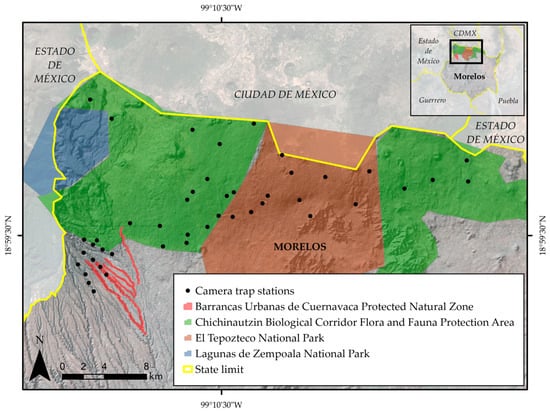
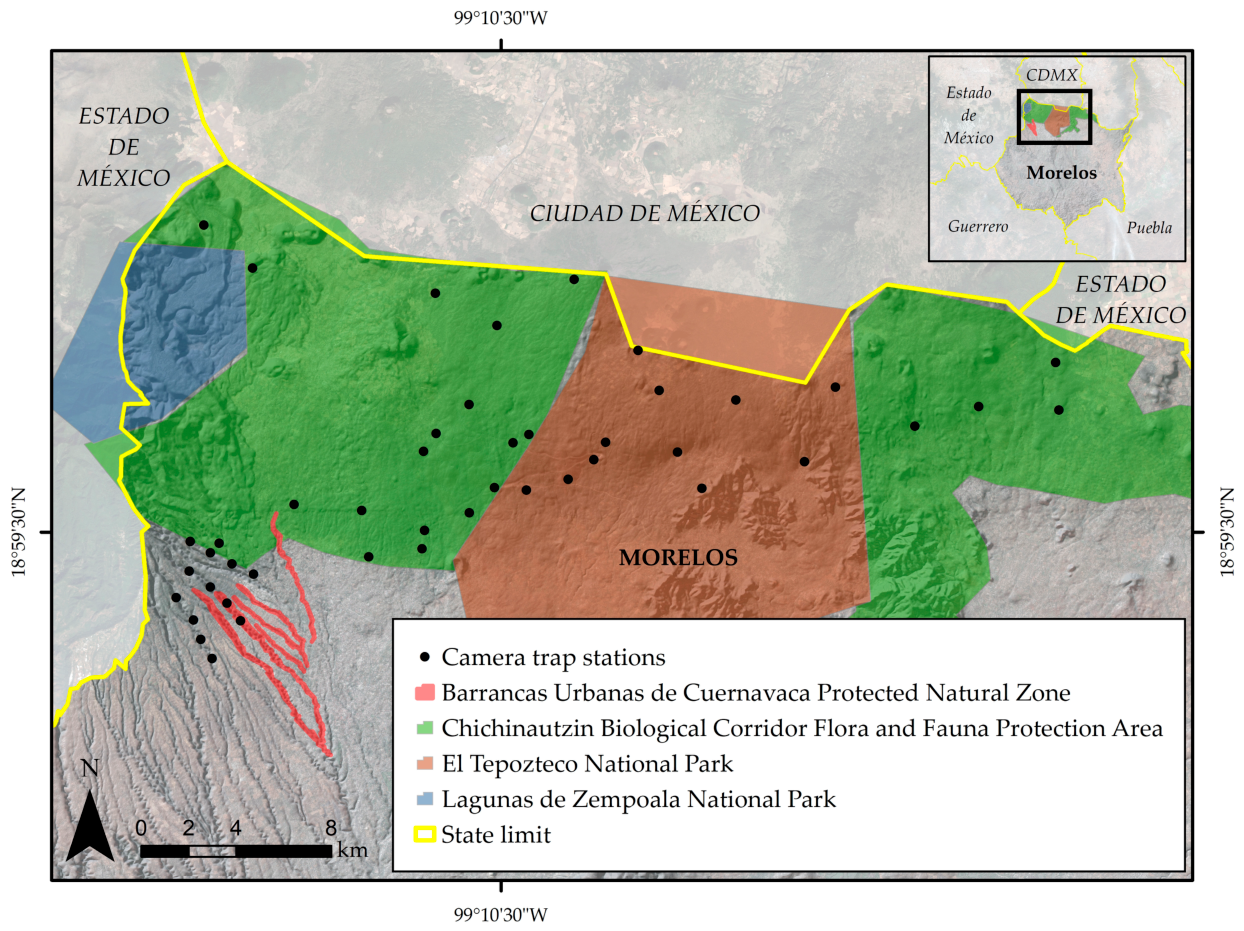
In the northern region of Morelos, a state situated in central Mexico, there exists a network of protected natural areas (PNA) spanning 657.2 km2 (Figure 1), dedicated to safeguarding and preserving the area’s biological diversity [34,35]. However, data on medium-sized felines within these zones are limited to presence records. Within the Chichinautzin Biological Corridor Flora and Fauna Protection Area (hereafter Chichinautzin), sightings of the bobcat [36,37] and the margay [38] have been reported. In contrast, only the bobcat has been observed in Tepozteco National Park (hereafter Tepozteco) [36]. Both the bobcat and the ocelot have been documented in Lagunas de Zempoala National Park [36,39], whereas in Barrancas Urbanas de Cuernavaca Protected Natural Zone (hereafter Barrancas Cuernavaca), there are only anecdotal accounts of the margay. Recently, ecological niche models have identified areas with climatic suitability for the potential distribution of four medium-sized feline species within these protected areas and have highlighted the need for monitoring to support conservation efforts [35].
Figure 1.
Study area. The black dots represent the locations of the camera trap stations placed in three of the four Protected Natural Areas located in the northern part of the state of Morelos. Camera trap stations were not placed in Lagunas de Zempoala National Park due to administrative reasons. The map shows the official names of the states in Spanish.
In this study, our objectives were to document the presence of medium-sized felines in the northern part of Morelos, Mexico, using camera traps, and to analyze the spatial characteristics associated with their distribution in this region through geographic information systems. We aimed to generate information that contributes to designing conservation strategies for medium-sized felines and their habitat, considering the sociogeographic context in the north of the state of Morelos.
2. Materials and Methods
2.1. Study Area
The study was conducted within the Chichinautzin, Tepozteco, and Barrancas Cuernavaca Protected Natural Areas, situated in the northern region of Morelos, Mexico (Figure 1). Tepozteco is located between sections 1 and 2 of Chichinautzin; both PNAs are federally protected and collectively encompass an area of 605.6 km2 [34]. These regions are predominantly characterized by pine and oak forests, with interspersed fragments of fir forest, xerophilous scrubland, grasslands, and transitional associations of tropical dry forest. Due to their proximity to Mexico City and Cuernavaca, they are subject to considerable anthropogenic impact [40]. Barrancas Cuernavaca is a municipal PNA covering 3.7 km2, distinguished by pine, oak, and montane cloud forests, along with some grassland patches. It functions as a habitat and corridor for biodiversity; however, urban expansion and pollution have negatively impacted various species of flora and fauna [34].
2.2. Sampling and Data Collection
The first monitoring period was conducted between August 2022 and October 2023, with 33 camera trap stations located at a minimum distance of 1.5 km in Chichinautzin and Tepozteco. The second monitoring period occurred north of the Barrancas Cuernavaca, where 12 camera trap stations were set up 1 km apart in January 2025 and remained active until October 2025 (Figure 1). In both sampling periods, camera traps were deployed following a random sampling design with equidistant points set 1.5 km apart. Using these coordinates as reference points, cameras were installed considering site-specific characteristics, such as the presence of animal tracks and trails. Twenty-one cameras were deployed in pine–oak forest, nine in pine forest, seven in oak forest, six in montane cloud forest and two in fir forest. Although the Lagunas de Zempoala National Park is located west of Chichinautzin and north of the Barrancas de Cuernavaca, this protected natural area was excluded from monitoring for administrative reasons.
Suntekcam cameras (model HC-801; Hong Kong Suntek International Co., Ltd., Hong Kong, China) were used for photographic recording. They were attached at the base of the trees, positioned 30 to 50 cm above the ground, primarily facing north to avoid direct sunlight. Maximum sensitivity setting was used with a 120° detection angle. These were set to operate 24 h a day, taking one photograph and a 15-s video upon activation, with 5-s intervals between events. The cameras were checked monthly to collect data and ensure proper functioning.
2.3. Data Analysis
The photographs collected were sorted and categorized by species, identified through their unique morphological traits, and with the help of the World Mammal Illustration Guide as a reference [41]. In cases where it was necessary, the identification was carried out with the assistance of two experts in wild felines. A database was created using only independent records, with a 24-h interval between photographic captures of the same species at the same camera trap location. This approach was used to ensure the temporal and spatial independence of the records [42], given that species with low detectability exhibit stable photographic capture intervals within time intervals ranging from 30 min to 24 h [43].
For each independent record, altitude was determined using the Mexican Elevations Continuum 3.0 [44]. Vegetation types were identified through Series VII of land use and vegetation for Mexico [45], Google Earth Pro satellite imagery [46], and vegetation descriptions noted during monitoring to correct any potential inaccuracies due to the scale of the layers and images. Additionally, the distance to urban areas was measured using the basic urban geostatistical area layer [47], while the distance to roads was calculated with the National Road Network [48]. The geographical locations of the records were mapped using ArcGIS 10.8 software [49], and habitat use was characterized by examining the photographic capture rate for each vegetation type, considering habitat use as the use of different types of vegetation to meet their needs at some point in their life cycle [50]. The photographic capture rate was estimated using an alternative formula for the relative abundance index, defined as the number of records of each species per camera trap over 100 trap-nights [51].
Finally, to evaluate the relationship between the photographic capture rate of each feline species and factors such as altitude, distance to urban areas, and distance to roads, we analyzed only the station with feline records. Generalized linear models (GLM) from the Gamma family were used, as they are suitable when the variance increases with the mean [52]. These models were then assessed based on the contribution of the variables and their fit by pairs of candidate models. These analyses were performed in the R 4.3.3 environment [53] using the RStudio 2025.09.2 interface [54].
3. Results
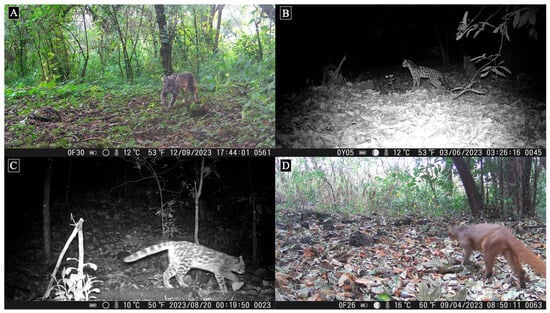
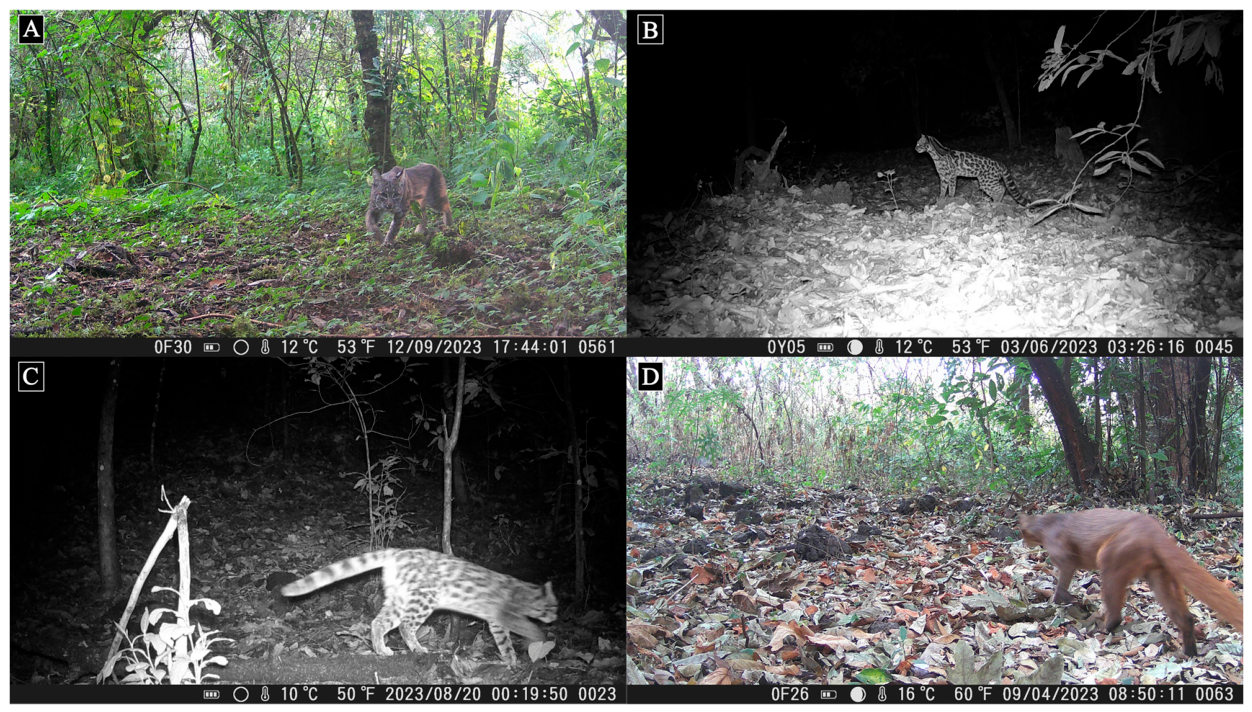
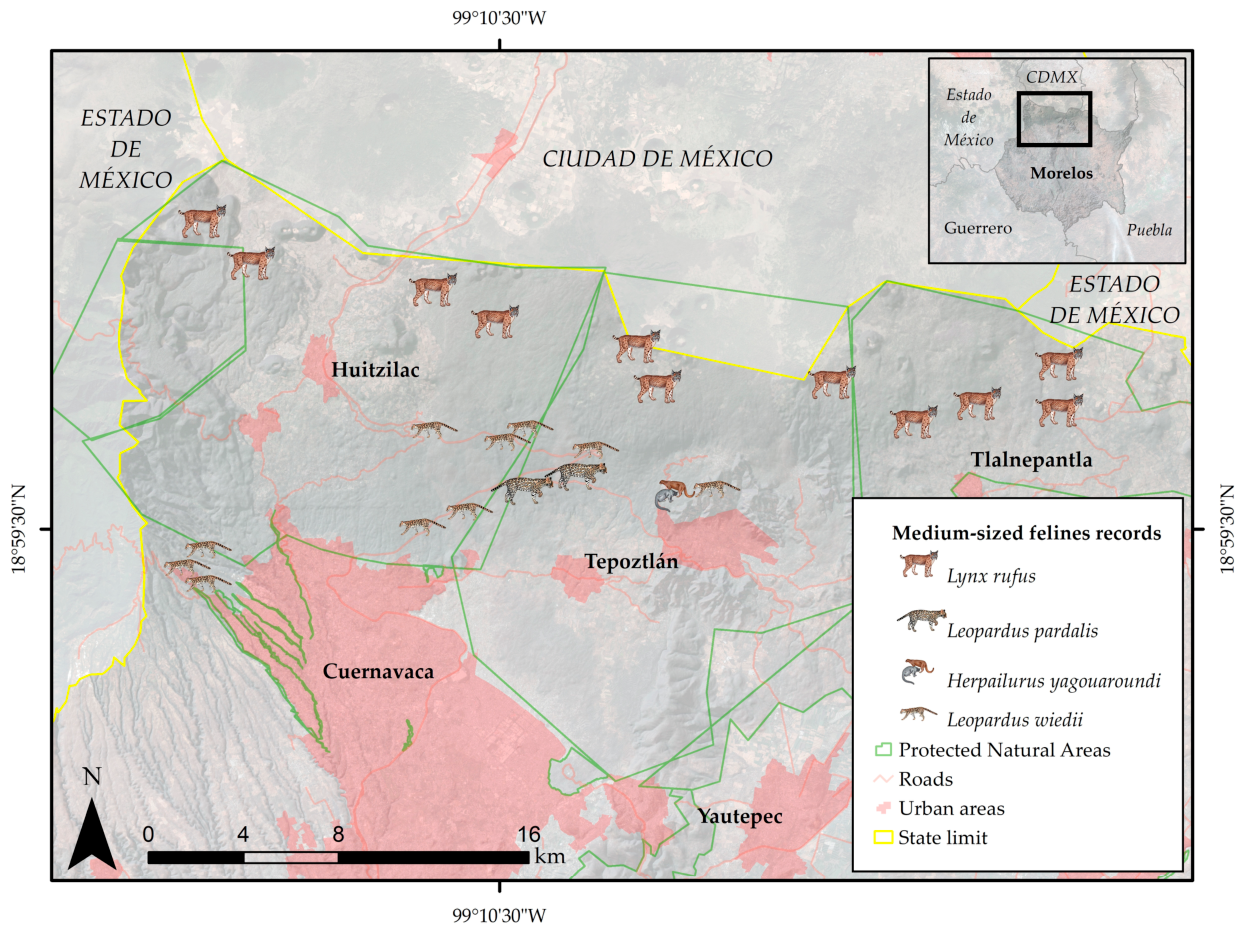
During the first monitoring phase, the sampling effort comprised 6980 trap days, whereas the second phase encompassed 2661 trap days. A total of 56 independent bobcat records were obtained at 11 distinct camera trap locations (Figure 2A) within the Chichinautzin and Tepozteco (Figure 3). For the margay (Figure 2B), 27 records were documented at 10 stations across the three monitored PNA (Figure 3). In the case of the ocelot, three separate records were acquired (Figure 2C) at two stations in the PNET (Figure 3), and for the jaguarundi, a single record (Figure 2D) was captured at one station in the PNET (Figure 3). The average photographic capture rate was 1.8 records/100 trap-nights for the bobcat, 1.45 records/100 trap-nights for the margay, for the ocelot 0.7 records/100 trap-nights, and 0.31 records/100 trap-nights for the jaguarundi.
Figure 2.
Medium-sized felines are recorded in the three protected natural areas (PNA) in the northern part of Morelos. (A) L. rufus, (B) L. wiedii, (C) L. pardalis, (D) H. yagouaroundi.
Figure 3.
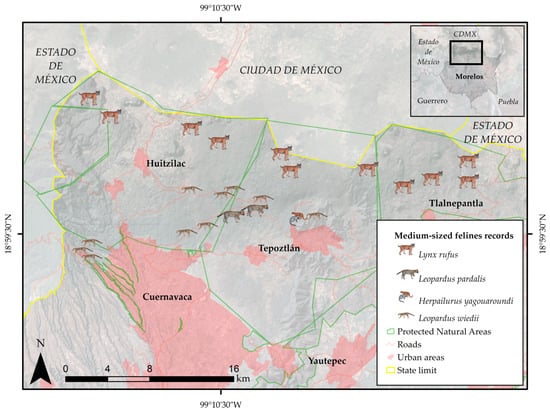
Geographic location of medium-sized felid records in the north of the state of Morelos. The location of the feline’s silhouette [55] is approximate; consult the Supplementary Material. The map shows the official names of the states in Spanish.
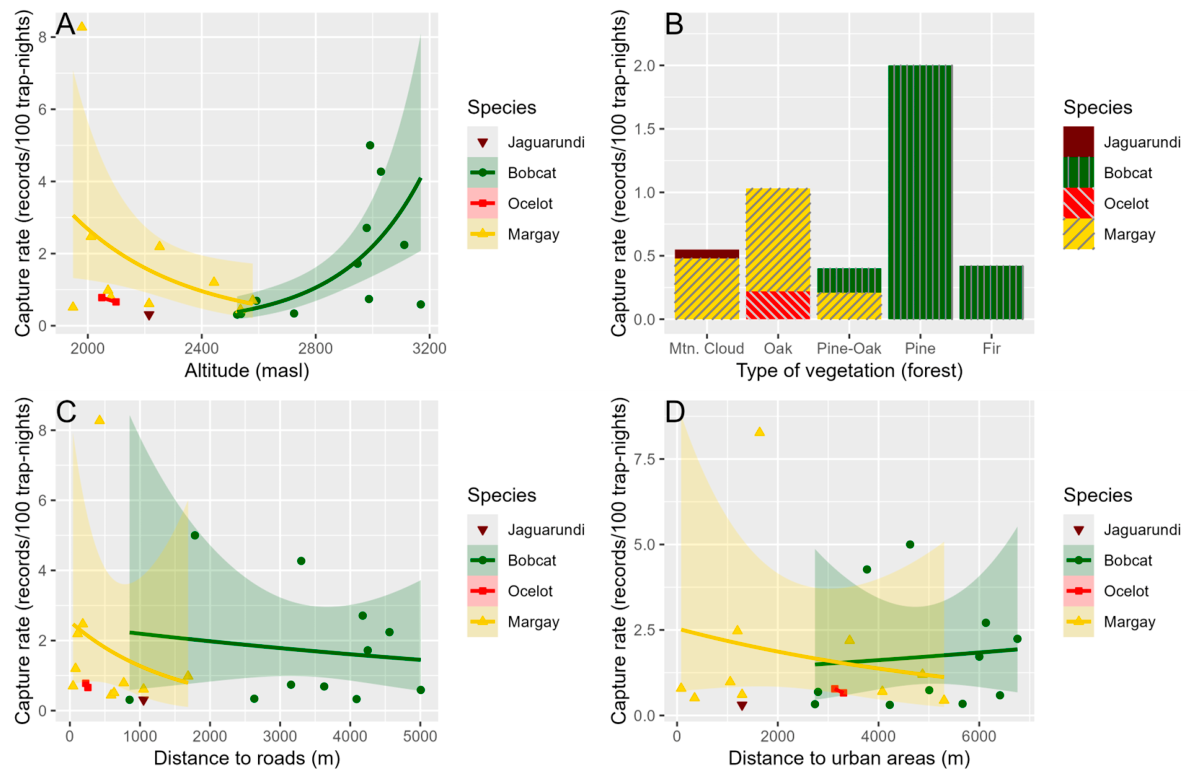
Bobcat observations were recorded at elevations ranging from 2524 to 3169 m. Ocelots were observed at an altitude of 2074 m (±25 m). The sole observation of a jaguarundi occurred at 2215 m, while margays were documented at elevations between 1948 and 2579 (Figure 4A). According to Series VII of land use and vegetation [44] and adjustments made for scale-related errors, 47 bobcat records were obtained in pine forest (2 records/100 trap-nights), eight in pine–oak forest (0.19 records/100 trap-nights), and one in fir forest (0.42 records/100 trap-nights). Ocelots were documented in oak forest (0.22 records/100 trap-nights), while the jaguarundi was observed in montane cloud forest (0.07 records/100 trap-nights). Additionally, 11 margay records were captured in oak forest (0.81 records/100 trap-nights), nine in pine–oak forest associations (0.21 records/100 trap-nights), and seven in montane cloud forest (0.48 records/100 trap-nights; Figure 4B). Regarding their proximity to roads, bobcats were recorded at distances ranging from 851 to 5007 m, ocelots at 241 m (±16 m), jaguarundi at 1051 m, and margays between 45 and 1687 m (Figure 4C). Concerning the distance to urban areas, bobcats were found between 2738 and 6759 m away, ocelots at 3218 m (±86 m), jaguarundi at 1291 m, and margays at distances from 81 to 5302 m (Figure 4D).
Figure 4.
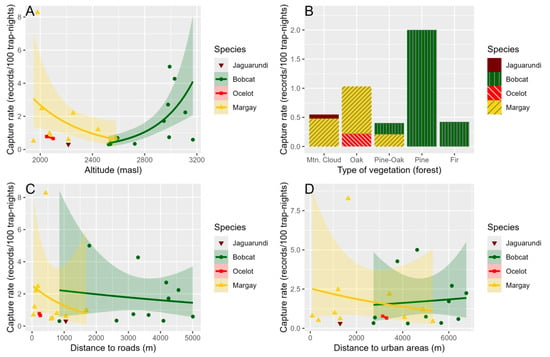
Photographic capture rate of felines associated with spatial characteristics in northern Morelos. (A) Relationship between altitude and the photographic capture rate (model: Gamma GLM with a log link). (B) Photographic capture rate by type of vegetation per species. (C) Relationship between distance to roads and the photographic capture rate (model: Gamma GLM with a log link). (D) Relationship between distance to urban areas and the photographic capture rate per species (model: Gamma GLM with a log link).
Generalized linear models were conducted only for bobcats and margays due to insufficient data for the other two species. In the candidate models, altitude, distance from urban areas, distance from roads, and their interactions with the species were employed as independent variables. The model M10 showed the best fit among all candidate models (Table 1); however, it was discarded due to high collinearity between distance to urban areas and altitude (r = 0.89). Consequently, model M7 was selected with a corrected Akaike Information Criterion (cAIC) of 67.11, a ΔAICc of 0.89, and an Akaike weight (wAICc) of 0.304. Model M7 explains variation in photographic capture rate as a function of altitude, accounting for species-specific responses to this variable. The estimated dispersion parameter was 0.61, indicating no evidence of overdispersion. Visual inspection of residual diagnostic plots indicated an overall acceptable fit, with no major deviations from model assumptions.
Table 1.
Comparison of generalized linear models (GLM) with a Gamma distribution and a log link. The 12 candidate models are presented with their AIC, AICc, ∆AICc, AICc weight, BIC, model parameters, and likelihood ratio tests between nested models. CR = photographic capture rate, dR = distance to roads, dUA = distance to urban areas, Alt = altitude, Sp = species.
According to the selected model, the interaction between altitude and species exhibited a statistically significant effect (p < 0.01; Table 2). For the bobcat, the influence of altitude on the number of records was positive, as described by the equation photographic capture rate = Exp (−10.24 + 0.004 × altitude), applicable between 2524 and 3169 m above sea level, with a standard error of 3.05 for the intercept and 0.001 for the slope. Conversely, for the margay, a negative effect of altitude on the number of records was observed, described by the equation photographic capture rate = Exp (6.12 − 0.003 × altitude), valid between 1948 and 2579 m above sea level, with a standard error of 3.92 for the intercept and 0.002 for the slope.
Table 2.
Results of the selected generalized linear models (GLM) with a Gamma distribution and a log link. Estimates, standard errors, t-values, and p-values are shown.
4. Discussion
Camera trapping proved to be a highly useful method for achieving the stated objective, given the elusive nature of medium-sized felines [56,57]. In total, 87 independent records of medium-sized felines were obtained over three years of monitoring, demonstrating the effectiveness of the method by providing the highest number of wild feline records in Morelos; until now, only 44 records had been obtained using other methods [35]. Furthermore, this study provided the first photographic records from a systematic camera-trap survey of margay, ocelot, and jaguarundi within the PNA Tepozteco and Barrancas Cuernavaca.
The difference in the number of independent photographic records for each feline was notable. The bobcat was photographed 56 times, whereas the jaguarundi was photographed only once. Similarly, the photographic capture rate was minor for the ocelot and jaguarundi with respect to the bobcat. The high number of bobcat records may be due to the Nearctic affinity of the species [58], as the camera trap stations were set above 1800 m above sea level and the records for this feline were concentrated above the altitudinal threshold of 2524 m, where temperate forests dominate [59]. Additionally, statistical analyses support this observation, as the photographic capture rate increases with altitude. However, in the state of Morelos, its presence has also been reported in low deciduous forests [60,61], which demonstrates the bobcat’s adaptability to establish itself in different habitats [2,62].
We found 27 independent records of margay at altitudes ranging from 1948 to 2579 m. Unlike the bobcat, statistical analyses indicate that as altitude increases, the photographic capture rate of margay decreases. Most previous records for the species in Morelos were in the south at elevations below 1600 m [60,61,63], although its presence has also been reported at 3000 m [38]. Taken together, the information from all records suggests that margay can inhabit various altitudes in Morelos, from the temperate forests in the north to the low deciduous forest.
Only three photographic records were obtained for ocelot, and only one for jaguarundi. Records of these two species in Morelos are scarce [39,60,64]. In the case of ocelot, this may be due to their low abundance, as has been reported in western Mexico [65], where they have disappeared from most of their historical range [3]. Meanwhile, the few records of jaguarundi could be related to their low detectability [66,67,68]. For this reason, the photographic capture rate was low for both species.
Altitudinally, the records of bobcats and margays overlapped between 2500 and 2600 m (Figure 4A), at which point the photographic capture rate decreased for both species. Patterns of geographical segregation have been observed between the occurrence of bobcats and margays [69]. This is likely explained by the different habitat requirements arising from the intrinsic characteristics of the two species [70], as felines with arboreal habits and irregular spot patterns, such as margay, are associated with tropical environments and dense vegetation cover [71,72]. In contrast, the bobcat has a Nearctic affinity, and although it also uses forested areas, it is usually associated with open habitats [3,73,74].
The distribution of felines is generally associated with conserved forests [18,75]. Our results are consistent with this evidence, as 77 feline records (89%) were found in the primary vegetation of pine, pine–oak, montane cloud, and fir forests. Only ten photographic records (11%) were found in vegetation with some degree of disturbance (secondary tree and shrub vegetation in pine forests).
The bobcat was present exclusively in pine forests, with some records in the fir forest. Margay records were found in oak forest, montane cloud forest, and pine–oak/oak–pine associations. The ocelot was found in oak forests, and the jaguarundi was photographed in montane cloud forests. The bobcat’s use of pine forest matches the habitat preferences previously reported for the species, as its distribution has been linked to open areas with a high abundance of lagomorphs and rodents [3]. In the study area, pine forests are associated with bunchgrasses inhabited by three species of lagomorphs, which the bobcat feeds on throughout the year [37].
The margay was documented in three vegetation types, though not exclusively in any of them. Ocelot records were associated with oak forests, jaguarundi with montane cloud forests, and bobcat with pine–oak forests. These observations indicate that the margay is likely to coexist with at least one of the three felines in some areas of its distribution. However, on a more detailed habitat scale, the coexistence of these species may hinge on several factors that warrant further investigation. For instance, margays rely on dense forests [76], bobcats favor open areas [3], ocelots are drawn to tropical ecosystems [3], and jaguarundis are adaptable to human-altered environments [77].
The higher photographic capture rate and number of records across camera traps provide evidence that the bobcat uses pine forests in the study area. In contrast, although the margay showed a higher capture rate in the oak forest, its detection was limited to a single camera trap, which prevents us from concluding that this habitat is more intensively used by the species. Low and spatially restricted detection rates are common for margays and may reflect limitations of using camera trapping rather than true habitat preference. Consequently, our results should be interpreted with caution, and additional monitoring is needed to better assess habitat use by both felines [42].
Owing to the dependence of felines on well-preserved environments, habitat loss and fragmentation are among the main threats faced by them [2]. However, it is unclear how they respond to these effects [11,27]. The increase in urban areas and expansion of agricultural fields have transformed the natural ecosystems of Morelos [78]. This is reflected in the short distances at which records were obtained relative to urban areas in northern Morelos, which can increase conflicts between wildlife and humans [8]. Although statistically there is no relationship between the photographic capture rate of the margay and jaguarundi and the distance to urban areas, there were records of both felines that were close to these areas, less than 1.3 km away. The presence of jaguarundi is associated with ecotones between forested and open areas, and it may even benefit from habitat transformation [79]. Meanwhile, margays are associated with dense vegetation and well-preserved environments [2,76]. Therefore, it is necessary to analyze how margay responds to habitat loss and fragmentation in northern Morelos to establish conservation strategies for the species and its habitat, given that the available information is insufficient [2,27]. For the bobcat and ocelot, records were obtained at distances greater than 2.7 km from urban areas.
Roads are recognized as significant contributors to socioeconomic progress [80], yet their development poses numerous negative impacts on wildlife [81], such as the roadkill of felines [82]. Generalized linear models did not reveal any evidence that these infrastructures influenced the photographic capture rate of felines in northern Morelos. Apart from the bobcat, the three medium-sized felines were observed less than 1.1 km from the roads. Despite felines being known for their high sensitivity to roads and human disturbances [82,83,84], it is remarkable that the margay was found 45 m from a road and the ocelot 482 m from a road. Although these sightings were close to a road, no roadkill incidents have been documented in the region [85]. While the data collected does not clarify whether the proximity to roads is due to the species’ adaptability or prey availability [86,87], their presence is likely because the vegetation near these roads is the only habitat available due to human pressures. For example, the camera-trap station where 11 margay records were obtained is located 424 m from roads and 1640 m from urban areas; therefore, the oak forest available in this area represents the limited remaining habitat for the species. However, this hypothesis requires validation through systematic monitoring.
5. Conclusions
This study constitutes a regional assessment and a preliminary spatial description of the distribution of medium-sized felines and provides an initial inference of habitat use by these in the temperate forest of Morelos. Additionally, it reveals different altitudinal trends between bobcats and margays. However, to better understand how these species interact, it is necessary to analyze other factors such as prey availability, vegetation density and quality, human foot traffic, and interspecific competition. It emphasizes the critical need to preserve native vegetation in the northern region of Morelos and highlights the necessity of restoring areas that have experienced some level of alteration, such as secondary vegetation, with felines serving as key, umbrella, and flagship species. This initiative should be implemented in collaboration with environmental authorities across various government levels, while also considering the social dimension, which is essential for achieving successful conservation outcomes. Although statistical analyses do not confirm a significant effect of distance from urban areas and roads, exploratory analyses show a trend of pressure exerted on the habitats of these medium-sized felines. Although there is limited data on how these species tolerate habitat changes, their closeness to human populations may heighten human–wildlife conflicts. Consequently, ongoing monitoring of these species is crucial to enhance our understanding of their ecology, distribution, and population dynamics in the area. Additionally, incorporating socio-environmental studies can aid in mitigating unplanned urban expansion and improving local communities’ perceptions of these felines, with the aim of formulating comprehensive conservation strategies for these vital species within ecosystems.
Supplementary Materials
The following supporting information can be downloaded at: https://www.mdpi.com/article/10.3390/wild3020025/s1. Database S1: Records of felines in the north of the state of Morelos; Script S1: Statistical analysis.
Author Contributions
Conceptualization, J.A.G. and J.M.U.-V.; methodology, J.A.P., J.R.V.C., L.G.Á.-T., K.E.S.M., Y.M., J.E.G.D. and J.M.U.-V.; software, J.M.U.-V.; validation, J.A.G., L.G.Á.-T. and J.M.U.-V.; formal analysis, J.M.U.-V. and J.A.G.; investigation, J.A.P., J.R.V.C., L.G.Á.-T., K.E.S.M., Y.M., J.E.G.D. and J.M.U.-V.; resources, J.A.G., J.M.U.-V., L.G.Á.-T., J.A.P. and J.R.V.C.; data curation, K.E.S.M., Y.M. and J.E.G.D.; writing—original draft preparation, J.M.U.-V. and J.A.P.; writing—review and editing, J.A.G.; visualization, J.M.U.-V.; supervision, J.A.G. and J.M.U.-V.; project administration, J.A.G.; funding acquisition, J.A.G. All authors have read and agreed to the published version of the manuscript.
Funding
This research was partially funded by the National Commission of Natural Protected Areas for their partial funding of the monitoring project PROREST/ETM/43/2022.
Institutional Review Board Statement
Not applicable.
Informed Consent Statement
Not applicable.
Data Availability Statement
The data presented in this study are available in the Supplementary Material.
Acknowledgments
We express our gratitude to the National Commission of Natural Protected Areas. We also extend our thanks to the students and members of the Fauna Monitoring and Conservation Laboratory at the Faculty of Biological Sciences for their invaluable assistance with fieldwork. Furthermore, we acknowledge the communal and ejidal authorities for granting us the necessary permissions to conduct the fieldwork.
Conflicts of Interest
The authors declare no conflicts of interest. The funder had no role in the design of the study; in the collection, analyses, or interpretation of data; in the writing of the manuscript; or in the decision to publish the results.
References
- Mammal Diversity Database. Version 2.4. 2026. Available online: https://zenodo.org/records/18135819 (accessed on 6 January 2026).
- Sunquist, M.E.; Sunquist, F. Wild Cats of the World, 1st ed.; University of Chicago Press: Chicago, IL, USA, 2002. [Google Scholar]
- Macdonald, D.W.; Loveridge, A. Biology and Conservation of Wild Felids, 1st ed.; Oxford University Press: Oxford, UK, 2010. [Google Scholar]
- Karanth, K.U.; Chundawat, R.S.; Nichols, J.D.; Kumar, N.S. Estimation of tiger densities in the tropical dry forests of Panna, Central India, using photographic capture–recapture sampling. Anim. Conserv. 2004, 7, 285–290. [Google Scholar] [CrossRef] [Scilit]
- The IUCN Red List of Threatened Species. Version 2025-2. Available online: https://www.iucnredlist.org (accessed on 6 January 2026).
- Valencia-Herverth, J.; Gutiérrez-Santillán, T.; Valencia-Herverth, R.; Estrada-Castillón, E. The human-feline relationship from a biocultural perspective: Perception, knowledge and traditional use of the six Mexican species, in the state of Hidalgo, Mexico. Ethniobiol. Conserv. 2025, 14, 1–19. [Google Scholar] [CrossRef] [Scilit]
- Bruskotter, J.T.; Vucetich, J.A.; Manfredo, M.J.; Karns, G.R.; Wolf, C.; Ard, K.; Carter, N.H.; López-Bao, J.V.; Chapron, G.; Gehrt, S.D.; et al. Modernization, risk, and conservation of the world’s largest carnivores. BioScience 2017, 67, 646–655. [Google Scholar] [CrossRef] [Scilit]
- Lozano, J.; Olszańsk, A.; Morales-Reyes, Z.; Castro, A.A.; Malo, A.F.; Moleón, M.; Sánchez-Zapata, J.A.; Cortés-Avizanda, A.; von Wehrden, H.; Dorresteijn, I.; et al. Human-carnivore relations: A systematic review. Biol. Conserv. 2019, 237, 480–492. [Google Scholar] [CrossRef] [Scilit]
- Pinto-Marroquin, M.; Castaño-Uribe, C.; Pérez-Torres, J.; Aristizabal, J.F.; Santos-Fita, D.; Chaparro, A.R.; Serio-Silva, J.C. Potential conflict as an opportunity for coexistence: Cosmovision and attitudes of Arhuaco people towards jaguars. Ethnobiol. Conserv. 2022, 11, 21. [Google Scholar] [CrossRef] [Scilit]
- Gordillo-Chávez, E.J.; Villanueva-García, C.; Melo-Guerrero, E.; Hidalgo-Mihart, M.G.; Lizana-Avia, M.; Rodríguez-López, F.; Colino-Rabanal, V.J. Rancher viewpoint diversity in human–wildlife coexistence management: The case of jaguar–livestock interaction in the region of Calakmul, Mexico. People Nat. 2025, 7, 67–80. [Google Scholar] [CrossRef] [Scilit]
- Tossens, S.; Drouilly, M.; Lhoest, S.; Vermeulen, C.; Doucet, J.L. Wild felids in trophic cascades: A global review. Mamm. Rev. 2025, 55, e12358. [Google Scholar] [CrossRef] [Scilit]
- Malhi, Y.; Doughty, C.E.; Galetti, M.; Smith, F.A.; Svenning, J.C.; Terborgh, J.W. Megafauna and ecosystem function from the Pleistocene to the Anthropocene. Proc. Natl. Acad. Sci. USA 2016, 113, 838–846. [Google Scholar] [CrossRef] [Scilit]
- Ritchie, E.G.; Johnson, C.N. Predator interactions, mesopredator release and biodiversity conservation. Ecol. Lett. 2009, 12, 982–998. [Google Scholar] [CrossRef] [Scilit]
- Roemer, G.W.; Gompper, M.E.; Van Valkenburgh, B. The ecological role of the mammalian mesocarnivore. BioScience 2009, 59, 165–173. [Google Scholar] [CrossRef] [Scilit]
- Ripple, W.J.; Estes, J.A.; Beschta, R.L.; Wilmers, C.C.; Ritchie, E.G.; Hebblewhite, M.; Wirsing, A.J.; Berger, J.; Elmhagen, B.; Letnic, M.; et al. Status and ecological effects of the world’s largest carnivores. Science 2014, 343, 1241484. [Google Scholar] [CrossRef] [Scilit]
- Hoeks, S.; Huijbregts, M.A.; Boonman, C.C.; Faurby, S.; Svenning, J.C.; Harfoot, M.B.; Santini, L. Shifts in ecosystem equilibria following trophic rewilding. Divers. Distrib. 2023, 29, 1512–1526. [Google Scholar] [CrossRef] [Scilit]
- Tensen, L. Biases in wildlife and conservation research, using felids and canids as a case study. Glob. Ecol. Conserv. 2018, 15, e00423. [Google Scholar] [CrossRef] [Scilit]
- Bou, N.; Cuyckens, G.A.E.; González, E.M.; Meneghel, M. Conservation planning in Uruguay based on small felids (Leopardus spp.) as umbrella species. Stud. Neotrop. Fauna Environ. 2019, 54, 169–180. [Google Scholar] [CrossRef] [Scilit]
- Smith, A.M.; Sutton, S.G. The role of a flagship species in the formation of conservation intentions. Hum. Dimens. Wildl. 2008, 13, 127–140. [Google Scholar] [CrossRef] [Scilit]
- Monterrubio-Rico, T.C.; Charre-Medellín, J.F.; Zavala-Paramo, M.G.; Cano-Camacho, H.; Pureco-Rivera, M.Q.; León-Paniagua, L. Evidencias fotográfica, biológica y genética de la presencia actual de jaguaroundi (Puma yagouaroundi) en Michoacán, México. Rev. Mex. Biodivers. 2012, 83, 825–833. [Google Scholar] [CrossRef] [Scilit]
- Albert, C.; Luque, G.M.; Courchamp, F. The twenty most charismatic species. PLoS ONE 2018, 13, e0199149. [Google Scholar] [CrossRef] [Scilit] [PubMed]
- Ashrafzadeh, M.R.; Khosravi, R.; Adibi, M.A.; Taktehrani, A.; Wan, H.Y.; Cushman, S.A. A multi-scale, multi-species approach for assessing effectiveness of habitat and connectivity conservation for endangered felids. Biol. Conserv. 2020, 245, 108523. [Google Scholar] [CrossRef] [Scilit]
- Secretaría de Medio Ambiente y Recursos Naturales (SEMARNAT); Comisión Nacional de Áreas Naturales Protegidas (CONANP). Programa de Acción Para la Conservación de las Especies en Riesgo. Ocelote (Leopardus pardalis), Margay (Leopardus wiedii) y Jaguarundi (Puma yagouaroundi), 1st ed.; Secretaría de Medio Ambiente y Recursos Naturales (SEMARNAT); Comisión Nacional de Áreas Naturales Protegidas (CONANP): Ciudad de Mexico, Mexico, 2018. [Google Scholar]
- Báez, D.J.G.; Luja, V. Ausencia de depredadores tope: Sin pistas de jaguares (Panthera onca) ni pumas (Puma concolor) en Punta de Mita, Nayarit, México. Rev. Bio Cienc. 2025, 12, e1850. [Google Scholar] [CrossRef] [Scilit]
- Ceballos, G.; Oliva, G. Los Mamíferos Silvestres de México; Comisión Nacional para el Conocimiento y Uso de la Biodiversidad: Ciudad de México, Mexico; Fondo de Cultura Económica: Ciudad de México, Mexico, 2005. [Google Scholar]
- Ruiz-Gutiérrez, F.; Ávila-Nájera, D.M.; Chávez, C.; Sánchez-Rojas, G. Spatial and temporal coexistence of medium-sized felines and their potential preys in Sierra Madre del Sur of Guerrero, México. Therya 2023, 14, 319–328. [Google Scholar] [CrossRef] [Scilit]
- Zanin, M.; Palomares, F.; Brito, D. What we (don’t) know about the effects of habitat loss and fragmentation on felids. Oryx 2015, 49, 96–106. [Google Scholar] [CrossRef] [Scilit]
- Silva-Magaña, N.; Santos-Moreno, A. El efecto pardalis: Su variación espacial y temporal. Rev. Mex. Biodivers. 2020, 91, e913201. [Google Scholar] [CrossRef] [Scilit]
- Secretaría de Medio Ambiente y Recursos Naturales (SEMARNAT). Proyecto de Norma Oficial Mexicana PROY-NOM-059-SEMARNAT-2025, Protección Ambiental, Especies Nativas de México de Flora y Fauna Silvestres, Categorías de Riesgo y Especificaciones Para su Inclusión, Exclusión o Cambio. Lista de Especies en Riesgo. Available online: https://www.dof.gob.mx/nota_detalle.php?codigo=5754858&fecha=14/04/2025#gsc.tab=0 (accessed on 16 January 2026).
- Caso, A.; De Oliveira, T.G.; Carvajal, S.V. The IUCN Red List of Threatened Species. Herpailurus yagouaroundi. Available online: https://www.iucnredlist.org/species/9948/50653167 (accessed on 16 January 2026). [CrossRef] [Scilit]
- De Oliveira, T.G.; Paviolo, A.; Schipper, J.; Bianchi, R.; Payan, E.; Carvajal, S.V. Leopardus wiedii. The IUCN Red List of Threatened Species. Available online: https://www.iucnredlist.org/species/11511/50654216 (accessed on 16 January 2026). [CrossRef] [Scilit]
- Paviolo, A.; Crawshaw, P.; Caso, A.; De Oliveira, T.G.; Lopez-Gonzalez, C.A.; Kelly, M.; De Angelo, C.; Payan, E. Leopardus pardalis (Ocelot). The IUCN Red List of Threatened Species. Available online: https://www.iucnredlist.org/species/11509/97212355 (accessed on 16 January 2026). [CrossRef] [Scilit]
- Kelly, M.; Morin, D.; Lopez-Gonzalez, C.A. Lynx rufus. The IUCN Red List of Threatened Species. Available online: https://www.iucnredlist.org/species/12521/50655874 (accessed on 16 January 2026). [CrossRef] [Scilit]
- González-Flores, L.; Contreras-MacBeath, T. Áreas Naturales Protegidas. In La Biodiversidad de Morelos. Estudio de Estado, 2nd ed.; Comisión Nacional para el Conocimiento y Uso de la Biodiversidad, Comisión Estatal de Biodiversidad y Secretaría de Desarrollo Sustentable, Eds.; Comisión Nacional para el Conocimiento y Uso de la Biodiversidad (CONABIO): Mexico City, Mexico, 2020; Volume 3, pp. 255–279. [Google Scholar]
- Bonilla, E.A.C.; Aparicio, P.J.; Guerrero, E.J.A.; Uriostegui-Velarde, J.M. Potential distribution of medium-sized felines in Morelos: Climate suitability and coverage in protected natural areas. Therya 2025, 17, 17–30. [Google Scholar] [CrossRef] [Scilit]
- Monroy-Vilchis, O.; Velázquez, A. Distribución regional y abundancia del lince. Cienc. ErgoSum. 2002, 9, 292–300. Available online: https://cienciaergosum.uaemex.mx/article/view/7215 (accessed on 16 January 2026).
- Uriostegui-Velarde, J.M.; Vera-García, Z.S.; Ávila-Torresagatón, L.G.; Rizo-Aguilar, A.; Hidalgo-Mihart, M.G.; Guerrero, J.A. Importancia del conejo zacatuche (Romerolagus diazi) en la dieta del coyote (Canis latrans) y del lince (Lynx rufus). Therya 2015, 6, 609–624. [Google Scholar] [CrossRef] [Scilit]
- Aranda, M.; Valenzuela, D. Registro notable de margay (Leopardus wiedii) en el bosque mesófilo de montaña de Morelos, México. Rev. Mex. Biodivers. 2015, 86, 1110–1112. [Google Scholar] [CrossRef] [Scilit]
- Aranda, M.; Botello, F.; Martínez-Meyer, E.; Pineda, A. Primer registro de ocelote (Leopardus pardalis) en el Parque Nacional Lagunas de Zempoala, Estado de México y Morelos, México. Rev. Mex. Biodivers. 2014, 85, 1300–1302. [Google Scholar] [CrossRef] [Scilit]
- Pulido-Esparza, V.A.; Espejo-Serna, A.; López-Ferrari, A.R. Las monocotiledóneas nativas del corredor biológico Chichinautzin. Acta Bot. Mex. 2009, 86, 9–38. [Google Scholar] [CrossRef] [Scilit]
- Burgin, C.J.; Wilson, D.E.; Mittermeier, R.A.; Rylands, A.B.; Lacher, T.E.; Sechrest, J.W. Illustrated Checklist of the Mammals of the World, 1st ed.; Lynx Nature Books: Barcelona, Spain, 2020. [Google Scholar]
- Harmsen, B.J.; Saville, N.; Foster, R.J. Long-term monitoring of margays (Leopardus wiedii): Implications for understanding low detection rates. PLoS ONE 2021, 16, e0247536. [Google Scholar] [CrossRef] [Scilit]
- da Silva, K.C.; Rodrigues-Filho, C.A.D.S.; Castro, A.B.; Rosa, D.C.P.; Brocardo, C.R.; Fadini, R.F.; Rosa, C.A.D. Biodiversity assessments vary with time-to-independence filter in camera trap studies. Wildl. Res. 2026, 53, WR25048. [Google Scholar] [CrossRef] [Scilit]
- Instituto Nacional de Estadística y Geografía (INEGI). Continuo de Elevaciones Mexicano (CEM 3.0). 2025. Available online: https://www.inegi.org.mx/app/geo2/elevacionesmex/ (accessed on 16 January 2026).
- Instituto Nacional de Estadística y Geografía (INEGI). Conjunto de datos vectoriales de uso de suelo y vegetación. Escala 1:250000, Serie VII (Continuo nacional). 2021. Available online: http://geoportal.conabio.gob.mx/metadatos/doc/html/usv250s7gw.html (accessed on 16 January 2026).
- Google LLC. Google Earth Pro. 2001. Available online: https://earth.google.com (accessed on 16 January 2026).
- Instituto Nacional de Estadística y Geografía (INEGI). Área Geoestadística Básica Urbana. Escala: 1:250000. 2019. Available online: http://geoportal.conabio.gob.mx/metadatos/doc/html/agbumge19gw.html (accessed on 16 January 2026).
- Instituto Nacional de Estadística y Geografía (INEGI). Red vial Nacional de Caminos. Escala 1:50000. 2022. Available online: http://geoportal.conabio.gob.mx/metadatos/doc/html/rvrnc23gw.html (accessed on 16 January 2026).
- Esri. ArcGIS Desktop, version 10.8; Environmental Systems Research Institute: Redlands, CA, USA, 2020. [Google Scholar]
- Krausman, P.R. Some Basic Principles of Habitat Use. In Grazing Behaviour of Livestock and Wildlife, 1st ed.; Launchbaugh, K.L., Sanders, K.D., Mosley, J.L., Eds.; Idaho Forest, Wildlife and Range Exp. Sta. Bull. No. 70, University of Idaho: Moscow, ID, USA, 1999; pp. 85–90. [Google Scholar]
- Mandujano, S. Índice de abundancia relativa (IAR). In Fototrampeo en R: Organización y Análisis de Datos; Mandujano, S., Pérez-Solano, L.A., Eds.; Instituto de Ecología, A.C.: Xalapa, Mexico, 2019; Volume 1, pp. 137–152. [Google Scholar]
- Faraway, J.J. Extending the Linear Model with R: Generalized Linear, Mixed Effects and Nonparametric Regression Models, 1st ed.; Chapman and Hall/CRC: London, UK, 2016. [Google Scholar]
- R Core Team. R: A Language and Environment for Statistical Computing, version 4.3.3; R Foundation for Statistical Computing: Viena, Austria, 2024. Available online: https://www.R-project.org/ (accessed on 16 January 2026).
- RStudio Team. RStudio: Integrated Development Environment for R. RStudio, PBC. 2023. Available online: https://www.rstudio.com/ (accessed on 16 January 2026).
- Aranda, M. Manual Para el Rastreo de Mamíferos Silvestres de México, 1st ed.; Comisión Nacional para el Conocimiento y Uso de la Biodiversidad (CONABIO): Ciudad de México, Mexico, 2012. [Google Scholar]
- Delisle, Z.J.; Flaherty, E.A.; Nobbe, M.R.; Wzientek, C.M.; Swihart, R.K. Next-generation camera trapping: Systematic review of historic trends suggests keys to expanded research applications in ecology and conservation. Front. Ecol. Evol. 2021, 9, 617996. [Google Scholar] [CrossRef] [Scilit]
- Cruz-Bazan, E.J.; Ramírez-Albores, J.E.; Chavez-Lugo, E.G. El fototrampeo en los monitoreos mastofaunísticos. Therya Ixmana 2024, 3, 121–123. [Google Scholar] [CrossRef] [Scilit]
- Larivière, S.; Walton, L.R. Lynx rufus. Mamm. Species 1997, 563, 1–8. [Google Scholar] [CrossRef] [Scilit]
- Sorani-Dalbon, V.; Rodriguez-Gallegos, G.; Roman-Colin, C.L. Diversidad de ecosistemas. In La biodiversidad de Morelos. Estudio de Estado, 2nd ed.; Comisión Nacional para el Conocimiento y Uso de la Biodiversidad, Ed.; Comisión Nacional para el Conocimiento y Uso de la Biodiversidad (CONABIO): Mexico City, Mexico, 2020; Volume 1, pp. 253–318. [Google Scholar]
- Vargas, R.; Sánchez, C.; Romero, M.L. Registro de felinos para el centro y sur del estado de Morelos, México. Rev. Soc. Mex. Hist. Nat. 1992, 43, 97–99. [Google Scholar]
- Valenzuela-Galván, D.; De León-Ibarra, A.; Lavalle-Sánchez, A.; Orozco-Lugo, L.; Chávez, C. The margay Leopardus wiedii and bobcat Lynx rufus from the dry forests of Southern Morelos, Mexico. Southwest. Nat. 2013, 58, 118–120. [Google Scholar] [CrossRef] [Scilit]
- López-González, C.A.; González-Romero, A.; Laundre, J.W. Range extension of the bobcat (Lynx rufus) in the tropical dry forest of the Mexican Pacific Coast. Southwest. Nat. 1998, 43, 103–105. [Google Scholar]
- Vera-García, Z.S.; Fuentes-Vargas, L.; Weston-Flores, M.; Uriostegui-Velarde, J.M. First record of margay (Leopardus wiedii) in the Sierra Monte Negro State Reserve, Morelos, México: The importance of low deciduous forest relicts for conserving the species. Therya Notes 2023, 4, 114–119. [Google Scholar] [CrossRef] [Scilit]
- Álvarez, T.A.A.; Sarabia, M.S.; De Jesús García-Bernal, A.; Miranda-González, N.P.; Jiménez-Gutiérrez, B.E. Mamíferos medianos y grandes de la comunidad El Paredón, Miacatlán, Morelos, México. Rev. Zool. 2009, 20, 17–29. [Google Scholar]
- Pérez-Irineo, G.; Santos-Moreno, A.; Hernández-Sánchez, A. Density and activity pattern of Leopardus wiedii and Leopardus pardalis at Sierra Norte of Oaxaca, Mexico. Therya 2017, 8, 217–222. [Google Scholar] [CrossRef] [Scilit]
- González, E.M.; Martínez-Lanfranco, J.A.; Cravino, A.; Bou, N.; Montenegro, F.; Coitiño, H.; Cancelo, C. El yaguarundí, Herpailurus yagouaroundi (Carnivora: Felidae) en Uruguay: Situación histórica y actual. Mastozool. Neotrop. 2021, 28, 536. [Google Scholar] [CrossRef] [Scilit]
- Lombardi, J.V.; Haines, A.M.; Watts, G.W., III; Grassman, L.I., Jr.; Janečka, J.E.; Caso, A.; Carvajal, S.; Wardle, Z.M.; Yamashita, T.J.; Stasey, W.C.; et al. Status and distribution of jaguarundi in Texas and Northeastern México: Making the case for extirpation and initiation of recovery in the United States. Ecol. Evol. 2022, 12, e8642. [Google Scholar] [CrossRef] [Scilit]
- Grajales-Suaza, E.; Duque-Giraldo, A.; Serna-Ramírez, M.; Giraldo-Rodríguez, S.; Ocampo-Montoya, Y.; Pizarro, A. ¿Resiliencia o advertencia? Primer registro del yaguarundi (Herpailurus yagouaroundi) en el municipio de Cartago, Valle del Cauca Colombia. Mammal. Notes 2024, 10, 375. [Google Scholar] [CrossRef] [Scilit]
- Sánchez-Cordero, V.; Stockwell, D.; Sarkar, S.; Liu, H.; Stephens, C.R.; Giménez, J. Competitive interactions between felid species may limit the southern distribution of bobcats Lynx rufus. Ecography 2008, 31, 757–764. [Google Scholar] [CrossRef] [Scilit]
- Kiltie, R.A. Interspecific size regularities in tropical felid assemblages. Oecologia 1988, 76, 97–105. [Google Scholar] [CrossRef] [Scilit]
- Allen, W.L.; Cuthill, I.C.; Scott-Samuel, N.E.; Baddeley, R. Why the leopard got its spots: Relating pattern development to ecology in felids. Proc. Biol. Sci. 2010, 278, 1373–1380. [Google Scholar] [CrossRef] [Scilit]
- Hodge, A.M.C. Habitat selection of the margay (Leopardus wiedii) in the eastern Andean foothills of Ecuador. Mammalia 2014, 78, 351–358. [Google Scholar] [CrossRef] [Scilit]
- Kamler, J.F.; Gipson, P.S. Home range, habitat selection, and survival of bobcats, Lynx rufus, in a prairie ecosystem in Kansas. Can. Field Nat. 2000, 114, 388–394. [Google Scholar] [CrossRef] [Scilit]
- Jones, L.R.; Johnson, S.A.; Hudson, C.M.; Zollner, P.A.; Swihart, R.K. Habitat selection in a recovering bobcat (Lynx rufus) population. PLoS ONE 2022, 17, e0269258. [Google Scholar] [CrossRef] [Scilit] [PubMed]
- Cruz, P.; De Angelo, C.; Martínez Pardo, J.; Iezzi, M.E.; Varela, D.; Di Bitetti, M.S.; Paviolo, A. Cats under cover: Habitat models indicate a high dependency on woodlands by Atlantic Forest felids. Biotropica 2019, 51, 266–278. [Google Scholar] [CrossRef] [Scilit]
- De Oliveira, T.G. Leopardus wiedii. Mamm. Species 1998, 579, 1–6. [Google Scholar] [CrossRef] [Scilit]
- Coronado-Quibrera, W.P.; Olmos-Oropeza, G.; Bender, L.C.; Rosas-Rosas, O.C.; Palacio-Núñez, J.; Tarango-Arámbula, L.A.; Herrera-Haro, J.G. Adaptability of the threatened jaguarundi (Herpailurus yagouaroundi Schreber, 1777) to human-altered environments in San Luis Potosí, Mexico. Acta Zool. Mex. 2019, 35, 1–15. [Google Scholar] [CrossRef] [Scilit]
- Sotelo-Caro, O.; Chichia-González, J. Análisis del cambio de cobertura vegetal y su efecto en la biodiversidad. In La biodiversidad de Morelos. Estudio de Estado, 2nd ed.; Comisión Nacional para el Conocimiento y Uso de la Biodiversidad, Ed.; Comisión Nacional para el Conocimiento y Uso de la Biodiversidad (CONABIO): Mexico City, Mexico, 2020; Volume 3, pp. 133–144. [Google Scholar]
- Aranda, M. Leoncillo. In Los Mamíferos Silvestres de México, 1st ed.; Ceballos, G., Oliva, G., Eds.; Comisión Nacional para el Uso y Conocimiento de la Biodiversidad-Fondo de Cultura Económica: Ciudad de México, Mexico, 2005; pp. 358–359. [Google Scholar]
- Arroyave, M.D.P.; Gómez, C.; Gutiérrez, M.E.; Múnera, D.P.; Zapata, P.A.; Vergara, I.C.; Ramos, K.C. Impactos de las carreteras sobre la fauna silvestre y sus principales medidas de manejo. Rev. EIA 2006, 5, 45–57. [Google Scholar]
- Glista, D.J.; DeVault, T.L.; DeWoody, J.A. A review of mitigation measures for reducing wildlife mortality on roadways. Landsc. Urban Plan. 2009, 91, 1–7. [Google Scholar] [CrossRef] [Scilit]
- González-Gallina, A.; Hidalgo-Mihart, M.G. A review of road-killed felids in Mexico. Therya 2018, 9, 147–159. [Google Scholar] [CrossRef] [Scilit]
- Brichieri-Colombi, T.A.; Alexander, S.M. Distribución de especies en la zona de efecto de la carretera 186, en la región de Calakmul. In Impacto de las Vías de Comunicación Sobre la Fauna Silvestre en Áreas Protegidas. Estudios de Caso Para el Sureste de México, 1st ed.; Benítez, A.J., Escalona-Segura, G., Eds.; El Colegio de la Frontera Sur: Chetumal, Mexico, 2021; pp. 253–272. [Google Scholar]
- Stasiukynas, D.C.; Mejía, Á.; Lizarazo, J.; Wagner-Wagner, C.M.; Gómez, M.F.; Payán, E. Las carreteras al mar: Estudio sobre el impacto de los vertebrados silvestres y los ecosistemas circundantes en dos corredores viales de Colombia. Trilogía. Cienc. Tecnol. Soc. 2021, 13, 15–40. [Google Scholar] [CrossRef] [Scilit]
- Ortíz-Villaseñor, A.L.; Lozano, M.A.; Ruiz-Palacios, N. Impacto por atropellamiento de la fauna silvestre en una carretera de la región norte del estado. In La biodiversidad de Morelos. Estudio de Estado, 2nd ed.; Comisión Nacional para el Conocimiento y Uso de la Biodiversidad, Ed.; Comisión Nacional para el Conocimiento y Uso de la Biodiversidad (CONABIO): Mexico City, Mexico, 2020; Volume 3, pp. 182–184. [Google Scholar]
- Silva, C.; Simões, M.P.; Mira, A.; Santos, S.M. Factors influencing predator roadkills: The availability of prey in road verges. J. Environ. Manag. 2019, 247, 644–650. [Google Scholar] [CrossRef] [Scilit]
- Ruiz-Capillas, P.; Mata, C.; Fernández, B.; Fernandes, C.; Malo, J.E. Do roads alter the trophic behavior of the mesocarnivore community living close to them? Diversity 2021, 13, 173. [Google Scholar] [CrossRef] [Scilit]

Disclaimer/Publisher’s Note: The statements, opinions and data contained in all publications are solely those of the individual author(s) and contributor(s) and not of MDPI and/or the editor(s). MDPI and/or the editor(s) disclaim responsibility for any injury to people or property resulting from any ideas, methods, instructions or products referred to in the content. |
© 2026 by the authors. Licensee MDPI, Basel, Switzerland. This article is an open access article distributed under the terms and conditions of the Creative Commons Attribution (CC BY) license.