Article

Landscape Impact on the Roadkill of Mammals in Brazil

by
Francisco de Assis Alves
1,*,
Simone Rodrigues de Freitas
2,
Artur Lupinetti-Cunha
3 and
Milton Cezar Ribeiro
1
1
Laboratório de Ecologia Espacial e Conservação (LEEC), Instituto de Biociências, Universidade Estadual Paulista (UNESP), Rio Claro 13506-900, SP, Brazil
2
Centro de Ciências Naturais e Humanas, Universidade Federal do ABC, Av. do Estados, 5001, Bangu, Santo André 09210-580, SP, Brazil
3
Departamento de Ecologia, Instituto de Biociências, Universidade de São Paulo (USP), Rua do Matão, 321—Trav. 14, Cidade Universitária, São Paulo 05508-090, SP, Brazil
*
Author to whom correspondence should be addressed.
Submission received: 24 October 2025 / Revised: 23 December 2025 / Accepted: 9 February 2026 / Published: 20 February 2026

Simple Summary

Roads often cut through natural areas and can be dangerous for wildlife, especially medium- and large-sized mammals that move across landscapes in search of food, mates, or shelter. Collisions with vehicles not only harm animals but can also cause serious accidents for people. In this study, we looked at how the surrounding landscape influences the number of animals killed along the Dom Pedro I Highway in São Paulo State, Brazil, which crosses important remnants of the Atlantic Forest. Using official records, we found 1418 roadkill incidents between 2014 and 2021, including eight threatened species. Capybaras, large rodents common near rivers and pastures, were the most frequently killed. Our analysis showed that areas with more pasture and agriculture were strongly linked to higher roadkill rates, while mixed-use landscapes reduced the risk. These findings highlight that roadkill is not only a problem for highway managers but also depends on how nearby lands are used. Effective solutions will require cooperation between road authorities, farmers, and local governments to design safer landscapes for both wildlife and people. By understanding these patterns, society can better protect biodiversity while improving road safety.

Abstract

Roads impact medium- and large-sized mammal populations through both collisions and barrier effects. This study examined how landscape characteristics influence roadkill occurrences along the Dom Pedro I highway (SP-065), located in the Cantareira-Mantiqueira Corridor, São Paulo State, Brazil. The SP-065 crosses important remnants of the Brazilian Atlantic Forest, a global hotspot for biodiversity. Roadkill records were obtained from the Environmental Company of the State, and land use data were extracted from the MapBiomas platform. We analyzed seven landscape variables (in percentage): native forest, pasture, agriculture, forestry, urban areas, mosaic of uses, and water bodies, considering multiple spatial scales. Mammal species were grouped functionally by home range size and tolerance to anthropogenic environments. In total, 1418 roadkills of 24 species were recorded, including eight threatened species. Capybaras (Hydrochoerus hydrochaeris) were the most frequently killed species. Generalized linear models showed that, for Group G1 (small home range, common in human-modified areas), roadkills were positively associated with native forest and pasture, and negatively with mosaic landscapes. For Group G3 (large home range, tolerant to anthropogenic areas), agriculture had a positive effect, especially within a 3000 m radius. For Group G5 (capybara), roadkills increased with pasture and agriculture, while mosaic uses had a negative effect. Since pasture and agriculture were frequently linked to higher roadkill rates, environmental impact assessments should consider these land-use types when planning mitigation actions. Ultimately, responsibility for roadkill extends beyond highway managers to rural landowners and local governments, as land-use patterns around roads strongly influence mammal movement and mortality.

1. Introduction

Among the various ecological consequences of road networks, wildlife roadkill stands out as one of the most prominent threats [1,2]. The risk of vehicle collision with terrestrial vertebrates varies according to species’ life history, as animal movement is essential for foraging, reproduction, and survival [3,4]. In addition to biological factors, road characteristics—such as speed limits, traffic intensity, and road curvature—further exacerbate the likelihood of accidents [5,6]. Given that collisions with wildlife can also be fatal for humans, especially those involving medium and large mammals [7,8], improving road safety is paramount to safeguard both biodiversity and road users [9,10].
Medium and large mammals, particularly those with greater mobility, are more likely to cross roads during their movement periods compared to species with smaller home ranges [11]. Many of these species utilize riverbanks as movement corridors [12], making them especially vulnerable in areas where roads intersect with waterways [13]. According to Medrano-Vizcaíno [4], mammals most at risk of roadkill in Latin America tend to be slow-moving, diurnal, medium-sized (e.g., between 2 and 35 kg), or scavengers. Rytwinski and Fahrig [14] suggest that large mammals, especially those with low reproductive rates and high mobility, are particularly vulnerable to roadkill, which significantly impacts their populations. In Brazil, four species account for over 30% of all recorded mammal roadkill data: the crab-eating fox (Cerdocyon thous) (Linnaeus 1766), six-banded armadillo (Euphractus sexcinctus) (Linnaeus 1758), southern tamandua (Tamandua tetradactyla) (Linnaeus 1758), and giant anteater (Myrmecophaga tridactyla) Linnaeus, 1758 [15]. However, only the giant anteater is listed as threatened with extinction [16].
Despite the substantial investments made in road infrastructure in Brazil [17], funding for wildlife roadkill mitigation measures remains insufficient. Prioritizing which road segments to address for mitigation is a complex task. Identifying roadkill hotspots—areas with a high concentration of roadkill incidents—serves as a useful tool in the decision-making process [18]. However, roadkill hotspots are subject to seasonal fluctuations due to changes in vehicle flow and population dynamics in nearby ecosystems [19]. Consequently, defining mitigation strategies based solely on hotspots carries inherent risks, as the situation can vary over time. Traditional mitigation measures often focus on actions such as the installation of wildlife crossings and fencing along roads that pass through native vegetation and riparian zones [15,20]. However, such approaches may not be sufficient, as species have different habitat preferences and movement patterns [21]. One alternative is to group species into functional categories, allowing for the evaluation of roadkill impacts on sets of species with similar ecological characteristics [22,23]. In addition to understanding species’ movement and behavior, identifying the landscape patterns that influence roadkill occurrence is essential for informing conservation and road safety efforts [24]. By linking landscape variables with georeferenced roadkill data, researchers can develop reliable predictive models to better understand spatial patterns of roadkill [25].
This approach is particularly relevant in anthropized regions and those experiencing landscape changes, where understanding the interplay between species and their environment can guide effective mitigation strategies. The Cantareira-Mantiqueira Corridor, traversed by the Dom Pedro I Highway (SP-065) in São Paulo state, has undergone significant land-use changes in recent decades [26]. This landscape mosaic is a priority area for the conservation of medium and large mammals due to its high connectivity potential between Atlantic Forest fragments [27]. With this background in mind, we seek to answer the following research question: which landscape variables contribute most to the occurrence of medium and large mammal roadkill in the Cantareira-Mantiqueira Ecological Corridor? We propose the following hypotheses: H1—A higher percentage of forest cover correlates with increased roadkill rates for mammals that avoid anthropogenic areas [28]; H2—A higher percentage of anthropogenic areas (e.g., agriculture and urbanization) correlates with higher roadkill rates for more generalist mammal species, which are commonly found in these areas [12]; and H3—A greater proportion of water bodies correlates with increased roadkill incidents involving capybaras (Hydrochoerus hydrochaeris) [29].
In contrast to traditional approaches that focus mainly on roadkill locations and broad landscape categories, this study employs an innovative framework that integrates functional species-group classification with multi-scale landscape analysis. This approach provides a more ecologically grounded understanding of roadkill patterns, enhancing our ability to identify mechanisms and landscape drivers that traditional methods may overlook.

2. Methods

2.1. Study Area

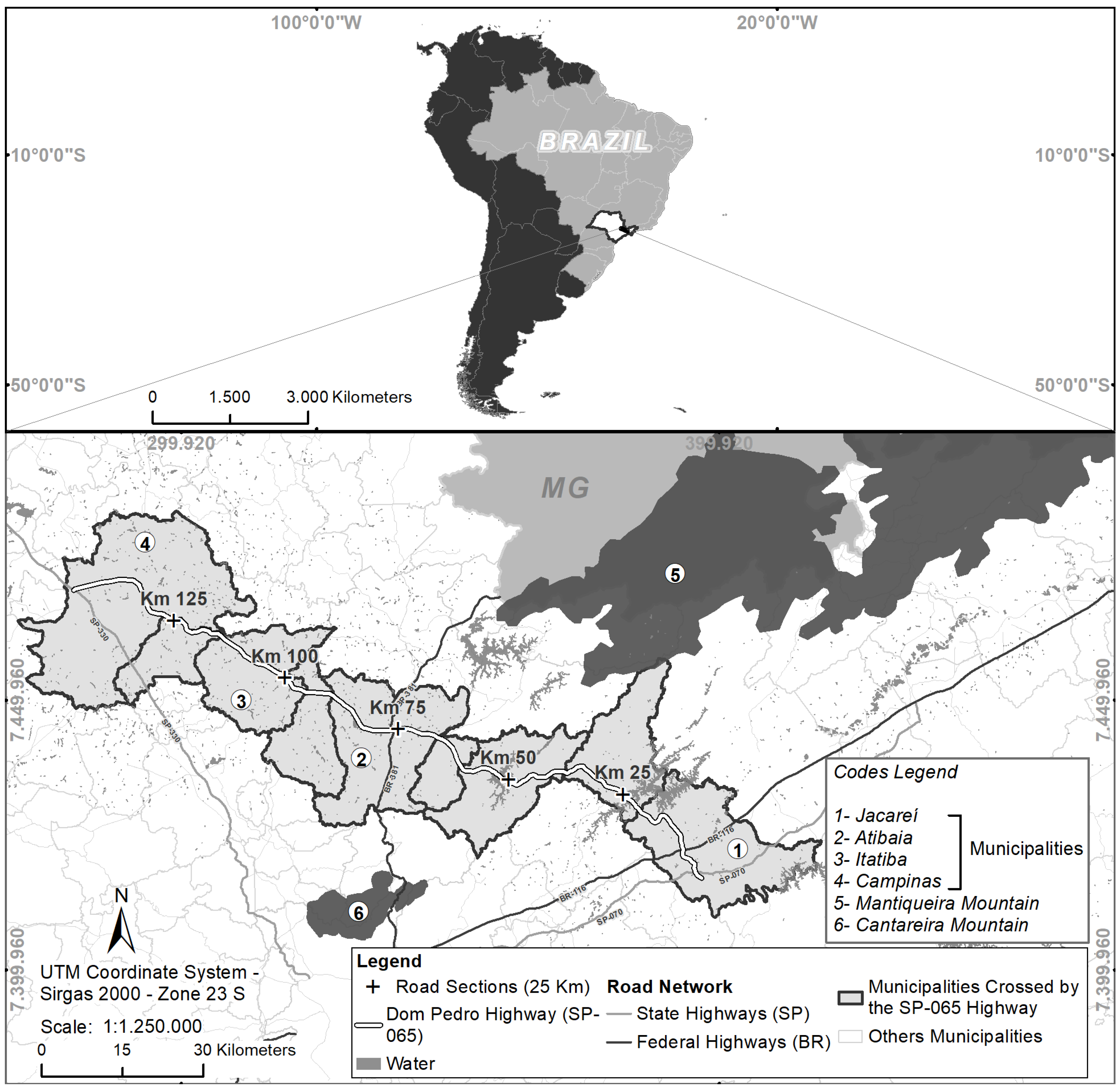
The study area is part of the Long-Term Ecological Research Program of the Cantareira-Mantiqueira Ecological Corridor (PELD CCM), located at the transition between the northeastern state of São Paulo and the southern region of Minas Gerais, Brazil. The region serves as a connection between two major mountain ranges: the Cantareira and Mantiqueira mountains [26] (Figure 1). The landscape mosaic includes various forest types in different successional stages, conservation units (CUs), agricultural plantations, pastures, silviculture (mainly Eucalyptus spp.), wetlands, rivers, highways, villages, and even large urban centers [27]. The Cantareira-Mantiqueira Ecological Corridor lies within the Atlantic Forest biome, which contains small forest fragments (84% of them are smaller than 50 ha), under significant edge effects and a high degree of isolation (with an average distance of approximately 1440 m between two fragments) [30].
The PELD CCM research has been carried out in the municipalities of Bragança Paulista, Itatiba, Atibaia, Mairiporã, São Paulo, and Joanópolis (Figure 1). In that way, for this study we analyzed data on roadkill incidents involving medium and large mammals along the Dom Pedro I Highway (SP-065), which traverses these landscapes. The highway is one of the most important in the state of São Paulo, with an average of 450,000 vehicles passing daily [31]. Its construction, planned in 1960, was intended to connect the Anhanguera (SP-330) and Dutra (BR-116) highways, diverting traffic from the São Paulo metropolitan area [31]. Spanning 145 km, it facilitates the flow of traffic between the Paraíba Valley and the Greater Campinas area [32]. From 1988 to 2009, the Dom Pedro I Highway was managed by Desenvolvimento Rodoviário S.A. (DERSA), a state-controlled mixed-economy company [32]. DERSA was responsible for its duplication and the creation of the access road to the Governador Carvalho Pinto Highway (SP-070) [33]. Since April 2009, the highway has been under the management of the Rota das Bandeiras concessionaire [33].
Regarding mitigation measures, the SP-065 highway has two wildlife underpasses installed in the Campinas municipality area (at km 143 + 555 and km 144 + 450), each consisting of circular culvert (diameter greater than 2 m). Additionally, the concessionaire mapped 33 another culverts, 12 cattle underpasses, and 52 existing bridges along the highway where adaptations can be made, such as natural embankments, guiding fences, and dry underpasses, to function as wildlife passages. The highway also features 38 wildlife crossing warning signs. Traffic speed is controlled by 15 fixed radar units, with 11 on the southbound lanes and 4 on the northbound lanes.

2.2. Roadkill Data

The highway concessionaires are responsible for the maintenance of the highways they manage. This includes daily inspections every three hours in the state of São Paulo [34] of sections under their jurisdiction, specifically looking for roadkill incidents. In an effort to standardize the way accidents are recorded and to monitor the disposal of carcasses, the São Paulo State Environmental Company (CETESB) requires state road operators to generate periodic reports on wildlife mortality [35]. Accordingly, we requested data from the Dom Pedro I Highway (SP-065) between April 2014 and June 2021, collected by the Rota das Bandeiras concessionaire. The data were validated by an environmental consulting firm hired by the concessionaire. During routine patrols, traffic inspectors record the geographic coordinates of each roadkill event and photograph the carcasses whenever possible. All records, together with the supporting information provided by the inspection team, were reviewed by the consulting firm. The firm’s team of biologists and veterinarians, trained in wildlife management and conservation, assessed the material to confirm species identification and ensure the overall reliability of the dataset. In addition, inspection staff received regular training in data collection, handling of dead and injured animals, and identification of the main species occurring along the highway, which further contributed to the consistency of the records.

2.3. Functional Groups

The medium and large mammals recorded (body mass ≥ 1 kg) [29,36] were classified into five functional groups based on their home range size and use of anthropogenic areas, such as pastures, agricultural plantations and reservoirs [37]. The home range classification was based on the median values obtained from the literature [38,39,40,41,42]. The established functional groups were as follows: G1—Mammals with small home ranges (<30,635 ha) common in anthropogenic areas; G2—Mammals with small home ranges (<30,635 ha) that avoid anthropogenic areas; G3—Mammals with large home ranges (≥30,635 ha) common in anthropogenic areas; G4—Mammals with large home ranges (≥30,635 ha) that avoid anthropogenic areas; G5—Capybara (Hydrochoerus hydrochaeris) (Linnaeus 1766). Although the capybara has a large home range (≥30,635 ha) and is common in anthropogenic areas, it was placed in a separate group due to being the most abundant species in the dataset, with a roadkill rate significantly higher than the other species in group G3. Data for small mammals were excluded from the analysis due to difficulties in species identification by traffic inspectors [43], as well as under-sampling [44].

2.4. Landscape Variables and Analysis Scale

For land use and land cover (LULC), we used data from MapBiomas [45], with a 30 m pixel size. Prior to selecting MapBiomas collection 8, we reviewed the LULC data for the period corresponding to the time when roadkill data were collected (2014–2021) and found that the landscape remained stable (i.e., 94% with the same LULC in 2014 and in 2021). Our variables of interest, expressed as percentages, included: forest, pasture, agriculture, silviculture, urbanized areas, land use mosaics, and water bodies. These classes were chosen because they are predominant around the highway. For each functional group, we considered influence radii of specific dimensions [22,46], as the species within each group have distinct home ranges and habitat requirements. The radius was used to create a buffer, with the center given by the geographical coordinates of the roadkill records. This allowed us to calculate the landscape composition within the buffers. For functional groups G1 and G2 (small home range mammals), an initial radius of 500 m was used, ensuring that the landscape variables around these animals’ core habitats are accurately captured, reflecting their immediate surroundings and ecological interactions. Also, smaller buffers would not fit well with the spatial resolution of the LULC map. For functional groups G3, G4, and G5 (large home range mammals), an initial radius of 3000 m was used. To assess the effect of scale [47], we also analyzed buffers with double the initial radius for all functional groups.

2.5. Statistical Analysis

The records of mammal roadkill incidents were linked to landscape variables in order to identify ecological patterns that could explain vehicle collisions with wildlife. For each roadkill event, we generated a random point to represent a pseudo-absence of roadkill. These points, along with the actual roadkill occurrences, were then used to create a presence-absence matrix, with equal numbers of presence (1) and absence (0) entries for each functional group.
To estimate the relative likelihood of roadkill, we built generalized linear models (GLMs) using a binomial distribution, where the presence and absence data served as the response variable. The proportion of the seven landscape variables within the influence radii of each roadkill event were used as predictor variables. Separate groups of models were constructed for each functional group. We tested for correlations between the landscape variables, excluding models with variables with a correlation greater than 0.6 or less than −0.6 between themselves. Models exhibiting multicollinearity (Variance Inflation Factor > 4.0) were also discarded. All models were ranked using the Akaike Information Criterion (AIC) and selected based on their corrected AIC (AICc), with lower AICc values indicating better-fitting models. Models with a ΔAICc ≤ 2 and evidence ratio less than 2 were considered equally plausible. Statistical analyses were performed using R version 4.3.3 [48], with the packages ‘bbmle’, ‘numDeriv’, ‘efeitos’, ‘ggplot2’, and ‘corrplot’.

3. Results

3.1. Distribution of Roadkill Incidents

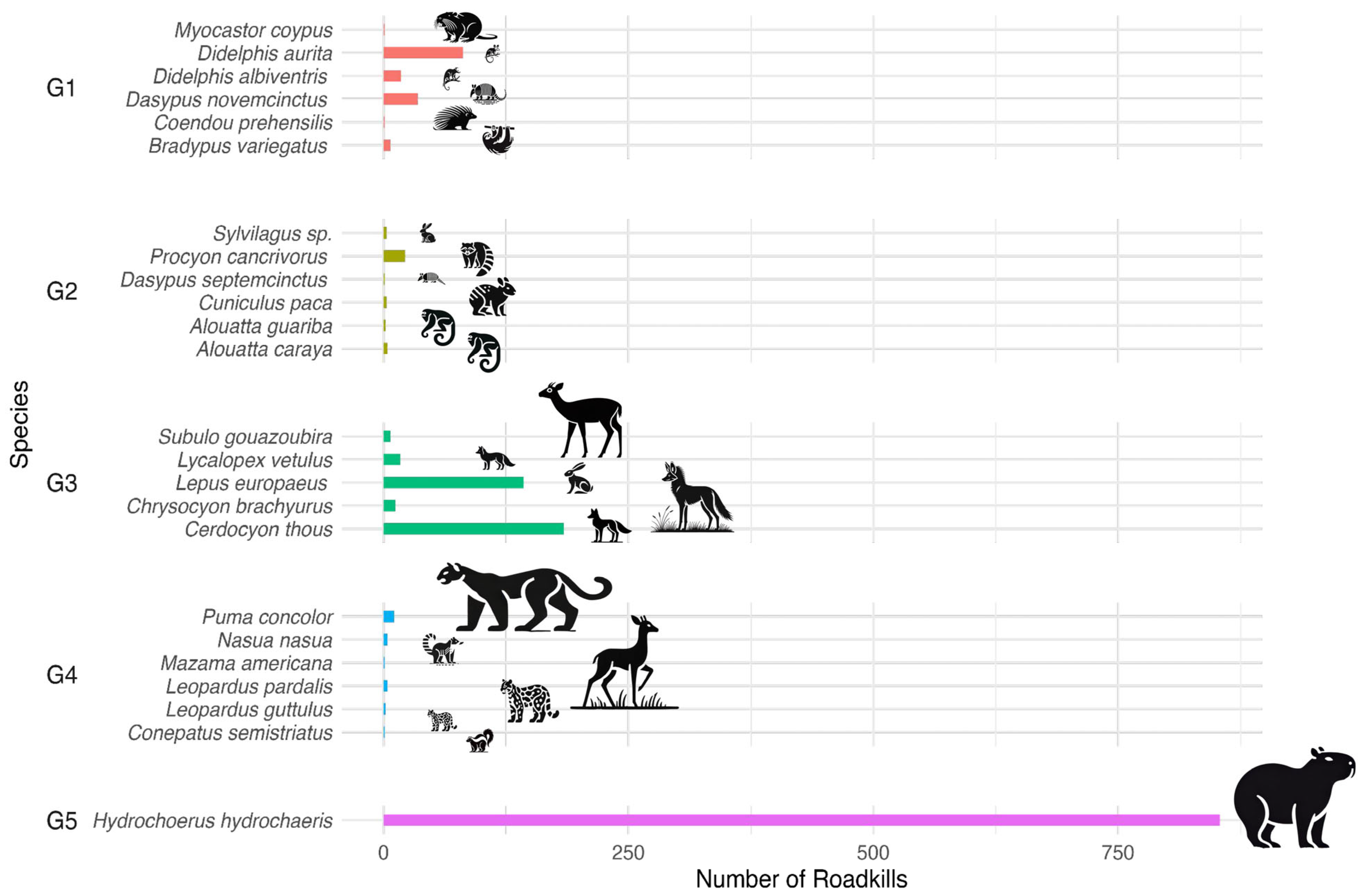
Between April 2014 and June 2021, a total of 1418 medium- and large-sized mammals were recorded as roadkill along the Dom Pedro I Highway (SP-065), representing 24 different species (Table 1). The estimated roadkill rate was 0.00357 individuals/km/day. Among the georeferenced records, 854 (~60%) were capybaras (Hydrochoerus hydrochaeris)—classified as Group G5. The second most affected species was the crab-eating fox (Cerdocyon thous) (Linnaeus 1766), with 184 records (~13%), followed by the European hare (Lepus europaeus) (Pallas 1778), with 143 records (~10%). Together, these three species accounted for 83% of the dataset. The European hare is an exotic herbivore and invasive species in Brazilian biomes [25], introduced for sport hunting along the border of Rio Grande do Sul and Uruguay in the 1950s [49]. Eight species included in the dataset are listed in at least one of two threat categories—endangered or vulnerable—at the local [50], regional (MMA 2022), or global [51] levels (Table 1).
When analyzing the relative abundance of roadkill across functional groups, Group G5 (capybaras) was by far the most represented. The second most frequent group was G3 (large home range mammals common in anthropogenic areas), comprising five species and approximately 25% of the records. This was followed by G1 (small home range mammals common in anthropogenic areas), represented by six species and 10% of the records. Groups G2 (small home range mammals that avoid anthropogenic areas) and G4 (large home range mammals that avoid anthropogenic areas) each contributed just over 4% of the total roadkill, with both groups represented by six species each. The classification of mammals into their respective functional groups based on the adopted criteria is illustrated in Figure 2.
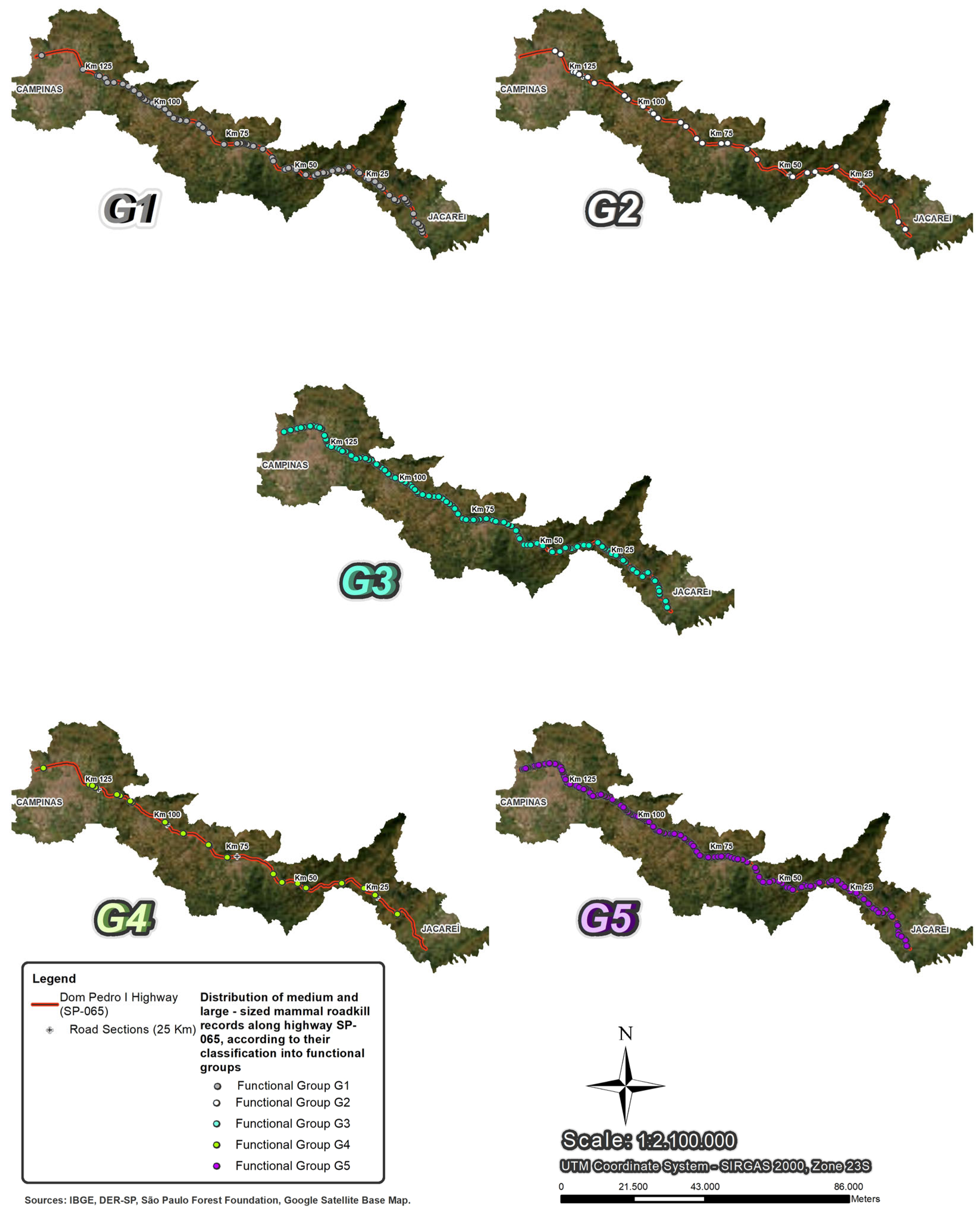
Figure 3 shows the spatial distribution of roadkill records for the functional groups along the Dom Pedro I highway (SP-065), plotted over a satellite image.

3.2. Model Selection

From the analyses conducted, four models were selected based on AICc across the different evaluated scales (Table 2). For Group G1—small home-range mammals commonly found in anthropic areas—the best model indicated a positive effect of native forest and pasture on roadkill occurrences within a 500 m radius. Conversely, a negative relationship was observed for the land-use mosaic in this model (Figure S1). For Group G3—large home-range mammals commonly found in anthropic areas—two models were selected, one for a 3000 m radius and another for a 6000 m radius. However, the 3000 m radius model had the lowest AICc value (1000.77). In both models, pasture and agriculture showed a positive effect on roadkill occurrences (Figures S2 and S3), although the p-values for pasture were not statistically significant (3000 m radius: p = 0.069; 6000 m radius: p = 0.110). For Group G5—capybara (Hydrochoerus hydrochaeris)—positive effects of pasture and agriculture were observed within a 3000 m radius, while, similar to Group G1, the land-use mosaic had a negative effect (Figure S4). At the 6000 m radius, the same influences were observed. However, these results were also not statistically significant (p > 0.05).
For Group G1 (1000 m radius), Group G2 (500 m and 1000 m radii), and Group G4 (3000 m and 6000 m radii), the null model was selected as the best model. This suggests that factors not included in the models likely play a stronger role in explaining roadkill occurrences than the evaluated landscape variables. However, it is important to note that Groups G2 and G4 had low sample sizes (35 and 23 roadkill records, respectively), which may have been insufficient to detect patterns in the relationship between roadkill occurrences and landscape characteristics. Regarding land use and cover, the predominant classes surrounding the highway were the land-use mosaic, pasture, and forest, both at the 3 km and 6 km radii (Table S1). Some land-use classes within the buffers, such as other non-vegetated areas, mining, wetlands, and rocky outcrops, were minimally represented and therefore excluded from the analyses.

4. Discussion

Our study underscores the significant risks that roadkill poses to mammal conservation, even along relatively short road segments. A total of 11% percent of medium and large mammal species known to occur in São Paulo state were documented in this study [53], including eight species threatened at the state level, three at the national level, and two globally. This research is among the few that link landscape features with the probability of roadkill for functional mammal groups on São Paulo’s highways, offering valuable insights into where species are most likely to cross roads and become vulnerable to collisions [13]. Roadkill-induced population losses are particularly concerning in the Neotropical region, where land-use changes—primarily for food and energy production—are often viewed as necessary for economic growth, which in turn drives road infrastructure expansion [28]. Generally, the most road-killed species are also the most abundant and widely distributed within their ranges [25,29,54]. Notably, nine of the fifteen most road-killed mammal species in Brazil appear in our records [55]. Among large mammals, species like the capybara (Hydrochoerus hydrochaeris), crab-eating fox (Cerdocyon thous), maned wolf (Chrysocyon brachyurus) (Illiger, 1815), puma (Puma concolor) (Linnaeus 1771), and red brocket deer (Mazama americana) (Erxleben 1777) can cause severe accidents, including human fatalities and substantial material damages [7,8]. The mammal species analyzed in this study do not exhibit migratory behavior, as their movements are restricted to their established home ranges.
Our results reveal that nearly two pumas (Puma concolor) are killed annually on the Dom Pedro I Highway, a concerning rate for the Atlantic Forest biome. For comparison, Secco [23] recorded three deaths of this species over four years on a 322 km stretch of BR-101 in Rio de Janeiro. Given the naturally low population sizes of pumas [56], roadkill significantly impacts their populations, as their slow reproduction rates hinder recovery [57]. Although we found no correlation between forest mammals’ roadkill (G2 and G4) and forest areas, the high number of species avoiding anthropogenic areas in our dataset highlights the importance of the Cantareira-Mantiqueira Corridor for conserving mammals sensitive to anthropogenic changes. While the limited sample size for G2 and G4 (n = 58) may have constrained pattern detection, evidence suggests these mammals are road-killed randomly, irrespective of land-use classes [58]. More records may further clarify whether there is a positive effect of forest, due to potentially larger populations in these areas, or a negative effect, as mammals may move less due to readily available resources.
Mammals in functional groups G1, G3, and G5 showed positive responses to pasture and agriculture. These generalist species often inhabit transitional habitats and exploit extensive anthropogenic landscapes, sometimes establishing home ranges in such areas [15]. Resources in these environments tend to be sparse and scattered compared to natural landscapes, requiring greater movement and increasing the likelihood of crossing roads and becoming roadkill [59]. Additionally, native forest areas positively influenced roadkill rates in G1 mammals, despite their occurrence in anthropogenic areas. Exceptions include species like the nutria (Myocastor coypus) (Molina 1782), which is non-native for the São Paulo state and typically found in wetlands [37]. Conversely, the “mosaic” land-use class negatively affected roadkill rates for G1 and G5 groups. This category, defined as a mix of agricultural and pasture areas [60], may result in fewer roadkill incidents because its mixed-use characteristics could reduce the frequency of mammal crossings, potentially offering less accessible or desirable resources compared to uniform pasture or agricultural landscapes.
Over time, natural landscapes surrounding roads are often converted into anthropogenic fields and urban areas [22]. This increases isolation for species less tolerant of land-use changes, explaining why such species are less frequently road-killed on older highways like Dom Pedro I (SP-065). Our results for G3 (large home range, common in anthropogenic areas) confirmed our initial hypothesis, showing increased roadkill risks in proportion to altered landscapes. Similarly, pasture positively influenced roadkill rates for G1 mammals, supporting expectations. Unexpectedly, native vegetation also showed a positive association with G1 roadkill, which aligns with their habitat use patterns. However, contrary to our hypothesis, capybara roadkill was not influenced by proximity to water bodies [61], but rather by agricultural and pasture landscapes [62,63]. This is likely because Dom Pedro I crosses two major aquatic systems, the Jaguari River and the Atibainha Reservoir, where bridge structures are equipped with concrete barriers such as New Jersey barriers that extend beyond the bridges and their abutments. These structures restrict wildlife access to the roadway while still allowing movement along the margins beneath the bridges. However, we do not have field evidence confirming the effectiveness of these barriers in preventing capybara crossings, nor do we have direct observations of capybaras using the areas below the bridge structures. This may help explain why water bodies did not emerge as significant predictors in our models. Although the proposed mechanism remains plausible, complementary field studies would be necessary to fully assess how these structures influence capybara movements and their likelihood of crossing the highway. Regarding spatial scales, our results indicate that the presence of forest fragments and pastures within a 500 m radius of the highway increases roadkill risks for G1 mammals, such as the brown-throated sloth (Bradypus variegatus) (Schinz 1825), which depend on vegetation and frequently cross roads to access other fragments [28]. For G3 mammals, agricultural landscapes within a 3000 m radius also showed positive associations with roadkill, with effects extending to 6000 m, reflecting their broader dispersal capacities [25]. Similarly, capybara roadkill (G5) responded positively to pastures and agricultural areas within 3000 m of the road. The capybara prefers habitats associated with wetlands, including areas with permanent or seasonal water combined with herbaceous vegetation for grazing [62]. These environments provide the essential resources the species depends on: water, food, and shelter [62,64].
Functional group-based impact assessments proved effective, enabling multi-species mitigation strategies [25] and optimizing resource allocation. Mitigation actions should align with the biological and behavioral traits of each group. The positive relationship between pasture/agriculture and roadkill underscores the need to shift mitigation paradigms, which typically prioritize hotspots near native vegetation and riparian forests [15]. However, landscape influence analyses should complement rather than replace hotspot identification, ensuring mitigation measures address specific ecological problems for each highway [20]. Our findings also highlight the shared responsibilities among stakeholders in addressing medium and large mammal roadkill. Road operators must enhance infrastructure to ensure genetic flow and ensure wildlife crossings occur through appropriate infrastructure, such as underpasses or overpasses, rather than across traffic lanes. Given that landscape-scale effects extend beyond the 60 m wide road domain [33], integrated landscape management within environmental licensing frameworks is essential. Tools like Brazil’s Rural Environmental Registry [65] offer a legal basis for managing agricultural areas to minimize wildlife impacts [66]. Municipal governments must also improve land-use planning to fulfill their responsibilities [67]. In this context, it is important that mitigation measures are incorporated and preserved on municipal roads.
Overall, our findings emphasize the critical need for targeted conservation measures and adaptive management strategies that consider the specific traits and behaviors of different mammal groups. By addressing landscape influences alongside road-specific features, mitigation efforts can more effectively balance biodiversity conservation with road safety.

5. Conclusions

The presence of various forest-dwelling, rare, and threatened species reinforces the significance of the Cantareira-Mantiqueira Corridor for medium and large mammal conservation. Generalist species face higher roadkill risks in pasture and agricultural matrices, while native vegetation positively influences roadkill rates for small home-range generalist mammals. On the Dom Pedro I Highway (SP-065), scale effects varied from 500 m to 3000 m around roadkill sites, reflecting the biological traits of the functional groups analyzed. Mitigation measures should shift from traditional hotspot-focused approaches near native vegetation to encompass agricultural and open land-use matrices. In highly fragmented landscapes, where few native vegetation areas remain, many mammals use pastures and agricultural fields as both transit routes and habitats. Since our results show that these matrices significantly contribute to roadkill, mitigation measures must also address these land-use classes to enhance road safety and biodiversity conservation. However, we currently lack scientific evidence to propose specific operational guidelines for these landscapes, such as the number of wildlife crossings that should be installed per kilometer in agricultural areas or the proportion of native vegetation that should be retained within pastures to reduce animal movements. Any recommendation at this stage would therefore be speculative, and further empirical studies are needed to generate practical, evidence-based guidance for mitigation planning in these environments. Clear research questions must also guide mitigation strategies, particularly regarding whether the primary goal is to reduce roadkill or to mitigate barrier effects. These strategies should target specific species or groups and be tailored to the surrounding landscape attributes. Future research should further investigate the relationship between roadkill and forest-dwelling mammal species, including whether defaunation processes influence populations near roads. For Dom Pedro I, assessing potential barrier effects on G2 and G4 species would provide valuable insights into their movement patterns and habitat use.

Supplementary Materials

The following supporting information can be downloaded at: https://www.mdpi.com/article/10.3390/wild3010010/s1, Table S1: Quantitative characterization of land-use and cover classes surrounding the Dom Pedro I highway (SP-065), Figure S1: Selected model for functional group G1 with a 500 m radius, where G1 represents small home-range mammals (<30.635 ha) commonly found in anthropic areas, Figure S2: Selected model for functional group G3 with a 3000 m radius. G3 represents large home-range mammals (≥30.635 ha) commonly found in anthropic areas. The p-value for the pasture variable was >0.05, Figure S3: Selected model for functional group G3 with a 6000 m radius. G3 represents large home-range mammals (≥30.635 ha) commonly found in anthropic areas. The p-value for the pasture variable was >0.05, Figure S4: Selected model for functional group G5 with a 3000 m radius. G5 represents the capybara (Hydrochoerus hydrochaeris, Linnaeus 1766).

Author Contributions

Conceptualization, M.C.R., S.R.d.F. and F.d.A.A.; Methodology, S.R.d.F., A.L.-C.; Validation, S.R.d.F. and A.L.-C.; Formal Analysis, A.L.-C. and F.d.A.A.; Investigation, A.L.-C. and F.d.A.A.; Resources, F.d.A.A.; Data Curation, S.R.d.F. and F.d.A.A.; Writing—Original Draft Preparation, F.d.A.A. and A.L.-C.; Writing—Review and Editing, S.R.d.F. and A.L.-C.; Visualization, A.L.-C.; Supervision, S.R.d.F.; Project Administration, F.d.A.A.; Funding Acquisition, F.d.A.A. and M.C.R. All authors have read and agreed to the published version of the manuscript.

Funding

This study was financially supported by Coordination for the Improvement of Higher Education Personnel (CAPES).

Institutional Review Board Statement

Not applicable.

Informed Consent Statement

Not applicable.

Data Availability Statement

The original contributions presented in this study are included in the article. Further inquiries can be directed to the corresponding author(s).

Acknowledgments

We also thank to São Paulo State Environmental Company (CETESB) for providing roadkill data.

Conflicts of Interest

The authors declare no conflicts of interest.

References

  1. Pinto, F.A.; Clevenger, A.P.; Grilo, C. Effects of roads on terrestrial vertebrate species in Latin America. Environ. Impact Assess. Rev. 2020, 81, 106337. [Google Scholar] [CrossRef]
  2. Taylor, B.D.; Goldingay, R.L. Roads and wildlife: Impacts, mitigation and implications for wildlife management in Australia. Wildl. Res. 2010, 37, 320–331. [Google Scholar] [CrossRef]
  3. Fahrig, L. Non-optimal animal movement in human-altered landscapes. Funct. Ecol. 2007, 21, 1003–1015. [Google Scholar] [CrossRef]
  4. Medrano-Vizcaíno, P.; Grilo, C.; Pinto, F.A.S.; Carvalho, W.D.; Melinski, R.D.; Schultz, E.D.; González-Suárez, M. Roadkill patterns in Latin American birds and mammals. Glob. Ecol. Biogeogr. 2022, 31, 1756–1783. [Google Scholar] [CrossRef]
  5. Jamhuri, J.; Edinoor, M.A.; Kamarudin, N.; Lechner, A.M.; Ashton-Butt, A.; Azhar, B. Higher mortality rates for large- and medium-sized mammals on plantation roads compared to highways in Peninsular Malaysia. Ecol. Evol. 2020, 10, 12049–12058. [Google Scholar] [CrossRef] [PubMed]
  6. Medrano-Vizcaíno, P.; Grilo, C.; Brito-Zapata, D.; González-Suárez, M. Landscape and road features linked to wildlife mortality in the Amazon. Biodivers. Conserv. 2023, 32, 4337–4352. [Google Scholar] [CrossRef]
  7. De Freitas, S.R.; Barszcz, L.B. A perspectiva da mídia online sobre os acidentes entre veículos e animais em rodovias brasileiras: Uma questão de segurança? Desenvolv. Meio Ambient. 2015, 33, 36910. [Google Scholar] [CrossRef]
  8. Abra, F.D.; Granziera, B.M.; Huijser, M.P.; Ferraz, K.M.P.M.d.B.; Haddad, C.M.; Paolino, R.M. Pay or prevent? Human safety, costs to society and legal perspectives on animal-vehicle collisions in São Paulo state, Brazil. PLoS ONE 2019, 14, e0215152. [Google Scholar] [CrossRef] [PubMed]
  9. Ascensão, F.; Desbiez, A.L.J.; Medici, E.P.; Bager, A. Spatial patterns of road mortality of medium–large mammals in Mato Grosso do Sul, Brazil. Wildl. Res. 2017, 44, 135–146. [Google Scholar] [CrossRef]
  10. Rytwinski, T.; Soanes, K.; Jaeger, J.A.G.; Fahrig, L.; Findlay, C.S.; Houlahan, J.; van der Ree, R.; A van der Grift, E. How Effective Is Road Mitigation at Reducing Road-Kill? A Meta-Analysis. PLoS ONE 2016, 11, e0166941. [Google Scholar] [CrossRef]
  11. Poessel, S.A.; Burdett, C.L.; Boydston, E.E.; Lyren, L.M.; Alonso, R.S.; Fisher, R.N.; Crooks, K.R. Roads influence movement and home ranges of a fragmentation-sensitive carnivore, the bobcat, in an urban landscape. Biol. Conserv. 2014, 180, 224–232. [Google Scholar] [CrossRef]
  12. Bueno, C.; Sousa, C.O.M.; Freitas, S.R. Habitat or matrix: Which is more relevant to predict road-kill of vertebrates? Braz. J. Biol. 2015, 75, 228–238. [Google Scholar] [CrossRef]
  13. Martins, T.; Freitas, S.R.; Junior, D.L.S.; Hardt, E. The influence of proximity with riparian forests and the distance from urban areas on roadkills of vertebrates in a fragmented Brazilian savanna area. Austral. Ecol. 2024, 49, 13342. [Google Scholar] [CrossRef]
  14. Rytwinski, T.; Fahrig, L. Do species life history traits explain population responses to roads? A meta-analysis. Biol. Conserv. 2012, 147, 87–98. [Google Scholar] [CrossRef]
  15. Cirino, D.W.; Lupinetti-Cunha, A.; Freitas, C.H.; Freitas, S.R. Do the roadkills of different mammal species respond the same way to habitat and matrix? Nat. Conserv. 2022, 47, 65–85. [Google Scholar] [CrossRef]
  16. ICMBio. Instituto Chico Mendes de Conservação da Biodiversidade. Salve. 2024. Available online: https://salve.icmbio.gov.br/ (accessed on 3 September 2024).
  17. Da Silva, G.J.C.; Martins, H.E.d.P.; Neder, H.D. Investimentos em infraestrutura de transportes e desigualdades regionais no Brasil: Uma análise dos impactos do Programa de Aceleração do Crescimento (PAC). Braz. J. Politi-Econ. 2016, 36, 840–863. [Google Scholar] [CrossRef]
  18. Coelho, I.P.; Teixeira, F.Z.; Colombo, P.; Coelho, A.V.P.; Kindel, A. Anuran road-kills neighboring a peri-urban reserve in the Atlantic Forest, Brazil. J. Environ. Manag. 2012, 112, 17–26. [Google Scholar] [CrossRef] [PubMed]
  19. Teixeira, F.Z.; Kindel, A.; Hartz, S.M.; Mitchell, S.; Fahrig, L. When road-kill hotspots do not indicate the best sites for road-kill mitigation. J. Appl. Ecol. 2017, 54, 1544–1551. [Google Scholar] [CrossRef]
  20. Martins, T.; Freitas, S.R.; Lupinetti-Cunha, A.; Semensatto, D.; Hardt, E. Combining roadkill hotspots and landscape features to guide mitigation measures on highways. J. Nat. Conserv. 2024, 82, 126738. [Google Scholar] [CrossRef]
  21. Abra, F.D.; Canena, A.d.C.; Garbino, G.S.T.; Medici, E.P. Use of unfenced highway underpasses by lowland tapirs and other medium and large mammals in central-western Brazil. Perspect. Ecol. Conserv. 2020, 18, 247–256. [Google Scholar] [CrossRef]
  22. Dornelles, S.D.S. Impactos da Duplicação de Rodovias: Variação da Mortalidade de Fauna na BR 101 Sul. São Carlos. Ph.D. Thesis, Universidade Federal de São Carlos, Sao Paulo, Brazil, 2015. [Google Scholar]
  23. Secco, H.; Farina, L.F.; da Costa, V.O.; Beiroz, W.; Guerreiro, M.; Gonçalves, P.R. Identifying Roadkill Hotspots for Mammals in the Brazilian Atlantic Forest using a Functional Group Approach. Environ. Manag. 2024, 73, 365–377. [Google Scholar] [CrossRef]
  24. Santos, R.; Shimabukuro, A.; Taili, I.; Muriel, R.; Lupinetti-Cunha, A.; Freitas, S.R.; Calabuig, C. Mammalian Roadkill in a Semi-Arid Region of Brazil: Species, Landscape Patterns, Seasonality, and Hotspots. Diversity 2023, 15, 780. [Google Scholar] [CrossRef]
  25. Freitas, S.R.; Oliveira, A.N.; Ciocheti, G.; Vieira, M.V.; Matos, D.M.S. How landscape features influence road-kill of three species of mammals in the Brazilian savanna? Oecol. Aust. 2015, 18, 35–45. [Google Scholar]
  26. Boscolo, D.; Tokumoto, P.M.; Ferreira, P.A.; Ribeiro, J.W.; dos Santos, J.S. Positive responses of flower visiting bees to landscape heterogeneity depend on functional connectivity levels. Perspect. Ecol. Conserv. 2017, 15, 18–24. [Google Scholar] [CrossRef]
  27. Hilasaca, L.M.H.; Gaspar, L.P.; Ribeiro, M.C.; Minghim, R. Visualization and categorization of ecological acoustic events based on discriminant features. Ecol. Indic. 2021, 126, 107316. [Google Scholar] [CrossRef]
  28. Freitas, S.R.; Cláudia, O.M.S.; Bueno, C. Effects of landscape characteristics on roadkill of mammals, birds and reptiles in a highway crossing the Atlantic Forest in southeastern Brazil. In Proceedings of the International Conference on Ecology and Transportation (ICOET), Scottsdale, AZ, USA, 23–27 June 2013. [Google Scholar]
  29. Ascensão, F.; Yogui, D.; Alves, M.; Medici, E.P.; Desbiez, A. Predicting spatiotemporal patterns of road mortality for medium-large mammals. J. Environ. Manag. 2019, 248, 109320. [Google Scholar] [CrossRef] [PubMed]
  30. Ribeiro, M.C.; Metzger, J.P.; Martensen, A.C.; Ponzoni, F.J.; Hirota, M.M. The Brazilian Atlantic Forest: How much is left, and how is the remaining forest distributed? Implications for conservation. Biol. Conserv. 2009, 142, 1141–1153. [Google Scholar] [CrossRef]
  31. CRB. Concessionária Rota das Bandeiras. Informações Sobre a Dom Pedro I (SP-065). 2024. Available online: www.rotadasbandeiras.com.br (accessed on 30 May 2024).
  32. ARTESP. Agência de Transportes do Estado de São Paulo. Rodovias e Concessionárias. 2022. Available online: http://www.artesp.sp.gov.br (accessed on 7 September 2022).
  33. DER. Departamento de Estradas de Rodagem do Estado de São Paulo. Malha Rodoviária do Estado de São Paulo. 2024. Available online: http://www.der.sp.gov.br (accessed on 30 May 2024).
  34. Abra, F.D.; Huijser, M.P.; Magioli, M.; Bovo, A.A.A.; Ferraz, K.M.P.M.d.B. An estimate of wild mammal roadkill in São Paulo state, Brazil. Heliyon 2021, 7, e06015. [Google Scholar] [CrossRef]
  35. CETESB. Companhia Ambiental do Estado de São Paulo. Decisão de Diretoria n. 141/2018/I. 2018. Available online: https://cetesb.sp.gov.br/decisoes-de-diretoria/ (accessed on 25 August 2022).
  36. Paglia, A.P.; da Fonseca, G.A.B.; Rylands, A.B.; Herrmann, G.; Aguiar, L.M.S.; Chiarello, A.G.; Leite, Y.L.R.; Costa, L.P.; Siciliano, S.; Kierulff, M.C.M.; et al. Annotated Checklist of Brazilian Mammals, 2nd ed.; Conservation International: Arlington, VA, USA, 2012. [Google Scholar]
  37. IUCN; International Union for Conservation of Nature. The IUCN Red List of Threatened Species—Habitats Classifica-tion Scheme (Version 3.1). 2024. Available online: https://www.iucnredlist.org/resources/habitat-classification-scheme (accessed on 27 May 2024).
  38. Benavides, C.; Arce, A.; Pacheco, L.F. Home range and habitat use by pacas in a montane tropical forest in Bolivia. Acta Amaz. 2017, 47, 227–236. [Google Scholar] [CrossRef]
  39. Broekman, M.J.E.; Hoeks, S.; Freriks, R.; Langendoen, M.M.; Runge, K.M.; Savenco, E.; ter Harmsel, R.; Huijbregts, M.A.J.; Tucker, M.A. HomeRange: A global database of mammalian home ranges. Glob. Ecol. Biogeogr. 2022, 32, 198–205. [Google Scholar] [CrossRef]
  40. Dias, D.D.M.; Almeida, M.D.O.S.; de Araújo-Piovezan, T.G.; Dantas, J.O. Spatiotemporal ecology of two Neotropical herbivorous mammals. Pap. Avulsos Zool. 2019, 59, e20195910. [Google Scholar] [CrossRef]
  41. Feijó, A. Dasypus septemcinctus (Cingulata: Dasypodidae). Mamm. Species 2020, 52, 1–9. [Google Scholar] [CrossRef]
  42. Varela, D.M.; Trovati, R.G.; Guzmán, K.R.; Rossi, R.V.; Duarte, J.M.B. Red Brocket Deer Mazama Americana (Erxleben 1777). In Neotropical Cervidology, Biology and Medicine of Latin American Deer; FUNEP/IUCN: Jaboticabal/Gland, Brazil, 2010; pp. 151–159. [Google Scholar]
  43. Abra, F.D.; Huijser, M.P.; Pereira, C.S.; Ferraz, K.M. How reliable are your data? Verifying species identification of road-killed mammals recorded by road maintenance personnel in São Paulo State, Brazil. Biol. Conserv. 2018, 225, 42–52. [Google Scholar] [CrossRef]
  44. Santos, R.A.L.; Ascensão, F. Assessing the effects of road type and position on the road on small mammal carcass persistence time. Eur. J. Wildl. Res. 2019, 65, 8. [Google Scholar] [CrossRef]
  45. MapBiomas Project. Collection 3.0 of Annual Series of Land Use and Land Cover Maps of Brazil. 2021. Available online: http://mapbiomas.org/map#coverage (accessed on 20 May 2024).
  46. Ciocheti, G. Spatial and Temporal Influences of Road Duplication on Wildlife Road Kill Using Habitat Suitability Models. Ph.D. Thesis, Universidade Federal de São Carlos, Sao Carlos, Brazil, 2014. [Google Scholar]
  47. Jackson, H.B.; Fahrig, L. What size is a biologically relevant landscape? Landsc. Ecol. 2012, 27, 929–941. [Google Scholar] [CrossRef]
  48. R Core Team. R: A Language and Environment for Statistical Computing; R Foundation for Statistical Computing: Vienna, Austria, 2024; Available online: www.R-project.org/ (accessed on 25 February 2024).
  49. da Rosa, C.A.; de Almeida Curi, H.N.; Puertas, F.; Passamani, M. Alien terrestrial mammals in Brazil: Current status and management. Biol. Invasions 2017, 19, 2101–2123. [Google Scholar] [CrossRef]
  50. São Paulo. Decreto n° 63.853, de 27 de Novembro de Assembleia Legislativa do Estado de São Paulo. 2018. Available online: www.al.sp.gov.br/repositorio/legislacao/decreto/2018/decreto-63853-27.11.2018.html (accessed on 26 June 2024).
  51. IUCN. The International Union for Conservation of Nature’s Red List of Threatened Species (IUCN) Red List of Threatened Species. 2023. Available online: https://www.iucnredlist.org/ (accessed on 6 November 2023).
  52. Abreu, E.F.; Casali, D.; Costa-Araújo, R.; Garbino, G.S.T.; Libardi, G.S.; Loretto, D.; Loss, A.C.; Marmontel, M.; Moras, L.M.; Nascimento, M.C.; et al. Lista de Mamíferos do Brasil, Versão 2023—Comitê de Taxonomia da Sociedade Brasileira de Mastozoologia (CTSBMz); Zenodo: Geneva, Switzerland, 2024; Available online: https://www.sbmz.org/mamiferos-do-brasil/ (accessed on 1 June 2024).
  53. Galetti, M.; Carmignotto, A.P.; Percequillo, A.R.; Santos, M.C.d.O.; Ferraz, K.M.P.M.d.B.; Lima, F.; Vancine, M.H.; Muylaert, R.L.; Bonfim, F.C.G.; Magioli, M.; et al. Mammals in São Paulo State: Diversity, distribution, ecology, and conservation. Biota Neotrop. 2022, 22, 1363. [Google Scholar] [CrossRef]
  54. Caceres, N.C. Biological characteristics influence mammal road kill in an Atlantic Forest–Cerrado interface in south-western Brazil. Ital. J. Zool. 2011, 78, 379–389. [Google Scholar] [CrossRef]
  55. Pinto, F.A.S.; Cirino, D.W.; Cerqueira, R.C.; Rosa, C.; Freitas, S.R. How Many Mammals Are Killed on Brazilian Roads? Assessing Impacts and Conservation Implications. Diversity 2022, 14, 835. [Google Scholar] [CrossRef]
  56. Oliveira, T.G.; Tortato, M.A.; Silveira, L.; Kasper, C.B.; Mazim, F.B.; Lucherini, M.; Jacomo, A.T.; Soares, J.B.G.; Marques, R.V.; Sunquist, M. Ocelot Ecology and its Effect on the Small-Felid Guild in the Lowland Neotropics. In Biology and Conservation of The Wild Felids; Macdonald, W.D., Loveridge, A.J., Eds.; Oxford University Press: New York, NY, USA, 2010; pp. 559–580. [Google Scholar]
  57. De Azevedo, F.C.; Lemos, F.G.; Almeida, L.; Campos, C.; Beisiegel, B.; de Paula, R.C.; Junior, P.G.C.; Ferraz, K.M.P.M.d.B.; Oliveira, T. Avaliação do risco de extinção da onça-parda Puma concolor (Linnaeus, 1771) no Brasil. Biodiversidade Bras. BioBrasil 2013, 3, 107–121. [Google Scholar] [CrossRef]
  58. Cerqueira, R.C.; Leonard, P.B.; da Silva, L.G.; Bager, A.; Clevenger, A.P.; Jaeger, J.A.; Grilo, C. Potential Movement Corridors and High Road-Kill Likelihood do not Spatially Coincide for Felids in Brazil: Implications for Road Mitigation. Environ. Manag. 2021, 67, 412–423. [Google Scholar] [CrossRef] [PubMed]
  59. Regolin, A.L.; Oliveira-Santos, L.G.; Ribeiro, M.C.; Bailey, L.L. Habitat quality, not habitat amount, drives mammalian habitat use in the Brazilian Pantanal. Landsc. Ecol. 2021, 36, 2519–2533. [Google Scholar] [CrossRef]
  60. Souza, C.M., Jr.; Shimbo, J.Z.; Rosa, M.R.; Parente, L.L.; Alencar, A.; Rudorff, B.F.; Hasenack, H.; Matsumoto, M.; Ferreira, L.G.; E Souza-Filho, P.W.; et al. Reconstructing Three Decades of Land Use and Land Cover Changes in Brazilian Biomes with Landsat Archive and Earth Engine. Remote. Sens. 2020, 12, 2735. [Google Scholar] [CrossRef]
  61. Felix, G.; Paz, I.A.; Piovezan, U.; Garcia, R.; Lima, K.; Nääs, I.; Salgado, D.; Pilecco, M.; Belloni, M. Feeding behavior and crop damage caused by capybaras (Hydrochoerus hydrochaeris) in an agricultural landscape. Braz. J. Biol. 2014, 74, 779–786. [Google Scholar] [CrossRef][Green Version]
  62. Bueno, C.; Faustino, M.T.; Freitas, S.R. Influence of landscape characteristics on capybara road-kill on highway BR-040, Southeastern Brazil. Oecologia Aust. 2013, 17, 320–327. [Google Scholar] [CrossRef]
  63. Da Silva, A.C.F.B.; De Menezes, J.F.S.; Santos, L.G.R.O. Roadkill risk for capybaras in an urban environment. Landsc. Urban Plan. 2022, 222, 104398. [Google Scholar] [CrossRef]
  64. Ferraz, K.M.P.M.D.B.; Ferraz, S.F.D.B.; Moreira, J.R.; Couto, H.T.Z.; Verdade, L.M. Capybara (Hydrochoerus hydrochaeris) distribution in agroecosystems: A cross-scale habitat analysis. J. Biogeogr. 2007, 34, 223–230. [Google Scholar] [CrossRef]
  65. Laudares, S.S.A.; da Silva, K.G.; Borges, L.A.C. Cadastro Ambiental Rural: Uma análise da nova ferramenta para regularização ambiental no Brasil. Desenvolv. Meio Ambiente 2014, 31, 33743. [Google Scholar]
  66. Orlowski, G.; Nowak, L. Factors influencing mammal roadkills in the agricultural landscape of south-western Poland. Pol. J. Ecol. 2006, 54, 283–294. [Google Scholar]
  67. De Carvalho, S.N. Estatuto da cidade: Aspectos políticos e técnicos do plano diretor. São Paulo Perspec. 2001, 15, 130–135. [Google Scholar] [CrossRef]
Figure 1. Cantareira-Mantiqueira Corridor, located at the transition between the northeastern state of São Paulo and the southern region of Minas Gerais, crossed by the Dom Pedro I Highway (SP-065), which links the cities of Jacareí and Campinas. The figure also highlights the municipalities where PELD CCM studies have been conducted.
Wild 03 00010 g001
Figure 2. Number of roadkill incidents involving medium- and large-sized mammal species, categorized by functional groups, along the Dom Pedro I Highway (SP-065), from April 2014 to June 2021. The species miniatures are to scale, proportionate to their actual sizes.
Wild 03 00010 g002
Figure 3. Spatial distribution of medium and large-sized mammal roadkill along Dom Pedro I Highway (SP-065), categorized by functional groups (G1–G5).
Wild 03 00010 g003
Table 1. Ecological characterization of medium- and large-sized mammals (>1 kg) recorded as roadkill along the Dom Pedro I Highway (SP-065). Data are based on the species’ average home range [38,39,40,41,42] and habitat use [37]. Scientific nomenclature follows [52], while body weight references Paglia [36]. Conservation status is provided for local (SP = São Paulo) [50], regional [16], and global scales [51]. Categories include EN = endangered, VU = vulnerable, NT = near threatened, DD = data deficient, LC = least concern, NA = not assessed, and * = exotic species.
TaxaHabitat TypeMean Home Range (ha)Weight (kg)Status
SPICMBioIUCN [51]
Didelphimorphia
Didelphidae
Didelphis albiventris Lund, 1840forest, savanna, shrubland, artificial/terrestrial0.080.5 a 2750LCLCLC
Didelphis aurita (Wied-Neuwied, 1826)forest, shrubland, artificial/terrestrial1.250.67 a 1.8LCLCLC
Cingulata
Dasypodidae
Dasypus novemcinctus Linnaeus, 1758forest, savanna, shrubland, grassland, artificial/terrestrial3.763.65LCLCLC
Dasypus septemcinctus Linnaeus, 1758forest, savanna, grassland<1.601.5LCLCLC
Pilosa
Bradypodidae
Bradypus variegatus Schinz, 1825forest, artificial/terrestrial3.13.9DDLCLC
Primates
Atelidae
Alouatta caraya (Humboldt, 1812)forest, savanna19.523.8 a 8.2ENNTNT
Alouatta guariba (Humboldt, 1812)forest24.254.1 a 7.15ENNAVU
Lagomorpha
Leporidae
Sylvilagus sp.forest<4.01.2---
Lepus europaeus Pallas, 1778 *shrubland, grassland, artificial/terrestrial69.513.8LCNALC
Carnivora
Mephitidae
Conepatus semistriatus (Boddaert, 1785)forest, shrubland, grassland1042.4DDLCLC
Procyonidae
Nasua nasua (Linnaeus, 1766)forest, shrubland387.615.1LCLCLC
Procyon cancrivorus Cuvier, 1798forest, wetland3.385.4LCLCLC
Canidae
Cerdocyon thous (Linnaeus, 1766)forest, savanna, shrubland, grassland, wetland, artificial/terrestrial375.076.5LCLCLC
Chrysocyon brachyurus (Illiger, 1815)forest, savanna, shrubland, grassland, wetland, artificial/terrestrial5580.0322VUVUNT
Lycalopex vetulus (Lund, 1842)savanna, artificial/terrestrial367.254VUVUNT
Felidae
Leopardus guttulus (Hensel, 1872)forest, savanna1121.331.5 a 3.0VUVUVU
Leopardus pardalis (Linnaeus, 1758)forest, savanna, shrubland3728.148.0 a 11.0VULCLC
Puma concolor (Linnaeus, 1771)forest, savanna, shrubland, grassland, desert26951.522.0 a 70.0VUNTLC
Artiodactyla
Cervidae
Mazama americana (Erxleben, 1777)forest72.9624.0 a 48.0ENDDDD
Subulo gouazoubira (Fischer, 1814)forest, savanna, shrubland, grassland, wetland, artificial/terrestrial48.9617.0 a 25.0LCLCLC
Rodentia
Caviidae
Hydrochoerus hydrochaeris (Linnaeus, 1766)forest, savanna, wetland33.6935.0 a 65.0LCLCLC
Cuniculidae
Cuniculus paca (Linnaeus, 1766)forest2.269.3NTLCLC
Erethizontidae
Coendou prehensilis (Linnaeus, 1758)forest18.673.2 a 5.3DDNTLC
Echimyidae
Myocastor coypus (Molina, 1782) *wetland, artificial/aquatic27.586.7LCLCLC
Table 2. Models selected based on the corrected Akaike Information Criterion (AICc). The “Estimate” column provides the estimated effect: positive values indicate a positive effect, while negative values indicate a negative effect.
Functional GroupRadii (m)Landscape Variablep-ValueAICcEstimate
G1500mosaic of uses2.46 × 10−13312.94−9.644
native vegetation6.97 × 10−57.217
pasture7.96 × 10−78.589
G33000agriculture0.0031000.774.135
pasture0.0691.406
G36000agriculture0.0161003.293.959
pasture0.1101.489
G53000agriculture<2 × 10−16361.0559.596
mosaic of uses<2 × 10⁻¹⁶−64.680
pasture<2 × 10−1648.501
Disclaimer/Publisher’s Note: The statements, opinions and data contained in all publications are solely those of the individual author(s) and contributor(s) and not of MDPI and/or the editor(s). MDPI and/or the editor(s) disclaim responsibility for any injury to people or property resulting from any ideas, methods, instructions or products referred to in the content.