
Article

Trends in Alzheimer’s Disease Mortality in the Mississippi Delta, 2016–2022
1
College of Health Sciences, Jackson State University, Jackson, MS 39217, USA
2
Department of Public Health, Julia Jones Matthews School of Population and Public Health, Texas Tech Health Sciences Center, Abilene, TX 79601, USA
*
Author to whom correspondence should be addressed.
J. Dement. Alzheimer's Dis. 2025, 2(4), 44; https://doi.org/10.3390/jdad2040044
Submission received: 25 April 2025 / Revised: 1 August 2025 / Accepted: 10 October 2025 / Published: 27 November 2025

Abstract

Background/Introduction: Alzheimer’s disease (AD) is a progressive neurological disorder and one of the leading causes of death among older adults in the United States. It causes gradual cognitive decline, memory loss, and impaired functioning. Vulnerable populations—especially those living in rural and predominantly Black communities like the Mississippi Delta—are disproportionately affected. Despite high Alzheimer’s disease mortality rates in Mississippi, limited research has analyzed recent trends disaggregated by race, gender, and geography. This study evaluated trends in AD mortality in the Mississippi Delta between 2016 and 2022 to inform equitable public health responses. Methods: This trend study used age-adjusted mortality rates (AAMRs) for adults aged 65 and older to examine Alzheimer’s disease deaths. AAMRs allow for fair comparisons across groups by adjusting for differences in population age structures. Mortality data were obtained from the Mississippi Statistically Automated Health Resource System (MSTAHRS), a statewide health surveillance system managed by the Mississippi State Department of Health. Joinpoint regression analysis was used to identify statistically significant changes in mortality trends over time using Annual Percent Change (APC) and Average Annual Percent Change (AAPC), with 95% confidence intervals (CIs). AAPC denotes an average percentage change in mortality trends over a seven-year period. Joinpoint regression is an appropriate method for detecting points at which linear trends change significantly, especially in chronic disease mortality analysis. Results: From 2016 to 2022, Alzheimer’s disease mortality significantly increased among Black individuals (AAPC = 8.3%, 95% CI [2.6 to 16.0]; p < 0.05) and declined among White individuals (AAPC = −2.9%, 95% CI [−12.3 to 7.6] p < 0.05). Gender-specific analyses showed slight, non-significant increases among both males and females. County-level disparities were evident: counties such as Sharkey experienced increases exceeding 10%, while Humphreys counties showed declines. Racial disparities in AD mortality were more pronounced than gender differences. Conclusions: This study reveals widening racial and geographic disparities in Alzheimer’s disease mortality across the Mississippi Delta. The statistically significant increase among Black seniors highlights structural inequities in early diagnosis, access to culturally appropriate care, and chronic disease management. These findings support the need for targeted public health interventions, such as the expansion of rural memory clinics, culturally competent outreach, and Medicaid-supported long-term care. Strengthening surveillance systems like MSTAHRS is critical to tracking disparities and advancing equity in dementia-related mortality.

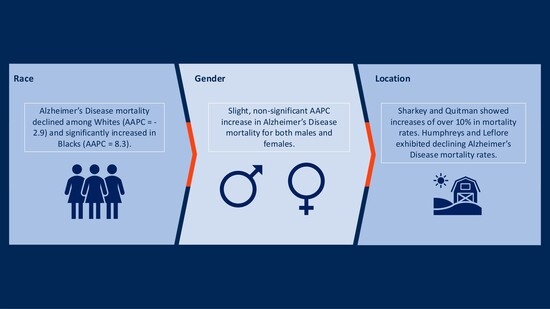
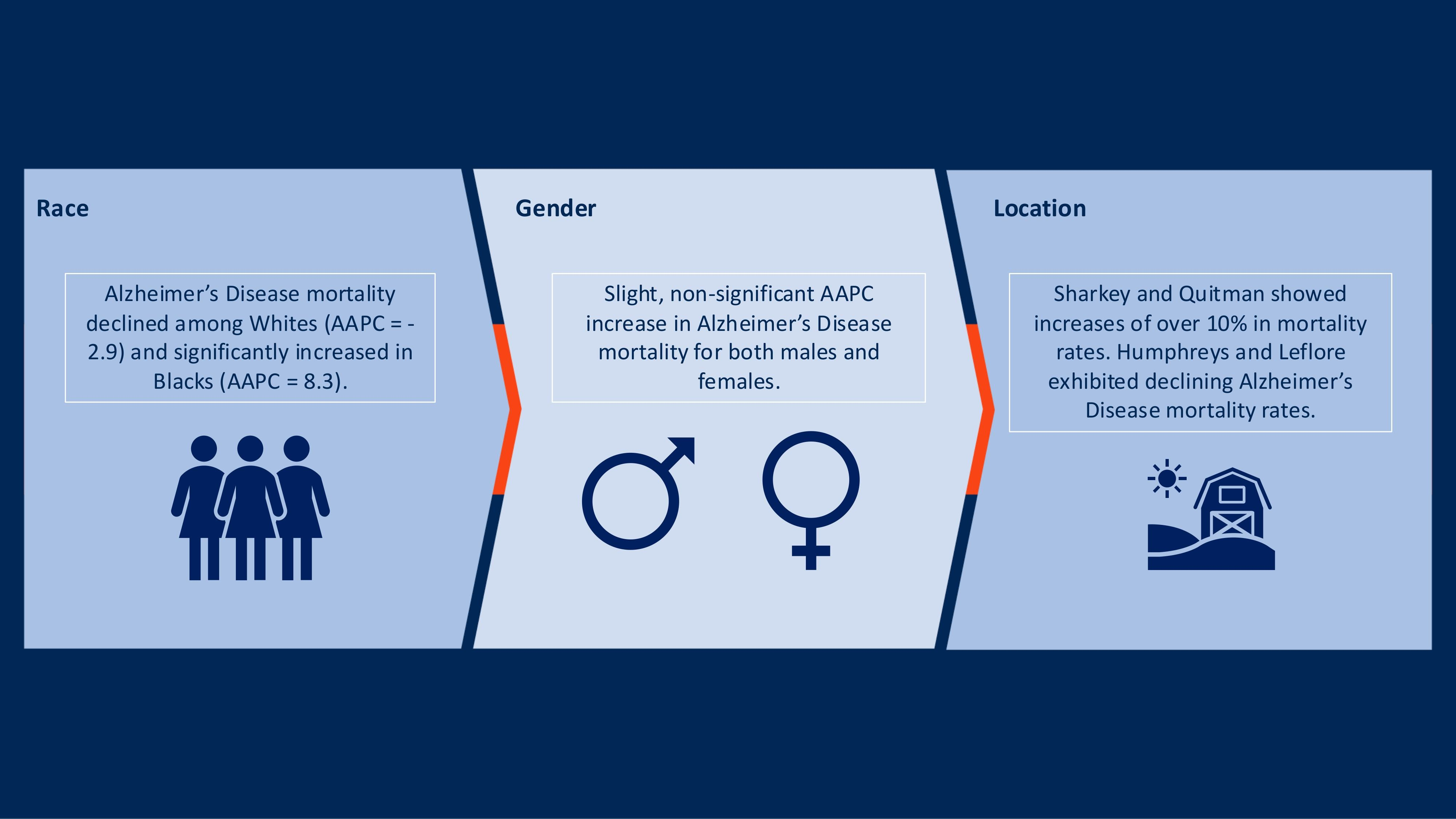
Graphical Abstract

1. Introduction

Alzheimer’s disease (AD) is a progressive and irreversible neurodegenerative disorder that profoundly affects individuals, particularly older adults. It gradually impairs memory, thinking, behavior, and the ability to perform daily activities, ultimately leading to complete dependency. As the disease advances, individuals lose autonomy and experience a decline in identity and independence. Among aging populations, AD has become especially impactful due to both its high prevalence and the growing burden it places on families and healthcare systems [1]. Alzheimer’s disease affects nerve cells in the brain and is therefore considered a brain disease. Adults who develop Alzheimer’s disease experience long-term memory loss, and currently, there is no remedy to prevent or cure the disease [1]. While mild memory changes can be part of the normal aging process, Alzheimer’s disease represents a pathological condition and is not considered a normal aspect of aging [1]. Alzheimer’s disease is a leading cause of dementia [2]. The disease develops gradually and causes progressive decline in memory, thinking patterns, decision-making abilities, and communication skills [3]. It may also reduce the lifespan of affected individuals.
According to the World Health Organization, more than 55 million adults have developed Alzheimer’s disease, and this number continues to increase by 10% annually worldwide [4]. In the United States, Alzheimer’s disease mortality rate is ranked as the sixth leading cause of death and ranks the fifth leading cause of death among the aging population (65 and older) [5]. Between the years 2000 and 2022, the number of deaths attributed to Alzheimer’s disease in the United States has more than doubled, despite declining mortality rates for conditions such as heart disease and stroke [1]. This trend underscores the growing impact of Alzheimer’s disease on public health and highlights the need for early intervention and disease-modifying strategies aimed at slowing progression and reducing mortality. The projected burden of Alzheimer’s disease in the United States continues to rise alongside the aging population. It is estimated that by 2050, the number of individuals affected may reach approximately 13.8 million, posing a serious public health concern [1,6].
The number of individuals affected by Alzheimer’s disease and other forms of dementia in the United States is substantial and continues to rise. As the population aged 65 and older increases, both the prevalence and proportion of dementia cases are expected to grow accordingly [7]. This sharp increase not only reflects the growing medical challenge but also signals a substantial rise in economic costs and caregiving demands, making the need for proactive public health planning more critical than ever.
By the year 2025, it is estimated that around 2.5 million individuals aged 85 and older will be living with Alzheimer’s dementia, comprising roughly one-third of all diagnosed cases. Projections further indicate that by 2060, this number could grow to 6.7 million, representing nearly half of all individuals aged 65 and older affected by the condition [7]. The financial burden of Alzheimer’s disease in the United States continues to escalate. In 2022, expenditures for patient care including medical treatment, long-term support, and hospice services were estimated at $321 billion. With the expected rise in the aging population, these costs are anticipated to exceed $1 trillion annually by 2050 [8]. This dramatic increase in spending reflects the urgent need for early detection, preventive interventions, and long-term care planning to mitigate the disease’s profound economic and societal impact.
According to recent estimates, the prevalence of Alzheimer’s disease and related dementias among African Americans is 14.7%, compared to 11.3% among non-Hispanic Whites [5]. However, another study found that non-Hispanic Whites have a 26% higher mortality rate from Alzheimer’s disease than African Americans [9]. These findings further identify a need for more epidemiological studies to understand patterns and trends in Alzheimer’s disease occurrence. The observed racial disparity in Alzheimer’s disease mortality also highlights broader inequities in health outcomes and access to care.
Epidemiological research has shown that Alzheimer’s disease significantly increases mortality risk, particularly among older adults. A 15-year cohort study published in Neurology reported that individuals diagnosed with AD dementia had a mortality rate more than three times higher than those without the disease [10]. This heightened risk highlights the importance of identifying high-risk populations through the analysis of mortality trends. Early diagnosis, especially during the mild cognitive impairment stage, enables timely intervention strategies that may delay disease progression and preserve quality of life.
The Alzheimer’s Association indicates that 63,000 individuals in Mississippi have been diagnosed with Alzheimer’s disease [11]. Mississippi’s Alzheimer’s disease average is 12.9% as of 2023 among the Medicare recipients aging population [12]. In the Mississippi Delta region, Medicare recipients with Alzheimer’s disease range from 12.8% to 17.3%, depending on the counties affected. For instance, Coahoma, Bolivar, Sunflower, and Tallahatchie counties’ Alzheimer’s disease rates are from 14.4% to 17.3%, whereas Washington county ranges from 13.5% to 14.3% and Leflore and Yazoo counties rates are from 12.8% to 13.4% [12]. These counties in the Mississippi Delta require additional services for the aging population with Alzheimer’s disease. The services include caregiver respite service, adult day care, and nursing home services [12].
As of 2022, the Centers for Disease Control and Prevention reported that Mississippi had the highest age-adjusted Alzheimer’s mortality rate in the nation 48.5 per 100,000 residents [13]. Rural areas also experience lower life expectancy than urban regions [14,15]. Improving the quality of life for individuals with Alzheimer’s disease remains a top public health priority [16].
Recent research indicates a decline in age-specific dementia risk in high-income countries, which is likely attributed to improvements in educational attainment and better management of cardiovascular risk factors [17,18]. However, substantial racial and socioeconomic disparities remain.
Despite the growing burden of Alzheimer’s disease, few studies have analyzed statewide patterns in AD-related mortality, and even fewer have focused specifically on the Mississippi Delta region a historically underserved area that experiences persistent poverty, limited access to healthcare, and elevated rates of chronic illness. This lack of localized, county-level analysis creates a critical gap in understanding how Alzheimer’s mortality has evolved over time in this unique context.
Therefore, the primary objective of this study is to examine longitudinal trends in Alzheimer’s disease mortality in the Mississippi Delta, with particular attention to racial, gender-based, and geographic disparities. This study is guided by the hypothesis that longstanding structural inequities have contributed to significant differences in Alzheimer’s disease mortality trends by race, gender, and geography in the Mississippi Delta [19]. Specifically, this study compares age-adjusted Alzheimer’s mortality trends from 2016 to 2022 by race (Black vs. White), gender (male vs. female), and Delta Core counties, using average annual percent change (AAPC) as the primary measure of trend over time.
This study contributes novel insight by addressing regional and demographic inequalities that have received limited attention in prior Alzheimer’s disease research.

2. Materials and Methods

This study analyzed trends in Alzheimer’s disease (AD) mortality among adults aged 65 and older in the Mississippi Delta region from 2016 to 2022 and obtained mortality data from the Mississippi Statistically Automated Health Resource System (MSTAHRS; Mississippi State Department of Health, Jackson, MS, USA) [19]. Age-adjusted mortality rates were calculated per 100,000 population using the direct standardization method, based on the U.S. 2000 Standard Population.
The analysis used Joinpoint regression with the Joinpoint Regression Program, Version 5.4.0.0 (Statistical Methodology and Applications Branch, Surveillance Research Program, National Cancer Institute, Bethesda, MD, USA) [20]. It allowed a maximum of one Joinpoint. The analysis selected the optimal model using the Weighted Bayesian Information Criterion (WBIC), which identified the model with zero Joinpoints as the best fit, indicating a consistent linear trend in AD mortality during the study period. The software estimated the Annual Percent Change (APC) and Average Annual Percent Change (AAPC) along with 95% confidence intervals to assess the statistical significance and reliability of the trends.
The APC was calculated using the formula:
A P C = ( e β 1 ) × 100
The AAPC was computed as a weighted average of the APCs across all Joinpoint segments using the formula:
AAPC   =   i = 1 n w i ·   AP C i
Formulas were applied as implemented in the Joinpoint Regression Program, Version 5.4.0.0 (NCI) [20].
The Analysis handled missing or suppressed data according to MSTAHRS reporting standards. Specifically, it suppressed cells with five or fewer deaths and flagged rates based on fewer than 20 deaths as unstable, interpreting them with caution. It excluded Counties with suppressed data or statistically unreliable estimates from the trend analysis.
This study did not require ethical approval because it utilized publicly available, de-identified aggregate data and did not access or analyze any personal or identifiable information.

3. Results

3.1. Overall Trends

Between 2016 and 2022, Alzheimer’s disease mortality rates followed different patterns across racial and gender groups. Among White individuals, mortality rates declined slightly, with an Average Annual Percent Change (−2.9 AAPC), In contrast, Black individuals experienced a significant increase, with an AAPC of 8.3% (95% CI: 2.6 to 16), indicating that their mortality rates grew by an average of 8.3% each year over the study period. Regarding gender, the trends showed a slight rise in mortality among both females (AAPC: 1.6%, 95% CI: −6.7 to 10.9) and males (AAPC: 2.5%, 95% CI: −8.9 to 15.7).

3.2. Alzheimer’s Disease by County, Race, and Gender in the Mississippi Delta

The following analysis focuses exclusively on the counties identified as part of the Delta Core region in Mississippi, as defined by the Mississippi State Department of Health. This selection allows for a more targeted examination of disparities within the most affected area of the Delta.
Age-adjusted rates are expressed per 100,000 population using the 2000 U.S. standard population. Cells with asterisks (*) were suppressed when the number of deaths was five or fewer, in accordance with confidentiality policies. The analysis calculated rates using 2020 population estimates, which may change when final census data become available. Cells marked with (“†”) indicate a statistically significant AAPC. Source: Mississippi Statistically Automated Health Resource System (MSTAHS) [19]. The author performed the analysis.
Between 2016 and 2022, a total of 554 Alzheimer’s-related deaths were recorded across the 11 Mississippi Delta counties. The highest counts were observed in Bolivar (n = 124), Coahoma (n = 61), and Washington (n = 55). Of note, two counties (Tunica and Issaquena) had fewer than 20 deaths, so their rates were not reported and were excluded from Table 1 due to instability, although their deaths contributed to the overall total. These death counts served as the denominators in the calculation of age-adjusted mortality rates per 100,000 population [19].
Between 2016 and 2022, a total of 554 Alzheimer’s-related deaths were recorded across the 11 Mississippi Delta counties. The highest death counts occurred among White individuals (n = 326), followed by Black individuals (n = 226). Deaths among other racial groups were suppressed due to small counts. These death totals served as the basis for calculating age-adjusted mortality rates per 100,000 population [19].
Note: Due to data suppression in cells with five or fewer events and the use of pre-census population estimates, final death counts may be subject to revision.
As shown in Table 2 The most striking disparity was the sharp increase in mortality rates among Black individuals. This trend suggests potential differences in healthcare access, diagnosis rates, or underlying socioeconomic factors influencing disease progression and mortality.
Regarding gender, 402 deaths were recorded among females and 152 among males. Although Alzheimer’s-related mortality was numerically higher among males (AAPC = 2.5%, 95% CI: −8.9 to 15.7) than females (AAPC = 1.6%, 95% CI: −6.7 to 10.9), the 95% confidence intervals for both groups included zero, indicating that the observed trends were not statistically significant. These death totals were used to calculate age-adjusted mortality rates per 100,000 population [19].
Note: Some rates are based on fewer than 20 events and are considered statistically unstable. Additionally, rates rely on population estimates and may be updated as new census data becomes available.
As shown in Table 3, between 2016 and 2022, Alzheimer’s disease mortality showed a modest increase for both males (AAPC: 2.5%) and females (AAPC: 1.6%). Rates for males rose from 32.4 to 28.5 per 100,000, while for females, the rates increased from 39.1 to 46.4 per 100,000 over the same period.
The geographic variation in Alzheimer’s disease mortality across Mississippi counties is illustrated in Figure 1. The choropleth map presents five color-coded categories based on age-adjusted annual death rates, using the 2000 U.S. standard population as the reference. Counties are shaded from light pink to dark red to represent increasing mortality, ranging from 17.2 to 90.8 deaths per 100,000. Diagonal shading denotes counties with suppressed or unavailable data due to fewer than 16 reported deaths, in accordance with federal confidentiality and data stability guidelines County boundaries are outlined, and the names of selected counties in the Mississippi Delta region, specifically those included in the study are labeled to clarify the focus area. Source: HDPulse, National Institute on Minority Health and Health Disparities (NIMHD), 2025 [21].
Females and males exhibited a slight increase in Alzheimer’s-related mortality between 2016 and 2022. While the upward trends were observed in both groups, the degree of change was modest. In comparison to racial differences, gender-related variations appeared less substantial.

4. Discussion

Alzheimer’s disease (AD) is a progressive neurodegenerative disorder characterized by memory impairment, cognitive decline, and behavioral changes [3]. This analysis of AD mortality in Mississippi’s Delta region from 2016 to 2022 reveals significant racial and demographic disparities, highlighting the urgent need for equitable interventions. AD and related dementias continue to impose a growing burden on families, health systems, and public health infrastructure [22].
Notably, Black residents experienced a sharp increase in AD mortality rates (about 17.4 per 100,000 in 2016 to 42.1 per 100,000 in 2022), while rates among White residents declined (56.6 per 100,000 in 2016 to 39.7 per 100,000 in 2022). This widening racial gap aligns with literature emphasizing structural racism, cumulative socioeconomic disadvantage, and unequal access to early diagnosis and treatment as drivers of health disparities [22,23,24]. Zahodne et al. [25] demonstrated that neighborhood racial-income inequality has an adverse effect on cognitive health outcomes among older adults. Furthermore, cumulative disadvantage theory suggests that lifelong inequities in education, occupation, income, and healthcare compound to increase the risk of dementia [22,23]. Older Black Americans are approximately twice as likely as older Whites to develop AD or related dementias, and these disparities persist in mortality trends [7,26]. These findings underscore the importance of designing interventions that are responsive to the specific needs of Black residents in high-burden Delta counties. Based on the observed disparities, such efforts might include public health messaging that resonates with local communities, outreach through trusted local networks, and expanded screening and care access in underserved areas.
Mississippi’s persistently high AD mortality rates, especially among Black seniors, likely reflect delayed diagnoses, reduced access to memory care specialists, and limited culturally tailored outreach [2,12]. As highlighted by Butler et al. [27], addressing social determinants of health (SDOH) such as low educational attainment, poverty, and reduced access to cognitively stimulating employment is critical to lowering AD disparities [27].
Gender disparities were also evident. Women represented a greater proportion of AD deaths, consistent with national data showing that nearly two-thirds of Americans with AD are women [7,28]. While longer life expectancy contributes to this disparity [29], Mielke emphasizes additional factors, including caregiving exposure, social networks, and estrogen-related neuroprotection [29]. These biological and social mechanisms suggest that gender-sensitive approaches to prevention and care are needed.
Rural disparities further exacerbate AD mortality in the Mississippi Delta. Many Delta counties lack geriatricians, neurologists, or memory care infrastructure, hindering timely diagnosis and management [12]. Healthy People 2030 identifies improving access to dementia care in communities as a national goal [16] that are also relevent to rural communities. For example, Coahoma (24.1 per 100,000 in 2016 to 41.9 per 100,000 in 2022), Quitman (46.4 per 100,000 in 2016 to 64 per 100,000 in 2022), and Washington (15.3 per 100,000 in 2016 to 24.2 per 100,000 in 2022) counties showed marked increases in mortality in this study; expanding telehealth, mobile memory screening units, and community health worker outreach could specifically benefit these areas.
This study also found slight, non-significant increases in AD mortality among both men and women, underscoring that racial disparities remain more pronounced than gender differences. Nevertheless, given women’s higher burden of AD, interventions should incorporate gendered risk factors and caregiving dynamics. The absence of statistically significant trends by gender may reflect data limitations, variability in death certificate reporting, or relatively stable mortality patterns between men and women over time.
Several limitations merit consideration. Small population sizes led to data suppression in some counties, which limited the interpretability of trends. Underreporting of AD as a cause of death, particularly when deaths result from complications like pneumonia or stroke, may underestimate actual mortality [10]. Additionally, the COVID-19 pandemic significantly affected dementia-related mortality. Livingston et al. [30] reported increased AD deaths due to infection susceptibility, care disruptions, and social isolation during the pandemic [31]. Future analyses should examine the direct and indirect effects of the pandemic on AD trends in Mississippi.
The findings underscore an urgent need for multifaceted public health responses. Policy recommendations include expanding Medicare-funded cognitive screening, deploying telehealth and mobile diagnostic units, funding dementia-friendly community initiatives, and integrating SDOH interventions. For instance, counties with the highest mortality increases could benefit from community-based programs that combine chronic disease prevention, cognitive health promotion, and cultura sex and lly tailored dementia care. Future research should evaluate the effectiveness of these policy interventions in reducing disparities.
Regarding feasibility, future studies should use longitudinal designs to assess the impact of early diagnosis programs, examine neighborhood-level factors such as environmental stressors and segregation on AD mortality, and evaluate the effectiveness of telehealth-based memory care services in rural populations.
Finally, these findings highlight the need for targeted public health interventions to address the increasing burden of Alzheimer’s disease in specific populations within the Mississippi Delta region. These findings may also generalize to other rural, majority-Black areas in the Deep South experiencing similar structural inequities. Expanding such analyses to neighboring states could inform regional policy initiatives aimed at reducing AD disparities. In particular, these results emphasize the importance of implementing practical interventions, such as establishing memory clinics in underserved Delta counties, to improve early diagnosis, care, and support for individuals affected by Alzheimer’s disease.

5. Limitations

This study has several limitations. Small county-level populations resulted in suppressed data, limiting the granularity of trend analysis. Underreporting of AD on death certificates remains a challenge, potentially underestimating mortality [10]. The COVID-19 pandemic likely impacted mortality patterns, exacerbating vulnerability among dementia patients through direct infection and disrupted care [31]. Therefore, findings cannot be generalized to all racial or gender subgroups at the county level due to data limitations

6. Conclusions

Being an underprivileged region in the Deep South of the United States, the Mississippi Delta faces especially severe limitations in healthcare access, which likely play a significant role in the health disparities observed across the state [24]. This study of the status and trends of Alzheimer’s disease mortality in the population provides novel information. The mortality trends in terms of gender were not statistically significant. Mortality rates increased significantly among Black individuals, while rates among White individuals showed a non-significant decline. Additionally, higher mortality rates were observed in economically deprived counties such as Coahoma, Quitman, and Washington.
Ongoing efforts to investigate and address health disparities must remain attentive to the perspectives and lived experiences of diverse populations [32]. Reducing disparities in access to specialized care requires multifaceted approaches that address socioeconomic, racial, and geographic barriers [33]. Strategies such as expanding Medicaid, investing in community health programs, and strengthening cultural competence training among healthcare providers are critical to narrowing these gaps [33]. Although these recommendations are based on data prior to the recent national budget Reconciliation bill, future policy changes may influence Medicaid expansion and access to care in the Delta region, underscoring the need for ongoing monitoring and policy evaluation. Overall, this study underscores the urgent need for equitable healthcare policies and intervention programs aimed at reducing disparities in Alzheimer’s disease outcomes, such as establishing memory clinics [32]. This recommendation is further reinforced by our findings in the Discussion Section. Addressing these disparities will require a multifaceted approach, combining epidemiological research, healthcare system improvements, and community-based interventions to support vulnerable populations in the region.
Successfully reducing disparities in healthcare quality depends on enhancing data infrastructure, strengthening regulatory oversight, and launching programs to properly train medical professionals and increase representation from underrepresented minority groups [34]. Health policy efforts should address racial and regional disparities by implementing culturally tailored outreach programs, increasing access to geriatric care, and ensuring that diagnostic and treatment resources are equitably distributed. Data infrastructure and surviellance should also be implemented to sustain progress in addressing these disparities.

Author Contributions

Conceptualization, E.J.; methodology, E.J.; validation, E.J., formal analysis, N.G.; writing—original draft preparation, N.G., J.A., Y.B., A.K.M. and S.M.; writing—review and editing, E.J. and A.K.M.; visualization, N.G.; supervision, E.J. All authors have read and agreed to the published version of the manuscript.

Funding

This research received no external funding.

Institutional Review Board Statement

Not applicable.

Informed Consent Statement

Not applicable.

Data Availability Statement

The original data presented in the study are openly available at https://mstahrs.msdh.ms.gov/forms/morttable.html (accessed on 18 April 2025).

Conflicts of Interest

The authors declare no conflicts of interest.

References

  1. 2024 Alzheimer’s Disease Facts and Figures. Alzheimer’s Dement. 2024, 20, 3708–3821. [CrossRef] [PubMed]
  2. Jones, E.A.; Jenkins, B.; Addison, C. Mortality Trends in Alzheimer’s Disease in Mississippi, 2011–2021. Diseases 2023, 11, 179. [Google Scholar] [CrossRef] [PubMed]
  3. About Alzheimer’s. Available online: http://www.cdc.gov/alzheimers-dementia/about/alzheimers.html (accessed on 15 March 2025).
  4. Dementia. Available online: https://www.who.int/news-room/fact-sheets/detail/dementia (accessed on 18 July 2025).
  5. Matthews, K.A.; Xu, W.; Gaglioti, A.H.; Holt, J.B.; Croft, J.B.; Mack, D.; McGuire, L.C. Racial and Ethnic Estimates of Alzheimer’s Disease and Related Dementias in the United States (2015–2060) in Adults Aged ≥65 Years. Alzheimer’s Dement. 2018, 15, 17–24. [Google Scholar] [CrossRef] [PubMed]
  6. Bhole, R.P.; Chikhale, R.V.; Rathi, K.M. Current Biomarkers and Treatment Strategies in Alzheimer Disease: An Overview and Future Perspectives. IBRO Neurosci. Rep. 2024, 16, 8–42. [Google Scholar] [CrossRef] [PubMed]
  7. 2025 Alzheimer’s Disease Facts and Figures. Alzheimer’s Dement. 2025, 21, e70235. [CrossRef]
  8. Skaria, A. The Economic and Societal Burden of Alzheimer Disease: Managed Care Considerations. Available online: https://www.ajmc.com/view/the-economic-and-societal-burden-of-alzheimer-disease-managed-care-considerations (accessed on 18 July 2025).
  9. Mortality from Alzheimer’s Disease in the United States: Data for 2000 and 2010. Available online: https://www.cdc.gov/nchs/data/databriefs/db116.pdf (accessed on 18 July 2025).
  10. Campbell-Taylor, I. Contribution of Alzheimer Disease to Mortality in the United States. Neurology 2014, 83, 1302. [Google Scholar] [CrossRef] [PubMed]
  11. Public Health Action in Mississippi. Available online: https://www.alz.org/professionals/public-health/state-overview/mississippi (accessed on 19 March 2025).
  12. Healthy Aging Data Report Highlights from Mississippi 2023. Available online: https://msdh.ms.gov/page/resources/19858.pdf (accessed on 19 March 2025).
  13. Alzheimer’s Disease Mortality by State. Available online: https://www.cdc.gov/nchs/state-stats/deaths/alzheimers.html (accessed on 19 March 2025).
  14. Ho, J.Y.; Franco, Y. The Rising Burden of Alzheimer’s Disease Mortality in Rural America. SSM-Popul. Health 2022, 17, 101052. [Google Scholar] [CrossRef] [PubMed]
  15. Elo, I.T.; Hendi, A.S.; Ho, J.Y.; Vierboom, Y.C.; Preston, S.H. Trends in Non-hispanic White Mortality in the United States by Metropolitan-Nonmetropolitan Status and Region, 1990–2016. Popul. Dev. Rev. 2019, 45, 549–583. [Google Scholar] [CrossRef] [PubMed]
  16. Healthy People 2030. Available online: https://odphp.health.gov/healthypeople/objectives-and-data/browse-objectives/dementias (accessed on 19 March 2025).
  17. Langa, K.M.; Larson, E.; Crimmins, E.M.; Faul, J.; Levine, D.; Kabeto, M.; Weir, D. A Comparison of the Prevalence of Dementia in the United States in 2000 and 2012. Innov. Aging 2017, 1 (Suppl. 1), 933. [Google Scholar] [CrossRef]
  18. Glymour, M.M.; Manly, J.J. Lifecourse Social Conditions and Racial and Ethnic Patterns of Cognitive Aging. Neuropsychol. Rev. 2008, 18, 223–254. [Google Scholar] [CrossRef] [PubMed]
  19. Mississippi Statisically Automated Health Resource System. Available online: https://mstahrs.msdh.ms.gov/ (accessed on 18 April 2025).
  20. Joinpoint Regression Program. Available online: https://surveillance.cancer.gov/joinpoint/ (accessed on 2 July 2025).
  21. NIMHD HDPulse Data Portal: Mortality Map. Available online: https://hdpulse.nimhd.nih.gov/data-portal/mortality/map (accessed on 18 April 2025).
  22. 2022 Alzheimer’s Disease Facts and Figures. Available online: https://pubmed.ncbi.nlm.nih.gov/35289055/ (accessed on 18 July 2025).
  23. Alzheimer’s Disease and Healthy Aging Data Portal. Available online: https://www.cdc.gov/healthy-aging-data/data-portal/index.html (accessed on 18 April 2025).
  24. Ebersole, R.C. Third World Mississippi Shows Failure of Conservative Policies. Available online: https://www.peoplesworld.org/article/third-world-mississippi-shows-failure-of-conservative-policies (accessed on 2 May 2025).
  25. Zahodne, L.B.; Sol, K.; Scambray, K.; Lee, J.H.; Palms, J.D.; Morris, E.P.; Taylor, L.; Ku, V.; Lesniak, M.; Melendez, R.; et al. Neighborhood Racial Income Inequality and Cognitive Health. Alzheimer’s Dement. 2024, 20, 5338–5346. [Google Scholar] [CrossRef] [PubMed]
  26. Alzra. Ways to Slow the Progression of Alzheimer’s Disease. Available online: https://www.alzra.org/blog/ways-to-slow-the-progression-of-alzheimers-disease/ (accessed on 18 July 2025).
  27. Butler, K.R.; Lafferty, D.; Naylor, S.B.; Tarver, K.C. Social Determinants of Alzheimer’s Disease and Dementia: The Mississippi Landscape. J. Public Health Deep South 2024, 4, 2. [Google Scholar] [CrossRef]
  28. Women and Alzheimer’s. Available online: https://www.alz.org/alzheimers-dementia/what-is-alzheimers/women-and-alzheimer-s (accessed on 22 April 2025).
  29. Mielke, M.M. Sex and Gender Differences in Alzheimer’s Disease Dementia. Psychiatr. Times 2018, 35, 14–17. [Google Scholar] [PubMed] [PubMed Central]
  30. Livingston, G.; Huntley, J.; Sommerlad, A.; Ames, D.; Ballard, C.; Banerjee, S.; Brayne, C.; Burns, A.; Cohen-Mansfield, J.; Cooper, C.; et al. Dementia Prevention, Intervention, and Care: 2020 Report of The Lancet Commission. Lancet 2020, 396, 413–446. [Google Scholar] [CrossRef] [PubMed]
  31. Chen, R.; Charpignon, M.-L.; Raquib, R.V.; Wang, J.; Meza, E.; Aschmann, H.E.; DeVost, M.A.; Mooney, A.; Bibbins-Domingo, K.; Riley, A.R.; et al. Excess Mortality with Alzheimer Disease and Related Dementias as an Underlying or Contributing Cause during the COVID-19 Pandemic in the U.S. JAMA Neurol. 2023, 80, 919–928. [Google Scholar] [CrossRef] [PubMed]
  32. Maestre, G.; Hill, C.; Griffin, P.; Hall, S.; Hu, W.; Flatt, J.; Babulal, G.; Thorpe, R.; Henderson, J.N.; Buchwald, D.; et al. Promoting Diverse Perspectives: Addressing Health Disparities Related to Alzheimer’s and All Dementias. Alzheimer’s Dement. 2024, 20, 3099–3107. [Google Scholar] [CrossRef] [PubMed]
  33. Akindahunsi, T.; Fadojutimi, B.L.; Olasunkanmi, F.D.; Tundealao, S. Public Health Policies and Programs for Alzheimer’s and Dementia: A Data-Driven Evaluation of Effectiveness and Areas for Improvement in the United States. Int. Neuropsychiatr. Dis. J. 2024, 21, 64–80. [Google Scholar] [CrossRef]
  34. Williams, D.R.; Rucker, T.D. Understanding and Addressing Racial Disparities in Health Care. Available online: https://www.ncbi.nlm.nih.gov/pmc/articles/PMC4194634/ (accessed on 2 May 2025).
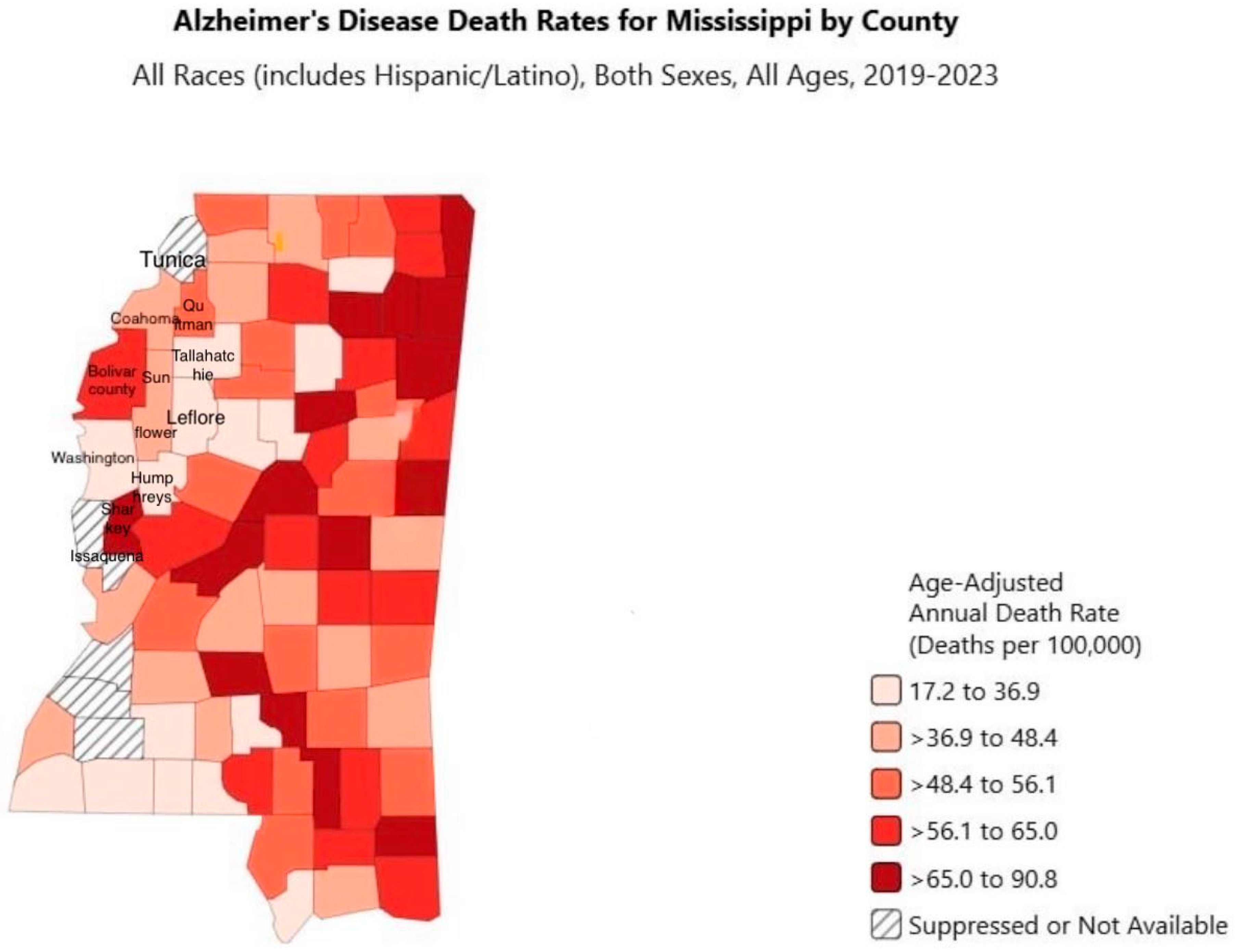
Figure 1. Age-adjusted Alzheimer’s disease mortality rates per 100,000 population by county in Mississippi, 2019–2023. Counties are shaded from light pink to dark red to represent increasing mortality, ranging from 17.2–90.8 deaths per 100,000. Diagonal shading denotes counties with suppressed or unavailable data due to fewer than 16 reported deaths. Source: HDPulse, National Institute on Minority Health and Health Disparities (NIMHD), 2025 [21].
Jdad 02 00044 g001
Table 1. County-Level Trends in Alzheimer’s Disease Mortality Rates in the Mississippi Delta, 2016–2022.
CharacteristicNo. of Cases (Age-Adjusted Rates)No. of Cases (Age-Adjusted Rates)AAPC (95% CI)Trend Segment 1 (95% CI)
201620222016–2022YearsAPC
CountiesBolivar17 (50.8)19 (55)7.4 (−5.3 to 29.1)2016–20227.4 (−5.3 to 29.1)
Coahoma7 (24.1)10 (41.9)1.5 (−16.7 to 25.1)2016–20221.5 (−16.7 to 25.1)
Humphreys8 (89.2)5 (46.4)−10.3 (−27.6 to −1.6) Segment 1: 2016–2020
Segment 2: 2020–2022
−25 (−54.9 to −8.1)
28.3 (−29.6 to 111.1)
Leflore14 (41.9)10 (37.1)−9.3 (−26.4 to 3.4)2016–2022−9.3 (−26.4 to 3.4)
Quitman* (46.4)* (64)5 (−16.7 to 39.7)2016–20225 (−16.7 to 39.7)
Sharkey* (53.4)* (53.3)13.4 (1.4 to 31.4) 2016–202213.4 (1.4 to 31.4)
Sunflower12 (49.6)14 (54.7)1.6 (−7.9 to 12.6)2016–20221.6 (−7.9 to 12.6)
Tallahatchie7 (43.7)* (29.1)−1.3 (−18.6 to 24.5)2016–2022−1.3 (−18.6 to 24.5)
Washington8 (15.3)11 (24.2)−1.5 (−10.2 to 7.8)2016–2022−1.5 (−10.2 to 7.8)
Note: Due to data suppression in counties with fewer than 5 deaths and the use of population estimates prior to the final 2020 census, death counts and rates may be subject to minor revisions in future data releases. * Data suppressed due to fewer than 5 deaths. Statistically significant trend at p < 0.05.
Table 2. Racial Disparities in Alzheimer’s Mortality Rates, 2016–2022.
Characteristic No. of Cases (Age-Adjusted Rates)No. of Cases (Age-Adjusted Rates)AAPC (95% CI)Trend Segment 1 (95% CI)
201620222016–2022YearsAPC
RaceWhite61 (56.6)37 (39.7)−2.9 (−12.3 to 7.6)2016–2022−2.9 (−12.3 to 7.6)
Black19 (17.4)45 (42.1)8.3 (2.6 to 16)2016–20228.3 (2.6 to 16)
Source: Data from the Mississippi Statistically Automated Health Resource System (MSTAHRS) [19]. Calculations and analysis were performed by the author.
Table 3. Gender Differences in Alzheimer’s Mortality, 2016–2022.
Characteristic No. of Cases (Age-Adjusted Rates)No. of Cases (Age-Adjusted Rates)AAPC (95% CI)Trend Segment 1 (95% CI)
201620222016–2022YearsAPC
GenderMale24 (32.4) 21 (28.5)2.5 (−8.9 to 15.7)2016–20222.5 (−8.9 to 15.7)
Female56 (39.1)61 (46.4)1.6 (−6.7 to 10.9)2016–20221.6 (−6.7 to 10.9)
Source: Data from the Mississippi Statistically Automated Health Resource System (MSTAHRS) [19]. Calculations and analysis were performed by the author.
Disclaimer/Publisher’s Note: The statements, opinions and data contained in all publications are solely those of the individual author(s) and contributor(s) and not of MDPI and/or the editor(s). MDPI and/or the editor(s) disclaim responsibility for any injury to people or property resulting from any ideas, methods, instructions or products referred to in the content.