



When Work Moves Home: Remote Work, Occupational Stress, Mental Health, Burnout and Employee Well-Being: Trends and Strategic Roadmap



Abstract
1. Introduction
2. Materials and Methods
(TITLE-ABS-KEY (“remote work” OR telework OR telecommuting OR “hybrid work”)ANDTITLE-ABS-KEY (burnout OR “occupational stress” OR “job stress” OR “work stress”)ANDTITLE-ABS-KEY (“well-being” OR “mental health” OR “employee wellness” OR “work-life balance”))AND PUBYEAR > 1999 AND PUBYEAR < 2026AND (LIMIT-TO (DOCTYPE, “ar”) OR LIMIT-TO (DOCTYPE, “re”))AND (LIMIT-TO (LANGUAGE, “English”))
3. Results
3.1. Bibliometric Analysis
3.1.1. Performance Analysis
3.1.2. Science Mapping
4. Discussion
4.1. Narrative Synthesis of Thematic Clusters
4.1.1. The COVID-19 Pandemic as a Catalyst for Remote Work and Changing Well-Being Dynamics
4.1.2. Mental Health and Occupational Stress Under Evolving Work Conditions
4.1.3. Exploring Burnout Dynamics in the Wake of the COVID-19 Pandemic
4.2. Integrative Discussion of Remote Work, Stress, Mental Health and Burnout
5. Conclusions
Author Contributions
Funding
Institutional Review Board Statement
Informed Consent Statement
Data Availability Statement
Acknowledgments
Conflicts of Interest
References
- Almonacid-Nieto, J. M., Calderón-Espinal, M. A., & Vicente-Ramos, W. (2020). Teleworking effect on job burnout of higher education administrative personnel in the Junín region, Peru. International Journal of Data and Network Science, 4(4), 373–380. [Google Scholar] [CrossRef]
- Alonso, A. C., Máximo de Carvalho, A. O., Lira, J. S., Paixão, V. C., Modenes, R. D., de Cássia Ernandes, R., Carneiro da Silva, V., Scherrer, G. S., Passos, K. G., Dos Santos Lino, M., de Lurdes Rosas da Silva, S., Brito-Costa, S., Furtado, G. E., & Brech, G. C. (2025). Lessons for the COVID era and beyond: The impact of inactive lifestyle and mental health events on burnout syndrome in university professors working from home during the pandemic. Heliyon, 11(3), e42256. [Google Scholar] [CrossRef]
- Alotaiby, R., & Krenyácz, É. (2025). Optimizing healthcare worker well-being research: A bibliometric network analysis and temporal trend evaluation (2013–2022). Journal of Optimization in Industrial Engineering, 18(1), 195–209. [Google Scholar] [CrossRef]
- Arango-Lasprilla, S. C., Albaladejo-Blazquez, N., Christ, B. R., Moreno, O. A., Restrepo Botero, J. C., Perrin, P. B., & Ferrer-Cascales, R. (2025). Predictors of depression and anxiety symptoms in teachers from 19 Latin American countries and Spain due to the COVID-19 pandemic. Psychology International, 7(2), 33. [Google Scholar] [CrossRef]
- Arruda, H., Silva, E. R., Lessa, M., Proença, D., Jr., & Bartholo, R. (2022). VOSviewer and bibliometrix. Journal of the Medical Library Association: JMLA, 110(3), 392. [Google Scholar] [CrossRef]
- Bakarich, K. M., Marcy, A. S., & O’Brien, P. E. (2022). Has the fever left a burn?A study of the impact of COVID-19 remote working arrangements on public accountants’ burnout. Accounting Research Journal, 35(6), 792–814. [Google Scholar] [CrossRef]
- Barriga Medina, H. R., Campoverde Aguirre, R., Coello-Montecel, D., Ochoa Pacheco, P., & Paredes-Aguirre, M. I. (2021). The influence of work–Family conflict on burnout during the covid-19 pandemic: The effect of teleworking overload. International Journal of Environmental Research and Public Health, 18(19), 10302. [Google Scholar] [CrossRef]
- Bautista, T. G., Roman, G., Khan, M., Lee, M., Sahbaz, S., Duthely, L. M., Knippenberg, A., MacIas-Burgos, M. A., Davidson, A., Scaramutti, C., Gabrilove, J., Pusek, S., Mehta, D., & Bredella, M. A. (2023). What is well-being? A scoping review of the conceptual and operational definitions of occupational well-being. Journal of Clinical and Translational Science, 7(1), e227. [Google Scholar] [CrossRef] [PubMed]
- Berger Ploszaj, H. H., Rocha Fernandes, B. H., Camou Viacava, J. J., & Nassar Cardoso, A. (2025). Understanding the associations between “work from home”, job satisfaction, work-life balance, stress, and gender in an organizational context of remote work. Discover Psychology, 5(1), 1–16. [Google Scholar] [CrossRef]
- Bodner, A., Ruhl, L., Barr, E., Shridhar, A., Skakoon-Sparling, S., & Card, K. G. (2022). The impact of working from home on mental health: A cross-sectional study of Canadian worker’s mental health during the third wave of the COVID-19 pandemic. International Journal of Environmental Research and Public Health, 19(18), 11588. [Google Scholar] [CrossRef]
- Bondanini, G., Giovanelli, C., Mucci, N., & Giorgi, G. (2025). The dual impact of digital connectivity: Balancing productivity and well-being in the modern workplace. International Journal of Environmental Research and Public Health, 22(6), 845. [Google Scholar] [CrossRef]
- Bosco, M. G., Salerno, S., & Valcella, F. (1999). Work and mental health: An integrated program among occupational health services and mental health centres. Medicina del Lavoro, 90(6), 752–761. Available online: https://www.scopus.com/inward/record.uri?eid=2-s2.0-0033401942&partnerID=40&md5=568a95a0d33db9d0f7980f72f1f28a7b (accessed on 30 October 2025).
- Bullini Orlandi, L., Poček, J., Kraus, S., Zardini, A., & Rossignoli, C. (2024). Digital workers’ stress: The role of digital creativity in the future jobs. Journal of Innovation and Knowledge, 9(2), 100492. [Google Scholar] [CrossRef]
- Cavallari, J. M., Bruno Garza, J. L., Charamut, N. R., Szarka, C., Perry, S. D., Laguerre, R. A., Sanetti, L. M. H., & Dugan, A. G. (2023). Impact of work schedule characteristics on teacher mental health and burnout symptoms while remote working. American Journal of Industrial Medicine, 66(10), 884–896. [Google Scholar] [CrossRef]
- Chaput, J. P., Tremblay, M. S., Goldfield, G. S., Prince, S. A., Biswas, A., Colley, R. C., & Lang, J. J. (2025). Is working from home good for mental health and well-being? Associations between work location, self-rated mental health, life satisfaction, and life and work stress among Canadian adults. Mental Health and Prevention, 38, 200418. [Google Scholar] [CrossRef]
- Chirico, F., Crescenzo, P., Nowrouzi-kia, B., Tarchi, L., Batra, K., Ferrari, G., Yıldırım, M., Romano, A., Nucera, G., Ripa, S., Sharma, M., & Leiter, M. (2022). Prevalence and predictors of burnout syndrome among schoolteachers during the COVID-19 pandemic in Italy: A cross-sectional survey. Journal of Health and Social Sciences, 7(2), 195–211. [Google Scholar] [CrossRef]
- Consiglio, C., Massa, N., Sommovigo, V., & Fusco, L. (2023). Techno-stress creators, burnout and psychological health among remote workers during the pandemic: The moderating role of e-work self-efficacy. International Journal of Environmental Research and Public Health, 20(22), 7051. [Google Scholar] [CrossRef] [PubMed]
- Cutshall, S. M., Mallory, M. J., Noehl, S. M., Soderlind, J. N., Fischer, K. M., Nanda, S., Bauer, B. A., & Wahner-Roedler, D. L. (2024). Effect of aromatherapy on perceived mental health parameters for academic department workers working from home during the COVID-19 pandemic: A pilot study. Global Advances in Integrative Medicine and Health, 13, 1–8. [Google Scholar] [CrossRef] [PubMed]
- de Wind, A., Beckers, D. G. J., Nijp, H. H., Hooftman, W., de Boer, A. G. E. M., & Geurts, S. A. E. (2021). Working from home: Mismatch between access and need in relation to work–home interference and fatigue. Scandinavian Journal of Work, Environment and Health, 47(8), 619–627. [Google Scholar] [CrossRef]
- Donthu, N., Kumar, S., Mukherjee, D., Pandey, N., & Lim, W. M. (2021). How to conduct a bibliometric analysis: An overview and guidelines. Journal of Business Research, 133, 285–296. [Google Scholar] [CrossRef]
- Egami, S. (2025). Effect of intensive parenting attitude on maternal well-being and self-efficacy among Japanese housewives and part-time working mothers. Psychology International, 7(2), 47. [Google Scholar] [CrossRef]
- Figueiredo, E., Margaça, C., Hernández-Sánchez, B., & Sánchez-García, J. C. (2024). Teleworking effects on mental health—A systematic review and a research agenda. International Journal of Environmental Research and Public Health, 21(3), 243. [Google Scholar] [CrossRef]
- Galanti, T., Guidetti, G., Mazzei, E., Zappalà, S., & Toscano, F. (2021). Work from home during the COVID-19 outbreak: The impact on employees’ remote work productivity, engagement, and stress. Journal of Occupational and Environmental Medicine, 63(7), e426–e432. [Google Scholar] [CrossRef]
- Gerich, J. (2023). Prepared for home-based telework? The relation between telework experience and successful workplace arrangements for home-based telework during the COVID-19 pandemic. Journal of Occupational and Environmental Medicine, 65(11), 967–975. [Google Scholar] [CrossRef] [PubMed]
- Gilbert, J. M., Fruhen, L. S., Burton, C. T., & Parker, S. K. (2023). The mental health of fly-in fly-out workers before and during COVID-19: A comparison study. Australian Journal of Psychology, 75(1), 2170280. [Google Scholar] [CrossRef]
- Goel, R., & Singla, J. (2025). Well-being of remote workers in work-from-home settings: A bibliometric perspective. Journal of Organizational Effectiveness. ahead-of-print. [Google Scholar] [CrossRef]
- Goel, R., Singla, J., Mittal, A., & Arora, M. (2025). A decade analysis of employees’ well-being and performance while working from home: A bibliometric approach. Information Discovery and Delivery, 53(1), 22–42. [Google Scholar] [CrossRef]
- Gore, M. N. (2024). Loss of work-life balance, experience of stress and anxiety among professionals working from home—An exploratory study in a western Indian city. International Journal of Occupational Safety and Health, 14(3), 374–383. [Google Scholar] [CrossRef]
- Gorshkova, M. O., & Lebedeva, P. S. (2023). The impact of transition to a remote work format on the mental health of employees. Population and Economics, 7(1), 54–76. [Google Scholar] [CrossRef]
- Gualano, M. R., Santoro, P. E., Borrelli, I., Rossi, M. F., Amantea, C., Daniele, A., & Moscato, U. (2023). TElewoRk-RelAted stress (TERRA), psychological and physical strain of working from home during the COVID-19 pandemic: A systematic review. Workplace Health & Safety, 71(2), 58–67. [Google Scholar] [CrossRef]
- Guseva-Canu, I., Marca, S. C., Dell’Oro, F., Ádám, A., Bergamaschi, E., Besse, C., Bianchi, R., Bislimovska, J., Košćec Bjelajac, A. K., Bugge, M., Busneag, C. I., Çaǧlayan, C., Cerniţanu, M., Costa Pereira, C. C., Hafner, N. D., Droz, N., Eglīte, M., Godderis, L., Guendel, H., … Wahlen, A. (2021). Harmonized definition of occupational burnout: A systematic review, semantic analysis, and Delphi consensus in 29 countries. Scandinavian Journal of Work, Environment and Health, 47(2), 95–107. [Google Scholar] [CrossRef]
- Gutworth, M. B., Howard, M. C., & Simonet, D. V. (2024). Mandated but willing? Preferences and expectations among mandatory work from home employees. Human Resource Management Journal, 34(3), 627–646. [Google Scholar] [CrossRef]
- Henke, J. B., Jones, S. K., & O’Neill, T. A. (2022). Skills and abilities to thrive in remote work: What have we learned. Frontiers in Psychology, 13, 893895. [Google Scholar] [CrossRef]
- Höcker, M. C., Bachtal, Y., Voll, K., & Pfnuer, A. (2024). Healthy, healthier, hybrid work: The burnout-reducing potential of remote work and the mediating effect of work autonomy. International Journal of Workplace Health Management, 17(4), 319–334. [Google Scholar] [CrossRef]
- Hsu, D. H., & Tambe, P. B. (2025). Remote work and job applicant diversity: Evidence from technology startups. Management Science, 71(1), 595–614. [Google Scholar] [CrossRef]
- Karakitsiou, G., Plakias, S., Vlotinou, P., & Tsiakiri, A. (2025). Assessing the impact of sports and team sports participation on mental health and empowerment at the individual and societal levels: Insights from a Scopus bibliometric analysis. Journal of Physical Education and Sport, 25(2), 227–240. [Google Scholar] [CrossRef]
- Koutra, K., Mavroeides, G., & Triliva, S. (2025). The costs of caring: Prevalence and associated factors of burnout, compassion fatigue, and compassion satisfaction among mental health professionals in Greece. Psychology International, 7(3), 58. [Google Scholar] [CrossRef]
- Kumar, A., Priyadarshi, P., & Garg, N. (2024). Bibliometric analysis of remote working: 20-year literature review. Human Resource Development Review, 24(3), 331–374. [Google Scholar] [CrossRef]
- Kuśnierz, C., Rogowska, A. M., Chilicka, K., Pavlova, I., & Ochnik, D. (2022). Associations of work-family conflict with family-specific, work-specific, and well-being-related variables in a sample of Polish and Ukrainian adults during the second wave of the COVID-19 pandemic: A cross-sectional study. International Journal of Environmental Research and Public Health, 19(17), 10954. [Google Scholar] [CrossRef] [PubMed]
- Kweon, J., Kim, Y., Choi, H., Im, W., & Kim, H. (2024). Enhancing sleep and reducing occupational stress through forest therapy: A comparative study across job groups. Psychiatry Investigation, 21(10), 1120–1128. [Google Scholar] [CrossRef]
- Lange, M., & Kayser, I. (2022). The role of self-efficacy, work-related autonomy and work-family conflict on employee’s stress level during home-based remote work in Germany. International Journal of Environmental Research and Public Health, 19(9), 4955. [Google Scholar] [CrossRef]
- Latorre, F., Pérez-Nebra, A. R., Queiroga, F., & Alcover, C. M. (2021). How do teleworkers and organizations manage the COVID-19 crisis in Brazil? The role of flexibility i-deals and work recovery in maintaining sustainable well-being at work. International Journal of Environmental Research and Public Health, 18(23), 12522. [Google Scholar] [CrossRef]
- Lehr, D., Geraedts, A., Persson Asplund, R., Khadjesari, Z., Heber, E., de Bloom, J., Daniel Ebert, D. D., Angerer, P., & Funk, B. (2016). Occupational e-mental health: Current approaches and promising perspectives for promoting mental health in workers. In Healthy at Work (pp. 257–281). Springer. [Google Scholar] [CrossRef]
- Li, L. Z., & Wang, S. (2022). Do work-family initiatives improve employee mental health? Longitudinal evidence from a nationally representative cohort. Journal of Affective Disorders, 297, 407–414. [Google Scholar] [CrossRef]
- Loezar-Hernández, M., Briones-Vozmediano, E., Ronda-Pérez, E., & Otero-García, L. (2023). Juggling during lockdown: Balancing telework and family life in pandemic times and its perceived consequences for the health and wellbeing of working women. International Journal of Environmental Research and Public Health, 20(6), 4781. [Google Scholar] [CrossRef] [PubMed]
- Magǹavita, N., Tripepi, G., & Chiorri, C. (2021). Telecommuting, off-time work, and intrusive leadership in workers’ well-being. International Journal of Environmental Research and Public Health, 18(7), 3330. [Google Scholar] [CrossRef]
- Mheidly, N., Fares, M. Y., & Fares, J. (2020). Coping With stress and burnout associated with telecommunication and online learning. Frontiers in Public Health, 8, 574969. [Google Scholar] [CrossRef]
- Miyake, F., Odgerel, C.-O., Hino, A., Ikegami, K., Nagata, T., Tateishi, S., Tsuji, M., Matsuda, S., & Ishimaru, T. (2022). Job stress and loneliness among desk workers during the COVID-19 pandemic in Japan: Focus on remote working. Environmental Health and Preventive Medicine, 27, 33. [Google Scholar] [CrossRef]
- Mohr, D. C., Elnahal, S., Marks, M. L., Derickson, R., & Osatuke, K. (2025). Burnout trends among US health care workers. JAMA Network Open, 8, e255954. [Google Scholar] [CrossRef] [PubMed]
- Natomi, K., Kato, H., & Matsushita, D. (2022). Work-related stress of work from home with housemates based on residential types. International Journal of Environmental Research and Public Health, 19(5), 3060. [Google Scholar] [CrossRef] [PubMed]
- Oakman, J., Lambert, K. A., Weale, V. P., Stuckey, R., & Graham, M. (2023). Employees working from home: Do leadership factors influence work-related stress and musculoskeletal pain? International Journal of Environmental Research and Public Health, 20(4), 3046. [Google Scholar] [CrossRef]
- Oksanen, A., Oksa, R., Celuch, M., Cvetkovic, A., & Savolainen, I. (2023). COVID-19 Anxiety and wellbeing at work in finland during 2020–2022: A 5-wave longitudinal survey study. International Journal of Environmental Research and Public Health, 20(1), 680. [Google Scholar] [CrossRef]
- Omorede, A., & Berglund, R. T. (2024). The level of burnout and cognitive stress in managers when teleworking: The impact of psychosocial safety climate and the mediating role of demand-control-support. International Journal of Workplace Health Management, 17(3), 220–240. [Google Scholar] [CrossRef]
- Otukoya, E. Z., Amiri, A., & Alimohammadi, E. (2025). Surgeon well-being: A systematic review of stressors, mental health, and resilience. BMC Surgery, 25(1), 430. [Google Scholar] [CrossRef]
- Pamboris, G. M., Plakias, S., Tsiakiri, A., Karakitsiou, G., Bebeletsi, P., Vadikolias, K., Aggelousis, N., Tsiptsios, D., & Christidi, F. (2024). Physical therapy in neurorehabilitation with an emphasis on sports: A bibliometric analysis and narrative review. Sports, 12(10), 276. [Google Scholar] [CrossRef]
- Passas, I. (2024). Bibliometric analysis: The main steps. Encyclopedia, 4(2), 1014–1025. [Google Scholar] [CrossRef]
- Pathak, A., Kadyan, S., Kothari, H., Singh, S., & Srinivas, V. (2025). The role of emotional intelligence, well-being and occupational stress on teacher mental-health in educational settings. TPM—Testing, Psychometrics, Methodology in Applied Psychology, 32(S1), 98–116. Available online: https://www.scopus.com/inward/record.uri?eid=2-s2.0-105014450317&partnerID=40&md5=69bcf6d5a7450bb9df01e79d22ebde33 (accessed on 30 October 2025).
- Petcu, M. A., Sobolevschi-David, M. I., Creţu, R. F., Curea, S. C., Hristea, A. M., Oancea-Negescu, M. D., & Ţuţui, D. (2023). Telework: A social and emotional perspective of the impact on employees’ wellbeing in the COVID-19 pandemic. International Journal of Environmental Research and Public Health, 20(3), 1811. [Google Scholar] [CrossRef] [PubMed]
- Petscavage, J. M., Hardy, S., & Chetlen, A. (2022). Mitigation tactics discovered during COVID-19 with long-term report turnaround time and burnout reduction benefits. Academic Radiology, 29(12), 1786–1791. [Google Scholar] [CrossRef]
- Pélissier, C., Paredes, J., Moulin, M., Bitot, T., Fakra, E., & Fontana, L. (2021). Telework and psychological health in hospital staff during the first wave of the COVID-19 epidemic in France. International Journal of Environmental Research and Public Health, 18(19), 10433. [Google Scholar] [CrossRef] [PubMed]
- Plakias, S. (2025). Review articles on soccer performance analysis: A bibliometric analysis of current trends and emerging themes. Sports, 13(5), 131. [Google Scholar] [CrossRef]
- Plakias, S., & Karakitsiou, G. (2024). Neuropsychophysiological aspects of soccer performance: A bibliometric analysis and narrative review. Perceptual and Motor Skills, 131(6), 2346–2368. [Google Scholar] [CrossRef]
- Popova, E. S., J Hahn, B., Morris, H., Loomis, K., Shy, E., Andrews, J., Iacullo, M., & Peters, A. (2023). Exploring well-being: Resilience, stress, and self-care in occupational therapy practitioners and students. OTJR Occupation, Participation and Health, 43(2), 159–169. [Google Scholar] [CrossRef]
- Pourtier-Tillinac, H., & Wendland, J. (2025). Working from home and parental burnout: Protection or risk? A qualitative exploratory study. Evolution Psychiatrique. in press. [Google Scholar] [CrossRef]
- Reisberger, T., & Copuš, L. (2025). Framework for remote work: Distances and resources clustering approach. In Lecture notes on data engineering and communications technologies (Vol. 253, pp. 323–334). Springer. [Google Scholar] [CrossRef]
- Rodríguez-Modroño, P. (2023). Digital stress. effects of different intensities of working from home on workers’ health. Journal of Occupational and Environmental Medicine, 65(4), E240–E245. [Google Scholar] [CrossRef]
- Rohwer, E., Harth, V., & Mache, S. (2024). “The magic triangle between bed, office, couch”: A qualitative exploration of job demands, resources, coping, and the role of leadership in remote work during the COVID-19 pandemic. BMC Public Health, 24(1), 476. [Google Scholar] [CrossRef]
- Sasaki, N., Kuroda, R., Mikami, Y., Tsuno, K., Imamura, K., Nishi, D., & Kawakami, N. (2023). Working environment at home and mental health in employees working from home in Japan during COVID-19 pandemic: A cross-sectional study. Journal of Occupational Health, 65(1), e12410. [Google Scholar] [CrossRef] [PubMed]
- Selvaskandan, H., Nimmo, A., Savino, M., Afuwape, S., Brand, S., Graham-Brown, M., Medcalf, J., Cockwell, P., & Beckwith, H. (2022). Burnout and long COVID among the UK nephrology workforce: Results from a national survey investigating the impact of COVID-19 on working lives. Clinical Kidney Journal, 15(3), 517–526. [Google Scholar] [CrossRef]
- Serrão, C., Rodrigues, A. R., Teixeira, A., Castro, L., & Duarte, I. (2022). The impact of teleworking in psychologists during COVID-19: Burnout, depression, anxiety, and stress. Frontiers in Public Health, 10, 984691. [Google Scholar] [CrossRef]
- Smith, A. J., Wright, H., Griffin, B. J., Ehman, A. C., Shoji, K., Love, T. M., Morrow, E., Locke, A., Call, M., Kerig, P. K., Olff, M., Benight, C. C., & Langenecker, S. A. (2021). Mental health risks differentially associated with immunocompromised status among healthcare workers and family members at the pandemic outset. Brain, Behavior, and Immunity—Health, 15, 100285. [Google Scholar] [CrossRef]
- Somasundram, K. G., Hackney, A., Yung, M., Du, B., Oakman, J., Nowrouzi-Kia, B., & Yazdani, A. (2022). Mental and physical health and well-being of Canadian employees who were working from home during the COVID-19 pandemic. BMC Public Health, 22(1), 1987. [Google Scholar] [CrossRef]
- Staniulienė, S., & Jurova, J. (2021). Remote job design possibilities to work in lithuanian companies from distant locations. Research for Rural Development, 36. [Google Scholar] [CrossRef]
- Tan, L. D. C., & Urdan, T. (2025). Exploring the responsibilities, boundaries, and well-being of teachers in the philippines. Psychology International, 7(1), 14. [Google Scholar] [CrossRef]
- To, A. T., Bui, N. A. K., Mai, T. D. P., Dang, T. M. T., & Nguyen, T. M. T. (2024). The impact of work stress, health and safety measures, and work-life balance on job satisfaction among remote workers during the COVID-19 pandemic: A study of employees in Ho Chi Minh City, Vietnam. Journal of Logistics, Informatics and Service Science, 11(8), 465–477. [Google Scholar] [CrossRef]
- Tsiakiri, A., Plakias, S., Karakitsiou, G., Nikova, A., Christidi, F., Kokkotis, C., Giarmatzis, G., Tsakni, G., Katsouri, I. G., Sarris, S., Vadikolias, K., Aggelousis, N., & Vlotinou, P. (2024). Mapping the landscape of biomechanics research in stroke neurorehabilitation: A bibliometric perspective. Biomechanics, 4(4), 664–684. [Google Scholar] [CrossRef]
- Van Eck, N., & Waltman, L. (2010). Software survey: VOSviewer, a computer program for bibliometric mapping. Scientometrics, 84(2), 523–538. [Google Scholar] [CrossRef]
- Wadesango, N., & Gudyanga, E. (2016). Managing occupational stress. Journal of Psychology, 7(1), 32–39. [Google Scholar] [CrossRef]
- Wang, B., Saeed, S., Zhang, Y., Fang, X., & Yu, X. (2025). Does remote work adoption boost firm innovation? A cross-cultural study. International Journal of Human Resource Management, 36(6), 895–924. [Google Scholar] [CrossRef]
- Wang, Z., Liu, H., Yu, H., Wu, Y., Chang, S., & Wang, L. (2017). Associations between occupational stress, burnout and well-being among manufacturing workers: Mediating roles of psychological capital and self-esteem. BMC Psychiatry, 17(1), 364. [Google Scholar] [CrossRef] [PubMed]
- Widjaja, A., Fitria, D., Ellynia, E., & Juliani, E. (2023). The impact of COVID-19 pandemic: Daily work stress and work performance between work from home (WFH), work from office (WFO) and hybrid in Indonesia. The Medical Journal of Malaysia, 78(4), 519–522. [Google Scholar]
- Winkler-Titus, N., Gerber, C., & Ngalo, V. (2025). Well-being of remote workers: Work characteristics and challenges. SA Journal of Human Resource Management, 23, a2876. [Google Scholar] [CrossRef]
- Zhao, L., & Zhang, L. (2025). The relationship between post-traumatic stress disorder, occupational stress, occupational burnout, and mental health in football referees: A national cross-sectional survey in China. Frontiers in Public Health, 13, 1647115. [Google Scholar] [CrossRef]
- Żołnierczyk-Zreda, D., Kapica, L., Najmiec, A., Kamiñska, J., Mazur-Różycka, J., & Bugajska, J. (2025). Psychosocial working conditiond and mental well-being of remote and stationary employees: A Longitudinal Study. International Journal of Occupational Medicine and Environmental Health, 38(2), 135–150. [Google Scholar] [CrossRef]
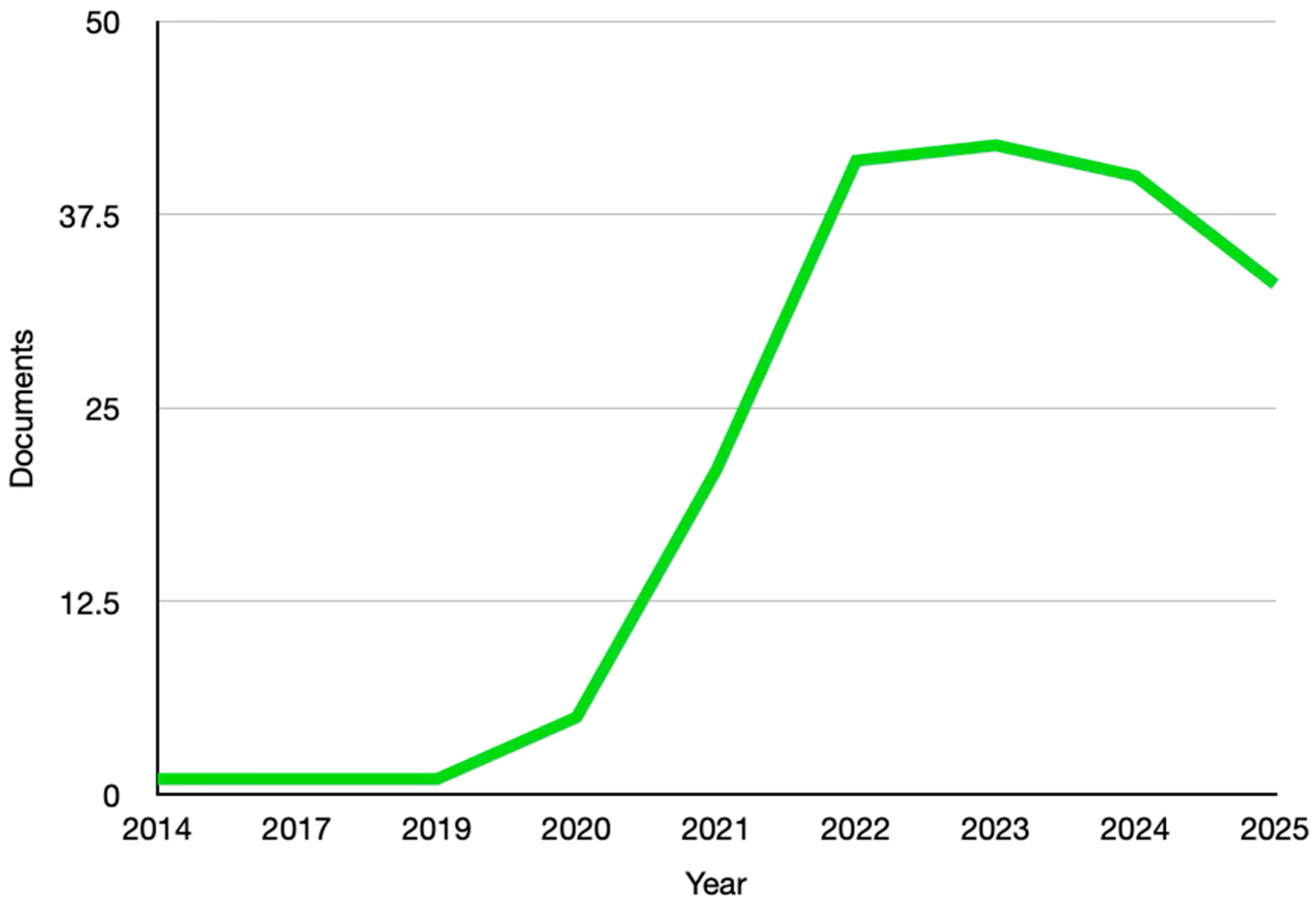
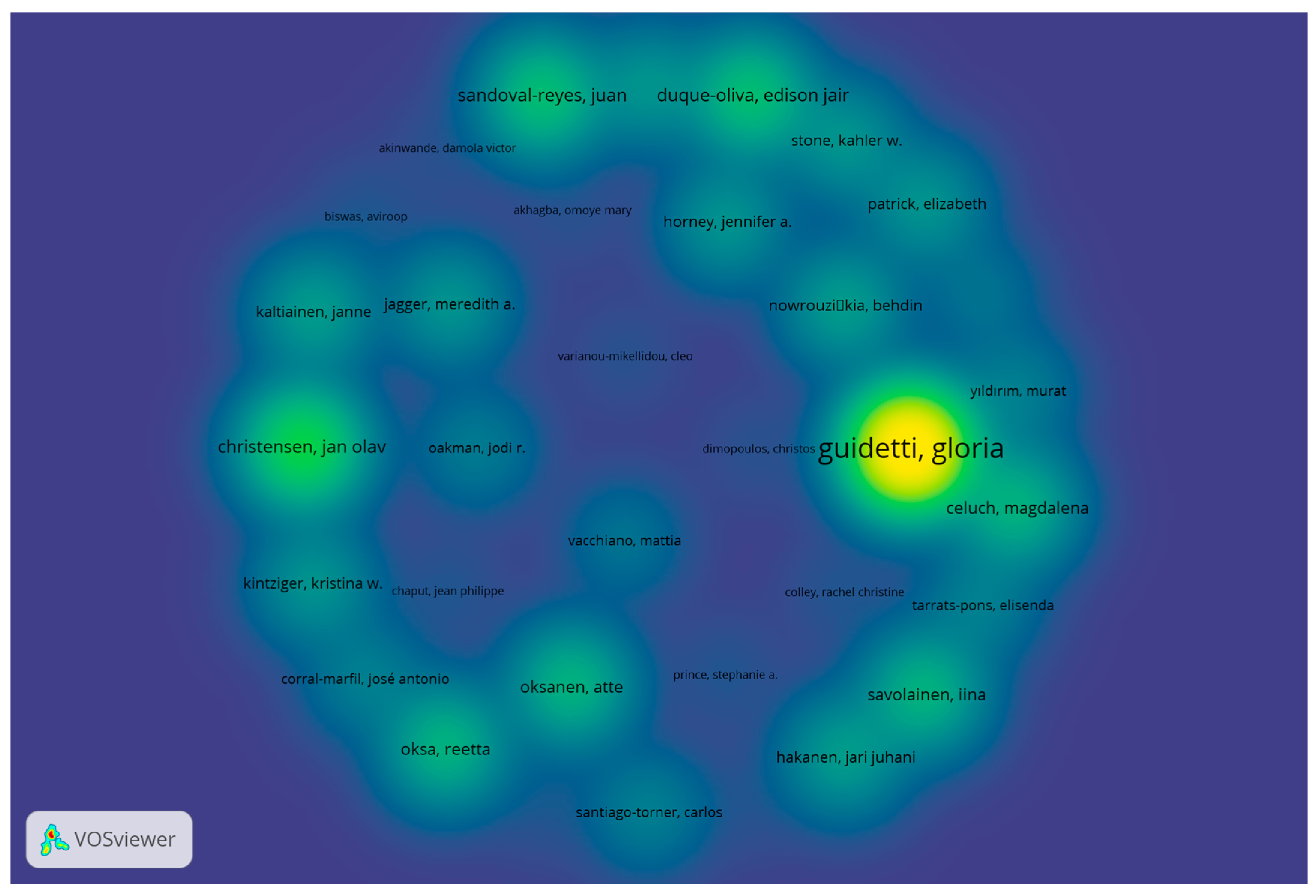
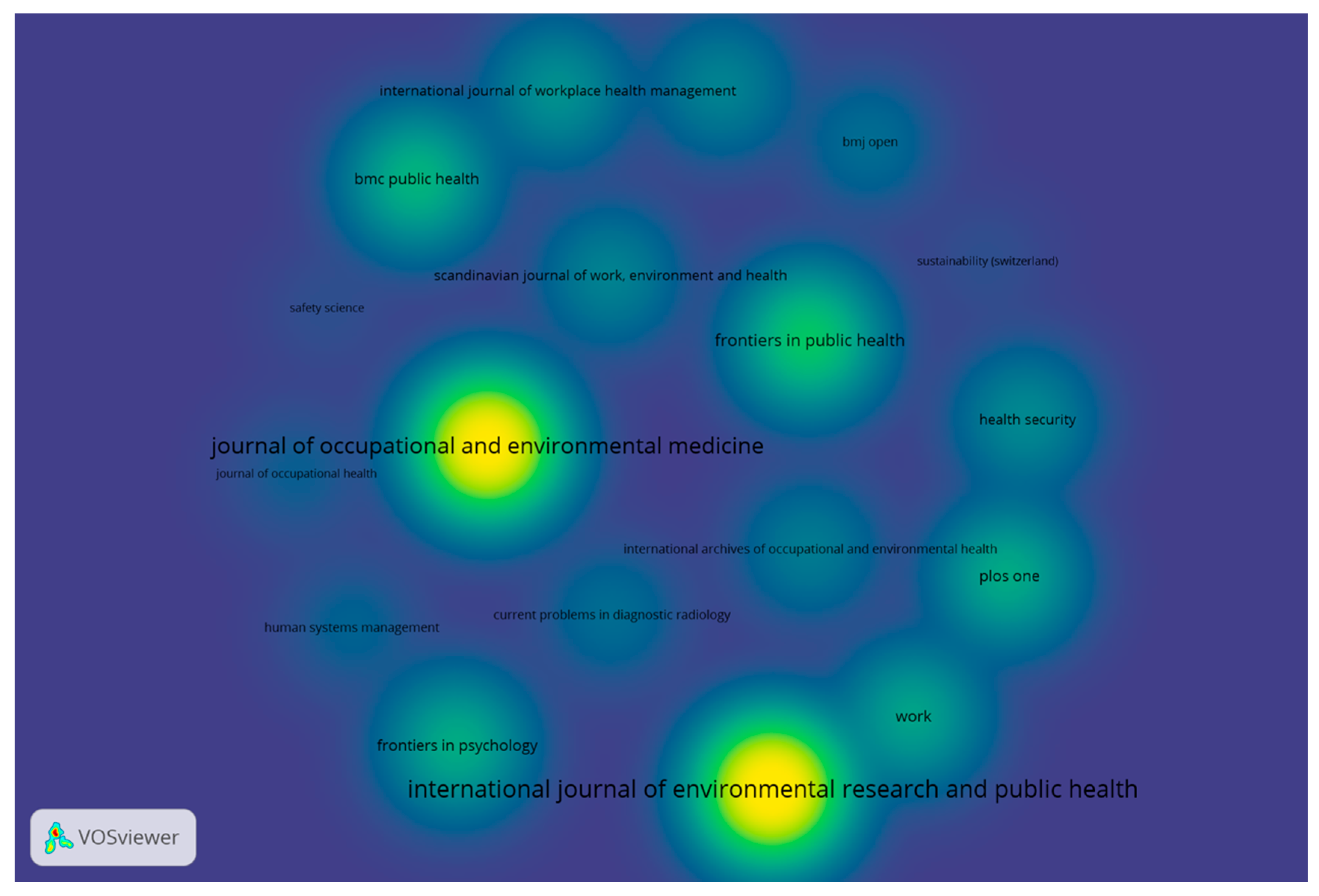
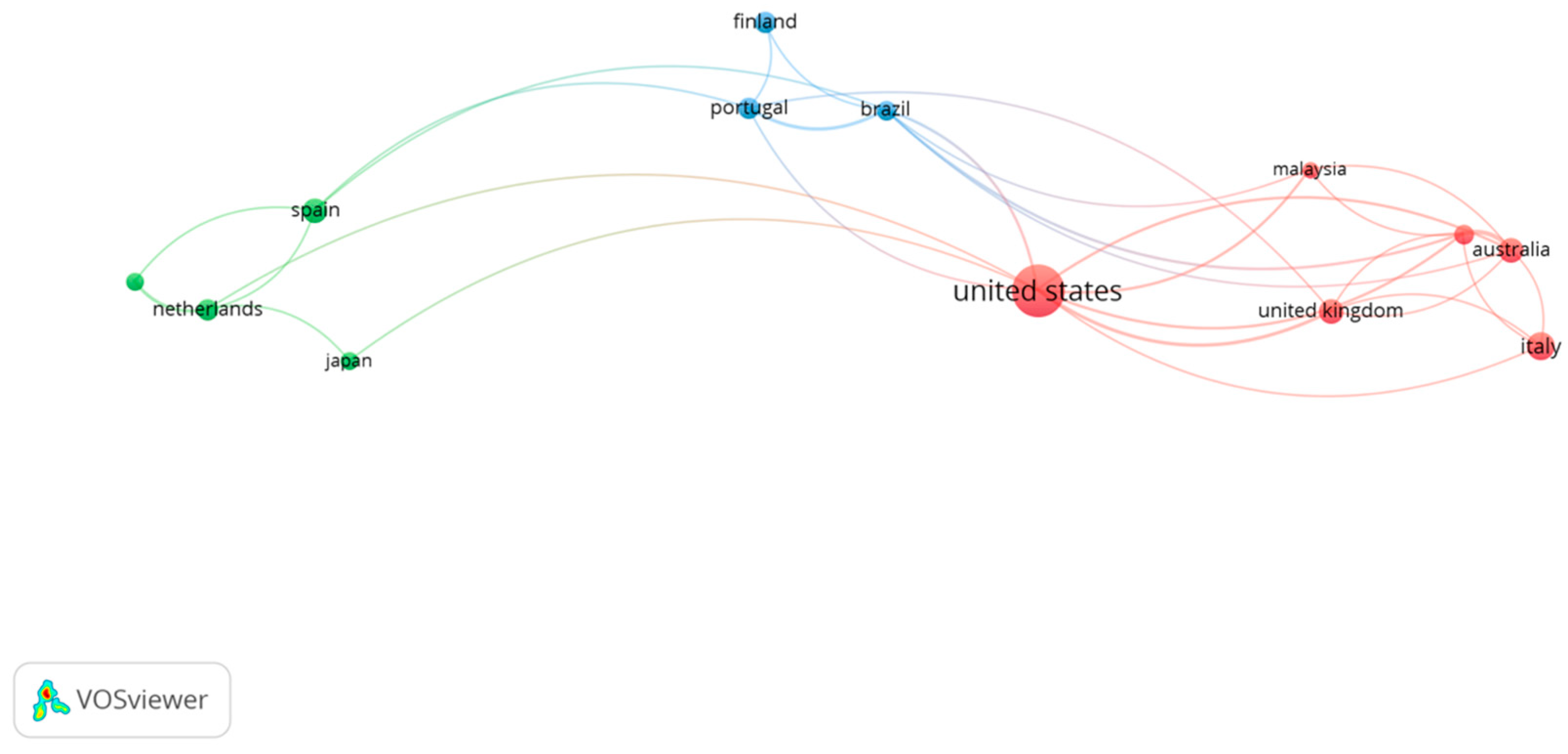
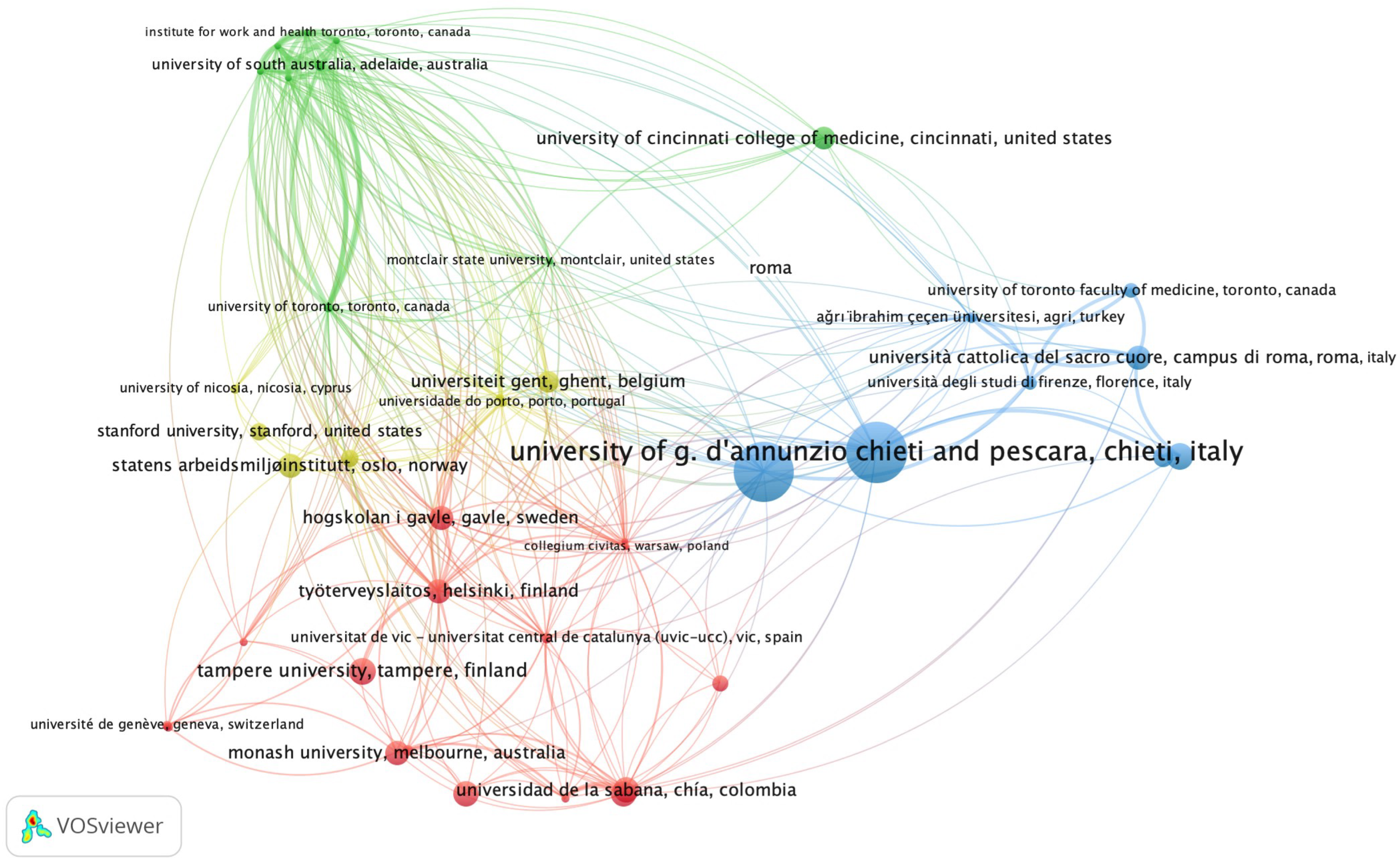
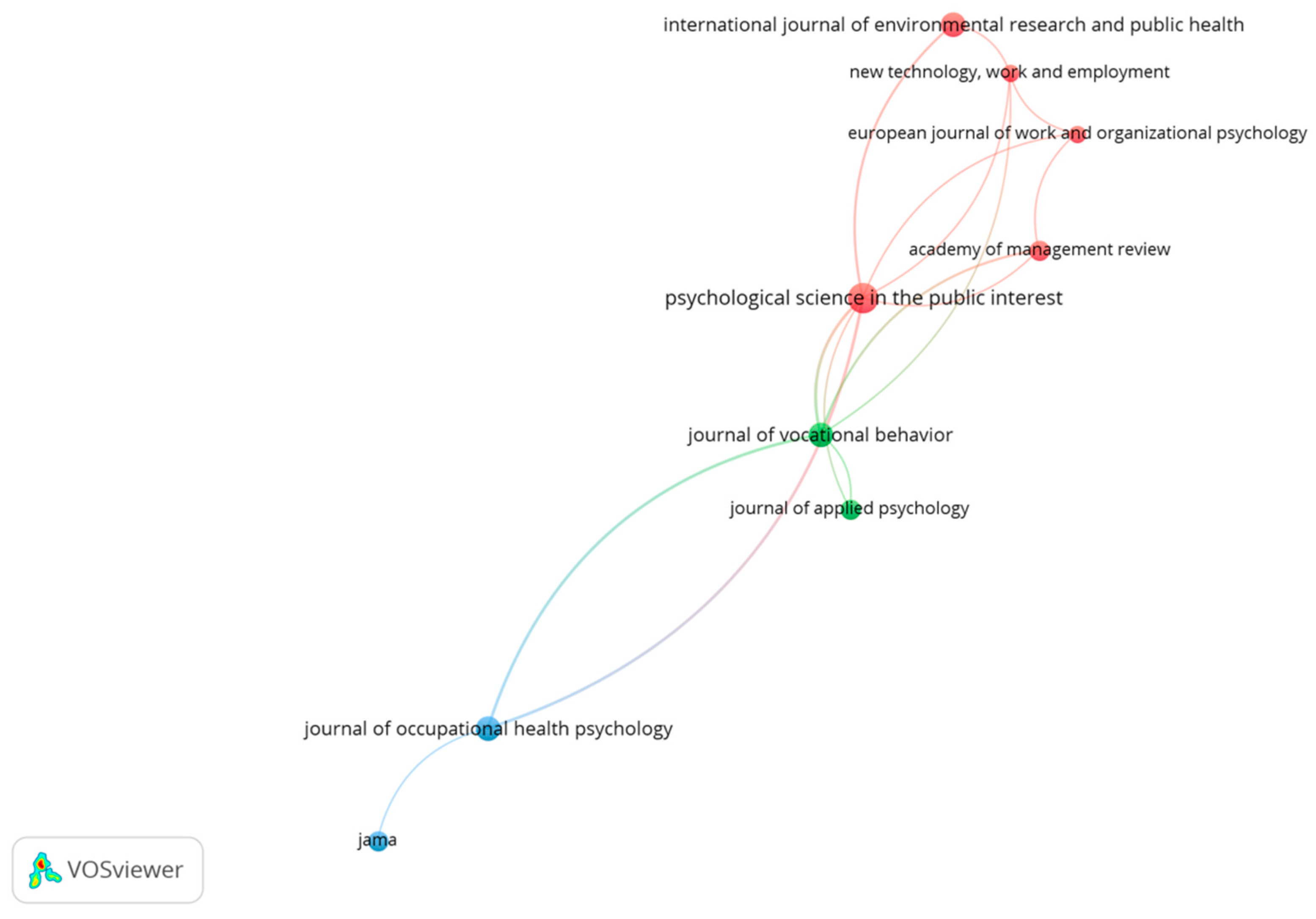
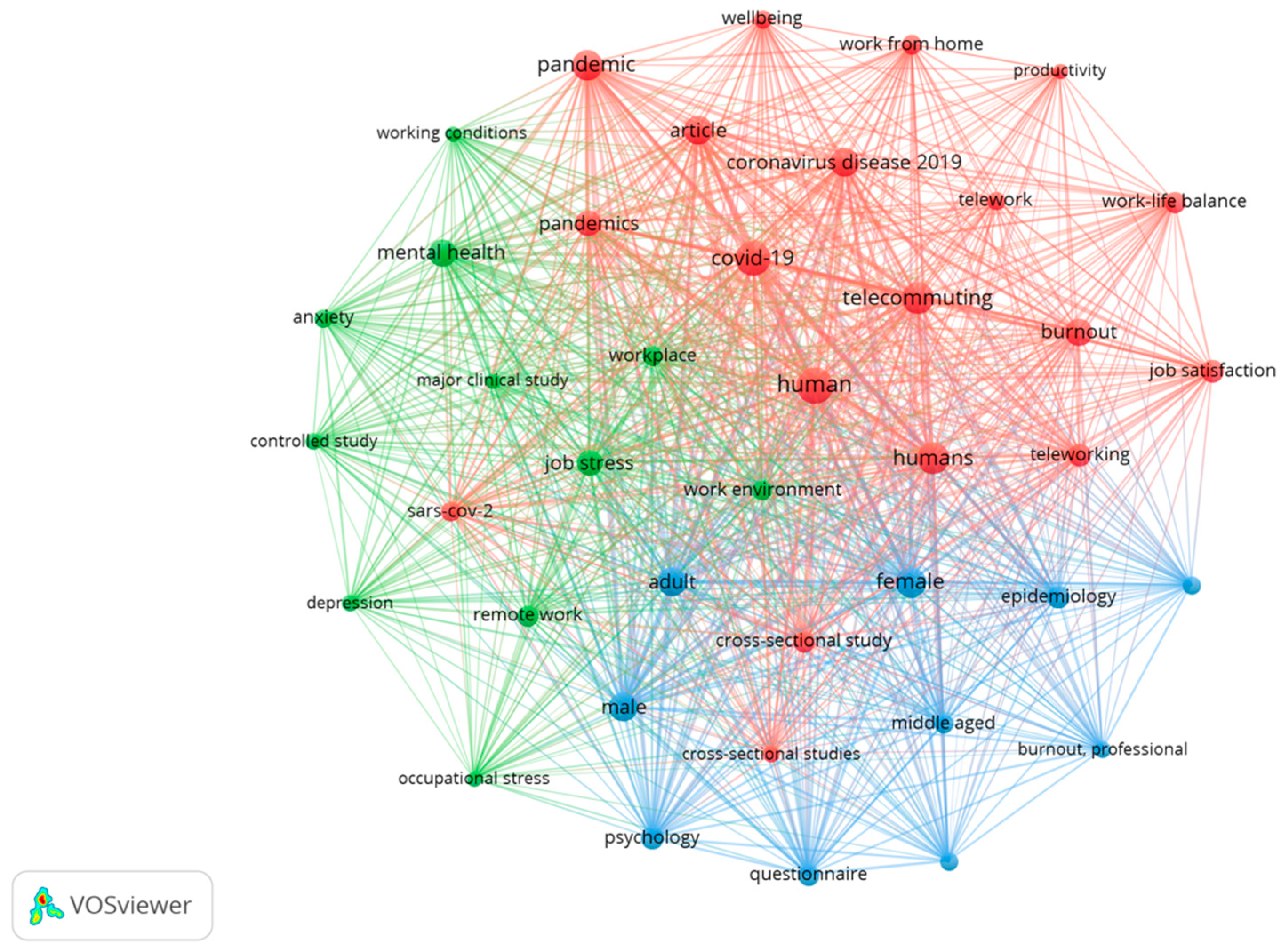

| N | Author | Documents | Citations |
|---|---|---|---|
| 1 | Guidetti, Gloria | 2 | 629 |
| 2 | Duque-Oliva, Edison Jair | 2 | 118 |
| 3 | Sandoval-Reyes, Juan | 2 | 118 |
| 4 | Christensen, Jan Olav | 2 | 101 |
| 5 | Heiden, Marina | 2 | 99 |
| 6 | Celuch, Magdalena | 2 | 91 |
| 7 | Oksa, Reetta | 2 | 91 |
| 8 | Oksanen, Atte | 2 | 91 |
| 9 | Savolainen, Jina | 2 | 91 |
| 10 | Hakanen, Jari Juhani | 2 | 56 |
| 11 | Kaltiainen, Janne | 2 | 56 |
| 12 | Nowrouzi-Kia, Behdin | 3 | 56 |
| 13 | Horney, Jennifer A. | 2 | 45 |
| 14 | Jagger, Meredith A. | 2 | 45 |
| 15 | Kintziger, Kristina W. | 2 | 45 |
| 16 | Patrick, Elizabeth | 2 | 45 |
| 17 | Scales, Sarah Elizabeth | 2 | 45 |
| 18 | Stone, Kahler W. | 2 | 45 |
| 19 | Corral-Marfil, José Antonio | 2 | 24 |
| 20 | Santiago-Torner, Carlos | 2 | 24 |
| 21 | Tarrats-Pons, Elisenda | 2 | 24 |
| 22 | Yıldırım, Murat | 2 | 24 |
| 23 | Oakman, Jodi R. | 2 | 21 |
| 24 | Fernandez, Guillaume P. | 2 | 15 |
| 25 | Vacchiano, Mattia | 2 | 15 |
| 26 | Biswas, Aviroop | 2 | 3 |
| 27 | Chaput, Jean Philippe | 2 | 3 |
| 28 | Colley, Rachel Christine | 2 | 3 |
| 29 | Lang, Justin J. | 2 | 3 |
| 30 | Prince, Stephanie A. | 2 | 3 |
| 31 | Akhagba, Omoye Mary | 2 | 2 |
| 32 | Akinwande, Damola Victor | 2 | 2 |
| 33 | Boustras, Georgios | 2 | 2 |
| 34 | Dimopoulos, Christos | 2 | 2 |
| 35 | Varianou-Mikellidou, Cleo | 2 | 2 |
| N | Source | Documents | Citations |
|---|---|---|---|
| 1 | International Journal of Environmental Research and Public Health | 26 | 824 |
| 2 | Journal of Occupational and Environmental Medicine | 4 | 753 |
| 3 | Frontiers in Public Health | 2 | 193 |
| 4 | Bmc Public Health | 6 | 127 |
| 5 | Frontiers in Psychology | 3 | 106 |
| 6 | Plos One | 3 | 103 |
| 7 | Work | 3 | 87 |
| 8 | International Journal of Workplace Health Management | 4 | 55 |
| 9 | Health Security | 2 | 45 |
| 10 | Academic Radiology | 3 | 36 |
| 11 | Scandinavian Journal of Work, Environment and Health | 2 | 36 |
| 12 | International Archives of Occupational and Environmental Health | 2 | 28 |
| 13 | Bmj Open | 2 | 16 |
| 14 | Current Problems in Diagnostic Radiology | 2 | 16 |
| 15 | Human Systems Management | 2 | 9 |
| 16 | Journal of Occupational Health | 2 | 7 |
| 17 | Safety Science | 2 | 2 |
| 18 | Sustainability (Switzerland) | 3 | 2 |
| 19 | Journal of Workplace Behavioral Health | 2 | 0 |
| RED CLUSTER (19 Items) | GREEN CLUSTER (11 Items) | BLUE CLUSTER (10 Items) |
|---|---|---|
| The COVID-19 Pandemic as a Catalyst for Remote Work and Changing Well-Being Dynamics | Mental Health and Occupational Stress Under Evolving Work Conditions | Exploring Burnout Dynamics in the Wake of the COVID-19 Pandemic |
| Article, Burnout, Coronavirus Disease 2019, COVID-19, Cross-sectional studies, Cross-sectional study, Human, Humans, Job Satisfaction, Pandemic, Pandemics, Productivity, Sars-Cov-2, Telecommuting, Telework, Teleworking, Well-being, Work from Home, Work–life Balance | Anxiety, Controlled Study, Depression, Job Stress, Major Clinical Study, Mental Health, Occupational Stress, Remote Work, Work Environment, Working Conditions, Workplace | Adult, Burnout Professional, Epidemiology, Female, Male, Middled Aged, Professional Burnout, Psychology, Questionnaire, Surveys and Questionnaires |
Disclaimer/Publisher’s Note: The statements, opinions and data contained in all publications are solely those of the individual author(s) and contributor(s) and not of MDPI and/or the editor(s). MDPI and/or the editor(s) disclaim responsibility for any injury to people or property resulting from any ideas, methods, instructions or products referred to in the content. |
© 2025 by the authors. Licensee MDPI, Basel, Switzerland. This article is an open access article distributed under the terms and conditions of the Creative Commons Attribution (CC BY) license (https://creativecommons.org/licenses/by/4.0/).
Share and Cite
Karakitsiou, G.; Plakias, S.; Tsiakiri, A.; Kedraka, K. When Work Moves Home: Remote Work, Occupational Stress, Mental Health, Burnout and Employee Well-Being: Trends and Strategic Roadmap. Psychol. Int. 2025, 7, 96. https://doi.org/10.3390/psycholint7040096
Karakitsiou G, Plakias S, Tsiakiri A, Kedraka K. When Work Moves Home: Remote Work, Occupational Stress, Mental Health, Burnout and Employee Well-Being: Trends and Strategic Roadmap. Psychology International. 2025; 7(4):96. https://doi.org/10.3390/psycholint7040096
Chicago/Turabian StyleKarakitsiou, Georgia, Spyridon Plakias, Anna Tsiakiri, and Katerina Kedraka. 2025. "When Work Moves Home: Remote Work, Occupational Stress, Mental Health, Burnout and Employee Well-Being: Trends and Strategic Roadmap" Psychology International 7, no. 4: 96. https://doi.org/10.3390/psycholint7040096
APA StyleKarakitsiou, G., Plakias, S., Tsiakiri, A., & Kedraka, K. (2025). When Work Moves Home: Remote Work, Occupational Stress, Mental Health, Burnout and Employee Well-Being: Trends and Strategic Roadmap. Psychology International, 7(4), 96. https://doi.org/10.3390/psycholint7040096

