You are currently viewing a new version of our website. To view the old version click .
Psychology International
  • Article
  • Open Access

30 November 2025

When Work Moves Home: Remote Work, Occupational Stress, Mental Health, Burnout and Employee Well-Being: Trends and Strategic Roadmap

,
,
and
1
Department of Medical School, Democritus University of Thrace, 57100 Thessaloniki, Greece
2
Department of Physical Education and Sport Science, University of Thessaly, 38221 Trikala, Greece
3
Department of Neurology, Medical School, Democritus University of Thrace, 68100 Alexandroupolis, Greece
4
Department of Molecular Biology and Genetics, Democritus University of Thrace, 68100 Alexandroupolis, Greece
Psychol. Int.2025, 7(4), 96;https://doi.org/10.3390/psycholint7040096 
(registering DOI)

Abstract

Purpose: Remote work continues to transform both organizational structures and individual work experiences, introducing new dynamics that can simultaneously enhance or undermine employees’ mental health and overall well-being. These evolving conditions influence levels of stress, resilience and burnout within increasingly digital and flexible work environments. The present study aimed to provide a comprehensive understanding of how remote work affects occupational stress, mental health, burnout and employee well-being through a bibliometric analysis of Scopus-indexed literature complemented by a narrative synthesis of emerging research themes. Methods: A total of 185 peer-reviewed documents were retrieved from the Scopus database and analyzed using the VOSviewer software, version 1.6.20 (0) (Leiden University, Leiden, The Netherlands). The study employed performance analysis techniques to assess annual publication trends, identify the most influential authors and sources and evaluate citation impact. Furthermore, science mapping methods, including co-authorship, bibliographic coupling, co-citation, and co-occurrence analyses, were used to visualize the intellectual structure and thematic evolution of the field. Results: The co-occurrence analysis identified three major thematic clusters. We first explored how the abrupt shift to teleworking redefined employee well-being, the second examined the psychological consequences of evolving work environments on mental health and occupational stress and the third investigated the prevalence, determinants and contextual factors of occupational burnout across professional domains. Conclusions: The findings demonstrated complex interrelations among remote work, occupational stress, mental health, and burnout, highlighting that the accelerated adoption of remote work—especially during and after the COVID-19 pandemic—has substantially reshaped employees’ psychological health and work experiences. Thus, remote work emerges as a double-edged phenomenon that can either foster resilience and well-being or heighten stress and burnout, depending on the availability of supportive organizational structures, psychosocial resources, and adaptive coping mechanisms.

1. Introduction

Employment provides the broader environment in which individuals encounter work-related demands and resources that shape mental health and well-being. Within this context, experiences such as stress, burnout and anxiety arise not from employment itself but from particular working conditions. Numerous studies have examined these associations in various professions and cultural settings. Research among surgeons demonstrated strong links between occupational stressors and well-being (), while emotional intelligence and job satisfaction were shown to affect psychological health (). Healthcare workers reported post-traumatic stress symptoms during COVID-19 (). Other studies examined resilience and stress among general workers (), relationships between occupational stress, burnout and mental health () and the impact of workplace programs promoting mental well-being ().
In this manuscript, occupational stress, burnout, mental health and well-being are considered related yet conceptually distinct. Occupational stress refers to employees’ immediate responses to work demands (), burnout refers to a more prolonged state of exhaustion associated with sustained strain (), mental health reflects broader psychological functioning () and well-being refers to positive work-related experiences (). Throughout this article, these constructs are not used interchangeably but are examined in relation to their specific roles in shaping employees’ experiences of remote work. Integrating these constructs allows for a more coherent understanding of how remote work transforms employees’ experiences and highlights the need to examine them collectively rather than in isolation.
Recent research extended these findings to specific populations. Among Greek mental health professionals, burnout and compassion satisfaction influenced professional quality of life (). Studies of Japanese housewives and part-time mothers showed that parenting attitudes affected maternal well-being and self-efficacy (). Among teachers, professional boundaries were linked to reduced burnout in the Philippines (), while studies in Latin America and Spain identified predictors of depression and anxiety during COVID-19 (). UK postgraduate researchers also reported greater stress and lower resilience than the general population (). Overall, these findings underline the importance of occupational, social and cultural factors for mental health and emphasize the need for environments that strengthen resilience and well-being across professions.
Remote work encompasses forms of work performed outside traditional office settings, including telecommuting, home-based, virtual and distributed work. It is shaped by psychological, temporal, technological and structural distances that influence communication, collaboration and connection within organizations (). Remote work has become a central feature of modern organizational functioning, transforming work design and employment relations. Studies indicate that remote arrangements expand access to talent, eliminate geographical limitations and support more inclusive recruitment practices ().
To work effectively in remote settings, employees must develop competencies such as self-management, digital literacy and collaborative communication skills (). Organizational success in remote environments depends on job design that fosters autonomy, flexibility and effective technology use (). The effectiveness of remote work also relies on how organizations structure processes and communication systems to maintain alignment and accountability across distributed teams (). Successful implementation, therefore, requires coordinated efforts between employees and organizations, supported by strong technological infrastructures and management systems that sustain productivity and cooperation (). As remote work reshapes organizational structures and individual experiences, it introduces dynamics that can both support and challenge mental health and well-being, influencing stress, resilience and burnout in digital and flexible work environments.
Bibliometric analysis is a systematic and widely used method for examining and interpreting scientific literature. It enables researchers to trace the intellectual development of a field and identify emerging patterns and thematic directions (). Over time, it has been used across many disciplines and research areas (; ; ; ; ).
Within the domain of organizational psychology, bibliometric analysis has been applied to investigate relevant topics. Using bibliometric and scientific mapping methods, () investigated global research trends on work-from-home and its influence on employee well-being and performance. () analyzed research on remote workers’ well-being under work-from-home arrangements by applying bibliometric techniques to Scopus-indexed publications from 2016 to 2023. () examined the evolution of research on remote working through an analysis of 745 publications (2001–2023), identifying key themes and mapping the intellectual and collaborative structure of the field. () conducted a comprehensive bibliometric analysis of 2026 publications (2013–2022) on healthcare workers’ well-being, mapping major themes, trends and collaboration networks, with particular attention to COVID-19, to identify research gaps and inform future strategies for improving well-being. Despite rising interest in bibliometric approaches within organizational psychology, no studies simultaneously examine the effects of remote work on occupational stress, mental health, burnout and employee well-being. While each factor has been explored individually, they have not been integrated into a unified framework, revealing a significant gap in the literature.
To address this gap, a bibliometric analysis using the Scopus database was conducted, along with a narrative review of the key themes identified through bibliometric methods. The purpose was to provide a comprehensive understanding of how remote work affects occupational stress, mental health, burnout and overall well-being—an area previously underexamined. Although earlier studies investigated these constructs separately, this research is the first to integrate and evaluate them collectively, offering a holistic synthesis of their interrelations within the context of remote work.

2. Materials and Methods

The documents used in the current paper were retrieved from the Scopus database on 5 October 2025, using the BOOLEAN expression:
(TITLE-ABS-KEY (“remote work” OR telework OR telecommuting OR “hybrid work”)
AND
TITLE-ABS-KEY (burnout OR “occupational stress” OR “job stress” OR “work stress”)
AND
TITLE-ABS-KEY (“well-being” OR “mental health” OR “employee wellness” OR “work-life balance”))
AND PUBYEAR > 1999 AND PUBYEAR < 2026
AND (LIMIT-TO (DOCTYPE, “ar”) OR LIMIT-TO (DOCTYPE, “re”))
AND (LIMIT-TO (LANGUAGE, “English”))
The search was conducted within the article title, abstract and keywords. To ensure search validity, the Boolean expression was refined through several pilot searches in Scopus. Different combinations of keywords related to remote work, burnout, occupational stress and well-being were tested to ensure both sensitivity and specificity. The final expression was selected because it consistently retrieved all known key publications in the field while minimizing irrelevant results. The terminology used was aligned with established vocabulary in organizational psychology and occupational health.
The initial search yielded 192 documents and after reviewing the titles and abstracts, 7 documents were excluded because they were not relevant to the topic. The process of screening was conducted manually by reviewing titles and abstracts. Two members of the research team (G.K. and S.P.) independently examined all documents retrieved from the initial search. Discrepancies regarding inclusion or exclusion were resolved through discussion until consensus was reached. This procedure was followed to reduce potential selection bias and ensure that all retained studies were directly relevant to remote work and the psychological outcomes examined.
The search was limited to Scopus-indexed peer-reviewed articles and reviews written in English, published between 2000 and 2025 and retrieved using the predefined Boolean expression. Documents were included when their title or abstract indicated relevance to remote work, burnout, occupational stress, mental health or employee well-being.
We excluded editorials, letters, conference abstracts, book chapters, notes and protocols. We also excluded articles not written in English or those that did not include human participants in the research. We retained all other articles provided their subject was related to remote work, burnout and employee well-being. No restrictions were applied regarding professional sectors or study design, provided that the topic aligned with the focus on remote work and the psychological outcomes examined.
To enhance methodological transparency, the Boolean expression was developed through an iterative pilot search in Scopus to ensure both sensitivity (capturing all relevant studies) and specificity (avoiding conceptually unrelated documents). The selected keywords reflect terminology consistently used in psychological, occupational health and organizational studies. The choice of Scopus was based on its wide disciplinary coverage, high indexing standards and compatibility with bibliometric mapping tools. All limits (document type, language, year range) were predefined prior to the search to minimize subjectivity.
To conduct the bibliometric analysis, performance analysis and science mapping techniques were utilized. All analytical parameters (minimum thresholds, clustering requirements and inclusion rules within VOSviewer) were defined before running the analyses to ensure reproducibility. The purpose of these parameters was not to influence thematic interpretation but to maintain consistency with established bibliometric standards. No manual adjustments were made to alter cluster composition or network structures, thereby reducing interpretative bias. No manual modifications were applied to the generated clusters, labels, or keyword groupings. This decision was made to preserve objectivity and ensure that the thematic structure emerged directly from the data according to VOSviewer’s clustering algorithm, rather than subjective researcher interpretation. The selected thresholds and clustering settings follow commonly used parameter values in bibliometric research and align with recommendations provided in the VOSviewer methodological guidelines.
The threshold parameters used in VOSviewer were selected to ensure adequate network density and clear thematic grouping. Lower thresholds were tested but produced overly fragmented networks, whereas higher thresholds excluded relevant items. The chosen values, therefore, represent a balanced and commonly used approach in bibliometric studies.
Performance analysis included calculating the yearly number of documents and identifying the most cited authors and sources. The science mapping techniques consisted of co-authorship analysis, which investigated collaborations through co-authored documents with countries as the unit of analysis. Bibliographic coupling measured the extent to which multiple sources cite the same documents, with organizations as the unit of analysis, reflecting common research interests or thematic proximity. Additionally, co-citation analysis, using cited sources as the unit of analysis, examined how often two or more sources are cited together in other documents, indicating their conceptual similarity or influence within the literature. Finally, co-occurrence analysis explored the frequency of two or more keywords appearing together in the same documents, using author keywords as the unit of analysis, which helped to uncover the main topics and thematic structure of the research field under investigation.
Before importing the CSV file into VOSviewer, the dataset was examined for duplicate entries and obvious inconsistencies. No harmonization or manual modification of author keywords or other bibliographic fields was performed, and the data were used exactly as retrieved from Scopus. This approach was adopted to ensure full transparency and reproducibility of the bibliometric analysis. The final CSV file retrieved from Scopus was imported into VOSviewer to carry out the bibliometric analysis. VOSviewer, developed by Nees Jan van Eck and Ludo Waltman at Leiden University () is a tool specifically designed for constructing and exploring maps based on network data. It examines various types of relationships, including co-authorship, co-occurrence, citation, bibliographic coupling and co-citation (). In addition, the data were entered into the Numbers application on Mac software, macOS version 15.6.1 (Apple Inc., Cupertino, CA, USA), where they were visualized through a chart generated within the program.

3. Results

3.1. Bibliometric Analysis

3.1.1. Performance Analysis

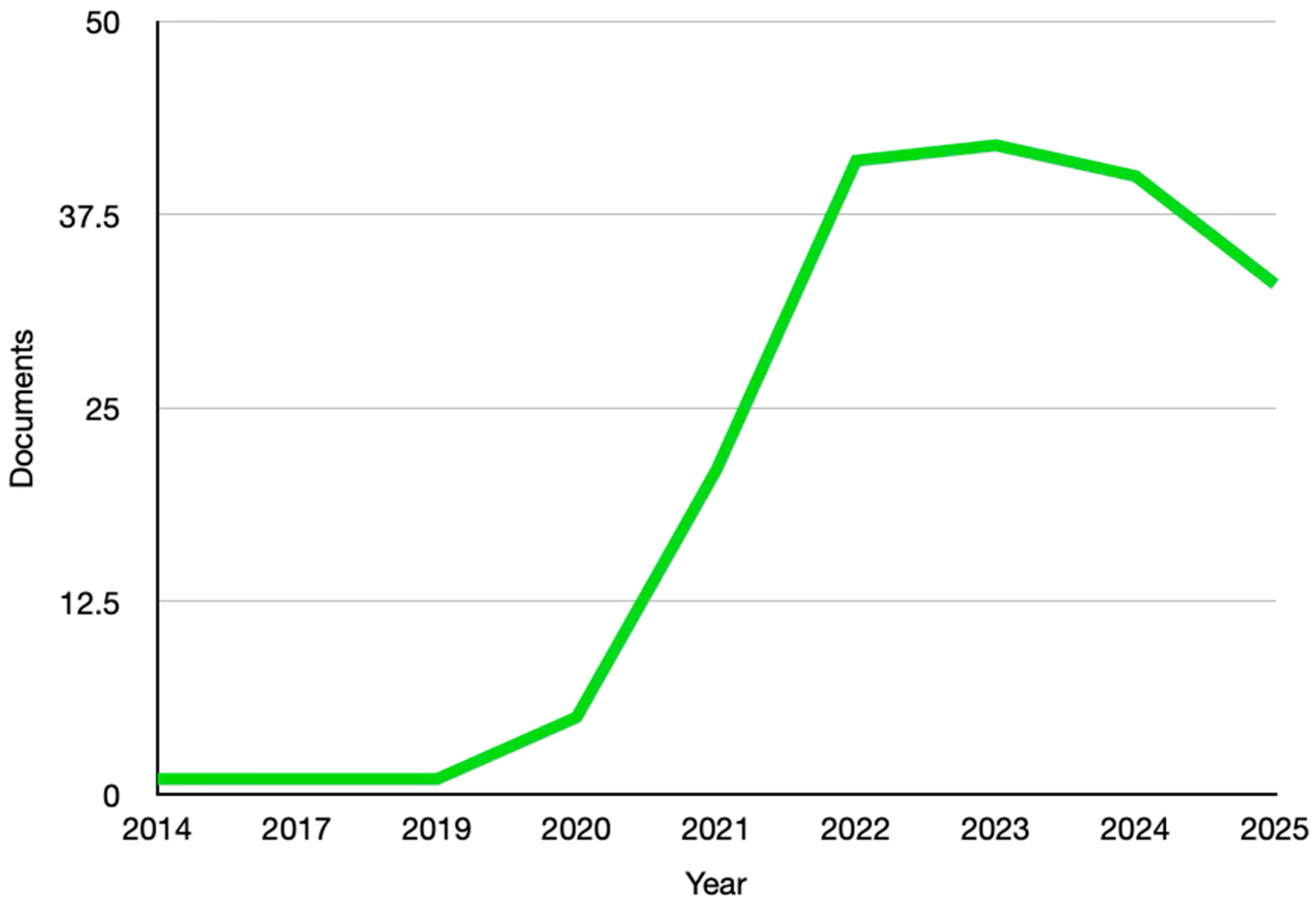
The total number of documents on remote work, burnout and employee well-being was 185. Figure 1 shows the annual number of documents. During the initial years (2014–2019), one publication per year was identified, while five publications were found for 2020. Notably, no studies addressing this specific topic were published between 2000 and 2013. This absence suggests that the field had not yet been explored, likely because the concept of remote work was either nonexistent or not considered a relevant subject at the time.
Figure 1. Annual number of documents regarding the effect of remote work on the well-being and burnout of employees.
In contrast, from 2020 to 2025, a notable surge in research output was observed, with 2023 recording the highest number of published articles, reaching 42. This increase appears to be closely associated with the establishment of remote work as a practical necessity during the COVID-19 pandemic, which subsequently became an institutionalized and sustained mode of work across various professional settings.
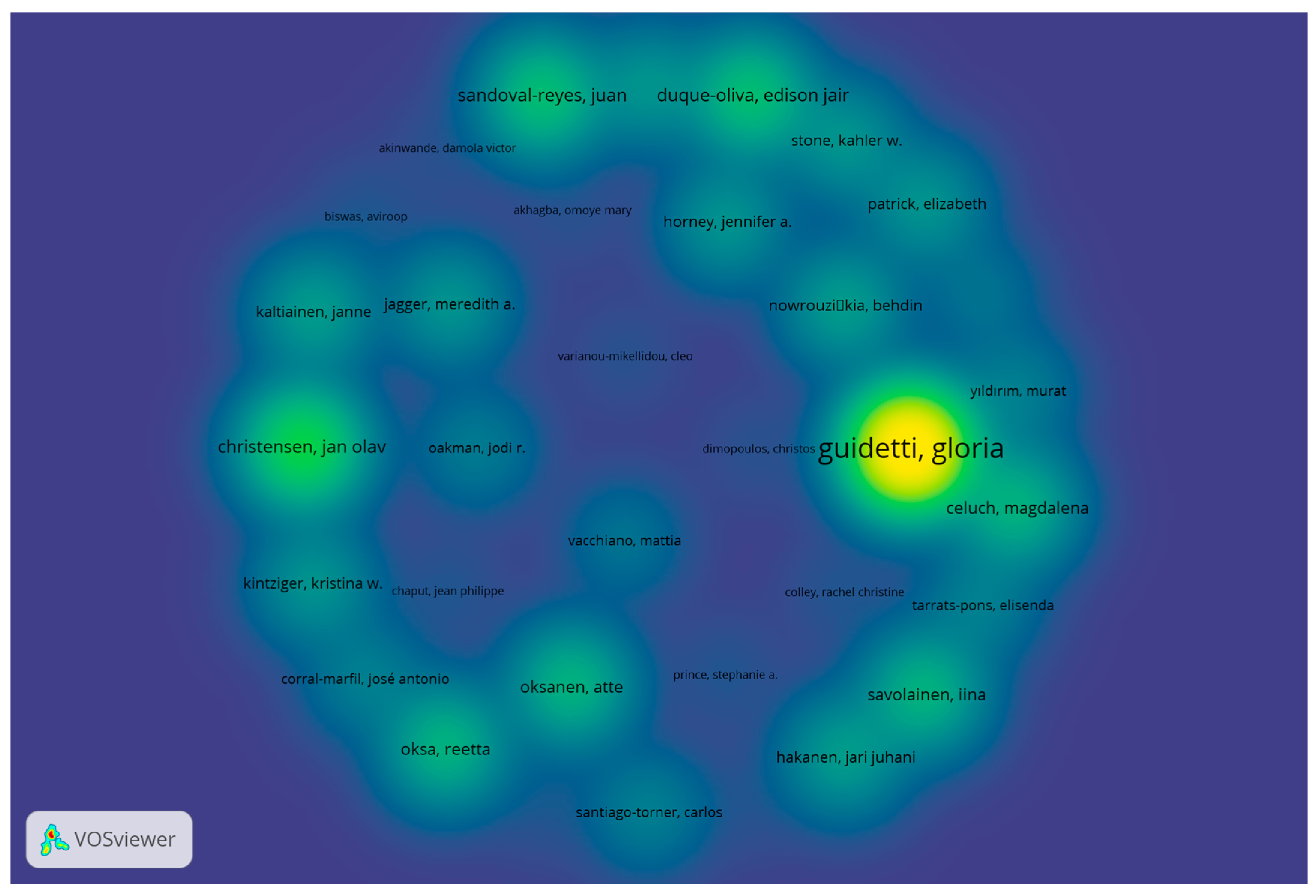
Table 1 lists the 35 authors who have published a minimum of 2 related documents, sorted by the number of citations. Leading the list are Guidetti, G., Duque-Oliva, E.J., Sandoval-Reyes, J. and Christensen, J.O., while each of them had authored two publications. It is worth noting that the first author, in particular Guidetti, G. stands out significantly, with a total of 629 citations, far surpassing the others, which have 118,118 and 101 citations respectively. They are followed by Heiden, M., Celuch, M., Oksa, R., Oksanen, A. and Savolainen, J. The first of these authors received 99 citations, whereas the others had 91 each. The remaining authors had fewer citations, as presented in Table 1, with counts ranging from 56 to 2. These findings are further supported by the density visualization (Figure 2) generated with VOSviewer, which illustrates the prominence of these authors within the research network, with brighter areas indicating higher citation impact.
Table 1. Top 35 authors based on citations.
Figure 2. Density visualization of authors and their citation impact. Non-English terms appearing in the figure correspond to authors’ names in their original spelling as retrieved from the Scopus database. Brighter colors indicate higher citation density.
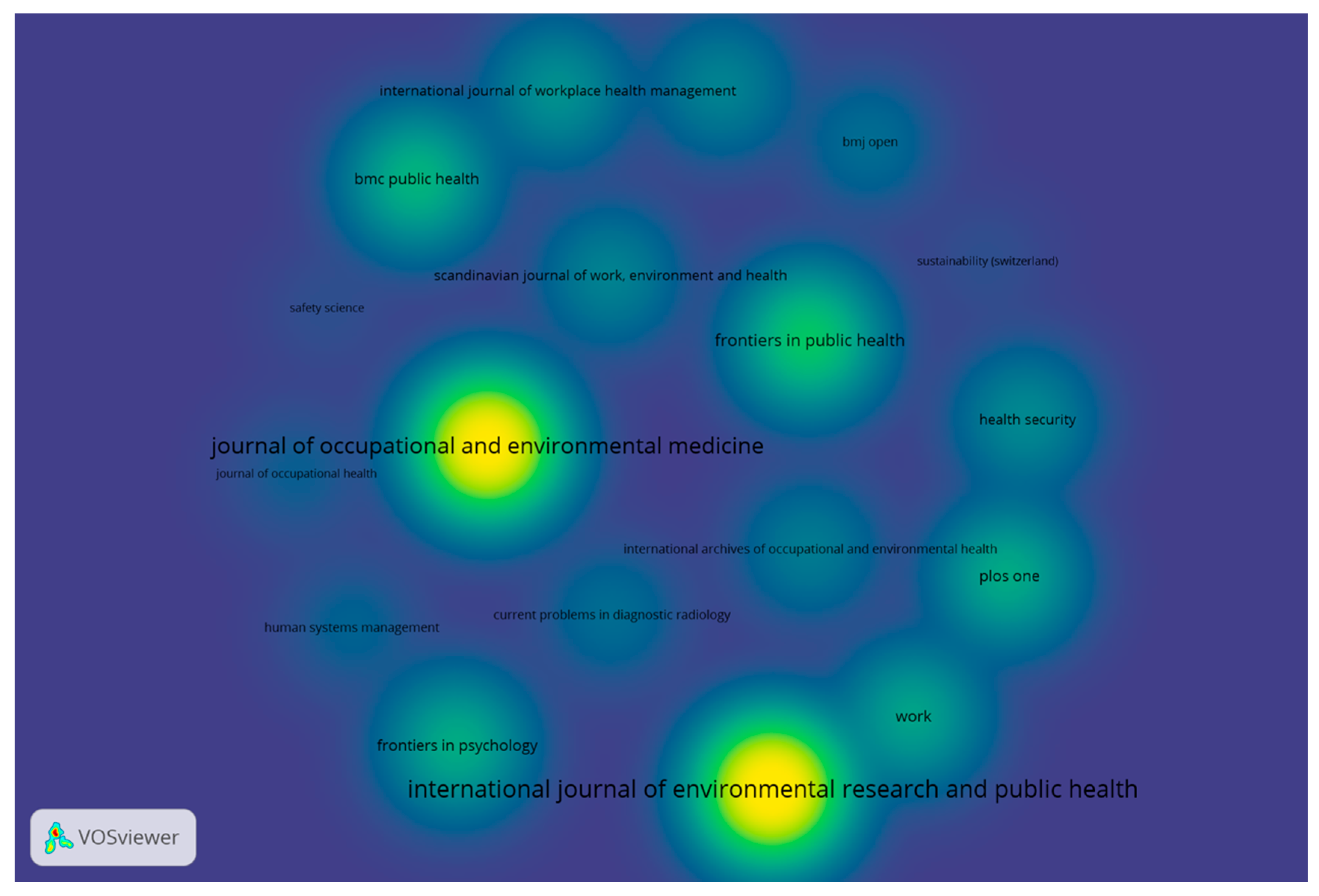
Table 2 lists the 19 sources that have published a minimum of 2 related documents, sorted by the number of citations. Leading the list are the journals “International Journal of Environmental Research and Public Health” with 26 documents and 824 citations in total, “Journal of Occupational and Environmental Medicine“ with 4 documents and 753 citations in total. Following them “Frontiers in Public Health” (2 documents, 193 citations), “Bmc Public Health” (6 documents, 127 citations), “Frontiers in Psychology” (3 documents, 106 citations) and “Plos One” (3 documents, 103 citations), which have also contributed a significant number of publications. The remaining journals have fewer than 100 citations. These findings are also illustrated in Figure 3, which presents the density visualization generated with VOSviewer, highlighting the distribution of citation impact across the analyzed journals.
Table 2. Top 19 sources based on citations.
Figure 3. Density visualization of sources and their citation impact. Brighter colors indicate higher citation density.

3.1.2. Science Mapping

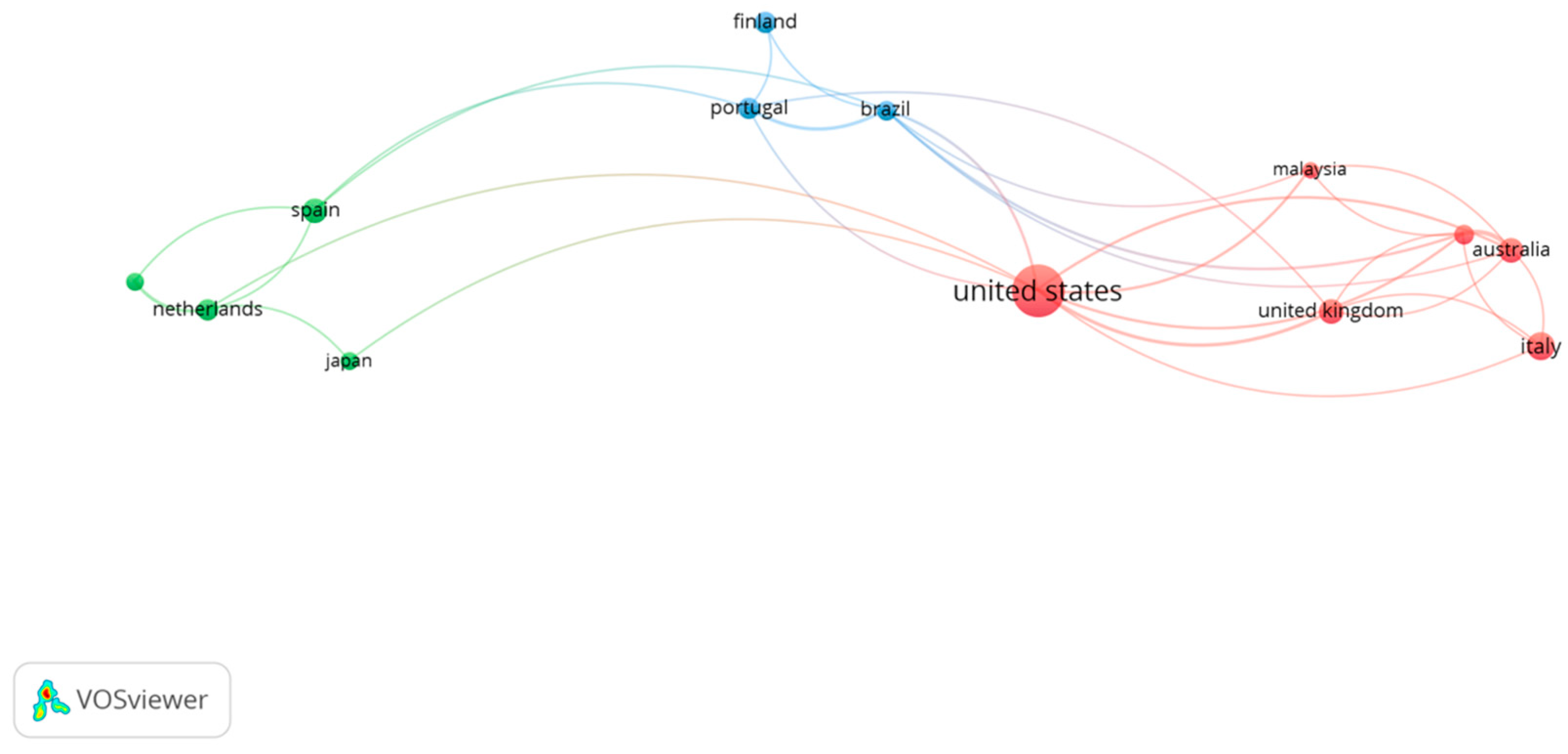
Figure 4 presents a co-authorship network analysis, where countries serve as the units of analysis. Only the nations that were interconnected were included in the network, and participation was limited to those with at least five published documents. The analysis identified 13 countries in total, forming a network composed of three clusters. Each cluster is displayed in a distinct color (blue, green and red) to illustrate groups of countries that frequently collaborate. The size of each node corresponds to the number of publications produced by that country, whereas the connecting lines signify co-authorship relationships among the countries.
Figure 4. Analysis of a co-authorship network where countries serve as the unit of analysis. Different colors represent distinct collaboration clusters among countries.
The red cluster comprises Australia (N = 12), Canada (N = 8), Italy (N = 14), Malaysia (N = 5), the United Kingdom (N = 11), and the United States (N = 50), resulting in a total of 100 publications, which the highest among all clusters. The green cluster includes Germany (N = 6), Japan (N = 6), the Netherlands (N = 9), and Spain (N = 11), together accounting for 32 publications. Finally, the blue cluster consists of Brazil (N = 8), Finland (N = 9), and Portugal (N = 9), with a combined total of 26 publications. The red cluster demonstrates the most extensive international collaboration, reflecting strong research ties between English-speaking and European countries. In contrast, the green and blue clusters represent smaller, more regionally concentrated collaborations with comparatively fewer joint outputs. Overall, the network suggests that research activity in this field is dominated by a core group of countries, with the United States and its collaborators playing a central role in shaping the global research landscape.
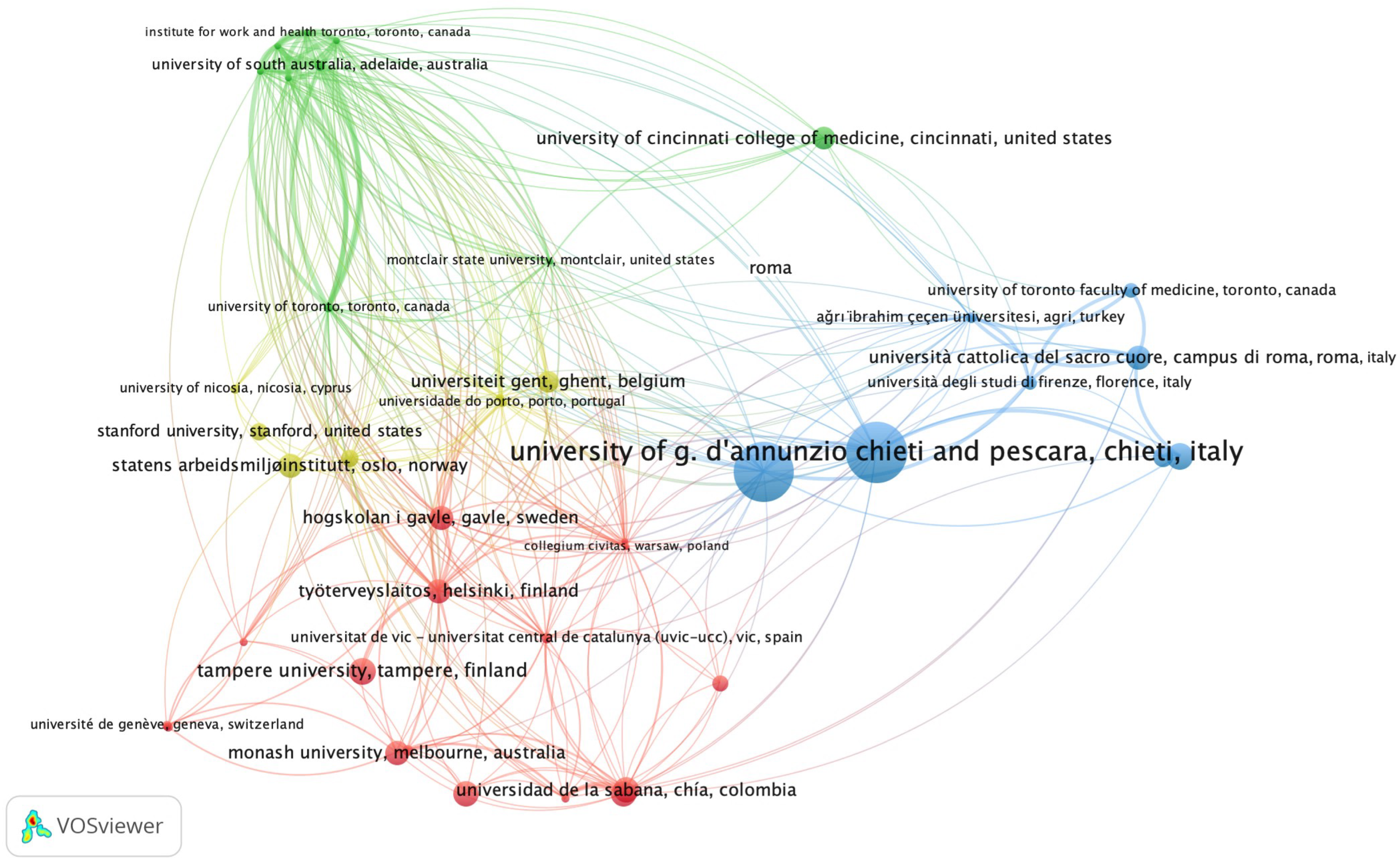
Figure 5 illustrates a bibliographic coupling analysis using organizations as the unit of analysis. The minimum number of documents per source was 2, and the minimum cluster size consisted of 5 items, while only the sources that were connected to each other were included. The network consists of four different clusters of organizations based on their citation patterns and thematic connections. Each node symbolizes an organization, with the node size indicating the number of citations it has received. The red cluster consists of 16 items, several of which exhibit notably high citation counts. In particular, six of the organizations within this cluster have accumulated over 100 citations. Specifically, “Tampere University, Finland” (N = 129), “Universidad de la Sabana, Colombia” (N = 118), “Universidad Nacional de Colombia, Colombia” (N = 118), “University of Southern California, United States” (N = 111), “Työterveyslaitos, Finland” (N = 101), and “Monash University, Australia” (N = 101). The green cluster consists of nine items, three of which have a double-digit number of citations, while the others show single-digit citation counts. In particular, “University of Cincinnati College of Medicine, United States” (N = 92), “University of Toronto Faculty of Medicine, Canada” (N = 41), and “University of South Australia, Australia” (N = 24) represent the institutions with the highest citation counts within this cluster. Within the blue cluster, there are eight organizations in total, two of which have the highest number of citations, which is considerably greater than that of any other institution mentioned previously. More specifically, the institutions “University of G. d’Annunzio Chieti and Pescara, Italy” and “Alma Mater Studiorum Università di Bologna, Italy” stand out, recording 629 and 616 citations, respectively. Next comes “Fondazione Policlinico Universitario Agostino Gemelli IRCCS, Italy” with 125 citations, while the rest of the organizations have citations in the double digits. In the last cluster, which is colored yellow and consists of seven organizations, only one of them has a three-digit number of citations. More specifically, it is “Statens Arbeidsmiljøinstitutt, Norway,” with 101 citations, while all the remaining organizations have citation counts in the double digits.
Figure 5. Bibliographic coupling using organizations as the unit of analysis. Non-English terms appearing in the figure correspond to authors’ names in their original spelling as retrieved from the Scopus database. Different colors indicate distinct clusters of organizations grouped according to their citation patterns.
The distribution of citation impact across the clusters indicates a hierarchical network structure, with a few highly influential institutions driving the field. The blue cluster, led by two Italian universities, appears to function as the intellectual core of the network, while the other clusters form peripheral yet complementary research communities. This pattern suggests that international research collaboration remains concentrated around a small group of leading organizations.
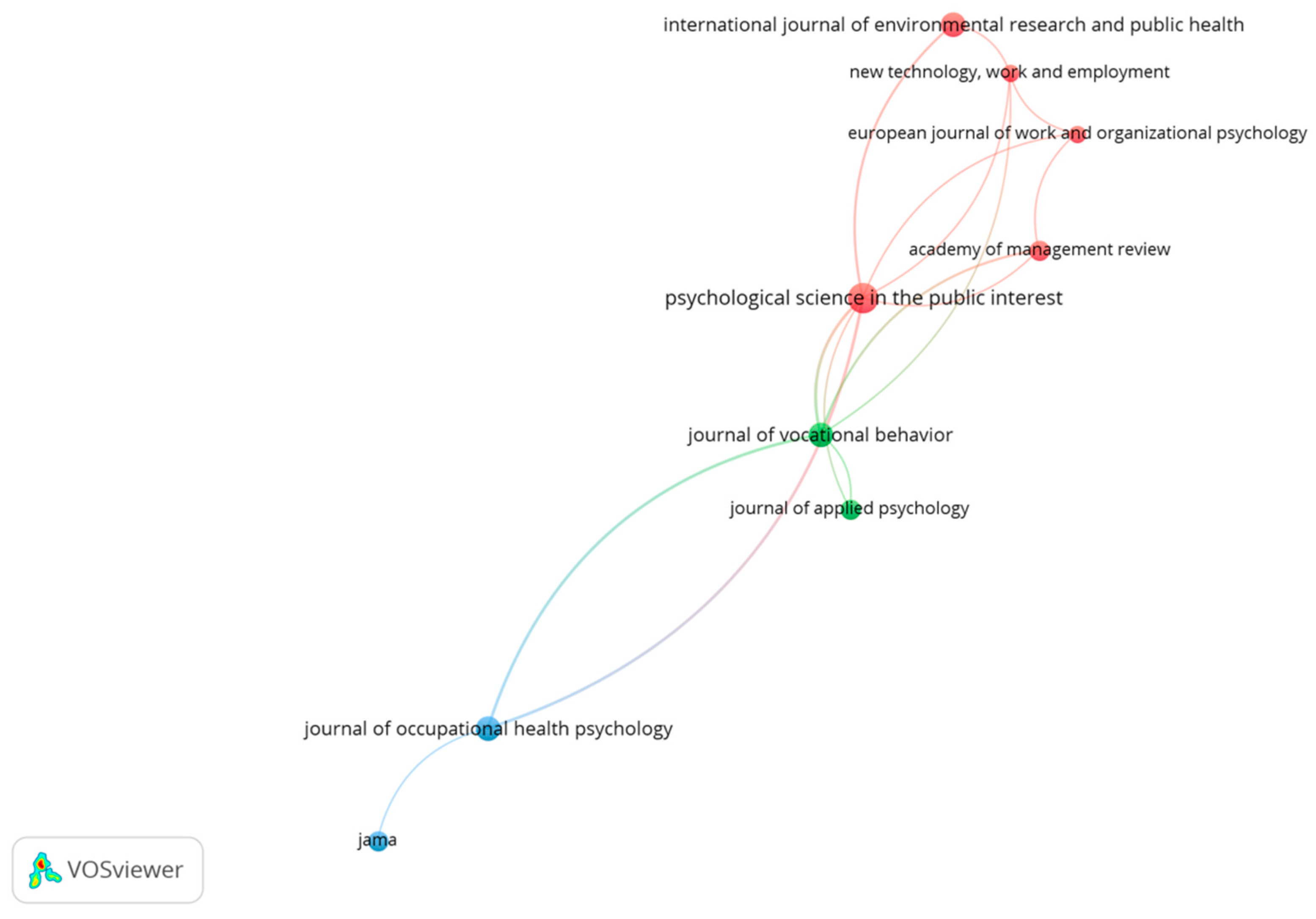
The co-citation analysis presented in Figure 6 illustrates the network of frequently cited sources within the field of remote work, burnout and well-being of the employees. The minimum number was set at 6 documents, while only the items that were connected to each other were used. Each node symbolizes the sources, with the node size indicating the number of citations they have received. In the network visualization, the lines between nodes represent co-citation relationships, showing how frequently pairs of sources are cited together and the node size reflects the number of citations. In our analysis, in the first cluster, represented in red, the journals “Psychological Science in the Public Interest”, “International Journal of Environmental Research and Public Health”, “Academy of Management Review”, “European Journal of Work and Organizational Psychology” and “New Technology, Work and Employment” were identified. These journals primarily address issues related to work psychology, organizational behavior, public health and the influence of technology and management practices on employee well-being, all of which are closely aligned with the themes of remote work and burnout. The green cluster includes the journals “Journal of Vocational Behavior” and “Journal of Applied Psychology”. These outlets focus on individual and organizational factors that shape work attitudes, motivation, career development and job performance. Their emphasis on psychological mechanisms and behavioral outcomes provides valuable insights into how employees adapt to changing work conditions, including those associated with remote work and well-being. Lastly, the blue cluster comprises the journals “Journal of Occupational Health Psychology” and “JAMA”. These publications emphasize occupational health, stress, and medical or psychological outcomes related to work environments. Their research highlights the intersection between health sciences and occupational psychology, shedding light on how work-related stressors and organizational practices affect both physical and mental health, particularly in the context of burnout and employee well-being.
Figure 6. Network visualization of the co citation analysis using sources as the unit of analysis. Different colors represent distinct co-citation clusters.
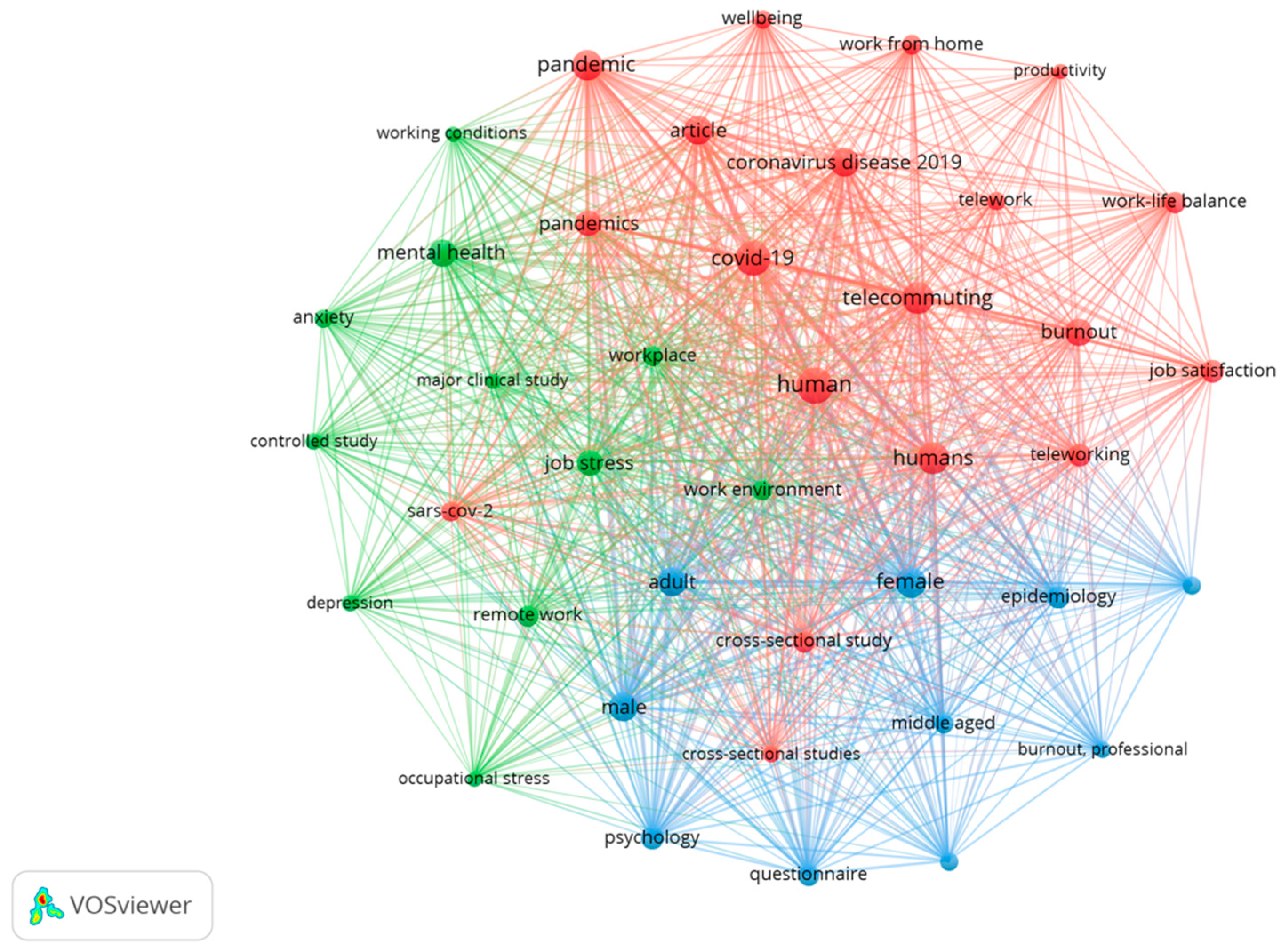
The network shown in Figure 7 was created from a co-occurrence analysis using author keywords as the unit of analysis, while the minimum number of occurrences of a keyword was 20. The minimum cluster size consisted of 10 items and for the analysis were used only the keywords that were connected to each other. Table 3 lists all the items within each of the 3 clusters. The analysis identified three main thematic clusters that reflect distinct yet interrelated research domains within the field of remote work, burnout and employee well-being. The red cluster was labeled “COVID-19 and the Transformation of Work: Remote Work and Employee Well-being”, the green cluster “Psychological Health and Occupational Stress under Evolving Work Conditions”, while the third cluster “Epidemiological and Demographic Insights into Professional Burnout”. These clusters align with the topics analyzed in the subsequent narrative review. It is important to clarify that the cluster titles presented in Figure 7 constitute interpretative labels assigned by the authors. These designations do not originate from the VOSviewer algorithm itself; rather, they were derived inductively from the thematic patterns and keyword composition within each cluster in order to enhance conceptual coherence and interpretive clarity.
Figure 7. Co-occurrence analysis using author keywords as the unit of analysis. Different colors represent distinct thematic clusters generated by the VOSviewer clustering algorithm.
Table 3. Author keyword clusters identified through the co-occurrence analysis.

4. Discussion

4.1. Narrative Synthesis of Thematic Clusters

Following the bibliometric mapping presented in Figure 5, a narrative review was conducted to further contextualize and interpret the clusters identified in the analysis. The narrative synthesis was organized in a systematic and transparent manner. After the bibliometric clusters were generated, the articles contributing to each cluster were examined to identify the main theoretical and empirical themes. The thematic categorization emerged inductively from the most recurrent concepts, keyword relationships and co-occurrence patterns revealed through the bibliometric visualizations. This approach was adopted to ensure that the interpretation reflected the inherent structure of the existing literature rather than any predetermined assumptions, thereby reducing the likelihood of interpretative bias.
This section synthesizes the principal themes characterizing each cluster, providing a more comprehensive understanding of the intellectual landscape and conceptual directions within the field. Although the initial aim of this bibliometric analysis was not to specifically examine COVID-19 related research, the thematic structure of the reviewed literature reveals that the pandemic emerged as a central focus across most studies. The thematic clustering of the literature reveals three major research streams connected to work and mental health during this period. The interpretation of the three thematic clusters follows these conceptual distinctions. Occupational stress is approached as a short-term reaction to changing work demands, burnout as a long-term consequence of prolonged strain, while mental health and well-being represent broader outcomes influenced by these work-related processes.
The first cluster, “The COVID-19 Pandemic as a Catalyst for Remote Work and Changing Well-being Dynamics,” investigates how the sudden transition to teleworking redefined employee well-being. It explores the psychosocial implications of remote work, analyzing how autonomy, digital communication, organizational culture and home-working conditions shape satisfaction, balance, and emotional health. The second cluster, “Psychological Health and Occupational Stress under Evolving Work Conditions,” examines the mental health consequences of changing work environments. It addresses how pandemic-related disruptions, blurred work–life boundaries and increased digital demands contributed to stress, anxiety and fatigue, while also identifying coping mechanisms and workplace factors that support psychological resilience. The third cluster, “Exploring Burnout Dynamics in the Wake of the COVID-19 Pandemic,” focuses on the prevalence and determinants of occupational burnout across professions. It analyzes how chronic workload, emotional labor and limited organizational support intensified exhaustion during the pandemic, while highlighting protective factors such as social support, adaptive coping and flexible work design that can mitigate burnout risk.

4.1.1. The COVID-19 Pandemic as a Catalyst for Remote Work and Changing Well-Being Dynamics

The COVID-19 pandemic acted as a catalyst for a global transformation of work, forcing organizations and employees to rapidly adopt remote work models. This abrupt transition revealed both the adaptability and vulnerabilities of teleworking, particularly regarding well-being, which is understood as a positive psychological state influenced by work conditions, and not as interchangeable with stress or burnout. Research identified declines in mental and physical well-being during prolonged confinement () and early stress followed by increased resilience as employees adapted (). It seems that the pandemic not only challenged but also redefined the boundaries of employee well-being in the evolving landscape of remote work.
Recent evidence underscores that well-being in remote work depends on autonomy, meaningful communication and perceived fairness. Studies indicate that sustainable well-being is supported through emotional connection, recovery opportunities and clear role expectations (). Digital connectivity provides flexibility but also risks overload and fatigue (). Recovery experiences and individualized flexibility arrangements promote deeper engagement () and remote workers often report higher well-being than on-site employees when trust and clarity are preserved (). Collectively, these studies reinforce that autonomy, communication and adaptability serve as critical levers for enhancing well-being in evolving work conditions.
Research on managerial employees showed that a strong psychosocial safety climate reduced stress and burnout during telework (). Supportive leadership practices also mitigated negative effects, fostering trust and role clarity () while qualitative findings emphasized leadership’s role in maintaining communication and supporting coping strategies (). Conclusively, leadership and organizational culture emerge as pivotal determinants of well-being, shaping whether teleworking becomes a source of strain or a sustainable model of work.
Remote work can also enhance work–life balance when employees manage schedules effectively, though this balance remains sensitive to context (). Organizational support, ergonomic home conditions and the absence of intrusive surveillance improve satisfaction and reduce burnout (). Work from home arrangements may enhance satisfaction and well-being when mediated by balanced work–life boundaries and reduced stress, with gender influencing these effects (). Together, these findings illustrate that remote work can offer flexibility and satisfaction when adequate autonomy and support structures are in place.
Well-being also depends on social and emotional dynamics within the home work interface. Effective relational communication and work–life balance support emotional well-being (). Εvidence reveals that alignment between work and family domains improves life satisfaction and general well-being during remote work transitions (). In long-term telecommuting settings, well-being correlates more strongly with supportive job characteristics, such as task autonomy, participation in decision-making and collegial support, than with the extent of telecommuting itself (). However, poor home working conditions, increased demands and interruptions often elevate stress and physical strain (). Lastly, family work conflict, social isolation and limited autonomy affect engagement and productivity ().
In summary, the COVID-19 pandemic not only accelerated the global shift toward remote work but also fundamentally reshaped the understanding of employee well-being. The transition exposed the multidimensional nature of well-being, while revealing how contextual, organizational and personal factors interact to shape teleworking experiences. Evidence across diverse settings consistently shows that well-being in remote work is sustained when employees experience autonomy, trust and supportive communication, alongside adequate physical and psychosocial work environments. As organizations move toward hybrid and flexible models, integrating well-being into work design is no longer optional but a strategic imperative for resilience, sustainability and human-centered employment.

4.1.2. Mental Health and Occupational Stress Under Evolving Work Conditions

This cluster reflects occupational stress as an immediate response to increased job demands and its connection to broader mental health outcomes. The rapid evolution of work modalities during and after the COVID-19 pandemic has profoundly influenced employees’ psychological health across sectors. Remote work offers flexibility but can increase stress and isolation. Hospital workers reported mental strain during telework () and blurred work–life boundaries often maintain psychological pressure (). A broader review confirms that while teleworking reduces exposure to physical risks, it can elevate anxiety and diminish social connectedness, resulting in mixed mental health outcome ().
Stress reduction interventions, such as aromatherapy () and forest therapy () demonstrated small but noteworthy benefits. Ultimately, sustaining psychological health in the era of hybrid work requires a holistic understanding of how environmental, social and occupational factors converge to shape psychological resilience.
Occupational psychological health concerns were especially pronounced among healthcare professionals and workers in isolated or high-risk contexts. Healthcare professionals experienced heightened anxiety, depression and trauma symptoms () and FIFO employees showed poorer mental health than before the pandemic ().
The configuration of work settings has emerged as a crucial determinant of psychological health. Hybrid models tend to support better self rated mental health than strictly remote or on site work (). However, working conditions, such as social support, autonomy, workload, play a more decisive role than physical location (). Collectively, these studies underscore that psychological health in evolving work contexts depends not only on the mode of work but on the systemic and organizational support structures that enable individuals to maintain balance, connection and psychological health.
Remote work during the pandemic has been associated with increased stress, particularly for women experiencing psychological and physical strain (). Similarly, daily stress was present across work settings, even when performance remained stable (). Frequent remote workers reported loneliness and insufficient support () and work stress negatively impacted job satisfaction and productivity (). Furthermore, digital stress research highlights that moderate remote work may benefit health (), digital creativity also plays a vital role in reducing remote work stress in future jobs ().
The pandemic also intensified psychological strain through increased digital demands, blurred boundaries and inadequate home environments. Household composition and living conditions significantly influenced distress (). Studies in India and Spain showed high stress and anxiety due to distractions, isolation and blurred boundaries (), while working mothers experienced fatigue, sleep deprivation and heightened psychological distress due to the dual pressure of telework and family responsibilities (). Likewise, poor physical home work conditions (ventilation, rest, ergonomics) increased distress and interference (; ). Additionally, () showed work–family conflict exacerbates anxiety and fatigue.
In conclusion, the evidence highlights that psychological health and occupational stress are deeply intertwined within the evolving landscape of remote and hybrid work. As organizations continue to adapt to post-pandemic realities, it becomes increasingly clear that psychological health cannot be preserved through flexibility alone. Comprehensive strategies addressing psychosocial support, workload regulation and clear work–life boundaries are essential for mitigating stress and fostering resilience. Promoting organizational cultures that value mental well-being, social connectedness and supportive environments will be pivotal to ensuring that workers not only adapt to modern work modalities but also thrive within them.

4.1.3. Exploring Burnout Dynamics in the Wake of the COVID-19 Pandemic

In this cluster, burnout is treated as a chronic outcome of prolonged stress, distinct from short-term stress reactions and broader indicators of mental health. The pandemic exposed the vulnerability of many professions. Educators experienced elevated burnout due to remote instruction demands and loss of in-person interaction. Italian teachers showed high burnout prevalence () and other studies similarly highlighted digital workloads and work–life disruption (; ).
Healthcare professionals represented another group heavily affected by pandemic-related stressors and experienced increased burnout and post-viral fatigue (). Likewise, rising burnout among physicians and nurses was driven by workload and emotional pressure (). Mental health professionals faced blurred boundaries and increased demand () while social and public service employees experienced emotional exhaustion due to administrative pressure and job insecurity (; ).
Across professions, chronic stress, role overload and insufficient organizational support were consistent burnout drivers. Teleworking demands, family responsibilities and psychosocial strain further intensified symptoms. Work family conflict was directly linked to burnout dimensions () and coping mechanisms plus institutional support could mitigate exhaustion and cynicism (). Remote working parents experienced higher burnout, with social support and self compassion as buffers ().
In parallel, hybrid work models reduced some stressors yet intensified emotional strain when digital demands increased (). Likewise, it was identified that organizational strategies, such as autonomy, virtual peer support, helped contain burnout progression (). Extending these insights, cognitive overload and workflow disruptions contributed to exhaustion in health related professions (), while e-work self efficacy buffered the psychological impact of technostressors (). These findings highlight that while burnout during the COVID-19 era stemmed from universal stressors, such as workload, emotional strain, and social isolation, the intensity and manifestation of symptoms were critically shaped by job context, digital adaptation and organizational culture.
In conclusion, the pandemic functioned as both a catalyst and magnifier of occupational burnout, exposing systemic weaknesses in workplace support structures. Burnout emerged as a multidimensional challenge reflecting workload, emotional labor, digital transformation and work–life erosion. Strengthening organizational empathy, flexibility and resilience-building strategies is essential for sustainable well-being.

4.2. Integrative Discussion of Remote Work, Stress, Mental Health and Burnout

In this study, we conducted a comprehensive Scopus-based bibliometric analysis and narrative review to explore the effects of remote work on occupational stress, mental health, burnout and employee well-being. Our main findings revealed three significant research clusters from co-occurrence analysis using author keywords as the unit of analysis (Figure 7): one highlighting on remote work and its implications on employees’ well-being, one addressing occupational stress and mental health and one concentrating on the effect of remote working on burnout. This research revealed that the COVID-19 pandemic served as a pivotal turning point in understanding the interconnections between remote work, occupational stress, mental health, burnout and employee well-being. Through bibliometric and narrative analyses, it became evident that organizational support, psychosocial resources and adaptive coping mechanisms play a decisive role in determining whether teleworking functions as a source of strain or as a sustainable model that promotes resilience and long-term well-being. These findings align with prior evidence indicating that supportive leadership, a strong psychosocial safety climate and open communication systems are key determinants of whether teleworking fosters well-being or strain (; ; ; ).
An important aspect of the present study is that it distinguishes occupational stress, burnout, mental health, and well-being rather than using these concepts interchangeably. Occupational stress refers to short-term responses to work demands, burnout represents long-term exhaustion and mental health and well-being encompasses broader dimensions of psychological functioning. The synthesis of the bibliometric analyses reveals a dynamic, interconnected and evolving research landscape surrounding remote work, occupational stress, burnout and employee well-being. The integration of performance analysis, co-authorship networks, bibliographic coupling and co-citation mapping demonstrates that research in this domain has grown exponentially since 2020, reflecting the profound influence of the COVID-19 pandemic as a catalyst for scientific attention to psychosocial work dynamics. The exponential post-2020 growth parallels the surge of empirical studies linking COVID-19-related transformations in work design to well-being and resilience outcomes (; ; ; ). The co-citation analysis highlighted strong interconnections among sources focusing on organizational psychology, public health and work management, emphasizing the central role of interdisciplinary collaboration in advancing theoretical and empirical understanding. This interdisciplinary orientation is reflected in research that connects digitalization, occupational health and management perspectives (; ; ).
Similarly, the co-authorship analysis, using countries as the unit of analysis, revealed that international partnerships are crucial for addressing complex, cross-cultural issues related to mental health and occupational well-being. Moreover, bibliographic coupling among organizations showed that scientific output remains concentrated around a small but highly influential cluster of institutions, confirming that collaboration, networking and shared research agendas are key drivers of productivity and innovation in this field. These collaborative structures have become a driving force in shaping the theoretical and methodological evolution of the field, enabling the cross-fertilization of ideas across organizational psychology, public health, and management. Through shared frameworks and comparative research initiatives, international partnerships now promote a more integrated understanding of employee well-being, digital stress, and adaptive work models (; ; ). In this sense, collaboration functions not merely as a vehicle for knowledge production but as a catalyst for conceptual innovation and collective resilience within occupational health research (; ).
Overall, the unified findings indicate that the study of remote work and employee well-being is shifting from a fragmented, pandemic-driven topic to a mature, multidimensional research domain. This evolution reflects an increasing convergence of psychology, organizational studies, public health and management sciences toward a holistic understanding of how digital transformation, psychosocial resources and organizational support shape the sustainability of modern work. In this sense, collaboration, both conceptual and institutional, emerges not only as a methodological feature of the field but as a reflection of the very essence of contemporary work itself: interconnected, adaptive, and collectively oriented toward human well-being.
Overall, the three thematic clusters provide a structured basis for deriving targeted organizational implications. The first cluster indicates the need for supportive remote-work practices, including clear communication, autonomy-enhancing policies and adequate resources for home-working conditions. The second cluster highlights the importance of monitoring psychosocial strain, protecting work–life boundaries and strengthening social support to maintain psychological resilience. The third cluster emphasizes long-term preventive strategies for burnout, such as balanced workload distribution, sustained supervisory support and flexible work designs that reduce chronic strain. Together, these insights offer an evidence-informed foundation for organizational strategies that promote employee well-being in contemporary remote and hybrid work environments.
Practically, our findings underscore the need for organizations to design remote work policies that safeguard psychological health. Human resource departments should implement structured onboarding, digital communication norms and regular well-being monitoring to prevent isolation, stress and role ambiguity. Policymakers may also consider guidelines for ergonomic home-work environments, equitable access to digital resources and mechanisms that support work–life boundaries in hybrid settings.
Concerning the strengths of this research, it should be emphasized that the present bibliometric analysis and narrative review establish a dynamic framework for enhancing knowledge in the domains of remote work, occupational stress, mental health, burnout and employee well-being. Based on the data obtained, companies and organizations are positioned to formulate strategies that capitalize on the benefits of remote work while adopting targeted policies and interventions aimed at mitigating occupational stress, preventing burnout, and fostering employees’ mental health and overall well-being. To the best of our knowledge, this is the first bibliometric study to examine the combination of these specific variables simultaneously. Previous studies employing similar methodologies within the field of organizational psychology have focused on different topics and adopted alternative perspectives. Moreover, the validity and reliability of the current bibliometric analysis were ensured by selecting a trustworthy database and including only studies directly relevant to the subject matter. In addition, the use of the VOSviewer software contributes to the transparency of the analysis, as it enables clear visualization of the data and the interconnections among studies, thereby facilitating comprehension and reproducibility by other researchers. Collectively, these procedures guarantee that the findings of the bibliometric analysis are robust, credible, and capable of supporting the study’s overall conclusions ().
With regard to the study’s limitations, it should be recognized that the bibliometric approach employed relies on a single database. Specifically, this research utilized the Scopus database, which inherently constrains the breadth of the literature examined. Consequently, relevant studies indexed in other databases such as PubMed, Web of Science, or Google Scholar may have been omitted, potentially resulting in a partial depiction of the overall research landscape. Although Scopus is widely acknowledged as a reliable and high-quality source, incorporating additional databases could have yielded a broader and more comprehensive understanding of the topic. Nevertheless, such a limitation is largely inevitable in the literature reviews—particularly in bibliometric analyses—since the inclusion of every potentially relevant publication from all available sources is not feasible. Future research could address this limitation by extending database coverage to achieve a more exhaustive and representative overview of the existing literature. Another constraint relates to the interpretative nature of narrative synthesis, although this was mitigated by grounding the thematic integration in data-driven bibliometric clusters.

5. Conclusions

In conclusion, this study conducted a comprehensive bibliometric analysis and narrative review to investigate the interconnections between remote work, occupational stress, mental health, burnout and employee well-being. The findings revealed complex relationships among these variables, highlighting how the rapid expansion of remote work, especially during and after the COVID-19 pandemic, has reshaped employees’ psychological health and overall work experience. The results can be used to design evidence-based organizational strategies and interventions that promote healthier and more sustainable working conditions, both at individual and institutional levels. Maintaining a clear conceptual distinction between occupational stress, burnout, mental health and well-being is crucial for accurately interpreting how remote work shapes employees’ psychological experiences. Companies, human resource professionals and policymakers can utilize these insights to develop programs that reduce occupational stress, prevent burnout and foster a culture of psychological safety and well-being in hybrid and remote work environments. Moreover, employees and organizations alike stand to benefit from implementing practices that balance flexibility, autonomy and social connection, ensuring long-term productivity and mental health. Future research should focus on longitudinal and cross-cultural studies that examine how evolving work models affect well-being over time, integrating technological, organizational and psychosocial factors to provide a more comprehensive understanding of the modern world of work. To deepen these insights, future studies could also incorporate qualitative or mixed-method approaches that capture employees’ lived experiences, boundary management strategies and perceptions of support in remote and hybrid settings. Additionally, emerging topics such as digital fatigue, algorithmic management and the role of leadership in shaping healthy remote work practices deserve further systematic investigation. Such directions would help clarify how different work arrangements interact with psychological processes in diverse contexts.

Author Contributions

Conceptualization, G.K. and A.T.; methodology, G.K. and S.P.; software, G.K. and S.P.; validation, K.K.; formal analysis, G.K.; investigation, G.K. and A.T.; resources, K.K. and S.P.; data curation, A.T. and S.P.; writing—original draft preparation, G.K.; writing—review and editing, A.T. and S.P.; visualization, G.K.; supervision, K.K.; project administration, G.K.; funding acquisition, A.T. All authors have read and agreed to the published version of the manuscript.

Funding

This research received no external funding.

Institutional Review Board Statement

Not applicable.

Data Availability Statement

No new data were created.

Acknowledgments

During the preparation of this manuscript/study, the author(s) used Chat GPT 5 for the purposes of English editing. The authors have reviewed and edited the output and take full responsibility for the content of this publication.

Conflicts of Interest

The authors declare no conflicts of interest.

References

  1. Almonacid-Nieto, J. M., Calderón-Espinal, M. A., & Vicente-Ramos, W. (2020). Teleworking effect on job burnout of higher education administrative personnel in the Junín region, Peru. International Journal of Data and Network Science, 4(4), 373–380. [Google Scholar] [CrossRef]
  2. Alonso, A. C., Máximo de Carvalho, A. O., Lira, J. S., Paixão, V. C., Modenes, R. D., de Cássia Ernandes, R., Carneiro da Silva, V., Scherrer, G. S., Passos, K. G., Dos Santos Lino, M., de Lurdes Rosas da Silva, S., Brito-Costa, S., Furtado, G. E., & Brech, G. C. (2025). Lessons for the COVID era and beyond: The impact of inactive lifestyle and mental health events on burnout syndrome in university professors working from home during the pandemic. Heliyon, 11(3), e42256. [Google Scholar] [CrossRef]
  3. Alotaiby, R., & Krenyácz, É. (2025). Optimizing healthcare worker well-being research: A bibliometric network analysis and temporal trend evaluation (2013–2022). Journal of Optimization in Industrial Engineering, 18(1), 195–209. [Google Scholar] [CrossRef]
  4. Arango-Lasprilla, S. C., Albaladejo-Blazquez, N., Christ, B. R., Moreno, O. A., Restrepo Botero, J. C., Perrin, P. B., & Ferrer-Cascales, R. (2025). Predictors of depression and anxiety symptoms in teachers from 19 Latin American countries and Spain due to the COVID-19 pandemic. Psychology International, 7(2), 33. [Google Scholar] [CrossRef]
  5. Arruda, H., Silva, E. R., Lessa, M., Proença, D., Jr., & Bartholo, R. (2022). VOSviewer and bibliometrix. Journal of the Medical Library Association: JMLA, 110(3), 392. [Google Scholar] [CrossRef]
  6. Bakarich, K. M., Marcy, A. S., & O’Brien, P. E. (2022). Has the fever left a burn?A study of the impact of COVID-19 remote working arrangements on public accountants’ burnout. Accounting Research Journal, 35(6), 792–814. [Google Scholar] [CrossRef]
  7. Barriga Medina, H. R., Campoverde Aguirre, R., Coello-Montecel, D., Ochoa Pacheco, P., & Paredes-Aguirre, M. I. (2021). The influence of work–Family conflict on burnout during the covid-19 pandemic: The effect of teleworking overload. International Journal of Environmental Research and Public Health, 18(19), 10302. [Google Scholar] [CrossRef]
  8. Bautista, T. G., Roman, G., Khan, M., Lee, M., Sahbaz, S., Duthely, L. M., Knippenberg, A., MacIas-Burgos, M. A., Davidson, A., Scaramutti, C., Gabrilove, J., Pusek, S., Mehta, D., & Bredella, M. A. (2023). What is well-being? A scoping review of the conceptual and operational definitions of occupational well-being. Journal of Clinical and Translational Science, 7(1), e227. [Google Scholar] [CrossRef] [PubMed]
  9. Berger Ploszaj, H. H., Rocha Fernandes, B. H., Camou Viacava, J. J., & Nassar Cardoso, A. (2025). Understanding the associations between “work from home”, job satisfaction, work-life balance, stress, and gender in an organizational context of remote work. Discover Psychology, 5(1), 1–16. [Google Scholar] [CrossRef]
  10. Bodner, A., Ruhl, L., Barr, E., Shridhar, A., Skakoon-Sparling, S., & Card, K. G. (2022). The impact of working from home on mental health: A cross-sectional study of Canadian worker’s mental health during the third wave of the COVID-19 pandemic. International Journal of Environmental Research and Public Health, 19(18), 11588. [Google Scholar] [CrossRef]
  11. Bondanini, G., Giovanelli, C., Mucci, N., & Giorgi, G. (2025). The dual impact of digital connectivity: Balancing productivity and well-being in the modern workplace. International Journal of Environmental Research and Public Health, 22(6), 845. [Google Scholar] [CrossRef]
  12. Bosco, M. G., Salerno, S., & Valcella, F. (1999). Work and mental health: An integrated program among occupational health services and mental health centres. Medicina del Lavoro, 90(6), 752–761. Available online: https://www.scopus.com/inward/record.uri?eid=2-s2.0-0033401942&partnerID=40&md5=568a95a0d33db9d0f7980f72f1f28a7b (accessed on 30 October 2025).
  13. Bullini Orlandi, L., Poček, J., Kraus, S., Zardini, A., & Rossignoli, C. (2024). Digital workers’ stress: The role of digital creativity in the future jobs. Journal of Innovation and Knowledge, 9(2), 100492. [Google Scholar] [CrossRef]
  14. Cavallari, J. M., Bruno Garza, J. L., Charamut, N. R., Szarka, C., Perry, S. D., Laguerre, R. A., Sanetti, L. M. H., & Dugan, A. G. (2023). Impact of work schedule characteristics on teacher mental health and burnout symptoms while remote working. American Journal of Industrial Medicine, 66(10), 884–896. [Google Scholar] [CrossRef]
  15. Chaput, J. P., Tremblay, M. S., Goldfield, G. S., Prince, S. A., Biswas, A., Colley, R. C., & Lang, J. J. (2025). Is working from home good for mental health and well-being? Associations between work location, self-rated mental health, life satisfaction, and life and work stress among Canadian adults. Mental Health and Prevention, 38, 200418. [Google Scholar] [CrossRef]
  16. Chirico, F., Crescenzo, P., Nowrouzi-kia, B., Tarchi, L., Batra, K., Ferrari, G., Yıldırım, M., Romano, A., Nucera, G., Ripa, S., Sharma, M., & Leiter, M. (2022). Prevalence and predictors of burnout syndrome among schoolteachers during the COVID-19 pandemic in Italy: A cross-sectional survey. Journal of Health and Social Sciences, 7(2), 195–211. [Google Scholar] [CrossRef]
  17. Consiglio, C., Massa, N., Sommovigo, V., & Fusco, L. (2023). Techno-stress creators, burnout and psychological health among remote workers during the pandemic: The moderating role of e-work self-efficacy. International Journal of Environmental Research and Public Health, 20(22), 7051. [Google Scholar] [CrossRef] [PubMed]
  18. Cutshall, S. M., Mallory, M. J., Noehl, S. M., Soderlind, J. N., Fischer, K. M., Nanda, S., Bauer, B. A., & Wahner-Roedler, D. L. (2024). Effect of aromatherapy on perceived mental health parameters for academic department workers working from home during the COVID-19 pandemic: A pilot study. Global Advances in Integrative Medicine and Health, 13, 1–8. [Google Scholar] [CrossRef] [PubMed]
  19. de Wind, A., Beckers, D. G. J., Nijp, H. H., Hooftman, W., de Boer, A. G. E. M., & Geurts, S. A. E. (2021). Working from home: Mismatch between access and need in relation to work–home interference and fatigue. Scandinavian Journal of Work, Environment and Health, 47(8), 619–627. [Google Scholar] [CrossRef]
  20. Donthu, N., Kumar, S., Mukherjee, D., Pandey, N., & Lim, W. M. (2021). How to conduct a bibliometric analysis: An overview and guidelines. Journal of Business Research, 133, 285–296. [Google Scholar] [CrossRef]
  21. Egami, S. (2025). Effect of intensive parenting attitude on maternal well-being and self-efficacy among Japanese housewives and part-time working mothers. Psychology International, 7(2), 47. [Google Scholar] [CrossRef]
  22. Figueiredo, E., Margaça, C., Hernández-Sánchez, B., & Sánchez-García, J. C. (2024). Teleworking effects on mental health—A systematic review and a research agenda. International Journal of Environmental Research and Public Health, 21(3), 243. [Google Scholar] [CrossRef]
  23. Galanti, T., Guidetti, G., Mazzei, E., Zappalà, S., & Toscano, F. (2021). Work from home during the COVID-19 outbreak: The impact on employees’ remote work productivity, engagement, and stress. Journal of Occupational and Environmental Medicine, 63(7), e426–e432. [Google Scholar] [CrossRef]
  24. Gerich, J. (2023). Prepared for home-based telework? The relation between telework experience and successful workplace arrangements for home-based telework during the COVID-19 pandemic. Journal of Occupational and Environmental Medicine, 65(11), 967–975. [Google Scholar] [CrossRef] [PubMed]
  25. Gilbert, J. M., Fruhen, L. S., Burton, C. T., & Parker, S. K. (2023). The mental health of fly-in fly-out workers before and during COVID-19: A comparison study. Australian Journal of Psychology, 75(1), 2170280. [Google Scholar] [CrossRef]
  26. Goel, R., & Singla, J. (2025). Well-being of remote workers in work-from-home settings: A bibliometric perspective. Journal of Organizational Effectiveness. ahead-of-print. [Google Scholar] [CrossRef]
  27. Goel, R., Singla, J., Mittal, A., & Arora, M. (2025). A decade analysis of employees’ well-being and performance while working from home: A bibliometric approach. Information Discovery and Delivery, 53(1), 22–42. [Google Scholar] [CrossRef]
  28. Gore, M. N. (2024). Loss of work-life balance, experience of stress and anxiety among professionals working from home—An exploratory study in a western Indian city. International Journal of Occupational Safety and Health, 14(3), 374–383. [Google Scholar] [CrossRef]
  29. Gorshkova, M. O., & Lebedeva, P. S. (2023). The impact of transition to a remote work format on the mental health of employees. Population and Economics, 7(1), 54–76. [Google Scholar] [CrossRef]
  30. Gualano, M. R., Santoro, P. E., Borrelli, I., Rossi, M. F., Amantea, C., Daniele, A., & Moscato, U. (2023). TElewoRk-RelAted stress (TERRA), psychological and physical strain of working from home during the COVID-19 pandemic: A systematic review. Workplace Health & Safety, 71(2), 58–67. [Google Scholar] [CrossRef]
  31. Guseva-Canu, I., Marca, S. C., Dell’Oro, F., Ádám, A., Bergamaschi, E., Besse, C., Bianchi, R., Bislimovska, J., Košćec Bjelajac, A. K., Bugge, M., Busneag, C. I., Çaǧlayan, C., Cerniţanu, M., Costa Pereira, C. C., Hafner, N. D., Droz, N., Eglīte, M., Godderis, L., Guendel, H., … Wahlen, A. (2021). Harmonized definition of occupational burnout: A systematic review, semantic analysis, and Delphi consensus in 29 countries. Scandinavian Journal of Work, Environment and Health, 47(2), 95–107. [Google Scholar] [CrossRef]
  32. Gutworth, M. B., Howard, M. C., & Simonet, D. V. (2024). Mandated but willing? Preferences and expectations among mandatory work from home employees. Human Resource Management Journal, 34(3), 627–646. [Google Scholar] [CrossRef]
  33. Henke, J. B., Jones, S. K., & O’Neill, T. A. (2022). Skills and abilities to thrive in remote work: What have we learned. Frontiers in Psychology, 13, 893895. [Google Scholar] [CrossRef]
  34. Höcker, M. C., Bachtal, Y., Voll, K., & Pfnuer, A. (2024). Healthy, healthier, hybrid work: The burnout-reducing potential of remote work and the mediating effect of work autonomy. International Journal of Workplace Health Management, 17(4), 319–334. [Google Scholar] [CrossRef]
  35. Hsu, D. H., & Tambe, P. B. (2025). Remote work and job applicant diversity: Evidence from technology startups. Management Science, 71(1), 595–614. [Google Scholar] [CrossRef]
  36. Karakitsiou, G., Plakias, S., Vlotinou, P., & Tsiakiri, A. (2025). Assessing the impact of sports and team sports participation on mental health and empowerment at the individual and societal levels: Insights from a Scopus bibliometric analysis. Journal of Physical Education and Sport, 25(2), 227–240. [Google Scholar] [CrossRef]
  37. Koutra, K., Mavroeides, G., & Triliva, S. (2025). The costs of caring: Prevalence and associated factors of burnout, compassion fatigue, and compassion satisfaction among mental health professionals in Greece. Psychology International, 7(3), 58. [Google Scholar] [CrossRef]
  38. Kumar, A., Priyadarshi, P., & Garg, N. (2024). Bibliometric analysis of remote working: 20-year literature review. Human Resource Development Review, 24(3), 331–374. [Google Scholar] [CrossRef]
  39. Kuśnierz, C., Rogowska, A. M., Chilicka, K., Pavlova, I., & Ochnik, D. (2022). Associations of work-family conflict with family-specific, work-specific, and well-being-related variables in a sample of Polish and Ukrainian adults during the second wave of the COVID-19 pandemic: A cross-sectional study. International Journal of Environmental Research and Public Health, 19(17), 10954. [Google Scholar] [CrossRef] [PubMed]
  40. Kweon, J., Kim, Y., Choi, H., Im, W., & Kim, H. (2024). Enhancing sleep and reducing occupational stress through forest therapy: A comparative study across job groups. Psychiatry Investigation, 21(10), 1120–1128. [Google Scholar] [CrossRef]
  41. Lange, M., & Kayser, I. (2022). The role of self-efficacy, work-related autonomy and work-family conflict on employee’s stress level during home-based remote work in Germany. International Journal of Environmental Research and Public Health, 19(9), 4955. [Google Scholar] [CrossRef]
  42. Latorre, F., Pérez-Nebra, A. R., Queiroga, F., & Alcover, C. M. (2021). How do teleworkers and organizations manage the COVID-19 crisis in Brazil? The role of flexibility i-deals and work recovery in maintaining sustainable well-being at work. International Journal of Environmental Research and Public Health, 18(23), 12522. [Google Scholar] [CrossRef]
  43. Lehr, D., Geraedts, A., Persson Asplund, R., Khadjesari, Z., Heber, E., de Bloom, J., Daniel Ebert, D. D., Angerer, P., & Funk, B. (2016). Occupational e-mental health: Current approaches and promising perspectives for promoting mental health in workers. In Healthy at Work (pp. 257–281). Springer. [Google Scholar] [CrossRef]
  44. Li, L. Z., & Wang, S. (2022). Do work-family initiatives improve employee mental health? Longitudinal evidence from a nationally representative cohort. Journal of Affective Disorders, 297, 407–414. [Google Scholar] [CrossRef]
  45. Loezar-Hernández, M., Briones-Vozmediano, E., Ronda-Pérez, E., & Otero-García, L. (2023). Juggling during lockdown: Balancing telework and family life in pandemic times and its perceived consequences for the health and wellbeing of working women. International Journal of Environmental Research and Public Health, 20(6), 4781. [Google Scholar] [CrossRef] [PubMed]
  46. Magǹavita, N., Tripepi, G., & Chiorri, C. (2021). Telecommuting, off-time work, and intrusive leadership in workers’ well-being. International Journal of Environmental Research and Public Health, 18(7), 3330. [Google Scholar] [CrossRef]
  47. Mheidly, N., Fares, M. Y., & Fares, J. (2020). Coping With stress and burnout associated with telecommunication and online learning. Frontiers in Public Health, 8, 574969. [Google Scholar] [CrossRef]
  48. Miyake, F., Odgerel, C.-O., Hino, A., Ikegami, K., Nagata, T., Tateishi, S., Tsuji, M., Matsuda, S., & Ishimaru, T. (2022). Job stress and loneliness among desk workers during the COVID-19 pandemic in Japan: Focus on remote working. Environmental Health and Preventive Medicine, 27, 33. [Google Scholar] [CrossRef]
  49. Mohr, D. C., Elnahal, S., Marks, M. L., Derickson, R., & Osatuke, K. (2025). Burnout trends among US health care workers. JAMA Network Open, 8, e255954. [Google Scholar] [CrossRef] [PubMed]
  50. Natomi, K., Kato, H., & Matsushita, D. (2022). Work-related stress of work from home with housemates based on residential types. International Journal of Environmental Research and Public Health, 19(5), 3060. [Google Scholar] [CrossRef] [PubMed]
  51. Oakman, J., Lambert, K. A., Weale, V. P., Stuckey, R., & Graham, M. (2023). Employees working from home: Do leadership factors influence work-related stress and musculoskeletal pain? International Journal of Environmental Research and Public Health, 20(4), 3046. [Google Scholar] [CrossRef]
  52. Oksanen, A., Oksa, R., Celuch, M., Cvetkovic, A., & Savolainen, I. (2023). COVID-19 Anxiety and wellbeing at work in finland during 2020–2022: A 5-wave longitudinal survey study. International Journal of Environmental Research and Public Health, 20(1), 680. [Google Scholar] [CrossRef]
  53. Omorede, A., & Berglund, R. T. (2024). The level of burnout and cognitive stress in managers when teleworking: The impact of psychosocial safety climate and the mediating role of demand-control-support. International Journal of Workplace Health Management, 17(3), 220–240. [Google Scholar] [CrossRef]
  54. Otukoya, E. Z., Amiri, A., & Alimohammadi, E. (2025). Surgeon well-being: A systematic review of stressors, mental health, and resilience. BMC Surgery, 25(1), 430. [Google Scholar] [CrossRef]
  55. Pamboris, G. M., Plakias, S., Tsiakiri, A., Karakitsiou, G., Bebeletsi, P., Vadikolias, K., Aggelousis, N., Tsiptsios, D., & Christidi, F. (2024). Physical therapy in neurorehabilitation with an emphasis on sports: A bibliometric analysis and narrative review. Sports, 12(10), 276. [Google Scholar] [CrossRef]
  56. Passas, I. (2024). Bibliometric analysis: The main steps. Encyclopedia, 4(2), 1014–1025. [Google Scholar] [CrossRef]
  57. Pathak, A., Kadyan, S., Kothari, H., Singh, S., & Srinivas, V. (2025). The role of emotional intelligence, well-being and occupational stress on teacher mental-health in educational settings. TPM—Testing, Psychometrics, Methodology in Applied Psychology, 32(S1), 98–116. Available online: https://www.scopus.com/inward/record.uri?eid=2-s2.0-105014450317&partnerID=40&md5=69bcf6d5a7450bb9df01e79d22ebde33 (accessed on 30 October 2025).
  58. Petcu, M. A., Sobolevschi-David, M. I., Creţu, R. F., Curea, S. C., Hristea, A. M., Oancea-Negescu, M. D., & Ţuţui, D. (2023). Telework: A social and emotional perspective of the impact on employees’ wellbeing in the COVID-19 pandemic. International Journal of Environmental Research and Public Health, 20(3), 1811. [Google Scholar] [CrossRef] [PubMed]
  59. Petscavage, J. M., Hardy, S., & Chetlen, A. (2022). Mitigation tactics discovered during COVID-19 with long-term report turnaround time and burnout reduction benefits. Academic Radiology, 29(12), 1786–1791. [Google Scholar] [CrossRef]
  60. Pélissier, C., Paredes, J., Moulin, M., Bitot, T., Fakra, E., & Fontana, L. (2021). Telework and psychological health in hospital staff during the first wave of the COVID-19 epidemic in France. International Journal of Environmental Research and Public Health, 18(19), 10433. [Google Scholar] [CrossRef] [PubMed]
  61. Plakias, S. (2025). Review articles on soccer performance analysis: A bibliometric analysis of current trends and emerging themes. Sports, 13(5), 131. [Google Scholar] [CrossRef]
  62. Plakias, S., & Karakitsiou, G. (2024). Neuropsychophysiological aspects of soccer performance: A bibliometric analysis and narrative review. Perceptual and Motor Skills, 131(6), 2346–2368. [Google Scholar] [CrossRef]
  63. Popova, E. S., J Hahn, B., Morris, H., Loomis, K., Shy, E., Andrews, J., Iacullo, M., & Peters, A. (2023). Exploring well-being: Resilience, stress, and self-care in occupational therapy practitioners and students. OTJR Occupation, Participation and Health, 43(2), 159–169. [Google Scholar] [CrossRef]
  64. Pourtier-Tillinac, H., & Wendland, J. (2025). Working from home and parental burnout: Protection or risk? A qualitative exploratory study. Evolution Psychiatrique. in press. [Google Scholar] [CrossRef]
  65. Reisberger, T., & Copuš, L. (2025). Framework for remote work: Distances and resources clustering approach. In Lecture notes on data engineering and communications technologies (Vol. 253, pp. 323–334). Springer. [Google Scholar] [CrossRef]
  66. Rodríguez-Modroño, P. (2023). Digital stress. effects of different intensities of working from home on workers’ health. Journal of Occupational and Environmental Medicine, 65(4), E240–E245. [Google Scholar] [CrossRef]
  67. Rohwer, E., Harth, V., & Mache, S. (2024). “The magic triangle between bed, office, couch”: A qualitative exploration of job demands, resources, coping, and the role of leadership in remote work during the COVID-19 pandemic. BMC Public Health, 24(1), 476. [Google Scholar] [CrossRef]
  68. Sasaki, N., Kuroda, R., Mikami, Y., Tsuno, K., Imamura, K., Nishi, D., & Kawakami, N. (2023). Working environment at home and mental health in employees working from home in Japan during COVID-19 pandemic: A cross-sectional study. Journal of Occupational Health, 65(1), e12410. [Google Scholar] [CrossRef] [PubMed]
  69. Selvaskandan, H., Nimmo, A., Savino, M., Afuwape, S., Brand, S., Graham-Brown, M., Medcalf, J., Cockwell, P., & Beckwith, H. (2022). Burnout and long COVID among the UK nephrology workforce: Results from a national survey investigating the impact of COVID-19 on working lives. Clinical Kidney Journal, 15(3), 517–526. [Google Scholar] [CrossRef]
  70. Serrão, C., Rodrigues, A. R., Teixeira, A., Castro, L., & Duarte, I. (2022). The impact of teleworking in psychologists during COVID-19: Burnout, depression, anxiety, and stress. Frontiers in Public Health, 10, 984691. [Google Scholar] [CrossRef]
  71. Smith, A. J., Wright, H., Griffin, B. J., Ehman, A. C., Shoji, K., Love, T. M., Morrow, E., Locke, A., Call, M., Kerig, P. K., Olff, M., Benight, C. C., & Langenecker, S. A. (2021). Mental health risks differentially associated with immunocompromised status among healthcare workers and family members at the pandemic outset. Brain, Behavior, and Immunity—Health, 15, 100285. [Google Scholar] [CrossRef]
  72. Somasundram, K. G., Hackney, A., Yung, M., Du, B., Oakman, J., Nowrouzi-Kia, B., & Yazdani, A. (2022). Mental and physical health and well-being of Canadian employees who were working from home during the COVID-19 pandemic. BMC Public Health, 22(1), 1987. [Google Scholar] [CrossRef]
  73. Staniulienė, S., & Jurova, J. (2021). Remote job design possibilities to work in lithuanian companies from distant locations. Research for Rural Development, 36. [Google Scholar] [CrossRef]
  74. Tan, L. D. C., & Urdan, T. (2025). Exploring the responsibilities, boundaries, and well-being of teachers in the philippines. Psychology International, 7(1), 14. [Google Scholar] [CrossRef]
  75. To, A. T., Bui, N. A. K., Mai, T. D. P., Dang, T. M. T., & Nguyen, T. M. T. (2024). The impact of work stress, health and safety measures, and work-life balance on job satisfaction among remote workers during the COVID-19 pandemic: A study of employees in Ho Chi Minh City, Vietnam. Journal of Logistics, Informatics and Service Science, 11(8), 465–477. [Google Scholar] [CrossRef]
  76. Tsiakiri, A., Plakias, S., Karakitsiou, G., Nikova, A., Christidi, F., Kokkotis, C., Giarmatzis, G., Tsakni, G., Katsouri, I. G., Sarris, S., Vadikolias, K., Aggelousis, N., & Vlotinou, P. (2024). Mapping the landscape of biomechanics research in stroke neurorehabilitation: A bibliometric perspective. Biomechanics, 4(4), 664–684. [Google Scholar] [CrossRef]
  77. Van Eck, N., & Waltman, L. (2010). Software survey: VOSviewer, a computer program for bibliometric mapping. Scientometrics, 84(2), 523–538. [Google Scholar] [CrossRef]
  78. Wadesango, N., & Gudyanga, E. (2016). Managing occupational stress. Journal of Psychology, 7(1), 32–39. [Google Scholar] [CrossRef]
  79. Wang, B., Saeed, S., Zhang, Y., Fang, X., & Yu, X. (2025). Does remote work adoption boost firm innovation? A cross-cultural study. International Journal of Human Resource Management, 36(6), 895–924. [Google Scholar] [CrossRef]
  80. Wang, Z., Liu, H., Yu, H., Wu, Y., Chang, S., & Wang, L. (2017). Associations between occupational stress, burnout and well-being among manufacturing workers: Mediating roles of psychological capital and self-esteem. BMC Psychiatry, 17(1), 364. [Google Scholar] [CrossRef] [PubMed]
  81. Widjaja, A., Fitria, D., Ellynia, E., & Juliani, E. (2023). The impact of COVID-19 pandemic: Daily work stress and work performance between work from home (WFH), work from office (WFO) and hybrid in Indonesia. The Medical Journal of Malaysia, 78(4), 519–522. [Google Scholar]
  82. Winkler-Titus, N., Gerber, C., & Ngalo, V. (2025). Well-being of remote workers: Work characteristics and challenges. SA Journal of Human Resource Management, 23, a2876. [Google Scholar] [CrossRef]
  83. Zhao, L., & Zhang, L. (2025). The relationship between post-traumatic stress disorder, occupational stress, occupational burnout, and mental health in football referees: A national cross-sectional survey in China. Frontiers in Public Health, 13, 1647115. [Google Scholar] [CrossRef]
  84. Żołnierczyk-Zreda, D., Kapica, L., Najmiec, A., Kamiñska, J., Mazur-Różycka, J., & Bugajska, J. (2025). Psychosocial working conditiond and mental well-being of remote and stationary employees: A Longitudinal Study. International Journal of Occupational Medicine and Environmental Health, 38(2), 135–150. [Google Scholar] [CrossRef]
Disclaimer/Publisher’s Note: The statements, opinions and data contained in all publications are solely those of the individual author(s) and contributor(s) and not of MDPI and/or the editor(s). MDPI and/or the editor(s) disclaim responsibility for any injury to people or property resulting from any ideas, methods, instructions or products referred to in the content.

Article Metrics

Citations

Article Access Statistics

Multiple requests from the same IP address are counted as one view.