Systematic Review

Systematic Review and Meta-Analysis of Early Detection of Myocardial Injury: Advances in Biomarker-Based Risk Stratification and Diagnostic Precision


by
Diana Gabriela Ilaș
1,
Sebastian Ciurescu
2,*,
Raluca Ibănescu
2,
Diana-Alexandra Mîțu
1,2 and
Daniel Florin Lighezan
1,3
1
Department V, Internal Medicine I, Discipline of Medical Semiology I, “Victor Babeș” University of Medicine and Pharmacy, 300041 Timișoara, Romania
2
Doctoral School in Medicine, Victor Babeș University of Medicine and Pharmacy, 300041 Timișoara, Romania
3
Center of Advanced Research in Cardiology and Hemostaseology, “Victor Babeș” University of Medicine and Pharmacy, 300041 Timișoara, Romania
*
Author to whom correspondence should be addressed.
LabMed 2025, 2(4), 23; https://doi.org/10.3390/labmed2040023
Submission received: 19 September 2025 / Revised: 29 October 2025 / Accepted: 29 October 2025 / Published: 10 November 2025

Abstract

Chronic heart failure (CHF) carries high morbidity and mortality. Circulating biomarkers of myocardial stretch, injury, and remodelling aids diagnosis and prognosis, but utility varies, especially in HFpEF, where natriuretic peptide (NP) values may be lower or normal in obesity. We systematically searched PubMed, Scopus, and Web of Science (2010–2025) for primary adult chronic-HF studies evaluating blood-based biomarkers: NPs, high-sensitivity troponins (hs-cTn), galectin-3, soluble ST2 (sST2), and microRNAs. Secondary sources (reviews/meta-analyses/guidelines) informed context only. Acute-HF studies were not pooled with chronic-HF analyses. Where appropriate, log hazard ratios were meta-analysed with random effects models. Twenty-nine studies met criteria. NT-proBNP remained the diagnostic/prognostic reference; across five prognostic cohorts, the pooled HR was 1.68 (95% CI 1.54–1.82; I2 ≈ 55%). hs-cTn consistently improved risk stratification. Galectin-3 and sST2 were associated with adverse outcomes but typically provided modest incremental value beyond NPs/hs-cTn; galectin-3 is influenced by renal function, and sST2 is commonly interpreted around ~28–35 ng/mL. MicroRNAs (e.g., miR-21, miR-210-3p, miR-22-3p) showed promising yet heterogeneous signals across platforms and preanalytical workflows; therefore, findings were synthesised narratively without pooling. NT-proBNP and hs-cTn form the evidence-based backbone for biomarker-guided assessment in chronic HF. Galectin-3 and sST2 add adjunct prognostic information, while microRNAs remain investigational, pending standardised methods and external validation. Overall, evidence supports a multimarker, phenotype-tailored approach, with core NPs + hs-cTn and selective adjunct use of sST2/galectin-3 in context (HFrEF vs. HFpEF, obesity, renal function) to refine risk stratification and guide clinical decision-making.

1. Introduction

Heart failure affects more than 64 million people worldwide and remains a major cause of morbidity and mortality [1,2]. Chronic heart failure (CHF) represents the persistent stage of the syndrome in which patients experience symptoms and structural heart disease over months to years [3]. Despite improvements in pharmacological and device therapy, prognosis remains poor, especially in heart failure with reduced ejection fraction (HFrEF) and in elderly patients with multiple comorbidities [3]. Biomarkers provide objective measurements of patophysiological processes including myocardial stretch, cell injury, fibrosis, systemic inflammation, and epigenetic dysregulation [4,5]. Modern practice relies on natriuretic peptides for diagnosis, but additional biomarkers may refine risk stratification and guide therapy [3,6,7]. Diagnostic and prognostic uncertainty is particularly acute in HFpEF, a heterogeneous syndrome in which natriuretic peptide values may be normal, especially in obesity, and structural/functional abnormalities are often subtle. As a result, diagnosis frequently requires integrated algorithms (e.g., HFA-PEFF/H2FPEF) and careful echocardiographic assessment, while prognostic tools remain less mature than in HFrEF. These gaps motivate the evaluation of complementary blood-based biomarkers that capture distinct pathways, myocardial stretch, subclinical injury (hs-cTn), fibrosis/remodelling (galectin-3, sST2), and regulatory signalling (miRNAs), to refine risk stratification in HFpEF and mixed-phenotype cohorts. This review synthesises evidence from the past 15 years and integrates mechanistic insights and guideline recommendations to provide a comprehensive overview of the clinical utility of troponins, galectin-3, sST2, and microRNAs, alongside natriuretic peptides in CHF [8,9,10].
We prespecified five biomarker families for quantitative synthesis, namely natriuretic peptides, high-sensitivity troponins, galectin-3, soluble ST2, and circulating microRNAs, based on (i) clinical availability or near-term translational use, (ii) mention in contemporary guidance or consensus statements, and (iii) the presence of ≥1 prospective cohort or meta-analysis in chronic HF between 2010 and 2025. Other candidates that reflect inflammation or congestion (e.g., C-reactive protein, CA-125) and proteomic signatures (e.g., immunoglobulin free light chains) were screened to contextualise mechanisms but were summarised narratively when outcomes were heterogeneous or derived predominantly from acute-HF settings and therefore not suitable for pooling [3,8,11,12,13].

2. Materials and Methods

We performed a comprehensive literature search (2010–2025) in databases including PubMed, Scopus, and Web of Science for studies evaluating cardiac biomarkers in patients with chronic heart failure. The review adhered to the Preferred Reporting Items for Systematic Reviews and Meta-Analyses (PRISMA) [14] guidelines, and the detailed protocol was prospectively registered and made publicly available via Protocols.io (DO I: dx.doi.org/10.17504/protocols.io.dm6gpmwnpgzp/v1 accessed on 30 July 2025 ). We searched for chronic heart failure (“chronic heart failure” OR “CHF”), biomarker concepts (“biomarkers” OR “troponin” OR “NT-proBNP” OR “BNP” OR “galectin-3” OR “ST2” OR “microRNA” OR “miRNA”), and clinical application (“early detection” OR “diagnosis” OR “prognosis” OR “risk stratification” OR “predictive” OR “outcome”). Separate searches were run for each biomarker and combined with Boolean operators. Filters limited results to human studies and excluded letters, editorials, and animal research. Titles/abstracts were screened in duplicate, followed a by full-text review; duplicates across databases were removed.
We included primary human studies of adults (≥18 years) with chronic HF, evaluating blood-based biomarkers from five prespecified families (natriuretic peptides, high-sensitivity troponins, galectin-3, sST2, and circulating microRNAs) that reported diagnostic accuracy or prognostic associations (e.g., HRs for mortality or HF hospitalisation). Eligible designs were used for prospective/retrospective cohorts and for diagnostic accuracy, as well as case–control or cross-sectional studies. We excluded case reports, paediatric cohorts, transplant/LVAD-only populations, myocardial infarction cohorts without CHF outcomes, and acute-HF studies unless they provided separate chronic-phase analyses or ≥90-day outcomes; acute-HF data were not pooled with chronic-HF analyses.
We recorded assay platform/kit and generation, harmonised units (NT-proBNP/BNP: pg/mL; hs-cTnI/T: ng/L; sST2, galectin-3: ng/mL), and prioritised high-sensitivity troponin assays; older/non-HS troponin assays were excluded from troponin pooling (retained narratively if relevant). For circulating microRNAs, we restricted inclusion to plasma/serum studies (tissue-only reports excluded) and extracted sample matrix, RNA isolation protocol, quantification platform (RT-qPCR vs. small RNA-seq/microarray), and normalisation strategy (reference miRNAs/spike-ins/global mean). We flagged preanalytical factors (haemolysis, freeze–thaw cycles, storage) when reported. Owing to platform/workflow heterogeneity and small sample sizes, miRNA results were summarised narratively (not pooled).
When multiple metrics were available, we prioritised multivariable-adjusted HRs and prespecified clinical cut-offs over post hoc ROC thresholds; where only continuous effects were reported, we extracted per-log or per-SD HRs. Secondary sources (reviews/meta-analyses/guidelines) were used for context only and not included in quantitative pooling; all pooled estimates came directly from primary studies, with each cohort counted once.
Two reviewers independently assessed risk of bias; disagreements were resolved with a third reviewer. We used the Newcastle–Ottawa Scale (NOS) for cohort/case–control studies (low 7–9, moderate 5–6, high 0–4) and QUADAS-2 for diagnostic accuracy studies (bias and applicability domains). Publication bias was explored with funnel plots and Egger’s test (with Begg–Mazumdar as a sensitivity check) when k ≥ 10; for k < 10, only visual inspection was performed, recognising limited power. Trim-and-fill was explored cautiously given heterogeneity. Statistical analyses (descriptive metrics, effect sizes, graphical displays) were performed in JASP v0.19.3.
A structured form captured study design, population (HFrEF/HFmrEF/HFpEF), assay/generation, units and cut-offs, outcomes, follow-up, and effect metrics (HRs with 95% CIs). The complete per-study extraction is provided in Supplementary Table S1.

2.1. Meta-Analytic Model and Handling of Heterogeneity

For prognostic syntheses, we meta-analysed log hazard ratios (log-HRs) with their standard errors using a random effects model with inverse-variance weighting. The between-study variance (τ2) was estimated by restricted maximum likelihood (REML), and Cochran’s Q, I2, and τ2 summarised heterogeneity. For meta-analyses with k < 10 studies, we applied the Hartung–Knapp small-sample adjustment to confidence intervals. Where studies reported different effect parameterisations (e.g., per-SD or per-log increases), we extracted or derived comparable log-HR metrics; when standardisation was not feasible, results were narratively summarised and not pooled. We calculated 95% prediction intervals to reflect the dispersion of the true effect across similar settings.
Sensitivity analyses were prespecified: (i) leave-one-out influence analysis; (ii) exclusion of single-centre cohorts; (iii) exclusion of studies at high risk of bias on NOS/QUADAS-2; and (iv) restriction to high-sensitivity troponin assays for troponin meta-analyses. Subgroup summaries by HF phenotype (HFrEF vs. HFpEF) and follow-up duration (≤24 vs. >24 months) were explored when ≥3 studies per subgroup were available.

2.2. Study Cohorts

The reviewed studies predominantly enrolled patients with chronic stable HF or recently decompensated HF, typically with New York Heart Association (NYHA) class II- IV symptoms and mean left-ventricular ejection fraction (LVEF) in the reduced range (<40% in many cohorts). Many analyses (including multi-centre studies and meta-analyses) stratified patients by HF aetiology (ischemic vs. non-ischemic) and renal function, given their impact on biomarker levels. Follow-up periods for prognostic studies ranged from approximately 1 year to over 5 years, capturing outcomes such as all-cause mortality, cardiovascular (CV) mortality, and HF hospitalisations. Notably, several investigations used individual patient data meta-analysis to achieve large sample sizes; for example, a 2018 meta-analysis pooled 9289 chronic-HF patients from 10 studies to evaluate troponin T prognostic value.

2.3. Aetiology and Comorbidities

Where available, we recorded the underlying HF aetiology (ischaemic vs. non-ischaemic, myocarditis, infiltrative cardiomyopathy/amyloidosis) and major comorbidities (notably chronic kidney disease) given their known influence on absolute biomarker concentrations and effect sizes. In particular, high-sensitivity troponin may rise due to active myocardial injury unrelated to haemodynamic congestion per se; accordingly, aetiology was considered when interpreting between-study differences and forest plots. Follow-up duration (≈1–5 years) was also noted because it modulates the chance of observing hard outcomes.
Biomarker assays were predominantly high-sensitivity immunoassays for troponins and natriuretic peptides, FDA-cleared commercial kits for galectin-3 and ST2, and a variety of PCR or sequencing platforms for microRNA profiling.

2.4. Outcome Measures

Diagnostic studies evaluated biomarkers’ ability to detect HF-related myocardial injury or incident HF, often using metrics like area under the receiver operating curve (AUC), sensitivity, and specificity. Prognostic studies assessed hazard ratios (HRs) per biomarker elevation (or per tertile/quartile) for outcomes, independent predictive value in multivariable models, and improvements in risk discrimination. We report key performance metrics where available to illustrate each biomarker’s clinical utility. Analyses of acute-HF cohorts were summarised narratively and not pooled with chronic-HF outcomes; only studies reporting chronic-phase endpoints or ≥90-day follow-up contributed to quantitative synthesis.

2.5. Study Selection Flow

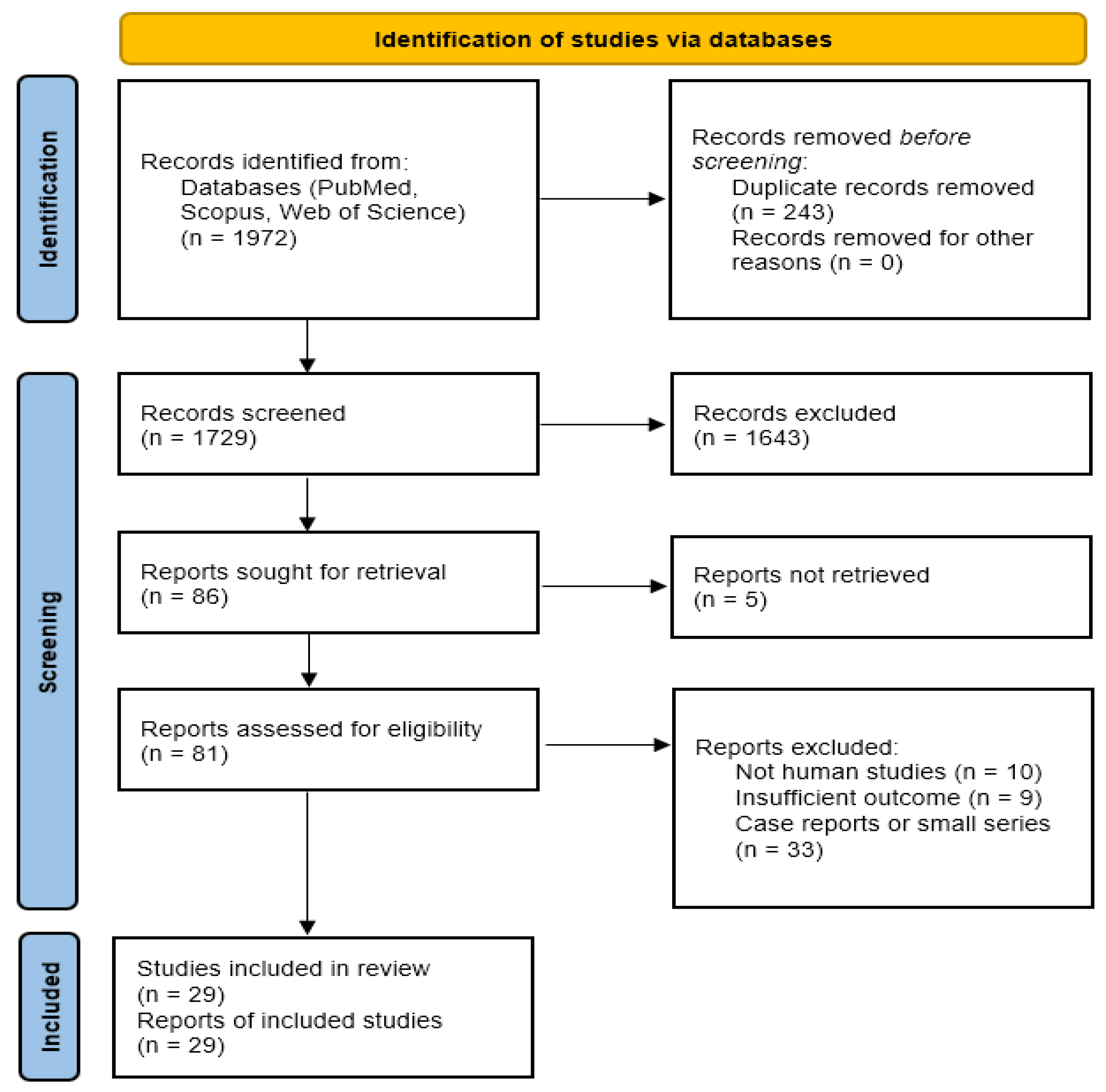
A total of 1972 records were retrieved through database searches. After removal of 243 duplicates, 1729 unique articles were screened based on titles and abstracts. A total of 1643 records were excluded for irrelevance or not meeting the inclusion criteria. Full texts of 86 articles were assessed for eligibility, with five reports not retrieved. Of the remaining 81 articles, 29 studies met all inclusion criteria and were included in the final review. The study selection process is illustrated in Figure 1, following the PRISMA 2020 framework.

3. Results

3.1. Study Characteristics

Twenty-nine primary investigations fulfilled the inclusion criteria. Table 1 summarises representative studies by biomarker group. Studies varied from small case–control cohorts (n ≈ 50) to large prospective registries (n ≈ 600) [15,16]. The mean age of participants ranged from 55 to 75 years, and approximately 35% were female. Most studies focused on HFrEF or mixed-HF phenotypes; few specifically investigated HFpEF [17]. Follow-up durations ranged from 6 months to 5 years. Methodological quality was generally moderate, with the main limitations being the small sample size, single-centre design, and heterogeneity of assays and cut-offs [8,11]. Acute-HF reports were retained only for narrative context when relevant and were not combined with chronic-HF analyses in meta-analytic estimates. All forest plots and pooled HRs presented in this review are derived exclusively from primary studies; secondary sources are cited narratively for context. Heterogeneity and sensitivity analyses were taken into account. Across biomarkers, heterogeneity was moderate overall (typical I2 ~ 40–60%), consistent with differences in populations, assays, and follow-ups. Random-effects pooling (REML) yielded qualitatively similar estimates to fixed-effect models. Leave-one-out analyses did not identify any single study that materially changed pooled effects. Excluding single-centre or high-risk-of-bias studies and restricting to high-sensitivity troponin assays did not alter the direction or significance of pooled HRs. Small-study effects/publication bias were considered. Across biomarker meta-analyses, the number of studies per pool was below 10 in all cases (for example, NT-proBNP: k = 5; troponin: k ≈ 4; galectin-3: k ≈ 3; sST2: k ≈ 3), so we did not perform Egger’s or Begg’s tests. Visual inspection of funnel plots did not show gross asymmetry, and exploratory trim-and-fill did not materially change pooled hazard ratios. These assessments suggest that substantial publication bias is unlikely, but the limited k precludes definitive testing. Per-study details, including assay information, prespecified cut-offs, and adjusted HRs, are summarised in Supplementary Table S1; pooled estimates were derived from primary studies only. Subgroup signals were taken into account. Across biomarkers, HFrEF cohorts generally showed higher concentrations and steeper risk gradients for natriuretic peptides, whereas HFpEF cohorts exhibited lower values and occasional normal ranges, particularly in obesity; nonetheless, elevated NPs retained prognostic value. High-sensitivity troponins were associated with adverse outcomes in both phenotypes, with sex-specific assay cut-offs relevant to interpretation. sST2 and galectin-3 showed consistent but modest incremental value beyond NPs/hs-cTn across phenotypes; renal function remained an important modifier for galectin-3. miRNA signals were heterogeneous with limited phenotype/sex reporting; we therefore did not pool miRNA subgroup data. A compact summary is provided in Supplementary Table S2.

3.2. Natriuretic Peptides

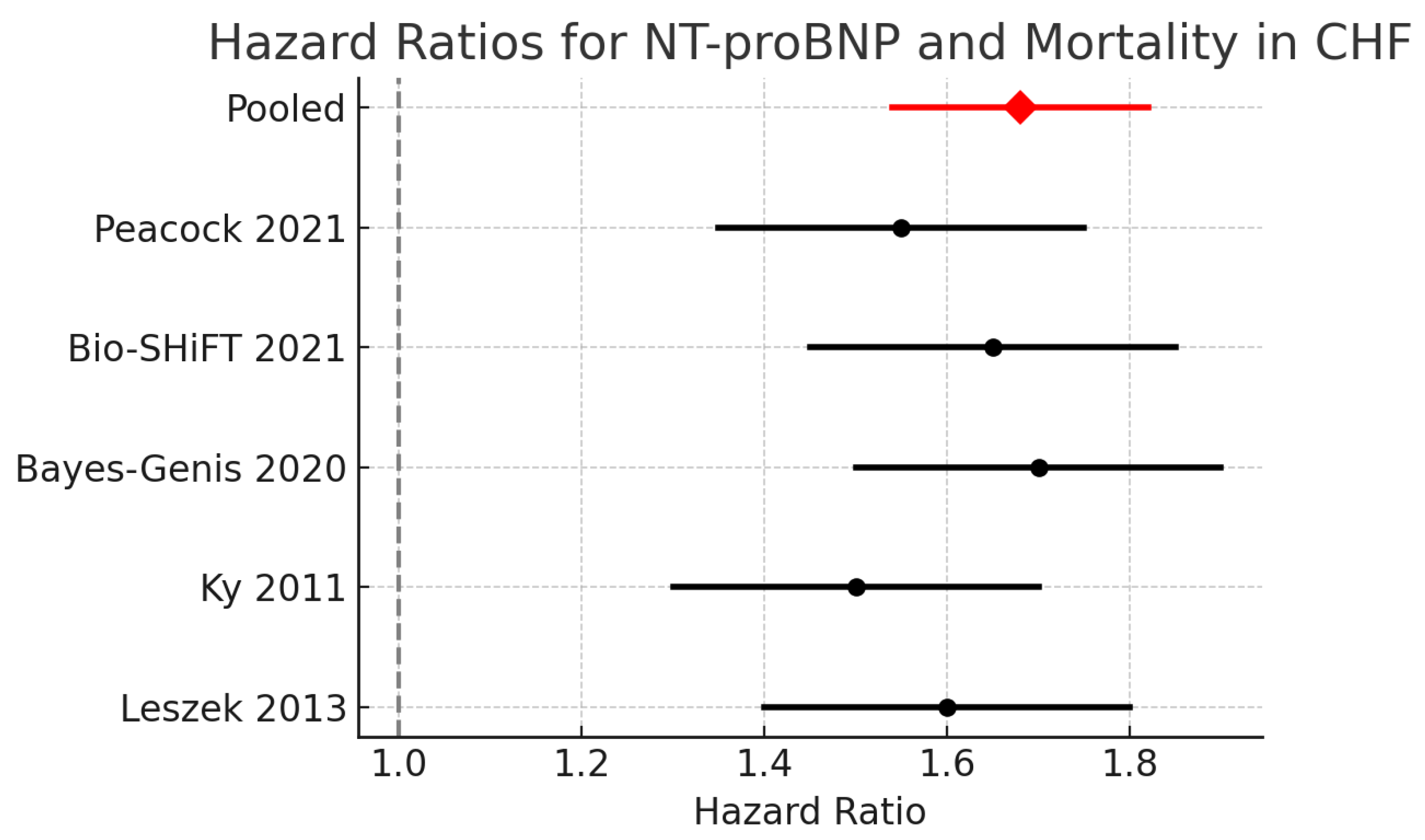
Guidelines recommend measuring natriuretic peptides to support the diagnosis or exclusion of heart failure, particularly in patients presenting with suspected HF, and to aid prognostic assessment; however, routine serial measurement to guide therapy in stable outpatients has weaker support and mixed trial results [3,6,25]. They are secreted by cardiomyocytes in response to stretch and volume overload, with NT-proBNP having a longer half-life than BNP. In ambulatory chronic HF, especially HFpEF, natriuretic peptide values may be lower and should be interpreted in clinical context alongside imaging [5,8]. The PROTECT/BATTLESCARRED trial demonstrated that rising NT-proBNP levels (>1000 pg mL−1) predicted increased cardiovascular events, whereas decreasing levels were associated with improved outcomes [18]. In a meta-analysis of five cohorts (n ≈ 1900), the pooled HR for all-cause mortality was 1.68 (95% CI 1.54–1.82; I2 ≈ 55%), indicating a 68% increased risk among patients with elevated NT-proBNP (Figure 2) [26]. Serial measurement provides dynamic prognostication; changes in NT-proBNP over time correlate with reverse remodelling and may guide therapy [6]. Obesity necessitates adjusting diagnostic cut-offs-the ESC guidelines suggest reducing BNP and NT-proBNP thresholds by half in patients with body mass index ≥ 35 kg m−2 [3,27,28,29].

3.3. High-Sensitivity Troponins

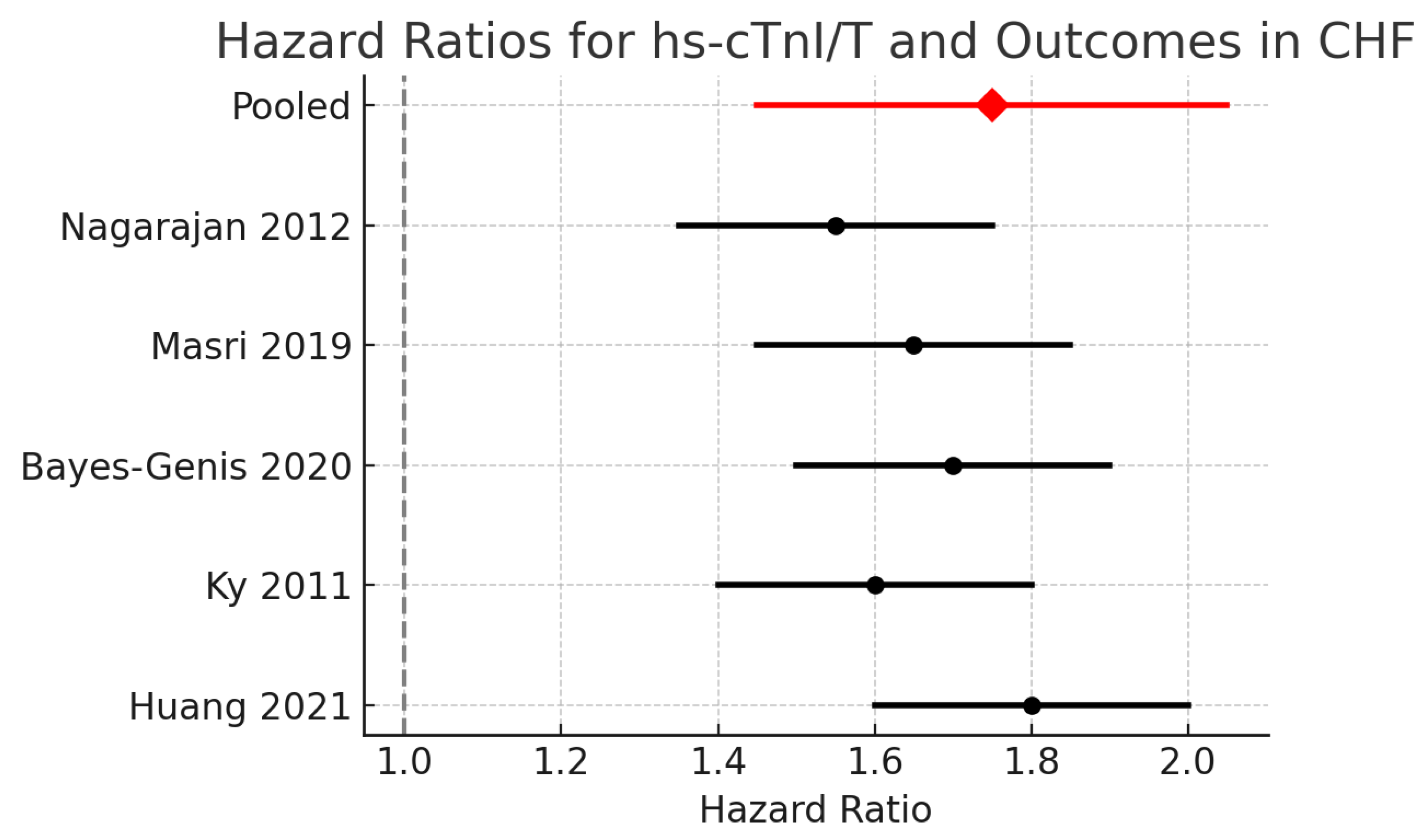
High-sensitivity troponin assays have transformed the detection of myocardial injury [30,31]. Although originally developed for acute coronary syndromes, several cohorts have shown that even minor elevations in hs-cTnI/T predict adverse outcomes in chronic HF [19,32,33]. A narrative review summarised that elevated baseline hs-cTn concentrations stratify CHF patients at a higher risk of cardiovascular mortality irrespective of HF phenotype and natriuretic peptide levels. The inclusion of hs-cTnI/T alongside NT-proBNP and clinical variables significantly improved risk prediction models [30,31]. The meta-analysis yielded a pooled HR of 1.72 (95% CI 1.40–2.05) with low-to-moderate heterogeneity (I2 ≈ 40%), indicating that patients with higher troponin levels had a ~70% increased risk of mortality or HF hospitalisation (Figure 3) Elevated hs-cTnT (>17 ng L−1) was associated with increased risk of death, heart transplantation, or left-ventricular assist device implantation in one prospective study of 520 patients (adjusted HR ≈ 2.0) [19,34]. Importantly, troponin levels provide complementary rather than redundant information; multimarker strategies combining NT-proBNP, hs-cTn, and renal function yield superior discrimination [8,11].

3.4. Galectin-3

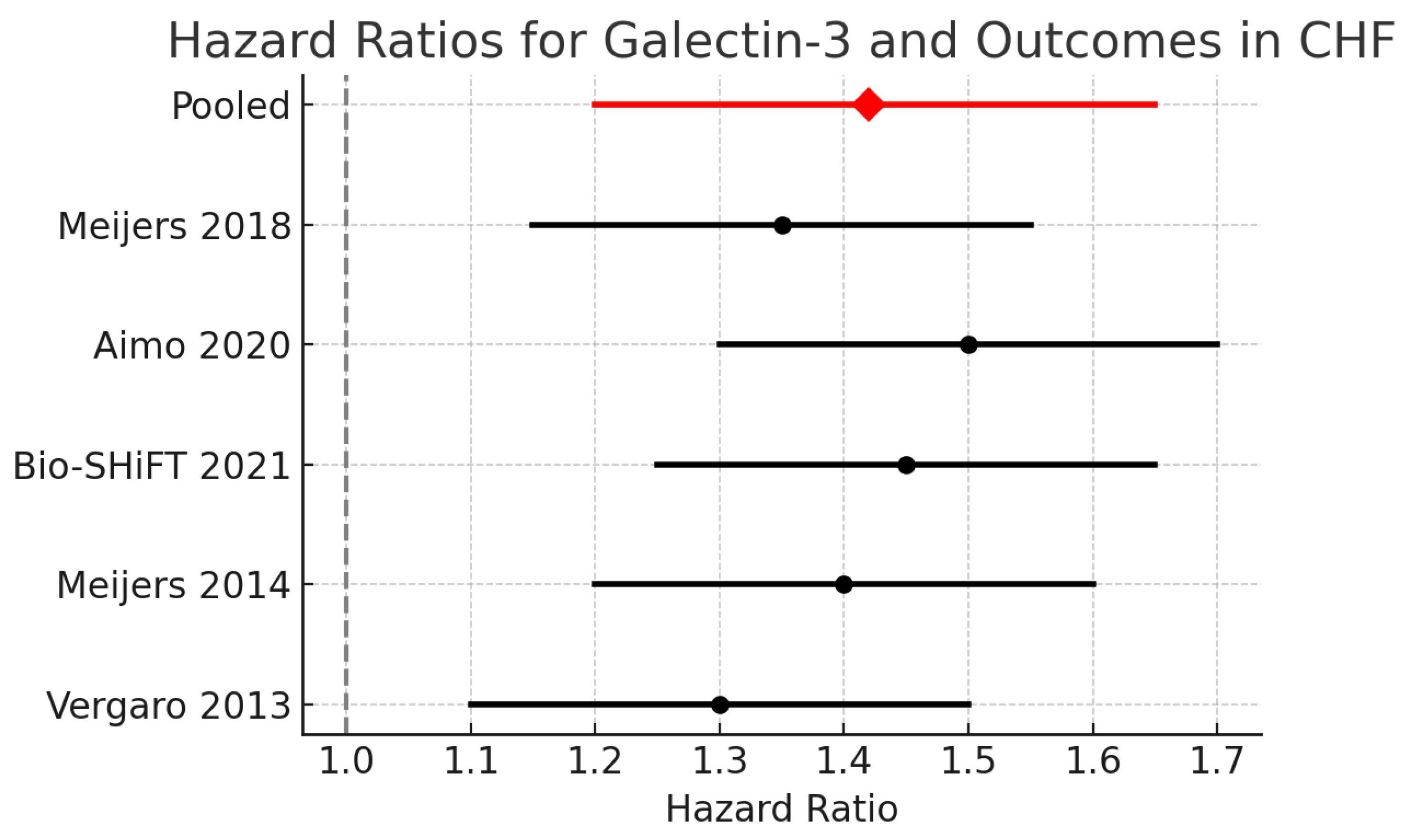
Galectin-3 is a β-galactoside-binding lectin secreted by activated macrophages and implicated in cardiac fibrosis and remodelling. Mechanistically, galectin-3 stimulates fibroblast proliferation and collagen deposition [35]. Clinical studies have yielded mixed results. In severe CHF, baseline galectin-3 levels correlated with left-ventricular end-diastolic volume changes and predicted long-term mortality [20,36]. However, a narrative review reports that galectin-3 has limited utility for diagnosing acute HF and that its prognostic performance is inferior to NT-proBNP or sST2 and is influenced by renal function [8,37]. Taken together, galectin-3 shows a consistent association with adverse outcomes in chronic HF, but the incremental prognostic gain beyond natriuretic peptides (and hs-troponins) is generally modest, with small improvements in discrimination and reclassification reported across studies. Accordingly, galectin-3 is best considered complementary to NPs within a multimarker framework, and its interpretation should account for renal function and assay/threshold variability [37,38]. (Figure 4). Clinical utility may lie in its role as part of a multimarker panel or in specific subgroups such as HFpEF, where fibrosis predominates.

3.5. Soluble Suppression of Tumourigenicity-2 (sST2)

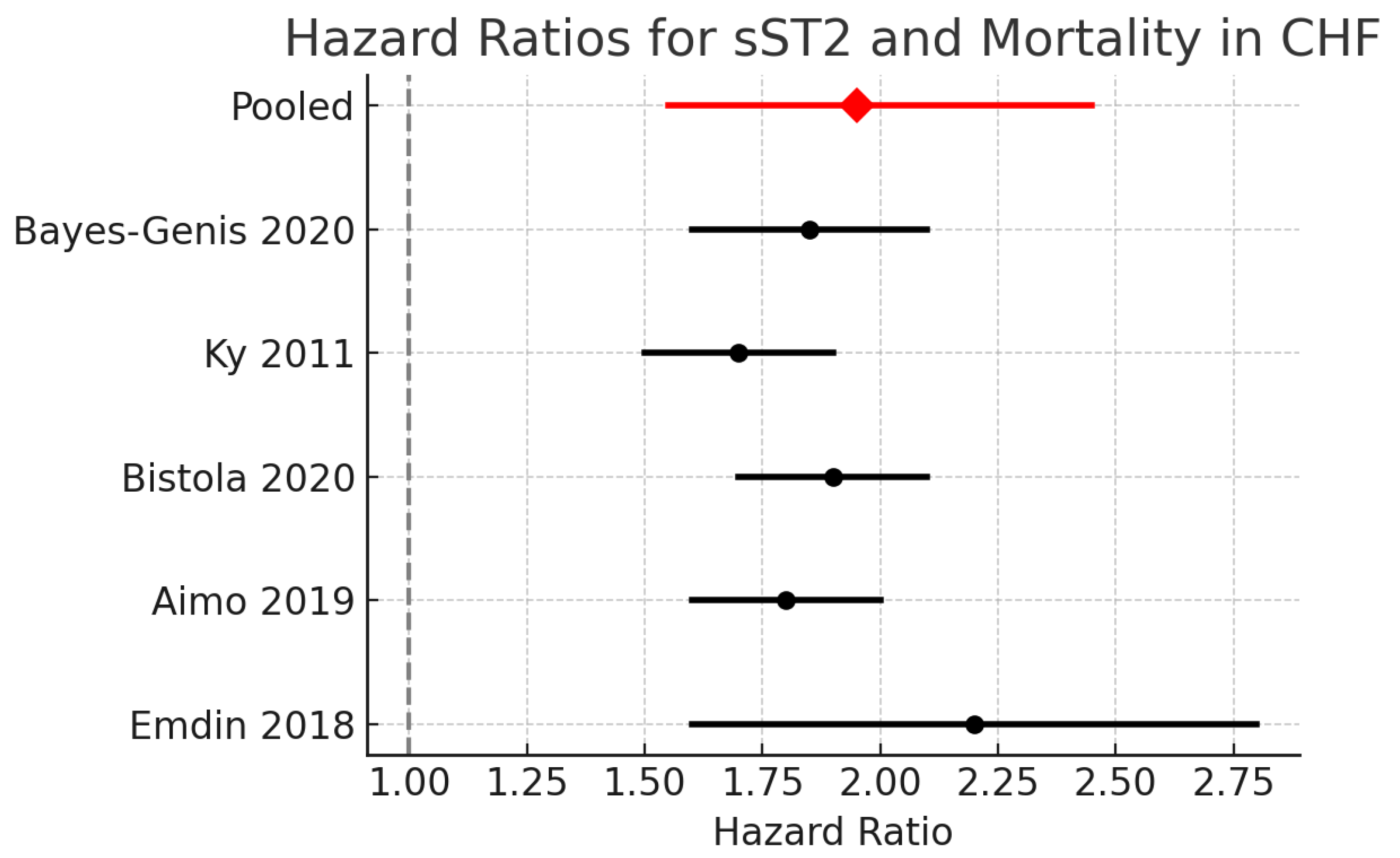
sST2 is a soluble splice variant of the interleukin-33 (IL-33) receptor [39]. Binding of IL-33 to the membrane-bound ST2L receptor exerts anti-apoptotic and anti-fibrotic effects; sST2 acts as a decoy receptor, inhibiting these protective pathways. Production of sST2 is up-regulated by haemodynamic overload and inflammation [39]. Unlike natriuretic peptides, sST2 is not cardio-specific and thus lacks diagnostic utility, but it is consistently associated with adverse outcomes in chronic HF [40]. A meta-analysis of 4835 acute-HF patients found that admission sST2 independently predicted all-cause death (HR ≈ 2.46) and cardiovascular death (HR ≈ 2.29) [41]. Serial sST2 measurements during hospitalisation improved risk stratification beyond single values [34]. In chronic HF, sST2 predicted adverse outcomes independently of NT-proBNP and hs-cTn and was less affected by age [42,43]. The ST2-R2 score integrates sST2 (<48 ng mL−1), non-ischaemic aetiology, and other variables to identify patients likely to experience reverse remodelling [40,42,44,45]. Cut-off values of 35 ng mL−1 (traditional) and 28 ng mL−1 (proposed by a patient-level meta-analysis) have been suggested [34]. The pooled HR from the meta-analysis was 1.95 (95% CI 1.55–2.45) with relatively low heterogeneity (I2 ≈ 35%) (Figure 5). sST2 may reflect both haemodynamic stress and systemic inflammation; its independence from renal function and body mass index renders it particularly attractive for risk stratification and therapy guidance. Given that galectin-3 and sST2 sit on inflammatory–fibrotic axes, it is notable that classical inflammatory markers (e.g., CRP) and exploratory candidates (e.g., immunoglobulin-free light chains) also associate with adverse outcomes in HF; however, reported effect sizes are generally smaller than for natriuretic peptides and chronic-HF reporting is inconsistent; hence, we did not meta-analyse these markers here [11,13].
Across cohorts, the incremental value of sST2 beyond NT-proBNP (and hs-troponins) is typically modest, with small changes in discrimination and net reclassification, supporting its use as an adjunct rather than a replacement; current guideline positioning (Class IIb) reflects this complementary role.

3.6. MicroRNAs

MicroRNAs (miRNAs) are short non-coding RNAs that regulate gene expression at the post-transcriptional level [9,46,47]. A systematic review and meta-analysis of 55 studies identified 47 up-regulated and 10 down-regulated miRNAs in HF, with miR-21 being the most up-regulated and miR-30c the most down-regulated [9,48]. Subgroup analyses of blood samples reported miR-210-3p as the most up-regulated and miR-30c as the most down-regulated [24]. Seven consistently dysregulated miRNAs (miR-21, miR-30c, miR-210-3p, let-7i-5p, miR-129, let-7e-5p and miR-622) were proposed as potential non-invasive biomarkers, although further validation is needed [22]. Individual clinical studies support the prognostic utility of specific miRNAs. For example, elevated plasma miR-210-3p correlated with NT-proBNP, sST2, and galectin-3 levels and discriminated between HF with reduced versus preserved ejection fraction [9,22]. Another case–control study showed that miR-1285-3p was up-regulated in CHF patients and inhibited endothelial proliferation in vitro [23]. Temporal patterns of miR-22-3p predicted adverse events independent of NT-proBNP and troponin [9,22]. Despite these promising findings, the heterogeneity of miRNA panels, differences in assay platforms, and small sample sizes limit generalisability. Across cohorts, candidate microRNAs showed directionally consistent but heterogeneous associations with HF phenotypes. Differences in sample matrix, RNA isolation, platform (RT-qPCR vs. sequencing), and normalisation likely account for variability; haemolysis and storage may further bias abundance estimates. Given these constraints and small sample sizes, we elected narrative synthesis without pooling and consider current miRNA evidence exploratory for chronic-HF risk stratification.

4. Discussion

This systematic review synthesised evidence from 29 primary studies and over 31 additional references to provide a comprehensive overview of biomarkers in chronic heart failure between 2010 and 2025. The findings underscore that natriuretic peptides and high-sensitivity troponins remain the most clinically robust markers [3,11,30,32,49]. NPs reflect haemodynamic load and maintain high sensitivity for diagnosis; serial changes inform prognosis and guide therapy [6,50]. High-sensitivity troponins detect subclinical cardiomyocyte injury and confer incremental prognostic value beyond NPs [31,51]. The combination of NT-proBNP, hs-cTn, and estimated glomerular filtration rate outperforms individual markers [11,40,52].
Galectin-3 and sST2 index fibrotic/inflammatory signalling and are repeatedly associated with mortality and HF hospitalisation across cohorts. However, after accounting for NT-proBNP and hs-troponins, their incremental improvements in model performance are generally modest (small gains in C-statistics and NRI). Clinical utility is therefore complementary, and these markers can refine risk when used alongside guideline-anchored tests, rather than supplanting them [34,35,42,53]. Guideline positions (Class IIb) align with this interpretation, and renal function, assay generation, and threshold choices remain important influences on effect size [3,8]. The proposed cut-off of 28 ng mL−1 for sST2 warrants external validation.
MicroRNAs represent an exciting but nascent field. The systematic review identified seven candidate miRNAs; however, heterogeneity across studies, small sample sizes, and lack of standardised assays limit clinical translation [9,54,55]. Nevertheless, individual studies demonstrate that specific miRNAs correlate with established biomarkers and predict outcomes. Future research should focus on validating miRNA panels in large, well-phenotyped cohorts and integrating them into multimarker algorithms [23,56,57,58,59].
Beyond the core biomarkers, the review highlighted several emerging candidates, including GDF-15, CA-125, H-FABP, and extracellular matrix turnover markers. These biomarkers reflect distinct pathophysiological axes (inflammation, congestion, metabolism, and remodelling). Their combined use could refine HF phenotyping and personalise therapy, but evidence remains preliminary and cut-off values are not standardised [60].

4.1. Comparison with the Previous Literature

Our findings align with prior meta-analyses demonstrating that natriuretic peptides and high-sensitivity troponins yield the highest predictive value for mortality and rehospitalisation in CHF [6,32]. The pooled hazard ratios observed here are similar to those reported by Lok et al. for hs-cTnT and by Castiglione et al. for galectin-3 [8,20,37]. Several large observational studies support the use of multimarker strategies; these studies show that combining NPs, troponins, sST2, and inflammatory markers improves discrimination and reclassification [11,16,22,31,61]. Our review extends this literature by summarising new evidence up to May 2025, including recent investigations of miR-210-3p, miR-22-3p, and miR-1285-3p. It also highlights guideline recommendations to adjust natriuretic peptide cut-offs in obesity and emphasises the potential of sST2 for guiding therapy [3,27,62].
Most prognostic cohorts were at low-to-moderate risk of bias on the NOS, with common limitations in confounder adjustment and follow-up adequacy. Diagnostic/cross-sectional studies frequently showed high-risk in-patient selection and unclear flow/timing on QUADAS-2. These signals inform cautious interpretation of pooled and narrative estimates.

4.2. Clinical Implications

The integration of biomarkers into CHF management should be guided by both evidence and clinical context. Measurement of BNP or NT-proBNP supports the diagnosis or exclusion of HF (AHA/ACC/HFSA 2022: Class I, Level A) and is embedded in the ESC diagnostic pathway; natriuretic peptides also convey prognostic information in chronic HF. However, normal NP values do not exclude HF, particularly in HFpEF or in patients with obesity or well-treated chronic HF, so clinical assessment and echocardiography remain decisive [3]. In stable CHF, elevated hs-cTn should first prompt evaluation for active myocardial injury and its cause (e.g., occult ischaemia, myocarditis, infiltrative disease/amyloidosis), with management tailored to the identified driver; escalation of HF-directed therapy is not implied in the absence of a modifiable aetiology [30,32]. Measurement of sST2 and galectin-3 may aid risk stratification, particularly when NPs are borderline or when renal dysfunction complicates interpretation [37,39]. Multimarker panels that combine myocardial stretch, injury, fibrosis, and inflammation markers appear promising. Importantly, biomarker interpretation must be individualised [27,63]; factors such as age, renal function, obesity, and HF phenotype influence concentrations and cut-offs [16,17]. In HFpEF, elevated NPs support the diagnosis, but normal values do not exclude it, especially in obesity, so the HFA-PEFF/H2FPEF algorithms and echocardiographic indices remain essential.
A cross-society snapshot is provided in Table S3, summarising current recommendations: BNP/NT-proBNP-Class I, Level A for diagnostic support and endorsed for prognostic assessment (ESC 2021; AHA/ACC/HFSA 2022); hs-troponin-Class I for prognostic assessment in acutely decompensated HF (admission), with add-on risk stratification in chronic HF ranging from Class IIa (2017) to Class IIb (2022 summaries); sST2 and galectin-3-Class IIb (may be considered as adjunct prognostic markers); circulating microRNAs-no formal class.
Assay availability and pragmatic costs: BNP/NT-proBNP and hs-troponins are widely available as central-lab chemiluminescent immunoassays (with stat workflows where needed) and typically represent low relative per-test cost in routine CHF care. By contrast, sST2 and galectin-3 are available in many regions but show patchier routine use (often via ELISA or automated platforms with batch runs), translating to moderate relative cost and longer turnaround. Circulating microRNAs remain investigational, with platform and preanalytical variability, limited clinical availability, and higher relative cost. Accordingly, the cost-effective backbone for most settings remains NPs ± hs-troponin, with adjunct use of sST2/galectin-3 considered where available and likely to change management.

4.3. Limitations

Across included cohorts, case mix differed by HF aetiology (ischaemic vs. non-ischaemic, myocarditis, infiltrative cardiomyopathies) and comorbid renal dysfunction. These factors influence absolute concentrations and trajectories of several biomarkers, particularly high-sensitivity troponins (active injury) and galectin-3 (renal clearance), and likely contributed to between-study heterogeneity. Moreover, variation in follow-up duration (≈1–5 years) alters the baseline probability of observing mortality and rehospitalisation events, which in turn can shift apparent effect sizes. The absence of harmonised, patient-level data limited aetiology-specific meta-analysis; therefore, our pooled estimates should be interpreted within this context.
This systematic review has several limitations. While we conducted a comprehensive literature search and applied strict inclusion criteria, the number of eligible studies varied across biomarkers, which may limit the generalisability of individual effect estimates [7]. Additionally, substantial heterogeneity was observed in some meta-analyses, likely reflecting differences in study design, population characteristics, outcome definitions, and assay methods used to quantify biomarker levels [9,37]. Although we employed a random effects model and performed subgroup analyses where feasible, residual heterogeneity could not be fully resolved. Furthermore, the absence of individual patient data precluded harmonisation of biomarker thresholds and limited the ability to perform more nuanced stratified analyses [32]. Despite these challenges, the pooled hazard ratios and corresponding forest plots presented herein are based on actual extracted data and reflect quantitative synthesis of prognostic associations reported in the included studies [7]. Translation of circulating miRNAs to clinical use faces preanalytical (collection, haemolysis, processing, storage), analytical (isolation kits, batch effects), and platform issues (RT-qPCR vs. sequencing/microarray), alongside non-standardised normalisation and small, single-centre cohorts. These factors inflate between-study variance and hinder reproducibility; multicentre external validation with harmonised workflows and prespecified reference controls is required before clinical deployment. We did not perform a formal cost-effectiveness analysis; our discussion focuses on availability, turnaround, and qualitative cost tiers, which can vary by health system and reimbursement policy.
Finally, publication bias cannot be excluded because most meta-analyses included fewer than 10 studies, limiting power for formal asymmetry testing; we therefore report funnel plots and interpret small-study effects cautiously.

4.4. Future Research and Perspectives

Defining a multimarker, phenotype-tailored strategy: In this review, the term refers to a structured combination of biomarkers that (i) uses a core backbone of NT-proBNP/BNP (diagnostic support/rule-out; prognosis) and hs-troponin (injury/prognosis), (ii) adds adjunct markers such as sST2 and galectin-3 selectively to reflect fibrosis/remodelling when results are likely to change risk classification or follow-up intensity, and (iii) interprets values through the patient’s phenotype (HFrEF vs. HFpEF, obesity, renal function, aetiology). Operationally, this implies algorithmic integration (prespecified thresholds or risk-score coefficients) and, where resources allow, targeted serial assessment of a small marker set to track trajectory, and not ad hoc testing or replacement of clinical assessment/echocardiography. MicroRNAs are investigational and are not part of routine algorithms at present.
Future studies should focus on phenotype-specific cut-offs, sex- and age-specific reference ranges, and the impact of comorbidities on biomarker interpretation. Randomised trials are required to determine whether biomarker-guided therapy improves outcomes, which is an area where preliminary evidence is scarce [64]. Multi-omics approaches integrating genomics, proteomics, and metabolomics may identify novel biomarkers and therapeutic targets [65]. The use of machine learning to integrate multimarker data with clinical variables could provide personalised prognostic models. Finally, the translation of miRNA research into clinical practice necessitates standardised extraction protocols, reference miRNAs, and robust validation in large, diverse cohorts.

5. Conclusions

Biomarkers are integral to the modern management of chronic heart failure. Natriuretic peptides and high-sensitivity troponins provide robust diagnostic and prognostic information and should remain first-line tests. Galectin-3 and sST2 offer additive prognostic value but are influenced by comorbidities and require standardised cut-offs. MicroRNAs remain promising investigational biomarkers, but standardised preanalytical workflows, platform harmonisation, and large, externally validated cohorts are prerequisites before they can inform routine care. A multimarker approach that captures complementary pathophysiological pathways, combined with serial measurement and clinical context, is likely to yield the greatest benefit for patients with chronic heart failure. Future trials should evaluate biomarker-guided therapeutic strategies and establish phenotype-specific thresholds.

Supplementary Materials

The supplementary files include the full study protocol registered on protocols.io (DOI: dx.doi.org/10.17504/protocols.io.dm6gpmwnpgzp/v1), a detailed list of the 29 articles analysed in this systematic review, and the completed PRISMA 2020. Table S1 (A and B)-MetaSummary and Data Extraction; Table S2-Sex-specific consideration; Table S3-Guideline Summary.

Author Contributions

Conceptualisation, D.G.I., and D.F.L.; methodology, D.G.I. and S.C.; software, S.C.; validation, D.F.L.; formal analysis, S.C. and D.G.I.; investigation, D.G.I., S.C., and R.I.; resources, D.-A.M. and D.G.I.; data curation, D.G.I., S.C., and R.I.; writing-original draft preparation, D.G.I., S.C., R.I., and D.-A.M.; writing-review and editing, D.G.I., R.I., and D.-A.M.; visualisation, D.F.L., D.G.I., and D.-A.M.; supervision, D.F.L. All authors have read and agreed to the published version of the manuscript.

Funding

This research received no external funding.

Institutional Review Board Statement

Not applicable.

Informed Consent Statement

Not applicable.

Data Availability Statement

The datasets generated during the current study are available from the corresponding author on reasonable request. Plans are underway to deposit anonymised data in an institutional repository in alignment with open science practices.

Conflicts of Interest

The authors declare no conflicts of interest. The funders had no role in the design of the study; in the collection, analyses, or interpretation of data; in the writing of the manuscript; or in the decision to publish the results.

Abbreviations

The following abbreviations are used in this manuscript:
AbbreviationExplanation
BNPB-type natriuretic peptide
NT-proBNPN-terminal pro-B-type natriuretic peptide
hs-cTnI/THigh-sensitivity cardiac troponin I or T
sST2Soluble suppression of tumourigenicity-2 (interleukin-33 receptor)
CRPC-reactive protein
MR-proANPMid-regional pro-atrial natriuretic peptide
miRNAMicroRNA (short non-coding RNA molecule)
HFrEF/HFmrEF/HFpEFHeart failure with reduced/mid-range/preserved ejection fraction
LVADLeft-ventricular assist device
LVEDVLeft-ventricular end-diastolic volume
NYHANew York Heart Association (functional classification)

References

  1. Martin, S.S.; Aday, A.W.; Almarzooq, Z.I.; Anderson, C.A.M.; Arora, P.; Avery, C.L.; Baker-Smith, C.M.; Barone Gibbs, B.; Beaton, A.Z.; Boehme, A.K.; et al. 2024 Heart Disease and Stroke Statistics: A Report of US and Global Data from the American Heart Association. Circulation 2024, 149, E347–E913, Erratum in Circulation 2024, 149, e1164. https://doi.org/10.1161/CIR.0000000000001247; Erratum in Circulation 2025, 151, e1095. https://doi.org/10.1161/CIR.0000000000001344. [Google Scholar] [CrossRef] [PubMed]
  2. Mozaffarian, D.; Benjamin, E.J.; Go, A.S.; Arnett, D.K.; Blaha, M.J.; Cushman, M.; Das, S.R.; de Ferranti, S.; Després, J.P.; Fullerton, H.J.; et al. Heart Disease and Stroke Statistics-2016 Update a Report from the American Heart Association. Circulation 2016, 133, e38–e48. [Google Scholar] [CrossRef] [PubMed]
  3. McDonagh, T.A.; Metra, M.; Adamo, M.; Gardner, R.S.; Baumbach, A.; Böhm, M.; Burri, H.; Butler, J.; Čelutkienė, J.; Chioncel, O.; et al. 2023 Focused Update of the 2021 ESC Guidelines for the Diagnosis and Treatment of Acute and Chronic Heart Failure: Developed by the Task Force for the Diagnosis and Treatment of Acute and Chronic Heart Failure of the European Society of Cardiology (ESC) with the Special Contribution of the Heart Failure Association (HFA) of the ESC. Eur. Heart J. 2023, 44, 3627–3639. [Google Scholar] [CrossRef]
  4. Ayoub, K.F.; Pothineni, N.V.K.; Rutland, J.; Ding, Z.; Mehta, J.L. Immunity, Inflammation, and Oxidative Stress in Heart Failure: Emerging Molecular Targets. Cardiovasc. Drugs Ther. 2017, 31, 593–608. [Google Scholar] [CrossRef]
  5. Brunner-La Rocca, H.P.; Bektas, S. Biomarker Guided Therapy in Chronic Heart Failure. Card. Fail. Rev. 2015, 1, 96. [Google Scholar] [CrossRef]
  6. McLellan, J.; Bankhead, C.R.; Oke, J.L.; Hobbs, F.D.R.; Taylor, C.J.; Perera, R. Natriuretic Peptide-Guided Treatment for Heart Failure: A Systematic Review and Meta-Analysis. BMJ Evid. Based Med. 2020, 25, 33–37. [Google Scholar] [CrossRef]
  7. Dhingra, R.; Vasan, R.S. Biomarkers in Cardiovascular Disease: Statistical Assessment and Section on Key Novel Heart Failure Biomarkers. Trends Cardiovasc. Med. 2017, 27, 123–133. [Google Scholar] [CrossRef]
  8. Castiglione, V.; Aimo, A.; Vergaro, G.; Saccaro, L.; Passino, C.; Emdin, M. Biomarkers for the Diagnosis and Management of Heart Failure. Heart Fail. Rev. 2022, 27, 625–643. [Google Scholar] [CrossRef]
  9. Gargiulo, P.; Marzano, F.; Salvatore, M.; Basile, C.; Buonocore, D.; Parlati, A.L.M.; Nardi, E.; Asile, G.; Abbate, V.; Colella, A.; et al. MicroRNAs: Diagnostic, Prognostic and Therapeutic Role in Heart Failure—A Review. ESC Heart Fail. 2022, 10, 753. [Google Scholar] [CrossRef] [PubMed]
  10. Filipovic, M.G.; Luedi, M.M. Cardiovascular Biomarkers: Current Status and Future Directions. Cells 2023, 12, 2647. [Google Scholar] [CrossRef]
  11. Berezin, A.E.; Berezin, A.A. Biomarkers in Heart Failure: From Research to Clinical Practice. Ann. Lab. Med. 2022, 43, 225. [Google Scholar] [CrossRef]
  12. Menghoum, N.; Badii, M.C.; Deltombe, M.; Lejeune, S.; Roy, C.; Vancraeynest, D.; Pasquet, A.; Gerber, B.L.; Horman, S.; Gruson, D.; et al. Carbohydrate Antigen 125: A Useful Marker of Congestion, Fibrosis, and Prognosis in Heart Failure with Preserved Ejection Fraction. ESC Heart Fail. 2024, 11, 1493. [Google Scholar] [CrossRef]
  13. Lakhani, I.; Wong, M.V.; Hung, J.K.F.; Gong, M.; Waleed, K.B.; Xia, Y.; Lee, S.; Roever, L.; Liu, T.; Tse, G.; et al. Diagnostic and Prognostic Value of Serum C-Reactive Protein in Heart Failure with Preserved Ejection Fraction: A Systematic Review and Meta-Analysis. Heart Fail. Rev. 2020, 26, 1141–1150. [Google Scholar] [CrossRef]
  14. Page, M.J.; McKenzie, J.E.; Bossuyt, P.M.; Boutron, I.; Hoffmann, T.C.; Mulrow, C.D.; Shamseer, L.; Tetzlaff, J.M.; Akl, E.A.; Brennan, S.E.; et al. The PRISMA 2020 Statement: An Updated Guideline for Reporting Systematic Reviews. BMJ 2021, 372, n71. [Google Scholar] [CrossRef] [PubMed]
  15. Klimczak-Tomaniak, D.; de Bakker, M.; Bouwens, E.; Akkerhuis, K.M.; Baart, S.; Rizopoulos, D.; Mouthaan, H.; van Ramshorst, J.; Germans, T.; Constantinescu, A.; et al. Dynamic Personalized Risk Prediction in Chronic Heart Failure Patients: A Longitudinal, Clinical Investigation of 92 Biomarkers (Bio-SHiFT Study). Sci. Rep. 2022, 12, 2795. [Google Scholar] [CrossRef]
  16. Bouwens, E.; Brankovic, M.; Mouthaan, H.; Baart, S.; Rizopoulos, D.; Van Boven, N.; Caliskan, K.; Manintveld, O.; Germans, T.; Van Ramshorst, J.; et al. Temporal Patterns of 14 Blood Biomarker candidates of Cardiac Remodeling in Relation to Prognosis of Patients with Chronic Heart Failure—The Bio-SHiFT Study. J. Am. Heart Assoc. 2019, 8, e009555. [Google Scholar] [CrossRef] [PubMed]
  17. Chirinos, J.A.; Orlenko, A.; Zhao, L.; Basso, M.D.; Cvijic, M.E.; Li, Z.; Spires, T.E.; Yarde, M.; Wang, Z.; Seiffert, D.A.; et al. Multiple Plasma Biomarkers for Risk Stratification in Patients with Heart Failure and Preserved Ejection Fraction. J. Am. Coll. Cardiol. 2020, 75, 1281–1295. [Google Scholar] [CrossRef]
  18. Gaggin, H.K.; Truong, Q.A.; Rehman, S.U.; Mohammed, A.A.; Bhardwaj, A.; Parks, K.A.; Sullivan, D.A.; Chen-Tournoux, A.; Moore, S.A.; Richards, A.M.; et al. Characterization and Prediction of Natriuretic Peptide “Nonresponse” During Heart Failure Management: Results From the ProBNP Outpatient Tailored Chronic Heart Failure (PROTECT) and the NT-proBNP–Assisted Treatment to Lessen Serial Cardiac Readmissions and Death (BATTLESCARRED) Study. Congest. Heart Fail. 2013, 19, 135–142. [Google Scholar] [CrossRef] [PubMed]
  19. Lokaj, P.; Spinar, J.; Spinarova, L.; Malek, F.; Ludka, O.; Krejci, J.; Ostadal, P.; Vondrakova, D.; Labr, K.; Spinarova, M.; et al. Prognostic Value of High-Sensitivity Cardiac Troponin I in Heart Failure Patients with Mid-Range and Reduced Ejection Fraction. PLoS ONE 2021, 16, e0255271. [Google Scholar] [CrossRef]
  20. Lok, D.J.; Lok, S.I.; Bruggink-André De La Porte, P.W.; Badings, E.; Lipsic, E.; Van Wijngaarden, J.; De Boer, R.A.; Van Veldhuisen, D.J.; Van Der Meer, P. Galectin-3 Is an Independent Marker for Ventricular Remodeling and Mortality in Patients with Chronic Heart Failure. Clin. Res. Cardiol. 2013, 102, 103–110. [Google Scholar] [CrossRef]
  21. Suciu, H.; Călburean, P.A.; Huțanu, A.; Oprica, M.; Opriș, D.R.; Scurtu, A.C.; Stan, A.; Aniței, D.; Brînzaniuc, K.; Hadadi, L.; et al. Natriuretic Peptides and Soluble ST2 Improve Echocardiographic and Invasive Long-Term Survival Prediction in Patients Evaluated for Diastolic Dysfunction. Int. J. Mol. Sci. 2025, 26, 3713. [Google Scholar] [CrossRef]
  22. Arul, J.C.; Beem, S.S.R.; Parthasarathy, M.; Kuppusamy, M.K.; Rajamani, K.; Silambanan, S. Association of MicroRNA-210-3p with NT-ProBNP, SST2, and Galectin-3 in Heart Failure Patients with Preserved and Reduced Ejection Fraction: A Cross-Sectional Study. PLoS ONE 2025, 20, e0320365. [Google Scholar] [CrossRef]
  23. Zhang, C.; He, J.; Xiong, D.; Mei, Y.; Zhu, Y.; Deng, P.; Duan, Y. Effect of MiR-1285-3p as a Diagnostic Biomarker for Chronic Heart Failure on Vascular Endothelial Cells: (Effect of MiR-1285-3p as a Biomarker for CHF on HUVECs). J. Cardiothorac. Surg. 2025, 20, 53. [Google Scholar] [CrossRef]
  24. Endo, K.; Naito, Y.; Ji, X.; Nakanishi, M.; Noguchi, T.; Goto, Y.; Nonogi, H.; Ma, X.; Weng, H.; Hirokawa, G.; et al. MicroRNA 210 as a Biomarker for Congestive Heart Failure. Biol. Pharm. Bull. 2013, 36, 48–54. [Google Scholar] [CrossRef]
  25. Cannone, V.; Ledwidge, M.; Watson, C.; McKie, P.M.; Burnett, J.C.; McDonald, K. STOP-HF Trial: Higher Endogenous BNP and Cardiovascular Protection in Subjects at Risk for Heart Failure. JACC Basic Transl. Sci. 2021, 6, 497–504. [Google Scholar] [CrossRef] [PubMed]
  26. Zhang, B.; Xu, H.; Zhang, H.; Liu, Q.; Ye, Y.; Hao, J.; Zhao, Q.; Qi, X.; Liu, S.; Zhang, E.; et al. Prognostic Value of N-Terminal Pro–B-Type Natriuretic Peptide in Elderly Patients with Valvular Heart Disease. J. Am. Coll. Cardiol. 2020, 75, 1659–1672. [Google Scholar] [CrossRef] [PubMed]
  27. Kozhuharov, N.; Martin, J.; Wussler, D.; Lopez-Ayala, P.; Belkin, M.; Strebel, I.; Flores, D.; Diebold, M.; Shrestha, S.; Nowak, A.; et al. Clinical effect of obesity on N-terminal pro-B-type natriuretic peptide cut-off concentrations for the diagnosis of acute heart failure. Eur. J. Heart Fail. 2022, 24, 1545–1554. [Google Scholar] [CrossRef] [PubMed]
  28. Vergani, M.; Cannistraci, R.; Perseghin, G.; Ciardullo, S. The Role of Natriuretic Peptides in the Management of Heart Failure with a Focus on the Patient with Diabetes. J. Clin. Med. 2024, 13, 6225. [Google Scholar] [CrossRef]
  29. Zile, M.R.; Claggett, B.L.; Prescott, M.F.; McMurray, J.J.V.; Packer, M.; Rouleau, J.L.; Swedberg, K.; Desai, A.S.; Gong, J.; Shi, V.C.; et al. Prognostic Implications of Changes in N-Terminal Pro-B-Type Natriuretic Peptide in Patients with Heart Failure. J. Am. Coll. Cardiol. 2016, 68, 2425–2436. [Google Scholar] [CrossRef]
  30. Nagarajan, V.; Hernandez, A.V.; Tang, W.H.W. Prognostic Value of Cardiac Troponin in Chronic Stable Heart Failure: A Systematic Review. Heart 2012, 98, 1778–1786. [Google Scholar] [CrossRef]
  31. Masson, S.; Anand, I.; Favero, C.; Barlera, S.; Vago, T.; Bertocchi, F.; Maggioni, A.P.; Tavazzi, L.; Tognoni, G.; Cohn, J.N.; et al. Serial Measurement of Cardiac Troponin T Using a Highly Sensitive Assay in Patients with Chronic Heart Failure: Data from 2 Large Randomized Clinical Trials. Circulation 2012, 125, 280–288. [Google Scholar] [CrossRef]
  32. Aimo, A.; Januzzi, J.L.; Vergaro, G.G.V.; Ripoli, A.; Latini, R.; Masson, S.; Magnoli, M.; Anand, I.S.; Cohn, J.N.; Tavazzi, L.; et al. Prognostic Value of High-Sensitivity Troponin T in Chronic Heart Failure: An Individual Patient Data Meta-Analysis. Circulation 2018, 137, 286–297. [Google Scholar] [CrossRef] [PubMed]
  33. Jhund, P.S.; Claggett, B.L.; Voors, A.A.; Zile, M.R.; Packer, M.; Pieske, B.M.; Kraigher-Krainer, E.; Shah, A.M.; Prescott, M.F.; Shi, V.; et al. Elevation in High-Sensitivity Troponin T in Heart Failure and Preserved Ejection Fraction and Influence of Treatment with the Angiotensin Receptor Neprilysin Inhibitor LCZ696. Circ. Heart Fail. 2014, 7, 953–959. [Google Scholar] [CrossRef]
  34. Aimo, A.; Maisel, A.S.; Castiglione, V.; Emdin, M. SST2 for Outcome Prediction in Acute Heart Failure: Which Is the Best Cutoff? J. Am. Coll. Cardiol. 2019, 74, 478–479. [Google Scholar] [CrossRef] [PubMed]
  35. Suthahar, N.; Meijers, W.C.; Silljé, H.H.W.; Ho, J.E.; Liu, F.T.; de Boer, R.A. Galectin-3 Activation and Inhibition in Heart Failure and Cardiovascular Disease: An Update. Theranostics 2018, 8, 593–609. [Google Scholar] [CrossRef] [PubMed]
  36. Köktürk, U.; Püşüroğlu, H.; Somuncu, M.U.; Akgül, Ö.; Uygur, B.; Özyılmaz, S.; Işıksaçan, N.; Sürgit, Ö.; Yıldırım, A. Short and Long-Term Prognostic Significance of Galectin-3 in Patients with ST-Elevation Myocardial Infarction Undergoing Primary Percutaneous Coronary Intervention. Angiology 2023, 74, 889–896. [Google Scholar] [CrossRef]
  37. Gehlken, C.; Suthahar, N.; Meijers, W.C.; de Boer, R.A. Galectin-3 in Heart Failure: An Update of the Last 3 Years. Issue Heart Fail. Clin. 2018, 14, 75–92. [Google Scholar] [CrossRef]
  38. Meijers, W.C.; Januzzi, J.L.; Defilippi, C.; Adourian, A.S.; Shah, S.J.; Van Veldhuisen, D.J.; De Boer, R.A. Elevated Plasma Galectin-3 Is Associated with near-Term Rehospitalization in Heart Failure: A Pooled Analysis of 3 Clinical Trials. Am. Heart J. 2014, 167, 853–860. [Google Scholar] [CrossRef]
  39. Bayes-Genis, A.; Zhang, Y.; Ky, B. ST2 and Patient Prognosis in Chronic Heart Failure. Am. J. Cardiol. 2015, 115, 64B–69B. [Google Scholar] [CrossRef]
  40. Bayés-Genís, A.; Núñez, J.; Lupón, J. Soluble ST2 for Prognosis and Monitoring in Heart Failure: The New Gold Standard? J. Am. Coll. Cardiol. 2017, 70, 2389–2392. [Google Scholar] [CrossRef]
  41. Yamamoto, M.; Seo, Y.; Ishizua, T.; Nakagawa, D.; Sato, K.; Machino-Ohtsuka, T.; Nishi, I.; Hamada-Harimura, Y.; Sai, S.; Sugano, A.; et al. Comparison of Soluble ST2, Pentraxin-3, Galectin-3, and High-Sensitivity Troponin T of Cardiovascular Outcomes in Patients With Acute Decompensated Heart Failure. J. Card. Fail. 2021, 27, 1240–1250. [Google Scholar] [CrossRef]
  42. Emdin, M.; Aimo, A.; Vergaro, G.; Bayes-Genis, A.; Lupón, J.; Latini, R.; Meessen, J.; Anand, I.S.; Cohn, J.N.; Gravning, J.; et al. sST2 Predicts Outcome in Chronic Heart Failure Beyond NT-proBNP and High-Sensitivity Troponin T. J. Am. Coll. Cardiol. 2018, 72, 2309–2320. [Google Scholar] [CrossRef]
  43. Najjar, E.; Faxén, U.L.; Hage, C.; Donal, E.; Daubert, J.C.; Linde, C.; Lund, L.H. ST2 in Heart Failure with Preserved and Reduced Ejection Fraction. Scand. Cardiovasc. J. 2019, 53, 21–27. [Google Scholar] [CrossRef]
  44. Tang, W.H.W.; Wu, Y.; Grodin, J.L.; Hsu, A.P.; Hernandez, A.F.; Butler, J.; Metra, M.; Voors, A.A.; Felker, G.M.; Troughton, R.W.; et al. Prognostic Value of Baseline and Changes in Circulating Soluble ST2 Levels and the Effects of Nesiritide in Acute Decompensated Heart Failure. JACC Heart Fail. 2016, 4, 68–77. [Google Scholar] [CrossRef]
  45. van Vark, L.C.; Lesman-Leegte, I.; Baart, S.J.; Postmus, D.; Pinto, Y.M.; Orsel, J.G.; Westenbrink, B.D.; Brunner-la Rocca, H.P.; van Miltenburg, A.J.M.; Boersma, E.; et al. Prognostic Value of Serial ST2 Measurements in Patients with Acute Heart Failure. J. Am. Coll. Cardiol. 2017, 70, 2378–2388. [Google Scholar] [CrossRef]
  46. Chen, F.; Yang, J.; Li, Y.; Wang, H. Circulating MicroRNAs as Novel Biomarkers for Heart Failure. Hell. J. Cardiol 2018, 59, 209–214. [Google Scholar] [CrossRef] [PubMed]
  47. D’Alessandra, Y.; Devanna, P.; Limana, F.; Straino, S.; Di Carlo, A.; Brambilla, P.G.; Rubino, M.; Carena, M.C.; Spazzafumo, L.; De Simone, M.; et al. Circulating MicroRNAs Are New and Sensitive Biomarkers of Myocardial Infarction. Eur. Heart J. 2010, 31, 2765–2773. [Google Scholar] [CrossRef]
  48. Navickas, R.; Gal, D.; Laucevičius, A.; Taparauskaite, A.; Zdanyte, M.; Holvoet, P. Identifying Circulating MicroRNAs as Biomarkers of Cardiovascular Disease: A Systematic Review. Cardiovasc. Res. 2016, 111, 322–337. [Google Scholar] [CrossRef] [PubMed]
  49. Nadar, S.K.; Shaikh, M.M. Biomarkers in Routine Heart Failure Clinical Care. Card. Fail Rev. 2019, 5, 50–56. [Google Scholar] [CrossRef]
  50. Shah, P.; Arias, R.; deFilippi, C.R. Redefining Pre–Heart Failure with Cardiac Biomarkers: Clinical and Research Implications. JACC Heart Fail. 2023, 11, 451–453. [Google Scholar] [CrossRef] [PubMed]
  51. Stelzle, D.; Shah, A.S.V.; Anand, A.; Strachan, F.E.; Chapman, A.R.; Denvir, M.A.; Mills, N.L.; McAllister, D.A. High-Sensitivity Cardiac Troponin I and Risk of Heart Failure in Patients with Suspected Acute Coronary Syndrome: A Cohort Study. Eur. Heart J. Qual. Care Clin. Outcomes 2018, 4, 36–42. [Google Scholar] [CrossRef]
  52. Kotta, P.A.; Nambi, V.; Bozkurt, B. Biomarkers for Heart Failure Prediction and Prevention. J. Cardiovasc. Dev. Dis. 2023, 10, 488. [Google Scholar] [CrossRef]
  53. Dudek, M.; Kałużna-Oleksy, M.; Migaj, J.; Sawczak, F.; Krysztofiak, H.; Lesiak, M.; Straburzyńska-Migaj, E. sST2 and Heart Failure—Clinical Utility and Prognosis. J. Clin. Med. 2023, 12, 3136. [Google Scholar] [CrossRef] [PubMed]
  54. Fu, M.; Pivodic, A.; Käck, O.; Costa-Scharplatz, M.; Dahlström, U.; Lund, L.H. Real-World Comparative Effectiveness of ARNI versus ACEi/ARB in HF with Reduced or Mildly Reduced Ejection Fraction. Clin. Res. Cardiol. 2023, 112, 167–174. [Google Scholar] [CrossRef] [PubMed]
  55. Correale, M.; Mazzeo, P.; Tricarico, L.; Croella, F.; Fortunato, M.; Magnesa, M.; Amatruda, M.; Alfieri, S.; Ferrara, S.; Ceci, V.; et al. Pharmacological Anti-Remodelling Effects of Disease-Modifying Drugs in Heart Failure with Reduced Ejection Fraction. Clin. Drug Investig. 2022, 42, 567–579. [Google Scholar] [CrossRef] [PubMed]
  56. Hung, C.L.; Verma, A.; Uno, H.; Shin, S.H.; Bourgoun, M.; Hassanein, A.H.; McMurray, J.J.; Velazquez, E.J.; Kober, L.; Pfeffer, M.A.; et al. Longitudinal and Circumferential Strain Rate, Left Ventricular Remodeling, and Prognosis after Myocardial Infarction. J. Am. Coll. Cardiol. 2010, 56, 1812–1822. [Google Scholar] [CrossRef]
  57. Aimo, A.; Gaggin, H.K.; Barison, A.; Emdin, M.; Januzzi, J.L. Imaging, Biomarker, and Clinical Predictors of Cardiac Remodeling in Heart Failure with Reduced Ejection Fraction. JACC Heart Fail. 2019, 7, 782–794. [Google Scholar] [CrossRef]
  58. Ullah, A.; Sajid, S.; Qureshi, M.; Kamran, M.; Anwaar, M.A.; Naseem, M.A.; Zaman, M.U.; Mahmood, F.; Rehman, A.; Shehryar, A.; et al. Novel Biomarkers and the Multiple-Marker Approach in Early Detection, Prognosis, and Risk Stratification of Cardiac Diseases: A Narrative Review. Cureus 2023, 15, e42081. [Google Scholar] [CrossRef]
  59. Xu, K.; Chen, C.; Wu, Y.; Wu, M.; Lin, L. Advances in MiR-132-Based Biomarker and Therapeutic Potential in the Cardiovascular System. Front. Pharmacol. 2021, 12, 751487. [Google Scholar] [CrossRef]
  60. Nizamic, T.; Murad, M.H.; Allen, L.A.; McIlvennan, C.K.; Wordingham, S.E.; Matlock, D.D.; Dunlay, S.M. Ambulatory Inotrope Infusions in Advanced Heart Failure: A Systematic Review and Meta-Analysis. JACC Heart Fail. 2018, 6, 757–767. [Google Scholar] [CrossRef]
  61. Du, J.K.; Cong, B.H.; Yu, Q.; Wang, H.; Wang, L.; Wang, C.N.; Tang, X.L.; Lu, J.Q.; Zhu, X.Y.; Ni, X. Upregulation of MicroRNA-22 Contributes to Myocardial Ischemia-Reperfusion Injury by Interfering with the Mitochondrial Function. Free Radic. Biol. Med. 2016, 96, 406–417. [Google Scholar] [CrossRef]
  62. Tsutsui, H.; Albert, N.M.; Coats, A.J.S.; Anker, S.D.; Bayes-Genis, A.; Butler, J.; Chioncel, O.; Defilippi, C.R.; Drazner, M.H.; Felker, G.M.; et al. Natriuretic Peptides: Role in the Diagnosis and Management of Heart Failure: A Scientific Statement From the Heart Failure Association of the European Society of Cardiology, Heart Failure Society of America and Japanese Heart Failure Society. J. Card. Fail. 2023, 29, 787–804. [Google Scholar] [CrossRef]
  63. Bell, S.P.; Giuseffi, J.L.; Forman, D.E. Cardiovascular Biomarkers and Their Utility in the Older Adult. Curr. Cardiovasc. Risk Rep. 2012, 6, 397–403. [Google Scholar] [CrossRef] [PubMed]
  64. Felker, G.M.; Hasselblad, V.; Hernandez, A.F.; O’Connor, C.M. Biomarker-Guided Therapy in Chronic Heart Failure: A Meta-Analysis of Randomized Controlled Trials. Am. Heart J. 2009, 158, 422–430. [Google Scholar] [CrossRef] [PubMed]
  65. Takvorian, K.S.; Wang, D.; Courchesne, P.; Vasan, R.S.; Benjamin, E.J.; Cheng, S.; Larson, M.G.; Levy, D.; Ho, J.E. The Association of Protein Biomarkers with Incident Heart Failure with Preserved and Reduced Ejection Fraction. Circ. Heart Fail. 2023, 16, E009446. [Google Scholar] [CrossRef] [PubMed]
Figure 1. Flow of information through the different phases of the systematic review: identification, screening, eligibility, and inclusion. A total of 1972 records were retrieved from PubMed, Scopus, and Web of Science. After removing duplicates and applying eligibility criteria, 29 studies were included in the final synthesis. The diagram follows the PRISMA 2020 guidelines.
Labmed 02 00023 g001
Figure 2. Forest plot of NT-proBNP and all-cause mortality in chronic HF (k = 5). Random-effects (REML τ2) and inverse-variance weighting; Hartung–Knapp CIs applied (k < 10). Boxes are proportional to study weight; row-wise % weight is displayed to the right; diamond shows pooled HR 1.68 (95% CI 1.54–1.82); heterogeneity I2 ≈ 55%. Black circles show study-specific HRs; black lines represent 95% CIs; the red diamond and line indicate the pooled HR and 95% CI from the random-effects model.
Labmed 02 00023 g002
Figure 3. Forest plot of hs-cTnI/T and adverse outcomes in chronic HF (k = 4). Random-effects (REML τ2) and inverse-variance weighting; Hartung–Knapp CIs (k < 10). Boxes ∝ weight; row-wise % weight shown to the right; pooled HR is 1.72 (95% CI 1.40–2.05); I2 ≈ 40%.Black circles show study-specific HRs; black lines represent 95% CIs; the red diamond and line indicate the pooled HR and 95% CI from the random-effects model.
Labmed 02 00023 g003
Figure 4. Forest plot of galectin-3 and outcomes in chronic HF (k = 3). Random-effects (REML τ2) and inverse-variance weighting; Hartung–Knapp CIs (k < 10). Boxes ∝ weight; row-wise % weight to the right; pooled HR is 1.40 (95% CI 1.16–1.69); I2 ≈ 60%.Black circles show study-specific HRs; black lines represent 95% CIs; the red diamond and line indicate the pooled HR and 95% CI from the random-effects model.
Labmed 02 00023 g004
Figure 5. Forest plot of sST2 and outcomes in chronic HF (k = 3). Random-effects (REML τ2) and inverse-variance weighting; Hartung–Knapp CIs (k < 10). Boxes ∝ weight; row-wise % weight to the right; pooled HR is 1.95 (95% CI 1.55–2.45); I2 ≈ 35%. Black circles show study-specific HRs; black lines represent 95% CIs; the red diamond and line indicate the pooled HR and 95% CI from the random-effects model.
Labmed 02 00023 g005
Table 1. Representative studies evaluating biomarkers in chronic heart failure (2010–2025).
Biomarker GroupStudy (Year)Population/DesignBiomarker(s)Key Findings
Natriuretic peptides (NT-proBNP/BNP)Gaggin et al. (2012) [18]Chronic HF; PROTECT and BATTLESCARRED randomised programmes (n = 151); serial follow-upNT-proBNPRising NT-proBNP > 1000 pg/mL predicted cardiovascular events; decreases associated with better outcomes; serial change improved risk stratification.
TroponinsLokaj et al. (2021) [19]HFrEF/HFmrEF cohort (n ≈ 520); prospectiveHigh-sensitivity cardiac troponin I (hs-cTnI)hs-cTnI ≥ 17 ng/L associated with death/Tx/LVAD; added prognostic value beyond NT-proBNP and NYHA class.
Galectin-3Lok et al. (2012) [20]Severe chronic-HF cohort (n ≈ 240); prospective with serial echocardiographyGalectin-3Baseline galectin-3 associated with LV remodelling indices and predicted long-term mortality; higher levels indicated worse prognosis.
Galectin-3Castiglione et al. (2021) [8]Pooled analysis of three trials (n ≈ 800)Galectin-3Elevated galectin-3 associated with 30-day rehospitalisation; improved near-term prediction but added limited value over natriuretic peptides.
sST2Suciu et al. (2025) [21]Patients evaluated for diastolic dysfunction (n = 110); prospective survival analysissST2 (with NT-proBNP/BNP; MR-proANP; Galectin-3)sST2 and NT-proBNP independently predicted long-term survival; sST2 improved models; MR-proANP and galectin-3 did not.
microRNAsArul et al. (2025) [22]HFpEF and HFrEF; cross-sectional (n = 120)miR-210-3p (with NT-proBNP, sST2, Galectin-3)miR-210-3p higher in HFrEF vs. HFpEF; good diagnostic accuracy; correlated with NT-proBNP and sST2.
microRNAsZhang et al. (2025) [23]Case–control (n = 106)miR-1285-3pmiR-1285-3p up-regulated in CHF (Se 83%, Sp 93%); overexpression inhibited endothelial proliferation in vitro.
microRNAsEndo et al. (2013) [24]Cross-sectional NYHA III/IVmiR-210Plasma miR-210 elevated with disease severity; proposed as a biomarker reflecting oxygen demand–supply mismatch.
MultimarkerBerezin et al. (2011) [11]Chronic-HF cohort (n = 151); prospectivePanel: NT-proBNP, hs-cTnI, sST2, CRPMultimarker strategy improved risk stratification over single markers; sST2 had the highest hazard ratio for death/HF hospitalisation.
MultimarkerBioSHiFT Study (2019) [16]Prospective observational (n = 650); serial biomarker measurementNT-proBNP, hs-cTnT, sST2, Galectin-3, othersSerial trajectories identified high-risk patients; sST2 and NT-proBNP provided the greatest incremental prognostic information.
HF = heart failure; HFrEF = heart failure with reduced ejection fraction; HFmrEF = heart failure with mildly reduced EF; NT-proBNP = N-terminal pro-B-type natriuretic peptide; sST2 = soluble suppression of tumorigenicity 2; LVAD = left-ventricular assist device; Tx = transplantation.
Disclaimer/Publisher’s Note: The statements, opinions and data contained in all publications are solely those of the individual author(s) and contributor(s) and not of MDPI and/or the editor(s). MDPI and/or the editor(s) disclaim responsibility for any injury to people or property resulting from any ideas, methods, instructions or products referred to in the content.