Case Report

A Prophylactic Approach to Ventilator Complications in Acute Respiratory Distress Syndrome: The Role of Early Percutaneous Dilatational Tracheostomy


by
Muthiara Adlin Azzahra
1,
Artha Wahyu Wardana
2,*,
Indiane Putri Ningtias
3 and
Mochamad Renaldi
4
1
Anesthesiology and Intensive Therapy, Hermina Daan Mogot Hospital, Daerah Khusus Ibukota Jakarta 11840, Indonesia
2
Critical Care Department, Hermina Daan Mogot Hospital, Daerah Khusus Ibukota Jakarta 11840, Indonesia
3
Pulmonary and Respiratory, Hermina Daan Mogot Hospital, Daerah Khusus Ibukota Jakarta 11840, Indonesia
4
Cardiovascular, Hermina Daan Mogot Hospital, Daerah Khusus Ibukota Jakarta 11840, Indonesia
*
Author to whom correspondence should be addressed.
J. Oman Med. Assoc. 2026, 3(1), 1; https://doi.org/10.3390/joma3010001
Submission received: 26 September 2025 / Revised: 27 November 2025 / Accepted: 18 December 2025 / Published: 25 December 2025

Abstract

Acute Respiratory Distress Syndrome (ARDS) represents a critical pathology often necessitating prolonged mechanical ventilation, a clinical course associated with significant complications and elevated mortality. This case report details the successful implementation of early Percutaneous Dilatational Tracheostomy (PDT) in a 61-year-old male presenting with severe ARDS secondary to sepsis-induced Community-Acquired Pneumonia (CAP) and Type I respiratory failure. This case suggests that early PDT serves as a safe and effective strategy to mitigate the risks associated with prolonged mechanical ventilation in patients with severe ARDS, potentially facilitating enhanced recovery and reduced ICU length of stay.

1. Introduction

Acute Respiratory Distress Syndrome (ARDS) represents a life-threatening inflammatory lung injury precipitated by severe physiological insults, including pneumonia, sepsis, or physical trauma. The syndrome is driven by complex inflammatory cascades resulting from diverse etiologies, such as infection, gastric aspiration, inhalation trauma, sepsis, or various iatrogenic factors. Pathologically, ARDS is characterized by diffuse alveolar epithelial damage and increased capillary permeability leading to the extravasation of protein-rich fluid into the alveolar spaces and consequent profound hypoxemia [1]. According to the Berlin definition, the diagnosis of ARDS requires an acute onset (within one week of a known clinical insult), bilateral opacities on imaging consistent with pulmonary edema, and a PaO2/FiO2 ratio of ≤300 mmHg with a minimum positive end-expiratory pressure (PEEP) or continuous positive airway pressure (CPAP) of ≥5 cm H2O. Crucially, respiratory failure must not be fully explained by left atrial hypertension or fluid overload [2].
The pathophysiology of the exudative phase significantly compromises lung compliance and induces ventilation-perfusion (V/Q) mismatch, impairing pulmonary gas exchange. Clinical presentation typically includes tachypnea, worsening dyspnea, diffuse crackles, and the production of pink, frothy sputum [2]. Without timely intervention, the syndrome progresses to overt respiratory failure, necessitating mechanical ventilation to ensure adequate oxygenation [1]. While endotracheal intubation is a cornerstone of management, its prolonged application—a central focus of this case report—is associated with adverse outcomes, including Ventilator-Associated Pneumonia (VAP), weaning difficulties, extended ICU length of stay, and increased mortality [3].
To mitigate these complications, Percutaneous Dilatational Tracheostomy (PDT) has established itself as a preferred procedural intervention. This bedside technique involves the insertion of a tracheostomy cannula via serial dilation of the anterior tracheal wall. Evidence suggests that PDT offers a superior safety profile compared to conventional surgical tracheostomy within the ICU setting [4]. Notably, the logistical necessity of transporting critically ill patients to the operating theater for surgical tracheostomy has been linked to a morbidity increase of up to 33% [5]. Furthermore, comparative studies indicate a significantly reduced incidence of stomal wound infections with the percutaneous approach [6]. The primary indications for PDT encompass the management of anticipated prolonged mechanical ventilation, the prevention of translaryngeal tube-induced injury, upper airway obstruction, and the facilitation of bronchial hygiene. While generally advantageous, the procedure carries potential risks, including hemorrhage, accidental loss of airway, transient hypoxia, pneumomediastinum, and subcutaneous emphysema [7].
Clinically, PDT is frequently undertaken within the initial ten days of intubation Although a definitive consensus regarding the precise optimal timing remains elusive, evidence suggests that postponing tracheostomy beyond the 14th day correlates with an extended hospital length of stay [8,9]. Consequently, clinicians must conduct a judicious assessment of the risk-benefit profile when determining the appropriate timing to optimize patient safety and clinical outcomes. This case report highlights the successful implementation of early PDT as a strategic intervention to mitigate the risks of VAP, prolonged mechanical ventilation dependency, and mortality.

2. Case Presentation

A 61-year-old male presented to the Emergency Department with acute dyspnea and a productive cough. He was admitted with a diagnosis of sepsis-induced ARDS secondary to Community-Acquired Pneumonia (CAP) and Type I respiratory failure. His medical history was significant for chronic active smoking and Post-Tuberculosis Obstructive Syndrome.
Upon initial assessment, the patient was alert with a Glasgow Coma Scale (GCS) of 15. Anthropometric data included a height of 153 cm and weight of 51 kg, corresponding to a Body Mass Index (BMI) of 22.2 kg/m2. Vital signs indicated hemodynamic instability and significant respiratory distress, characterized by a heart rate of 110 beats per minute, blood pressure of 81/52 mmHg, respiratory rate of 28 breaths per minute, and an oxygen saturation (SpO2) of 92% while receiving supplemental oxygen via a non-rebreather mask at 15 L/min. The patient was subfebrile at 37.5 °C. Pulmonary auscultation revealed bilateral rhonchi without wheezing. These clinical findings were corroborated by chest radiography, which demonstrated opacities consistent with a parapneumonic process. The patient’s initial laboratory profile and arterial blood gas analysis are summarized in Table 1.
Following clinical deterioration characterized by worsening dyspnea and refractory hypoxemia (SpO2 88% despite high-flow oxygen via 15 L/min non-rebreather mask), the decision was made to proceed with endotracheal intubation. Prior to induction, hemodynamic optimization was achieved through fluid resuscitation and norepinephrine titration (0.2 mcg/kg/min), stabilizing blood pressure at 141/89 mmHg. Mechanical ventilation was initiated in Pressure-Synchronized Intermittent Mandatory Ventilation (P-SIMV) mode with the following settings: FiO2 70%, Inspiratory Pressure (Pinsp) 14 cm H2O, Pressure Support (PS) 14 cm H2O, Respiratory Rate 14 breaths/min, and PEEP 7 cm H2O. The I:E ratio was maintained at 1:1.87, achieving a Tidal Volume (VT) of approximately 350 mL and a Peak Inspiratory Pressure (Ppeak) of 18 cm H2O.
Immediately post-intubation, tracheal aspirates were obtained for microbiological culture using the Onemed™ mucus extractor. Subsequently, empiric broad-spectrum antimicrobial therapy was initiated with intravenous meropenem (1 g every 8 h) and moxifloxacin (400 mg every 24 h), alongside continuous sedation using dexmedetomidine (0.4 mcg/kg/h).
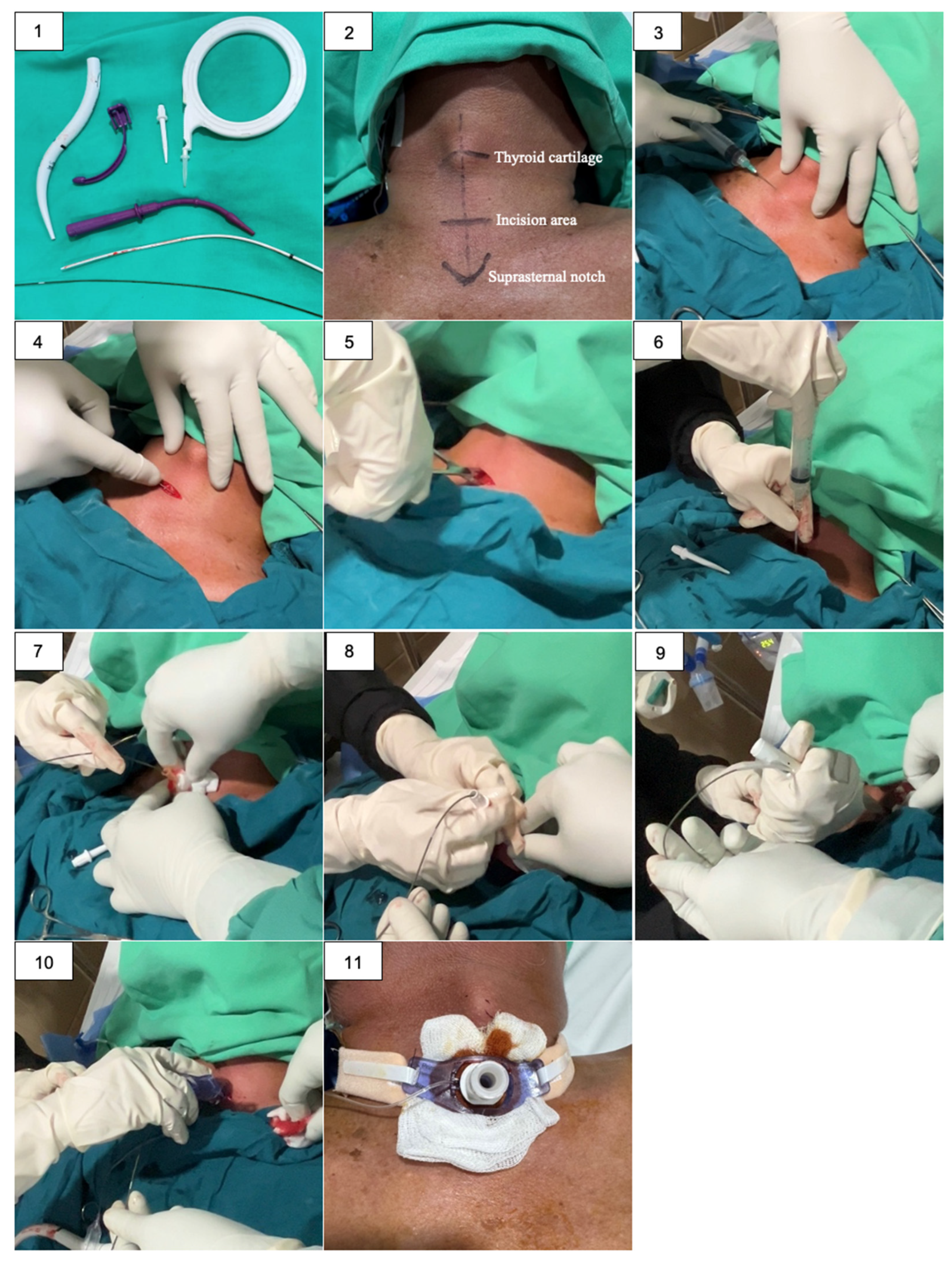
On the fourth day of mechanical ventilation, the patient underwent early Percutaneous Dilatational Tracheostomy (PDT) in the ICU. He was positioned supine with neck extension. Anesthesia was induced using intravenous fentanyl (100 mcg) and ketamine (50 mg), while rocuronium (50 mg) was administered to provide neuromuscular blockade. This regimen was employed to suppress the cough reflex and facilitate optimal respiratory control throughout the procedure. The systematic bedside steps of this PDT procedure, ranging from landmark identification to final tube securement, are depicted in Figure 1.
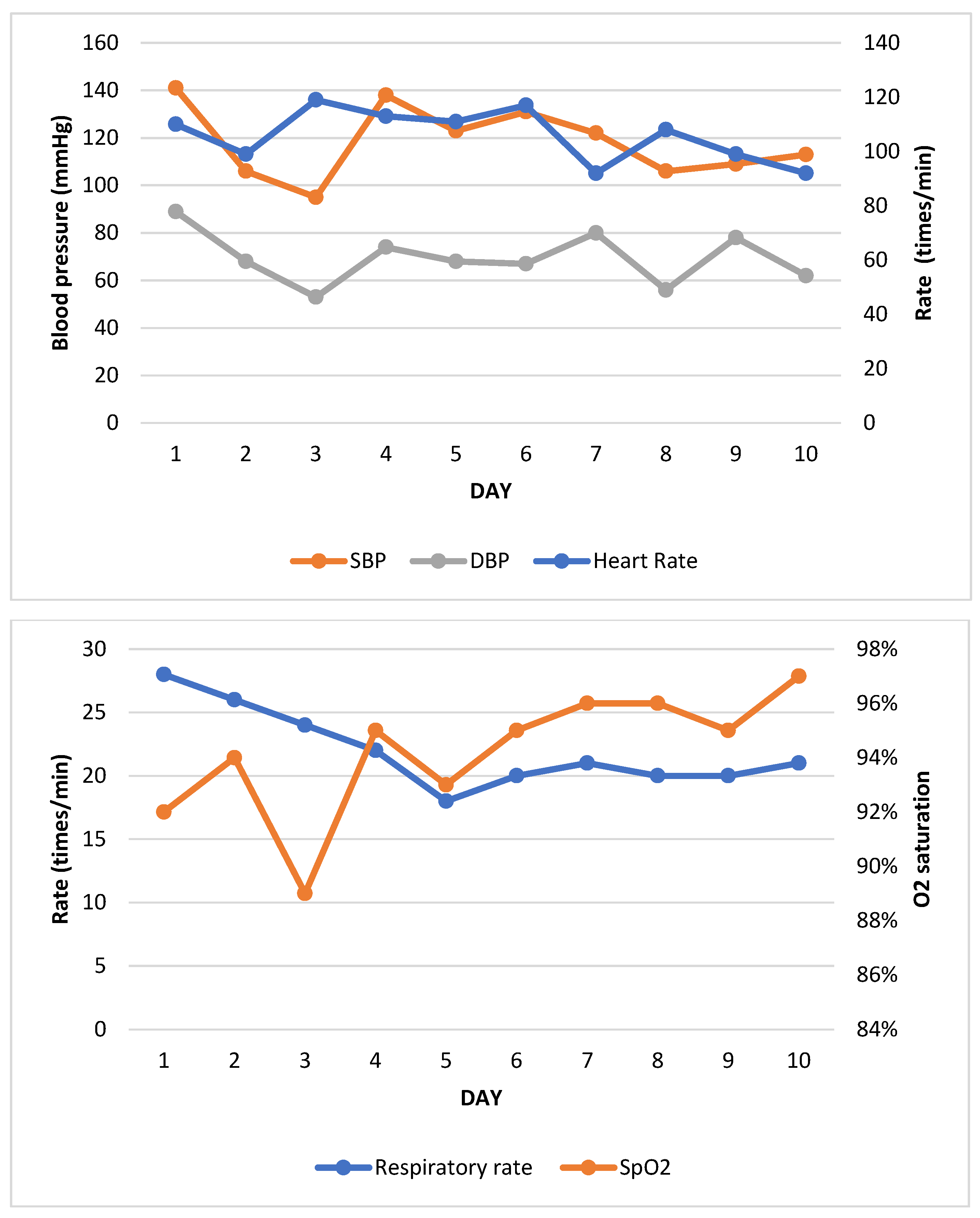
Post-procedurally, the patient exhibited marked clinical improvement, particularly in respiratory mechanics and gas exchange, which facilitated the progressive weaning of mechanical ventilatory support. As oxygenation parameters improved and FiO2 requirements decreased, the patient was transitioned to spontaneous breathing trials (SBT). By day 7, he successfully tolerated a T-piece trial with minimal oxygen support (2 L/min). On day 8, microbiological analysis of the tracheal aspirate yielded Streptococcus pneumoniae, which showed susceptibility to both meropenem and moxifloxacin. Consequently, the initial empiric antibiotic regimen was maintained as definitive therapy. Over the subsequent 48 h, the patient was fully liberated from supplemental oxygen. Following a total ICU length of stay of 10 days, he was discharged to the general ward in a stable condition. Table 2 summarizes the patient’s clinical recovery and radiographic resolution, while Figure 2 illustrates the temporal stabilization of hemodynamic and respiratory parameters throughout the ICU stay.

3. Discussion

In the management of severe ARDS and respiratory failure, invasive mechanical ventilation remains the cornerstone of supportive care [1]. In the present case, the patient exhibited severe ARDS precipitated by Community-Acquired Pneumonia (CAP) and Type I respiratory failure. Furthermore, the patient fulfilled the criteria for sepsis, evidenced by a Sequential Organ Failure Assessment (SOFA) score of ≥6 with a confirmed pulmonary infection source. Sepsis likely acted as the primary driver for the inflammatory cascade leading to ARDS in this patient.
The strategic decision to perform early PDT on the fourth day of mechanical ventilation was predicated on a multifactorial assessment of the patient’s prognosis. Crucially, the patient demonstrated signs of weaning failure on day 3, characterized by refractory hypoxemia (SpO2 89% on FiO2 70%) and an inability to meet the criteria for a Spontaneous Breathing Trial (SBT). Additionally, the combination of severe ARDS (PaO2/FiO2 ratio of 67 mmHg), concurrent sepsis, and a history of Post-Tuberculosis Obstructive Syndrome strongly suggested a high probability of prolonged ventilator dependency. The presence of underlying structural lung disease, specifically obstructive sequelae from tuberculosis, serves as a significant predictor for difficult weaning and extended ventilatory support.
Consequently, early tracheostomy was deemed appropriate to mitigate the complications associated with prolonged translaryngeal intubation. This intervention offers distinct physiological and clinical advantages, including reduced work of breathing, decreased anatomical dead space, enhanced secretion clearance, and improved oral hygiene, all of which contribute to VAP prevention. From a health-economic perspective, early tracheostomy has been associated with reduced VAP incidence, shorter duration of mechanical ventilation, decreased ICU length of stay, and lower hospital costs [10,11,12]. The impact of timing on mortality remains a subject of ongoing investigation. A retrospective study from Italy reported that early tracheostomy (performed by day 4) was associated with a significantly lower hospital mortality rate (45.5%) compared to the late group (62.8%) [5]. However, conflicting evidence exists; a separate meta-analysis indicated that while tracheostomy performed within 10 days may reduce sedation requirements, it did not yield a statistically significant reduction in mortality, VAP incidence, or ICU length of stay compared to late tracheostomy [13]. In our case, despite the heterogeneity in current literature, the decision for early PDT was justified by the clear clinical indication of anticipated prolonged ventilation.
The selection of the PDT technique for this patient was primarily driven by its feasibility as a bedside procedure within the ICU, thereby minimizing the risks of morbidity and mortality associated with intra-hospital transport to the operating theater. This decision was further supported by the patient’s favorable cervical anatomy, the immediate availability of necessary equipment, and the presence of an experienced intensivist to execute the procedure. Previous retrospective data indicate that PDT represents a safer alternative to surgical tracheostomy when performed in the ICU setting. The reduced incidence of postoperative complications following PDT is likely attributed to the minimally invasive nature of the skin incision required. Furthermore, when performed by trained intensivists at the bedside, PDT has been demonstrated to be a relatively safe intervention, with reported complication rates as low as 3.8% [4]. Additional studies have associated PDT with a decreased risk of complications, including surgical site infection, major hemorrhage, stoma enlargement, accidental tube dislodgement, and mortality [14].
Currently, there is no universally established gold standard for tracheostomy; both PDT and surgical tracheostomy remain widely utilized and accepted techniques. PDT may be prioritized for patients with favorable anatomy, offering a more cost-effective alternative to surgical tracheostomy. Despite its advantages, a notable limitation of PDT is its operator-dependent nature, necessitating a highly experienced clinician for safe and successful execution [4,7]. Moreover, definitive guidelines regarding the optimal timing of tracheostomy in critically ill patients remain lacking. Decisions are typically predicated on the clinical judgment and experience of treating physicians within each institution, tailored to the individual patient’s condition.
Following the early PDT intervention, the patient’s clinical status improved significantly. This was evidenced by an improved P/F ratio, successful ventilator weaning, resolution of leukocytosis, and the ability to breathe spontaneously without mechanical support by day 7. Additionally, chest radiographic evaluations demonstrated a favorable clinical resolution. Microbiological analysis of tracheal aspirates on day 8 identified the presence of Streptococcus pneumoniae. This finding is consistent with the established etiology of CAP, where S. pneumoniae is the most prevalent causative agent [15,16]. This aligns with other studies that have found S. pneumoniae as a predominant cause (19%), followed by Mycoplasma pneumoniae (15.4%), and Klebsiella pneumoniae (10.5%) [17]. In contrast to the CAP presented in this case, the major complication associated with prolonged mechanical ventilation is VAP. The specific organisms causing VAP vary based on several factors, including the duration of mechanical ventilation, length of hospital and ICU stays before the infection develops, prior antimicrobial exposure, and the local microbial environment. The most common pathogens associated with VAP are Gram-negative microorganisms such as Pseudomonas aeruginosa, Escherichia coli, Klebsiella pneumoniae, and Acinetobacter species, along with the Gram-positive microorganism Staphylococcus aureus [18,19]. Beyond VAP, prolonged mechanical ventilation can lead to a variety of other severe complications, typically manifesting after 48 h. These include septic shock, hemodynamic instability, ventilator-induced lung injury (VILI) such as barotrauma, splanchnic hypoperfusion, and electrolyte imbalances such as hypoalbuminemia, hypokalemia, hypomagnesemia, and hypocalcemia [20,21,22]. Furthermore, prolonged mechanical ventilation can induce respiratory muscle weakness, diaphragmatic atrophy, and tracheal injuries like stenosis, all of which complicate the weaning process and can contribute to ICU-acquired weakness (ICU-AW) [23,24].
The patient’s sustained clinical stability over the subsequent 48 h facilitated his transfer to the general ward. This favorable outcome underscores the efficacy of early PDT in mitigating the detrimental sequelae associated with prolonged mechanical ventilation and contributing to improved survival outcomes.

Limitation

Several limitations warrant consideration in this report. Primarily, diagnostic screening for viral etiologies, specifically SARS-CoV-2 and influenza, was not performed due to funding constraints associated with the National Health Insurance coverage. Consequently, the differential diagnosis of primary viral pneumonia complicated by Streptococcus pneumoniae superinfection cannot be definitively excluded. Furthermore, the inherent nature of a single case report restricts the generalizability of these findings, as they represent an isolated clinical experience. Future investigations utilizing larger, prospective cohorts are imperative to validate these observations, bolster the evidence base for guideline development, and elucidate the precise optimal timing for early PDT intervention

4. Conclusions

This case report demonstrates the successful implementation of early PDT in a patient presenting with severe ARDS precipitated by Community-Acquired Pneumonia (CAP)-induced sepsis and Type I respiratory failure. PDT intervention proved effective in mitigating prolonged mechanical ventilation and averting its associated complications. Although definitive recommendations regarding specific criteria for early PDT intervention are currently lacking, this report offers clinical insights for the future consideration of early PDT in select critically ill patients, particularly those possessing risk factors for prolonged mechanical ventilation, such as failed weaning trials or a history of chronic lung disease. Nevertheless, other critical determinants, including lung-protective ventilation strategy, culture-directed antimicrobial therapy, and comprehensive supportive care, also significantly contributed to the favorable patient outcome.

Author Contributions

Conceptualization, M.A.A.; Methodology, M.A.A.; Validation, A.W.W., I.P.N. and M.R.; Formal Analysis, M.A.A.; Investigation, M.A.A.; Resources, A.W.W.; Data Curation, M.A.A.; Writing—Original Draft Preparation, M.A.A.; Writing—Review and Editing, M.A.A. and A.W.W.; Visualization, M.A.A.; Supervision, A.W.W. All authors have read and agreed to the published version of the manuscript.

Funding

This research received no external funding.

Institutional Review Board Statement

Ethical review and approval were waived for this study due to the retrospective nature of the case report and the de-identification of all patient information.

Informed Consent Statement

Informed consent was obtained from the subject involved in the study. A signed statement confirming consent to publish has been obtained from the patient.

Data Availability Statement

The raw data supporting the conclusions of this article will be made available by the authors on request study. A signed statement confirming consent to publish has been obtained from the patient.

Acknowledgments

Artificial intelligence (AI) tool (Gemini) was used to assist in language editing and grammar correction during the preparation of this article. The authors have carefully reviewed and verified all content, and they take full responsibility for the accuracy, integrity, and originality of the final manuscript.

Conflicts of Interest

The authors declare no conflicts of interest.

Abbreviations

The following abbreviations are used in this manuscript:
ARDSAcute Respiratory Distress Syndrome
BEBase Excess
BMIBody Mass Index
CAPCommunity-Acquired Pneumonia
CPAPContinuous Positive Airway Pressure
DBPDiastolic Blood Pressure
FiO2Fraction of Inspired Oxygen
GCSGlasgow Coma Scale
HCO3Bicarbonate
HIVHuman Immunodeficiency Virus
HRHeart Rate
ICUIntensive Care Unit
ICU-AWIntensive Care Unit-Acquired Weakness
I:EInspiratory-to-Expiratory Ratio
PaO2Partial Pressure of Arterial Oxygen
PCO2Partial Pressure of Carbon Dioxide
PDTPercutaneous Dilatational Tracheostomy
PEEPPositive End-Expiratory Pressure
PO2Partial Pressure of Oxygen
PpeakPeak Inspiratory Pressure
P-SIMVPressure-Synchronized Intermittent Mandatory Ventilation
SBPSystolic Blood Pressure
SBTSpontaneous Breathing Trial
SOFASequential Organ Failure Assessment
SpO2Peripheral Oxygen Saturation
TCO2Total Carbon Dioxide
VAPVentilator-Associated Pneumonia
VILIVentilator-Induced Lung Injury
V/QVentilation-Perfusion
VTTidal Volume
WBCWhite Blood Cells

References

  1. ARDSNet. ARDS Network. Available online: http://www.ardsnet.org/index.shtml (accessed on 17 September 2025).
  2. Matthay, M.A.; Arabi, Y.; Arroliga, A.C.; Bernard, G.; Bersten, A.D.; Brochard, L.J.; Calfee, C.S.; Combes, A.; Daniel, B.M.; Ferguson, N.D.; et al. A New Global Definition of Acute Respiratory Distress Syndrome. Am. J. Respir. Crit. Care Med. 2024, 209, 37–47. [Google Scholar] [CrossRef]
  3. Wu, C.; Chen, X.; Cai, Y.; Xia, J.; Zhou, X.; Xu, S.; Huang, H.; Zhang, L.; Zhou, X.; Du, C.; et al. Risk Factors Associated with Acute Respiratory Distress Syndrome and Death in Patients with Coronavirus Disease 2019 Pneumonia in Wuhan, China. JAMA Intern. Med. 2020, 180, 934–943. [Google Scholar] [CrossRef] [PubMed]
  4. Suzuki, Y.; Suzuki, T.; Yamamoto, Y.; Teshigawara, A.; Okuda, J.; Suhara, T.; Ueda, T.; Nagata, H.; Yamada, T.; Morisaki, H. Evaluation of the Safety of Percutaneous Dilational Tracheostomy Compared with Surgical Tracheostomy in the Intensive Care Unit. Crit. Care Res. Pract. 2019, 2019, 2054846. [Google Scholar] [CrossRef] [PubMed]
  5. Insel, J.; Weissman, C.; Kemper, M.; Askanazi, J.; Hyman, A.I. Cardiovascular changes during transport of critically ill and postoperative patients. Crit. Care Med. 1986, 14, 539–542. [Google Scholar] [CrossRef] [PubMed]
  6. Delaney, A.; Bagshaw, S.M.; Nalos, M. Percutaneous dilatational tracheostomy versus surgical tracheostomy in critically ill patients: A systematic review and meta-analysis. Crit. Care 2006, 10, R55. [Google Scholar] [CrossRef]
  7. Mehta, C.; Mehta, Y. Percutaneous tracheostomy. Ann. Card. Anaesth. 2017, 20, S19–S25. [Google Scholar] [CrossRef]
  8. Rosano, A.; Martinelli, E.; Fusina, F.; Albani, F.; Caserta, R.; Morandi, A.; Dell’Agnolo, P.; Dicembrini, A.; Mansouri, L.; Marchini, A.; et al. Early Percutaneous Tracheostomy in Coronavirus Disease 2019: Association with Hospital Mortality and Factors Associated with Removal of Tracheostomy Tube at ICU Discharge. A Cohort Study on 121 Patients. Crit. Care Med. 2021, 49, 261–270. [Google Scholar] [CrossRef]
  9. Tekin, P.; Bulut, A. Tracheostomy Timing in Unselected Critically Ill Patients with Prolonged Intubation: A Prospective Cohort Study. J. Clin. Med. 2024, 13, 2729. [Google Scholar] [CrossRef]
  10. Dochi, H.; Nojima, M.; Matsumura, M.; Cammack, I.; Furuta, Y. Effect of early tracheostomy in mechanically ventilated patients. Laryngoscope Investig. Otolaryngol. 2019, 4, 292–299. [Google Scholar] [CrossRef]
  11. Marzban-Rad, S.; Aghamohammadzadeh, A.; Rastegar, L.; Alijani, M. Early percutaneous dilational tracheostomy in COVID-19 patients: A case report. Clin. Case Rep. 2021, 9, 1014–1017. [Google Scholar] [CrossRef]
  12. Ananda, P.A.; Sony. Early Tracheostomy in Prolonged Mechanical Ventilation Due to Severe Head Injury to Prevent Ventilator-Associated Pneumonia (VAP). IJAR 2022, 4, 115–119. [Google Scholar] [CrossRef]
  13. Meng, L.; Wang, C.; Li, J.; Zhang, J. Early vs late tracheostomy in critically ill patients: A systematic review and meta-analysis. Clin. Respir. J. 2016, 10, 684–692. [Google Scholar] [CrossRef] [PubMed]
  14. Johnson-Obaseki, S.; Veljkovic, A.; Javidnia, H. Complication rates of open surgical versus percutaneous tracheostomy in critically ill patients. Laryngoscope 2016, 126, 2459–2467. [Google Scholar] [CrossRef] [PubMed]
  15. Lin, W.H.; Chiu, H.C.; Chen, K.F.; Tsao, K.C.; Chen, Y.Y.; Li, T.H.; Huang, Y.C.; Hsieh, Y.C. Molecular detection of respiratory pathogens in community-acquired pneumonia involving adults. J. Microbiol. Immunol. Infect. 2022, 55, 829–837. [Google Scholar] [CrossRef]
  16. Cilloniz, C.; Ferrer, M.; Liapikou, A.; Garcia-Vidal, C.; Gabarrus, A.; Ceccato, A.; Puig de La Bellacasa, J.; Blasi, F.; Torres, A. Acute respiratory distress syndrome in mechanically ventilated patients with community-acquired pneumonia. Eur. Respir. J. 2018, 51, 1702215. [Google Scholar] [CrossRef]
  17. Ghia, C.J.; Dhar, R.; Koul, P.A.; Rambhad, G.; Fletcher, M.A. Streptococcus pneumoniae as a Cause of Community-Acquired Pneumonia in Indian Adolescents and Adults: A Systematic Review and Meta-Analysis. Clin. Med. Insights Circ. Respir. Pulm. Med. 2019, 13, 1179548419862790. [Google Scholar] [CrossRef]
  18. Papazian, L.; Klompas, M.; Luyt, C.E. Ventilator-associated pneumonia in adults: A narrative review. Intensive Care Med. 2020, 46, 888–906. [Google Scholar] [CrossRef]
  19. Luyt, C.E.; Hekimian, G.; Koulenti, D.; Chastre, J. Microbial cause of ICU-acquired pneumonia: Hospital-acquired pneumonia versus ventilator-associated pneumonia. Curr. Opin. Crit. Care 2018, 24, 332–338. [Google Scholar] [CrossRef]
  20. Udi, J.; Lang, C.N.; Zotzmann, V.; Krueger, K.; Fluegler, A.; Bamberg, F.; Bode, C.; Duerschmied, D.; Wengenmayer, T.; Staudacher, D.L. Incidence of Barotrauma in Patients with COVID-19 Pneumonia During Prolonged Invasive Mechanical Ventilation—A Case-Control Study. J. Intensive Care Med. 2021, 36, 477–483. [Google Scholar] [CrossRef]
  21. Theodoulou, D.; Alevrakis, E.; Iliopoulou, M.; Karampitsakos, T.; Katsaras, M.; Tsipilis, S.; Tzimopoulos, K.; Koutsoukou, A.; Rovina, N. Invasive Mechanical Ventilation: When and to whom? Indications and complications of Invasive Mechanical Ventilation. Pneumon 2020, 33, 13–24. [Google Scholar]
  22. Ibrahim, G.S.; Alkandari, B.M.; Shady, I.A.A.; Gupta, V.K.; Abdelmohsen, M.A. Invasive mechanical ventilation complications in COVID-19 patients. Egypt. J. Radiol. Nucl. Med. 2021, 52, 226. [Google Scholar] [CrossRef]
  23. Lu, C.; Wenjuan, J. Construction and Evaluation of Acquired Weakness Nomogram Model in Patients with Mechanical Ventilation in Intensive Care Unit. Digit. Health 2024, 10, 20552076241261604. [Google Scholar] [CrossRef]
  24. Sinha, R.K.; Sinha, S.; Nishant, P.; Morya, A.K. Intensive Care Unit-Acquired Weakness and Mechanical Ventilation: A Reciprocal Relationship. World J. Clin. Cases 2024, 12, 3644–3647. [Google Scholar] [CrossRef]
Figure 1. Sequential steps of the bedside Percutaneous Dilatational Tracheostomy (PDT) procedure in the ICU: (1) Preparation of the PDT set and surgical instruments; (2) Identification and marking of anatomical landmarks; (3) Sterilization of the surgical field and infiltration of local anesthesia using 2% lidocaine; (4) Performance of a 1 cm vertical skin incision at the designated puncture site (two finger-breadths below the thyroid notch); (5) Blunt dissection of the subcutaneous tissue to expose the pre-tracheal fascia; (6) Tracheal puncture with the introducer needle, confirming intratracheal placement via air aspiration; (7) Advancement of the guidewire into the tracheal lumen using the Seldinger technique; (8) Initial dilation of the puncture tract using a small dilator; (9) Expansion of the stoma using a large dilator to accommodate the cannula size; (10) Insertion of the tracheostomy tube into the dilated stoma; (11) Final securement of the tube and application of a sterile dressing.
Joma 03 00001 g001
Figure 2. Daily hemodynamics monitoring throughout stay in the ICU. Note: SBP: systolic blood pressure; DBP: diastolic blood pressure.
Joma 03 00001 g002
Table 1. Initial diagnostic test results in the emergency department.
LaboratoryValueLaboratoryValue
Hemoglobin17.1 g/dLArterial blood gas:
White blood cells20,540 μLpH7.5
Platelet250,000 μLPCO227.3 mmHg
Hematocrit49.6%PO267 mmHg
Blood urea nitrogen125.9 mg/dLBE0.7
Creatinine1.32 mg/dLTCO222.5
Na+138.8 mg/dLHCO321.6 mEq/L
K+3.04 mEq/LSat O295%
Cl87.7 mEq/LP/F ratio67
Lactate0.7 mEq/L
Table 2. The patient clinical progress evaluation throughout ICU stay.
Day of Treatment in ICU:Day-1Day-3Day-6Day-9
White blood cells count (×103 cells/mm3)20,54019,63017,42014,430
PO2/FiO267/100%68/70%52/35%80/21%
ARDS severity based on P/F ratio67 (severe)97 (severe)148 (mild)380
Oxygenation and
Ventilation Route
Non-rebreather mask Endotracheal tubeTracheostomy (PDT)Room air
Chest
Radiography
Joma 03 00001 i001Joma 03 00001 i002Joma 03 00001 i003Joma 03 00001 i004
Disclaimer/Publisher’s Note: The statements, opinions and data contained in all publications are solely those of the individual author(s) and contributor(s) and not of MDPI and/or the editor(s). MDPI and/or the editor(s) disclaim responsibility for any injury to people or property resulting from any ideas, methods, instructions or products referred to in the content.