Article

Reducing Geriatric Emergency Department Attendances from a Telehealth-Based Acute Care Programme in Nursing Homes: Estimating Inpatient Bed-Day Savings in a Singapore Tertiary Hospital


by
Angus Jun Jie Ng
1,*,
Chong Yau Ong
1,2,
Yijun Lim
1 and
Jean Mui Hua Lee
1,3
1
Sengkang General Hospital, Singapore 544886, Singapore
2
SingHealth Community Hospitals, Singapore 168582, Singapore
3
Singapore General Hospital, Singapore 169608, Singapore
*
Author to whom correspondence should be addressed.
Emerg. Care Med. 2026, 3(3), 20; https://doi.org/10.3390/ecm3030020
Submission received: 3 April 2026 / Revised: 11 June 2026 / Accepted: 23 June 2026 / Published: 26 June 2026

Abstract

Background/Objectives: Nursing home (NH) residents who become acutely unwell may frequently be conveyed to emergency departments (EDs). However, at least half of such low-acuity visits could be avoided. Telehealth-supported acute care programmes may potentially reduce unnecessary ED attendances and subsequent hospital utilization. This study aimed to describe a telehealth-based acute care programme for NH residents and to explore a pragmatic method for estimating potential inpatient bed-day savings using publicly available diagnosis-related group (DRG)-based average-length-of-stay (ALOS) data. Methods: A telehealth-based programme was implemented at Sengkang General Hospital (SKH) to support NH staff in the management of acutely unwell residents. NH residents were prospectively tracked for ED non-attendance within 14 days following teleconsultation. Potential inpatient bed-day savings were estimated by mapping teleconsultation diagnoses to relevant DRGs and referencing Singapore Ministry of Health Hospital Bill Size and Fee Benchmarks. Institution-specific and nationally derived ALOS estimates were compared using exploratory Bland–Altman agreement analysis. Results: Over two financial year periods, seven NHs participated in the programme. A total of 726 teleconsultations were conducted, of which 424 encounters were successfully managed within NHs without ED attendance within 14 days (ED non-attendance rate being 58.4%). Using DRG-based estimation, the projected inpatient bed-day savings for FY2023 were 694.31 days using institution-specific ALOS and 805.42 days using nationally derived ALOS estimates. Exploratory Bland–Altman analysis across 34 mapped diagnostic categories demonstrated a mean bias of 0.098 days (approximately 2.4 h), with 95% limits of agreement ranging from −1.31 to +1.51 days. Conclusions: The acute care programme may reduce ED attendances and hospitalizations among NH residents. Publicly available national DRG-based ALOS data may provide a pragmatic approach for estimating the potential inpatient hospital bed-day savings when institution-specific data are unavailable.

1. Introduction

As at 2023, there are 85 nursing homes (NHs) in Singapore [1]. These long-term residential care facilities had a total of 19,201 beds [2,3]. When NH residents become acutely unwell, they are frequently conveyed to emergency departments (EDs), partly because the attending physician for the NH may rarely be available [4,5]. In addition, NH staff may not be sufficiently competent or empowered to assess or manage acute conditions [6]. Furthermore, there are overarching policy requirements that need to be met for the NH staff to carry out certain procedures [7].
Previous studies have suggested that a substantial proportion of ED attendances from NHs may be potentially avoidable, particularly among residents with low-acuity conditions or palliative care need [8,9,10]. Some older adults may be more appropriately managed within NHs when adequate clinical support is available, while others may derive limited benefit from hospital transfer, having expressed preferences for care outside hospitals [11,12]. There remains another group of older adults from NHs whose presenting symptoms are physiological with age, not complex and can be managed on-site within NHs [13,14]. As the ED is a resource-intensive department, it is imperative for each hospital to reduce inappropriate ED attendances as much as possible for resources to be used for their intended purpose [15,16]. With an ageing population in land-scarce Singapore [17,18], there is an urgent need to develop innovative solutions to manage the inevitable rise in ED attendances and consequently hospital utilization, as there is a limit to building more hospitals [19].
The Enhancing Advance care planning, Geriatric and end-of-Life care in the East-Acute Care Team (EAGLEcareACT), started by Sengkang General Hospital (SKH), is a telehealth-based care coordination programme for NH residents with acute conditions [5]. Through teleconsultations, the physicians provide acute clinical assessment, treatment recommendations, and escalation advice to support NH staff in managing residents on-site [20]. In addition to facilitating acute care delivery within NHs, the programme also emphasizes capability-building through structured care pathways, regular engagement, and ongoing support for NH nurses [5,6]. Since its implementation in August 2020, the programme has progressively expanded across partnering NHs.
While telehealth-supported NH programmes frequently report ED attendance outcomes, there remains limited literature describing pragmatic approaches for estimating downstream inpatient bed-day savings from avoided hospital utilization. Such estimates are inherently challenging because avoided admissions represent counterfactual events that cannot be directly measured [21]. Publicly available diagnosis-related group (DRG)-based average-length-of-stay (ALOS) data may provide a practical benchmarking approach for estimating potential inpatient bed-day savings across healthcare institutions. Exploring such approaches may support future evaluation of telehealth-supported acute care programmes at both institutional and healthcare-system levels.
This study aimed to describe the operational outcomes of a telehealth-supported acute care programme for NH residents, including ED non-attendance at the study hospital following teleconsultation. In addition, this study explored the feasibility of using publicly available national DRG-based ALOS data as a pragmatic approach for estimating potential inpatient bed-day savings.

2. Materials and Methods

2.1. Study Design and Outcomes

The study design was a retrospective descriptive service evaluation of routinely collected programme data, with ED attendance within 14 days prospectively after teleconsultation tracked as part of programme monitoring. This 2-week period was chosen as internal tracking annually showed should a NH resident be referred again to EAGLEcareACT for the same reason; they usually occur within 14 days. This time period was also supported by Shah et al. [22]. The primary outcome was the number of ED non-attendances, populated using our hospital’s electronic medical records. The secondary outcomes were DRG-related savings in terms of inpatient bed-days for subsequent non-admissions. Categorizing each patient’s medical condition, for which they had sought assistance through our programme, by diagnosis and treatment procedure assumed that similar costs were expended by patients with a similar intensity of resources [23].

2.2. Programme Description

When a NH resident became acutely unwell, the NH staff might consult the programme doctor via teleconsultation to determine whether the resident required conveyance to the ED or could be managed on-site within the NH [5]. This quality improvement programme was designed to include NH residents who would likely be referred to the ED, in the absence of this programme. For a more quantitative measure, NH staff were taught to assess NH residents using the national early warning score [24]. They may refer residents with a score of less than 5 while the rest should be conveyed to the emergency department immediately. The referral criteria excluded residents with emergent conditions or non-critical cases which could wait several days for their dedicated primary attending physician. In addition to teleconsultation support, the programme emphasized capability-building through regular train-the-trainer sessions, use of structured care paths and ongoing support for NH nurses [5,6,25].

2.3. Mapping of Patients’ Diagnoses

The chief complaints and diagnoses of the NH residents who had ED non-attendances for at least 14 days after our teleconsultations were categorized into the relevant DRG by the programme doctor. Where multiple DRG severity variants existed, the category without catastrophic or severe complications was selected to reflect the generally lower-acuity nature of residents successfully managed within NHs.
The relevant data was then mapped to the Singapore Ministry of Health (MOH) Hospital Bill Size and Fee Benchmarks, of which figures were based on actual patient encounters across Singapore’s public healthcare institutions, from 1 January 2022 to 31 December 2022 [26]. To ensure adequate cases for meaningful comparisons, no figures were provided if the DRG had less than 10 cases.

2.4. Estimation of Inpatient Bed-Day Savings

As virtually all NH residents in Singapore are admitted through the ED pathway, ED non-attendance was used as a pragmatic surrogate for estimating potential non-admission [27].
Potential inpatient bed-day savings were estimated by mapping the diagnoses of residents with ED non-attendance to the corresponding DRGs and referencing the associated ALOS values from the Singapore MOH Hospital Bill Size and Fee Benchmarks [26]. Institution-specific Ward Type ‘C’ ALOS values were used because the majority of NH residents are admitted to subsidized wards [28]. In addition, nationally derived ALOS estimates were calculated by averaging the published ALOS values across public hospitals for each DRG where data were available.
Exploratory Bland–Altman agreement analysis was performed to assess agreement between institution-specific and nationally derived ALOS estimates [29]. DRGs were excluded from agreement analysis if either the ALOS value was unavailable or if the ALOS was operationally fixed at one day due to predefined clinical workflows, such as observation-unit management pathways. For example, NH residents with limb contusion and minor head injury would be sent to the emergency diagnostic and therapeutic unit, which has an ALOS of one day [30], before being discharged. For conditions which were not mapped due to insufficient clinical information from teleconsultation records, their ALOS was not included in the analyses of estimated bed-day savings.

2.5. Other Data Sources

Bed capacities from the various NHs were obtained from the SingHealth Office of Regional Health and confirmed with various publicly available sources. The names of the NHs and their bed capacities were anonymized. All raw data were routinely collected.
This article analyzed outcomes in financial year time periods as the programme was funded according to financial year. FY2022 refers to 1 April 2022 to 31 March 2023, while FY2023 refers to 1 April 2023 to 31 March 2024.

3. Results

3.1. Teleconsultation Workload from Partnering NHs

Of all ED attendances at the study hospital in 2023, 2.0% were from NHs with an average monthly admission rate of 85.4%, which fluctuates between 85% and 90%.
For FY2022 and FY2023, seven NHs had onboarded the programme, with a total bed capacity of 1993. There was an increase in the doctor teleconsultation workload from 303 to 423 and an increase in cases that could be managed within the NHs from 175 in FY2022 to 249 in FY2023. Over these two time periods, non-attendance rates for ED and admission remained consistent at 58% to 59%.

3.2. Resident Characteristics

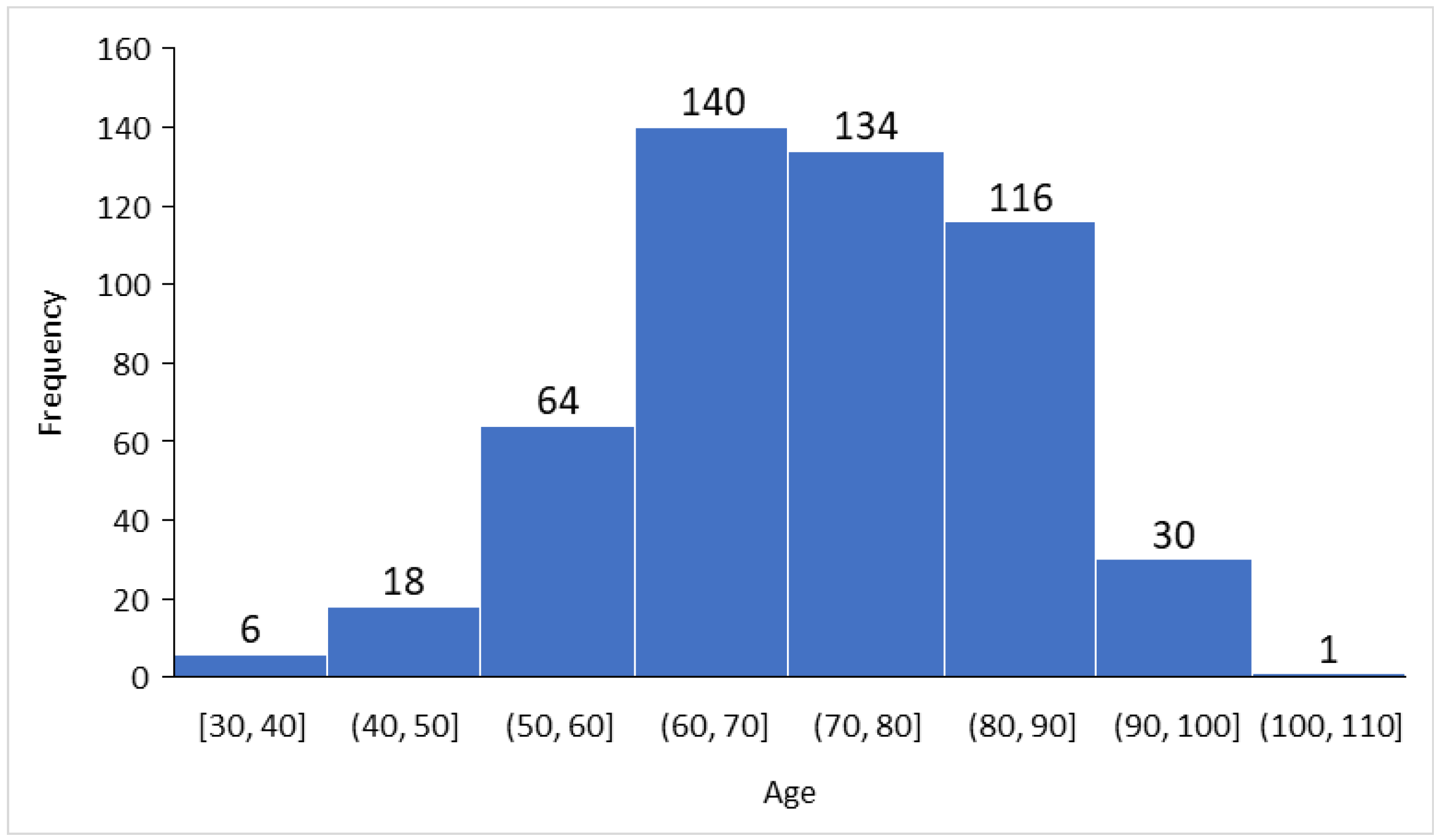
Across both financial years, there were 726 teleconsultations from 509 unique residents reviewed through the programme, equivalent to 1.43 teleconsultations per resident. Most NH residents (76.6%) were between 61 and 90 years old (Figure 1). The mean age was 72.3 years, while the median age was 72 years. In total, 300 of the 509 unique residents were male (58.9%). A total of 13 residents (2.6%) were identified as receiving palliative care.
The five most common conditions managed within the NH were respiratory infections, minor skin conditions, eye conditions, gastrointestinal issues (such as constipation and diarrhea) and minor head injury.

3.3. Estimation of Inpatient Bed-Day Savings from Non-Admissions

The diagnoses of residents with ED non-attendance were mapped to the corresponding DRGs and referenced against institution-specific and nationally derived ALOS estimates. Using institution-specific SKH Ward Type ‘C’ ALOS values, the estimated inpatient bed-day savings for FY2023 were 694.3 days. Using nationally derived ALOS values, the corresponding estimated savings were 805.4 days (Table 1). The mapped DRGs, associated diagnoses, and corresponding ALOS estimates are summarized in Supplementary Table S1. Respiratory infections, minor skin disorders, and eye disorders accounted for the largest number of residents successfully managed within NHs.

3.4. Exploratory Agreement Analysis

Exploratory Bland–Altman agreement analysis was performed across 34 mapped diagnostic categories to assess agreement between institution-specific and nationally derived ALOS estimates. The mean bias between the two estimation approaches was 0.10 days (approximately 2.4 h). The 95% limits of agreement ranged from −1.31 to +1.51 days. The corresponding Bland–Altman plot is provided in Supplementary Figure S1.

4. Discussion

The findings from this study over two financial years suggest that the EAGLEcareACT programme may have stabilized its estimated potential reduction in unnecessary ED attendances and subsequent inpatient admissions among NH residents. By providing teleconsultation support and improving NH staff capabilities through structured care paths [31], the programme enables NH staff to manage lower-acuity conditions within NHs rather than defaulting to ED transfers, which may otherwise result in hospitalizations and poorer health outcomes among residents [32].
The estimated inpatient bed-day savings presented in this study may be conservative because all ED attendances occurring within the 14-day follow-up period were assumed to be related to the preceding teleconsultation episode, even though this may not necessarily have been the case. This approach was intentionally adopted to reduce the likelihood of underestimating subsequent hospital utilization associated with the teleconsultation episodes.

4.1. Estimated Inpatient Bed-Day Savings from Non-Admissions

Estimating inpatient bed-day savings from avoided hospital utilization is inherently challenging because the avoided admissions represent counterfactual events that cannot be directly measured [21]. In this study, publicly available DRG-based ALOS benchmarks were used as a pragmatic approach for estimating potential inpatient bed-day savings associated with ED non-attendance. Ward Type ‘C’ ALOS values were selected as the institutional benchmark because the majority of NH residents are admitted to subsidized wards with the highest subsidy tier [28].
The estimated inpatient bed-day savings derived from institution-specific and nationally derived ALOS values produced similar directional estimates. Exploratory Bland–Altman agreement analysis demonstrated a small mean bias between the two estimation approaches, with relatively narrow limits of agreement across the mapped DRGs. These findings suggest that publicly available national DRG-based ALOS data may provide a practical benchmarking approach when institution-specific ALOS data are unavailable [26]. Nevertheless, these estimates remain hypothetical programme-level approximations and should not be interpreted as direct measures of actual hospital bed-days saved. We have also retained the discussion that avoided admissions represent counterfactual events that cannot be directly measured and that the purpose of this study was to explore a pragmatic estimation approach rather than derive precise patient-level predictions.
One GERONTACCESS study supported that telemedicine significantly reduced unplanned hospitalization in NH residents [33]. We also drew comparison with a hospital-at-home programme studied in one of the NH included in this paper, and noted that the estimated duration of hospital utilization avoided was broadly comparable to reported hospital-at-home episodes [34], while another study on NH resident admission stated a longer average length of stay of 8 days [5].

4.2. Limitations

Despite the efforts to present accurate findings, several limitations should be acknowledged. Firstly, the programme physicians were unable to determine the diagnosis of some residents because teleconsultation relied heavily on the descriptive clinical information provided by the NH nurses. In addition, diagnostic investigations such as radiographs and blood tests were generally unavailable during teleconsultation encounters. Consequently, some DRGs could not be coded, which may have resulted in an underestimation of inpatient bed-days savings.
Secondly, some of the NH residents may also be treated and discharged from the ED without admission [35]. Even though this number may be small due to the lower risk tolerance for geriatric patients, the likely inflation of the estimated bed-day savings would be somewhat mitigated by the cases for which conditions were not coded for and whose ALOS were excluded in the estimation of bed-day savings.
Thirdly, the DRG-based estimation approach does not account for differences in patient heterogeneity, comorbidity burden, or variations in clinical pathways, which may influence actual inpatient length of stay [36,37]. In addition, NH residents are generally older and potentially more frail than the broader populations represented within national DRG datasets, which may affect the comparability of the ALOS estimates. Nevertheless, the intent of this study was not to derive precise patient-level predictions, but rather to explore a pragmatic approach for estimating potential inpatient bed-day savings at the programme level.
We also assumed that NH residents would have gone to our hospital’s ED if more medical attention was required. However, only one of the seven NHs in this study is relatively near to another tertiary hospital; the destination hospital is dependent on the live conveyance time [38]. Due to data protection policies, we were unable to access other hospitals’ databases to verify if our NH residents visited other tertiary hospitals for medical assistance. Thus, even though the numbers might be small, this assumption might have led to an overestimate of the data presented in this article.
We noted the potential selection bias from the ED non-attendance rates, as the NH staff may refer cases they feel comfortable managing. The ED non-attendance rates in following years should be monitored to assess for any trend.
Finally, as this was a single-arm study, it was not possible to directly compare the outcomes if the residents had gone to the hospital or were managed within NHs. Future studies may evaluate comparative clinical outcomes, cost-effectiveness, and broader implementation across different healthcare settings.

5. Conclusions

The EAGLEcareACT programme may potentially reduce ED attendances and inpatient admissions by empowering NH staff with training, telehealth support and structured clinical pathways. The potential value of this programme includes bed-day savings, improved resource utilization, and right-siting for NH residents. Publicly available national DRG-based ALOS data may provide a pragmatic approach for estimating potential inpatient bed-day savings when institution-specific data are unavailable. It is hoped that this programme, among others, can be considered for adoption by hospitals to further strengthen Singapore’s ageing population management strategies.

Supplementary Materials

The following supporting information can be downloaded at https://www.mdpi.com/article/10.3390/ecm3030020/s1, Table S1. Diagnoses of patients managed within nursing homes and their ALOS for FY2023. Figure S1. Bland–Altman plot illustrating agreement between institution-specific ALOS and nationally derived ALOS across 34 diagnostic categories.

Author Contributions

Conceptualization, A.J.J.N.; methodology, A.J.J.N. and C.Y.O.; validation, A.J.J.N. and C.Y.O.; formal analysis, A.J.J.N. and C.Y.O.; investigation, A.J.J.N.; resources, A.J.J.N.; data curation, A.J.J.N. and Y.L.; writing—original draft preparation, A.J.J.N.; writing—review and editing, A.J.J.N. and C.Y.O.; visualization, A.J.J.N.; supervision, C.Y.O. and J.M.H.L.; project administration, A.J.J.N. All authors have read and agreed to the published version of the manuscript.

Funding

This research received no external funding.

Institutional Review Board Statement

The study was conducted in accordance with and approved by SingHealth Centralized Institutions Review Board to not require an ethics board review (CIRB Number 2023–2694) (initial approval date: 6 January 2024, renewal approval date: 19 December 2024). Consent from participants was therefore not obtained.

Informed Consent Statement

Informed consent was not obtained as this study did not require any data outside of what was routinely collected for the programme.

Data Availability Statement

The latest Singapore Ministry of Health Hospital Bills and Fee Benchmarks can be downloaded at the link at the bottom of https://www.moh.gov.sg/managing-expenses/bills-and-fee-benchmarks/hospital-bills-and-fee-benchmarks/ (accessed on 22 June 2026). The latest version at point of manuscript submission is provided here for easy reference. https://go.gov.sg/2023hospitalbillsizes (accessed on 22 June 2026).

Conflicts of Interest

The authors declare no conflicts of interest.

Abbreviations

The following abbreviations are used in this manuscript:
ALOSAverage Length of Stay
DRGDiagnosis-Related Group
EDEmergency Department
FYFinancial Year

References

  1. Ministry of Health. Health Facilities. 2024. Available online: https://www.moh.gov.sg/others/resources-and-statistics/health-facilities/ (accessed on 30 May 2026).
  2. Wong, G.H.; Yap, P.L.; Pang, W.S. Changing landscape of nursing homes in Singapore: Challenges in the 21st century. Ann. Acad. Med. Singap. 2014, 43, 44–50. [Google Scholar] [CrossRef]
  3. Singapore Department of Statistics. Beds in Inpatient Facilities. 2024. Available online: https://data.gov.sg/datasets/d_0f8f02e6e821fc88aa96442656b69241/view (accessed on 30 May 2026).
  4. Katz, P.R.; Karuza, J. The nursing home physician workforce. J. Am. Med. Dir. Assoc. 2006, 7, 394–397; discussion 397–398. [Google Scholar] [CrossRef] [PubMed]
  5. Ong, C.Y.; Lai, J.; Lee, D.W.C.; Lee, J.M.H. Bridging hospital and nursing home: Collaboration for smoother transitions and reduced hospitalizations. J. Am. Med. Dir. Assoc. 2024, 25, 104924. [Google Scholar] [CrossRef] [PubMed]
  6. Liew, Y.H.; Yang, Y.; Lim, S.X.Y.; Lee, J.M.H.; Ong, C.Y. Enhancing care in nursing homes: Qualitative insights from the ENHANCE programme. Ann. Acad. Med. Singap. 2024, 53, 758–761. [Google Scholar] [CrossRef] [PubMed]
  7. Healthcare Services Act 2020. 2023. Available online: https://sso.agc.gov.sg/Act/HSA2020 (accessed on 30 May 2026).
  8. Keerthana; Liew, Y.H.; Lee, M.H.J.; Ong, C.Y. Predictors of nursing home conveyances to emergency department. Int. J. Emerg. Med. 2024, 17, 127. [Google Scholar] [CrossRef] [PubMed]
  9. Xu, H.; Ong, C.Y.; Ng, A.J.J.; Nadarajan, G.D.; Ong, M.E.H.; Lee, J.M.H. Reducing avoidable ED visits in older adults—A collaborative approach between ED and nursing homes. Innov. Aging 2024, 8, 1271. [Google Scholar] [CrossRef]
  10. Low, S.P.; Gao, S.; Wong, G.Q.E. Resilience of hospital facilities in Singapore’s healthcare industry: A pilot study. Int. J. Disaster Resil. Built Environ. 2017, 8, 537–554. [Google Scholar] [CrossRef]
  11. Arendts, G.; Reibel, T.; Codde, J.; Frankel, J. Can transfers from residential aged care facilities to the emergency department be avoided through improved primary care services? Data from qualitative interviews. Australas. J. Ageing 2010, 29, 61–65. [Google Scholar] [CrossRef] [PubMed]
  12. Wallace, E.M.; Cooney, M.C.; Walsh, J.; Conroy, M.; Twomey, F. Why do palliative care patients present to the emergency department? Avoidable or unavoidable? Am. J. Hosp. Palliat. Med. 2013, 30, 253–256. [Google Scholar] [CrossRef] [PubMed]
  13. Bezzina, A.J.; Smith, P.B.; Cromwell, D.; Eagar, K. Primary care patients in the emergency department: Who are they? A review of the definition of the ‘primary care patient’ in the emergency department. Emerg. Med. Australas. 2005, 17, 472–479. [Google Scholar] [CrossRef] [PubMed]
  14. Oh, H.C.; Chow, W.L.; Gao, Y.; Tiah, L.; Goh, S.H.; Mohan, T. Factors associated with inappropriate attendances at the emergency department of a tertiary hospital in Singapore. Singap. Med. J. 2020, 61, 75–80. [Google Scholar] [CrossRef] [PubMed]
  15. Ansah, J.P.; Ahmad, S.; Lee, L.H.; Shen, Y.; Ong, M.E.H.; Matchar, D.B.; Schoenenberger, L. Modeling emergency department crowding: Restoring the balance between demand for and supply of emergency medicine. PLoS ONE 2021, 16, e0244097. [Google Scholar] [CrossRef] [PubMed]
  16. McHale, P.; Wood, S.; Hughes, K.; Bellis, M.A.; Demnitz, U.; Wyke, S. Who uses emergency departments inappropriately and when—A national cross-sectional study using a monitoring data system. BMC Med. 2013, 11, 258. [Google Scholar] [CrossRef] [PubMed]
  17. Lim, W.S.; Wong, S.F.; Leong, I.; Choo, P.; Pang, W.S. Forging a frailty-ready healthcare system to meet population ageing. Int. J. Environ. Res. Public Health 2017, 14, 1448. [Google Scholar] [CrossRef] [PubMed]
  18. Sapuan, M. Managing Singapore’s Land Needs. Ethos. 2007. Available online: https://knowledge.csc.gov.sg/ethos-issue-02/managing-singapores-land-needs/ (accessed on 30 May 2026).
  19. Ow Yong, L.M.; Cameron, A. Learning from elsewhere: Integrated care development in Singapore. Health Policy 2019, 123, 393–402. [Google Scholar] [CrossRef] [PubMed]
  20. Shah, M.N.; Wasserman, E.B.; Wang, H.; Gillespie, S.M.; Noyes, K.; Wood, N.E.; Nelson, D.; Dozier, A.; McConnochie, K.M. High-intensity telemedicine decreases emergency department use by senior living community residents. Telemed. J. E Health 2016, 22, 251–258. [Google Scholar] [CrossRef] [PubMed]
  21. Keogh, R.H.; Van Geloven, N. Prediction under interventions: Evaluation of counterfactual performance using longitudinal observational data. Epidemiology 2024, 35, 329–339. [Google Scholar] [CrossRef] [PubMed]
  22. Shah, V.V.; Villaflores, C.W.; Chuong, L.H.; Leuchter, R.K.; Kilaru, A.S.; Vangala, S.; Sarkisian, C.A. Association Between In-Person vs Telehealth Follow-up and Rates of Repeated Hospital Visits Among Patients Seen in the Emergency Department. JAMA Netw. Open 2022, 5, e2237783. [Google Scholar] [CrossRef] [PubMed]
  23. Barba, R.; Losa, J.E.; Canora, J.; Ruiz, J.; Castilla, J.V.; Zapatero, A. The influence of nursing homes in the functioning of internal medicine services. Eur. J. Intern. Med. 2009, 20, 85–88. [Google Scholar] [CrossRef] [PubMed]
  24. Lim, W.T.; Fang, A.H.; Loo, C.M.; Wong, K.S.; Balakrishnan, T. Use of the National Early Warning Score (NEWS) to Identify Acutely Deteriorating Patients with Sepsis in Acute Medical Ward. Ann. Acad. Med. Singap. 2019, 48, 145–149. [Google Scholar] [CrossRef] [PubMed]
  25. Lee, S.W.; Goh, C.; Chan, Y.H. Emergency department usage by community step-down facilities-patterns and recommendations. Ann. Acad. Med. Singap. 2003, 32, 697–702. [Google Scholar] [PubMed]
  26. Ministry of Health. Hospital Bills and Fee Benchmarks. Available online: https://www.moh.gov.sg/managing-expenses/bills-and-fee-benchmarks/hospital-bills-and-fee-benchmarks/ (accessed on 30 May 2026).
  27. Shi, P.; Dai, J.G.; Ding, D.; Ang, S.K.J.; Chou, M.; Jin, X.; Sim, J. Patient Flow from Emergency Department to Inpatient Wards: Empirical Observations from a Singaporean Hospital. SSRN 2014. [Google Scholar] [CrossRef][Green Version]
  28. Quah, W.C.; Leong, C.J.; Chong, E.; Low, J.A.; Rafman, H. Unplanned hospitalisations among subsidised nursing home residents in Singapore: Insights from a data linkage study. Ann. Acad. Med. Singap. 2024, 53, 657–669. [Google Scholar] [CrossRef] [PubMed]
  29. Giavarina, D. Understanding Bland Altman analysis. Biochem. Med. 2015, 25, 141–151. [Google Scholar] [CrossRef] [PubMed]
  30. Wong, S.S.; Chai, C.Y.; Leong, S. Streamline the workflow for emergency cardiac chest pain patients to provide iimelier assessments. In Proceedings of the Singapore Healthcare Management, Singapore, 19–21 August 2014. [Google Scholar]
  31. Briggs, R.; Coughlan, T.; Collins, R.; O’Neill, D.; Kennelly, S.P. Nursing home residents attending the emergency department: Clinical characteristics and outcomes. QJM Int. J. Med. 2013, 106, 803–808. [Google Scholar] [CrossRef] [PubMed]
  32. Boockvar, K.S.; Gruber-Baldini, A.L.; Burton, L.; Zimmerman, S.; May, C.; Magaziner, J. Outcomes of infection in nursing home residents with and without early hospital transfer. J. Am. Geriatr. Soc. 2005, 53, 590–596. [Google Scholar] [CrossRef] [PubMed]
  33. Gayot, C.; Laubarie-Mouret, C.; Zarca, K.; Mimouni, M.; Cardinaud, N.; Luce, S.; Tovena, I.; Durand-Zaleski, I.; Laroche, M.L.; Preux, P.M.; et al. Effectiveness and cost-effectiveness of a telemedicine programme for preventing unplanned hospitalisations of older adults living in nursing homes: The GERONTACCESS cluster randomized clinical trial. BMC Geriatr. 2022, 22, 991. [Google Scholar] [CrossRef] [PubMed]
  34. Ong, C.Y.; Ng, A.J.J.; Ngo, H.J.; Ya, E.J.H.; Lee, J.M.H. Extending Hospital-at-Home to nursing homes: Findings from a novel care model in Singapore. Front. Public Health 2025, 13, 1595535. [Google Scholar] [CrossRef] [PubMed]
  35. Ong, C.Y.; Koh, R.Y.Q.; Ng, A.J.J.; Lee, J.M.H. Cost-effectiveness of an acute medical teleconsultation model for nursing home residents. Innov. Aging 2026, 10, igag031. [Google Scholar] [CrossRef] [PubMed]
  36. Kiljunen, O.; Valimaki, T.; Kankkunen, P.; Partanen, P. Competence for older people nursing in care and nursing homes: An integrative review. Int. J. Older People Nurs. 2017, 12, e12146. [Google Scholar] [CrossRef] [PubMed]
  37. Fried, T.R.; Mor, V. Frailty and hospitalization of long-term stay nursing home residents. J. Am. Geriatr. Soc. 1997, 45, 265–269. [Google Scholar] [CrossRef] [PubMed]
  38. Wei Lam, S.S.; Zhang, Z.C.; Oh, H.C.; Ng, Y.Y.; Wah, W.; Hock Ong, M.E.; Cardiac Arrest Resuscitation Epidemiology (CARE) Study Group. Reducing ambulance response times using discrete event simulation. Prehosp. Emerg. Care 2014, 18, 207–216. [Google Scholar] [CrossRef] [PubMed]
Figure 1. Age distribution of 509 unique NH residents referred to our programme from 1 April 2022 to 31 March 2024.
Ecm 03 00020 g001
Table 1. Estimated bed-day savings from non-admissions with reference to MOH data in FY2023.
MOH DRG CodeMOH DRG
Description
NH Residents Managed Within NHsInstitution-Specific ALOSTotal Estimated Inpatient Bed-Day Savings
(Institution-Specific)
Nationally Derived ALOSNumber of Hospitals Used to Calculate
Nationally Derived ALOS
Total Estimated Inpatient Bed-Day Savings (National)
E62CRespiratory Infections/Inflammations W/O CC374.09151.253.899144.00
J67AMinor Skin Disorders284.21117.964.329120.94
C63ZOther Disorders of the Eye183.0054.004.35878.24
G70BOther Digestive System Diagnoses W/O Catastrophic or Severe CC172.0935.602.361040.11
B80ZOther Head Injury151.0015.004.97974.49
Others134 320.50 347.63
Total249 694.31 805.42
Only the five conditions with the highest number of patients managed within NHs are shown. The complete list is provided in the Supplementary Table S1. Figures were rounded off to two decimal places where applicable. ALOS: average length of stay; DRG: diagnosis-related group; FY: financial year; MOH: Ministry of Health; NH: nursing home.
Disclaimer/Publisher’s Note: The statements, opinions and data contained in all publications are solely those of the individual author(s) and contributor(s) and not of MDPI and/or the editor(s). MDPI and/or the editor(s) disclaim responsibility for any injury to people or property resulting from any ideas, methods, instructions or products referred to in the content.