Abstract
Background/Objectives: Comprehensive epidemiological studies of bicycle crashes involving all ages in Japan are limited, particularly regarding multiple-rider incidents. This study investigated the epidemiology of single- and multiple-rider bicycle crashes in a Japanese core regional city. Methods: Ambulance transport data from Takatsuki City (1 January 2014 to 31 July 2024) were retrospectively analyzed, including demographics, crash characteristics, and severity of injury for bicycle crash patients. The primary outcome was examination of the epidemiology of bicycle crashes with moderate and severe severity or severe and fatal severity, encompassing both single- and multiple-rider incidents. Statistical tests and logistic regression analysis were used. Results: For 6683 transported patients, 6377 (95.4%) involved single-rider crashes and 306 (4.6%) involved multiple riders. Single-rider crash patients were older and more often male. Moderate or greater injuries occurred in 625 single-rider and 11 multiple-rider crash patients. No severe or fatal injuries occurred in multiple-rider crashes. General roadways and intersections were common crash locations. Male sex and older age predicted greater injury severity in single-rider crashes. Fifty single-rider bicycle crashes resulted in severe or greater severity injuries, and four fatal crashes were recorded. Conclusions: This study uniquely details multiple-rider bicycle crashes in Japan, revealing a lower severity of injuries compared to single-rider crashes.
1. Introduction
Bicycle crashes are a significant public health concern [1]. In Japan, bicycles are a primary mode of daily transportation across all age groups, distinct from the sports-centric usage often seen in many Western countries [2]. Unlike many Western countries, Japanese infrastructure often lacks dedicated cycling lanes, leading to a unique “mixed-use” environment where cyclists frequently navigate between roadways and sidewalks. While the Road Traffic Act classifies bicycles as “light vehicles” restricted to the left side of the road and mandates specific maneuvers such as the “two-step right turn” at intersections, social attitudes and historical precedent have normalized sidewalk riding, contributing to complex traffic dynamics [3]. According to police reports, nearly 15,000 bicycle crashes were recorded in Tokyo in 2024 [4], and approximately 200 such crashes were reported in Takatsuki City in 2020 [5]. However, direct comparisons of these figures are challenging due to regional variations in bicycle usage, traffic conditions, and reporting practices. To mitigate injury severity, the Road Traffic Act was amended in April 2023 to mandate helmet use as a “mandatory effort” for all cyclists. However, public compliance remains inconsistent as there are no legal penalties for non-compliance, reflecting a persistent gap in injury prevention practices [3].
While recent epidemiological studies have analyzed severe trauma data from tertiary emergency medical centers and critical care centers nationwide, no epidemiological studies in Japan appear to have focused on all ambulance transports related to bicycle crashes. Although police data on bicycle crashes exist, those data are primarily collected from an administrative perspective and lack the detailed medical information necessary for in-depth analysis [4,5]. Further, while epidemiological studies on bicycle crashes have been conducted in Europe, those studies have predominantly focused on single-rider bicycle crashes, with limited data available on multiple-rider (including tandem) bicycle crashes [6,7].
In Japan, despite the legal allowance for operators aged 16 or older to transport up to two pre-elementary school children on specially designed bicycles equipped with two child seats—effectively permitting three occupants under specific conditions—the principal regulation remains that two- or three-wheeled bicycles shall not carry any person other than the operator [3]. This primary restriction is legally enforced under the Road Traffic Act and further specified in the respective Prefectural Road Traffic Regulations [3]. Despite this, crashes involving multiple-rider bicycles, particularly those with parents carrying children in child seats, are still prevalent. Investigating the incidence and injury mechanisms of these crashes is therefore crucial for developing effective prevention strategies and treatment interventions. This study aims to address this gap in knowledge by examining the epidemiology of bicycle crashes, including both single-rider and tandem bicycle crashes, in a Japanese core regional city. The findings of this study have the potential to be extrapolated to other Asian countries where bicycles are commonly used for daily utility, thus contributing to a better global understanding of bicycle crash epidemiology.
2. Methods
2.1. Study Design and Setting
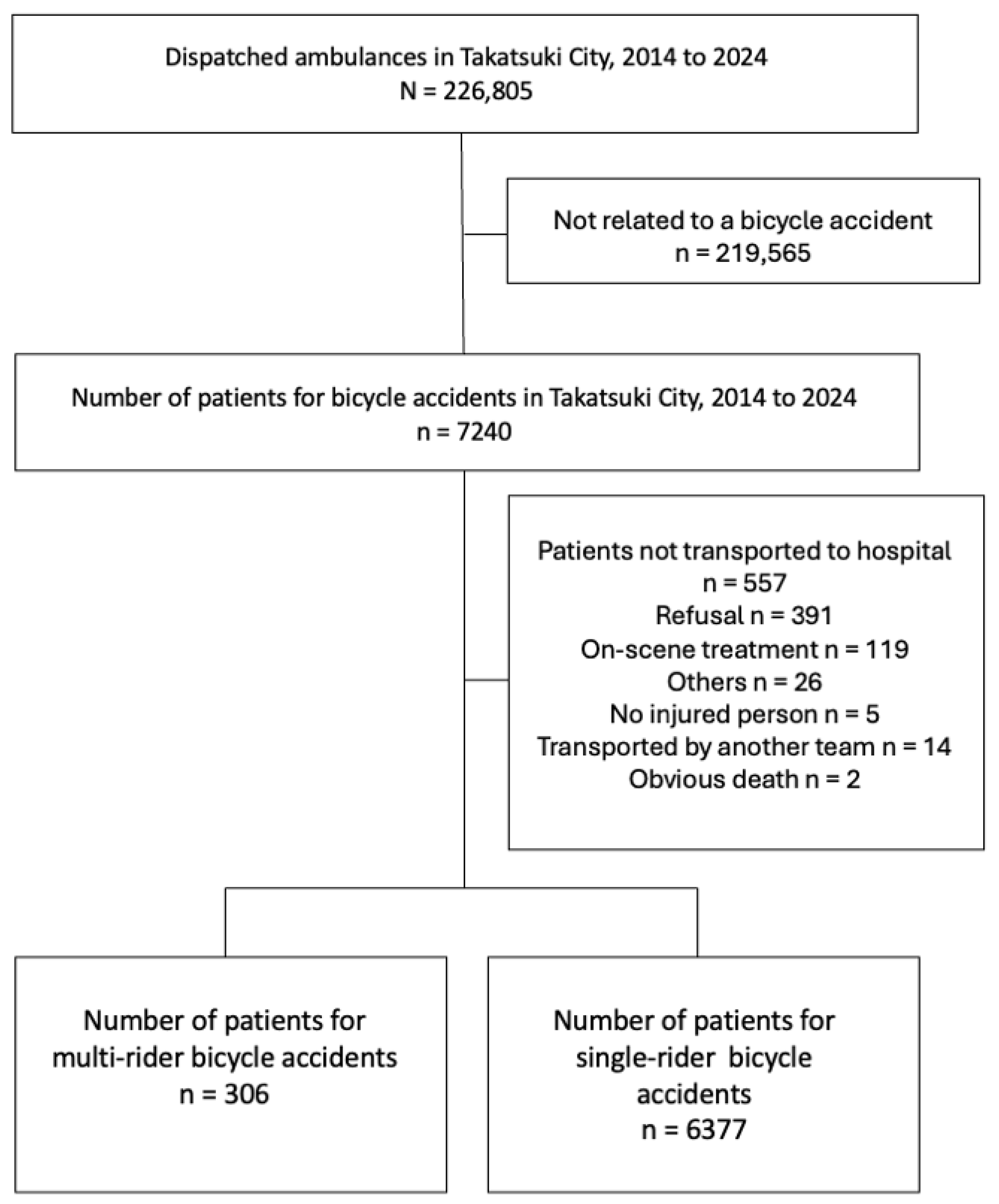
This retrospective, descriptive study used data from the Takatsuki City Fire Department for the period 1 January 2014 to 31 July 2024. Takatsuki City is the seventh largest city in Osaka Prefecture, with a population of approximately 350 thousand and a total area of 105.29 km2. To assess the impact of bicycle crashes, we focused on patients transported by ambulance in Takatsuki City as a result of a “bicycle crash” (Figure 1). Patients who were not transported to a hospital or transported for reasons unrelated to a bicycle crash were excluded from the study. Ambulance records in Takatsuki City are considered administrative records, and the necessity to obtain informed consent from the participants was waived because the data were already anonymized. This study was approved by the Ethics Committee of Osaka Medical and Pharmaceutical University (Takatsuki City, Japan). Strengthening the Reporting of Observational studies in Epidemiology (STROBE) guidelines were adhered to in the study design and in reporting the results [8].
Figure 1.
Patient flow in this study. All transported patients were divided into single- and multiple-rider crashes.
2.2. Inclusion and Exclusion Criteria
Patients were included if they were transported by emergency medical services (EMS) following a bicycle crash within Takatsuki City. The exclusion criteria were as follows: (1) patients who were not transported to a hospital (e.g., those treated on-site); and (2) patients transported for medical emergencies unrelated to the crash, such as cardiac arrest occurring prior to the fall. To ensure data integrity, cases with missing severity data were excluded from the final outcome analysis.
2.3. Data Collection and Quality Control
Data were uniformly collected using specific data collection forms. In addition to age and sex, the reason for the ambulance call, the location of the crash, the time of day, the day of the week, and the tools used were collected. The detailed situation and patient information were recorded in text form. These data were completed by EMS personnel, then transferred to the information center at Takatsuki City Fire Department. To assure the quality of the data, incomplete data sheets were returned to the relevant EMS personnel for completion.
3. Outcomes
The primary outcome of this study was the epidemiology of bicycle crashes of moderate or greater severity, including both single- and multiple-rider incidents. In Japan, injury severity has been officially classified into four categories since 1964: mild (cases not requiring hospitalization), moderate (hospitalization for less than three weeks), severe (hospitalization for three weeks or more), and fatal (death confirmed at the scene or during transport). For the purposes of this study, in accordance with the guidelines of the Fire and Disaster Management Agency of the Ministry of Internal Affairs and Communications, we categorized cases as having “moderate or greater severity” when the initial assessment by EMS personnel reached at least the moderate threshold [9]. These preliminary field assessments, based on physiological and anatomical findings at the scene, were later verified against the final hospital diagnoses through the ORION system to ensure data accuracy.
4. Data Analysis
We calculated the numbers of patients transported by ambulance due to bicycle crashes. Patient demographics were compared using the χ2 test and Fisher’s exact test for categorical variables, as appropriate, and the Kruskal–Wallis test for continuous variables. For the purposes of comparison, the numbers of patients transported by ambulance for the same reasons per year between 1 January 2014 and 31 July 2024 were also collected. Logistic regression analysis was used to calculate the rate of bicycle crashes with moderate or greater severity, and crude odds ratios (ORs) and 95% confidence intervals (CIs) were calculated. The adjusted OR and 95%CI of bicycle crashes with moderate, severe and fatal severity were calculated in all transported patients for bicycle crashes. Age groups were categorized as follows: neonates (less than 28 days old), infants and toddlers (28 days to under 7 years old), adolescents (7 to under 18 years old), adults (18 to under 65 years old), and elderly individuals (65 years and older) [9]. We categorized the 24 h day into four distinct periods: two rush hours (morning and evening), daytime, and nighttime. Rush hour is defined as the period during which the density of vehicles and humans in the road environment is highest. Prior research defines this period as bimodal, typically occurring in the morning from 6:00 to 10:00 and in the evening from 15:00 (3:00 PM) to 20:00 (8:00 PM) [10].
All statistical analyses were performed using STATA (version 16.1; Stata Corp., College Station, TX, USA). All tests were two-tailed, and values of p < 0.05 were considered statistically significant.
5. Results
Baseline Characteristics
In the 10 years between 1 January 2014 and 31 July 2024, a total of 226,805 patients were transported to hospital by ambulance in Takatsuki City, Japan. Of these, 7240 patients were enrolled in this study. A total of 219,565 patients transported by ambulance to hospitals in Takatsuki City were excluded due to the transport not being related to bicycle crashes. There were 6683 bicycle crash patients in Takatsuki City transported to hospital by ambulance (Figure 1, Table 1). The total number of single-rider bicycle crash patients was 6377 (95.4%), with the remaining 306 patients (4.6%) experiencing multiple-rider bicycle crashes, including tandem bicycles. As shown in Table 2, 39 of these patients were bicycle operators, and 38 were mothers. The number of injured bicycle passengers (excluding the operator) was 267 (132 females, 135 males). Table 1 lists all baseline characteristics of patients transported to hospital by ambulance in Takatsuki City during the study period. Patients who were not transported are also shown in Figure 1. Cases in which the patient was not transported were excluded from the final analysis. This was necessary because the absence of detailed emergency medical services records precluded the reliable evaluation of key metrics such as vital signs and severity scores, with the exception of death.
Male patients were significantly more likely to be transported due to single-rider bicycle crashes than multiple-rider crashes, including tandem bicycle crashes (p = 0.034). Patients involved in single-rider bicycle crashes were significantly older than those involved in multiple-rider crashes (p < 0.001). A total of 625 of the 6377 patients involved in single-rider bicycle crashes sustained injuries of moderate or greater severity (moderate 575, severe 46 and fatal 4). A total of 11 of the 306 patients involved in multiple-rider bicycle crashes sustained moderate injuries (Table 1). No severe or fatal bicycle crashes involved multiple riders. The most common locations for ambulance requests were, in increasing order, general roadways, sidewalks or pedestrian bridges, and intersections (Table 1). The peak period for emergency transportations due to bicycle crashes was observed in both single-rider and multiple-rider crashes: afternoon rush hour (15:00 to 20:00). Bicycle crashes involving three-person bicycles were observed in 69 patients across 31 crashes. Table 2 presents detailed information on multiple-rider bicycle crashes. Of the 316 male patients who sustained moderate severity injuries in bicycle crashes, 310 were involved in single-rider incidents, while 6 were involved in multiple-rider incidents (as shown in Table 3). The mean age of patients with injuries of moderate severity differed significantly between single- and multiple-rider crashes (p < 0.001). A high distribution of moderate severity injuries from single-rider bicycle crashes was observed among adults (37.39%) and elderly patients (52.17%). In contrast, elderly patients sustained no moderate severity injuries in multiple-rider bicycle crashes (Table 3). Similar to the distribution of all bicycle injuries, including mild crashes (Table 1), the most common locations for ambulance requests for moderate severity injuries were general roadways, sidewalks or pedestrian bridges, and intersections (Table 3). The timing of moderate severity injuries differed from the overall pattern of bicycle injuries (Table 1). Single-rider crashes primarily occurred in the morning and daytime, whereas multiple-rider crashes occurred in the evening (Table 3). As shown in Table 4, all 50 patients with injuries of severe (n = 46) and fatal (n = 4) severity were involved in single-rider incidents. Notably, infants and toddlers did not sustain injuries of this severity. Ambulance requests were most commonly associated with general roadways and intersections. The timing of these injuries exhibited a bimodal distribution, with peaks occurring in the morning and evening rush hour. Four fatal bicycle crash cases, detailed in Table 4, involved two male and two female patients. Ambulance requests originated from general roadways and intersections, each accounting for 50%. The timing of these crashes was notable for its occurrence across three distinct periods: morning rush hour (6:00–10:00 AM), afternoon rush hour (15:00–20:00), and nighttime (20:01–5:59). The analysis presented in Table 5 revealed male sex as a significant predictor of moderate severity injuries (OR 1.22, 95%CI 1.03–1.45). Multiple-rider bicycle crashes did not demonstrate a significant association with injuries of moderate severity. Adolescents, adults, and elderly patients exhibited a positive association with increased injury severity when compared to infants and toddlers. Neither ambulance request location nor time of day significantly predicted moderate severity injuries. The analysis presented in Table 6 indicates that male sex was also a significant predictor of severe injuries (OR 1.93, 95%CI 1.04–3.60). Elderly patients were positively associated with increased severity of injury compared to adolescents. Ambulance request location and time period were not significant predictors of severe or fatal injuries. The only exception was intersection locations, which showed a strong positive association with fatal bicycle crashes (OR 11.40, 95%CI 1.28–101.81).
Table 1.
Demographic characteristics of transported patients.
Table 1.
Demographic characteristics of transported patients.
| Characteristic | Single-Rider Bicycle Crash (n = 6377) | Multiple-Rider Bicycle Crashes (n = 306) | Total (n = 6683) | p Value | ||
|---|---|---|---|---|---|---|
| Sex (male), % | 3229 | 50.64 | 136 | 44.44 | 3365 | 0.034 |
| Mean age, years (SD) | 49.58 | 25.41 | 10.80 | 13.72 | <0.001 | |
| Age category, % | <0.001 | |||||
| Infants and toddlers | 78 | 1.22 | 191 | 62.42 | 269 | |
| Adolescents | 1053 | 16.51 | 57 | 18.63 | 1110 | |
| Adults | 2815 | 44.14 | 57 | 18.63 | 2872 | |
| Elderly | 2431 | 38.12 | 1 | 0.33 | 2432 | |
| Severity of injuries, % | 0.002 * | |||||
| Mild | 5752 | 90.2 | 295 | 96.41 | 6047 | |
| Moderate | 575 | 9.02 | 11 | 3.59 | 586 | |
| Severe | 46 | 0.72 | 0 | 0 | 46 | |
| Fatal | 4 | 0.06 | 0 | 0 | 4 | |
| Location of ambulance request, % | 0.008 * | |||||
| General roadway | 4195 | 65.94 | 179 | 58.5 | 4374 | |
| Sidewalk or pedestrian bridge | 1385 | 21.77 | 99 | 32.35 | 1484 | |
| Intersection | 449 | 7.06 | 15 | 4.9 | 464 | |
| Parking lot or garage | 110 | 1.73 | 5 | 1.63 | 115 | |
| Residential area | 84 | 1.32 | 2 | 0.65 | 86 | |
| Store or shop | 7 | 0.11 | 0 | 0 | 7 | |
| Other | 132 | 2.07 | 6 | 1.96 | 138 | |
| missing | 15 | 0.22 | 0 | 0 | 15 | |
| Time of transportation category, % | 0.036 | |||||
| Morning Rush Hour (6:00–10:00) | 1406 | 22.05 | 77 | 25.16 | 1483 | |
| Daytime (10:01–14:59) | 1976 | 30.99 | 90 | 29.41 | 2066 | |
| Afternoon Rush Hour (15:00–20:00) | 2121 | 33.26 | 113 | 36.93 | 2234 | |
| Nighttime (20:01–5:59) | 874 | 13.71 | 26 | 8.5 | 900 | |
* Fisher’s exact test was used because of the small numbers of patients in several cells. Other comparisons were analyzed using the chi-square test and one-way analysis of variance.
Table 2.
Demographics of injured individuals in multiple-rider bicycle crashes by sex and age group.
Table 2.
Demographics of injured individuals in multiple-rider bicycle crashes by sex and age group.
| Characteristic | Female (n = 170) | Male (n = 136) | Total (n = 306) | p Value | ||
|---|---|---|---|---|---|---|
| Mean age, years (SD) | 14.99 | 15.69 | 5.56 | 8.21 | <0.001 | |
| Age category, % | <0.001 * | |||||
| Infants and toddlers | 82 | 48.24 | 109 | 80.15 | 191 | |
| Adolescents | 35 | 20.59 | 22 | 16.18 | 57 | |
| Adults | 52 | 30.59 | 5 | 3.68 | 57 | |
| Elderly | 1 | 0.59 | 0 | 0 | 1 | |
| Number of injured bicycle passengers (excluding the operator), % | 132 | 77.65 | 135 | 99.26 | 267 | <0.001 |
| Three-person bicycle-related accidents, % | 43 | 25.29 | 26 | 19.12 | 69 | 0.199 |
| Bicycle fall accidents, % | 47 | 27.65 | 43 | 31.62 | 90 | 0.449 |
| Spoke-related accidents, % | 39 | 22.94 | 30 | 22.06 | 69 | 0.854 |
* Fisher’s exact test was used because of the small numbers of patients in several cells. Other comparisons were analyzed using the chi-square test and one-way analysis of variance.
Across 31 crashes involving three-person bicycles, sixty-nine individuals sustained injuries: 44 (63.8%) were related to car collisions, and 25 (36.2%) were related to single bicycle falls.
39 operators (cyclists) transported.
38 mothers transported (206 mother-related crashes).
No fathers transported (19 father-related crashes).
One grandfather transported (5 grandfather-related crashes).
No grandmothers transported (6 grandmother-related crashes).
Spoke-related crashes (n = 69): 17 right leg injuries, 52 left leg injuries.
One elderly patient was transported due to a spoke-related crash.
Table 3.
Demographic characteristics of moderate injury transported patients.
Table 3.
Demographic characteristics of moderate injury transported patients.
| Characteristic | Single-Rider Bicycle Crash (n = 575) | Multiple-Rider Bicycle Crashes (n = 11) | Total (n = 586) | p Value | ||
|---|---|---|---|---|---|---|
| Sex (male), % | 310 | 53.91 | 6 | 54.55 | 316 | 0.991 |
| Mean age, years (SD) | 58.15 | 23.20 | 18.73 | 17.87 | <0.001 | |
| Age category, % | <0.001 | |||||
| Infants and toddlers | 2 | 0.35 | 3 | 27.27 | 5 | |
| Adolescents | 58 | 10.09 | 5 | 45.45 | 63 | |
| Adults | 215 | 37.39 | 3 | 27.27 | 218 | |
| Elderly | 300 | 52.17 | 0 | 0 | 300 | |
| Location of ambulance request, % | 0.682 * | |||||
| General roadway | 359 | 62.43 | 7 | 63.64 | 366 | |
| Sidewalk or pedestrian bridge | 142 | 24.7 | 3 | 27.27 | 145 | |
| Intersection | 29 | 5.04 | 0 | 0 | 29 | |
| Parking lot or garage | 15 | 2.61 | 0 | 0 | 15 | |
| Residential area | 13 | 2.26 | 0 | 0 | 13 | |
| Store or shop | 2 | 0.35 | 0 | 0 | 2 | |
| Other | 14 | 2.43 | 1 | 9.09 | 15 | |
| missing | 1 | 0.17 | 0 | 0 | 1 | |
| Time of transportation category, % | 0.248 * | |||||
| Morning Rush Hour (6:00–10:00) | 132 | 22.96 | 1 | 9.09 | 133 | |
| Daytime (10:01–14:59) | 187 | 32.52 | 2 | 18.18 | 189 | |
| Afternoon Rush Hour (15:00–20:00) | 187 | 32.52 | 7 | 63.64 | 194 | |
| Nighttime (20:01–5:59) | 69 | 12 | 1 | 9.09 | 70 | |
| 575 | 11 | 586 | ||||
* Fisher’s exact test was used because of the small numbers of patients in several cells. Other comparisons were analyzed using the chi-square test and one-way analysis of variance.
Table 4.
Demographic characteristics of severe and fatal injury in transported patients.
Table 4.
Demographic characteristics of severe and fatal injury in transported patients.
| Characteristic | Severe Bicycle Crash (n = 46) | Fatal Bicycle Crash (n = 4) | Total (n = 50) | p Value | ||
|---|---|---|---|---|---|---|
| Sex (male), % | 30 | 65 | 2 | 50 | 32 | 0.612 * |
| Mean age, years (SD) | 62.09 | 18.81 | 54.25 | 27.44 | 0.6676 | |
| Age category, % | 0.491 * | |||||
| Infants and toddlers | 0 | 0 | 0 | 0 | 0 | |
| Adolescents | 3 | 6.52 | 1 | 25 | 63 | |
| Adults | 16 | 34.78 | 1 | 25 | 218 | |
| Elderly | 27 | 58.7 | 2 | 50 | 300 | |
| Location of ambulance request, % | 0.682 * | |||||
| General roadway | 30 | 65.22 | 2 | 50 | 32 | |
| Sidewalk or pedestrian bridge | 4 | 8.7 | 0 | 0 | 4 | |
| Intersection | 10 | 21.74 | 2 | 50 | 12 | |
| Parking lot or garage | 2 | 4.35 | 0 | 0 | 2 | |
| Residential area | 0 | 0 | 0 | 0 | 0 | |
| Store or shop | 0 | 0 | 0 | 0 | 0 | |
| Other | 0 | 0 | 0 | 0 | 0 | |
| missing | 0 | 0 | 0 | 0 | 0 | |
| Time of transportation category, % | 0.699 * | |||||
| Morning Rush Hour (6:00–10:00) | 10 | 21.74 | 2 | 50 | 12 | |
| Daytime (10:01–14:59) | 11 | 23.91 | 0 | 0 | 11 | |
| Afternoon Rush Hour (15:00–20:00) | 15 | 32.61 | 1 | 25 | 16 | |
| Nighttime (20:01–5:59) | 10 | 21.74 | 1 | 25 | 11 | |
* Fisher’s exact test was used because of the small numbers of patients in several cells. Other comparisons were analyzed using the chi-square test and one-way analysis of variance.
Case 1 (70 s, Female): Collision between a bicycle (operator) and a passenger car at an intersection. Witnessed by a nearby shop employee who initiated the emergency call.
Case 2 (10 s, Male): Collision between a bicycle (operator) and a 10-ton truck on a general roadway. Bystander CPR was initiated immediately following the crash, as reported by the first-arriving special ambulance crew.
Case 3 (70 s, Female): Collision between a bicycle (operator) and a standard truck at an intersection. Crash details were obtained from involved parties on scene.
Case 4 (50 s, Male): Contact between a bicycle (operator) and a light van on a general roadway. The patient was discovered lying on the road by a passerby. Details were confirmed by police officers at the scene.
Non-Transported Fatal Cases: In addition to the transported cases, two individuals were confirmed dead at the scene and were not transported to the hospital:
Case A (Age Unknown, Male): The victim was cycling when he was involved in a collision with a passenger car. According to the commander’s report based on an interview with the driver of a following vehicle, the impact occurred while the cyclist was in motion.
Case B (90 s, Male): The victim was struck by a train while pushing his bicycle across a railway crossing. He was unable to clear the crossing in time. JR West staff placed an emergency call to the police, who subsequently requested EMS dispatch. The details were confirmed by statements from JR West personnel.
Table 5.
Logistic regression analysis for moderate injuries.
Table 5.
Logistic regression analysis for moderate injuries.
| Odds Ratio | 95% Confidence Interval | p Value | |
|---|---|---|---|
| Male | 1.22 | 1.03–1.45 | 0.025 |
| Multiple-rider bicycle accidents | 1.02 | 0.49–2.13 | 0.963 |
| Age category | |||
| Infants and toddlers | Reference | ||
| Adolescents | 3.31 | 1.12–9.79 | 0.03 |
| Adults | 4.70 | 1.62–13.66 | 0.005 |
| Elderly | 7.86 | 2.68–23.00 | <0.001 |
| Location of ambulance request | |||
| Store or shop | Reference | ||
| General roadway | 0.23 | 0.05–1.13 | 0.07 |
| Sidewalk or pedestrian bridge | 0.27 | 0.06–1.31 | 0.105 |
| Intersection | 0.19 | 0.04–0.93 | 0.041 |
| Parking lot or garage | 0.33 | 0.06–1.76 | 0.196 |
| Residential area | 0.40 | 0.07–2.14 | 0.284 |
| Other | 0.31 | 0.06–1.62 | 0.165 |
| missing | 0.20 | 0.02–2.52 | 0.214 |
| Time of transportation category | |||
| Daytime (10:01–14:59) | Reference | ||
| Morning Rush Hour (6:00–10:00) | 1.18 | 0.93–1.50 | 0.169 |
| Afternoon Rush Hour (15:00–20:00) | 1.10 | 0.88–1.36 | 0.401 |
| Nighttime (20:01–5:59) | 0.94 | 0.70–1.26 | 0.666 |
Table 6.
Logistic regression analysis for severe injuries.
Table 6.
Logistic regression analysis for severe injuries.
| Odds Ratio | 95% Confidence Interval | p Value | |
|---|---|---|---|
| Male | 1.93 | 1.04–3.60 | 0.038 |
| Age category | |||
| Adolescents | Reference | ||
| Infants and toddlers | NC* | NC* | NC* |
| Adults | 2.33 | 0.61–8.83 | 0.214 |
| Elderly | 6.05 | 1.73–21.25 | 0.005 |
| Location of ambulance request | |||
| Parking lot or garage | Reference | ||
| General roadway | 0.47 | 0.11–2.06 | 0.32 |
| Sidewalk or pedestrian bridge | 0.18 | 0.03–1.00 | 0.051 |
| Intersection | 1.93 | 0.40–9.29 | 0.41 |
| Residential area | NC* | NC* | NC* |
| Store or shop | NC* | NC* | NC* |
| Other | NC* | NC* | NC* |
| missing | NC* | NC* | NC* |
| Time of transportation category | |||
| Daytime (10:01–14:59) | Reference | ||
| Morning Rush Hour (6:00–10:00) | 1.60 | 0.67–3.85 | 0.291 |
| Afternoon Rush Hour (15:00–20:00) | 1.54 | 0.70–3.37 | 0.281 |
| Nighttime (20:01–5:59) | 2.64 | 1.12–6.20 | 0.026 |
NC*: Not calculated due to the zero-cell count (no severe injuries observed in this category).
6. Discussion
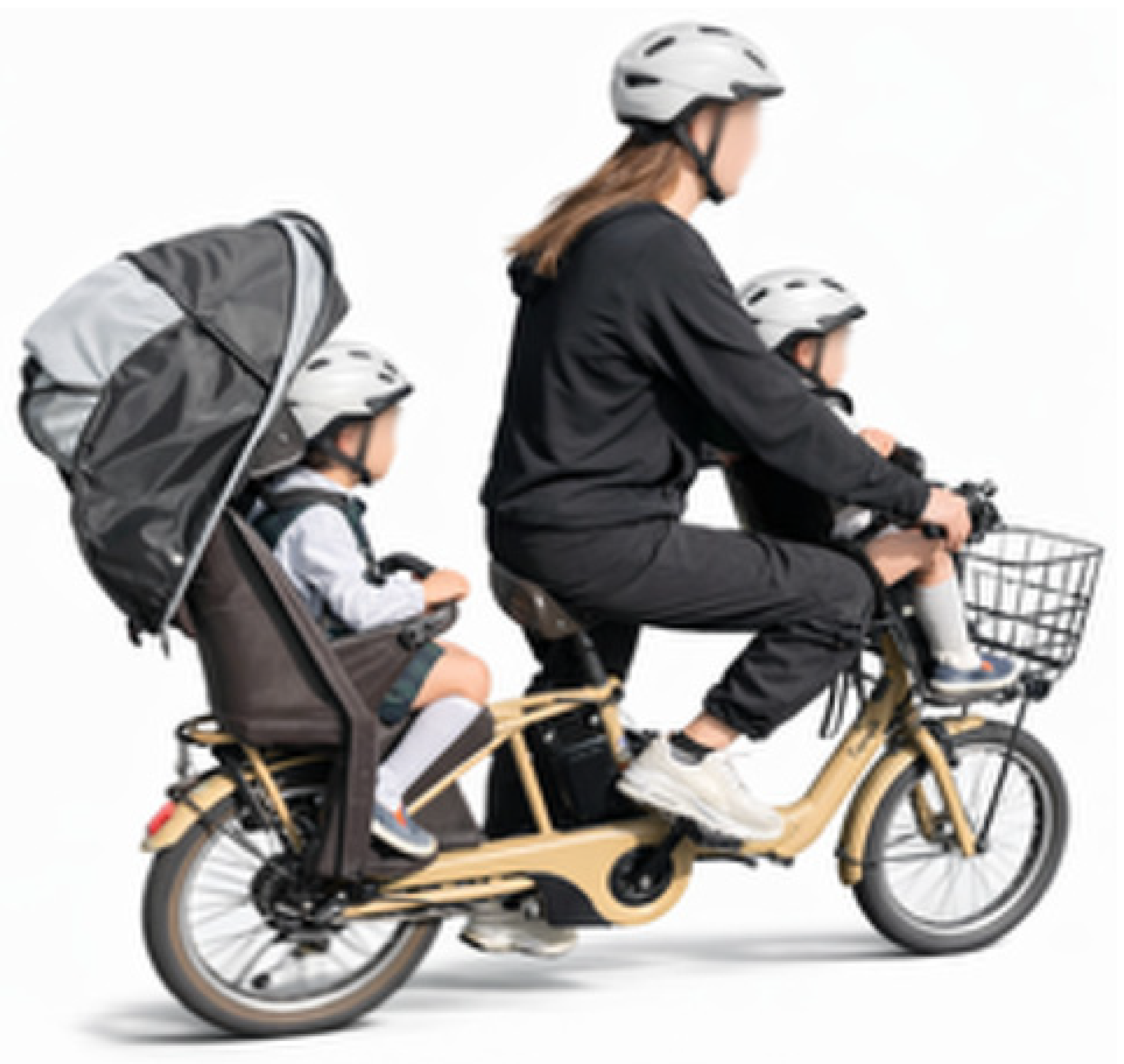
Over a 10-year period in Takatsuki City, our study identified 6683 bicycle crash patients who required ambulance transport to hospitals. Among these, 586 patients sustained injuries of moderate severity, 46 sustained injuries of severe severity, and, tragically, 4 fatal crashes were recorded. Importantly, this study appears to be the first to specifically examine the epidemiology of multiple-rider bicycle crashes, revealing that a total of 306 patients were involved in such incidents within the study period. The seemingly uneven number arises from a case in which a child suffered a leg injury due to wheel entanglement, while the parent of that child, also involved in the crash, remained uninjured. In this study, multiple-rider bicycle crashes were not associated with severe or fatal injuries. This trend may be attributed to the lower traveling speeds and heightened vigilance typically observed among adult operators (aged 18–64 years) when transporting pediatric passengers. While we initially categorized operators by parental roles, such as mothers or fathers, our primary analysis focused on age-based demographics to ensure scientific rigor. The results indicate that adult-led multiple-rider transports, despite their complexity, resulted in lower injury severity compared to single-rider incidents involving adolescents or elderly individuals. When transporting their child in a rear seat (and in some instances, a front seat), mothers tend to ride at relatively slow speeds and maintain heightened attention to prevent injury. Nineteen bicycle crashes involved fathers, with all but one (left thigh contusion) classified as mild. Fathers were not involved in any multiple-rider bicycle crashes. Grandfathers accounted for 5 multiple-rider crashes, and grandmothers for 6, with one grandfather sustaining a moderate injury. Sixty-one young patients involved in tandem bicycle crashes were riding in rear seats, and the majority of these cases resulted in wheel entanglement injuries (bicycle spoke injury). These situations are legally violations [3]. The Road Traffic Act (Article 57, Paragraph 2) mandates that bicycles are generally limited to one rider. Strict exceptions apply: A rider aged 16 years or older may transport children under the age of 6. Specifically, a rider may transport one toddler under the age of 6 if using a standard bicycle equipped with a legally approved child seat, or two toddlers under the age of 6 if using a specialized “two-toddler approved bicycle” (Figure 2). Consequently, carrying any passenger aged 6 years or older constitutes a strict violation of the law, which may result in a fine of up to 20,000 yen or a pecuniary penalty. Considering all bicycle spoke injuries, including those in children, left leg injuries (52 cases) occurred three times more frequently than right leg injuries (17 cases), likely due to the higher incidence of left leg bicycle spoke injuries. This previously undocumented finding suggests a left-sided predominance requiring further investigation to elucidate the underlying etiology [11,12]. Across 31 crashes involving three-person bicycles, 69 individuals sustained injuries. For each bicycle, excluding the operator, one child occupied the front seat and another the rear (Figure 2). This represents a previously unreported phenomenon, accounting for approximately 22.5% of patients in multiple-rider bicycle crashes. With the exception of a single case, all three-person bicycle crashes were classified as minor, predominantly involving female operators (mothers) accompanied by children. Approximately two-thirds of these minor cases were collisions with cars, while 25 (36.2%) involved single bicycle falls. The single moderate case involved an adult patient who sustained a shoulder injury as a result of a single bicycle fall. Overall, multiple-rider bicycle crashes were less severe than single-rider crashes, with children as the predominant victims. While helmets offer head protection, parental vigilance is crucial to prevent bicycle-spoke injuries, particularly for rear-seat passengers. To further mitigate these risks, children carried on bicycles should wear proper footwear and utilize footrests and spoke guards [11,12]. Raising awareness regarding injury mechanisms, severity, and preventive strategies is also essential.
Figure 2.
Three-person bicycle.
Male sex was a significant predictor of moderate and severe injuries (OR 1.22, 95%CI 1.03–1.45 and OR 1.93, 95%CI 1.04–3.60, respectively), but sex was not a significant predictor of fatal injuries. This finding contrasts with results from a prior European study [6]. This discrepancy may be attributed to the differing mechanisms of injury. Specifically, fatal injuries were primarily linked to collisions with cars, while moderate injuries were more frequently associated with falls [13]. Fall-related injuries are often speed-dependent, and this is reflected in the finding that males were disproportionately affected [14]; however, fatal injuries did not correlate with speed. This suggests that fatal outcomes are predominantly attributable to factors involving the motor vehicle driver or environment [15]. Patients with severe injuries were older than those with non-severe injuries, and no infants or toddlers sustained severe injuries. Severe bicycle injuries were predominantly observed on general roadways and at intersections, a pattern similar to previous police reports. However, our study revealed a higher incidence of severe injuries on general roadways compared to intersections, contrasting with police findings that indicated a higher prevalence at intersections [4,5]. Logistic regression analysis revealed a positive association between intersection locations and fatal bicycle crashes (OR11.40, 95%CI 1.28–101.81). However, given the extremely small number of fatal cases (n = 4), interpretation of this finding should be made with caution. Logistic regression analyses did not reveal any significant association between the time period and the occurrence of either moderate, severe or fatal injuries. This absence of significant findings may be attributable to the limited statistical power resulting from the small number of events, contrasting with previous studies from Osaka Prefecture that encompassed over 400,000 transportations per year [16,17,18]. The four fatal cases were all associated with motor vehicle collisions, with two of these involving trucks. The incidents occurred equally on general roadways and at intersections (two cases each). To prevent moderate, severe and fatal bicycle injuries, we recommend helmet use and heightened rider attention, particularly on general roadways and at intersections [13,19]. Although the revised Road Traffic Act was enforced on 1 April 2023, establishing helmet usage as a mandatory effort for all bicycle riders (with no penalty for non-compliance), data on helmet use were extremely limited. Specifically, helmet use was explicitly mentioned in the EMS records for only three cases. While sidewalks or pedestrian bridges may offer a lower-risk environment, cyclists must still exercise due diligence to avoid pedestrian collisions [13]. Although not significant, the tendency toward higher incidences of bicycle crashes during morning rush hour (6:00–10:00) and afternoon rush hour (15:00–20:00) periods suggests that cyclists should maintain heightened awareness and a calm state of mind during these peak times.
Several limitations should be acknowledged. First, the retrospective nature of this study introduces potential for recording errors. To mitigate this risk, records were reviewed by EMS staff not involved in the initial patient transport. Second, our analyses were limited to prehospital data, preventing a direct link to hospital data. Consequently, the full hospital course, particularly for severe cases, could not be tracked. Nevertheless, for severe cases, EMS staff accessed the Osaka Emergency Information Research Intelligent Operation Network (ORION) system to ascertain the final diagnosis [16,17,18]. Third, the assessment of injury severity was based on the on-scene status of patients, which may have led to over- or underestimation. While we could not retrospectively adjust injury severity based on hospital courses and diagnostic modalities such as computed tomography, as previously mentioned, EMS staff utilized the ORION system to verify the final diagnosis [16,17,18]. Finally, the scope of this study was confined to one core regional city, Takatsuki City. However, considering that recent subnational analyses for the Global Burden of Disease Study have highlighted significant regional variations in health burdens and injury trends across Japan from 1990 to 2021 [20,21], our findings provide granular, localized insights that are essential for tailoring public health interventions. Further research involving a larger geographical area is warranted to further enhance the generalizability of our findings and to compare localized injury mechanisms across different urban environments.
7. Conclusions
In conclusion, our 10-year analysis of 6683 bicycle crash patients in Takatsuki City highlights a substantial injury burden. Notably, this study uniquely examined multiple-rider bicycle crashes (306 cases), where 11 patients sustained injuries of moderate severity and none experienced injuries of severe or fatal severity. These findings emphasize the need to consider the specific characteristics of multiple-rider crashes in future prevention efforts and research.
Author Contributions
Conceptualization, K.O. (Koshi Ota) and A.T.; methodology, K.O. (Kanna Ota), H.T. and A.T.; software, K.O. (Koshi Ota); validation, K.O. (Kanna Ota), H.T. and A.T.; formal analysis, K.O. (Koshi Ota); investigation, K.O. (Koshi Ota); resources, H.T.; data curation, K.O. (Kanna Ota); writing—original draft preparation, K.O. (Koshi Ota); writing—review and editing, K.O. (Kanna Ota), H.T. and A.T.; visualization, K.O. (Koshi Ota); supervision, A.T.; project administration, K.O. (Koshi Ota); funding acquisition, K.O. (Koshi Ota). All authors have read and agreed to the published version of the manuscript.
Funding
This research received no specific grant from any funding agency in the public, commercial, or not-for-profit sectors.
Institutional Review Board Statement
This study was approved by the Ethics Committee of Osaka Medical and Pharmaceutical University (Takatsuki City, Japan). The study was conducted in accordance with the Strengthening the Reporting of Observational studies in Epidemiology (STROBE) guidelines and all relevant regulations. Approval Code: 2024-096. Approval Date: 2 August 2024.
Informed Consent Statement
The requirement for informed consent for this study was waived by the Ethics Committee of Osaka Medical and Pharmaceutical University, as the clinical data were retrospectively collected and fully anonymized. Although a general waiver was granted for the publication of anonymized data, written informed consent for the publication of the photograph (Figure 2) was obtained in Japanese from the mother as the legal guardian of her children.
Data Availability Statement
The data presented in this study are available on request from the corresponding author due to privacy and ethical restrictions imposed by the Takatsuki City Fire Department, where the data are stored under controlled access.
Conflicts of Interest
The authors declare that they have no competing interests. There are no financial or personal relationships with other people or organizations that could inappropriately influence or bias this work.
References
- Ohlin, M.; Algurén, B.; Lie, A. Analysis of bicycle crashes in Sweden involving injuries with high risk of health loss. Traffic Inj. Prev. 2019, 20, 613–618. [Google Scholar] [CrossRef] [PubMed]
- Martial, L. A Study on Bicycle and Public Transportation Synergy Based on a Cross-Analysis Between Europe and Japan. Ph.D. Thesis, Yokohama National University, Yokohama, Japan, 2021. [Google Scholar]
- Berent, P.; Yoshida, N. Understanding the nature of walking and cycling for transport in Japan. Mem. Fac. Eng. Osaka City Univ. 2017, 58, 25–43. [Google Scholar] [CrossRef]
- Bicycle Traffic Accident Injury Statistics in Tokyo. 2024. Available online: https://www.keishicho.metro.tokyo.lg.jp/about_mpd/jokyo_tokei/tokei_jokyo/vta.files/bicycle.pdf (accessed on 17 April 2025).
- The Current State and Issues of Bicycle Utilization in Takatsuki City. Available online: https://www.city.takatsuki.osaka.jp/uploaded/attachment/25053.pdf (accessed on 17 April 2025).
- de Guerre, L.E.V.M.; Sadiqi, S.; Leenen, L.P.H.; Oner, C.F.; van Gaalen, S.M. Injuries related to bicycle accidents: An epidemiological study in The Netherlands. Eur. J. Trauma Emerg. Surg. 2020, 46, 413–418. [Google Scholar] [CrossRef] [PubMed]
- Richter, M.; Otte, D.; Haasper, C.; Knobloch, K.; Probst, C.; Westhoff, J.; Sommer, K.; Krettek, C.M. The current injury situation of bicyclists—A medical and technical crash analysis. J. Trauma-Inj. Infect. Crit. Care 2007, 62, 1118–1122. [Google Scholar] [CrossRef] [PubMed]
- von Elm, E.; Altman, D.G.; Egger, M.; Pocock, S.J.; Gøtzsche, P.C.; Vandenbroucke, J.P.; STROBE Initiative. The strengthening the reporting of observational studies in epidemiology (STROBE) statement: Guidelines for reporting observational studies. Int. J. Surg. 2014, 12, 1495–1499. [Google Scholar] [CrossRef] [PubMed]
- The 2022 Publication on the Current Situation of Emergency Medical Services and Rescue Activities. Available online: https://www.soumu.go.jp/main_content/000856261.pdf (accessed on 19 April 2025).
- Adeyemi, O.J.; Arif, A.A.; Paul, R. Exploring the relationship of rush hour period and fatal and non-fatal crash injuries in the U.S.: A systematic review and meta-analysis. Accid. Anal. Prev. 2021, 163, 106462. [Google Scholar] [CrossRef] [PubMed]
- Agarwal, A.; Pruthi, M. Bicycle-Spoke Injuries of the Foot in Children. J. Orthop. Surg. 2010, 18, 338–341. [Google Scholar] [CrossRef] [PubMed]
- Segers, M.J.M.; Wink, D.; Clevers, G.J. Bicycle-Spoke Injuries: A Prospective Study. Injury 1997, 28, 267–269. [Google Scholar] [CrossRef] [PubMed]
- Kibayashi, K.; Ezaki, J.; Hasegawa, M. Analysis and Prevention of Deaths Caused by Bicycle-Related Traffic Accidents. IATSS Rev. 2016, 41, 106–113. [Google Scholar]
- Algurén, B.; Rizzi, M. In-depth understanding of single bicycle crashes in Sweden—Crash characteristics, injury types and health outcomes differentiated by gender and age-groups. J. Transp. Health 2022, 24, 101320. [Google Scholar] [CrossRef]
- Maki, T.; Kajzer, J.; Mizuno, K.; Sekine, Y. Comparative analysis of vehicle-bicyclist and vehicle-pedestrian accidents in Japan. Accid. Anal. Prev. 2003, 35, 927–940. [Google Scholar] [CrossRef] [PubMed]
- Ota, K.; Nishioka, D.; Katayama, Y.; Kitamura, T.; Masui, J.; Ota, K.; Nitta, M.; Matsuoka, T.; Takasu, A. Influence of the COVID-19 outbreak on transportation of pregnant women in an emergency medical service system: Population-based, ORION registry. Int. J. Gynecol. Obstet. 2022, 157, 366–374. [Google Scholar] [CrossRef] [PubMed]
- Ota, K.; Nishioka, D.; Katayama, Y.; Kitamura, T.; Masui, J.; Ota, K.; Nitta, M.; Matsuoka, T.; Takasu, A. Effect of the COVID-19 outbreak on emergency transport of children by an emergency medical service system: A population-based, ORION registry study. BMC Emerg. Med. 2022, 22, 206. [Google Scholar] [CrossRef] [PubMed]
- Ota, K.; Nitta, M.; Komeya, T.; Matsuoka, T.; Takasu, A. Influence of the COVID-19 Outbreak in Vulnerable Patients (Pediatric Patients, Pregnant Women, and Elderly Patients) on an Emergency Medical Service System: A Pre- and Post-COVID-19 Pandemic Comparative Study Using the Population-Based ORION Registry. Medicina 2024, 60, 345. [Google Scholar] [CrossRef] [PubMed]
- Webman, R.; Dultz, L.A.; Simon, R.J.; Todd, S.R.; Slaughter, D.; Jacko, S.; Bholat, O.; Wall, S.; Wilson, C.; Levine, D.A.; et al. Helmet use is associated with safer bicycling behaviors and reduced hospital resource use following injury. J. Trauma Acute Care Surg. 2013, 75, 877–881. [Google Scholar] [CrossRef] [PubMed]
- Nomura, S.; Sakamoto, H.; Glenn, S.; Tsugawa, Y.; Abe, S.K.; Rahman, M.; Brown, J.C.; Ezoe, S.; Fitzmaurice, C.; Inokuchi, T.; et al. Population health and regional variations of disease burden in Japan, 1990–2015: A systematic subnational analysis for the Global Burden of Disease Study 2015. Lancet 2017, 390, 1521–1538. [Google Scholar] [CrossRef] [PubMed]
- Nomura, S.; Murakami, M.; Rauniyar, S.K.; Kondo, N.; Tabuchi, T.; Sakamoto, H.; Tokuda, Y.; Patel, N.; de Pablo, J.N.; Dieleman, J.L.; et al. Three decades of population health changes in Japan, 1990–2021: A subnational analysis for the Global Burden of Disease Study 2021. Lancet Public Health 2025, 10, e321–e332. [Google Scholar] [CrossRef] [PubMed]
Disclaimer/Publisher’s Note: The statements, opinions and data contained in all publications are solely those of the individual author(s) and contributor(s) and not of MDPI and/or the editor(s). MDPI and/or the editor(s) disclaim responsibility for any injury to people or property resulting from any ideas, methods, instructions or products referred to in the content. |
© 2026 by the authors. Licensee MDPI, Basel, Switzerland. This article is an open access article distributed under the terms and conditions of the Creative Commons Attribution (CC BY) license.