Article

Enhancing Oenological Quality of Vitis vinifera L. Avgoustiatis: The Effect of Early Leaf Removal on Grape and Wine Composition


by
Theodoros Gkrimpizis
1,*,
Despina Lola
2,
Christina Karadimou
1,
Serafeim Theocharis
3,
Effimia Chatzidimitriou
4,
Yorgos Kotseridis
2 and
Stefanos Koundouras
1,*
1
Laboratory of Viticulture, School of Agriculture, Aristotle University of Thessaloniki, 54124 Thessaloniki, Greece
2
Laboratory of Enology and Alcoholic Drinks, Department of Food Science and Human Nutrition, Agricultural University of Athens, 75 Iera Odos, 11855 Athens, Greece
3
Laboratory of Viticulture, Department of Agriculture, International Hellenic University, Sindos, 57400 Thessaloniki, Greece
4
Laboratory of Food Chemistry and Technology, School of Chemistry, Aristotle University of Thessaloniki, 54124 Thessaloniki, Greece
*
Authors to whom correspondence should be addressed.
Gastronomy 2026, 4(2), 10; https://doi.org/10.3390/gastronomy4020010
Submission received: 4 February 2026 / Revised: 6 April 2026 / Accepted: 9 May 2026 / Published: 13 May 2026

Abstract

This study evaluates the impact of the complete early leaf removal on the fruit zone for consecutive growing seasons (2023–2024) on the agronomic performance and oenological potential of the indigenous Greek red cultivar Avgoustiatis (Vitis vinifera L.), which is cultivated in Zakynthos, Greece. The defoliated treatment significantly reconfigured vine productivity, inducing a 33–34% reduction in yield during both years of the study and a contraction in berry mass, which consequently increased the skin-to-berry ratio by 30% and 60% for the 2023 and 2024 vintages, respectively. In the must, defoliation facilitated a desirable decoupling of sugar and acidity, achieving higher soluble solids while maintaining a robust acid core. Furthermore, defoliation enhanced phenolic maturity, in both vintages, increasing total anthocyanins and improving their extractability. Although extreme thermal conditions in 2024 led to lower color intensity and total phenolics in the treated wines compared to the control, the volatile profile revealed a significant reduction in herbaceous C6 alcohols and an increase in floral terpenes like nerol. Sensory analysis confirmed that defoliated wines were characterized by lower astringency and superior aromatic typicity, with distinct notes of violet and vanilla. These findings suggest that early defoliation is a potent tool for optimizing the structural and aromatic integrity of Avgoustiatis, though its application must be adapted against Mediterranean thermal stress.

1. Introduction

The pursuit of oenological quality relies on regulating secondary metabolites in grapes, which are influenced by grape genetic potential, soil, climate, and human interventions [1]. As the wine industry aims to meet high oenological standards with increasing environmental challenges, characterizing indigenous grape varieties has become crucial. These varieties support sustainable viticulture by offering climate resilience [2,3] and preserving genetic diversity. Evolved over centuries, they developed biochemical adaptations suited to their environments [4], allowing the creation of distinctive, terroir-focused wines that reflect their true origins. In this light, as authenticity becomes the cornerstone of modern viticulture, characterizing the phenolic makeup of these grapes provides the empirical data needed to validate their unique oenological identity. Such research is essential not only for safeguarding the authentic varietal character of each cultivar but also for enhancing their competitive standing within the international oenological landscape.
Phenolic compounds are integral to wine quality, influencing various sensory attributes such as color, astringency, and bitterness, which are essential for the overall organoleptic experience. Those compounds are primarily located in the skins and seed of the grape [5] and serve as a structural backbone for wine, contributing to its complexity and style. Additionally, phenolic compounds possess significant antioxidant properties, which not only enhance wine quality but also offer potential health benefits when consumed in moderation [6]. The resulting phenolic profile of a grape variety is the definitive expression of a complex genotype-by-environment interaction [7]. This interaction dictates that the biosynthesis of secondary metabolites is not a fixed genetic trait, but rather a response to site-specific variables, primarily solar radiation and thermal summation [8].
Research indicates that the phenolic composition evolves during grape ripening and winemaking, underscoring the importance of timing in grape harvest to optimize wine quality [9]. Phenolic compounds cannot only be affected by the time of harvest [10], but they can also be significantly influenced by various vineyard management practices such as canopy manipulation, irrigation, and row orientation that can affect the microclimate around the grapes, thereby impacting phenolic development and overall fruit composition [11,12].
Canopy management represents one of the most effective tools for modifying the microclimate of the grapevine cluster to influence berry composition [13]. Techniques such as basal leaf removal (defoliation) [14], shoot thinning, and cluster thinning [15] are widely employed to modify the exposure of clusters to sunlight and air circulation [16]. The application of canopy management practices can potentially help to close the gap between sugar and phenolic maturity [17], which is a critical necessity in warming viticultural regions where thermal decoupling often causes rapid sugar accumulation [18] to outpace the structural and aromatic development of the berry.
Among these techniques, basal leaf removal (defoliation) is particularly critical for red grape varieties [19], as it directly alters the radiative and thermal environment of the fruiting zone. However, the timing of this intervention is a decisive factor in its success. Early leaf removal (pre-flowering or fruit set) has been shown to reduce fruit set and cluster compactness [20,21,22], potentially leading to a higher skin-to-pulp ratio and a more concentrated phenolic profile [20,23]. Conversely, late-season defoliation at veraison focuses primarily on improving the microclimate to prevent bunch rot and enhance final ripening [24,25]. Despite these advantages, the practice must be balanced with the risk of excessive berry temperatures, which can lead to the thermal degradation of anthocyanins or “sunburn” damage. Consequently, the effectiveness of leaf removal is not universal; it is a highly genotype-specific response that depends on the vine’s architecture and the local climate, making it essential to calibrate these practices for individual varieties [26]. For instance, recent studies on Xinomavro and Sangiovese grape varieties have indicated positive effects of leaf removal on grape and wine anthocyanin levels and on the olfactory evaluation of wines, respectively [27]. In contrast, several authors highlight that it can negatively affect grape and wine quality by reducing polyphenol levels, especially under specific environmental conditions. For example, the Babica variety in the Dalmatia wine-growing region of Croatia and the Cabernet Sauvignon variety under the hot Australian climate [28,29].
Despite these findings the impact of canopy management on the specific physiological and metabolic pathways of indigenous Greek varieties remains under-researched. Within the rich ampelographic heritage of the Mediterranean basin, the red-skinned cultivar Avgoustiatis (Vitis vinifera L.) has emerged as a genotype of profound oenological interest. Traditionally cultivated in the Ionian Islands and the Western Peloponnese, Avgoustiatis has recently gained significant attention for its ability to produce deep-colored, velvety, and distinctively aromatic wines, distinguishing itself as a variety with high oenological potential. Avgoustiatis stands apart from standard international grapes due to its exceptional capacity for polyphenol synthesis; its rich profile of tannins and anthocyanins serves as the structural and visual backbone for superior red wine production [30,31]. However, its high vegetative vigor and specific cluster morphology suggest that its response to microclimatic changes may differ significantly from standard international models.
Given the genotype-specific nature of viticultural interventions, there is a critical need to establish data-driven guidelines for the management of more indigenous grape varieties like Avgoustiatis. Therefore, the aim of this study is to evaluate the effect of early leaf removal on the phenolic composition and overall oenological quality of Vitis vinifera L. Avgoustiatis. By investigating the influence of early defoliation on the flowering stage on the evolution of anthocyanins and tannins, this research seeks to identify the optimal viticultural practices that maximize the variety’s chromatic and structural integrity, and to further explore their impact on the quality of the final wine through chemical and sensory analyses. Ultimately, these findings intend to provide viticulturists with the tools necessary to enhance the varietal typicity and global competitiveness of Avgoustiatis, ensuring its successful adaptation to the evolving Mediterranean vital landscape.

2. Materials and Methods

2.1. Study Area

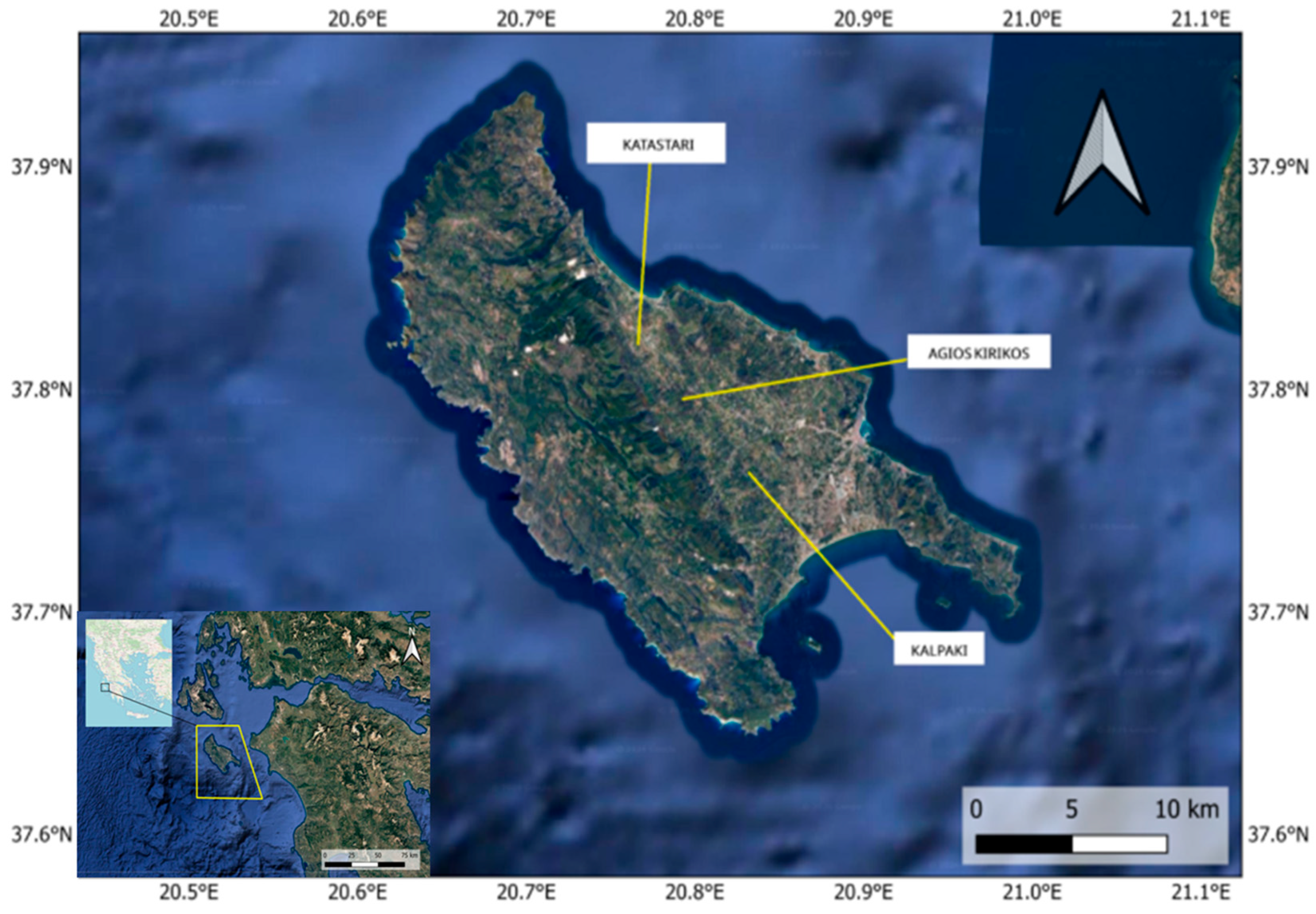
The study was conducted in 2023 and 2024 in vineyards on the island of Zakynthos (Ionian Sea, Western Greece) (Figure 1), the traditional cultivation center of the indigenous red variety Avgoustiatis (Vitis vinifera L.). The region’s climate is typically Mediterranean (Köppen classification: Csa), with mild, wet winters and warm, dry summers. Due to its position in the Ionian Sea, Zakynthos receives significant annual precipitation, typically ranging between 800 and 1000 mm, concentrated primarily during the dormant season. The high relative humidity during the vegetative cycle creates a unique mesoclimate that supports the phenolic maturation of Avgoustiatis while necessitating careful canopy management. To capture the pedoclimatic variability of the island, three distinct experimental sites were selected for monitoring: Katastari (37°49′35.5″ N, 20°45′32.9″ E), Agios Kirikos (37°47′03.5″ N, 20°49′134 22.5″ E), and Kalpaki (37°45′45.0″ N, 20°51′42.9″ E) (Figure 1).
The selected plots (Figure 1) were situated at altitudes ranging from 30 to 120 m above sea level. The soil composition was predominantly calcareous clay-loam, characterized by alkaline pH values (7.5–7.9) and moderate water-holding capacity. All experimental vines were mature (over 12 years old), grafted onto 1103 Paulsen rootstock (V. rupestris × V. berlandieri), and planted at a density of approximately 3800 vines per hectare (2.4 × 1.2 m spacing). Vines were trained to a vertical shoot positioning (VSP) system and spur-pruned to a bilateral Royat cordon (12–14 nodes per vine). Standard commercial viticultural practices were uniformly applied, apart from the specific canopy management treatments under investigation.

2.2. Experimental Design and Canopy Management Treatments

The experiment was arranged in a randomized complete block design consisting of three replications per treatment. Each replicate served as an experimental unit where 10 vines were randomly selected across the treatment area for sampling and measurements. This randomized selection within each replicate was implemented to ensure a representative assessment of the treatment’s impact and to minimize the influence of spatial variability or individual vine idiosyncrasies. Two distinct canopy management treatments were evaluated:
  • Control (CO): Non-defoliated vines where the canopy remained untouched throughout the vegetative cycle.
  • Leaf Removal (LR): Full defoliation of the fruit zone performed at the stage of flowering (BBCH 65).
A schematic representation of the Avgoustiatis canopy architecture under both the control (CO) and leaf removal (LR) treatments is provided in Figure S1, and Table S2 of the Supplementary Materials, presents the dates of all phenological stages for both years and the dates of defoliation application.
The early leaf removal treatment involved the manual removal of all primary leaves and lateral shoots from the basal portion of the shoots, specifically from the first to the sixth node (fruit zone). This intensive level of defoliation was specifically selected to evaluate the maximum physiological response of the Avgoustiatis cultivar, which is characterized by high vegetative vigor. This timing was strategically selected to induce transient competition for carbohydrates between the vegetative and reproductive organs during fruit set. Unlike late-season applications, leaf removal at flowering is intended to deliberately reduce fruit set and berry size, thereby increasing the skin-to-pulp ratio and enhancing the concentration of secondary metabolites in Avgoustiatis berries. While intermediate levels of leaf removal were considered, this binary experimental design was chosen to establish a clear baseline for the variety’s response and to test the efficacy of the practice in decoupling sugar and acid accumulation under Mediterranean conditions.

2.3. Berry Sampling and Physicochemical Analysis of Grapes

Approximately 200 berries were randomly collected from each replicate at the stage of technological maturity. The average berry weight was determined using a precision balance. Subsequently, a sub-sample of 50 berries from each replicate was manually dissected to separate the skin, seeds, and pulp, allowing for the evaluation of berry mass distribution and the skin-to-berry weight ratio. To prevent metabolic alterations, berries intended for phenolic and volatile compound characterization were transported to the laboratory on dry ice. Additionally, 10 clusters per replicate were randomly selected to record morphological parameters, including bunch dimensions (length and width) and peduncle length. The remaining berries were manually pressed to obtain the must, and the physicochemical parameters, specifically total soluble solids (°Brix), pH, and titratable acidity, were determined according to the official methods of the OIV [32].

2.4. Vinification Protocol and Wine Analysis

Small-scale vinification was performed in triplicate for each treatment at the experimental winery of the Agricultural University of Athens. The timing of harvest was determined individually for each treatment and replicate to ensure that all grapes were picked at a comparable stage of technological maturity. The primary target for harvesting was a total soluble solids (TSS) concentration within the range of 22.5–23.0 °Brix, alongside a target pH between 3.1–3.4 and titratable acidity > 6.0 g/L. However, these parameters were subject to adjustment based on the prevailing environmental pressures and the sanitary status of the fruit in each growing season. In instances of high seasonal variability, harvest was initiated based on the optimal balance between technological maturity and the preservation of fruit structural integrity, which accounts for the variations in TSS observed in some replicates, as reported in the results.
For each replicate, approximately 30 kg of grapes were manually harvested at technological maturity and immediately transported to the winery in plastic containers. The grapes were destemmed and crushed, and the resulting pomace was transferred to 30 L stainless steel tanks for fermentation. During the crushing process, 30 mg/L of sulfur dioxide (SO2) was added to the must. After a 6-h period, the must was inoculated with a commercial strain of Saccharomyces cerevisiae (250 mg/L), prepared according to the manufacturer’s instructions. To ensure optimal yeast kinetics and avoid stuck fermentations, nitrogenous nutrition was applied in two stages: an initial dose of organic nitrogen and diammonium phosphate (DAP) was added 24 h after inoculation, followed by a second addition of DAP when one-third of the initial sugars had been consumed.
Alcoholic fermentation (AF) was conducted in a controlled temperature at 18–20 °C. During AF, maceration was managed by performing manual punch-down twice daily to facilitate the extraction of phenolic compounds from the skins. The AF was considered complete when the concentration of reducing sugars dropped lower than 2 g/L. Upon completion of the AF, the wines were separated from the skins using a hydraulic press and transferred to clean stainless-steel containers for malolactic fermentation (MLF), initiated by inoculation with a commercial Oenococcus oeni strain. Once the malic acid concentration reached 0.2 g/L, the wines were racked, sulfited to a final concentration of 30 mg/L SO2 and placed in a cold room (at about 5 °C) for two months for tartaric and protein stabilization. Finally, the wines were bottled in 750 mL amber glass bottles, with the headspace flushed with nitrogen (N2) to prevent oxidation and stored under cellar conditions 15 °C until further analysis.
The experimental Avgoustiatis wines were further characterized by evaluating their essential oenological parameters, including alcoholic strength by volume (vol%), residual sugars, pH, total acidity, and volatile acidity. All measurements were performed according to standard OIV analytical procedures to ensure a comprehensive assessment of the variety’s oenological potential in response to early canopy management [33].

2.5. Extraction of Grape Phenolics

For phenolic analysis, seeds and skins from 50-berry replicates were manually isolated, freeze-dried, and pulverized into a fine powder. Phenolic extraction was performed on 0.3 g of the material through a sequential solvent system using acetone/water (80:20, v/v) for 3 h, followed by methanol/water (60:40, v/v) for 2.5 h. The resulting supernatants were combined, concentrated under vacuum at 30 °C, and the residue was re-dissolved in water and lyophilized to yield the crude phenolic extracts [34]. Notably, while most of the chemical assays utilized freeze-dried tissues, measurements for total anthocyanins and phenolic extractability were conducted directly on whole berries.

2.6. Phenolic and Color Analyses

The Total Polyphenolic Index (TPI) was determined by measuring the absorbance at 280 nm after an appropriate dilution (typically 1:100) with distilled water. Additionally, the concentration of total phenolic compounds was quantified using the Folin–Ciocalteu reagent, with the reaction monitored at 750 nm. These results were expressed as gallic acid equivalents (GAE) in mg/L for wine samples and au/berry for grape tissues. Total anthocyanin content was assessed spectrophotometrically using the Iland protocol [9]. For grape samples, anthocyanin extractability was specifically evaluated according to the Glories method, which allows for the quantification of extractable pigments compared to the total potential [9]. To provide a detailed characterization of the tannin profile, two distinct and complementary assays were employed: the Bovine Serum Albumin (BSA) protein precipitation method and the Methylcellulose Precipitation (MCP) assay [35,36]. These measurements were recorded at 510 nm and 280 nm, respectively, allowing for a comprehensive quantification of the tannin content in both grapes and wines. All spectrophotometric analyses were conducted in triplicate to ensure analytical precision and reproducibility.
Wine chromatic characteristics were evaluated spectrophotometrically based on Ribéreau–Gayon et al. [9]. The Color Intensity (CI) was calculated as cumulative absorbance at three specific wavelengths (CI = A420 + A520 + A620), reflecting the overall depth of the wine’s color by accounting for the yellow, red, and blue components. The Hue (H), which represents the color tonality and indicates the shift between yellow and red pigments during maturation, was quantified as the ratio of absorbance at 420 nm to that at 520 nm (H = A420/A520).

2.7. Analysis of Volatile Compounds

The volatile profile of the Avgoustiatis wines was evaluated through liquid–liquid extraction, following a protocol adapted from Ivanova et al. [37]. For each treatment, 40 mL of wine was spiked with three internal standards—3-octanol, ethyl heptanoate, and heptanoic acid—to achieve a final concentration of 10 mg/L for each. The isolation process involved adding 5 mL of dichloromethane, followed by continuous magnetic stirring for 15 min. The organic layer was collected after centrifugation (4000 rpm for 10 min at 4 °C), and the extraction was repeated. The combined organic phases were dried with anhydrous sodium sulfate and concentrated to a final volume of 500 μL under a gentle nitrogen stream. Analysis was performed using a Gas Chromatography-Mass Spectrometry (GC-MS) system (Perkin Elmer Clarus 590 GC coupled with a Clarus SQ8S MS). A DB-WAX polar capillary column (50 m × 0.25 mm i.d., 0.25 μm film thickness) was utilized for compound separation. The injector temperature was set at 250 °C, and helium served as the carrier gas at a constant flow rate of 1.0 mL/min. The oven program started at 40 °C (2 min), increased to 240 °C at a rate of 5 °C/min, and was held for 20 min. Sample introduction was carried out in split/splitless injection mode, with mass spectra acquired across a scan range of 40–400 m/z. Identification was confirmed via authentic commercial standards, and quantification was achieved through external calibration curves.

2.8. Sensory Analysis

The sensory profile of the experimental wines was assessed three months after bottling by a panel of 12 highly trained judges (6 men and 6 women, aged 25–57) at the Laboratory of Enology and Alcoholic Drinks. All participants provided informed consent and underwent comprehensive training sessions over a three-week period to familiarize themselves with Avgoustiatis descriptors and reference standards. The evaluation was conducted in individual booths under controlled environmental conditions (20–22 °C) using ISO standard wine-tasting glasses and the descriptive sensory analysis method. Samples (30 mL) were presented with 3-digit blinding codes in a monadic sequence, following a Latin Square Design to eliminate order effects [38]. The panelists rated the intensity of specific attributes using a 10-point scale (1: not perceived; 10: very strong). A comprehensive set of sensory descriptors was employed to characterize the Avgoustiatis wines, encompassing visual, olfactory, and gustatory attributes. The visual profile was defined by color intensity and hue, while the olfactory evaluation focused on aroma intensity and typical varietal notes, including plum, sour cherry, berry fruit, violet, vanilla, pepper, and vegetative. On the palate, the judges assessed the perceived intensity of acidity, astringency, alongside the wine’s body and balance. Two evaluation sessions were carried out, including blind duplicates of all samples. The final score was calculated as the mean of two evaluation sessions with their respective statistical analyses, to reflect the overall oenological quality of the samples.

2.9. Statistical Analysis

All experimental data are presented as the mean value ± standard deviation of three biological replicates, with each experimental site (vineyard) serving as one replicate block. Statistical processing was performed to identify significant differences between the Control and Leaf Removal (LR) treatments. Since the study evaluated a single factor (defoliation) applied at a specific intensity and phenological stage, a one-way analysis of variance (ANOVA) was conducted. This approach was chosen to evaluate the primary effect of the treatment across the pedoclimatic variability represented by the three study sites. Significant differences were determined using a t-test at a level of p < 0.05. For the sensory data, non-parametric analysis was performed using XLSTAT (v2023.3/v25.3) (Addinsoft, Paris, France, 2017).

3. Results and Discussion

3.1. Berry Composition and Fruit Yield

The implementation of flowering leaf removal (LR) in the Avgoustiatis vineyard triggered a profound reconfiguration of the vine’s metabolic and structural priorities, demonstrating a robust response across two climatically contrasting vintages. The experimental period was characterized by extreme inter-annual variability: the 2023 season was marked by unusually high precipitation and severe pressure from downy mildew (Plasmopara viticola), whereas 2024 was defined by prolonged drought and record-breaking temperatures. This divergence provided a unique framework to evaluate how early defoliation modulates grape quality under different environmental stressors.
Climatic data representing the regional macroclimate of the study area were obtained from an automatic weather station on Zakynthos in collaboration with the network of weather stations operated by the National Observatory of Athens. Given the geographical proximity of the three experimental sites, these data (detailed in Table S1 of the Supplementary Materials) accurately reflect the environmental conditions and thermal accumulation experienced across all replicates. The 2023 season was characterized by a relatively cool and humid spring, with significant rainfall in May and June, followed by an exceptionally wet September (65.2 mm). These conditions increased disease pressure and justified the role of leaf removal in improving cluster aeration. In contrast, the 2024 season was marked by extreme thermal conditions, with mean temperatures in June and July being significantly higher than the historical average. Notably, July 2024 experienced prolonged heatwaves with average maximum temperatures reaching 36.1 °C. These thermal extremes align with global meteorological reports identifying 2024 as the warmest year on record, with the Mediterranean region experiencing unprecedented temperature anomalies that significantly accelerated grapevine phenology [39]. The early application of leaf removal (at flowering) allowed the clusters to acclimate to these high-light and high-temperature conditions from an early developmental stage.
In the 2023 season, the high incidence of downy mildew significantly impacted the vineyard’s productivity, with the control (CO) yield restricted to 3.2 kg/vine (Table 1). The additional stress of early carbohydrate deficit induced by the LR treatment further suppressed yield to 2.1 kg/vine. Transitioning to the 2024 vintage, the absence of pathogen pressure allowed for a higher yield potential in the CO group (4.8 kg/vine); however, the LR treatment consistently restricted productivity by approximately 33% (3.2 kg/vine). This persistent reduction in yield and berry weight across both years confirms that the impact of flowering leaf removal on fruit set and berry expansion is a stable physiological response, regardless of seasonal water availability or biotic stress [40,41]. Oenologically, this smaller berry size was advantageous as it increased the skin-to-berry ratio, reaching its peak of 7.0% in 2024, thereby providing a greater relative surface area for the synthesis of secondary metabolites [42,43].
Furthermore, the morphological changes in the bunches, which were significantly longer and wider in the LR group in both years, suggest a less compact structure. This architectural shift was particularly critical during the humid 2023 season. Field observations confirmed that the increased fruit zone exposure in LR vines significantly improved bunch aeration and effectively mitigated the risk of fungal infections, which were more prevalent in the denser and more shaded CO canopies. Furthermore, regarding the 2024 vintage, no significant sunburn damage was recorded on the LR-treated berries despite the record-breaking thermal load. This lack of sunscald is attributed to the early timing of the leaf removal (at flowering), which facilitated the early acclimation of the berries to solar radiation, thereby increasing their structural and metabolic resilience long before the onset of the summer heatwaves.
The must composition analysis (Table 2) revealed that the efficacy of LR in maintaining chemical balance is highly dependent on the “thermal load” of the vintage. While the must naturally preserved higher acidity levels in the cooler and rainier 2023 season, the differences in pH and total acidity between CO and LR did not reach statistical significance (p > 0.05). This indicates that when ambient conditions do not threaten the vine’s acid profile, the impact of defoliation is less distinctive. However, in the burning 2024 season, the LR treatment demonstrated a remarkable capacity to decouple sugar accumulation from organic acid degradation. While the LR grapes achieved a superior sugar concentration of 23.1 °Brix, they simultaneously retained a more robust acid profile with a pH of 3.08 and 7.80 g/L of titratable acidity. This acid retention is likely a combined result of the concentration effect and a potential delay in the ripening timeline. Consequently, flowering leaf removal emerges as a vital climate-adaptive tool for the Avgoustiatis variety, acting as a buffer against the rapid ripening and acid loss typically associated with Mediterranean heatwaves. This observation is consistent with recent studies across Southern Europe, where similar decoupling of sugar and acid accumulation was reported during the 2024 season [44].
The phenolic potential and its extractability were similarly modulated by the seasonal climatic profile (Table 3). Interestingly, the absolute concentration of total anthocyanins was higher in the 2023 vintage than in 2024 for both treatments, likely due to the cooler ripening conditions that prevented the thermal degradation of pigments [10]. In 2023, LR successfully increased total anthocyanins to 1.48 mg/berry compared to 1.27 mg/berry in the CO, although the extractability (EA%) remained similar between the two groups. Conversely, in the 2024 heatwave, the LR treatment not only stimulated anthocyanin synthesis (1.19 mg/berry) but also markedly improved anthocyanin extractability, which dropped to 36.7%. In oenological terms, these lower extractability values indicate that the pigments are more readily released from the skin cell vacuoles into the must during fermentation [45]. This significant improvement in EA% in 2024 suggests that the synergy between early solar exposure and high thermal accumulation accelerates the structural maturity of the skin cell walls, facilitating the release of pigments into the must during fermentation.
The divergence between the 2023 and 2024 vintages highlights how flowering leaf removal interacts with the seasonal environment to influence Avgoustiatis fruit quality. Whereas the practice primarily improved bunch microclimate and aeration during the mildew-prone 2023 season, its role shifted toward maintaining chemical equilibrium and optimizing phenolic release during the 2024 heatwave. This suggests that the physiological response to early defoliation is highly specific to the nature of the prevailing climatic stress, effectively modulating the fruit’s maturation path according to the year’s particular constraints.

3.2. Oenological Parameters and Phenolic Composition of Wines

The results of the classical chemical analyses of wines are shown in Table 4. The wines derived from both years are dry with low volatile acidity, and the comparison among the samples revealed no statistically significant differences. Volatile acidity values indicate normal microbial activity during fermentation, and the wines are considered technologically acceptable within the limits specified in wine regulations. In contrast with the observations in musts, the pH levels in the experimental wines are relatively high, while titratable acidity is low, with no significant differences among the interventions. This notable shift, which was consistent in both years of the study, likely eliminated the defoliation effect observed in the produced wines and is likely related to several factors, such as tartaric acid precipitation during fermentation and cold stabilization, malolactic fermentation, and grapes’ potassium content. In particular, potassium cations, which accumulate rapidly during ripening, can be extracted from the skin during red vinification, thereby significantly reducing the must’s acid content and increasing pH [45,46]. This effect could be even more pronounced in defoliated wines, as previous studies [47] have indicated that light exposure and canopy management, particularly in the fruit zone, can lead to increased potassium concentration in grape skins and juice. The analysis of alcohol content revealed that wine samples from defoliated vines in 2023 had slightly higher ethanol content compared to those from the control group, while in 2024, they had lower alcohol levels. Although defoliation is generally considered a practice that increases sugar concentration [48], there are cases where it results in reduced alcohol levels in the wine [49]. However, in our study, the decrease relative to the control during the 2024 vintage is quite minimal.
The analysis of the phenolic composition of wines included measurements of phenolic content (TPI and TP), color characteristics, and tannins, which are displayed in Table 5. Overall, the TPI and TP indicate that the total phenolics in the wine are low, possibly reflecting the variety [29,30]. However, the absolute values were higher for the 2023 vintage compared to 2024, reflecting the higher phenolic potential and anthocyanin content of 2023 berries. Wines from defoliated vines tend to have lower values of these parameters than those from the control in both years. Although defoliation improved the microclimate of the grapes and increased grape phenolic content, our results are consistent with a previous report showing that early leaf removal led to a decrease in the concentration of phenolic compounds in the wine [50]. Prolonged sun exposure can cause premature lignification of the grape skins, reducing their permeability and thus decreasing the efficiency of phenolic extraction during winemaking. This results in lower phenolic content in the final wine, even if sugar levels and alcohol strength are sufficient. Additionally, the solubility and extractability of phenolic compounds are grape berry texture- and variety-specific [40].
Regarding color characteristics, it is observed that the hue value of wines from defoliated vines is roughly the same as that of the control, while the intensity values of wine samples from vine defoliation treatment are slightly lower than those of the control. This observation was similar for both years, and no vintage effect was observed. As previously mentioned, removing leaves around the grape cluster exposes the vines to sunlight, which stimulates the biosynthesis of anthocyanins, the primary pigments in red grapes, thus increasing the wine’s color intensity [7]. However, the genetic predisposition of grape varieties plays a key role in the resulting wine phenolic and anthocyanin profiles [38], and based on our results, Avgoustiatis appears to be a cultivar with lower extractable or more change-susceptible anthocyanins. For this reason, winemaking practices that enhance or preserve previously extracted tannins and pigments are very important for achieving the optimal properties of this grape variety.
Tannin content in wines, as measured by the MCP and BSA methods, showed differences related to the applied practices. These differences were statistically significant only for tannins measured by BSA, which were lower in defoliated samples compared to the control, both in 2023 and 2024 wine samples. This finding aligns with the results obtained for all phenolic characteristics of wines. Although leaf removal improved individually phenolic and anthocyanin levels in grapes of the 2023 and 2024 growing seasons, these effects were less evident in the wines from the respective years, confirming the findings of a previous study in the Mediterranean climate, and suggesting that defoliation’s impact on grape phenolic maturity is not always reflected in wine [3].
Based on these findings, it should be noted that summer 2024 was one of the warmest summers ever recorded in Greece. The extreme conditions of this year led to particularly significant reductions in the wine phenolic and tannic content compared to the 2023 vintage. An unusually warm summer can have diverse and often complex effects on vine development, phenology, and the chemical composition of grapes [51]. The increase in temperature during ripening can accelerate phenological processes, such as earlier ripening and harvest, reducing the time between technological and phenolic ripening. Consequently, many wine parameters were affected by the high temperatures.

3.3. Volatile Compounds and Sensory Attributes

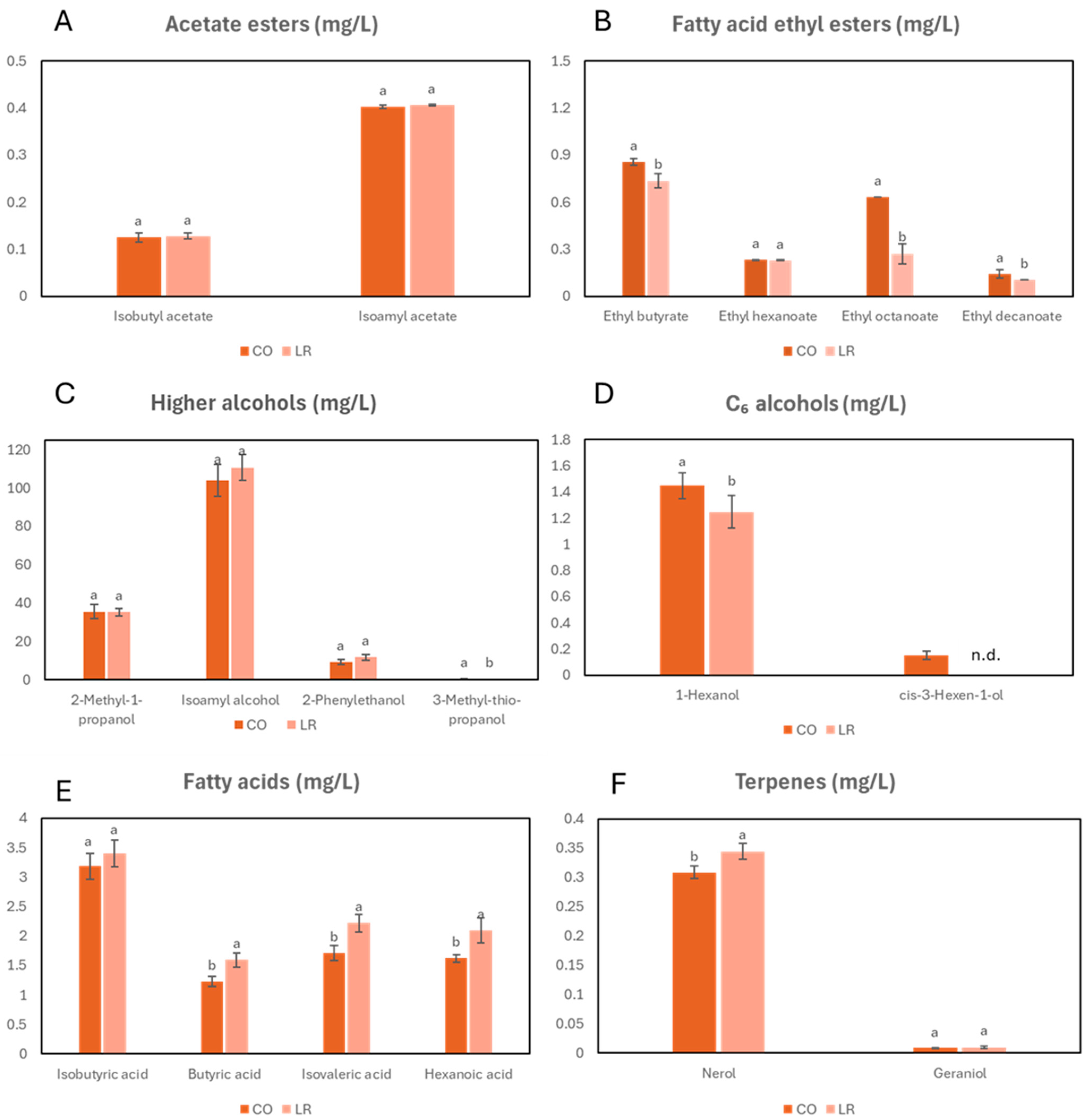
Sensory analysis was conducted in the wines produced from both years of the study while volatile profiling was carried out for the wines from the 2024 growing season. Regarding the volatile composition of 2024 wines, identified volatile compounds can be grouped into higher alcohols, acetate and ethyl esters, C6 alcohols, terpenes, and acids. The final concentration of each compound in the wines produced, within their respective chemical groups, is summarized in Figure 2 with bars showing the averages of biological and analytical replicates.
Higher alcohols are compounds produced during fermentation that contribute to the secondary aroma of wines. When their concentration is below 300 mg/L, they add pleasant complexity to the bouquet, while levels above 400 mg/L can negatively impact wine quality [8,46]. In the present work, alcohols are the group of volatile components with the highest content in all wines, with total concentrations ranging from 150.77 to 159.22 mg/L, thereby positively influencing wines’ aroma (Figure 2). This volatile fraction mainly consisted of 2-methyl-1-propanol, isoamyl alcohol, 2-phenylethanol, and 3-methylthio-1-propanol in both wine samples, with the last compound showing a statistical difference between the control and LR wines. Although 3-methyl-thio-propanol is present at lower levels than other higher alcohols, the microclimate of the grapes after defoliation likely affected amino acid levels, especially methionine, leading to a lower concentration of the corresponding alcohol produced via the Ehrlich pathway in the respective wines [52], since methionol in wine is closely related to the levels of methionine in must [53]. Regarding other alcohols, several studies have shown that their content in wines remains generally unaffected by leaf removal [54,55,56].
Additionally, among the alcohols, the C6 compounds 1-hexanol and cis-3-hexenol, which are responsible for green and herbaceous aromas [56], were detected in the control wines. However, only 1-hexanol was found in the wine from defoliation, and it was present at a significantly lower concentration compared to the control. Lower concentrations of 1-hexanol and C6 compounds reflect changes in the vine microclimate, as increased sunlight reduces their biosynthesis [56,57]. Similar findings by Vilanova et al. (2012) [58], Anıć et al. (2024) [59], and Zang et al. (2017) [60] showed that early defoliation caused a significant reduction in C6 compounds.
Esters are the main group of yeast-derived volatile metabolites in wines, produced during alcoholic fermentation. Ethyl esters of fatty acids and acetate esters play a crucial role in the perception of fruity and floral aromas because they have low detection thresholds and thus strongly influence wine flavor [52,61,62]. In this study, ethyl butyrate and ethyl octanoate were the predominant ethyl esters in all wines, while ethyl decanoate and ethyl hexanoate were found in the lowest concentrations. Quantitatively, ethyl butyrate, ethyl octanoate, and ethyl decanoate were significantly higher in control samples. Unlike several studies [59,63,64] that suggest ethyl ester levels increase with early defoliation, our study supports that ethyl esters, as byproducts of yeast metabolism during fermentation, depend on various factors—sensitivity to nutrient status, fatty acid availability, and temperature [65,66,67]. Therefore, all these factors might mediate the effects of basal defoliation on ethyl ester levels in wine.
Among the acetate esters, isobutyl acetate and isoamyl acetate were detected and quantified in both wine samples, but no significant differences in acetate ester concentrations were observed. Consistent with the studies by Kujundžić et al. (2022) [64] and Šuklje et al. (2015) [53], the leaf-removal treatment did not show any positive or negative effect on these esters.
Fatty acids are produced through yeast lipid metabolism during fermentation, and they are associated with ‘fatty’, ‘rancid’, and ‘cheesy’ aromas [68] Four fatty acids were measured in all the wines produced. Isobutyric acid was present in the highest concentration, with similar levels across the wines. Hexanoic acid, isovaleric acid, and butyric acid were found in higher concentrations in wines from the defoliated treatment. The increase in volatile acid concentrations when early defoliation was applied was also observed in Tempranillo and Nero d’Avola wines [65,69,70,71,72].
Terpenes are primarily found in grapes or juice as glycoside precursors and can be released as free compounds through enzymatic and acidic hydrolysis during winemaking [73]. This release contributes to floral and citrus aromas and enhances the varietal character of wines [74]. Geraniol and nerol were detected and quantified in the two experimental wines (Figure 2). Nerol concentrations were higher in defoliated samples. According to previous studies, early leaf removal has increased the levels of most free and bound monoterpenes in grapes and the resulting wines [69]. Additionally, our results align with several findings indicating that terpene levels are unaffected by leaf removal, especially geraniol content after basal defoliation, which mainly depends on cultivar factors and weather variations [70,71,72].
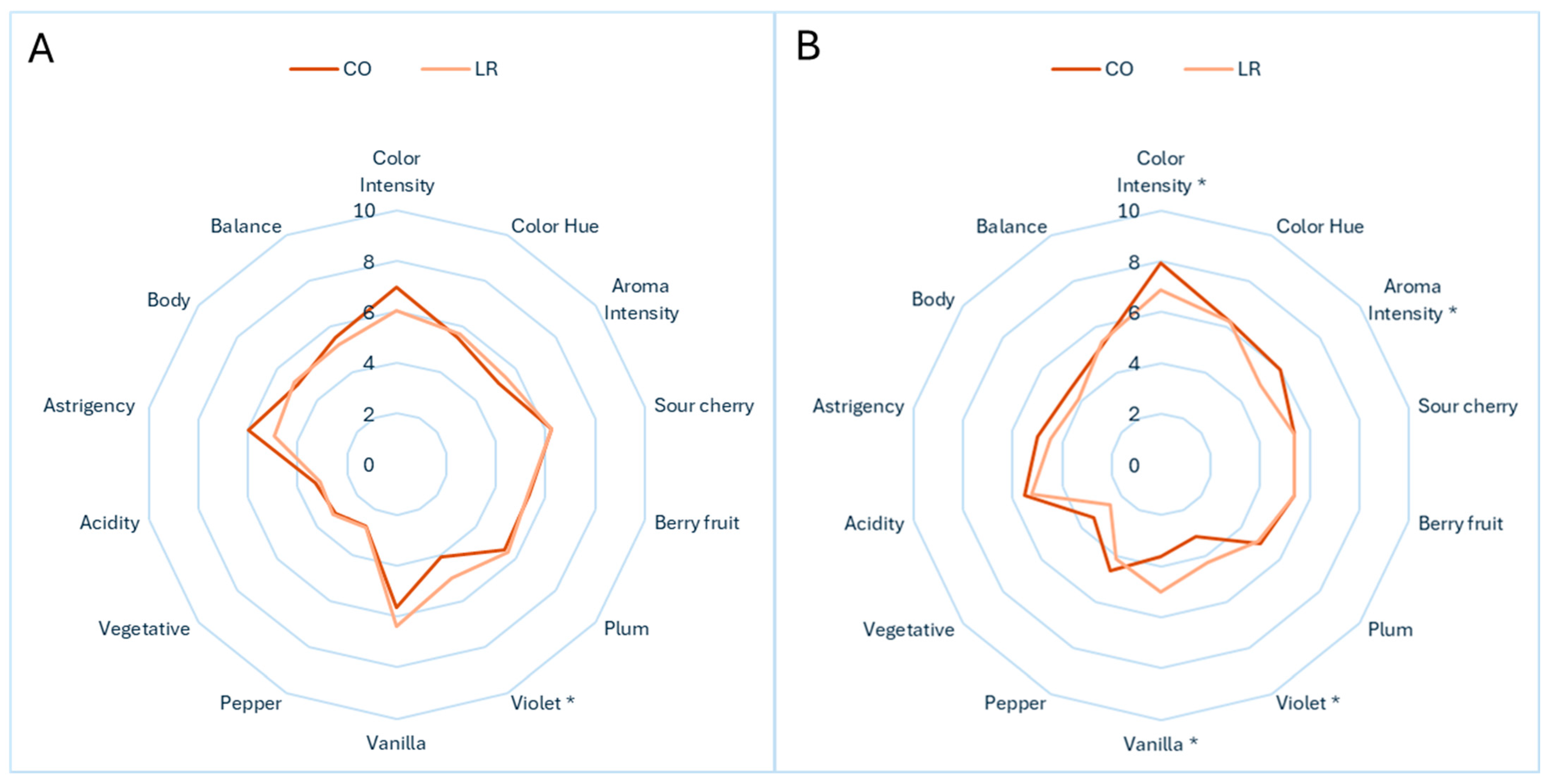
As shown in Figure 3, the sensory evaluation of the wines from 2023 and 2024 growing seasons revealed distinct effects of the applied practices on certain color and aroma attributes, while no significant differences were observed in mouthfeel attributes such as balance, body, astringency, and acidity. Astringency was higher in the control sample, in both years, reflecting the concentration of phenolic compounds responsible for this sensation (Table 4). It appears that early basal removal techniques enhance light exposure and air circulation, promoting moderate tannin levels and the maturation of phenolic compounds, which in turn reduces the perception of astringency [29].
Consistent with the spectrophotometric measurements, color intensity was higher in the 2024 CO sample. Corresponding chemical analyses in 2024 samples showed that aroma intensity was also greater in the CO wines, likely due to increased levels of ethyl esters with low thresholds, which enhance overall aroma perception [73]. In contrast, the significantly higher scores for violet and the sweet aroma of vanilla in the LR wines from the 2024 growing season are probably explained by the greater nerol content and the significantly lower levels of C6 alcohols in the corresponding wines. In contrast, the abundance of these alcohols in control wines from the same year may mask fruity and floral perceptions, thereby promoting vegetative and pepper notes. Interestingly, the results regarding the desirable violet and vanilla notes were quite similar in the 2023 season, confirming that the positive effect of leaf removal on the aroma characteristics of Avgoustiatis wines is independent of the vintage variability. Previous studies on Pinot noir indicated similar results, with wines from defoliated treatments having better nose appreciation, more fruitiness, less herbaceous [53,74]. Similarly, wines from non-defoliated treatments were described as less fruity and more herbaceous in comparison to defoliated wines [75].
Finally, the aromas of sour cherry, berry fruit, and plum were perceived with equal intensity across CO and LR wines in both vintages, and especially in 2024 wines this was likely caused by the similar acetate ester contents, which have stronger effects on aroma than ethyl esters [36,76].
Although the volatile composition of 2023 wines is missing, overall, the sensory findings highlight that leaf removal is a particularly important viticultural practice, as it can effectively modulate astringency levels and enhance the aromatic expression of red Avgoustiatis wines, regardless of vintage effect.

4. Conclusions

In conclusion, this study demonstrates that flowering leaf removal (LR) in the Avgoustiatis variety acts as a powerful but climate-sensitive regulator of fruit quality. The treatment successfully induced a structural reconfiguration of the clusters, leading to a yield reduction and a significant shift in berry architecture. This morphological change created a superior phenolic reservoir in the vineyard, yet the transition from grape to wine revealed a complex extraction gap, especially during the 2024 growing season, that highlights the challenges of extreme Mediterranean vintages.
A critical finding is the divergence between must and wine parameters. While the LR grapes exhibited an ideal decoupling of sugar and acidity at harvest—maintaining a low pH of 3.08 and robust acidity—the final wines showed a sharp increase in pH. This inversion suggests that the initial must freshness was likely offset during vinification. Similarly, the phenolic advantage observed in the grapes did not fully translate to the final wines. Despite the LR berries possessing higher total anthocyanins, the resulting wines displayed lower color intensity than the control. This discrepancy suggests that under the extreme thermal conditions, a lack of phenolic maturity at harvest may have hindered the effective extraction or stability of pigments during vinification. It appears that while leaf removal increased the phenolic potential in the vineyard, the heat-stressed berries failed to reach the optimal state of maturity required for these compounds to be successfully integrated into the wine matrix. However, it seems to be a viticultural technique that can reduce astringency and enhance the aromatic qualities of red Avgoustiatis wines, regardless of vintage.
Ultimately, while LR is proven to elevate the aromatic profile, reducing green C6 compounds and enhancing floral terpenes, its success is dictated by the thermal limits of the season. For the Avgoustiatis variety, early defoliation remains a vital tool for improving varietal typicity and cluster health, but in high-temperature scenarios, winemaking protocols must be adjusted to preserve the structural gains achieved in the vineyard.

Supplementary Materials

The following supporting information can be downloaded at: https://www.mdpi.com/article/10.3390/gastronomy4020010/s1. Figure S1: Control without leaf removal (a) and defoliation treatment at flowering (BBCH 65) (b) in Avgoustiatis grapes.; Table S1: Climatic conditions of the two years of experimentation; Table S2: Phenological data of all experimental vineyards, of years 2023–2024. The red (*) indicates the time of Leaf Removal in both growing seasons.

Author Contributions

Conceptualization, T.G., C.K., D.L., Y.K. and S.K.; methodology, Y.K. and S.K.; software, T.G.; validation, C.K., D.L., S.T. and E.C.; formal analysis, C.K., D.L. and T.G.; investigation, T.G., C.K. and D.L.; resources, Y.K. and S.K.; data curation, D.L., C.K. and T.G.; writing—original draft preparation, T.G., C.K. and D.L.; writing—review and editing, T.G., C.K., D.L., S.T. and E.C.; visualization, T.G., D.L. and C.K.; supervision, Y.K. and S.K.; project administration, Y.K. and S.K.; funding acquisition, Y.K. and S.K. All authors have read and agreed to the published version of the manuscript.

Funding

This research was funded by the project “Enhancing the competitiveness of local wine varieties in the Ionian islands” (MEASURE 16 COOPERATION, SUB-MEASURE 16.1–16.2 “ESTABLISHMENT AND OPERATION OF OPERATIONAL GROUPS OF THE EUROPEAN INNOVATION PARTNERSHIP FOR AGRICULTURAL PRODUCTIVITY AND SUSTAINABILITY”). Grant number Μ16ΣΥΝ2-00137.

Institutional Review Board Statement

The study was conducted in accordance with the Declaration of Helsinki, and approved by the Committee of Ethics and Deontology of Research of Agricultural University of Athens (AUA) (protocol code 85/11.11.2024 and date of approval: 11 November 2024).

Informed Consent Statement

Informed consent was obtained from all subjects involved in the study.

Data Availability Statement

Dataset available on request from the authors.

Conflicts of Interest

The authors declare no conflicts of interest.

Abbreviations

The following abbreviations are used in this manuscript:
TPITotal Polyphenolic Index
COControl
LRLeaf Removal
DAPDiammonium Phosphate
AFAlcoholic fermentation
MLFMalolactic Fermentation
OIVInternational Organisation of Vine and Wine
GAEGallic Acid Equivalents
CIColor Intensity
HHue
ISOInternational Organization for Standardization
ANOVAOne-way Analysis of Variance

References

  1. Rouxinol, M.I.; Martins, M.R.; Barroso, J.M.; Rato, A.E. Wine grapes ripening: A review on climate effect and analytical approach to increase wine quality. Appl. Biosci. 2023, 2, 347–372. [Google Scholar] [CrossRef] [Scilit]
  2. Mavromatis, T.; Koufos, G.C.; Koundouras, S.; Jones, G.V. Adaptive Capacity of Winegrape Varieties Cultivated in Greece to Climate Change: Current Trends and Future Projections. OENO One 2020, 54, 1201–1219. [Google Scholar] [CrossRef] [Scilit]
  3. Venios, X.; Banilas, G.; Beris, E.; Biniari, K.; Korkas, E. Physiological Efficiency and Adaptability of Greek Indigenous Grapevine Cultivars Under Heat Stress and Elevated CO2: Insights into Photosynthetic Dynamics. Plants 2025, 14, 2518. [Google Scholar] [CrossRef] [Scilit]
  4. Lacombe, T.; Boursiquot, J.-M.; Laucou, V.; Di Vecchi-Staraz, M.; Péros, J.-P.; This, P. Large-Scale Parentage Analysis in an Extended Set of Grapevine Cultivars (Vitis vinifera L.). Theor. Appl. Genet. 2013, 126, 401–414. [Google Scholar] [CrossRef] [Scilit]
  5. Kennedy, J.A. Grape and Wine Phenolics: Observations and Recent Findings. Cienc. Investig. Agrar. 2008, 35, 107–120. [Google Scholar] [CrossRef] [Scilit]
  6. De Beer, D.; Joubert, E.; Gelderblom, W.C.A.; Manley, M. Phenolic Compounds: A Review of Their Possible Role as In Vivo Antioxidants of Wine. S. Afr. J. Enol. Vitic. 2017, 23, 48–61. [Google Scholar] [CrossRef] [Scilit]
  7. Teixeira, A.; Eiras-Dias, J.; Castellarin, S.; Gerós, H. Berry Phenolics of Grapevine under Challenging Environments. Int. J. Mol. Sci. 2013, 14, 18711–18739. [Google Scholar] [CrossRef] [Scilit] [PubMed]
  8. Koundouras, S. Environmental and Viticultural Effects on Grape Composition and Wine Sensory Properties. Elements 2018, 14, 173–178. [Google Scholar] [CrossRef] [Scilit]
  9. Ribéreau-Gayon, P.; Glories, Y.; Maujean, A.; Dubourdieu, D. Handbook of Enology: The Chemistry of Wine Stabilization and Treatments, 1st ed.; Wiley: Hoboken, NJ, USA, 2006. [Google Scholar]
  10. Jackson, D.I.; Lombard, P.B. Environmental and Management Practices Affecting Grape Composition and Wine Quality—A Review. Am. J. Enol. Vitic. 1993, 44, 409–430. [Google Scholar] [CrossRef] [Scilit]
  11. Reynolds, A.G. Viticultural and Vineyard Management Practices and Their Effects on Grape and Wine Quality. In Managing Wine Quality; Elsevier: Amsterdam, The Netherlands, 2022; pp. 443–539. [Google Scholar]
  12. Minnaar, D.P.; Van Der Rijst, M.; Hunter, K. Grapevine Row Orientation, Vintage and Grape Ripeness Effect on Anthocyanins, Flavan-3-Ols, Flavonols and Phenolic Acids: I. Vitis vinifera L. Cv. Syrah Grapes. OENO One 2022, 56, 275–293. [Google Scholar] [CrossRef] [Scilit]
  13. Poni, S.; Bernizzoni, F. A Three-Year Survey on the Impact of Pre-Flowering Leaf Removal on Berry Growth Components and Grape Composition in Cv. Barbera Vines. OENO One 2010, 44, 21. [Google Scholar] [CrossRef] [Scilit]
  14. Pastore, C.; Zenoni, S.; Fasoli, M.; Pezzotti, M.; Tornielli, G.B.; Filippetti, I. Selective Defoliation Affects Plant Growth, Fruit Transcriptional Ripening Program and Flavonoid Metabolism in Grapevine. BMC Plant Biol. 2013, 13, 30. [Google Scholar] [CrossRef] [Scilit] [PubMed]
  15. VanderWeide, J.; Nasrollahiazar, E.; Schultze, S.; Sabbatini, P.; Castellarin, S.D. Impact of Cluster Thinning on Wine Grape Yield and Fruit Composition: A Review and Meta-Analysis. Aust. J. Grape Wine Res. 2024, 2024, 2504396. [Google Scholar] [CrossRef] [Scilit]
  16. Poni, S.; Bernizzoni, F.; Briola, G.; Cenni, A. Effects of Early Leaf Removal on Cluster Morphology, Shoot Efficiency and Grape Quality in Two Vitis vinifera Cultivars. Acta Hortic. 2005, 689, 217–226. [Google Scholar] [CrossRef] [Scilit]
  17. Martinez De Toda, F.; Sancha, J.C.; Zheng, W.; Balda, P. Leaf Area Reduction by Trimming, a Growing Technique to Restore the Anthocyanins: Sugars Ratio Decoupled by the Warming Climate. VITIS J. Grapevine Res. 2015, 53, 189. [Google Scholar] [CrossRef]
  18. Sadras, V.O.; Moran, M.A. Elevated Temperature Decouples Anthocyanins and Sugars in Berries of Shiraz and Cabernet Franc: Thermal Decoupling of Anthocyanins and Sugars. Aust. J. Grape Wine Res. 2012, 18, 115–122. [Google Scholar] [CrossRef] [Scilit]
  19. Fernández-Zurbano, P.; Santesteban, L.G.; Villa-Llop, A.; Loidi, M.; Peñalosa, C.; Musquiz, S.; Torres, N. Timing of Defoliation Affects Anthocyanin and Sugar Decoupling in Grenache Variety Growing in Warm Seasons. J. Food Compos. Anal. 2024, 125, 105729. [Google Scholar] [CrossRef] [Scilit]
  20. Poni, S.; Casalini, L.; Bernizzoni, F.; Civardi, S.; Intrieri, C. Effects of Early Defoliation on Shoot Photosynthesis, Yield Components, and Grape Composition. Am. J. Enol. Vitic. 2006, 57, 397–407. [Google Scholar] [CrossRef] [Scilit]
  21. Tardaguila, J.; De Toda, F.M.; Poni, S.; Diago, M.P. Impact of Early Leaf Removal on Yield and Fruit and Wine Composition of Vitis vinifera L. Graciano and Carignan. Am. J. Enol. Vitic. 2010, 61, 372–381. [Google Scholar] [CrossRef] [Scilit]
  22. Diago, M.P.; Vilanova, M.; Tardaguila, J. Effects of Timing of Manual and Mechanical Early Defoliation on the Aroma of Vitis vinifera L. Tempranillo Wine. Am. J. Enol. Vitic. 2010, 61, 382–391. [Google Scholar] [CrossRef] [Scilit]
  23. Puccioni, S.; Martini, G.; Zombardo, A.; Perria, R.; Pagano, M.; Valentini, P.; Storchi, P. Effect of Early Leaf Removal on Sangiovese (Vitis vinifera L.) under Thermal Excess and Drought Conditions. BIO Web Conf. 2019, 13, 04005. [Google Scholar] [CrossRef] [Scilit]
  24. Anić, M.; Osrečak, M.; Andabaka, Ž.; Tomaz, I.; Večenaj, Ž.; Jelić, D.; Kozina, B.; Kontić, J.K.; Karoglan, M. The Effect of Leaf Removal on Canopy Microclimate, Vine Performance and Grape Phenolic Composition of Merlot (Vitis vinifera L.) Grapes in the Continental Part of Croatia. Sci. Hortic. 2021, 285, 110161. [Google Scholar] [CrossRef] [Scilit]
  25. Tessarin, P.; Ricci, A.; Baraldi, G.; Lombini, A.; Parpinello, G.P.; Rombolà, A.D. Beneficial Effects of Bunch-Zone Late Defoliations and Shoot Positioning on Berry Composition and Colour Components of Wines Undergoing Aging in an Organically-Managed and Rainfed Sangiovese Vineyard. OENO One 2022, 56, 13–27. [Google Scholar] [CrossRef] [Scilit]
  26. Alahakoon, D.; Fennell, A. Genetic Analysis of Grapevine Root System Architecture and Loci Associated Gene Networks. Front. Plant Sci. 2023, 13, 1083374. [Google Scholar] [CrossRef] [Scilit]
  27. Vercesi, A.; Gabrielli, M.; Garavani, A.; Poni, S. Effects of apical, late-season leaf removal on vine performance and wine properties in Sangiovese grapevines (Vitis vinifera L.). Horticulturae 2024, 10, 929. [Google Scholar] [CrossRef] [Scilit]
  28. Drenjančević, M.; Kujundžić, T.; Jukić, V.; Karnaš, M.; Braun, U.; Schwander, F.; Teklić, T.; Rastija, V. Impact of leaf removal as a source of stresses on grapevine yields, chemical characteristics, and anthocyanin content in the grapevine variety Babica. Ann. Appl. Biol. 2023, 183, 43–52. [Google Scholar] [CrossRef] [Scilit]
  29. O’Brien, P.; Collins, C.; De Bei, R. Leaf Removal Applied to a Sprawling Canopy to Regulate Fruit Ripening in Cabernet Sauvignon. Plants 2021, 10, 1017. [Google Scholar] [CrossRef] [Scilit] [PubMed]
  30. Arvaniti, O.S.; Tsolou, A.; Sakantani, E.; Milla, S.; Kallinikou, E.; Petsini, F.; Choleva, M.; Detopoulou, M.; Fragopoulou, E.; Samaras, Y. Quality Characteristics, Polyphenol Profile and Antioxidant Capacity in Red, Rosé and White Monovarietal Wines from Ionian Islands of Greece. Acta Sci. Pol. Technol. Aliment. 2022, 21, 343–357. [Google Scholar] [CrossRef] [Scilit]
  31. Fragopoulou, E.; Petsini, F.; Choleva, M.; Detopoulou, M.; Arvaniti, O.S.; Kallinikou, E.; Sakantani, E.; Tsolou, A.; Nomikos, T.; Samaras, Y. Evaluation of Anti-Inflammatory, Anti-Platelet and Anti-Oxidant Activity of Wine Extracts Prepared from Ten Different Grape Varieties. Molecules 2020, 25, 5054. [Google Scholar] [CrossRef] [Scilit]
  32. OIV. Compendium of International Methods of Wine and Must Analysis: Volume 1, 2021st ed.; OIV: Paris, France, 2021.
  33. Karadimou, C.; Gkrimpizis, T.; Louki, E.; Roussi, L.; Theodorou, N.; Koundouras, S.; Kallithraka, S. Astringency Modification of Mandilaria Wines: Vineyard and Winery Strategies. Beverages 2025, 11, 76. [Google Scholar] [CrossRef] [Scilit]
  34. Harbertson, J.F.; Picciotto, E.A.; Adams, D.O. Measurement of Polymeric Pigments in Grape Berry Extract Sand Wines Using a Protein Precipitation Assay Combined with Bisulfite Bleaching. Am. J. Enol. Vitic. 2003, 54, 301–306. [Google Scholar] [CrossRef] [Scilit]
  35. Sarneckis, C.J.; Dambergs, R.G.; Jones, P.; Mercurio, M.; Herderich, M.J.; Smith, P.A. Quantification of Condensed Tannins by Precipitation with Methyl Cellulose: Development and Validation of an Optimised Tool for Grape and Wine Analysis. Aust. J. Grape Wine Res. 2006, 12, 39–49. [Google Scholar] [CrossRef] [Scilit]
  36. Ivanova, V.; Stefova, M.; Stafilov, T.; Vojnoski, B.; Bíró, I.; Bufa, A.; Kilár, F. Validation of a Method for Analysis of Aroma Compounds in Red Wine Using Liquid–Liquid Extraction and GC–MS. Food Anal. Methods 2012, 5, 1427–1434. [Google Scholar] [CrossRef] [Scilit]
  37. Lola, D.; Miliordos, D.E.; Goulioti, E.; Kontoudakis, N.; Myrtsi, E.D.; Haroutounian, S.A.; Kotseridis, Y. Assessment of the Volatile and Non-Volatile Profile of Savatiano PGI Wines as Affected by Various Terroirs in Attica, Greece. Food Res. Int. 2023, 174, 113649. [Google Scholar] [CrossRef] [Scilit] [PubMed]
  38. Drenjančević, M.; Jukić, V.; Zmaić, K.; Kujundžić, T.; Rastija, V. Effects of Early Leaf Removal on Grape Yield, Chemical Characteristics, and Antioxidant Activity of Grape Variety Cabernet Sauvignon and Wine from Eastern Croatia. Acta Agric. Scand. Sect. B Soil Plant Sci. 2017, 67, 705–711. [Google Scholar] [CrossRef] [Scilit]
  39. Napolitano, E.; Carillo, A.; Iacono, R.; Struglia, M.V.; dell’Aquila, A.; Palma, M.; Marullo, S.; De Sabata, E.; Bordone, A.; Borzelli, G.E. Unprecedented Mediterranean Sea warming in 2024: Analysis of the driving mechanisms. Front. Mar. Sci. 2025, 12, 1668204. [Google Scholar] [CrossRef] [Scilit]
  40. Risco, D.; Pérez, D.; Yeves, A.; Castel, J.R.; Intrigliolo, D.S. Early Defoliation in a Temperate Warm and Semi-Arid Tempranillo Vineyard: Vine Performance and Grape Composition: Early Defoliation in Tempranillo Vineyard. Aust. J. Grape Wine Res. 2014, 20, 111–122. [Google Scholar] [CrossRef] [Scilit]
  41. Wan, S.-Y.; Li, Y.-M.; Xie, Z.-S. Exploring Factors Influencing the Consumption of Grape Skins: A Review. Horticulturae 2025, 11, 962. [Google Scholar] [CrossRef] [Scilit]
  42. Ferrandino, A.; Pagliarani, C.; Pérez-Álvarez, E.P. Secondary Metabolites in Grapevine: Crosstalk of Transcriptional, Metabolic and Hormonal Signals Controlling Stress Defence Responses in Berries and Vegetative Organs. Front. Plant Sci. 2023, 14, 1124298. [Google Scholar] [CrossRef] [Scilit]
  43. Stoyanov, N.; Tagareva, S.; Yoncheva, T.; Shopska, V.; Kostov, G. Significance of Grape Phenolic Compounds for Wine Characteristics: Dynamics and Extractability During Fruit Maturation. Beverages 2025, 11, 163. [Google Scholar] [CrossRef] [Scilit]
  44. Puigserver, J.; Montero, R.; Bota, J. Impact of innovative canopy management techniques on grape and wine quality under Mediterranean summer conditions. In IVES Conference Series, GiESCO 2025; International Viticulture and Enology Society: Villenave-d’Ornon, France, 2025. [Google Scholar]
  45. Rogiers, S.Y.; Coetzee, Z.A.; Walker, R.R.; Deloire, A.; Tyerman, S.D. Potassium in the Grape (Vitis vinifera L.) Berry: Transport and Function. Front. Plant Sci. 2017, 8, 1629. [Google Scholar] [CrossRef] [Scilit]
  46. Olego, M.Á.; Quiroga, M.J.; Cuesta Lasso, M.D.; Visconti Reluy, F.; Garzón-Jimeno, E. Auxins Seem Promising as a Tuning Method for Balancing Sugars with Acidity in Grape Musts from Cv. Tempranillo, but Not Defoliation or Application of Magnesium to Leaves. OENO One 2023, 57, 70–83. [Google Scholar] [CrossRef] [Scilit]
  47. Coniberti, A.; Ferrari, V.; Fariña, L.; Carrau, F.; Dellacassa, E.; Boido, E.; Disegna, E. Role of Canopy Management in Controlling High pH in Tannat Grapes and Wines. Am. J. Enol. Vitic. 2012, 63, 554–558. [Google Scholar] [CrossRef] [Scilit]
  48. Coppola, F.; Testa, B.; Succi, M.; Paventi, G.; Di Martino, C.; Iorizzo, M. Viticultural and Pre-Fermentation Strategies to Reduce Alcohol Levels in Wines. Foods 2025, 14, 2647. [Google Scholar] [CrossRef] [Scilit]
  49. Mucalo, A.; Budić-Leto, I.; Lukšić, K.; Maletić, E.; Zdunić, G. Early Defoliation Techniques Enhance Yield Components, Grape and Wine Composition of Cv. Trnjak (Vitis vinifera L.) in Dalmatian Hinterland Wine Region. Plants 2021, 10, 551. [Google Scholar] [CrossRef] [Scilit]
  50. Ćirković, D.; Matijašević, S.; Ćirković, B.; Laketić, D.; Jovanović, Z.; Kostić, B.; Bešlić, Z.; Sredojević, M.; Tešić, Ž.; Banjanac, T.; et al. Influence of Different Defoliation Timings on Quality and Phenolic Composition of the Wines Produced from the Serbian Autochthonous Variety Prokupac (Vitis vinifera L.). Horticulturae 2022, 8, 296. [Google Scholar] [CrossRef] [Scilit]
  51. Androulidakis, Y.; Kolovoyiannis, V.; Makris, C.; Krestenitis, Y. Evidence of 2024 Summer as the Warmest During the Last Four Decades in the Aegean, Ionian, and Cretan Seas. J. Mar. Sci. Eng. 2024, 12, 2020. [Google Scholar] [CrossRef] [Scilit]
  52. Ayestarán, B.; Martínez-Lapuente, L.; Guadalupe, Z.; Canals, C.; Adell, E.; Vilanova, M. Effect of the Winemaking Process on the Volatile Composition and Aromatic Profile of Tempranillo Blanco Wines. Food Chem. 2019, 276, 187–194. [Google Scholar] [CrossRef] [Scilit]
  53. Šuklje, K.; Antalick, G.; Buica, A.; Langlois, J.; Coetzee, Z.A.; Gouot, J.; Schmidtke, L.M.; Deloire, A. Clonal Differences and Impact of Defoliation on Sauvignon Blanc (Vitis vinifera L.) Wines: A Chemical and Sensory Investigation. J. Sci. Food Agric. 2016, 96, 915–926. [Google Scholar] [CrossRef] [Scilit] [PubMed]
  54. Hernández-Orte, P.; Cacho, J.F.; Ferreira, V. Relationship between Varietal Amino Acid Profile of Grapes and Wine Aromatic Composition. Experiments with Model Solutions and Chemometric Study. J. Agric. Food Chem. 2002, 50, 2891–2899. [Google Scholar] [CrossRef] [Scilit] [PubMed]
  55. Kozina, B.; Karoglan, M.; Herjavec, S.; Jeromel, A.; Orlic, S. Influence of Basal Leaf Removal on the Chemical Composition of Sauvignon Blanc and Riesling Wines. J. Food Agric. Environ. 2008, 6, 28–33. [Google Scholar]
  56. Wang, Y.; He, L.; Pan, Q.; Duan, C.; Wang, J. Effects of Basal Defoliation on Wine Aromas: A Meta-Analysis. Molecules 2018, 23, 779. [Google Scholar] [CrossRef] [Scilit]
  57. Pedroza, M.A.; Zalacain, A.; Lara, J.F.; Salinas, M.R. Global Grape Aroma Potential and Its Individual Analysis by SBSE–GC–MS. Food Res. Int. 2010, 43, 1003–1008. [Google Scholar] [CrossRef] [Scilit]
  58. Vilanova, M.; Diago, M.P.; Genisheva, Z.; Oliveira, J.M.; Tardaguila, J. Early Leaf Removal Impact on Volatile Composition of Tempranillo Wines. J. Sci. Food Agric. 2012, 92, 935–942. [Google Scholar] [CrossRef] [Scilit]
  59. Anić, M.; Osrečak, M.; Haramina, J.; Karoglan, M. Effect of Timing of Leaf Removal on Yield, Grape Primary Composition and Volatile Composition of Vitis vinifera Cv. Merlot Grapevines. J. Cent. Eur. Agric. 2024, 25, 776–786. [Google Scholar] [CrossRef] [Scilit]
  60. Zhang, P.; Wu, X.; Needs, S.; Liu, D.; Fuentes, S.; Howell, K. The Influence of Apical and Basal Defoliation on the Canopy Structure and Biochemical Composition of Vitis vinifera Cv. Shiraz Grapes and Wine. Front. Chem. 2017, 5, 48. [Google Scholar] [CrossRef] [Scilit]
  61. Wang, Y.; Li, H.-Q.; Gao, X.-T.; Lu, H.-C.; Peng, W.-T.; Chen, W.; Li, S.-D.; Li, S.-P.; Duan, C.-Q.; Wang, J. Influence of Attenuated Reflected Solar Radiation from the Vineyard Floor on Volatile Compounds in Cabernet Sauvignon Grapes and Wines of the North Foot of Mt. Tianshan. Food Res. Int. 2020, 137, 109688. [Google Scholar] [CrossRef] [Scilit]
  62. Sánchez-Palomo, E.; Delgado, J.A.; Ferrer, M.A.; Viñas, M.A.G. The Aroma of La Mancha Chelva Wines: Chemical and Sensory Characterization. Food Res. Int. 2019, 119, 135–142. [Google Scholar] [CrossRef] [Scilit]
  63. Moreno, D.; Valdés, E.; Uriarte, D.; Gamero, E.; Talaverano, I.; Vilanova, M. Early Leaf Removal Applied in Warm Climatic Conditions: Impact on Tempranillo Wine Volatiles. Food Res. Int. 2017, 98, 50–58. [Google Scholar] [CrossRef] [Scilit] [PubMed]
  64. Kujundžić, T.; Rastija, V.; Šubarić, D.; Jukić, V.; Schwander, F.; Drenjančević, M. Effects of Defoliation Treatments of Babica Grape Variety(Vitis vinifera L.) on Volatile Compounds Content in Wine. Molecules 2022, 27, 714. [Google Scholar] [CrossRef] [Scilit] [PubMed]
  65. Saerens, S.M.G.; Delvaux, F.; Verstrepen, K.J.; Van Dijck, P.; Thevelein, J.M.; Delvaux, F.R. Parameters Affecting Ethyl Ester Production by Saccharomyces cerevisiae during Fermentation. Appl. Environ. Microbiol. 2008, 74, 454–461. [Google Scholar] [CrossRef] [Scilit]
  66. Rocha, S.M.; Rodrigues, F.; Coutinho, P.; Delgadillo, I.; Coimbra, M.A. Volatile Composition of Baga Red Wine. Anal. Chim. Acta 2004, 513, 257–262. [Google Scholar] [CrossRef]
  67. Verzera, A.; Tripodi, G.; Dima, G.; Condurso, C.; Scacco, A.; Cincotta, F.; Giglio, D.M.L.; Santangelo, T.; Sparacio, A. Leaf Removal and Wine Composition of Vitis vinifera L. Cv. Nero d’Avola: The Volatile Aroma Constituents. J. Sci. Food Agric. 2016, 96, 150–159. [Google Scholar] [CrossRef] [Scilit] [PubMed]
  68. Swiegers, J.H.; Bartowsky, E.J.; Henschke, P.A.; Pretorius, I.S. Yeast and Bacterial Modulation of Wine Aroma and Flavour. Aust. J. Grape Wine Res. 2005, 11, 139–173. [Google Scholar] [CrossRef] [Scilit]
  69. Yue, X.; Ma, X.; Tang, Y.; Wang, Y.; Wu, B.; Jiao, X.; Zhang, Z.; Ju, Y. Effect of Cluster Zone Leaf Removal on Monoterpene Profiles of Sauvignon Blanc Grapes and Wines. Food Res. Int. 2020, 131, 109028. [Google Scholar] [CrossRef] [Scilit]
  70. Feng, H.; Skinkis, P.A.; Qian, M.C. Pinot Noir Wine Volatile and Anthocyanin Composition under Different Levels of Vine Fruit Zone Leaf Removal. Food Chem. 2017, 214, 736–744. [Google Scholar] [CrossRef] [Scilit] [PubMed]
  71. Baiano, A.; Mentana, A.; Quinto, M.; Centonze, D.; Previtali, M.A.; Varva, G.; Del Nobile, M.A.; De Palma, L. Volatile Composition and Sensory Profile of Wines Obtained from Partially Defoliated Vines: The Case of Nero di Troia Wine. Eur. Food Res. Technol. 2017, 243, 247–261. [Google Scholar] [CrossRef] [Scilit]
  72. Hernandez-Orte, P.; Concejero, B.; Astrain, J.; Lacau, B.; Cacho, J.; Ferreira, V. Influence of Viticulture Practices on Grape Aroma Precursors and Their Relation with Wine Aroma. J. Sci. Food Agric. 2015, 95, 688–701. [Google Scholar] [CrossRef] [Scilit]
  73. Lola, D.; Kalloniati, C.; Tzamourani, A.; Paramithiotis, S.; Dimopoulou, M.; Flemetakis, E.; Kotseridis, Y. The Use of Autochthonous Saccharomyces Cerevisiae Strains as a Strategy to Enhance Aroma Variability and Typicity of Savatiano Wines; RNAseq-Based Transcriptome Comparison of Indigenous Strains under Winemaking Conditions. Int. J. Food Microbiol. 2025, 440, 111249. [Google Scholar] [CrossRef] [Scilit]
  74. Verdenal, T.; Zufferey, V.; Dienes-Nagy, A.; Bourdin, G.; Gindro, K.; Viret, O.; Spring, J.-L. Timing and Intensity of Grapevine Defoliation: An Extensive Overview on Five Cultivars in Switzerland. Am. J. Enol. Vitic. 2019, 70, 427–434. [Google Scholar] [CrossRef] [Scilit]
  75. Verdenal, T.; Zufferey, V.; Dienes-Nagy, A.; Gindro, K.; Belcher, S.; Lorenzini, F.; Rösti, J.; Koestel, C.; Spring, J.-L.; Viret, O. Pre-Flowering Defoliation Affects Berry Structure and Enhances Wine Sensory Parameters. OENO One 2017, 51, 263–275. [Google Scholar] [CrossRef] [Scilit]
  76. Dzialo, M.C.; Park, R.; Steensels, J.; Lievens, B.; Verstrepen, K.J. Physiology, Ecology and Industrial Applications of Aroma Formation in Yeast. FEMS Microbiol. Rev. 2017, 41, S95–S128. [Google Scholar] [CrossRef] [Scilit] [PubMed]
Figure 1. Geographical location of the study area on Zakynthos Island, Ionian Sea, Greece. Labels indicate the three experimental sites, Katastari, Agios Kirikos, and Kalpaki, monitored during the 2023–2024 growing season. Coordinates are provided in decimal degrees; the scale bar represents 10 km.
Gastronomy 04 00010 g001
Figure 2. Graphs showing the mean concentration (mg/L) ± standard deviation of (A) acetate esters, (B) ethyl esters, (C) higher alcohols, (D) C6 alcohols, (E) volatile fatty acids, and (F) terpenes in Avgoustiatis wines produced under the control (CO) and leaf-removal (LR) treatments in the 2024 growing season. Bars of the same color with different lowercase letters within the same graph are significantly different. (p < 0.05, Student’s t-test).
Gastronomy 04 00010 g002
Figure 3. Spider plot of the means of the sensory characteristics of the Avgoustiatis wines produced after the control (CO) and leaf removal (LR) treatment during 2023 (A) and 2024 (B) vintages. * indicates a significant difference (p < 0.05, Student’s t-test).
Gastronomy 04 00010 g003
Table 1. Physical parameters of Avgoustiatis grapes subjected to flowering leaf removal (LR) compared to untreated control (CO) in 2023 and 2024. Values with different lower-case letters in the same row are significantly different (p < 0.05, Student’s t-test).
SamplesWeight of 50 Grapes (g)Bunch
Length
(cm)
Bunch
Width (cm)
Peduncle Length
(cm)
% Skins/
Berry
%
Seeds/
Berry
%
Flesh/
Berry
Yield (kg)/Vine
Year: 2023
CO105.2 ± 2.1 a16.8 ± 0.6 b7.8 ± 0.3 b1.7 ± 0.1 b4.5 ± 0.2 b4.6 ± 0.2 a90.9 ± 0.8 a3.2 ± 0.6 a
LR96.4 ± 1.8 b18.5 ± 0.5 a9.2 ± 0.4 a2.0 ± 0.2 a5.8 ± 0.3 a4.7 ± 0.1 a87.5 ± 0.6 b2.1 ± 0.4 b
Year: 2024
CO113.3 ± 0.9 a17.5 ± 0.3 b8.1 ± 0.1 b1.8 ± 0.1 b4.4 ± 0.0 b4.5 ± 0.1 a91.1 ± 0.4 a4.8 ± 0.5 a
LR93.2 ± 0.7 b19.6 ± 0.2 a10.3 ± 0.3 a2.2 ± 0.2 a7.0 ± 0.2 a4.8 ± 0.1 a88.2 ± 0.3 b3.2 ± 0.4 b
CO: control, LR: leaf removal.
Table 2. Must composition of Avgoustiatis grapes subjected to flowering leaf removal (LR) compared to untreated control (CO) in 2023 and 2024. Values with different lower-case letters in the same row are significantly different (p < 0.05, Student’s t-test).
SamplesBrixpHTotal Acidity
(Tartaric Acid g/L)
Year: 2023
CO21.4 ± 0.4 b3.38 ± 0.05 a6.10 ± 0.22 a
LR22.3 ± 0.5 a3.32 ± 0.09 a6.95 ± 0.18 a
Year: 2024
CO21.8 ± 0.2 b3.41 ± 0.03 a5.85 ± 0.12 b
LR23.1 ± 0.1 a3.08 ± 0.05 b7.80 ± 0.25 a
CO: control, LR: leaf removal.
Table 3. Impact of early defoliation on phenolic composition of Avgoustiatis grapes in 2023 and 2024. Values with different lower-case letters in the same row are significantly different (p < 0.05, Student’s t-test).
SamplesTotal Phenolics
(au/Berry)
Extractability (%)Total Anthocyanins (mg/Berry)Antioxidant Activity (mmol Trolox/g dw)
SkinsSeeds
Year: 2023
CO2.18 ± 0.14 b41.5 ± 2.8 a1.27 ± 0.07 b0.11 ± 0.04 b0.21 ± 0.03 a
LR2.35 ± 0.11 a39.8 ± 2.1 a1.48 ± 0.09 a0.13 ± 0.02 a0.22 ± 0.05 a
Year: 2024
CO2.41 ± 0.11 b42.2 ± 2.1 a0.92 ± 0.08 b0.12 ± 0.06 b0.22 ± 0.01 a
LR2.86 ± 0.13 a36.7 ± 1.7 b1.19 ± 0.12 a0.16 ± 0.04 a0.23 ± 0.07 a
CO: control, LR: leaf removal.
Table 4. The effect of leaf removal on oenological parameters of wines produced from 2023 and 2024 vintages. Values are means (±standard deviation) of triplicate fermentations. Values with different lower-case letters in the same row are significantly different (p < 0.05, Student’s t-test).
SamplesResidual Sugar (g/L)Alcohol (vol%)Total Acidity
(Tartaric Acid g/L)
pHVolatile Acidity (Acetic Acid g/L)
Year 2023
CO0.02 ± 0.0 a13.5 ± 0.3 a4.50 ± 0.24 a4.09 ± 0.02 a0.38 ± 0.07 a
LR0.02 ± 0.0 a13.8 ± 0.2 a4.31 ± 0.26 a4.06 ± 0.01 a0.29 ± 0.02 a
Year 2024
CO0.01 ± 0.0 a13.4 ± 0.0 a4.39 ± 0.14 a4.19 ± 0.07 a0.58 ± 0.03 a
LR0.02 ± 0.01 a13.1 ± 0.1 b4.28 ± 0.19 a4.14 ± 0.07 a0.59 ± 0.01 a
CO: control, LR: leaf removal.
Table 5. The effect of leaf removal on color, phenolic characteristics, and tannic content of wines produced from 2023 and 2024 vintages. Values are means (±standard deviation) of triplicate fermentations. Values with different lower-case letters in the same row are significantly different (p < 0.05, Student’s t-test).
SamplesIntensityHueTPITPTannins MCPTannins BSA
Year 2023
CO8.3 ± 0.8 a0.85 ± 0.01 a60.0 ± 3.6 a1351.6 ± 11.3 a862.4 ± 60.3 a147.1 ± 7.3 a
LR7.5 ± 0.3 a0.83 ± 0.01 a55.0± 1.7 b1124.7 ± 13.8 b800.5 ± 26.4 a102.1 ± 27.7 b
Year 2024
CO8.4 ± 0.0 a0.9 ± 0.0 a36.5 ± 1.2 a872.5 ± 12.5 a305.35 ± 36.7 a32.3 ± 2.1 a
LR7.7 ± 0.4 b0.9 ± 0.0 a32.3 ± 0.4 b835.5 ± 16.5 b259.7 ± 13.4 a25.8 ± 0.2 b
CO: control, LR: leaf removal; TPI: total phenolic index; TP: total phenolics as mg GAE/L; Tannins measured with the MCP method, expressed as mg/L catechin equivalents; Tannins measured with the BSA method, expressed as mg/L catechin equivalents.
Disclaimer/Publisher’s Note: The statements, opinions and data contained in all publications are solely those of the individual author(s) and contributor(s) and not of MDPI and/or the editor(s). MDPI and/or the editor(s) disclaim responsibility for any injury to people or property resulting from any ideas, methods, instructions or products referred to in the content.