


Abstract
The Mediterranean diet is widely recognized as one of the most robust dietary patterns for the prevention of chronic diseases, yet its health effects cannot be fully understood without considering the culinary practices and cultural contexts that shape food preparation and consumption. In this context, we propose the concept of Mediterranean Culinary Medicine, defined as the application of culinary medicine principles within the Mediterranean dietary model, integrating evidence-based nutrition with traditional ingredients, cooking techniques, and meal patterns. This narrative review synthesizes evidence from epidemiological, experimental, and clinical studies to examine how culinary practices may influence the nutritional quality, bioavailability of bioactive compounds, and overall health effects of the Mediterranean diet, although the strength of evidence varies across domains, with particular attention to home cooking, traditional cooking techniques, and extra virgin olive oil. We also explore the biological pathways, suggested by a combination of experimental findings and observational evidence, through which culinary practices may modulate metabolic health, including inflammation, glycemic response, and gut microbiota, as well as their potential application in addressing disease-related eating limitations such as sensory alterations, dysphagia, malnutrition, and food allergies, for example, through texture modification or flavor enhancement strategies. Finally, we highlight the social, cultural, and environmental dimensions of Mediterranean Culinary Medicine, emphasizing its role as a holistic and culturally grounded approach that facilitates the translation of Mediterranean dietary principles into sustainable and practical dietary behaviors. Overall, available evidence suggests that culinary practices are a relevant but still underexplored component of the Mediterranean diet, with the potential to improve dietary adherence and nutritional quality. However, current evidence remains heterogeneous and largely based on experimental and observational studies, highlighting the need for longitudinal and intervention studies to clarify their long-term health impact.
1. The Mediterranean Diet: A Cultural and Dietary Model
The Mediterranean diet was originally characterized through the work of Ancel Keys and the Seven Countries Study, which examined dietary patterns and health outcomes across multiple populations, including those in Mediterranean regions, during the 1950s and 1960s [1]. It reflects the traditional dietary habits of communities living around the Mediterranean Basin during this period. This dietary pattern is internationally recognized as one of the most robustly validated dietary patterns for the prevention of chronic diseases [2].
To translate this traditional dietary pattern into practical guidance, several graphical representations have been proposed. Among them, the Mediterranean diet pyramid has become one of the most widely recognized tools for communicating the principles of the diet. The original pyramid, introduced in the 1990s, emphasized plant-based foods at its base—including fruits, vegetables, legumes, whole grains, and olive oil—while recommending moderate consumption of fish, dairy products, and wine, and limiting the intake of red meat and sweets [3]. More recent reappraisals have also highlighted the evolving nature of the Mediterranean diet pyramid and proposed updates reflecting contemporary scientific evidence and dietary practices [4].
More recent updates of the Mediterranean diet pyramid incorporated additional dimensions beyond food groups, highlighting the importance of lifestyle factors such as physical activity, conviviality during meals, culinary traditions, seasonality, and sustainability [5]. These revisions reflect the growing recognition that the Mediterranean diet should be understood not merely as a nutritional prescription but as a broader cultural model that integrates dietary practices, culinary traditions, and social behaviors.
The cultural significance of this dietary model was formally recognized in 2010 when UNESCO inscribed the Mediterranean diet on the Representative List of the Intangible Cultural Heritage of Humanity. This recognition highlighted that the Mediterranean diet includes not only foods and ingredients but also practices such as harvesting, fishing, food preservation, cooking techniques, and communal eating traditions that reinforce social cohesion and cultural identity [6].
One of the defining features of the Mediterranean diet is its deep connection to culinary traditions. Mediterranean cuisines rely on simple cooking techniques that enhance the sensory qualities and nutritional value of foods. Core culinary practices across Mediterranean cuisines often involve the use of ingredients such as olive oil, garlic, onion, and tomato, which contribute to characteristic flavor profiles, although their specific combinations, preparation methods, and culinary roles vary across regions [7]. Beyond Western Mediterranean contexts, dietary patterns in North African and Eastern Mediterranean regions also contribute substantially to the Mediterranean diet, with a strong emphasis on plant-based foods, legumes, and culturally rooted culinary practices [5,8,9].
2. Culinary Medicine: Concept and Evolution
John La Puma originally defined culinary medicine as “a new evidence-based field in medicine that blends the art of food and cooking with the science of medicine” [10]. This early definition established culinary medicine as a practical and patient-oriented discipline aimed at helping individuals make informed decisions about food and eating in relation to health and disease. More recently, the concept has evolved to reflect a broader and more interdisciplinary perspective. Hildebrand et al. proposed that culinary medicine should be understood across multiple domains and stakeholders—including healthcare professionals, foodservice professionals, educators, and communities—highlighting its role in connecting nutrition science, culinary practice, and health promotion in clinical, academic, and community settings [11].
A more operational definition was proposed by Croxford et al. within the broader framework of culinary nutrition, describing culinary medicine as “a health practitioner-led culinary nutrition intervention or activity”, thereby emphasizing the role of qualified health professionals in designing and delivering culinary interventions aimed at improving health outcomes [12]. Culinary nutrition was defined as “the integration of culinary arts and nutrition that applies practical knowledge and skills to improve food and nutrition-related health” [12].
These definitions illustrate the evolution of culinary medicine from an emerging concept integrating cooking and medicine to a multidisciplinary field encompassing clinical practice, education, and community-based interventions. The central aim of culinary medicine is to translate evidence-based nutrition recommendations into practical culinary skills that enable individuals to implement healthy dietary patterns in daily life [13]. Culinary medicine programs are increasingly implemented in medical education, clinical care, and community-based settings, often using teaching kitchens or experiential cooking education [14].
While these definitions collectively illustrate the expansion of culinary medicine as a field, they also reveal underlying conceptual tensions. Early formulations emphasize patient-centered, clinically oriented applications, whereas more recent frameworks highlight broader, system-level and community-based dimensions involving multiple stakeholders. At the same time, the extent to which culinary medicine should be led exclusively by health professionals or shared with culinary and community actors remains an open question. These distinctions are particularly relevant in the Mediterranean context, where dietary practices are deeply embedded in cultural traditions, social structures, and everyday culinary knowledge. In this sense, the concept of Mediterranean Culinary Medicine extends beyond formal healthcare by integrating culturally grounded culinary practices.
The growing field of culinary medicine is closely connected to the broader “Food Is Medicine” movement. “Food is medicine” refers to the use of food-based interventions integrated within healthcare systems to prevent, manage, or treat chronic diseases and improve overall health outcomes. These initiatives include strategies such as medically tailored meals, produce prescriptions, and nutrition education programs designed to address diet-related chronic diseases and improve diet quality [15]. However, despite the growing enthusiasm for these initiatives, the current evidence remains limited, with many studies characterized by small sample sizes, short follow-up periods, and a predominance of non-randomized designs, highlighting the need for more rigorous long-term trials and economic evaluations [16].
Dietary patterns supported by strong scientific evidence, such as the Mediterranean diet, represent particularly suitable frameworks for the application of culinary medicine principles. In this context, Mediterranean Culinary Medicine requires a clear and operational definition, together with a structured synthesis of its main components and underlying evidence. To address this, we conducted a narrative review based on a targeted, non-systematic search of the literature conducted primarily in PubMed/MEDLINE, complemented by additional searches in Google Scholar to identify relevant articles and seminal references. Consistent with the objectives of a narrative review, the aim was not to provide an exhaustive or fully reproducible synthesis of all available evidence, but rather to integrate and critically interpret key findings across disciplines, in line with current methodological perspectives on the complementary and interpretive role of narrative reviews in synthesizing complex and heterogeneous evidence [17].
3. Mediterranean Culinary Medicine: Definition and Applications
Mediterranean Culinary Medicine can be understood as the application of culinary medicine principles within the context of the Mediterranean dietary pattern and its associated culinary traditions. In this framework, evidence-based nutrition recommendations are translated into practical culinary practices grounded in Mediterranean food culture, including the use of traditional ingredients, cooking techniques, and meal patterns characteristic of the Mediterranean diet. By integrating nutrition knowledge with the culinary heritage of the Mediterranean region, Mediterranean Culinary Medicine seeks to facilitate the practical adoption of Mediterranean dietary patterns and support the prevention and management of chronic diseases through culturally meaningful food practices. Importantly, this framework provides a context-specific model that links the robust epidemiological and clinical evidence supporting the Mediterranean diet with concrete culinary practices, thereby enabling a more culturally grounded and practically applicable translation of dietary recommendations than generic culinary medicine approaches.
3.1. Traditional Mediterranean Cuisine to Promote Health
A substantial body of epidemiological and clinical evidence supports the role of the Mediterranean diet in the prevention of major chronic diseases [18]. While these benefits are commonly attributed to its nutrient composition and food groups, increasing attention has been given to the role of culinary practices and food preparation methods in shaping the health effects of the diet. Reliance on minimally processed foods prepared at home is part of a broader culinary and social context that may interact with dietary composition to promote health. Traditional Mediterranean cuisine relies heavily on seasonal ingredients, and home cooking using healthy culinary techniques [19].
3.1.1. Home Cooking as a Core Feature of the Mediterranean Food Culture
Analyses of food-based dietary guidelines worldwide show that culinary aspects have historically received limited attention, even though many recommended foods require preparation before consumption. When included, culinary guidance typically focuses on healthy food preparation practices, such as reducing the use of salt and fat, favoring appropriate cooking techniques, and ensuring food safety. However, more recent guidelines have begun to explicitly promote cooking skills and home food preparation as strategies to support healthier diets and improve diet quality [20]. Importantly, home cooking should be understood as a behavioral and contextual component of dietary patterns—reflecting where and how food is prepared—rather than the specific cooking techniques employed.
Home cooking refers to food preparation practices performed in a household, involving the combination, transformation, or heating of ingredients to produce meals for personal or family consumption. Although the concept may include a spectrum of practices—from cooking from raw ingredients to assembling partially prepared foods—it generally implies a greater degree of control over ingredients, preparation methods, and meal composition compared with foods prepared outside the home [21].
Evidence from observational studies suggests that home cooking is associated with a range of beneficial dietary behaviors. A systematic review examining the health and social determinants of home cooking found that individuals who cook more frequently at home tend to have healthier overall dietary patterns, including higher consumption of fruits, vegetables, and whole foods, as well as better adherence to dietary recommendations [22]. In contrast, lower levels of home cooking are often associated with greater reliance on meals prepared outside the home, including fast-food options and ultra-processed foods [23]. However, these findings should be interpreted with caution, as the evidence is largely observational and may be influenced by reverse causality, confounding factors such as socioeconomic status and food literacy, and variability in how “home cooking” is defined and measured across studies [21,22].
3.1.2. Mediterranean Cooking Techniques
While home cooking refers to the context and practice of preparing meals within the household, this section focuses specifically on the types of cooking techniques used and their implications. Beyond the frequency of cooking at home, cooking techniques play an important role in influencing the nutritional quality, digestibility, and health effects of foods [24]. Different methods of food preparation can influence the retention of nutrients, the bioavailability of bioactive compounds, and the formation of potentially harmful substances.
Dry-heat methods such as grilling, roasting, or deep-frying may enhance flavor and texture but can also promote the formation of toxic compounds when high temperatures are used. Among the different cooking methods used for meat preparation, barbecuing or grilling at very high temperatures has been associated with the greatest potential health risks. This technique promotes the formation of heterocyclic amines and polycyclic aromatic hydrocarbons, compounds generated during high-temperature cooking that have been linked to increased cancer risk [25].
Comparative burden-of-disease analyses have suggested that certain high-temperature cooking methods, such as barbecuing or grilling red meat, may be associated with greater health risks [26]. However, epidemiological evidence on the role of specific cooking techniques remains inconsistent. For example, analyses from case–control studies conducted in Italy and Switzerland indicate that cooking practices have a relatively limited impact on the association between red meat consumption and cancer risk overall, although some site-specific associations have been observed for fried or grilled meats [27].
Increasing attention has been given to the concept of “healthy cooking”, which refers to food preparation practices that promote diet quality and support chronic disease prevention [28]. Traditional Mediterranean dietary patterns provide a particularly relevant context for these healthy cooking practices. Evidence suggests that the health effects of the Mediterranean diet are influenced not only by the foods consumed but also by the ways in which foods are processed and prepared within traditional culinary practices [29,30].
Several strategies have been proposed to mitigate the formation of harmful compounds during cooking, particularly those generated through high-temperature processes such as acrylamide, heterocyclic amines (HCA), polycyclic aromatic hydrocarbons (PAH), and advanced glycation end products (AGE) [31]. From a practical perspective, these principles can be translated into domestic cooking recommendations: avoiding temperatures above ~160–180 °C during frying or sautéing, limiting prolonged cooking times, and reducing repeated oil reuse. In addition, marination practices using acidic ingredients (e.g., wine, vinegar or lemon juice), have been shown to reduce the formation of heat-derived compounds and may influence postprandial metabolic responses. In contrast, dry-heat techniques such as frying, grilling, or roasting tend to promote their formation, particularly in animal-derived foods that have not been previously treated or cooked in ways that enhance moisture retention.
Notably, many of these approaches are commonly found in traditional Mediterranean culinary practices, where foods are often marinated before cooking, meats are frequently prepared together with vegetables, and dishes are flavored with herbs, spices, and acidic or aqueous liquids such as vinegar, wine, or water. These practices are traditionally employed for purposes such as enhancing flavor, aroma, and food preservation, and are associated with a high intake of antioxidant compounds characteristic of the Mediterranean diet [29]. However, the protective effects of these culinary practices against the formation of harmful compounds are primarily supported by experimental studies, rather than reflecting explicit objectives of traditional culinary practices. These culinary patterns may nonetheless contribute to limiting the formation of potentially harmful compounds generated during high-temperature cooking processes, while enhancing the nutritional and sensory properties of meals.
Typical Mediterranean preparations combine vegetables, legumes, cereals, herbs, and olive oil within the same culinary process, frequently using techniques such as stewing, sautéing, or slow cooking. For example, traditional Mediterranean dishes based on legumes are prepared using slow cooking methods together with vegetables, olive oil, herbs, and spices, forming culinary combinations that improve digestibility and contribute to the overall nutritional value of the diet [8]. These practices influence nutrient bioavailability, modify the formation of heat-derived compounds, and may enhance the synergistic interactions between dietary components. Beyond Western Mediterranean examples, similar culinary principles are also evident in North African and Eastern Mediterranean traditions. For instance, traditional legume-based dishes such as ful medames—a fava bean preparation widely consumed across the Eastern Mediterranean—together with the use of preserved lemons in Moroccan cuisine and fermented dairy products such as labneh in Levantine diets, illustrate how ingredient selection and preparation methods (e.g., soaking, fermentation, and prolonged cooking) may influence nutrient bioavailability and metabolic responses. These practices, reflected across diverse regional dietary patterns and food-based guidelines, highlight the broader applicability of Mediterranean Culinary Medicine across different cultural contexts [30].
Representative examples of Mediterranean culinary practices that integrate these mechanisms—including both the preservation of bioactive compounds and the reduction in harmful compounds—are summarized in Table 1. While some mechanistic aspects are included for completeness, a more detailed discussion of the underlying biological pathways is provided in Section 3.2.
Table 1.
Representative Mediterranean culinary strategies and their nutritional and functional implications.
Moreover, while traditional Mediterranean culinary practices are central to this framework, contemporary cooking techniques may also be integrated as part of the ongoing evolution of culinary practices. Such contemporary techniques may be considered compatible when they are feasible for domestic use, preserve the structural and nutritional integrity of whole foods, avoid excessive processing, and maintain the use of minimally processed ingredients characteristic of the Mediterranean dietary pattern. Experimental and meta-analytic studies indicate that the impact of cooking on phenolic compounds and antioxidant activity varies substantially depending on the technique used, the cooking temperature, and the duration of heat exposure, highlighting that culinary practices can either preserve or reduce the antioxidant potential of vegetables [37,38]. Cooking conditions also play a key role in determining the retention of these compounds. For example, controlled low-oxygen and low-temperature cooking techniques may better preserve polyphenols and vitamin C and reduce oxidative losses compared with conventional cooking methods [35]. In addition, experimental evidence indicates that certain compounds, such as polyamines, remain largely stable during microwave and sous-vide cooking, whereas significant losses may occur with boiling or grilling [36]. Similarly, techniques involving prolonged contact with water, such as boiling, tend to result in greater losses of water-soluble vitamins like vitamin C, whereas methods that minimize water use and cooking time, such as steaming or microwaving, often achieve higher nutrient retention [39].
Fermentation represents another fundamental culinary process within Mediterranean food traditions, contributing not only to food preservation and sensory characteristics but also to nutritional quality and potential health effects. Fermented foods, including yogurt, cheese, fermented vegetables, and olives, have been consumed for millennia across Mediterranean regions and form an integral component of the traditional dietary pattern [40,41,42]. These foods are characterized by microbial transformations that enhance nutrient bioavailability, generate bioactive compounds, and introduce live microorganisms that may contribute to gastrointestinal and metabolic functions [40].
In particular, fermented dairy products such as yogurt and cheese provide not only essential nutrients but also probiotic and prebiotic components that may contribute to the beneficial effects of the Mediterranean diet on metabolic, cardiovascular, and bone health [41]. More broadly, recent evidence suggests that fermented foods may be associated with improvements in metabolic, cardiovascular, and inflammatory outcomes, although the strength of evidence varies and remains limited by heterogeneity in study design, product characterization, and duration of interventions [42].
3.1.3. Olive Oil as the Primary Culinary Fat
Olive oil represents the primary culinary fat in traditional Mediterranean cuisine and plays a central role not only in the nutritional profile of the diet but also in its cooking practices. Virgin olive oil is characterized by a favorable fatty acid composition and the presence of natural antioxidants, particularly phenolic compounds, which confer a high resistance to thermal oxidation during cooking processes such as frying or sautéing. These properties make extra virgin olive oil especially suitable for culinary applications and help preserve both the sensory quality and nutritional value of foods prepared within the Mediterranean dietary pattern [43].
Frying with olive oil represents a traditional culinary practice deeply embedded in Mediterranean food culture [44]. The use of olive oil in cooking, including frying, is widely described in Mediterranean culinary traditions, becoming a characteristic technique for preparing different dishes. When performed under typical domestic conditions, including moderate temperatures, frying with olive oil contributes to the sensory qualities of foods, improving texture, flavor, and palatability, which may promote the consumption of plant-based foods within Mediterranean dietary patterns.
In fact, the combination of olive oil and moderate heat treatment may increase the measurable levels or bioavailability of certain fat-soluble compounds, such as carotenoids or tocopherols. Experimental studies have shown that, when vegetables are cooked with extra virgin olive oil, phenolic compounds from the oil can be transferred to the vegetable matrix while the thermal process simultaneously increases the bioavailability of vegetable phenolics [33].
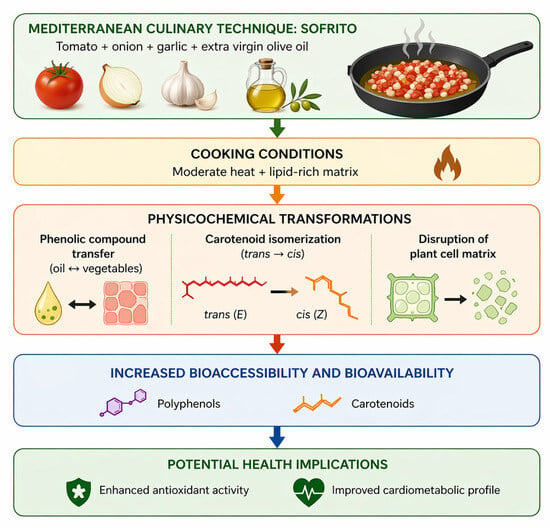
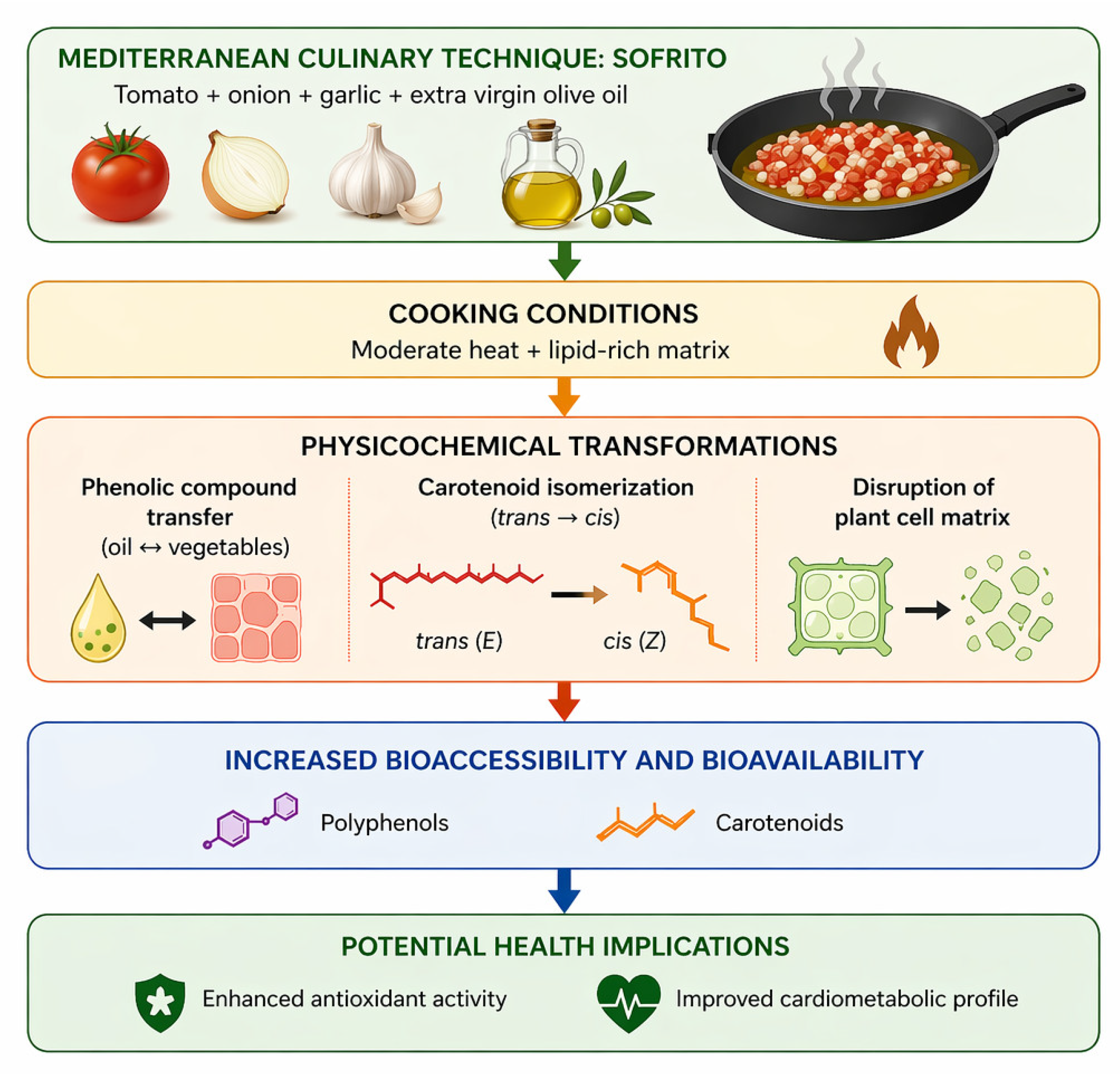
Sofrito represents one of the most characteristic culinary techniques of the Mediterranean cuisine. This technique typically consists of the slow sautéing of tomato, onion, and garlic in extra virgin olive oil, often combined with herbs or other vegetables. This process promotes multiple physicochemical interactions between the lipid phase and plant tissues, facilitating the transfer of phenolic compounds from the oil to the vegetable matrix while simultaneously enhancing the release of carotenoids from tomato [34]. These interactions illustrate how culinary techniques can modulate the bioaccessibility of bioactive compounds, as schematically represented in Figure 1.
Figure 1.
Mechanistic representation of sofrito preparation as a model of Mediterranean culinary practices influencing the bioaccessibility of bioactive compounds (Created with the assistance of ChatGPT (OpenAI), version 5.4 Thinking, and subsequently reviewed and edited by the authors).
3.2. Biological Pathways Influenced by Mediterranean Diet and Culinary Practices
While Section 3.1 describes key Mediterranean culinary practices and their potential nutritional implications, this section focuses on the underlying biological mechanisms through which these practices may influence metabolic health.
Chronic low-grade inflammation and oxidative stress are common underlying mechanisms in many of the most prevalent non-communicable diseases, including obesity, type 2 diabetes, cardiovascular and kidney diseases, several types of cancer, and some neurological disorders. Growing evidence suggests that dietary patterns can modulate inflammatory and metabolic pathways and thereby influence the development and progression of these conditions [45]. Moreover, anti-inflammatory effects represent one of the key mechanisms proposed to explain the health benefits associated with adherence to the Mediterranean diet [46]. In addition to dietary composition, culinary techniques represent an additional and often overlooked component of dietary strategies aimed at improving metabolic health.
The protective anti-inflammatory effects of the Mediterranean diet against chronic diseases should not be attributed solely to its ingredients, but also to the culinary techniques through which foods are prepared and consumed. As previously mentioned, traditional Mediterranean cooking processes can increase the bioavailability of bioactive compounds, thereby strengthening the anti-inflammatory potential of the diet [29]. Additionally, evidence from clinical and observational studies suggests that reducing dietary advanced glycation end-products through culinary modifications—such as using moist heat, shortening cooking time, or lowering cooking temperatures—may improve insulin sensitivity and reduce markers of glycation and inflammation in individuals with type 2 diabetes [47].
Although much of this evidence derives from diabetic populations, AGE exposure is also associated with low-grade inflammation, which is linked to many chronic diseases [48]. Data from the CORDIOPREV study have shown that higher circulating AGE levels are associated with increased carotid intima–media thickness and markers of endothelial dysfunction, and that these alterations are influenced by adherence to a Mediterranean dietary pattern [49]. In this context, the modulation of AGE formation through culinary practices may represent one of the mechanisms underlying the health benefits of the Mediterranean diet. Nevertheless, evidence supporting the impact of culinary and dietary AGE reduction remains limited and further research is needed.
Culinary practices, including certain cooking techniques, ingredient combinations, and meal composition can modify the glycemic impact of foods, contributing to better glycemic control. For instance, Mediterranean culinary strategies such as combining carbohydrates with fiber-rich foods, fats, or acids (e.g., vinegar or lemon juice), as well as selecting appropriate cooking methods, can reduce the effective glycemic index of meals and improve postprandial glucose responses [50].
Excess dietary salt is a well-established risk factor for hypertension and cardiovascular disease and plays a particularly important role in secondary prevention among patients with a history of stroke. Replacing regular salt significantly lowers the incidence of stroke, major cardiovascular events, and all-cause mortality among individuals at high cardiovascular risk, including those with a previous stroke [51]. In this context, community-based interventions targeting home cooks have demonstrated that improving culinary skills and encouraging alternative flavoring techniques can significantly reduce sodium intake and modestly lower blood pressure over time [52]. However, caution is needed when extrapolating these findings to the Mediterranean context, as the SSaSS trial was conducted in rural Chinese populations [52]. Importantly, recent evidence highlights that effective sodium reduction depends not only on food substitution strategies but also on culturally adapted culinary practices that facilitate adherence and long-term behavior change [53]. In Mediterranean cuisine, the use of herbs and spices represents a key culinary strategy, as these ingredients enhance palatability while allowing reductions in added salt and simultaneously provide bioactive compounds with antioxidant and anti-inflammatory properties [54].
Beyond its hemodynamic effects, accumulating evidence suggests that high sodium intake may also contribute to endothelial dysfunction, oxidative stress, and activation of pro-inflammatory immune pathways, thereby promoting cardiometabolic risk [55]. Experimental and clinical studies further indicate that excessive dietary salt can alter gut microbiota composition, potentially contributing to immune dysregulation and increased systemic inflammation [56].
Finally, emerging evidence suggests that adherence to Mediterranean dietary patterns may beneficially influence gut microbiota composition and diversity, promoting the production of microbial metabolites such as short-chain fatty acids that contribute to immune regulation, intestinal barrier integrity, and systemic anti-inflammatory effects [57,58]. Importantly, recent experimental studies indicate that not only the type of food but also cooking methods may significantly modulate gut microbiota composition by altering the chemical structure and bioavailability of nutrients and bioactive compounds [59]. However, this evidence is largely derived from in vitro models, which may not fully capture the complexity of in vivo gut microbiota dynamics. These effects also appear to be highly food-dependent and subject to considerable inter-individual variability, making their overall impact difficult to predict and generalize. Therefore, further research is needed to better understand how culinary techniques interact with dietary patterns to shape gut microbiota and to clarify their potential role in mediating the health effects of Mediterranean culinary medicine.
3.3. Gastronomic Adaptations for Disease-Related Eating Limitations
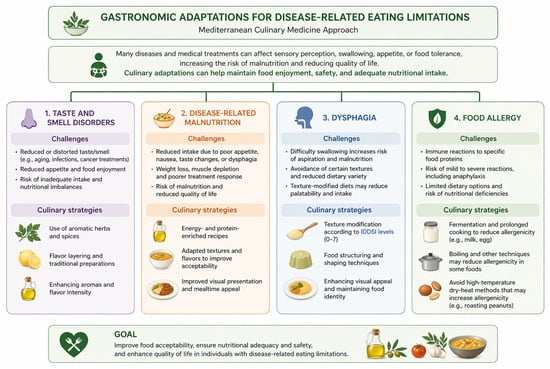
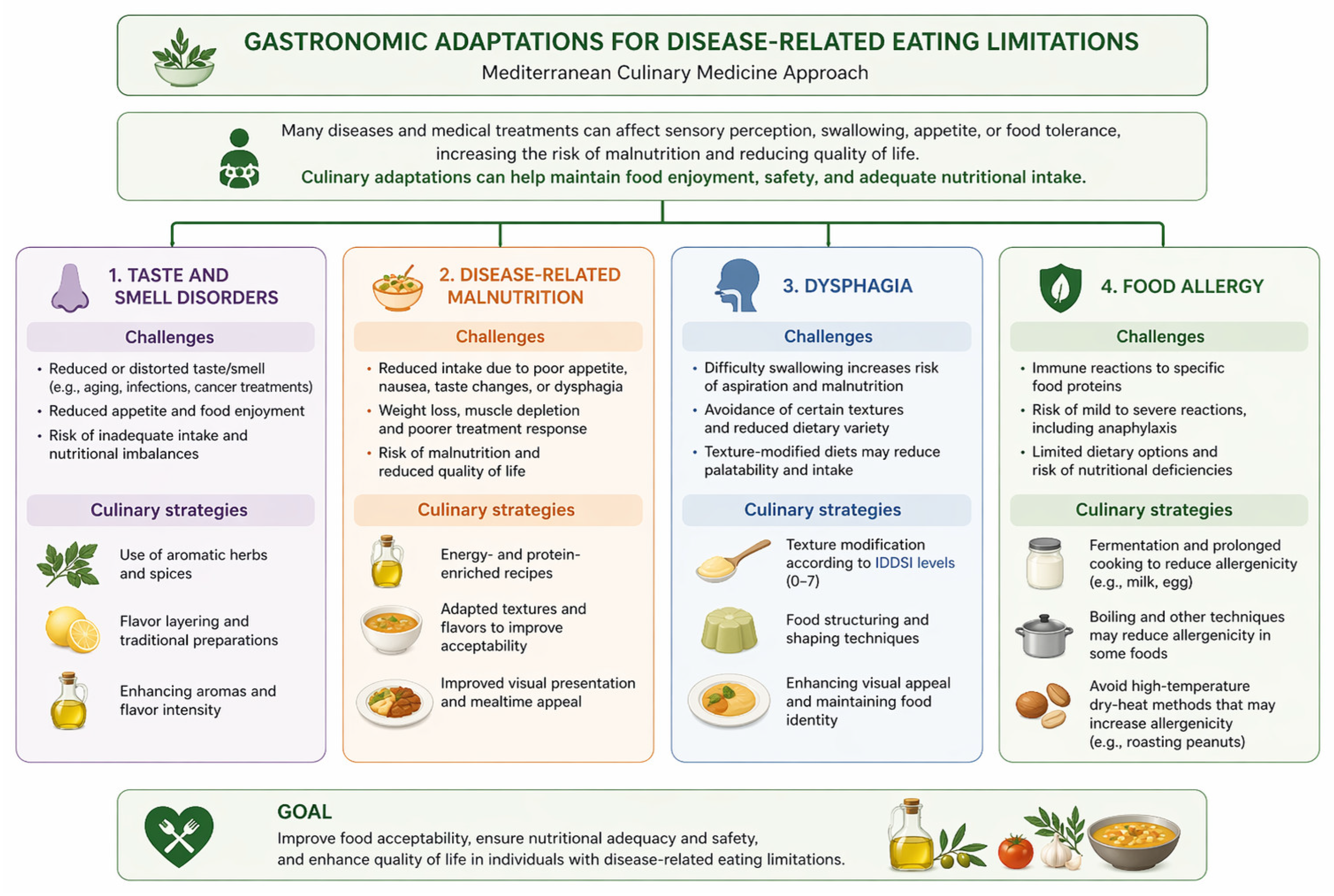
Many diseases and medical treatments can interfere with the ability to eat normally by affecting sensory perception, swallowing function, appetite, or tolerance to specific foods. These alterations often reduce food enjoyment and dietary intake, increasing the risk of nutritional deficiencies and disease-related malnutrition. By adapting ingredients, cooking techniques, textures, and sensory properties of meals, Mediterranean culinary medicine can help maintain food acceptability and support adequate nutritional intake in patients experiencing disease-related eating limitations (Figure 2).
Figure 2.
Selected gastronomic adaptations for disease-related eating limitations within the framework of Mediterranean Culinary Medicine (Created with the assistance of ChatGPT (OpenAI), version 5.4 Thinking, and subsequently reviewed and edited by the authors).
3.3.1. Taste and Smell Disorders
The sensory properties of food play a central role in shaping eating behavior and nutritional health. Flavor perception arises from the integration of multiple sensory inputs, including taste, smell, and chemesthesis, which together determine the palatability and acceptability of foods and strongly influence food choice and intake.
Alterations in the sensory systems are common in several clinical conditions, including aging, neurodegenerative diseases, cancer treatments, oral disorders, and viral infections such as COVID-19, frequently resulting in reduced smell or taste perception, distorted sensory experiences, or complete sensory loss [60]. These chemosensory impairments can substantially affect dietary behavior by reducing the enjoyment of food, altering appetite, and modifying food preferences, which in turn may lead to nutritional imbalances, weight changes, or decreased quality of life.
Taste and smell disorders may affect a large proportion of patients receiving chemotherapy, with reported prevalences ranging from approximately 17% to 86% for taste alterations and up to 45% for smell disturbances [61]. This wide range reflects heterogeneity in study populations, assessment methods, and treatment regimens. Chemosensory alterations—including dysgeusia, hypogeusia, ageusia, and olfactory dysfunction—may occur in a substantial proportion of oncology patients and can arise from both the disease itself and its treatments, especially chemotherapy and radiotherapy [61]. These symptoms often emerge within the first weeks of treatment and may persist throughout therapy, particularly in patients receiving agents such as taxanes, anthracyclines, or platinum-based drugs [62].
Chemosensory alterations lead patients to perceive foods as bland, excessively bitter, or metallic, which can markedly reduce food enjoyment and appetite. Consequently, patients may decrease their overall food intake or avoid specific foods, increasing the risk of inadequate energy and nutrient consumption, weight loss, and deterioration of nutritional status and quality of life. Given that these nutritional impairments may emerge early during cancer treatment, timely nutritional assessment and the early implementation of nutrition interventions are crucial to prevent or attenuate malnutrition and to improve nutritional status, treatment tolerance, and quality of life in oncology patients [63].
The Mediterranean culinary medicine offers a practical framework to address these challenges by applying culinary strategies that enhance the sensory properties of meals. The use of aromatic herbs and spices, flavor layering through traditional preparations, and the modulation of textures through different cooking techniques can help compensate for sensory deficits and improve food palatability, thereby supporting adequate food intake and nutritional status in individuals experiencing sensory dysfunction.
3.3.2. Disease-Related Malnutrition
Disease-related malnutrition is a frequent and clinically relevant complication in many chronic conditions, particularly in cancer patients undergoing treatment. It is often driven by reduced food intake resulting from symptoms such as loss of appetite, nausea, swallowing difficulties, and alterations in taste and smell, which impair eating behavior and energy–protein intake. Therefore, patients may experience progressive weight loss, muscle depletion, poorer treatment response, and reduced quality of life.
Culinary strategies have emerged as a complementary approach to nutritional care, aiming to improve oral intake through the development of energy- and protein-enriched meals that remain acceptable and appealing to patients. Evidence suggests that adapting standard recipes through culinary reformulation, while simultaneously considering sensory characteristics such as flavor, texture, and visual presentation, can help increase food acceptability and support dietary intake, thereby contributing to the prevention or delay of disease-related malnutrition [64].
3.3.3. Dysphagia
Dysphagia is a frequent and clinically significant complication in older adults and in patients with neurological diseases, cancer, or frailty, and it is strongly associated with an increased risk of malnutrition, dehydration, aspiration pneumonia, and reduced quality of life [65]. Difficulties in safely swallowing often lead patients to avoid certain foods or textures, resulting in reduced dietary variety and inadequate nutrient intake. Conventional management strategies typically rely on texture-modified diets and thickened liquids to improve swallowing safety; however, these interventions may compromise palatability and food enjoyment, potentially further decreasing intake. In this context, the International Dysphagia Diet Standardization Initiative (IDDSI) framework provides a globally standardized system for classifying food textures and liquid consistencies into levels (0–7), facilitating safer prescription, consistency in clinical practice, and communication between healthcare and food service professionals [66]. Aligning culinary and gastronomy-based approaches with IDDSI levels is essential to ensure both patient safety and the practical implementation of texture-modified diets.
Advances in gastronomy-inspired techniques, food structuring, and texture optimization can improve the sensory properties, visual appeal, and nutritional density of texture-modified foods, thereby enhancing adherence and helping maintain adequate nutritional intake. Integrating culinary innovation with clinical nutrition strategies therefore represents a promising approach to address both the safety and the nutritional challenges associated with dysphagia.
Beyond texture modification and nutritional optimization, the visual presentation of foods also plays an important role in improving food acceptance among individuals with dysphagia. Recent research highlights that shaping or restructuring texture-modified foods to resemble their original appearance can significantly enhance the mealtime experience, food recognition, and overall enjoyment of eating [67]. These food-shaping techniques help maintain the visual identity of familiar Mediterranean dishes while ensuring safe swallowing textures, thereby supporting appetite stimulation, dignity during meals, and quality of life in individuals with swallowing difficulties. By integrating culinary creativity with clinical nutrition strategies, such approaches illustrate how gastronomic innovation can contribute to improving dietary intake and adherence to dysphagia diets in clinical and care settings.
3.3.4. Food Allergy
Food allergies represent an increasingly prevalent public health concern, affecting approximately 6–8% of children and up to 5% of adults worldwide, although estimates vary depending on geographic region and diagnostic criteria [68]. These conditions result from immune hypersensitivity reactions triggered by specific food proteins, leading to clinical manifestations ranging from mild dermatological or gastrointestinal symptoms to severe systemic reactions such as anaphylaxis. Although more than 160 foods have been identified as potential allergens, a small group of foods—including milk, eggs, wheat, peanuts, soybeans, tree nuts, fish, and shellfish—accounts for most allergic reactions [69].
The impact of processing on allergenicity is highly heterogeneous and depends on the specific technique, temperature, duration, and food matrix. For instance, baking and fermentation have been associated with reduced allergenicity in foods such as milk and eggs, partly due to protein denaturation and matrix interactions, allowing a substantial proportion of allergic individuals to tolerate these processed forms [69]. Similarly, boiling may decrease allergenicity in some foods through protein leaching and structural modification, although opposite effects have been described for certain legumes and seafood. In contrast, high-temperature dry-heat methods such as roasting may enhance allergenicity, as observed in peanuts, where Maillard reaction products increase IgE-binding capacity and resistance to digestion [69,70,71,72]. These findings support the concept that food allergy is not an all-or-nothing phenomenon, as patients may tolerate specific processed forms of an allergen while reacting to others.
Overall, the effects of culinary practices on food allergenicity are context-dependent and influenced by processing conditions and individual susceptibility. In Mediterranean dietary contexts, traditional culinary practices such as fermentation, prolonged cooking, and the combined use of plant-based ingredients may influence protein structure and food matrix interactions, potentially modulating allergenicity, although evidence in this specific context remains limited. This represents a promising area for developing safer and more personalized dietary strategies; however, current evidence remains limited and heterogeneous, and further research is required before firm clinical recommendations can be established [69]. In addition, future research should explore whether broader dietary patterns such as the Mediterranean diet may play a role in food allergy development, as current evidence remains limited, heterogeneous, and largely derived from experimental models [73].
4. Mediterranean Culinary Medicine: Social, Cultural and Environmental Dimensions
Recent perspectives in nutrition science highlight the need to move beyond “one-size-fits-all” dietary models and prioritize culturally relevant dietary patterns, which may improve health outcomes across diverse populations [74]. For this reason, effective food-based interventions must consider local food traditions, culinary practices, and cultural preferences to ensure relevance, acceptability, and long-term adherence [16].
Mediterranean Culinary Medicine provides a framework to integrate these cultural and social dimensions into dietary interventions. Historically, cooking within the household has played a central role in preserving and transmitting Mediterranean food traditions across generations, embedding this dietary pattern within everyday cultural practices [75,76]. In many Mediterranean societies, women have traditionally acted as key custodians of culinary knowledge, contributing to the intergenerational transmission of recipes, cooking techniques, and food-related cultural values that sustain the Mediterranean dietary model [77]. However, these traditional roles have evolved in recent decades, reflecting broader sociocultural changes in Mediterranean societies, where dietary practices are continuously redefined and transmitted across generations [78]. These shifts suggest that the implementation of Mediterranean Culinary Medicine cannot rely solely on traditional household cooking models. Instead, its application may increasingly depend on alternative and scalable approaches, including community-based interventions, culinary education programs, and digital or hybrid platforms that support the development of practical cooking skills and cooking autonomy across diverse populations [79,80].
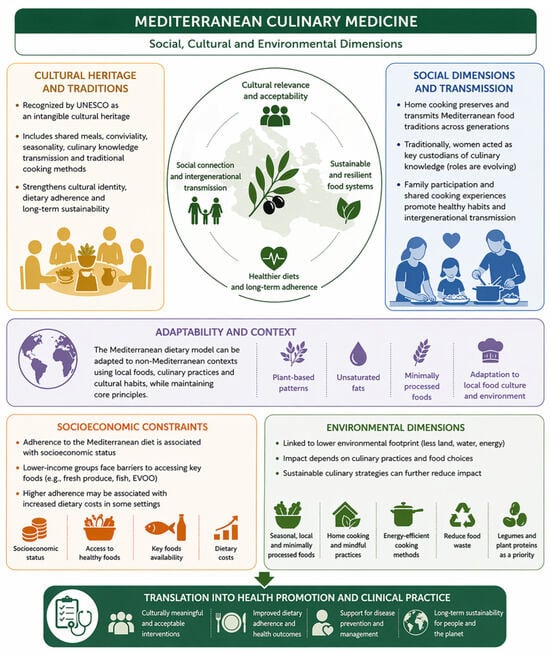
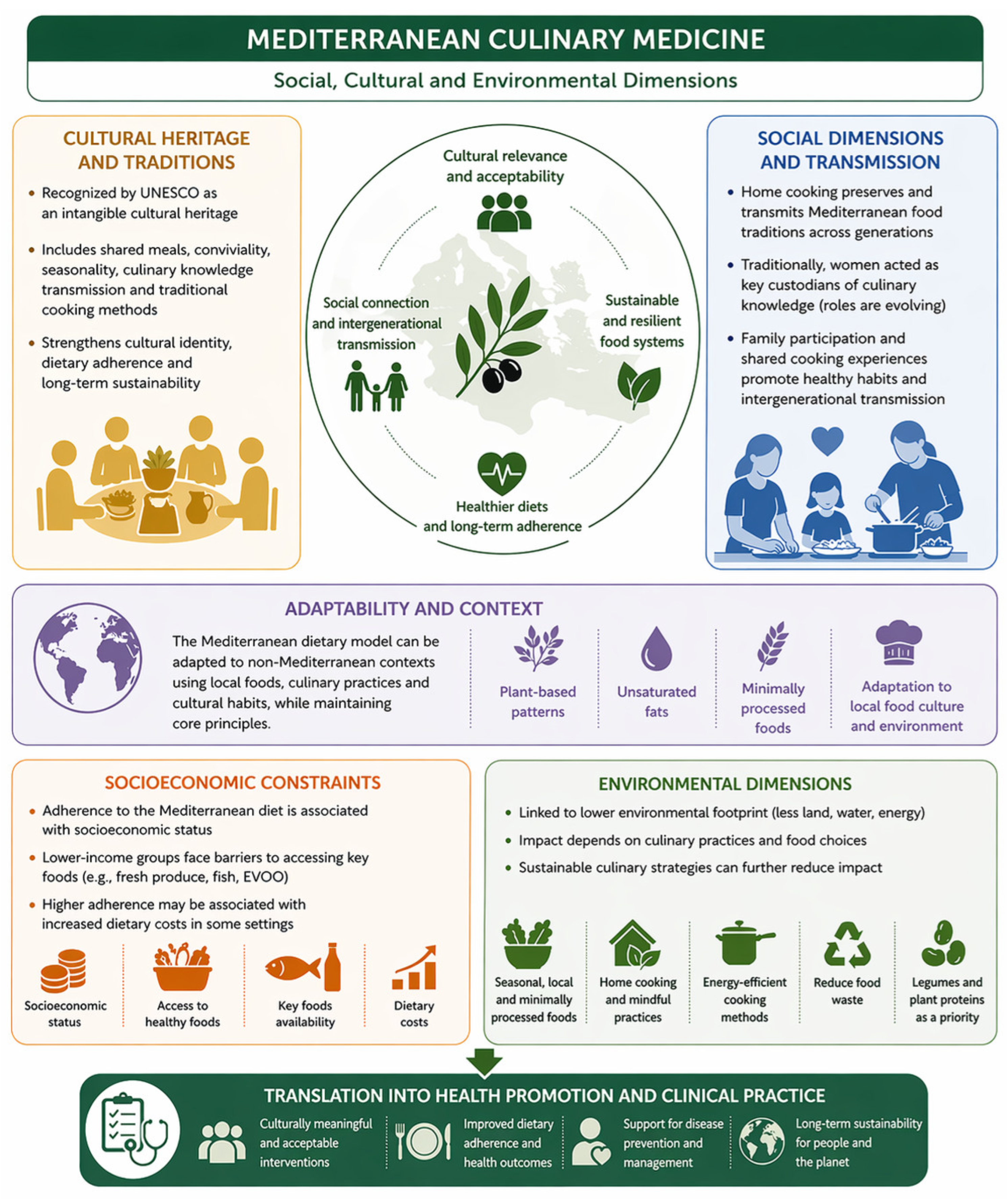
Beyond its nutritional composition, the Mediterranean diet has been recognized by UNESCO as an intangible cultural heritage, reflecting a complex set of social and cultural practices that extend beyond food intake itself [75,76]. These include shared meals, conviviality, culinary knowledge transmission, respect for seasonality, and the use of traditional cooking methods embedded within local communities. Such elements contribute not only to the cultural identity of Mediterranean populations but also to dietary adherence and long-term sustainability. While many of these elements are intrinsic to the Mediterranean diet as a cultural model, Mediterranean Culinary Medicine emphasizes their integration and translation into practical dietary interventions and clinical applications. These interconnected dimensions are summarized in Figure 3.
Figure 3.
Social, cultural, and environmental dimensions of Mediterranean Culinary Medicine and their translation into health promotion and clinical practice (Created with the assistance of ChatGPT (OpenAI), version 5.4 Thinking, and subsequently reviewed and edited by the authors).
Although these sociocultural features are rooted in Mediterranean societies, the Mediterranean dietary model has been increasingly explored in non-European contexts. Evidence indicates that the transferability of the traditional Mediterranean diet to non-Mediterranean populations is feasible, although it requires adaptation to local food environments, culinary practices, and cultural habits. In these settings, Mediterranean dietary principles have been applied using locally available ingredients while maintaining core characteristics such as plant-based patterns, the use of unsaturated fats, and minimally processed foods, suggesting that the Mediterranean dietary model may be culturally adaptable beyond its region of origin [81].
Interventions that incorporate family participation appear particularly effective, as parents strongly influence children’s food preferences and eating behaviors, and shared cooking experiences can foster the intergenerational transmission of healthy dietary habits [82,83]. In a family-based culinary program, we integrated cooking workshops with nutritional education related to the Mediterranean diet, engaging parents and caregivers to reinforce healthy habits at the household level [84]. Similar principles have been applied in other community-based culinary and nutrition interventions that combine cooking skills with health promotion strategies in real-world settings [85]. This approach is consistent with evidence showing that family meals and convivial eating environments are closely associated with greater adherence to the Mediterranean diet and with the transmission of healthy dietary habits across generations [86]. Overall, family-based culinary education represents a relevant framework for promoting Mediterranean dietary patterns and supporting the prevention of chronic diseases.
Despite its potential benefits, the implementation of Mediterranean Culinary Medicine may be influenced by important socioeconomic constraints. In Mediterranean countries, adherence to the Mediterranean diet has been shown to be strongly associated with socioeconomic status, with lower-income groups facing greater barriers to accessing key components such as fresh produce, fish, and extra virgin olive oil [87]. In addition, recent evidence from Mediterranean settings, including Portugal, indicates that higher adherence to the Mediterranean diet may be associated with increased dietary costs, particularly due to higher consumption of nutrient-dense foods such as fish, fruits, and vegetables [88]. Importantly, these barriers do not preclude the application of Mediterranean Culinary Medicine principles but rather call for context-sensitive adaptations. For example, cost-conscious substitutions (e.g., using non-virgin olive oil or seasonal/local produce), reliance on dried or canned legumes, and time-efficient or community-based cooking strategies may facilitate implementation in lower-resource settings.
The Mediterranean diet is closely linked to the use of seasonal, local, and minimally processed foods, which support biodiversity and environmentally sustainable food systems [77]. In line with other plant-based dietary patterns, it is associated with a lower environmental footprint, requiring fewer resources such as land, water, and energy [89,90]. However, the environmental impact of culinary practices depends not only on food selection but also on specific cooking-related behaviors. For instance, recent evidence indicates that the frequency of home cooking alone does not necessarily reduce dietary greenhouse gas emissions, as higher cooking frequency may be associated with increased consumption of animal-based foods, particularly meat, which is a major contributor to dietary carbon footprint [91]. In contrast, shifting culinary practices toward plant-based ingredients, such as legumes and vegetables commonly used in Mediterranean cuisine, may substantially reduce emissions.
In addition, culinary strategies such as batch cooking, the use of legumes as primary protein sources, and the minimization of food waste may further improve environmental sustainability, while more energy-efficient cooking methods (e.g., pressure cooking versus prolonged simmering) may reduce household energy consumption. Despite these promising approaches, the environmental dimension of culinary practices remains insufficiently quantified, highlighting the need for further research integrating dietary patterns, cooking behaviors, and environmental indicators.
5. Conclusions
Mediterranean Culinary Medicine provides a conceptual framework that integrates nutritional science with culinary practices, highlighting how food preparation methods, ingredient combinations, and cultural contexts may influence the health effects of the Mediterranean diet. This approach contributes to translating dietary recommendations into practical and culturally relevant strategies that may enhance adherence and long-term sustainability.
However, the current body of evidence remains heterogeneous and is largely derived from experimental, observational, and small-scale clinical studies, with limited data directly evaluating the long-term health impact of specific culinary practices in real-world settings. While mechanistic findings support the role of cooking techniques in modulating nutrient bioavailability and the formation of bioactive or potentially harmful compounds, their clinical relevance and population-level impact require further validation.
This narrative review has several limitations. First, it does not follow a systematic methodology for study selection, which may introduce selection bias and limit reproducibility. Second, the available literature is unevenly distributed, with a predominance of studies conducted in Western Mediterranean contexts, while culinary traditions from North African and Eastern Mediterranean regions remain underrepresented. This geographic imbalance is also reflected in the culinary examples discussed, which are primarily drawn from Western Mediterranean contexts, potentially limiting the generalizability of the proposed framework across the broader Mediterranean region. Third, much of the evidence is based on experimental or short-term studies, limiting the ability to draw firm conclusions regarding long-term health outcomes and causality. In addition, the heterogeneity of the evidence base, including experimental, observational, and clinical studies, precluded a formal quantitative synthesis or structured grading of evidence strength.
Future research should aim to address these gaps by developing standardized methodologies to assess culinary practices, integrating dietary, behavioral, and environmental data, and conducting well-designed longitudinal and intervention studies. In addition, greater attention should be given to socioeconomic and cultural determinants of culinary behaviors, as well as to the environmental impact of cooking practices using measurable indicators. Expanding research to diverse Mediterranean regions will also be essential to ensure a more comprehensive and representative understanding of Mediterranean Culinary Medicine. Comparative research exploring how culinary practices within the Mediterranean diet relate to those of other healthy dietary patterns may further help to clarify shared mechanisms and context-specific advantages.
Overall, Mediterranean Culinary Medicine represents a promising interdisciplinary field that bridges gastronomy, nutrition, and healthcare. Its potential lies not only in improving dietary quality but also in facilitating the translation of evidence-based recommendations into practical, culturally grounded, and sustainable dietary behaviors.
Supplementary Materials
The following supporting information can be downloaded at: https://www.mdpi.com/article/10.3390/gastronomy4020011/s1, File S1.
Author Contributions
Conceptualization, A.B. and M.R.-C.; writing—original draft preparation, A.B. and M.R.-C.; writing—review and editing, A.B., V.B.-V. and M.R.-C. All authors have read and agreed to the published version of the manuscript.
Funding
This research received no external funding.
Institutional Review Board Statement
Not applicable.
Informed Consent Statement
Not applicable.
Data Availability Statement
No new data were created or analyzed in this study. Data sharing is not applicable to this article.
Acknowledgments
During the preparation of this manuscript, the authors used Google Gemini (Google LLC), version 2.0, for the graphical abstract, and Figure 1, Figure 2 and Figure 3 were generated using ChatGPT (OpenAI), version 5.4 Thinking. The authors first identified and outlined the key concepts of each section, after which AI-based tools were used to generate figures illustrating those central ideas. The prompts provided to the AI instructed it to create graphical representations based on the key points and concepts defined by the authors. The specific original prompts used to generate the graphical abstract, and figures are provided in Supplementary File S1. All generated materials were subsequently reviewed, modified, and finalized by the authors. The authors have reviewed and edited the output and take full responsibility for the content of this publication.
Conflicts of Interest
The authors declare no conflicts of interest.
References
- Keys, A. Coronary Heart Disease in Seven Countries. Circulation 1970, 41, 186–195. [Google Scholar] [CrossRef] [Scilit]
- Martínez-González, M.A.; Gea, A.; Ruiz-Canela, M. The Mediterranean Diet and Cardiovascular Health: A Critical Review. Circ. Res. 2019, 124, 779–798. [Google Scholar] [CrossRef] [Scilit] [PubMed]
- Willett, W.C.; Sacks, F.; Trichopoulou, A.; Drescher, G.; Ferro-Luzzi, A.; Helsing, E.; Trichopoulos, D. Mediterranean Diet Pyramid: A Cultural Model for Healthy Eating. Am. J. Clin. Nutr. 1995, 61, 1402S–1406S. [Google Scholar] [CrossRef] [Scilit] [PubMed]
- Hu, F.B.; Drescher, G.; Trichopoulou, A.; Willett, W.C.; Martínez-González, M.A. Three Decades of the Mediterranean Diet Pyramid: A Narrative Review of Its History, Evolution, and Advances. Am. J. Clin. Nutr. 2025, 122, 17–28. [Google Scholar] [CrossRef] [Scilit] [PubMed]
- Bach-Faig, A.; Berry, E.M.; Lairon, D.; Reguant, J.; Trichopoulou, A.; Dernini, S.; Medina, F.X.; Battino, M.; Belahsen, R.; Miranda, G.; et al. Mediterranean Diet Pyramid Today: Science and Cultural Updates. Public Health Nutr. 2011, 14, 2274–2284. [Google Scholar] [CrossRef] [Scilit]
- Trichopoulou, A. Mediterranean Diet as Intangible Heritage of Humanity: 10 Years On. Nutr. Metab. Cardiovasc. Dis. 2021, 31, 1943–1948. [Google Scholar] [CrossRef] [Scilit]
- Boronat, Ò.; Mora, M.; Romeo-Arroyo, E.; Vázquez-Araújo, L. Unraveling the Mediterranean Cuisine: What Ingredients Drive the Flavor of the Gastronomies Included in the Mediterranean Diet? Int. J. Gastron. Food Sci. 2023, 34, 100802. [Google Scholar] [CrossRef] [Scilit]
- Boukid, F. Gastronomic Heritage of Legume Foods in Southern Mediterranean Cuisine. N. Afr. J. Food Nutr. Res. 2024, 8, 19–34. [Google Scholar] [CrossRef] [Scilit]
- Al-Jawaldeh, A.; Taktouk, M.; Fahd, R.; Ayoub, J.; Nasreddine, L. Food-Based Dietary Guidelines in Countries of the Eastern Mediterranean Region: A Comparison and an Update. Int. J. Environ. Res. Public Health 2025, 22, 1790. [Google Scholar] [CrossRef] [Scilit]
- La Puma, J. What Is Culinary Medicine and What Does It Do? Popul. Health Manag. 2016, 19, 1–3. [Google Scholar]
- Hildebrand, C.A.; Artz, K.E.; Dollinger, B.; Dotson, K.; Dungan, D.D.; Falquier, S.A.; Faris, B.; Fitzgerald, N.; Guggenmos, K.J.; Harlan, G.A.; et al. Defining the evolving field of culinary medicine across multiple domains. Front. Nutr. 2025, 12, 1588449. [Google Scholar] [CrossRef] [Scilit]
- Croxford, S.; Stirling, E.; MacLaren, J.; McWhorter, J.W.; Frederick, L.; Thomas, O.W. Culinary Medicine or Culinary Nutrition? Defining Terms for Use in Education and Practice. Nutrients 2024, 16, 603. [Google Scholar] [CrossRef] [Scilit]
- Kennedy, D. Culinary Medicine from Clinic to Kitchen. A Hands-on Guide to Transforming Nutrition Guidelines into Cooking Skills; Culinary Rehab: Chicago, IL, USA, 2024. [Google Scholar]
- Eisenberg, D.M.; Pacheco, L.S.; McClure, A.C.; McWhorter, J.W.; Janisch, K.; Massa, J. Perspective: Teaching Kitchens: Conceptual Origins, Applications and Potential for Impact within Food Is Medicine Research. Nutrients 2023, 15, 2859. [Google Scholar] [CrossRef] [Scilit]
- Lynch, C.J. A Concept for Comprehensive Food Is Medicine Networks or Centers of Excellence. Am. J. Clin. Nutr. 2023, 118, 10–12. [Google Scholar] [CrossRef] [Scilit]
- Glenn, A.J.; Hu, F.B. Perspective: Food Is Medicine: Hype or Hope? J. Nutr. 2025, 155, 3654–3662. [Google Scholar] [CrossRef] [Scilit]
- Greenhalgh, T.; Thorne, S.; Malterud, K. Time to challenge the spurious hierarchy of systematic over narrative reviews? Eur. J. Clin. Investig. 2018, 48, e12931. [Google Scholar] [CrossRef] [Scilit] [PubMed]
- Guasch-Ferré, M.; Willett, W.C. The Mediterranean Diet and Health: A Comprehensive Overview. J. Intern. Med. 2021, 290, 549–566. [Google Scholar] [CrossRef] [Scilit]
- Radd-Vagenas, S.; Kouris-Blazos, A.; Singh, M.F.; Flood, V.M. Evolution of Mediterranean Diets and Cuisine: Concepts and Definitions. Asia Pac. J. Clin. Nutr. 2017, 26, 749–763. [Google Scholar]
- Oliveira, M.F.B.; Martins, C.A.; Castro, I.R.R. The (Scarce and Circumscribed) Culinary Content in Food-Based Dietary Guidelines around the World: 1991–2021. Public Health Nutr. 2022, 25, 3559–3567. [Google Scholar] [CrossRef] [Scilit] [PubMed]
- Yuan, X.; Fujiwara, A.; Matsumoto, M.; Tajima, R.; Shinsugi, C.; Koshida, E.; Takimoto, H. Definitions and Assessment Methods of “Home Cooking” in Studies with Dietary Variables: A Scoping Review. Nutrients 2022, 14, 3344. [Google Scholar] [CrossRef] [Scilit] [PubMed]
- Mills, S.; White, M.; Brown, H.; Wrieden, W.; Kwasnicka, D.; Halligan, J.; Robalino, S.; Adams, J. Health and Social Determinants and Outcomes of Home Cooking: A Systematic Review of Observational Studies. Appetite 2017, 111, 116–134. [Google Scholar] [CrossRef] [Scilit] [PubMed]
- Wolfson, J.A.; Martinez-Steele, E.; Tucker, A.C.; Leung, C.W. Greater Frequency of Cooking Dinner at Home and More Time Spent Cooking Are Inversely Associated with Ultra-Processed Food Consumption among US Adults. J. Acad. Nutr. Diet. 2024, 124, 1590–1605.e1. [Google Scholar] [CrossRef] [Scilit] [PubMed]
- Liu, W.; Luo, X.; Huang, Y.; Zhao, M.; Liu, T.; Wang, J.; Feng, F. Influence of Cooking Techniques on Food Quality, Digestibility, and Health Risks Regarding Lipid Oxidation. Food Res. Int. 2023, 167, 112685. [Google Scholar] [CrossRef] [Scilit]
- Batool, Z.; Singla, R.K.; Ullah, A.; Ahmed, S.; Shen, B. A comprehensive review on dietary heterocyclic amines as potential carcinogens: From formation to cancer incidence. Food Chem. 2025, 488, 144874. [Google Scholar] [CrossRef] [Scilit]
- Berjia, F.L.; Poulsen, M.; Nauta, M. Burden of diseases estimates associated to different red meat cooking practices. Food Chem. Toxicol. 2014, 66, 237–244. [Google Scholar] [CrossRef] [Scilit]
- Di Maso, M.; Talamini, R.; Bosetti, C.; Montella, M.; Zucchetto, A.; Libra, M.; Negri, E.; Levi, F.; La Vecchia, C.; Franceschi, S.; et al. Red Meat and Cancer Risk in a Network of Case–Control Studies Focusing on Cooking Practices. Ann. Oncol. 2013, 24, 3107–3112. [Google Scholar] [CrossRef] [Scilit]
- Raber, M.; Chandra, J.; Upadhyaya, M.; Schick, V.; Strong, L.L.; Durand, C.; Sharma, S. An Evidence-Based Conceptual Framework of Healthy Cooking. Prev. Med. Rep. 2016, 4, 23–28. [Google Scholar] [CrossRef] [Scilit]
- Hoffman, R.; Gerber, M. Food Processing and the Mediterranean Diet. Nutrients 2015, 7, 7925–7964. [Google Scholar] [CrossRef] [Scilit]
- BCC Innovation. Simply Delitious: Mediterranean Recipes for Everyday Cooking; Basque Culinary Center Fundazioa: Zaragoza, Spain, 2025. [Google Scholar]
- Hee, P.-T.E.; Liang, Z.; Zhang, P.; Fang, Z. Formation Mechanisms, Detection Methods and Mitigation Strategies of Acrylamide, Polycyclic Aromatic Hydrocarbons and Heterocyclic Amines in Food Products. Food Control 2024, 158, 110236. [Google Scholar]
- Uribarri, J.; Woodruff, S.; Goodman, S.; Cai, W.; Chen, X.; Pyzik, R.; Yong, A.; Striker, G.E.; Vlassara, H. Advanced Glycation End Products in Foods and a Practical Guide to Their Reduction in the Diet. J. Am. Diet. Assoc. 2010, 110, 911–916. [Google Scholar] [CrossRef] [Scilit]
- Ramírez-Anaya, J.P.; Samaniego-Sánchez, C.; Castañeda-Saucedo, M.C.; Villalón-Mir, M.; López-García de la Serrana, H. Phenols and the antioxidant capacity of Mediterranean vegetables prepared with extra virgin olive oil using different domestic cooking techniques. Food Chem. 2015, 188, 430–438. [Google Scholar] [CrossRef] [Scilit] [PubMed]
- Rinaldi de Alvarenga, J.F.; Quifer-Rada, P.; Francetto Juliano, F.; Hurtado-Barroso, S.; Illan, M.; Torrado-Prat, X.; Lamuela-Raventós, R.M. Using extra virgin olive oil to cook vegetables enhances polyphenol and carotenoid extractability: A study applying the sofrito technique. Molecules 2019, 24, 1555. [Google Scholar] [CrossRef] [Scilit] [PubMed]
- Kosewski, G.; Kowalówka, M.; Drzymała-Czyż, S.; Przysławski, J. The impact of culinary processing, including sous-vide, on polyphenols, vitamin C content and antioxidant status in selected vegetables—Methods and results: A critical review. Foods 2023, 12, 2121. [Google Scholar] [CrossRef] [Scilit] [PubMed]
- Muñoz-Esparza, N.C.; Costa-Català, J.; Comas-Basté, O.; Toro-Funes, N.; Latorre-Moratalla, M.L.; Veciana-Nogués, M.T.; Vidal-Carou, M.C. Occurrence of Polyamines in Foods and the Influence of Cooking Processes. Foods 2021, 10, 1752. [Google Scholar] [CrossRef] [Scilit] [PubMed]
- Zaheer, K.; Humayoun Akhtar, M. An updated review of dietary isoflavones: Nutrition, processing, bioavailability and impacts on human health. Crit. Rev. Food Sci. Nutr. 2017, 57, 1280–1293. [Google Scholar] [CrossRef] [Scilit]
- Murador, D.; Braga, A.R.; da Cunha, D.T.; de Rosso, V.V. Alterations in phenolic compound levels and antioxidant activity in response to cooking technique effects: A meta-analytic investigation. Crit. Rev. Food Sci. Nutr. 2018, 58, 169–177. [Google Scholar] [CrossRef] [Scilit]
- Lee, S.; Choi, Y.; Jeong, H.S.; Lee, J.; Sung, J. Effect of different cooking methods on the content of vitamins and true retention in selected vegetables. Food Sci. Biotechnol. 2018, 27, 333–342. [Google Scholar]
- Naureen, Z.; Bonetti, G.; Medori, M.C.; Aquilanti, B.; Velluti, V.; Matera, G.; Iaconelli, A.; Bertelli, M. Foods of the Mediterranean Diet: Lacto-Fermented Food, the Food Pyramid and Food Combinations. J. Prev. Med. Hyg. 2022, 63, E28–E35. [Google Scholar]
- Rizzoli, R.; Biver, E. Role of Fermented Dairy Products in the Health Benefits of a Mediterranean Diet. Aging Clin. Exp. Res. 2024, 36, 75. [Google Scholar] [CrossRef] [Scilit]
- Sampsell, K.; Marcolla, C.S.; Tapping, S.; Fan, Y.; Sánchez-Lafuente, C.L.; Willing, B.P.; Reimer, R.A.; Burton, J.P. Current Research in Fermented Foods: Bridging Tradition and Science. Adv. Nutr. 2025, 16, 100554. [Google Scholar] [CrossRef] [Scilit]
- Chiou, A.; Kalogeropoulos, N. Virgin Olive Oil as Frying Oil. Compr. Rev. Food Sci. Food Saf. 2017, 16, 632–646. [Google Scholar] [CrossRef] [Scilit]
- Garcimartín, A.; Macho-González, A.; Caso, G.; Benedí, J.; Bastida, S.; Sánchez-Muniz, F.J. Frying: A cultural way of cooking in the Mediterranean diet and how to obtain improved fried foods. In The Mediterranean Diet: An Evidence-Based Approach; Preedy, V.R., Watson, R.R., Eds.; Academic Press: London, UK, 2020; pp. 191–207. [Google Scholar]
- Luvián-Morales, J.; Varela-Castillo, F.O.; Flores-Cisneros, L.; Cetina-Pérez, L.; Castro-Eguiluz, D. Functional foods modulating inflammation and metabolism in chronic diseases: A systematic review. Crit. Rev. Food Sci. Nutr. 2022, 62, 4371–4392. [Google Scholar] [PubMed]
- Estruch, R. Anti-inflammatory effects of the Mediterranean diet: The experience of the PREDIMED study. Proc. Nutr. Soc. 2010, 69, 333–340. [Google Scholar] [CrossRef] [Scilit]
- Oliveira, J.S.; de Almeida, C.; de Souza, Â.M.N.; da Cruz, L.D.; Alfenas, R.C.G. Effect of dietary advanced glycation end-products restriction on type 2 diabetes mellitus control: A systematic review. Nutr. Rev. 2022, 80, 294–305. [Google Scholar]
- Maasen, K.; Eussen, S.J.P.M.; Dagnelie, P.C.; Houben, A.J.H.M.; AB Webers, C.; Schram, M.T.; Berendschot, T.T.J.M.; DA Stehouwer, C.; Opperhuizen, A.; van Greevenbroek, M.M.J.; et al. Habitual intake of dietary methylglyoxal is associated with less low-grade inflammation: The Maastricht Study. Am. J. Clin. Nutr. 2022, 116, 1715–1728. [Google Scholar] [CrossRef] [Scilit] [PubMed]
- de la Cruz-Ares, S.; Cardelo, M.P.; Gutiérrez-Mariscal, F.M.; Torres-Peña, J.D.; García-Rios, A.; Katsiki, N.; Malagón, M.M.; López-Miranda, J.; Pérez-Martínez, P.; Yubero-Serrano, E.M. Endothelial dysfunction and advanced glycation end products in patients with newly diagnosed versus established diabetes: From the CORDIOPREV Study. Nutrients 2020, 12, 238. [Google Scholar] [CrossRef] [Scilit]
- Murillo, S.; Mallol, A.; Adot, A.; Juárez, F.; Coll, A.; Gastaldo, I.; Roura, E. Culinary strategies to manage glycemic response in people with type 2 diabetes: A narrative review. Front. Nutr. 2022, 9, 1025993. [Google Scholar] [CrossRef] [Scilit]
- Neal, B.; Wu, Y.; Feng, X.; Zhang, R.; Zhang, Y.; Shi, J.; Zhang, J.; Tian, M.; Huang, L.; Li, Z.; et al. Effect of Salt Substitution on Cardiovascular Events and Death. N. Engl. J. Med. 2021, 385, 1067–1077. [Google Scholar]
- Zhang, X.; Zhang, P.; Shen, D.; Li, Y.; He, F.J.; Ma, J.; Yan, W.; Gao, Y.; Jin, D.; Deng, Y.; et al. Effect of home cook interventions for salt reduction in China: Cluster randomised controlled trial. BMJ 2023, 382, e074258. [Google Scholar] [CrossRef] [Scilit]
- Farmer, N.; Wei, Y.; Lewis Albin, J. Culinary Medicine as a Key Lever in Hypertension Management. Circulation 2026, 153, 1083–1085. [Google Scholar] [CrossRef] [Scilit] [PubMed]
- Opara, E.I. Culinary herbs and spices: What can human studies tell us about their role in the prevention of chronic non-communicable diseases? J. Sci. Food Agric. 2019, 99, 4511–4517. [Google Scholar] [CrossRef] [Scilit] [PubMed]
- Grillo, A.; Salvi, L.; Coruzzi, P.; Salvi, P.; Parati, G. Sodium intake and hypertension. Nutrients 2019, 11, 1970. [Google Scholar] [CrossRef] [Scilit]
- Wilck, N.; Matus, M.G.; Kearney, S.M.; Olesen, S.W.; Forslund, K.; Bartolomaeus, H.; Haase, S.; Mähler, A.; Balogh, A.; Markó, L.; et al. Salt-responsive gut commensal modulates TH17 axis and disease. Nature 2017, 551, 585–589. [Google Scholar] [CrossRef] [Scilit]
- De Filippis, F.D.; Pellegrini, N.; Vannini, L.; Jeffery, I.B.; La Storia, A.; Laghi, L.; Serrazanetti, D.I.; Di Cagno, R.; Ferrocino, I.; Lazzi, C.; et al. High-level adherence to a Mediterranean diet beneficially impacts the gut microbiota and associated metabolome. Gut 2016, 65, 1812–1821. [Google Scholar] [CrossRef] [Scilit]
- Ghosh, T.S.; Rampelli, S.; Jeffery, I.B.; Santoro, A.; Neto, M.; Capri, M.; Giampieri, E.; Jennings, A.; Candela, M.; Turroni, S.; et al. Mediterranean diet intervention alters the gut microbiome in older people reducing frailty and improving health status: The NU-AGE 1-year dietary intervention across five European countries. Gut 2020, 69, 1218–1228. [Google Scholar] [CrossRef] [Scilit]
- Lerma-Aguilera, A.M.; Pérez-Burillo, S.; Navajas-Porras, B.; León, E.D.; Ruíz-Pérez, S.; Pastoriza, S.; Jiménez-Hernández, N.; Cämmerer, B.-M.; Rufián-Henares, J.Á.; Gosalbes, M.J.; et al. Effects of different foods and cooking methods on the gut microbiota: An in vitro approach. Front. Microbiol. 2024, 14, 1334623. [Google Scholar] [CrossRef] [Scilit] [PubMed]
- Joseph, P.V.; Duffy, V.B. (Eds.) Sensory Science and Chronic Diseases: Clinical Implications and Disease Management; Springer Nature: Cham, Switzerland, 2021. [Google Scholar]
- Sevryugin, O.; Kasvis, P.; Vigano, M.L.; Vigano, A. Taste and smell disturbances in cancer patients: A scoping review of available treatments. Support. Care Cancer 2021, 29, 49–66. [Google Scholar] [CrossRef] [Scilit]
- Buttiron Webber, T.; Briata, I.M.; DeCensi, A.; Cevasco, I.; Paleari, L. Taste and smell disorders in cancer treatment: Results from an integrative rapid systematic review. Int. J. Mol. Sci. 2023, 24, 2538. [Google Scholar] [CrossRef] [Scilit]
- Richards, J.; Arensberg, M.B.; Thomas, S.; Kerr, K.W.; Hegazi, R.; Bastasch, M. Impact of early incorporation of nutrition interventions as a component of cancer therapy in adults: A review. Nutrients 2020, 12, 3403. [Google Scholar] [CrossRef] [Scilit]
- Giboreau, A.; Mourier, V.; Rousseau, C.; Lavergne, S.; Vansteene, D. Culinary solutions to prevent or delay advanced malnutrition: Patients and chefs’ contribution to the nutritional enrichment of standard recipes. Clin. Nutr. Open Sci. 2024, 56, 287–295. [Google Scholar] [CrossRef] [Scilit]
- Liu, T.; Zheng, J.; Du, J.; He, G. Food Processing and Nutrition Strategies for Improving the Health of Elderly People with Dysphagia: A Review of Recent Developments. Foods 2024, 13, 215. [Google Scholar] [CrossRef] [Scilit]
- Cichero, J.A.Y.; Lam, P.; Steele, C.M.; Hanson, B.; Chen, J.; Dantas, R.O.; Duivestein, J.; Kayashita, J.; Lecko, C.; Murray, J.; et al. Development of International Terminology and Definitions for Texture-Modified Foods and Thickened Fluids Used in Dysphagia Management: The IDDSI Framework. Dysphagia 2017, 32, 293–314. [Google Scholar] [CrossRef] [Scilit]
- Chen, L.; Zha, S.; Ji, J.; Li, Y.; Chen, J. The impact of food-shaping techniques on nutrition, mealtime experiences, and quality of life for older adults in aged care settings. J. Food Sci. 2023, 88, 4743–4755. [Google Scholar] [CrossRef] [Scilit]
- Forero Molina, M.A.; Kram, Y.E.; Lanser, B.J. The Global Burden of Food Allergy. Immunol. Allergy Clin. N. Am. 2025, 45, 325–337. [Google Scholar] [CrossRef] [Scilit]
- Gonzalez, P.M.; Cassin, A.M.; Durban, R.; Upton, J.E.M. Effects of Food Processing on Allergenicity. Curr. Allergy Asthma Rep. 2025, 25, 9. [Google Scholar] [CrossRef] [Scilit]
- Maleki, S.J.; Chung, S.Y.; Champagne, E.T.; Raufman, J.P. The effects of roasting on the allergenic properties of peanut proteins. J. Allergy Clin. Immunol. 2000, 106, 763–768. [Google Scholar] [CrossRef] [Scilit] [PubMed]
- Teodorowicz, M.; van Neerven, R.J.J.; Savelkoul, H.F.J. Food processing: The influence of the Maillard reaction on immunogenicity and allergenicity of food proteins. Nutr. Rev. 2017, 75, 772–784. [Google Scholar] [CrossRef] [Scilit] [PubMed]
- Zhang, Q.; Wang, Y.; Fu, L. Dietary advanced glycation end-products: Perspectives linking food processing with health implications. Compr. Rev. Food Sci. Food Saf. 2020, 19, 2559–2587. [Google Scholar] [CrossRef] [Scilit]
- Panagiotou, E.; Andreou, E.; Nicolaou, S.A. The Effect of Dietary Components of the Mediterranean Diet on Food Allergies: A Systematic Review. Nutrients 2023, 15, 3295. [Google Scholar] [CrossRef] [Scilit]
- Nature Medicine Editorial Office. Nutrition research must go local. Nat. Med. 2025, 31, 1371. [Google Scholar] [CrossRef] [Scilit] [PubMed]
- Trichopoulou, A.; Lagiou, P. Healthy traditional Mediterranean diet: An expression of culture, history, and lifestyle. Nutr. Rev. 1997, 55, 383–389. [Google Scholar] [CrossRef] [Scilit] [PubMed]
- Serra-Majem, L.; Bach-Faig, A.; Raidó-Quintana, B. Nutritional and cultural aspects of the Mediterranean diet. Int. J. Vitam. Nutr. Res. 2012, 82, 157–162. [Google Scholar] [CrossRef] [Scilit]
- Dernini, S.; Berry, E.M. Mediterranean diet: From a healthy diet to a sustainable dietary pattern. Front. Nutr. 2015, 2, 15. [Google Scholar] [CrossRef] [Scilit]
- Medina, F.X. Mediterranean Diet, Culture and Heritage: Challenges for a New Conception. Public Health Nutr. 2009, 12, 1618–1620. [Google Scholar] [CrossRef] [Scilit]
- Fredericks, L.; Koch, P.A.; Liu, A.A.; Galitzdorfer, L.; Costa, A.; Utter, J. Experiential features of culinary nutrition education that drive behavior change: Frameworks for research and practice. Health Promot. Pract. 2020, 21, 331–335. [Google Scholar] [CrossRef] [Scilit]
- Oliveira, M.F.B.; Castro, I.R.R. Cooking autonomy: A multilevel conceptual model on healthy home cooking. Cad. Saude Publica 2022, 38, e00178221. [Google Scholar] [CrossRef] [Scilit]
- Martínez-González, M.Á.; Hershey, M.S.; Zazpe, I.; Trichopoulou, A. Transferability of the Mediterranean Diet to Non-Mediterranean Countries. What Is and What Is Not the Mediterranean Diet. Nutrients 2017, 9, 1226. [Google Scholar] [CrossRef] [Scilit]
- Razavi, A.C.; Sapin, A.; Monlezun, D.J.; McCormack, I.G.; Latoff, A.; Pedroza, K.; McCullough, C.; Sarris, L.; Schlag, E.; Dyer, A.; et al. Effect of culinary education curriculum on Mediterranean diet adherence and food cost savings in families: A randomised controlled trial. Public Health Nutr. 2021, 24, 2297–2303. [Google Scholar] [CrossRef] [Scilit] [PubMed]
- Perdew, M.; Liu, S.; Naylor, P.J. Family-based nutrition interventions for obesity prevention among school-aged children: A systematic review. Transl. Behav. Med. 2021, 11, 709–723. [Google Scholar] [CrossRef] [Scilit]
- Goni, L.; Simonin, L.; Rovayo, A.; Kury-Guzman, I.; Martín-Calvo, N.; Ruiz-Canela, M. Nutritional and Culinary Habits to Empower Families (n-CHEF): A Feasibility Study to Increase Consumption and Home Cooking of Plant-Based Foods. Public Health Nutr. 2024, 27, e190. [Google Scholar] [CrossRef] [Scilit] [PubMed]
- Torrence, C.; Griffin, S.F.; Rolke, L.; Kenison, K.; Marvin, A. Faithful Families Cooking and Eating Smart and Moving for Health: Evaluation of a Community-Driven Intervention. Int. J. Environ. Res. Public Health 2018, 15, 1991. [Google Scholar] [CrossRef] [Scilit] [PubMed]
- Torre-Moral, A.; Fàbregues, S.; Bach-Faig, A.; Fornieles-Deu, A.; Medina, F.X.; Aguilar-Martínez, A.; Sánchez-Carracedo, D. Family Meals, Conviviality, and the Mediterranean Diet among Families with Adolescents. Int. J. Environ. Res. Public Health 2021, 18, 2499. [Google Scholar] [CrossRef] [Scilit]
- Bonaccio, M.; Bes-Rastrollo, M.; de Gaetano, G.; Iacoviello, L. Challenges to the Mediterranean Diet at a Time of Economic Crisis. Nutr. Metab. Cardiovasc. Dis. 2016, 26, 1057–1063. [Google Scholar] [CrossRef] [Scilit]
- Alves, R.M.; Lopes, C.M.M.; Rodrigues, S.S.P.; Perelman, J. Adhering to a Mediterranean Diet in a Mediterranean Country: An Excess Cost for Families? Br. J. Nutr. 2022, 128, 1393–1400. [Google Scholar] [CrossRef] [Scilit]
- Willett, W.; Rockström, J.; Loken, B.; Springmann, M.; Lang, T.; Vermeulen, S.; Garnett, T.; Tilman, D.; DeClerck, F.; Wood, A.; et al. Food in the Anthropocene: The EAT-Lancet Commission on healthy diets from sustainable food systems. Lancet 2019, 393, 447–492. [Google Scholar] [CrossRef] [Scilit] [PubMed]
- Lorca-Cámara, V.; Bosque-Prous, M.; Bes-Rastrollo, M.; O’Callaghan-Gordo, C.; Bach-Faig, A. Environmental and health sustainability of the Mediterranean diet: A systematic review. Adv. Nutr. 2024, 15, 100322. [Google Scholar] [CrossRef] [Scilit] [PubMed]
- Wolfson, J.A.; Willits-Smith, A.M.; Leung, C.W.; Heller, M.C.; Rose, D. Cooking at Home, Fast Food, Meat Consumption, and Dietary Carbon Footprint among US Adults. Int. J. Environ. Res. Public Health 2022, 19, 853. [Google Scholar] [CrossRef] [Scilit]

Disclaimer/Publisher’s Note: The statements, opinions and data contained in all publications are solely those of the individual author(s) and contributor(s) and not of MDPI and/or the editor(s). MDPI and/or the editor(s) disclaim responsibility for any injury to people or property resulting from any ideas, methods, instructions or products referred to in the content. |
© 2026 by the authors. Licensee MDPI, Basel, Switzerland. This article is an open access article distributed under the terms and conditions of the Creative Commons Attribution (CC BY) license.