Previous Article in Journal
Impact of Bioaerosol Particles on Atmospheric Charging/Discharging and Conductivity in the Global Electric Circuit (GEC)
 
 
Due to scheduled maintenance work on our servers, there may be short service disruptions on this website between 11:00 and 12:00 CEST on March 28th.
Article

Airborne Pollutants and Their Relation to Pulmonary Impairment and X-Ray Repair Cross-Complementing 1 Gene Variants in Aluminum Smelter Workers


1
Environmental & Occupational Medicine Department, Environment and Climate Change Research Institute, National Research Centre, Cairo 12622, Egypt
2
Air Pollution Research Department, Environment and Climate Change Research Institute, National Research Centre, Cairo 12622, Egypt
*
Author to whom correspondence should be addressed.
Aerobiology 2026, 4(2), 7; https://doi.org/10.3390/aerobiology4020007 (registering DOI)
Submission received: 18 December 2025 / Revised: 20 January 2026 / Accepted: 2 February 2026 / Published: 25 March 2026

Abstract

This study estimates the association between respiratory outcomes among employees of a secondary aluminum plant and airborne pollutants. Additionally, it looks into the relationship between pulmonary dysfunction in workers and X-Ray repair cross-complementing one (XRCC1) gene polymorphisms. 110 exposed workers and 58 non-exposed workers were enrolled in the study. Measurements were conducted on sulfur dioxide (SO2), nitrogen dioxide (NO2), and particulate particles. Pulmonary function was tested. Eosinophil cationic protein (ECP), C-reactive protein (CRP), matrix metalloproteinase-1 (MMP-1), interleukin 6 (IL6), granulocyte-macrophage colony-stimulating factor (GM-CSF), XRCC1 protein, and genotyping of XRCC1 gene polymorphisms were examined. The annual average concentrations of particulate matter (PM2.5, PM10), total suspended particulates (TSP), SO2, and NO2 were lower than the permissible limit. The areas around ovens, evaporators, and cold rolling mills exhibited the highest amounts. The majority of employees in these departments had impaired lung function. Prolonged exposure was associated with a significant decrease in forced expiratory volume in 1 s (FEV1%) and forced vital capacity (FVC%) among the exposed group (p = 0.001 & 0.04, respectively). Serum XRCC1 levels were significantly higher among exposed workers (p = 0.02). Inflammatory biomarkers showed no statistically significant differences between groups. Aluminum workers are at risk of developing respiratory disorders. The level of serum XRCC1 may serve as a potential biomarker for detecting susceptible workers.

1. Introduction

Particulate matter (PM) refers to a complex mixture of solid particles and liquid droplets suspended in air and represents a major component of atmospheric aerosols. These particles vary widely in size, shape, and chemical composition, depending on their sources and formation mechanisms [1]. From a health perspective, PM is commonly classified according to its aerodynamic diameter into fine particles (PM2.5, ≤2.5 μm) and coarse particles (PM2.5–10, 2.5–10 μm), as these size fractions determine deposition patterns within the respiratory tract and associated toxicological effects. Fine particles can penetrate deeply into the alveolar regions, whereas coarse particles are more likely to deposit in the upper and central airways [2].
Particle size strongly determines deposition within the respiratory tract: coarse particles (>10 μm) are primarily trapped in the extra-thoracic region, PM2.5–10 accumulates in the tracheobronchial airways, and fine particles (PM2.5) penetrate deeply into the alveolar spaces [3]. These patterns underpin distinct physiological responses and disease endpoints. Long-term exposure to PM2.5 and NO2 has been consistently associated with declines in lung function parameters (FEV1, FVC) and with the development and exacerbation of chronic respiratory diseases. Recent meta-analyses continue to support a robust dose–response relationship between fine particulate exposure and impaired spirometric outcomes [4]. The ESCAPE multi-center European study reported that each 10 μg·m−3 increase in long-term PM10 exposure was associated with 1.4% and 1.5% decreases in FEV1 and FVC, respectively [5].
Although particulate matter has received the greatest attention due to its ability to penetrate the lower respiratory tract, industrial air pollution is typically a complex mixture that also includes gaseous pollutants such as nitrogen dioxide (NO2) and sulfur dioxide (SO2). These gases are often co-emitted with particulate matter during high-temperature industrial processes, including smelting and recycling aluminum. NO2 and SO2 have independent and synergistic respiratory effects, contributing to airway inflammation, bronchoconstriction, and impaired lung function. Therefore, assessment of occupational exposure in aluminum production facilities should consider both particulate and gaseous pollutants to better characterize the overall respiratory risk [5].
Industrial sources, particularly high-temperature processes and fossil-fuel combustion, remain major contributors to PM2.5 emissions worldwide. Aluminum production, being highly energy-intensive, is a well-recognized source of airborne pollutants, including CO, SO2, NO2, O3 precursors, PM10, and PM2.5 [6]. Secondary (recycled) aluminum processing introduces additional variability in emissions, as scrap composition and fuel type significantly affect particle generation and chemical makeup. The presence of impurities in scrap or the use of lower-grade fuels can markedly elevate emissions of PM and gaseous pollutants [7]. Occupational exposure assessments from aluminum smelters in Australia and New Zealand reported median personal inhalable PM levels ranging from 2.17 to 4.5 μg·m−3 between 1996 and 2006 [8].
Exposure levels in aluminum plants are highly heterogeneous, with the highest PM and gaseous pollutant concentrations typically found near ovens, smelters, furnaces, and rolling mills. Even when annual averages remain below general ambient air quality limits, localized peaks and chronic exposures can produce meaningful respiratory risks, particularly in areas with elevated thermal processes and inadequate ventilation. Occupational studies have consistently linked such exposures to decreased lung function and increased respiratory symptoms [9,10].
In addition to particulate matter, nitrogen dioxide (NO2) and sulfur dioxide (SO2) are key industrial pollutants with established respiratory effects. SO2 exposure has been associated with increased bronchoconstriction and reduced lung function, while even low-level NO2 exposure can trigger inflammatory responses in the lower airways [11]. PM exposure promotes the generation of reactive oxygen species and pro-inflammatory cytokines such as interleukin-6 (IL-6), initiating airway inflammation [12,13]. IL-6 is also a major inducer of the acute-phase reactant C-reactive protein (CRP) [14]. Granulocyte–macrophage colony-stimulating factor (GM-CSF) regulates eosinophil production and survival by reducing apoptosis and induces the release of matrix metalloproteinases (MMPs), which degrade the extracellular matrix and contribute to airway remodeling [15]. Elevated eosinophil cationic protein (ECP) levels, reflecting eosinophil activation, have been reported in blood, bronchoalveolar lavage, and sputum samples from individuals with allergic asthma [16]. Several studies have investigated the effects of occupational air pollutants on protein structure and related biological mechanisms, particularly in workers with impaired lung function. Exposure to particulate matter, metal dust, and other airborne contaminants has been shown to disrupt cellular repair processes, induce oxidative stress, and trigger inflammatory responses in respiratory tissues. For example, workers exposed to fine particulate matter in smelting and welding industries exhibited elevated levels of oxidative DNA damage markers and increased expression of inflammatory cytokines such as IL-6 and TNF-α [17,18]. Other studies reported that chronic exposure to airborne metal dust impaired antioxidant enzyme activity and altered protein folding, contributing to reduced pulmonary function and heightened susceptibility to respiratory diseases [19,20]. Collectively, these findings provide mechanistic insight into how occupational air pollutants compromise lung health and highlight the need to consider both molecular and clinical outcomes in exposed populations.
Interindividual differences in susceptibility to respiratory dysfunction induced by environmental and occupational pollutants are increasingly attributed to genetic variability, particularly in genes involved in DNA repair pathways. The X-ray repair cross-complementing protein 1 (XRCC1) is a central component of the base excision repair (BER) pathway, which is responsible for correcting single-strand DNA breaks and oxidative base damage commonly generated by airborne pollutants such as particulate matter, polycyclic aromatic hydrocarbons, and metal-containing dusts. The XRCC1 gene, located on chromosome 19 (19q13), spans approximately 33 kb and comprises 17 exons, encoding a 633–amino acid protein with a molecular weight of 69.5 kDa [21,22]. Although XRCC1 lacks intrinsic enzymatic activity, it functions as a critical scaffolding protein that coordinates the activity of several key DNA repair enzymes, including DNA ligase III, DNA polymerase β, and poly (ADP-ribose) polymerase-1 (PARP-1), thereby ensuring the efficiency and regulation of DNA strand break repair [23,24]. Common XRCC1 polymorphisms, including Arg194Trp, Arg280His, and Arg399Gln, have been associated with reduced DNA repair efficiency, increased genomic instability, and differential susceptibility to environmentally induced diseases. Growing evidence indicates that both genetic variation and altered expression of XRCC1 influence the biological response to chronic exposure to airborne pollutants, particularly particulate matter, supporting the use of XRCC1 genotype and expression levels as biomarkers of individual susceptibility in occupationally and environmentally exposed populations [25,26]. In addition to genetic factors, preventive strategies in occupational settings—such as personal protective equipment, proper ventilation, and adherence to safety protocols—are essential to minimize exposure and mitigate associated health risks. Considering both molecular susceptibility and practical safety measures enhances the clinical and practical relevance of the study.
Most attention has focused on fine particles, with their ability to penetrate the alveolar region of the lungs affecting their function. So, the current study aims to investigate ambient and workplace air quality, pulmonary function, circulating inflammatory and remodeling biomarkers, and XRCC1 gene polymorphisms to elucidate exposure–response relationships and identify vulnerable subgroups among secondary aluminum smelter workers.

2. Materials and Methods

2.1. Study Design

This cross-sectional comparative study was conducted in a large secondary aluminum production plant located in the Helwan industrial area, Cairo, Egypt. The factory produces aluminum by melting scrap materials at temperatures ranging between 1300 and 1400 °F in melting furnaces.

2.2. Description of Monitoring Sites

The production process begins with melting aluminum in casting ovens, followed by cold rolling, annealing, gravity die-casting, and electrochemical or electrostatic painting. Finished products are inspected and packaged for local distribution or export.

2.3. Aerobiological Monitoring

Airborne particulate matter (TSP, PM10, and PM2.5) was monitored weekly over one year using a CEL-712 Casella Micro-Dust Pro Particulate Monitor Model:CEL-712 Micro dust Pro, made in the United Kingdom, by Casella, Bedford. The instrument operates based on light-scattering technology, with a measurement range of 0.001–250 mg/m3 and an accuracy of ±10% of reading. The device was factory-calibrated and zero-checked before each sampling campaign in accordance with the manufacturer’s instructions. Sulfur dioxide (SO2) and nitrogen dioxide (NO2) concentrations were measured weekly using an Aeroqual Series 500 portable gas monitor equipped with electrochemical sensors manufactured by Aeroqual Limited, New Zealand. The detection ranges were 0–20 ppm for SO2 and 0–1 ppm for NO2, with an accuracy of ±0.1 ppm. All gas sensors were calibrated using certified reference gases before field deployment. Measurements were conducted on a weekly basis over a one-year period to capture temporal and seasonal variations in pollutant concentrations while maintaining feasibility within an operational industrial setting. Sampling was consistently performed during regular working hours under normal production conditions to ensure comparability between measurement periods and minimize variability related to operational changes.
Fixed-site area sampling was employed in this study to represent typical occupational exposure levels in different production units. Monitoring locations were selected near workers’ breathing zones at fixed positions corresponding to their primary workstations, where employees spend the majority of their 8 h shifts. These sites were chosen to reflect routine operational conditions and dominant emission sources. While area monitoring does not fully account for individual worker mobility, it provides a practical and standardized approach for characterizing spatial differences in pollutant concentrations across production processes. The lack of personal exposure monitoring is acknowledged as a limitation of the study.

2.4. Subjects

A total of 168 workers participated in the study after excluding individuals with asthma, smoking habits, allergic rhinitis, or chronic respiratory diseases.
  • Exposed group: 110 workers from the production line (melting ovens, cold rolling mill, gravity die casting, evaporators, and painting areas).
  • Non-exposed group: 58 administrative employees.
All participants had >5 years of employment and worked 8 h shifts per day.
All participants provided written informed consent before completing a structured personal questionnaire. The questionnaire included:
  • Personal data: age, sex, socioeconomic background, and smoking history.
  • Occupational and environmental history: duration of exposure (years), shift duration (hours/day), and type of exposure (current and past).

2.5. Measurement of Pulmonary Function

Lung function was measured using a portable spirometer, Model Smart PFT USB, according to the standard of the American Thoracic Society [27]. Subject personal information, including serial number, name, birth date, weight, height, and race were entered. The forced vital capacity (FVC), forced expiratory volume in one second (FEV1), FEV1/FVC ratio, and forced expiratory flow rates at different lung volumes, including MEF25%, MEF50%, MEF75%, and MEF25–75%, were estimated. We collected at least three acceptable trials per subject. An acceptable test was defined as a good start of blowing without hesitation, a smooth blowing curve with no artifacts, and at least 6 s of expiratory duration, or with a plateau more than one second in the end expiration in the volume-time curve. A maximum of eight blows was allowed for each lung function test. We only considered the tests where the differences between the two largest FVC and FEV1 were both within 150 mL.

2.6. Biological Monitoring

From each of the participating employees, 10 mL of blood was drawn. Two aliquots of blood were taken from the samples. To separate the serum and determine the results of all serological tests, the first aliquot was centrifuged. The second aliquot was obtained in a tube that contained EDTA as an anticoagulant for DNA extraction, then kept at −80 °C until analysis.
The following analyses were performed:
Estimation of Interleukin 6 (IL6), Macrophages-colony stimulating factor (GM-CSF), Eosinophil cationic protein (ECP), C-reactive protein (CRP), Matrix metalloproteinase-1 (MMP-1), and X-Ray Repair Cross Complementing 1 (XRCC1) protein levels in serum by sandwich enzyme-linked immunosorbent assay (ELISA) according to manufacturer’s instruction (SinoGeneClon Biotech Co., Ltd., Hangzhou, China).
Genotyping of XRCC1 gene polymorphisms; Arg194Trp in exon 6 (rs1799782) and Arg399Gln in exon 10 (rs25487) using the polymerase chain reaction–restriction fragment-length polymorphism (PCR–RFLP) method as previously described by Xing et al. [28]. Genomic DNA was isolated from blood samples collected from workers using the QIAamp DNA Blood Mini kit following the manufacturer’s protocol and quantified using a spectrophotometer and stored at −20 °C.
The polymorphisms were analyzed using the polymerase chain reaction–restriction fragment-length polymorphism (PCR–RFLP) method. The PCR was performed in a total volume of 25 μL containing 100 ng of genomic DNA, 1× PCR Master Mix (Tiangen Biotech, Co., Ltd., Beijing, China), and 5 pmol of each primer. The primer sets and enzymes are shown in Table 1.
The PCR reactions were run for 4 min of initial denaturation at 94 °C, followed by 30 amplification cycles. Each cycle consisted of denaturation at 94 °C for 30 s, annealing at 57 °C and 68 °C (for codon 194 and codon 399, respectively) for 30 s, and extension at 72 °C for 30 s, with a final extension step of incubation at 72 °C for 5 min. The obtained PCR products were digested with restriction enzymes, PvuII and MspI, according to the manufacturer’s protocol (Thermo Scientific, Waltham, MA, USA). The digested products were then separated on a 3% agarose gel (FMC Bioproducts, Philadelphia, PA, USA) along with a 100–1500 bp DNA ladder. The 485 bp fragment of codon 194 yielded a 396 + 89 bp band, acting as an indicator of complete digestion. XRCC1 Arg194Trp genotypes (Arg/Arg, Arg/Trp, and Trp/Trp) generated 485 bp, 485 + 396 bp, and 396 bp DNA bands, respectively. While XRCC1 codon Arg 399 Gln genotypes (Arg/Arg, Gln/Gln, and Arg/Gln) generated two DNA bands (221 and 374 bp), a single 615 bp uncut band, and three bands (615, 374, and 221 bp), respectively.

2.7. Statistical Analysis

The results were computerized; quantitative data were presented as mean ± SD, while qualitative date was presented as numbers and percentages. Statistical analysis was performed using SPSS version 23. Comparisons between two groups were performed using an independent t-test. Skewness data was analyzed using non-parametric methods. Chi-square was used to compare qualitative data, in case more that 25% of the cells were ≥5. The likelihood ratio was used. The correlation coefficient was used to study the relationships between two quantitative variables. Levels of significance were set at p < 0.05.

3. Results

Aerobiological Monitoring Results

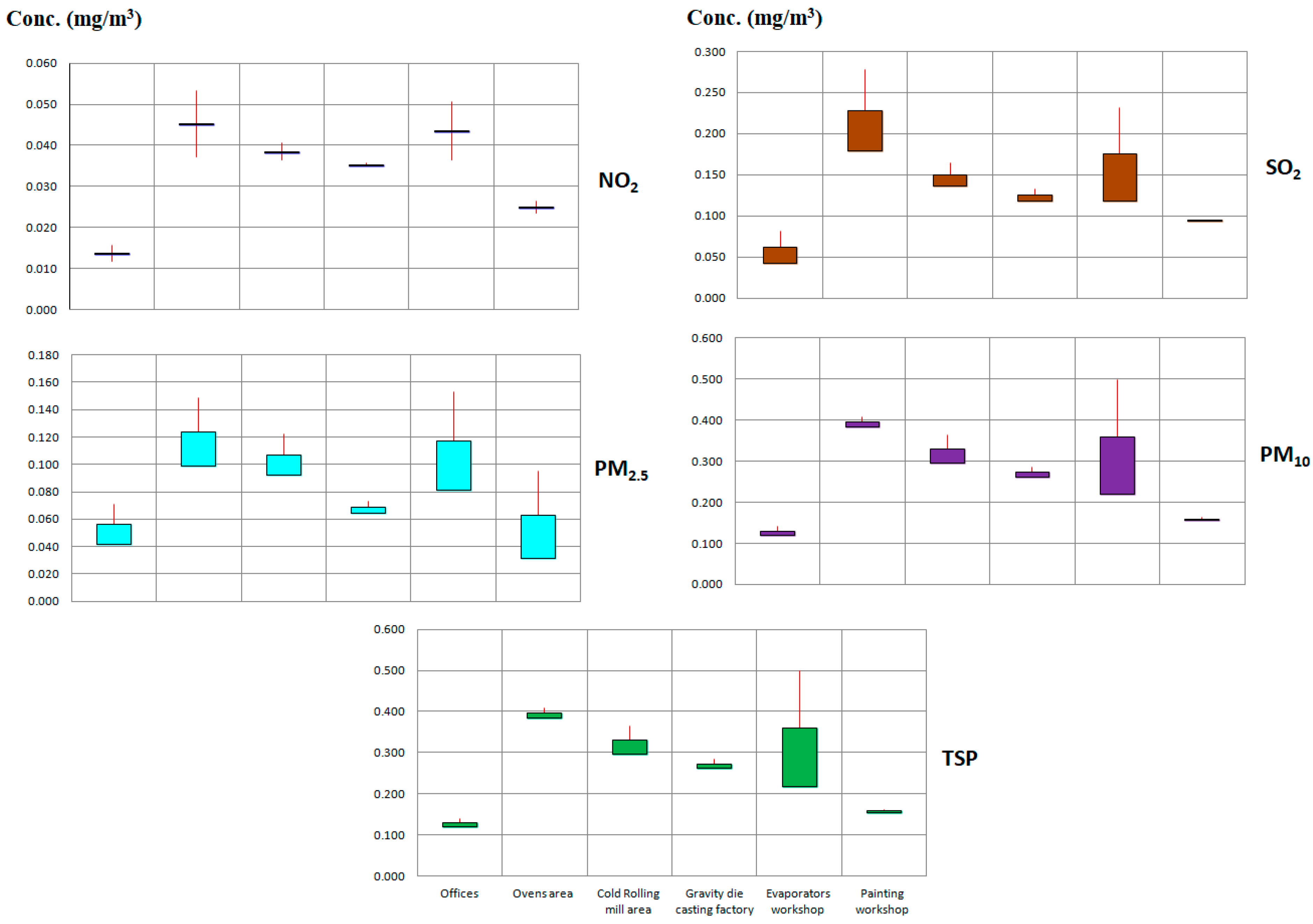
The annual average concentrations of air pollutants (PM2.5, PM10, TSP, SO2, and NO2) were monitored during the year 2019 in the different sites of the factory and are represented in Figure 1.
Results showed that the concentration levels for all monitored pollutants were in order: ovens areas > evaporator’s workshop > cold Rolling mill area > gravity die casting factory > painting workshop > administrative offices. The higher concentration levels may be associated with activities process accompanied by higher temperature and combustion, which may be associated with increased emission of pollutants (PM2.5, PM10, TSP, SO2, and NO2). In the current study, results were lower than the maximum limit for pollutants (TSP, SO2, and NO2) in the aluminum industry as specified by Egyptian environmental law No. 4 [29].
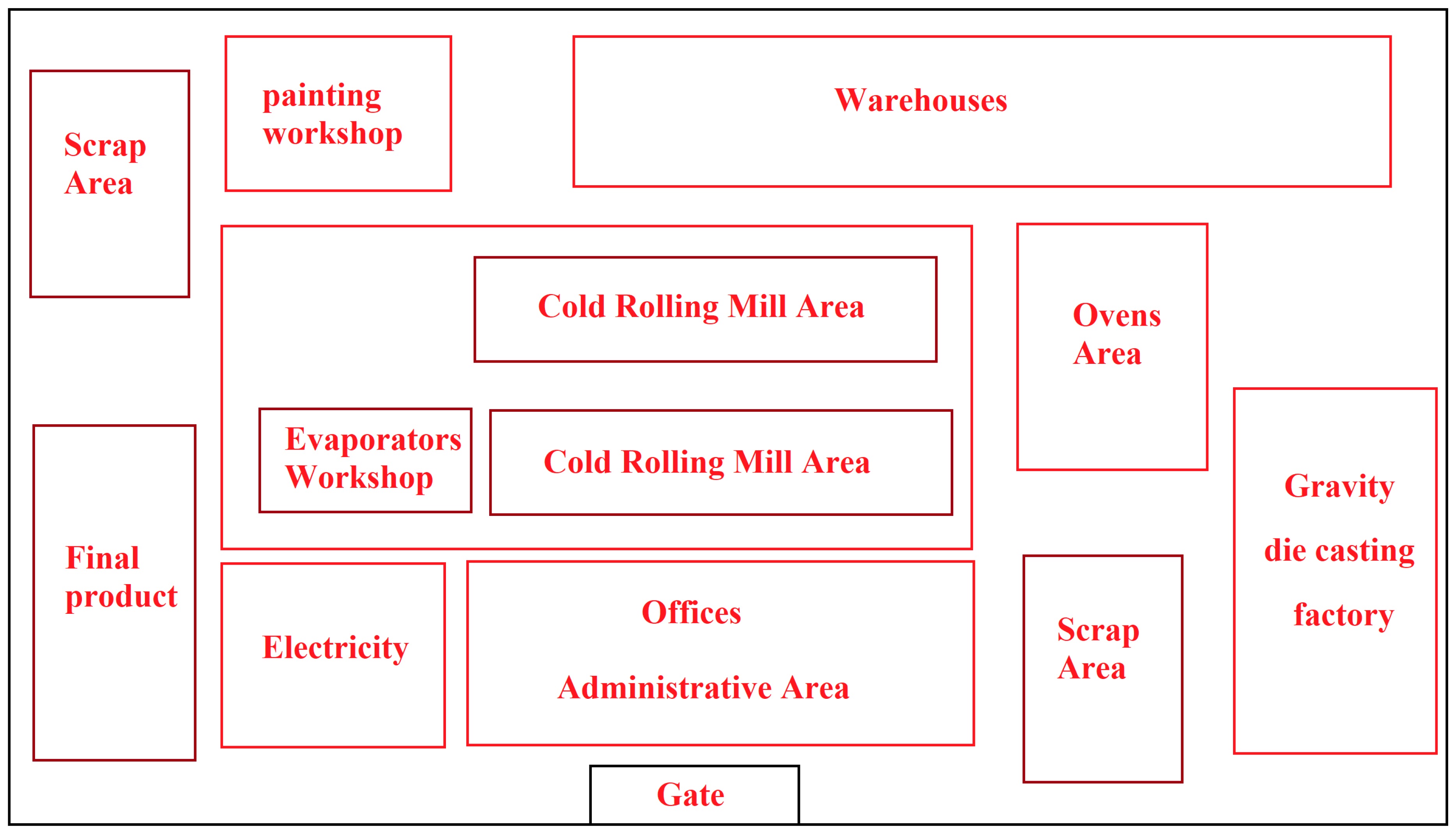
A schematic layout of the factory indicating major production units, emission sources, and air monitoring locations has been added to facilitate interpretation of the spatial distribution of pollutants and to support the exposure–response analysis (Figure 2).
All workers included in the study were non-smoking males within a relatively narrow age range (40–60 years; 47.2 ± 9.5 years) and with comparable occupational duration (>5 years). Body mass index (BMI) was measured during lung function assessment, and the homogeneity of these characteristics reduced the likelihood of significant confounding by age, BMI, or employment duration.
Most of the examined workers had normal lung functions (148 out of 168 workers). Lung function abnormalities, whether restrictive or obstructive disorders, showed a significant variation with the department of employment (Table 2). None of the administrative workers had lung function abnormalities, and they were occupationally exposed to the lowest air emissions in their workplace. Therefore, administrative workers were considered to be the non-exposed workers. Lung function abnormalities were more frequently observed among the exposed workers compared to the non-exposed (Table 2).
About 75% of the workers with severe obstructive lung problems and 66.7% of those with severe restrictive obstructive lung abnormalities were among the workers in the oven area department. It was also found that workers with severe obstruction were in the evaporator area (25%), and those with severe restrictive obstructive lung functions were in the cold rolling mill area (33.3%) (Table 2).
Comparing the age of the exposed and non-exposed workers, it revealed that there was no significant difference in their ages (46.98 ± 9.3 and 47.66 ± 10.1 years, respectively), (t-test = 0.31, p = 0.76).
Table 3 displays different PFT observed values, i.e., FEV1, FVC, FEV1/FVC, and MEF 25%, for comparison of the exposed and non-exposed groups. The exposed group had a significant decrease in FEV1% and FVC%. But there was no statistically significant difference between the two groups regarding FEV1/FVC and MEF 25%.
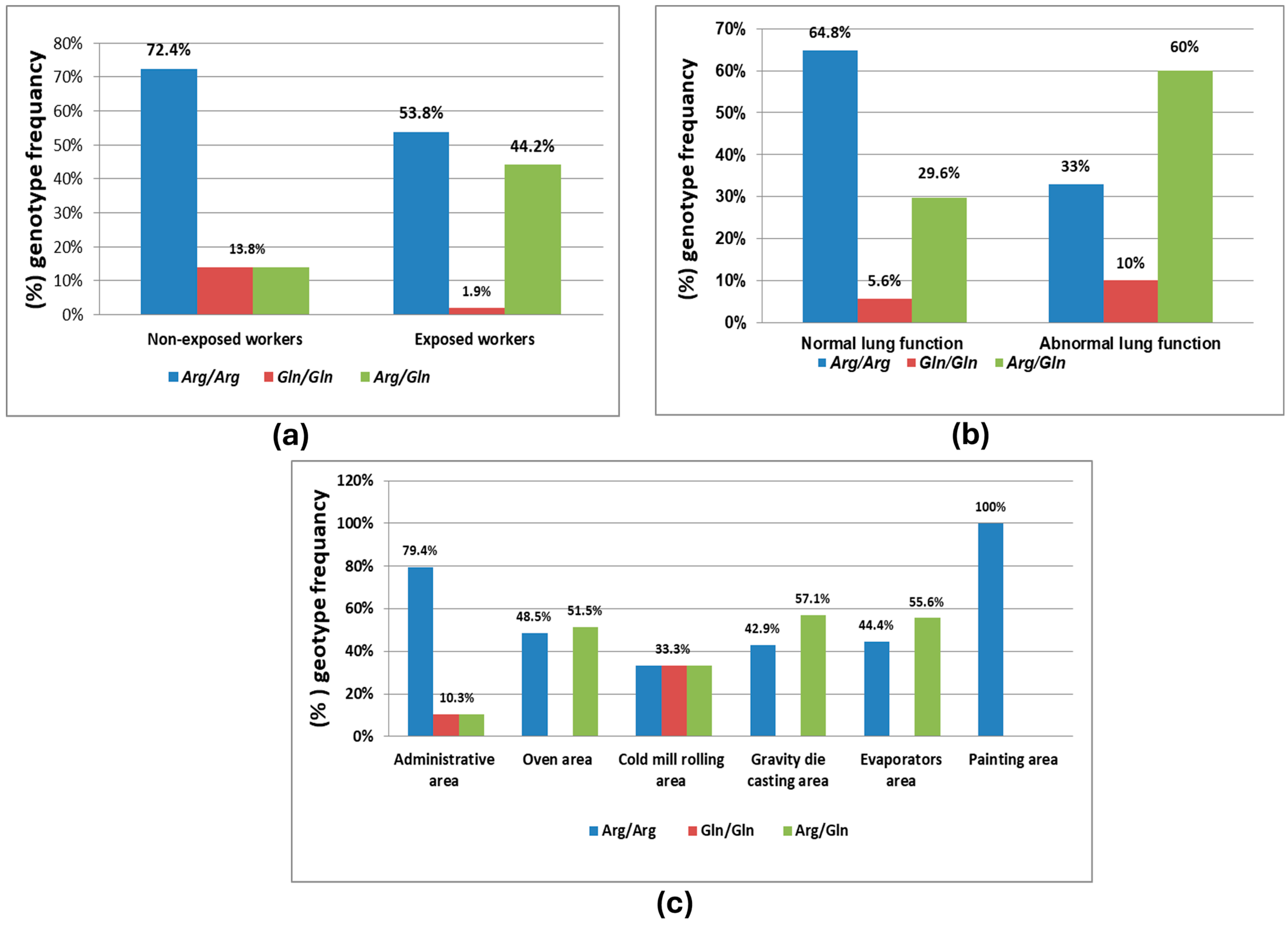
The current results showed a significant difference in the distribution of XRCC1-399 genotypes among exposed and non-exposed workers (p = 0.004) (Figure 3a). Most of the workers with abnormal lung function were among the workers with the Arg/Gln allele, with a significant difference (p = 0.04; Figure 3b).
Regarding work sites, the frequency of XRCC1-399 genotypes showed a statistically significant difference (p = 0.004). The frequency of the Arg/Arg genotype was significantly higher among workers in administrative and painting areas compared to those in the other departments (Figure 3c).
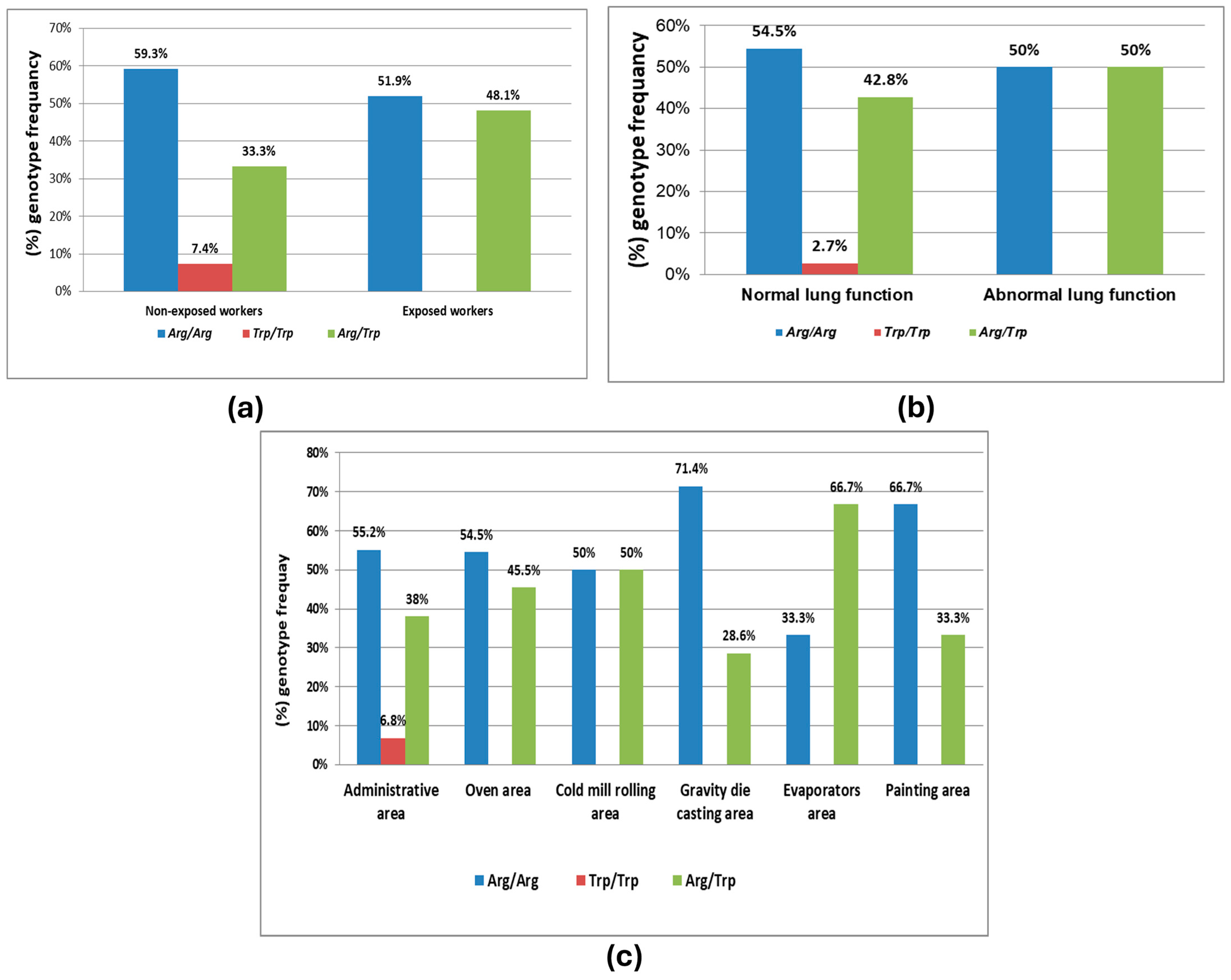
Among the workers, the frequency of the XRCC1-194 genotype was variable, with no significant difference detected between the XRCC1 polymorphisms among exposed and non-exposed workers (p = 0.06; Figure 4a). Also, there was no significant difference in the distribution of XRCC1-194 genotypes among workers with normal and abnormal lung functions (p = 0.97; Figure 4b), as well as among the workers at different work sites (p = 0.77; Figure 4c).
There was a significant increase in XRCC1 protein levels in the exposed workers compared to the non-exposed group. This was accompanied by a non-significant difference in inflammatory biomarkers (IL6, GM/CSF, ECP, MMP1, and CRP) between the two groups (Table 4).
Our results showed a significant inverse correlation (p = 0.0001) between FEV1/FVC% and the duration of exposure (Table 5).

4. Discussion

Air Pollutant Emissions in Aluminum Recycling: Secondary aluminum (recycling) facilities emit a complex mixture of airborne pollutants. In our plant, major emissions included fine particulate matter (PM2.5, PM10) and combustion gases (SO2, NO2), originating primarily from the smelting ovens, evaporators, and rolling mills. According to Ivester et al. [30], inhalation of these particulates is associated with airway inflammation and oxidative stress. Numerous studies found that the secondary aluminum sector was a significant source of particulate pollution. PM2.5, PM10, TSP, SO2, and NO2 are the most significant pollutants released throughout the secondary aluminum process [7]. These emissions may be associated with harmful health effects, mostly respiratory.
In comparison to previous studies, the estimated annual PM2.5 (0.056–0.124 mg/m3 = 5.6–12.4 µg/m3) concentrations in this study were identical to those measured in Zambia (10.2 µg/m3), while it was lower than measurements obtained in Zimbabwe (40.6 µg/m3), and in a previous study conducted in Bethlehem in South Africa (65 µg/m3) [31,32]. Moreover, the estimated NO2 levels (0.014–0.045 mg/m3–1.4–4.5 µg/m3) in the current study were lower than the levels measured in a previous study in Cape Town (25.1 µg/m3) [33]. Furthermore, the estimated SO2 levels (0.06–0.228 mg/m3) in the current study were lower than those found in Canada (1.17 mg/m3) [34].
During various stages of the manufacturing process, workers in this aluminum production facility are exposed to PM from combustion sources, with high exposures occurring particularly in smelting facilities. Industrial processes involving elevated temperatures and enhanced combustion may contribute to higher ambient concentrations of PM, SO2, and NO2. We noticed that the concentrations of all contaminants were higher in the areas around the ovens, evaporators, and cold rolling mills. The processes that result in enhanced combustion and elevated temperatures may contribute to higher ambient concentrations of pollutants (PM, SO2, and NO2). According to Gutowski et al. [6], the aluminum industry’s large supply of energy has an impact on pollutant concentrations. Additionally, smelter particulate exposures are associated with larger concentrations than fabrication [35].
The current study found that although workplace pollutant concentrations were below occupational exposure limits, observed lung function alterations indicate that adverse respiratory effects may still occur at permissible levels. This suggests that even legally acceptable concentrations can pose health risks, particularly with long-term exposure or in genetically susceptible individuals. We recommend periodic health monitoring, including lung function tests and assessment of oxidative stress and inflammatory biomarkers, to detect early adverse effects of occupational exposure. In addition, regulatory standards should be periodically reviewed and updated based on emerging evidence, ensuring that exposure limits adequately protect workers without imposing excessive restrictions on production.
Only 18.2% (20/110) of the exposed group had impaired lung function, whereas among those with high exposures, 100% of the workers had lung abnormalities. These findings were in agreement with Bagula et al. [36], who mentioned that there was an association between PM exposure and respiratory abnormalities, even at levels below the air quality standards. In addition, Neophytou et al. [35] detected that occupational exposure to PM2.5 in the aluminum industry accelerates lung function decline.
According to numerous studies (Robinson et al. [37]; Gerber et al. [38]), exposure to dust may contribute to significant airway inflammation, which is associated with airway blockage. The fact that dust pollutants come in a variety of sizes and can enter human airways and pulmonary alveoli to impair lung functioning and cause a variety of diseases is the method by which they can do this. Depending on its size, particulate matter can build up in the lung parenchyma and deposit at different levels of the respiratory system, contributing to a variety of respiratory disorders [39]. Coarse particles (PM10) deposit in the upper airways. Fine particles (PM2.5) can be accumulated in the lung parenchyma. In the present study, lung functions of the examined workers revealed that abnormal pulmonary function was detected in 18.2% (20/110) of the exposed workers; 7.2% of them had obstructive abnormality, and 10.9% had combined severe restrictive obstructive disorder. It was known that obstructive lung disease results from narrowing of the smaller bronchi and larger bronchioles, which are associated with difficulty in exhaling the air and end with inflation of the lungs due to the abnormally high amount of air, while restrictive lung diseases result from extra-pulmonary restriction that may contribute to restriction of lung expansion and decrease the lung volume [27].
Comparing lung function in different working areas revealed that there was an increase in the frequency of workers with lung function abnormalities in the oven area, evaporator area, and cold rolling mill area due to their higher exposure levels to measured air pollutants. Previously, Neophytou et al. [34] suggested that the differences in rates of decline in lung function in smelter than fabrication facilities, even at lower exposure concentrations was attributed mainly to PM composition.
Several studies detected an association between lung capacity disorders and exposure to NO2, SO2, TSP, and PM10, with an average duration of exposure of 13 h/day. Public transportation drivers in Palembang city had lung capacity disorders due to high levels of pollutants from long-term exposure to air pollutants [39]. The present study found an average decline in Forced Expiratory Volume (FEV1) and Forced Vital Capacity (FVC) among exposed workers with an average rate of exposure of 8 h/day. In addition, FEV1/FVC% showed a significant inverse correlation with duration of exposure, suggesting that longer exposure periods may be associated with greater impairment of lung function. Thus, exposure to high concentrations of PM is among the strongest risk factors for pulmonary dysfunction, depending on the level and duration of exposure.
Many studies have shown that urban particulate matter (PM) has mutagenic and genotoxic activities in different short-term tests on bacteria and in vitro and in vivo human cells [40,41]. Experimental studies confirm that PM2.5 induces oxidative DNA lesions in lung tissue and that DNA repair genes counteract these effects. For example, de Oliveira Alves et al. demonstrated in mice that urban PM2.5 exposure was associated with DNA damage through direct adduct formation or indirectly via reactive oxygen species [42]. DNA repair genes, including XRCC1, are one of the most crucial defense mechanisms against the accumulation of DNA damage [10,43,44]. Similarly, in human bronchial cells, high-dose PM2.5 exposure was shown to alter XRCC1 expression [45]. In the present study, increased serum XRCC1 levels at occupationally relevant exposure levels may reflect an adaptive cellular response to particulate exposure.
In our study, we observed that the XRCC1 Arg399Gln polymorphism differed markedly between groups: 44.2% of exposed workers carried the Arg/Gln genotype (versus 13.8% of controls), and 60% of those with abnormal lung function were Arg/Gln heterozygotes. This suggests that the Arg/Gln allele may be associated with inter-individual variability in susceptibility to pollution-related lung function impairment, whereas the Arg/Arg genotype (predominant in non-exposed staff) might be relatively protective. Notably, prior literature on XRCC1 Arg399Gln and lung disease, some studies reported an increased cancer risk with Arg/Gln (Zhang et al. [46]), while other studies found that the Arg/Gln genotype might be a protective factor against the development of lung cancer [47]. Nevertheless, our genetic data imply that XRCC1-mediated repair capacity influences who develops pollution-related lung damage.
In the present study, most of the administrative employees (non-exposed group) and all of the printing workers exhibited the Arg/Arg genotype, and none of these participants showed abnormal lung function. In contrast, more than half of the workers in the oven area carried the Arg/Gln allele. This observation suggests that the Arg/Arg genotype may confer a protective effect against pulmonary impairment among individuals occupationally exposed to airborne pollutants in the aluminum industry, whereas those carrying the Arg/Gln genotype may be more susceptible to developing lung function abnormalities upon exposure. Consistent with our findings, previous research has reported no significant association between the XRCC1-194 polymorphism and susceptibility to lung function abnormalities or related respiratory disorders [47,48].
Collectively, these findings highlight the role of the XRCC1 Arg399Gln polymorphism in modulating susceptibility to pollutant-induced respiratory dysfunction, whereas the Arg194Trp variant appears to play a limited role in respiratory outcomes. XRCC1 polymorphisms and altered expression may serve as biomarkers to identify individuals at higher risk in occupational and environmentally exposed populations.
Inflammation represents a fundamental protective response to cellular injury or tissue damage. However, chronic exposure to particulate matter (PM) can trigger persistent inflammatory processes that contribute to respiratory dysfunction. All components of PM act synergistically to form a complex mixture capable of inducing oxidative stress and inflammatory signaling [39]. In the present study, the serum levels of inflammatory biomarkers—including IL-6, CRP, ECP, MMP-1, and GM-CSF—did not differ significantly between the exposed and non-exposed groups. This observation may be related to the elevated XRCC1 protein levels observed among exposed workers, which could reflect enhanced DNA repair capacity and reduced cellular vulnerability to particulate-induced damage. Consistent with this interpretation, Zhou et al. [49] reported that XRCC1 deficiency compromises DNA repair efficiency, increasing vulnerability to genotoxic stress. Therefore, XRCC1 protein expression may have potential utility as a biomarker for assessing susceptibility to lung injury and functional decline among individuals occupationally exposed to particulate and gaseous air pollutants. A key limitation of the present study is the absence of personal exposure monitoring. Although area-based measurements are useful for characterizing spatial variability and identifying emission sources within the workplace, they may not adequately represent individual exposure levels. This discrepancy arises from variations in worker mobility, task-specific activities, duration of exposure, and the use of personal protective equipment, all of which can substantially influence actual inhaled doses. As a result, reliance on area-based sampling may lead to exposure misclassification and attenuated estimates of exposure–response relationships. Incorporating personal sampling strategies in future studies would allow for a more accurate assessment of individual exposures, improve the precision of dose–response analyses, and enhance the ability to identify susceptible subgroups within the workforce.

5. Conclusions

Occupational exposure to particulate matter in aluminum manufacturing, particularly in smelters, was associated with measurable changes in lung function, even at concentrations below current occupational exposure limits. XRCC1 polymorphisms and altered expression may serve as biomarkers to identify individuals at higher risk in occupational and environmentally exposed populations, emphasizing the need to integrate genetic susceptibility with preventive measures. The study is limited to male workers from a single facility, and future research should include larger, more diverse populations with longitudinal designs to better understand the combined effects of genetics and exposure on respiratory health.

Author Contributions

G.M. conceived the idea and designed the experiments, A.S.-H. analyzed the data. A.M.F.M. and I.A.S. performed the air monitoring analysis. G.M. carried out the biological monitoring analysis. H.M.-A. carried out the pulmonary functions and questioner to workers. G.M., H.M.-A., A.M.F.M., I.A.S. and A.S.-H. wrote the manuscript. All authors have read and agreed to the published version of the manuscript.

Funding

This work was funded by the National Research Centre (NRC), the funded project (ID: 12060166) entitled “Impact of Genetic Variability on Susceptibility of Aluminum Workers to Occupational Pulmonary Diseases”.

Institutional Review Board Statement

The study was conducted in accordance with the Declaration of Helsinki and was approved by the Ethics Committee of the National Research Centre, Egypt (19-273 in March 2020).

Informed Consent Statement

Informed consent was obtained from all subjects involved in the study.

Data Availability Statement

The authors confirm that raw data are available from the corresponding author upon reasonable request.

Acknowledgments

We gratefully acknowledge the help of the National Research Centre.

Conflicts of Interest

The authors declare no conflicts of interest.

References

  1. Mahalingam, S.; Ramsundram, N.; Sathyamoorthy, G.L. Particulate matter and its health effects—A Review. IJRMETS 2020, 2. [Google Scholar]
  2. World Health Organization. Ambient (Outdoor) Air Pollution; World Health Organization: Geneva, Switzerland, 2021; Available online: https://www.who.int/news-room/fact-sheets/detail/ambient-(outdoor)-air-quality-and-health (accessed on 8 May 2025).
  3. Miller, F.J.; Asgharian, B.; Schroeter, J.D.; Price, O. Improvements and additions to the multiple path particle dosimetry model. J. Aerosol Sci. 2016, 99, 14–26. [Google Scholar] [CrossRef]
  4. Gross, A.; Tham, R.; Dharmage, S.C.; Röösli, M.; Frey, U.; Gorlanova, O. Exposure to long-term ambient air pollution and lung function in adults: A systematic review and meta-analysis. Eur. Respir. Rev. Off. J. Eur. Respir. Soc. 2025, 34, 240264. [Google Scholar] [CrossRef]
  5. Paulin, L.; Hansel, N. Particulate air pollution and impaired lung function. F1000Research 2016, 5, 201. [Google Scholar] [CrossRef]
  6. Gutowski, T.G.; Sahni, S.; Allwood, J.M.; Ashby, M.F.; Worrell, E. The energy required to produce materials: Constraints on energy-intensity improvements, parameters of demand. Philos. Trans. R. Soc. A 2013, 371, 20120003. [Google Scholar] [CrossRef] [PubMed]
  7. Abdollahi, J.; Emrani, N.; Chahkandi, B.; Montazeri, A.; Gheibi, M. Environmental impact assessment of aluminium production using the life cycle assessment tool and multi-criteria analysis. Ann. Environ. Sci. Toxicol. 2021, 5, 59–66. [Google Scholar] [CrossRef]
  8. Donoghue, A.M.; Frisch, N.; Ison, M.; Walpole, G.; Capil, R.; Curl, C. Occupational asthma in the aluminium smelters of Australia and New Zealand: 1991–2006. Am. J. Ind. Med. 2011, 54, 224–231. [Google Scholar] [CrossRef]
  9. Berumen-Rodríguez, A.A.; de León-Martínez, L.D.; Zamora-Mendoza, B.N.; Orta-Arellanos, H.; Saldaña-Villanueva, K.; Barrera-López, V.; Gómez-Gómez, A.; Pérez-Vázquez, F.J.; Díaz-Barriga, F.; Flores-Ramírez, R. Evaluation of respiratory function and biomarkers of exposure to mixtures of pollutants in brick-kiln workers from a marginalized urban area in Mexico. Environ. Sci. Pollut. Res. 2021, 28, 67833–67842. [Google Scholar] [CrossRef] [PubMed]
  10. Moubarz, G.; Saad-Hussein, A.; Shahy, E.M.; Mahdy-Abdallah, H.; Mohammed, A.M.F.; Saleh, I.A.; Abo-Zeid, M.A.M.; Abo-Elfadl, M.T. Lung cancer risk in workers occupationally exposed to polycyclic aromatic hydrocarbons with emphasis on the role of DNA repair gene. Int. Arch. Occup. Environ. Health 2023, 96, 313–329. [Google Scholar] [CrossRef] [PubMed]
  11. Liu, S.K.; Cai, S.; Chen, Y.; Xiao, B.; Chen, P.; Xiang, X.D. The effect of pollutional haze on pulmonary function. J. Thorac. Dis. 2016, 8, E41–E56. [Google Scholar] [CrossRef]
  12. Voiriot, G.; Razazi, K.; Amsellem, V.; Tran Van Nhieu, J.; Abid, S.; Adnot, S.; Mekontso Dessap, A.; Maitre, B. Interleukin-6 displays lung anti-inflammatory properties and exerts protective hemodynamic effects in a double-hit murine acute lung injury. Respir. Res. 2017, 18, 64. [Google Scholar] [CrossRef]
  13. Kim, J.; Lee, J.; Lee, S. Fine particulate matter induces oxidative stress and interleukin-6 production through the NF-κB pathway in human airway epithelial cells. Environ. Pollut. 2023, 326, 121460. [Google Scholar] [CrossRef]
  14. Sproston, N.R.; Ashworth, J. Role of C-reactive protein at sites of inflammation and infection. Front. Immunol. 2018, 9, 754. [Google Scholar] [CrossRef] [PubMed]
  15. Vlahos, R.; Bozinovski, S.; Chan, S.P.; Ivanov, S.; Lindén, A.; Hamilton, J.A. Neutralizing granulocyte/macrophage colony-stimulating factor inhibits cigarette smoke-induced lung inflammation. Am. J. Respir. Crit. Care Med. 2010, 182, 34–40. [Google Scholar] [CrossRef] [PubMed]
  16. Trulson, A.; Byström, J.; Engström, Å.; Larsson, R.; Venge, P. The functional heterogeneity of eosinophil cationic protein is determined by a gene polymorphism and post-translational modifications. Clin. Exp. Allergy 2007, 37, 208–218. [Google Scholar] [CrossRef]
  17. Bortkiewicz, A.; Gadzicka, E.; Stroszejn Mrowca, G.; Szyjkowska, A.; Szymczak, W.; Koszada Włodarczyk, W.; Szadkowska Stańczyk, I. Cardiovascular changes in workers exposed to fine particulate dust. Int. J. Occup. Med. Environ. Health 2014, 27, 78–92. [Google Scholar] [CrossRef]
  18. Hu, P.; Li, Z.; Hu, A.; Gong, Y.; Huang, X.; Zhong, M.; Li, X.; Zhong, C.; Liu, S.; Hong, J.; et al. Are workers also vulnerable to the impact of ambient air pollution? Insight from a large-scale ventilatory exam. Sci. Total Environ. 2024, 947, 174634. [Google Scholar] [CrossRef]
  19. Gawda, A.; Kozlowski, P.; Kowalski, M.L. Occupational exposure to airborne pollutants and respiratory health. Int. J. Occup. Med. Environ. Health 2019, 32, 133–147. [Google Scholar]
  20. Ghio, A.J.; Carraway, M.S.; Madden, M.C. Composition of air pollution particles and oxidative stress in cells, tissues, and living systems. J. Toxicol. Environ. Health Part B Crit. Rev. 2012, 15, 1–21. [Google Scholar] [CrossRef]
  21. Kubota, Y.; Nash, R.A.; Klungland, A.; Schär, P.; Barnes, D.E.; Lindahl, T. Reconstitution of DNA base excision-repair with purified human proteins: Interaction between DNA polymerase beta and the XRCC1 protein. EMBO J. 1996, 15, 6662–6670. [Google Scholar] [CrossRef]
  22. Thompson, L.H.; West, M.G. XRCC1 keeps DNA from getting stranded. Mutat Res. DNA Repair 2000, 459, 1–18. [Google Scholar] [CrossRef]
  23. Caldecott, K.W. XRCC1 and DNA strand break repair. DNA Repair 2003, 2, 955–969. [Google Scholar] [CrossRef]
  24. London, R.E. The structural basis of XRCC1-mediated DNA repair. DNA Repair 2015, 30, 90–103. [Google Scholar] [CrossRef]
  25. Mateuca, R.; Lombaert, N.; Aka, P.V.; Decordier, I.; Kirsch-Volders, M. Chromosomal changes: Induction, detection methods and applicability in human biomonitoring. Biochimie 2006, 88, 1515–1531. [Google Scholar] [CrossRef]
  26. Velmurugan, S.; Ganesan, K.; Rajendran, R.; Subbaraj, G.K. The X-ray repair cross-completing gene 1 (XRCC1) polymorphisms and lung cancer incidence—A confirmatory umbrella review of observational evidence. Eur. J. Clin. Exp. Med. 2025, 23, 245–256. [Google Scholar] [CrossRef]
  27. American Thoracic Society (ATS). Chronic obstructive pulmonary disease (COPD). Am. J. Respir. Crit. Care Med. 2019, 199, P1–P2. [Google Scholar] [CrossRef] [PubMed]
  28. Xing, D.; Qi, J.; Miao, X.; Lu, W.; Tan, W.; Lin, D. Polymorphisms of DNA repair genes XRCC1 and XPD and their associations with risk of esophageal squamous cell carcinoma in a Chinese population. Int. J. Cancer 2002, 100, 600–605. [Google Scholar] [CrossRef] [PubMed]
  29. Egyptian Environmental Law 4 1994. Available online: https://www.eeaa.gov.eg (accessed on 1 November 2024).
  30. Ivester, K.M.; Couëtil, L.L.; Moore, G.E.; Zimmerman, N.J.; Raskin, R.E. Environmental exposures and airway inflammation in young thoroughbred horses. J. Vet. Intern. Med. 2014, 28, 918–924. [Google Scholar] [CrossRef]
  31. Nkhama, E.; Ndhlovu, M.; Dvonch, J.T.; Lynam, M.; Mentz, G.; Siziya, S. Effects of airborne particulate matter on respiratory health in a community near a cement factory in Chilanga, Zambia: Results from a panel study. Int. J. Environ. Res. Public Health 2017, 14, 1351. [Google Scholar] [CrossRef]
  32. Worobiec, A.; Potgieter-Vermaak, S.S.; Berghmans, P.; Winkler, H.; Burger, R.; Van Grieken, R. Air particulate emissions in developing countries: A case study in South Africa. Anal. Lett. 2011, 44, 1907–1924. [Google Scholar] [CrossRef]
  33. Wichmann, J.; Voyi, K. Ambient air pollution exposure and respiratory, cardiovascular and cerebrovascular mortality in Cape Town, South Africa: 2001–2006. Int. J. Environ. Res. Public Health 2012, 9, 3978–4016. [Google Scholar] [CrossRef]
  34. Martin, S.C. Community health risk assessment of primary aluminum smelter emissions. J. Occup. Environ. Med. 2014, 56, S33–S39. [Google Scholar] [CrossRef] [PubMed]
  35. Neophytou, A.M.; Costello, S.; Picciotto, S. Accelerated lung function decline in an aluminum manufacturing industry cohort exposed to PM2.5: An application of the parametric g-formula. Occup. Environ. Med. 2019, 76, 888–894. [Google Scholar] [CrossRef]
  36. Bagula, H.; Toyib, O.; de Hoogh, K.; Saucy, A.; Parker, B.; Leaner, J.; Röösli, M.; Dalvie, A.M. Ambient air pollution and cardiorespiratory outcomes amongst adults residing in four informal settlements in the Western Province of South Africa. Int. J. Environ. Res. Public Health 2021, 18, 13306. [Google Scholar] [CrossRef]
  37. Robinson, N.E.; Berney, C.; Eberhart, S. Coughing, mucus accumulation, airway obstruction, and airway inflammation in control horses and horses affected with recurrent airway obstruction. Am. J. Vet. Res. 2003, 64, 550–557. [Google Scholar] [CrossRef]
  38. Gerber, V.; Lindberg, A.; Berney, C. Airway mucus in recurrent airway obstruction: Short-term response to environmental challenge. J. Vet. Intern. Med. 2004, 18, 92–97. [Google Scholar] [CrossRef]
  39. Falcon-Rodriguez, C.I.; Osornio-Vargas, A.R.; Sada-Ovalle, I.; Segura-Medina, P. Aeroparticles, composition, and lung diseases. Front. Immunol. 2016, 7, 3. [Google Scholar] [CrossRef] [PubMed]
  40. Sunarsih, E.; Suheryanto, S.; Rini, M.; Garmini, R. Risk model of air pollution exposure (NO2, SO2, TSP and dust) and smoking habits to the lung function of bus drivers in Palembang City. Kesmas Nat. Public Health J. 2014, 13, 204. [Google Scholar] [CrossRef]
  41. Platel, A.; Privat, K.; Talahari, S. Study of in vitro and in vivo genotoxic effects of air pollution fine and quasi-ultrafine particles on lung models. Sci. Total Environ. 2020, 711, 134666. [Google Scholar] [CrossRef] [PubMed]
  42. Santovito, A.; Gendusa, C.; Cervella, P.; Traversi, D. In vitro genomic damage induced by urban fine particulate matter on human lymphocytes. Sci. Rep. 2020, 10, 8853. [Google Scholar] [CrossRef]
  43. De Oliveira Alves, N.; Martins Pereira, G.; Di Domenico, M.; de Castro Vasconcellos, P.; Saldiva, P. Inflammatory response, oxidative stress and DNA damage caused by urban air pollution exposure increase in the lack of DNA repair XPC protein. Environ. Int. 2020, 145, 106150. [Google Scholar] [CrossRef]
  44. Campalans, A.; Marsin, S.; Nakabeppu, Y.; O’Connor, T.R.; Boiteux, S.; Radicella, J.P. XRCC1 interactions with multiple DNA glycosylases: A model for its recruitment to base excision repair. DNA Repair. 2005, 4, 826–835. [Google Scholar] [CrossRef] [PubMed]
  45. Moubarz, G.; Mohammed, A.M.F.; Saleh, I.A.; Shahy, E.M.; Helmy, M.A. Nephrotoxic effect of heavy metals and the role of DNA repair gene among secondary aluminum smelter workers. Environ. Sci. Pollut. Res. 2023, 30, 29814–29823. [Google Scholar] [CrossRef]
  46. Niu, B.Y.; Li, W.K.; Li, J.S.; Hong, Q.H.; Khodahemmati, S.; Gao, J.F.; Zhou, Z.X. Effects of DNA Damage and Oxidative Stress in Human Bronchial Epithelial Cells Exposed to PM2.5 from Beijing, China, in Winter. Int. J. Environ. Res. Public Health 2020, 17, 4874. [Google Scholar] [CrossRef]
  47. Zhang, J.; Zeng, X.T.; Lei, J.R. No association between XRCC1 gene Arg194Trp polymorphism and risk of lung cancer: Evidence based on an updated cumulative meta-analysis. Tumour Biol. 2014, 35, 5629–5635. [Google Scholar] [CrossRef]
  48. Huang, G.; Cai, S.; Wang, W. Association between XRCC1 and XRCC3 polymorphisms with lung cancer risk: A meta-analysis. PLoS ONE 2013, 8, e68457. [Google Scholar] [CrossRef] [PubMed]
  49. Zhou, L.; Xia, J.; Li, H. Association of XRCC1 variants with acute skin reaction after radiotherapy in breast cancer patients. Cancer Biother. Radiopharm. 2010, 25, 681–685. [Google Scholar] [PubMed]
Figure 1. The annual average concentrations of pollutants (PM2.5, PM10, TSP, SO2, and NO2) (mg/m3) at monitoring sites. (Values are presented as mean ± standard deviation).
Aerobiology 04 00007 g001
Figure 2. A schematic layout of the factory indicating major production units, emission sources, and air monitoring locations.
Aerobiology 04 00007 g002
Figure 3. XRCCI-399 genotypes among the study workers. (a) exposed and non-exposed workers; (b) normal and abnormal lung functions; (c) different work sites.
Aerobiology 04 00007 g003
Figure 4. Frequency of XRCCI-399 genotypes among the study workers. (a) exposed and non-exposed workers; (b) normal and abnormal lung functions; (c) at different work sites.
Aerobiology 04 00007 g004
Table 1. Primer sequences, annealing temperature, restriction enzyme, and allele sizes used for Arg194Trp and Arg399Gln polymorphisms of the XRCC1 gene.
XRCC1 GenePrimer SequencesAnnealing TemperatureRestriction EnzymeAllele Size
Arg194Trp (rs1799782)F: 5′- GCCAGGGCCCCTCCTTCAA-3′
R: 5′-TACCCTCAGACCCACGAGT-3′
57PvuII485, 396 bp
Arg399Gln (rs25487)F: 5′-TTG TGC TTT CTC TGT GTC CA-3′
R: 5′-TCC TCC AGC CTT TTC TGA TA-3′
68MspI615, 374, 221 bp
Table 2. Lung function tests as regards their working department, and their exposure to air emissions.
Diagnosis of PFTsChi Squarep-Value
Normal Lung Function (148)Severe Obstruction (8)Severe Restriction and Severe Obstruction (12)
DepartmentsAdministrative office area (58)No580023.07 * 0.01
%39.2%0.0%0.0%
Oven area (66)No5268
%35%75.0%66.7%
Cold mill rolling area (6)No204
%1.4%0.0%33.3%
Gravity die casting area (14)No1400
%9.5%0.0%0.0%
Evaporators area (18)No1620
%10.8%25.0%0.0%
Painting area (6)No600
%4.1%0.0%0.0%
Exposure to air emissionsNon-exposed workers (58)No58009.17 * 0.01
%39.2%0%0%
Exposed workers (110)No90812
%60.8%100%100%
* Likelihood Ratio.
Table 3. Pulmonary function parameters among exposed and non-exposed workers.
Non-Exposed Workers (58)Exposed Workers
(110)
Independent t-Test
Mean±SDMean±SDt-Testp-Value
FEV1% of predicted104.715.893.114.83.3410.001
FVC% of predicted89.314.283.412.11.990.04
FEV1/FVC%93.85.492.19.30.9450.347
PEF% of predicted75.323.468.422.51.330.187
MEF25%of Predicted168.655.3149.851.51.550.125
Table 4. Comparison of XRCCI protein and some biomarkers between exposed and non-exposed workers.
Non-Exposed Workers (58)Exposed Workers (110)Independent t-Test
MeanSDMeanSDt-Testp-Value
XRCC1 protein ng/L1284.2138.91941.6241.42.3600.02
IL6 ng/L11.40.810.10.61.2380.219
GM/CSF ng/L120.55.9129.010.9−0.6870.494
ECP ng/L17.91.722.83.0−1.1290.262
CRP ng/mL8639.9455.28896.2347.9−0.4400.661
MMP1 ng/L11.81.113.91.1−1.1750.244
Table 5. Relationship between pulmonary function parameters, duration of exposure, and CRP level among workers.
FEV1% of PredictedFVC% of PredictedFEV1/FVC%PEF% of PredictedMEF25%of Predicted
Duration of exposurePearson Correlation−0.10.1−0.5 **−0.2−0.2
Sig. (2-tailed)0.5460.5500.00010.1520.115
** means highly significant
Disclaimer/Publisher’s Note: The statements, opinions and data contained in all publications are solely those of the individual author(s) and contributor(s) and not of MDPI and/or the editor(s). MDPI and/or the editor(s) disclaim responsibility for any injury to people or property resulting from any ideas, methods, instructions or products referred to in the content.