Article

AI-Driven Energy-Efficient Data Aggregation and Routing Protocol Modeling to Maximize Network Lifetime in Wireless Sensor Networks


1
Electronics and Communication Engineering, KGiSL Institute of Technology, Coimbatore 641035, India
2
Information Technology, KGiSL Institute of Technology, Coimbatore 641035, India
3
Mechatronics Engineering, Sri Krishna College of Engineering and Technology, Coimbatore 641008, India
*
Author to whom correspondence should be addressed.
Submission received: 5 July 2025 / Revised: 18 September 2025 / Accepted: 21 September 2025 / Published: 25 September 2025

Abstract

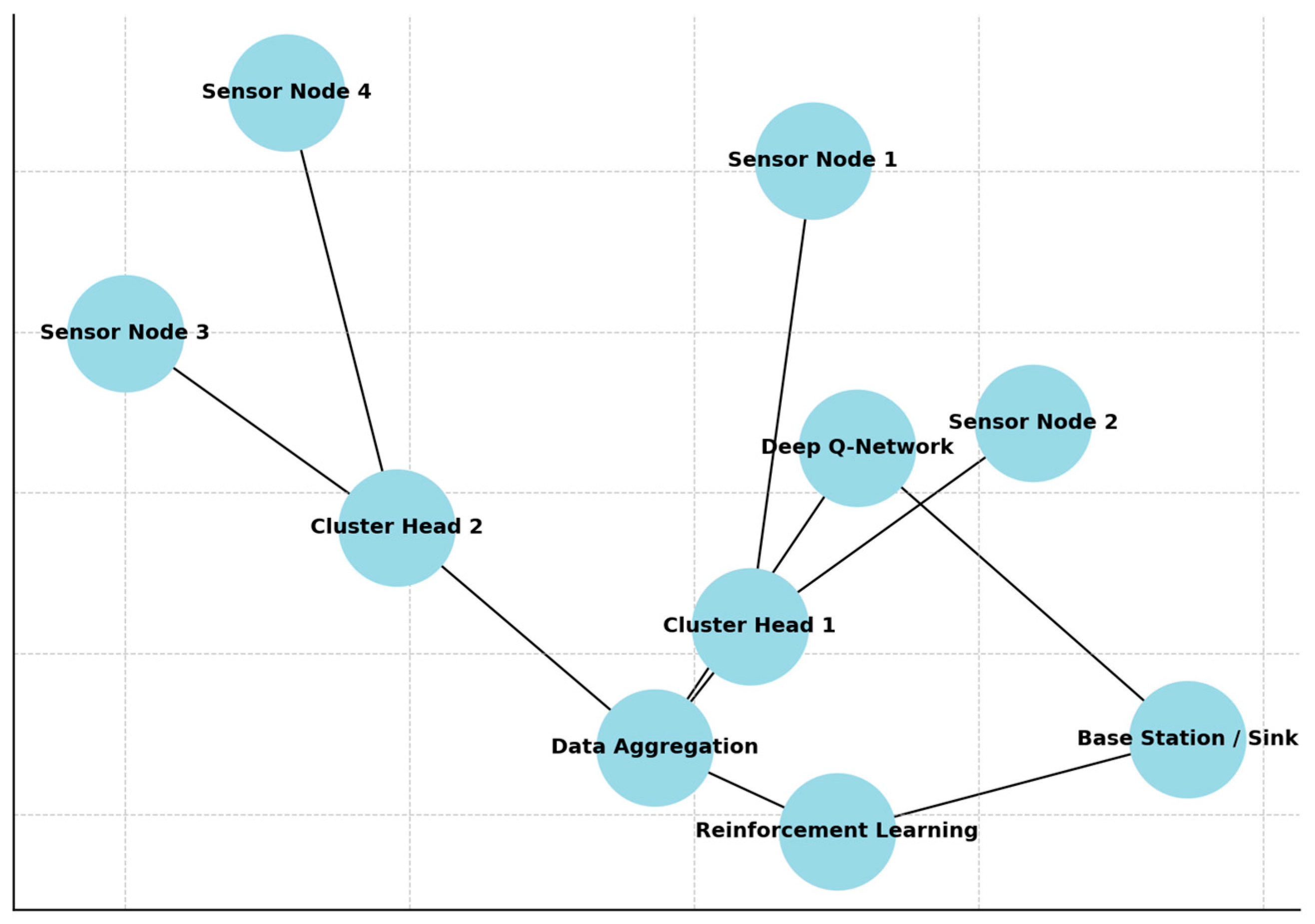
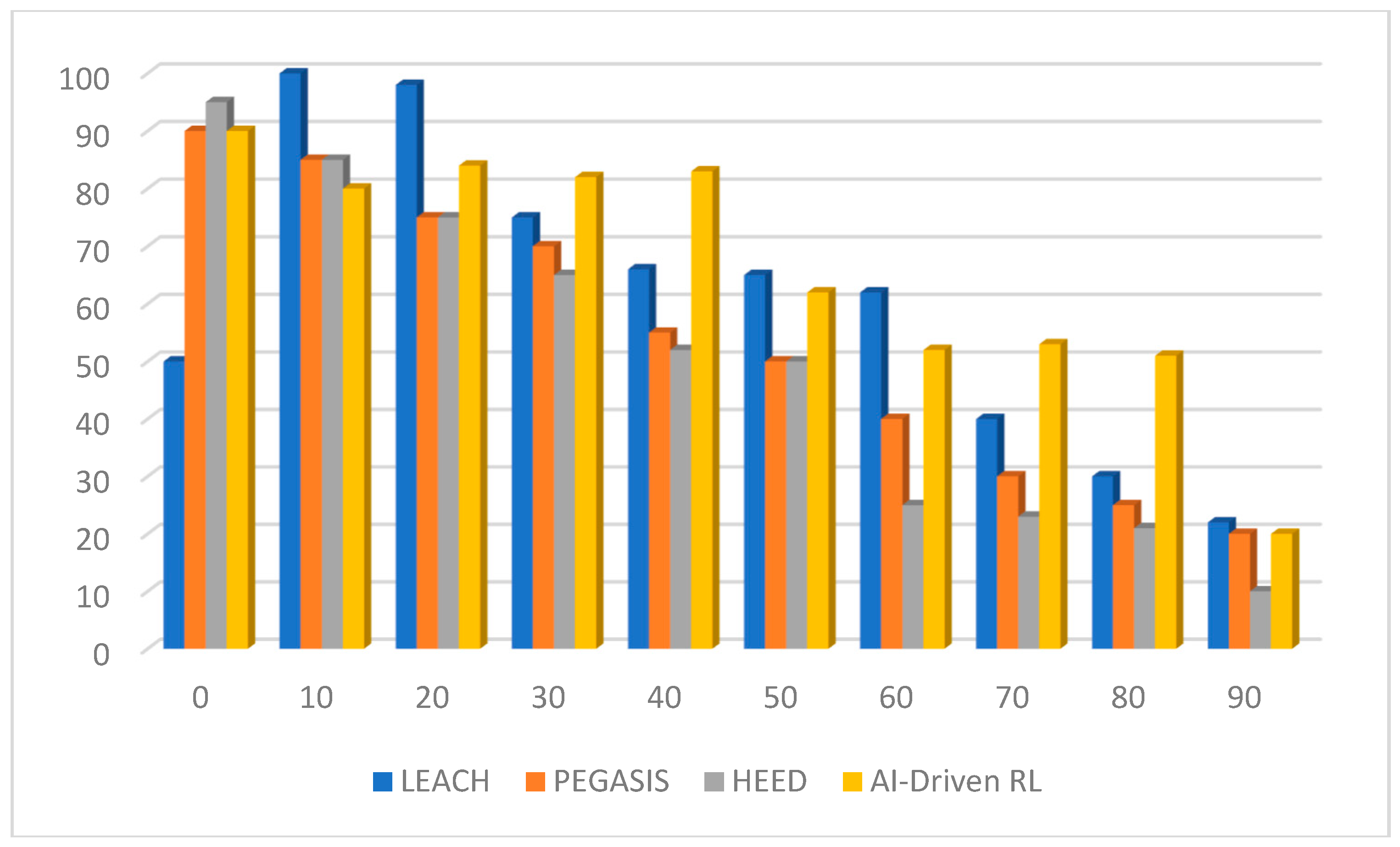
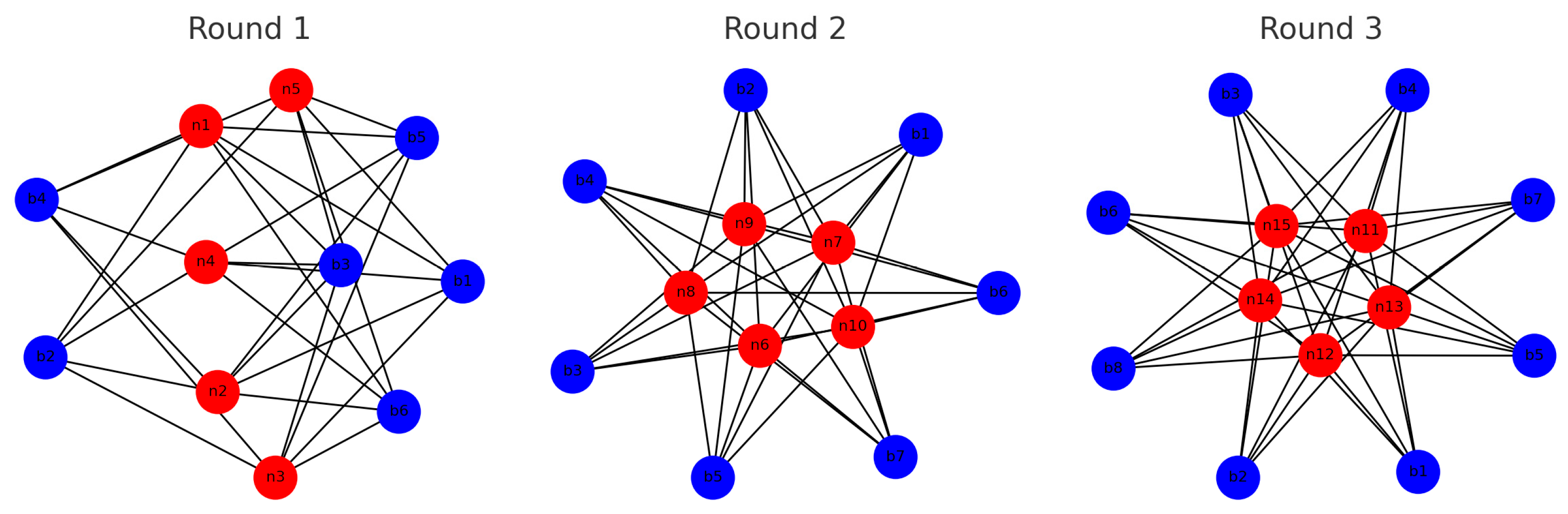
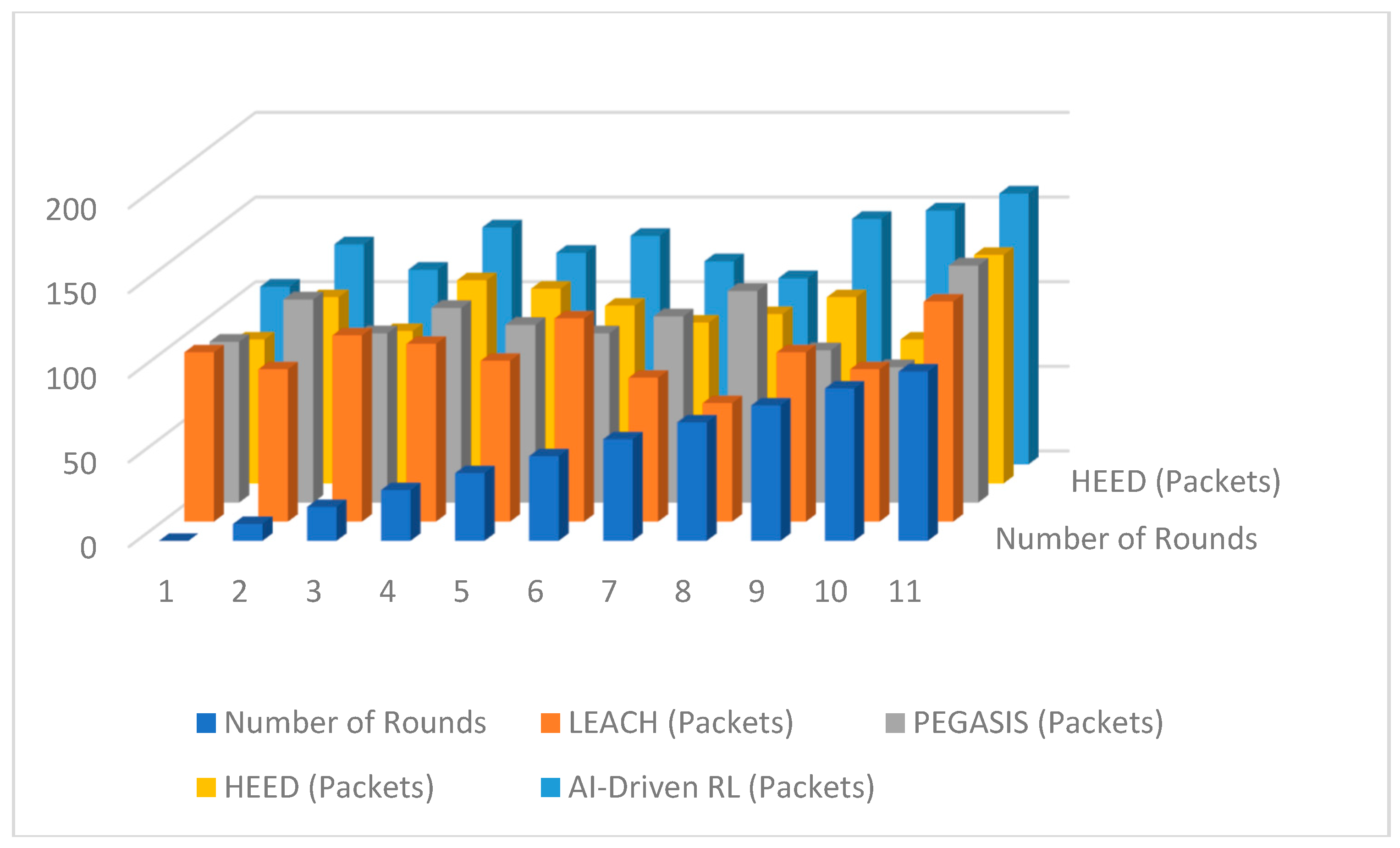
The research work presents an artificial intelligence-driven, energy-aware data aggregation and routing protocol for wireless sensor networks (WSNs) with the primary objective of extending overall network lifetime. The proposed scheme leverages reinforcement learning in conjunction with deep Q-networks (DQNs) to adaptively optimize both Cluster Head (CH) selection and routing decisions. An adaptive clustering mechanism is introduced wherein factors such as residual node energy, spatial proximity, and traffic load are jointly considered to elect suitable CHs. This approach mitigates premature energy depletion at individual nodes and promotes balanced energy consumption across the network, thereby enhancing node sustainability. For data forwarding, the routing component employs a DQN-based strategy to dynamically identify energy-efficient transmission paths, ensuring reduced communication overhead and reliable sink connectivity. Performance evaluation, conducted through extensive simulations, utilizes key metrics including network lifetime, total energy consumption, packet delivery ratio (PDR), latency, and load distribution. Comparative analysis with baseline protocols such as LEACH, PEGASIS, and HEED demonstrates that the proposed protocol achieves superior energy efficiency, higher packet delivery reliability, and lower packet losses, while adapting effectively to varying network dynamics. The experimental outcomes highlight the scalability and robustness of the protocol, underscoring its suitability for diverse WSN applications including environmental monitoring, surveillance, and Internet of Things (IoT)-oriented deployments.
Keywords: wireless sensor networks (WSN); energy efficiency; data aggregation; routing protocol; cluster head selection; network lifetime wireless sensor networks (WSN); energy efficiency; data aggregation; routing protocol; cluster head selection; network lifetime