
The Performance of Large Diameter Threaded Cast Iron Pipe Fitting Joints Used in a Fire Suppression System: Experimental and Fragility Analysis

Abstract
1. Introduction
2. Materials and Methods
2.1. Threaded Cast Iron Pipe Fittings System
2.2. Experimental Setup and Loading Protocol
- Successful completion of the loading protocol without any observed failures.
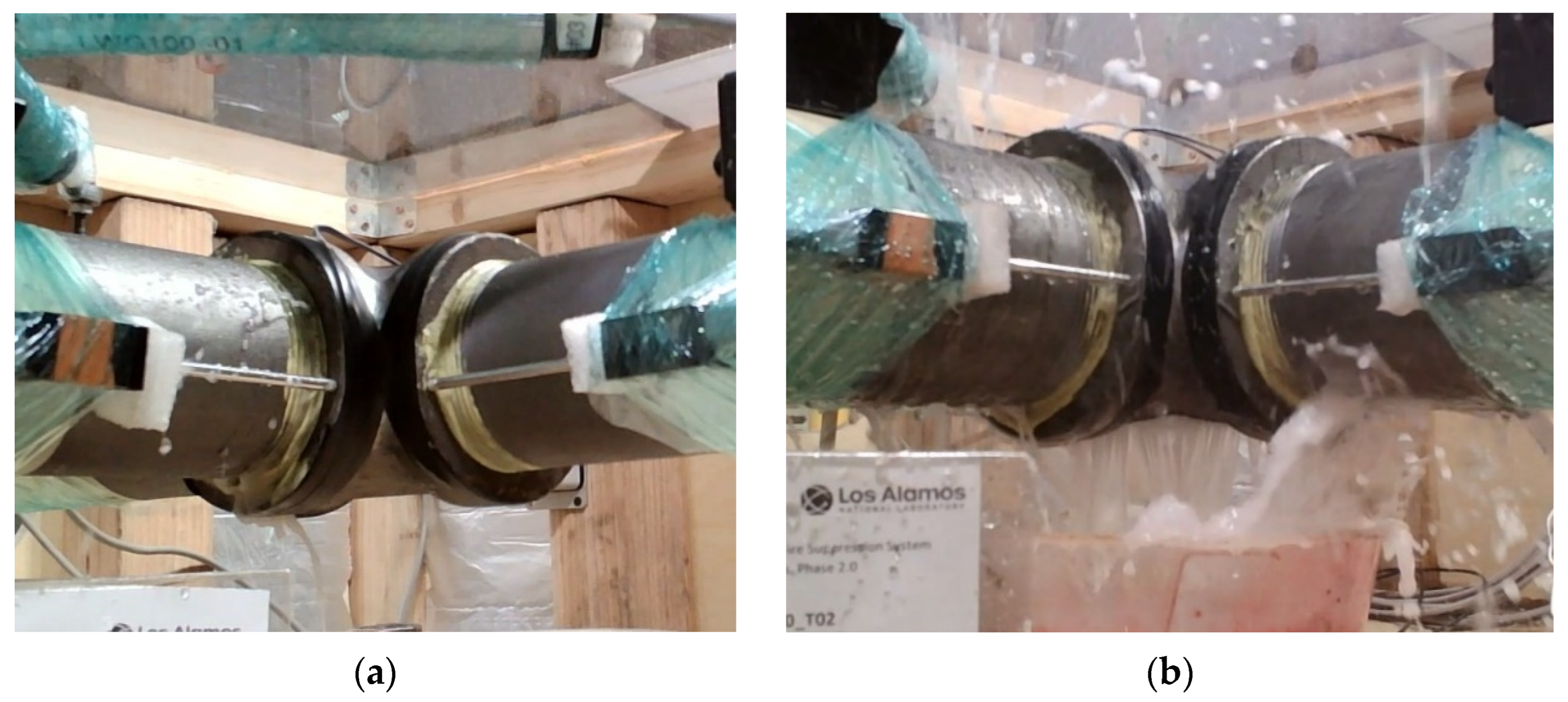
- Substantial water leakage at the pipe-fitting interface, equivalent to a volume of 2 ounces of water collected during the test.
- Structural failure, including:
- Rupture of the fitting
- Rupture of the pipe
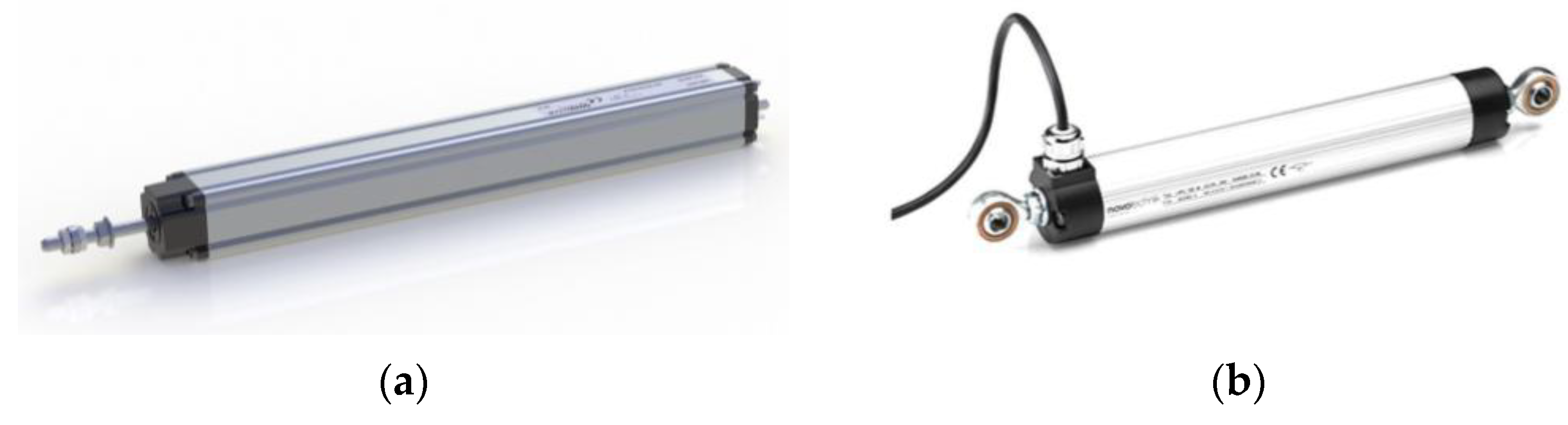
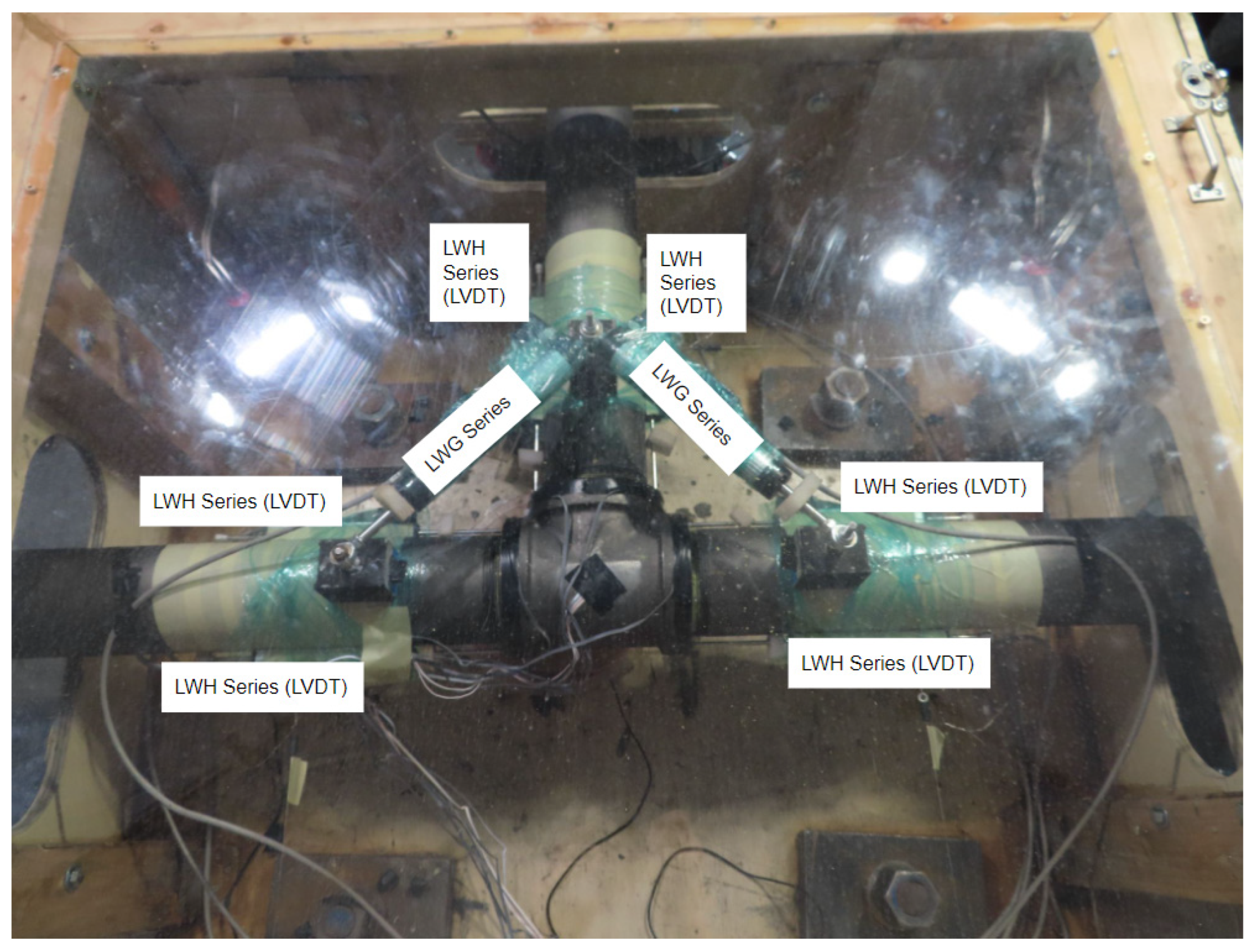
2.3. Applicable Measurements
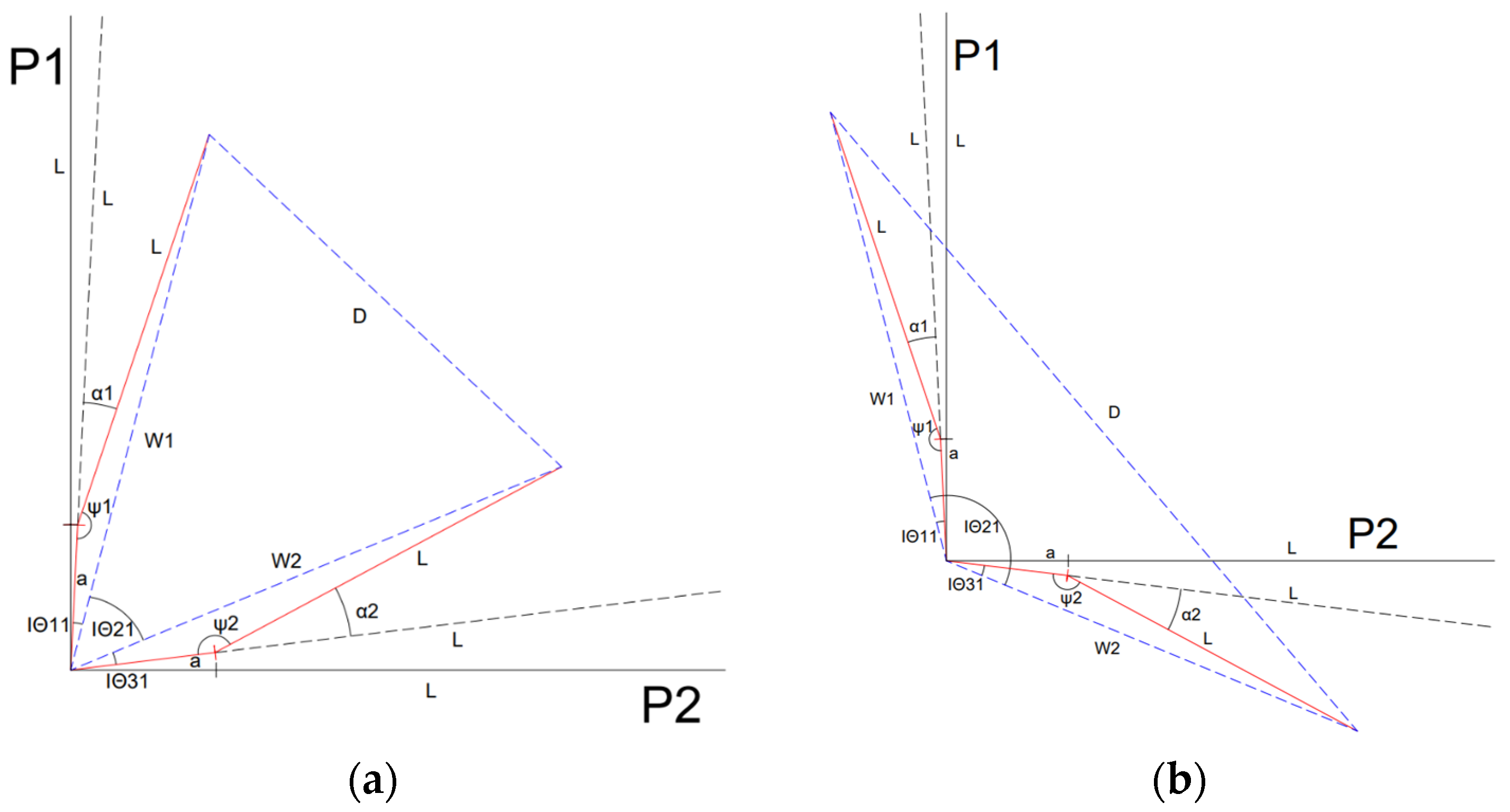
2.4. Applicable Calculations
2.4.1. Bending Moment
2.4.2. Fitting Bending Calculations
3. Results
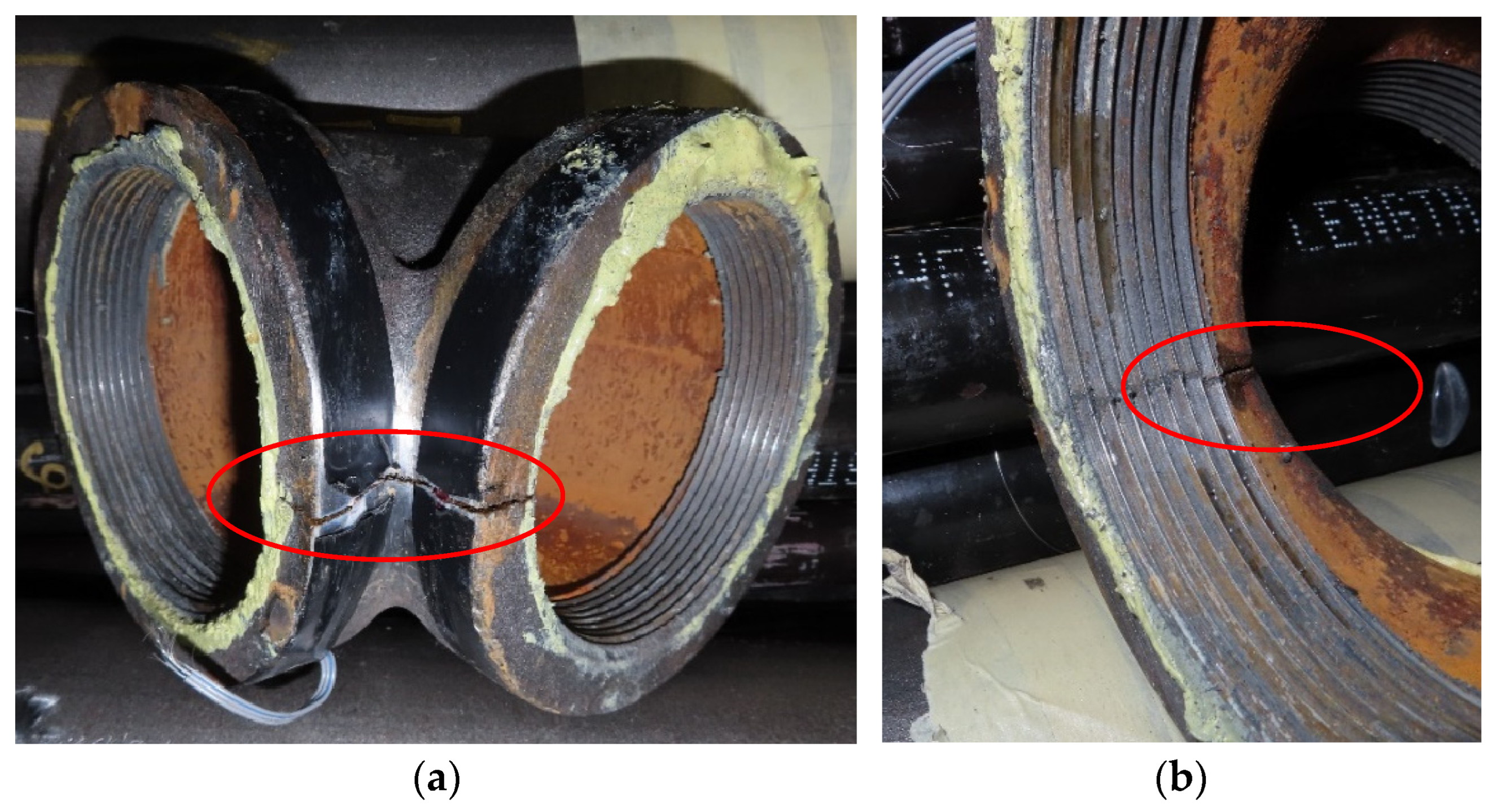
3.1. Physical Damages and Damage States of the Large Size Threaded Cast Iron Pipe Fittings
3.2. Rotational Capacity of the Large Size Threaded Cast Iron Pipe Fittings
3.3. Moment vs. Rotation Response of the Large Size Threaded Cast Iron Pipe Fittings
3.4. Fragility Analysis of the Large Size Threaded Cast Iron Pipe Fittings
4. Discussion
- (1)
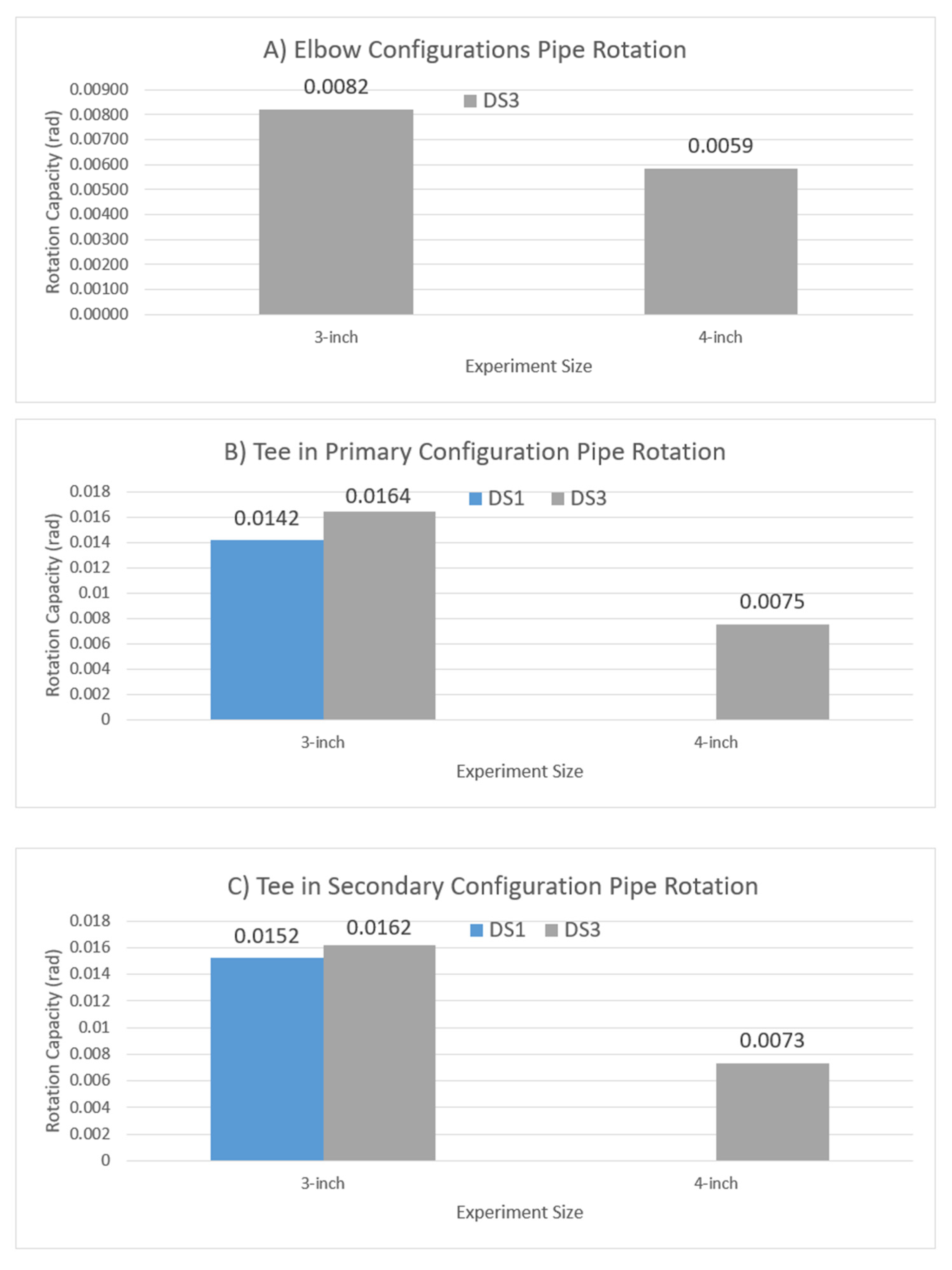
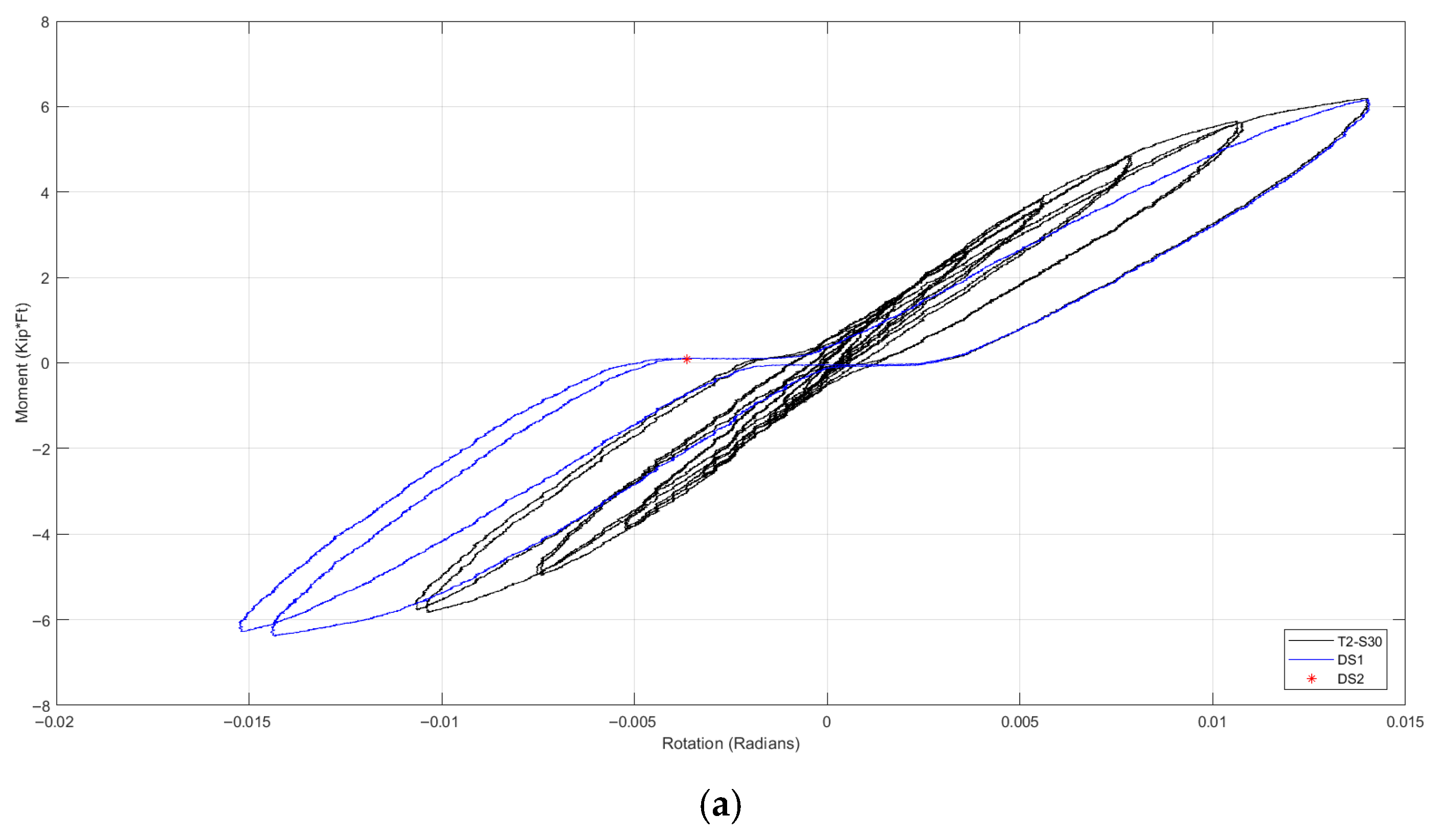
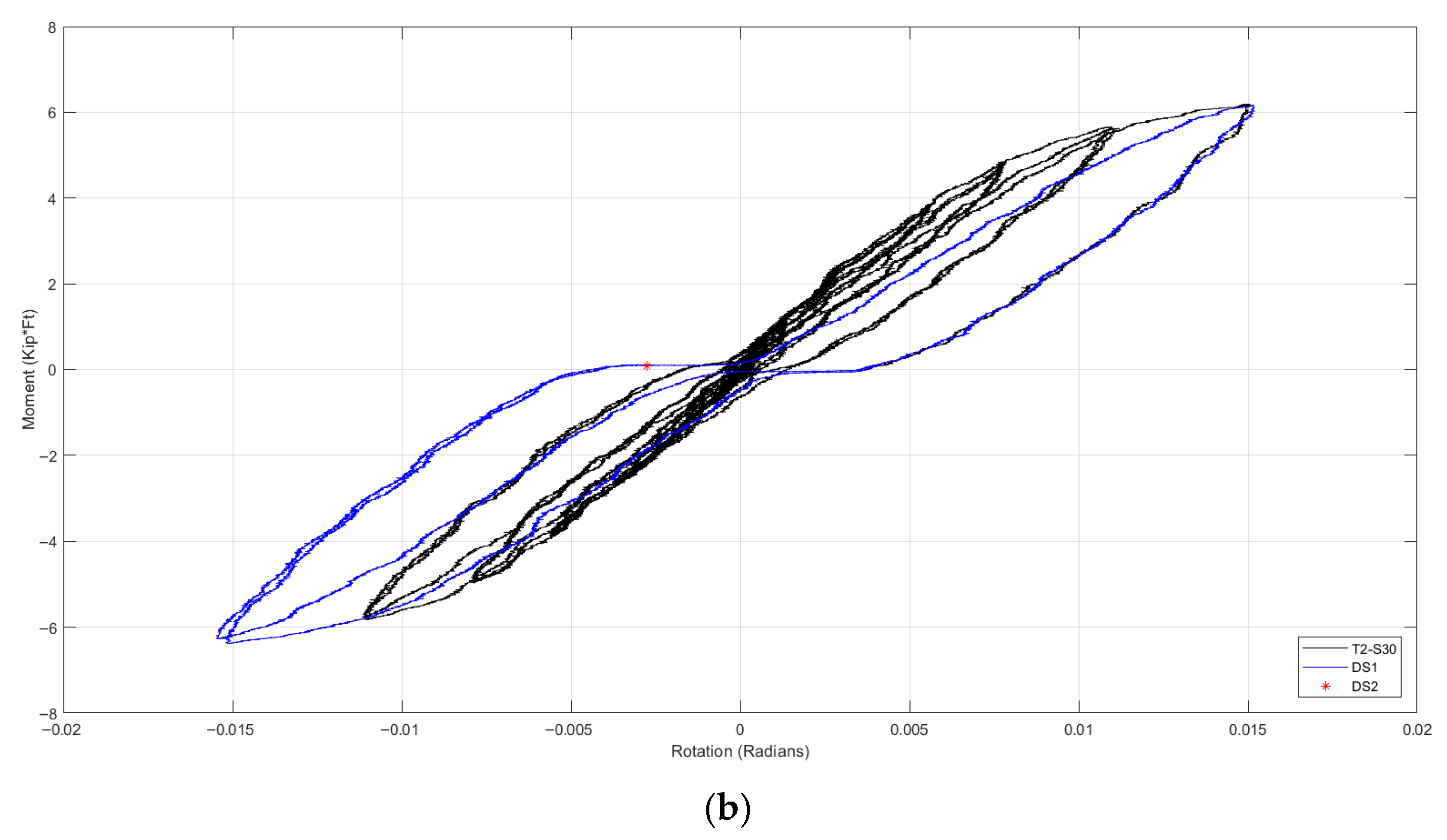
- Across all tested configurations, structural rupture of the fitting body was the dominant failure mode, corresponding to Damage State 3 (DS3). Leakage corresponding to DS1 was observed only in the 3-inch tee assemblies; no specimen exhibited the substantial leakage defined as DS2.
- (2)
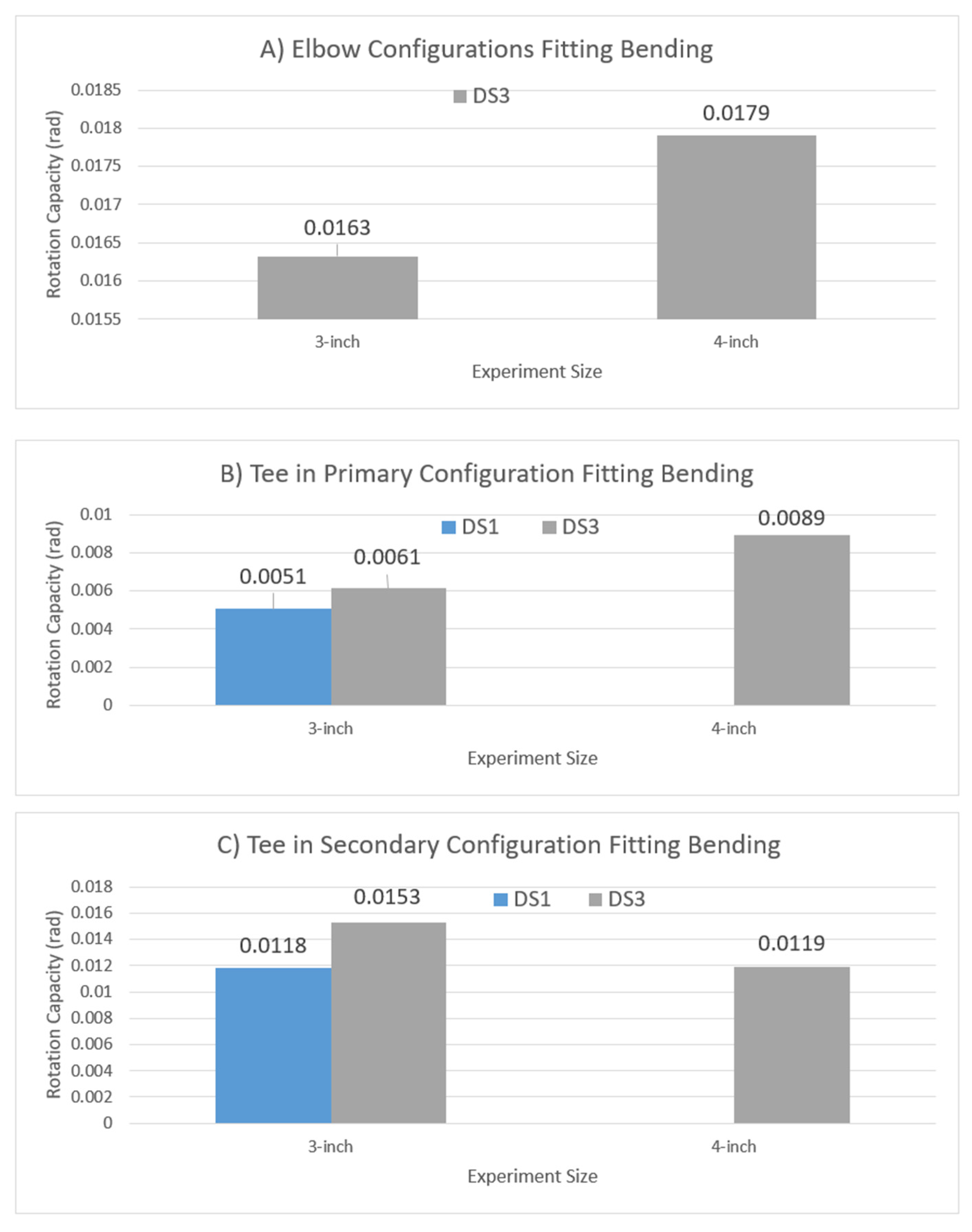
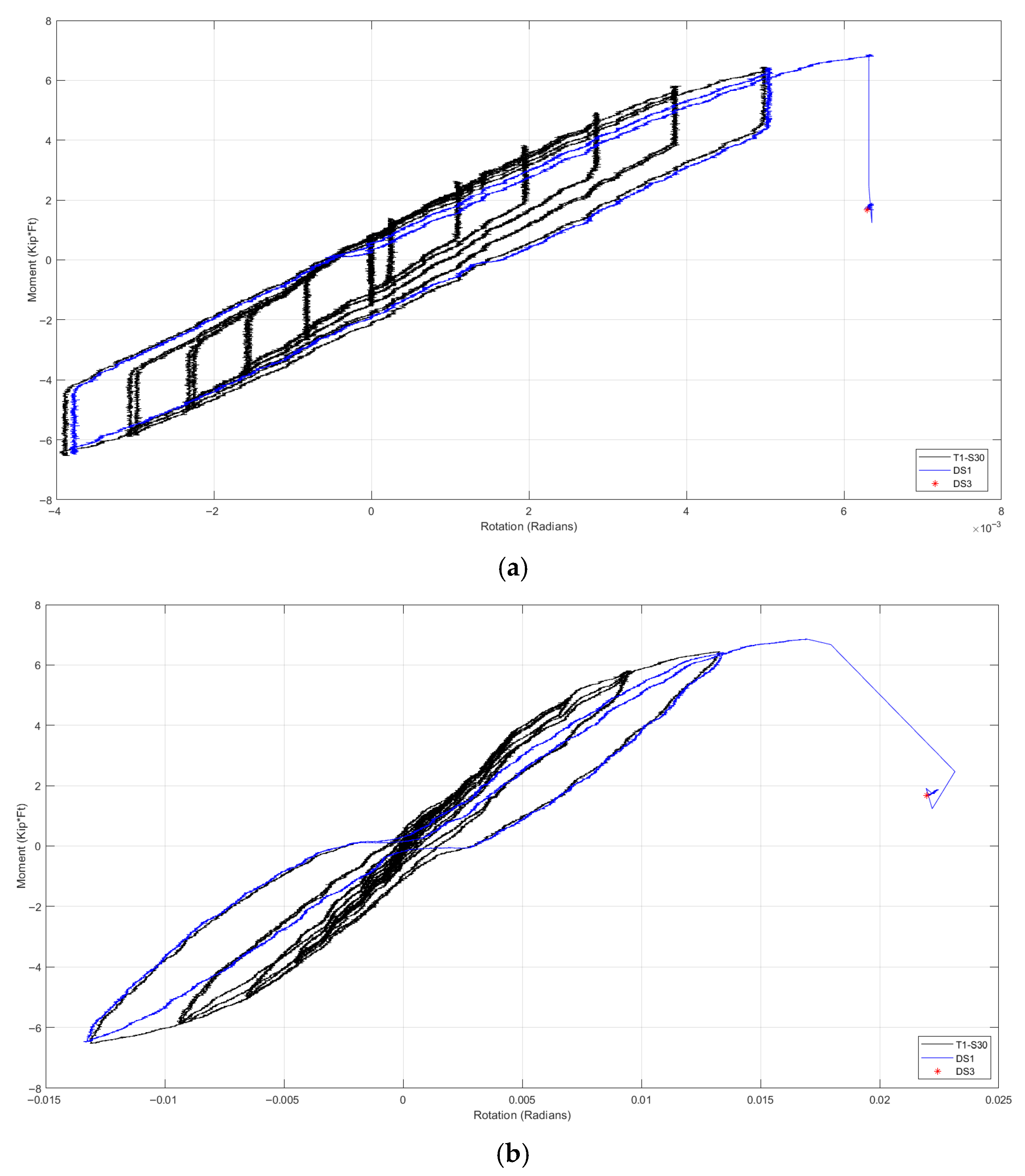
- Maximum rotational capacities of the fittings ranged from 0.0063 to 0.0179 radians, measured at the fitting body. Corresponding pipe rotations, measured at the face of the fitting, ranged from 0.0059 to 0.0082 radians, both indicative of DS3. Pipe rotations showed minimal variation between tee loading configurations.
- (3)
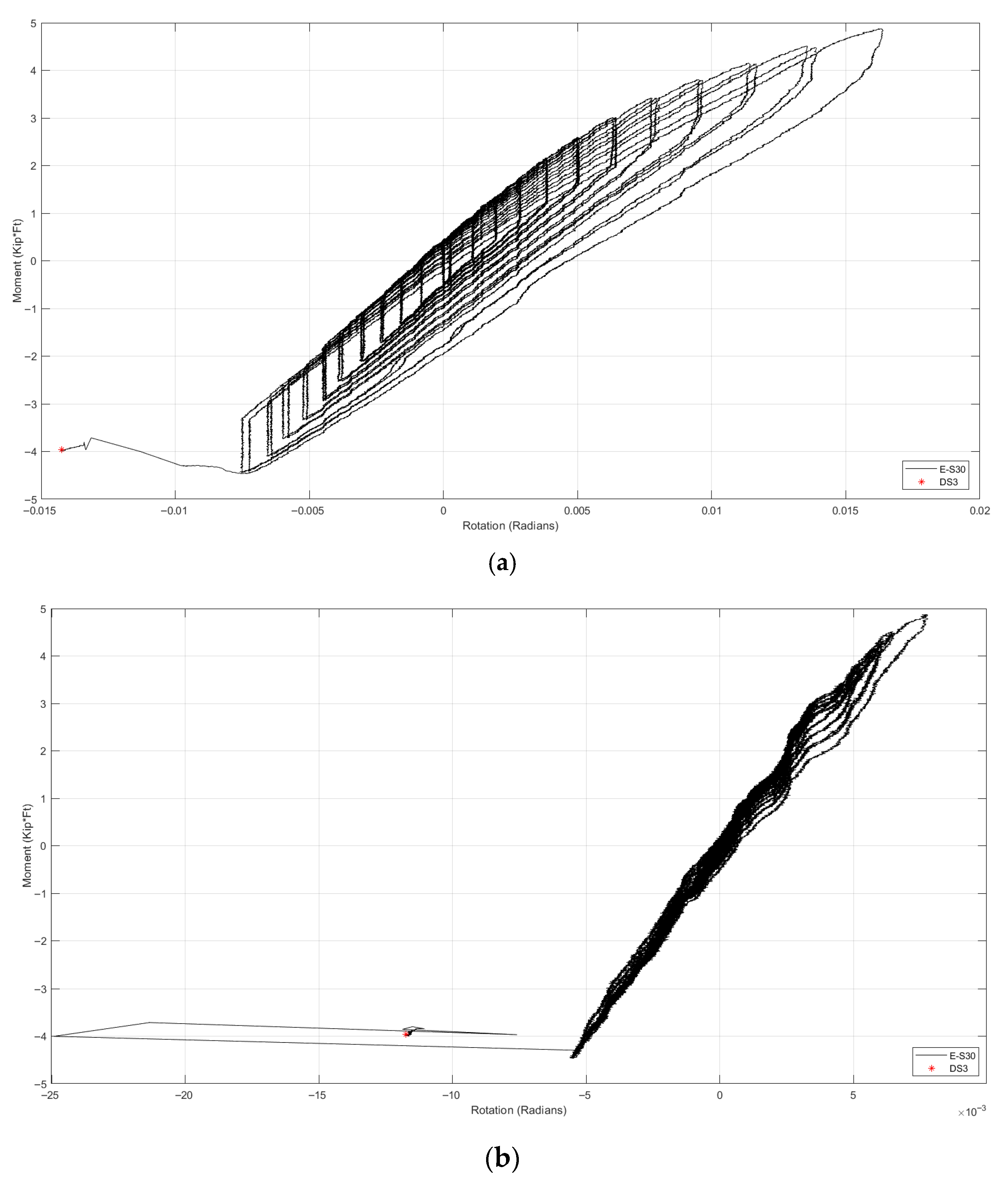
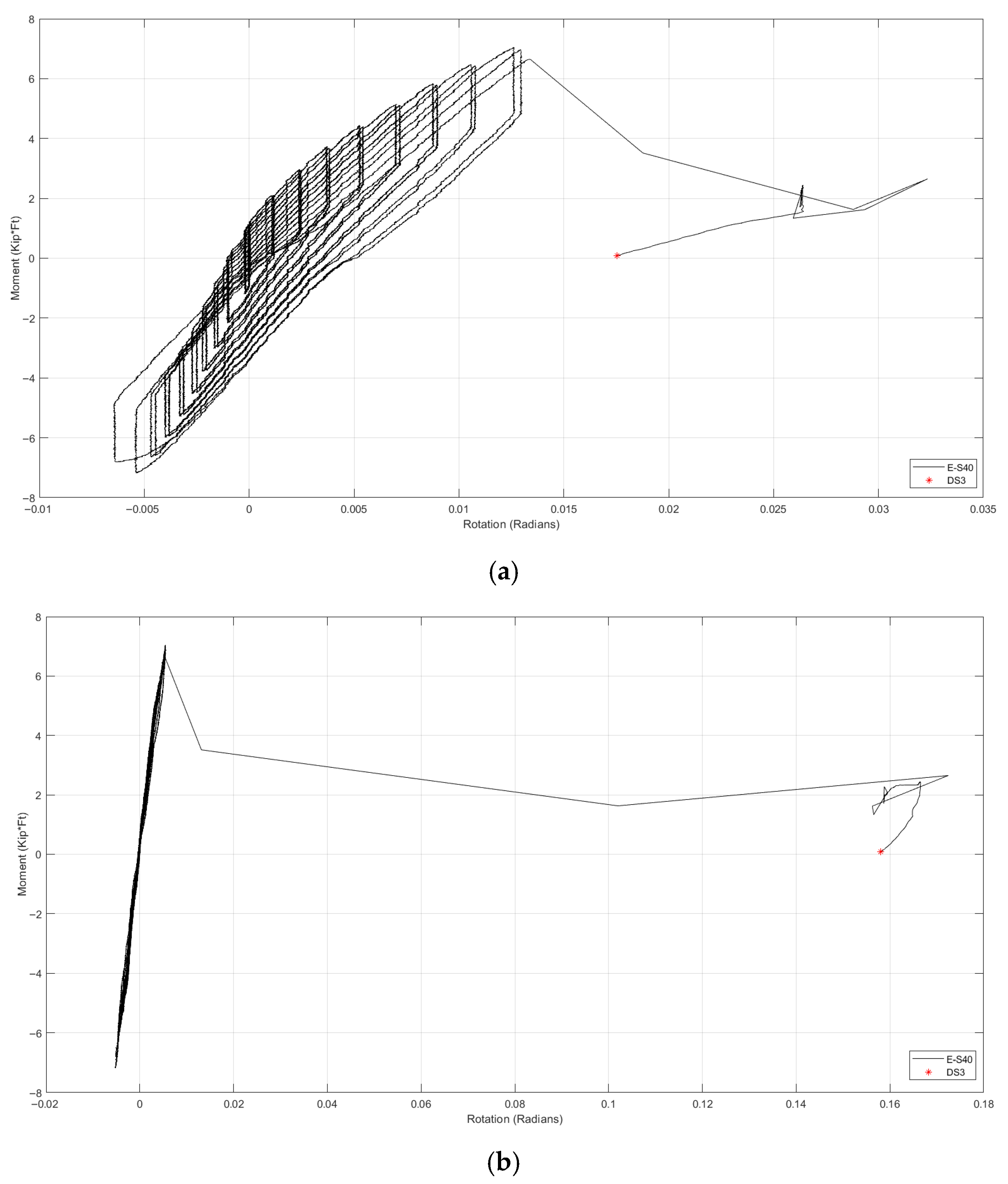
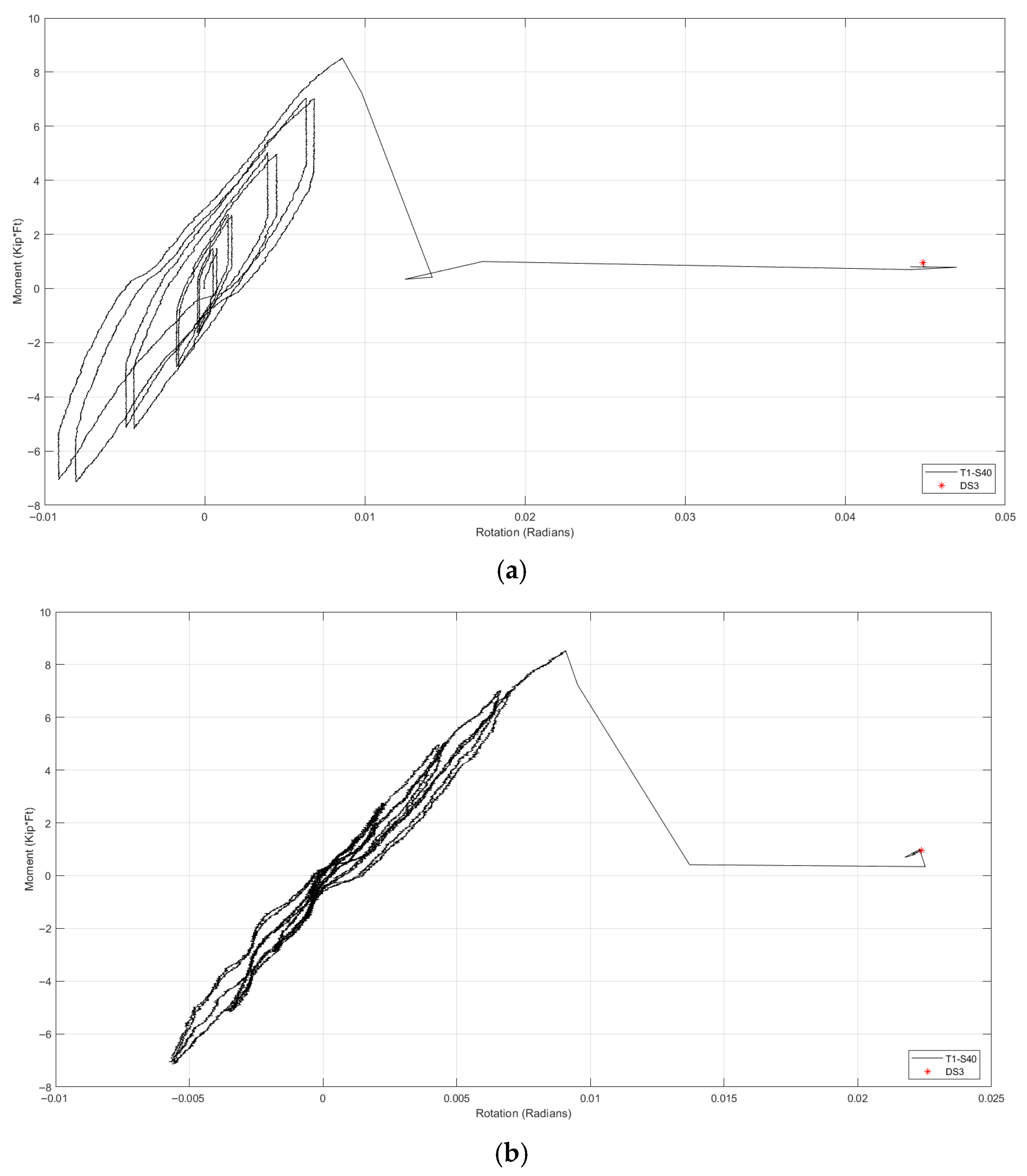
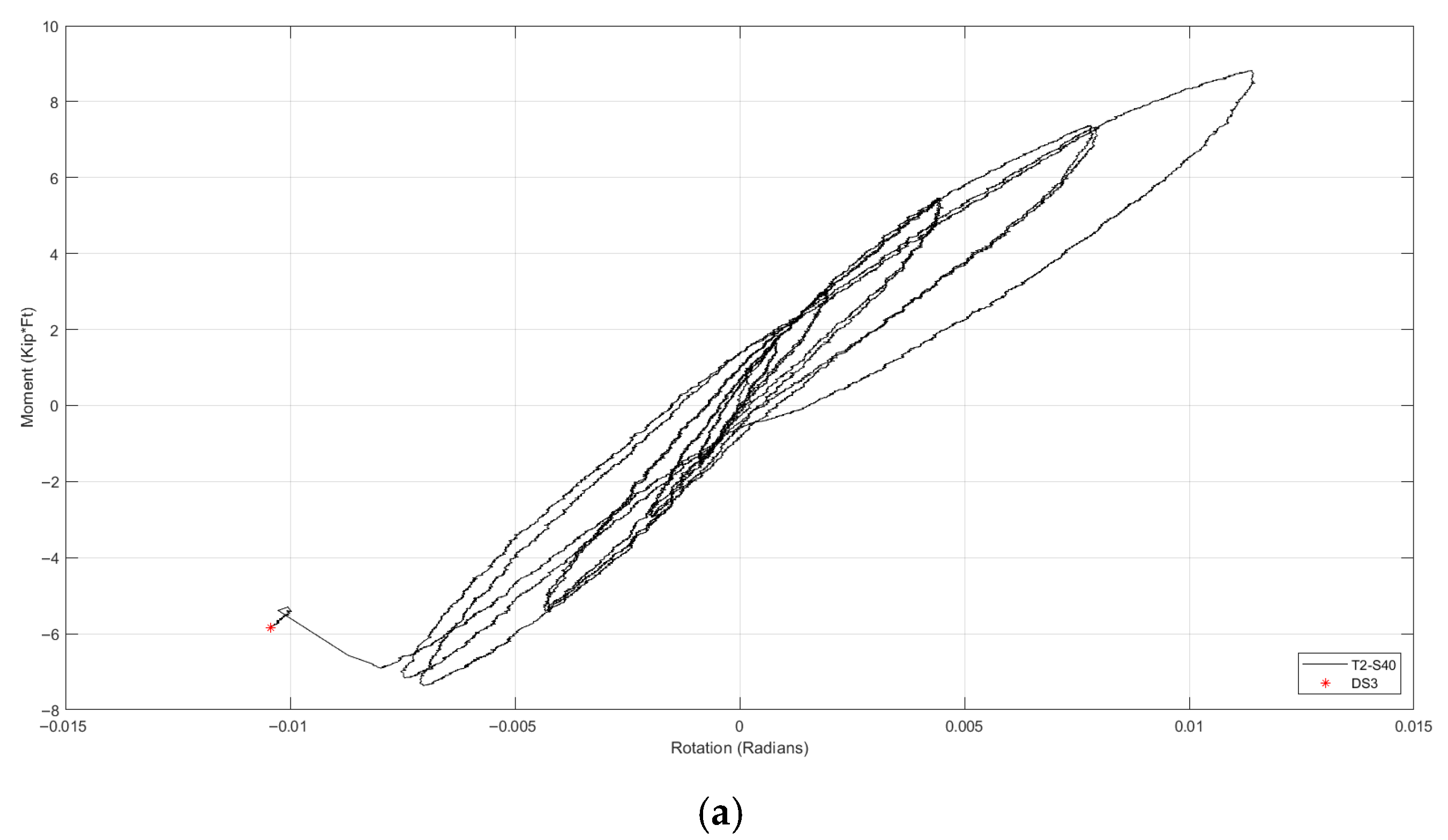
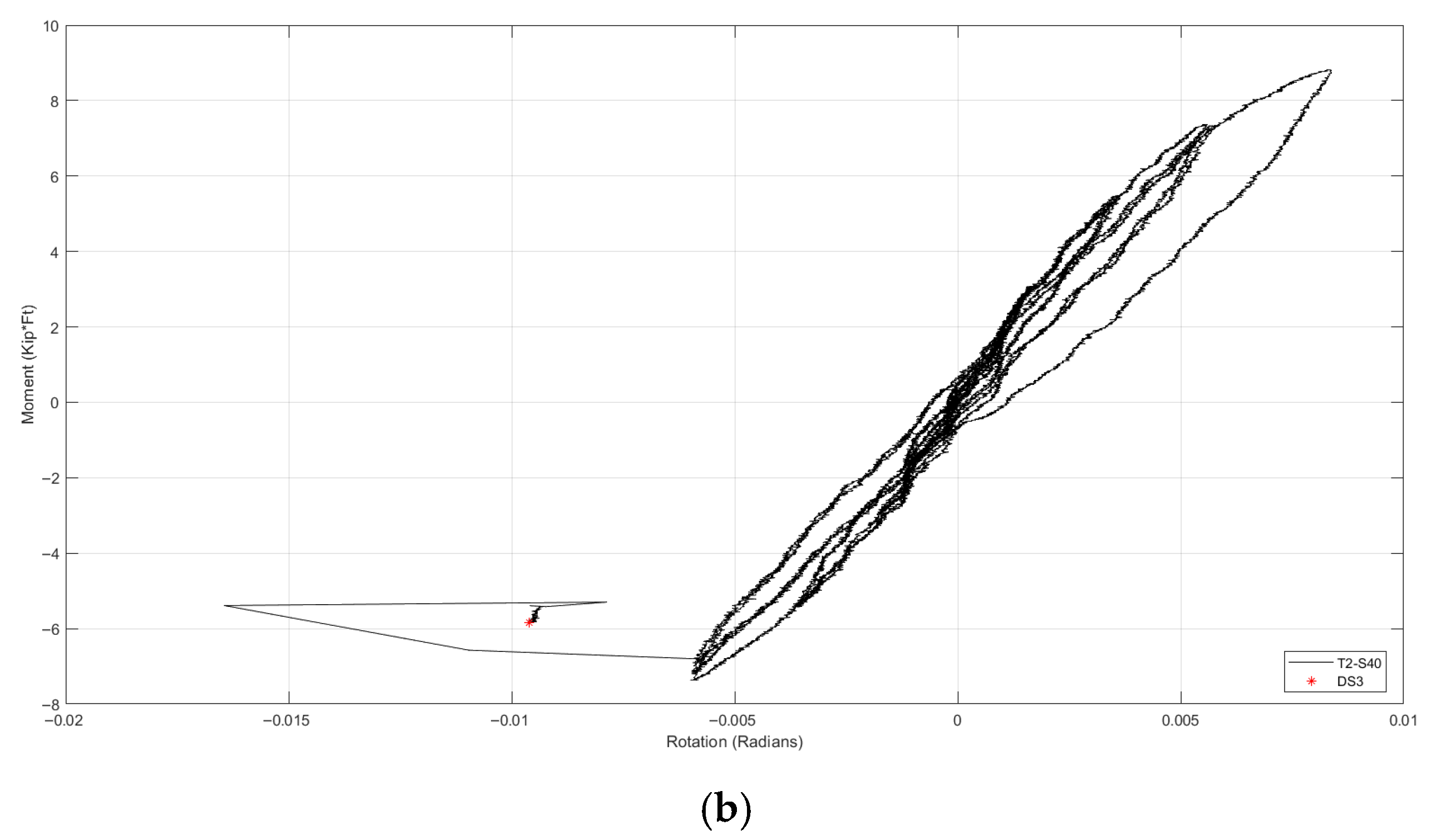
- Moment–rotation hysteresis loops revealed distinct behavioral signatures. Most assemblies displayed cyclic responses until abrupt rupture. The transition to DS3 was characterized by a sudden drop in moment capacity following peak moments on the order of 4.9 to 8.7 kip-ft, depending on configuration. Notably, the 3-inch tee assemblies were the only cases to show progressive leakage (DS1) prior to rupture.
- (4)
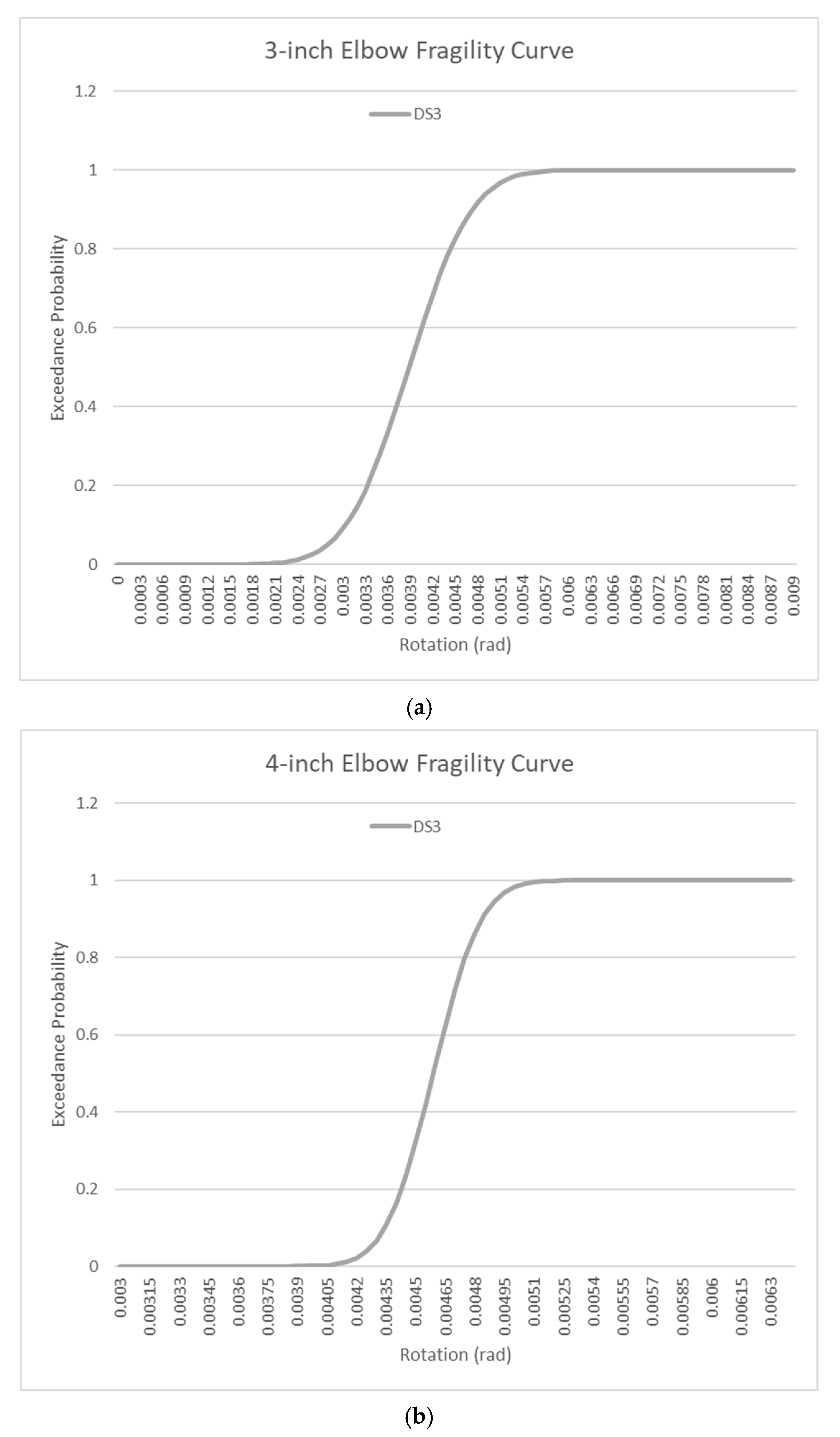
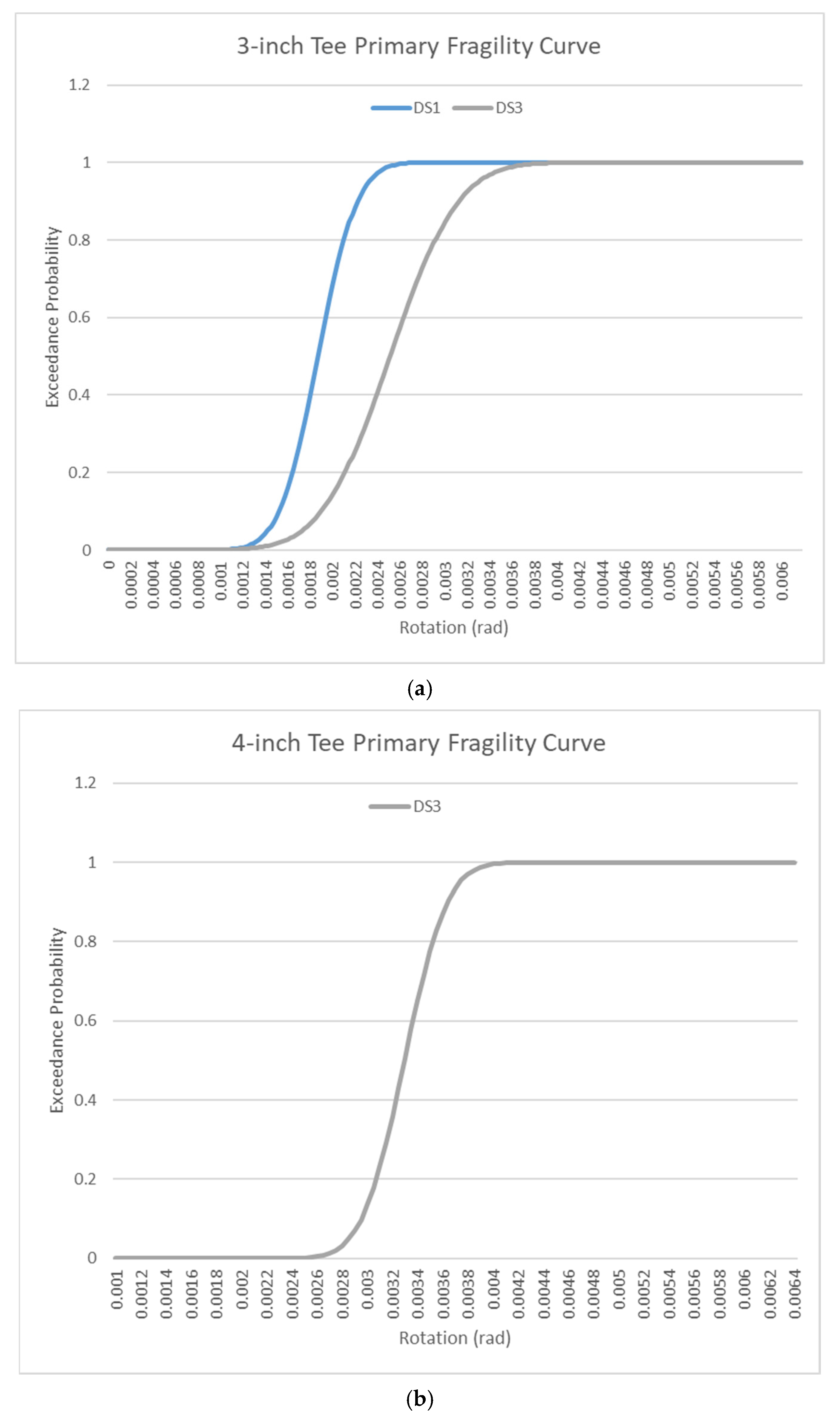
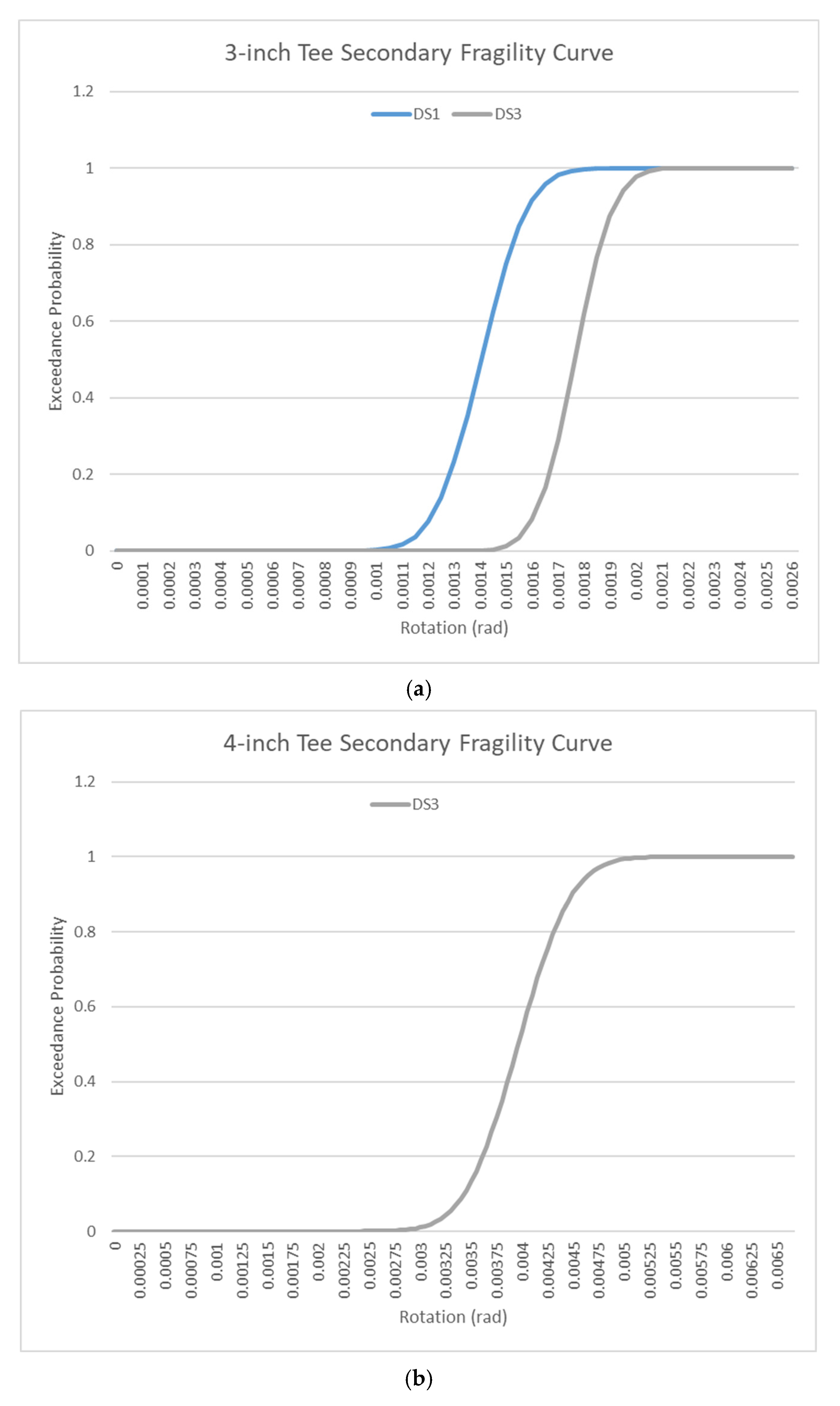
- The fragility models derived from the test data incorporate the logarithmic standard deviation (β) to quantify uncertainty in the rotational capacity. This dispersion accounts for material variability, dimensional tolerances, and assembly imperfections. The β values were comparable across fitting sizes, suggesting consistent variability irrespective of nominal diameter. The use of β in the probabilistic framework enables performance predictions under a broader range of seismic demands and enhances the reliability of the fragility analysis.
- (5)
- As depicted in Figure 22, Figure 23 and Figure 24, the fragility curves demonstrate a higher susceptibility to damage initiation in 3-inch fittings, which reached defined damage states at lower rotation levels compared to 4-inch fittings. This suggests that, despite their smaller size, 3-inch fittings may be more vulnerable under seismic deformation demands. No significant differences were observed between tee configurations regarding their damage probabilities.
- (6)
- Comparative analysis with the prior study by Rusnak et al. [20], which investigated smaller fittings (1–2 inches), revealed several important trends:
- (a)
- Smaller fittings exhibited greater rotational capacity before reaching any damage state.
- (b)
- No failure was observed in elbows up to 2 inches in the earlier study, contrasting with the rupture observed in both 3- and 4-inch elbows in this study.
- (c)
- In smaller fittings, pipe rotation and fitting bending decreased with size, while in the larger sizes examined here, fitting bending capacity increased with size, but pipe rotation slightly decreased. In all cases, pipe rotation exceeded fitting bending.
- (d)
- Hysteresis loops for smaller fittings displayed more gradual degradation, whereas those for larger fittings exhibited an abrupt rupture pattern.
- (e)
- While the defined EDPs differed between the studies, relative comparisons suggest that smaller fittings tolerated greater deformation at the fitting face before reaching damage thresholds.
5. Conclusions
Author Contributions
Funding
Data Availability Statement
Conflicts of Interest
References
- Gillengerten, J. Design of Nonstructural System and Components. In The Seismic Design Handbook, 2nd ed.; Springer: New York, NY, USA, 2001. [Google Scholar]
- Fleming, R.P. Analysis of Fire Sprinkler Systems Performance in the Northridge Earthquake; National Institute of Standards and Technology: Gaithersburg, MD, USA, 1998; NIST-GCR-98–736.
- Baird, A. Building Better—The Importance of Non-Structural Elements in Earthquakes; BECA: Auckland, New Zealand, 2020. [Google Scholar]
- Ayres, J.M.; Ezer Associates Inc. Northridge Earthquake Hospital Water Damage Study; Office of Statewide Health Planning and Development: Sacramento, CA, USA, 1996.
- OSHPD. Seismic Compliance Program and Product Report in Accordance with Assembly Bill 100; Office of Statewide Health Planning and Development: Sacramento, CA, USA, 2021.
- NIST. Northridge Earthquake Performance of Structures, Lifelines, and Fire Protection Systems; NIST Special Publication 862; National Institute of Standards and Technology: Gaithersburg, MD, USA, 1994.
- OSHPD. The Northridge Earthquake: A Report to the Hospital Building Safety Board on the Performance of Hospitals; Office of Statewide Health Planning and Development: Sacramento, CA, USA, 1995.
- Mizutani, K.; Kim, H.; Kikuchihara, M.; Nakai, T.; Nishino, M.; Sunouchi, S. The Damage of the Building Equipment Under the 2011 Tohoku Pacific Earthquake. In Proceedings of the 9th International Conference on Urban Earthquake Engineering and 4th Asia Conference on Earthquake Engineering, Tokyo, Japan, 6–8 March 2012. [Google Scholar]
- Building Performance. Practice Advisory 19: Improving Earthquake Performance of Non-Structural Elements; Ministry of Business, Innovation & Employment: Wellington, New Zealand, 2016.
- Kehoe, K. Revisiting Earthquake Lessons—Nonstructural Components; Structural Engineers Association of California: San Francisco, CA, USA, 2019. [Google Scholar]
- Mulchandani, H.; Robertson, I.; Correa, T.; Prevatt, D.; Roueche, D.; Mosalam, K.; Achiari, H.; Esteban, M.; Krautwald, C.; Mikami, T.; et al. StEER: Structural Extreme Event Reconnaissance Network Palu Earthquake and Tsunami, Sulawesi, Indonesia Field Assessment Team 1 (FAT-1) Early Access Reconnaissance Report (EARR); University of Notre Dame: Notre Dame, IN, USA, 2019. [Google Scholar] [CrossRef]
- Wang, T.; Shang, Q.; Chen, X.; Li, J. Experiments and Fragility Analyses of Piping Systems Connected by Grooved Fit Joints with Large Deformability. Front. Built Environ. 2019, 5, 49. [Google Scholar] [CrossRef]
- Tian, Y.; Filiatrault, A.; Mosqueda, G. Experimental Seismic Study of Pressurized Fire Sprinkler Piping Subsystems; MCEER-13-0001; University at Buffalo: Buffalo, NY, USA, 2013. [Google Scholar]
- Zaghi, A.E.; Maragakis, E.M.; Itani, A.; Goodwin, E. Experimental and Analytical Studies of Hospital Piping Assemblies Subjected to Seismic Loading. Earthq. Spectra 2012, 28, 367–384. [Google Scholar] [CrossRef]
- Qu, Z.; He, S.W.; Ye, L.H. Seismic Fragility of Water Supply Pipelines under Static and Dynamic Cyclic Loading. In Proceedings of the Huixian International Forum on Earthquake Engineering for Young Researchers, Huixian, China, 21–22 August 2018. [Google Scholar]
- Antaki, G.; Gutierrez, B. Seismic Capacity of Threaded, Brazed and Grooved Pipe Joints. In Proceedings of the DOE Natural Phenomena Hazards Workshop, Germantown, MD, USA, 25–26 October 2011. [Google Scholar]
- Antaki, G.; Guzy, D. Seismic Testing of Grooved and Threaded Fire Protection Joints and Correlation with NFPA Seismic Design Provisions. In Proceedings of the ASME Pressure Vessels and Piping Division, San Diego, CA, USA, 26–30 July 1998; Volume 364, pp. 69–75. [Google Scholar]
- Soroushian, S.; Zaghi, A.E.; Maragakis, M. Analytical Seismic Fragility Analyses of Fire Sprinkler Piping Systems with Threaded Joints. Earthq. Spectra 2015, 31, 1125–1155. [Google Scholar] [CrossRef]
- Soroushian, S.; Zaghi, A.E.; Maragakis, M. Seismic Fragility Study of Fire Sprinkler Piping Systems with Grooved Fit Joints. J. Struct. Eng. 2015, 141, 04014157. [Google Scholar] [CrossRef]
- Rusnak, C.; Rivas, A.; Elfass, S. Experimental and Fragility Analysis of Threaded Cast Iron Pipe Fittings Utilized in a Fire Suppression System. Front. Built Environ. 2025, 11, 1565894. [Google Scholar] [CrossRef]
- Rusnak, C.; Rivas, A.; Elfass, S. Comparison Between the Performance of Threaded Connections versus Welded Connections in Pipe-Fitting Assemblies. In Proceedings of the ASME 2024 Pressure Vessels and Piping Conference, Bellevue, WA, USA, 28 July–2 August 2024. PVP2024-123494. [Google Scholar]
- Yoshizaki, K.; Hamada, A.; O’Rourke, T.D. Large Deformation Behavior of Buried Pipelines with Low-Angle Elbows Subjected to Permanent Ground Deformation. J. Struct. Mech. Earthq. Eng. JSCE 2001, 18, 41s–52s. [Google Scholar]
- Engineers Edge. Material Strength—Strength (Mechanics) of Materials. Available online: https://www.engineersedge.com (accessed on 1 August 2025).
- Hou, Y.; Mi, X.; Xie, H.; Zhang, W.; Huang, G.; Peng, L.P.; Feng, X.; Yang, Z. Size Effect on Mechanical Properties and Deformation Behavior of Pure Copper Wires Considering Free Surface Grains. Materials 2020, 13, 4563. [Google Scholar] [CrossRef] [PubMed]
- Chen, H.; Yi, W.; Ma, Z.J. Shear Size Effect in Simply Supported RC Deep Beams. Eng. Struct. 2019, 182, 203–213. [Google Scholar] [CrossRef]
- Bai, X.; Zhang, P.; Liu, S.; Zhao, B.; Zhang, Z. Fatigue Strength Prediction of Large-Size Component Through Size Effect Measurement and Determination. Int. J. Fatigue 2023, 168, 107281. [Google Scholar]
- Gibson, D.; Forbes, I. Fire Suppression in Historic Buildings. Cathedral Communications Limited, 2019. Available online: https://www.buildingconservation.com/articles/firesup/fire_suppression.htm (accessed on 1 August 2025).
- Archtoolbox. Standard Pipe Dimensions. Available online: https://www.archtoolbox.com/materials-systems/plumbing/standard-pipe-dimensions.html (accessed on 1 August 2025).
- NFSA. Technical Justifications for Large Diameter Fire Department Connections; National Fire Sprinkler Association: Linthicum, MD, USA, 2020; Available online: https://nfsa.org/2020/05/01/technical-justification-for-large-diameter-fire-department-connections/ (accessed on 1 August 2025).
- NFPA. Automatic Sprinkler Systems Handbook, NFPA 13; National Fire Protection Association: Quincy, MA, USA, 2022. [Google Scholar]
- Chapman Electric Supply, Inc. Formulas for Calculation Conduit & Pipe Bends. Available online: https://www.chapmanelectric.com (accessed on 1 August 2025).
- WSSC Water. Water Design Guidelines. Part One, Section 13. Rotation of Fittings; WSSC Water: Laurel, MD, USA, 2019. [Google Scholar]
- ASME. B16.4-2016: Gray Iron Threaded Fittings, Classes 125 and 250; The American Society of Mechanical Engineers: New York, NY, USA, 2016. [Google Scholar]
- ASC Engineered Solutions. Anvil Cast Iron Threaded Fittings; PS-SUB-351-v01; ASC Engineered Solutions: Navi Mumbai, India, 2021. [Google Scholar]
- ASC Engineered Solutions. Anvil Cast Iron Threaded Fittings; PS-SUB-358-360-v01; ASC Engineered Solutions: Navi Mumbai, India, 2021. [Google Scholar]
- ASME. B1.20.1-2013: Pipe Threads, General Purpose (Inch); The American Society of Mechanical Engineers: New York, NY, USA, 2013. [Google Scholar]
- ASME. B31.3-2018: Process Piping, ASME Code for Pressure Piping; The American Society of Mechanical Engineers: New York, NY, USA, 2018. [Google Scholar]
- FEMA. FEMA 461: Interim Testing Protocol for Determining the Seismic Performance Characteristics of Structural and Nonstructural Components; Federal Emergency Management Agency: Washington, DC, USA, 2017.
- Rusnak, C.; Elfass, A.; Rivas, A. Total Rotational Capacity of Threaded Connections in Pipe-Fitting Assemblies. In Proceedings of the ASME Pressure Vessels and Piping Conference 2024, Bellevue, WA, USA, 28 July–2 August 2024. PVP2024-123390. [Google Scholar]
- FEMA. P-58: Seismic Performance Assessment of Buildings; Federal Emergency Management Agency: Washington, DC, USA, 2018.
- Porter, K.; Kennedy, R.; Bachman, R. Creating Fragility Functions for Performance-Based Earthquake Engineering. Earthq. Spectra 2007, 23, 471–489. [Google Scholar] [CrossRef]
- ASCE. ASCE 7-22: Minimum Design Loads for Buildings and Other Structures; American Society of Civil Engineers: Reston, VA, USA, 2022. [Google Scholar]









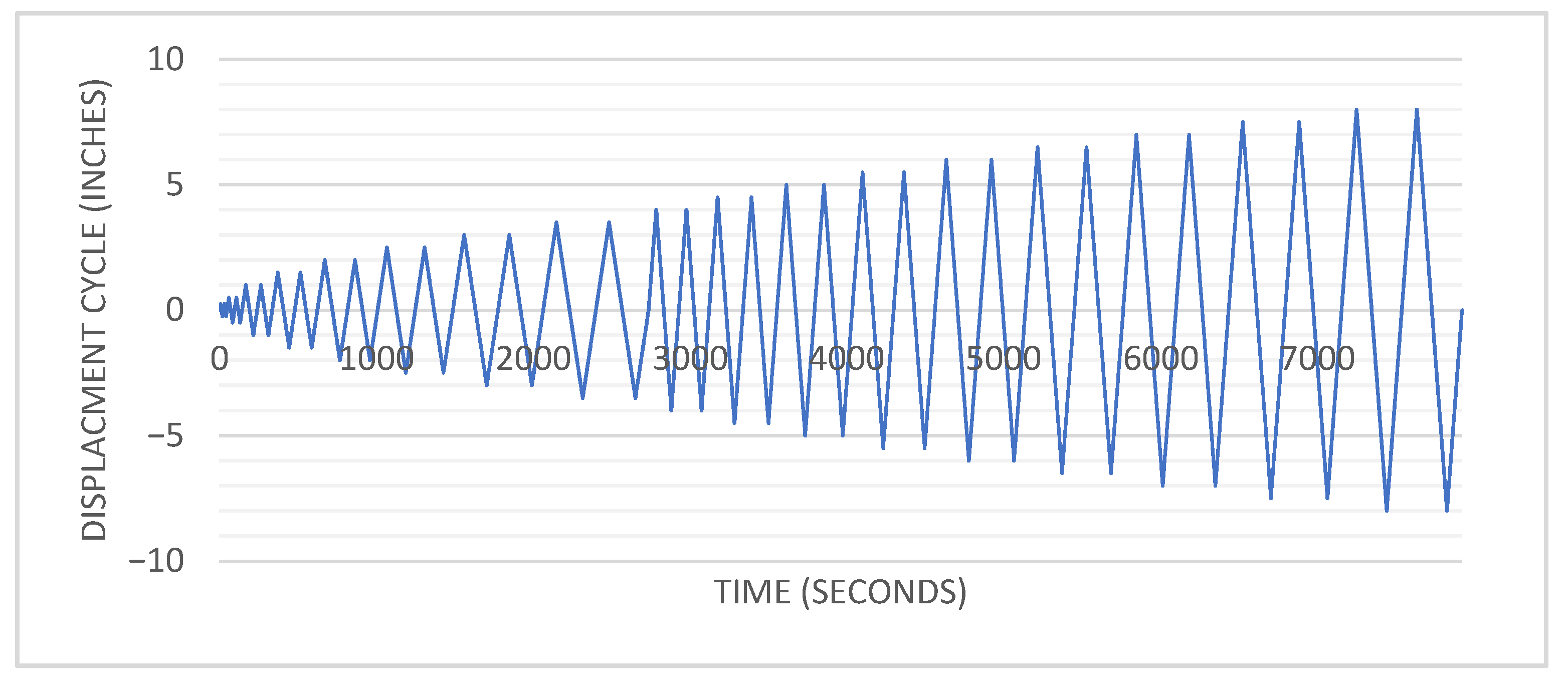
| Deformation Amplitude (inch) | Loading Rate (inch/min) |
|---|---|
| 0.25 | 2.5 |
| 0.5 | |
| 1 | |
| 1.5 | |
| 2 | |
| 2.5 | |
| 3 | |
| 3.5 | |
| 4 | 5 |
| 4.5 | |
| 5 | |
| 5.5 | |
| 6 | |
| 6.5 | |
| 7 | |
| 7.5 | |
| 8 |
| Variable | Definition |
|---|---|
| a | Distance from the face of the fitting to the center of the fitting |
| D | Fitting-Joint hypotenuse after deformation |
| HYP | Fitting-Joint hypotenuse between the center of the LWG attachment points on the adjacent pipes prior to deformation |
| IIA | Initial internal angle of the undeformed fitting measured in the lab |
| Internal angle present in fitting bending (βf) calculation | |
| L | Distance from the face of the fitting to the center of the magnet that secured the LWG |
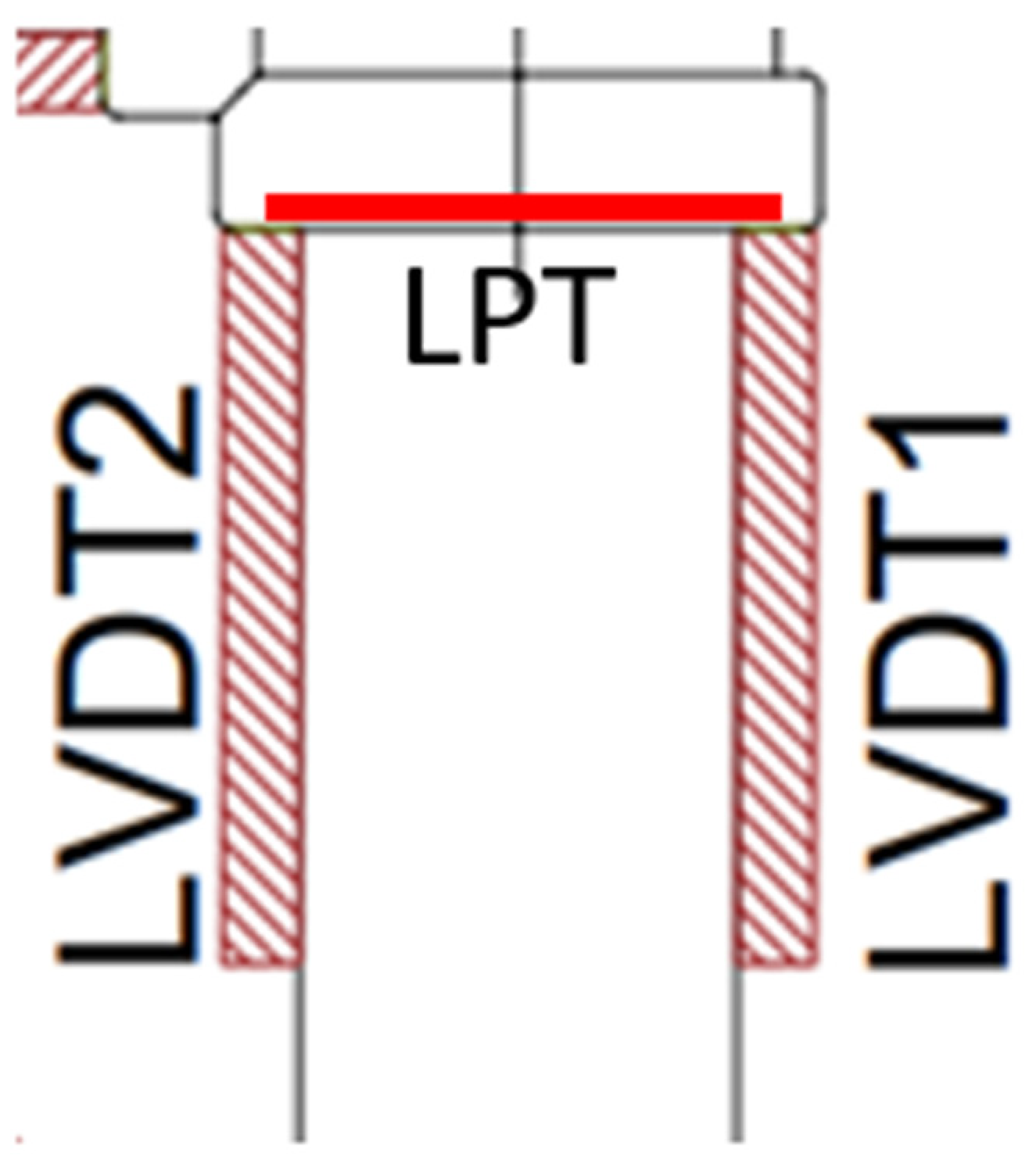
| LPT | Measured horizontal distance, in the horizontal plane, between the point of contact the LPS’ (LVDT’s) make on the face of the fitting |
| LWGr | Raw lab recording from the LWG displacement sensor |
| W | The distance from the center of the fitting to the center of the magnet fastening the LWG to the pipe |
| α | Pipe rotation |
| β | Fitting bending |
| ψ | Adjacent angle from α |
| ΔP | Manipulation sum of Iθ# present in the fitting bending (βf) calculation |
| Fitting Type/Configuration | Observed Damages and Description |
|---|---|
| Elbow | No detectable signs of early damage prior to failure; |
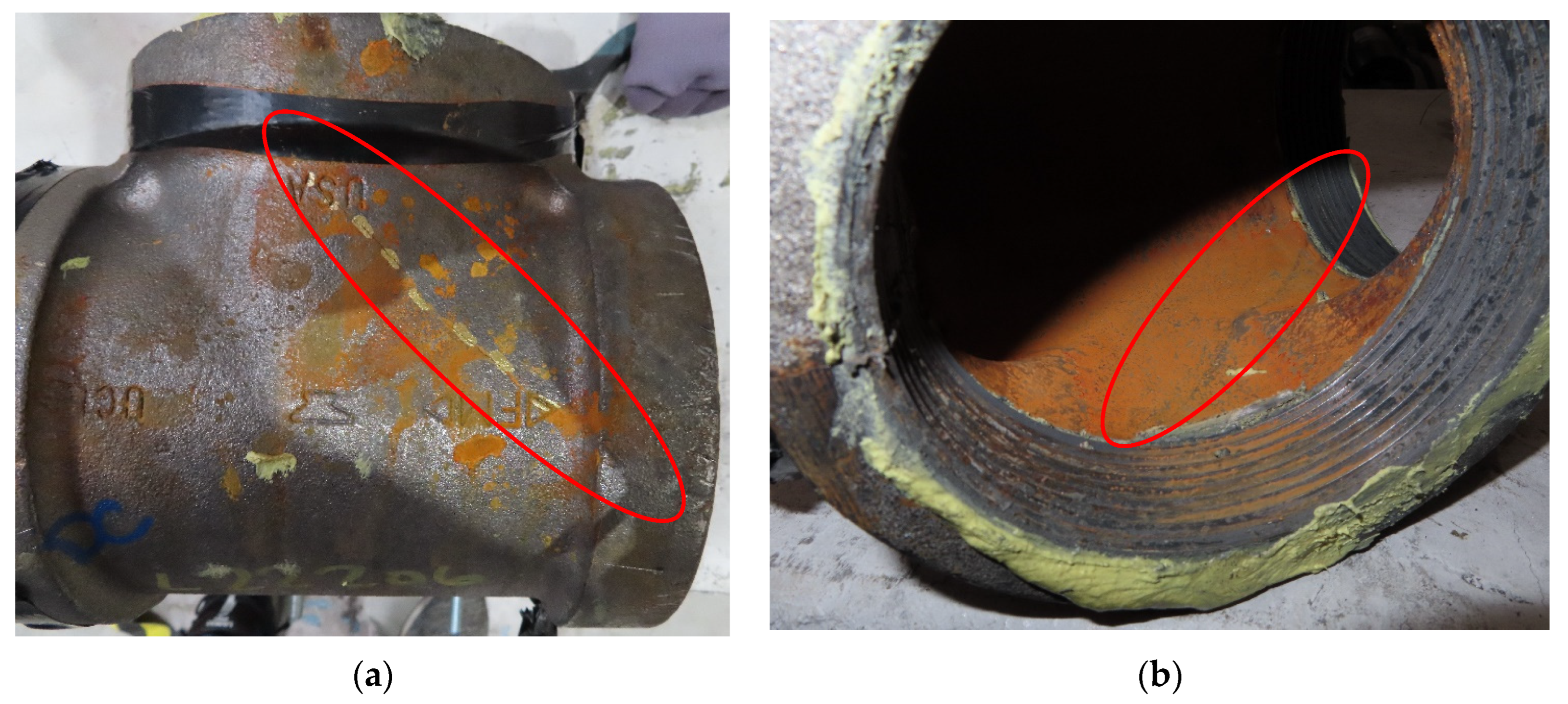
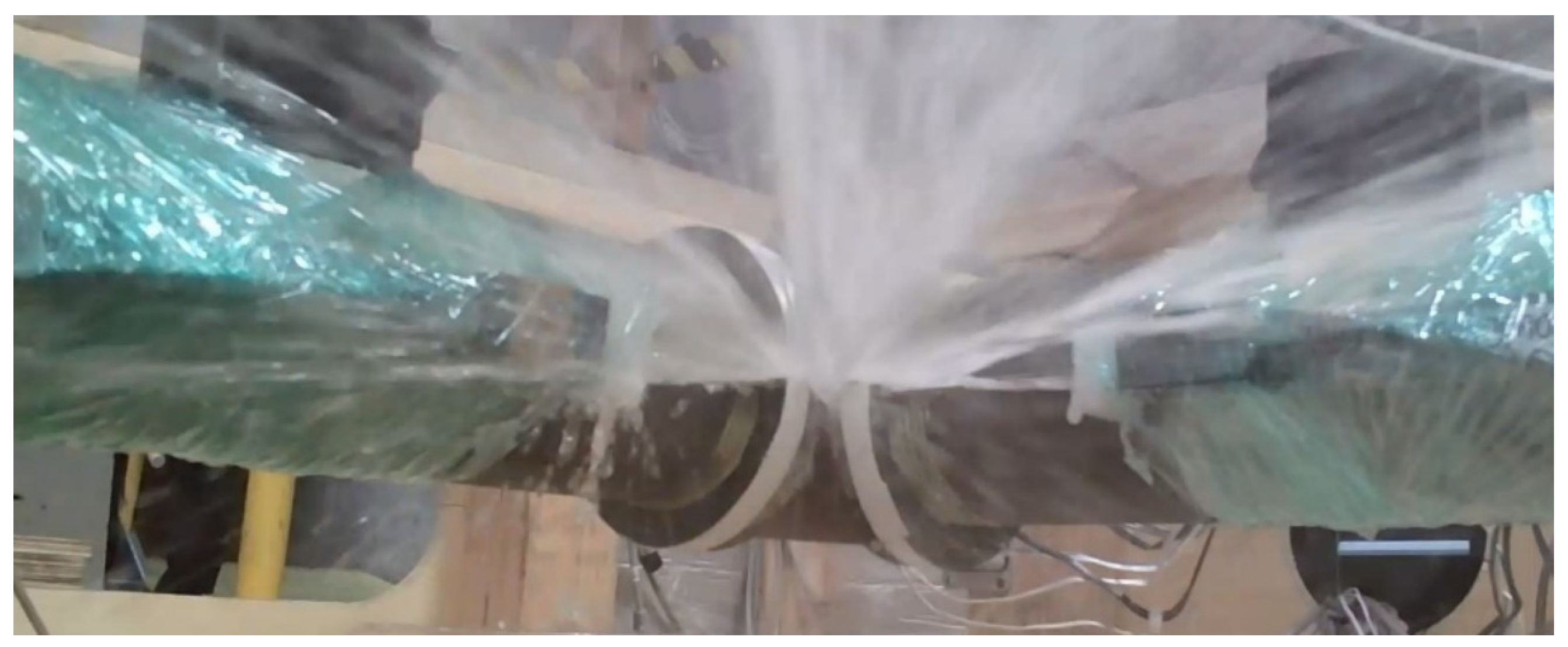
| Catastrophic rupture occurred suddenly along the casting seam in both 3-inch and 4-inch elbow fittings (Figure 9) | |
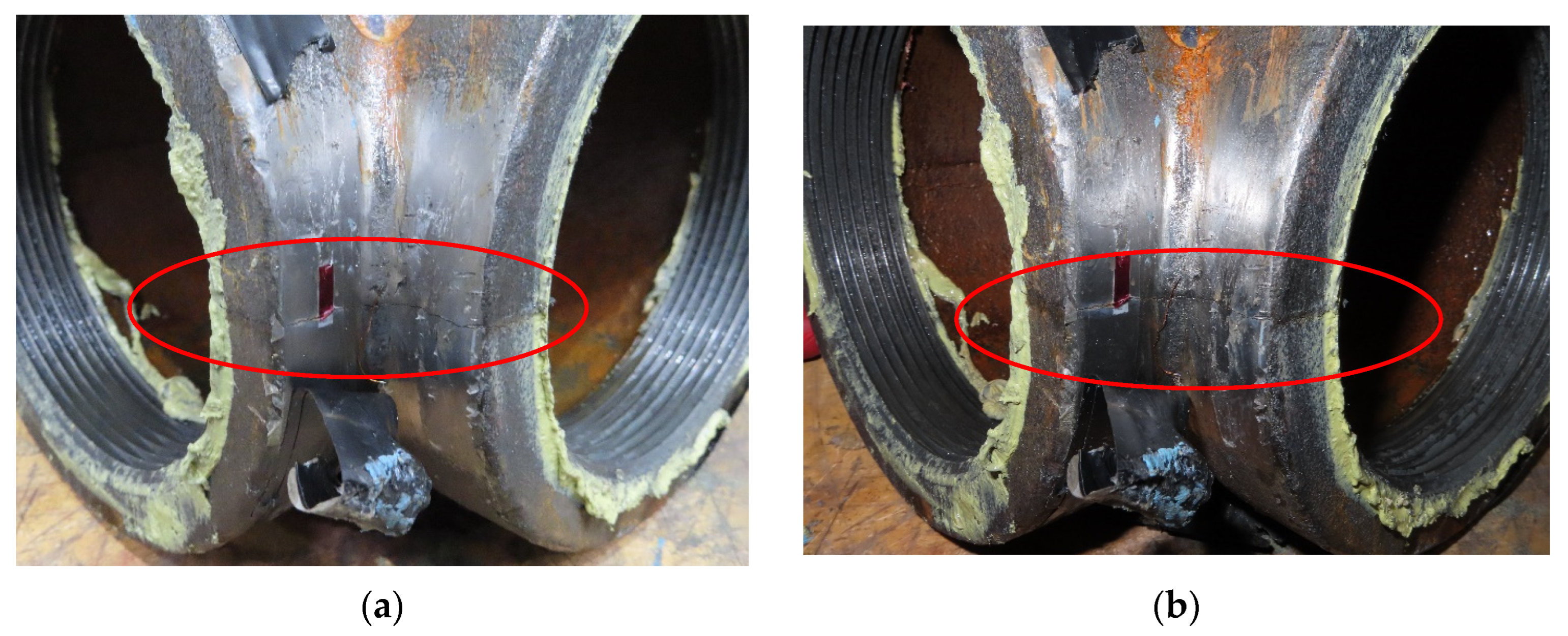
| Tee in Primary Configuration | Occasional early-stage leakage observed in 3-inch tee assemblies at the pipe-to-fitting interface (Figure 11a); |
| In cases where leakage was present, a gradual increase in leakage occurred prior to rupture; | |
| 4-inch tee assemblies exhibited no early leakage and failed suddenly without prior indication (Figure 11b) | |
| Tee in Secondary Configuration | Similar to the primary configuration, early leakage was sporadically observed in 3-inch tee assemblies at the pipe-to-fitting interface; |
| Leakage, when present, increased marginally prior to failure; | |
| 4-inch tee assemblies demonstrated no precursory leakage and experienced sudden rupture |
| Damage State | Damage State Description |
|---|---|
| DS1 | Onset of leakage, visually detected at the pipe-fitting interface |
| DS2 | Accumulation of 2 oz of water during testing |
| DS3 | Structural failure of the fitting or adjoining pipe segment |
| Size (inch) | Configuration | Fitting Bending (β) | Pipe Rotation (α) | ||||
|---|---|---|---|---|---|---|---|
| M (kip-ft) | Rotation (rad) | Capacity (kip-ft per rad) | M (kip-ft) | Rotation (rad) | Capacity (kip-ft per rad) | ||
| 3 | Elbow | 4.94 | 0.0163 | 303.1 | 4.94 | 0.0082 | 602.4 |
| Tee Primary | 6.46 | 0.0061 | 1059.0 | 6.46 | 0.0164 | 393.9 | |
| Tee Secondary | 6.22 | 0.0153 | 406.5 | 6.22 | 0.0162 | 384.0 | |
| 4 | Elbow | 7.19 | 0.0179 | 401.7 | 7.19 | 0.0059 | 1218.6 |
| Tee Primary | 8.52 | 0.0089 | 957.3 | 8.52 | 0.0075 | 1136.0 | |
| Tee Secondary | 8.71 | 0.0119 | 731.9 | 8.71 | 0.0073 | 1193.2 | |
| Beta (β) | Configuration | Size (inch) | DS1 | DS3 | ||
| θm (rad) | β | θm (rad) | β | |||
| Elbow | 3 | N/A | 0.0039 | 0.2990 | ||
| 4 | 0.0046 | 0.2536 | ||||
| TP | 3 | 0.0019 | 0.2928 | 0.0025 | 0.3549 | |
| 4 | 0.0014 | 0.2709 | 0.0033 | 0.2624 | ||
| TS | 3 | N/A | 0.0018 | 0.2590 | ||
| 4 | 0.0039 | 0.2702 | ||||
Disclaimer/Publisher’s Note: The statements, opinions and data contained in all publications are solely those of the individual author(s) and contributor(s) and not of MDPI and/or the editor(s). MDPI and/or the editor(s) disclaim responsibility for any injury to people or property resulting from any ideas, methods, instructions or products referred to in the content. |
© 2026 by the authors. Licensee MDPI, Basel, Switzerland. This article is an open access article distributed under the terms and conditions of the Creative Commons Attribution (CC BY) license.
Share and Cite
Rusnak, C.; Elfass, S.; Rivas, A. The Performance of Large Diameter Threaded Cast Iron Pipe Fitting Joints Used in a Fire Suppression System: Experimental and Fragility Analysis. J. Exp. Theor. Anal. 2026, 4, 19. https://doi.org/10.3390/jeta4020019
Rusnak C, Elfass S, Rivas A. The Performance of Large Diameter Threaded Cast Iron Pipe Fitting Joints Used in a Fire Suppression System: Experimental and Fragility Analysis. Journal of Experimental and Theoretical Analyses. 2026; 4(2):19. https://doi.org/10.3390/jeta4020019
Chicago/Turabian StyleRusnak, Cameron, Sherif Elfass, and Allen Rivas. 2026. "The Performance of Large Diameter Threaded Cast Iron Pipe Fitting Joints Used in a Fire Suppression System: Experimental and Fragility Analysis" Journal of Experimental and Theoretical Analyses 4, no. 2: 19. https://doi.org/10.3390/jeta4020019
APA StyleRusnak, C., Elfass, S., & Rivas, A. (2026). The Performance of Large Diameter Threaded Cast Iron Pipe Fitting Joints Used in a Fire Suppression System: Experimental and Fragility Analysis. Journal of Experimental and Theoretical Analyses, 4(2), 19. https://doi.org/10.3390/jeta4020019