
In-Situ Monitoring and Process Control in Material Extrusion Additive Manufacturing: A Comprehensive Review

 , , ,
, , ,
Abstract
1. Introduction
2. In-Situ Monitoring Techniques
2.1. Rheological Monitoring
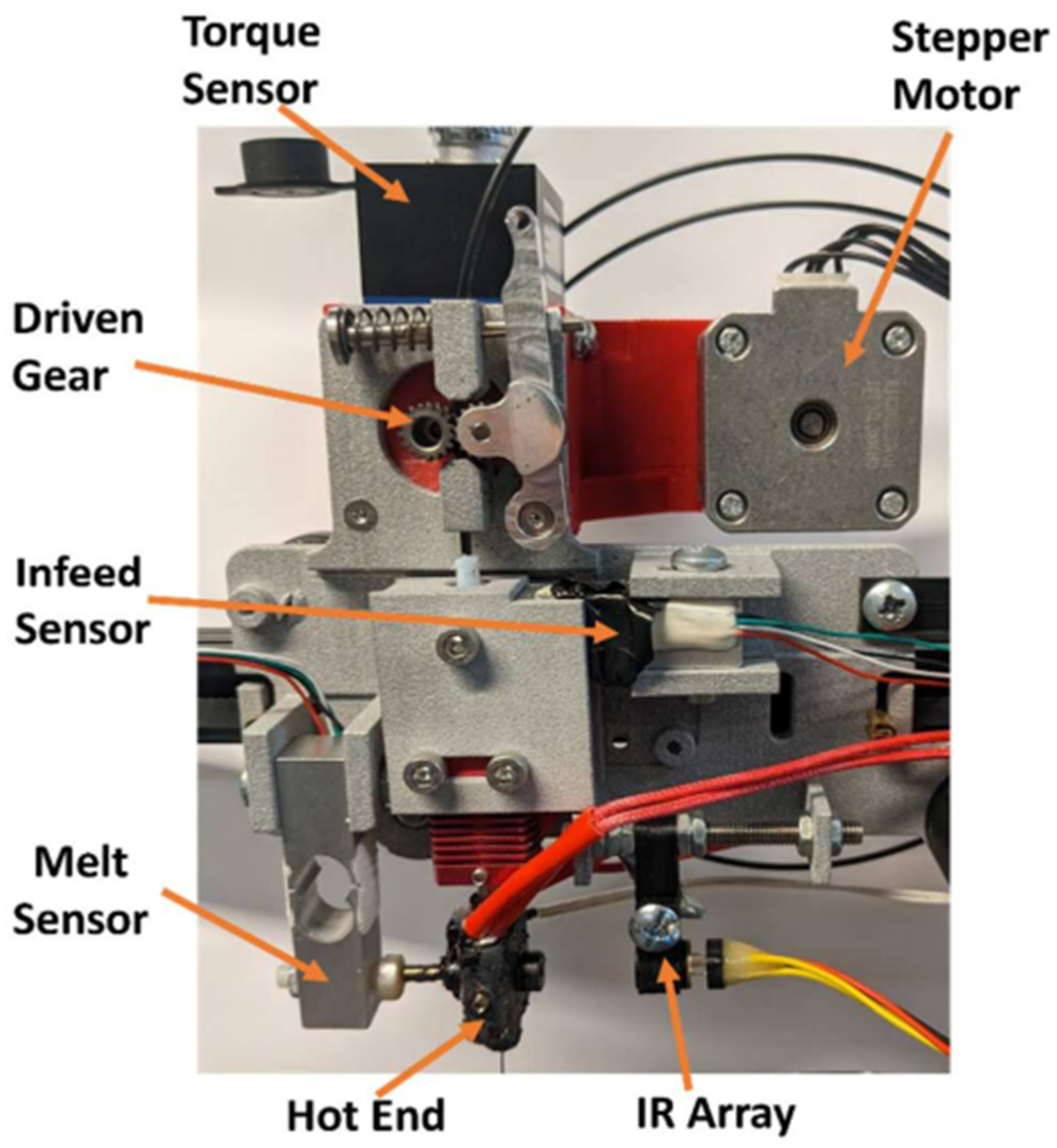
- Complexity of Integration into FDM Systems: Implementing rheological in-situ monitoring requires sophisticated equipment, such as pressure transducers, thermocouples, and modified nozzles, which can be challenging to integrate into standard FDM printers.
- Challenges in Data Interpretation: Rheological properties, such as viscoelastic moduli and complex viscosity, are intricate and influenced by factors like temperature, shear rate, and material composition.
- Difficulties with Real-Time Monitoring: FDM is a dynamic process characterized by rapid changes in temperature, pressure, and flow rates as the material transitions from a molten state in the nozzle to a solidified form on the print bed. Capturing accurate rheological data in real time under these conditions is technically challenging.
- Limited Understanding of Material Behavior: Viscoelastic properties are crucial for predicting printability; however, many materials used in FDM lack comprehensive rheological characterization.
- Inadequate Consideration of Environmental Factor: Environmental conditions, such as ambient temperature and humidity, can significantly affect the rheological properties of materials during printing.
2.2. Vibrational Pattern Monitoring
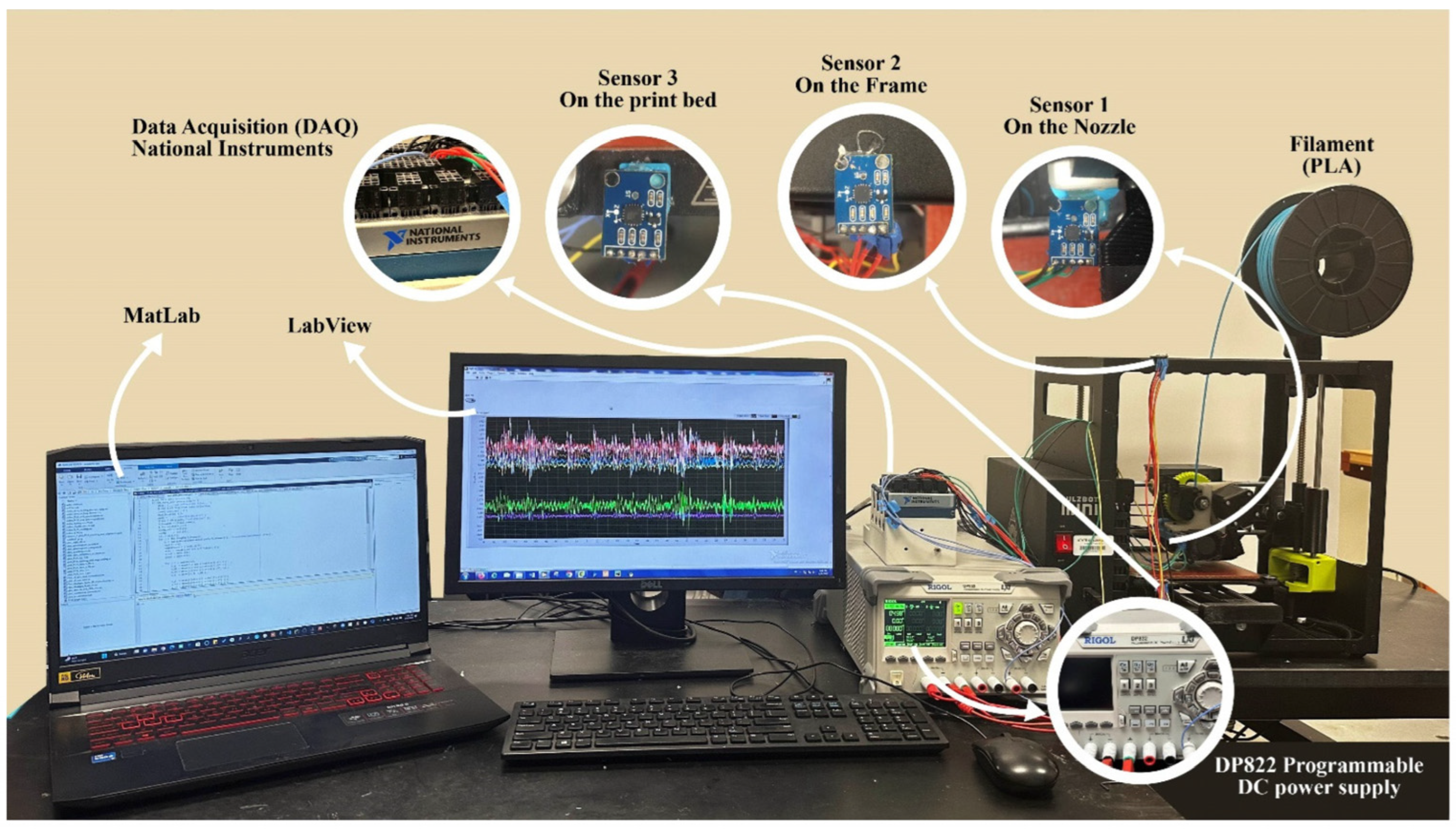
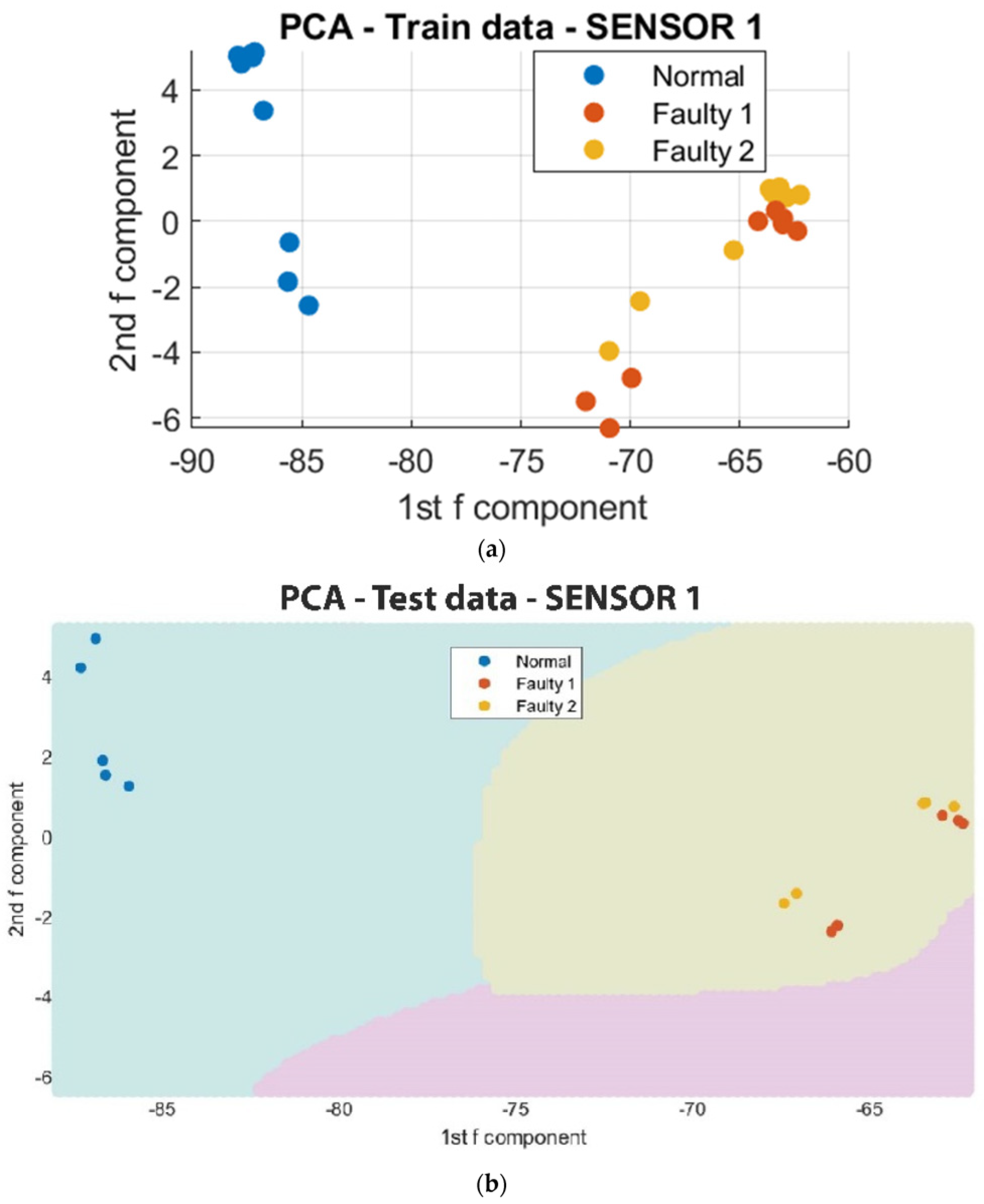
- Specificity to Certain Defects: Vibration monitoring excels at detecting mechanical issues, such as motor malfunctions or structural vibrations; however, it is less effective for other common FDM problems, including filament jams or poor layer adhesion.
- Insufficient Understanding of Material and Parameter Effects: The influence of printing materials (e.g., flexible vs. rigid filaments) and parameters (e.g., print speed, layer height) on vibration patterns is poorly understood. These factors can significantly alter vibrational signatures, yet few studies have systematically explored their effects.
- Limited Integration with Other Monitoring Techniques: Combining vibration monitoring with other in-situ methods, such as acoustic emission, thermal imaging, or visual inspection, could provide a more comprehensive view of the printing process.
2.3. Acoustic Sensing
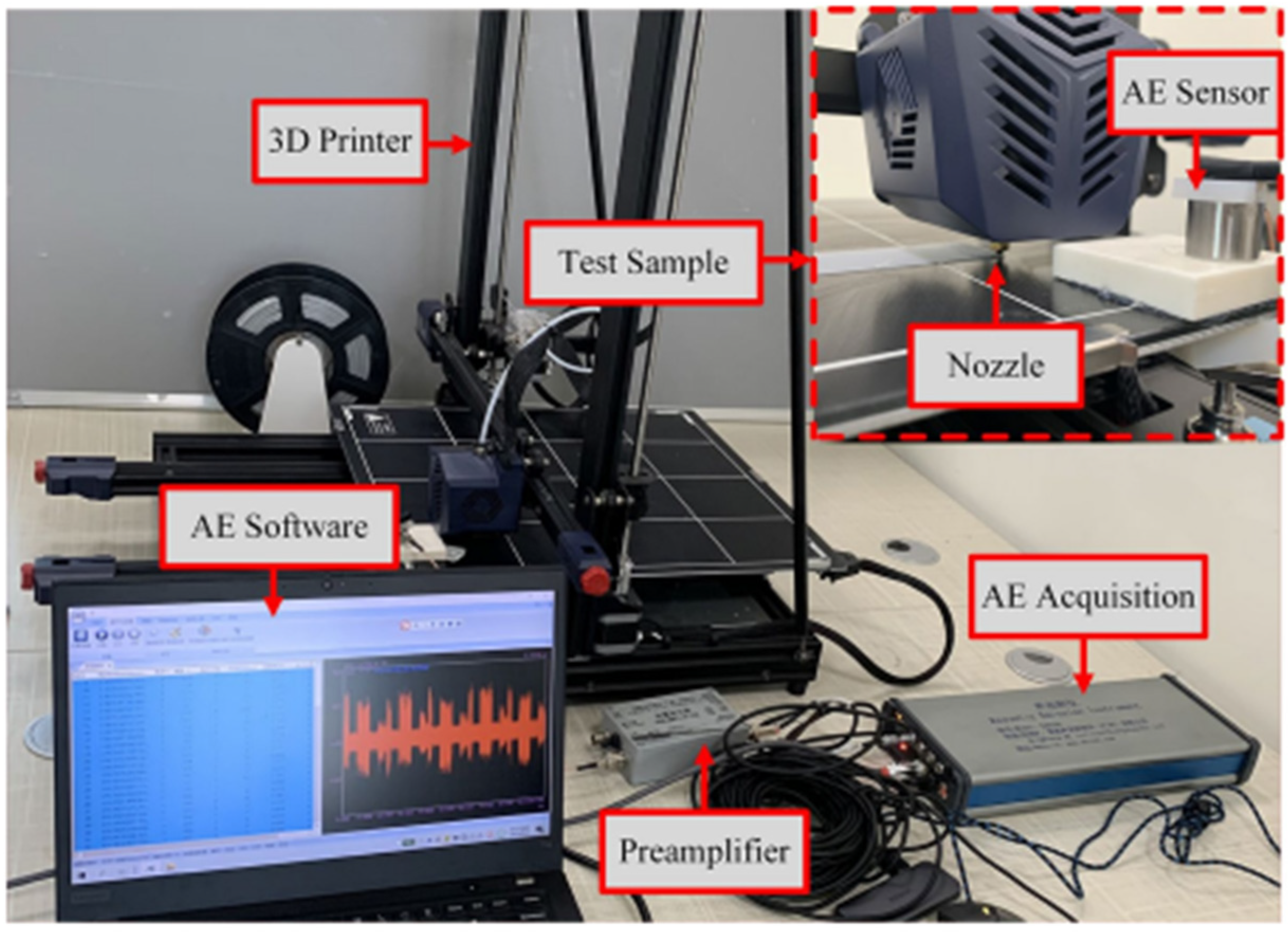
- Sensitivity to Environmental Noise: Acoustic sensors are susceptible to external noise, such as machinery operation or ambient sounds, which can interfere with the detection of printing defects.
- Complexity in Data Interpretation: The acoustic signals generated during FDM printing are complex and require advanced signal processing techniques, such as Fourier transforms or machine learning algorithms, to extract meaningful information. This complexity limits the practicality of acoustic sensing for real-time monitoring, as it demands significant computational resources and expertise.
- Challenges with Sensor Placement: The placement of acoustic sensors has a significant impact on data quality. Sensors too far from the sound source (e.g., the nozzle or print bed) may miss relevant signals, while those too close may be overwhelmed by operational noise.
- Scalability and Real-Time Application: While acoustic sensing is promising in controlled settings, its scalability to industrial or high-speed FDM applications is uncertain.
2.4. Filament Properties Monitoring
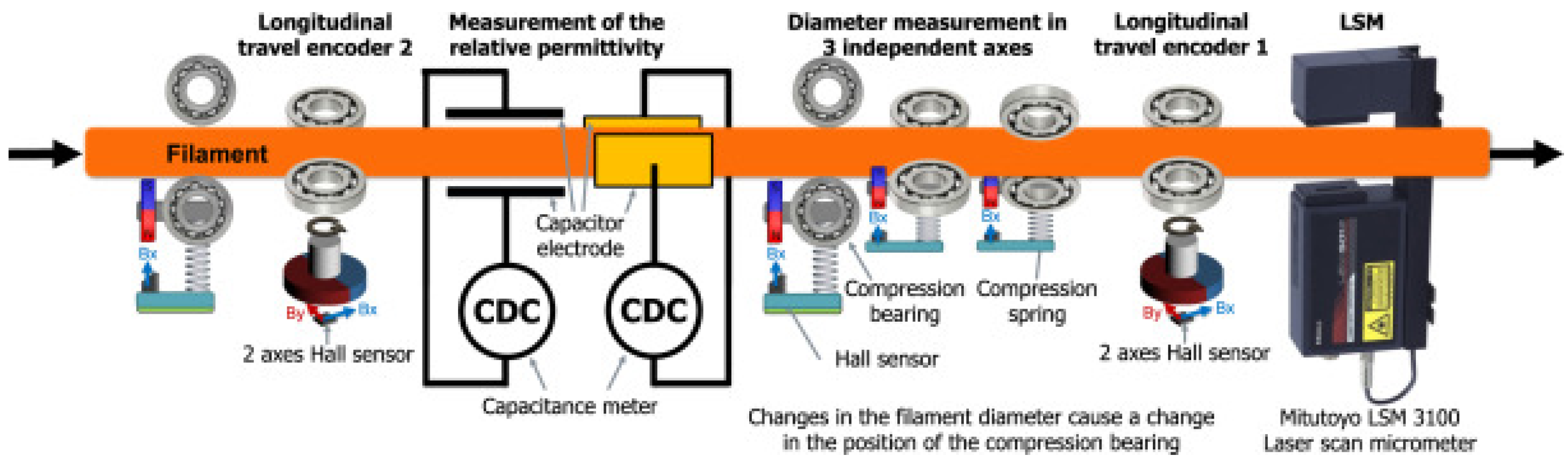
- Sensor Accuracy and Calibration: The precision of sensors used to measure filament properties, such as diameter, is critical for effective in-situ monitoring. However, achieving consistent accuracy across different filament types and colors remains a challenge.
- Speed of Monitoring: FDM is a continuous process, and the monitoring system must keep pace with the extrusion rate to provide real-time feedback. Current sensor technologies may not be fast enough to capture rapid changes in filament properties, particularly at higher print speeds, which limits their effectiveness in dynamic printing environments.
2.5. Print Head Monitoring
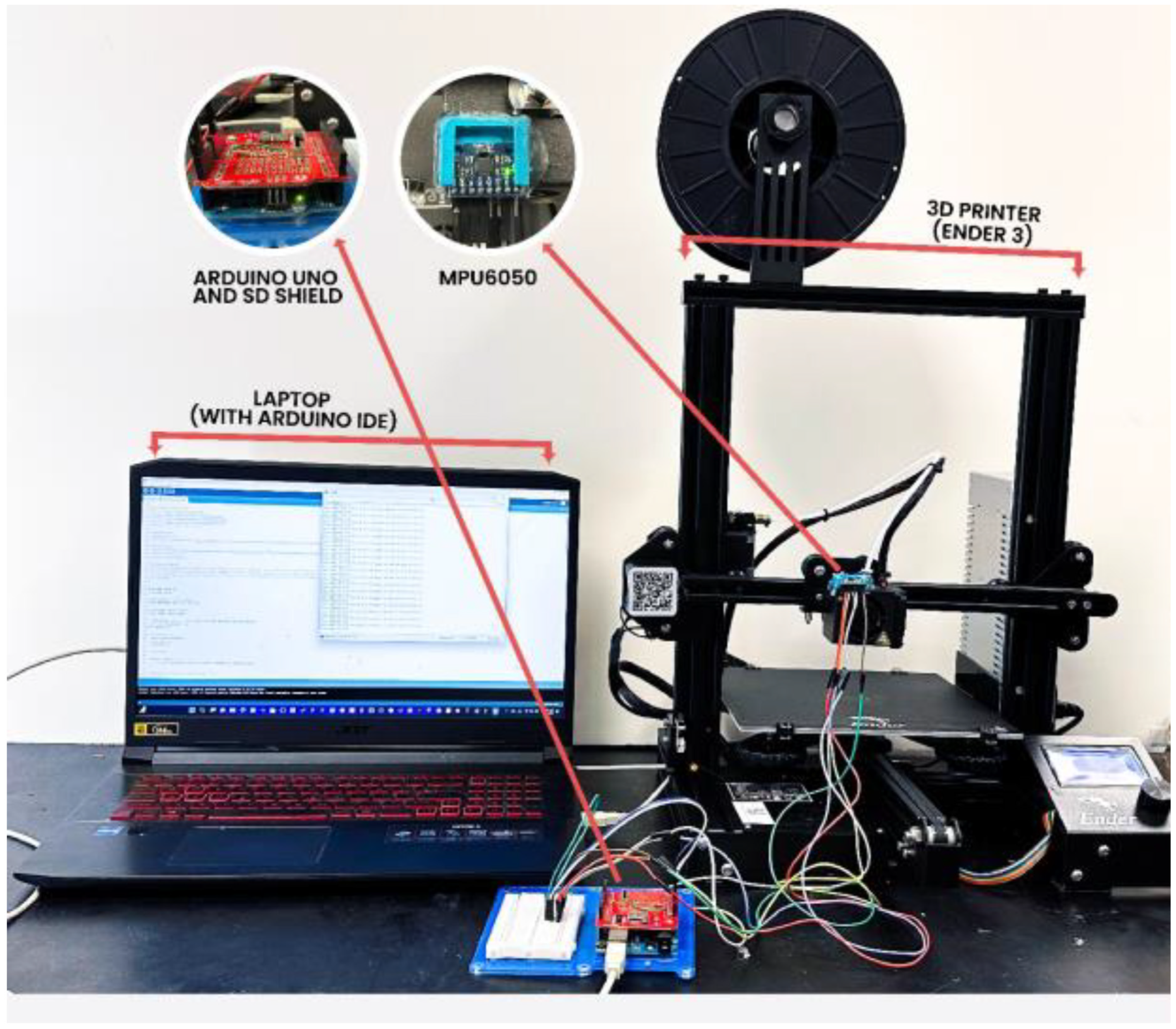
- Sensitivity to Vibrations and External Factors: Gyroscopes are highly sensitive to vibrations and external movements, which are common in FDM printing environments due to the presence of motors or surrounding equipment. This sensitivity can result in false positives or inaccurate data, making it challenging to differentiate regular operational movements from problematic ones.
- Scalability and Real-Time Application: Gyroscopes work well in controlled settings, but their scalability to industrial or high-speed FDM printing is uncertain due to the computational demands of real-time data processing and defect detection.
2.6. Thermal Imaging
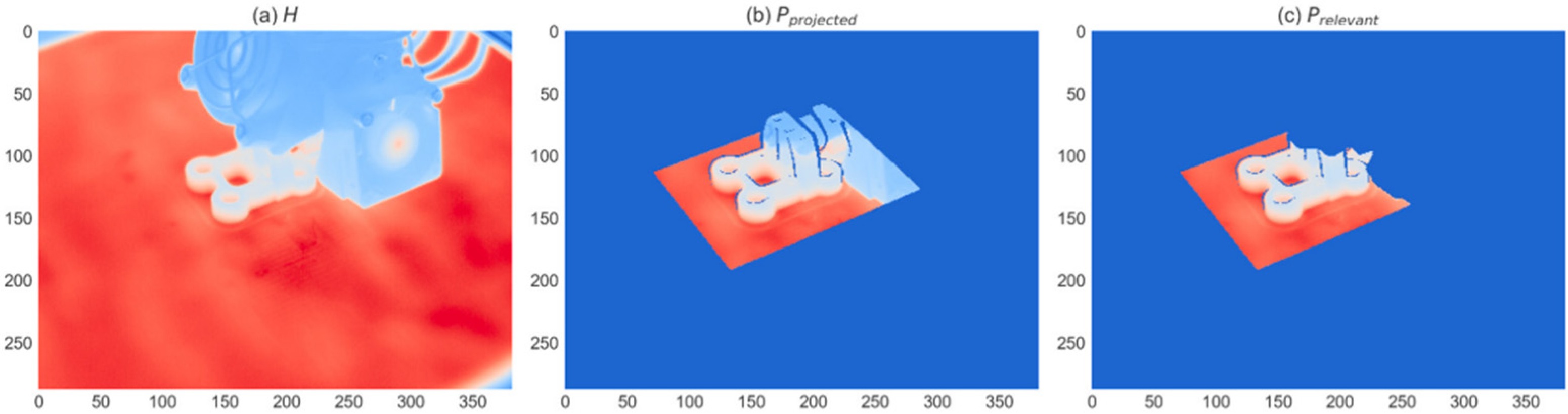
- Material Variability: Thermal imaging may not work well for all materials, like carbon-filled ABS, where poor thermal activity can reduce accuracy in detecting defects.
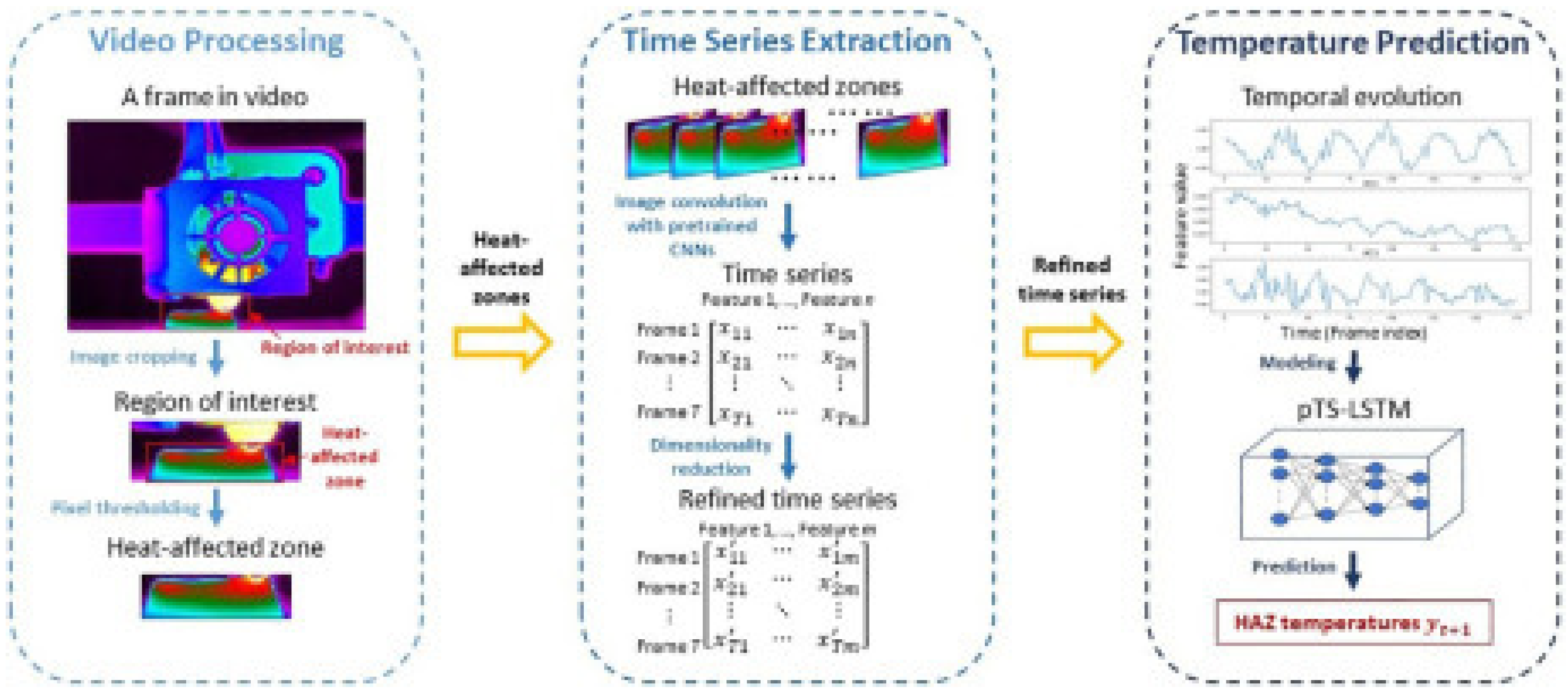
- Data Interpretation: Using thermal data with machine learning can be hard to interpret, lacking the clarity of methods like Finite Element Method (FEM).
- Testing Challenges: It may not reliably predict outcomes in multisample tests, with only two out of four fracture events predicted correctly in some cases due to setup issues.
- Consistent Cooling Rates: Thermal imaging shows cooling rates remain consistent despite temperature changes (110 °C to 170 °C), limiting its ability to detect process variations affecting mechanical properties. Stavropoulos [92] et al. utilized thermal imaging to analyze the cooling rate, which correlates with the FFF process.
- Integration with Controls: More work is needed to integrate thermal data with printer systems for real-time adjustments.
2.7. Image Recognition and Optical Scanning
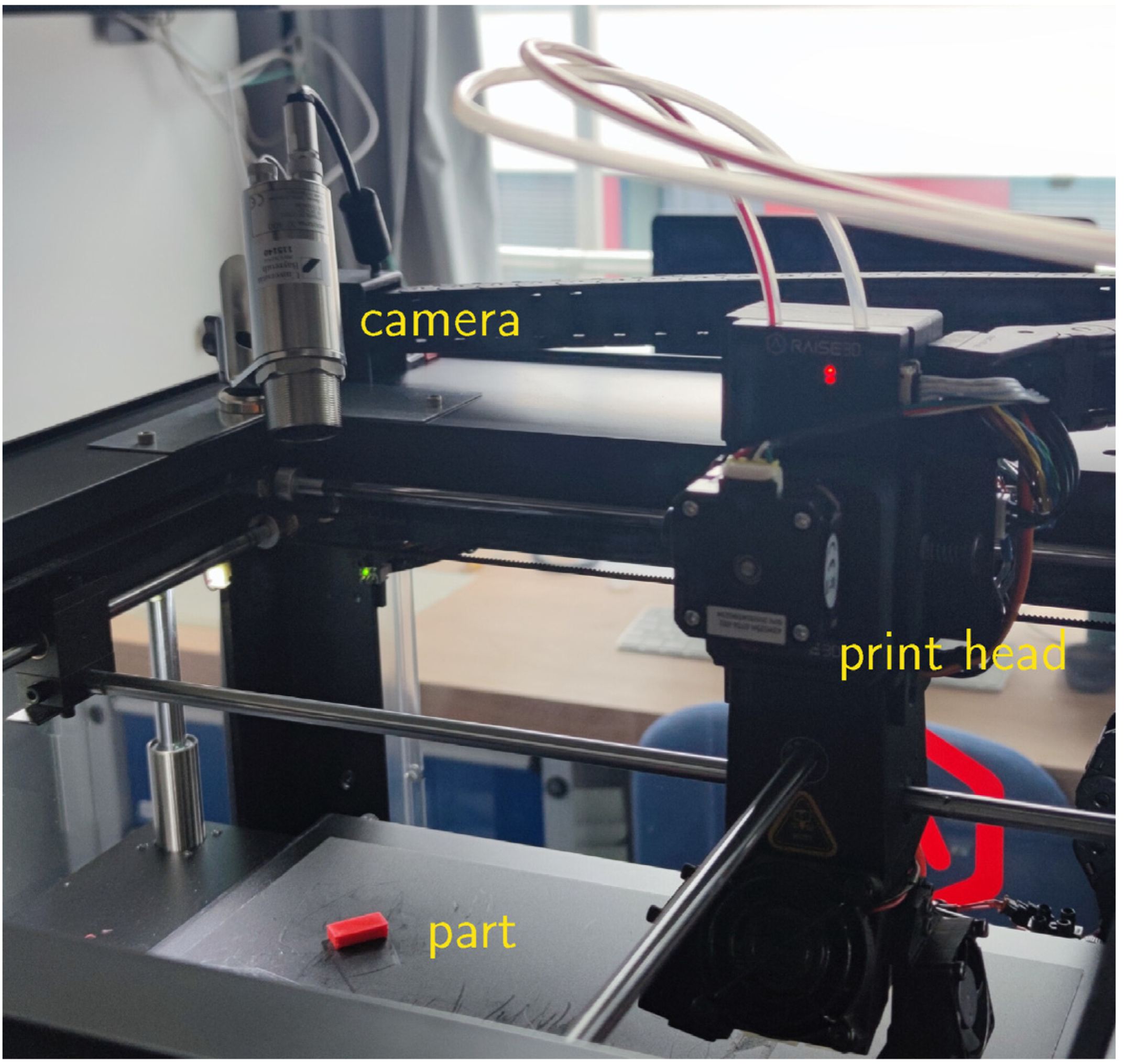
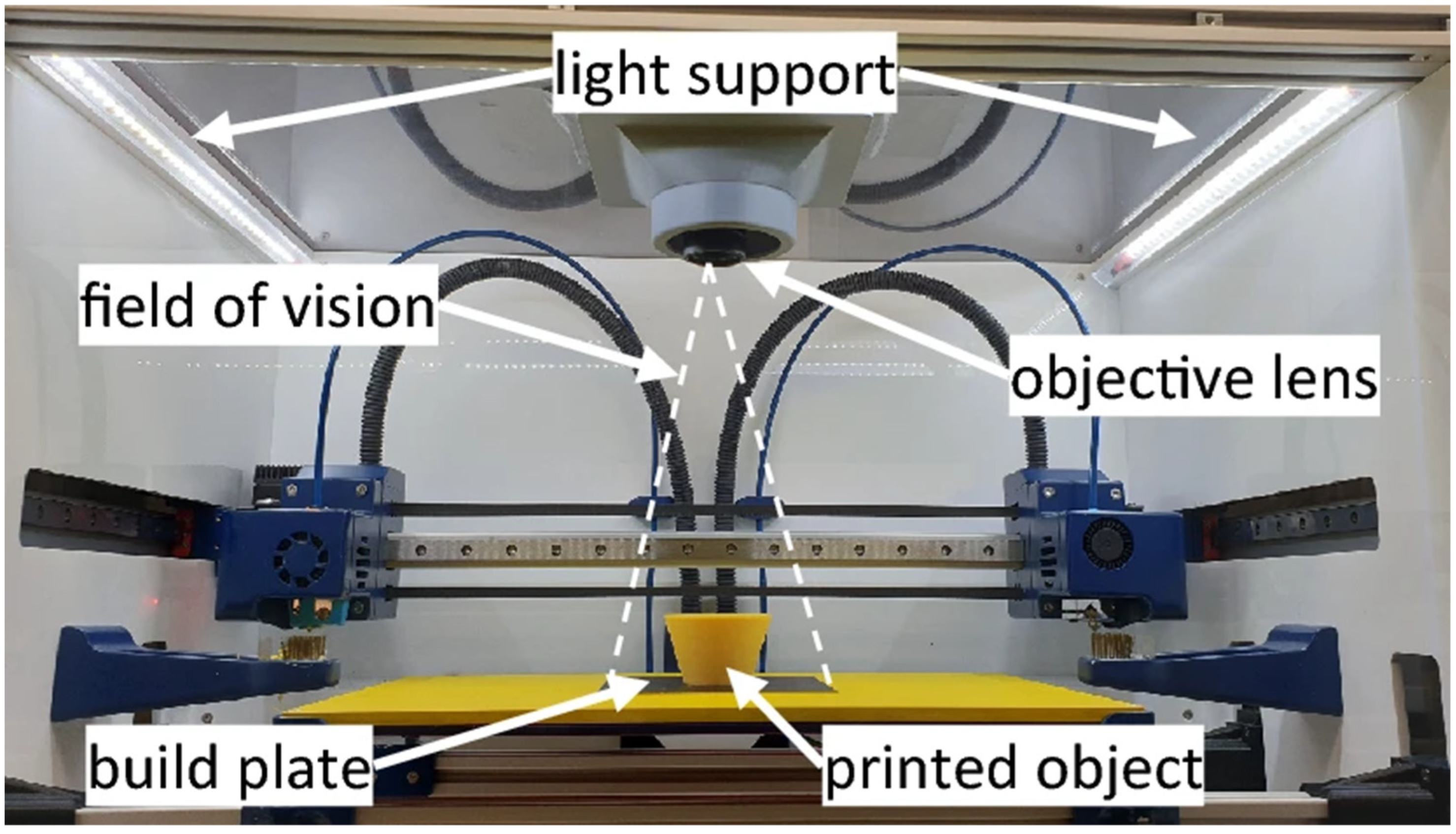
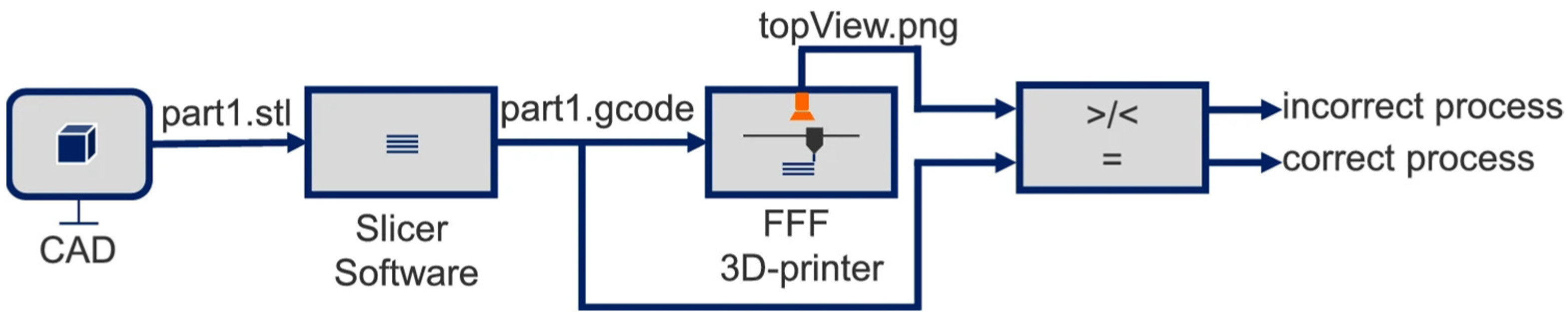
- Image recognition, which uses cameras to analyze print images, can be slow, taking minutes to process, and may not suit fast printing. It often misses minor defects, detecting only those that cover 5–10% of the area, and struggles with parts of different shapes, as it’s best suited for similar designs. Open-source solutions like OctoPrint or Klipper, when combined with AI plugins, can be utilized for image recognition and print monitoring. Additionally, other FDM brands can emulate and further enhance the integrated image recognition or vision-based monitoring systems found in Bambu Lab printers.
- Optical scanning, like laser methods, may not keep up with print speed for small objects, taking seconds per layer.
- Both need faster processing for real-time use and better detection of small defects. Optical scanning lacks 360° views, and both struggle with varied part shapes.
- Integrating with printer controls for automatic fixes is underexplored, and more studies on different materials are needed.
- Neither Image Recognition nor Optical Scanning is fully integrated with closed-loop control systems for real-time defect correction.
- Most studies focus on common materials like PLA or ABS. There is a gap in understanding how these monitoring techniques perform with advanced or unconventional materials, such as composites or flexible filaments.
3. Part Reliability and Quality Control
3.1. Mechanical Behavior of Thermoplastic Materials
3.2. Deep Neural Networks in Quality Control
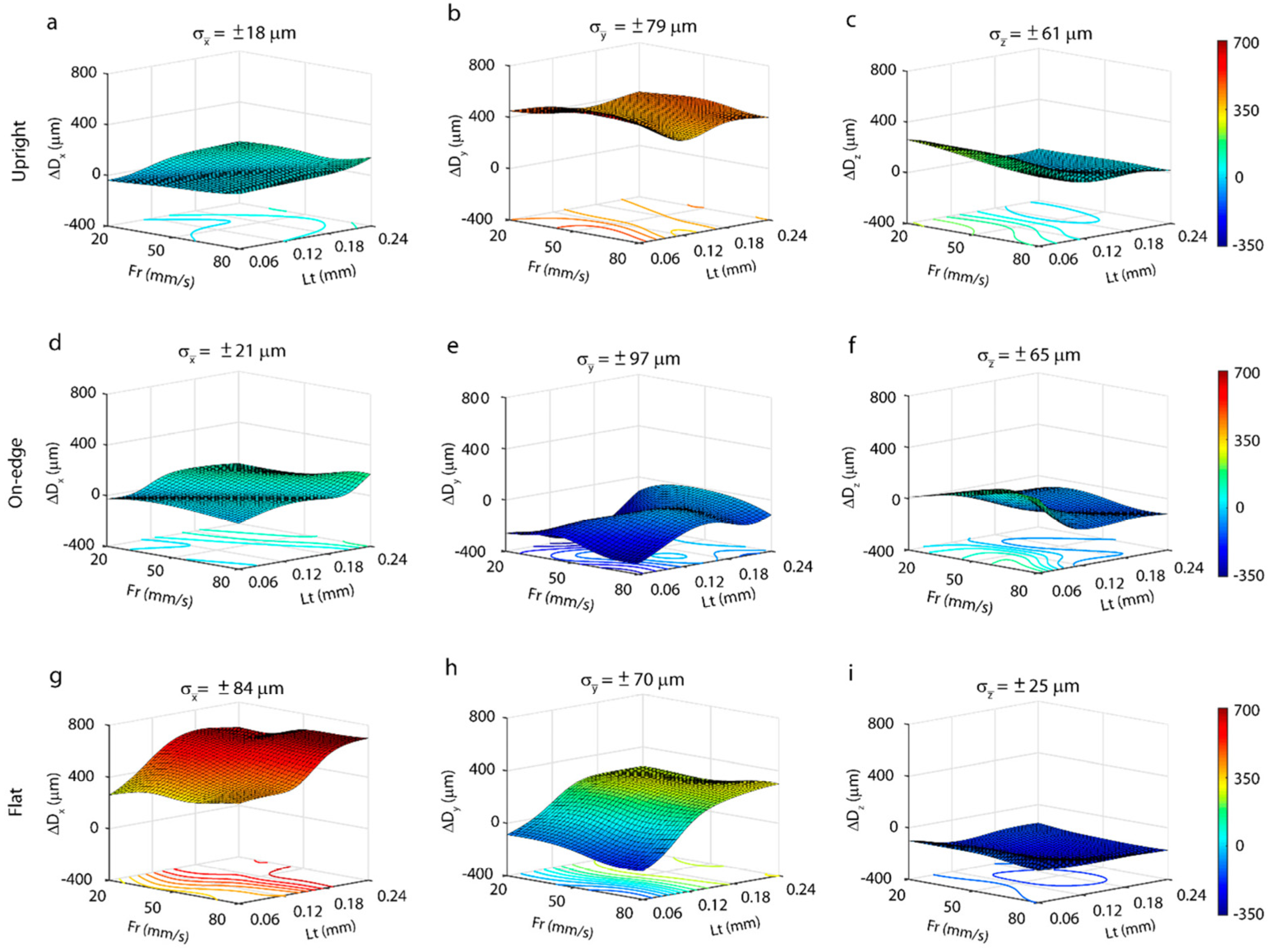
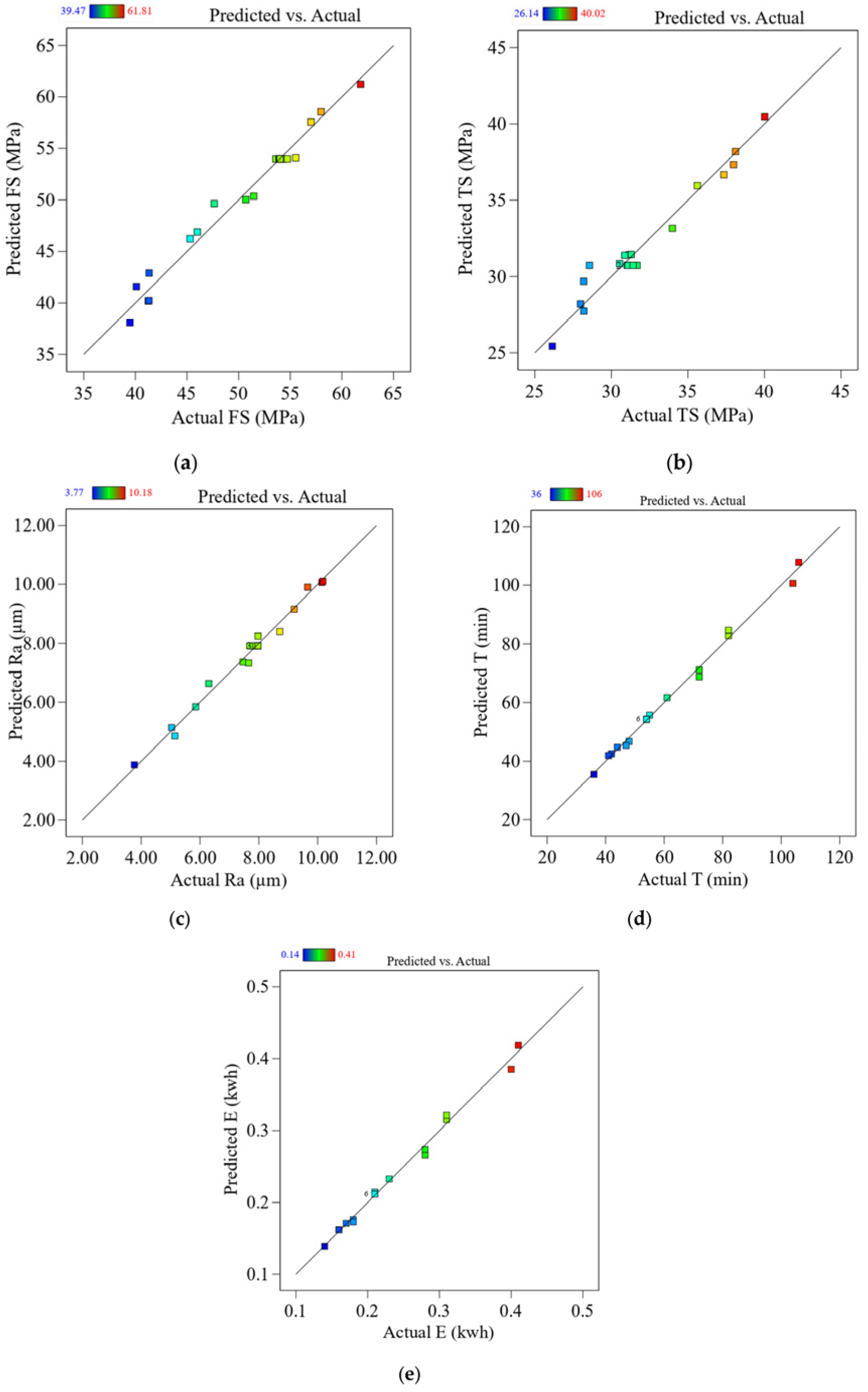
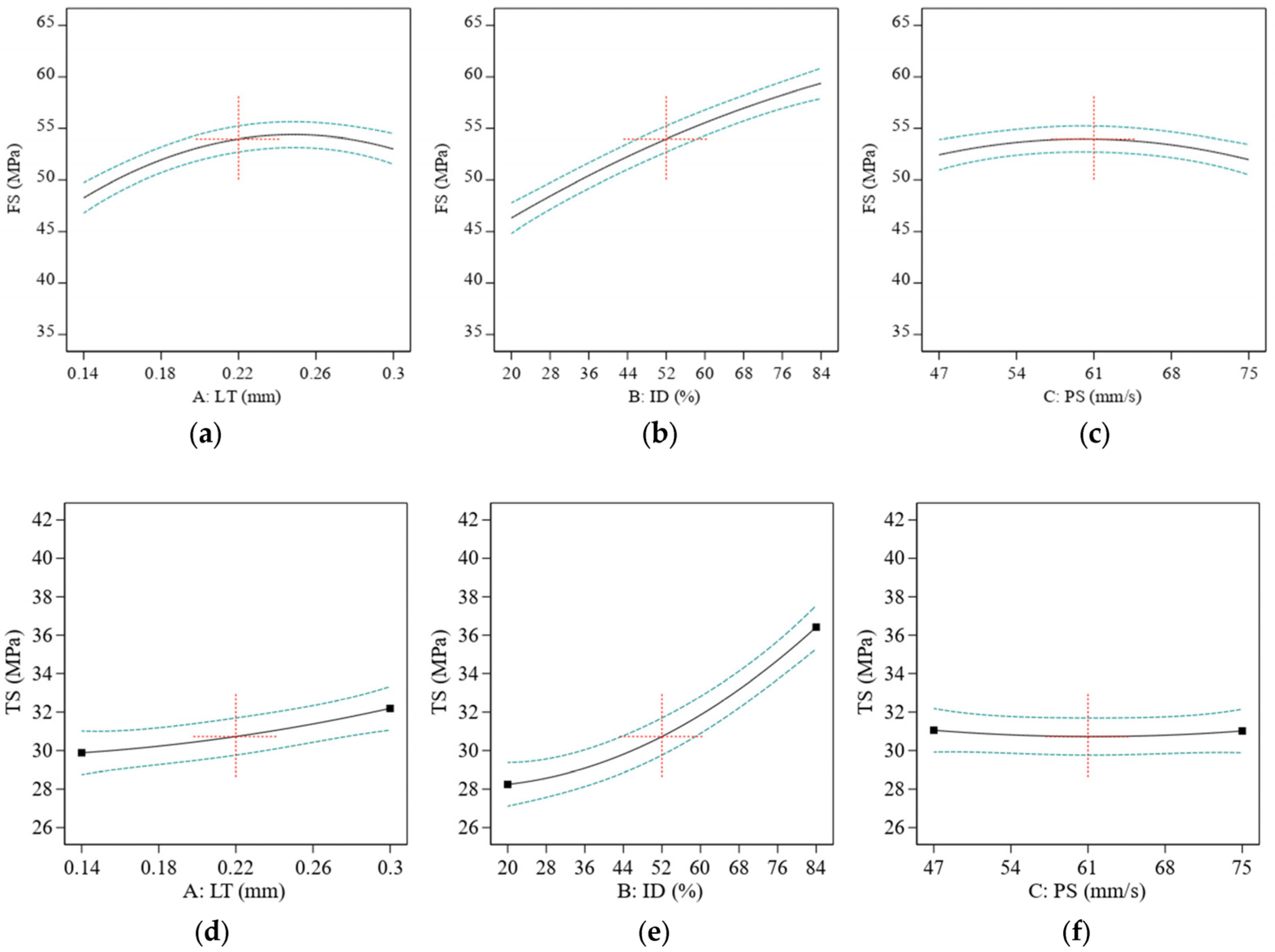
3.3. Optimization of Process Parameters
3.4. Machine Learning Based Quantitative Analysis
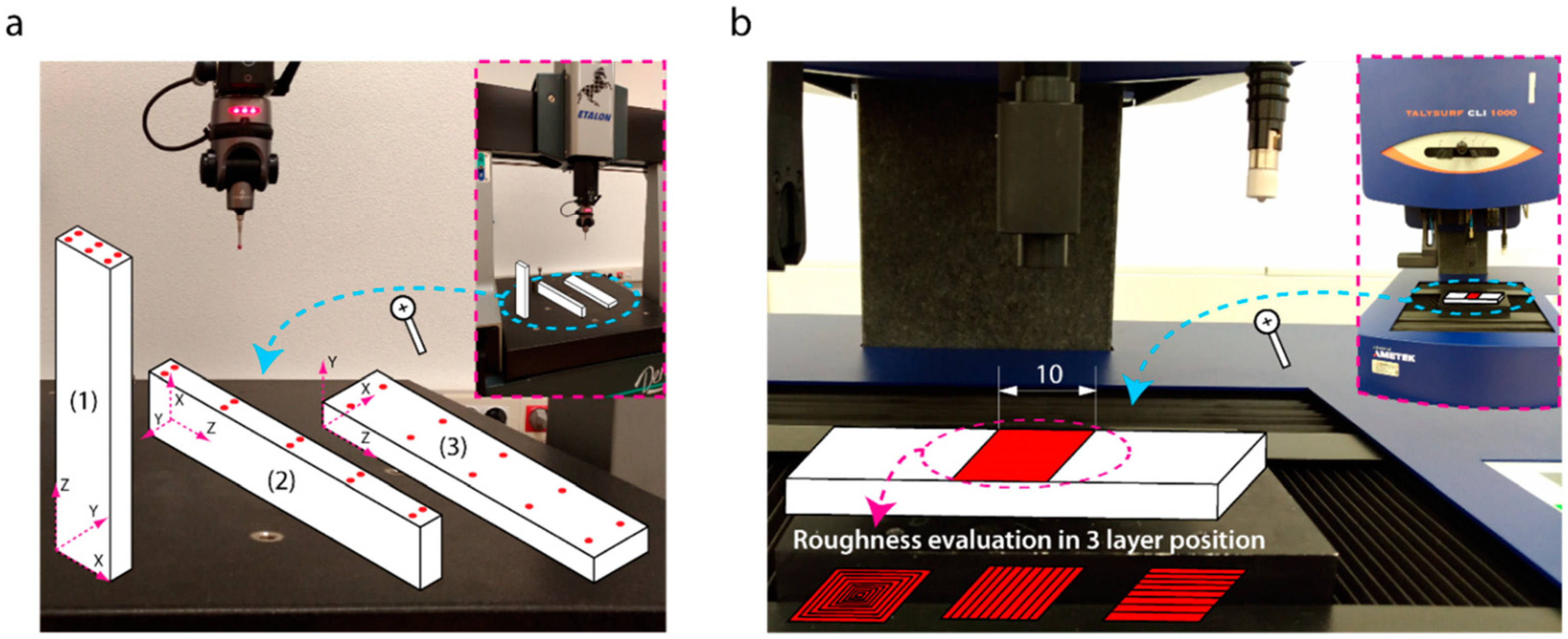
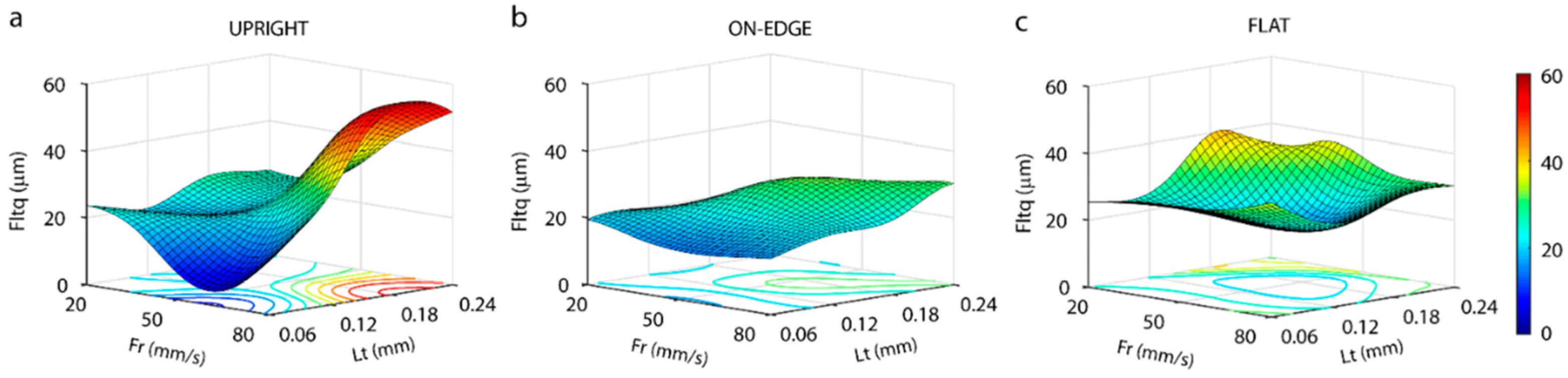
3.5. Statistical Evaluation of Surface Roughness
- Need for Total Monitoring: There is a lack of systems capable of monitoring the entire print from all sides, which is essential for comprehensive defect detection.
- Lack of Research on Defect Formation Mechanisms: While defects like warpage and abnormal leakage can be detected using in-situ monitoring, the underlying mechanisms of their formation are not well-researched.
- Monitoring System Gaps: Current in-situ monitoring systems for FDM lack comprehensive development, particularly for next-generation additive manufacturing applications.
- Computation Time: There is a need for research to reduce computation time for real-time error detection and correction, as well as to develop more cost-effective monitoring solutions that are accessible to a wider range of users.
4. Conclusions and Recommendations
4.1. In-Process Fault Detection Systems
4.2. Industrial Integration of In-Situ Monitoring Systems
4.3. Determination of Melted Plastic Volume
4.4. Lack of Closed-Loop Control
4.5. Minimal Integration of Sensor Modalities
4.6. Underdeveloped Physics-Based Models
4.7. No Standards of Reference for What Is a “Good” Print Outcome
4.8. Economic/Practical Feasibility
Author Contributions
Funding
Institutional Review Board Statement
Informed Consent Statement
Data Availability Statement
Conflicts of Interest
Abbreviations
| FDM | Fused Deposition Modeling |
| FFF | Fused Filament Fabrication |
| MEAM | Material Extrusion Additive Manufacturing |
| ANOVA | Analysis of Variance |
| CNN | Convolutional Neural Network |
| SVM | Support Vector Machines |
| PCA | Principle Component Analysis |
| FFT | Fast Fourier Transform |
| ARIMA | Autoregressive Integrated Moving Average |
| ANFIS | Adaptive Neuro-Fuzzy Inference System |
| LSTM | Long Short-Term Memory |
| RSM | Response Surface Methodology |
| PSO | Particle Swarm Optimization |
| SRTB | surface roughness top/bottom |
| WASPAS | Weighted Aggregated Sum Product Assessment |
| ANNs | Artificial Neural Networks |
| HAZ | heat-affected zone |
| IR | Infrared |
| AE | Acoustic Emission |
| DAQ | data acquisition |
| ABS | Acrylonitrile butadiene styrene |
| PLA | polylactic acid |
| PET | polyethylene terephthalate |
| TPU | Thermoplastic Polyurethane |
| PVA | polyvinyl alcohol |
| PETG | Polyethylene terephthalate glycol |
References
- ASTM ISO/ASTM52900-21; Terminology for Additive Manufacturing-General Principles-Terminology. ASTM: West Conshohocken, PA, USA, 2021. [CrossRef]
- Wang, Y.; Xu, Z.; Wu, D.; Bai, J. Current status and prospects of polymer powder 3D printing technologies. Materials 2020, 13, 2406. [Google Scholar] [CrossRef] [PubMed]
- Dilberoglu, U.M.; Gharehpapagh, B.; Yaman, U.; Dolen, M. The Role of Additive Manufacturing in the Era of Industry 4.0. Procedia Manuf. 2017, 11, 545–554. [Google Scholar] [CrossRef]
- Additive Manufacturing Standards-Standards Products-Standards & Publications-Products & Services. Available online: https://store.astm.org/products-services/standards-and-publications/standards/additive-manufacturing-standards.html (accessed on 5 April 2025).
- ISO/ASTM52900 Additive Manufacturing—General Principles—Fundamentals and Vocabulary. Available online: https://store.astm.org/f3177-21.html (accessed on 5 April 2025).
- Diegel, O.; Kowen, J.; Wohlers, T.; Huff, R.; Fidan, I.; Newton, R.; Scott, C.; Renshurg, J.; Haw, J.; Jamshid, M.; et al. Wohlers Report 2024 Analysis Trends Forecasts 3D Printing and Additive Manufacturing State of the Industry; Wohlers: Fort Collins, CO, USA, 2024. [Google Scholar]
- Cuan-Urquizo, E.; Barocio, E.; Tejada-Ortigoza, V.; Pipes, R.B.; Rodriguez, C.A.; Roman-Flores, A. Characterization of the Mechanical Properties of FFF Structures and Materials: A Review on the Experimental, Computational and Theoretical Approaches. Materials 2019, 12, 895. [Google Scholar] [CrossRef] [PubMed]
- Kechagias, J.; Chaidas, D.; Vidakis, N.; Salonitis, K.; Vaxevanidis, N. Key parameters controlling surface quality and dimensional accuracy: A critical review of FFF process. Mater. Manuf. Process. 2022, 37, 963–984. [Google Scholar] [CrossRef]
- Ferreira, I.; Machado, M.; Alves, F.; Marques, A.T. A review on fibre reinforced composite printing via FFF. Rapid Prototyp. J. 2019, 25, 972–988. [Google Scholar] [CrossRef]
- Fico, D.; Rizzo, D.; Casciaro, R.; Corcione, C.E. A Review of Polymer-Based Materials for Fused Filament Fabrication (FFF): Focus on Sustainability and Recycled Materials. Polymers 2022, 14, 465. [Google Scholar] [CrossRef]
- Pratama, J.; Cahyono, S.I.; Suyitno, S.; Muflikhun, M.A.; Salim, U.A.; Mahardika, M.; Arifvianto, B. A Review on Reinforcement Methods for Polymeric Materials Processed Using Fused Filament Fabrication (FFF). Polymers 2021, 13, 4022. [Google Scholar] [CrossRef]
- Andronov, V.; Beránek, L.; Krůta, V.; Hlavůňková, L.; Jeníková, Z. Overview and Comparison of PLA Filaments Commercially Available in Europe for FFF Technology. Polymers 2023, 15, 3065. [Google Scholar] [CrossRef]
- Trhlíková, L.; Zmeskal, O.; Psencik, P.; Florian, P. Study of the thermal properties of filaments for 3D printing. AIP Conf. Proc. 2016, 1752, 040027. [Google Scholar] [CrossRef]
- Arockiam, A.J.; Subramanian, K.; Padmanabhan, R.; Selvaraj, R.; Bagal, D.K.; Rajesh, S. A review on PLA with different fillers used as a filament in 3D printing. Mater. Today Proc. 2022, 50, 2057–2064. [Google Scholar] [CrossRef]
- Pakkanen, J.A.; Manfredi, D.; Minetola, P.; Iuliano, L. About the Use of Recycled or Biodegradable Filaments for Sustainability of 3D Printing. Smart Innov. Syst. Technol. 2017, 68, 776–785. [Google Scholar] [CrossRef]
- Decuir, F.; Phelan, K.; Hollins, B.C. Mechanical strength of 3-D printed filaments. In Proceedings of the 32nd Southern Biomedical Engineering Conference, SBEC 2016, Shreveport, LA, USA, 11–13 March 2016; pp. 47–48. [Google Scholar] [CrossRef]
- Gaikwad, V.; Ghose, A.; Cholake, S.; Rawal, A.; Iwato, M.; Sahajwalla, V. Transformation of E-Waste Plastics into Sustainable Filaments for 3D Printing. ACS Sustain. Chem. Eng. 2018, 6, 14432–14440. [Google Scholar] [CrossRef]
- Savi, M.; Andrade, M.A.; Potiens, M.P. Commercial filament testing for use in 3D printed phantoms. Radiat. Phys. Chem. 2020, 174, 108906. [Google Scholar] [CrossRef]
- Fu, Y.; Downey, A.; Yuan, L.; Pratt, A.; Balogun, Y. In situ monitoring for fused filament fabrication process: A review. Addit. Manuf. 2021, 38, 101749. [Google Scholar] [CrossRef]
- Das, A.; Gilmer, E.L.; Biria, S.; Bortner, M.J. Importance of Polymer Rheology on Material Extrusion Additive Manufacturing: Correlating Process Physics to Print Properties. ACS Appl. Polym. Mater. 2021, 3, 1218–1249. [Google Scholar] [CrossRef]
- Das, A.; Chatham, C.A.; Fallon, J.J.; Zawaski, C.E.; Gilmer, E.L.; Williams, C.B.; Bortner, M.J. Current understanding and challenges in high temperature additive manufacturing of engineering thermoplastic polymers. Addit. Manuf. 2020, 34, 101218. [Google Scholar] [CrossRef]
- Girones, J.; Vo, L.T.; Haudin, J.-M.; Freire, L.; Navard, P. Crystallization of polypropylene in the presence of biomass-based fillers of different compositions. Polymer 2017, 127, 220–231. [Google Scholar] [CrossRef]
- Akpan, E.; Shen, X.; Wetzel, B.; Friedrich, K. Design and Synthesis of Polymer Nanocomposites. In Polymer Composites with Functionalized Nanoparticles: Synthesis, Properties, and Applications; Elsevier: Amsterdam, The Netherlands, 2018; pp. 47–83. [Google Scholar] [CrossRef]
- Wu, B.; Ji, X.-Y.; Zhou, J.-X.; Yang, H.-Q.; Peng, D.-J.; Wang, Z.-M.; Wu, Y.-J.; Yin, Y.-J. In situ monitoring methods for selective laser melting additive manufacturing process based on images—A review. China Foundry 2021, 18, 265–285. [Google Scholar] [CrossRef]
- AbouelNour, Y.; Gupta, N. In-situ monitoring of sub-surface and internal defects in additive manufacturing: A review. Mater. Des. 2022, 222, 111063. [Google Scholar] [CrossRef]
- Song, L.; Bagavath-Singh, V.; Dutta, B.; Mazumder, J. Control of melt pool temperature and deposition height during direct metal deposition process. Int. J. Adv. Manuf. Technol. 2012, 58, 247–256. [Google Scholar] [CrossRef]
- Pooladvand, K.; Salerni, A.D.; Furlong, C. In-Situ Thermal Monitoring of Printed Components During Rapid Prototyping by Fused Deposition Modeling; Society for Experimental Mechanics Series; Springer: Berlin/Heidelberg, Germany, 2020; pp. 131–140. [Google Scholar] [CrossRef]
- Tang, Z.-J.; Liu, W.-W.; Wang, Y.-W.; Saleheen, K.M.; Liu, Z.-C.; Peng, S.-T.; Zhang, Z.; Zhang, H.-C. A review on in situ monitoring technology for directed energy deposition of metals. Int. J. Adv. Manuf. Technol. 2020, 108, 3437–3463. [Google Scholar] [CrossRef]
- Zhai, X.; Corre, T.; Lazarus, V. A FDM-based experimental benchmark for evaluating quasistatic crack propagation in anisotropic linear elastic materials. Eng. Fract. Mech. 2025, 324, 111175. [Google Scholar] [CrossRef]
- Karabal, M.; Yuksel, R.; Kayginok, F.; Yildiz, A.; Cebeci, H. Embedded Piezoresistive Sensors Printed by FFF for Aerospace Applications. In Proceedings of the AIAA SciTech Forum Exposition, Online, 23–27 January 2023. [Google Scholar] [CrossRef]
- Schirmer, S.; Torens, C.; Adolf, F.M. Formal monitoring of risk-based geo-fences. In Proceedings of the AIAA Information Systems-AIAA Infotech at Aerospace, Kissimmee, FL, USA, 8–12 January 2018. [Google Scholar] [CrossRef]
- Chen, Z.; Ziaee, M.; Yourdkhani, M.; Zhang, X. Coupled Thermo-Chemical Modeling of Frontal Polymerization-Assisted Additive Manufacturing of Thermoset Polymer Components. In Proceedings of the AIAA SciTech Forum and Exposition, Online, 23–27 January 2023. [Google Scholar] [CrossRef]
- Seon, G.; Makeev, A.V. Development of a Methodology for Analysis of Bonded Interface in Polymeric Matrix Composites in Presence of Manufacturing Defects. In Proceedings of the AIAA SciTech Forum and Exposition, Online, 23–27 January 2023. [Google Scholar] [CrossRef]
- Karabal, M.; Dincer, M.; Arslan, D.; Yüksel, R.; Akyazici, Z.N.; Yildiz, A.; Cebeci, H. Direct 3D Printing of Strain Sensors onto 3D Woven Orthogonal Composite Structures: Evaluating Two Distinct Approaches for Sensor Performance. In Proceedings of the AIAA SciTech Forum and Exposition, Orlando, FL, USA, 8–12 January 2024. [Google Scholar] [CrossRef]
- Abderrafai, Y.; Diouf-Lewis, A.; Sosa-Rey, F.; Farahani, R.D.; Piccirelli, N.; Lévesque, M.; Therriault, D. Additive manufacturing and characterization of high temperature thermoplastic blends for potential aerospace applications. Compos. Sci. Technol. 2022, 231, 109839. [Google Scholar] [CrossRef]
- Parry, E.J. A Study Assessing the Viability of Using Fused Filament Fabrication (FFF) Additive Manufacturing (AM) Technology to Manufacture Customised Class I Medical Devices. 2023. Available online: https://e-space.mmu.ac.uk/632227/1/PhD%20Thesis%20-%20Elen%20J.%20Parry%20.pdf (accessed on 5 April 2025).
- Buj-Corral, I.; Tejo-Otero, A.; Fenollosa-Artés, F. Use of FDM Technology in Healthcare Applications: Recent Advances. In Fused Deposition Modeling Based 3D Printing; Springer: Berlin/Heidelberg, Germany, 2021; pp. 277–297. [Google Scholar] [CrossRef]
- Gobena, S.T.; Woldeyohannes, A.D. Comparative review on the application of smart material in additive manufacturing: 3D and 4D printing. Discov. Appl. Sci. 2024, 6, 1–14. [Google Scholar] [CrossRef]
- Porzsolt, F.; Weiss, M.; Weiss, C. Issue 1|1 of 7 Trends Gen Med; 2024 Applying the Rule of Designers and Architects ‘Form Follows Function (FFF)’ Can Reduce Misinterpretations and Methodical Shortcomings in Healthcare. Trends. Gen. Med. 2024, 2, 1–7. [Google Scholar]
- Dodziuk, H. Applications of 3D printing in healthcare. Kardiochirurgia Torakochirurgia Pol. Pol. J. Thorac. Cardiovasc. Surg. 2016, 3, 283–293. [Google Scholar] [CrossRef]
- Hurst, E.J. 3D Printing in Healthcare: Emerging Applications. J. Hosp. Librariansh. 2016, 16, 255–267. [Google Scholar] [CrossRef]
- Javaid, M.; Haleem, A.; Singh, R.P.; Suman, R. 3D printing applications for healthcare research and development. Glob. Health J. 2022, 6, 217–226. [Google Scholar] [CrossRef]
- Rengier, F.; Mehndiratta, A.; von Tengg-Kobligk, H.; Zechmann, C.M.; Unterhinninghofen, R.; Kauczor, H.-U.; Giesel, F.L. 3D printing based on imaging data: Review of medical applications. Int. J. Comput. Assist. Radiol. Surg. 2010, 5, 335–341. [Google Scholar] [CrossRef]
- Manero, A.; Smith, P.; Sparkman, J.; Dombrowski, M.; Courbin, D.; Kester, A.; Womack, I.; Chi, A. Implementation of 3D printing technology in the field of prosthetics: Past, present, and future. Int. J. Environ. Res. Public Health 2019, 16, 1641. [Google Scholar] [CrossRef]
- Hornick, J. 3D Printing in Healthcare. J. 3D Print. Med. 2017, 1, 13–17. [Google Scholar] [CrossRef]
- Whitaker, M. The history of 3D printing in healthcare. Bull. R. Coll. Surg. Engl. 2014, 96, 228–229. [Google Scholar] [CrossRef]
- Lim, C.W.J.; Le, K.Q.; Lu, Q.; Wong, C.H. An Overview of 3-D Printing in Manufacturing, Aerospace, and Automotive Industries. IEEE Potentials 2016, 35, 18–22. [Google Scholar] [CrossRef]
- Tuazon, B.J.; Custodio, N.A.V.; Basuel, R.B.; Reyes, L.A.D.; Dizon, J.R.C. 3D Printing Technology and Materials for Automotive Application: A Mini-Review. Key Eng. Mater. 2022, 913, 3–16. [Google Scholar] [CrossRef]
- Elakkad, A.S. 3D Technology in the Automotive Industry. Available online: www.ijert.org (accessed on 5 April 2025).
- Nascimento, D.L.d.M.; Nepomuceno, R.M.; Caiado, R.G.G.; Maqueira, J.M.; Moyano-Fuentes, J.; Garza-Reyes, J.A. A sustainable circular 3D printing model for recycling metal scrap in the automotive industry. J. Manuf. Technol. Manag. 2022, 33, 876–892. [Google Scholar] [CrossRef]
- Karakhan, A.A.; Gambatese, J.A. Identification, Quantification, and Classification of Potential Safety Risk for Sustainable Construction in the United States. J. Constr. Eng. Manag. 2017, 143, 04017018. [Google Scholar] [CrossRef]
- El-Sayegh, S.; Romdhane, L.; Manjikian, S. A critical review of 3D printing in construction: Benefits, challenges, and risks. Arch. Civ. Mech. Eng. 2020, 20, 1–25. [Google Scholar] [CrossRef]
- Alaloul, W.S.; Liew, M.S.; Zawawi, N.A.W.A.; Mohammed, B.S.; Mustafa, M.R.U.; Bin Othman, I.; Latheef, M.; Endrayana, D.B.; Yusof, N.Z.B. Industry Revolution IR 4.0: Future Opportunities and Challenges in Construction Industry. MATEC Web Conf. 2018, 203, 02010. [Google Scholar] [CrossRef]
- Ducoulombier, N. Characterisation and modelling of interfacial damage in fibre-reinforced concrete for 3D printing in construction. In Proceedings of the 10th International Conference on Fracture Mechanics of Concrete and Concrete Structures, FraMCoS-X, Bayonne, France, 23–26 June 2019. [Google Scholar] [CrossRef]
- Simpson, T.W.; Williams, C.B.; Hripko, M. Preparing industry for additive manufacturing and its applications: Summary & recommendations from a National Science Foundation workshop. Addit. Manuf. 2017, 13, 166–178. [Google Scholar] [CrossRef]
- Ford, S.; Minshall, T. Invited review article: Where and how 3D printing is used in teaching and education. Addit. Manuf. 2019, 25, 131–150. [Google Scholar] [CrossRef]
- Birtchnell, T.; Böhme, T.; Gorkin, R. 3D printing and the third mission: The university in the materialization of intellectual capital. Technol. Forecast. Soc. Change 2017, 123, 240–249. [Google Scholar] [CrossRef]
- Langridge, B.; Momin, S.; Coumbe, B.; Woin, E.; Griffin, M.; Butler, P. Systematic Review of the Use of 3-Dimensional Printing in Surgical Teaching and Assessment. J. Surg. Educ. 2018, 75, 209–221. [Google Scholar] [CrossRef] [PubMed]
- Assante, D.; Cennamo, G.M.; Placidi, L. 3D printing in education: An european perspective. In Proceedings of the IEEE Global Engineering Education Conference, EDUCON, Porto, Portugal, 27–30 April 2020; pp. 1133–1138. [Google Scholar] [CrossRef]
- Ford, S.; Minshall, T. Where and How 3D Printing Is Used in Teaching and Education; Elsevier: Amsterdam, The Netherlands, 2019. [Google Scholar] [CrossRef]
- Nachal, N.; Moses, J.A.; Karthik, P.; Anandharamakrishnan, C. Applications of 3D Printing in Food Processing. Food Eng. Rev. 2019, 11, 123–141. [Google Scholar] [CrossRef]
- Dick, A.; Bhandari, B.; Prakash, S. 3D printing of meat. Meat Sci. 2019, 153, 35–44. [Google Scholar] [CrossRef] [PubMed]
- Liu, Z.; Zhang, M.; Bhandari, B.; Wang, Y. 3D printing: Printing precision and application in food sector. Trends Food Sci. Technol. 2017, 69, 83–94. [Google Scholar] [CrossRef]
- Dankar, I.; Haddarah, A.; Omar, F.E.; Sepulcre, F.; Pujolà, M. 3D printing technology: The new era for food customization and elaboration. Trends Food Sci. Technol. 2018, 75, 231–242. [Google Scholar] [CrossRef]
- Vanderploeg, A.; Lee, S.-E.; Mamp, M. The application of 3D printing technology in the fashion industry. Int. J. Fash. Des. Technol. Educ. 2017, 10, 170–179. [Google Scholar] [CrossRef]
- Wang, B.Z.; Chen, Y. The Effect of 3D printing technology on the future fashion design and manufacturing. Appl. Mech. Mater. 2014, 496–500, 2687–2691. [Google Scholar] [CrossRef]
- Xiao, Y.-Q.; Kan, C.-W. Review on Development and Application of 3D-Printing Technology in Textile and Fashion Design. Coatings 2022, 12, 267. [Google Scholar] [CrossRef]
- Ali, A.; Hu, C.; Yttri, E.A.; Panat, R. Recent Advances in 3D Printing of Biomedical Sensing Devices. Adv. Funct. Mater. 2022, 32, 2107671. [Google Scholar] [CrossRef]
- Materials and Technical Innovations in 3D Printing in Biomedical Applications—Journal of Materials Chemistry B (RSC Publishing). Available online: https://pubs.rsc.org/en/content/articlelanding/2020/tb/d0tb00034e/unauth (accessed on 5 April 2025).
- Guzzi, E.A.; Bovone, G.; Tibbitt, M.W. Universal Nanocarrier Ink Platform for Biomaterials Additive Manufacturing. Small 2019, 15, e1905421. [Google Scholar] [CrossRef]
- Sheoran, A.J.; Chandra, A.; Kumar, H. Biomedical Applications of Additive Manufacturing. Lect. Notes Mech. Eng. 2021, 553–566. [Google Scholar] [CrossRef]
- Tlegenov, Y.; Lu, W.F.; Hong, G.S. A dynamic model for current-based nozzle condition monitoring in fused deposition modelling. Prog. Addit. Manuf. 2019, 4, 211–223. [Google Scholar] [CrossRef]
- Massaroni, C.; Saroli, V.; Aloqalaa, Z.; Lo Presti, D.; Schena, E. Extrusion-Based Fused Deposition Modeling for Printing Sensors and Electrodes: Materials, Process Parameters, and Applications. SmartMat 2025. [Google Scholar] [CrossRef]
- Cano-Vicent, A.; Tambuwala, M.M.; Hassan, S.S.; Barh, D.; Aljabali, A.A.; Birkett, M.; Arjunan, A.; Serrano-Aroca, Á. Fused deposition modelling: Current status, methodology, applications and future prospects. Addit. Manuf. 2021, 47, 102378. [Google Scholar] [CrossRef]
- Oleff, A.; Küster, B.; Stonis, M.; Overmeyer, L. Process monitoring for material extrusion additive manufacturing: A state-of-the-art review. Prog. Addit. Manuf. 2021, 6, 705–730. [Google Scholar] [CrossRef]
- Dezaki, M.L.; Ariffin, M.K.A.M.; Hatami, S. An overview of fused deposition modelling (FDM): Research, development and process optimisation. Rapid Prototyp. J. 2021, 27, 562–582. [Google Scholar] [CrossRef]
- Zhu, Z.; Ng, D.W.H.; Park, H.S.; McAlpine, M.C. 3D-printed multifunctional materials enabled by artificial-intelligence-assisted fabrication technologies. Nat. Rev. Mater. 2021, 6, 27–47. [Google Scholar] [CrossRef]
- Kakade, S.; Mulay, A.; Patil, S. IoT-based real-time online monitoring system for open ware FDM printers. Mater. Today Proc. 2022, 67, 363–367. [Google Scholar] [CrossRef]
- Yang, L.; Sepasgozar, S.M.; Shirowzhan, S.; Kashani, A.; Edwards, D. Nozzle criteria for enhancing extrudability, buildability and interlayer bonding in 3D printing concrete. Autom. Constr. 2022, 146, 104671. [Google Scholar] [CrossRef]
- Shaqour, B.; Abuabiah, M.; Abdel-Fattah, S.; Juaidi, A.; Abdallah, R.; Abuzaina, W.; Qarout, M.; Verleije, B.; Cos, P. Gaining a better understanding of the extrusion process in fused filament fabrication 3D printing: A review. Int. J. Adv. Manuf. Technol. 2021, 114, 1279–1291. [Google Scholar] [CrossRef]
- Greeff, G.P.; Schilling, M. Closed loop control of slippage during filament transport in molten material extrusion. Addit. Manuf. 2017, 14, 31–38. [Google Scholar] [CrossRef]
- Nienhaus, V.; Smith, K.; Spiehl, D.; Dörsam, E. Investigations on nozzle geometry in fused filament fabrication. Addit. Manuf. 2019, 28, 711–718. [Google Scholar] [CrossRef]
- Zhang, N.; Sanjayan, J. Extrusion nozzle design and print parameter selections for 3D concrete printing. Cem. Concr. Compos. 2023, 137, 104939. [Google Scholar] [CrossRef]
- Schelly, C.; Anzalone, G.; Wijnen, B.; Pearce, J.M. Open-source 3-D printing technologies for education: Bringing additive manufacturing to the classroom. J. Vis. Lang. Comput. 2015, 28, 226–237. [Google Scholar] [CrossRef]
- Baumann, F.; Schön, M.; Eichhoff, J.; Roller, D. Concept Development of a Sensor Array for 3D Printer. Procedia CIRP 2016, 51, 24–31. [Google Scholar] [CrossRef]
- Guo, S.; He, Y.; Shi, L.; Pan, S.; Xiao, R.; Tang, K.; Guo, P. Modeling and experimental evaluation of an improved amphibious robot with compact structure. Robot. Comput. Manuf. 2018, 51, 37–52. [Google Scholar] [CrossRef]
- Wittbrodt, B.T.; Glover, A.G.; Laureto, J.; Anzalone, G.C.; Oppliger, D.; Irwin, J.L.; Pearce, J.M. Life-cycle economic analysis of distributed manufacturing with open-source 3-D printers. Mechatronics 2013, 23, 713–726. [Google Scholar] [CrossRef]
- Wu, H.; Wang, Y.; Yu, Z. In situ monitoring of FDM machine condition via acoustic emission. Int. J. Adv. Manuf. Technol. 2016, 84, 1483–1495. [Google Scholar] [CrossRef]
- Arul, S.; Vijayaraghavan, L.; Malhotra, S. Online monitoring of acoustic emission for quality control in drilling of polymeric composites. J. Mech. Work. Technol. 2007, 185, 184–190. [Google Scholar] [CrossRef]
- Boschetto, A.; Bottini, L. Roughness prediction in coupled operations of fused deposition modeling and barrel finishing. J. Mech. Work. Technol. 2015, 219, 181–192. [Google Scholar] [CrossRef]
- Ahn, D.; Kweon, J.-H.; Kwon, S.; Song, J.; Lee, S. Representation of surface roughness in fused deposition modeling. J. Mech. Work. Technol. 2009, 209, 5593–5600. [Google Scholar] [CrossRef]
- Bikas, H.; Stavropoulos, P.; Chryssolouris, G. Additive manufacturing methods and modelling approaches: A critical review. Int. J. Adv. Manuf. Technol. 2015, 83, 389–405. [Google Scholar] [CrossRef]
- Jackson, B.; Fouladi, K.; Eslami, B. Multi-Parameter Optimization of 3D Printing Condition for Enhanced Quality and Strength. Polymers 2022, 14, 1586. [Google Scholar] [CrossRef]
- Hu, Q.; Feng, D.; Zhang, H.; Yao, Y.; Aburaia, M.; Lammer, H. Oriented to multi-branched structure unsupported 3D printing method research. Materials 2020, 13, 2023. [Google Scholar] [CrossRef]
- Poudel, L.; Sha, Z.; Zhou, W. Mechanical strength of chunk-based printed parts for cooperative 3D printing. Procedia Manuf. 2018, 26, 962–972. [Google Scholar] [CrossRef]
- Wang, P.; Zou, B.; Xiao, H.; Ding, S.; Huang, C. Effects of printing parameters of fused deposition modeling on mechanical properties, surface quality, and microstructure of PEEK. J. Mater. Process. Technol. 2019, 271, 62–74. [Google Scholar] [CrossRef]
- Arnold, C.; Monsees, D.; Hey, J.; Schweyen, R. Surface quality of 3D-printed models as a function of various printing parameters. Materials 2019, 12, 1970. [Google Scholar] [CrossRef] [PubMed]
- Tontowi, A.E.; Ramdani, L.; Erdizon, R.V.; Baroroh, D.K. Optimization of 3D-Printer Process Parameters for Improving Quality of Polylactic Acid Printed Part. Int. J. Eng. Technol. 2017, 9, 589–600. [Google Scholar] [CrossRef]
- Ko, M.; Kang, H.; Kim, J.U.; Lee, Y.; Hwang, J.-E. How to measure quality of affordable 3D printing: Cultivating quantitative index in the user community. Commun. Comput. Inf. Sci. 2016, 617, 116–121. [Google Scholar] [CrossRef]
- Colon, A.R.; Kazmer, D.O.; Peterson, A.M. The dependency chain in material extrusion additive manufacturing: Shaft torque, infeed load, melt pressure, and melt temperature. Addit. Manuf. 2023, 77, 103780. [Google Scholar] [CrossRef]
- Anderegg, D.A.; Bryant, H.A.; Ruffin, D.C.; Skrip, S.M.; Fallon, J.J.; Gilmer, E.L.; Bortner, M.J. In-situ monitoring of polymer flow temperature and pressure in extrusion based additive manufacturing. Addit. Manuf. 2019, 26, 76–83. [Google Scholar] [CrossRef]
- Sousa, J.; Teixeira, P.F.; Hilliou, L.; Covas, J.A. Experimental Validation of a Micro-Extrusion Set-Up with In-Line Rheometry for the Production and Monitoring of Filaments for 3D-Printing. Micromachines 2023, 14, 1496. [Google Scholar] [CrossRef]
- Coogan, T.J.; Kazmer, D.O. In-line rheological monitoring of fused deposition modeling. J. Rheol. 2019, 63, 141–155. [Google Scholar] [CrossRef]
- Acierno, D.; Patti, A. Fused Deposition Modelling (FDM) of Thermoplastic-Based Filaments: Process and Rheological Properties—An Overview. Materials 2023, 16, 7664. [Google Scholar] [CrossRef] [PubMed]
- Isiani, A.; Weiss, L.; Bardaweel, H.; Nguyen, H.; Crittenden, K. Fault Detection in 3D Printing: A Study on Sensor Positioning and Vibrational Patterns. Sensors 2023, 23, 7524. [Google Scholar] [CrossRef] [PubMed]
- Zhao, Y.; Li, Y.; Wang, W.; Wang, G. In-Situ Monitoring of Additive Manufacturing Process Based on Vibration Data. In Proceedings of the 2020 4th Annual International Conference on Data Science and Business Analytics (ICDSBA), Changsha, China, 5–6 September 2020; pp. 155–158. [Google Scholar] [CrossRef]
- Tlegenov, Y.; Hong, G.S.; Lu, W.F. Nozzle condition monitoring in 3D printing. Robot. Comput. Manuf. 2018, 54, 45–55. [Google Scholar] [CrossRef]
- Kim, J.S.; Lee, C.S.; Kim, S.-M.; Lee, S.W. Development of Data-Driven In-Situ Monitoring and Diagnosis System of Fused Deposition Modeling (FDM) Process Based on Support Vector Machine Algorithm. Int. J. Precis. Eng. Manuf. Technol. 2018, 5, 479–486. [Google Scholar] [CrossRef]
- Waheed, M.F.; Bernadin, S. In-Situ Analysis of Vibration and Acoustic Data in Additive Manufacturing. In Proceedings of the Conference Proceedings—IEEE SOUTHEASTCON, Atlanta, GA, USA, 15–24 March 2024; pp. 812–817. [Google Scholar] [CrossRef]
- Wu, H.; Yu, Z.; Wang, Y. A New Approach for Online Monitoring of Additive Manufacturing Based on Acoustic Emission. In Proceedings of the ASME 2016 11th International Manufacturing Science and Engineering Conference. Volume 3: Joint MSEC-NAMRC Symposia, Blacksburg, VA, USA, 27 June–1 July 2016. [Google Scholar] [CrossRef]
- Wu, H.; Yu, Z.; Wang, Y. Experimental study of the process failure diagnosis in additive manufacturing based on acoustic emission. Measurement 2019, 136, 445–453. [Google Scholar] [CrossRef]
- Wasmer, K.; Le-Quang, T.; Meylan, B.; Shevchik, S.A. In Situ Quality Monitoring in AM Using Acoustic Emission: A Reinforcement Learning Approach. J. Mater. Eng. Perform. 2019, 28, 666–672. [Google Scholar] [CrossRef]
- Li, Z.; Fu, L.; Zou, X.; Huang, B.; Gu, F.; Ball, A.D. Modeling raster bead deformation process for monitoring fused filament fabrication using acoustic emission. Prog. Addit. Manuf. 2025, 1–17. [Google Scholar] [CrossRef]
- Forster, R.; Feteira, A.; Soulioti, D.; Grammatikos, S.; Kordatos, E.Z.; Shull, P.J.; Yu, T.; Gyekenyesi, A.L.; Wu, H.F. In-line monitoring of the fused filament fabrication additive manufacturing process. In Nondestructive Characterization and Monitoring of Advanced Materials, Aerospace, Civil Infrastructure, and Transportation XVII; SPIE: Bellingham, WA, USA, 2023; Volume 12487, pp. 180–187. [Google Scholar] [CrossRef]
- Yang, Z.; Jin, L.; Yan, Y.; Mei, Y. Filament Breakage Monitoring in Fused Deposition Modeling Using Acoustic Emission Technique. Sensors 2018, 18, 749. [Google Scholar] [CrossRef]
- Aniulis, J.; Dudzik, G.; Abramski, K.M. Automated non-destructive 3D printing filament material properties monitoring based on electric permittivity, longitudinal encoding and diameter multi-axes real-time measurements. Addit. Manuf. 2024, 84, 104103. [Google Scholar] [CrossRef]
- Sgrulletti, M.; Bragaglia, M.; Giarnetti, S.; Paleari, L.; Nanni, F. Understanding the impact of Fused Filament Fabrication conditions on the microstructure and tensile properties of polyamide 6 by thermal and optical live monitoring. Mater. Today Commun. 2021, 28, 102679. [Google Scholar] [CrossRef]
- Münstedt, H. Rheological Measurements and Structural Analysis of Polymeric Materials. Polymers 2021, 13, 1123. [Google Scholar] [CrossRef]
- Mariani, S.; Isiani, A.; Weiss, L.; Crittenden, K. Statistical Analysis of Gyroscopic Data to Determine Machine Health in Additive Manufacturing. Eng. Proc. 2023, 58, 117. [Google Scholar] [CrossRef]
- Binder, L.; Rackl, S.; Scholz, M.; Hartmann, M. Linking Thermal Images with 3D Models for FFF Printing. Procedia Comput. Sci. 2023, 217, 1168–1177. [Google Scholar] [CrossRef]
- Bauriedel, N.; Albuquerque, R.Q.; Utz, J.; Geis, N.; Ruckdäschel, H. Monitoring of fused filament fabrication (FFF): An infrared imaging and machine learning approach. J. Polym. Sci. 2024, 62, 5633–5641. [Google Scholar] [CrossRef]
- Guo, S.; Dai, R.; Sun, H.; Nian, Q. pTS-LSTM: Temperature prediction for fused filament fabrication using thermal image time series. J. Manuf. Process. 2023, 106, 316–327. [Google Scholar] [CrossRef]
- de Macedo, R.Q.; Ferreira, R.T.L.; Jayachandran, K. Determination of mechanical properties of FFF 3D printed material by assessing void volume fraction, cooling rate and residual thermal stresses. Rapid Prototyp. J. 2019, 25, 1661–1683. [Google Scholar] [CrossRef]
- Shelton, T.E.; Willburn, Z.A.; Hartsfield, C.R.; Cobb, G.R.; Cerri, J.T.; Kemnitz, R.A. Effects of thermal process parameters on mechanical interlayer strength for additively manufactured Ultem 9085. Polym. Test. 2020, 81, 106255. [Google Scholar] [CrossRef]
- Boiko, D.A.; Korabelnikova, V.A.; Gordeev, E.G.; Ananikov, V.P. Integration of thermal imaging and neural networks for mechanical strength analysis and fracture prediction in 3D-printed plastic parts. Sci. Rep. 2022, 12, 8944. [Google Scholar] [CrossRef]
- Werkle, K.T.; Trage, C.; Wolf, J.; Möhring, H.-C. Generalizable process monitoring for FFF 3D printing with machine vision. Prod. Eng. 2024, 18, 593–601. [Google Scholar] [CrossRef]
- Xu, X. Application of Image Recognition Technology in 3D Printing Material Selection. In Proceedings of the 2024 International Conference on Electrical Drives, Power Electronics and Engineering, EDPEE 2024, Athens, Greece, 27–29 February 2024; pp. 557–560. [Google Scholar] [CrossRef]
- Baumann, F.; Roller, D.; Amir, H.A.; Korsunsky, A.; Guo, Z. Vision based error detection for 3D printing processes. MATEC Web Conf. 2016, 59, 06003. [Google Scholar] [CrossRef]
- Li, J.; Quan, W.; Shark, L.-K.; Brooks, H.L. A Vision-Based Monitoring System for Quality Assessment of Fused Filament Fabrication (FFF) 3D Printing. In Proceedings of the 2022 5th International Conference on Image and Graphics Processing (ICIGP’22). Association for Computing Machinery, New York, NY, USA, 7–9 January 2022; pp. 242–250. [Google Scholar] [CrossRef]
- Avro, S.S.; Rahman, S.A.; Tseng, T.-L.; Rahman, F. A deep learning framework for automated anomaly detection and localization in fused filament fabrication. Manuf. Lett. 2024, 41, 1526–1534. [Google Scholar] [CrossRef]
- Narayanan, B.N.; Beigh, K.; Loughnane, G.; Powar, N.U.; Zelinski, M.E.; Taha, T.M.; Howe, J.; Awwal, A.A.; Iftekharuddin, K.M. Support vector machine and convolutional neural network based approaches for defect detection in fused filament fabrication. In Applications of Machine Learning; SPIE: Bellingham, WA, USA, 2019; Volume 11139, pp. 283–291. [Google Scholar] [CrossRef]
- Khan, M.F.; Alam, A.; Siddiqui, M.A.; Alam, M.S.; Rafat, Y.; Salik, N.; Al-Saidan, I. Real-time defect detection in 3D printing using machine learning. Mater. Today Proc. 2021, 42, 521–528. [Google Scholar] [CrossRef]
- Paraskevoudis, K.; Karayannis, P.; Koumoulos, E.P. Real-Time 3D Printing Remote Defect Detection (Stringing) with Computer Vision and Artificial Intelligence. Processes 2020, 8, 1464. [Google Scholar] [CrossRef]
- Petsiuk, A.; Pearce, J.M. Towards smart monitored AM: Open source in-situ layer-wise 3D printing image anomaly detection using histograms of oriented gradients and a physics-based rendering engine. Addit. Manuf. 2022, 52, 102690. [Google Scholar] [CrossRef]
- Nuchitprasitchai, S.; Roggemann, M.; Pearce, J.M. Factors effecting real-time optical monitoring of fused filament 3D printing. Prog. Addit. Manuf. 2017, 2, 133–149. [Google Scholar] [CrossRef]
- Cojocaru, V.; Frunzaverde, D.; Miclosina, C.-O.; Marginean, G. The Influence of the Process Parameters on the Mechanical Properties of PLA Specimens Produced by Fused Filament Fabrication—A Review. Polymers 2022, 14, 886. [Google Scholar] [CrossRef]
- Plaza, E.G.; López, P.J.N.; Torija, M.Á.C.; Muñoz, J.M.C. Analysis of PLA Geometric Properties Processed by FFF Additive Manufacturing: Effects of Process Parameters and Plate-Extruder Precision Motion. Polymers 2019, 11, 1581. [Google Scholar] [CrossRef]
- Bardiya, S.; Jerald, J.; Satheeshkumar, V. Effect of process parameters on the impact strength of fused filament fabricated (FFF) polylactic acid (PLA) parts. Mater. Today Proc. 2021, 41, 1103–1106. [Google Scholar] [CrossRef]
- Kechagias, J.D.; Vidakis, N.; Petousis, M. Parameter effects and process modeling of FFF-TPU mechanical response. Mater. Manuf. Process. 2021, 38, 341–351. [Google Scholar] [CrossRef]
- Mushtaq, R.T.; Iqbal, A.; Wang, Y.; Rehman, M.; Petra, M.I. Investigation and Optimization of Effects of 3D Printer Process Parameters on Performance Parameters. Materials 2023, 16, 3392. [Google Scholar] [CrossRef]
- Buj-Corral, I.; Sánchez-Casas, X.; Luis-Pérez, C.J. Analysis of AM Parameters on Surface Roughness Obtained in PLA Parts Printed with FFF Technology. Polymers 2021, 13, 2384. [Google Scholar] [CrossRef]
- Selvam, A.; Mayilswamy, S.; Whenish, R.; Naresh, K.; Shanmugam, V.; Das, O. Multi-objective optimization and prediction of surface roughness and printing time in FFF printed ABS polymer. Sci. Rep. 2022, 12, 16887. [Google Scholar] [CrossRef] [PubMed]
- Li, Y.; Zhao, W.; Li, Q.; Wang, T.; Wang, G. In-Situ Monitoring and Diagnosing for Fused Filament Fabrication Process Based on Vibration Sensors. Sensors 2019, 19, 2589. [Google Scholar] [CrossRef] [PubMed]









Disclaimer/Publisher’s Note: The statements, opinions and data contained in all publications are solely those of the individual author(s) and contributor(s) and not of MDPI and/or the editor(s). MDPI and/or the editor(s) disclaim responsibility for any injury to people or property resulting from any ideas, methods, instructions or products referred to in the content. |
© 2025 by the authors. Licensee MDPI, Basel, Switzerland. This article is an open access article distributed under the terms and conditions of the Creative Commons Attribution (CC BY) license (https://creativecommons.org/licenses/by/4.0/).
Share and Cite
Isiani, A.; Crittenden, K.; Weiss, L.; Odirachukwu, O.; Jha, R.; Johnson, O.; Abika, O. In-Situ Monitoring and Process Control in Material Extrusion Additive Manufacturing: A Comprehensive Review. J. Exp. Theor. Anal. 2025, 3, 21. https://doi.org/10.3390/jeta3030021
Isiani A, Crittenden K, Weiss L, Odirachukwu O, Jha R, Johnson O, Abika O. In-Situ Monitoring and Process Control in Material Extrusion Additive Manufacturing: A Comprehensive Review. Journal of Experimental and Theoretical Analyses. 2025; 3(3):21. https://doi.org/10.3390/jeta3030021
Chicago/Turabian StyleIsiani, Alexander, Kelly Crittenden, Leland Weiss, Okeke Odirachukwu, Ramanshu Jha, Okoye Johnson, and Osinachi Abika. 2025. "In-Situ Monitoring and Process Control in Material Extrusion Additive Manufacturing: A Comprehensive Review" Journal of Experimental and Theoretical Analyses 3, no. 3: 21. https://doi.org/10.3390/jeta3030021
APA StyleIsiani, A., Crittenden, K., Weiss, L., Odirachukwu, O., Jha, R., Johnson, O., & Abika, O. (2025). In-Situ Monitoring and Process Control in Material Extrusion Additive Manufacturing: A Comprehensive Review. Journal of Experimental and Theoretical Analyses, 3(3), 21. https://doi.org/10.3390/jeta3030021