1. Introduction
The total pasture area in Brazil is approximately 167 million hectares, over 40% of which is classified as medium to highly degraded [
1]. The main factors associated with this degradation are the excessive stocking rates and a lack of nutrient replenishment, particularly nitrogen [
2]. Integrating forage legumes into tropical pasture systems has been proposed as a sustainable alternative to reduce the need for nitrogen fertilizer and improve soil fertility [
3]. Through symbiosis with
N2-fixing bacteria, legumes can contribute up to 150 kg N/ha year to the system [
4]. In addition, they are a valuable source of protein for ruminants and enhance the overall nutritive value of the pasture.
Tropical pasture systems in Brazil are commonly established on highly weathered and acidic soils with naturally low fertility, where nutrient availability strongly influences pasture productivity and persistence. Under these conditions, the absence of nitrogen replenishment can accelerate pasture degradation and reduce forage productivity over time [
2]. The inclusion of forage legumes has therefore been proposed to improve soil fertility and nitrogen cycling [
3,
4], although the success of grass–legume mixtures also depends on grazing management capable of maintaining adequate canopy structure and reducing competition between species with different growth habits [
5,
6].
Despite these benefits, managing mixed pastures of tropical grasses and legumes with different photosynthetic pathways (C
4 grasses and C
3 legumes) remains challenging due to differences in growth patterns, light interception, and competitive ability within the canopy [
6,
7]. Twining legume persistence in mixed tropical pastures is constrained by competition for light and sensitivity to grazing intensity and frequency, resulting in reduced regrowth and declining canopy contribution over time [
3]. Therefore, identifying grazing management practices that favor the coexistence of grasses and legumes is crucial for the long-term sustainability of tropical livestock systems. Grazing management based on canopy height has proven to be an effective tool for regulating forage accumulation, light interception, and plant structure in tropical grasses [
6]. However, the optimal height combinations for grass–legume mixtures remain unclear.
The legume
Macrotyloma axillare (E. Mey. ex Verdc.) is considered a promising species for tropical pastures due to its capacity for nitrogen fixation, seed and dry matter production, resistance to pests and diseases, and greater persistence compared with other tropical legumes [
8]. When cultivated in conjunction with grasses, it has shown significant potential, representing up to 42.2% of the forage mass in mixtures with
Panicum maximum cv. Aruana [
9]. Furthermore,
Macrotyloma contains tannins in its composition, which may reduce methanogenic bacterial populations in the rumen, potentially contributing to lower methane emissions [
10].
Urochloa brizantha (Hochst. ex A. Rich.) R.D. Webster cv. Marandu, commonly known as Marandu palisadegrass, is the most widely cultivated tropical forage grass in Brazil. Although it is highly productive and adaptable [
11], most cultivated areas consist of grass monocultures, which are susceptible to degradation and nutrient imbalances. Research on Marandu-based mixed pastures with forage legumes, particularly those with a twining growth habit, such as
Macrotyloma, exists [
5,
12]; however, it remains scarce.
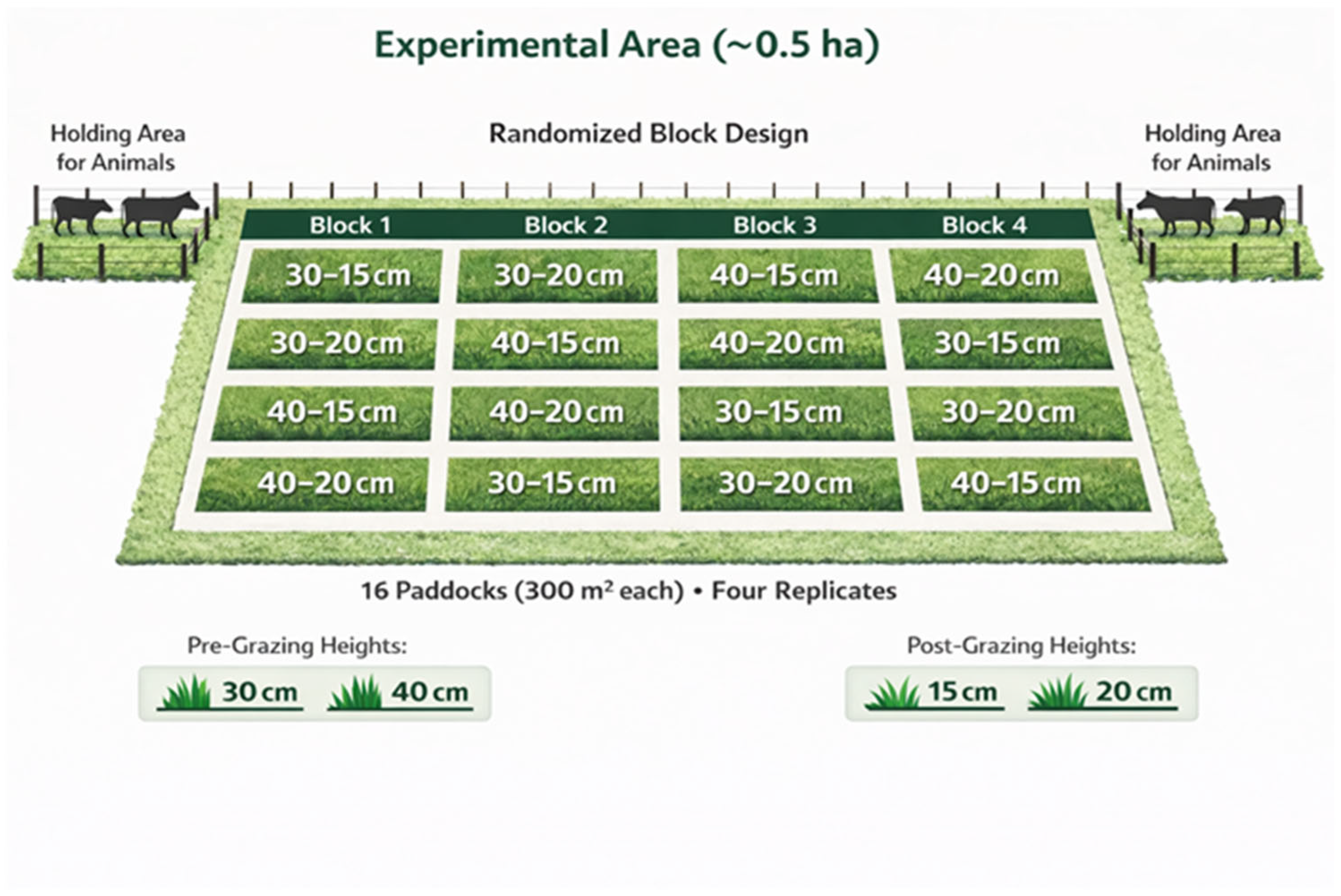
The hypothesis is that combining defoliation frequency (pre-grazing height) and intensity (post-grazing height) alters the growth dynamics, morphological composition, and species balance in mixed pastures of Marandu palisadegrass (Urochloa brizantha cv. Marandu) with the legume Macrotyloma axillare. Specifically, different combinations of grazing frequency and intensity may modify canopy structure and resource availability within the sward, thereby affecting forage accumulation and the balance between grass and legume components. Therefore, the objective of this study was to evaluate how combinations of pre- and post-grazing canopy heights (grazing management strategies) affect forage accumulation rate, morphological composition, and leaf area index in mixed pastures of Marandu palisadegrass and the legume Macrotyloma axillare managed under rotational stocking.
4. Discussion
During the experimental period, the proposed canopy height targets were achieved for both pre- and post-grazing, ensuring the necessary contrasts in defoliation strategies necessary for the study. However, pastures managed with a 40 cm pre-grazing height showed greater difficulty in achieving the post-grazing target, likely due to the accumulation of stems and dead material [
18,
19]. Similar findings were reported by Antunes et al. [
11], who observed that Marandu palisadegrass pastures managed at a pre-grazing height of 35 cm had increased stem proportions and failed to achieve the post-grazing target of 10 cm compared with shorter canopies managed at 25 cm.
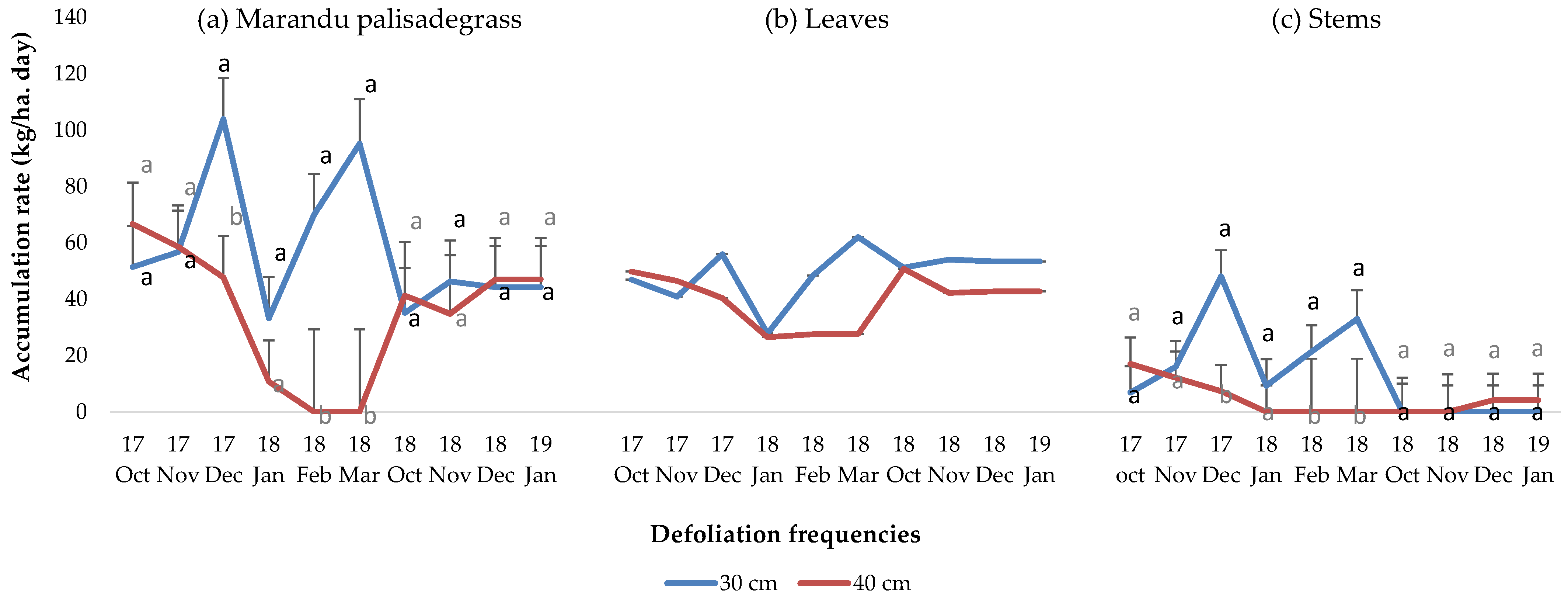
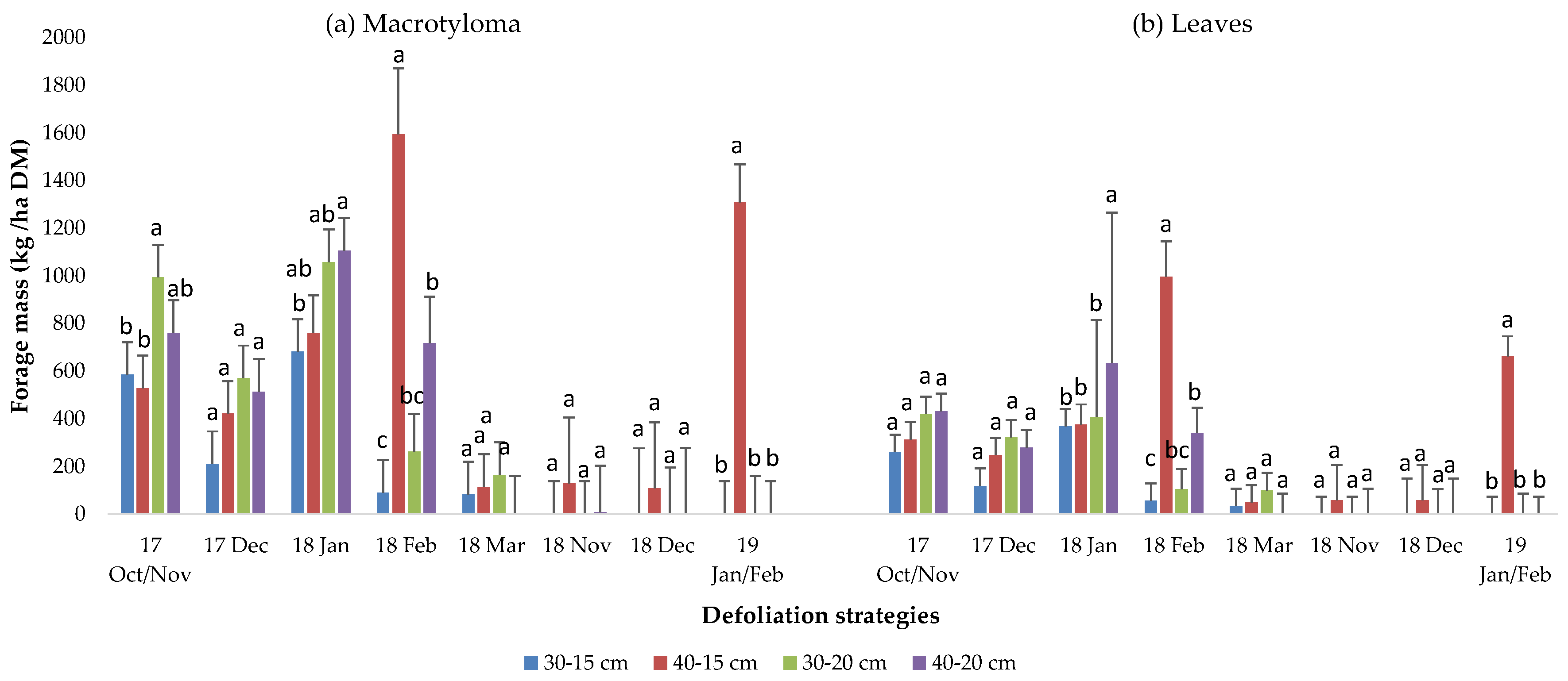
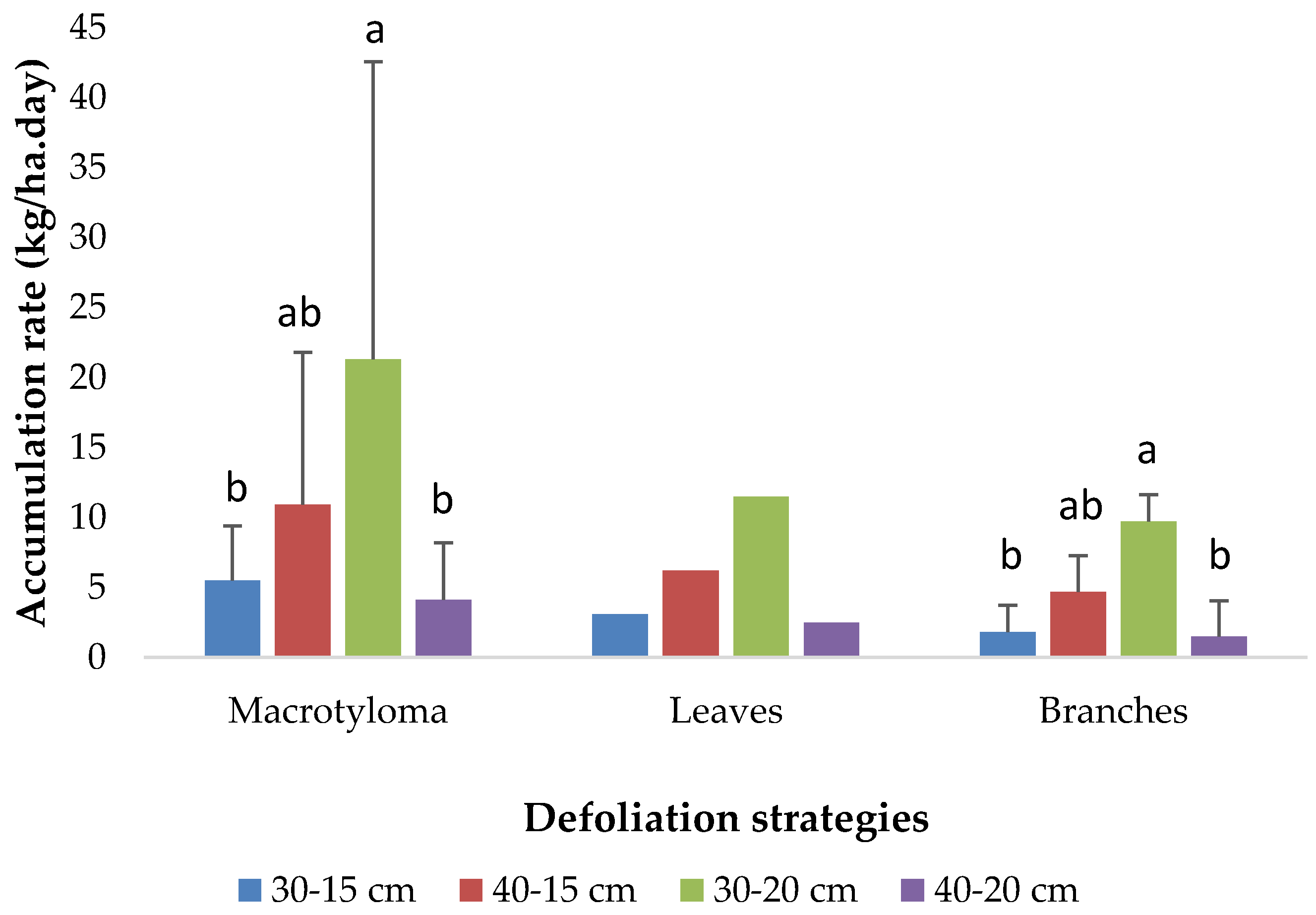
The response of Marandu palisadegrass forage accumulation depended on the interaction between grazing frequency and seasonal growing conditions, suggesting that grazing management effects are modulated by plant growth dynamics throughout the year. However, it did not affect the accumulation rates of Marandu or Macrotyloma leaves. The highest forage accumulation rates were found for Marandu stems at shorter pre-grazing heights (30 cm), while Macrotyloma branches accumulated more under lenient defoliation (20 cm). These results reinforce the idea that light interception and residual leaf area are key factors in driving regrowth and canopy productivity in mixed pastures.
The highest forage accumulation rates of the legume
Macrotyloma occurred under the 30–20 cm and 40–15 cm grazing strategies. These results suggest that
Macrotyloma growth was favored, first, by lenient defoliation (30–20 cm; 33% proportion of canopy height removed by grazing), and second, by longer regrowth intervals, even at higher grazing intensity (40–15 cm with 62% proportion of canopy height removed by grazing). Although the post-grazing heights evaluated represent relatively intense defoliation for Marandu palisadegrass [
18], they did not affect total
Macrotyloma forage production as initially expected.
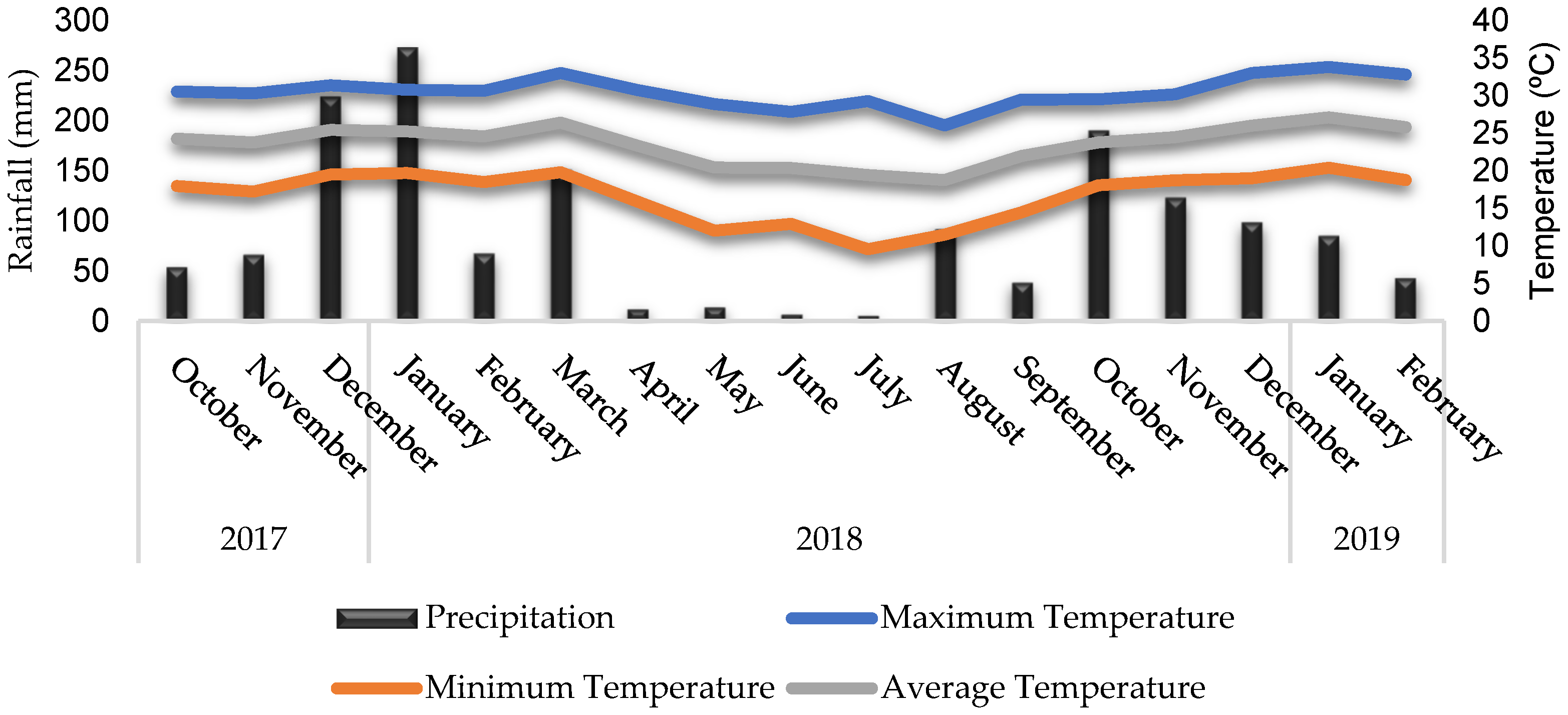
Seasonal variation influenced the accumulation rates and botanical composition of mixed pastures of Marandu palisadegrass and
Macrotyloma, indicating that similar grazing management strategies yielded different results across evaluation periods due to climatic seasonality. Based on this observation, it may be beneficial to have different pasture height targets throughout the year, as Terra et al. [
19] reported for Marandu palisadegrass under continuous grazing.
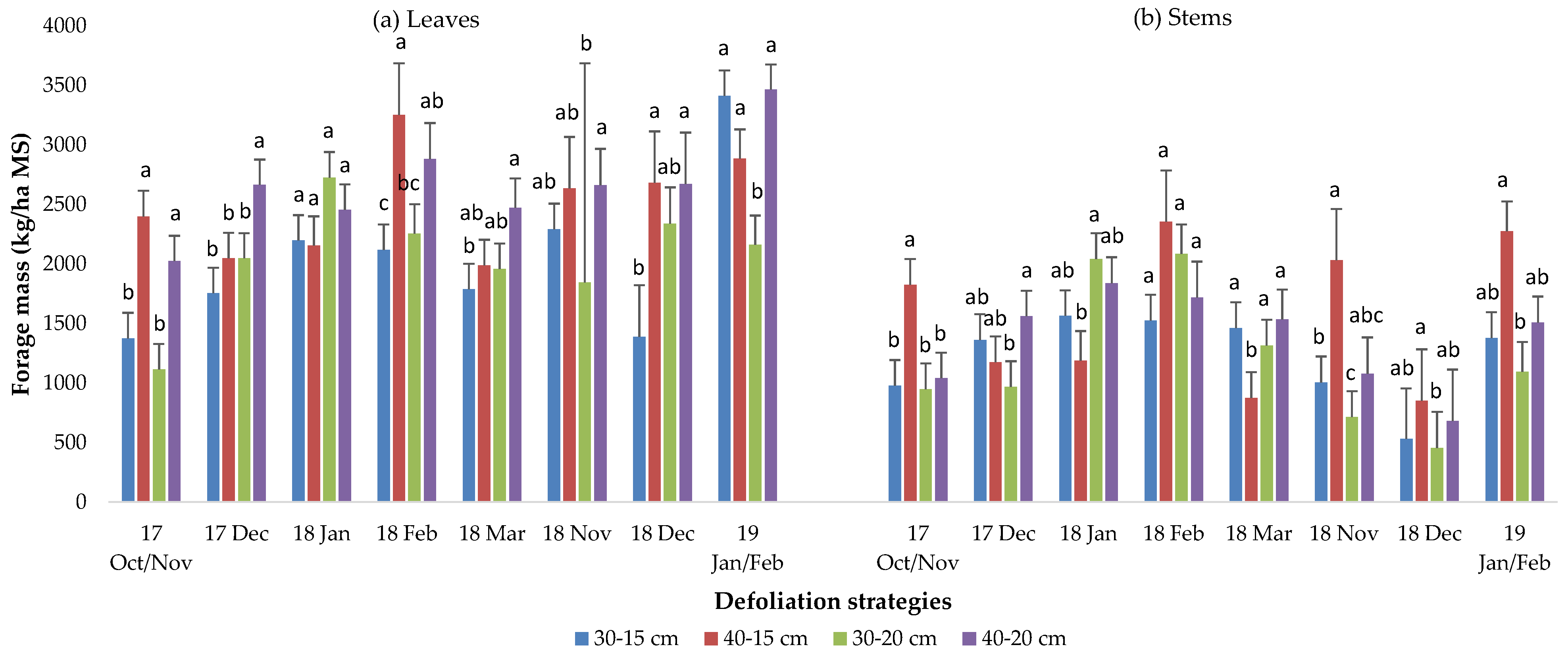
As expected, the mass of Marandu palisadegrass and its leaves and stems were directly related to canopy height, consistent with the positive linear relationship between height and forage mass [
20]. Pre-grazing leaf and stem mass were higher at a pre-grazing height of 40 cm, reflecting longer regrowth intervals and lower consumption by animals [
21,
22].
Macrotyloma pre-grazing mass was also influenced by post-grazing height: less intense grazing (20 cm) resulted in greater residual leaf area and faster recovery, while intense defoliation (15 cm) reduced regrowth by probably removing apical meristems. Similar responses have been reported for other twining legumes, which develop better under lower grazing intensities, as described by Ongaro et al. and Batista et al. [
17,
23] in continuous stocking grazing management. Legume persistence and productivity depend on the preservation of growing points and leaves, which are favored by lenient defoliation in rotational stocking systems [
24]. On the other hand, studies of mixed pastures in Brazil suggest that pasture development is best when regrowth is interrupted at 95% light interception (higher frequency) compared to pastures reaching close to 100% light interception (lower frequency) [
7,
8,
21]. In this study, this corresponds to pre-grazing heights of 30 and 40 cm, respectively. The branch mass of
Macrotyloma was also greater under 30–20 cm and 40–15 cm (211 and 264 kg DM/ha, respectively), suggesting that lenient or moderately intense grazing combined with adequate regrowth intervals promotes branch development in twining legumes.
Macrotyloma pre-grazing branch mass was also affected by post-grazing height, likely due to its twining growth habit, allowing vertical development over the grass canopy in order to reach light, with secondary branching observed during evaluations [
17].
Higher pre-grazing canopy heights, resulting from longer regrowth periods, enabled greater plant development and senescence, leading to increased stem elongation, leaf aging, and the accumulation of dead material [
12]. Taller canopies were also likely to experience shading of emerging tillers and leaves, which reduced light availability and produced older, more lignified tissues in the bottom stratum of the forage canopy [
17]. Gomes et al. [
21] reported that long regrowth intervals in mixed pastures of Marandu palisadegrass and forage peanut (
Arachis pintoi cv. BRS Mandobi) reduced the stability of the legume in the canopy. Therefore, the growth habit of the intercropped legume (twining vs. prostrate) plays a decisive role in its persistence and productivity when intercropped with tropical grasses. In this study, the
Macrotyloma legume exhibits a twining growth habit. This causes the plants to be preferentially positioned in the upper part of the forage canopy [
16], resulting in more frequent consumption in pastures with shorter grazing intervals (30 cm) than in those with fewer grazing events (40 cm).
According to Thomas [
24,
25], the optimal contribution of legumes to tropical pastures should range from 20 to 45% of the total forage mass. Throughout the experiment,
Macrotyloma represented less than 8% of the total forage mass (70–240 kg DM/ha), which is far below the recommended range [
23,
25]. Grazing pressure, even in the lenient treatments, was likely excessive for this forage legume, limiting its persistence. Oliveira [
26] reported persistence of the legume
Macrotyloma and a high proportion in the total forage mass in a two-year experiment under continuous stocking at 30 cm, indicating that grazing management may be a determining factor for the presence of this legume.
The pre-grazing Leaf Area Index (LAI) of Marandu palisadegrass and
Macrotyloma was positively correlated with leaf mass and canopy height. Pastures managed at a pre-grazing height of 40 cm showed the highest LAI values for both species. The grass LAI remained stable over time, whereas the legume LAI declined sharply as the experiment progressed. In contrast, Alviarez et al. [
12] reported no differences among defoliation frequencies in pre-grazing Marandu palisadegrass LAI, although a marked reduction was observed over the experimental period, from 5.10 to 3.93. Conversely, the legume
Calopo LAI increased over time, from zero to 1.57, under the lowest defoliation frequency (100% light interception- IL). In this study, the post-grazing LAI of Marandu palisadegrass remained stable throughout the experimental period, while the LAI of
Macrotyloma declined. In this condition, Alviarez et al. [
12] describe only the differences in grass LAI for defoliation frequency: higher LAI with high frequency and light interception in the pre-grazing canopy (90 and 95% IL), and higher LAI for the opposite defoliation frequency in the
Calopo (100% IL).
The interaction between pre- and post-grazing heights impacted the amount of forage remaining after grazing. The 30–20 cm grazing strategy produced the lowest values, possibly due to a higher frequency of grazing and forage removal. Conversely, the 40–20 cm treatment resulted in the highest forage mass, mainly stems. The quantity of remaining leaves after grazing is directly associated with photosynthetic capacity and regrowth potential, representing an indicator of pasture persistence [
6]. While all grazing management strategies ensured a supply of Marandu palisagrass leaves post-grazing, the legume leaves were reduced, and there was a decrease in post-grazing mass. Post-grazing stem mass of Marandu was higher under the 40 cm pre-grazing height, reflecting longer rest periods and lower grazing frequency. Similar patterns were described by [
18], who reported reduced grazing efficiency at a pre-grazing height of 35 cm compared to 25 cm. This is consistent with the findings of Alviarez et al. [
12], who found that stem elongation in tropical grasses increases once they exceed 95% light interception.
Post-grazing leaf mass of Marandu palisadegrass varied mainly across evaluation periods, reflecting seasonal variations in plant growth and forage production. The 5 cm difference between post-grazing heights (15 vs. 20 cm) was apparently insufficient to produce consistent differences in the amount of leaf mass remaining after grazing. Higher leaf proportions were generally associated with periods of active growth, when faster leaf turnover and tiller renewal contribute to greater leaf presence in the residual canopy, whereas slower growth conditions tend to favor stem accumulation and leaf aging within the canopy [
6,
12]. Post-grazing dead material mass increased with taller pre-grazing heights (40 cm;
Table 2), likely due to longer growth periods allowing more vegetal tissue senescence when compared to the 30 cm treatment.
Over time, there was a significant reduction in the presence of the legume in all defoliation strategies evaluated. Zamboin et al. [
17], evaluating the same species and defoliation strategies, concluded that pastures with a height of 30–20 cm present the best canopy structure for grazing animals. These authors proposed sowing the legume annually or biennially to ensure its constant presence in the forage mass, as is already the case with other legumes in pastures [
27].
Future studies should focus on long-term evaluations of Macrotyloma persistence under variable grazing pressures, its regrowth physiology in shaded environments, and the balance between canopy structure, light interception, and nitrogen dynamics. Such research will help to develop sustainable, productive, multispecies pastures in tropical livestock systems




 ,
,