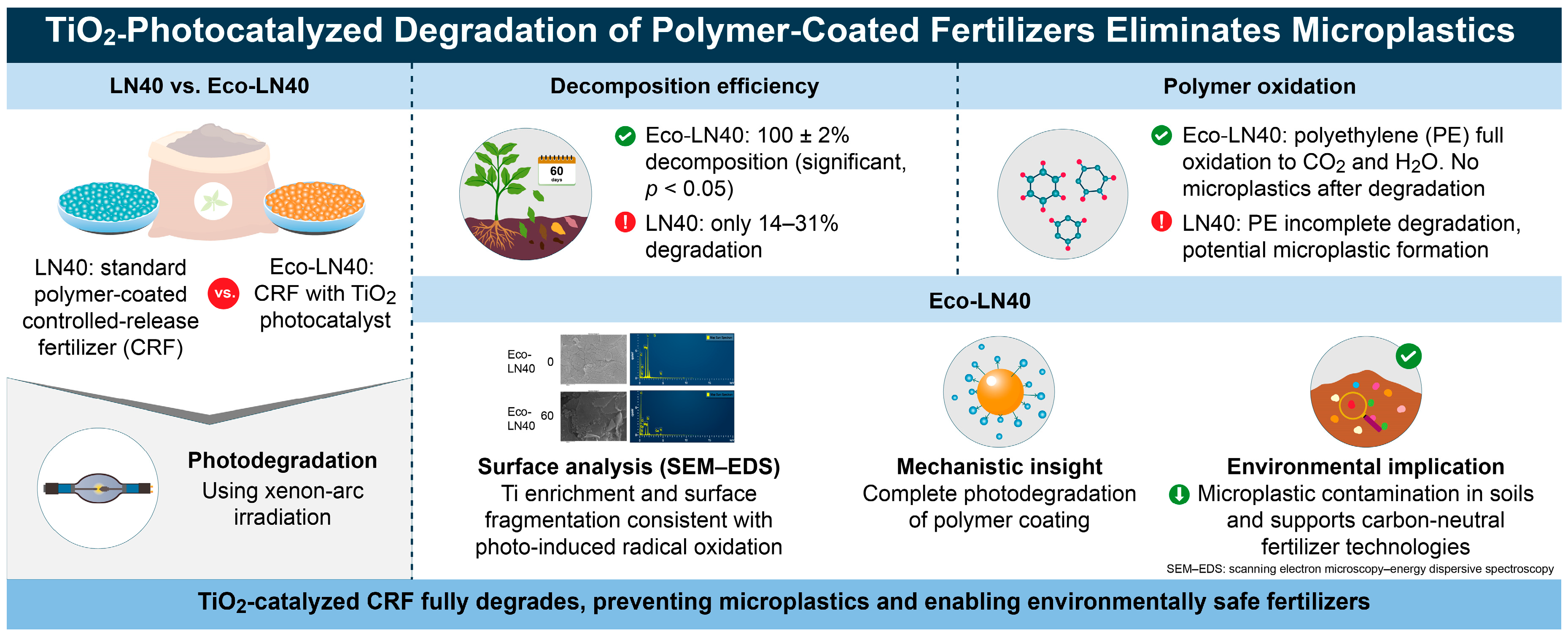

Decomposition Rate and Microplastic Residue Formation of Photodegradable Resin-Coated Controlled-Release Fertilizers (CRFs)


Abstract
1. Introduction
2. Materials and Methods
2.1. Materials
2.2. Photo-Degradation Experiments
2.3. Decomposition Rate
2.4. Characterization of Surface Morphology and Elemental Analysis
2.5. Thermal Extraction Desorption Gas Chromatograph Mass Spectrometer (TED-GC/MS)
2.6. Fourier Transform Infrared Spectroscopy
2.7. Raman Microscopy Analysis
3. Results
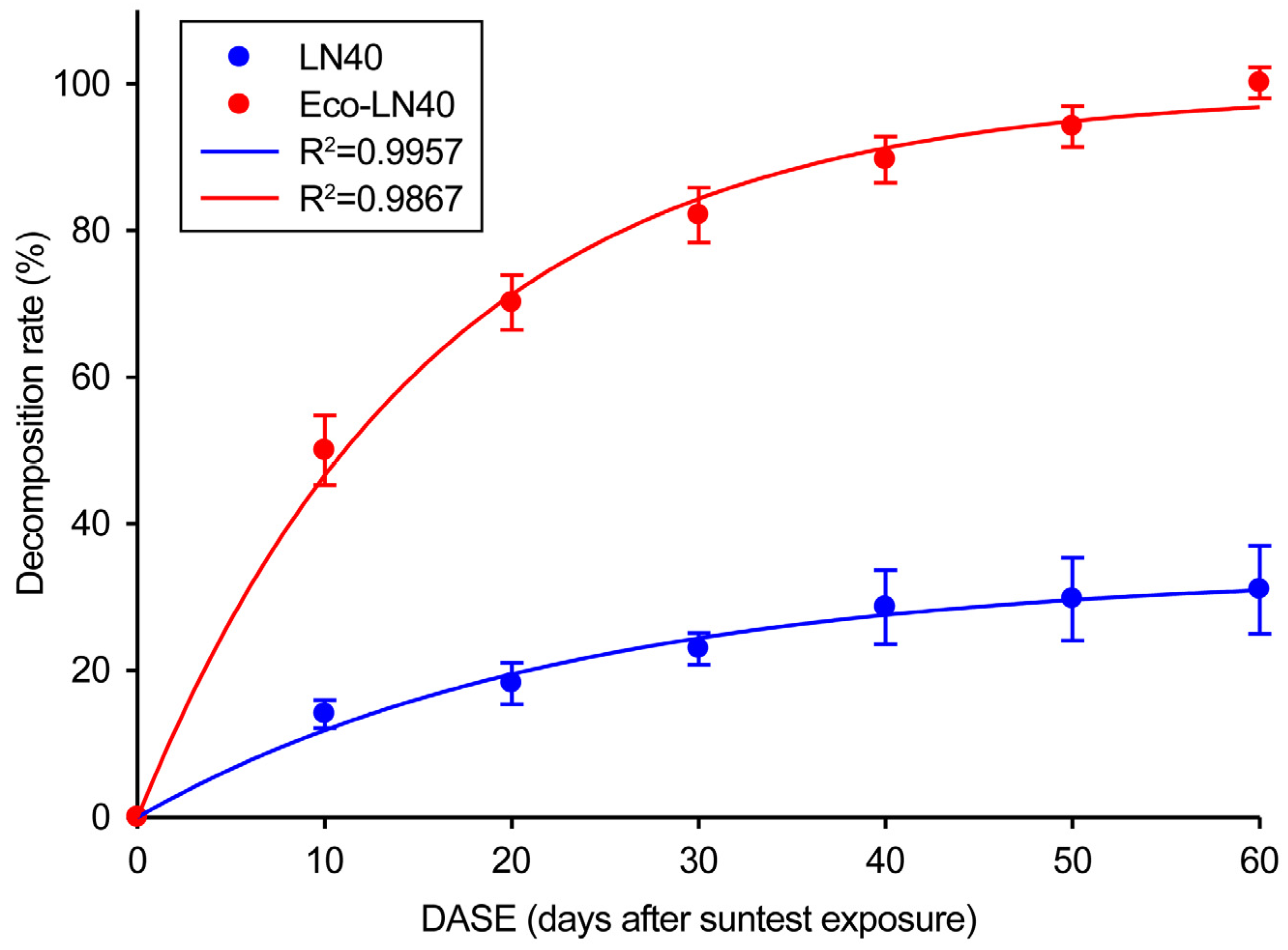
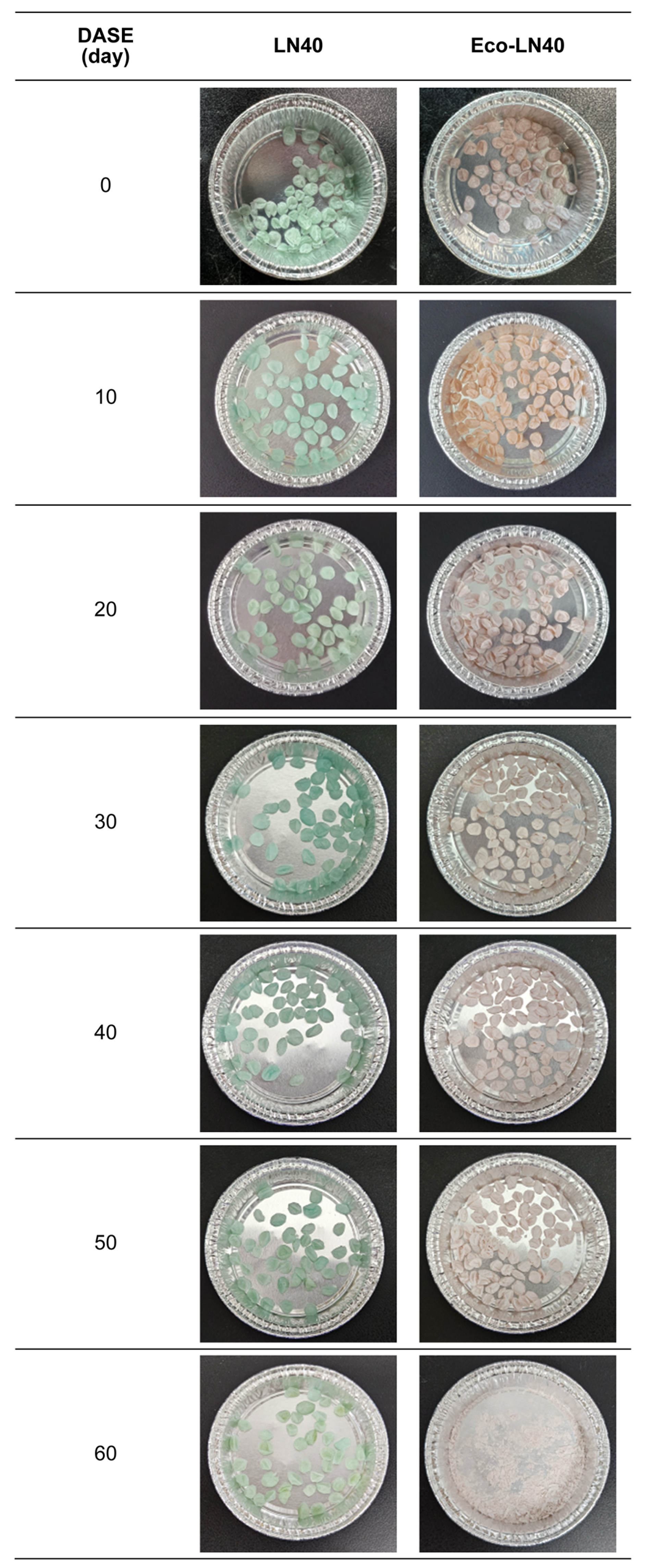
3.1. Decomposition Rate
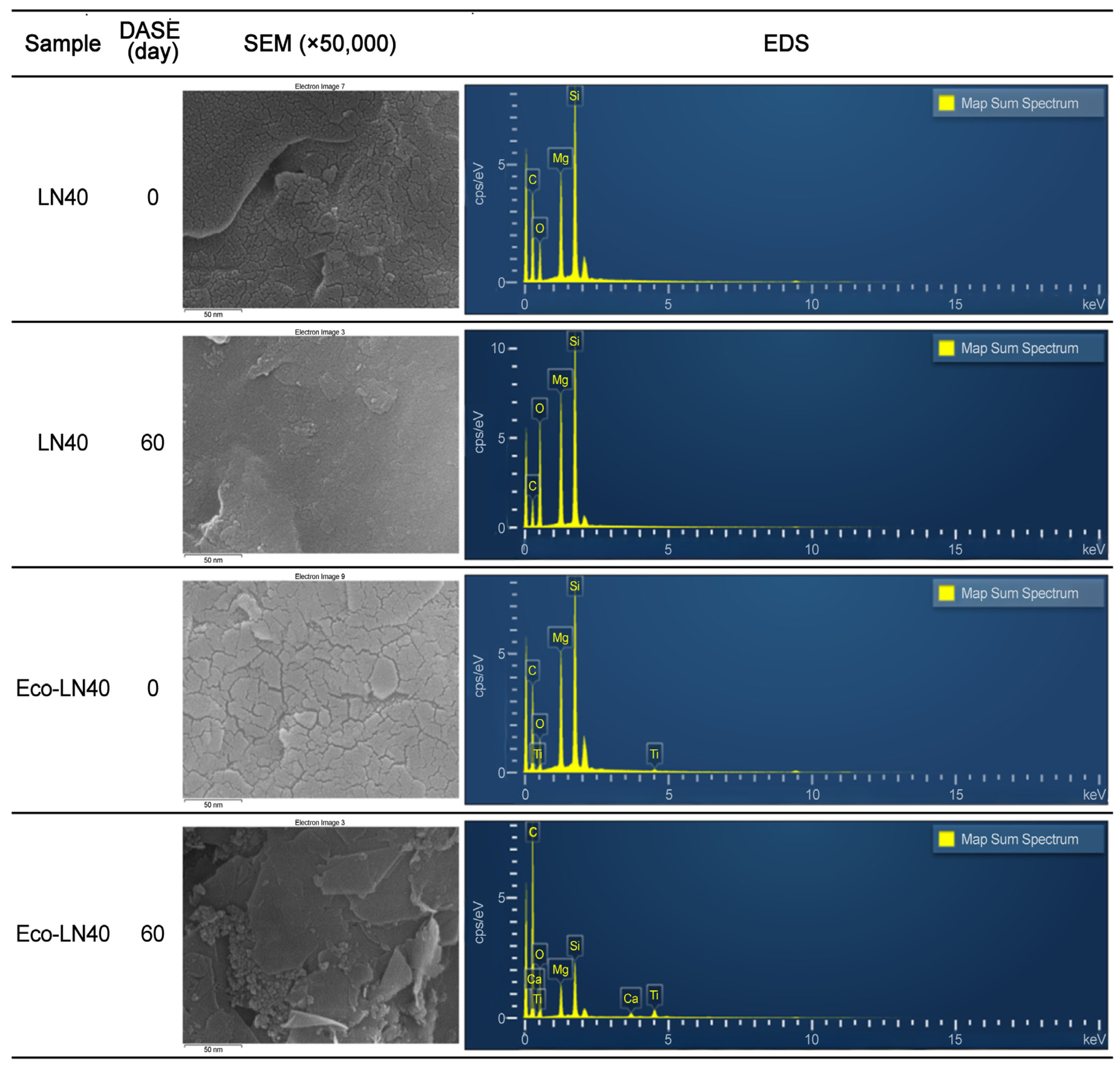
3.2. Surface Morphology Changes and Element Composition
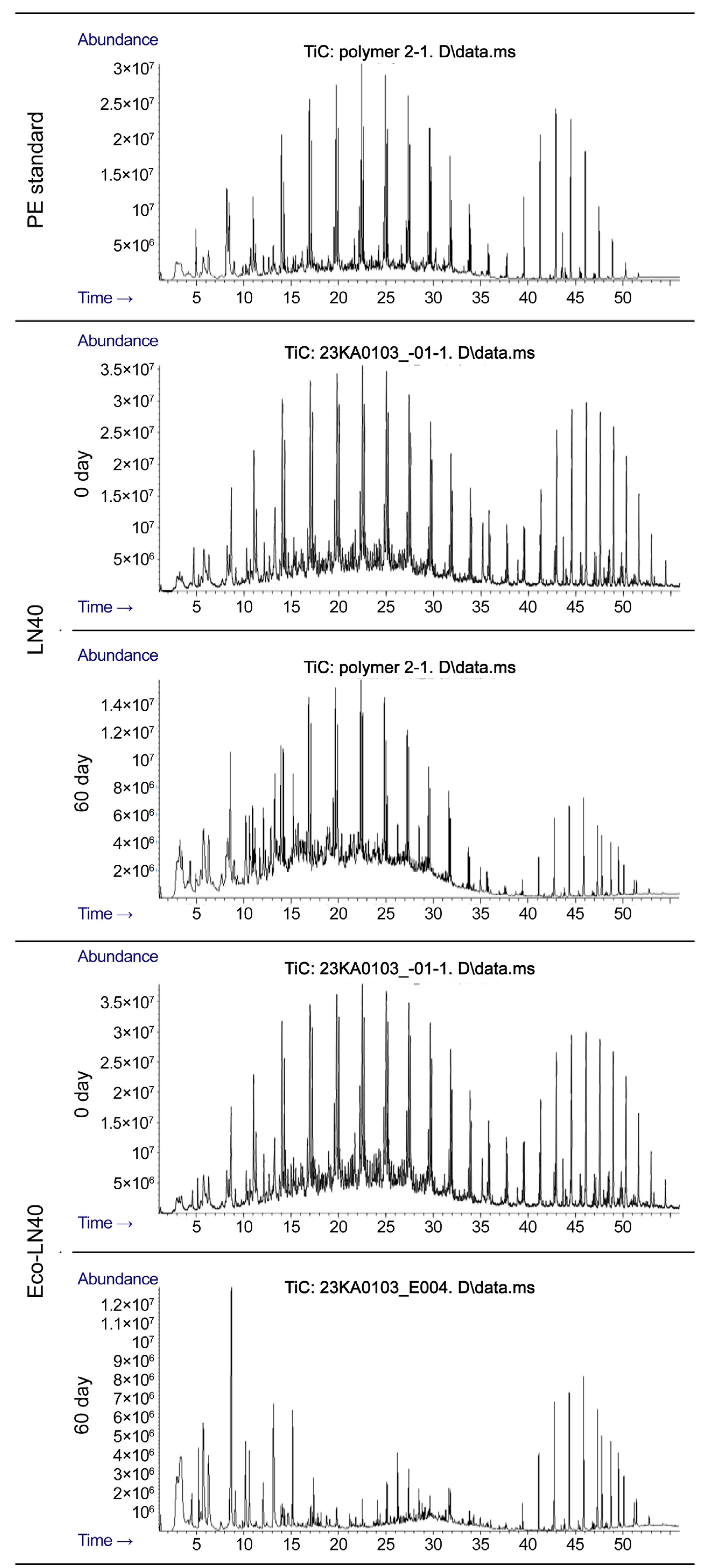
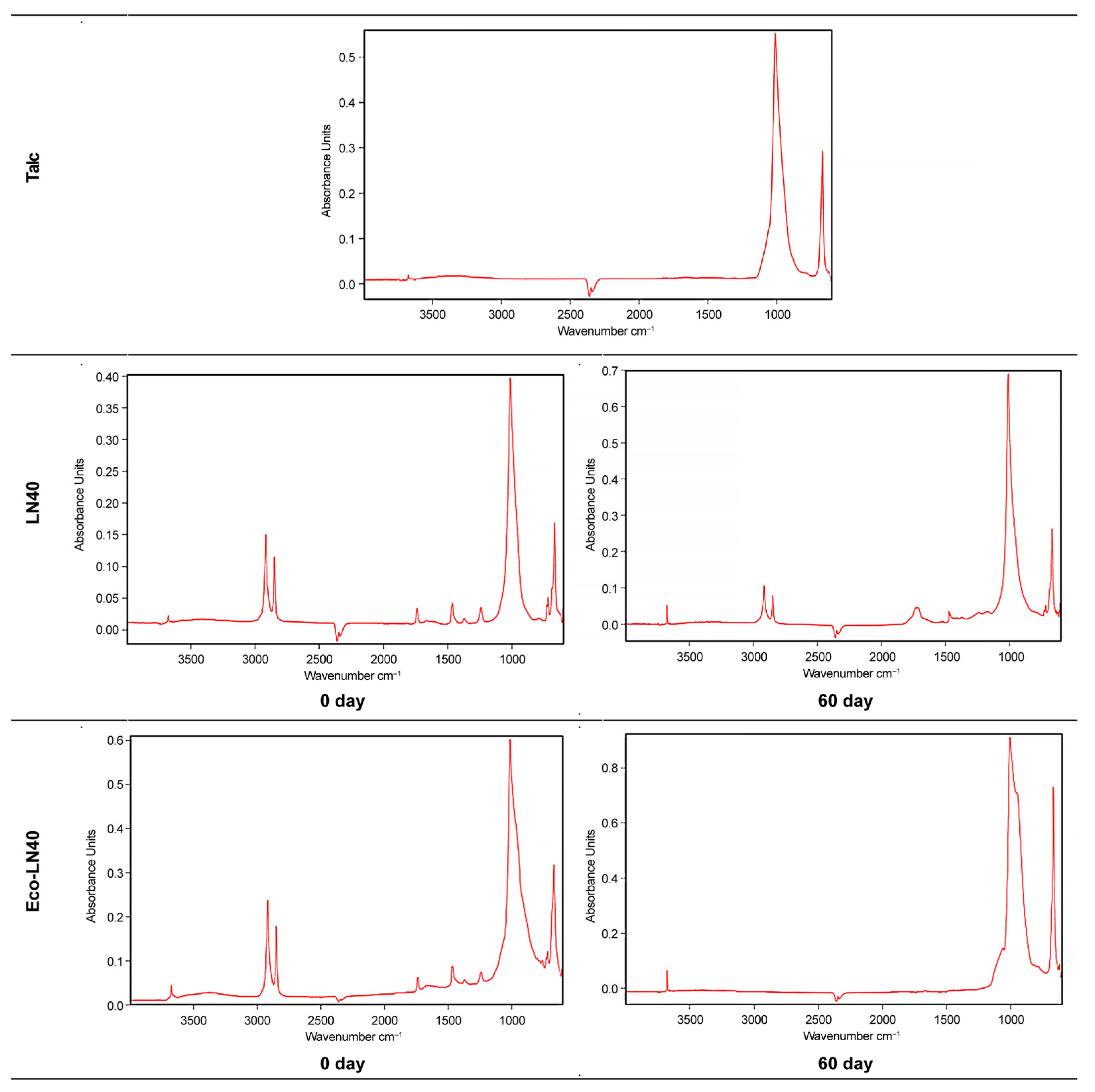
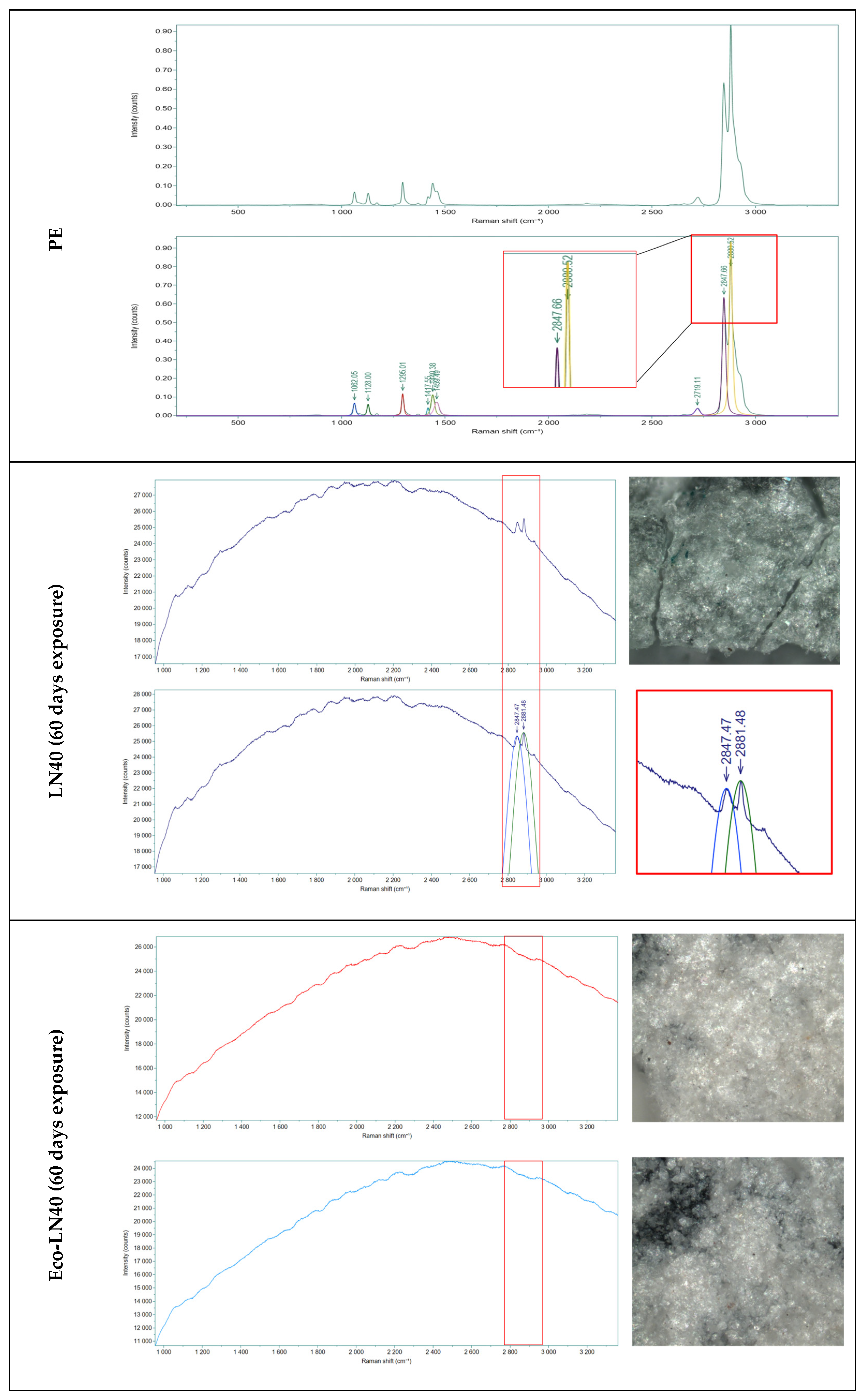
3.3. Chemical Structure Evolution
4. Discussion
5. Conclusions
Author Contributions
Funding
Institutional Review Board Statement
Informed Consent Statement
Data Availability Statement
Conflicts of Interest
Abbreviations
| CRF | Controlled-Release Fertilizer |
| SEM-EDS | Scanning Electron Microscopy-Energy Dispersive Spectroscopy |
| TED-GC/MS | Thermal Extraction Desorption Gas Chromatograph Mass Spectrometer |
| FTIR | Fourier Transform Infrared |
| DASE | Day After Suntest Exposure |
References
- Shaviv, A. Advances in controlled-release fertilizers. Adv. Agron. 2001, 71, 1–49. [Google Scholar] [CrossRef] [Scilit]
- Trenkel. Slow- and Controlled-Release and Stabilized Fertilizers: An Option for Enhancing Nutrient Use Efficiency in Agriculture, 2nd ed.; IFA Publication: Paris, France, 2010. [Google Scholar]
- Li, X.; Li, Z. Global trends and current advances in slow/controlled-release fertilizers: A bibliometric analysis from 1990 to 2023. Agriculture 2024, 14, 1502. [Google Scholar] [CrossRef] [Scilit]
- Lawrencia, D.; Wong, S.K.; Low, D.Y.S.; Goh, B.H.; Goh, J.K.; Ruktanonchai, U.R.; Soottitantawat, A.; Lee, L.H.; Tang, S.Y. Controlled release fertilizers: A review on coating materials and mechanism of release. Plants 2021, 10, 238. [Google Scholar] [CrossRef] [Scilit] [PubMed]
- Yang, L.; An, D.; Wang, T.-J.; Kan, C.; Jin, Y. Photodegradation of Polymer Materials Used for Film Coatings of Controlled-Release Fertilizers. Chem. Eng. Technol. 2017, 40, 1611–1618. [Google Scholar] [CrossRef] [Scilit]
- Li, J.; Wang, D.; Chen, T.; Zhou, W.; Zhan, X. Risks of microplastics from polyurethane and polyethylene-polycarbonate coated fertilizers to soil-crop system. J. Hazard. Mater. 2025, 499, 140181. [Google Scholar] [CrossRef] [Scilit] [PubMed]
- Song, Y.K.; Hong, S.H.; Eo, S.; Shim, W.J. The fragmentation of nano-and microplastic particles from thermoplastics accelerated by simulated-sunlight-mediated photooxidation. Environ. Pollut. 2022, 311, 119847. [Google Scholar] [CrossRef] [Scilit] [PubMed]
- Thompson, R.C.; Olsen, Y.; Mitchell, R.P.; Davis, A.; Rowland, S.J.; John, A.W.; Mcgonigle, D.; Russell, A.E. Lost at sea: Where is all the plastic? Science 2004, 304, 838. [Google Scholar] [CrossRef] [Scilit] [PubMed]
- Xu, J.; Yang, W.; Zhang, C.; Dong, X.; Luo, Y. Photo-oxidation and biodegradation of polyethylene films containing polyethylene glycol modified TiO2 as pro-oxidant additives. Polym. Compos. 2018, 39, E531–E539. [Google Scholar] [CrossRef] [Scilit]
- Rillig, M.C.; Lehmann, A.; de Souza Machado, A.A.; Yang, G. Microplastic effects on plants. New Phytol. 2019, 223, 1066–1070. [Google Scholar] [CrossRef] [Scilit]
- Cusworth, S.J.; Davies, W.J.; McAinsh, M.R.; Gregory, A.S.; Storkey, J.; Stevens, C.J. Agricultural fertilisers contribute substantially to microplastic concentrations in UK soils. Commun. Earth Environ. 2024, 5, 7. [Google Scholar] [CrossRef] [Scilit]
- Shao, Z.; Xiao, K.Q.; Jin, M.; Chen, S.; Huo, Y.; Zhu, Y.G. Environmental fate and effects of mulch films on agricultural soil: A systematic review from application to residual impact. Crit. Rev. Environ. Sci. Technol. 2025, 56, 43–66. [Google Scholar] [CrossRef] [Scilit]
- Gewert, B.; Plassmann, M.M.; MacLeod, M. Pathways for degradation of plastic polymers floating in the marine environment. Environ. Sci. Process. Impacts 2015, 17, 1513–1521. [Google Scholar] [CrossRef] [Scilit] [PubMed]
- Mai, L.; Bao, L.J.; Wong, C.S.; Zeng, E.Y. Microplastics in the terrestrial environment. In Microplastic Contamination in Aquatic Environments; Elsevier: Amsterdam, The Netherlands, 2024; pp. 229–247. [Google Scholar] [CrossRef] [Scilit]
- Lee, Q.Y.; Li, H. Photocatalytic degradation of plastic waste: A mini review. Micromachines 2021, 12, 907. [Google Scholar] [CrossRef] [Scilit] [PubMed]
- Ge, J.; Zhang, Z.; Ouyang, Z.; Shang, M.; Liu, P.; Li, H.; Guo, X. Photocatalytic degradation of (micro)plastics using TiO2-based and other catalysts: Properties, influencing factor, and mechanism. Environ. Res. 2022, 209, 112729. [Google Scholar] [CrossRef] [Scilit] [PubMed]
- Singh, S.; Mahalingam, H.; Singh, P.K. Polymer-supported titanium dioxide photocatalysts for environmental remediation: A review. Appl. Catal. A 2013, 462–463, 178–195. [Google Scholar] [CrossRef] [Scilit]
- Coromelci, C.G.; Turcu, E.; Doroftei, F.; Palamaru, M.N.; Ignat, M. Conjugated polymer modifying TiO2 performance for visible-light photodegradation of organics. Polymers 2023, 15, 2805. [Google Scholar] [CrossRef] [Scilit] [PubMed]
- 11-1360000-00425-01; Weather Resource Analysis Report of Optimal Solar Energy Utilization. Korea Meteorological Administration: Daejeon, Republic of Korea, 2008.
- ASTM G151-19; Standard Practice for Exposing Nonmetallic Materials in Accelerated Test Devices that Use Laboratory Light Sources. ASTM International: West Conshohocken, PA, USA, 2019. [CrossRef] [Scilit]
- ASTM G155-21; Standard Practice for Operating Xenon Arc Lamp Apparatus for Exposure of Materials. ASTM International: West Conshohocken, PA, USA, 2021. [CrossRef] [Scilit]
- ASTM D5071-06; Standard Practice for Exposure of Photodegradable Plastics in a Xenon Arc Apparatus. ASTM International: West Conshohocken, PA, USA, 2022. [CrossRef] [Scilit]
- KS M 4892-1; Plastics-Methods of Exposure to Laboratory Light Sources-Part 1: General Guidance. Korean Agency for Technology and Standards: Eumseong, Republic of Korea, 2022.
- ISO/TC 147/SC 2/JWG 1; Joint ISO/TC 147/SC 2—ISO/TC 661/SC 14 WG: Plastics (Including Microplastics) in Waters and Related Matrices. ISO: Geneva, Switzerland, 2024.
- de Souza Machado, A.A.; Kloas, W.; Zarfl, C.; Hempel, S.; Rillig, M.C. Microplastics as an emerging threat to terrestrial ecosystems. Global Change Biol. 2018, 24, 1405–1416. [Google Scholar] [CrossRef] [Scilit] [PubMed]
- Poma, O.; Ricce, B.; Beraún, J.; Perez Carpio, J.E.; Fernandez, H.; Soria, J. Biodegradation of low-density polyethylene—LDPE by the lepidopteran galleria Mellonella reusing beekeeping waste. Front. Bioeng. Biotechnol. 2022, 10, 915331. [Google Scholar] [CrossRef] [Scilit] [PubMed]
- Babaremu, K.O.; Okoya, S.A.; Hughes, E.; Tijani, B.; Teidi, D.; Akpan, A.; Igwe, J.; Karera, S.; Oyinlola, M.; Akinlabi, E.T. Sustainable plastic waste management in a circular economy. Heliyon 2022, 8, e09984. [Google Scholar] [CrossRef] [Scilit] [PubMed]
- Soni, N.; Bhange, K.; Velramar, B. Confirmation of Low-Density Polyethylene (LDPE) Biodegradation Enhanced by Surface-Active Compounds (SACs) from Pluralibacter gergoviae TYB1 Through Physicochemical Characterizations. Polym. Adv. Technol. 2025, 36, e70370. [Google Scholar] [CrossRef] [Scilit]



| Sample | Coating Material Theoretical Ratio | Coating Fertilizer Nitrogen Content (%) | Residual Nitrogen Content of Coating Fertilizer (%) | |||
|---|---|---|---|---|---|---|
| Polymer (g) | Talc (g) | TiO2 (g) | ||||
| LDPE | EVA | |||||
| Eco-LN40 | 17.6 | 7.5 | 31.3 | 0.5 | 43 | 0.1 |
| LN40 | 18.6 | 7.9 | 33.0 | - | 43 | 0.1 |
| Sample | Formula |
|---|---|
| LN40 | (Initial weight − Measured weight)/(Initial weight × Resin content of LN40 (1)) × 100 |
| Eco-LN40 | (Initial weight − Measured weight)/(Initial weight × Resin content of Eco-LN40 (2)) × 100 |
| SEM-EDS | |
|---|---|
| Instrument | JSM-7001F (JEOL, Tokyo, Japan) |
| Magnification | 10 (WD 40 mm) to 1,000,000× |
| Accelerating voltage | 0.5–30 kV or wider |
| Probe current | 1 × 10⁻¹² to 2 × 10⁻⁷ A |
| Electron gun | Schottky type field emission gun |
| Thermal Extraction Desorption | |
|---|---|
| Instrument | MPS-TDU (Gerstel, Mülheim, Germany) |
| Coupling temp. | 240 °C |
| Desorption mode | Solvent vent |
| Desorption temp. | 200 °C |
| CIS initial temp. | −100 °C |
| CIS end temp. | 270 °C |
| Absorber | PDMS (Sorbstar, Shanghai, China) |
| Gas chromatography conditions | |
| Instrument | 8890 (Agilent, Santa Clara, CA, USA) |
| Column | ZB-5MS UI (30 m × 0.25 mm, 0.25 µm, Phenomenex, Torrance, CA, USA) |
| Flow rate | 1 mL/min (constant flow) |
| Carrier gas | He (99.999%) |
| Oven temperature | 40 °C → 5 °C/min → 300 °C |
| Transfer line temperature | 280 |
| Mass spectrometer conditions | |
| Instrument | 5977B (Agilent, Santa Clara, CA, USA) |
| Ion source temperature | 230 °C |
| Ion source mode | EI mode |
| Electron energy | −70 eV |
| Scan type | Full-scan mode |
| Mass range (mu) | 35–350 |
| Other information | |
| Detection information | Micro- and nano-plastics |
| Detection limit (µg) | PE (1.6), PP (0.44), PET (0.7), PA6 (0.5), PS (0.2), PMMA (0.2), and SBR (0.3) |
| Sample mass | ∼50 mg, Sample cup (∼900 µL) |
| FT-IR Microscope | |
|---|---|
| Instrument | LUMOS (Bruker Optics, Ettingen, Germany) |
| Detection type | Midband MCT |
| Objective | Schwarzschild objective 8× |
| Cooling type | Liquid nitrogen (N2) |
| Spectral resolution | <2 cm−1 |
| Spectral range | 7000–650 cm−1 |
| Measurement mode | Transmission, Reflection, µ-ATR |
| Raman Microscope | |
|---|---|
| Instrument | XploRa PLUS (HORIBA, Kyoto, Japan) |
| Detector | 1024 × 256 BIDD TE air-cooled scientific CCD |
| Laser | 532 nm |
| Power | Initial output: 100 mW (Filter: 100%, 50%, 25%, 10%, 1%, 0.1%) |
| Grating | 600 grmm, 1200 grmm, 1800 grmm, 2400 grmm |
| Objective | ×5 (N.A 0.1), ×10 (N.A 0.25), ×20 (N.A 0.45), ×50 (N.A 0.8), ×100 (N.A 0.9) |
| Element | LN40 0 Day | LN40 60 Days | Eco-LN40 0 Day | Eco-LN40 60 Days | ||||||||
|---|---|---|---|---|---|---|---|---|---|---|---|---|
| wt% | wt% Sigma | Atomic % | wt% | wt% Sigma | Atomic % | wt% | wt% Sigma | Atomic % | wt% | wt% Sigma | Atomic % | |
| C | 60.87 | 0.29 | 72.54 | 31.41 | 0.30 | 42.42 | 61.46 | 0.27 | 73.61 | 67.54 | 0.24 | 76.03 |
| O | 18.01 | 0.24 | 16.11 | 38.71 | 0.22 | 39.25 | 15.73 | 0.23 | 14.14 | 23.76 | 0.24 | 20.08 |
| Mg | 7.39 | 0.07 | 4.35 | 11.94 | 0.08 | 7.97 | 8.39 | 0.07 | 4.97 | 2.41 | 0.03 | 1.34 |
| Si | 13.73 | 0.11 | 7.00 | 17.95 | 0.10 | 10.37 | 13.95 | 0.10 | 7.15 | 3.74 | 0.04 | 1.80 |
| Ca | - | - | - | - | - | - | - | - | - | 0.62 | 0.03 | 0.21 |
| Ti | - | - | - | - | - | - | 0.47 | 0.04 | 0.14 | 1.93 | 0.05 | 0.54 |
| Total | 100 | - | 100 | 100 | - | 100 | 100 | - | 100 | 100 | - | 100 |
Disclaimer/Publisher’s Note: The statements, opinions and data contained in all publications are solely those of the individual author(s) and contributor(s) and not of MDPI and/or the editor(s). MDPI and/or the editor(s) disclaim responsibility for any injury to people or property resulting from any ideas, methods, instructions or products referred to in the content. |
© 2026 by the authors. Licensee MDPI, Basel, Switzerland. This article is an open access article distributed under the terms and conditions of the Creative Commons Attribution (CC BY) license.
Share and Cite
Jo, H.-W.; Lee, J.-S.; Jang, I.; Cho, Y.-I.; Moon, J.-K. Decomposition Rate and Microplastic Residue Formation of Photodegradable Resin-Coated Controlled-Release Fertilizers (CRFs). Agrochemicals 2026, 5, 20. https://doi.org/10.3390/agrochemicals5020020
Jo H-W, Lee J-S, Jang I, Cho Y-I, Moon J-K. Decomposition Rate and Microplastic Residue Formation of Photodegradable Resin-Coated Controlled-Release Fertilizers (CRFs). Agrochemicals. 2026; 5(2):20. https://doi.org/10.3390/agrochemicals5020020
Chicago/Turabian StyleJo, Hyeong-Wook, Joon-Seok Lee, Il Jang, Young-Il Cho, and Joon-Kwan Moon. 2026. "Decomposition Rate and Microplastic Residue Formation of Photodegradable Resin-Coated Controlled-Release Fertilizers (CRFs)" Agrochemicals 5, no. 2: 20. https://doi.org/10.3390/agrochemicals5020020
APA StyleJo, H.-W., Lee, J.-S., Jang, I., Cho, Y.-I., & Moon, J.-K. (2026). Decomposition Rate and Microplastic Residue Formation of Photodegradable Resin-Coated Controlled-Release Fertilizers (CRFs). Agrochemicals, 5(2), 20. https://doi.org/10.3390/agrochemicals5020020