

Zinc Oxide Nanoparticles: Synthesis, Characterization and Applications in Agriculture

 ,
,  ,
,
Abstract
1. Introduction
2. Nanofertilizers
3. Synthesis of ZnO NPs
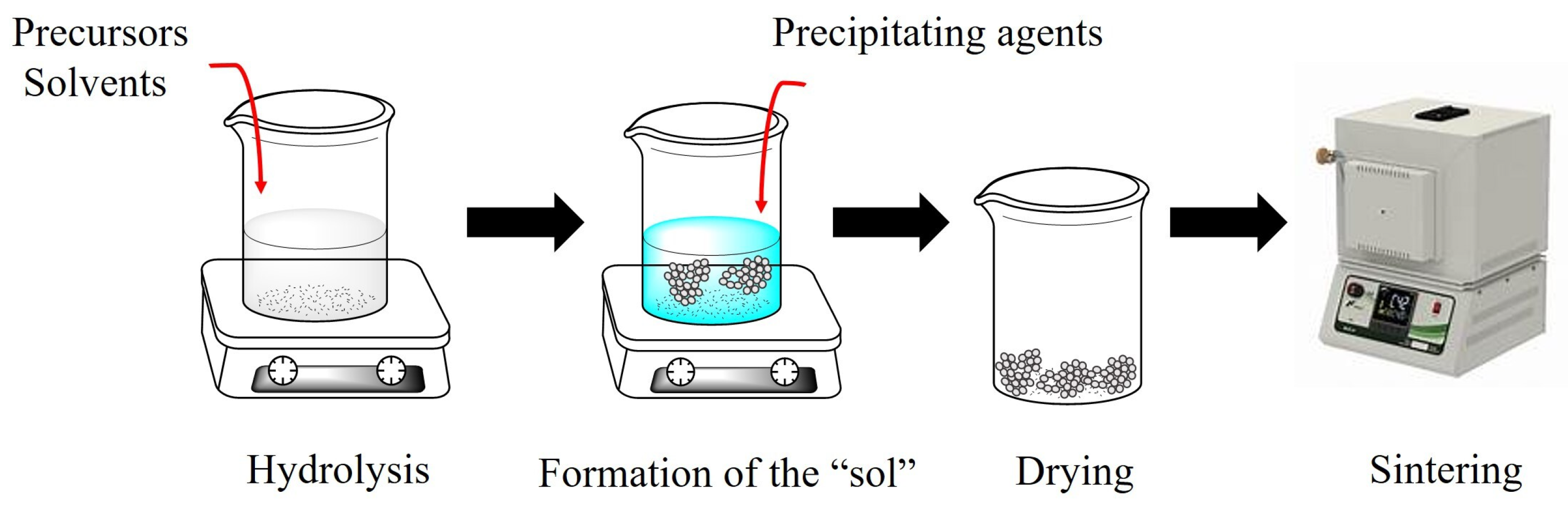
3.1. Sol–Gel
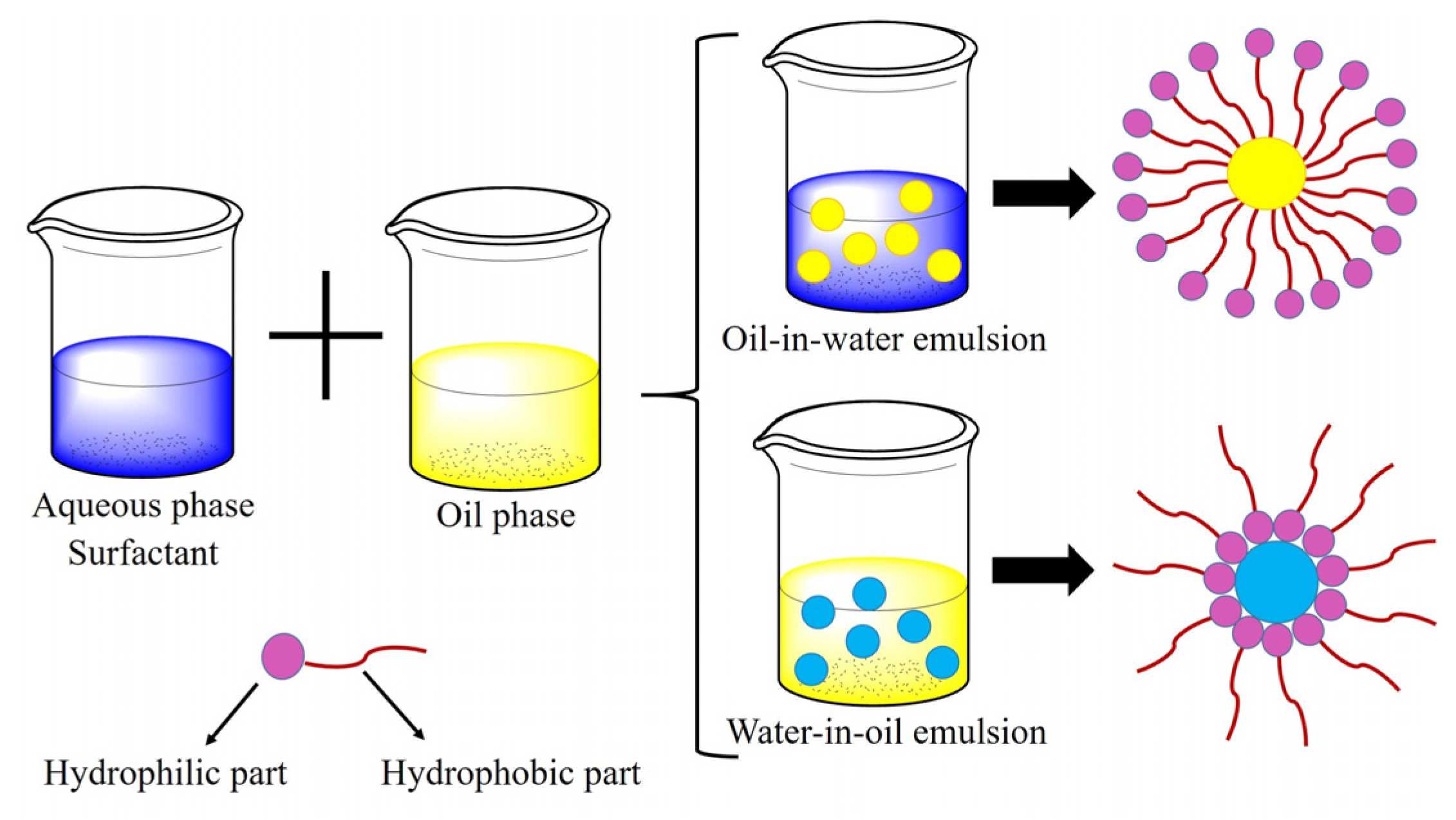
3.2. Microemulsion
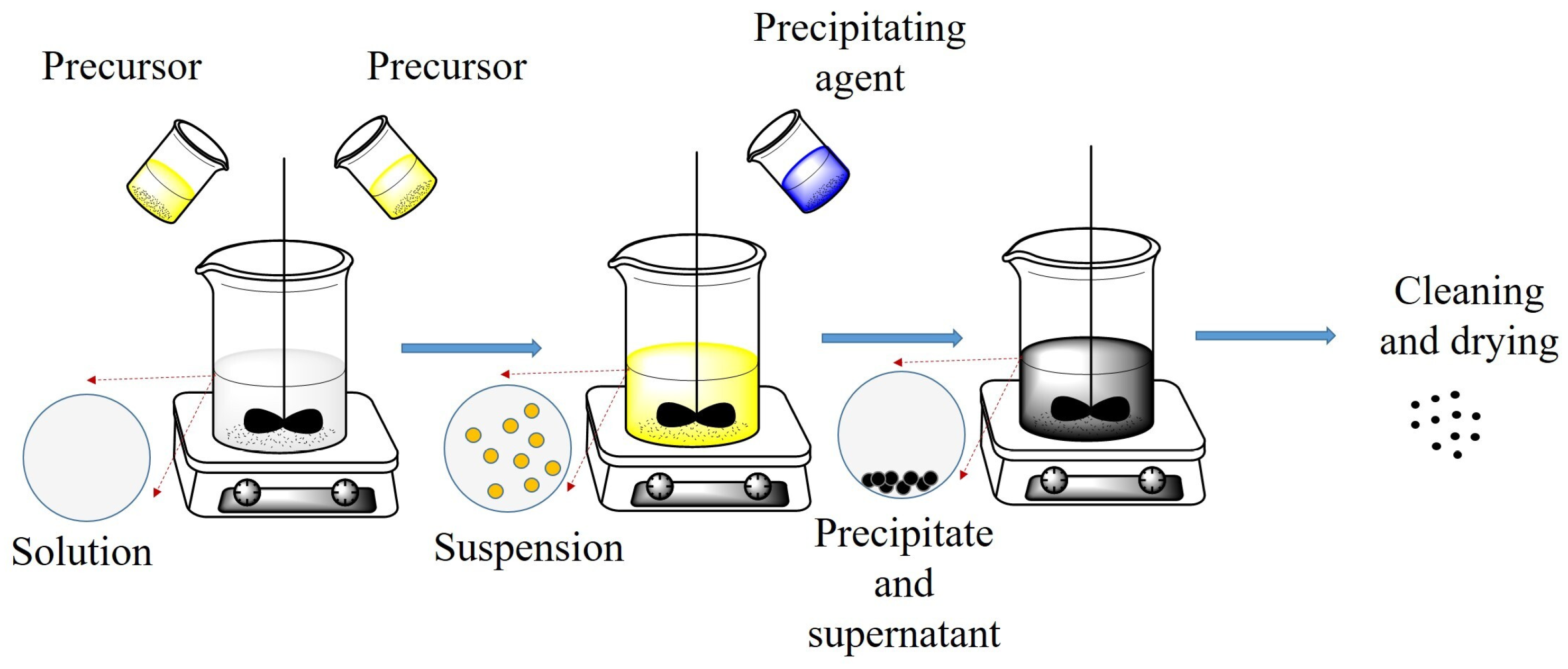
3.3. Chemical Precipitation
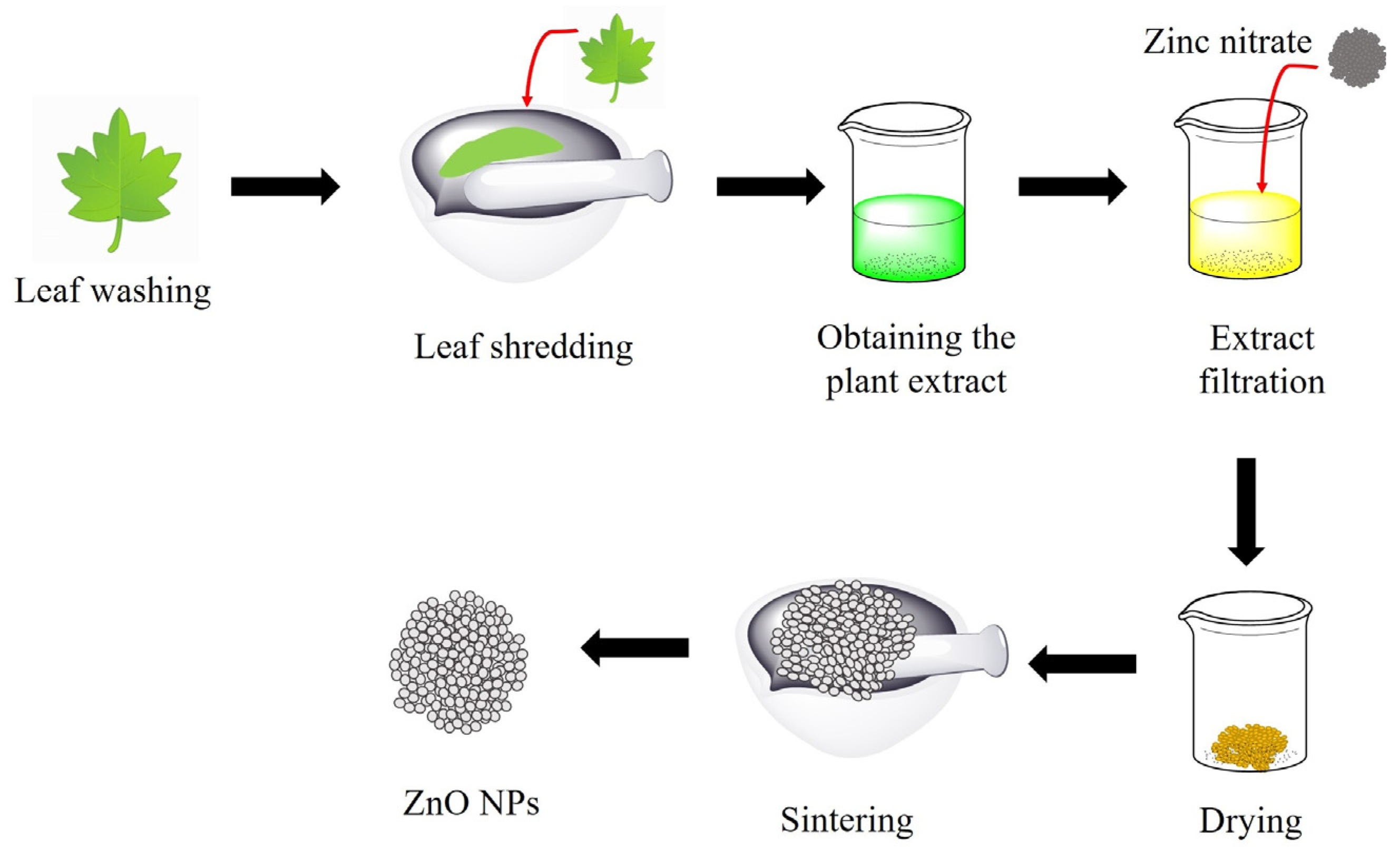
3.4. Green Synthesis
3.5. Advantages and Limitations of Synthesis Methods

| Synthesis Method | Synthesis Parameters | Synthesis Conditions | Particle Size (nm) | Ref. |
|---|---|---|---|---|
| SOL–GEL | Precursors | Zinc acetate dehydrate 2 and sodium hydroxide 8 g | 85 | Hasnidawani et al. (2016) [9] |
| Solvents | Distiller water | |||
| Stirred | 5 min | |||
| Precursor | 0.2 M zinc acetate dehydrate and 0.02 M NaOH | 15–25 | Vishwakarma and Pal (2020) [10] | |
| Solvent | Methanol | |||
| Reaction time | 180 min | |||
| Heat treatment | 400 °C for 20 min | |||
| Precursors | 0.015 M ZnSO4·7H2O and 1.2 g of diethylene glycol | 28 | Jurablu et al. (2025) [11] | |
| Solvent | Ethanol/distilled water | |||
| Stirred | 2 h at 85 °C | |||
| Drying | 1 h at 220 °C | |||
| Heat treatment | 500 °C for 3 h | |||
| MICROEMULSION | Precursors | 1:1, Span 80: Tween 80, 0.5 M zinc acetate solution, 1.0 M NaOH solution | 41.2 | Pineda et al. (2018) [13] |
| Stirred | 5 min at 1200 rpm | |||
| Reaction time | 24 h at room temperature | |||
| Heat treatment | 800 °C × 2 h | |||
| Precursors | 0.5 M zinc acetate 0.5 M sodium hydroxide | 15–24 | Yildirim et al. (2010) [14] | |
| Solvents | n-heptano and glicerol | |||
| Reaction time | 24 h at 60–70 °C | |||
| Heat treatment | 300, 400, 500 °C for 3 h | |||
| Precursors | Zn(NO3)2 at 0.25 mol/L NaOH at 0.5 mol/L | 55, 70, 46 | Li et al. (2009) [15] | |
| Solvents | Heptane, hexanol, and Triton X-100 | |||
| Additive | PEG400 | |||
| Reaction temperature | 140 °C for 15 h | |||
| CHEMICAL PRECIPITATION | Precursors | 1 M sodium hydroxide, 0.5 M zinc nitrate | 25–200 | Thambidurai et al. (2020) [18] |
| Drying | 70 °C for 6 h | |||
| Heat treatment | 400 °C for 2 h | |||
| Precursors | 0.2 M zinc nitrate solution, 0.4 M potassium hydroxide solution | 20 | Kumar (2012) [19] | |
| Stirred | Vigorous | |||
| Spin time | 20 min | |||
| Heat treatment | 500 °C for 3 h | |||
| Precursors | 1 M zinc nitrate 3.2 M ammonium carbonate | 30 | Arundhathi and Maheswari (2019) [20] | |
| Heat treatment | 300 °C for 3 h | |||
| GREEN SYNTHESIS | Precursors | Extract of Cayratia pedata and zinc nitrate | 52.24 | Ashwini et al. (2021) [23] |
| Solvent | Water | |||
| Reaction temperature | 65 °C for 20 min | |||
| Heat treatment | 400 °C for 2 h | |||
| Precursors | Extract from Eucalyptus globulus Labill leaves, zinc nitrate, NaOH | 27–35 | Azeez et al. (2020) [24] | |
| pH | 8 | |||
| Reaction temperature | 60 °C | |||
| Heat treatment | 400 °C for 2 h | |||
| Precursors | Extract from Licania tomentosa leaves, zinc nitrate | 35.68 | Thiam et al. (2025) [25] | |
| Solvent | Water | |||
| Time of stirred | 3 h | |||
| Heat treatment | 500 °C |
| Synthesis Method | Advantages | Limitations | Main Characteristics | Ref. |
|---|---|---|---|---|
| SOL–GEL | Nanomaterials with a precisely defined composition can be synthesized. Most chemical reactions are achieved at low temperatures (60–80 °C). A versatile technique that allows for the obtaining of a wide range of materials. High-purity homogeneous materials can be obtained. It allows complete control of morphologies and particle size. Offers the desired rate of thermal stability and good flexibility in crystal formation, which is reproducible. | The curing process increases production times. Its implementation on an industrial scale may present problems of repeatability and consistency. The synthesis of large and complex structures can be limited by gel formation. It is a technique that is very sensitive to humidity. Use of organic solutions can be toxic. | Nanoparticles with different morphologies (spherical, lamellar, nanorod, etc.) Nanoparticles with (-OH) and (-O) groups on the surface. Smaller nanoparticles can be obtained than in coprecipitation. Porous nanoparticles. Particle sizes between 1 and 85 nm approximately | [11,26,27,28,29,30,31,32,33,34,35,36,37,38] |
| MICROEMULSION | Microemulsion formation is reversible. Microemulsions are simple to prepare and require no energy input. Low formation energy requirements and thermodynamic stability. Biocompatibility and versatility. Their amphiphilic character allows them to carry different drugs effectively. It creates uniformly sized and distributed nanoparticles. Low reaction temperatures (25–70 °C). | Having a limited ability to dissolve substances with high melting points. Environmental factors like pH and temperature have an impact on microemulsion stability. High levels of surfactants and co-surfactants can be toxic. Difficult on an industrial scale. | Nanoparticles with uniform shapes and sizes (from 10 nm to 10 µm). Nanoparticles with a very narrow size distribution. Nanoparticles with uniform composition. Metallic nanoparticles, oxides, semiconductors, polymers. Spherical nanoparticles are usually obtained. | [13,14,39,40,41,42,43,44,45] |
| CHEMICAL PRECIPITATION | Relatively low reaction temperatures (25–70 °C). Obtaining fine-sized particles. Low-cost synthesis of nanomaterials. Simple and quick preparation. Various types of nanomaterials can be obtained directly. | The nucleation and growth processes are very susceptible to the reaction conditions. Wide particle size distribution. Difficult to control the morphology and agglomeration of particles. Precipitation of some impurities during the reaction. | Create quasi-spherical nanoparticles. Nanoparticles of various sizes (8–72 nm approximately). Particle agglomerates. Nanoparticles with functional groups on the surface. | [46,47,48,49,50,51,52,53] |
| GREEN SYNTHESIS | It uses fewer chemicals to obtain various nanomaterials. It is an eco-friendly technique. It is typically a more economical synthesis because it utilizes extracts from plants, algae, fungi, or microorganisms. Low production cost. Most nanoparticles obtained by this method are biocompatible. | Low reproducibility due to variability of extracts. Difficult to control the size and morphology of nanoparticles. Complex reactions, particularly those involving specific reagents or conditions, are typically incompatible with this method. Inconsistent composition of plant extracts. Equipment for careful plant material sterilization. | Nanoparticles with a capping layer (biological compounds). Nanoparticles with very dispersed sizes (20–70 nm approximately). They have spherical, cubic, and hexagonal shapes. | [54,55,56,57,58,59,60] |
3.6. ZnO Nanoparticles Synthesized for Agricultural Purpose
4. Characterization of ZnO NPs
4.1. X-Ray Diffraction (XRD)
4.2. Scanning Electron Microscopy (SEM)
4.3. Transmission Electron Microscopy (TEM)
4.4. Fourier Transform Infrared Spectroscopy (FT-IR)
4.5. Ultraviolet-Visible Spectroscopy (UV-Vis)
5. Mechanism of Action in Plants
5.1. Properties of ZnO NPs
5.2. Interaction of ZnO NPs and Possible Mechanisms of Action and Transport
6. Effects of ZnO NPS on Plants
7. Toxicity and Environmental Impact
7.1. ZnO NPs on Soil
7.2. Toxicity in Plants
8. Future Trends and Conclusions
Author Contributions
Funding
Institutional Review Board Statement
Informed Consent Statement
Data Availability Statement
Acknowledgments
Conflicts of Interest
References
- Zhou, X.; Hayat, Z.; Zhang, D.; Li, M.; Hu, S.; Wu, Q.; Cao, Y.; Yuan, Y. Zinc Oxide Nanoparticles: Synthesis, Characterization, Modification, and Applications in Food and Agriculture. Processes 2023, 11, 1193. [Google Scholar] [CrossRef] [Scilit]
- Haque, M.J.; Bellah, M.M.; Hassan, M.R.; Rahman, S. Synthesis of ZnO Nanoparticles by Two Different Methods and Comparison of Their Structural, Antibacterial, Photocatalytic and Optical Properties. Nano Express 2020, 1, 010007. [Google Scholar] [CrossRef] [Scilit]
- Kundu, S.; Haydar, S.; Mandal, P. Zinc Oxide Nanoparticles: Different Synthesis Approaches and Applications. NBU J. Plant Sci. 2021, 13, 42–64. [Google Scholar] [CrossRef] [Scilit]
- Hanif, S.; Javed, R.; Cheema, M.; Kiani, M.Z.; Farooq, S.; Zia, M. Harnessing the Potential of Zinc Oxide Nanoparticles and Their Derivatives as Nanofertilizers: Trends and Perspectives. Plant Nano Biol. 2024, 10, 100110. [Google Scholar] [CrossRef] [Scilit]
- Hajisolomou, E.; Neofytou, G.; Petropoulos, S.A.; Tzortzakis, N. The Application of Conventional and Organic Fertilizers During Wild Edible Species Cultivation: A Case Study of Purslane and Common Sowthistle. Horticulturae 2024, 10, 1222. [Google Scholar] [CrossRef] [Scilit]
- Singh, R.P.; Handa, R.; Manchanda, G. Nanoparticles in Sustainable Agriculture: An Emerging Opportunity. J. Control. Release 2021, 329, 1234–1248. [Google Scholar] [CrossRef] [Scilit]
- Bansal, M.; Jyoti, N.; Bharti, A.; Deepika; Sharma, S.; Thakur, M.; Chauhan, V.; Kumar, R. Green Synthesis of Nanomaterials Used as Nano-Fertilizer for Sustainability in Crop Production: A Overview on Recent Advancements and Future Perspectives. Plant Nano Biol. 2025, 11, 100143. [Google Scholar] [CrossRef] [Scilit]
- Dey, S.; Lochan, M.D.; Divya, N.; Bakshi, V.; Mohanty, A.; Rath, D.; Das, S.; Mondal, A.; Roy, S.; Sabui, R. A Critical Review on Zinc Oxide Nanoparticles: Synthesis, Properties and Biomedical Applications. Intell. Pharm. 2025, 3, 53–70. [Google Scholar] [CrossRef] [Scilit]
- Hasnidawani, J.N.; Azlina, H.N.; Norita, H.; Bonnia, N.N.; Ratim, S.; Ali, E.S. Synthesis of ZnO Nanostructures Using Sol-Gel Method. Procedia Chem. 2016, 19, 211–216. [Google Scholar] [CrossRef] [Scilit]
- Vishwakarma, A.; Pal Singh, S. Synthesis of Zinc Oxide Nanoparticle by Sol-Gel Method and Study Its Characterization. Int. J. Res. Appl. Sci. Eng. Technol. 2020, 8, 1625–1627. [Google Scholar] [CrossRef] [Scilit]
- Jurablu, S.; Farahmandjou, M.; Firoozabadi, T.P. Sol-Gel Synthesis of Zinc Oxide (ZnO) Nanoparticles: Study of Structural and Optical Properties. J. Sci. Islam. Repub. Iran 2015, 26, 281–285. [Google Scholar]
- Kolodziejczak-Radzimska, A.; Jesionowski, T. Zinc Oxide-from Synthesis to Application: A Review. Materials 2014, 7, 2833–2881. [Google Scholar] [CrossRef] [Scilit] [PubMed]
- Pineda-Reyes, A.M.; Olvera, M.d.l.L. Synthesis of ZnO Nanoparticles from Water-in-Oil (w/o) Microemulsions. Mater. Chem. Phys. 2018, 203, 141–147. [Google Scholar] [CrossRef] [Scilit]
- Yildirim, Ö.A.; Durucan, C. Synthesis of Zinc Oxide Nanoparticles Elaborated by Microemulsion Method. J. Alloys Compd. 2010, 506, 944–949. [Google Scholar] [CrossRef] [Scilit]
- Li, X.; He, G.; Xiao, G.; Liu, H.; Wang, M. Synthesis and Morphology Control of ZnO Nanostructures in Microemulsions. J. Colloid Interface Sci. 2009, 333, 465–473. [Google Scholar] [CrossRef] [Scilit] [PubMed]
- Cushing, B.L.; Kolesnichenko, V.L.; Connor, C.J.O. Recent Advances in the Liquid-Phase Syntheses of Inorganic Nanoparticles. Chem. Rev. 2004, 104, 3893–3946. [Google Scholar] [CrossRef] [Scilit]
- Jain, S.; Hirst, D.G.; O’Sullivan, J.M. Gold Nanoparticles as Novel Agents for Cancer Therapy. Br. J. Radiol. 2012, 85, 101–113. [Google Scholar] [CrossRef] [Scilit]
- Trambidurai, S.; Gowthaman, P.; Venkatachalam, M.; Suresh, S. Natural Sunlight Assisted Photocatalytic Degradation of Methylene Blue by Spherical Zinc Oxide Nanoparticles Prepared by Facile Chemical Co-Precipitation Method. Optik 2020, 207, 163865. [Google Scholar] [CrossRef] [Scilit]
- Kumar, S.S. Chemical Synthesis of Zinc Oxide Nano Particles by Precipitation Method. Int. J. Eng. Tech. Res. 2012, 2012, 1–4. [Google Scholar]
- Arundhathi, K.; Maheswari, D.U. Synthesis of ZnO Nanoparticles by Simple Precipitation Method. Int. J. Adv. Res. Eng. Technol. 2019, 10, 205–208. [Google Scholar]
- Rajeshkumar, S.; Agarwal, H.; Kumar, S.V. A Review on Green Synthesis of Zinc Oxide Nanoparticles—An Eco-Friendly Approach. Resour. Technol. 2017, 3, 406–413. [Google Scholar] [CrossRef] [Scilit]
- Xu, J.; Huang, Y.; Zhu, S.; Abbes, N.; Jing, X.; Zhang, L. A Review of the Green Synthesis of ZnO Nanoparticles Using Plant Extracts and Their Prospects for Application in Antibacterial Textiles. J. Eng. Fiber. Fabr. 2021, 16, 15589250211046242. [Google Scholar] [CrossRef] [Scilit]
- Ashwini, J.; Aswathy, T.R.; Achuthsankar, S.N. Green Synthesis and Characterization of Zinc Oxide Nanoparticles Using Cayratia Pedata Leaf Extract. Biochem. Biophys. Rep. 2021, 26, 100995. [Google Scholar] [CrossRef] [Scilit] [PubMed]
- Azeez Abdullah, B.; Himdad Hamad, A. Green Synthesis and Characterization of Zinc Oxide Nanoparticles Using Eucalyptus globulus Labill. Leaf Extract and Zinc Nitrate Hexahydrate Salt. SN Appl. Sci. 2020, 2, 991. [Google Scholar] [CrossRef] [Scilit]
- Thiam, M.; Bernardo, A.D.J.; Pellegrini, V.d.O.A.; Possatto, J.F.; Dlamini, Z.W.; Mahule, T.S.; Ngom, B.D.; Mosepele, B.Q.; Thema, F.T.; Mamba, B.B.; et al. Green Synthesis of ZnO Nanoparticles Using Licania Tomentosa Benth (Oiti) Leaf Extract: Characterization and Applications for the Photocatalytic Degradation of Crystal Violet Dye. Processes 2025, 13, 880. [Google Scholar] [CrossRef] [Scilit]
- Droepenu, E.K.; Wee, B.S.; Chin, S.F.; Kok, K.Y.; Maligan, M.F. Zinc Oxide Nanoparticles Synthesis Methods and its Effect on Morphology: A Review. Biointerface Res. Appl. Chem. 2022, 12, 4261–4292. [Google Scholar]
- Kayani, Z.N.; Arshad, S.; Riaz, S.; Naseem, S. Synthesis of Iron Oxide Nanoparticles by Sol–Gel Technique and Their Characterization. IEEE Trans. Magn. 2014, 50, 1–4. [Google Scholar] [CrossRef] [Scilit]
- Mackenzie, J.D.; Bescher, E.P. Chemical routes in the synthesis of nanomaterials using the sol–gel process. Acc. Chem. Res. 2007, 40, 810–818. [Google Scholar]
- Modan, E.M.; Plăiașu, A.G. Advantages and disadvantages of chemical methods in the elaboration of nanomaterials. Ann. “Dunarea De Jos” Univ. Galati Fascicle IX Metall. Mater. Sci. 2020, 43, 53–60. [Google Scholar] [CrossRef] [Scilit]
- Navas, D.; Fuentes, S.; Castro-Alvarez, A.; Chavez-Angel, E. Review on Sol-Gel Synthesis of Perovskite and Oxide Nanomaterials. Gels 2021, 7, 275. [Google Scholar] [CrossRef] [Scilit]
- Barrino, F. Hybrid Organic–Inorganic Materials Prepared by Sol–Gel and Sol–Gel-Coating Method for Biomedical Use: Study and Synthetic Review of Synthesis and Properties. Coatings 2024, 14, 425. [Google Scholar]
- Mohammed, H.A.; Mohammed, M.J.; Ayesh, H.A. Synthesis and characterization of ZNO: CU and AG bimetallics nanoparticles by sol gel method. Nexo Rev. Cient. 2023, 36, 1087–1102. [Google Scholar] [CrossRef] [Scilit]
- Al Abdullah, K.; Awad, S.; Zaraket, J.; Salame, C. Synthesis of ZnO nanopowders by using sol-gel and studying their structural and electrical properties at different temperature. Energy Procedia 2017, 119, 565–570. [Google Scholar]
- Ben Amor, I.; Hemmami, H.; Laouini, S.E.; Mahboub, M.S.; Barhoum, A. Sol-gel synthesis of ZnO nanoparticles using different chitosan sources: Effects on antibacterial activity and photocatalytic degradation of AZO Dye. Catalysts 2022, 12, 1611. [Google Scholar]
- Hedayati, K. Fabrication and Optical Characterization of Zinc Oxide Nanoparticles Prepared via a Simple Sol-gel Method. J. Nanostruct. 2015, 5, 395–401. [Google Scholar]
- Alwan, R.M.; Kadhim, Q.A.; Sahan, K.M.; Ali, R.A.; Mahdi, R.J.; Kassim, N.A.; Jassim, A.N. Synthesis of Zinc Oxide Nanoparticles via Sol–Gel Route and Their Characterization. Nanosci. Nanotechnol. 2015, 5, 1–6. [Google Scholar]
- Siswanto; Rochman, N.T.; Akwalia, P.R. Fabrication and characterization of Zinc Oxide (ZnO) nanoparticle by sol-gel method. J. Phys. Conf. Ser. 2017, 853, 012041. [Google Scholar] [CrossRef] [Scilit]
- Singh, G.; Singh, S.P. Synthesis of zinc oxide by sol-gel method and to study it’s structural properties. AIP Conf. Proc. 2020, 2220, 020184. [Google Scholar]
- Rokade, M.; Kakade, S.; Bhosale, A. Review on microemulsion: Theory, methods of preparation. Int. J. Emerg. Technol. Innov. Res. 2023, 10, h501–h512. [Google Scholar]
- Ait-Touchente, Z.; Zine, N.; Jaffrezic-Renault, N.; Errachid, A.; Lebaz, N.; Fessi, H.; Elaissari, A. Exploring the Versatility of Microemulsions in Cutaneous Drug Delivery: Opportunities and Challenges. Nanomaterials 2023, 13, 1688. [Google Scholar] [CrossRef] [Scilit] [PubMed]
- Nehar, K.N.; Hatwar, P.R.; Bakal, R.L.; Bhujade, P.R.; Gawai, A.Y. Microemulsions: A Comprehensive Review of Drug Delivery Systems. Int. J. Pharm. Sci. Rev. Res. 2025, 20, 143–148. [Google Scholar] [CrossRef] [Scilit]
- Richard, B.; Lemyre, J.L.; Ritcey, A.M. Nanoparticle size control in microemulsion synthesis. Langmuir 2017, 33, 4748–4757. [Google Scholar] [CrossRef] [Scilit] [PubMed]
- Malik, M.A.; Wani, M.Y.; Hashim, M.A. Microemulsion method: A novel route to synthesize organic and inorganic nanomaterials: 1st Nano Update. Arab. J. Chem. 2012, 5, 397–417. [Google Scholar] [CrossRef] [Scilit]
- Kumar, H.; Rani, R. Structural and Optical Characterization of ZnO Nanoparticles Synthesized by Microemulsion Route. Int. Lett. Chem. Phys. Astron. 2013, 19, 26–36. [Google Scholar] [CrossRef] [Scilit]
- López-Cuenca, S.; Pérez Carrillo, L.A.; Rabelero-Velasco, M.; Díaz de León, R.; Saade, H.; López, R.G.; Mendizábal, E.; Puig, J.E. High-Yield Synthesis of Zinc Oxide Nanoparticles from Bicontinuous Microemulsions. J. Nanomater. 2011, 2011, 431382. [Google Scholar] [CrossRef] [Scilit]
- Romo, L.E.; Saade, H.; Puente, B.; Lopez, M.L.; Betancourt, R.; Lopez, R.G. Precipitation of Zinc Oxide Nanoparticles in Bicontinuous Microemulsions. J. Nanomater. 2011, 2011, 145963. [Google Scholar] [CrossRef] [Scilit]
- Deraz, N.M. The comparative jurisprudence of catalysts preparation methods: I. precipitation and impregnation methods. J. Ind. Environ. Chem. 2018, 2, 19–21. [Google Scholar]
- Constantinoiu, I.; Viespe, C. Synthesis Methods of Obtaining Materials for Hydrogen Sensors. Sensors 2021, 21, 5758. [Google Scholar] [CrossRef] [Scilit]
- Geldasa, F.T.; Kebede, M.A.; Shura, M.W.; Hone, F.G. Experimental and computational study of metal oxide nanoparticles for the photocatalytic degradation of organic pollutants: A review. RSC Adv. 2023, 13, 18404–18442. [Google Scholar] [CrossRef] [Scilit]
- Ghorbani, H.R.; Mehr, F.P.; Pazoki, H.; Rahmani, B.M. Synthesis of ZnO nanoparticles by precipitation method. Orient. J. Chem. 2015, 31, 1219–1221. [Google Scholar] [CrossRef] [Scilit]
- Raoufi, D. Synthesis and microstructural properties of ZnO nanoparticles prepared by precipitation method. Renew. Energy 2013, 50, 932–937. [Google Scholar] [CrossRef] [Scilit]
- Galindo-Guzmán, A.P.; Fortis-Hernández, M.; De La Rosa-Reta, C.V.; Zermeño-González, H.; Galindo-Guzmán, M. Síntesis química de nanopartículas de óxido de zinc y su evaluación en plántulas de Lactuca sativa. Rev. Mex. Cienc. Agríc. 2022, 13, 299–308. [Google Scholar] [CrossRef] [Scilit]
- Kumar, S.S.; Venkateswarlu, P.; Rao, V.R.; Rao, G.N. Synthesis, characterization and optical properties of zinc oxide nanoparticles. Int. Nano Lett. 2013, 3, 30. [Google Scholar] [CrossRef] [Scilit]
- Sabir, S.; Arshad, M.; Chaudhari, S.K. Zinc Oxide Nanoparticles for Revolutionizing Agriculture: Synthesis and Applications. Sci. World J. 2014, 1, 925494. [Google Scholar] [CrossRef] [Scilit]
- Lithi, I.J.; Nakib, K.I.A.; Chowdhuryanand, A.M.S.; Hossain, S. A review on the green synthesis of metal (Ag, Cu, and Au) and metal oxide (ZnO, MgO, Co3O4, and TiO2) nanoparticles using plant extracts for developing antimicrobial properties. Nanoscale Adv. 2025, 7, 2446. [Google Scholar] [CrossRef] [Scilit]
- Pal, K.; Chakroborty, S.; Nath, N. Limitations of nanomaterials insights in green chemistry sustainable route: Review on novel applications. Green Process. Synth. 2022, 11, 951–964. [Google Scholar] [CrossRef] [Scilit]
- Radulescu, D.M.; Surdu, V.A.; Ficai, A.; Ficai, D.; Grumezescu, A.M.; Andronescu, E. Green Synthesis of Metal and Metal Oxide Nanoparticles: A Review of the Principles and Biomedical Applications. Int. J. Mol. Sci. 2023, 24, 15397. [Google Scholar] [CrossRef] [Scilit]
- Osman, A.I.; Zhang, Y.; Farghali, M.; Rashwan, A.K.; Eltaweil, A.S.; El-Monaem, E.M.A.; Mohamed, I.M.A.; Badr, M.M.; Ihara, I.; Rooney, D.W.; et al. Synthesis of green nanoparticles for energy, biomedical, environmental, agricultural, and food applications: A review. Environ. Chem. Lett. 2024, 22, 841–887. [Google Scholar] [CrossRef] [Scilit]
- Iravani, S. Green synthesis of metal nanoparticles using plants. Green Chem. 2011, 13, 2638–2650. [Google Scholar] [CrossRef] [Scilit]
- Nhu, V.T.T.; Dat, N.D.; Le-Minh, T.; Phuong, N.H. Green synthesis of zinc oxide nanoparticles toward highly efficient photocatalysis and antibacterial application. Beilstein J. Nanotechnol. 2022, 13, 1108–1119. [Google Scholar] [CrossRef] [Scilit] [PubMed]
- Mazhar, Z.; Akhtar, J.; Alhodaib, A.; Naz, T.; Zafar, M.I.; Iqbal, M.M.; Fatima, H.; Naz, I. Efficacy of ZnO nanoparticles in Zn fortification and partitioning of wheat and rice grains under salt stress. Sci. Rep. 2023, 13, 2022. [Google Scholar] [CrossRef] [Scilit] [PubMed]
- Itroutwar, P.D.; Govindaraju, K.; Tamilselvan, S.; Kannan, M.; Raja, K.; Subramanian, K.S. Seaweed-Based Biogenic ZnO Nanoparticles for Improving Agro-morphological Characteristics of Rice (Oryza sativa L.). J. Plant Growth Regul. 2020, 39, 717–728. [Google Scholar] [CrossRef] [Scilit]
- Ahmed, R.; Uddin, K.; Quddus, A.; Abd Samad, M.Y.; Motalib Hossain, M.A.; Ashfaqul Haque, A.N. Impact of Foliar Application of Zinc and Zinc Oxide Nanoparticles on Growth, Yield, Nutrient Uptake and Quality of Tomato. Horticulturae 2023, 9, 162. [Google Scholar] [CrossRef] [Scilit]
- Azim, Z.; Singh, N.B.; Khare, S.; Singh, A.; Amist, N.; Niharika; Yadav, R.K. Green synthesis of zinc oxide nanoparticles using Vernonia cinerea leaf extract and evaluation as nano-nutrient on the growth and development of tomato seedling. Plants Nano Biol. 2022, 2, 100011. [Google Scholar] [CrossRef] [Scilit]
- Adil, M.; Bashir, S.; Bashir, S.; Aslam, Z.; Ahmad, N.; Younas, T.; Ammar Asghar, R.M.; Alkahtani, J.; Dwiningsih, Y.; Elshikh, M.S. Zinc oxide nanoparticles improved chlorophyll contents, physical parameters, and wheat yield under salt stress. Front. Plant Sci. 2022, 13, 932861. [Google Scholar] [CrossRef] [Scilit] [PubMed]
- Ali, A.; Chiang, Y.W.; Santos, R.M. X-ray Diffraction Techniques for Mineral Characterization: A Review for Engineers of the Fundamentals, Applications, and Research Directions. Minerals 2022, 12, 205. [Google Scholar] [CrossRef] [Scilit]
- Bergstrom, J.S. Mechanics of Solid Polymers: Theory and Computational Modeling; William Andrew: Norwich, NY, USA, 2015. [Google Scholar]
- Bunaciu, A.A.; Udriştioiu, E.G.; Aboul-Enein, H.Y. X-Ray Diffraction: Instrumentation and Applications. Crit. Rev. Anal. Chem. 2015, 45, 289–299. [Google Scholar] [CrossRef] [Scilit]
- Epp, J. X-ray diffraction (XRD) techniques for materials characterization. In Materials Characterization Using Nondestructive Evaluation (NDE) Methods; Woodhead Publishing: Cambridge, UK, 2016; pp. 81–124. [Google Scholar]
- Azuwa, M.M.; Hir, Z.A.M.; Mokthar, W.N.A.W.; Osman, N.S. Features of metal oxide colloidal nanocrystal characterization. In Colloidal Metal Oxide Nanoparticles; Elsevier: Amsterdam, The Netherlands, 2020; pp. 83–122. [Google Scholar]
- Holgate, J.H.; Webb, J. Microscopy, Scanning electron microscopy. In Encyclopedia of Food Sciences and Nutrition, 2nd ed.; Academic Press: Oxford, UK, 2003; pp. 3928–3934. [Google Scholar]
- Azad, M.; Avin, A. Scanning electron microscopy (SEM): A review. In Proceedings of the 2018 International Conference on Hydraulics and Pneumatics—HERVEX, Băile Govora, Romania, 7–9 November 2018; pp. 1–9. [Google Scholar]
- Inkson, B.J. Scanning electron microscopy (SEM) and transmission electron microscopy (TEM) for materials characterization. In Materials Characterization Using Nondestructive Evaluation (NDE) Methods; Woodhead Publishing: Cambridge, UK, 2016; pp. 17–43. [Google Scholar]
- Ural, N. The significance of scanning electron microscopy (SEM) analysis on the microstructure of improved clay: An overview. Open Geosci. 2021, 13, 197–218. [Google Scholar] [CrossRef] [Scilit]
- Tang, C.Y.; Yang, Z. Transmission electron microscopy (TEM). In Membrane Characterization; Elsevier: Amsterdam, The Netherlands, 2017; pp. 145–159. [Google Scholar]
- Newbury, D.E.; Williams, D.B. The electron microscope: The materials characterization tool of the millennium. Acta Mater. 2000, 48, 323–346. [Google Scholar] [CrossRef] [Scilit]
- Anj, D.H. Characterization of nanomaterials with transmission electron microscopy. Mater. Sci. Eng. 2016, 146, 012001. [Google Scholar]
- Duygu, D.; Baykal, T.; Açikgöz, D.; Yildiz, K. Fourier Transform Infrared (FT-IR) Spectroscopy for Biological Studies. Gazi Univ. J. Sci. 2009, 22, 117–121. [Google Scholar]
- Azuwa, M.M.; Jaafar, J.; Ismail, A.F.; Othman, M.H.D.; Rahman, M.A. Fourier transform infrared (FTIR) spectroscopy. In Membrane Characterization; Elsevier: Amsterdam, The Netherlands, 2017; pp. 3–29. [Google Scholar]
- Jaggi, N.; Vij, D.R. Fourier transform infrared spectroscopy. In Handbook of Applied Solid State Spectroscopy; Springer: Boston, MA, USA, 2006; pp. 411–450. [Google Scholar]
- Pasieczna-Patkowska, S.; Cichy, M.; Flieger, J. Application of Fourier Transform Infrared (FTIR) Spectroscopy in Characterization of Green Synthesized Nanoparticles. Molecules 2025, 30, 684. [Google Scholar] [CrossRef] [Scilit] [PubMed]
- Power, A.C.; Chapman, J.; Chandra, S.; Cozzolino, D. Ultraviolet-visible spectroscopy for food quality analysis. In Evaluation Technologies for Food Quality; Elsevier: Amsterdam, The Netherlands, 2019; pp. 91–104. [Google Scholar]
- Shard, A.G.; Schofield, R.C.; Minelli, C. Ultraviolet–visible spectrophotometry. In Characterization of Nanoparticles; Elsevier: Amsterdam, The Netherlands, 2020; pp. 185–196. [Google Scholar]
- Rocha, F.S.; Gomes, A.J.; Lunardi, C.N.; Kaliaguine, S.; Patience, G.S. Experimental Methods in Chemical Engineering: Ultraviolet Visible Spectroscopy—UV-Vis. Can. J. Chem. Eng. 2018, 96, 2512–2517. [Google Scholar] [CrossRef] [Scilit]
- Morfin-Gutierrez, A.; Sanchez-Orozco, J.L.; García-Cerda, L.A.; Puente-Urbina, B.; Meléndez-Ortiz, H.I. Preparation and characterization of nanocomposites based on poly (N-vinycaprolactam) and magnetic nanoparticles for using as drug delivery system. J. Drug Deliv. Sci. Technol. 2020, 60, 102028. [Google Scholar] [CrossRef] [Scilit]
- Daizy, P. Synthesis and spectroscopic characterization of gold nanoparticles. Spectrochim. Acta Part A 2008, 71, 80–85. [Google Scholar]
- Gupta, N.; Ram, H.; Kumar, B. Mechanism of Zinc absorption in plants: Uptake, transport, translocation and accumulation. Rev. Environ. Sci. Bio/Technol. 2016, 15, 89–109. [Google Scholar] [CrossRef] [Scilit]
- Siddiqi, K.S.; Ur Rahman, A.; Tajuddin, N.; Husen, A. Properties of Zinc Oxide Nanoparticles and Their Activity Against Microbes. Nanoscale Res. Lett. 2018, 13, 141. [Google Scholar] [CrossRef] [Scilit]
- Raha, S.; Ahmaruzzaman, M. ZnO Nanostructured Materials and Their Potential Applications: Progress, Challenges and Perspectives. Nanoscale Adv. 2022, 4, 1868–1925. [Google Scholar] [CrossRef] [Scilit]
- Xiao, X.; Hu, G.; Liang, Y.; Yan, P.; Jiang, A. A Review on the Properties of Zinc Oxide Nanoparticles in Various Industries and Biomedical Fields: Enhancing Chemical and Physical Characteristics. Iran. J. Chem. Chem. Eng. 2024, 43, 46–65. [Google Scholar]
- Afzal, S.; Aftab, T.; Singh, N.K. Impact of Zinc Oxide and Iron Oxide Nanoparticles on Uptake, Translocation, and Physiological Effects in Oryza sativa L. J. Plant Growth Regul. 2022, 41, 1445–1461. [Google Scholar] [CrossRef] [Scilit]
- Hong, J.; Wang, C.; Wagner, D.C.; Gardea-Torresdey, J.L.; He, F.; Rico, C.M. Foliar application of nanoparticles: Mechanisms of absorption, transfer, and multiple impacts. Environ. Sci. Nano 2021, 8, 1196–1210. [Google Scholar] [CrossRef] [Scilit]
- Wang, X.; Xie, H.; Wang, P.; Yin, H. Nanoparticles in Plants: Uptake, Transport and Physiological Activity in Leaf and Root. Materials 2023, 16, 3097. [Google Scholar] [CrossRef] [Scilit]
- Djanaguiraman, M.; Anbazhagan, V.; Dhankher, O.P.; Prasad, P.V.V. Uptake, Translocation, Toxicity, and Impact of Nanoparticles on Plant Physiological Processes. Plants 2024, 13, 3137. [Google Scholar] [CrossRef] [Scilit] [PubMed]
- Sharif, R.A.; Ayesh, A.S.; Esaifan, M.; Mazahrih, N.; Hani, N.B.; Rjoub, B.A.; Rayya, E.; Salem, M.A. Green-Synthesized Zinc Oxide Nanoparticles with Enhanced Release Behavior for Sustainable Agricultural Applications. Solids 2025, 6, 59. [Google Scholar] [CrossRef] [Scilit]
- Muhammad, M.H.; Usman, K.; Rizwan, M.; Jabri, H.A.; Alsafran, M. Functions and strategies for enhancing zinc availability in plants for sustainable agriculture. Front. Plant Sci. 2022, 13, 1033092. [Google Scholar] [CrossRef] [Scilit] [PubMed]
- Wang, S.; Fang, R.; Yuan, X.; Chen, J.; Mi, K.; Wang, R.; Zhang, H.; Zhang, H. Foliar Spraying of ZnO Nanoparticles Enhanced the Yield, Quality, and Zinc Enrichment of Rice Grains. Foods 2023, 12, 3677. [Google Scholar] [CrossRef] [Scilit]
- Thavaseelan, D.; Priyadarshana, G. Nanofertilizer Use for Sustainable Agriculture. J. Res. Technol. Eng. 2021, 2, 86–91. [Google Scholar]
- Reshma, Z.; Meenal, K. Zinc Biofortification and Implications on Growth, Nutrient Efficiency, and Stress Response in Amaranthus Cruentus through Soil Application of Biosynthesized Nanoparticles. Appl. Food Res. 2024, 4, 100385. [Google Scholar] [CrossRef] [Scilit]
- Subba, B.; Rai, G.B.; Bhandary, R.; Parajuli, P.; Thapa, N.; Kandel, D.R.; Mulmi, S.; Shrestha, S.; Malla, S. Antifungal Activity of Zinc Oxide Nanoparticles (ZnO NPs) on Fusarium Equiseti Phytopathogen Isolated from Tomato Plant in Nepal. Heliyon 2024, 10, e40198. [Google Scholar] [CrossRef] [Scilit]
- Sharma, D.; Afzal, S.; Singh, N.K. Nanopriming with Phytosynthesized Zinc Oxide Nanoparticles for Promoting Germination and Starch Metabolism in Rice Seeds. J. Biotechnol. 2021, 336, 64–75. [Google Scholar] [CrossRef] [Scilit]
- Umar, W.; Hameed, M.K.; Aziz, T.; Maqsood, M.A.; Bilal, H.M.; Rasheed, N. Synthesis, Characterization and Application of ZnO Nanoparticles for Improved Growth and Zn Biofortification in Maize. Arch. Agron. Soil Sci. 2020, 67, 1164–1176. [Google Scholar] [CrossRef] [Scilit]
- Verma, Y.; Singh, S.K.; Jatav, H.S.; Rajput, V.D.; Minkina, T. Interaction of zinc oxide nanoparticles with soil: Insights into the chemical and biological properties. Environ. Geochem. Health 2022, 44, 221–234. [Google Scholar] [CrossRef] [Scilit]
- Rajput, V.D.; Minkina, T.M.; Behal, A.; Sushkova, S.N.; Mandzhieva, S.; Singh, R.; Gorovtsov, A.; Tsitsuashvili, V.S.; Purvis, W.O.; Ghazaryan, K.A.; et al. Effects of Zinc-Oxide Nanoparticles on Soil, Plants, Animals and Soil Organisms: A Review. Environ. Nanotechnol. Monit. Manag. 2018, 9, 76–84. [Google Scholar] [CrossRef] [Scilit]
- Gao, M.; Chang, J.; Wang, J.; Zhang, H.; Wang, T. Advances in transport and toxicity of nanoparticles in plants. J. Nanobiotechnol. 2023, 21, 75. [Google Scholar] [CrossRef] [Scilit]
- Jabri, H.A.; Saleem, M.H.; Rizwan, M.; Hussain, I.; Usman, K.; Alsafran, M. Zinc Oxide Nanoparticles and Their Biosynthesis: Overview. Life 2022, 12, 594. [Google Scholar] [CrossRef] [Scilit] [PubMed]
- Handy, R.D.; Owen, R.; Valsami-Jones, E. The Ecotoxicology of Nanoparticles and Nanomaterials: Current Status, Knowledge Gaps, Challenges, and Future Needs. Ecotoxicology 2008, 17, 315–325. [Google Scholar] [CrossRef] [Scilit] [PubMed]
- Kaur, H.; Garg, N. Zinc Toxicity in Plants: A Review. Planta 2021, 253, 129. [Google Scholar] [CrossRef] [Scilit]
- Oliveira, V.d.S.; Marchiori, J.J.d.P.; Ferreira, L.d.S.; Boone, G.T.F.; Pereira, L.L.d.S.; Carriço, E.; Bolsoni, E.Z. The Nutrient Zinc in Soil and Plant: A Review. Int. J. Plant Soil Sci. 2023, 35, 25–30. [Google Scholar] [CrossRef] [Scilit]
- Boonyanitipong, P.; Kositsup, B.; Kumar, P.; Baruah, S.; Dutta, J. Toxicity of ZnO and TiO2 Nanoparticles on Germinating Rice Seed Oryza sativa L. Int. J. Biosci. Biochem. Bioinform. 2011, 1, 282–285. [Google Scholar] [CrossRef] [Scilit]
- Akanbi-Gada, M.A.; Ogunkunle, C.O.; Vishwakarma, V.; Viswanathan, K.; Fatoba, P.O. Phytotoxicity of nano-zinc oxide to tomato plant (Solanum lycopersicum L.): Zn uptake, stress enzymes response and influence on non-enzymatic antioxidants in fruits. Environ. Technol. Innov. 2019, 14, 100325. [Google Scholar] [CrossRef] [Scilit]
- Sheteiwy, M.S.; Shaghaleh, H.; Hamoud, Y.A.; Holford, P.; Shao, H.; Qi, W.; Hashmi, M.Z.; Wu, T. Zinc Oxide Nanoparticles: Potential Effects on Soil Properties, Crop Production, Food Processing, and Food Quality. Environ. Sci. Pollut. Res. 2021, 28, 36942–36966. [Google Scholar] [CrossRef] [Scilit] [PubMed]
- Rajput, V.D.; Harish; Singh, R.K.; Verma, K.K.; Sharma, L.; Quiroz-Figueroa, F.R.; Meena, M.; Gour, V.S.; Minkina, T.; Sushkova, S.; et al. Recent Developments in Enzymatic Antioxidant Defence Mechanism in Plants with Special Reference to Abiotic Stress. Biology 2021, 10, 267. [Google Scholar] [CrossRef] [Scilit] [PubMed]
- Cannea, F.B.; Padiglia, A. Antioxidant Defense Systems in Plants: Mechanisms, Regulation, and Biotechnological Strategies for Enhanced Oxidative Stress Tolerance. Life 2025, 15, 1293. [Google Scholar] [CrossRef] [Scilit] [PubMed]


Disclaimer/Publisher’s Note: The statements, opinions and data contained in all publications are solely those of the individual author(s) and contributor(s) and not of MDPI and/or the editor(s). MDPI and/or the editor(s) disclaim responsibility for any injury to people or property resulting from any ideas, methods, instructions or products referred to in the content. |
© 2026 by the authors. Licensee MDPI, Basel, Switzerland. This article is an open access article distributed under the terms and conditions of the Creative Commons Attribution (CC BY) license.
Share and Cite
Morfín-Gutiérrez, A.; García-López, J.I.; León-Martínez, P.A.d.; Ruiz-Torres, N.A.; Hernández-Juárez, A.; Álvarez-Vázquez, P.; Flores-Naveda, A. Zinc Oxide Nanoparticles: Synthesis, Characterization and Applications in Agriculture. Agrochemicals 2026, 5, 12. https://doi.org/10.3390/agrochemicals5010012
Morfín-Gutiérrez A, García-López JI, León-Martínez PAd, Ruiz-Torres NA, Hernández-Juárez A, Álvarez-Vázquez P, Flores-Naveda A. Zinc Oxide Nanoparticles: Synthesis, Characterization and Applications in Agriculture. Agrochemicals. 2026; 5(1):12. https://doi.org/10.3390/agrochemicals5010012
Chicago/Turabian StyleMorfín-Gutiérrez, Adriana, Josué I. García-López, Patricia A. de León-Martínez, Norma A. Ruiz-Torres, Agustín Hernández-Juárez, Perpetuo Álvarez-Vázquez, and Antonio Flores-Naveda. 2026. "Zinc Oxide Nanoparticles: Synthesis, Characterization and Applications in Agriculture" Agrochemicals 5, no. 1: 12. https://doi.org/10.3390/agrochemicals5010012
APA StyleMorfín-Gutiérrez, A., García-López, J. I., León-Martínez, P. A. d., Ruiz-Torres, N. A., Hernández-Juárez, A., Álvarez-Vázquez, P., & Flores-Naveda, A. (2026). Zinc Oxide Nanoparticles: Synthesis, Characterization and Applications in Agriculture. Agrochemicals, 5(1), 12. https://doi.org/10.3390/agrochemicals5010012