Article

Seasonwide Weed Management Utilizes Florpyrauxifen-Benzyl in Water-Seeded Rice Production Systems


1
Department of Plant Sciences, University of California, Davis, CA 95616, USA
2
Department of Crop and Soil Sciences, Washington State University, Mount Vernon, WA 98273, USA
*
Author to whom correspondence should be addressed.
Agrochemicals 2026, 5(1), 11; https://doi.org/10.3390/agrochemicals5010011
Submission received: 23 October 2025 / Revised: 4 February 2026 / Accepted: 28 February 2026 / Published: 4 March 2026
(This article belongs to the Section Herbicides)

Abstract

Florpyrauxifen-benzyl (FPB) is an auxin-mimic herbicide that controls selected grasses, sedges, and broadleaves in rice cropping systems. Field experiments were conducted in 2023 and 2024 to characterize the effects of FPB on crop safety and weed control when applied alone or in combination with other herbicides, and to assess whether FPB can provide season-long, effective weed management. Base treatments of benzobicyclon (BBC)/halosulfuron-methyl (HSM), clomazone (CLM), or thiobencarb (TBC) were applied on the day of seeding (DOS) or within the 2-leaf stage (LS) rice and followed by foliar treatments of FPB alone or in a mixture with bispyribac-sodium (BPS), penoxsulam (PNX)/cyhalofop-butyl (CHB), or propanil (PPL). Additionally, FPB was applied alone with no prior base treatment, in combination with a mixture partner, and as a sequential treatment, 14 days apart, with the first application made to 4- to 5-LS rice; in contrast, the second application was made to mid-tillering rice. The FPB applied alone or in sequential application showed results for more than 98% of watergrasses and 100% of ricefield bulrush, smallflower umbrella sedge, ducksalad, redstems, and all other broadleaves control at 56 days after treatment (DAT). When applied after the base treatments, the weed control increased to 100% for all weed species at 14 DAT. The sequential application of FPB achieved the highest yields of 7683 kg ha−1 in 2023 and 11,249 kg ha−1 in 2024, resulting in 3.6- and 6.4-fold increases in rice yield over the nontreated control. Owing to its excellent sedge and broadleaf weed control and good activity on troublesome grasses, such as barnyardgrass, FPB could be an essential part of the weed management programs in rice production systems.

1. Introduction

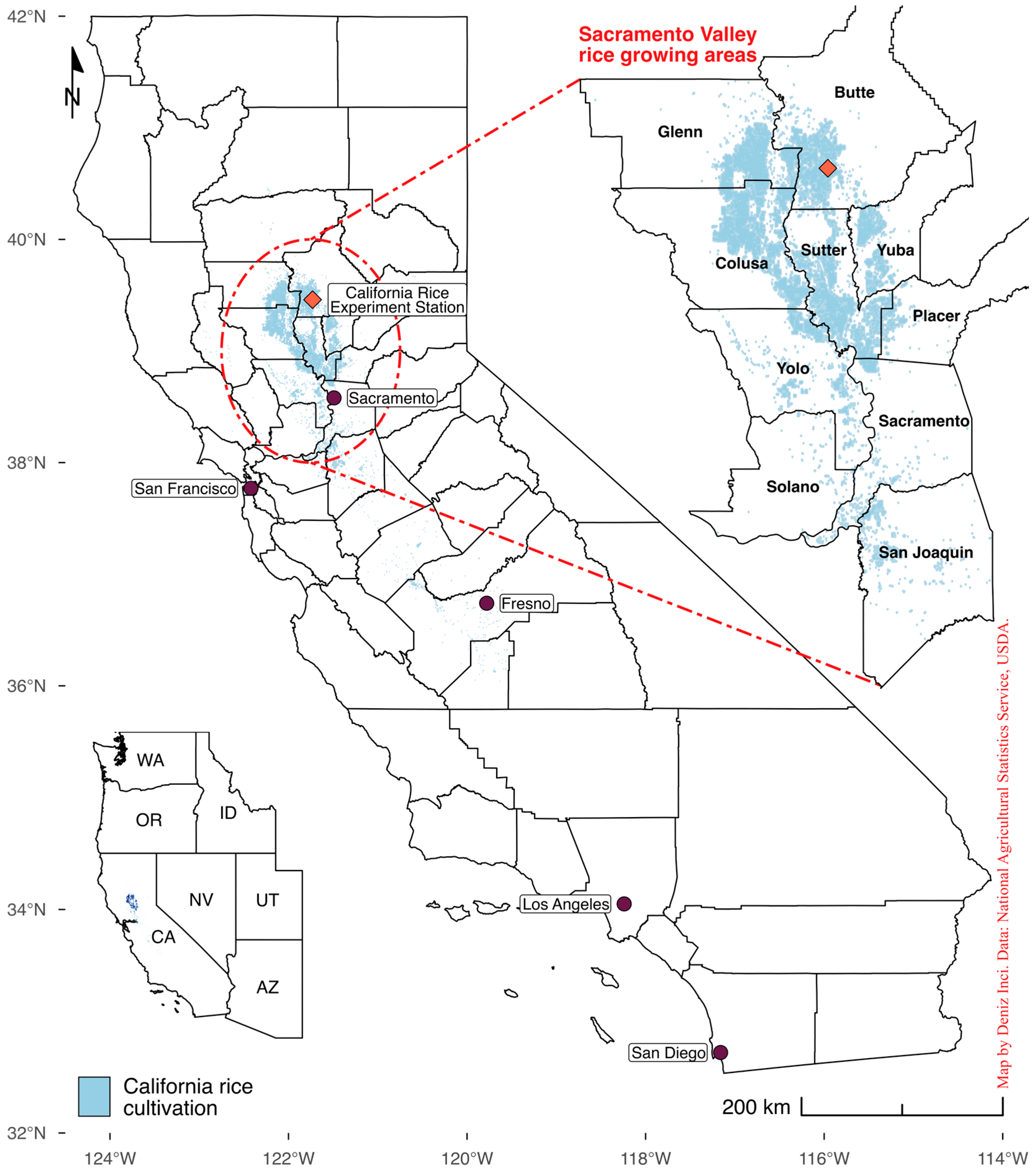
Rice (Oryza sativa L.) is a primary staple food crop providing a source of nutrition for more than half of the world’s population [1] and accounting for up to 75% of the total calorie supply in Asia [2]. Rice is cultivated in four regions in the United States (US): the Arkansas Grand Prairie, the Mississippi Delta, the Gulf Coast, and the Sacramento Valley of California [3], which is the highest-yielding rice-producing region in the US, with ~220,000 hectares [4] under cultivation (Figure 1). Nearly all California rice production is water-seeded, where pregerminated rice seeds are aerially broadcast onto continuously flooded rice fields [5]. The water depth is maintained at 10–15 cm throughout the growing season [6]. The permanent flooding practice provides an anerobic environment and prevents the emergence of some terrestrial weeds [3], which was adopted in the 1920s to particularly suppress watergrass (Echinochloa P.Beauv.) species and remained as the main method of rice cultivation in California [7,8].
The continuous flooding and the limited crop rotation have favored the dominance of semiaquatic weed species, including grasses from the family Poaceae [weedy rice, Oryza sativa L.; barnyardgrass, Echinochloa crus-galli (L.) P.Beauv.; early watergrass, E. oryzoides (Ard.) Fritsch; late watergrass, E. phyllopogon (Stapf) Koso-Pol. (syn: E. oryzicola (Vasinger) Vasinger); Walter’s barnyardgrass, E. walteri (Pursh) A.Heller; and bearded sprangletop, Leptochloa fusca (L.) Kunth subsp. fascicularis (Lam.) N.Snow (syn: Diplachne fusca subsp. fascicularis (Lam.) P.M.Peterson & N.Snow)], sedges from the family Cyperaceae [ricefield bulrush, Schoenoplectiella mucronata (L.) J.Jung & H.K.Choi and smallflower umbrella sedge, Cyperus difformis L.], and broadleaves [ducksalad, Heteranthera limosa (Sw.) Willd.; arrowheads, Sagittaria L.; redstems, Ammannia L.; and waterhyssops, Bacopa Aubl.] [8]. Recently, a new broadleaf weed, white water fire (Bergia capensis L.), was found in 2023 in a rice field in Butte County—a major rice-producing county in northern California [10]. Unless managed, weed competition can significantly reduce rice yield and quality. For instance, approximately 60% of combined weed coverage (grasses, sedges, and broadleaves) can result in a yield reduction of up to 85% in California rice [11].
In Californian water-seeded rice production systems, weed control programs almost entirely depend on herbicides [12]. Most common standard programs typically start with a base herbicide treatment applied on the day of seeding (DOS) or within the 2-LS rice, followed by one or more additional post-emergence herbicide applications throughout the season, typically within the mid-tillering rice [8]. To ensure season-long weed control, a late-season cleanup application may be needed to target weeds that have escaped from the earlier herbicide applications. Furthermore, multiple herbicide applications increase the production costs, which rice growers generally aim to avoid.
The diverse cropping systems of California led to herbicide-restricted regulatory structures, resulting in a limited number of available herbicide active ingredients (a.i.) due to the concerns about off-target rice herbicide drift onto nearby orchards and vineyards, particularly from the aerial applications [13]. Because of the reliance on herbicides from a limited number of modes of action (MOAs), widespread herbicide resistance developed in multiple weed species—notably within Echinochloa complex—to different MOAs such as auxin-mimics and inhibitors of acetyl-CoA carboxylase, acetolactate synthase, deoxy-D-xylulose phosphate synthase, photosynthesis at PSII, and very long-chain fatty acid synthesis in California [14]. As a result, management efforts for herbicide-resistant weeds have primarily focused on rotating a limited set of registered herbicides.
Most California rice herbicides have a limited spectrum of weed control, and the short longevity of herbicide residual activity requires the utilization of multiple herbicides from different MOAs to ensure season-long weed control efficacy. Hence, base programs are often insufficient to provide broad-spectrum weed control, forcing growers to apply post-emergence herbicides during the growing season [4]. The limited herbicide options available in California water-seeded rice systems further exacerbate the development of herbicide resistance in multiple weed species [15]. Therefore, comprehensive and season-long effective herbicidal programs that incorporate sequential applications aligned with rice phenology and weed emergence patterns are necessary to achieve season-long weed control and prevent weed escapes, which can easily build a weed seed bank. Repeated applications of herbicides from the exact MOA further increase production costs and the risk of herbicide resistance evolving, highlighting the necessity to sustain efficacy with fewer inputs. Consequently, there certainly is a need for additional and alternative herbicide programs in California’s water-seeded rice production systems.
Florpyrauxifen-benzyl (hereinafter referred to “FPB”; IUPAC name: benzyl 4-amino-3-chloro-6-(4-chloro-2-fluoro-3-methoxyphenyl)-5-fluoropyridine-2-carboxylate; CAS no: 1390661–72–9; Corteva Agriscience, Indianapolis, IN, USA) is an auxin-mimic herbicide with a novel binding site-of-action, which exhibits strong binding affinity in the auxin signaling system, auxin receptor, and/or auxin-signaling F-Box (AFB) proteins [16,17]. The carboxylic acid functional group of FPB plays a significant role in binding interactions at the Transport Inhibitor Response1 and AFB1–5 receptors, and it mimics indole-3-acetic acid (IAA), acting as a “molecular glue” between the receptor and the co-repressor proteins at the cell nucleus [18,19]. Moreover, FPB has lower use rates than other auxin-mimics, such as triclopyr, and has a broader weed spectrum, including some activity on barnyardgrass [20]. Therefore, FPB could be a useful herbicide in water-seeded rice production systems, given the increasing prevalence of herbicide resistance across California. This research aimed to utilize FPB in a season-long weed management program alongside other residual herbicides while maintaining rice crop safety. Hence, the overall goal was to provide information to support weed management strategies aimed at reducing and controlling competitive grass, sedge, and broadleaf weed species in water-seeded rice production systems.

2. Materials and Methods

Field studies were carried out during the 2023 and 2024 rice-growing seasons at the California Rice Experiment Station near Biggs, California (39.45° N, 121.72° W). The rice fields consisted of clay soils belonging to the Esquon-Neerdobe Series (fine, smectitic, thermic, Xeric Epiaquerts or Duraquerts). Soil texture and fertility were characterized each year before seeding (Table 1).
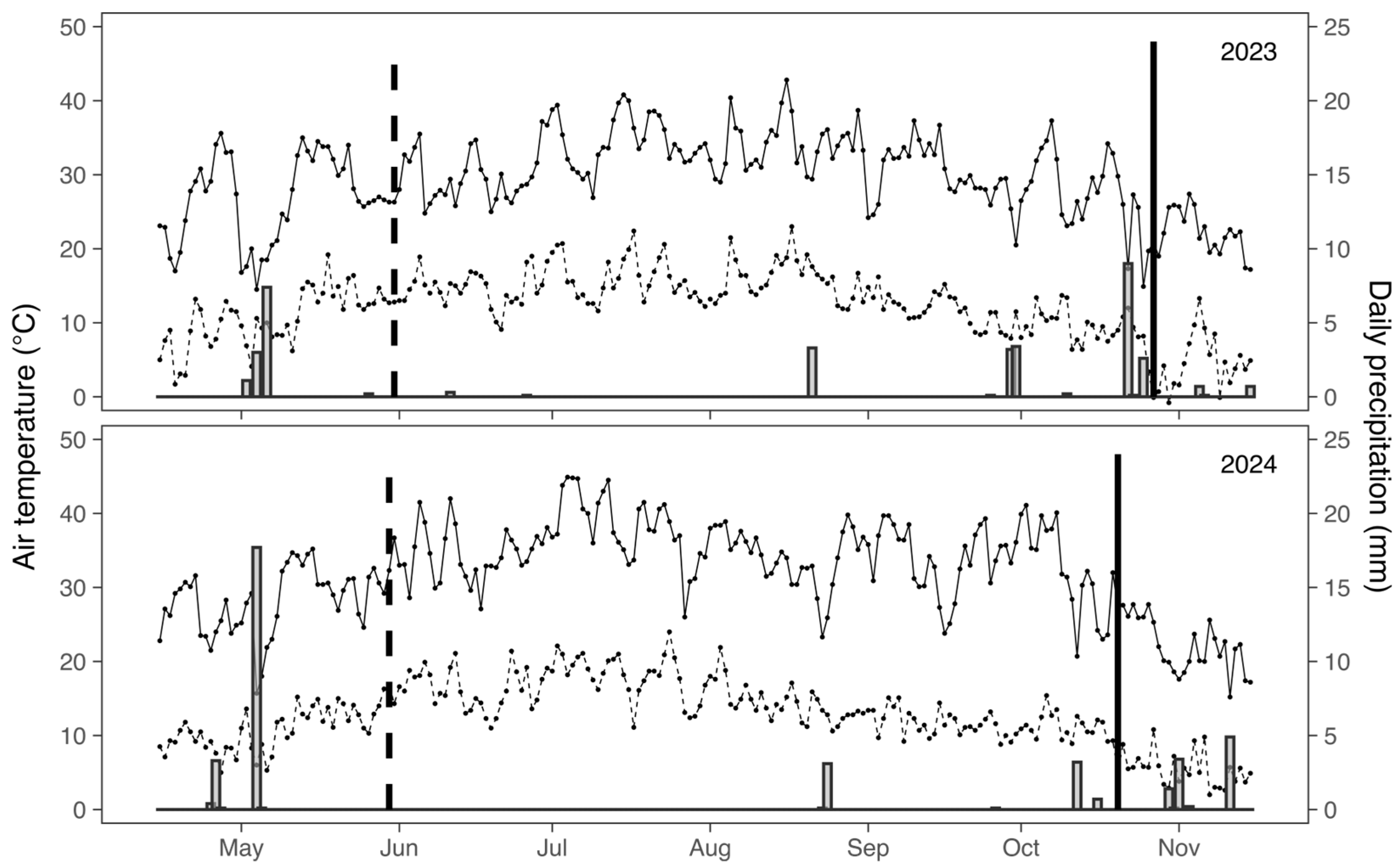
The average minimum and maximum air temperatures in Biggs, California, during the growing season (May to October) were 13 °C and 30.2 °C in 2023 and 13.5 °C and 33 °C in 2024, respectively (Figure 2). The weed species composition of the fields has been previously described in Inci and Al-Khatib [12] and included watergrasses, ricefield bulrush, smallflower umbrella sedge, ducksalad, and redstems.
Following harvest, the remaining rice straw was incorporated into the soil by a single pass of an offset stubble disk. The field was flooded to a depth of 10 cm during winter to promote rice straw decomposition and drained in early spring. Spring field preparation included one pass with a chisel plow, and two passes with a single-offset disk, followed by a land plane to level the soil surface. Aqueous ammonia (aqua-N; 28% N), the primary nitrogen source, was injected about 10 cm below the soil surface at a rate of 748 L ha−1, followed by a corrugated roller to compact the seedbed [16]. A starter blend of ammonium sulfate and phosphorus (34% N, 17% P, 0% K) was aerially broadcast at 336 kg ha−1 before the final roller. Pregerminated seed of the medium-grain cultivar “M-209”, a Calrose-type smooth-hulled (glabrous) temperate Japonica variety with 92 days to 50% heading [22], was planted on 31 May 2023 and 30 May 2024 at a rate of 168 kg ha−1. Permanent flooding was maintained at a depth of 10 cm throughout the season. Copper sulfate (Copper Sulfate Crystals MUP, Quimag Quimicos Aguila, Jalisco, MX, USA) at 17 kg ha−1 was broadcast onto the field 3 days after planting (DAP) to control green algae and cyanobacteria. The general agronomic practices followed previously published protocols described in Inci and Al-Khatib [12] and the University of California rice production guidelines [6].
The herbicide program was designed to provide season-long residual weed control using a variety of herbicides (Table 2). Seventeen herbicide treatments were applied, plus a nontreated control (Table 3). Granular herbicides were hand-broadcast evenly. Foliar herbicides were delivered with a CO2-pressurized boom sprayer equipped with six XR 8003-VS flat-fan nozzles (TeeJet® Technologies, Springfield, IL, USA), placed 50 cm apart and calibrated to 187 L ha−1 spray volume at 206 kPa. All foliar herbicide treatments included a manufacturer’s recommended adjuvant, methylated seed oil (Super Spread® MSO, Wilbur-Ellis, Fresno, CA, USA), at a rate of 584 mL ha−1. Before all foliar herbicide applications, the field was drained to ensure at least 70% foliar coverage and reflooded 48 h after treatment [12].
Experiments were arranged in a randomized complete block (RCB) design, with three replications. Each experimental unit (referred to as a rice plot) measured 3 m by 6 m and was separated by 1.8 m wide levees to allow independent flooding and drainage and to prevent herbicide cross-contamination from adjacent plots. Visual injury ratings for all weed species were conducted at 7, 14, 21, 28, 42, and 56 DAT. Weed control evaluations were based on a percentage scale relative to the nontreated control plots, ranging from 0 (no control) to 100 (complete control). Because early seedlings of watergrass (Echinochloa) species were difficult to distinguish, barnyardgrass, early watergrass, and late watergrass were evaluated collectively. Weed density in plots was determined at 28 DAT by counting the total number of plants per species in 30 cm by 30 cm quadrat samples, with two subsamples in each plot [12]. Due to the limited feasibility of hand-weeding, a weed-free rice plot could not be established using nonchemical methods.
Rice growth parameters and crop injury expressed as bleaching, chlorosis, necrosis, and stand reduction were rated at each weed control rating conducted throughout the season. Crop injury evaluations were made on a percentage scale relative to the nontreated control plots, ranging from 0 (no symptoms) to 100 (plant dead). Days to 50% heading were estimated visually. Plant height was determined at ~120 DAP by measuring the distance from the soil to the extended panicle. Whole rice plots were mechanically harvested, and yields were determined using a small plot combine harvester (R1 Single-Plot Rotary Combine, Almaco, Nevada, IA, USA) with a swath width of 2.3 m. Grain yield was adjusted to 14% moisture content [12].
Statistical analysis of the data was performed in RStudio version 2026.01.0+392 [25]. Weed control, crop injury, and the yield data were analyzed using analysis of covariance (ANCOVA) with the agricolae package version 1.3-7 [26]. Means were separated by using the Tukey–Kramer honestly significant difference (HSD) post-hoc test, which identified differences at a significance level of p < 0.05, when applicable. The emmeans version 2.0.1 [27] and multcomp version 1.4-29 [28] packages were used to generate multiple comparisons among means. Nontreated control plots were excluded from analyses of rice injury and weed control ratings because the values were zero. The herbicide treatment, application timing, and year were considered fixed factors, while block was considered a random factor. Illustrations were generated with the ggplot2 package version 4.0.2 in RStudio [29].

3. Results and Discussion

The rice response data, including bleaching, chlorosis, necrosis, stand reduction, and weed control data, showed no significant treatment-by-years interaction; therefore, 2023 and 2024 data were combined for presentation. The yield data, however, had a significant interaction (p > 0.05) between treatment and year. Therefore, the grain yield data were presented separately by year.
The weed composition in both years included grasses, sedges, and broadleaves. Nontreated control plots had an average abundance of 12% combined watergrass (Echinochloa spp.), 33% ricefield bulrush and smallflower umbrella sedge, and 55% combined broadleaf weed species. All treatments achieved significant watergrass control of at least 93% at 14 DAT (Table 4). When FPB was applied alone at 40 g ai ha−1 and as a sequential treatment at 40 g ai ha−1 followed by 40 g ai ha−1, the efficacy resulted in 100% watergrass control at 14 DAT, respectively. Guo-qi et al. [30] reported that FPB at a 36 g ai ha−1 rate application controlled 90% of barnyardgrass and reduced fresh weight by 98.6% in greenhouse conditions. On the other hand, when FPB was applied alone after the base treatments of BBC/HSM, CLM, or TBC, or in mixture combinations with partner herbicides of BPS, PNX/CHB, or PPL, 100% watergrass control was observed at 14 DAT (Table 4). Efficacy remained throughout the rest of the season, which indicates the necessity of having an herbicide program to maintain residual efficacy. The high watergrass control achieved when FPB was applied in combination with partner herbicides has been previously reported [12,31,32,33,34]. Inci and Al-Khatib [12] reported that FPB at 30 g ai ha−1 plus BPS at 37.5 g ai ha−1 applied on 4- to 5-LS rice resulted in 96% watergrass control, at 14 DAT. Chen et al. [31] showed that FPB at 36 g ai ha−1 controlled ~71% of barnyardgrass and E. crus-galli var. mitis at 21 DAT. Miller et al. [32] reported that FPB applied at 30 g ai ha−1 controlled ~96% of 152 barnyardgrass accessions at 21 DAT. In another study, Sanders et al. [33] reported that FPB applied at 29 g ai ha−1 achieved 98% barnyardgrass control at 28 DAT. Wang et al. [34] reported that FPB can control over 95% of PNX- and quinclorac-resistant barnyardgrass accessions when applied at 30 g ai ha−1. However, none of those studies showed season-long weed control.
Sedge weed control was 0% and 88% for ricefield bulrush and 0% and 92% for smallflower umbrella sedge with CLM and TBC base treatments at 14 DAT, respectively (Table 4). When CLM and TBC-based treatments were followed by foliar applications of FPB alone, smallflower umbrella sedge control increased to 95%, and ricefield bulrush control increased to 100% at 56 DAT. All other treatments achieved 100% sedge weed control at all rating timings, and the efficacy remained throughout the season (Table 4). Previously, FPB has been reported to be most effective when applied from 1-LS to 15 cm tall smallflower umbrella sedge stage, resulting in 95% control at 42 DAT [12]. Moreover, Yin et al. [35] found that when FPB at 36 g ai ha−1 was applied on 10 cm tall smallflower umbrella sedge, 100% control resulted in greenhouse conditions. Our smallflower umbrella sedge control findings with FPB at a 40 g ai ha−1 application rate aligned with the previously reported research.
The broadleaf weed infestations were dense, with up to ~55% of nontreated control plots infested with broadleaves before foliar herbicide treatments. Ducksalad was by far the densest broadleaf weed species, followed by redstems, waterhyssops, and arrowheads, respectively. At 14 DAT, ducksalad control remained at 42% and 50% for CLM and TBC alone treatments, respectively (Table 4). All other treatments achieved 100% ducksalad control at 14 DAT, and the residual weed control remained throughout the rest of the growing seasons. When BBC/HSM was applied alone, redstems control remained at 83% and 62% at 14 and 56 DAT, respectively. Yet all other treatments achieved 100% redstem control at 14 DAT in the rest of the growing seasons. Similarly, all FPB treatments, including those without base treatment, resulted in 100% control of waterhyssops and arrowheads. The superior broadleaf weed control in our study agrees with earlier research that has demonstrated FPB applied from 15 to 30 g ai ha−1 caused 100% reduction in arrowheads, ducksalad, redstems, waterhyssops, and waterhyacinth [Eichhornia crassipes (Mart.) Solms], respectively [12,36].
In general, rice phytotoxicity symptoms were bleaching, chlorosis, necrosis, and stand reduction in both years. The treatments with FPB alone did not show any distinguishable injury symptoms at any rating timing. At 14 DAT, BBC/HSM-treated plots showed 10% chlorosis, whereas TBC-treated plots had 5% to 10% of chlorosis (Table 5). The BBC/HSM- and TBC-treated plots also showed 5% and 10% stand reduction at 14 DAT, respectively. However, an average of 5% necrosis symptoms was only observed at the foliar treatments of BPS, PNX/CHB, and PPL, regardless of the base/granular herbicide application at 14 DAT (Table 5). Wright et al. [37] reported that sequential applications of FPB within a minimum of 14 days at 30 g ai ha−1 resulted in less than 5% to 15% injury on medium-grain rice at 2- to 3-LS in Arkansas within 21 DAT. Wells and Taylor [38] observed 16% rice injury at 60 g ai ha−1 FPB application. Other researchers reported injury rates of less than 8% with FPB at 60 g ai ha−1 in field experiments in Australia, Sri Lanka, Italy, and Brazil [39,40,41,42].
The CLM-treated plots exhibited approximately 5% bleaching symptoms, which dissipated, and the rice appeared normal within 21 DAT (Table 5). The bleaching injury with CLM applications is not surprising due to CLM disrupting the formation of key components of the isoprenoid pathway needed for the synthesis of carotenoid and chlorophyll pigments [43]. However, bleaching did not translate into the stand reduction. Moreover, 50% heading and plant height did not significantly differ among treatments. All the rice injuries dissipated, and rice appeared normal at 28 DAT regardless of the herbicide treatment (Table 5). The results indicate that the “M-209” rice cultivar can potentially recover from early- and mid-season injuries when treated with the herbicides mentioned above.
All herbicide treatments yielded greater rice yields than the nontreated control plots in both years (Table 6). When FPB was applied alone, grain yields were 7459 kg ha−1 and 9974 kg ha−1 in 2023 and 2024, respectively. The sequential application of FPB achieved the highest yields in both years, 7683 kg ha−1 and 11,249 kg ha−1, which also resulted in 3.6- and 6.4-fold greater rice yield compared to the nontreated control, respectively. Among all other FPB treatments, yield was at least 6048 kg ha−1 in 2023 and at least 8487 kg ha−1 in 2024, whereas the nontreated control yield was 2106 kg ha−1 in 2023 and 1764 kg ha−1 in 2024. The highest rice yield with FPB applied alone, compared to other applications after base treatments or in combination with other herbicides, may be due to the initial rice injury caused by base or partner herbicides.
The CLM and TBC applications in California water-seeded rice systems are standard practice for managing early-season barnyardgrass establishment; however, additional populations may emerge later in the season and escape the residual activity of herbicides applied on the DOS and within 2-LS rice [44]. The FPB provided an outstanding season-long control of sedges and broadleaf weeds, as well as good control of watergrasses. Later in the season, watergrasses may escape from the earlier applications of BBC/HSM, CLM, and TBC herbicides. Therefore, relatively late-season herbicide applications might be needed for cleanup. The FPB is labeled for up to 2 applications of 40 g ai ha−1, with a minimum interval of 14 days between applications per season [4]. However, research showed that FPB may be responsible for rice spikelet sterility and grain yield reduction when applied after rice panicle initiation growth stages [12]. To achieve season-wide weed control and prevent rice crop injury, FPB should be applied from the 4- to 5-LS of rice-to-rice panicle initiation.
Overall, this research showed that FPB applied alone at 40 g ai ha−1 to 4- to 5-LS rice controlled more than 98% of watergrasses and 100% of ricefield bulrush and smallflower umbrella sedge, as well as 100% of all broadleaf weeds, including arrowheads, ducksalad, redstems, and waterhyssops, at 14 DAT. At 56 DAT, grass weed control increased to 100% when FPB was applied after base treatments of BBC/HSM, CLM, or TBC, regardless of the mixture partner in FPB foliar treatments. Although rice initially showed up to 10% injury symptoms, all plants gradually recovered and appeared normal at 28 DAT. Adding base treatments or tank-mixed partner herbicides to the weed control program using FPB did not increase the risk of crop injury compared with applications of FPB alone. The inclusion of FPB with partner herbicides followed by grower-standard base programs in rice weed control programs could provide additional MOAs to mitigate the evolution of herbicide resistance while preventing season-long crop injury [45]. The research indicates that FPB weed control can be improved when FPB is applied in a weed control program with an appropriate mixture partner. If a cleanup treatment is required later in the growing season, a sequential application of FPB could be used. When rice is large enough (early- to mid-tillering), the injury caused by FPB is minimal and nonsignificant. However, any application after the rice panicle initiation growth stage may increase the risk of rice spikelet sterility, especially during flowering [12].

4. Conclusions

The complexity of weed management and challenges such as increasing herbicide resistance require a weed management program that can leverage the residual activity of herbicides on the DOS or within the 2-LS rice to control weeds effectively. Therefore, foliar applications of herbicides may be more effective during the early- or mid-season herbicide applications. Herbicide resistance has been a significant concern in California rice [14]. Among herbicide-resistant weeds, watergrasses (Echinochloa complex) are the most troublesome and hard to manage in water-seeded rice systems [12]. The FPB was recently registered in California rice (August 2022), and research has shown that it could be used in season-long weed management programs. Given the importance of rice cultivation in the Sacramento Valley of California, the second-largest rice producer in the US, it is crucial to develop sustainable weed management strategies that address the increasing herbicide resistance observed across the state. Owing to its excellent control of sedges and broadleaf weeds, as well as its good activity against barnyardgrass, FPB has become an essential component of water-seeded rice weed management programs.

Author Contributions

Conceptualization, D.I. and K.A.-K.; methodology, D.I.; software, D.I.; validation, D.I. and K.A.-K.; formal analysis, D.I.; investigation, D.I.; resources, K.A.-K.; data curation, D.I.; writing—original draft preparation, D.I.; writing—review and editing, D.I. and K.A.-K.; visualization, D.I.; supervision, K.A.-K.; project administration, K.A.-K.; funding acquisition, K.A.-K. All authors have read and agreed to the published version of the manuscript.

Funding

This research was funded by the California Rice Research Board (project no: 1) and the University of California, Melvin D. Androus Endowment.

Institutional Review Board Statement

Not applicable.

Informed Consent Statement

Not applicable.

Data Availability Statement

The raw data supporting the conclusions of this article will be made available by the authors on request.

Acknowledgments

We gratefully acknowledge the California Rice Experiment Station staff and Al-Khatib Weed Science Laboratory members for their assistance with the fieldwork. The views and opinions expressed in this publication are those of the authors. Mention of companies or commercial products does not imply recommendation or endorsement over others not mentioned. Product names are mentioned solely to report factually on available data and to provide specific information.

Conflicts of Interest

The authors declare no conflicts of interest. The funders had no role in the design of the study; in the collection, analyses, or interpretation of data; in the writing of the manuscript; or in the decision to publish the results.

Abbreviations

The following abbreviations are used in this manuscript:
ANCOVAanalysis of covariance
ANOVAanalysis of variance
BBCbenzobicyclon
BPSbispyribac-sodium
CHBcyhalofop-butyl
CIMISCalifornia irrigation management information system
CLMclomazone
DAPdays after planting
DATdays after treatment
DOSday of seeding
fbfollowed by
FPBflorpyrauxifen-benzyl
HSDhonestly significant difference
HSMhalosulfuron-methyl
LSleaf stage
MOAmode of action
MSOmethylated seed oil
PNXpenoxsulam
PPLpropanil
TBCthiobencarb

References

  1. Organization for Economic Cooperation and Development and Food and Agriculture Organization of the United Nations. OECD-FAO Agricultural Outlook 2025–2034; OECD Publishing: Paris, France; Rome, Italy, 2025; ISBN 978-92-64-40615-5. [Google Scholar]
  2. Global Rice Science Partnership. Rice Almanac, 4th ed.; International Rice Research Institute: Los Baños, Philippines, 2013; ISBN 978-971-22-0300-8. [Google Scholar]
  3. Whitt, D.R. The Evaluation of Tetflupyrolimet in Rice (Oryza sativa). Master’s Thesis, Mississippi State University, Starkville, MS, USA, 2025. Available online: https://scholarsjunction.msstate.edu/td/6722 (accessed on 5 October 2025).
  4. Inci, D. Characterization of Florpyrauxifen-Benzyl Herbicide in California Water-Seeded Rice. Doctoral Dissertation, University of California, Davis, CA, USA, 2024. Available online: https://escholarship.org/uc/item/047121wq (accessed on 5 October 2025).
  5. Galvin, L.B.; Inci, D.; Mesgaran, M.; Brim-DeForest, W.; Al-Khatib, K. Flooding depths and burial effects on seedling emergence of five California weedy rice (Oryza sativa spontanea) accessions. Weed Sci. 2022, 70, 213–219. [Google Scholar] [CrossRef]
  6. University of California Agriculture and Natural Resources. Rice Production Manual 2023; University of California Agronomy Research and Information Center Rice: Davis, CA, USA, 2023; Available online: https://agronomy-rice.ucdavis.edu/rice-production-workshop-manual (accessed on 7 September 2025).
  7. Kennedy, P.B. Observations on Some Rice Weeds in California; Bulletin No 356; University of California Press: Berkeley, CA, USA, 1923; Available online: https://archive.org/details/observationsonso356kenn (accessed on 23 April 2025).
  8. Hill, J.E.; Williams, J.F.; Mutters, R.G.; Greer, C.A. The California rice cropping system: Agronomic and natural resource issues for long-term sustainability. Paddy Water Environ. 2006, 4, 13–19. [Google Scholar] [CrossRef]
  9. United States Department of Agriculture, National Agricultural Statistics Service. Available online: https://croplandcros.scinet.usda.gov (accessed on 5 September 2025).
  10. California Rice News, California Rice Commission. Available online: https://calricenews.org (accessed on 20 November 2025).
  11. Brim-DeForest, W. Emergence, Early Growth, and Community Dynamics of Key Rice Weeds in California in Variable Irrigation Systems: Impacts on System Productivity and Yield Losses. Doctoral Dissertation, University of California, Davis, CA, USA, 2016. [Google Scholar]
  12. Inci, D.; Al-Khatib, K. Assessment of florpyrauxifen-benzyl in water-seeded rice systems as affected by application timing. Crop Prot. 2024, 185, 106886. [Google Scholar] [CrossRef]
  13. Inci, D.; Hanson, B.D.; Al-Khatib, K. Tree nut crop response to simulated florpyrauxifen-benzyl and triclopyr herbicide drift. HortScience 2024, 59, 1590–1596. [Google Scholar] [CrossRef]
  14. Heap, I. The International Herbicide-Resistant Weed Database. Available online: https://weedscience.org (accessed on 27 November 2025).
  15. Marsh, S.L. An Evaluation of Novel Herbicides Pyraclonil and Metribuzin in California Rice (Oryza sativa). Master’s Thesis, University of California, Davis, USA, CA, 2022. Available online: https://escholarship.org/uc/item/3pn6c1fh (accessed on 28 April 2025).
  16. Inci, D.; Leinfelder-Miles, M.M.; Al-Khatib, K. Management of common cattail (Typha latifolia) with florpyrauxifen-benzyl in rice fields. Weed Technol. 2025, 39, e14. [Google Scholar] [CrossRef]
  17. Miller, M.R.; Norsworthy, J.K. Soybean sensitivity to florpyrauxifen-benzyl during reproductive growth and the impact on subsequent progeny. Weed Technol. 2018, 32, 135–140. [Google Scholar] [CrossRef]
  18. Epp, J.B.; Alexander, A.L.; Balko, T.W.; Buysse, A.M.; Brewster, W.K.; Bryan, K.; Daeuble, J.F.; Fields, S.C.; Gast, R.E.; Green, R.A.; et al. The discovery of Arylex™ active and Rinskor™ active: Two novel auxin herbicides. Bioorg. Med. Chem. 2016, 24, 362–371. [Google Scholar] [CrossRef]
  19. Grossmann, K. Auxin herbicides: Current status of mechanism and mode of action. Pest Manag. Sci. 2010, 66, 113–120. [Google Scholar] [CrossRef] [PubMed]
  20. Baltazar, A.M.; De Datta, S.K. Weed Science and Weed Management in Rice and Cereal-Based Cropping Systems; Wiley: Hoboken, NJ, USA, 2023. [Google Scholar] [CrossRef]
  21. California Irrigation Management Information System. Available online: https://cimis.water.ca.gov (accessed on 5 August 2025).
  22. California Cooperative Rice Research Foundation. M-209 Rice: Description and management guidelines. Available online: https://crrf.org (accessed on 4 August 2025).
  23. Herbicide Resistance Action Committee. 2025 Herbicide Mode of Action Classification. Available online: https://hracglobal.com (accessed on 5 August 2025).
  24. Weed Science Society of America. Herbicide Site of Action Classification List. Available online: https://wssa.net/weed/herbicides (accessed on 22 October 2025).
  25. R Core Team. R: A Language and Environment for Statistical Computing, version 2026.01.0+392; R Core Team: Vienna, Austria, 2026; Available online: https://www.R-project.org (accessed on 22 January 2026).
  26. de Mendiburu, F. Agricolae: Statistical Procedures for Agricultural Research, R package version 1.3–7. Available online: https://cran.r-project.org/package=agricolae (accessed on 5 August 2025).
  27. Searle, S.R.; Speed, F.M.; Milliken, G.A. Population marginal means in the linear model: An alternative to least squares means. Am. Stat. 1980, 34, 216–221. [Google Scholar] [CrossRef] [PubMed]
  28. Hothorn, T.; Bretz, F.; Westfall, P. Simultaneous inference in general parametric models. Biom. J. 2008, 50, 346–363. [Google Scholar] [CrossRef]
  29. Wickham, H.; Navarro, D.; Pedersen, T.L. ggplot2: Elegant Graphics for Data Analysis (3e). Available online: https://ggplot2-book.org (accessed on 5 August 2025).
  30. Guo-qi, C.; Yang, C.; Masoom, A.; Jia-jun, W.; Hai-yan, W. Baseline sensitivity of Echinochloa glabrescens to florpyrauxifen-benzyl on a regional scale: A case study of Jiangsu Province, China. Weed Technol. 2025, 39, e35. [Google Scholar] [CrossRef]
  31. Chen, Y.; Masoom, A.; Huang, Z.; Xue, J.; Chen, G. Assessment of florpyrauxifen-benzyl sensitivity in Echinochloa crus-galli and E. crus-galli var. mitis: A case study with 228 populations in eastern China. Agronomy 2025, 15, 2446. [Google Scholar] [CrossRef]
  32. Miller, M.R.; Norsworthy, J.K.; Scott, R.C. Evaluation of florpyrauxifen-benzyl on herbicide-resistant and herbicide-susceptible barnyardgrass accessions. Weed Technol. 2018, 32, 126–134. [Google Scholar] [CrossRef]
  33. Sanders, T.L.; Bond, J.A.; Lawrence, B.H.; Golden, B.R.; Allen, T.W., Jr.; Bararpour, T. Evaluation of weed control in acetyl coA carboxylase-resistant rice with mixtures of quizalofop and auxinic herbicides. Weed Technol. 2020, 34, 498–505. [Google Scholar] [CrossRef]
  34. Wang, H.; Sun, X.; Yu, J.; Li, J.; Dong, L. The phytotoxicity mechanism of florpyrauxifen-benzyl to Echinochloa crus-galli (L.) P. Beauv and weed control effect. Pestic. Biochem. Physiol. 2021, 179, 104978. [Google Scholar] [CrossRef]
  35. Yin, S.; Hu, W.; Chai, Y.; Jiang, M.; Zhang, J.; Cao, H.; Zhao, N.; Liao, M. Molecular basis of resistance to bensulfuron-methyl in a smallflower umbrella sedge (Cyperus difformis L.) population from China. Agronomy 2023, 13, 1179. [Google Scholar] [CrossRef]
  36. Mudge, C.R.; Turnage, G.; Netherland, M.D. Effect of florpyrauxifen-benzyl formulation and rate for waterhyacinth (Eichhornia crassipes) control in a mesocosm setting. Invas. Plant Sci. Manag. 2021, 14, 35–39. [Google Scholar] [CrossRef]
  37. Wright, H.E.; Norsworthy, J.K.; Roberts, T.L.; Scott, R.; Hardke, J.; Gbur, E.E. Characterization of rice cultivar response to florpyrauxifen-benzyl. Weed Technol. 2021, 35, 82–92. [Google Scholar] [CrossRef]
  38. Wells, G.S.; Taylor, M. RinskorTM Active—A new herbicide for rice weed control in Australia. In Proceedings of the Twentieth Australasian Weeds Conference; Randall, R., Lloyd, S., Borger, C., Eds.; Weeds Society of Western Australia: Perth, Australia, 2016; pp. 269–271. [Google Scholar]
  39. Hapukotuwa, N.K.; Perea, M.S.K.K.; Abeysekara, A.S.K.; Weligamage, S.S.; Piyatissa, U.B. Weed control efficacy of a new post-emergence herbicide ‘florpyrauxifen-benzyl’ 2.5 ec (Rinskor) in wet-seeded rice in Sri Lanka. Trop. Agric. 2018, 166, 141–152. [Google Scholar]
  40. Valle, N.D.; Carone, D.C.; Mascanzoni, E.; Baino, M. Florpyrauxifen-benzyl (Rinskor Active): New post-emergence herbicide for rice. J. Chem. Inf. Model. 2012, 53, 1689–1699. [Google Scholar]
  41. Rubin, R.S.; Bundt, A.D.C.; Neves, R.; Kalsing, A. Controle de ciperáceas em arroz irrigado, utilizando novo herbicida RinskorTM Active. In Proceedings of the X CBAI Manejo de Plantas Daninhas; Sociedade Brasileira da Ciência das Plantas Daninhas: Balneario Camboriú, Brazil, 2017. [Google Scholar]
  42. Bundt, A.D.C.; Rubin, R.d.S.; Kalsing, A.; Neves, R.; Carranza, N. Eficiência do ingrediente ativo RinskorTM para controle de capim arroz na cultura do arroz irrigado. In Proceedings of the X CBAI Manejo de Plantas Daninhas; Sociedade Brasileira da Ciência das Plantas Daninhas: Balneario Camboriú, Brazil, 2017. [Google Scholar]
  43. Jordan, D.L.; Bollich, P.K.; Burns, A.B.; Walker, D.M. Rice (Oryza sativa) response to clomazone. Weed Sci. 1998, 46, 374–380. [Google Scholar] [CrossRef]
  44. Driver, K.E. Characterization of Clomazone Resistance and Control in Leptochloa fusca spp. fasicularis Populations from California Rice Fields. Doctoral Dissertation, University of California, Davis, CA, USA, 2019. [Google Scholar]
  45. Beesinger, J.W.; Norsworthy, J.K.; Butts, T.; Roberts, T. Rice tolerance to multiple applications of florpyrauxifen-benzyl alone and followed by benzobicyclon. Crop Forage Turfgrass Manag. 2022, 8, e20162. [Google Scholar] [CrossRef]
Figure 1. Map of California rice cultivation areas with an inset of the Sacramento Valley [9].
Agrochemicals 05 00011 g001
Figure 2. Daily temperature extremes and daily rainfall for 2023 and 2024 growing seasons at the California Rice Experiment Station near Biggs, California [21]. Horizontal solid and dashed lines represent the daily maximum and minimum temperatures (°C). Grey bars are daily precipitation (mm). Vertical dashed and solid lines represent planting and harvest dates of 31 May 2023 and 27 October 2023 (upper panel) and 30 May 2024 and 20 October 2024 (lower panel).
Agrochemicals 05 00011 g002
Table 1. Soil properties collected from rice fields in 2023 and 2024 at the California Rice Experiment Station near Biggs, California 1,2.
Year NO3–N Olsen-P K Na Ca Mg CEC pH OM Sand Silt Clay
ppmmeq 100 g−1 %
20231928107604631304.62371845
2024515715564115.03324325
1 Soil samples were collected from each field at the plough layer (0–15 cm), air dried, and sieved with a 2 mm screen before the analysis. 2 Abbreviation: CEC, cation exchange capacity; OM, organic matter.
Table 2. Sources of herbicides used in the season-long rice weed control experiments in 2023 and 2024 at the California Rice Experiment Station near Biggs, California.
Common Name Trade Name Manufacturer
(Location)
Mode of Action 1
Benzobicyclon/halosulfuron-methylButte®Gowan Company
(Yuma, AZ, USA)
Hydroxyphenyl pyruvate dioxygenase/acetolactate synthase inhibitors
Bispyribac-sodiumRegiment® CAValent USA
(San Ramon, CA, USA)
Acetolactate synthase inhibitor
ClomazoneCerano® 5 MEGWilbur-Ellis
(Fresno, CA, USA)
Deoxy-d-xylulose phosphate synthase inhibitor
Florpyrauxifen-benzylLoyant® CACorteva Agriscience
(Indianapolis, IN, USA)
Auxin-mimic
Penoxsulam/cyhalofop-butylRebelEX® CACorteva AgriscienceAcetolactate synthase/acetyl CoA carboxylase inhibitors
PropanilSuperWham!® CAUPL NA Inc.
(King of Prussia, PA, USA)
Photosystem II inhibitor
ThiobencarbBolero® UltraMaxValent USAVery long chain fatty acid synthesis inhibitor
1 According to the Herbicide Resistance Action Committee [23] and the Weed Science Society of America [24].
Table 3. Herbicides, rates, and application timings in the season-long rice weed control experiments in 2023 and 2024 at the California Rice Experiment Station near Biggs, California 1.
Treatment 2 Rate Application Timing
g ai ha−1
1Nontreated control
2Florpyrauxifen-benzyl404- to 5-LS
3Florpyrauxifen-benzyl fb
florpyrauxifen-benzyl
40 fb
40
4- to 5-LS fb
mid-tillering
4Benzobicyclon/halosulfuron-methyl303/65DOS
5Benzobicyclon/halosulfuron-methyl fb
florpyrauxifen-benzyl
303/65 fb
40
DOS fb
4- to 5-LS
6Benzobicyclon/halosulfuron-methyl fb
florpyrauxifen-benzyl + bispyribac-sodium
303/65 fb
40 + 38
DOS fb
4- to 5-LS
7Benzobicyclon/halosulfuron-methyl fb
florpyrauxifen-benzyl + penoxsulam/cyhalofop-butyl
303/65 fb
40 + 44/312
DOS fb
4- to 5-LS
8Benzobicyclon/halosulfuron-methyl fb
florpyrauxifen-benzyl + propanil
303/65 fb
40 + 5604
DOS fb
4- to 5-LS
9Clomazone672DOS
10Clomazone fb
florpyrauxifen-benzyl
672 fb
40
DOS fb
4- to 5-LS
11Clomazone fb
florpyrauxifen-benzyl + bispyribac-sodium
672 fb
40 + 38
DOS fb
4- to 5-LS
12Clomazone fb
florpyrauxifen-benzyl + penoxsulam/cyhalofop-butyl
672 fb
40 + 44/312
DOS fb
4- to 5-LS
13Clomazone fb
florpyrauxifen-benzyl + propanil
672 fb
40 + 5604
DOS fb
4- to 5-LS
14Thiobencarb39232-LS
15Thiobencarb fb
florpyrauxifen-benzyl
3923 fb
40
2-LS fb
4- to 5-LS
16Thiobencarb fb
florpyrauxifen-benzyl + bispyribac-sodium
3923 fb
40 + 38
2-LS fb
4- to 5-LS
17Thiobencarb fb
florpyrauxifen-benzyl + penoxsulam/cyhalofop-butyl
3923 fb
40 + 44/312
2-LS fb
4- to 5-LS
18Thiobencarb fb
florpyrauxifen-benzyl + propanil
3923 fb
40 + 5604
2-LS fb
4- to 5-LS
1 Abbreviation: DOS, day of seeding; fb, followed by; LS, leaf stage. 2 All foliar treatments included methylated seed oil at 584 mL ha−1.
Table 4. Average weed control ratings at 14, 28, and 56 days after treatment (DAT) in the season-long rice weed control experiments in 2023 and 2024 at the California Rice Experiment Station near Biggs, California 1,2,3,4,5.
Watergrass Ricefield Smallflower
Species 6 Bulrush Umbrella Sedge Ducksalad
14 28 56 14 28 56 14 28 56 14 28 56
TRT DAT DAT DAT DAT DAT DAT DAT DAT DAT DAT DAT DAT
% of nontreated control
1
2100a98a97a100a100a100a100a100a99a100a100a100a
3100a99a98a100a100a100a100a100a100a100a100a100a
4100a100a85c100a100a100a100a100a100a100a100a100a
5100a100a100a100a100a100a100a100a100a100a100a100a
6100a100a100a100a100a100a100a100a100a100a100a100a
7100a100a100a100a100a100a100a100a100a100a100a100a
8100a100a100a100a100a100a100a100a100a100a100a100a
9100a100a100a0c0c0c0c0c0c35c42c66b
10100a100a100a100a100a100a100a100a95b100a100a100a
11100a100a100a100a100a100a100a100a100a100a100a100a
12100a100a100a100a100a100a100a100a100a100a100a100a
13100a100a100a100a100a100a100a100a100a100a100a100a
1493b93b94b88b84b70b92b92b96ab50b50b63c
15100a100a98a100a100a100a100a100a100a100a100a100a
16100a100a99a100a100a100a100a100a100a100a100a100a
17100a100a99a100a100a100a100a100a100a100a100a100a
18100a100a98a100a100a100a100a100a100a100a100a100a
1 Abbreviation: DAP, days after planting; DAT, days after treatment; TRT, treatment. 2 Herbicide treatments were described in Table 3. 3 Means with the same letters are not different at p < 0.05, according to Tukey’s HSD post-hoc test. 4 Foliar applications were delivered at 20 and 35 DAP on 4–5 LS and mid-tillering rice, respectively. 5 All foliar treatments included methylated seed oil at 584 mL ha−1. 6 Watergrass species included barnyardgrass (Echinochloa crus-galli), early watergrass (E. oryzoides), and late watergrass (E. phyllopogon).
Table 5. Average rice bleaching, chlorosis, necrosis, and stand reduction ratings at 15 and 30 days after planting (DAP) in the season-long rice weed control experiments in 2023 and 2024 growing seasons at the California Rice Experiment Station near Biggs, California 1,2,3,4,5.
Bleaching Chlorosis Necrosis Stand Reduction
15 30 15 30 15 30 15 30
TRT DAP DAP DAP DAP DAP DAP DAP DAP
% of nontreated control
1
20a0a0a0a0a0a0a0a
30a0a0a0a0a0a0a0a
40a0a5b10c0a0a5b5b
50a0a5b10c0a0a5b5b
60a0a5b10c0a5b5b5b
70a0a5b10c0a5b5b5b
80a0a5b10c0a5b5b5b
95b5b0a0a0a0a0a0a
105b5b0a0a0a0a0a0a
115b5b0a0a0a5b0a0a
125b5b0a0a0a5b0a0a
135b5b0a0a0a5b0a0a
140a0a0a5b0a0a10c5b
150a0a0a5b0a0a10c5b
160a0a0a5b0a5b10c10c
170a0a0a5b0a5b10c10c
180a0a5b10c0a5b10c10c
1 Abbreviation: DAP, days after planting; TRT, treatment. 2 Herbicide treatments were described in Table 3. 3 Means with the same letters are not different at p < 0.05, according to Tukey’s HSD post-hoc test. 4 Foliar applications were delivered at 20 and 35 DAP on 4–5 LS and mid-tillering rice, respectively. 5 All foliar treatments included methylated seed oil at 584 mL ha−1.
Table 6. Average rice yield in the season-long rice weed control experiments in 2023 and 2024 at the California Rice Experiment Station near Biggs, California 1,2,3,4.
Yield 5
Treatment 2023 2024
kg ha−1
1Nontreated control2106c1764e2106c1764e
2Florpyrauxifen-benzyl7459a9974ab7459a9974ab
3Florpyrauxifen-benzyl fb florpyrauxifen-benzyl7683a11,249a7683a11,249a
4Benzobicyclon/halosulfuron-methyl5997ab6350c5997ab6350c
5Benzobicyclon/halosulfuron-methyl fb florpyrauxifen-benzyl6582ab9082ab6582ab9082ab
6Benzobicyclon/halosulfuron-methyl fb florpyrauxifen-benzyl + bispyribac-sodium7238a8487b7238a8487b
7Benzobicyclon/halosulfuron-methyl fb florpyrauxifen-benzyl + penoxsulam/cyhalofop-butyl6506ab9475ab6506ab9475ab
8Benzobicyclon/halosulfuron-methyl fb florpyrauxifen-benzyl + propanil7327a9107ab7327a9107ab
9Clomazone3473b4350d3473b4350d
10Clomazone fb florpyrauxifen-benzyl6363ab9099ab6363ab9099ab
11Clomazone fb florpyrauxifen-benzyl + bispyribac-sodium7414a9100ab7414a9100ab
12Clomazone fb florpyrauxifen-benzyl + penoxsulam/cyhalofop-butyl7261a9277ab7261a9277ab
13Clomazone fb florpyrauxifen-benzyl + propanil7104a9839ab7104a9839ab
14Thiobencarb6048ab9095ab6048ab9095ab
15Thiobencarb fb florpyrauxifen-benzyl6598ab9680ab6598ab9680ab
16Thiobencarb fb florpyrauxifen-benzyl + bispyribac-sodium6968ab9959ab6968ab9959ab
17Thiobencarb fb florpyrauxifen-benzyl + penoxsulam/cyhalofop-butyl7278a9287ab7278a9287ab
18Thiobencarb fb florpyrauxifen-benzyl + propanil7156a9678ab7156a9678ab
1 Abbreviation: fb, followed by. 2 Means with the same letters are not different at p < 0.05, according to Tukey’s HSD post-hoc test. 3 Foliar applications were delivered at 20 and 35 DAP on 4–5 LS and mid-tillering rice, respectively. 4 All foliar treatments included methylated seed oil at 584 mL ha−1. 5 Grain yield was adjusted to 14% moisture content.
Disclaimer/Publisher’s Note: The statements, opinions and data contained in all publications are solely those of the individual author(s) and contributor(s) and not of MDPI and/or the editor(s). MDPI and/or the editor(s) disclaim responsibility for any injury to people or property resulting from any ideas, methods, instructions or products referred to in the content.