
Review

Phage Therapy: A Promising Approach in the Management of Periodontal Disease
1
Center for Science and Technology in Energy and Sustainability, Federal University of Recôncavo da Bahia, Avenida Centenário, 697, SIM, Feira de Santana 44042-280, Brazil
2
Department of Biological Sciences, State University of Feira de Santana, Avenida Transnordestina, s/n, Novo Horizonte, Feira de Santana 44036-900, Brazil
3
Metropolitan Union University Center of Education and Culture (UNIME), Avenida Luis Tarquínio Pontes, 600, Centro, Lauro de Freitas 42702-420, Brazil
*
Author to whom correspondence should be addressed.
Drugs Drug Candidates 2026, 5(1), 6; https://doi.org/10.3390/ddc5010006
Submission received: 29 October 2025 / Revised: 8 December 2025 / Accepted: 23 December 2025 / Published: 8 January 2026
(This article belongs to the Special Issue Microbes and Medicines)

Abstract

Background/Objectives: Periodontal disease is a condition marked by the destruction of tooth-supporting tissues, driven by an exaggerated immune response to an unbalanced dental biofilm. Conventional treatments struggle due to antimicrobial resistance and the biofilm’s protective extracellular matrix. This study evaluates the potential of bacteriophages as an innovative strategy for managing periodontal disease. Methods: This research employed a qualitative approach using Discursive Textual Analysis, with IRAMUTEQ version 0.8 alpha 7 (Interface de R pour les Analyses Multidimensionnelles de Textes et de Questionnaires) software. The search was conducted in the Orbit Intelligence and PubMed databases, for patents and scholarly articles, respectively. The textual data underwent Descending Hierarchical Classification, Correspondence Factor Analysis, and Similarity Analysis to identify core themes and relationships between words. Results: The analysis revealed an increase in research and patent filings concerning phage therapy for periodontal disease since 2017, emphasizing its market potential. The primary centers for intellectual property activity were identified as China and the United States. The study identified five focus areas: Genomic/Structural Characterization, Patent Formulations, Etiology, Therapeutic Efficacy, and Ecology/Phage Interactions. Lytic phages were shown to be effective against prominent pathogens such as Fusobacterium nucleatum and Enterococcus faecalis. Conversely, the lysogenic phages poses a potential risk, as they may transfer resistance and virulence factors, enhancing pathogenicity. Conclusions: Phage therapy is a promising approach to address antimicrobial resistance and biofilm challenges in periodontitis management. Key challenges include the need for the clinical validation of formulations and stable delivery systems for the subgingival area. Future strategies, such as phage genetic engineering and data-driven cocktail design, are crucial for enhancing efficacy and overcoming regulatory hurdles.

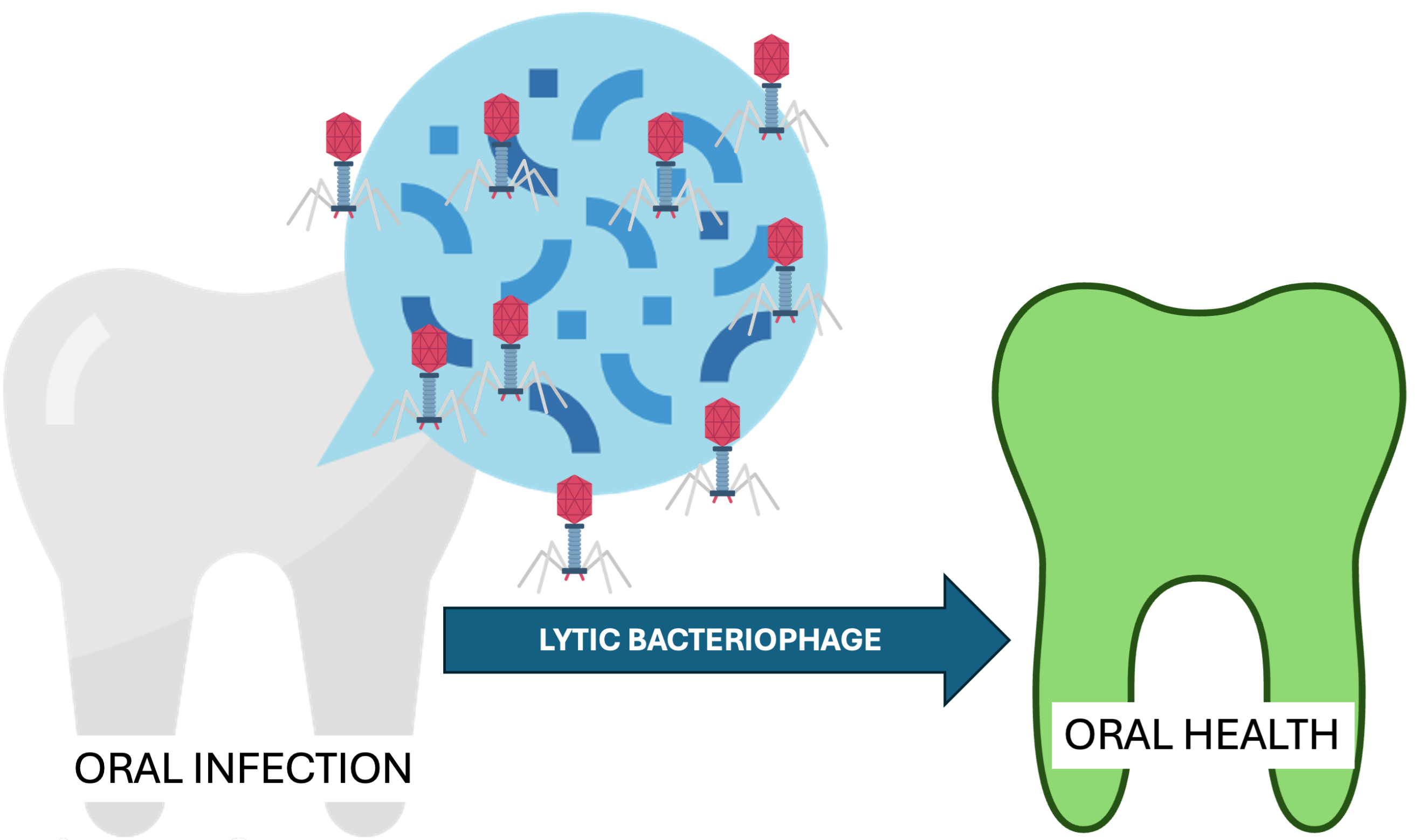
Graphical Abstract

1. Introduction

Periodontal disease is a multifactorial condition, marked by the progressive destruction of the tissues that support the teeth. This damage arises from an exaggerated immune response to a dysbiotic dental biofilm [1,2], which predominantly contains pathogenic bacteria such as Porphyromonas gingivalis, Aggregatibacter actinomycetemcomitans, Tannerella forsythia, Eikenella corrodens, and Fusobacterium nucleatum [3]. Collectively, these bacteria activate an inflammatory process that can lead to tooth loss if left untreated, highlighting the critical need for effective oral hygiene and regular dental care.
Periodontal disease is a major global health issue, ranked as the 12th most common condition worldwide [4]. It not only affects oral health but also worsens several serious health issues, including diabetes, cardiovascular diseases, respiratory conditions, complications during pregnancy, Alzheimer’s disease, rheumatoid arthritis, and chronic kidney disease [5].
The non-surgical treatment of periodontal disease primarily involves scaling and root planing, which mechanically remove dental biofilm and calculus [6]. However, accessing difficult-to-reach areas, such as deep periodontal pockets, can complicate the thorough removal of subgingival dental biofilm. In these instances, surgical periodontal therapy, including osteotomy and osteoplasty, may be warranted [7].
It is important to recognize that post-surgical resective periodontal procedures can result in complications such as dentin hypersensitivity [8], loss of interproximal papillae, which can lead to chronic food impaction, and alterations in aesthetics and phonetics [9]. As an adjunct to the aforementioned treatments, the application of chlorhexidine-based mouthwashes and antibiotic therapy is advisable.
However, while chlorhexidine is widely regarded as the gold standard for controlling dental biofilm, its effectiveness becomes less specific once an oral biofilm is established. Furthermore, prolonged use of chlorhexidine for 21 days may lead to several adverse effects, including altered taste, numbness in the mouth and tongue, and dry mouth (xerostomia) [10,11]. Additional concerns include extrinsic staining of tooth enamel [12,13] and the potential development of antimicrobial resistance associated with its continued use.
In the context of antimicrobial therapy, tetracycline, azithromycin, amoxicillin, and metronidazole are utilized as adjuvant treatments [14,15,16]. However, the rise of multidrug-resistant bacteria has become a significant issue [17]. Furthermore, the extracellular matrix that develops within dysbiotic dental biofilm provides a protective barrier for periodontopathogens, limiting the effectiveness of antimicrobial agents [18]. This protection can ultimately contribute to the failure of periodontal therapy.
Given the increasing challenge of antimicrobial resistance among periodontal pathogens, there is an urgent need for innovative therapeutic strategies. Additionally, addressing these pathogens presents a challenge due to their ability to thrive within the protective environment of the extracellular matrix. Hence, to effectively combat periodontal disease, researchers are seeking a non-toxic antimicrobial agent that can penetrate the dense biofilm matrix and deliver potent bactericidal effects against these resilient bacteria. In this context, bacteriophages offer a promising avenue for treatment, potentially serving as powerful allies in the fight against periodontal disease and its associated complications.
Bacteriophages, commonly called phages, are highly specialized viruses that specifically target bacteria. These viruses can selectively recognize and eliminate particular strains or species of bacteria, thanks to the precise interactions between their binding proteins and bacterial receptors [19]. This specificity offers phage therapy a significant advantage over broad-spectrum antibiotics, as it minimizes disruptions to the body’s beneficial microbiota, thereby preserving microbial balance and substantially reducing the risk of dysbiosis [20]. Moreover, bacteriophages are more effective than antibiotics at penetrating and destroying bacterial biofilms [21]. As a result, phage therapy offers a promising strategy to address the challenges posed by bacterial resistance and the complexities of biofilms, ultimately promoting more targeted and effective treatment options.
In this context, the study conducted a bibliographic and patent survey to evaluate the therapeutic potential of bacteriophages in managing periodontal disease. By reviewing existing literature and relevant patents, the research aims to assess the effectiveness and applications of bacteriophage therapy as an innovative treatment for this common oral health condition.

2. Results

This article analyzes 25 patent documents and 25 scientific articles, selected according to specific criteria (see Section 4). The findings indicate an increase in research focused on the application of bacteriophages in periodontal therapy over the past decade. This trend is further underscored by the rising number of patents filed in this field.
The results indicate that the earliest relevant article was authored by Preus and colleagues in 1987. This study described a bacteriophage that enhances the pathogenicity of Actinobacillus actinomycetemcomitans, now referred to as Aggregatibacter actinomycetemcomitans [22]. Notably, interest in this field has increased since 2010, particularly over the last five years, as reflected in a rise in related publications.
Interest in this field has been growing, accompanied by the development of innovative technological products, represented by patent documents. The first patent application was filed in 2013, with a notable increase occurring in 2017 when three families of patents were submitted. This trend reached its peak in 2019, with four families of patents filed, and was sustained through 2020 and 2021, with three families each year. Currently, 30.77% of the related patents have been granted, while 46.15% remain pending, resulting in a total of 76.92%. This indicates that the use of bacteriophages for treating periodontal diseases represents a promising area of research and innovation, showcasing significant market potential since 2017.
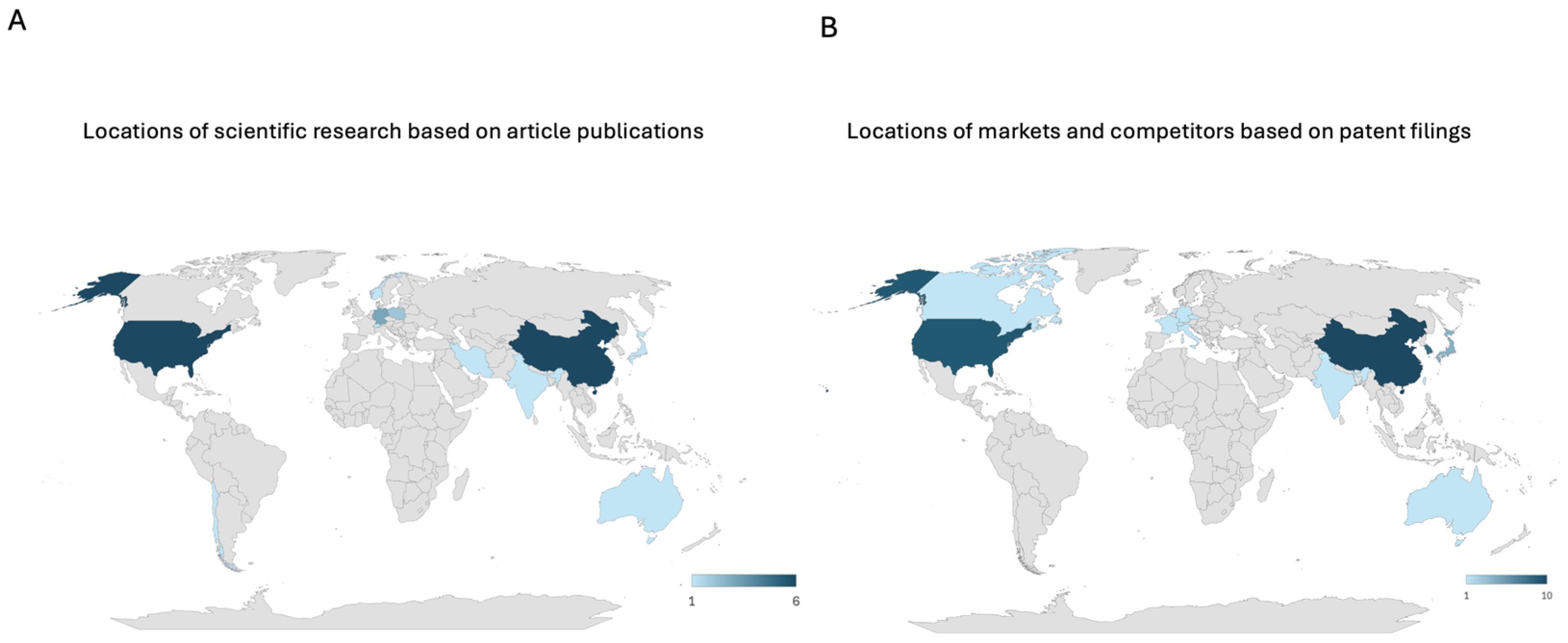
Figure 1 illustrates a comprehensive map of countries with the highest volumes of patent filings and article publications, with darker color shades representing greater concentrations of intellectual property activity. This visualization clearly identifies China and the United States as the foremost hubs for patent submissions and article publications. Their prominence in these domains underscores their substantial roles as global leaders in research and development (R&D) investment, highlighting the dynamic innovation ecosystems present in both nations.
To evaluate the 50 abstracts (25 patents and 25 article abstracts), IRAMUTEQ software version 0.8 alpha 7 was used. This software provides a wide range of features for analyzing textual data at different levels. The following methods were applied in this study: (i) traditional textual statistics, which includes calculating the number and frequency of words based on their root forms through lemmatization, along with determining the hapax coefficient; (ii) Descending Hierarchical Classification (DHC); (iii) Correspondence Factor Analysis (CFA); and (iv) Similarity Analysis.
Descending Hierarchical Classification (DHC) was employed to classify and group the text segments according to their vocabulary. This clustering process is based on the frequency of the words used. The objective of this analysis is to identify classes from the clusters that share similar vocabulary while distinguishing themselves from other classes. As a result, the software synthesized the main themes present in the textual corpus, along with the related lexical forms [23,24,25,26].
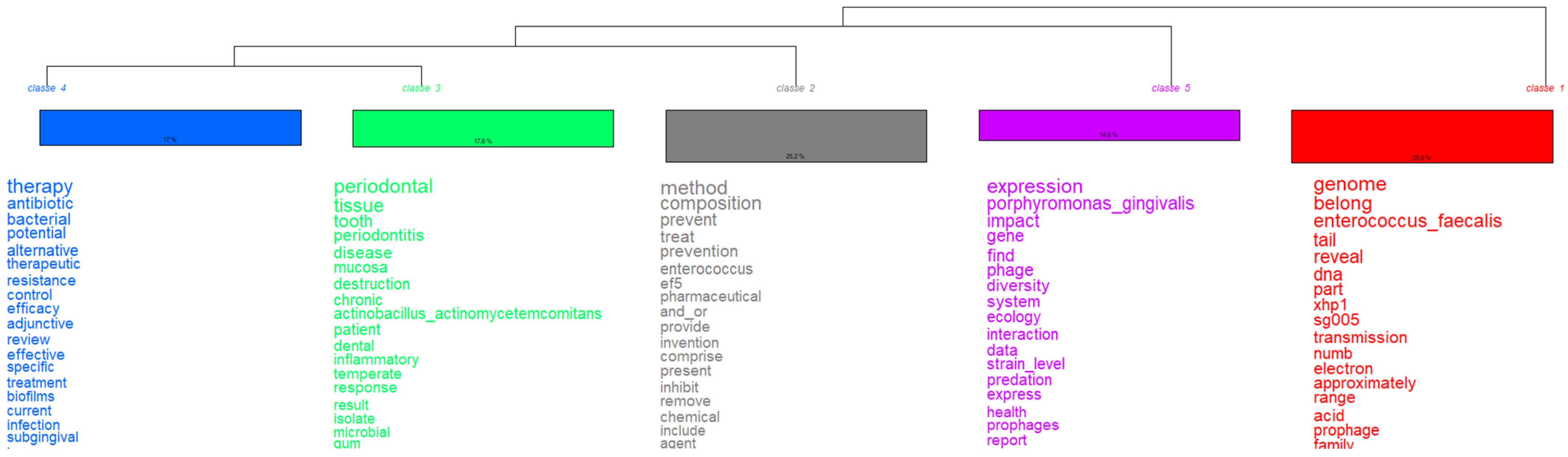
The DHC analysis revealed five distinct clusters (or classes). Class 1 consists of 25.8% of the 223 text segments analyzed using IRAMUTEQ version 0.8 alpha 7. Class 2 accounts for 25.2%, Class 3 for 17.6%, Class 4 for 17%, and Class 5 for 14.5% (Figure 2). The thematic axes are presented in Table 1, which provides an overview of each axis’s significance. Additionally, Figure 2 includes an illustrative schematic diagram that visually represents the various classes and their interrelationships, enhancing our understanding of the overall framework.
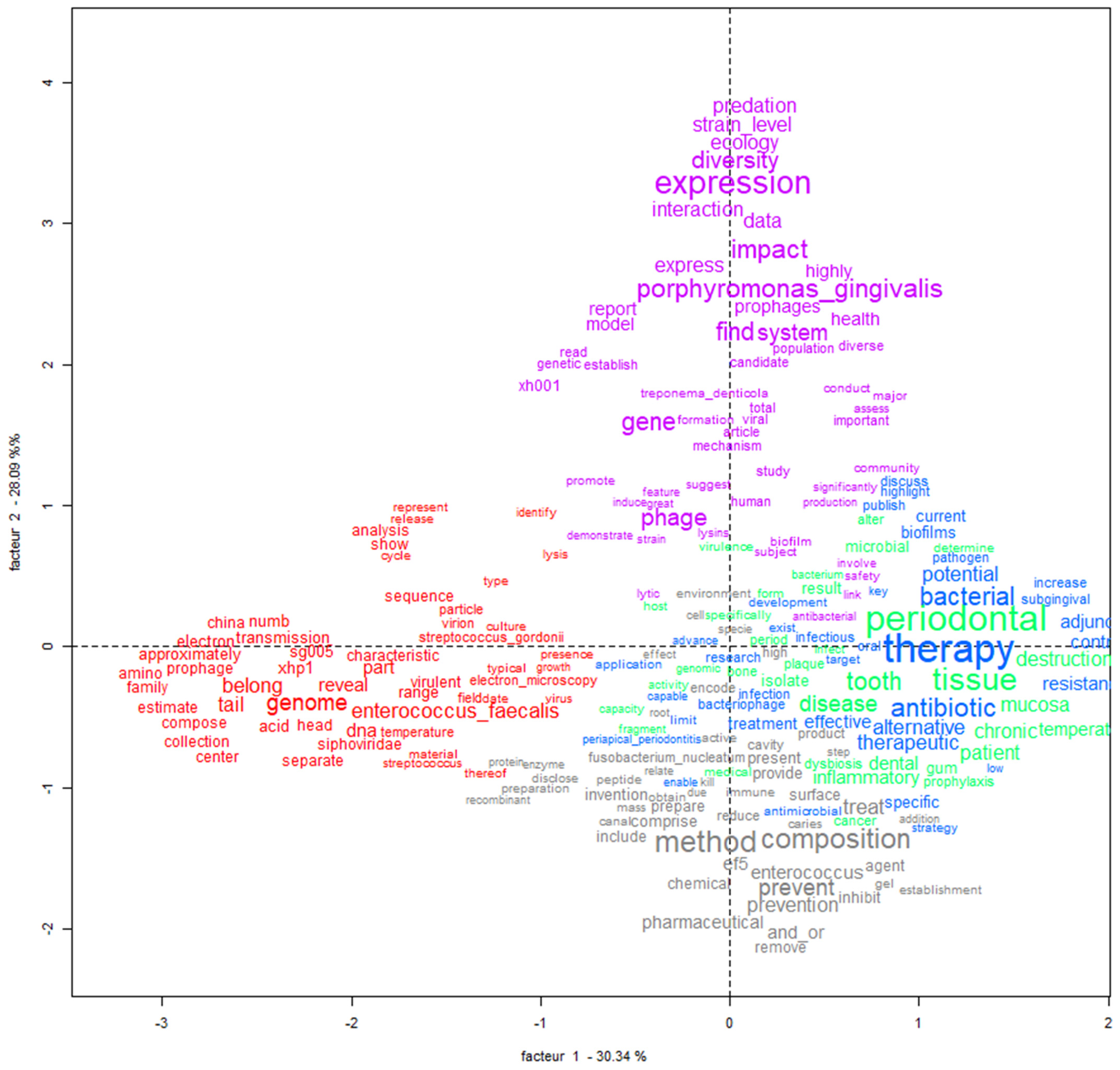
Figure 3 presents the Correspondence Factor Analysis (CFA) derived from the Descending Hierarchical Classification (DHC). The CFA uses the chi-squared test to assess the strength of associations between words and their corresponding categories. Consequently, various word groupings are mapped onto a Cartesian plane, depicting the distinct classes identified during the DHC and revealing the interrelationships among the clusters.
Moreover, the CFA allows researchers to pinpoint the diverse words associated with these classes, aiding in qualitative interpretation. It is essential to highlight that IRAMUTEQ version 0.8 alpha 7 does not provide definitive analyses; instead, it empowers the researcher to interpret the results [23,24,25,26].
The left side of factor 1 (negative) provides a detailed exploration of structure, genomics, and formulation, specifically within class 1 and class 2, denoted by red and gray. This section organizes a range of technical laboratory and patent terminology, which includes terms such as “genome”, “tail”, “DNA”, “electron”, “sequence”, “composition”, “method”, “chemical”, “pharmaceutical”, and “invention”. This aspect underscores the groundwork and technological advancements required for the molecular and structural characterization of phages (class 1), alongside the innovative development of patentable formulations and methodologies (class 2) intended for practical applications in the field.
The right side of factor 1 (positive) highlights the critical clinical aspects, therapeutic strategies, and underlying causes of periodontal disease, categorized under classes 4 and 3 (blue and green). An organized selection of relevant terms underscores their significance in this context: “therapy”, “antibiotic”, “periodontal”, “disease”, “patient”, “clinical”, “infection”, “efficacy”, “control”, “biofilm” and “subgingival”. This section not only presents comprehensive clinical studies but also evaluates the effectiveness of various therapeutic interventions (class 4) in the management of periodontal disease (class 3). Furthermore, it often includes comparisons regarding antibiotic resistance and explores alternative treatment options, providing a well-rounded perspective on the challenges and solutions related to this prevalent condition.
Factor 2 (vertical) accentuates the distinctions between the technological/molecular and clinical/therapeutic focuses. The upper segment of factor 2 (positive) emphasizes ecology, interaction, and specific pathogens (class 5—purple). This aspect revolves around concepts in systems biology and ecology, including diversity, interactions, predation, expression, and prophages, with a specific focus on the pathogen Porphyromonas gingivalis. This domain embodies cutting-edge research aimed at understanding phages as integral constituents of a complex biological system (the microbiome), rather than solely as bactericidal agents. The primary emphasis lies on interactions and molecular mechanisms, such as expression and prophages.
The lower side of factor 2 (negative) emphasizes nomenclature, typing, and formulation (classes 1 and 2—red and gray). While this area is associated with the left side of factor 1, it includes terms such as “Enterococcus”, “method composition”, “pharmaceutical”, and specific phage designations (such as xhp1 and sg005), thereby reinforcing the focus on typing and technical specifications. The close relationship between the pharmaceutical and method composition (class 2) and the names of phages and their components (class 1) indicates that the patents outline formulations that include specific, characterized phages.
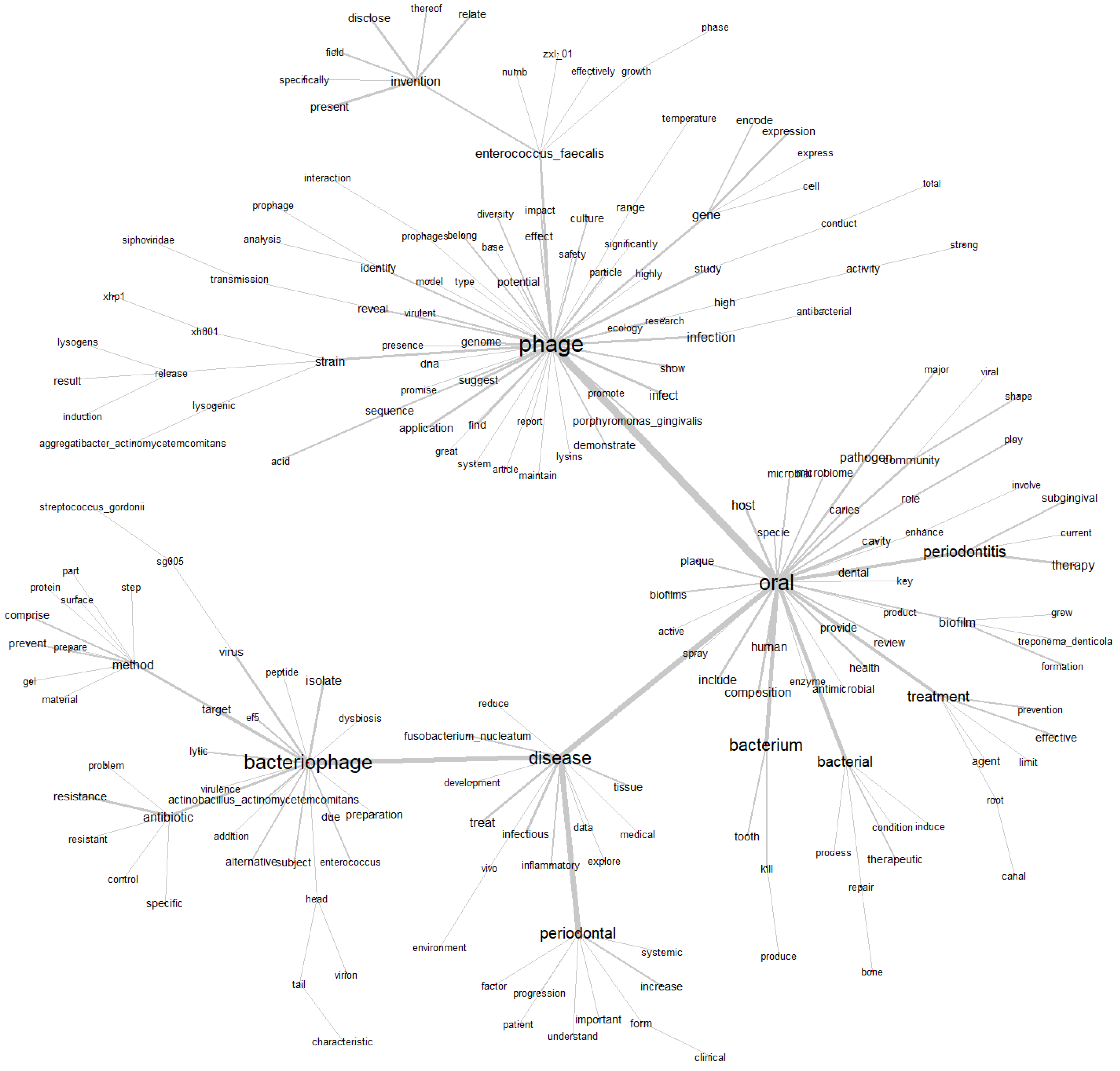
Figure 4 illustrates the similarity analysis using the Similitude Diagram in IRAMUTEQ version 0.8 alpha 7. This diagram is significant as it highlights the relationships and connectivity among words in the corpus. In this visualization, words are represented as nodes (points), and connections (edges) indicate co-occurrence, showing how frequently words appear together within specific text segments. The thickness of the lines represents the strength of these connections. Overall, this image reinforces and further details the thematic connections identified in the DHC and CFA.
The diagram organizes the corpus into distinct clusters, interconnected by central nodes. The primary cluster includes key terms such as “oral”, “phage”, “bacteriophage”, and “disease”.
The “Phage” cluster serves as the focal point of biotechnology research, focusing on the molecular foundations (e.g., “genome” and “DNA”) and their therapeutic applications (e.g., “effect” and “infect”). This cluster captures the essence of the research and is directly associated with terms that define structure, antibacterial function, mechanisms of action, and relevance (e.g., “potential” and “significantly”). These connections emphasize the critical role of molecular and genetic analysis of phages in ensuring safety and maximizing the efficacy of phage therapy.
The “Oral” cluster presents the clinical challenges of phage therapy, particularly in periodontitis. It defines the anatomical context (subgingival) and the microbial environment (biofilm, pathogen) in which this therapy is applied. Terms like “microbiome”, “human”, and “biofilm” highlight the ecological complexity of the oral cavity. Meanwhile, words such as “agent”, “prevention”, and “kill” indicate that phage therapy serves both preventive and therapeutic purposes.
The “Disease” cluster refers to the pathological condition the therapy aims to address, specifically, periodontal disease. The sequence of the words “disease”, “periodontal”, and “progression” highlights the therapy’s goal: to halt the progression of periodontal disease. The term “disease” is associated with “Fusobacterium nucleatum”, suggesting this pathogen may be a potential therapeutic target.
The “Bacteriophage” cluster includes terms suggesting the potential of lytic phage therapy to manage dysbiosis. The close association between the words “resistance” and “antibiotic” suggests that this therapy aims to address bacterial resistance to conventional antibiotic treatments. Additionally, the nodes feature the terms “Streptococcus gordonii”, “Fusobacterium nucleatum,” “Enterococcus”, and “Actinobacillus actinomycetemcomitans”, all linked to the bacteriophage and phage nodes, indicating possible therapeutic targets. Although Enterococcus is not the most common pathogen associated with periodontal disease, as discussed later, it may serve as a source of bacteriophages with potential applications in periodontal therapy.

3. Discussion

Periodontal disease is a complex condition with multiple causes, characterized by a chronic inflammatory process. In this condition, pro-inflammatory cytokines primarily activate osteoclasts and neutrophils. This results in the resorption of the alveolar bone, destruction of the periodontal ligament, and ultimately, tooth loss [27,28,29].
Subgingival dental biofilm dysbiosis plays a pivotal role in the development of periodontal disease. Dysbiotic biofilm not only triggers the host’s immune response but also protects the microorganisms residing in deeper layers through its extracellular matrix. This protective barrier hinders the efficacy of conventional therapeutic agents in reaching these bacteria [30]. Furthermore, numerous reviews emphasize that the emergence of antibiotic resistance among pathogenic bacteria associated with periodontal disease poses substantial challenges to effective treatment strategies [31,32].
CFA and similarity analysis have revealed that bacterial resistance poses a significant challenge for phage therapy. The literature indicates that 68% of patients with refractory periodontitis harbor beta-lactamase-producing bactéria [33]. Furthermore, strains resistant to macrolides and clindamycin have been recorded [34]. Studies also show that bacteria such as P. gingivalis, P. intermedia, and P. nigrescens, isolated from the oral cavities of children, exhibit resistance to tetracycline and erythromycin [35]. These findings highlight the pressing need for specific, non-toxic therapeutic alternatives capable of penetrating the inner layers of biofilms, making phage therapy a promising option.
Research has demonstrated that bacteriophages (phages) are emerging as potentially effective agents in the management of periodontal disease. Their use is justified by their high specificity in targeting pathogenic bacteria. Furthermore, phages have shown effectiveness against antibiotic-resistant strains of Enterococcus faecalis, particularly when used in combination with antibiotics, resulting in either a synergistic or additive effect. Combinations of phages with antibiotics such as gentamicin or vancomycin have proven to yield superior results in reducing biofilm compared to antibiotic therapy alone. Notably, the pairing of phage CUB_EF04 with daptomycin exhibits a more pronounced antibiofilm effect than fosfomycin when applied to vancomycin-resistant strains [36].
It is important to emphasize that isolating new phages is typically a quicker, more cost-effective process than developing new antibiotics [37,38]. Moreover, phage therapy is characterized by its high specificity, which minimizes the impact on non-target bacteria and body tissues, thus supporting the preservation of beneficial microbiota [39].
Furthermore, in phage therapy, lytic (virulent) phages are preferred [40,41]. This preference is supported by a strong correlation between the terms “bacteriophage” and “lytic” in similarity analyses presented. In contrast, lysogenic (temperate) phages integrate their genomes into the bacterial chromosome upon infection [42]. This incorporation poses risks because it can lead to the transfer of genes that promote antibiotic resistance or virulence factors to the host bacteria [43]. As a result, lysogeny may contribute to the pathogenesis and progression of periodontitis.
Research reveals that 287 of the 341 isolated oral cavity prophages harbor antimicrobial resistance genes, including those conferring resistance to tetracyclines, metronidazole, and erythromycin [44,45]. Moreover, these prophages were found to harbor 238 virulence factors (VFs) associated with adhesion, stress survival, and immune modulation. The EF-Tu gene, which is implicated in adhesion and colonization, emerged as the most prevalent virulence factor [46]. Consequently, prophages are significant contributors to the acquisition of virulence factors from periodontal pathogens and have been classified in HDC class 5 as modifiers of bacterial metabolism. For example, the induction of temperate phages ØAa, particularly those associated with A. actinomycetemcomitans, can lead to a significant increase in the release of leukotoxin (LtxA), a cytotoxic toxin that targets and destroys immune cells [47].
A noteworthy finding was the discovery that phage S1249, which targets Aggregatibacter actinomycetemcomitans, a key pathogen linked to aggressive periodontitis, was induced to transition from the lysogenic or pseudolysogenic cycle to the lytic cycle upon exposure to human serum [48]. This serum-triggered phage activation could represent a significant therapeutic advancement, potentially paving the way for the development of phage cocktails specifically designed to act at sites of inflammation.
One approach identified through DHC analysis, and further supported by CFA and similarity analysis, is the potential of bacteriophages to inhibit the formation of dental biofilms. Biofilms are clusters of microorganisms encased in a self-produced matrix of extracellular polymeric substances (EPS), which facilitates cell-cell and cell-surface adhesion. This matrix promotes cell-to-cell interactions and establishes a distinct microenvironment that can influence key factors such as pH, redox potential, and nutrient availability [49]. Microorganisms within mature biofilms typically exhibit greater resistance to antimicrobial agents than their planktonic counterparts [50].
A key target pathogen identified in the analysis for inhibiting biofilm formation is the anaerobic bacterium Fusobacterium nucleatum, which acts as a “bridge” linking early and late colonizers in dental biofilm development. Recent studies have isolated novel lytic phages, such as FNU1, that exhibit bactericidal properties against F. nucleatum strains and significantly diminish the biomass of its biofilm [51]. Furthermore, the lytic phage ZXL-01, isolated from the pathogen Enterococcus faecalis, which is commonly associated with refractory apical periodontitis, has also shown considerable antibiofilm activity in vitro. ZXL-01 led to a significant reduction in dental biofilm biomass and shows promise for the development of innovative therapeutic products aimed at periodontal treatment.
On the other hand, lysogenic phages significantly contribute to biofilm formation and bacterial persistence in oral biofilms. This was clearly demonstrated in the similarity analysis of the “Phage” cluster, particularly in its connection to the terms “strain” and “xhp1”. The spontaneous activation of xhp1, especially during biofilm formation, results in the lysis of specific bacterial hosts and the release of extracellular DNA (eDNA). This eDNA plays a vital role in biofilm assembly, providing compelling evidence for the involvement of prophages in the development of biofilms associated with human oral commensal bacteria [52].
Given the intricate microbiome of dental biofilm, advancing treatments for periodontal disease requires carefully selecting multiple bacteriophage strains to formulate particular phage cocktails targeting key pathogens. Furthermore, the development of effective delivery systems is essential to optimize the targeting and application of these phages to the subgingival region, ensuring stability and the ability to penetrate and disrupt the biofilm effectively. Consequently, investments in research and development in phage genetic engineering, as indicated by the DHC and CFA analyses, are crucial for transforming wild-type phages into enhanced versions with greater potential for periodontal therapy.
Promising strategies for enhancing phage therapy include:
  • Rational and AI/Data-Optimized Phage Therapy: move beyond traditional phage selection to “Rational Phage Therapy”, using genomic and ecological data to develop in silico tools for assembling more effective phage cocktails.
  • Phage Genetic Engineering: modify phages to expand their host range and produce enzymes that degrade biofilms. Endolysins, whether used alone or with phages, can effectively disrupt bacterial cell walls.
  • Development of Artificial Phages: Copper Silicate Hollow Spheres (CSHSs) serve as robust artificial bacteriophages, effectively capturing and lysing bacteria. In animal models, they show significant antibacterial activity and enhance periodontal health [53].
  • Phage Cocktails: utilize phage cocktails to address the polymicrobial nature of periodontitis, with research focusing on their effectiveness against complex bacterial communities rather than single pathogens. Thus, Table 2 provides examples of technological innovations described in patent documents.
Despite the challenges, phage therapy shows potential as a specific and effective adjunctive treatment for periodontitis, emerging as a promising approach in periodontology. Notably, a significant finding from the similarity analysis shows that the invention node (technological hub) is distant from the clinical and effective nodes (therapeutic hub). This distance underscores the need for further research to strengthen the link between patent terms (such as “method” and “composition”) and clinical outcomes (such as “effective” and “therapy”) through preclinical and clinical trials evaluating the patented formulations. This necessity is underscored by the frequent appearance of the term “review”, indicating that many of the identified studies are literature reviews.
Although there are currently no human clinical trials that provide concrete examples of using bacteriophages to treat periodontal disease, the data in Table 2 facilitate the creation of hypothetical scenarios for the clinical application of these innovative technologies in managing periodontitis.
For example, it is well established that the oral microbiome is a complex ecosystem comprising approximately 700 bacterial species [72]. This diverse community is intricately organized and plays an essential role in maintaining homeostasis within the oral cavity [73]. During the early stages of biofilm formation, planktonic bacteria such as Streptococcus and Neisseria begin to colonize tooth surfaces, adhering to a layer of macromolecules known as the acquired pellicle [74]. These interactions are critical to the development of dental biofilms, structured communities of bacteria that adhere to oral surfaces [75,76].
In this context, the patent (EP0776163), entitled “Bacteriophage-encoded enzymes for the treatment and prevention of dental caries and periodontal diseases,” introduces a novel advancement in oral health care. This innovative approach highlights the potential of bacteriophage-encoded enzymes as a viable oral antiseptic agent, which could be developed into a user-friendly weekly mouthwash. The proposed product aims not only to address the bacterial pathogens responsible for dental caries and periodontal conditions but also to enhance overall oral hygiene. It serves as an alternative or supplementary option to chlorhexidine-based products, offering the added advantage of reducing the adverse effects typically associated with the prolonged use of conventional antiseptics.
As the biofilm matures, it becomes more complex. Late colonizers, including periodontopathogens such as Fusobacterium nucleatum, Treponema denticola, Tannerella forsythia, Porphyromonas gingivalis, Prevotella intermedia, and Aggregatibacter actinomycetemcomitans, attach to the established biofilm matrix, enhancing its structural integrity [77].
In this scenario, a more invasive approach may be warranted. It is advisable to implement dental treatment involving scaling and root planing, in conjunction with an antimicrobial agent. One notable example is outlined in patent EP4415735, titled “Bacteriophage Preparations and Methods of Use”, demonstrating a potential bactericidal effect on the periodontopathogens present in biofilm, effectively preventing the development of dysbiotic biofilm.
If biofilm is not effectively eliminated through regular tooth brushing or professional dental treatments, it can lead to a persistent accumulation of microbial communities [78]. This accumulation causes physicochemical changes in the microenvironment, increases microbial diversity, and ultimately leads to the formation of a dysbiotic dental biofilm, which in turn activates an immune response [79].
Failures in professional dental care can occur for various reasons, including the development of antibiotic resistance. This resistance makes it difficult to manage infections effectively. Additionally, extensive lesions can pose significant challenges when trying to access them with dental instruments. These factors can result in refractory periodontitis, a condition characterized by persistent inflammation and tissue loss that does not respond to standard treatments.
Therefore, antimicrobial agents with enhanced penetrability can complement periodontal therapy, as seen in invention CN111358770, which describes a gel patch for periodontitis that uses ClyR lysins to target harmful oral bacteria alongside metronidazole. A review by Łusiak-Szelachowska et al. (2020) [80], highlights that combining bacteriophages with antibiotics improves biofilm removal in both lab (in vitro) and live settings (in vivo), reinforcing their effectiveness. These findings suggest that phages and lysins, used alone or in combination with antibiotics, could be valuable tools for treating bacterial infections and biofilm formation.
When a dysbiotic dental biofilm forms in the oral cavity, it elicits a complex immune response. The altered composition of this biofilm, marked by an imbalance of microbial populations, activates the body’s immune mechanisms. This process results in inflammation and initiates signaling pathways aimed at restoring a healthy microbial environment.
The recognition of lipopolysaccharide (LPS), present in the cell walls of periodontopathogens, is mediated by Toll-like receptor 4 (TLR-4) on innate immune cells [81]. The interaction between TLR4 and LPS recruits the MyD88 protein, which subsequently activates the transcription factor NFκB. This activation triggers the release of pro-inflammatory mediators, including interleukins (IL-1, IL-6, IL-8, and IL-17), lytic enzymes, metalloproteinases, and the activation of osteoclasts. Furthermore, LPS stimulates the expression of osteoblastic RANKL ligand, prostaglandin E2 (PGE2), and tumor necrosis factor-alpha (TNF-α), all of which promote osteoclastic activity, viability, and differentiation. This chain of events leads to alveolar bone resorption and, ultimately, tooth loss [82,83,84].
The immune response associated with periodontal disease can be clinically observed through indicators such as inflammation, gingival recession, formation of periodontal pockets due to bone resorption, and increased tooth mobility [85].
In more advanced cases of alveolar bone resorption, surgical intervention and the application of products that facilitate tissue repair become essential. In this regard, the invention of a phage composite hydrogel (CN119139561), along with its preparation method and its potential application in promoting alveolar bone repair, holds significant promise.
A significant challenge in phage therapy is maintaining phage stability in the oral environment, which is influenced by factors such as saliva, temperature, and the presence of antiseptics. The surge in patents recorded between 2017 and 2019 is closely associated with innovations that effectively address these practical difficulties. Key advancements described in Table 2 include the development of stable formulations, such as gels, polymeric films, and microencapsulation techniques, that protect phages and facilitate their delivery to the periodontal pocket. Furthermore, there has been notable progress in developing phage cocktails targeting a broader range of periodontal pathogens.
To date, no published studies have explored the use of specific bacteriophages against Porphyromonas gingivalis and Tannerella forsythia. This research gap is significant, given the complex microbial origins of periodontal disease and the considerable pathogenic potential of these microorganisms. P. gingivalis is widely acknowledged for its ability to modulate the host’s immune response, induce dysbiosis, and contribute to tissue destruction associated with periodontitis. Conversely, T. forsythia is particularly notable for its role in the progression of periodontal disease, often serving as a marker of severity and advancement in clinical presentations.
Isolating specific phages for P. gingivalis and T. forsythia poses considerable challenges. Both organisms are strict anaerobes, characterized by slow growth rates and high nutritional requirements, as well as sensitivity to oxygen levels in their culture environment. These factors complicate the process of obtaining and handling natural phages [86]. In this regard, genetic engineering strategies hold promise, facilitating the development of genetically modified bacteriophages tailored to these pathogens and the production of targeted lysins. Such approaches expand therapeutic options and represent an innovative avenue for developing antimicrobial alternatives to treat periodontal disease.
Intellectual property protection in key markets such as the US, China, Europe, and India suggests that both inventors and companies view phage therapy as more than a mere research initiative; they perceive it as a product with significant commercial potential. The global market for phage therapy was valued at approximately USD 1.24 billion in 2024 and is projected to increase from USD 1.29 billion in 2025 to roughly USD 1.85 billion by 2034, reflecting a compound annual growth rate (CAGR) of 4.08% during the period from 2025 to 2034. This growth is primarily attributed to the escalating global challenge of antibiotic resistance and the rising demand for targeted antimicrobial treatments [87].
While there has been notable progress in phage therapy, several challenges continue to impede its rapid advancement. The most significant concern is the complex regulatory landscape and the approval processes it entails. Phage therapy is distinct because phages are living, evolving organisms, which complicates the application of standard methodologies for these treatments. This complexity creates uncertainty in the design of clinical trials, the development of diagnostics, and the oversight of safety [87].
On a positive note, India’s engagement in emerging markets within Asia creates significant opportunities for future partnerships and technology licensing. Such initiatives may play a critical role in addressing periodontal disease among populations that have limited access to costly treatments.

4. Materials and Methods

This research employs a predominantly qualitative approach to extract emerging textual data from relevant papers and patents on the use of bacteriophages in periodontal disease treatment. To facilitate this, Discursive Textual Analysis (DTA) was performed using the IRAMUTEQ (Interface de R pour les Analyses Multidimensionnelles de Textes et de Questionnaires) software version 0.8 alpha 7, developed by Pierre Ratinaud in 2009. This free and open-source software is linked to the R statistical package version 4.5.2 [23,24,26].
Discursive Textual Analysis (DTA), supported by IRAMUTEQ software version 0.8 alpha 7, is a compelling qualitative method for examining the abstracts of scientific articles and patents on the use of bacteriophages in the treatment of periodontal diseases. DTA transcends mere lexical quantification, offering a comprehensive understanding of the discursive constructions, meanings, and key concepts within the corpus. This approach enables the identification of significant themes, trends, and perspectives. It is particularly adept at facilitating analyses that require interpretive insight, making it a valuable tool for thoroughly assessing the potential of phage therapy in the context of periodontal care.
The following study was conducted using the Orbit Intelligence software, specifically the licensed version v2.0.0, to investigate patent database documents. The keywords “BACTERIOPHAGE” and “PERIODONT+” were entered into the search field, concentrating on the title, abstract, and claims sections, this search aimed to identify patent documents pertinent to these topics. The search syntax utilized was: ((BACTERIOPHAGE)/TI/AB/CLMS AND (PERIODONT+)/TI/AB/CLMS), where “TI” refers to the title field, “AB” denotes the abstract field, and “CLMS” represents the claims field within the Orbit database.
The search adhered to specific exclusion criteria: (1) the removal of duplicate and unrelated patents; and (2) the exclusion of patents concerning devices used for administering bacteriophages and methods for their isolation. This study focused on patent families, which consist of patents related to the same invention developed by one or more inventors and protected in multiple countries.
A similar approach was implemented to search for scholarly articles in the PubMed database. Before initiating the search, the terms “bacteriophage,” “periodontitis,” and “periodontal” were reviewed in the Medical Subject Headings (MeSH). These terms were combined using boolean operators, and no filters were applied to narrow down the results. The search syntax utilized was: (Bacteriophage) AND ((periodontitis) OR (periodontal)).
The most recent search was carried out in September 2025, adhering to the following inclusion criteria: (1) Original studies, including experimental and preclinical clinical studies (such as randomized clinical trials, controlled clinical studies, case-control studies, and cohort studies). (2) Review articles and meta-analyses. (3) No restrictions on the timeframe. (4) Publications must be in English. The exclusion criteria were: (1) Abstracts, commentaries, book chapters, conference proceedings, and editorials or letters. (2) Theses and dissertations that were not published in scientific journals. (3) Articles that were not available in full text.
The abstracts of the papers and patents were used to construct the textual corpus, a significant step in synthesizing relevant aspects of the analyzed material [23,24,26]. To ensure consistency and precision, the following procedures were implemented: first, symbols and special characters were eliminated; second, spelling was corrected; third, numbers written in words were standardized by replacing them with numerical digits to avoid interference in the analysis. Furthermore, acronyms were expanded to their complete forms. Finally, and importantly, terms that only convey meaning when combined were connected with an underscore, such as “Enterococcus_faecalis”.
After the text was crafted and finalized, a Descendant Textual Analysis (DTA) was performed using IRAMUTEQ version 0.8 alpha 7, which encompassed 50 abstracts (25 from research papers and 25 from patents). The Iramuteq software version 0.8 alpha 7 analyzed this textual corpus, consisting of the abstracts from 25 articles and 25 patents, dividing it into 223 Elementary Context Units (ECUs) for further statistical analysis. It identified word occurrences and employed the R package version 4.5.2 for statistical analysis to present the results. The analysis uncovered 7800 words, of which 1695 were distinct forms. Notably, 891 of these words occurred only once, as indicated by the hapax coefficient.
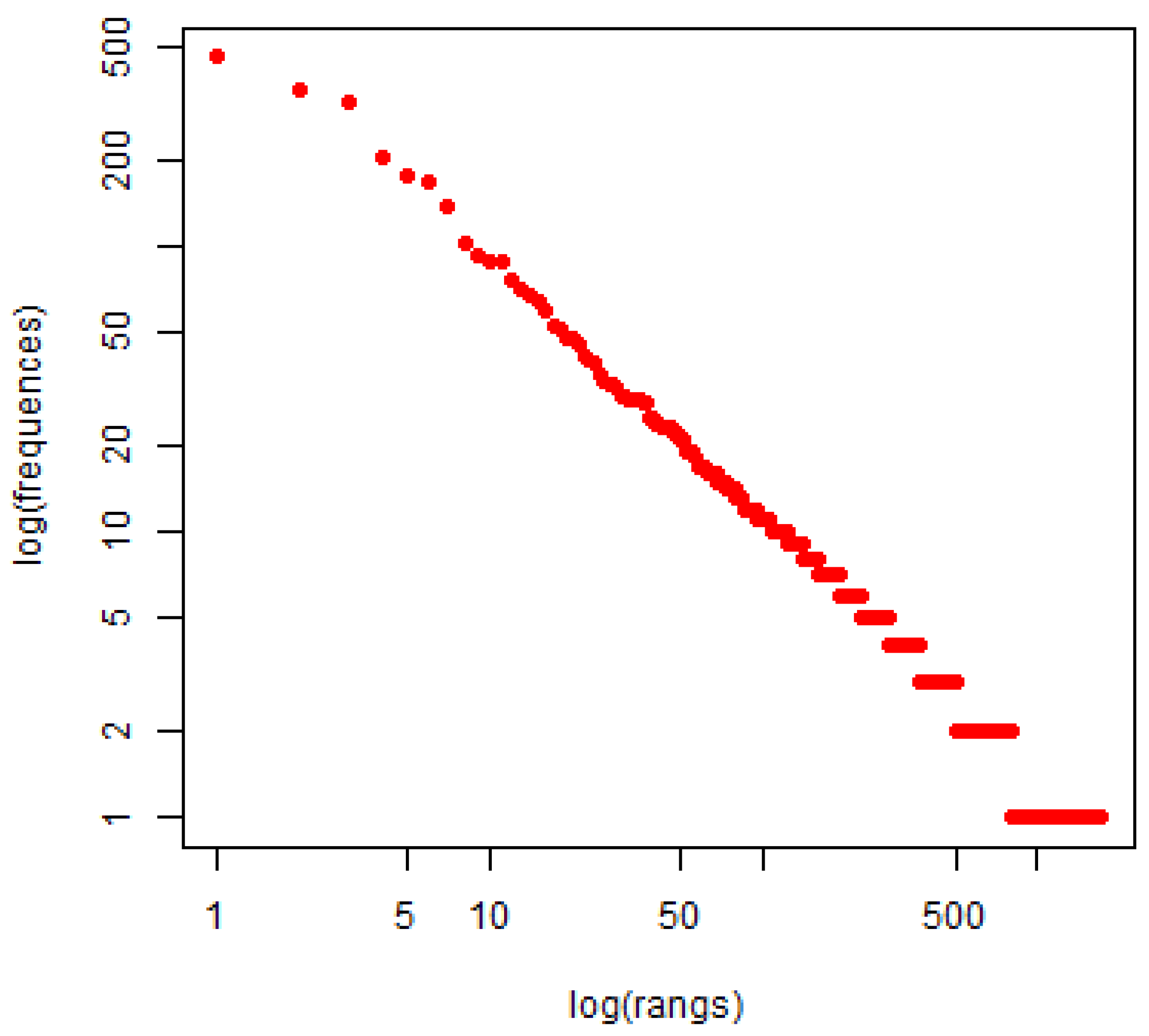
Figure 5 features the Zipf’s Diagram [24], which presents word frequency on a logarithmic scale. This reveals that the majority of words exhibit low repetition, while a limited number of words have significantly higher repetition rates. The shape of the curve reinforces the findings of the analysis [26].
The software offers a diverse array of functionalities for analyzing textual data across various levels. This research employed the follow methodologies: (i) classical textual statistics, which entails calculating the number and frequency of words based on their root forms through lemmatization, as well as determining the hapax coefficient (the results of which were presented earlier in this section); (ii) Descending Hierarchical Classification (DHC); (iii) Correspondence Factor Analysis (CFA); and (iv) Similarity Analysis.

5. Conclusions

Phage therapy represents a promising approach to managing periodontal disease, effectively addressing challenges such as antimicrobial resistance and the protective characteristics of dental biofilms. By offering targeted solutions, it has the potential to enhance treatment efficacy and improve patient outcomes.
The increasing interest in phage therapy is underscored by a rise in patent applications since 2017, indicating its potential as a viable alternative to traditional antibiotics. Lytic phages are particularly favored for their specificity and effectiveness against pathogens. However, caution is necessary regarding prophages, as they can facilitate the transfer of resistance genes and virulence factors.
While the prospects of phage therapy are promising, challenges remain, particularly the gap between technological advancements and clinical outcomes. There is an urgent need for further preclinical and clinical trials to establish efficacy. Future efforts should focus on developing delivery systems tailored for the subgingival region to ensure the stability and penetration of phages. Regulatory complexities also pose significant hurdles, as the dynamic nature of phages complicates approval processes and clinical trial methodologies. It is crucial to continually adapt regulatory frameworks to keep pace with developments in this innovative field.

Author Contributions

Conceptualization, P.J. and E.A.; methodology, P.J. and E.A.; software analysis, P.J. and E.A.; validation, P.J. and E.A.; investigation, P.J., E.A., M.P., D.M. and D.A.; data curation, P.J., E.A., M.P., D.M. and D.A.; writing—original draft preparation, P.J.; writing—review and editing, P.J., E.A., M.P., D.M. and D.A.; visualization, P.J., E.A., M.P., D.M. and D.A.; supervision P.J. and E.A. All authors have read and agreed to the published version of the manuscript.

Funding

This research received no external funding.

Data Availability Statement

No new data were created or analyzed in this study. Data sharing is not applicable to this article.

Acknowledgments

During the preparation of this manuscript the author(s) used Orbit Intelligence software, specifically the licensed version v2.0.0, to investigate patent database documents and IRAMUTEQ (Interface de R pour les Analyses Multidimensionnelles de Textes et de Questionnaires) software version 0.8 alpha 7.

Conflicts of Interest

The authors declare no conflicts of interest.

Abbreviations

The following abbreviations are used in this manuscript:
ABAbstract
CAGRCompound Annual Growth Rate
CFACorrespondence Factor Analysis
CLMSClaims
DHCDescending Hierarchical Classification
DNADeoxyribonucleic acid
DTADiscursive Textual Analysis
ECUElementary Context Units
ILInterleukin
LPSLipopolysaccharide
MeShMedical Subject Headings
Myd88Myeloid differentiation primary response 88
NFkBNuclear Factor NF-kappa-B
PGE2Prostaglandin E2
RANKLReceptor Activator of Nuclear factor -kb Ligand
TITitle
TLRToll Like Receptor
TNFTumor Necrosis Factor
USUnited States

References

  1. Abdulkareem, A.A.; Al-Taweel, F.B.; Al-Sharqi, A.J.; Gul, S.S.; Sha, A.; Chapple, I.L. Current concepts in the pathogenesis of periodontitis: From symbiosis to dysbiosis. J. Oral Microbiol. 2023, 15, 2197779. [Google Scholar] [CrossRef]
  2. Sedghi, L.M.; Bacino, M.; Kapila, Y.L. Periodontal Disease: The Good, The Bad, and The Unknown. Front. Cell. Infect. Microbiol. 2021, 11, 766944. [Google Scholar] [CrossRef] [PubMed]
  3. Abusleme, L.; Dupuy, A.K.; Dutzan, N.; Silva, N.; Burleson, J.A.; Strausbaugh, L.D.; Gamonal, J.; Diaz, P.I. The subgingival microbiome in health and periodontitis and its relationship with community biomass and inflammation. ISME J. 2013, 7, 1016–1025. [Google Scholar] [CrossRef] [PubMed]
  4. Chen, M.X.; Zhong, Y.J.; Dong, Q.Q.; Wong, H.M.; Wen, Y.F. Global, regional, and national burden of severe periodontitis, 1990–2019: An analysis of the global burden of disease study 2019. J. Clin. Periodontol. 2021, 48, 1165–1188. [Google Scholar] [CrossRef] [PubMed]
  5. Kalhan, A.C.; Wong, M.L.; Allen, F.; Gao, X. Periodontal disease and systemic health: An update for medical practitioners. Ann. Acad. Med. Singap. 2022, 51, 567–574. [Google Scholar] [CrossRef]
  6. Kwon, T.; Lamster, I.B.; Levin, L. Current Concepts in the Management of Periodontitis. Int. Dent. J. 2021, 71, 462–476. [Google Scholar] [CrossRef]
  7. Reynolds, M.A.; Kao, R.T.; Camargo, P.M.; Caton, J.G.; Clem, D.S.; Fiorellini, J.P.; Geisinger, M.L.; Mills, M.P.; Nares, S.; Nevins, M.L. Periodontal regeneration—Intrabony defects: A consensus report from the AAP Regeneration Workshop. J. Periodontol. 2015, 86, S105–S107. [Google Scholar] [CrossRef]
  8. Clark, D.; Levin, L. Non-surgical management of tooth hypersensitivity. Int. Dent. J. 2016, 66, 249–256. [Google Scholar] [CrossRef]
  9. Checchi, L.; Montevecchi, M.; Checchi, V.; Bonetti, G.A. A modified papilla preservation technique, 22 years later. Quintessence Int. 2009, 40, 303–311. [Google Scholar] [PubMed]
  10. Gründemann, L.J.; Timmerman, M.F.; Ijzerman, Y.; van der Weijden, G.A.; van der Weijden, G.A. Stain, plaque and gingivitis reduction by combining chlorhexidine and peroxyborate. J. Clin. Periodontol. 2001, 27, 9–15. [Google Scholar] [CrossRef]
  11. Haydari, M.; Bardakci, A.G.; Koldsland, O.C.; Aass, A.M.; Sandvik, L.; Preus, H.R. Comparing the effect of 0.06%, 0.12% and 0.2% chlorhexidine on plaque, bleeding and side effects in an experimental gingivitis model: A parallel group, double masked randomized clinical trial. BMC Oral Health 2017, 17, 118. [Google Scholar] [CrossRef] [PubMed]
  12. Brookes, Z.L.S.; Bescos, R.; Belfield, L.A.; Ali, K.; Roberts, A. Current uses of chlorhexidine for management of oral disease: A narrative review. J. Dent. 2020, 103, 103497. [Google Scholar] [CrossRef] [PubMed]
  13. James, P.; Worthington, H.V.; Parnell, C.; Harding, M.; Lamont, T.; Cheung, A.; Whelton, H.; Riley, P. Chlorhexidine mouthrinse as an adjunctive treatment for gingival health. Cochrane Database Syst. Rev. 2017, 2021, CD008676. [Google Scholar] [CrossRef]
  14. Olsvik, B.; Tenover, F.C. Tetracycline resistance in periodontal pathogens. Clin. Infect. Dis. 1993, 16, S310–S313. [Google Scholar] [CrossRef]
  15. Pajukanta, R. In vitro antimicrobial susceptibility of Porphyromonas gingivalis to azithromycin, a novel macrolide. Oral Microbiol. Immunol. 1993, 8, 325–326. [Google Scholar] [CrossRef]
  16. Slots, J. Selection of antimicrobial agents in periodontal therapy. J. Periodontal Res. 2002, 37, 389–398. [Google Scholar] [CrossRef]
  17. Kanwar, I.; Sah, A.K.; Suresh, P.K. Biofilm-mediated Antibiotic-resistant Oral Bacterial Infections: Mechanism and Combat Strategies. Curr. Pharm. Des. 2017, 23, 2084–2095. [Google Scholar] [CrossRef]
  18. Jakubovics, N.S.; Goodman, S.D.; Mashburn-Warren, L.; Stafford, G.P.; Cieplik, F. The dental plaque biofilm matrix. Periodontol. 2000 2021, 86, 32–56. [Google Scholar] [CrossRef]
  19. Peng, H.; Borg, R.E.; Dow, L.P.; Pruitt, B.L.; Chen, I.A. Controlled phage therapy by photothermal ablation of specific bacterial species using gold nanorods targeted by chimeric phages. Proc. Natl. Acad. Sci. USA 2020, 117, 1951–1961. [Google Scholar] [CrossRef]
  20. Javaudin, F.; B’emer, P.; Batard, E.; Montassier, E. Impact of phage therapy on multidrug-resistant Escherichia coli intestinal carriage in a murine model. Microorganisms 2021, 9, 2580. [Google Scholar] [CrossRef]
  21. Ferriol-Gonzalez, C.; Domingo-Calap, P. Phages for biofilm removal. Antibiotics 2020, 9, 268. [Google Scholar] [CrossRef]
  22. Preus, H.R.; Olsen, I.; Namork, E. The presence of phage-infected Actinobacillus actinomycetemcomitans in localized juvenile periodontitis patients. J. Clin. Periodontol. 1987, 14, 605–609. [Google Scholar] [CrossRef] [PubMed]
  23. Ratinaud, P.; Marchand, P. Application de la methode ALCESTE aux gros corpus et stabilitie des mondes lexicaux analyse du CableGate avec IRAMUTEQ. In Anais 11eme Journées Internationales d’Analyse Statistique des Données Textuelles, Proceedings of the 11eme Journées Internationales d’Analyse Statistique des Données Textuelles, Liège, Belgium, 13–15 June 2012; JADT: Liège, Belgium, 2012; pp. 835–844. [Google Scholar]
  24. Camargo, B.V.; Justo, A.M. IRAMUTEQ: Um software gratuito para análise de dados textuais. Temas Em Psicol. 2013, 21, 513–518. [Google Scholar] [CrossRef]
  25. Comunello, F.; Mulargia, S.; Sarrica, M. ICTs for community development: Bridging conceptual, theoretical, and methodological boundaries. Am. Behav. Sci. 2020, 64, 1803–1817. [Google Scholar] [CrossRef]
  26. Andrade, E.P.; Rocha, A.M.; Nascimento, M.L.F. Hélice Tríplice no contexto brasileiro: A contribuição das universidades na inovação tecnológica. Rev. Tecnol. Soc. 2023, 19, 55. [Google Scholar] [CrossRef]
  27. Socransky, S.S.; Haffajee, A.D. Periodontal microbial ecology. Periodontol. 2000 2005, 38, 135–187. [Google Scholar] [CrossRef]
  28. Hajishengallis, G.; Chavakis, T.; Lambris, J.D. Current Understanding of Periodontal Disease Pathogenesis and Targets for Host-Modulation Therapy. Periodontol. 2000 2020, 84, 14–34. [Google Scholar] [CrossRef]
  29. Swanson, B.A.; Carson, M.D.; Hathaway-Schrader, J.D.; Warner, A.J.; Kirkpatrick, J.E.; Corker, A.; Alekseyenko, A.V.; Westwater, C.; Aguirre, J.I.; Novince, C.M. Antimicrobial-induced oral dysbiosis exacerbates naturally occurring alveolar bone loss. FASEB J. 2021, 35, e22015. [Google Scholar] [CrossRef]
  30. Hajishengallis, G.; Lamont, R.J.; Koo, H. Oral polymicrobial communities: Assembly, function, and impact on diseases. Cell Host Microbe 2023, 31, 528–538. [Google Scholar] [CrossRef]
  31. Koo, H.; Allan, R.N.; Howlin, R.P.; Stoodley, P.; Hall-Stoodley, L. Targeting microbial biofilms: Current and prospective therapeutic strategies. Nat. Rev. Microbiol. 2017, 15, 740–755. [Google Scholar] [CrossRef]
  32. Rath, S.; Bal, S.C.B.; Dubey, D. Oral Biofilm: Development Mechanism, Multidrug Resistance, and Their Effective Management with Novel Techniques. Rambam Maimonides Med. J. 2021, 12, e0004. [Google Scholar] [CrossRef] [PubMed]
  33. Rams, T.E.; Degener, J.E.; van Winkelhoff, A.J. Antibiotic resistance in human chronic periodontitis microbiota. J. Periodontol. 2014, 85, 160–169. [Google Scholar] [CrossRef]
  34. Meinen, A.; Reuss, A.; Willrich, N.; Feig, M.; Noll, I.; Eckmanns, T.; Al-Nawas, B.; Markwart, R. Antimicrobial Resistance and the Spectrum of Pathogens in Dental and Oral-Maxillofacial Infections in Hospitals and Dental Practices in Germany. Front. Microbiol. 2021, 12, 676108. [Google Scholar] [CrossRef] [PubMed]
  35. Sanai, Y.; Persson, G.R.; Starr, J.R.; Luis, H.S.; Bernardo, M.; Leitao, J.; Roberts, M.C. Presence and antibiotic resistance of Porphyromonas gingivalis, Prevotella intermedia, and Prevotella nigrescens in children. J. Clin. Periodontol. 2002, 29, 929–934. [Google Scholar] [CrossRef] [PubMed]
  36. Voit, M.; Trampuz, A.; Gonzalez Moreno, M. In Vitro Evaluation of Five Newly Isolated Bacteriophages against E. faecalis Biofilm for Their Potential Use against Post-Treatment Apical Periodontitis. Pharmaceutics 2022, 14, 1779. [Google Scholar] [CrossRef]
  37. Weber-Dąbrowska, B.; Jończyk-Matysiak, E.; Zaczek, M.; Łobocka, M.; Łusiak-Szelachowska, M.; Górski, A. Bacteriophage Procurement for Therapeutic Purposes. Front. Microbiol. 2016, 7, 1177. [Google Scholar] [CrossRef]
  38. Hyman, P. Phages for Phage Therapy: Isolation, Characterization, and Host Range Breadth. Pharmaceuticals 2019, 12, 35. [Google Scholar] [CrossRef]
  39. Brives, C.; Pourraz, J. Phage therapy as a potential solution in the fight against AMR: Obstacles and possible futures. Palgrave Commun. 2020, 6, 100. [Google Scholar] [CrossRef]
  40. Furfaro, L.L.; Payne, M.S.; Chang, B.J. Bacteriophage Therapy: Clinical Trials and Regulatory Hurdles. Front. Cell. Infect. Microbiol. 2018, 8, 376. [Google Scholar] [CrossRef]
  41. Guo, Z.; Lin, H.; Ji, X.; Yan, G.; Lei, L.; Han, W.; Gu, J.; Huang, J. Therapeutic applications of lytic phages in human medicine. Microb. Pathog. 2020, 142, 104048. [Google Scholar] [CrossRef]
  42. Fortier, L.C.; Sekulovic, O. Importance of prophages to evolution and virulence of bacterial pathogens. Virulence 2013, 4, 354–365. [Google Scholar] [CrossRef] [PubMed]
  43. Cieślik, M.; Bagińska, N.; Jończyk-Matysiak, E.; Węgrzyn, A.; Węgrzyn, G.; Górski, A. Temperate Bacteriophages—The Powerful Indirect Modulators of Eukaryotic Cells and Immune Functions. Viruses 2021, 13, 1013. [Google Scholar] [CrossRef] [PubMed]
  44. Ng, E.; Tay, J.R.H.; Boey, S.K.; Laine, M.L.; Ivanovski, S.; Seneviratne, C.J. Antibiotic resistance in the microbiota of periodontitis patients: An update of current findings. Crit. Rev. Microbiol. 2024, 50, 329–340. [Google Scholar] [CrossRef] [PubMed]
  45. Teughels, W.; Feres, M.; Oud, V.; Martín, C.; Matesanz, P.; Herrera, D. Adjunctive effect of systemic antimicrobials in periodontitis therapy: A systematic review and meta-analysis. J. Clin. Periodontol. 2020, 47, 257–281. [Google Scholar] [CrossRef]
  46. Harvey, K.L.; Jarocki, V.M.; Charles, I.G.; Djordjevic, S.P. The diverse functional roles of elongation factor Tu (EF-Tu) in microbial pathogenesis. Front. Microbiol. 2019, 10, 2351. [Google Scholar] [CrossRef]
  47. Stevens, R.H.; Santos, C.d.M.M.L.d.; Zuanazzi, D.; Mattos, M.B.d.A.; Ferreira, D.F.; Kachlany, S.C.; Tinoco, E.M.B. Prophage induction in lysogenic Aggregatibacter actinomycetemcomitans cells co-cultured with human gingival fibroblastos, and its effect on leucotoxin release. Microb. Pathog. 2013, 54, 54–59. [Google Scholar] [CrossRef]
  48. Tang-Siegel, G.G.; Chen, C.; Mintz, K.P. Increased sensitivity of Aggregatibacter actinomycetemcomitans to human serum is mediated by induction of a bacteriophage. Mol. Oral Microbiol. 2022, 38, 58–70. [Google Scholar] [CrossRef]
  49. Flemming, H.-C.; Wingender, J.; Szewzyk, U.; Steinberg, P.; Rice, S.A.; Kjelleberg, S. Biofilms: An emergent form of bacterial life. Nat. Rev. Microbiol. 2016, 14, 563–575. [Google Scholar] [CrossRef]
  50. David, D. Understanding biofilm resistance to antibacterial agents. Nat. Rev. Drug Discov. 2003, 2, 114–122. [Google Scholar] [CrossRef]
  51. Kabwe, M.; Brown, T.L.; Dashper, S.; Speirs, L.; Ku, H.; Petrovski, S.; Chan, H.T.; Lock, P.; Tucci, J. Genomic, morphological and functional characterisation of novel bacteriophage FNU1 capable of disrupting Fusobacterium nucleatum biofilms. Sci. Rep. 2019, 9, 9107. [Google Scholar] [CrossRef]
  52. Hee, X. The importance of prophage in the persistence of comensal bacteria within human oral cavity. Res. Rev. J. Microbiol. Biotechnol. 2020, 9. Available online: https://www.rroij.com/open-access/the-importance-of-prophage-in-the-persistence-of-commensal-bacteria-within-human-oral-cavity.pdf (accessed on 22 December 2025).
  53. Liu, X.; Luo, D.; Dai, S.; Cai, Y.; Chen, T.; Bao, X.; Hu, M.; Liu, Z. Artificial Bacteriophages for Treating Oral Infectious Disease via Localized Bacterial Capture and Enhanced Catalytic Sterilization. Adv. Sci. 2024, 11, e2400394. [Google Scholar] [CrossRef] [PubMed]
  54. Min, K.J.; Ho, K.S.; Young, K.H. Novel Bacteriophage Having Killing Activity Specific to Enterococcus faecalis Causing Periodontitis. KR10-1587113, 29 October 2014. [Google Scholar]
  55. Allan, D.L. Bacteriophage-Encoded Enzymes for the Treatment and Prevention of Dental Caries and Periodontal Diseases. EP0776163, 7 September 1996. [Google Scholar]
  56. Moshe, Z.L.; Sagit, Y.; Maya, K.H.; Bluma, Z.N.; Lihi, N.M. Fusobacterium bacteriophage and Uses Thereof. US20230390349, 11 November 2021. [Google Scholar]
  57. Henry, L.; Derek, L.; Britt, K. Bacteriophage Preparations and Methods of Use. EP4415735, 12 October 2022. [Google Scholar]
  58. Bin, Z.; Wenchang, P.; Dong, M.; Lin, G. Synthesis Method of Gel Patch Preparation for Treating Periodontitis. CN111358770, 25 March 2020. [Google Scholar]
  59. Eun, Y.Y.; Ju, K.Y.; Ku, H.B.; Il, K.H.; Se, P.C. EF5 Novel Enterococcus faecalis Specific Bacteriophage EF5 and Antibacterial Composition Comprising the Same. KR10-2066898, 11 December 2017. [Google Scholar]
  60. Eun, Y.Y.; Ju, K.Y.; Ku, H.B.; Il, K.H.; Se, P.C. EF1 Novel Enterococcus faecalis Specific Bacteriophage EF1 and Antibacterial Composition Comprising the Same. KR10-2018-0074578, 11 December 2017. [Google Scholar]
  61. Zhang, Y.; Dan, T.; Feng, X.; Li, F.; Zhu, C.; Chen, X.; Ye, W.; Yu, T. Siphoviridae as well as Obtaining Method and Application Thereof. CN108220249, 11 May 2017. [Google Scholar]
  62. Wei, Y.; Xiang, Y.; Li, W.; Song, F.; Ji, X.; Qin, K.; Zhang, D. Enterococcus faecalis Bacteriophage and Separation, Purification, Enrichment and Application Thereof. CN110129279, 24 April 2019. [Google Scholar]
  63. Allan, D.; Gerard, B.; Ming, G. Bacteriophage-Encoded Antibacterial Enzyme for the Treatment and Prevention of Gingivitis and Root Surface Caries. WO2004/058088, 23 December 2003. [Google Scholar]
  64. Maheswaran, E.; Dhanraj, G.; Deepak, N. Bacteriophage Cocktail for Targeted Inhibition of Oral Pathogens and Its Application in Oral Hygiene. IN202541042573, 2 May 2025. [Google Scholar]
  65. Chubatova, S.A.; Zhilenkov, E.L.; Panjushin, S.K.; Popova, V.M.; Tul Skij, V.S.; Mantikov, A.B.; Kuznetsova, G.V.; Zheludeva, I.V. Means for Treating Periodontium Diseases by Applying Bacteriophages. RU2165766, 24 April 2000. [Google Scholar]
  66. Bittner, O.W.M.; Machuca, V.P.I.; Herrera, S.V.S.; Ignacio, F.M. Pharmaceutical Composition Based on Bacteriophages Against F. nucleatum; Use in the Treatment of Diseases Associated with This Pathogen. EP3538220, 9 November 2016. [Google Scholar]
  67. Castado, C.; Giannini, S. Truncated Fusobacterium nucleatum Fusobacterium adhesin a (fada) Protein and Immunogenic Compositios Thereof. EP4188427, 30 July 2021. [Google Scholar]
  68. Wei, Y.; Xiang, Y.; Ji, X.; Song, F.; Yang, X.; Yu, H.; Zhou, J.; Qin, K.; Qin, R. Enterococcus faecalis and Application Thereof. CN110499266, 12 August 2019. [Google Scholar]
  69. Shi, W.; Sun, W.; Li, Y.; Yang, Y.; Ma, C.; Xu, S.; Xie, C.; Yao, M.; Chen, F.; Cao, K. Phage Composite Hydrogel as well as Preparation Method and Application Thereof in Promoting Alveolar Bone Repair. CN119139561, 15 November 2024. [Google Scholar]
  70. Xin, Y.; Ji, X.; Han, H.; Chen, Y.; Huang, Z.; Li, X.; Yang, Z.; Yuan, C.; Zhang, R.; Yu, Y. Enterococcus faecalis Phage and Preparation Method and Application Thereof. CN120400068, 40 April 2025. [Google Scholar]
  71. Hu, W.; Liu, B.; Hu, H.; Tian, Q.; Mao, E.; Wu, X. Dog and Cat Oral Care Spray Containing Lysozyme and Preparation Method Thereof. CN112315842, 6 November 2020. [Google Scholar]
  72. Deo, P.N.; Deshmukh, R. Oral Microbiome: Unveiling the Fundamentals. J. Oral Maxillofac. Pathol. 2019, 23, 122. [Google Scholar] [CrossRef] [PubMed]
  73. Kim, H.; Kim, S.; Jung, S. Instruction of Microbiome Taxonomic Profiling Based on 16S rRNA Sequencing. J. Microbiol. 2020, 58, 193–205. [Google Scholar] [CrossRef]
  74. Kolenbrander, P.E.; Andersen, R.N.; Moore, L.V. Intrageneric coaggregation among strains of human oral bacteria: Potential role in primary colonization of the tooth surface. Appl. Environ. Microbiol. 1990, 56, 3890–3894. [Google Scholar] [CrossRef]
  75. Huang, R.; Li, M.; Gregory, R.L. Bacterial interactions in dental biofilm. Virulence 2011, 2, 435–444. [Google Scholar] [CrossRef]
  76. Pant, K.; Palmer, J.; Flint, S. Conditional synergy: Impact of nutrient abundance on multispecies biofilm formation and sanitizer tolerance. Food Microbiol. 2026, 134, 104952. [Google Scholar] [CrossRef]
  77. Foster, J.S.; Kolenbrander, P.E. Development of a multispecies oral bacterial community in a saliva-conditioned flow cell. Appl. Environ. Microbiol. 2004, 70, 4340–4348. [Google Scholar] [CrossRef]
  78. Hajishengallis, G.; Lamont, R.J. Beyond the red complex and into more complexity: The polymicrobial synergy and dysbiosis (PSD) model of periodontal disease etiology. Mol. Oral Microbiol. 2012, 27, 409–419. [Google Scholar] [CrossRef]
  79. Van Dyke, T.E.; Bartold, P.M.; Reynolds, E.C. The Nexus Between Periodontal Inflammation and Dysbiosis. Front. Immunol. 2020, 11, 511. [Google Scholar] [CrossRef]
  80. Łusiak-Szelachowska, M.; Weber-Dąbrowska, B.; Górski, A. Bacteriophages and Lysins in Biofilm Control. Virol. Sin. 2020, 35, 125–133. [Google Scholar] [CrossRef]
  81. Underhill, D.M.; Ozinsky, A. Toll-like receptors: Key mediators of microbe detection. Curr. Opin. Immunol. 2002, 14, 103–110. [Google Scholar] [CrossRef]
  82. Ebersole, J.L.; Dawson, D.R.; Morford, L.A.; Peyyala, R.; Miller, C.S.; González, O.A. Periodontal disease immunology: “double indemnity” in protecting the host. Periodontol. 2000 2013, 62, 163–202. [Google Scholar] [CrossRef]
  83. Kinney, J.S.; Morelli, T.; Oh, M.; Braun, T.M.; Ramseier, C.A.; Sugai, J.V.; Giannobile, W.V. Crevicular fluid biomarkers and periodontal disease progression. J. Clin. Periodontol. 2014, 41, 113–120. [Google Scholar] [CrossRef]
  84. Cekici, A.; Kantarci, A.; Hasturk, H.; Van Dyke, T.E. Inflammatory and immune pathways in the pathogenesis of periodontal disease. Periodontol. 2000 2014, 64, 57–80. [Google Scholar] [CrossRef]
  85. Salvi, G.E.; Roccuzzo, A.; Imber, J.C.; Stähli, A.; Klinge, B.; Lang, N.P. Clinical periodontal diagnosis. Periodontol. 2000 2023. [Google Scholar] [CrossRef]
  86. Hosseini Hooshiar, M.; Salari, S.; Nasiri, K.; Salim, U.S.; Saeed, L.M.; Yasamineh, S.; Safaralizadeh, R. The potential use of bacteriophages as antibacterial agents in dental infection. Virol. J. 2024, 21, 258. [Google Scholar] [CrossRef] [PubMed]
  87. Precedence Research. Available online: https://www.precedenceresearch.com/phage-therapy-market (accessed on 20 October 2025).
Figure 1. Map of countries with the highest volumes of article publications (A) and patent filings (B). Darker color shades represent greater concentrations.
Ddc 05 00006 g001
Figure 2. Dendrogram of the Descending Hierarchical Classification (DHC), presenting the partitions of the textual corpus, illustrating the hierarchical structure of the classes along with the percentage contribution of each grouping to the overall total of classified text segments. It also highlights the most representative lexical forms for each class. The classes are represented by the following colors and their respective contributions: Class 1 (in red) at 25.8%, Class 2 (in gray) at 25.2%, Class 3 (in green) at 17.6%, Class 4 (in blue) at 17%, and Class 5 (in purple) at 14.5%.
Ddc 05 00006 g002
Figure 3. Correspondence Factor Analysis (CFA). This factorial plane showcases the spatial distribution and semantic relationships among the classes identified through Descending Hierarchical Classification (DHC). Together, the Cartesian axes account for 58.43% of the total data variance (inertia), with Factor 1 (the horizontal axis) accounting for 30.34% and Factor 2 (the vertical axis) accounting for 28.09%. The graphical representation highlights the distinctions and similarities among thematic clusters, differentiated by color. Each word is positioned according to its frequency and competition within the text segments. The colors indicate the following classes: red for class 1 (20.4% contribution), gray for class 2 (20.4%), green for class 3 (20.4%), purple for class 4 (20.4%), and a second shade of purple for class 5, which contributes 18.4% to the thematic structure of the corpus.
Ddc 05 00006 g003
Figure 4. Similarity Analysis. This diagram illustrates the connectivity within the textual corpus, where the size of the vertices reflects the frequency of lexical forms, and the thickness of the edges represents their co-occurrence index. Based on graph theory, the similarity analysis elucidates the network structure of the examined content, enabling the identification of both central themes and peripheral areas of meaning. The graph topology reveals connections centered around four primary nuclei that organize the scientific discourse on the topic: ‘oral’, ‘disease’, ‘phage’, and ‘bacteriophage’.
Ddc 05 00006 g004
Figure 5. Zipf’s Diagram. The diagram showcases word frequency on a logarithmic scale. This diagram correlates the frequency of word occurrences (Y-axis) with their respective ranks (X-axis). The curve’s tendency to form a descending diagonal line on the logarithmic scale confirms that the vocabulary distribution is not random. This pattern indicates the robustness of the analyzed text, demonstrating that the database is suitable for applying multidimensional statistical methods, such as Descending Hierarchical Classification and Similarity Analysis.
Ddc 05 00006 g005
Table 1. Interpretation of the thematic axis based on the keywords provided by the IRAMUTEQ software version 0.8 alpha 7.
ClassThematic Axis
1Focus on Genomic and Structural Characterization (Base Articles/Patents): This category emphasizes the molecular and structural study of phages. Key terms like “genome”, “DNA”, “tail”, and “electron microscopy” point to analyses of their structure and genetic material. The reference to prophages indicates an interest in how phage DNA integrates into the bacterial genome, known as lysogeny.
2Focus on Patents and Formulations: This category uses language typical of patents and product development. Terms like “method”, “composition”, “invention”, and “inhibit/remove” describe formulations or protocols for preventing or treating disease. “Phage ef5” likely refers to a specific patented or in development agent.
3Focus on Etiology and Clinical features: This axis centers on periodontal diseases and their biological elements. Key terms include Actinobacillus (referring to Aggregatibacter actinomycetemcomitans) and inflammatory, which describe the pathogenesis and the context for phage treatment.
4Therapeutic and Clinical Focus (Scientific Articles): This axis emphasizes treatment efficacy, comparing therapies to existing methods, addressing challenges like resistance and biofilms, and assessing results. The keyword “review” indicates a compilation of current knowledge, with “subgingival” specifying the therapy’s application site.
5The axis on Ecology, Interaction, and Metabolism examines complex phage-bacterial interactions, particularly involving Porphyromonas gingivalis. It emphasizes microbiome diversity and involves terms like “interaction”, “predation”, and “prophages”, focusing on molecular biology and the impact of phages on bacterial metabolism.
Table 2. Examples of technological innovations described in patent documents.
Patent TitleDescription of the Invention
(KR10-1587113) [54]
Novel bacteriophage having killing activity specific to enterococcus faecalis causing periodontitis
(KR10-1587113) This invention introduces bacteriophage ECP3Ø, from the Myoviridae Family, which selectively destroys Enterococcus faecalis linked to periodontitis. Safe for humans and animals, it’s applicable in medicine, food, and biotech, remains effective against antibiotic-resistant bacteria, and precisely removes harmful microbes.
(EP0776163) [55]
Bacteriophage-encoded enzymes for the treatment and prevention of dental caries and periodontal diseases
(EP0776163) This method uses bacteriophages and their antibacterial enzymes to prevent dental caries and periodontal diseases by stopping bacteria from settling in the mouth.
(US20230390349) [56]
Fusobacterium bacteriophage and uses thereof
(US20230390349) This invention discloses treating Fusobacterium nucleatum-related diseases by administering a bacteriophage with at least 85% genomic identity to SEQ ID NOs: 1–7 or 15–20. Related therapeutic compositions are included.
(EP4415735) [57]
Bacteriophage preparations and methods of use
(EP4415735) A bacteriophage preparation contains diverse bacteriophages from fermentation and can be used as a pharmaceutical for dysbiosis or at risk of having, dysbiosis.
(CN111358770) [58]
Synthesis method of gel patch preparation for treating periodontitis
(CN111358770) This invention describes a gel patch for periodontitis made from pectin and gelatin. The patch contains ClyR lysins to target harmful oral bacteria and metronidazole to treat inflammation. Pectin and gelatin are nontoxic and help the patch stick to teeth and gums, improving drug retention and treatment effectiveness.
(KR10-2066898) [59]
EF5 Novel Enterococcus faecalis specific bacteriophage EF5 and antibacterial composition comprising the same
(KR10-2066898) This invention introduces bacteriophage EF5, which specifically targets Enterococcus faecalis. EF5 is used in antibiotics, feed additives, disinfectants, and cleaning agents to prevent or treat Enterococcus infections. It is highly specific, effective against Enterococcus, resilient under stress, and does not affect non-bacterial organisms. EF5 helps address issues like antibiotic resistance and residues, and is useful in disease prevention, treatment, and sanitation.
(KR10-2018-0074578) [60]
EF1 Novel Enterococcus faecalis specific bacteriophage EF1 and antibacterial composition comprising the same
(KR10-2018-0074578) This invention presents bacteriophage EF1, designed to target Enterococcus, particularly E. faecalis. EF1 is suitable for use in antibiotics, feed additives, disinfectants, and washing agents due to its specificity, potent bacteriolytic action, and durability under stress. Unlike typical antibiotics, it does not affect non-bacterial hosts, addressing antibiotic resistance, food residue, and host range issues. EF1 can help prevent or treat infections caused by Enterococcus and has multiple potential uses.
(CN108220249) [61]
Siphoviridae as well as obtaining method and application thereof
(CN108220249) This invention introduces a new siphoviridae virus with a nucleotide sequence for amino acid SEQ ID No. 1, isolated from a periodontitis patient’s oral cavity via viral metagenomics. It may be useful for studying, treating, and preventing oral diseases.
(CN110129279) [62]
Enterococcus faecalis bacteriophage and separation, purification, enrichment and application thereof
(CN110129279) Enterococcus faecalis phage PEf771, deposited at China Center for Type Culture Collection (No: M 2019276), is a tailed Myoviridae phage that lyses E. faecalis effectively between 20–42 °C and pH 4–8, but becomes unstable above 60 °C. It targets E. faecalis specifically and offers a potential antibiotic alternative for infections and oral health.
(WO2004/058088) [63]
Bacteriophage-encoded antibacterial enzyme for the treatment and prevention of gingivitis and root surface caries
(WO2004/058088) This invention uses Av-1 lysin from Actinomyces naeslundii bacteriophage Av-1 to treat and prevent gingivitis and root caries by reducing harmful oral bacteria and includes its amino acid and DNA sequences.
(IN202541042573) [64]
Bacteriophage cocktail for targeted inhibition of oral pathogens and its application in oral hygiene
(IN202541042573) This invention presents a phage cocktail that targets oral pathogens, offering broad antimicrobial protection. Suitable for mouthwash and similar products, it safely reduces bacteria associated with dental caries, periodontal disease, and halitosis while maintaining oral microbial balance. Studies show its stability, safety, and effectiveness in oral care.
(RU2165766) [65]
Means for treating periodontium diseases by applying bacteriophages
(RU2165766) Medicine: This method applies bacteriophage condensate via gel, threads, plates, or sprays. It enhances treatment results and reduces allergic reactions.
(EP3538220) [66]
Pharmaceutical composition based on bacteriophages against F. nucleatum; use in the treatment of diseases associated with this pathogen
(EP3538220) This pharmaceutical composition comprises one or more lytic bacteriophages (FnpΦ02-14, FnpΦ11, FnnΦ107, or their combinations) targeting Fusobacterium nucleatum, along with a suitable carrier or excipient. It is designed to prevent or treat Fusobacterium nucleatum-related diseases, including oral periodontal disease.
(EP4188427) [67]
Truncated Fusobacterium nucleatum Fusobacterium adhesin a (fada) protein and immunogenic compositios thereof
(EP4188427) This application covers a truncated Fusobacterium nucleatum FadA protein lacking its N-terminal signal peptide (≥80% identity to SEQ ID NO:8). It also includes related polynucleotides, vectors, bacteriophages, and methods for treating or preventing colorectal cancer and periodontitis.
(CN110499266) [68]
Enterococcus faecalis and application thereof
(CN110499266) This invention describes Enterococcus faecalis, a bacterium preserved under CCTCC NO:M2019275, isolated from retreatment root canals at Yan’an Hospital. It enables separation of a virulent phage and is useful in bioengineering applications. The bacterium has no spores or flagella, measures 0.9–1.1 μm in diameter, grows between 20–42 °C (optimal at 37 °C), and exhibits four growth phases with the log phase lasting 160–240 min. Infection models using SD bandicoots and Diannan small-ear pigs are established for comprehensive evaluation of E. faecalis infection and treatment.
(CN119139561) [69]
Phage composite hydrogel as well as preparation method and application thereof in promoting alveolar bone repair
(CN119139561) This invention relates to a bacteriophage composite hydrogel designed for alveolar bone repair. The hydrogel is prepared by mixing methacrylated gelatin, a photoinitiator, genetically engineered double-display bacteriophages (displaying stem cell adhesion peptide and SDF1 mimic peptide), and lytic bacteriophages, followed by self-assembly under illumination. The double-display bacteriophage maintains natural peptide functions, while the lytic bacteriophage prevents bacterial infection without side effects, enhancing bone repair efficiency. This multifunctional hydrogel offers a new clinical solution for alveolar bone regeneration.
(CN120400068) [70]
Enterococcus faecalis phage and preparation method and application thereof
(CN120400068) This invention relates to the isolation and application of an Enterococcus faecalis lytic phage (PEf772), using E. faecalis YN772 as the host. The phage, preserved at CCTCC (NO: M20241844) since August 26, 2024, is classified as a tailed phage with an infection temperature range of 20–42 °C, optimal at 37 °C, and stable activity across pH 3–12. PEf772 effectively removes E. faecalis biofilm and inhibits bacterial growth, offering a potential clinical treatment for refractory periapical periodontitis caused by E. faecalis.
(CN112315842) [71]
Dog and cat oral care spray containing lysozyme and preparation method thereof
(CN112315842) This invention describes a dog and cat oral care spray containing lysozyme, persimmon tannin, and plant extracts. The formula limits lysozyme to 0.75% and persimmon tannin to 1% of the total spray mass. The spray is effective against oral inflammation, halitosis, and tooth decay bacteria, with no toxicity or side effects.
Disclaimer/Publisher’s Note: The statements, opinions and data contained in all publications are solely those of the individual author(s) and contributor(s) and not of MDPI and/or the editor(s). MDPI and/or the editor(s) disclaim responsibility for any injury to people or property resulting from any ideas, methods, instructions or products referred to in the content.