Article

Modifiable Factors Associated with Elevated Mean Arterial Pressure and Wide Pulse Pressure After Lower Limb Loss


1
Delaware Limb Loss Studies, Department of Physical Therapy, University of Delaware, STAR Campus, 540 South College Ave, Suite 144A, Newark, DE 19713, USA
2
Independence Prosthetics-Orthotics, Inc., 550 S. College Ave, Suite 111, Newark, DE 19713, USA
3
Biostatistics Core, University of Delaware, 100 Discovery Blvd, Newark, DE 19713, USA
4
Epidemiology Program, University of Delaware, STAR Tower, Suite 614, Newark, DE 19713, USA
5
Christiana Spine Center, 1101 Twin C Ln, Suite 202, Newark, DE 19713, USA
*
Author to whom correspondence should be addressed.
J. Vasc. Dis. 2025, 4(4), 51; https://doi.org/10.3390/jvd4040051
Submission received: 20 June 2025 / Revised: 24 November 2025 / Accepted: 12 December 2025 / Published: 16 December 2025
(This article belongs to the Section Cardiovascular Diseases)

Abstract

Objectives: This study aimed to identify factors associated with mean arterial pressure and pulse pressure, while considering non-modifiable factors. Methods: This study was a retrospective cross-sectional analysis of adults with lower limb loss and no history of a major adverse cardiovascular event. Participants completed self-reported medical histories and outcome measures, including a report of pain extent per body diagrams and physical activity per the General Practice Physical Activity Questionnaire. During an onsite clinical evaluation, participants underwent a resting vital sign assessment by a physiatrist and/or physical therapist. Forward stepwise logistic regression models were run to identify the factors associated with elevated mean arterial pressure (i.e., >100 mmHg) and wide pulse pressures (i.e., >60 mmHg). Results: Of 206 participants (aged 54.5 ± 14.1 years; 74.3% male; 72.8% White; 42.2%; dysvascular etiology), n = 107 (51.9%) presented with an elevated mean arterial pressure and n = 52 (25.2%) had a wide pulse pressure. Forty-two participants (20.4%) presented to the clinic with both conditions. A mean arterial pressure > 100 mmHg was associated with upper extremity pain presence [odds ratio (OR) = 2.62, 95% confidence interval (CI) = 1.26–5.45, p = 0.010] and increasing heart rate (OR = 1.02, CI = 1.00–1.04, p = 0.033). A pulse pressure > 60 mmHg was associated with advancing age (OR = 1.07, 95%CI = 1.04–1.10, p < 0.001) and a lower physical activity level (OR = 1.50, 95%CI = 1.07–2.11, p = 0.017). Conclusions: Over 50% of adults with lower limb loss and no history of major adverse cardiovascular events have an elevated mean arterial pressure and/or wide pulse pressure, suggesting maladaptive cardiovascular changes. Factors associated with elevated mean arterial pressure and/or wide pulse pressure may suggest underlying cardiovascular disease and sympathetic overactivity, warranting a further evaluation of cardiovascular risk.

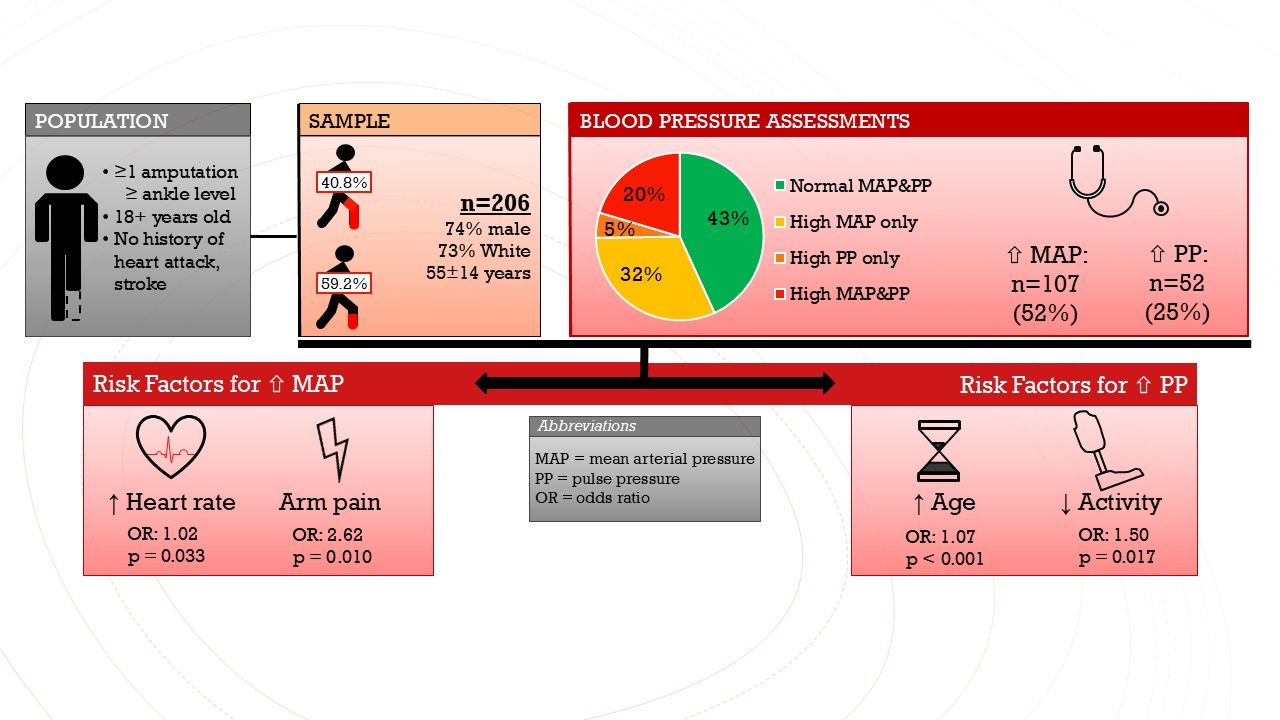
Graphical Abstract

1. Introduction

As compared to the general population, adults with lower limb loss (LLL) are more than twice as likely to die from cardiovascular (CV) disease [1]. While increased CV mortality is often attributed to the lower levels of physical activity and elevated comorbidity burden seen among adults with LLL, Modan et al. [1] found that elevated CV risk persisted when individuals with LLL were matched with peers without LLL with similar levels of activity and comorbidity. Given that more than 150,000 people undergo a lower limb amputation every year in the United States [2], further investigation into markers of CV health and subsequent modifiable factors that may be targeted to reduce CV mortality after LLL is necessary.
Hypertension, defined as a systolic blood pressure (BP) ≥ 140 mmHg among adults aged 18–79 or ≥150 mmHg for those aged ≥80 years and/or a diastolic BP ≥ 90 mmHg [3], is a significant modifiable risk factor for CV disease. Adults with LLL report rates of hypertension ranging from 44 to 65% [1,4], a prevalence that far exceeds that seen in the general United States population, i.e., 33% [5]. The chronic elevation of BP leads to pathologic vascular changes, including stiffening of the arteries, creating a pro-atherosclerotic environment that increases the risk of major adverse cardiovascular events, such as heart attack and stroke [3].
While screening for high BP is commonplace during healthcare visits, the evaluation of BP components beyond systolic and diastolic BP is seldom considered. Mean arterial pressure (MAP) and pulse pressure (PP) can be derived from systolic and diastolic BP; both offer more insight into the CV environment than systolic and diastolic BP alone. An elevated MAP, the steady component of BP, is associated with CV mortality and is an independent predictor of stroke [6]. A normal MAP of 60–100 mmHg is needed to maintain the perfusion of tissues, but higher MAPs lead to CV damage [7]. Older age, hypertension, and obesity are known to be associated with elevated MAP and with arterial stiffening [8]. Furthermore, MAP is the product of cardiac output and peripheral vascular resistance; both determinants are known to be affected by LLL, as LLL creates an altered hemodynamic environment secondary to impaired skeletal muscle pump, reducing venous return [9]. A reduced cardiac output [9] and increased peripheral vascular resistance [4,10] have been observed among young adults with traumatic LLL who were otherwise healthy, i.e., without known vascular disease.
A wide PP, the pulsatile component of BP, is also independently associated with an increased risk of CV disease, and is predictive of atherosclerosis, cardiac mortality, and stroke [11]. PP is determined by stroke volume and arterial stiffness [12], both of which are altered following LLL. Specifically, healthy adults with LLL exhibit a reduced stroke volume and increased arterial stiffness relative to healthy controls without amputation [4,9]. Given that MAP and PP may serve as indicators of maladaptive vascular changes, examining the relationship between MAP and PP among adults with LLL and identifying modifiable factors associated with elevated MAP and wide PP may inform effective interventions to address elevated CV risks post-amputation.
Despite the known elevation of CV risk and signs of amputation-related maladaptive vascular changes among adults with LLL, the prevalence of abnormalities in MAP and PP remains unknown. Additionally, factors associated with the presence of elevated MAP and/or wide PP have not been identified. Amputation-specific non-modifiable factors, such as greater limb involvement (i.e., higher level of amputation or bilateral amputation), may elevate MAP or widen PP due to the greater changes observed in the hemodynamic environment [13]. Thus, the objective of this study was to identify modifiable factors associated with elevated MAP and wide PP among community-ambulatory adults with LLL, while controlling for significant non-modifiable factors.

2. Materials and Methods

2.1. Participants

Between September 2013 and November 2023, standardized clinical examinations were conducted by physical therapists, prosthetists, and a physiatrist during a multidisciplinary Limb Loss Clinic attended by patients with prosthetic-related needs. The research project was approved by the University of Delaware Human Subjects Institutional Review Board (project number: 531197), and all included participants provided written informed consent and signed a Health Insurance Portability and Accountability Act (HIPAA) release.
Individuals were included in this secondary analysis if they were aged ≥18 years old; had no self-reported history of a major adverse cardiovascular event (i.e., heart attack, stroke, heart failure, cardiac revascularization); and had available medical history and medication information. For individuals who had undergone multiple assessments in the clinic over the 10-year period, data from the most recent evaluation were used.
To confirm data fidelity and identify missing information, values entered into the existing Limb Loss Clinic dataset were reviewed and confirmed against the original de-identified participant evaluation forms, then cross-referenced with the participant’s prosthetic medical chart from documentation within one-month of the onsite evaluation.

2.2. Demographics and Medical History

Participant demographics were obtained via self-report, including age, sex, racial identities, education level, and amputation-related information. Amputation etiology was classified as dysvascular, inclusive of amputations related to diabetes, peripheral vascular disease, and/or acute blood clots, or as non-dysvascular, inclusive of amputations related to cancer, trauma/trauma sequelae, congenital limb difference, and non-diabetic infection (e.g., necrotizing fasciitis). Participants also reported on the presence of phantom limb sensations in the region of the amputated limb; phantom limb pain, defined as pain in the region of the amputated limb; and residual limb pain, defined as pain in the remaining portion of the amputated limb.
Prior to the onsite evaluation, participants were asked to complete standardized medical history checklists, including cardiovascular conditions, diabetes, and smoking history, and medication lists, which were reviewed for completeness during onsite evaluations by a physical therapist and/or physiatrist. In the event of missing medical history and/or medication information, data were extracted from the participant’s prosthetic medical chart, if the data was available within one month of the onsite evaluation. Medications, verified against the prosthetic medical record, were categorized by drug class. Angiotensin-converting enzyme inhibitors, α-blockers, angiotensin receptor blockers, beta-blockers, calcium channel blockers, diuretics, and vasodilators were classified as antihypertensive medications, suggesting the pharmacologic management of hypertension.

2.3. Patient-Reported Outcome Measures

Physical activity was assessed using the General Practice Physical Activity Questionnaire, which is a validated screening tool used in primary care to evaluate occupational activity and leisure-time activity [14]. The measure yields a physical activity index, grouping individuals into one of four categories: inactive, moderately inactive, moderately active, or active. Participants were also asked about their average daily prosthesis wear time using an ordinal scale indicating no prosthesis use, less than eight hours per day, more than eight hours per day, or all waking hours. Pain distribution was measured using a Pain Body Diagram, which is a reliable tool for evaluating pain extent among adults with chronic pain [15]. Individuals were asked to identify all body regions where they had experienced pain in the past week, reported as the presence or absence of pain by body region. Pain distribution was classified as upper extremity, lower extremity, and/or axial pain due to clinical implications of region of pain. Upper extremity pain may stem from or impact assistive device use [16], while lower extremity and axial (e.g., low back) pain are associated with activity restriction [17]. Upper extremity pain was defined as pain in ≥1 site from the shoulder to the fingertips in either extremity. Lower extremity pain was defined as pain in ≥1 site from the hip to the distal end of either lower limb, inclusive of phantom limb pain. Axial pain was defined as pain in the head, neck, back, chest, abdomen, and/or pelvis.

2.4. Physical Assessment

Participants underwent a standardized physical examination, including measurement of body weight and height, which was recorded as pre-amputation height for individuals with bilateral amputations. Amputation-adjusted body mass index was then calculated using estimated body weight, which accounts for the percentage of total body weight of the missing limb(s) [18]. Amputation extent was classified by laterality and level, with participants grouped into unilateral amputation below the knee, unilateral amputation at or above the knee, and bilateral amputations at or above the ankle [9]. Participants with contralateral toe or partial foot amputations were included in the unilateral grouping respective of their highest degree of limb involvement.
The 10-Meter Walk Test was administered as a reliable and valid assessment of self-selected walking speed among adults with LLL [19]. Participants were asked to walk a flat 10 m course, with the central 6 meters timed to allow space for acceleration and deceleration. Assistive device use was permitted, and participants were instructed to walk at their “normal, comfortable pace” to the finish line [20]. Faster gait speeds indicate better functional mobility among adults with LLL [21].
Vital signs were assessed manually by a physiatrist or physical therapist. Participants were positioned seated for at least five minutes prior to measurement, with their arm supported at heart level and their feet flat on the floor, if applicable. BP cuff size was determined based on participant upper arm dimensions, and resting BP was taken using a manual sphygmomanometer and stethoscope. Heart rate was obtained using a medical-grade pulse oximeter.
The hemodynamic variables of PP and MAP were estimated, as direct measurement can only be performed using invasive monitoring. PP was calculated by subtracting diastolic BP from systolic BP. Normal PP is ≤60 mmHg; PP > 60 mmHg was considered widened [20]. MAP was calculated using the equation MAP = Diastolic BP + (0.412 × PP) [7]. A MAP ≤ 100 mmHg is normal; MAP > 100 mmHg was considered elevated [22].

2.5. Statistical Analysis

Statistical analyses were completed using SPSS Statistics v29.0.1.0 (Chicago, IL). For the purposes of analysis, GPPAQ scores were coded from “0” = inactive to “3” = active, where higher values indicate greater activity. Descriptive statistics were calculated; parametric data were reported as mean ± standard deviation, and non-parametric data were reported as median (1st quartile, 3rd quartile). The sample was dichotomized into those with normal MAP (≤100 mmHg) and those with elevated MAP (>100 mmHg). Independent sample t-tests were used to determine between-group differences in participant characteristics for normally distributed variables, and Mann–Whitney U-tests were used for non-normal data (p < 0.050). Categorical variables were compared using independent-sample proportion tests (p < 0.050).
Next, forward stepwise logistic regression models were used to test the association between the modifiable variables that were found to have significant between-group differences, with p < 0.100 considered for inclusion in the model. Non-modifiable variables (e.g., age, cause of amputation) were entered into Block 1, and modifiable factors (e.g., medication use, pain presence, prosthesis use, heart rate) were entered into Block 2. This process was repeated for PP, where the sample was dichotomized into normal PP (≤60 mmHg) and wide PP (>60 mmHg). Diastolic BP, systolic BP, MAP, and PP were omitted from the models given that they were used in calculations. p-values < 0.050 were considered statistically significant. Models were investigated to ensure multicollinearity was not present (i.e., variance inflation factor < 4) [23]. Other assumptions of logistic regression modeling were met.

3. Results

3.1. Participant Inclusion

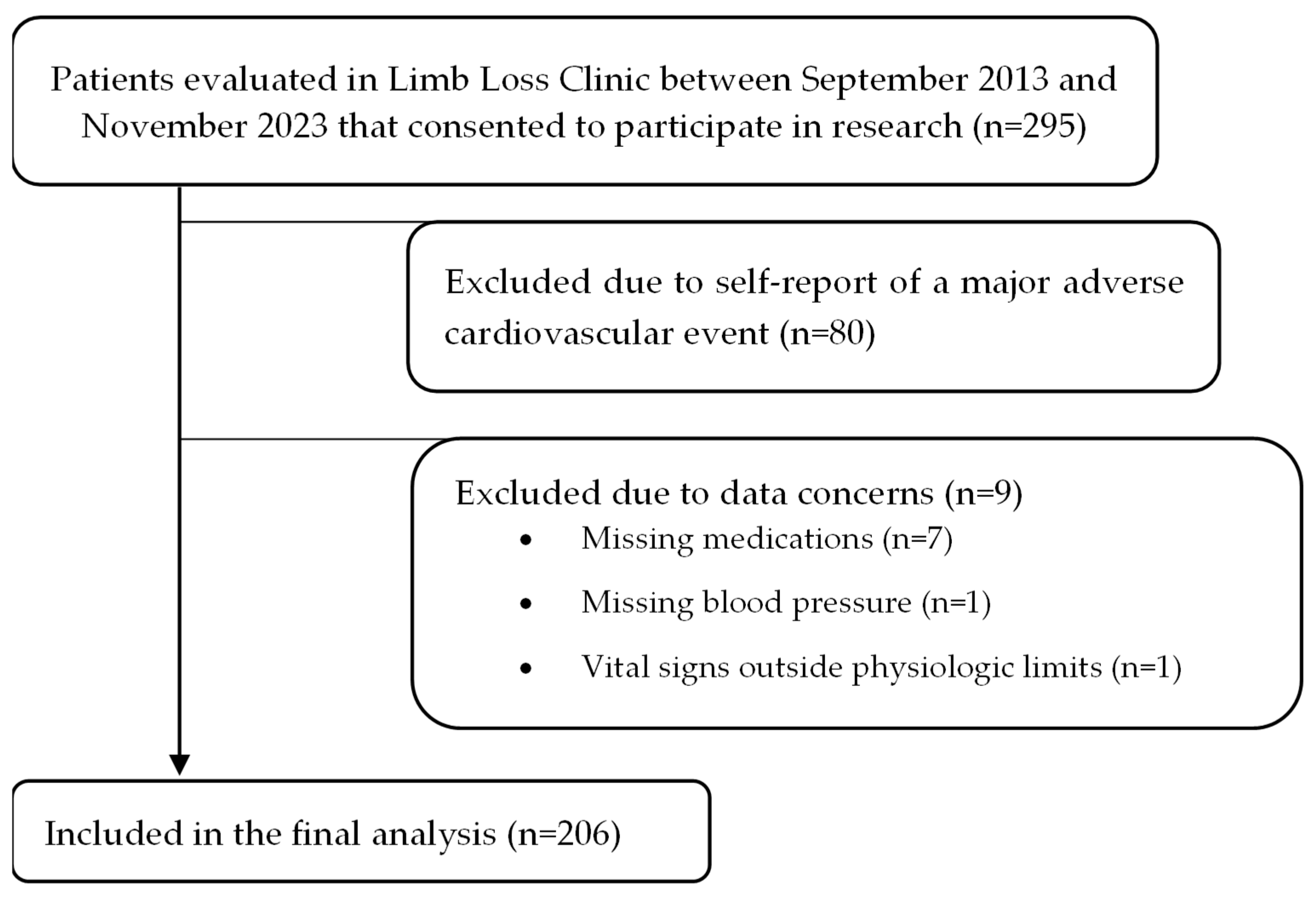
Of the patients evaluated in the clinic between September 2013 and November 2023, 295 consented to research study participation (Figure 1). Eighty (27.1%) were excluded due to a self-reported history of a major adverse cardiovascular event. Thirty-eight individuals had an incomplete medical history and/or medication information; thirty-one participants had medical histories that could be extracted from prosthetic medical charts, resulting in seven participants being excluded for missing medication data. Additionally, one participant had no recorded BP data, and one participant had vital signs outside physiological limits (BP = 144/25 mmHg, heart rate = 10 beats/min). Thus, 206 patient participants were included in the final analysis. Sample characteristics are provided in Table 1.

3.2. Health Status

Of the 206 participants, 58.7% (n = 121) presented to the clinic with normal systolic (<140 mmHg for ages 18–79 years; <150 mmHg for ages ≥ 80 years) and diastolic (<90 mmHg) BP, 20.4% (n = 42) had an isolated elevation of systolic BP, 6.3% (n = 13) had an isolated elevation of diastolic BP, and 14.6% (n = 30) exhibited an elevation of both systolic and diastolic BP.
Antihypertensive medication use was reported by 44.7% (n = 92) of individuals. Of these, the most commonly used were beta blockers (n = 41), angiotensin-converting enzyme inhibitors (n = 31), calcium channel blockers (n = 30), and diuretics (n = 29). Combination therapy (≥2 antihypertensive medications) was reported by 18.4% (n = 38) of individuals.
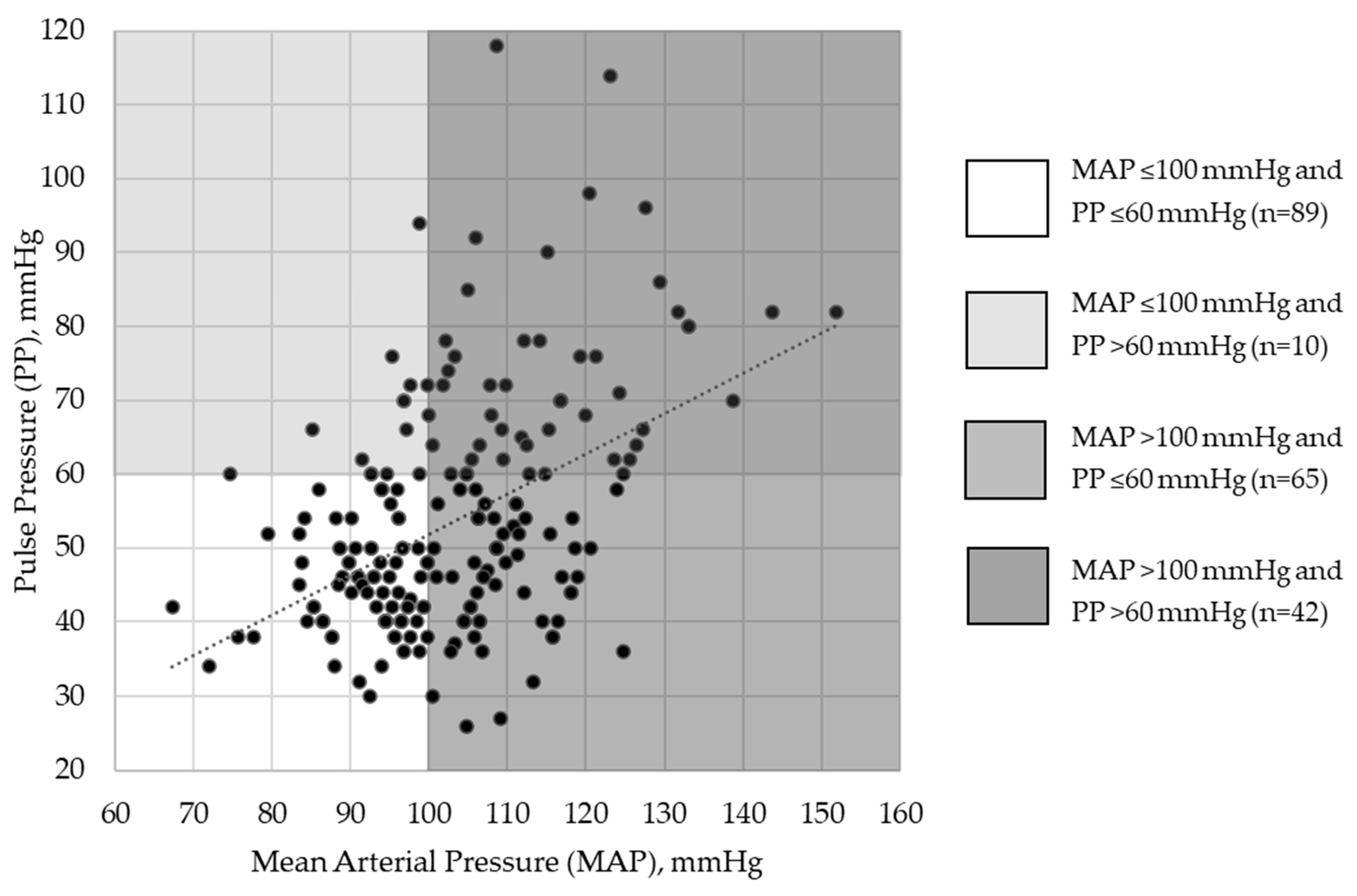
MAP was elevated for 107 (51.9%) participants (see Table 1). Individuals with an elevated MAP were significantly older (p = 0.002) and were more likely to report upper extremity pain (p = 0.002) and statin use (p = 0.012). Additionally, they presented with wider PPs (p < 0.001). MAP had a moderate positive correlation with PP (r = 0.459; 95% CI: 0.344, 0.561; p < 0.001) (Figure 2). Participants with a wide PP (n = 52; 25.2%) were significantly older (p = 0.001) and were more likely to report dysvascular amputation etiology (p = 0.001), upper extremity pain (p = 0.012), antihypertensive medication use (p < 0.001), and statin use (p = 0.022). Individuals with a wide PP also presented with slower self-selected gait speeds (p = 0.009) and reported lower levels of physical activity per the GPPAQ (p = 0.008). There were no significant between-group differences for MAP or for PP status for other variables of interest, such as amputation-adjusted body mass index, amputation extent, cause of amputation, time since amputation, diabetic status, or smoking history (p > 0.050). Of the 206 participants, 42 participants (20.4%) presented with both MAP > 100 mmHg and PP > 60 mmHg, and 89 (43.2%) presented with non-elevated MAP and non-wide PP (MAP ≤ 100 mmHg and PP ≤ 60 mmHg) (Figure 2).

3.3. Regression Results

Stepwise regression results are presented in Table 2. For the MAP model, no participants were excluded (n = 206). Reports of upper extremity pain (p = 0.010) and increasing heart rate (p = 0.033) were associated with an elevated MAP. The model explained 14.7% of the variance in elevated MAP presence. For the PP model, 28 participants were excluded secondary to missing data: 2 for missing documentation of prosthesis use and 26 for missing self-selected walking speed. Advancing age (p < 0.001) and lower physical activity classification per the GPPAQ (p = 0.017) were associated with a wide PP. The model explained 23.3% of the variance in wide PP presence.

4. Discussion

This study is the first to evaluate MAP and PP among adults with LLL—a population at a heightened risk of hypertension and CV disease. We demonstrated that an elevated MAP and wide PP are common among adults with LLL without a history of a major adverse cardiovascular event. Over 50% of the sample presented with an elevated MAP, indicating a higher peripheral vascular resistance [7]. Modifiable variables found to be associated with an elevated MAP included upper extremity pain presence and increasing heart rate. A wide PP was noted in 25% of the sample and was associated with advancing age. Modifiable factors found to be associated with a wide PP included upper extremity pain presence and reduced physical activity. Overall, the findings indicate that individuals with greater impairment post-LLL are more likely to present with maladaptive vascular changes.

4.1. Prevalence

The prevalence of an elevated MAP (51.9%) was notably greater than that reported among the general population of older adults, i.e., 35.4% [22]. An elevated MAP is associated with increased peripheral vascular resistance, which is determined by several main factors: vasoconstrictive medications, increased blood viscosity, atherosclerosis and endothelial damage, and elevated sympathetic nervous system (SNS) activity [24]. Our sample reported the use of vasodilatory medications, such as angiotensin-converting enzyme inhibitors, for the management of hypertension; no incident uses of vasoconstrictive medications (e.g., alpha adrenergic agonists) were documented, so we would anticipate lower levels of MAP based on this factor alone. Adults with LLL do present with greater blood coagulability [1], which may increase blood viscosity, and thereby elevate the MAP, though the effects of amputation on blood viscosity have not been confirmed. Endothelial dysfunction elevates the MAP by driving up peripheral vascular resistance acutely via inducing vasoconstriction, and chronically by initiating vascular remodeling secondary to inflammation [24]. Elevated SNS activity has been observed among otherwise healthy adults with traumatic LLL [25], as has elevated peripheral vascular resistance [10]. Altogether, the findings suggest a combination of blood viscosity and SNS adaptations may explain the high prevalence of elevated MAP seen in this clinical sample, particularly when considering the prevalence of vasodilatory antihypertensive medication use.
Conversely, the prevalence of PP > 60 mmHg was lower in our sample, i.e., 25%, when compared to the general population, i.e., 35% [22]. A wide PP is associated with increased arterial stiffness, which has been documented among healthy adults with traumatic LLL [4]. We would therefore anticipate a high prevalence of wide PP post-LLL. However, PP is not only determined by arterial stiffness, but also by stroke volume. With a reduced stroke volume, distending forces experienced by the arteries are lessened, resulting in a narrower PP. After LLL, the stroke volume is reduced due to a reduced filling pressure and myocardial contractility [9]. Therefore, the prevalence of increased arterial stiffness evidenced by a wide PP may be masked by a reduced stroke volume; PP may underestimate stiffness in the presence of a low stroke volume [12]. Further research is needed to determine the relationship between PP and arterial stiffness following LLL given the reduced stroke volume.
Notably, there were no associations between the time since amputation and MAP nor PP status. Individuals presenting to the clinic were all cleared for prosthetic fitting, and therefore were at least 3 months post-surgery, suggesting that cardiovascular adaptation to amputation may occur rapidly post-amputation, then stabilize. Similarly, amputation extent was not associated with MAP or PP status. As the amputation level increases, so does the extent of hemodynamic disturbance [13], so individuals with a greater amputation extent would be anticipated to have a higher MAP and wider PP than those with a lesser amputation extent. Though a greater amputation extent may be associated with a higher heart rate and lower stroke volume during activity [9], resting blood pressure determinants do not appear to be affected.

4.2. Predictors of Elevated Mean Arterial Pressure

In our sample, 23.8% of adults with LLL reported upper extremity pain, which was the strongest predictor of elevated MAP. Adults reporting upper extremity pain were 2.7× more likely to have an elevated MAP. Upper extremity pain may indicate overt CV disease, as is the case with referred ischemia from the heart to the arms, but may also be associated with regional atherosclerotic changes. As evidenced in strength and conditioning research, atherosclerotic plaques in the upper extremity may reduce local blood flow and elicit pain; during exercise, the experimentally induced partial occlusion of blood flow produces a similar degree of pain at light workloads as no occlusion at moderate workloads [26]. Alternatively, upper extremity pain may be associated with assistive device use [16], suggesting a lower mobility status necessitating assistive device use and/or activity restriction secondary to pain precluding assistive device use. Both conditions may lead to reduced physical activity, as has been suggested in other mobility-limited patient populations such as spinal cord injury [16].
For every 10-beat increase in resting heart rate, the odds of an elevated MAP increased by 21%. This is unsurprising, as, with increased heart rate, more time is spent in systole, increasing the MAP. Hence, the association between elevated heart rate and elevated MAP is expected. An elevated heart rate is associated with cardiac deconditioning and may occur as a result of bedrest. Following LLL, many individuals receive inpatient pre-prosthetic rehabilitation in an effort to offset the deleterious effects of bedrest, which historically addresses lower extremity strength and a range of motion deficits, as well as diminished cardiorespiratory capacity. Studies on bedrest indicate that it takes 5–10 weeks of vigorous reconditioning training to rebound from the deleterious effects of three weeks of bedrest [27]. However, typically, pre-prosthetic rehabilitation is not strenuous enough to induce improvements in cardiorespiratory health—and only 50% of individuals experience a sufficient challenge to resume their prior level of cardiorespiratory fitness [28].

4.3. Predictors of Wide Pulse Pressure

While only 25% of individuals had a wide PP, wide PP reflects an increased arterial stiffness and increased stroke volume [12]. As stroke volume is reduced after LLL [9], elevated arterial stiffness may be masked when evaluating PP after LLL. And PP naturally widens with age-related vascular changes [11]. In alignment, we observed a 16% increase in the likelihood of wide PP with a 10-year increase in age, suggesting that older age may compound known amputation-induced increases in arterial stiffness [4]. Data suggest that age is a non-modifiable factor associated with an increased CV disease risk and CV-related mortality following LLL, which is consistent with findings in the general population [8].
A 1-step decrease in physical activity classification, e.g., from moderately active to moderately inactive, was associated with 1.5× higher odds of presenting with a wide PP [29]. Habitual physical activity is associated with lower arterial stiffness among the general population [30]. As individuals with a wide PP also reported greater daily prosthesis use, the observed protective effect of enhanced physical activity may be attributable to a combination of prosthesis-enabled mobility and the effects of limb compression. Prosthesis wear may be sufficient to promote blood flow return to the heart via the compression of the residual limb [31], increasing stroke volume and thereby reducing SNS activity, driving increased arterial stiffness. An enhanced understanding of how prosthesis application affects hemodynamics at rest may help to discern if interventions targeting greater prosthesis use would positively affect CV health.

4.4. Potential for Autonomic Dysregulation

An elevated heart rate and upper extremity pain may suggest elevated SNS activity, leading to an increased arterial stiffness and vasoconstriction and resulting in an elevated MAP and wide PP. After LLL, there is a reduction in stroke volume secondary to reduced venous return from muscle pumping [9], prompting increased SNS activity to elevate the heart rate and maintain cardiac output. This adaptation is necessary in the short term to maintain cardiac output, but long-term SNS overactivity is associated with maladaptive changes in vascular function (e.g., increased arterial stiffness and peripheral vascular resistance) [24]. Interventions targeting each of these individual modifiable variables may be effective in addressing CV health following LLL. While the associations of blood pressure findings with greater age and lower physical activity suggest that normal pathophysiologic mechanisms may drive elevated MAP and wide PP [11], the combination of other modifiable variables associated with an elevated MAP and wide PP, e.g., higher resting heart rate and upper extremity pain, may suggest autonomic nervous system dysregulation. Targeted interventions such as the use of central sympatholytic medications, aerobic training, and/or stress reduction may be useful in addressing autonomic dysregulation. Autonomic impairment, which has been noted among otherwise healthy adults with LLL [25,32], plays a significant role in CV disease epidemiology and prognosis. Thus, we propose that further research is warranted evaluating the autonomic nervous system and CV health following LLL.

4.5. Limitations

As this study was a secondary analysis of an existing dataset obtained from care-seeking individuals with LLL, a priori power analyses were not conducted. Nevertheless, post hoc power analyses indicated that the number of covariates selected was appropriate, as, given a sample size of 206 and the observed prevalences of elevated MAP and wide PP, we were adequately powered for evaluating ≤10 predictors for the MAP model and ≤4 predictors for the PP model [33]. Furthermore, the cross-sectional study design prevents the establishment of a causal relationship between modifiable factors and cardiovascular health.
We acknowledge that BP was obtained during a single visit, which may not reflect ambulatory BP values. While many recommendations for in-office BP measurement were followed, such as the selection of appropriate cuff size and participant positioning, not all recommendations could be confirmed. Furthermore, as no follow-up evaluation was completed, the results may be inflated by “white coat” hypertension, which occurs in approximately 26–46% of individuals [34]. Ambulatory blood pressure monitoring is recommended for future studies to enhance rigor. Additionally, while PP is a widely used clinical marker of arterial stiffness, the validity among adults with LLL may be confounded by factors such as stroke volume, which is reduced post-amputation, and wave reflection, which is increased in the amputated limb following LLL [20]. However, BP was measured remote to the amputation site, so the impact of wave reflection may be lessened. And, while beyond the scope of this paper, some might suggest that the metrics of systolic and diastolic BP may be of greater interest to clinicians due to the common use of BP in cardiovascular risk assessment. Further research is needed to weigh the added value of MAP and PP assessment beyond the measurement of systolic and diastolic BP alone.
Also, adults with LLL may not be reliable reporters of medical comorbidity [35]; thus, individuals with major adverse cardiovascular events may have been included, elevating the prevalence of elevated MAP and wide PP in the sample. To minimize the likelihood of wrongful inclusion, medical histories were cross-referenced with participant prosthetic medical records; however, full medical histories were not available for all participants, as prosthetists generally only receive medical records from other providers deemed relevant to prosthetic care. Finally, the generalizability of results may be limited, as this sample consisted of predominantly middle-aged White males, and we excluded individuals with a history of a major adverse cardiovascular event. However, this is a representative clinical care-seeking sample consisting of community-dwelling adults in Delaware; males and those aged 50 to 70 years are most likely to undergo lower limb amputation in the United States [36], and, in Delaware, 81.2% of adults with disabilities are White [37]. The results may therefore not be generalizable to geographic regions with predominantly female or minority patient populations.

5. Conclusions

An abnormally elevated MAP and wide PP are common among adults with LLL who do not report a history of major adverse cardiovascular events, suggesting an increased arterial stiffness and peripheral vascular resistance. The results allude to a combination of normal pathophysiologic mechanisms and possible autonomic dysregulation, which may be driving the elevated MAP and wide PP after LLL—risk factors for a major adverse cardiovascular event, including heart attack, stroke, and associated death. Future research evaluating CV risk and elevated MAP following LLL may consider upper extremity pain, as this was a novel factor identified.

Author Contributions

Conceptualization, S.S., F.S., J.H. and J.S.; data curation, S.S., F.S., J.H. and J.S.; formal analysis, S.S. and R.P.; methodology, S.S.; project administration, J.S.; supervision, J.S.; validation, S.S.; writing—original draft, S.S.; writing—review and editing, S.S., R.P., F.S., J.H. and J.S. All authors have read and agreed to the published version of the manuscript.

Funding

This research received no external funding. Author S.S.’s doctoral studies are supported by the Independence Prosthetics-Orthotics Graduate Education Fund.

Institutional Review Board Statement

The study was conducted in accordance with the Declaration of Helsinki and approved by the Institutional Review Board of the University of Delaware (protocol number: 531197; date of approval: 1 April 2014).

Informed Consent Statement

Informed consent was obtained from all subjects involved in the study.

Data Availability Statement

Data supporting study findings are available on request from the corresponding author, J.S.

Conflicts of Interest

Independence Prosthetics-Orthotics sponsored Ms. Stauffer during her PhD study; there was no agreement in place that gives the company any control over data access, analysis, interpretation, or publication. The data is owned by the University of Delaware. The authors declare no conflicts of interest.

Abbreviations

The following abbreviations are used in this manuscript:
LLLLower Limb Loss
CVCardiovascular
BPBlood Pressure
MAPMean Arterial Pressure
PPPulse Pressure

References

  1. Modan, M.; Peles, E.; Halkin, H.; Nitzan, H.; Azaria, M.; Gitel, S.; Dolfin, D.; Modan, B. Increased cardiovascular disease mortality rates in traumatic lower limb amputees. Am. J. Cardiol. 1998, 82, 1242–1247. [Google Scholar] [CrossRef]
  2. Dillingham, T.R.; Pezzin, L.E.; MacKenzie, E.J. Limb amputation and limb deficiency: Epidemiology and recent trends in the United States. South Med. J. 2002, 95, 875–883. [Google Scholar] [CrossRef]
  3. Unger, T.; Borghi, C.; Charchar, F.; Khan, N.A.; Poulter, N.R.; Prabhakaran, D.; Ramirez, A.; Schlaich, M.; Stergiou, G.S.; Tomaszewski, M.; et al. 2020 International Society of Hypertension Global Hypertension Practice Guidelines. Hypertension 2020, 75, 1334–1357. [Google Scholar] [CrossRef]
  4. Magalhães, P.; Capingana, D.P.; Silva, A.B.; Capunge, I.R.; Gonçalves, M.A. Arterial stiffness in lower limb amputees. Clin. Med. Insights: Circ. Respir. Pulm. Med. 2011, 5, 49–56. [Google Scholar] [CrossRef]
  5. Mitchell, G.F. Arterial stiffness and hypertension: Chicken or egg? Hypertension 2014, 64, 210–214. [Google Scholar] [CrossRef]
  6. Zheng, L.; Sun, Z.; Li, J.; Zhang, R.; Zhang, X.; Liu, S.; Li, J.; Xu, C.; Hu, D.; Sun, Y. Pulse pressure and mean arterial pressure in relation to ischemic stroke among patients with uncontrolled hypertension in rural areas of China. Stroke 2008, 39, 1932–1937. [Google Scholar] [CrossRef] [PubMed]
  7. Papaioannou, T.G.; Protogerou, A.D.; Vrachatis, D.; Konstantonis, G.; Aissopou, E.; Argyris, A.; Nasothimiou, E.; Gialafos, E.J.; Karamanou, M.; Tousoulis, D.; et al. Mean arterial pressure values calculated using seven different methods and their associations with target organ deterioration in a single-center study of 1878 individuals. Hypertens. Res. 2016, 39, 640–647. [Google Scholar] [CrossRef] [PubMed]
  8. Mitchell, G.F.; Guo, C.Y.; Benjamin, E.J.; Larson, M.G.; Keyes, M.J.; Vita, J.A.; Vasan, R.S.; Levy, D. Cross-sectional correlates of increased aortic stiffness in the community: The Framingham Heart Study. Circulation 2007, 115, 2628–2636. [Google Scholar] [CrossRef]
  9. Kurdibaylo, S.F. Cardiorespiratory status and movement capabilities in adults with limb amputation. J. Rehabil. Res. Dev. 1994, 31, 222–235. [Google Scholar] [PubMed]
  10. Paula-Ribeiro, M.; Garcia, M.M.; Martinez, D.G.; Lima, J.R.; Laterza, M.C. Increased peripheral vascular resistance in male patients with traumatic lower limb amputation: One piece of the cardiovascular risk puzzle. Blood Press. Monit. 2015, 20, 341–345. [Google Scholar] [CrossRef]
  11. Steppan, J.; Barodka, V.; Berkowitz, D.E.; Nyhan, D. Vascular stiffness and increased pulse pressure in the aging cardiovascular system. Cardiol. Res. Pract. 2011, 2011, 263585. [Google Scholar] [CrossRef]
  12. Lamia, B.; Teboul, J.L.; Monnet, X.; Osman, D.; Maizel, J.; Richard, C.; Chemla, D. Contribution of arterial stiffness and stroke volume to peripheral pulse pressure in ICU patients: An arterial tonometry study. Intensive Care Med. 2007, 33, 1931–1937. [Google Scholar] [CrossRef] [PubMed]
  13. Li, X.; Li, Z.; Jiang, W.; Wei, J.; Xu, K.; Bai, T. Effect of lower extremity amputation on cardiovascular hemodynamic environment: An in vitro study. J. Biomech. 2022, 145, 111368. [Google Scholar] [CrossRef] [PubMed]
  14. Heron, N.; Tully, M.A.; McKinley, M.C.; Cupples, M.E. Physical activity assessment in practice: A mixed methods study of GPPAQ use in primary care. BMC Fam. Pract. 2014, 15, 11. [Google Scholar] [CrossRef] [PubMed]
  15. Southerst, D.; Côté, P.; Stupar, M.; Stern, P.; Mior, S. The reliability of body pain diagrams in the quantitative measurement of pain distribution and location in patients with musculoskeletal pain: A systematic review. J. Manip. Physiol. Ther. 2013, 36, 450–459. [Google Scholar] [CrossRef] [PubMed]
  16. Jain, N.B.; Higgins, L.D.; Katz, J.N.; Garshick, E. Association of shoulder pain with the use of mobility devices in persons with chronic spinal cord injury. PM&R 2010, 2, 896–900. [Google Scholar] [CrossRef]
  17. Morgan, S.J.; Friedly, J.L.; Amtmann, D.; Salem, R.; Hafner, B.J. Cross-sectional assessment of factors related to pain intensity and pain interference in lower limb prosthesis users. Arch. Phys. Med. Rehabil. 2017, 98, 105–113. [Google Scholar] [CrossRef]
  18. Wong, C.K.; Wong, R.J. Standard and amputation-adjusted body mass index measures: Comparison and relevance to functional measures, weight-related comorbidities, and dieting. Am. J. Phys. Med. Rehabil. 2017, 96, 912–915. [Google Scholar] [CrossRef]
  19. Sawers, A.; Kim, J.; Balkman, G.; Hafner, B.J. Interrater and test-retest reliability of performance-based clinical tests administered to established users of lower limb prostheses. Phys. Ther. 2020, 100, 1206–1216. [Google Scholar] [CrossRef]
  20. Sions, J.M.; Beisheim, E.H.; Seth, M. Selecting, administering, and interpreting outcome measures among adults with lower-limb loss: An Update for Clinicians. Curr. Phys. Med. Rehabil. Rep. 2020, 8, 92–109. [Google Scholar] [CrossRef]
  21. Sions, J.M.; Beisheim, E.H.; Manal, T.J.; Smith, S.C.; Horne, J.R.; Sarlo, F.B. Differences in physical performance measures among patients with unilateral lower-limb amputations classified as functional level K3 versus K4. Arch. Phys. Med. Rehabil. 2018, 99, 1333–1341. [Google Scholar] [CrossRef]
  22. Pleiss, A.; Jurivich, D.; Dahl, L.; McGrath, B.; Kin, D.; McGrath, R. The associations of pulse pressure and mean arterial pressure on physical function in older Americans. Geriatrics 2023, 8, 40. [Google Scholar] [CrossRef] [PubMed]
  23. O’Brien, R.M. A caution regarding rules of thumb for variance inflation factors. Qual. Quant. 2007, 41, 673–690. [Google Scholar] [CrossRef]
  24. DeMers, D.; Wachs, D. Physiology, mean arterial pressure. In StatPearls [Internet]; StatPearls Publishing: Treasure Island, FL, USA, 2023. [Google Scholar]
  25. Peles, E.; Akselrod, S.; Goldstein, D.S.; Nitzan, H.; Azaria, M.; Almog, S.; Dolphin, D.; Halkin, H.; Modan, M. Insulin resistance and autonomic function in traumatic lower limb amputees. Clin. Auton. Res. 1995, 5, 279–288. [Google Scholar] [CrossRef]
  26. Hollander, D.B.; Reeves, G.V.; Clavier, J.D.; Francois, M.R.; Thomas, C.; Kraemer, R.R. Partial occlusion during resistance exercise alters effort sense and pain. J. Strength Cond. Res. 2010, 24, 235–243. [Google Scholar] [CrossRef]
  27. Page, N. Weightlessness: A matter of gravity. N. Engl. J. Med. 1977, 297, 32–37. [Google Scholar]
  28. Wezenberg, D.; Dekker, R.; van Dijk, F.; Faber, W.; van der Woude, L.; Houdijk, H. Cardiorespiratory fitness and physical strain during prosthetic rehabilitation after lower limb amputation. Prosthet. Orthot. Int. 2019, 43, 418–425. [Google Scholar] [CrossRef] [PubMed]
  29. Diment, L.; Nguon, R.; Seng, S.; Sit, V.; Lors, P.; Thor, P.; Srors, S.; Kheng, S.; Granat, M.; Donovan-Hall, M. Activity, socket fit, comfort and community participation in lower limb prosthesis users: A Cambodian cohort study. J. Neuroeng. Rehabil. 2022, 19, 42. [Google Scholar] [CrossRef]
  30. Park, W.; Park, H.Y.; Lim, K.; Park, J. The role of habitual physical activity on arterial stiffness in elderly Individuals: A systematic review and meta-analysis. J. Exerc. Nutr. Biochem. 2017, 21, 16–21. [Google Scholar] [CrossRef]
  31. O’Riordan, S.F.; McGregor, R.; Halson, S.L.; Bishop, D.J.; Broatch, J.R. Sports compression garments improve resting markers of venous return and muscle blood flow in male basketball players. J. Sport Health Sci. 2023, 12, 513–522. [Google Scholar] [CrossRef]
  32. Cachadina, E.S.; Garcia, P.G.; Da Luz, S.T.; Esteban, R.G.; Perez, O.B.; Orellana, J.N.; de la Rosa, F.B. Heart rate variability and phantom pain in male amputees: Application of linear and nonlinear methods. J. Rehabil. Res. Dev. 2013, 50, 449–454. [Google Scholar] [CrossRef] [PubMed]
  33. Peduzzi, P.; Concato, J.; Kemper, E.; Holford, T.R.; Feinstein, A.R. A simulation study of the number of events per variable in logistic regression analysis. J. Clin. Epidemiol. 1996, 49, 1373–1379. [Google Scholar] [CrossRef]
  34. de la Sierra, A.; Vinyoles, E.; Banegas, J.R.; Segura, J.; Gorostidi, M.; de la Cruz, J.J.; Ruilope, L.M. Prevalence and clinical characteristics of white-coat hypertension based on different definition criteria in untreated and treated patients. J. Hypertens. 2017, 35, 2388–2394. [Google Scholar] [CrossRef]
  35. Stauffer, S.J.; Seth, M.; Pohlig, R.T.; Beisheim-Ryan, E.H.; Horne, J.R.; Smith, S.C.; Sarlo, F.B.; Sions, J.M. Risk factors for underreporting of life-limiting comorbidity among adults with lower-limb loss. Inquiry 2023, 60, 469580231205083. [Google Scholar] [CrossRef] [PubMed]
  36. Peek, M.E. Gender differences in diabetes-related lower extremity amputations. Clin. Orthop. Relat. Res. 2011, 469, 1951–1955. [Google Scholar] [CrossRef] [PubMed]
  37. Galonsky, P. Disability, Health, and the Behavioral Risk Factor Surveillance System: Using Health Data to Inform Disability Policy in Delaware. In Health and Disability in Delaware, 1st ed.; William & Mary Policy Review: Williamsburg, VA, USA, 2010; Volume 1, p. 170. [Google Scholar]
Figure 1. Participant inclusion flow diagram for adults with lower limb loss without history of major adverse cardiovascular event (e.g., heart attack, stroke) seeking assessment for prosthetic needs.
Jvd 04 00051 g001
Figure 2. Correlation between mean arterial pressure (MAP) and pulse pressure (PP) for n = 206 adults with lower limb loss without history of a major adverse cardiovascular event. Abbreviations: mmHg = millimeters of mercury.
Jvd 04 00051 g002
Table 1. Participant characteristics (n = 206).
Mean Arterial PressurePulse Pressure
Total Sample
(n = 206)
≤100 mmHg
(n = 99)
>100 mmHg
(n = 107)
p-Value≤60 mmHg
(n = 154)
>60 mmHg
(n = 52)
p-Value
Demographicsn = 206n = 99n = 107 n = 154n = 52
Age, years54.5 ± 14.151.4 ± 15.457.5 ± 12.10.00251.8 ± 14.562.5 ± 9.0<0.001
Sex, male153 (74.3%)69 (69.7%)84 (78.5%)0.149114 (74.0%)39 (75.0%)0.890
Race, White150 (72.8%)72 (72.7%)78 (72.9%)0.978112 (72.7%)38 (73.1%)0.961
Adjusted BMI, kg/m2 *30.1 (26.1, 35.9)28.8 (25.4, 35.8)30.6 (26.7, 37.4)0.15929.9 (26.0, 35.5)31.5 (26.8, 38.0)0.227
Level of Education, >high schooln = 196
120 (61.2%)
n = 96
59 (61.5%)
n = 100
61 (61.0%)
0.948n = 145
92 (63.4%)
n = 51
28 (54.9%)
0.281
Amputation Informationn = 206n = 99n = 107 n = 154n = 52
Amputation Extent
Unilateral < knee116 (56.3%)57 (57.6%)59 (55.1%)0.39287 (56.5%)29 (55.8%)0.577
Unilateral ≥ knee67 (32.5%)34 (34.3%)33 (30.8%)48 (31.2%)19 (36.5%)
Bilateral23 (11.2%)8 (8.1%)15 (14.0%)19 (12.3%)4 (7.7%)
Cause of Amputation, dysvascular87 (42.2%)37 (37.4%)57 (53.3%)0.17455 (35.7%)32 (61.5%)0.001
Time Since
Amputation, years *
4 (1, 15.3)5 (1, 18)3 (1, 10)0.1464 (1, 16.5)3 (1, 9.5)0.698
Pain-Related Informationn = 206n = 99n = 107 n = 154n = 52
Pain, none43 (20.9%)23 (23.2%)20 (18.7%)0.42336 (23.4%)7 (13.5%)0.128
Axial Pain, yes78 (37.9%)32 (32.3%)46 (43.0%)0.11557 (37.0%)21 (40.4%)0.665
Upper Extremity Pain, yes49 (23.8%)14 (14.1%)35 (32.7%)0.00230 (19.5%)19 (36.5%)0.012
Lower Extremity Pain, yes144 (69.9%)71 (71.7%)73 (68.2%)0.583107 (69.5%)37 (71.2%)0.820
Medical Historyn = 206n = 99n = 107 n = 154n = 52
Antihypertensive Medication Use, yes92 (44.7%)39 (39.4%)53 (49.5%)0.14458 (37.7%)34 (65.4%)<0.001
≥2 Antihypertensive Medications, yes38 (18.4%)17 (17.2%)21 (19.6%)0.65025 (16.2%)13 (25.0%)0.159
High Cholesterol, yes76 (36.9%)34 (34.3%)42 (39.3%)0.46654 (35.1%)22 (42.3%)0.349
Statin Use, yes72 (35.0%)26 (26.3%)46 (43.0%)0.01247 (30.5%)25 (48.1%)0.022
Smoking History, current83 (40.3%)39 (39.4%)44 (41.1%)0.80160 (39.0%)23 (44.2%)0.503
History of Diabetes, yes80 (38.8%)38 (38.4%)42 (39.3%)0.89857 (37.0%)23 (44.2%)0.356
Mobility Informationn = 206n = 99n = 107 n = 154n = 52
GPPAQ, 0–3 1 (0, 2.25)1 (0, 3)1 (0, 2)0.4662 (0, 3)0 (0, 2)0.008
Prosthesis Usen = 204n = 98n = 106 n = 153n = 51
Not at all42 (20.6%)22 (22.4%)20 (18.7%)0.14531 (20.3%)11 (21.6%)0.093
≤8 h per day30 (14.7%)13 (13.3%)17 (15.9%)20 (13.1%)10 (19.6%)
>8 h per day25 (12.3%)7 (7.1%)18 (16.8%)15 (9.7%)10 (19.6%)
All waking hours107 (52.5%)56 (56.6%)51 (47.7%)87 (56.9%)20 (39.2%)
Self-Selected Walking Speed, m/sn = 180
0.94 ± 0.34
n = 91
0.96 ± 0.34
n = 89
0.92 ± 0.33
0.414n = 138
0.97 ± 0.36
n = 42
0.84 ± 0.25
0.009
Vital Signsn = 206n = 99n = 107 n = 154n = 52
Heart Rate, beats/minute80.7 ± 14.478.8 ± 14.182.5 ± 14.50.06580.2 ± 12.382.1 ± 15.20.209
Systolic BP, mmHg134.3 ± 19.2120.4 ± 9.8147.2 ± 16.7<0.001126.4 ± 12.3157.6 ± 17.0<0.001
Diastolic BP, mmHg80.8 ± 11.772.5 ± 7.288.6 ± 9.6<0.00180.3 ± 10.982.4 ± 13.80.159
Mean Arterial
Pressure, mmHg
102.9 ± 13.292.2 ± 6.4112.7 ± 9.7<0.00199.3 ± 10.8113.4 ± 14.0<0.001
Pulse Pressure, mmHg53.5 ± 15.747.9 ± 10.958.6 ± 17.6<0.00146.1 ± 8.075.1 ± 12.4<0.001
Abbreviation: BMI = body mass index; kg/m2 = kilograms per square meters; GPPAQ = General Practice Physical Activity Questionnaire; m/s = meters per second; mmHg = millimeters of mercury; BP = blood pressure. * Data presented as median (1st quartile, 3rd quartile) rather than mean ± standard deviation or n (% of sample). Bold indicates p < 0.050 for between-group differences (i.e., mean arterial pressure ≤ 100 mmHg versus mean arterial pressure > 100 mmHg subgroups; pulse pressure ≤ 60 mmHg versus pulse pressure > 60 mmHg subgroups). Where 0 = inactive and 3 = active.
Table 2. Logistic regression model: factors associated with elevated mean arterial pressure (>100 mmHg) and pulse pressure (>60 mmHg).
Model *
n = 206
VariableBSEpOdds Ratio [95% CI]
Mean Arterial Pressure
>100 mmHg
Age, years 0.020 0.011 0.081 1.020 [0.998 to 1.043]
Upper extremity pain, yes1.0080.3780.0102.624 [1.263 to 5.448]
Statin use, yes 0.635 0.329 0.053 1.887 [0.991 to 3.594]
Heart rate, beats/min0.0220.0110.0331.021 [1.002 to 1.044]
χ2 = 24.012; p < 0.001; Nagelkerke R2 = 0.147
Model **
n = 178
VariableBSEpOdds Ratio [95% CI]
Pulse Pressure
>60 mmHg
Age, years0.0690.018<0.0011.071 [1.035 to 1.109]
GPPAQ, 0–3 −0.4090.1720.0170.665 [0.475 to 0.931]
χ2 = 29.717; p < 0.001; Nagelkerke R2 = 0.233
Abbreviations: B = unstandardized beta coefficient; CI = confidence interval; SE = standard error; GPPAQ = General Practice Physical Activity Questionnaire; beats/min = beats per minute; mmHg = millimeters of mercury. Bold indicates variables significant in the final model (p < 0.050). * Variables entered: (Block 1) age; (Block 2) upper extremity pain, statin use, and heart rate. ** Variables entered: (Block 1) age, cause of amputation (dysvascular); (Block 2) antihypertensive medication use, statin use, upper extremity pain, physical activity, prosthesis use, and self-selected walking speed. Where 0 = inactive, 1 = moderately inactive, 2 = moderately active, and 3 = active.
Disclaimer/Publisher’s Note: The statements, opinions and data contained in all publications are solely those of the individual author(s) and contributor(s) and not of MDPI and/or the editor(s). MDPI and/or the editor(s) disclaim responsibility for any injury to people or property resulting from any ideas, methods, instructions or products referred to in the content.