
Subanesthetic Ketamine for Chronic Non-Cancer Pain: A Systematic Review of Evidence from Randomized Trials over the Past Two Decades

 , ,
, ,  and
and
Abstract
1. Introduction
2. Materials and Methods
2.1. Protocol Registration
2.2. Search Strategy and Information Sources
2.3. Eligibility Criteria
2.3.1. Inclusion Criteria
2.3.2. Exclusion Criteria
2.4. Study Selection Process
2.5. Risk of Bias Assessment
2.6. Data Synthesis
3. Results
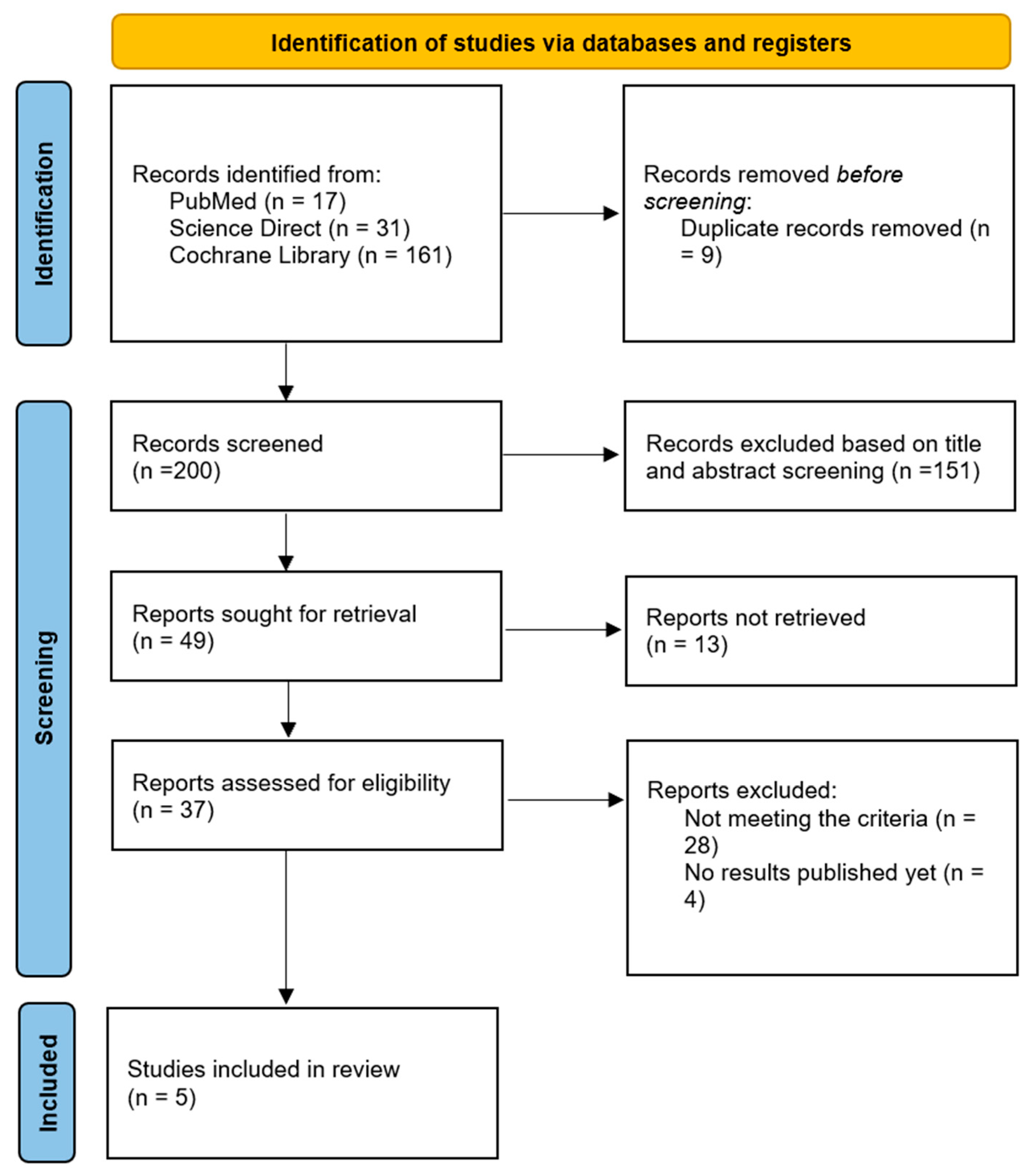
3.1. Study Selection
3.2. Study Characteristics
3.3. Synthesis of Primary Outcomes
3.4. Synthesis of Secondary Results
3.5. Methodological Quality
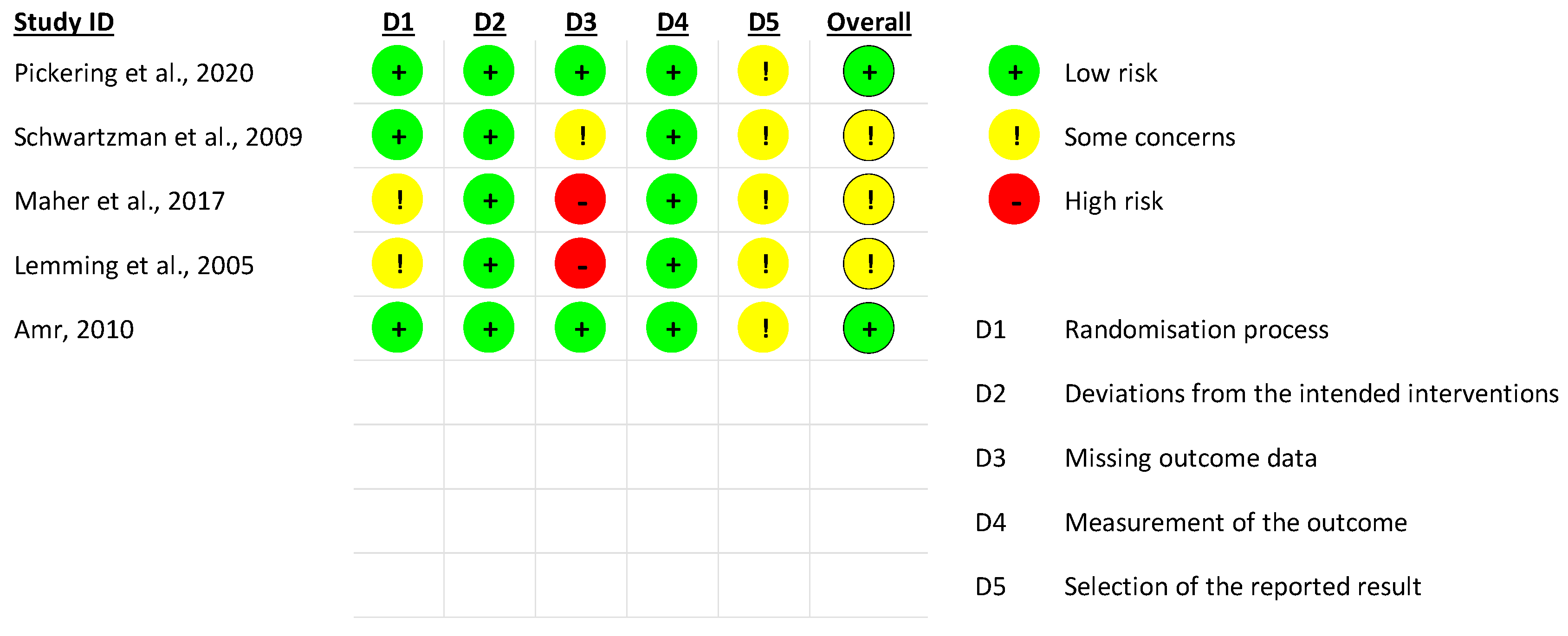
3.5.1. Assessment Using the RoB-2 Tool
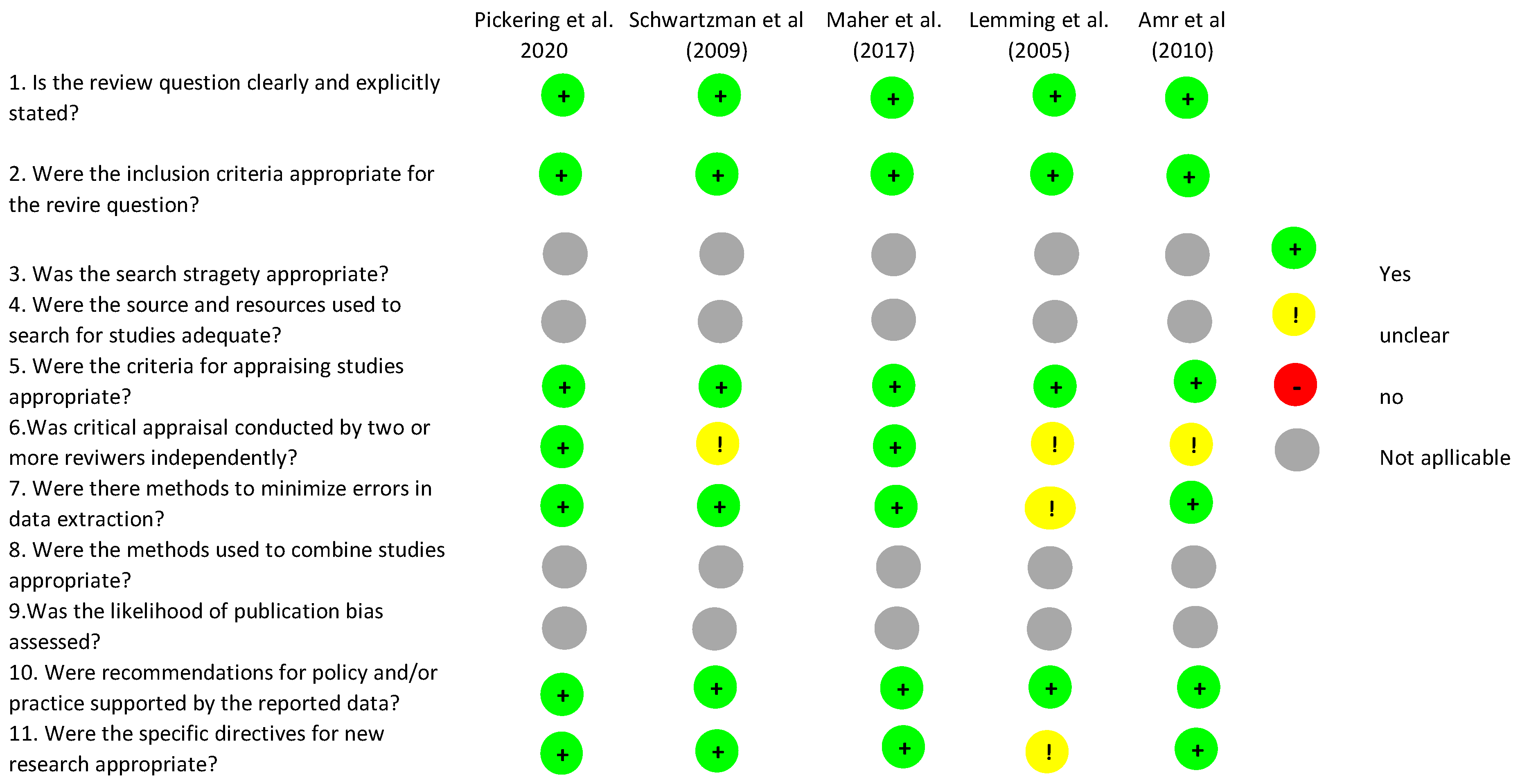
3.5.2. Evaluation Using the Grade for Certainty of Evidence (GRADE) Tool
4. Discussion
4.1. Effectiveness of Ketamine
4.2. Long-Term Use
4.3. Clinical Implications
4.4. Emerging Evidence Beyond the Included RCTs
4.5. Safety and Tolerability
4.6. Current Therapeutic Limitations and the Need for Innovation in Analgesia
4.7. Future Directions
4.8. Study Limitations
5. Conclusions
Supplementary Materials
Author Contributions
Funding
Institutional Review Board Statement
Informed Consent Statement
Data Availability Statement
Acknowledgments
Conflicts of Interest
Abbreviations
| AUC | Area Under the Curve |
| CRPS | Complex Regional Pain Syndrome |
| GRADE | Grading of Recommendations, Assessment, Development and Evaluations |
| NMDA | N-methyl-D-aspartate |
| NRS | Numerical Rating Scale |
| QST | Quantitative Sensory Testing |
| RCT | Randomized Controlled Trial |
| RoB-2 | Risk of Bias Tool, Version 2 |
| VAS | Visual Analogue Scale |
Appendix A

| Database | Keywords | Search Strategy | Database Filters Applied | Number of Potentially Eligible Articles |
|---|---|---|---|---|
| PubMed/MEDLINE | Ketamine, chronic pain, treatment, therapy, pain management, randomized controlled trial, RCT | (“ketamine”[Title/Abstract]) AND (“chronic pain”[Title/Abstract]) AND (“treatment”[Title/Abstract] OR “therapy”[Title/Abstract] OR “management”[Title/Abstract]) AND (“randomized controlled trial”[Publication Type] OR “randomized”[Title/Abstract] OR “RCT”[Title/Abstract]) NOT (“depression”[Title/Abstract] OR “major depressive disorder”[Title/Abstract] OR “bipolar”[Title/Abstract] OR “post-traumatic stress”[Title/Abstract] OR “PTSD”[Title/Abstract] OR “anxiety”[Title/Abstract] OR “mental health”[Title/Abstract] OR “recreational use”[Title/Abstract] OR “anesthesia”[Title/Abstract] OR “anesthetic”[Title/Abstract] OR “postoperative pain”[Title/Abstract] OR “post-surgical”[Title/Abstract] OR “surgery”[Title/Abstract] OR “perioperative”[Title/Abstract]) | Last 20 years (2005–2025); English language; randomized controlled trials (RCTs) | 17 |
| ScienceDirect | Ketamine, chronic pain, treatment | “ketamine” AND “chronic pain” AND “treatment” AND NOT “depression” | Research articles; English language; from 2005 onward | 31 |
| Cochrane Library | Ketamine, chronic pain, treatment | #1 Ketamine; #2 Chronic Pain; #3 Treatment; #4 Depression; #5 #1 AND #2 AND #3 NOT #4 | Trials and reviews; English language; from 2005 onward | 161 |
References
- Edlund, M.J.; Steffick, D.; Hudson, T.; Harris, K.M.; Sullivan, M. Risk Factors for Clinically Recognized Opioid Abuse and Dependence among Veterans Using Opioids for Chronic Non-Cancer Pain. Pain 2007, 129, 355–362. [Google Scholar] [CrossRef]
- Tran, K.; MacDougall, D. Ketamine for Chronic Non-Cancer Pain: A 2023 Update: CADTH Health Technology Review; CADTH Health Technology Review; Canadian Agency for Drugs and Technologies in Health: Ottawa, ON, Canada, 2023. [Google Scholar]
- Cerdio Domínguez, D. El manejo del dolor crónico -no oncológico-: Un reto bioético emergente. Med. Ética 2022, 33, 505–546. [Google Scholar] [CrossRef]
- Stretanski, M.F.; Kopitnik, N.L.; Matha, A.; Conermann, T. Chronic Pain. In StatPearls; StatPearls Publishing: Treasure Island, FL, USA, 2025. [Google Scholar]
- Zhang, Y.; Ye, F.; Zhang, T.; Lv, S.; Zhou, L.; Du, D.; Lin, H.; Guo, F.; Luo, C.; Zhu, S. Structural Basis of Ketamine Action on Human NMDA Receptors. Nature 2021, 596, 301–305. [Google Scholar] [CrossRef]
- Niesters, M.; Martini, C.; Dahan, A. Ketamine for Chronic Pain: Risks and Benefits. Br. J. Clin. Pharmacol. 2014, 77, 357–367. [Google Scholar] [CrossRef]
- Allen, C.A.; Ivester, J.R. Ketamine for Pain Management-Side Effects & Potential Adverse Events. Pain Manag. Nurs. 2017, 18, 372–377. [Google Scholar] [CrossRef]
- Ivan Ezquerra-Romano, I.; Lawn, W.; Krupitsky, E.; Morgan, C.J.A. Ketamine for the Treatment of Addiction: Evidence and Potential Mechanisms. Neuropharmacology 2018, 142, 72–82. [Google Scholar] [CrossRef]
- Sassano-Higgins, S.; Baron, D.; Juarez, G.; Esmaili, N.; Gold, M. A Review of ketamine Abuse and Diversion: Review: Ketamine. Depress. Anxiety 2016, 33, 718–727. [Google Scholar] [CrossRef] [PubMed]
- Pai, S.M.; Gries, J.; ACCP Public Policy Committee. Off-Label Use of Ketamine: A Challenging Drug Treatment Delivery Model with an Inherently Unfavorable Risk-Benefit Profile. J. Clin. Pharmacol. 2022, 62, 10–13. [Google Scholar] [CrossRef]
- Visser, E.; Schug, S.A. The Role of Ketamine in Pain Management. Biomed. Pharmacother. 2006, 60, 341–348. [Google Scholar] [CrossRef] [PubMed]
- Page, M.J.; McKenzie, J.E.; Bossuyt, P.M.; Boutron, I.; Hoffmann, T.C.; Mulrow, C.D.; Shamseer, L.; Tetzlaff, J.M.; Akl, E.A.; Brennan, S.E.; et al. The PRISMA 2020 statement: An updated guideline for reporting systematic reviews. BMJ 2021, 372, n71. [Google Scholar] [CrossRef] [PubMed]
- Pickering, G.; Pereira, B.; Morel, V.; Corriger, A.; Giron, F.; Marcaillou, F.; Bidar-Beauvallot, A.; Chandeze, E.; Lambert, C.; Bernard, L.; et al. Ketamine and Magnesium for Refractory Neuropathic Pain: A Randomized, Double-Blind, Crossover Trial. Anesthesiology 2020, 133, 154–164. [Google Scholar] [CrossRef]
- Schwartzman, R.J.; Alexander, G.M.; Grothusen, J.R.; Paylor, T.; Reichenberger, E.; Perreault, M. Outpatient Intravenous Ketamine for the Treatment of Complex Regional Pain Syndrome: A Double-Blind Placebo Controlled Study. Pain 2009, 147, 107–115. [Google Scholar] [CrossRef]
- Maher, D.P.; Zhang, Y.; Ahmed, S.; Doshi, T.; Malarick, C.; Stabach, K.; Mao, J.; Chen, L. Chronic Opioid Therapy Modifies QST Changes After Ketamine Infusion in Chronic Pain Patients. J. Pain 2017, 18, 1468–1475. [Google Scholar] [CrossRef]
- Lemming, D.; SÖrensen, J.; Graven-Nielsen, T.; Arendt-Nielsen, L.; Gerdle, B. The Responses to Pharmacological Challenges and Experimental Pain in Patients with Chronic Whiplash-Associated Pain. Clin. J. Pain 2005, 21, 412–421. [Google Scholar] [CrossRef]
- Amr, Y.M. Multi-day low dose ketamine infusion as adjuvant to oral gabapentin in spinal cord injury-related chronic pain: A prospective, randomized, double-blind trial. Pain Physician 2010, 13, 245–249. [Google Scholar] [CrossRef] [PubMed]
- Kamp, J.; Van Velzen, M.; Olofsen, E.; Boon, M.; Dahan, A.; Niesters, M. Pharmacokinetic and Pharmacodynamic Considerations for NMDA-Receptor Antagonist Ketamine in the Treatment of Chronic Neuropathic Pain: An Update of the Most Recent Literature. Expert Opin. Drug Metab. Toxicol. 2019, 15, 1033–1041. [Google Scholar] [CrossRef] [PubMed]
- de Carvalho, J.F.; de Sena, E.P. Ketamine in Fibromyalgia: A Systematic Review. Adv. Rheumatol. 2024, 64, 54. [Google Scholar] [CrossRef]
- Peltoniemi, M.A.; Hagelberg, N.M.; Olkkola, K.T.; Saari, T.I. Ketamine: A Review of Clinical Pharmacokinetics and Pharmacodynamics in Anesthesia and Pain Therapy. Clin. Pharmacokinet. 2016, 55, 1059–1077. [Google Scholar] [CrossRef]
- Graven-Nielsen, T.; Kendall, S.A.; Henriksson, K.G.; Bengtsson, M.; Sörensen, J.; Johnson, A.; Gerdle, B.; Arendt-Nielsen, L. Ketamine Reduces Muscle Pain, Temporal Summation, and Referred Pain in Fibromyalgia Patients. Pain 2000, 85, 483–491. [Google Scholar] [CrossRef]
- Corriger, A.; Voute, M.; Lambert, C.; Pereira, B.; Pickering, G. Ketamine for Refractory Chronic Pain: A 1-Year Follow-up Study. Pain 2022, 163, 690–701. [Google Scholar] [CrossRef] [PubMed]
- Ma, X.; Yan, J.; Jiang, H. Application of Ketamine in Pain Management and the Underlying Mechanism. Pain Res. Manag. 2023, 2023, 1928969. [Google Scholar] [CrossRef] [PubMed]
- Abo Elsafa, A.M.; El Tatawy, H.I.; Alzeftawy, A.E.; Afandy, M.E. Assessment of Three Regimens of Ketamine Infusion in Complex Regional Pain Syndrome: A Randomized Prospective Comparative Study. Pain Physician 2025, 28, E689–E694. [Google Scholar]
- Tankha, H.; Davin, S.; Lapin, B.; Li, Y.; Kennemer, A.; Schuster, A.; Xu, J.; Gopalakrishnan, R.; Tankha, P. Standardized ketamine infusion protocol for chronic refractory pain: A retrospective study of preliminary effectiveness and treatment completion. Reg. Anesth. Pain Med. 2025. [Google Scholar] [CrossRef] [PubMed]
- Pickering, G.; Morel, V.; Voute, M. Managing Chronic Pain: The Ketamine Option. CNS Drugs 2026, 40, 19–41. [Google Scholar] [CrossRef]
- Webster, L.R.; Walker, M.J. Safety and Efficacy of Prolonged Outpatient Ketamine Infusions for Neuropathic Pain. Am. J. Ther. 2006, 13, 300–305. [Google Scholar] [CrossRef] [PubMed]
- Bell, R.F. Ketamine for Chronic Noncancer Pain: Concerns Regarding Toxicity. Curr. Opin. Support. Palliat. Care 2012, 6, 183–187. [Google Scholar] [CrossRef]
- Schep, L.J.; Slaughter, R.J.; Watts, M.; Mackenzie, E.; Gee, P. The Clinical Toxicology of Ketamine. Clin. Toxicol. 2023, 61, 415–428. [Google Scholar] [CrossRef]
- Wu, X.; Wen, G.; Yan, L.; Wang, Y.; Ren, X.; Li, G.; Luo, Y.; Shang, J.; Lu, L.; Hermenean, A.; et al. Ketamine Administration Causes Cognitive Impairment by Destroying the Circulation Function of the Glymphatic System. Biomed. Pharmacother. 2024, 175, 116739. [Google Scholar] [CrossRef]
- Cosci, F.; Chouinard, G. Acute and Persistent Withdrawal Syndromes Following Discontinuation of Psychotropic Medications. Psychother. Psychosom. 2020, 89, 283–306. [Google Scholar] [CrossRef]
- Barakat, A.; Munro, G.; Heegaard, A.-M. Finding New Analgesics: Computational Pharmacology Faces Drug Discovery Challenges. Biochem. Pharmacol. 2024, 222, 116091. [Google Scholar] [CrossRef]
- Eisenach, J.C.; Rice, A.S.C. Improving Preclinical Development of Novel Interventions to Treat Pain: Insanity Is Doing the Same Thing over and over and Expecting Different Results. Anesth. Analg. 2022, 135, 1128–1136. [Google Scholar] [CrossRef] [PubMed]
- Tékus, V.; Borbély, É.; Goebel, A.; Baron, R.; Hajna, Z.; Helyes, Z. Novel approaches for drug development against chronic primary pain: A systematic review. Br. J. Pharmacol. 2025, 1–48. [Google Scholar] [CrossRef] [PubMed]


| Study | Study Design | Study Population | Protocol | Study Focus | Summary of Findings |
|---|---|---|---|---|---|
| Pickering et al., 2020 [13] | Randomized, double-blind, placebo-controlled, crossover trial | 20 participants aged ≥18 years with chronic pain lasting at least 3 months | 0.5 mg/kg intravenous infusion, single dose every 35 days (2 h infusion), with or without magnesium | Pain relief and cognitive–emotional outcomes | Ketamine did not demonstrate a significant difference compared with placebo or ketamine plus magnesium in pain reduction over five weeks. No differences were observed in emotional measures or quality of life. |
| Schwartzman et al., 2009 [14] | Randomized, double-blind, controlled trial | 19 participants with Complex Regional Pain Syndrome (CRPS) | 0.35 mg/kg intravenous infusion (maximum 25 mg/h), administered daily for 10 days (4 h infusion) | Efficacy of intravenous ketamine at different doses for the treatment of CRPS | Subanesthetic-dose ketamine provided significant pain relief during treatment and early follow-up in patients with CRPS; however, sustained long-term analgesic benefit was not consistently demonstrated. |
| Maher et al., 2017 [15] | Randomized, double-blind, placebo-controlled trial | 61 patients with chronic whiplash-associated pain | 0.05 mg/kg intravenous infusion, single dose (30 min infusion) | Pain intensity and exploratory assessment of temporal summation | No clinically significant improvement in pain intensity was observed after infusion; however, ketamine reduced temporal summation and showed a more favorable response pattern in patients receiving concomitant opioid therapy. |
| Lemming et al., 2005 [16] | Randomized, double-blind, placebo-controlled, crossover trial | 30 patients diagnosed with grade II whiplash-associated disorder | 0.3 mg/kg intravenous infusion, single dose (30 min infusion) | Pain reduction in whiplash-associated disorder and assessment of response according to pain duration | Heterogeneous results were observed: response patterns showed no significant association with pain duration, and a large proportion of patients were identified as non-responders to therapy. |
| Amr, 2010 [17] | Randomized, double-blind, controlled trial | Adults diagnosed with pain secondary to spinal cord injury | 80 mg intravenous infusion daily for 7 days (5 h infusion), administered concomitantly with gabapentin | Adjunctive use with oral gabapentin for refractory neuropathic pain | Ketamine demonstrated greater pain reduction than placebo during infusion and up to two weeks afterward; however, the analgesic effect dissipated by weeks 3–4, without statistical significance. |
| Study | Pain Condition | Primary Efficacy Outcome | Statistical Result |
|---|---|---|---|
| Pickering et al., 2020 [13] | Refractory neuropathic pain | Area under the curve (AUC) of pain over 35 days | No statistically significant differences were observed in pain AUC among groups during the follow-up period (p = 0.296), indicating no sustained analgesic benefit. |
| Schwartzman et al., 2009 [14] | Complex regional pain syndrome (CRPS) | Pain reduction (McGill Pain Questionnaire) | A reduction in pain measured by the McGill Pain Questionnaire was reported; however, no statistically significant relationship was found between plasma ketamine levels and the magnitude of clinical improvement (p = 0.93). |
| Maher et al., 2017 [15] | Chronic whiplash-associated pain | Primary: Pain intensity (NRS-11). Exploratory: Temporal summation assessed by quantitative sensory testing (QST) | No significant change in NRS-11 scores was observed after infusion. A significant reduction in temporal summation was detected in opioid users treated with ketamine compared with placebo (p = 0.004), as well as in non-opioid users compared with opioid users receiving placebo (p = 0.007). |
| Lemming et al., 2005 [16] | Chronic whiplash-associated pain | Pain reduction (VAS, AUC) during and after infusion | Statistically significant differences favoring ketamine were observed in pain AUC and visual analogue scale (VAS) scores compared with placebo (p = 0.001–0.044). |
| Amr, 2010 [17] | Neuropathic pain secondary to spinal cord injury | Pain reduction (VAS) during and after infusion | A significant reduction in pain scores was observed during infusion and up to two weeks thereafter compared with the control group (p < 0.0001). No significant differences were detected at 3–4 weeks (p = 0.54 and 0.25). |
| Study | Adverse Events | Other Outcomes |
|---|---|---|
| Pickering et al., 2020 [13] | Higher frequency of adverse events in the ketamine plus magnesium group compared with the other groups; events were mainly mild to moderate | No sustained analgesic benefit was observed at 35 days |
| Schwartzman et al., 2009 [14] | No clinically relevant safety issues were reported | Prolonged analgesic benefit was suggested during follow-up; however, sustained long-term benefit was not consistently demonstrated. |
| Maher et al., 2017 [15] | No clinically significant adverse events were reported; subtle changes were observed in quantitative sensory testing (QST) | Analgesic response was modulated by concomitant opioid use; opioid users showed a better response than non-users |
| Lemming et al., 2005 [16] | Mild adverse events; a heterogeneous group of responders and non-responders was observed | Analgesic effect was limited to the infusion period and the hours thereafter |
| Amr, 2010 [17] | Mild and transient adverse events; no serious adverse events were reported | The analgesic effect disappeared between 3 and 4 weeks after administration |
Disclaimer/Publisher’s Note: The statements, opinions and data contained in all publications are solely those of the individual author(s) and contributor(s) and not of MDPI and/or the editor(s). MDPI and/or the editor(s) disclaim responsibility for any injury to people or property resulting from any ideas, methods, instructions or products referred to in the content. |
© 2026 by the authors. Licensee MDPI, Basel, Switzerland. This article is an open access article distributed under the terms and conditions of the Creative Commons Attribution (CC BY) license.
Share and Cite
Zavaleta-Monestel, E.; Mora-Jiménez, J.; Quesada-Abarca, P.; Rojas-Chinchilla, C.; Villalobos-Madriz, J.A.; Arguedas-Chacón, S.; Rodríguez-Miranda, R. Subanesthetic Ketamine for Chronic Non-Cancer Pain: A Systematic Review of Evidence from Randomized Trials over the Past Two Decades. Psychoactives 2026, 5, 10. https://doi.org/10.3390/psychoactives5020010
Zavaleta-Monestel E, Mora-Jiménez J, Quesada-Abarca P, Rojas-Chinchilla C, Villalobos-Madriz JA, Arguedas-Chacón S, Rodríguez-Miranda R. Subanesthetic Ketamine for Chronic Non-Cancer Pain: A Systematic Review of Evidence from Randomized Trials over the Past Two Decades. Psychoactives. 2026; 5(2):10. https://doi.org/10.3390/psychoactives5020010
Chicago/Turabian StyleZavaleta-Monestel, Esteban, Jeaustin Mora-Jiménez, Paulina Quesada-Abarca, Carolina Rojas-Chinchilla, Jorge Arturo Villalobos-Madriz, Sebastián Arguedas-Chacón, and Roberto Rodríguez-Miranda. 2026. "Subanesthetic Ketamine for Chronic Non-Cancer Pain: A Systematic Review of Evidence from Randomized Trials over the Past Two Decades" Psychoactives 5, no. 2: 10. https://doi.org/10.3390/psychoactives5020010
APA StyleZavaleta-Monestel, E., Mora-Jiménez, J., Quesada-Abarca, P., Rojas-Chinchilla, C., Villalobos-Madriz, J. A., Arguedas-Chacón, S., & Rodríguez-Miranda, R. (2026). Subanesthetic Ketamine for Chronic Non-Cancer Pain: A Systematic Review of Evidence from Randomized Trials over the Past Two Decades. Psychoactives, 5(2), 10. https://doi.org/10.3390/psychoactives5020010