
Article

Reimagining Attendance: Faculty Perspectives on Student Attendance Systems Powered by Facial Recognition Technology

by
Shereen El Tarhouny
1,2,
Shayma Aljedaani
1,
Rania Alkhadragy
3,4,† and
Tayseer Mansour
4,5,*,†
1
Digital Transformation & Artificial Intelligence Unit, Ibn Sina National College for Medical Studies, Jeddah 21411, Saudi Arabia
2
Medical Biochemistry Department, Faculty of Medicine, Zagazig University, Zagazig 44519, Egypt
3
Centre for Medical Education, School of Medicine, University of Dundee, Dundee DD1 4HN, UK
4
Medical Education Department, Faculty of Medicine, Suez Canal University, Ismailia 41522, Egypt
5
Family and Community Medicine and Medical Education Department, College of Medicine, Taibah University, Medina 42353, Saudi Arabia
*
Author to whom correspondence should be addressed.
These authors contributed equally to this work.
Int. Med. Educ. 2026, 5(2), 50; https://doi.org/10.3390/ime5020050 (registering DOI)
Submission received: 5 April 2026 / Revised: 9 May 2026 / Accepted: 11 May 2026 / Published: 15 May 2026

Abstract

This study explored faculty perceptions of using Facial Recognition Technology (FRT) for tracking medical student attendance at a private Saudi medical college. Using a mixed-methods approach, researchers surveyed 112 faculty members and conducted focus groups with 26 participants. The findings revealed a balanced but divided perspective. While a slight majority (51.8%) showed good acceptance, a significant minority (48.2%) did not. Faculty rated the technology highly for its perceived ease of use (85.7%) and effectiveness (75%). However, significant privacy concerns were a major issue for over half of the respondents (55.3%). Qualitative data highlighted key themes, including initial staff reactions to FR technology, the need for better staff communication and training, the balance between efficiency and technical challenges, and deep-seated ethical and privacy concerns related to surveillance. The study concludes that, while faculty see the potential benefits of FRT, successful implementation depends on addressing their legitimate concerns. To succeed, institutions must develop comprehensive strategies that include transparent privacy policies, reliable technology, and robust training for staff. Prioritizing stakeholder engagement and creating culturally sensitive implementation plans are crucial for balancing the benefits of FRT with privacy and ethical considerations.

1. Introduction

Contemporary medical education is experiencing a digital transformation that extends beyond simple technology adoption to encompass reimagined pedagogical approaches. This transformation reflects the recognition that traditional didactic methods must evolve to meet the complex demands of modern healthcare delivery. The shift toward competency-based education, personalized learning experience and technology-enhanced instruction represents a fundamental reconceptualization of how medical professionals acquire and demonstrate clinical expertise [1]. The landscape of attendance tracking and classroom management in medical schools has undergone a profound transformation in recent decades, reflecting broader shifts toward digitalization and evidence-based pedagogical practices. This evolution represents far more than technological advancement; it embodies fundamental changes in how medical educators conceptualize professional development, learning accountability, and institutional efficiency within the rigorous demands of healthcare education [2].
The need to monitor students’ attendance in medical schools extends beyond institutional preference, it is a requirement embedded within accreditation frameworks that recognize attendance as essential to shaping the professional identity of future physicians. The National Commission for Academic Accreditation and Evaluation (NCAAA)/Saudi Arabia identifies student attendance as a key indicator of educational quality, accountability, and engagement. Institutions are therefore expected to implement teaching and learning strategies that actively promote student participation, particularly in clinical and practical training, where competency-based learning demands consistent attendance. Moreover, attendance is considered a measurable aspect of affective and professional competencies, serving as evidence of a student’s professionalism, commitment, and academic responsibility. This expectation reflects a broader educational philosophy: that the practice of medicine requires reliability, consistency, and teamwork—qualities nurtured through regular, active presence in learning environments [3,4].
Artificial Intelligence (AI) is rapidly transforming medical education, and Facial Recognition Technology (FRT) has emerged as a particularly impactful innovation for automating attendance tracking [5,6]. Traditional approaches, such as verbal roll calls or paper sign-in sheets, are surrounded by errors, inefficiencies, and opportunities for proxy attendance [7]. These limitations become especially problematic in large student cohorts, where consistent participation is closely linked to the acquisition of clinical competencies and professional behaviors.
Biometric information systems, particularly FRT, offer precision through passive identification of unique facial features, eliminating physical contact while reducing administrative burdens [8]. Recent advancements in deep learning architecture, including Multitask Convolutional Neural Networks (MTCNN) and FaceNet-512 models, now achieve >95% accuracy in real-time identification, even in dynamic classroom environments [9]. Research has consistently demonstrated the effectiveness of AI-powered attendance monitoring in educational settings; students with poor attendance records have been shown to perform significantly lower academically, underscoring the value of consistent attendance tracking [10]. However, the practice of maintaining compulsory attendance records is not without controversy; critics question whether mandated attendance monitoring aligns with principles of student autonomy and the broader goals of higher education. Internationally, a widely accepted position holds that educational institutions should retain the flexibility to determine their own acceptable attendance thresholds, balancing institutional accountability with respect for learner agency.
(AI) and (FRT) have improved the efficiency and accuracy of attendance monitoring and may help identify absenteeism associated with poor academic performance [10]. Studies have shown that regular attendance is positively linked to student engagement and academic achievement. However, the use of AI- and FRT-based attendance systems remains controversial because of concerns regarding privacy, data security, informed consent, and student surveillance. Although these technologies may provide an effective method for tracking attendance and identifying at-risk students, opinions on their implementation differ. Therefore, educational institutions should retain the flexibility to determine whether and how such technologies are adopted within their educational settings.
In medical schools, where faculties are overwhelmed with clinical, research, and pedagogical responsibilities, FRT’s efficiency gains are particularly significant. Automated systems reclaim instructional time that would otherwise be lost to manual processes, enabling educators to prioritize interactive teaching and competency-based assessments [11]. Studies demonstrate that institutions adopting FRT reduce attendance-related administrative workloads by 40–60%, with faculty reporting heightened satisfaction in system usability, noting that it allowed them to focus more on teaching and less on administrative tasks, e.g., Verifying student identity or tracking late arrivals and early departures [5,6,12]. However, the technology’s implementation intersects with critical ethical dilemmas, particularly concerning biometric data security and surveillance normalization. In culturally conservative contexts like Saudi Arabia, where privacy norms strictly govern female students’ visibility, FRT adoption risks clashing with societal values unless designed with localized sensitivity [13,14].
Cultural and institutional factors play a pivotal role in shaping the adoption and acceptance of FRT.
Cross-cultural research demonstrates that acceptance of FRT varies widely depending on societal values, regulatory environments, and the context in which the technology is deployed. For example, studies comparing China and the United States reveal that Chinese users are generally more accepting of FRT, valuing convenience and efficiency, while American users express stronger privacy concerns and skepticism, especially regarding corporate use [15].
The Saudi Vision 2030 framework actively promotes smart education initiatives, positioning FRT as a strategic tool for digitizing administrative workflows in higher education. Yet, successful integration hinges not only on technological efficacy but also on aligning with the Technology Acceptance Model’s (TAM), which is a theoretical framework that explains how users come to accept and use a technology, primarily based on two key determinants: perceived usefulness and perceived ease of use. Its core tenets: perceived usefulness, ease of use, and institutional trust [16,17]. While student perspectives on FRT are well-documented, faculty perceptions, critical to ethical implementation, remain underexplored, particularly in medical schools where educators serve as gatekeepers of both pedagogical quality and professional ethics [18,19].
Despite the promise of FRT in streamlining administrative tasks and improving efficiency, its adoption in medical schools across the Middle East is met with notable skepticism. Research highlighted the importance of addressing not only technical and financial challenges but also the human and cultural dimensions of technology adoption in healthcare, education, and practice [20,21]. Hence, this study addresses this gap by exploring faculty perceptions of using FRT for tracking medical student attendance at a private Saudi medical college, focusing on acceptance drivers, privacy concerns, and culturally mediated barriers. By synthesizing insights from AI ethics, biometric data governance, information systems, and educational technology literature, the analysis aims to inform policy frameworks that balance operational efficiency with the ethical imperatives of medical education environments.

2. Materials and Methods

Participation was voluntary, and informed consent was obtained from all participants prior to data collection.

2.1. Study Design

A mixed-methods approach was used to study, employing a sequential explanatory design to investigate faculty perceptions of FRT for tracking students’ attendance in medical schools. The approach integrated quantitative surveys, followed by qualitative focus groups and interviews. The sequential design enabled statistical measurement of attitude prevalence while providing contextual depth through qualitative exploration of underlying factors influencing technology acceptance.

2.2. Procedures for Tracking Student Attendance in the Learning Management System (LMS)

2.2.1. Onsite Attendance

Onsite attendance within LMS is captured through a suite of integrated technologies. First, all faculty and student devices join a campus-wide Bluetooth mesh network, and facial authentication verifies identity to prevent proxy check-ins. Second, an audible “buzzer” prompt can be triggered by the faculty to remind students to register their presence. Third, the Engager feature enables faculty to pose interactive questions during the session; student responses serve both to confirm attendance and to foster active participation. Fourth, a late-arrival capture function allows instructors to mark attendance specifically for participants who join after the initial roll call. Finally, a full-class re-capture option permits instructors to reset and re-record attendance for the entire cohort. The latter is useful to record attendance after breaks or technical interruptions.

2.2.2. Online and Remote Attendance

For virtual sessions, LMS seamlessly integrates with Microsoft Teams. The system automatically generates and distributes meeting links to participants. Attendance is captured through Facial Recognition Technology, ensuring accurate verification of each participant throughout the session. Attendance is evaluated against a default participation threshold (70% of the session), which can be adjusted to meet institutional policy. At the end of the session, a “present/absent” roster is produced. All live sessions are recorded and archived in the course’s document repository for audit and review.

2.2.3. Onsite Web-Based Attendance

In areas of limited cellular coverage or when faculty elect not to use mobile devices, LMS offers a web-based check-in via laptop or desktop webcams. Students authenticate through facial recognition on these devices, ensuring continuity of attendance tracking regardless of network conditions or device preferences.

2.2.4. Detection of Static-Image Fraud

To safeguard against cheating and student manipulation in recording attendance, LMS incorporates liveness detection. A blink-verification check requires students to blink before attendance is registered. In parallel, anomaly detection algorithms scan for static images or objects presented to the camera and automatically reject any attempts to substitute a live presence.

2.2.5. Protocols for Ensuring Continuous Presence

Once a student’s device is marked “present,” enhanced Bluetooth monitoring enforces continuous connectivity throughout the session. Any disconnection or detection of unauthorized signals triggers an alert and may invalidate the recorded attendance, thus ensuring that only genuinely present participants maintain a “present” status.

2.3. Setting and Participants

The study was conducted at a private Saudi Medical college located in Jeddah city. The college comprises 4 programs, including Medicine, Dentistry, Pharmacy, and Nursing, along with the Foundation year. The institution serves a student body of approximately 1200 students. For this study, data were collected from December 2024 to April 2025 exclusively from the faculty pool of 164 staff members, all of whom interact directly with the FRT system in their teaching roles.

2.4. Inclusion/Exclusion Criteria

Inclusion criteria required: full-time faculty appointment, ≥3 years teaching experience, direct classroom involvement, and familiarity with the institutional LMS. Exclusion criteria eliminated adjunct faculty, those primarily engaged in administrative duties without teaching responsibilities, and individuals unfamiliar with institutional technology policies.

2.4.1. Quantitative Phase

A census approach was adopted in the quantitative phase, whereby all eligible faculty members within the institution (n = 164) were invited to participate. This approach was selected due to the relatively small and accessible target population, with the aim of maximizing representativeness and minimizing sampling bias.
Invitations were distributed electronically via institutional email and messaging platforms, with periodic reminders sent over a six-week data collection period. A total of 112 faculty members completed the survey, yielding a response rate of 68.3%.

2.4.2. Qualitative Phase

Twenty-six faculty members participated in seven focus groups (2–5 participants each) and four individual interviews, which were audio-recorded. Purposive sampling was employed to ensure maximum variation in perspectives across demographic and attitudinal dimensions, with particular attention to including diverse viewpoints along the acceptance–resistance continuum. This non-probability sampling approach was intentionally selected because the study aimed for depth and contextual understanding rather than statistical generalizability. Faculty were recruited through institutional email announcements and departmental liaison requests, with participants self-selecting based on availability and willingness to engage in discussion. No claim of randomness or population representativeness is made; instead, findings reflect the range of perspectives held by information-rich cases at this specific institution.

2.5. Data Collection

2.5.1. Quantitative Data Collection

A structured, self-administered questionnaire Supplementary File S1 was developed based on the constructs of the TAM Model. The survey instrument consisted of 12 items organized into four domains: perceived ease of use (3 items), perceived usefulness (3 items), trust and security (3 items), and behavioral intention to use (3 items). All items were rated using a 5-point Likert scale ranging from 1 (“strongly disagree”) to 5 (“strongly agree”). In addition, the questionnaire included a section collecting participants’ sociodemographic characteristics, i.e., age, gender, academic rank.
The survey items were adapted from previously published TAM-based instruments and modified to suit the context and objectives of the current study. To establish content validity, the preliminary questionnaire was reviewed by a panel of experts in medical education, educational technology, and research methodology for clarity, relevance, and comprehensiveness. Minor revisions in wording and item phrasing were made based on their feedback.
Pilot testing was subsequently conducted with 20 faculty members who were not included in the final study sample to evaluate item clarity, feasibility, and internal consistency. The pilot results demonstrated excellent overall reliability, with a Cronbach’s alpha coefficient of 0.89. The internal consistency reliability coefficients for the individual subscales were also acceptable: perceived ease of use (α = 0.84), perceived usefulness (α = 0.86), trust and security (α = 0.81), and behavioral intention to use (α = 0.87).
Following pilot testing, the final version of the questionnaire was distributed electronically via email and WhatsApp by the research team over a six-week period.

2.5.2. Qualitative Data Collection

Semi-structured interviews and focus groups were conducted in person with volunteer staff, depending on their availability, lasting for 30–45 min each. All sessions were audio-recorded with participants’ consent and conducted in participants’ preferred language (Arabic or English).

2.6. Data Analysis

2.6.1. Quantitative Analysis

Data were analyzed using SPSS v.28. Descriptive statistics (frequencies, percentages, means, standard deviations) characterized the sample and FRT acceptance patterns. Bivariate associations between demographics and acceptance (Good vs. Poor, dichotomized at median split) were assessed using Fisher’s exact test for all categorical comparisons, given small expected cell counts. Effect sizes were calculated as Cramér’s V for nominal associations. Missing data were minimal (<2% for any item); listwise deletion was used for incomplete cases (n = 4), as sensitivity analysis showed no pattern to missingness (Little’s MCAR test, p = 0.312). Assumption checking included examination of cell counts and verification of independence.

2.6.2. Qualitative Analysis

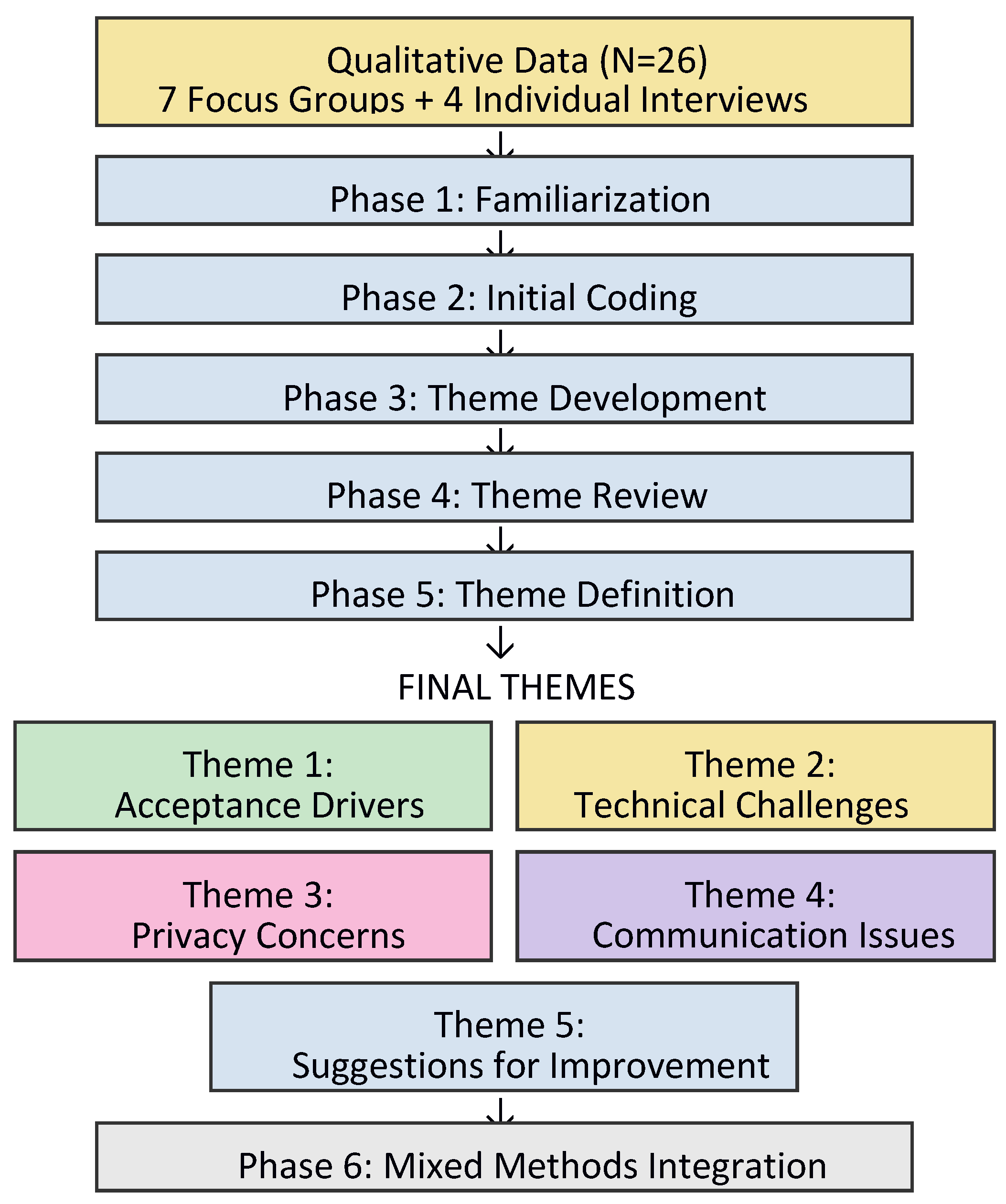
Qualitative data underwent reflexive inductive thematic analysis following Braun and Clarke’s [22] contemporary approach as shown in Figure 1, allowing themes to emerge while examining patterns related to the TAM with researchers’ reflexivity. Research team members are bilingual, Arabic is their first language, hence all Arabic-language transcripts underwent translation and back-translation procedures to ensure accuracy and content check. We employed thematic analysis to code transcripts, create categories, and develop themes until we reached thematic sufficiency as shown in Figure 1. We performed member checking to ensure the trustworthiness of the emerged themes. Moreover, aiming at ensuring the rigor of the collected qualitative data, we have used consolidated criteria for reporting qualitative research (COREQ).

2.6.3. Reflexivity

The research team is multidisciplinary, consisting of researchers with expertise in Medical Education and knowledge management. Authors SE and SA were familiar with the used system, had witnessed its benefits, and were aware of the expected concerns. TM worked in another Saudi institute, while RA worked outside the Saudi Arabian context which is adding diversity within the research team. All 4 researchers are female doctors, of Middle Eastern origin and Arabic language speakers, hence they have conducted the back translation of the transcripts. To maintain reflexivity in data analysis and acknowledge our own personal bias, we met regularly, reviewed transcripts and data analysis steps, considering members’ familiarity with the studied context.

2.7. Statistical Analysis:

Data were analyzed using IBM SPSS Statistics version 28.0 and R version 4.3.1 (R Foundation for Statistical Computing). The analytical approach proceeded in three stages:
Stage 1: Descriptive and bivariate analyses. Categorical variables were summarized as frequencies and percentages. The Composite Acceptance Score (CAS), derived from the 12-item TAM survey, was assessed for normality using the Shapiro–Wilk test. Bivariate associations between demographic variables and acceptance category were evaluated using Fisher’s exact test for categorical predictors and independent samples t-test for continuous predictors.
Stage 2: Multivariable modeling. To identify independent predictors of FRT acceptance while controlling for demographic confounders, we constructed a binary logistic regression model with Good Acceptance (1) vs. Poor Acceptance (0) as the dependent variable.

2.8. Descriptive Statistics

The attitude scale demonstrated a mean score of 42.5 (SD = 8.27, range = 11–55, median = 44, IQR = 38–48). Distribution assessment revealed a skewness = −0.84 (SE = 0.23, z = −3.65) and a kurtosis = 0.72 (SE = 0.46, z = 1.57). While the negative skew indicates modest left-tail concentration (more high scorers), the absolute skewness value < 2.0 and kurtosis < 7.0 suggest a reasonable approximation to normality for inferential purposes, per conventional guidelines. Visual inspection of the histogram and Q-Q plot confirmed no severe departure from normality. Nonetheless, as a conservative approach, we report both parametric (independent samples t-test, ANOVA) and non-parametric (Mann–Whitney U, Kruskal–Wallis) analyses for group comparisons; results were substantively identical, and we present parametric statistics for consistency with field conventions.

3. Results

3.1. Participant Characteristics

A total of 112 faculty members participated in the quantitative phase, with 26 faculty members subsequently participating in qualitative focus groups (n = 7) and individual interviews (n = 4). The sample demonstrated considerable demographic diversity (Table 1). Participants were predominantly female (75%, n = 84).
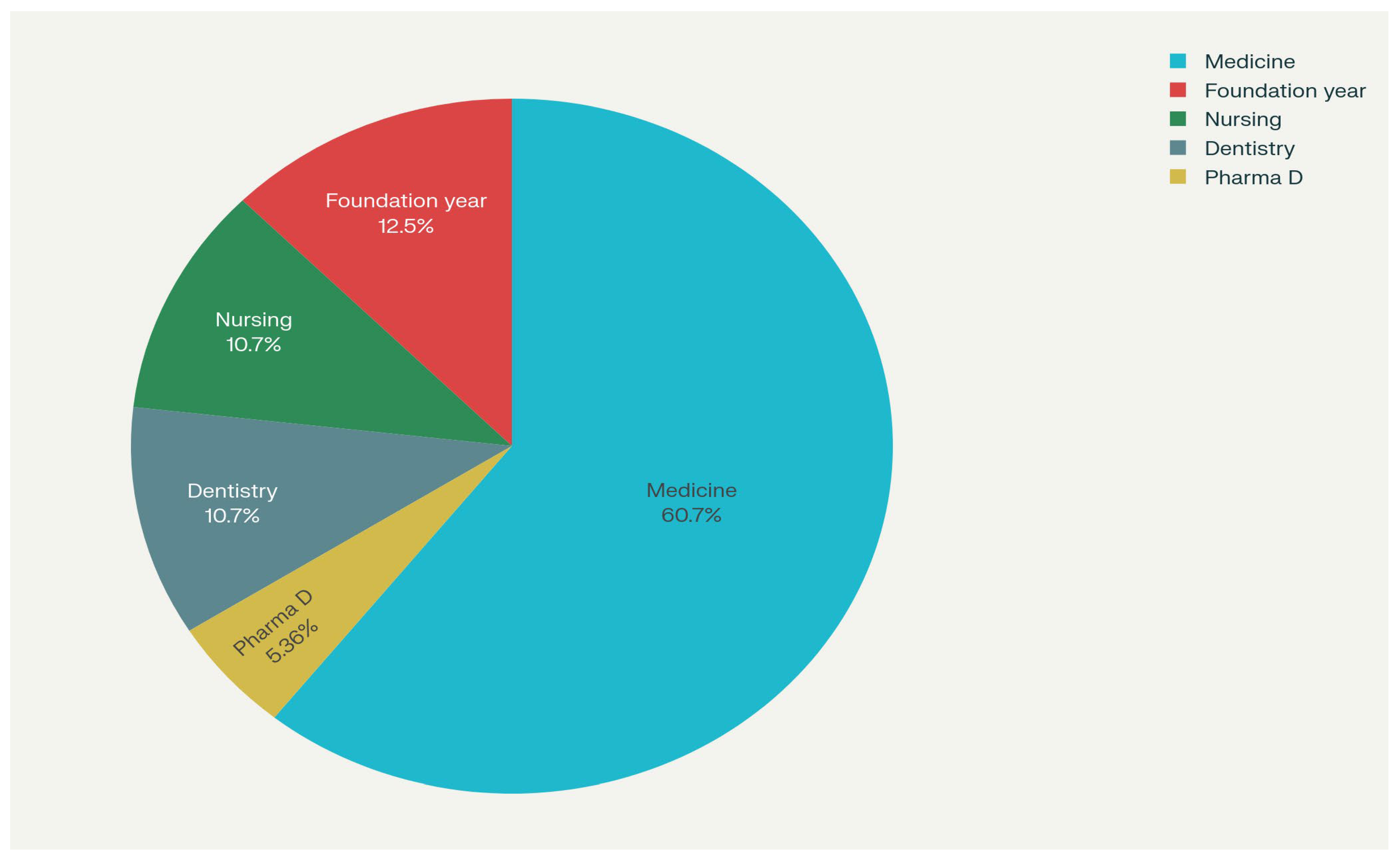
Clinical professionals comprised the majority (53.6%, n = 60), followed by basic science faculty (33.9%, n = 38). Academic ranks were distributed across assistant professors (30.4%, n = 34), full professors (26.8%, n = 30), and lecturers (14.3%, n = 16). Medicine dominated program representation (60.7%, n = 68), as shown in Figure 2.
Analysis of staff FR awareness reveals faculty training emerged as the primary communication channel (58.9%, n = 66), followed by administrative announcements (21.4%, n = 24) and peer discussion (10.7%, n = 12). Notably, 3.6% (n = 4) had not heard about FRT implementation, underscoring the overall effectiveness of the communication channels.
As shown in Table 1, neither gender, age, nor academic background analysis revealed a statistically significant association; but, academic rank reveals a statistically significant association (p = 0.025), with professors showing markedly higher good face recognition rates (37.9% vs. 14.8% poor face recognition acceptance).

3.2. FRT Acceptance and Perceptions

FRT acceptance was nearly balanced, with 51.8% (n = 58) demonstrating good acceptance and 48.2% (n = 54) showing poor acceptance based on the comprehensive attitude scale (range 11–55, mean 42.5 ± 8.27, median 44). Academic rank demonstrated a statistically significant association with FRT acceptance (Fisher’s exact test, p = 0.025 for 5-category analysis; Fisher’s exact test, p = 0.018 for collapsed 3-category analysis). Senior faculty (Associate Professors and Professors combined) exhibited the highest rate of poor acceptance (60.9%, n = 28/46), compared to the mid-level faculty (47.1%, n = 16/34) and the junior faculty (31.2%, n = 10/32). This pattern suggests increasing skepticism toward FRT with advancing academic seniority.
Of 112 participants, 58 (51.8%) demonstrated Good Acceptance (Composite Acceptance Score ≥ 3.52, mean = 3.89 ± 0.42) and 54 (48.2%) demonstrated Poor Acceptance (CAS < 3.52, mean = 2.84 ± 0.52) based on the 12-item Faculty FRT Acceptance Survey (FFRTAS-12). Domain subscale scores for the full sample were: Perceived Ease of Use 3.15 ± 0.91, Perceived Usefulness 3.68 ± 0.82, Trust and Security 3.22 ± 0.95, and Behavioral Intention 3.21 ± 0.94.
Binary logistic regression (Table 1) identified academic rank as the sole significant independent predictor of acceptance when controlling for gender, age, and disciplinary affiliation. The senior faculty had 3.42 times higher odds of Poor Acceptance compared to the junior faculty (adjusted OR = 3.42, 95% CI: 1.38–8.47, p = 0.008). Neither gender (p = 0.655), age (p = 0.390), nor discipline (p = 0.451) demonstrated significant independent effects. The model explained 18.6% of variance (Nagelkerke R2 = 0.186).

3.2.1. Specific Perception Domains

The faculty demonstrated strong confidence in their understanding of FRT, with 85.7% (n = 96) agreeing that they have a clear understanding of system operation, and 82.1% (n = 92) finding implementation instructions clear and transparent (Table 2). Regarding system effectiveness, 75% (n = 84) agreed that FRT is effective for attendance tracking and facilitates classroom management. However, when comparing FRT to traditional methods, agreement decreased to 67.3% (n = 74).
The privacy and security domain revealed complex patterns. While 75% (n = 84) expressed trust in data security measures and 70.9% (n = 78) reported comfort with biometric data, 55.3% (n = 62) simultaneously reported privacy concerns about collected data.
Areas of lower acceptance included student engagement impact (44.7% agreement, n = 50) and positive teaching impact (48.2% agreement, n = 54), with high neutral response rates (30.4% and 44.6% respectively).

3.2.2. Qualitative Findings

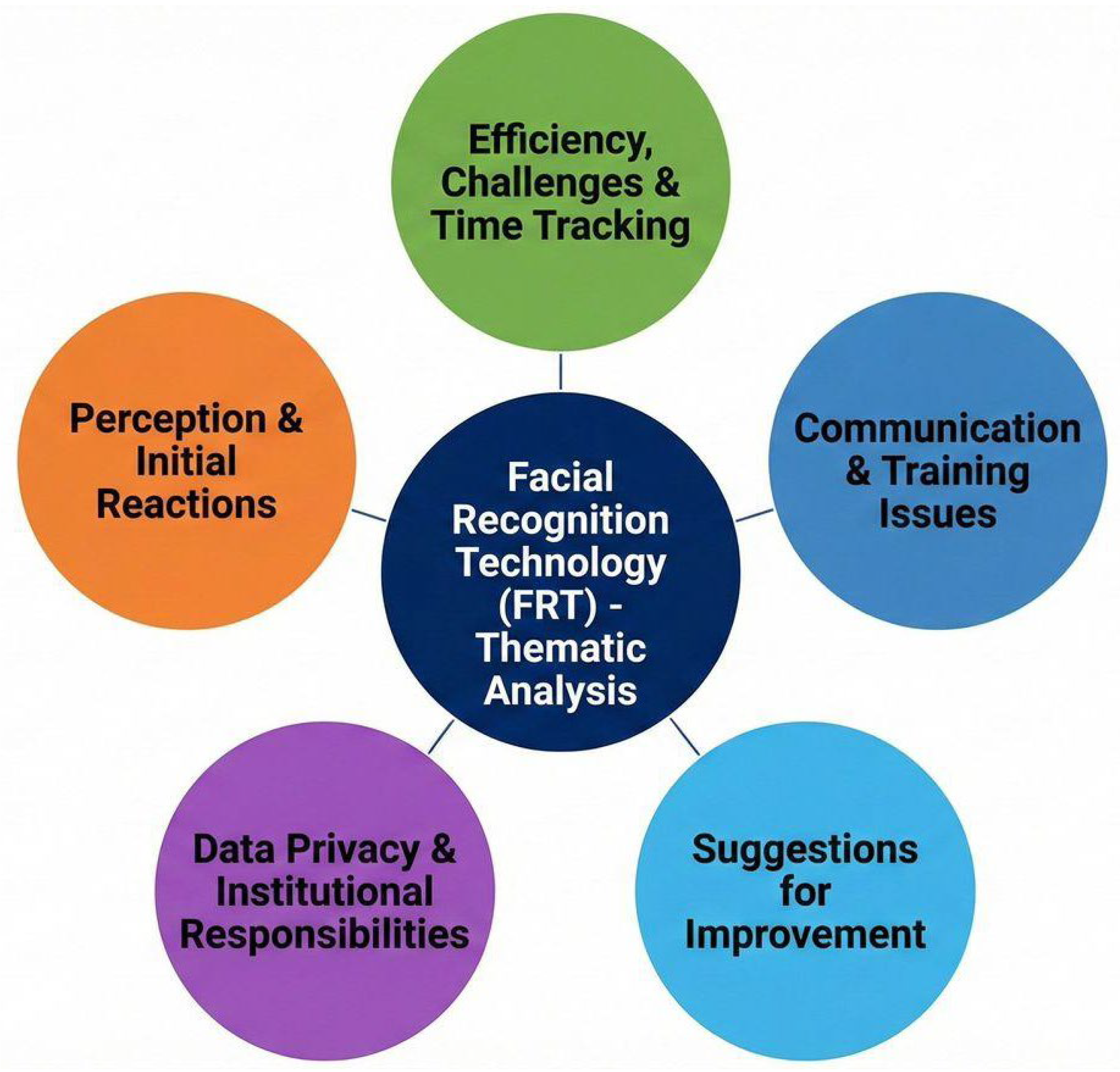
Reflexive thematic analysis of focus groups and interviews using Braun and Clarke’s approach [22,23] revealed six major emerging themes as shown in Figure 3. These themes provided comprehensive insights into faculty perceptions of FRT implementation. The themes revealed complex interactions between acceptance drivers, implementation challenges, and contextual factors that influence technology adoption in medical education settings. Pseudonyms are used to represent the quotes from participants to anonymize any personal information.
Theme 1: 
Perception and Initial Reactions
The theme refers to the early capture stage of cognitive and affective responses to FRT, rather than long-term acceptance or rejection.
Faculty demonstrated mixed reactions to FRT implementation, reflecting the complex nature of technology acceptance in educational contexts. While some faculty perceived FRT positively as an efficient, time-saving tool aligned with institutional technology policy, others shared some concerns related to privacy and students’ resistance.
Positive perceptions were often linked to efficiency benefits and strategic alignment. As one participant noted: “Face recognition is well-established, I didn’t feel any problem” (JN, I_3). However, mixed reactions were common, with faculty acknowledging benefits while experiencing implementation challenges: “Okay, so this is a good thing. However, we faced several problems. Among them, some students attended the session, but they were not reported as attending by the system” (PL, I_4).
A notable finding was the paradox of digital literacy versus resistance among students. Despite the students’ technological competence, faculty members observed resistance that appeared attitude-based rather than usability-related: “Students, they are over comfortable, tech savvy… I learned from them” (GL, I_1). This suggests that acceptance challenges may originally stem from psychological or cultural factors, or from the students’ discomfort with a system that rigorously and accurately tracks their attendance; however, the technical difficulties cannot be overlooked.
Strategic alignment with institutional objectives emerged as a significant acceptance driver. Faculty members recognized FRT implementation as part of the institution’s mission to become technology-enabled: “Introduction to technology is one of the objectives of our mission and vision, especially the mission, that we are technology-enabled… I mean, as long as we put it in the mission, we had to introduce it” (SM, FG1). This institutional framing helped the faculty rationalize FRT adoption.
Theme 2: 
Communication and Training Issues
Communication and training emerged as critical factors influencing FRT acceptance and implementation success. Faculty members reported variable views and expectations of their preparation to adopt the new system.
Variability in the awareness of available training: the majority of staff reported receiving proper training prior to using the system, while others have concerns about preparation adequacy to meet their expectations: “First I was worried, as it requires multi-step verification and then thought it could be an unprofessional application… “ (MG, FG1).
Training effectiveness showed considerable variability, with some faculty members feeling unprepared while others confirmed receiving proper workshops and orientation. This inconsistency in training delivery contributed to uneven implementation experiences.
Theme 3: 
Efficiency Versus Challenges in Attendance Tracking
This theme captures the fundamental tension between FRT’s promised benefits and implementation realities, revealing both significant advantages and persistent challenges.

3.2.3. Benefits and Acceptance Drivers

Efficiency and time-saving benefits were consistently emphasized as primary motivators for FRT acceptance. The faculty highlighted reduced manual attendance time and improved accuracy: “It’s much better than the sign-in sheet. It’s faster, of course. It’s better, faster, and it saves more time” (HN, I_2). This efficiency narrative was particularly compelling for faculty members managing large classes.
Classroom management benefits were valued for streamlined procedures and reduced disruptions. Faculty members advocated that the FRT system helps streamline attendance procedures compared to traditional methods: “The second step that we took, which was the manual. It also had fallacies. It had errors, of course… For me, it was time-consuming. We took a very long time in the lecture. Our lectures are long” (SM, FG1). The system was perceived to add an obligation to attendance and support faculty control of sessions.

3.2.4. Challenges and Concerns

Despite acceptance of drivers, some technical challenges emerged that may question system reliability. System errors, including false positives and negatives, created frustration and an additional workload: “Some students attend the session, but are not recorded by the system… some students report their attendance while they are away, the number recorded is greater than those who are attending, so they retake” (PL, I_4).
Students’ resistance and manipulation: this emerged as a complex phenomenon that transcended technical usability issues. Despite the students’ digital literacy and comfort with technology, faculty members observed resistance to biometric tracking that appeared rooted in attitudes toward surveillance rather than technical capabilities. Consequently, faculty members reported students’ manipulation to bypass the system through Bluetooth-based attendance fraud, trials to mark attendance remotely, and proxy attendance marking by peers. These manipulation tactics did not only undermine system integrity but also created additional verification burdens for the faculty. It is worth mentioning that this issue has been resolved by implementing additional advanced technologies to detect manipulation using sophisticated methods and to ensure reliability in reporting students’ attendance. However, this resistant attitude could be explained by the broader discomfort with biometric tracking and students ‘concerns about facial recognition and this resistance may contribute to a broader discomfort with biometric tracking and concerns about how facial recognition is aligned with local cultural norms.
Connectivity issues compounded technical problems, with internet connectivity affecting system performance: “But if there is an internet problem, it makes the case a little difficult. It makes the student come back to us, so it bothers us a little” (LA, FG_3). These infrastructure dependencies highlighted the importance of robust technical support for successful implementation.
Disciplinary differences were noted, with clinical science students facing distinct implementation challenges compared to their basic science counterparts. In clinical settings, students and faculty frequently wear personal protective equipment (PPE)—including surgical masks, face shields, and head coverings—which partially or fully occludes the facial features required for accurate biometric recognition. This occlusion significantly increases the rate of false negatives, whereby physically present students are not registered by the system, creating an additional administrative burden for faculty members who must manually verify and correct attendance records. Furthermore, clinical rotations often take place in hospital wards, simulation laboratories, and outpatient clinics where lighting conditions, spatial configurations, and device positioning are less controlled than in standard lecture theaters, further compromising system accuracy. As one faculty member noted: “In the clinical areas, students wear masks all the time—the system simply does not recognize them, and we end up spending more time fixing the attendance than we would have with a paper sheet” (Clinical Faculty, FG_2).
Cultural factors significantly influenced FRT acceptance, with challenges related to religious and cultural practices. Faculty members reported initial concerns among colleagues who cover their faces: “At the beginning, those who are covering their face, they were worried” (HN, I_2). This finding underscores the importance of culturally responsive technology implementation in diverse educational environments. Considering cultural concerns, the college’s LMS facial recognition system enables attendance verification for veiled female by recognizing their eye region.
Theme 4: 
Privacy, Security, and Ethical Concerns
Biometric data security concerns focused on fears of data misuse, unauthorized access, and the unique risks associated with facial recognition information. The faculty expressed concerns about how biometric data is stored, shared, and protected from potential breaches.
The need for transparent policies emerged as a critical demand, with the faculty requesting clear guidelines on data usage, storage, and sharing protocols. This transparency demand reflects broader expectations for institutional accountability and ethical governance of biometric technologies in educational settings. The faculty specifically requested clearer policies on data protection, regular audits, awareness programs, and better communication about data handling practices.
Theme 5: 
Suggestions for Improvement
The faculty provided comprehensive suggestions for addressing implementation challenges and improving FRT effectiveness. Enhanced faculty training was prioritized, with requests for increased support and guidance on system use, along with proper communication before implementation to reduce resistance.
Overcoming student manipulation strategies included using “engager” options where the faculty ask students specific questions during content delivery to confirm physical attendance, implementing buzzer systems, and addressing technical vulnerabilities. The faculty suggested limiting Bluetooth-based attendance fraud through distance restrictions: “Distance should be very narrow, less than 2 m, without barriers” (PR, FG3).
Technical improvements included regular system updates, classroom internet connectivity checks to minimize technical issues, and addressing mobile version limitations. These suggestions reflect the faculty’s understanding of both technical and pedagogical requirements for successful FRT implementation.

3.3. Mixed-Methods Integration

Table 3, Table 4 and Table 5 show widespread privacy concerns when aligning both quantitative and qualitative data.
Also, technical and cultural challenges justifying system resistance were mapped against system acceptance. Hence, faculty members experiencing primarily benefits demonstrate good acceptance, while those encountering technical problems, privacy concerns, or cultural barriers show poor acceptance.
An interesting finding is the discrepancy between high scores of understanding system use versus variability of effectiveness and communication training indicates systematic implementation challenges requiring attention.

4. Discussion

This mixed-methods study explored the integration of AI-powered FRT into tracking students’ attendance that has elicited diverse perceptions among faculty members, reflecting both its transformative potential and persistent ethical dilemmas. This study reveals that a majority of participants demonstrated a clear understanding of the system (85.7% combined agreement) and acknowledged its effectiveness in attendance tracking (75.0% agreement). These findings suggest effective communication and training strategies, particularly faculty-led sessions, which reached 58.9% of respondents, were successful in fostering basic system literacy. However, qualitative analysis showed variability in awareness and training effectiveness, and the observed pattern—wherein senior faculty members demonstrated higher resistance while junior faculty members showed greater acceptance—bears a superficial resemblance to staged change models. However, we emphasize that our cross-sectional design* cannot establish temporal progression or confirm that resistant faculty members will eventually accept FRT. The Kübler-Ross model, developed for individual grief processes, has limited applicability to organizational technology adoption and should not be inferred from our data. Rather than demonstrating ‘progression’ through stages, our findings suggest static, role-differentiated attitudes that may reflect generational digital literacy gaps, differential institutional socialization, or career-stage-related risk calculus. Future longitudinal research could test whether staged change models accurately describe faculty attitude evolution over time; until then, such frameworks remain speculative heuristics rather than empirically validated explanations for our findings.
Faculty members with senior academic ranks (e.g., professors) exhibited significantly higher acceptance levels than junior staff (p = 0.025), suggesting that institutional trust and administrative alignment play critical roles in adoption of technology. This aligns with broader trends in healthcare education, where leadership buy-in often dictates the success of digital transformations. The system’s accuracy compared to traditional methods received strong endorsement (67.3% agreement), corroborating studies demonstrating FR’s superiority in reducing human error and administrative burden. Similar findings were reported in a study for HR attendance tracking incorporating Haar Cascade with OpenCV2 on an embedded computer [24]. They have reported precise facial detection, reduced errors and the need for manual detection tools. However, the near-equal split between “poor” and “good” overall acceptance scores (48.2% vs. 51.8%) highlights unresolved tensions between efficiency gains and ethical reservations [21].
Concerns about privacy (55.3% combined agreement) and mixed impacts on pedagogical practices underscore the complexity of its adoption in medical education. Our observed 48.2% poor acceptance rate must be interpreted [17] within its specific context: a private Saudi medical faculty evaluating attendance-tracking FRT in 2024. We caution against direct comparison with published rates from dissimilar populations. For instance, Smith et al. reported 68% public opposition to FRT in Australian security contexts using a general population survey, while Guillén-Gamez et al. [25] found 42% EU acceptance of FRT in commercial settings among mixed demographics. These studies differ from ours across at least five critical dimensions: (1) population type (general public vs. professional faculty), (2) cultural and regulatory environment (Western environment vs. Middle Eastern environment), (3) FRT purpose (security/surveillance vs. administrative efficiency), (4) measurement instruments (general privacy concern scales vs. education-specific acceptance measures), and (5) temporal context (pre-pandemic vs. post-pandemic technology normalization). Rather than ranking our findings against these benchmarks, we highlight that acceptance is contextually contingent and that our contribution lies in characterizing a previously unstudied population—Saudi medical faculty—rather than establishing universal opposition rates.
The dominance of faculty training as the primary information source (58.9%) underscores the importance of structured onboarding processes, consistent with best practices for healthcare technology integration. FR’s potential to streamline attendance in large medical cohorts must be balanced against the risks of normalizing surveillance in learning environments, a concern amplified by its capacity for behavioral analytics [26].
The nearly balanced acceptance rates observed in this study align with broader patterns of biometric technology adoption in educational settings, where convenience benefits compete with privacy concerns [27].
Perceived system effectiveness and accuracy were similarly positive: 75.0% agreed or strongly agreed that FRT effectively tracks attendance, and 67.3% endorsed its superior accuracy compared to traditional methods. Such favorable evaluations align with prior reports of FRT’s time-saving benefits and reductions in administrative workload. Nevertheless, privacy concerns persisted: 55.3% of participants agreed or strongly agreed they worried about data privacy, reflecting the need for continued emphasis on data security measures and transparent governance. This finding resonates with recent research demonstrating that biometric technology acceptance is mediated by trust, privacy perceptions, and institutional context [28]. Importantly, the nature of these privacy concerns is multidimensional and mirrors those documented in the comparative literature. Faculty in this study expressed specific anxieties regarding the long-term storage of biometric data—particularly whether facial templates are retained beyond the academic session or shared with third-party vendors—as well as concerns about unauthorized institutional access and the potential repurposing of data for surveillance beyond attendance monitoring. These concerns align closely with those reported by Selwyn [26], who identified data retention policies, third-party data sharing, and the absence of meaningful consent mechanisms as the primary drivers of public resistance to FRT in educational settings. Similarly, Daon [29] highlights that biometric data, unlike passwords or identity cards, cannot be revoked once compromised, making the stakes of a data breach uniquely irreversible. In the Saudi context, these concerns are further compounded by the relatively nascent state of the national data protection regulatory framework, which—while progressing under the Personal Data Protection Law—does not yet provide the same degree of institutional accountability as the GDPR in European settings [13,27].
The paradox of digital literacy versus resistance among participants, as identified in the qualitative analysis from the faculty perspective, reflects broader generational attitudes toward surveillance technologies. Despite students’ technological competence, their resistance appears rooted in privacy consciousness rather than usability concerns, consistent with recent findings on Generation Z’s heightened privacy awareness in educational contexts [30]. Moreover, this aligns with Scott and Jaffe’s change cycle of having initial resistance when embracing a new change till reaching the commitment phase [31].

4.1. Privacy and Ethical Governance Implications

The significant privacy concerns expressed by 55.3% of the faculty, coupled with qualitative analysis. This underscores the critical importance of transparent biometric governance frameworks in educational institutions. Recent regulatory developments, including New York’s 2023 ban on facial recognition in schools, highlight the evolving legal landscape surrounding biometric technologies in education [30]. The faculty’s requests for clear data usage policies and transparent governance align with contemporary biometric ethics frameworks emphasizing consent, transparency, and data minimization [32].
The cultural dimensions identified in this study, particularly concerns among faculty members who cover their faces, demonstrate the importance of culturally responsive technology implementation.

4.2. Technical Performance and Implementation Challenges

The technical challenges identified. including false positives/negatives, student manipulation, and connectivity dependencies, reflect broader implementation challenges documented in educational biometric systems. The qualitative findings reveal that technical reliability issues significantly impact faculty trust and acceptance, consistent with research demonstrating that system performance directly influences user acceptance of biometric technologies [33].
The communication gaps identified (3.6% unaware of implementation) highlight the important role of change management in technology adoption. The predominance of faculty training as a communication channel (58.9%) suggests institutional commitment to preparation, yet variable training effectiveness indicates the need for standardized implementation protocols.
The variability of faculty awareness of available training sheds light on the importance of conducting regular needs assessment of involved stakeholders. The latter aimed to ensure that the training program meets faculty expectations for system applicability and provides guidance on how to deal with the potential technical challenges [34,35].

4.3. Mixed-Methods Integration Insights

The convergence between quantitative privacy and qualitative themes validates the robustness of the findings. The expansion of qualitative data explains the mechanisms underlying the balanced acceptance rates, revealing that technical performance, cultural factors, and institutional communication collectively influence adoption outcomes. This integration provides a comprehensive understanding of FRT acceptance that neither quantitative nor qualitative methods could achieve independently.
As insider-researchers at the private Saudi medical college, the authors acknowledge potential biases in interpreting the findings. Two strategies addressed this: (1) peer debriefing with external qualitative methodologists unaffiliated with the college, and (2) negative case analysis actively seeking disconfirming evidence. While these measures enhance the rigor of the study, it is possible that social desirability may have influenced some responses; the reported acceptance rate (51.8%) may, in part, reflect participants’ general support for institutional initiatives. Future independent, multi-site studies would further strengthen external validity.

4.4. Limitations

Several limitations are identified for the study. The single-institution design limits external validity, as institutional culture, technological infrastructure, and demographic composition may influence results. The convenience sampling approach for qualitative participants may introduce selection bias, potentially over-representing faculty members with strong opinions about FRT. Additionally, the study does not examine actual usage behaviors or long-term adoption patterns, focusing instead on initial perceptions and intentions. The absence of objective performance metrics limits understanding of the relationship between perceived and actual system effectiveness. Furthermore, as insider-researchers conducting a study within their own institutional context, the authors acknowledge that personal and professional positions may have inevitably influenced data interpretation. While peer debriefing and negative case analysis were employed to mitigate this, residual positionality bias cannot be entirely excluded.

4.5. Recommendations

Future research should examine longitudinal adoption patterns, incorporate student perspectives to complete the stakeholder ecosystem, and conduct cross-cultural comparative studies to determine the broader applicability of these findings. Ultimately, this study demonstrates that FRT acceptance in medical education represents a complex sociotechnical challenge requiring collaboration, transparency, and commitment to balancing innovation with the fundamental principles that guide educational institutions in serving diverse learning communities.

5. Conclusions

The study demonstrates that FRT acceptance in medical education is multifaceted and influenced by specific institutional and cultural factors. Successful implementation requires simultaneous attention to technical reliability, privacy protection, cultural inclusivity, and comprehensive change management rather than focusing solely on technological functionality.
The implemented mixed-methods investigation reveals that faculty perceptions of FRT in medical education are characterized by nuanced complexity rather than simple acceptance or rejection. The nearly balanced acceptance rates (51.8% vs. 48.2%) reflect a sophisticated evaluation process where perceived benefits compete with legitimate concerns about privacy, cultural sensitivity, and technical reliability. Further research is required to explore the variability in systemic implementation and analyze this paradox in reactions in greater depth, as well as the possible environmental factors within different cultural contexts.

Supplementary Materials

The following supporting information can be downloaded at: https://www.mdpi.com/article/10.3390/ime5020050/s1, Supplementary File S1: Explore faculty staff members’ perceptions and concerns regarding the use of facial recognition for attendance control.

Author Contributions

Conceptualization, S.E.T., R.A. and T.M.; methodology, S.E.T.; software, S.A.; validation, S.A.; formal analysis, S.E.T.; investigation, S.E.T.; resources, T.M.; data curation, S.A.; writing—original draft preparation, S.E.T.; writing—review and editing, R.A. and T.M.; visualization, S.A.; supervision, R.A. and T.M.; project administration. R.A. and T.M. contributed equally to this work as co-last authors. All authors have read and agreed to the published version of the manuscript.

Funding

This research received no external funding.

Institutional Review Board Statement

The study was conducted in accordance with the Declaration of Helsinki and approved by Ibn Sina National College Research and Ethics Committee (Ref. No IRRB-ER-02-13102024).

Informed Consent Statement

Informed consent was obtained from all participants, with particular attention to confidentiality protections and voluntary participation. All data were stored securely with restricted access, complying with Saudi Arabia’s Personal Data Protection Law [13], and participants were assured that responses would not be shared with institutional administrators. British Educational Research Association (BERA) Guidelines were all followed through the research project.

Data Availability Statement

No new data were created or analyzed in this study. Data are available upon request.

Conflicts of Interest

The authors declare no conflicts of interest.

References

  1. Chen, K.K.; Banerjee, A. The digital transformation of medical education. Obstet. Med. 2021, 14, 3. [Google Scholar] [CrossRef] [PubMed]
  2. Fedorchenko, Y.; Zaiiats, L. Digital Transformation of Medical Education: The Role of Artificial Intelligence. Arch. Clin. Med. 2025, 31, 38–41. [Google Scholar] [CrossRef]
  3. Zaini, R.; Al-Rumayyan, A.; Abdulghani, H.; AlQumaizi, K.; Al-Kadi, A.; Al-Hayani, A.; Alsaedi, S.; Saleh, S.; AlRukban, M. Saudi Medical Education Directives (MEDs) Framework Saudi MEDs Framework. Health Prof. Educ. 2023, 9, 7. [Google Scholar] [CrossRef]
  4. Laird-Fick, H.S.; Solomon, D.J.; Parker, C.J.; Wang, L. Attendance, engagement and performance in a medical school curriculum: Early findings from competency-based progress testing in a new medical school curriculum. PeerJ 2018, 6, e5283. [Google Scholar] [CrossRef]
  5. Aishwarya, T.G.; Veena, N.; Asritha, P. Face Recognition Attendance Management System. Int. J. Res. Publ. Rev. 2025, 6, 11049–11052. [Google Scholar] [CrossRef]
  6. Talele, R.; Srivathsan, S.; Gupta, A.; Tiwari, D.; Garg, B. Efficient Attendance Tracking with Facial Recognition. J. Electr. Syst. 2024, 20, 93–103. [Google Scholar]
  7. Keppens, G. School absenteeism and academic achievement: Does the timing of the absence matter? Learn. Instr. 2023, 86, 101769. [Google Scholar] [CrossRef]
  8. Ghodekar, A.; Gunjal, T.; Landage, A.; Phapale, A.; Thorat, D.; Nikam, R. A Face Recognition-Based Smart Student Attendance and Activeness Monitoring System. In Proceedings of the 2023 4th International Conference on Computation, Automation and Knowledge Management (ICCAKM), Dubai, United Arab Emirates, 12–13 December 2023; IEEE: New York, NY, USA, 2023; pp. 1–5. [Google Scholar] [CrossRef]
  9. Tamilkodi, R.; Vasamsetti, S.; Rajasekhar, S.; Kumar, A.K.; Prasad, E.D.; Jagadeesh, S. Efficient Attendance Tracking Using AI-Based Face Recognition and Absence Alerts for Educational Institutes. In Proceedings of the International Conference on Computational Innovations and Emerging Trends (ICCIET-2024), Amalapuram, India, 4–5 April 2024; Atlantis Press: Dordrecht The Netherlands, 2024. [Google Scholar] [CrossRef]
  10. Al-Hassan, S.; Al-Tannir, M.; Al-Tannir, M. Effect of absenteeism on student’s performance in different assessment modalities in a medical school. BMC Med. Educ. 2024, 32, 47. [Google Scholar]
  11. Georgina, D.A.; Olson, M.R. Integration of technology in higher education: A review of faculty self-perceptions. Internet High. Educ. 2008, 11, 1–8. [Google Scholar] [CrossRef]
  12. Salvi, S.; Pramod, J.S.A. ClassScan: Simplifying Classroom Attendance using Three-Dimensional Dense Face Alignment and Face Recognition. In Proceedings of the 7th International Conference on Computation System and Information Technology for Sustainable Solutions (CSITSS), Bangalore, India, 2–4 November 2023; IEEE: New York, NY, USA, 2023; pp. 1–6. [Google Scholar] [CrossRef]
  13. Saudi Vision 2030. Available online: https://www.vision2030.gov.sa/en (accessed on 14 February 2026).
  14. Levine, M.; Roberts, S. Facial Recognition Technology and Privacy Norms in Culturally Conservative Contexts; Stanford University: Stanford, CA, USA, 2022. [Google Scholar]
  15. Bond, M.; Marín, V.I.; Dolch, C.; Bedenlier, S. Digital transformation in German higher education: Student and teacher perceptions and usage of digital media. Int. J. Educ. Technol. High. Educ. 2018, 15, 48. [Google Scholar] [CrossRef]
  16. Davis, F.D. Perceived Usefulness, Perceived Ease of Use, and User Acceptance of Information Technology. MIS Q. 1989, 13, 319–340. [Google Scholar] [CrossRef]
  17. Harris, P.T.; Øvrelid, E.; Ludvigsen, S.; Dæhlen, M. Faculty Perspectives Toward Artificial Intelligence in Higher Education. Ph.D. Thesis, Middle Georgia State University, Macon, GA, USA, 2024. Available online: https://comp.mga.edu/static/media/doctoralpapers/2024_Harris_0909141741.pdf (accessed on 31 May 2025).
  18. Andrejevic, M.; Selwyn, N. Facial recognition technology in schools: Critical questions and concerns. Learn. Media Technol. 2019, 45, 115–128. [Google Scholar] [CrossRef]
  19. Lee, J.C.; Bi, L.; Liu, H. User stickiness to facial recognition payment technology: Insights from Sako’s trust typology, privacy concerns, and a cross-cultural context. Humanit. Soc. Sci. Commun. 2024, 11, 1070. [Google Scholar] [CrossRef]
  20. Alhur, A. Overcoming Electronic Medical Records Adoption Challenges in Saudi Arabia. Cureus 2024, 16, e10924290. [Google Scholar] [CrossRef] [PubMed]
  21. Mansour, T.; Bick, M. How can physicians adopt AI-based applications in the United Arab. Emirates to improve patient outcomes? Cureus 2024, 16, e11440542. [Google Scholar] [CrossRef]
  22. Braun, V.; Clarke, V. Using thematic analysis in psychology. Qual. Res. Psychol. 2006, 3, 77–101. [Google Scholar] [CrossRef]
  23. Braun, V.; Clarke, V. Reflecting on reflexive thematic analysis. Qual. Res. Sport Exerc. Health 2019, 11, 589–597. [Google Scholar] [CrossRef]
  24. Boe, C.H.; Ng, K.-W.; Haw, S.-C.; Naveen, P.; Anaam, E.A. An Automated Face Detection and Recognition for Class Attendance. JOIV Int. J. Inform. Vis. 2024, 8, 1146. [Google Scholar] [CrossRef]
  25. Guillén-Gámez, F.D.; García-Magariño, I. A Study of the Acceptance of Facial Authentication in Distance Education in Different Spanish Speaking Countries. In Proceedings of the 6th International Conference on Computer Supported Education (CSEDU 2014), Barcelona, Spain, 1–3 April 2014; SCITEPRESS: Setúbal, Portugal, 2014; pp. 438–443. [Google Scholar] [CrossRef]
  26. Selwyn, N. Beyond Surveillance: Privacy, Ethics, and Regulations in Face Recognition Technology. Front. Big Data 2024, 7, 1337465. [Google Scholar] [CrossRef] [PubMed]
  27. Hemavathi, M.S.; Chakravarthi, M.R. AI-Powered Security and Attendance Management System Using Deep Learning and Facial Recognition. J. Inf. Syst. Eng. Manag. 2025, 10, 372–381. [Google Scholar] [CrossRef]
  28. Zhang, A.N. Impact of perceived privacy and security in the TAM model: The perceived trust as the mediated factors. Int. J. Inf. Manag. Data Insights 2024, 4, 100270. [Google Scholar] [CrossRef]
  29. Daon. The Ethics and Concerns of Biometric Data Collection. 2024. Available online: https://www.daon.com/resource/the-ethics-and-concerns-of-biometric-data-collection/ (accessed on 14 February 2026).
  30. Tetik, G.; Türkeli, S.; Pinar, S.; Tarim, M. Health information systems with technology acceptance model approach: A systematic review. Int. J. Med. Inform. 2024, 190, 105556. [Google Scholar] [CrossRef]
  31. National Academies of Sciences, Engineering, and Medicine. Facial Recognition Technology: Current Capabilities, Future Prospects, and Governance; The National Academies Press: Washington, DC, USA, 2024. [Google Scholar] [CrossRef]
  32. Scott, C.D.; Jaffe, D.T. Managing Change at Work: Leading People Through Organizational Transitions, 3rd ed.; Crisp Publications: Boson, MA, USA, 2004. [Google Scholar]
  33. Skibinski, B. The Evolution of the Chief Technology Officer and the Modernization of Technology in Education. All Student Theses and Dissertations. Ph.D. Thesis, Governors State University, University Park, IL, USA, 2023. Available online: https://opus.govst.edu/theses/141 (accessed on 14 February 2026).
  34. Panagoulias, D.P.; Virvou, M.; Tsihrintzis, G.A. A novel framework for artificial intelligence explainability in biometric systems using the Technology Acceptance Model, and Rapid Estimate of Adult Literacy in Medicine using machine learning. Expert Syst. Appl. 2024, 248, 123375. [Google Scholar] [CrossRef]
  35. Abouelenein, Y.A.M. Training needs for faculty members: Towards achieving quality of university education in the light of technological innovations. Educ. Res. Rev. 2016, 11, 1180–1193. [Google Scholar] [CrossRef]
Figure 1. Thematic analysis process.
Ime 05 00050 g001
Figure 2. Distribution of staff among the institution’s programs.
Ime 05 00050 g002
Figure 3. FRT implementation: faculty perceptions thematic framework.
Ime 05 00050 g003
Table 1. Sociodemographic characteristics and Facial Recognition Technology (FRT) acceptance among faculty at a private Saudi medical college (n = 112).
VariableCategoryn (%)Good Acceptance n (%)Poor Acceptance n (%)p Value
Overall112 (100)58 (51.8)54 (48.2)
GenderFemale84 (75.0)44 (52.4)40 (47.6)0.275 a
Male28 (25.0)14 (50.0)14 (50.0)
Age20–40 years44 (39.3)20 (45.5)24 (54.5)0.075 a
41+ years68 (60.7)38 (55.9)30 (44.1)
Academic BackgroundClinical74 (66.1)40 (54.1)34 (45.9)0.358 a
Basic Science38 (33.9)18 (47.4)20 (52.6)
Academic Rank bInstructor16 (14.3)12 (75.0)4 (25.0)0.025 a,**
Lecturer16 (14.3)10 (62.5)6 (37.5)
Assistant Professor34 (30.4)18 (52.9)16 (47.1)
Associate Professor16 (14.3)6 (37.5)10 (62.5)
Professor30 (26.8)12 (40.0)18 (60.0)
Academic Rank (Collapsed) cJunior32 (28.6)22 (68.8)10 (31.2)0.018 ᵃ,**
Mid-Level34 (30.4)18 (52.9)16 (47.1)
Senior46 (41.1)18 (39.1)28 (60.9)
a Fisher’s exact test; no test statistic or degrees of freedom reported as this is an exact test. b Original 5-category classification; presented for descriptive completeness. c Collapsed 3-category classification (Junior = Instructor + Lecturer; Mid-Level = Assistant Professor; Senior = Associate Professor + Professor); primary inferential result. ** p < 0.01.
Table 2. Perceptions and attitudes toward facial recognition implementation.
DomainKey Items Descriptive Statistics
n = 112
Perceived Ease of Use (PEOU)I have a clear understanding of how the face recognition attendance system works.Strongly disagree2 (1.8%)
Disagree2 (1.8%)
Neutral12 (10.7%)
Agree36 (32.1%)
Strongly agree60 (53.6%)
The instructions for implementing the face recognition attendance system were clear and transparent.Strongly disagree2 (1.8%)
Disagree4 (3.6%)
Neutral14 (12.5%)
Agree38 (33.9%)
Strongly agree54 (48.2%)
I find the facial recognition system user-friendly and easy to navigate.Strongly disagree6 (5.4%)
Disagree0 (0%)
Neutral22 (19.6%)
Agree46 (41.1%)
Strongly agree38 (33.9%)
Perceived Usefulness (PU)The face recognition technology is effective in tracking student attendance.Strongly disagree6 (5.5%)
Disagree2 (1.8%)
Neutral28 (25.5%)
Agree34 (30.9%)
Strongly agree40 (36.4%)
Compared to traditional methods, the face recognition attendance system is accurate.Strongly disagree10 (8.9%)
Disagree14 (12.5%)
Neutral26 (23.2%)
Agree40 (35.7%)
Strongly agree22 (19.6%)
The system saves time during classroom attendance-taking.Strongly disagree4 (3.6%)
Disagree6 (5.4%)
Neutral18 (16.1%)
Agree48 (42.9%)
Strongly agree36 (32.1%)
Trust and SecurityI trust the system to ensure my data security.Strongly disagree2 (1.8%)
Disagree10 (9.1%)
Neutral20 (18.2%)
Agree42 (38.2%)
Strongly agree36 (32.7%)
I feel comfort about biometric data.Strongly disagree2 (1.8%)
Disagree4 (3.6%)
Neutral22 (19.6%)
Agree50 (44.6%)
Strongly agree34 (30.4%)
I am confident that the system complies with institutional and national data protection regulations.Strongly disagree4 (3.6%)
Disagree2 (1.8%)
Neutral22 (19.6%)
Agree46 (41.1%)
Strongly agree38 (33.9%)
Behavioral Intention to UseI currently use the facial recognition system regularly for attendance.Strongly disagree6 (5.4%)
Disagree22 (19.6%)
Neutral34 (30.4%)
Agree30 (26.8%)
Strongly agree20 (17.9%)
I would recommend this system for wider implementation in other departments.Strongly disagree4 (3.6%)
Disagree4 (3.6%)
Neutral50 (44.6%)
Agree32 (28.6%)
Strongly agree22 (19.6%)
I intend to continue using this system in future classes.Strongly disagree4 (3.6%)
Disagree2 (1.8%)
Neutral22 (19.6%)
Agree46 (41.1%)
Strongly agree38 (33.9%)
Table 3. Mixed-methods integration summary.
Integration TypeQuantitative FindingQualitative ThemeKey Insight
Convergence55.3% privacy concernsBiometric data security concerns and trust variabilityValidates widespread privacy apprehension
Expansion48.2% poor acceptanceTechnical challenges and cultural barriersExplains reasons for resistance
Complementarity75% effective vs. 67.3% accurateSystem errors and reliability issuesTechnical problems undermine benefits
Development85.7% understand vs. training gapsTraining effectiveness variability of awareness communicationSuperficial vs. deep understanding
Table 4. Mapping quantitative and qualitative data findings.
Quantitative FindingQualitative ThemeKey Insight
55.3% privacy concernsBiometric data security concerns and trust variabilityValidates widespread privacy apprehension
48.2% poor acceptanceTechnical challenges and cultural barriersExplains reasons for resistance
85.7% understand vs. training gapsTraining effectiveness variability of awareness communicationSuperficial vs. deep understanding
Table 5. Qualitative themes with quantitative support.
ThemeKey Sub-ThemesSupporting Quantitative Data
Acceptance DriversEfficiency, strategic alignment, classroom management75% agree on effectiveness and management
Technical ChallengesSystem errors, student manipulation, connectivityGap between 75% effectiveness and 67.3% accuracy
Privacy ConcernsSurveillance anxiety, data security, transparency55.3% have privacy concerns
Cultural BarriersStudent resistance, cultural practices, trust issues44.7% agree on student engagement
Implementation IssuesTraining gaps, communication problems
Disclaimer/Publisher’s Note: The statements, opinions and data contained in all publications are solely those of the individual author(s) and contributor(s) and not of MDPI and/or the editor(s). MDPI and/or the editor(s) disclaim responsibility for any injury to people or property resulting from any ideas, methods, instructions or products referred to in the content.