Review

Ophthalmic Effects of Recreational (“Party”) Drugs: Clinical and Translational Perspectives

by
Vinoth Navaratnam
1,
Jurgen Baumann
2 and
Maneli Mozaffarieh
1,2,*
1
Department of Ophthalmology, University of Basel, 4031 Basel, Switzerland
2
Limmat-Eye-Center, 8005 Zürich, Switzerland
*
Author to whom correspondence should be addressed.
J. Clin. Transl. Ophthalmol. 2026, 4(2), 13; https://doi.org/10.3390/jcto4020013
Submission received: 10 March 2026 / Revised: 27 April 2026 / Accepted: 8 May 2026 / Published: 12 May 2026

Abstract

Recreational (“party”) drug use is prevalent in social environments and is increasingly relevant in ophthalmic care. While the neurological and cardiovascular consequences of these subokstances are well documented, their ocular and visual effects may not be fully recognized or consistently reported in clinical practice. This invited narrative review summarizes clinical observations and translational mechanisms underlying ophthalmic manifestations associated with commonly used recreational substances, including sympathomimetic stimulants (cocaine, amphetamines), empathogens (3,4-methylenedioxymethamphetamine (MDMA), inhalants (alkyl nitrites, “poppers”), and cannabinoids (cannabis/Δ9-tetrahydrocannabinol (THC)). Particular focus is placed on vascular dysregulation, altered ocular perfusion pressure, venous outflow impairment, oxidative stress, and neuro-ophthalmic dysfunction. Characteristic presentations, diagnostic pitfalls, and management considerations are discussed. Improved awareness of drug-related ocular effects may facilitate earlier recognition of such conditions and help reduce the risk of visual complications. Other recreational substances, including hallucinogens and emerging psychoactive compounds, may also have ocular effects, although current evidence remains limited.

1. Introduction

Recreational drug use has become a persistent feature of modern recreational social environments [1]. A significant proportion of consumption occurs in contexts characterized by alcohol co-ingestion, poly-substance use, prolonged physical exertion, dehydration, sleep deprivation, and sympathetic activation [2]. These systemic conditions are directly relevant to ocular physiology, particularly vascular autoregulation, endothelial integrity, and ocular perfusion pressure [3].
Recreational drugs encompass heterogeneous substances with distinct neurochemical actions but convergent downstream effects on vascular tone, autonomic regulation, inflammatory mediators, thrombogenicity, and oxidative stress [4,5]. Although the primary pharmacologic targets differ—monoaminergic transporters, serotonergic receptors, nitric oxide pathways, or cannabinoid receptors—their systemic hemodynamic consequences often overlap. Acute sympathetic surges, vasoconstriction, vasodilation with unstable perfusion pressure, endothelial dysfunction, and oxidative stress may destabilize ocular blood flow [6].
The retina and optic nerve are particularly vulnerable to acute disturbances of perfusion pressure and venous outflow. Ocular perfusion pressure (OPP), commonly approximated as 2/3 mean arterial pressure minus intraocular pressure (IOP), may be further influenced by retinal venous pressure (RVP) [7]. Elevation of RVP reduces effective capillary perfusion gradient and may predispose to venous congestion, hypoxia, and ischemic injury [8]. In young individuals without traditional cardiovascular risk factors, these mechanisms may precipitate retinal vascular events or optic nerve compromise [9].
Recreational drug consumption patterns continue to evolve, with increasing use of diverse substances and frequent poly-drug combinations [10]. Survey data from leisure settings and electronic dance music (EDM) settings demonstrate that stimulant use often co-occurs with cannabis, nitrites, alcohol, and occasionally synthetic cathinones [11]. Repeated dosing within a single event is common, potentially amplifying cumulative vascular stress. Importantly, many individuals engaging in recreational drug use are young and otherwise systemically healthy [12], which may delay suspicion of substance-related pathology when ophthalmic complications arise. Greater awareness among ophthalmologists is therefore essential for early recognition and appropriate counseling.
In recent years, increasing attention has been directed toward the systemic health consequences of recreational drug use, particularly cardiovascular and neurological complications [13]. However, the eye represents a uniquely sensitive organ in which disturbances of microvascular regulation may become clinically apparent. The retinal circulation is characterized by high metabolic demand and limited tolerance for fluctuations in oxygen delivery [6]. Even transient disturbances in perfusion pressure or venous outflow may therefore produce measurable structural or functional changes.
Moreover, the retina provides a rare opportunity for direct visualization of microvascular physiology in vivo. Advances in retinal imaging now allow detailed assessment of structural and vascular alterations that may occur following systemic physiological stress [14]. These technologies have facilitated improved understanding of how systemic factors—including recreational drug exposure—may influence ocular circulation and neural tissue integrity.
Despite these advances, the ophthalmic manifestations of recreational drug use remain insufficiently characterized. Many reported cases appear in isolated case reports or small case series, and systematic clinical frameworks are still emerging [15]. A better understanding of the pathophysiological mechanisms involved may improve recognition of drug-related ocular events and support earlier intervention.
This review integrates clinical observations with translational mechanisms to provide ophthalmologists with a practical framework for recognizing, diagnosing, and managing drug-related ocular complications. Most of the currently available evidence on drug-related ocular effects is derived from case reports and small case series and therefore remains limited and should be interpreted with caution.

2. Methods: Literature Search Strategy

This narrative review was conducted using a structured literature search in PubMed and Scopus databases. Relevant articles were identified using combinations of keywords related to recreational drug use and ocular manifestations, including “cocaine,” “amphetamines,” “MDMA,” “poppers,” “cannabis,” “hallucinogens,” “ocular blood flow,” “retinal vascular occlusion,” “retinal venous pressure,” and “ocular perfusion pressure.” Priority was given to clinical studies, case reports, and translational research addressing ophthalmic manifestations and underlying pathophysiological mechanisms. Additional relevant articles were identified through cross-referencing of selected publications.

3. Illustrative Clinical Vignette

This vignette represents an illustrative clinical scenario. Retinal venous pressure was measured using ophthalmodynamometry. The case is intended to highlight potential mechanisms rather than establish causality.
A previously healthy 36-year-old patient presented with acute and profound visual deterioration one day after repeated inhalation of alkyl nitrites (“poppers”) during a club event [16]. The patient reported central visual blur and photophobia without prior ophthalmic history.
On examination best-corrected visual acuity (BCVA) was 20/30 in the affected eye. Intraocular pressure was elevated (OD 28 mmHg and OS 24 mmHg), and retinal venous pressure, as measured by ophthalmodynamometry, was increased up to OD 38 mmHg and OS 28 mm Hg. Systemic blood pressure was moderately elevated (approximately 145/90 mmHg). Fundus examination showed venous congestion without complete occlusion. There were no clinical signs of intraocular inflammation, including uveitis, and no evidence of primary glaucomatous pathology or structural vascular obstruction on examination.
The diagnostic work-up included careful evaluation of ocular perfusion parameters and exclusion of alternative causes of secondary intraocular pressure elevation. Gonioscopy demonstrated an open anterior chamber angle without evidence of angle closure or pigment dispersion. Optical coherence tomography did not initially reveal pronounced structural damage but suggested subtle macular alterations.
Immediate management included topical intraocular pressure-lowering therapy with a fixed combination of dorzolamide/timolol (Cosopt®) administered twice daily, as well as systemic carbonic anhydrase inhibition with acetazolamide (Diamox®) 250 mg twice daily, accompanied by oral potassium supplementation. Therapy was subsequently tapered under close clinical monitoring.
This case illustrates how recreational drug exposure can acutely disrupt ocular hemodynamics through combined effects on systemic blood pressure, venous return, and vascular autoregulation. It also underscores the importance of actively considering substance exposure in unexplained ocular emergencies, particularly in younger patients. Young patients presenting with acute visual complaints are often initially evaluated for inflammatory, neurological, or idiopathic vascular conditions. However, recent exposure to recreational substances may represent a critical but underreported trigger. Direct yet non-judgmental questioning regarding recent leisure activity or substance use may therefore be essential for identifying the underlying cause.
The proposed pathophysiological framework (Figure 1) should be interpreted as a conceptual model based on established principles of ocular hemodynamics rather than as a definitively proven mechanism. While alterations in ocular perfusion pressure and retinal venous pressure are well-recognized contributors to vascular dysregulation in other contexts, their specific role in drug-induced ocular injury remains incompletely understood. The present framework is therefore intended to provide a hypothesis-generating perspective that may help guide clinical interpretation and future research.
Translational Framework: Mechanisms of Drug-Induced Ocular Injury
This framework represents a conceptual model. Additional contributing factors such as dehydration, hyperthermia, and poly-substance use may significantly influence ocular outcomes.
Across substances, ocular injury and visual symptoms can frequently be interpreted through interrelated mechanisms:
  • Autonomic imbalance and sympathetic surges leading to pupil dilation [17], accommodation changes, and transient visual disturbance
  • Vascular dysregulation with instability of ocular perfusion pressure [3]
  • Venous congestion and impaired outflow producing retinal venous hypertension [18]
  • Endothelial dysfunction, inflammation, platelet activation, and thrombogenicity [19]
  • Oxidative stress and metabolic vulnerability, particularly at the fovea [20]
  • Neuro-ophthalmic toxicity affecting ocular motor control and visual processing pathways [21]
Acute sympathetic activation may transiently elevate systemic blood pressure while simultaneously inducing vasospasm. Alternatively, nitric oxide-mediated vasodilation may destabilize perfusion gradients. Dehydration and hemoconcentration may increase blood viscosity, further impairing microcirculation. The foveal photoreceptors, characterized by high mitochondrial density and oxygen demand, are especially susceptible to oxidative injury [22].
Thus, despite pharmacologic heterogeneity, many drug-related ocular events can be conceptualized within a unified framework of perfusion instability, venous congestion, endothelial stress, and oxidative damage [19].
Another important mechanism contributing to drug-related ocular injury is oxidative stress. Many recreational substances increase metabolic demand and catecholamine turnover, resulting in enhanced generation of reactive oxygen species. At the retinal level, oxidative stress may disrupt endothelial integrity, impair mitochondrial function, and promote inflammatory signaling [23].
The retina is particularly susceptible to oxidative damage due to its high oxygen consumption and dense mitochondrial population [3]. Photoreceptors, especially within the fovea, exhibit substantial metabolic activity and limited tolerance for oxidative imbalance. Disruption of mitochondrial respiration may therefore lead to structural changes detectable on optical coherence tomography, such as alterations in the ellipsoid zone. This mechanism is particularly relevant in the context of alkyl nitrite (“poppers”) exposure, where oxidative stress has been linked to selective photoreceptor damage at the fovea, a condition referred to as poppers maculopathy.
Furthermore, oxidative stress may interact with vascular dysregulation mechanisms by impairing nitric oxide signaling and endothelial responsiveness [24]. This interaction may contribute to microvascular instability and increased susceptibility to ischemic injury during episodes of systemic stress, dehydration, or sympathetic activation.
The proposed translational framework should be interpreted as a simplified conceptual model and may not fully reflect the complexity of real-world drug exposure. In clinical settings, drug use frequently occurs under conditions such as dehydration, hyperthermia, prolonged physical exertion, and sleep deprivation, particularly in environments such as electronic dance music (EDM) events. In addition, poly-substance use is common and may lead to synergistic or unpredictable physiological effects that are not captured in a single-agent model. These contextual factors may significantly influence ocular perfusion and vascular responses and should be considered when interpreting the proposed mechanisms.
It should also be noted that not all drug classes discussed in this review are primarily associated with retinal vascular occlusive events. For several substances, including hallucinogens, nitrous oxide, and certain empathogens, neuro-ophthalmic or toxic mechanisms may predominate over hemodynamic alterations. The proposed framework therefore does not apply uniformly to all substances but is intended to highlight common pathways relevant to vascular dysregulation where applicable.
Figure 1 depicts a translational mechanism map linking recreational drug exposure to ocular injury.
Recreational drug exposure induces systemic physiological stress, including sympathetic activation and dehydration. These systemic effects impair ocular perfusion and vascular autoregulation, resulting in vascular instability and increased susceptibility to retinal ischemia, venous congestion, maculopathy, and optic neuropathy.
Importantly, ocular perfusion pressure (OPP) is influenced not only by intraocular pressure (IOP) but also by retinal venous pressure (RVP), which may be elevated under certain pathological or drug-induced conditions. An increase in RVP can effectively reduce the pressure gradient across the retinal circulation, thereby compromising ocular blood flow even in the presence of normal or reduced IOP.

4. Ocular Perfusion Pressure and Retinal Venous Pressure in Drug-Induced Injury

Ocular perfusion pressure (OPP) is a dynamic parameter reflecting the balance between systemic arterial pressure and intraocular pressure. In simplified form, OPP may be approximated as two-thirds of mean arterial pressure minus IOP [7]. Ocular perfusion pressure reflects the balance between systemic blood pressure and intraocular pressure and determines the adequacy of blood supply to the eye.
However, this estimation does not fully account for retinal venous pressure (RVP), which may independently influence effective capillary perfusion gradient. When RVP rises above IOP [9], venous outflow becomes compromised, reducing perfusion efficiency even in the absence of complete thrombotic occlusion [9]. Retinal venous pressure (RVP), which may clinically manifest as venous congestion on fundoscopic examination, represents an important parameter of ocular hemodynamics. Elevated RVP may promote venous congestion, increased transmural pressure, and capillary hypoxia. In the context of recreational drug exposure, multiple mechanisms may contribute to transient or sustained RVP elevation, including sympathetic activation, endothelial dysfunction, dehydration-related hemoconcentration, and nitric oxide-mediated vascular instability [25].
The optic nerve head and peripapillary circulation are particularly sensitive to perfusion imbalance. Acute mismatch between metabolic demand and oxygen delivery may result in reversible functional impairment or, in more severe cases, irreversible ischemic injury [26].
Thus, disturbances in OPP and RVP represent central unifying mechanisms in drug-associated ocular pathology.

5. Sympathomimetic Stimulants

5.1. Cocaine

Cocaine inhibits the reuptake of norepinephrine, dopamine, and serotonin, resulting in pronounced sympathetic activation. Acute ocular effects include mydriasis, impaired accommodation, blurred vision, and photophobia [27]. Clinically significant complications are largely vascular, driven by vasoconstriction, vasospasm, and endothelial dysfunction [27].
Reported ocular vascular events include central and branch retinal artery occlusion, retinal vein occlusion, retinal hemorrhage, and ischemic optic neuropathy [19].
These complications may be present in young individuals without typical vascular risk factors, and clinicians should maintain suspicion when ocular ischemic events occur in this population.
Beyond vasospasm, cocaine has been associated with endothelial activation and increased expression of adhesion molecules, promoting leukocyte adhesion and microvascular inflammation [28]. Cocaine-induced platelet aggregation and prothrombotic tendencies may further increase the risk of arterial and venous occlusive events. Oxidative stress generated through catecholamine metabolism may exacerbate retinal endothelial injury and compromise mitochondrial function within retinal ganglion cells [29].
These pathophysiological mechanisms explain why severe retinal vascular events may occur even in the absence of atherosclerotic disease. Recurrent exposure may increase cumulative vascular vulnerability.

5.2. Amphetamines and Methamphetamines

Amphetamines increase synaptic monoamines and sympathetic tone. Mydriasis, photophobia, and blurred vision are common [30]. Sustained hypertension, vasoconstriction, and impaired autoregulation may predispose to retinal hemorrhage, ischemia, or optic nerve compromise, particularly in poly-substance use contexts [31].
Clinically, amphetamine use has been associated with retinal vascular events [31], including vasospasm and, in rare cases, retinal artery occlusion [32]. Imaging findings may include areas of retinal ischemia on fundus examination [33] and corresponding structural alterations on optical coherence tomography [34]. These observations support the potential role of amphetamines in inducing both vascular and neuroretinal damage.

6. Empathogens

MDMA (Ecstasy)

3,4-methylenedioxymethamphetamine (MDMA) has both serotonergic and sympathomimetic properties. Visual disturbances include photophobia, blurred vision, diplopia, oscillopsia, and nystagmus [35]. Neuro-ophthalmic manifestations such as cranial nerve palsy have been reported. Systemic factors common in club-based environments—hyperthermia, dehydration, hyponatremia, and blood pressure fluctuations—may exacerbate ocular perfusion imbalance and contribute to rare vascular or optic nerve events [35].
MDMA-associated hyponatremia [36], often related to excessive water intake combined with antidiuretic hormone dysregulation, may lead to cerebral edema [37] and visual disturbances. This is primarily due to osmotic fluid shifts into neural tissue, resulting in cellular swelling that may affect both cerebral and visual pathways.
While rare, severe cases may present with optic disc swelling or transient visual field defects [35]. Additionally, serotonergic neurotoxicity may affect ocular motor control centers, explaining reports of oscillopsia and nystagmus [38].
These visual symptoms have been reported in association with serotonergic and vasoconstrictive effects of MDMA [39], which may affect ocular blood flow and retinal function. In some cases, imaging findings such as subtle macular changes on optical coherence tomography have been described, supporting a potential link between MDMA exposure and neuroretinal dysfunction [35,40].

7. Inhalants

Alkyl Nitrites (“Poppers”)

Alkyl nitrites are inhaled vasodilators used for rapid smooth muscle relaxation and euphoria [16]. Systemic vasodilation alters venous return and perfusion pressure. Translationally, these hemodynamic shifts can destabilize ocular blood flow and venous outflow. Poppers have been increasingly associated with poppers maculopathy [41], characterized by foveal photoreceptor disruption on OCT, as well as hemodynamic complications including retinal venous hypertension in select cases.
The foveal localization of poppers maculopathy suggests selective vulnerability of cone photoreceptors [42]. Nitric oxide-mediated oxidative stress may disrupt mitochondrial respiration within the ellipsoid zone, leading to structural abnormalities visible on OCT. In many cases, cessation of exposure leads to partial recovery [43]; however, persistent structural disruption and long-term visual impairment have been reported [44].
It is important to distinguish between acute and chronic effects of alkyl nitrite exposure. Acute exposure is typically associated with transient visual disturbances and reversible functional changes, whereas repeated or chronic use has been linked to persistent structural damage, particularly involving foveal photoreceptors as seen in poppers maculopathy.

8. Cannabinoids

8.1. Cannabis/THC

Cannabis has been shown to transiently lower intraocular pressure [45] through cannabinoid receptor activation, but the effect is short-lived and insufficient for glaucoma management. Visual effects may include impaired contrast sensitivity, altered depth perception, and delayed visual processing [46]. Cannabis use can confound glaucoma assessment if IOP is measured during acute effect windows.
Although cannabis may transiently lower IOP [40], systemic hypotension induced by cannabinoids may reduce ocular perfusion pressure. In individuals with pre-existing vascular dysregulation, this reduction may compromise ocular perfusion, particularly in patients where optic nerve head perfusion may be compromised despite lower IOP [2]. This paradox highlights the importance of considering perfusion pressure rather than IOP alone in glaucoma management. These effects may be particularly relevant in patients with pre-existing vascular dysregulation or ocular perfusion instability, where systemic hypotension induced by cannabis could further compromise retinal and optic nerve perfusion [46].
Other recreational substances, including hallucinogens and emerging psychoactive compounds, may also have ocular effects, although current evidence remains limited.

8.2. Neuro-Ophthalmic and Anterior Segment Manifestations

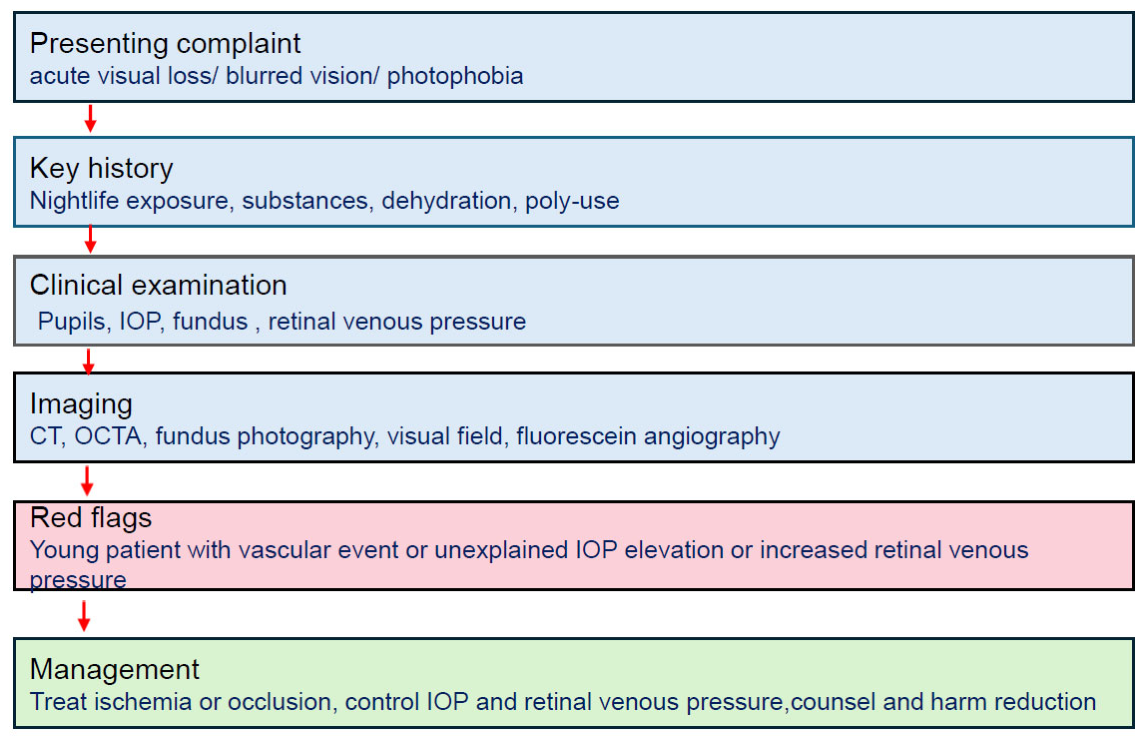
Across drug classes, additional ocular findings include conjunctival hyperemia, eyelid retraction, dry eye symptoms, and photophobia [47]. Pupillary abnormalities, diplopia, nystagmus, and transient visual field defects may complicate diagnosis. Recognition of these patterns can assist in differentiating drug-related ocular dysfunction from primary ophthalmic or neurological disease. Figure 2 depicts a suggested clinical workflow for suspected recreational drug-related ocular presentations.
Evaluation includes targeted history of substance exposure, clinical examination, and multimodal imaging to detect vascular or structural abnormalities. Identification of red flags enables prompt management to stabilize ocular perfusion, treat ischemic injury, and provide patient counseling. In addition to ophthalmic assessment, basic systemic parameters such as blood pressure and serum sodium levels should be considered, particularly in the context of drug-induced systemic effects that may influence ocular perfusion and visual function.

8.3. Other Recreational and Emerging Psychoactive Substances

In addition to the substances discussed above, a broader range of recreational and emerging psychoactive drugs—including hallucinogens (e.g., lysergic acid diethylamide [LSD], psilocybin), dissociative agents (e.g., ketamine), nitrous oxide, and synthetic cathinones—may also be associated with ocular and neuro-ophthalmic effects. Hallucinogens in particular have been linked to persistent visual perceptual disturbances, altered color perception, and visual snow–like phenomena, whereas nitrous oxide may induce optic neuropathy through vitamin B12 deficiency. Dissociative agents and synthetic stimulants have additionally been associated with nystagmus, diplopia, and neuro-ophthalmic dysfunction. However, current evidence remains limited and is largely based on isolated case reports or small series [41,48]. Further studies are required to better characterize the ophthalmic impact of these substances.

9. Clinical and Translational Implications

Recreational drug exposure should be considered in patients presenting with acute visual symptoms, unexplained IOP elevation, retinal venous congestion, or vascular events, particularly in younger individuals. A non-judgmental approach is essential to encourage disclosure. From a translational perspective, mechanisms including vascular dysregulation, oxidative stress, and autonomic imbalance represent shared pathways linking systemic toxicity and ocular complications [49,50,51] (Table 1).
Overview of key pathophysiological mechanisms, clinical features, complications, and recommended imaging.

10. Multimodal Imaging in Suspected Drug-Related Ocular Injury

Multimodal imaging plays a central role in the evaluation of suspected drug-related ocular pathology, particularly in young patients presenting with unexplained visual symptoms after recreational drug exposure. Early structural and functional assessment may help distinguish transient perfusion instability from evolving ischemic injury [52].
Optical coherence tomography (OCT) is essential for detecting subtle macular or optic nerve changes [53]. In cases of arterial ischemia, OCT may reveal inner retinal hyperreflectivity followed by thinning [54]. In retinal venous congestion or early vein occlusion, cystoid macular changes or diffuse retinal thickening may be observed. In poppers-associated maculopathy, disruption of the ellipsoid zone at the fovea represents a characteristic finding. Peripapillary retinal nerve fiber layer (RNFL) analysis may identify early optic nerve compromise in cases of ischemic or toxic neuropathy.
Optical coherence tomography angiography (OCTA) provides non-invasive visualization of retinal and peripapillary microvasculature [55]. Areas of capillary non-perfusion, flow attenuation, or reduced vessel density [55] may be detected even when fundus examination appears relatively unremarkable. OCTA may therefore be particularly useful in identifying microvascular compromise in the setting of sympathetic vasospasm or endothelial dysfunction.
Importantly, structural imaging alone does not fully characterize ocular hemodynamics. Measurement of retinal venous pressure (RVP) using ophthalmodynamometry provides additional insight into perfusion status [56,57]. Elevated RVP reduces effective ocular perfusion gradient and may precede clinically manifest retinal vein occlusion [9]. In the context of recreational drug exposure, transient increases in RVP may reflect venous congestion secondary to sympathetic activation, endothelial dysfunction, or altered systemic hemodynamics [58]. Assessment of RVP therefore offers a non-invasive approach to evaluating ocular vascular resistance and venous outflow dynamics. Integration of ophthalmodynamometric measurements with OCT and OCTA findings may improve detection of early perfusion instability before irreversible structural damage occurs.
However, it should be noted that measurement of retinal venous pressure, typically performed using ophthalmodynamometry, is not routinely available in most clinical settings and may be subject to operator-dependent variability.
Fundus photography remains valuable for documenting venous congestion, hemorrhages, arterial attenuation, or disc edema [59]. In selected cases, fluorescein angiography may be considered to assess delayed filling, leakage, or non-perfusion patterns when vascular occlusion is suspected [60].
Functional assessment is equally important. Standard automated perimetry can reveal central scotomas, paracentral defects, or nerve fiber layer–related field loss corresponding to structural abnormalities. Contrast sensitivity testing may detect subtle functional impairment not reflected in Snellen acuity.
In patients presenting with acute visual disturbances after recreational drug exposure, prompt multimodal imaging combined with hemodynamic assessment facilitates early diagnosis, guides management decisions, and establishes a baseline for monitoring potential progression or recovery.

11. Clinical Assessment and Patient Counseling

When evaluating patients with suspected drug-related ocular symptoms, a structured clinical approach is recommended. In addition to standard ophthalmic examination, clinicians should obtain a targeted history addressing recent leisure activities, dehydration, prolonged wakefulness, and potential exposure to recreational substances. Establishing the temporal relationship between substance exposure and symptom onset can provide important diagnostic clues [61].
Because many patients may initially hesitate to disclose substance use, a non-judgmental and confidential communication style is essential. Framing questions in a neutral manner—for example, asking whether the patient attended a festival, or club event in the preceding days—may facilitate disclosure and improve diagnostic accuracy [62].
Patient counseling represents an important component of management. Individuals should be informed that certain recreational substances may interfere with ocular perfusion and vascular stability, potentially leading to transient or permanent visual disturbances [63]. In patients with suspected vascular dysregulation or elevated retinal venous pressure, these exposures may pose an increased risk for ocular vascular complications.
Follow-up examination is often advisable, particularly when structural or functional abnormalities have been detected. Repeat imaging may help determine whether observed changes represent transient perfusion disturbances or evolving structural pathology.

12. Future Research Directions

Prospective studies are needed to determine the true incidence of ocular complications associated with recreational drug use. Standardized assessment of retinal venous pressure, ocular perfusion pressure, and OCT angiographic parameters in acute exposure settings may provide valuable insight into hemodynamic mechanisms.
Further investigation into oxidative stress pathways and mitochondrial vulnerability of retinal cells may clarify the molecular basis of drug-induced retinal injury. Identification of susceptibility factors, including vascular dysregulation phenotypes, may help stratify risk and guide preventive counseling.

13. Conclusions

Recreational drugs are associated with a wide range of ophthalmic manifestations, ranging from transient visual disturbances to severe, sight-threatening vascular and neuro-ophthalmic complications [48]. The underlying mechanisms are multifactorial and often involve interactions between systemic hemodynamic alterations, vascular dysregulation, oxidative stress, and impaired autoregulatory capacity of the retinal circulation [50,64].
Young individuals presenting with retinal vascular events, unexplained intraocular pressure elevation, central scotoma, or neuro-ophthalmic symptoms should therefore be evaluated with careful consideration of recent substance exposure. As patients may not always disclose such information, obtaining a structured and non-judgmental history is essential for accurate diagnosis [65].
Advances in multimodal imaging and hemodynamic assessment—including OCT, OCT angiography, and measurement of retinal venous pressure—offer valuable tools for detecting early perfusion abnormalities and structural damage [66]. The integration of these diagnostic approaches may support earlier recognition of drug-related ocular pathology at an early stage.
Future research should aim to further define the incidence of ocular complications associated with recreational drug use, identify susceptibility factors, and clarify the role of vascular dysregulation and retinal venous pressure in these processes [18,58]. Improved understanding of these mechanisms may ultimately contribute to better prevention strategies and patient counseling.
Ophthalmologists are uniquely positioned to recognize early manifestations of systemic vascular instability within the eye (Table 2). Increased awareness of recreational drug-related ocular complications may therefore play an important role in preventing irreversible visual impairment.
Key warning signs, clinical considerations, and differential diagnoses to assist evaluation of suspected drug-related ocular pathology.

Author Contributions

V.N. drafted the manuscript. M.M. conceptualized and supervised the study and critically revised the manuscript. J.B. contributed to literature review and editing. All authors have read and agreed to the published version of the manuscript.

Funding

This research received no external funding.

Institutional Review Board Statement

Not applicable.

Informed Consent Statement

Not applicable.

Data Availability Statement

No new data were created or analyzed in this study.

Conflicts of Interest

The authors declare no conflicts of interest.

References

  1. Jørgenrud, B.; Furuhaugen, H.; Gjerde, H. Prevalence and Correlates of Illicit Drug Use among Norwegian Nightlife Patrons. Subst. Use Misuse 2021, 56, 1697–1706. [Google Scholar] [CrossRef] [PubMed]
  2. Smith, K.M.; Larive, L.L.; Romanelli, F. Club drugs: Methylenedioxymethamphetamine, flunitrazepam, ketamine hydrochloride, and gamma-hydroxybutyrate. Am. J. Health Syst. Pharm. 2002, 59, 1067–1076. [Google Scholar] [CrossRef]
  3. Flammer, J.; Mozaffarieh, M. Autoregulation, a balancing act between supply and demand. Can. J. Ophthalmol. 2008, 43, 317–321. [Google Scholar] [CrossRef]
  4. Lee, M.; Leskova, W.; Eshaq, R.S.; Harris, N.R. Retinal hypoxia and angiogenesis with methamphetamine. Exp. Eye Res. 2021, 206, 108540. [Google Scholar] [CrossRef]
  5. Papaseit, E.; Moltó, J.; Muga, R.; Torrens, M.; La Torre, R.D.; Farré, M. Clinical Pharmacology of the Synthetic Cathinone Mephedrone. In Neuropharmacology of New Psychoactive Substances (NPS); Baumann, M.H., Glennon, R.A., Wiley, J.L., Eds.; Springer International Publishing: Cham, Switzerland, 2016; pp. 313–331. Available online: https://link.springer.com/10.1007/7854_2016_61 (accessed on 18 February 2026).
  6. Mozaffarieh, M.; Grieshaber, M.C.; Flammer, J. Oxygen and blood flow: Players in the pathogenesis of glaucoma. Mol. Vis. 2008, 14, 224–233. [Google Scholar] [PubMed] [PubMed Central]
  7. Costa, V.P.; Harris, A.; Anderson, D.; Stodtmeister, R.; Cremasco, F.; Kergoat, H.; Lovasik, J.; Stalmans, I.; Zeitz, O.; Lanzl, I.; et al. Ocular perfusion pressure in glaucoma. Acta Ophthalmol. 2014, 92, e252–e266. [Google Scholar] [CrossRef] [PubMed]
  8. Konieczka, K.; Fraenkl, S.; Mozaffarieh, M.; Flammer, J. Glaucoma Progression in the Unaffected Fellow Eye of Glaucoma Patients who Developed Unilateral Branch Retinal Vein Occlusion. Am. J. Ophthalmol. 2017, 181, 175. [Google Scholar] [CrossRef] [PubMed]
  9. Mozaffarieh, M.; Bärtschi, M.; Henrich, P.B.; Schoetzau, A.; Flammer, J. Retinal venous pressure in the non-affected eye of patients with retinal vein occlusions. Graefes Arch. Clin. Exp. Ophthalmol. 2014, 252, 1569–1571. [Google Scholar] [CrossRef] [PubMed]
  10. Van Hout, M.C.; Crowley, D.; O’Dea, S.; Clarke, S. Chasing the rainbow: Pleasure, sex-based sociality and consumerism in navigating and exiting the Irish Chemsex scene. Cult. Health Sex. 2019, 21, 1074–1086. [Google Scholar] [CrossRef] [PubMed]
  11. Chinet, L.; Stéphan, P.; Zobel, F.; Halfon, O. Party drug use in techno nights: A field survey among French-speaking Swiss attendees. Pharmacol. Biochem. Behav. 2007, 86, 284–289. [Google Scholar] [CrossRef] [PubMed]
  12. Schensul, J.J.; Diamond, S.; Disch, W.; Bermudez, R.; Eiserman, J. The diffusion of ecstasy through urban youth networks. J. Ethn. Subst. Abuse 2005, 4, 39–71. [Google Scholar] [CrossRef] [PubMed]
  13. Darouiche, K.; Devin, S.; Valdebenito, S.; Ajasin, D.; Eugenin, E. Cocaine-Induced Cardiovascular and Immune Dysfunction: Emerging Mechanisms. Physiology 2026, 41, 159–171. [Google Scholar] [CrossRef] [PubMed]
  14. Bilal, H.; Keles, A.; Bendechache, M. Advances in disease detection through retinal imaging: A systematic review. Comput. Biol. Med. 2025, 194, 110412. [Google Scholar] [CrossRef] [PubMed]
  15. Nasr, M.; Assadi, B.; Weissman, B.C.; Gleason, O.; Seikunas, J.; Puthiyathu, M. Emerging Illicit Drug “2C”: A Case Report on Its Hallucinogenic and Stimulant Properties. Cureus 2024, 16, e69407. [Google Scholar] [CrossRef] [PubMed] [PubMed Central]
  16. Davies, A.J.; Kelly, S.P.; Naylor, S.G.; Bhatt, P.R.; Mathews, J.P.; Sahni, J.; Haslett, R.; McKibbin, M. Adverse ophthalmic reaction in poppers users: Case series of ‘poppers maculopathy’. Eye 2012, 26, 1479–1486. [Google Scholar] [CrossRef] [PubMed]
  17. Iyer, S.; Tay, E.T.; Maslyanskaya, S. Anisocoria from Cocaine Exposure: A Case Report. J. Emerg. Med. 2019, 56, e17–e18. [Google Scholar] [CrossRef] [PubMed]
  18. Vahedian, Z.; Amini, H.; Tehrani, M.H.; Zarei, R.; Moghimi, S.; Mozaffarieh, M.; Fakhraie, G. Retinal venous pressure in chronic smokers. EPMA J. 2015, 6, 8. [Google Scholar] [CrossRef]
  19. Alsarhani, W.K.; Almater, A.I.; Abu El-Asrar, A.M. Branch Retinal Artery Occlusion Following Cocaine Inhalation: Case Report and Review of the Literature. Middle East Afr. J. Ophthalmol. 2022, 29, 56–58. [Google Scholar] [CrossRef]
  20. Toler, S.M. Oxidative Stress Plays an Important Role in the Pathogenesis of Drug-Induced Retinopathy. Exp. Biol. Med. 2004, 229, 607–615. [Google Scholar] [CrossRef]
  21. Chen, H.J.; Huang, C.S. Nitrous Oxide-induced Subacute Combined Degeneration Presenting with Dystonia and Pseudoathetosis: A Case Report. Acta Neurol. Taiwanica 2016, 25, 50–55. [Google Scholar] [PubMed]
  22. Xu, X.; Pang, Y.; Fan, X. Mitochondria in oxidative stress, inflammation and aging: From mechanisms to therapeutic advances. Signal Transduct. Target. Ther. 2025, 10, 190. [Google Scholar] [CrossRef] [PubMed] [PubMed Central]
  23. Paulus, M.P.; Stewart, J.L. Neurobiology, Clinical Presentation, and Treatment of Methamphetamine Use Disorder: A Review. JAMA Psychiatry 2020, 77, 959–966. [Google Scholar] [CrossRef] [PubMed] [PubMed Central]
  24. Mozaffarieh, M.; Flammer, J. Is there more to glaucoma treatment than lowering IOP? Surv. Ophthalmol. 2007, 52, S174–S179. [Google Scholar] [CrossRef] [PubMed]
  25. Testai, F.D.; Gorelick, P.B.; Aparicio, H.J.; Filbey, F.M.; Gonzalez, R.; Gottesman, R.F.; Melis, M.; Piano, M.R.; Rubino, T.; Song, S.Y.; et al. Use of Marijuana: Effect on Brain Health: A Scientific Statement from the American Heart Association. Stroke 2022, 53, e176–e187. [Google Scholar] [CrossRef] [PubMed]
  26. Mozaffarieh, M.; Osusky, R.; Schötzau, A.; Flammer, J. Relationship between optic nerve head and finger blood flow. Eur. J. Ophthalmol. 2010, 20, 136–141. [Google Scholar] [CrossRef] [PubMed]
  27. Rickels, K.L.; Ghaleb, R.; Elhusseiny, A.M.; Chauhan, M.Z.; Toma, J.; Wang, T.; Cheng, D.; Ali, A.; Sallam, A.B. Ocular manifestations secondary to cocaine abuse. Surv. Ophthalmol. 2025, 70, 825–832. [Google Scholar] [CrossRef] [PubMed]
  28. Gan, X.; Zhang, L.; Berger, O.; Stins, M.F.; Way, D.; Taub, D.D.; Chang, S.L.; Kim, K.S.; House, S.D.; Weinand, M.; et al. Cocaine enhances brain endothelial adhesion molecules and leukocyte migration. Clin. Immunol. 1999, 91, 68–76. [Google Scholar] [CrossRef] [PubMed]
  29. Zhang, Y.; Huang, S.; Xie, B.; Zhong, Y. Aging, Cellular Senescence, and Glaucoma. Aging Dis. 2024, 15, 546–564. [Google Scholar] [CrossRef] [PubMed] [PubMed Central]
  30. Broadley, K.J. The vascular effects of trace amines and amphetamines. Pharmacol. Ther. 2010, 125, 363–375. [Google Scholar] [CrossRef] [PubMed]
  31. Hazin, R.; Cadet, J.L.; Kahook, M.Y.; Saed, D. Ocular manifestations of crystal methamphetamine use. Neurotox. Res. 2009, 15, 187–191. [Google Scholar] [CrossRef] [PubMed]
  32. Blair, K.; Czyz, C.; Smithers, J.; Yassall, A. Lisdexamfetamine (Vyvanse) Use Associated with Branch Retinal Artery Occlusion. Retin. Cases Brief Rep. 2024, 18, 59–61. [Google Scholar] [CrossRef] [PubMed]
  33. Liu, J.; Rosenfeld, P.J.; Dubovy, S.R. Branch retinal artery occlusion in a 49-year-Old woman taking phentermine. Am. J. Ophthalmol. Case Rep. 2024, 35, 102013. [Google Scholar] [CrossRef] [PubMed] [PubMed Central]
  34. Guo, J.; Tang, W.; Liu, W.; Zhang, Y.; Wang, L.; Wang, W. Bilateral methamphetamine-induced ischemic retinopathy. Am. J. Ophthalmol. Case Rep. 2019, 15, 100473. [Google Scholar] [CrossRef] [PubMed] [PubMed Central]
  35. Farrar, A.M.; Nordstrom, I.H.; Shelley, K.; Archer, G.; Kunstman, K.N.; Palamar, J.J. Ecstasy, molly, MDMA: What health practitioners need to know about this common recreational drug. Dis.-a-Mon. 2025, 71, 101851. [Google Scholar] [CrossRef] [PubMed] [PubMed Central]
  36. Kazory, A. Osmoregulatory mechanisms differentiate MDMA-associated hyponatremia from psychogenic polydipsia. J. Emerg. Med. 2015, 48, 81. [Google Scholar] [CrossRef] [PubMed]
  37. Thakkar, A.; Parekh, K.; El Hachem, K.; Mohanraj, E.M. A Case of MDMA-Associated Cerebral and Pulmonary Edema Requiring ECMO. Case Rep. Crit. Care 2017, 2017, 6417012. [Google Scholar] [CrossRef] [PubMed] [PubMed Central]
  38. Parrott, A.C. MDMA, serotonergic neurotoxicity, and the diverse functional deficits of recreational „Ecstasy” users. Neurosci. Biobehav. Rev. 2013, 37, 1466–1484. [Google Scholar] [CrossRef] [PubMed]
  39. Green, A.R.; Mechan, A.O.; Elliott, J.M.; O’Shea, E.; Colado, M.I. The pharmacology and clinical pharmacology of 3,4-methylenedioxymethamphetamine (MDMA, “ecstasy”). Pharmacol. Rev. 2003, 55, 463–508. [Google Scholar] [CrossRef] [PubMed]
  40. Parrott, A.C. MDMA (3,4-Methylenedioxymethamphetamine) or ecstasy: The neuropsychobiological implications of taking it at dances and raves. Neuropsychobiology 2004, 50, 329–335. [Google Scholar] [CrossRef] [PubMed]
  41. Bartolo, C.; Koklanis, K.; Vukicevic, M. “Poppers Maculopathy” and the adverse ophthalmic outcomes from the recreational use of alkyl nitrate inhalants: A systematic review. Semin. Ophthalmol. 2023, 38, 371–379. [Google Scholar] [CrossRef] [PubMed]
  42. Singh, S.R.; Vaidya, H.; Borrelli, E.; Chhablani, J. Foveal photoreceptor disruption in ocular diseases: An optical coherence tomography-based differential diagnosis. Surv. Ophthalmol. 2023, 68, 655–668. [Google Scholar] [CrossRef] [PubMed]
  43. Van Bol, L.B.; Kurt, R.A.; Keane, P.A.; Pal, B.; Sivaprasad, S. Clinical Phenotypes of Poppers Maculopathy and Their Links to Visual and Anatomic Recovery. Ophthalmology 2017, 124, 1425–1427. [Google Scholar] [CrossRef] [PubMed]
  44. Cappellani, F.; Gagliano, C.; Pulido, J.S. Chronic poppers maculopathy: Case report and literature comparison of chronic and acute use. Medicine 2025, 104, e44079. [Google Scholar] [CrossRef] [PubMed] [PubMed Central]
  45. Joshi, N.; Mariam, H.; Kamath, A. Cannabinoids for the Treatment of Glaucoma: A Review. Med. Cannabis Cannabinoids 2024, 7, 183–192. [Google Scholar] [CrossRef] [PubMed] [PubMed Central]
  46. Wang, M.T.M.; Danesh-Meyer, H.V. Cannabinoids and the eye. Surv. Ophthalmol. 2021, 66, 327–345. [Google Scholar] [CrossRef] [PubMed]
  47. Erbguth, F. Mode- und Designerdrogen: Von Ecstasy und Crystal Meth bis Engelstrompete. Med. Klin.-Intensivmed. Notfallmedizin 2016, 111, 630–637. [Google Scholar] [CrossRef]
  48. Proulx, V.; Tousignant, B. Drugs of abuse and ocular effects. Clin. Exp. Optom. 2021, 104, 567–578. [Google Scholar] [CrossRef] [PubMed]
  49. Van Dyck, E.; Ponnet, K.; Van Havere, T.; Hauspie, B.; Dirkx, N.; Schrooten, J.; Waldron, J.; Grabski, M.; Freeman, T.P.; Curran, H.V.; et al. Substance Use and Attendance Motives of Electronic Dance Music (EDM) Event Attendees: A Survey Study. Int. J. Environ. Res. Public Health 2023, 20, 1821. [Google Scholar] [CrossRef]
  50. Campbell, J.P.; Burkholder, B.M.; Dunn, J.P. Catastrophic antiphospholipid antibody syndrome and cocaine abuse associated with bilateral retinal vascular occlusions. Retin. Cases Brief Rep. 2011, 5, 318–322. [Google Scholar] [CrossRef]
  51. Malacarne, I.T.; De Souza, D.V.; Rosario, B.D.A.; Viana, M.D.B.; Pereira, C.D.S.; Estadella, D.; dos Santos, J.N.; Ribeiro, D.A. Genotoxicity, oxidative stress, and inflammatory response induced by crack-cocaine: Relevance to carcinogenesis. Environ. Sci. Pollut. Res. 2021, 28, 14285–14292. [Google Scholar] [CrossRef]
  52. Parravano, M.; Cennamo, G.; Di Antonio, L.; Grassi, M.O.; Lupidi, M.; Rispoli, M.; Savastano, M.C.; Veritti, D.; Vujosevic, S. Multimodal imaging in diabetic retinopathy and macular edema: An update about biomarkers. Surv. Ophthalmol. 2024, 69, 893–904. [Google Scholar] [CrossRef] [PubMed]
  53. Huang, D.; Swanson, E.A.; Lin, C.P.; Schuman, J.S.; Stinson, W.G.; Chang, W.; Hee, M.R.; Flotte, T.; Gregory, K.; Puliafito, C.A.; et al. Optical coherence tomography. Science 1991, 254, 1178–1181. [Google Scholar] [CrossRef] [PubMed] [PubMed Central]
  54. Tang, J.; Li, S.; Wang, Z.; Tao, Y.; Zhang, L.; Yin, H.; Miao, H.; Sun, Y.; Qu, J. Acute Macular Neuroretinopathy after SARS-CoV-2 Infection: An Analysis of Clinical and Multimodal Imaging Characteristics. Diagnostics 2023, 13, 3600. [Google Scholar] [CrossRef] [PubMed] [PubMed Central]
  55. Spaide, R.F.; Fujimoto, J.G.; Waheed, N.K.; Sadda, S.R.; Staurenghi, G. Optical coherence tomography angiography. Prog. Retin. Eye Res. 2018, 64, 1–55. [Google Scholar] [CrossRef] [PubMed] [PubMed Central]
  56. Stodtmeister, R.; Wetzk, E.; Herber, R.; Pillunat, K.R.; Pillunat, L.E. Measurement of the retinal venous pressure with a new instrument in healthy subjects. Graefes Arch. Clin. Exp. Ophthalmol. 2022, 260, 1237–1244. [Google Scholar] [CrossRef] [PubMed] [PubMed Central]
  57. Flammer, J.; Konieczka, K. Retinal venous pressure: The role of endothelin. EPMA J. 2015, 6, 21. [Google Scholar] [CrossRef] [PubMed] [PubMed Central]
  58. Fraenkl, S.A.; Mozaffarieh, M.; Flammer, J. Retinal vein occlusions: The potential impact of a dysregulation of the retinal veins. EPMA J. 2010, 1, 253–261. [Google Scholar] [CrossRef] [PubMed] [PubMed Central]
  59. Zhao, X.; Gu, X.; Teng, D.; Sun, X.; Wei, Q.; Wang, B.; Wang, J.; Zhao, J.; Ding, D.; Zhang, B.; et al. Ultra-wide-field fundus photography and AI-based screening and referral for multiple ocular fundus diseases. Cell Rep. Med. 2025, 6, 102187. [Google Scholar] [CrossRef] [PubMed] [PubMed Central]
  60. Kurimoto, S.; Watanabe, T.; Kimura, Y. Electroretinographical and fluorographical studies on occulsion of the central retinal artery. Nihon Ganka Kiyo 1968, 19, 311–317. [Google Scholar] [PubMed]
  61. McLellan, A.T.; Lewis, D.C.; O’Brien, C.P.; Kleber, H.D. Drug dependence, a chronic medical illness: Implications for treatment, insurance, and outcomes evaluation. JAMA 2000, 284, 1689–1695. [Google Scholar] [CrossRef] [PubMed]
  62. van Boekel, L.C.; Brouwers, E.P.M.; van Weeghel, J.; Garretsen, H.F.L. Stigma among health professionals towards patients with substance use disorders and its consequences for healthcare delivery: Systematic review. Drug Alcohol Depend. 2013, 131, 23–35. [Google Scholar] [CrossRef] [PubMed]
  63. Del Palacio-Gonzalez, A.; Hesse, M.; Thylstrup, B.; Pedersen, M.U.; Pedersen, M.M. Effects of contingency management and use of reminders for drug use treatment on readmission and criminality among young people: A linkage study of a randomized trial. J. Subst. Abus. Treat. 2022, 133, 108617. [Google Scholar] [CrossRef] [PubMed]
  64. Flammer, J.; Orgül, S.; Costa, V.P.; Orzalesi, N.; Krieglstein, G.K.; Serra, L.M.; Renard, J.-P.; Stefánsson, E. The impact of ocular blood flow in glaucoma. Prog. Retin. Eye Res. 2002, 21, 359–393. [Google Scholar] [CrossRef] [PubMed]
  65. Palamar, J.J.; Salomone, A.; Keyes, K.M. Underreporting of drug use among electronic dance music party attendees. Clin. Toxicol. 2021, 59, 185–192. [Google Scholar] [CrossRef] [PubMed] [PubMed Central]
  66. Aumann, S.; Donner, S.; Fischer, J.; Müller, F. Optical Coherence Tomography (OCT): Principle and Technical Realization. In High Resolution Imaging in Microscopy and Ophthalmology: New Frontiers in Biomedical Optics; Bille, J.F., Ed.; Springer: Cham, Switzerland, 2019. Available online: http://www.ncbi.nlm.nih.gov/books/NBK554044/ (accessed on 4 March 2026). [PubMed]
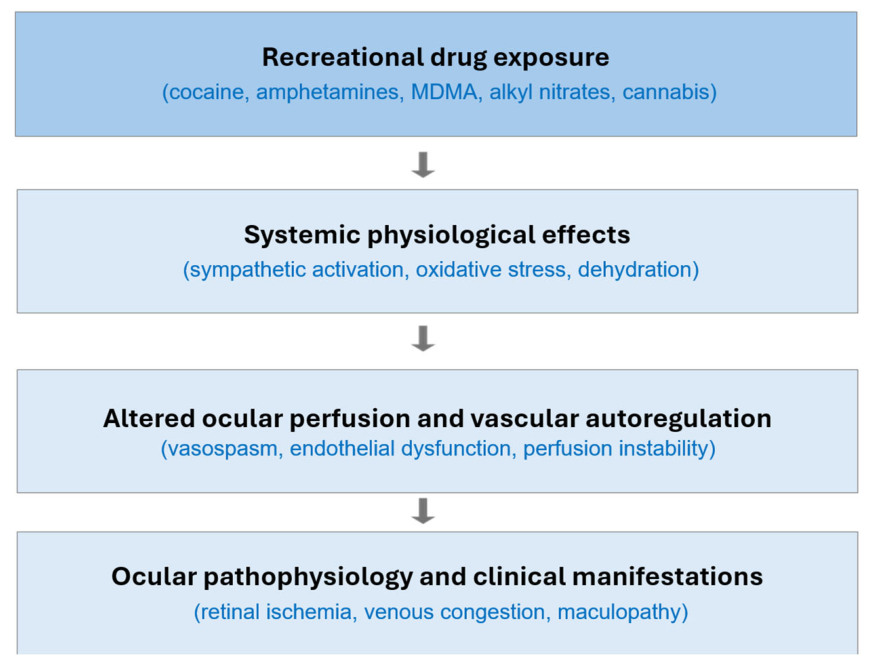
Figure 1. Pathophysiological mechanisms linking recreational drug exposure to ocular vascular dysregulation and retinal injury.
Jcto 04 00013 g001
Figure 2. Clinical workflow for suspected recreational drug-related ocular presentations.
Jcto 04 00013 g002
Table 1. Ocular manifestations and mechanisms associated with recreational drugs.
Substance/ClassDominant MechanismCommon Ocular SymptomsSerious
Complications
Key ImagingClinical Notes
CocaineSympathomimetic; vasospasm; thrombosis riskMydriasis, blurred visionRAO/RVO, optic neuropathyFundus, OCT/OCTAYoung patients with ischemic events—ask explicitly
Amphetamines/methamphetamineSympathetic activation;
hypertensive peaks
Mydriasis, photophobiaRetinal ischemia/hemorrhageFundus, OCTOften poly-substance use
MDMA (Ecstasy)Serotonergic + sympathomimeticPhotophobia, nystagmusHemorrhage, optic disc edema (rare)OCT, VFConsider dehydration/hyperthermia context
Alkyl nitrites (poppers)Vasodilation; venous return changes; oxidative stressBlurred vision, central scotomaPoppers maculopathy, venous hypertensionOCT (foveal photoreceptors)Important in sexual/club-based settings
Cannabis/THCCB receptors; transient IOP loweringAltered contrast, slower processConfounding of glaucoma assessmentIOP, VFNot recommended for glaucoma management; counsel patients
Table 2. Clinical warning signs and differential diagnosis in recreational drug-related ocular presentations.
Clinical Presentation/Warning SignsKey ConsiderationsDifferential Diagnosis
Sudden severe visual loss after recreational drug exposureAsk directly about substances (stimulants, nitrites, MDMA); timing importantCRAO/BRAO, optic neuritis, migraine aura, toxic optic neuropathy
Marked IOP elevation in young patientConsider sympathomimetics, inhalants, steroids; check angle statusAcute angle closure, pigment dispersion, uveitic glaucoma
Retinal venous congestion/venous hypertension without clear occlusion; central scotomaConsider hemodynamic triggers; poppers exposure; systemic dehydrationImpending CRVO, hyperviscosity, carotid-cavernous fistula
Nystagmus/oscillopsia after recreational drugsConsider MDMA; intoxication effects; neurotoxicityVestibular causes, brainstem pathology, drug toxicity
Visual field defect with normal fundusOptic nerve dysfunction possible; consider ischemic eventsOptic neuritis, NAION, compressive optic neuropathy
Disclaimer/Publisher’s Note: The statements, opinions and data contained in all publications are solely those of the individual author(s) and contributor(s) and not of MDPI and/or the editor(s). MDPI and/or the editor(s) disclaim responsibility for any injury to people or property resulting from any ideas, methods, instructions or products referred to in the content.