Thermal conductivity of nanofluids-A comprehensive review

Abstract
1. Introduction
2. Experimental Studies on Thermal Conductivity Behavior of Nanofluids
2.1. Ceramic Nanofluids
- Copper Oxide (CuO) nanofluids
- Aluminum Oxide (Al2O3) nanofluids
- Titanium Dioxide (TiO2) nanofluids
 in TiO2 nanofluids. However, Sonawane et al. [51] declared that the relationship between the effective thermal conductivity ratio of TiO2 nanofluids and that of base fluid was not regular. The thermal conductivity of 1 vol.% TiO2 nanofluids followed the sequence: paraffin oil based nanofluid > water based nanofluid > EG based nanofluid, while that of pure base fluids followed the sequence: water based nanofluid > EG based nanofluid > paraffin oil based nanofluid. According to their view the effect of viscosity was the region for this outcome. They clarified that the base fluids with lower viscosity could result in higher enhancement in thermal conductivity of TiO2 nanofluids.
- Zinc Oxide (ZnO) nanofluids
2.2. Diamond Nanofluids
2.3. Carbon Nanotube Nanofluids
3. Theoretical Studies on Thermal Conductivity of Nanofluids
 where knf, kbf and kp are the thermal conductivity of nanofluid, base fluid and nanoparticle respectively and ф is the solid volume fraction. This model is a basis for the evaluation of thermal conductivity for nanofluids.
 where n is the shape factor, n = 3/Ψ (Ψ is the sphericity). Sphericity is defined as the ratio of surface area of a sphere with volume equivalent to that of the average particle, to the surface area of the particle. Ψ = 1.0 and Ψ = 0.5 correspond to spherical and cylindrical shapes, respectively. When Ψ = 1, the Hamilton and Crosser model reduces to Maxwell’s model and well agrees with experimental data for Ψ < 0.3.


 where ρf, and Cpf is the density and specific heat of the base fluid, dp is the diameter of the nanoparticle size, θ represents the hydrodynamic interaction between particles affected fluid and f considers the augmented temperature dependence due to particle interactions. The fraction, θ decreases with particle volume fraction because of the viscous effect of moving particles. They established and empirical equation for f(T, φ) using the experimental data of Das et al. [108] for CuO nanofluids given in Eq. (10), valid in the range of 0.01 < φ < 0.04 and 300 < T < 325K.
 where km = kf (1 + 0.25ReB Pr) is the matrix conductivity,
  is the Brownian Reynolds number, m = 2.5 ± 15% is a fitting constant,
  is the particle Biot number and Rb is the interfacial thermal resistance between and liquid.
 with df and lf are the equivalent diameter of fluid particles and mean free path. This model has taken into account the different heat transfer processes between particles and fluid. A number of factors such as particle size, temperature and viscosity of fluid have been considered in the model.
 where Tfr is the freezing point of the base fluid (about 273.16 K for water), Rep is the nanoparticle Reynolds number.
 where α = [dp/(dp + 2t1)], ki and t1 are the thermal conductivity and thickness of interfacial shell, respectively. The value depends on the type of nanofluids.
 where, keff is the thermal conductivity of nanofluids, c is a constant, rp and rf are radii of the particle and base fluids respectively. The temperature dependence is due to the variation of Brownian motion velocity for the particles.
 Here, Ap and Af are the area of the particle and base fluid respectively, df and dp are the molecular size of the liquid and particle diameter respectively, Pe is the Peclet number, αf is the thermal diffusivity of the liquid and up is the Brownian motion velocity of particle. The constant value c is determined experimentally and taken as 25,000.
 where β = 1 + ℎ/rp, β1 = 1 + ℎ/2rp. In this case, steady state heat condition along with the temperature fields within nanoparticle, nanolayer and fluid are governed by steady state heat conduction equations.
 where Df is the fractal dimension can be determined by
  in two dimensions, ф is the concentrations, λmin and λmax are the minimum and maximum diameters of nanoparticles, respectively, df is the diameter of molecule of fluids, λmin/λmax = 10−3 was taken for this model.
 where
where  is the ratio between the Kapitza length (equivalent thermal thickness of the interface) and the particle radius. This model predicts an increase in the effective conductivity for Ω < 1and decreases for Ω < 1.
 where ρ and C denotes the density and specific heat capacity of the solid, respectively, nanoparticle size = 10 nm at φ = 0.01 in water at a temperature of 300 K.


 where
where 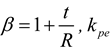 is the equivalent thermal conductivity of the nanoparticles, and γ1 is the thermal conductivity ratio of interfacial layer to particles.
 where β = 1 + t/R, β1 = 1 + t/2R, klr and t are thermal conductivity and thickness of the interfacial layer.

 where
where 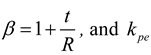 is the equivalent thermal conductivity of the nanoparticles.
 where T is the bulk temperature of the nanofluids in °C.
 where dnf denotes the molecular diameter of the base fluid, Prandtl number
  , Reynolds number
  is the density of the base fluid, the temperature dependence of the base fluid viscosity (μ) is expressed as
  where A, B and C are constants, i.e., 2.414 × 10⁻⁵, 247.8 and 140 respectively for water. The mean free path (lbf) of a molecule is derived as
  where n represents the molecular number, and the calculated value for lbf = 0.17.
 where A is a constant, γ is a system dependent exponent, β = (kp − kf)/(kp + 2kf). To consider the interfacial thermal resistance Rb, kf is modified as kf = kf + αkp where
  is the average particle size
 where kx and kz are the effective thermal conductivity in radial and axial directions, respectively.
4. Thermal Conductivity Measurement Techniques
4.1. Transition Hot Wire Method
4.2. Thermal Constants Analyzer Technique
4.3. Steady State Parallel Plate Method
4.4. The 3ω Method
 from long narrow line source of heat on the surface of an infinite half volume. The major difference is the use of the frequency dependence of temperature oscillations instead of the time-domain response.
5. Methods/Mechanisms Accounting for Thermal Conductivity Enhancement of Nanofluids
5.1. Brownian motion, Osmophoresis and Thermophoresis
5.2. Nanoclustering
5.3. Interfacial Nano-Layer
5.4. Ballistic and Diffusive Phonon Heat Transport Process

 . Therefore, phonon cannot diffuse in a particle with diameter 10 nm but must move ballistically across the particles. Hence the assumption of diffusive heat transport in nanoparticle becomes invalid and hence theoretical model based on ballistic phonon was taken into consideration (Joshi and Majumdar [151]). However, from the macroscopic point of view, it is so difficult to demonstrate how ballistic phonon transport increases thermal conductivity. For either ballistic or fast-diffusive phonon transport, the temperature within the solid particle will be essentially constant, providing the same boundary condition for heat propagation in a low thermal conductivity liquid. As the interparticle distance in nanofluid is small, even at low φ, the ballistic phonons can persist in the liquid and reach a nearby particle, resulting in a larger thermal conductivity, though the phonon mean free path in liquid is very short (~1–2 nm).
6. Factors Affecting the Thermal Conductivity Behavior of Nanofluids
6.1. Effect of Particle Type
6.2. Effect of Particle Concentration/Solid Volume Fraction
6.3. Effect of Particle Temperature
6.4. Effect of Particle Size
6.5. Effect of Particle Shape
6.6. Effect of Base Type Fluid
6.7. Effect of Magnetic Field
6.8. Effect on Additives/Surfactants

6.9. Effect of pH
6.10. Effect of Sonication/Ultrasonic Time
6.11. Effect of Aspect Ratio
6.12. Effect of Nanoinclusion
7. Study on Heat Transfer Enhancement of Nanofluids Using Computational Fluid Dynamics
8. Challenges and Opportunities
9. Conclusions
- ➢
- Different established theoretical models namely Maxwell, Hamilton and Crosser, Wasp, Kumar, Patel, Maiga, Timofeeva, Azmi, Buongiorno, Mintsa and Li and Peterson models enhance thermal conductivity of nanofluids.
- ➢
- Several factors such as solid volume fraction, temperature, particle size, particle shape and different base fluids influence the thermal conductivity of nanofluids. Fundamentally, enhancement in particle concentration (ϕ) augments the thermal conductivity of nanofluid concerned. Further, augmentation in temperature upsurges the thermal conductivity of nanofluids well. Smaller size of the particle contributes to higher enhancement of thermal conductivity of nanofluid. The enhancement of thermal conductivity depends strongly on the shape of the nanoparticles in the sense that cylindrical nanoparticles accounts for higher thermal conductivity enhancement than spherical nanoparticles. Effective thermal conductivity ratio reduces due to augmentation in the thermal conductivity of base fluid.
- ➢
- The material type has a great influence on the thermal conductivity of nanofluids. This is due to the fact that thermal conductivity of Graphene, CNTs, Au, Ag etc. nanofluids is higher than that of other type, such as TiO2, SiC, SiO2. However, it seems that material type has little effect in viscosity of nanofluids because no relationship can be developed between different particle materials.
- ➢
- Viscosity and thermal conductivity increase as an increase in particle loading. And the growth of temperature belittles the absolute viscosity however, it has an equivocal effect on the relative viscosity.
- ➢
- Most experimental results reveal that a Newtonian behavior was observed at lower concentrations of below 4%.
- ➢
- The main drawbacks of the current theoretical researches are that the associated theoretical models are only practicable for a certain material in a certain application range and failed to predict the viscosity and thermal conductivity in different works due to the existing huge differences. Therefore, experimental mode is still a top priority for analysis and design.
References
- Das, S. K.; Choi, S. U. S.; Yu, W.; Pradeep, T. Nanofluids: science and technology; Wiley: New Jersey, 2008. [Google Scholar]
- Choi, S U S. Enhancing thermal conductivity of fluids with nanoparticles. ASME Fluids Eng. Division 1995, 231, 99–105. [Google Scholar]
- Xiao, B.; Yang, Y.; Chen, L. Developing a novel form of thermal conductivity of nanofluids with Brownian motion effect by means of fractal geometry. Powd. Technol. 2013, 239(17), 409–414. [Google Scholar] [CrossRef]
- Turkyilmazoglu, M. Single phase nanofluids in fluid mechanics and their hydrodynamic linear stability analysis. Comp. Meth. Prog. Biomed. 2020, 187, 105171. [Google Scholar] [CrossRef]
- Nayak, M.K.; Akbar, N.S.; Pandey, V.S.; Khan, Z.H.; Tripathi, D. 3D free convective MHD flow of nanofluid over permeable linear stretching sheet with thermal radiation. Powd. Technol. 2017, 315, 205–215. [Google Scholar] [CrossRef]
- Siddiqui; Turkyilmazoglu, M. Natural convection in the ferrofluid enclosed in a porous and permeable cavity. Int. Comm. Heat Mass Transf. 2020, 113, 104499. [Google Scholar] [CrossRef]
- Nayak, M.K.; Shaw, Sachin; Pandey, V.S.; Chamkha, Ali J. Combined effects of slip and convective boundary condition on MHD 3D stretched flow of nanofluid through porous media inspired by non-linear thermal radiation. Indian J. Phy. 2018, 92(8), 1017–1028. [Google Scholar] [CrossRef]
- Nayak, M. K.; Akbar, N.S.; Pandey, V.S.; Khan, Z.H.; Tripathi, D. MHD 3D free convective flow of nanofluid over an exponentially stretching sheet with chemical reaction. Adv. Powder Technol. 2017, 28(9), 2159–2166. [Google Scholar] [CrossRef]
- Nayak, M. K.; Shaw, Sachin; Chamkha, Ali J. MHD free convective stretched flow of a radiative nanofluid inspired by variable magnetic field. Arab. J. Sci. Eng. 2019, 44(2), 1269–1282. [Google Scholar] [CrossRef]
- Turkyilmazoglu, M. Free and circular jets cooled by single phase nanofluids. European J Mech.—B/Fluids 2019, 76, 1–6. [Google Scholar] [CrossRef]
- Turkyilmazoglu, M. Fully developed slip flow in a concentric annuli via single and dual phase nanofluids models. Comp. Meth. Prog. Biomed. 2019, 179, 104997. [Google Scholar] [CrossRef]
- Nayak, M. K. MHD 3D flow and heat transfer analysis of nanofluid by shrinking surface inspired by thermal radiation and viscous dissipation. Int. J. Mech. Sci. 2017, 125, 185–193. [Google Scholar] [CrossRef]
- Khan, J. A.; Mustafa, M.; Hayat, T.; Turkyilmazoglu, M.; Alsaedi, A. Numerical study of nanofluid flow and heat transfer over a rotating disk using Buongiorno’s model. Int. J. Num. Meth. Heat Fluid Flow 2017, 27, 221–234. [Google Scholar] [CrossRef]
- Nayak, M. K.; Mehmood, R.; Makinde, O. D.; Mahian, O.; Chamkha, Ali J. Magnetohydrodynamic flow and heat transfer impact on ZnO-SAE50 nanolubricant flow due to an inclined rotating disk. J. Central South University 2019, 26, 1146–1160. [Google Scholar] [CrossRef]
- Xiao, B.; Yang, Y.; Chen, L. Developing a novel form of thermal conductivity of nanofluids with Brownian motion effect by means of fractal geometry. Powd. Technol. 2013, 239(17), 409–414. [Google Scholar] [CrossRef]
- Cai, J.; Hu, X.; Xiao, B.; Zhou, Y.; Wei, W. Recent developments on fractal-based approaches to nanofluids and nanoparticle aggregation. Int. J. Heat Mass Transf. 2017, 105, 623–637. [Google Scholar] [CrossRef]
- Xiao, B.; Yu, B.; Wang, Z.; Chen, L. A fractal model for heat transfer of nanofluids by convection in a pool. Phys. Letters A 2009, 373(45), 4178–4181. [Google Scholar] [CrossRef]
- Karimi-Nazarabad, M.; Goharshadi, E.K.; Youssefi, A. Particle shape effects on some of the transport properties of tungsten oxide nanofluids. J. Mol. Liq. 2016, 223, 828–835. [Google Scholar] [CrossRef]
- Yang, L.; Chen, X.; Xu, M.; Du, K. Roles of surfactants and particle shape in the enhanced thermal conductivity of TiO2 nanofluids. AIP Adv. 2016, 6(9), 223101. [Google Scholar] [CrossRef]
- Elias, M.M.; Miqdad, M.; Mahbubul, I.M.; Saidur, R.; Kamalisarvestani, M.; Sohel, M.R.; Hepbasli, A.; Rahim, N.A.; Amalina, M.A. Effect of nanoparticle shape on the heat transfer and thermodynamic performance of a shell and tube heat exchanger. Int. Comm. Heat Mass Transf. 2013, 44(5), 93–99. [Google Scholar] [CrossRef]
- Nasiri; Shariaty-Niasar, M.; Rashidi, A.M.; Khodafarin, R. Effect of CNT structures on thermal conductivity and stability of nanofluid. Int. J. Heat Mass Transf. 2012, 55(5), 1529–1535. [Google Scholar] [CrossRef]
- Xiao; Yan, H.; Xiao, S.; Ren, W.; Fan, J.; Pan, Z. An analytical model for gas diffusion through fractal nanofibers in complex resources. J. Nat. Gas Sci. Eng. 2016, 33, 1324–1329. [Google Scholar] [CrossRef]
- Xie, H.; Wang, J.; Xi, T.; Liu, Y.; Fei, A. Dependence of the thermal conductivity of nanoparticle-fluid mixture on the base fluid. J. Mater. Sci. Lett. 2002, 21(19), 1469–1471. [Google Scholar] [CrossRef]
- Liu, M.S.; Lin, C.C.; Huang, I.T.; Wang, C.C. Enhancement of thermal conductivity with carbon nanotube for nanofluids. Int. Comm. Heat Mass Transf. 2005, 32(9), 1202–1210. [Google Scholar] [CrossRef]
- Yang, L.; Du, K.; Zhang, X.S. Influence factors on thermal conductivity of ammonia-water nanofluids. J. Central South Univ. 2012, 19(6), 1622–1628. [Google Scholar] [CrossRef]
- Wang, X.J.; Zhu, D.S.; Yang, S. Investigation of pH and SDBS on enhancement of thermal conductivity in nanofluids. Chem. Phys. Lett. 2009, 470(13), 107–111. [Google Scholar] [CrossRef]
- Habibzadeh, S.; Kazemi-Beydokhti, A.; Khodadadi, A.A.; Mortazavi, Y.; Omanovic, S.; Shariat-Niassar, M. Stability and thermal conductivity of nanofluids of tin dioxide synthesized via microwave-induced combustion route. Chem. Eng. J. 2010, 156(2), 471–478. [Google Scholar] [CrossRef]
- Zhu, D.; Li, X.; Nan, W.; Wang, X.; Gao, J.; Hua, L. Dispersion behavior and thermal conductivity characteristics of Al2O3–H2O nanofluids. Current Appl. Phys. 2009, 9(1), 131–139. [Google Scholar] [CrossRef]
- Das, S.K.; Putra, N.; Thiesen, P.; Roetzel, W. Temperature Dependence of Thermal Conductivity Enhancement for Nanofluids. J. Heat Transf. 2003, 125(4), 567–574. [Google Scholar] [CrossRef]
- Li, C.H.; Peterson, G.P. Experimental investigation of temperature and volume fraction variations on the effective thermal conductivity of nanoparticle suspensions (nanofluids). J. Appl. Phys. 2006, 99(8), 084314. [Google Scholar] [CrossRef]
- Duangthongsuk, W.; Wongwises, S. Measurement of temperature-dependent thermal conductivity and viscosity of TiO2 -water nanofluids. Exp. Therm. Fluid Sci. 2009, 33(4), 706–714. [Google Scholar] [CrossRef]
- Harandi, S.S.; Karimipour, A.; Afrand, M.; Akbari, M.; Dorazio, A. An experimental study on thermal conductivity of F-MWCNTs–Fe3O4/EG hybrid nanofluid: Effects of temperature and concentration. Int. Comm. Heat Mass Transf. 2016, 76, 171–177. [Google Scholar] [CrossRef]
- Liu, M.S.; Lin, M.C.C.; Tsai, C.Y.; Wang, C.C. Enhancement of thermal conductivity with Cu for nanofluids using chemical reduction method. Int. J. Heat Mass Transf. 49(17–18), 3028–3033. [CrossRef]
- Zhu, H.; Lin, Y.; Yin, Y. A novel one-step chemical method for preparation of copper nanofluids. J. Colloid Interface Sci. 277(1), 100–103. [CrossRef]
- Chitra, B.; Kumar, K.S. Heat transfer enhancement using single base and double base nanofluids. J. Mol. Liq. 2016, 221, 1128–1132. [Google Scholar] [CrossRef]
- Ettefaghi, E.; Ahmadi, H.; Rashidi, A.; Mohtasebi, S.; Alaei, M. Experimental evaluation of engine oil properties containing copper oxide nanoparticles as a nanoadditive. Int. J. Ind. Chem. 2013, 4(1), 28. [Google Scholar] [CrossRef]
- Akhavan-Behabadi, M.A.; Hekmatipour, F.; Mirhabibi, S.M.; Sajadi, B. Experimental investigation of thermal–rheological properties and heat transfer behavior of the heat transfer oil–copper oxide (HTO–CuO) nanofluid in smooth tubes. Exp. Thermal Fluid Sci. 2015, 68, 681–688. [Google Scholar] [CrossRef]
- Khairul, M.A.; Shah, K.; Doroodchi, E.; Azizian, R.; Moghtaderi, B. Effects of surfactant on stability and thermo-physical properties of metal oxide nanofluids. Int. J. Heat Mass Transf. 2016, 98, 778–787. [Google Scholar] [CrossRef]
- Sundar, L.S.; Farooky, M.H.; Sarada, S.N.; Singh, M.K. Experimental thermal conductivity of ethylene glycol and water mixture based low volume concentration of Al2O3 and CuO nanofluids. Int. Commun. Heat Mass Transf. 2013, 41, 41–46. [Google Scholar] [CrossRef]
- Agarwal, R.; Verma, K.; Agrawal, N.K.; Duchaniya, R.K.; Singh, R. Synthesis, characterization, thermal conductivity and sensitivity of CuO nanofluids. Appl. Therm. Eng. 2016, 102, 1024–1036. [Google Scholar] [CrossRef]
- Suganthi, K.S.; Radhakrishnan, A.K.; Anusha, N.; Rajan, K.S. Influence of nanoparticle concentration on thermo-physical properties of CuO-propylene glycol nanofluids. J. Nanosci. Nanotechnol. 2014, 14(6), 4602–4607. [Google Scholar] [CrossRef] [PubMed]
- Sahooli, M.; Sabbaghi, S. CuO nanofluids: the synthesis and investigation of stability and thermal conductivity. J. Nanofluids 2012, 1(2), 155–160. [Google Scholar] [CrossRef]
- Ezzat, A.W.; Hassan, I.M. Investigation of alumina nano fluid thermal conductivity. Int. J. Comput. Appl. 2014, 102(11), 15–23. [Google Scholar] [CrossRef]
- LotfizadehDehkordi, B.; Kazi, S.N.; Hamdi, M.; Ghadimi, A.; Sadeghinezhad, E.; Metselaar, H.S.C. Investigation of viscosity and thermal conductivity of alumina nanofluids with addition of SDBS. Heat Mass Transf. 2013, 49(8), 1109–1115. [Google Scholar] [CrossRef]
- Kim, C.K.; Lee, G.-J.; Rhee, C.K. A study on heat transfer characteristics of spherical and fibrous alumina nanofluids. Thermochim. Acta 2012, 542, 33–36. [Google Scholar] [CrossRef]
- Yousefi, T.; Heidari, M.; Aloueyan, A.R.; Shahinian, H. Effect of Al 2 O 3 Nanofluids on the Thermal Performance of a Sintered Heat Pipe. 2012, 98(4), 4–6. [Google Scholar]
- Saleemi, M.; Vanapalli, S.; Nikkam, N.; Toprak, M.S.; Muhammed, M. Classical behavior of alumina (Al 2 O 3) nanofluids in antifrogen N with experimental evidence. J. Nanomater. 2015, 1–6. [Google Scholar]
- Cabaleiro, D.; Nimo, J.; Pastoriza-Gallego, M.J.; Piñeiro, M.M.; Legido, J.L.; Lugo, L. Thermal conductivity of dry anatase and rutile nano-powders and ethylene and propylene glycol-based TiO2 nanofluids. J. Chem. Thermodyn. 2015, 83, 67–76. [Google Scholar] [CrossRef]
- He, Y.; Jin, Y.; Chen, H.; Ding, Y.; Cang, D.; Lu, H. Heat transfer and flow behavior of aqueous suspensions of TiO2 nanoparticles (nanofluids) flowing upward through a vertical pipe. Int. J. Heat Mass Transf. 2007, 50(11–12), 2272–2281. [Google Scholar] [CrossRef]
- Chen, H.; Witharana, S.; Jin, Y.; Kim, C.; Ding, Y. Predicting thermal conductivity of liquid suspensions of nanoparticles (nanofluids) based on rheology. Particuology 2009, 7(2), 151–157. [Google Scholar] [CrossRef]
- Sonawane, S.S.; Khedkar, R.S.; Wasewar, K.L. Effect of sonication time on enhancement of effective thermal conductivity of nano TiO2–water, ethylene glycol, and paraffin oil nanofluids and models comparisons. J. Exp. Nanosci. 2015, 10(4), 310–322. [Google Scholar] [CrossRef]
- Cabaleiro, D.; Colla, L.; Agresti, F.; Lugo, L.; Fedele, L. Transport properties and heat transfer coefficients of ZnO/(ethylene glycol+water) nanofluids. Int. J. Heat Mass Transf. 2015, 89, 433–443. [Google Scholar] [CrossRef]
- Suganthi, K.S.; Rajan, K.S. A formulation strategy for preparation of ZnO–Propylene glycol–water nanofluids with improved transport properties. Int J Heat Mass Transf. 2014, 71, 653–663. [Google Scholar] [CrossRef]
- Suganthi, S.K.; Vajravel, L.V.; Rajan, K.S. ZnO–propylene glycol–water nanofluids with improved properties for potential applications in renewable energy and thermal management. Colloids Surfaces A Physicochem. Eng. Asp. 2016, 506, 63–73. [Google Scholar]
- Ponmani, S.; William, J.K.M.; Samuel, R.; Nagarajan, R.; Sangwai, J.S. Formation and characterization of thermal and electrical properties of CuO and ZnO nanofluids in Xanthan gum. Colloids Surfaces A Physicochem. Eng. Asp. 2014, 443, 37–43. [Google Scholar] [CrossRef]
- Pop, E.; Varshney, V.; Roy, A.K.A.K. MRS Bull.;Pop/Varshney/Roy 2012, 37 1273 1273.
- Wei, L.; Kuo, P.K.; Thomas, R.L.; Anthony, T.R.; Banholzer, W.F. Thermal conductivity of isotopically modified single crystal diamond. Phys. Rev. Lett. 1993, 70, 3764. [Google Scholar] [CrossRef]
- Kidalov, S.V.; Shakhov, F.M.; Vul’, A.Y. Thermal conductivity of nanocomposites based on. [CrossRef]
- Branson, B.T.; Lukehart, C.M.; Davidson, J.L. Materials comprising deaggregated diamond nanoparticles. 2014. [Google Scholar]
- Ghadimi; Rahman, S.; Metselaar, H. A review of nanofluid stability properties and characterization in stationary conditions. 2011. [Google Scholar] [CrossRef]
- Sridhara, V.; Satapathy, L.N. Effect of nanoparticles on thermal properties enhancement in different oils—a review. Crit. Rev. Solid State Mater. Sci. 2015, 40, 399–424. [Google Scholar] [CrossRef]
- Esfahani, M.R.; Languri, E.M.; Nunna, M.R. Effect of particle size and viscosity on thermal conductivity enhancement of graphene oxide nanofluid. Int. Commun. Heat Mass Transf. 2016, 76, 308–315. [Google Scholar] [CrossRef]
- Buonomo, B.; Manca, O.; Marinelli, L.; Nardini, S. Effect of temperature and sonication time on nanofluid thermal conductivity measurements by nanoflash method. Appl. Therm. Eng. 2015, 91, 181–190. [Google Scholar] [CrossRef]
- Mehrali, M.; Sadeghinezhad, E.; Latibari, S.; Kazi, S.; Mehrali, M.; Zubir, M.N.B.M.; Metselaar, H.S. Investigation of thermal conductivity and rheological properties of nanofluids containing graphene nanoplatelets. Nanoscale Res. Lett. 2014, 9 15. [Google Scholar] [CrossRef] [PubMed]
- Sonawane, S.S.; Khedkar, R.S.; Wasewar, K.L. Effect of sonication time on enhancement of effective thermal conductivity of nano TiO2–water, ethylene glycol, and paraffin oil nanofluids and models comparisons. J. Exp. Nanosci. 2015, 10, 310–322. [Google Scholar] [CrossRef]
- Hwang, Y.; Lee, J.K.; Lee, J.K.; Jeong, Y.M.; Cheong, S.; Ahn, Y.C.; Kim, S.H. Production and dispersion stability of nanoparticles in nanofluids. Powder Technol. 2008, 186, 145–153. [Google Scholar] [CrossRef]
- Eastman, J.A.; Choi, U.S.; Li, S.; Thompson, L.J.; Lee, S. Enhanced thermal conductivity through the development of nanofluids. MRS Proc., 1996; 457. [Google Scholar]
- Li, X.; Zou, C.; Lei, X.; Li, W. Stability and enhanced thermal conductivity of ethylene glycol-based SiC nanofluids. Int. J. Heat Mass Transf. 2015, 89, 613–619. [Google Scholar] [CrossRef]
- Romano, J.M.; Parker, J.; Ford, Q.B. Application opportunities for nanoparticles made from the condensation of physical vapors; 1997. [Google Scholar]
- Yu, W.; France, D.M.; Routbort, J.L.; Choi, S.U.S. Review and comparison of nanofluid thermal conductivity and heat transfer enhancements. Heat Transf. Eng. 2008, 29, 432–460. [Google Scholar] [CrossRef]
- Hilding, J.; Grulke, E.A.; Zhang, Z. George; Lockwood, F. Dispersion of carbon nanotubes in liquids. J. Dispers. Sci. Technol. 2003, 24, 1–41. [Google Scholar] [CrossRef]
- Garg, P.; Alvarado, J.L.; Marsh, C.; Carlson, T.A.; Kessler, D.A.; Annamalai, K. An experimental study on the effect of ultrasonication on viscosity and heat transfer performance of multi-wall carbon nanotube-based aqueous nanofluids. Int. J. Heat Mass Transf. 2009, 52, 5090–5101. [Google Scholar] [CrossRef]
- Nasiri; Shariaty-Niasar, M.; Rashidi, A.; Amrollahi, A.; Khodafarin, R. Effect of dispersion method on thermal conductivity and stability of nanofluid. 2011. [Google Scholar] [CrossRef]
- Rashmi, W.; Ismail, A.F.; Sopyan, I.; Jameel, A.T.; Yusof, F.; Khalid, M.; Mubarak, N.M. Stability and thermal conductivity enhancement of carbon nanotube nanofluid using gum arabic. J. Exp. Nanosci. 2011, 6, 567–579. [Google Scholar] [CrossRef]
- Yang, L.; Hu, Y. Toward TiO2 Nanofluids—Part 1: Preparation and Properties. Nanoscale Res. Lett. 2017, 12, 417. [Google Scholar] [CrossRef]
- Clogston, J.D.; Patri, A.K. Zeta Potential Measurement BT –Characterization of Nanoparticles Intended for Drug Delivery; Humana Press: Totowa, NJ, 2011; pp. 63–70. [Google Scholar]
- Lee, S.W.; Park, S.D.; Kang, S.; Bang, I.C.; Kim, J.H. Investigation of viscosity and thermal conductivity of SiC nanofluids for heat transfer applications. Int. J. Heat Mass Transf. 2011, 54, 433–438. [Google Scholar] [CrossRef]
- Li, X.; Zhu, D.; Wang, X. Evaluation on dispersion behavior of the aqueous copper nano-suspensions. J. Colloid Interface Sci. 2007, 310, 456–463. [Google Scholar] [CrossRef] [PubMed]
- He, Y.; Jin, Y.; Chen, H.; Ding, Y.; Cang, D.; Lu, H. Heat transfer and flow behavior of aqueous suspensions of TiO2 nanoparticles (nanofluids) flowing upward through a vertical pipe. Int. J. Heat Mass Transf. 2007, 50, 2272–2281. [Google Scholar] [CrossRef]
- Wang, X.; Li, X.; Yang, S. Influence of pH and SDBS on the stability and thermal conductivity of nanofluids. Energy Fuels 2009, 23, 2684–2689. [Google Scholar] [CrossRef]
- Butenko, Y.V.; Kuznetsov, V.L.; Paukshtis, E.A.; Stadnichenko, A.I.; Mazov, I.N.; Moseenkov, S.I.; Boronin, A.I.; Kosheev, S.V. The thermal stability of nanodiamond surface groups and onset of nanodiamond graphitization, Fullerenes Nanotub. Carbon Nanostruct 2006, 14, 557–564. [Google Scholar] [CrossRef]
- Cataldo, F.; Koscheev, A.P. A study on the action of ozone and on the thermal stability of nanodiamond. Fuller Nanotub Car N 2003, 11, 201–218. [Google Scholar] [CrossRef]
- Mehrali, M.; Shirazi, S.F.S.; Baradaran, S.; Mehrali, M.; Metselaar, H.S.C.; Bin Kadri, N.A.; Osman, N.A.A. Facile synthesis of calcium silicate hydrate using sodium dodecyl sulfate as a surfactant assisted by ultrasonic irradiation. Ultrason. Sonochem. 2014, 21, 735–742. [Google Scholar] [CrossRef]
- Liang, Y.; Ozawa, M.; Krueger, A. A general procedure to functionalize agglomerating nanoparticles demonstrated on nanodiamond. ACS Nano 2009, 3, 2288–2296. [Google Scholar] [CrossRef]
- Sadeghinezhad, E.; Mehrali, M.; Tahan Latibari, S.; Mehrali, M.; Kazi, S.N.; Oon, C.S.; Metselaar, H.S.C. Experimental investigation of convective heat transfer using graphene nanoplatelet based nanofluids under turbulent flow conditions. Ind. Eng. Chem. Res. 2014, 53, 12455–12465. [Google Scholar] [CrossRef]
- Xie, H.; Yu, W.; Li, Y.; Chen, L. Discussion on the thermal conductivity enhancement of nanofluids. Nanoscale Res. Lett. 2011, 6, 124. [Google Scholar] [CrossRef]
- Yu, W.; Xie, H.; Li, Y.; Chen, L.; Wang, Q. Experimental investigation on the thermal transport properties of ethylene glycol based nanofluids containing low volume concentration diamond nanoparticles. Colloids Surfaces A Physicochem. Eng. Asp. 2011, 380, 1–5. [Google Scholar] [CrossRef]
- Pryazhnikov, M.I.; Minakov, A.V.; Rudyak, V.Y.; Guzei, D.V. Thermal conductivity measurements of nanofluids. Int. J. Heat Mass Transf. 2017, 104, 1275–1282. [Google Scholar] [CrossRef]
- Sundar, L.S.; Singh, M.K.; Sousa, A.C.M. Experimental thermal conductivity and viscosity of nanodiamond-based propylene glycol and water mixtures. Diam. Relat. Mater. 2016, 69, 49–60. [Google Scholar] [CrossRef]
- Taha-Tijerina, J.J.; Narayanan, T.N.; Tiwary, C.S.; Lozano, K.; Chipara, M.; Ajayan, P.M. Nanodiamond based thermal fluids. ACS Appl. Mater. Interfaces 2014, 6, 4778–4785. [Google Scholar] [CrossRef] [PubMed]
- Wong, K.V.; De Leon, O. Applications of nanofluids: Current and future. Adv. Mech. Eng. 2010, 519659. [Google Scholar] [CrossRef]
- Gunnasegaran, P.; Abdullah, M.Z.; Yusoff, M.Z. Experimental analysis and FEM simulation of loop heat charged with diamond nanofluid for desktop PC cooling. IOP Conf. Ser. Mater. Sci. Eng. 2015, 88, 12038. [Google Scholar] [CrossRef]
- Choi, C.; Yoo, H.S.; Oh, J.M. Preparation and heat transfer properties of nanoparticle-in-transformer oil dispersions as advanced energy-efficient coolants. Curr. Appl. Phys. 2008, 8, 710–712. [Google Scholar] [CrossRef]
- Ma, H.B.; Wilson, C.; Borgmeyer, B.; Park, K.; Yu, Q.; Choi, S.U.S.; Tirumala, M. Effect of nanofluid on the heat transport capability in an oscillating heat pipe. Appl. Phys. Lett. 2006, 88, 143116. [Google Scholar] [CrossRef]
- Shen, B.; Shih, A.J.; Tung, S.C. Application of nanofluids in minimum quantity lubrication grinding. Tribol. Lubr. Technol. 2009, 65, 73. [Google Scholar]
- Harish, S.; Ishikawa, K.; Chiashi, S.; Shiomi, J.; Maruyama, S. Anomalous thermal conduction characteristics of phase change composites with single-walled carbon nanotube inclusions. J. Phys. Chem. 2013, 117, 15409–15413. [Google Scholar] [CrossRef]
- Volkov, A.N.; Zhigilei, L.V. Scaling laws and mesoscopic modeling of thermal conductivity in carbon nanotube materials. Phys. Rev. Lett. 2010, 104, 215902–14. [Google Scholar] [CrossRef]
- Babaei, H.; Keblinski, P.; Khodadadi, J.M. Thermal conductivity enhancement of paraffin by increasing the alignment of molecules through adding CNT/graphene. Int. J. Heat Mass Transf. 2012, 58, 209–216. [Google Scholar] [CrossRef]
- Xu, J.Z.; Chen, T.; Yang, C.L.; Li, Z.M.; Mao, Y.M.; Zeng, B.Q.; Hsiao, B.S. Isothermal crystallization of poly(L-lactide) induced by graphene nanosheets and carbon nanotubes: a comparative study. Macromolecules 2010, 43, 5000–5008. [Google Scholar] [CrossRef]
- J.C. Maxwell, A Treatise on Electricity and Magnetism, Second Edition; Clayton Press Oxford UK, 1881.
- Hamilton, R.L.; Crosser, O.K. Thermal conductivity of heterogeneous two component systems. In Industrial and Engineering Chemistry Fundamentals; 1962; Volume 1, pp. 187–191. [Google Scholar]
- Wasp, E.J.; Kenny, J.P.; Gandhi, R.L. Solid–liquid flow: slurry pipe line transportation (Pumps, valves, mechanical equipment, economics) Bulk Materials Handling. In Trans Tech Publication; 1977; Volume 1 224. [Google Scholar]
- Bruggeman, D. Dielectric constant and conductivity of mixtures of isotropic materials. Ann Phys (Leipzig) 1935, 24, 636–679. [Google Scholar] [CrossRef]
- Murshed, S.M.S.; Leong, K.C.; Yang, C. Enhanced thermal conductivity of TiO2-water based nanofluids. International Journal of Thermal Sciences 2005, 44(4), 367–373. [Google Scholar] [CrossRef]
- Timofeeva, E.V.; Gavrilov, A.N.; Mccloskey, J.M.; Tolmachev, Y.V.; Sprunt, S.; Lopatina, L.M.; Selinger, J.V. Thermal conductivity and particle agglomeration in alumina nanofluids: experiment and theory. Phys. Rev. E 2007, 76(6), 061203. [Google Scholar] [CrossRef] [PubMed]
- Xue, Q.Z. Model for thermal conductivity of carbon nanotube-based composites. Physica B Condensed Matter 2005, 368(1-4), 302–307. [Google Scholar] [CrossRef]
- Koo, J.; Kleinstreuer, C. A new thermal conductivity model for nanofluids. J. Nanoparticle Resear. 2004, 6, 577–588. [Google Scholar] [CrossRef]
- Das, S.K.; Putta, N.; Thiesen, P.; Roetzel, W. Temperature dependence of thermal conductivity enhancement for nanofluids. ASME J. Heat Transf. 2003, 125, 567–574. [Google Scholar] [CrossRef]
- Prasher, R.; Bhattacharya, P.; Phelan, P.E. Thermal conductivity of nanoscale colloidal solutions (nanofluids). Phys. Rev. Lett. 2005, 94, 1–4. [Google Scholar] [CrossRef]
- Jang, P.; Choi, S.U.S. Effects of Various Parameters on Nanofluid Thermal Conductivity. J. Heat Transf. 2007, 129(5), 617–623. [Google Scholar] [CrossRef]
- Corcione, M. Empirical correlating equations for predicting the effective thermal conductivity and dynamic viscosity of nanofluids. Energy Conv. and Mangt 2011, 52(1), 789–793. [Google Scholar] [CrossRef]
- Xue, Q.; Xu, W.M. A model of thermal conductivity of nanofluids with interfacial shells. Material Chem. Phys. 2005, 90, 298–301. [Google Scholar] [CrossRef]
- Kumar, D.H.; Patel, H.E.; Kumar, V.R.R.; Sundararajan, T.; Pradeep, T.; Das, S.K. Model for Heat Conduction in Nanofluids. Physical Rev. Lett. 2004, 93, 144301. [Google Scholar] [CrossRef]
- Patel, H.E.; Sundararajan, T.; Pradeep, T.; Dasgupta, A.; Dasgupta, N.; Das, S.K. A microconvection model for thermal conductivity of nanofluids. Pramana J. Phys. 2005, 65, 863–869. [Google Scholar] [CrossRef]
- Leong, K.C.; Yang, C.; Murshed, S.M.S. A Model for the thermal conductivity of nanofluids-the effect of interfacial layer. J. Nanoparticle Resear. 2006, 8, 245–254. [Google Scholar] [CrossRef]
- Xu, J.; Yu, B.; Zou, M.; Xu, P. A New Model for Heat Conduction of Nanofluids Based on Fractal Distributions of Nanoparticles. J. Appl. Phys. 39, 2006 4486–4490.
- Vladkov, M.; Barrat, J. L. Modeling Transient Absorption and Thermal Conductivity in a Simple Nanofluid. Nano Letters 2006, 6, 1224–1228. [Google Scholar] [CrossRef]
- Shukla, R.K.; Dhir, V.K. Effect of Brownian motion on thermal conductivity of nanofluids. J. Heat Transf. 2008, 130, 042406–12. [Google Scholar] [CrossRef]
- Maiga, S.E.B.; Nguyen, C.T.; Galanis, N.; Roy, G. Heat transfer behaviors of nanofluids in a uniformly heated tube. Superlattices Microstructure 2004, 35, 543–557. [Google Scholar] [CrossRef]
- Murshed, S.M.S.; Leong, K.C.; Yang, C. A combined model for the effective thermal conductivity of nanofluids. Appl. Thermal Eng. 2009, 29, 2477–2483. [Google Scholar] [CrossRef]
- Buongiorno, J. Convective Transport in Nanofluids. J. Heat Transf. 2006, 128, 241–250. [Google Scholar] [CrossRef]
- Leong, K.C.; Yang, C.; Murshed, S.M.S. A model for the thermal conductivity of nanofluids—the effect of interfacial layer. J. Nanoparticle Res. 2006, 8(2), 245–254. [Google Scholar] [CrossRef]
- Feng, Y.; Xu, P.; Zou, M.; Yu, B. The effective thermal conductivity of nanofluids based on the nanolayer and the aggregation of nanoparticles. J. Phys. D Appl. Phys. 2007, 40(10), 3164. [Google Scholar] [CrossRef]
- Jiang, H.; Xu, Q.; Huang, C.; Shi, L. The role of interfacial nanolayer in the enhanced thermal conductivity of carbon nanotube-based nanofluids. Appl. Phys. A 2015, 118(1), 197–205. [Google Scholar] [CrossRef]
- Mintsa, H.A.; Roy, G.; Nguyen, C.T.; Doucet, D. New temperature dependent thermal conductivity data for water-based nanofluids. Int. J. Thermal Sci. 2009, 48, 363–371. [Google Scholar] [CrossRef]
- Li, C.H.; Peterson, G.P. Experimental investigation of temperature and volume fraction variations on the effective thermal conductivity of nanoparticle suspensions (nanofluids). J. Appl. Phys. 2006, 99, 084314 (1–8. [Google Scholar] [CrossRef]
- Azmi, W.H.; Sharma, K.V.; Mamat, R.; Alias, A.B.S.; Misnon, I. Izwan. Correlations for thermal conductivity and viscosity of water based nanofluids. IOP Conference Series: Materials Sci. and Engi, 2012; 36, pp. 1–6. [Google Scholar]
- Chon, C.H.; Kihm, K.D.; Lee, S.P.; Choi, S.U.S. Empirical correlation finding the role of temperature and particle size for nanofluid (Al2O3) thermal conductivity enhancement. Appl. Phys. Lett. 2005, 87, 1531071–3. [Google Scholar] [CrossRef]
- Shima, P.D.; Philip, J.; Raj, B. Role of micro convection induced by Brownian motion of nanoparticles in the enhanced thermal conductivity of stable nanofluids. Appl. Phys. Lett. 2009, 94, 2231011–3. [Google Scholar] [CrossRef]
- Yang, L.; Du, K.; Zhang, X. A theoretical investigation of thermal conductivity of nanofluids with particles in cylindrical shape by anisotropy analysis. Powd. Techno. [CrossRef]
- Horrocks, J.K.; McLaughlin, E. Non-steady state measurements of thermal conductivities of liquids polyphenyls. Proceedings of the Royal Society London A 1963, 273, 259–274. [Google Scholar] [CrossRef]
- Zhu, D.; Li, X.; Wang, N.; Wang, X.; Gao, J.; Li, H. Dispersion behavior and thermal conductivity characteristics of Al2O3–H2O nanofluids. Current Applied Physics 2009, 9, 131–139. [Google Scholar] [CrossRef]
- Jiang, W.; Ding, G.; Peng, H. Measurement and model on thermal conductivities of carbon nanotube nanorefrigerants. International Journal of Thermal Science 2009, 48, 1108–1115. [Google Scholar] [CrossRef]
- Gustafsson, S.E. Transient plane source techniques for thermal conductivity and thermal diffusivity measurements of solid materials. Review of Scientific Instruments 1991, 62, 797–804. [Google Scholar] [CrossRef]
- Challoner, A.R.; Powell, R.W. Thermal conductivity of liquids: new determinations for seven liquids and appraisal of existing values. Proc. of the Royal Society London A 1956, 238, 90–106. [Google Scholar] [CrossRef]
- Cahill, D. Thermal conductivity measurement from 30 to 700 K: the 3v method. Review of Scientific Instruments 1990, 61, 802–808. [Google Scholar] [CrossRef]
- Keblinski, P.; Phillpot, S.R.; Choi, S.U.S.; Eastman, J.A. Mechanism of heat flow in suspensions of nano-sized particles (nanofluids). Int. J. Heat Mass Transf. 2002, 45, 855–863. [Google Scholar] [CrossRef]
- Xuan, Y.; Li, Q.; Hu, W. Aggregation structure and thermal conductivity of nanofluids. AIChE J. 2003, 49, 1038–1043. [Google Scholar] [CrossRef]
- Li, Y.H.; Qu, W.; Feng, J.C. Temperature Dependence of Thermal Conductivity of Nanofluids. Chinese Phys 2008, Lett. 25, 3319–3322. [Google Scholar]
- Wang, B.X.; Zhou, L.P.; Peng, X.F. A fractal model for predicting the effective thermal conductivity of liquid with suspension of nanoparticles. Int. J. Heat Mass Transf. 2003, 46, 2665–2672. [Google Scholar] [CrossRef]
- Prasher, R.; Phelan, P.E.; Bhattacharya, P. Effect of Aggregation Kinetics on the Thermal Conductivity of Nanoscale Colloidal Solutions (Nanofluid). Nano Letters 2006, 6, 1529–1534. [Google Scholar] [CrossRef] [PubMed]
- McLachlan, D.S.; Blaszkiewicz, M.; Newnham, R.E.J. Electrical Resistivity of Composites. American Ceramic Soci 1990, 73, 2187–2203. [Google Scholar] [CrossRef]
- Yu, W.; Choi, S.U.S. The role of interfacial layers in the enhanced thermal conductivity of nanofluids: a renovated Maxwell model. J. Nanoparticle Res. 2003, 5, 167–171. [Google Scholar] [CrossRef]
- Leong, K.C.; Yang, C.; Murshed, S.M.S. A model for the thermal conductivity of nanofluids—the effect of interfacial layer. J. Nanoparticle Res. 2006, 8(2), 245–254. [Google Scholar] [CrossRef]
- Jiang, H.; Xu, Q.; Huang, C.; Shi, L. The role of interfacial nanolayer in the enhanced thermal conductivity of carbon nanotube-based nanofluids. Appl. Phys. A 2015, 118(1), 197–205. [Google Scholar] [CrossRef]
- Keblinski, P.; Phillpot, S.R.; Choi, S.U.S.; Eastman, J.A. Mechanism of heat flow in suspensions of nano-sized particles (nanofluids). Int. J. Heat Mass Transf. 2002, 45, 855–863. [Google Scholar] [CrossRef]
- Xie, H.; Fujii, M.; Zhang, X. Effect of interfacial nanolayer on the effective thermal conductivity of nanoparticle–fluid mixture. Int. J. Heat Mass Transf. 2005, 48, 2926–2932. [Google Scholar] [CrossRef]
- Keblinski, P.; Phillpot, S.R.; Choi, S.U.S.; Eastman, J.A. Mechanism of heat flow in suspensions of nano-sized particles (nanofluids). Int. J. Heat Mass Transf. 2002, 45, 855–863. [Google Scholar] [CrossRef]
- Geiger, G.H.; Poirier, D.R. Transport phenomena in metallurgy; Addison-Wesley Publishing Company Reading, 1973; Volume 19, pp. 1282–1283. [Google Scholar]
- Ashcroft, N.W.; Mermin, N.D. Solid State Physics; Holt, Rinehart and Winston: New York, 1976. [Google Scholar]
- Joshi, A.A.; Majumdar, A. Transient ballistic and diffusive phonon heat transport in thin films. J. Appl. Phys. 1993, 74, 31–39. [Google Scholar] [CrossRef]
- Avsec, J. The Combined Analysis of Phonon and Electron Heat Transfer Mechanism on Thermal Conductivity for Nanofluids. Int. J. Heat Mass Transf. 2008, 51, 4589–4598. [Google Scholar] [CrossRef]
- Zhu, H.; Zhang, C.; Liu, S.; Tang, Y.; Yin, Y. Effects of nanoparticle clustering and alignment on thermal conductivities of Fe3O4 aqueous nanofluids. Appl. Phys. Letters 2006, 89, 023123. [Google Scholar] [CrossRef]
- Hong, T.K.; Yang, H.S.; Choi, C.J. Study of the enhanced thermal conductivity of Fe nanofluids. J. Appl. Phys. 2005, 97(6), 064311(1–4. [Google Scholar] [CrossRef]
- Hong, K.; Hong, T.K.; Yang, H.S. Thermal conductivity of Fe nanofluids depending on the cluster size of nanoparticles. Appl. Phys. Letters 2006, 88 31901, 1–4. [Google Scholar] [CrossRef]
- Hwang, Y.J.; Ahn, Y.C.; Shin, H.S.; Lee, C.G.; Kim, G.T.; Park, H.S.; Lee, J.K. Investigation on characteristics of thermal conductivity enhancement of nanofluids. Current Appl. Phys. 2006, 6, 1068–1071. [Google Scholar] [CrossRef]
- Sinha, K.; Kavlicoglu, B.; Liu, Y.; Gordaninejad, F.; Graeve, O.A. A comparative study of thermal behavior of iron and copper nanofluids. J. Appl. Phys. 2009, 106, 064307. [Google Scholar] [CrossRef]
- Chopkar, M.; Sudarshan, S.; Das, P.K.; Manna, I. Effect of particle size on thermal conductivity of nanofluid. Metallurgical and Materials Transactions A 2008, 39, 1535–1542. [Google Scholar] [CrossRef]
- Pang, C.; Jung, J.Y.; Lee, J.W.; Kang, Y.T. Thermal conductivity measurement of methanol based nanofluids with Al2O3 and SiO2 nanoparticles. International Journal of Heat and Mass Transfer 2012, 55, 5597–602. [Google Scholar] [CrossRef]
- Wang, X.J.; Zhu, D.S.; Yang, S. Investigation of pH and SDBS on enhancement of thermal conductivity in nanofluids. Chem. Phys. Letters 2009, 470, 107–111. [Google Scholar] [CrossRef]
- Lee, S.; Choi, S.U.S.; Li, S.; Eastman, J.A. Measuring thermal conductivity of fluids containing oxide nanoparticles. J. Heat Transf. 1999, 121, 280–289. [Google Scholar] [CrossRef]
- Gu, B.; Hou, B.; Lu, Z.; Wang, Z.; Chen, S. Thermal conductivity of nanofluids containing high aspect ratio fillers. Int. J. Heat Mass Transf. 2013, 64, 108–114. [Google Scholar] [CrossRef]
- Kim, H.J.; Bang, I.C.; Onoe, J. Characteristic stability of bare Au-water nanofluids fabricated by pulsed laser ablation in liquids. Optics and Lasers in Engineering 2009, 47(5), 532–538. [Google Scholar] [CrossRef]
- Kang, H.U.; Kim, S.H.; Oh, J.M. Estimation of Thermal Conductivity of Nanofluid Using Experimental Effective Particle Volume. Experimental Heat Transfer 2006, 19(3), 181–191. [Google Scholar] [CrossRef]
- Patel, H.E.; Das, S.K.; Sundararajan, T.; Nair, A.S.; George, B.; Pradeep, T. Thermal conductivities of naked and monolayer protected metal nanoparticle based nanofluids: Manifestation of anomalous enhancement and chemical effects. Appl. Phys. Lett. 2003, 83(14), 2931–2933. [Google Scholar] [CrossRef]
- Assael, M.J.; Metaxa, I.N.; Arvanitidis, J.; Christofilos, D.; Lioutas, C. Thermal Conductivity Enhancement in Aqueous Suspensions of Carbon Multi-Walled and Double-Walled Nanotubes in thePresence of Two Different Dispersants. Int. J. Thermophys. 2005, 26(3), 647–664. [Google Scholar] [CrossRef]
- Duangthongsuk, W.; Wongwises, S. Measurement of temperature-dependent thermal conductivity and viscosity of TiO2-water nanofluids. Experimental Thermal Fluid Sci. 2009, 33(4), 706–714. [Google Scholar] [CrossRef]
- Liu, M.S.; Lin, C.C.; Tsai, C.Y.; Wang, C.C. Enhancement of thermal conductivity with Cu for nanofluids using chemical reduction method. Int. J. Heat Mass Transf. 2006, 49(17–18), 3028–3033. [Google Scholar] [CrossRef]
- Xuan, Y. M.; Hu, W. F.; Li, Q. Simulations of Structure and Thermal Conductivity of Nanofluids. J. Eng. Thermophys. 2002, 23(2), 206–208. [Google Scholar]
- Murshed, S.M.S.; Leong, K.C.; Yang, C. Thermophysical and electro kinetic properties of nanofluids—A critical review. Appl. Thermal Eng. 2008, 28(17–18), 2109–2125. [Google Scholar] [CrossRef]
- Huminic; Huminic, G.; Fleaca, C.; Dumitrache, F.; Morjan, I. Thermal conductivity, viscosity and surface tension of nanofluids based on FeC nanoparticles. Powder Techn 2015, 284, 78–84. [Google Scholar]
- Wen, D.; Ding, Y. Effective thermal conductivity of aqueous suspensions of carbon nanotubes (carbon nanotube nanofluids). J. Thermophys. Heat Transf. 2004, 18, 481–85. [Google Scholar] [CrossRef]
- Ding, Y.; Alias, H.; Wen, D.; Williams, R.A. Heat transfer of aqueous suspensions of carbon nanotubes (CNT nanofluids). Int. J. Heat Mass Transf. 2006, 49, 240–250. [Google Scholar] [CrossRef]
- Angayarkanni, S.A.; Philip, J. Effect of Nanoparticles Aggregation on Thermal and Electrical Conductivities of Nanofluids. J. Nanofluids 2014, 3, 17–25. [Google Scholar] [CrossRef]
- Cho, T.; Baek, I.; Lee, J.; Park, S. Preparation of nanofluids containing suspended silver particles for enhancing fluid thermal conductivity of fluids. J. Ind. Engg. Chem. 2005, 11 400. [Google Scholar]
- Lee, S.; Choi, S.U.S.; Li, S.; Eastman, J.A. Measuring thermal conductivity of fluids containing oxide nanoparticles. J. Heat Transf. 1999, 121, 280–289. [Google Scholar] [CrossRef]
- Yoo, D.H.; Hong, K.S.; Yang, H.S. Study of thermal conductivity of nanofluids for the application of heat transfer fluids. Thermochim Acta 2007, 455, 66–69. [Google Scholar]
- Hwang, Y.J.; Ahn, Y.C.; Shin, H.S.; Lee, C.G.; Kim, G.T.; Park, H.S.; Lee, J.K. Investigation on characteristics of thermal conductivity enhancement of nanofluids. Current Appl. Phys. 2006, 6, 1068–1071. [Google Scholar] [CrossRef]
- Xie, H.; Lee, H.; Youn, W.; Choi, M. Nanofluids containing multiwalled carbon nanotubes and their enhanced thermal conductivities. J. Appl. Phys. 2003, 94, 4967–4971. [Google Scholar] [CrossRef]
- Chopkar, M; Das, P.K.; Manna, I. Synthesis and characterization of nanofluid for advanced heat transfer applications. Scripta Materialia 2006, 55, 549–552. [Google Scholar] [CrossRef]
- Chen, L.; Xie, H.; Li, Y.; Yu, W. Nanofluids containing carbon nanotubes treated by mechanochemical reaction. Thermochim Acta 2008, 477, 21–24. [Google Scholar] [CrossRef]
- Liu, M.S.; Lin, M.C.C.; Huang, I.T.; Wang, C.C. Enhancement of thermal conductivity with carbon nanotube for nanofluids. Int. Comm. Heat Mass Transf. 2005, 32, 1202–1210. [Google Scholar]
- Shin, S.; Lee, S.H. Thermal conductivity of suspensions in shear flow fields. International Journal of Heat and Mass Transfer 2000, 43, 4275–84. [Google Scholar] [CrossRef]
- Choi, S.U.S.; Zhang, Z.G.; Yu, W.; Lockwood, F.E.; Grulke, E.A. Anomalous thermal conductivity enhancement in nano-tube suspensions. Appl. Phys. Lett. 2001, 79, 2252–2254. [Google Scholar] [CrossRef]
- Mostafizur, R.M.; Bhuiyan, M.H.U.; Saidur, R.; Aziz, A.R.A. Thermal conductivity variation for methanol based nanofluids. Int. J. Heat Mass Transf. 2014, 76, 350–356. [Google Scholar] [CrossRef]
- Yu, W.; Xie, H.; Chen, W. Experimental investigation on thermal conductivity of nanofluids containing graphene oxide nanosheets. J. Appl. Phys. 2010, 107, 094317. [Google Scholar] [CrossRef]
- Qiao, F. Preparation and property of Ag, Graphene nanofluids. Master Dissertations, Qingdao Univ. Sci. Techn, 2010. [Google Scholar]
- Abareshi, M.; Goharshadi, E.K.; Zebarjad, S.M.; Fadafan, H.K.; Youssefi, A. Fabrication, characterization and measurement of thermal conductivity of nanofluids. J. Magn. Magn. Mater. 2010, 322(24), 3895–3901. [Google Scholar] [CrossRef]
- Balla, H.H.; Abdullah, S.; Wan, W.M.; Razzaq, M.A.; Zulkifli, R.; Sopian, K. Modelling and measuring the thermal conductivity of multi-metallic Zn/Cu nanofluid. Research on Chemical Intermediates 2012, 39(6), 2801–2815. [Google Scholar] [CrossRef]
- Chon, C.H.; Kihm, K.D.; Lee, S.P.; Choi, S.U.S. Empirical correlation finding the role of temperature and particle size for nanofluid (Al2O3) thermal conductivity enhancement. Appl. Phys. Lett. 2005, 87(15), 153107. [Google Scholar] [CrossRef]
- Beck, M.P.; Yuan, Y.; Warrier, P.; Teja, A.S. The effect of particle size on the thermal conductivity of alumina nanofluids. J. Nanoparticle Res. 2008, 11(5), 1129–1136. [Google Scholar] [CrossRef]
- Jung, J.Y.; Yoo, J.Y. Thermal conductivity enhancement of nanofluids in conjunction with electrical double layer. Int. J. Heat Mass Transf. 2009, 52(1–2), 525–528. [Google Scholar] [CrossRef]
- Li, X. F.; Zhu, D. S.; Wang, X. J.; Wang, N.; Li, H.; Yang, S. Study on dispersion behavior and thermal conductivity of Cu-H2O nanofluids. J. Function. Mat. 2008, 39(1), 162–165. [Google Scholar]
- Singh, D.; Timofeeva, E.; Yu, W.; Routbort, J. An investigation of silicon carbide-water nanofluid for heat transfer applications. J. Appl. Phys. 2009, 105(6), 064306. [Google Scholar] [CrossRef]
- Turgut; Tavman, I.; Chirtoc, M.; Schuchmann, H.P.; Sauter, C.; Tavman, S. Thermal Conductivity and Viscosity Measurements of Water-Based TiO2 Nanofluids. Int. J. Thermophys. 2009, 30(4), 1213–1226. [Google Scholar] [CrossRef]
- Masuda, H.; Ebata, A.; Teramae, K.; Hishinuma, N. Alteration of Thermal Conductivity and Viscosity of Liquid by Dispersing Ultra-Fine Particles. Dispersion of Ultra-Fine Particles, Netsu Bussei 1993, 7(4), 227–233. [Google Scholar]
- Das, S.K.; Putra, N.; Roetzel, W. Pool boiling of nanofluids on horizontal narrow tubes. Int. J. Multiphase Flow 2003, 29, 1237–1247. [Google Scholar] [CrossRef]
- Peterson, G.P.; Li, C.H. Heat and mass transfer in fluids with nanoparticle suspensions. Rev. Art. Adv. Heat Transf. 2006, 39, 257–376. [Google Scholar]
- Das, S.K.; Putra, N.; Roetzel, W. Pool boiling characteristics of nanofluids. Int. J. Heat Mass Transf. 2003, 46, 851–862. [Google Scholar] [CrossRef]
- Gao, J.W.; Zheng, R.T.; Ohtani, H.; Zhu, D.S.; Chen, G. Experimental Investigation of Heat Conduction Mechanisms in Nanofluids Clue on Clustering. Nano Letters 2009, 9, 4128–32. [Google Scholar] [CrossRef]
- Ghozatloo; Rashidi, A.M.; Niasar, M. Shariaty. Effects of surface modification on the dispersion and thermal conductivity of CNT/water nanofluids. Int. Comm. Heat Mass Transf. 2014, 54, 1–7. [Google Scholar] [CrossRef]
- Ma, L.; Wang, J.; Marconnet, A.M.; Barbati, A.C.; McKinley, G.H.; Liu, W.; Chen, G. Viscosity and Thermal Conductivity of Stable Graphite Suspensions Near Percolation. Nano Letters 2014, 15, 127–133. [Google Scholar] [CrossRef] [PubMed]
- Branson, B.T.; Beauchamp, P.S.; Beam, J.C.; Lukehart, C.M.; Davidson, J.L. Nanodiamond nanofluids for enhanced Thermal conductivity. ACS Nano 2013, 7, 3183–3189. [Google Scholar] [CrossRef]
- Vajjha, R.S.; Das, D.K. Experimental determination of thermal conductivity of three nanofluids and development of new correlations. Int. J. Heat Mass Transf. 2009, 52, 4675–4682. [Google Scholar] [CrossRef]
- Sundar, L. Syam; Singh, M.K.; Sousa, A.C.M. Thermal conductivity of ethylene glycol and water mixture-based Fe3O4 nanofluid. Inter. Comm. Heat Mass Transf. 2013, 49, 17–24. [Google Scholar]
- Shima, P.D.; Philip, J.; Raj, B. Synthesis of aqueous and non aqueous iron oxide nanofluids and study of temperature dependence on thermal conductivity and viscosity. J. Phys. Chem. C 2010, 114, 18825–18833. [Google Scholar] [CrossRef]
- Teng, T.P.; Hung, Y.H.; Teng, T.C.; Moa, H.E.; Hsu, H.G. The effect of alumina/water nanofluid particle size on thermal conductivity. Appl. Thermal Eng. 2010, 30, 2213–2218. [Google Scholar]
- Putnam, S.A.; Cahill, D.G; Braun, P.V. Thermal conductivity of nanoparticle suspensions. Journal of Applied Physics 2006, 99(8), 084308. [Google Scholar] [CrossRef]
- Kim, H.J.; Bang, I.C.; Onoe, J. Characteristic stability of bare Au-water nanofluids fabricated by pulsed laser ablation in liquids. Optics and Lasers in Engineering 2009, 47(5), 532–538. [Google Scholar] [CrossRef]
- Paul, G.; Pal, T.; Manna, I. Thermo-physical property measurement of nano-gold dispersed water based nanofluids prepared by chemical precipitation technique. Journal of Colloid and InterfaceScience 2010, 349(1), 434–437. [Google Scholar] [CrossRef]
- Nemade, K.; Waghuley, S. A novel approach for enhancement of thermal conductivity of CuO/H2O based nanofluids. Appl. Therm. Eng 2015, 95, 271–274. [Google Scholar] [CrossRef]
- He, Y.; Jin, Y.; Chen, H.; Ding, Y.; Cang, D.; Lu, H. Heat transfer and flow behaviour of aqueous suspensions of TiO2 nanoparticles (nanofluids) flowing upward through a vertical pipe. Int. J. Heat Mass Transf. 2007, 50, 2272–2281. [Google Scholar] [CrossRef]
- Wang, X.; Xu, X.; Choi, S.U.S. Thermal conductivity of nanoparticle-fluid mixture. J. Thermo phys. Heat Transfer 1999, 13(4), 474–480. [Google Scholar]
- Beck, M.; Yuan, Y.; Warrier, P.; Teja, A. The effect of particle size on the thermal conductivity of alumina nanofluids. J. Nanoparticle Res. 2009, 11, 1129–1136. [Google Scholar]
- Shalkevich, N.; Escher, W.; Burgi, T.; Michel, B.; Ahmed, L.S.; Poulikakos, D. On the Thermal Conductivity of Gold Nanoparticle Colloids. Langmuir 2010, 26, 663–670. [Google Scholar]
- Timofeeva, E.V.; Smith, D.S.; Yu, W.; France, D.M.; Singh, D.; Routbort, J.L. Particle size and interfacial effects on thermo-physical and heat transfer characteristics of water based α-SiC nanofluids. Nanotechnology 2010, 21, 215703. [Google Scholar] [CrossRef]
- Xie, H.; Wang, J.; Xi, T.; Liu, Y. Thermal conductivity of suspensions containing nanosized SiC particles. Int. J. Thermo phys. 2002, 23, 571–580. [Google Scholar]
- Feng, Y.; Yu, B.; Xu, P.; Zou, M. The effective thermal conductivity of nanofluids based on the nanolayer and the aggregation of nanoparticles. J. Phys. D: Appl. Phys. 2007, 40, 3164–3171. [Google Scholar] [CrossRef]
- Prasher, R.; Song, D.; Wang, J.; Phelan, P. Measurements of nanofluid viscosity and its implications for thermal applications. Appl. Phys. Lett. 2006, 89(13). [Google Scholar] [CrossRef]
- Hong, K.; Hong, T.K.; Yang, H.S. Thermal conductivity of Fe nanofluids depending on the cluster size of nanoparticles. Appl. Phys. Lett. 2006, 88 31901, 1–4. [Google Scholar]
- Karthikeyan, N.R.; Philip, J.; Raj, B. Effect of clustering on the thermal conductivity of nanofluids. Mat. Chem. Phys. 2008, 109, 50–55. [Google Scholar]
- Teng, T.P.; Hung, Y.H.; Teng, T.C.; Moa, H.E.; Hsu, H.G. The effect of alumina/water nanofluid particle size on thermal conductivity. Appl. Thermal Eng. 2010, 30, 2213–2218. [Google Scholar]
- Xie, H.; Wang, J.; Xi, T.; Liu, Y. Thermal conductivity of suspensions containing nanosized SiC particles. Int. J. Therm. Phys. 2002, 23, 571–580. [Google Scholar] [CrossRef]
- Jeong, J.; Li, C.; Kwon, Y.; Lee, J.; Kim, S.H.; Yun, R. Particle shape effect on the viscosity and thermal conductivity of ZnO nanofluids. Int. J. of Refrigeration 2013, 36(8), 2233–2241. [Google Scholar] [CrossRef]
- Kim, H.J.; Lee, S.H.; Lee, J.H.; Jang, S.P. Effect of particle shape on suspension stability and thermal conductivities of water-based bohemite alumina nanofluids. Energy 2015, 90, 1290–97. [Google Scholar] [CrossRef]
- Xuan, Y.; Li, Q.; Hu, W. Aggregation structure and thermal conductivity of nanofluids. AIChE J. 2003, 49, 1038–1043. [Google Scholar] [CrossRef]
- Li, Q.; Xuan, Y. Measurement of thermal conductivities of nanofluids. J. Chem. Industry and Engineering-China 2003, 54(1), 42–46. [Google Scholar]
- Sonawane, S.S.; Khedkar, R.S.; Wasewar, K.L. Effect of sonication time on enhancement of effective thermal conductivity of nano TiO2–water, ethylene glycol, and paraffin oil nanofluids and models comparisons. J. Exp. Nanosci. 2015, 10(4), 310–322. [Google Scholar] [CrossRef]
- Lee, D. Thermophysical properties of interfacial layer in nanofluids. Lang 2007, 23, 6011–6018. [Google Scholar]
- Wang, X.; Xu, X.; Choi, S.U.S. Thermal conductivity of nanoparticle-fluid mixture. J. Therm. Physics Heat Transf. 1999, 13(4), 474–480. [Google Scholar]
- Liu, M.S.; Lin, M.C.C.; Huang, I.T.; Wang, C.C. Enhancement of thermal conductivity with carbon nanotube for nanofluids. Int. Comm. Heat Mass Transf. 2005, 32, 1202–1210. [Google Scholar]
- Xie, H.; Lee, H.; Youn, W.; Choi, M. Nanofluids containing multiwalled carbon nanotubes and their enhanced thermal conductivities. J. Appl. Phys. 2003, 94, 4967–4971. [Google Scholar] [CrossRef]
- Agarwal, R.; Verma, K.; Agrawal, N.K.; Singh, R. Sensitivity of thermal conductivity for Al2O3 nanofluids. Exp. Therm. Fluid Sci. 2017, 80, 19–26. [Google Scholar] [CrossRef]
- Hwang, Y.J.; Ahn, Y.C.; Shin, H.S.; Lee, C.G.; Kim, G.T.; Park, H.S.; Lee, J.K. Investigation on characteristics of thermal conductivity enhancement of nanofluids. Current Appl. Phys. 2006, 6, 1068–1071. [Google Scholar]
- Pastorizagallego, M.J.; Lugo, L.; Legido, J.L.; Piñeiro, M.M. Rheological non-Newtonian behavior of ethylene glycol-based Fe2O3 nanofluids. Nanoscale Res. Lett. 2011, 6(1), 1–7. [Google Scholar]
- Philip, J.; Shima, P.D.; Raj, B. Enhancement of thermal conductivity in magnetite based nanofluid due to chainlike structures. Appl. Phys. Lett. 2007, 91(20), 143119. [Google Scholar] [CrossRef]
- Assael, M.J.; Metaxa, I.N.; Arvanitidis, J.; Christofilos, D.; Lioutas, C. Thermal conductivity enhancement in aqueous suspensions of carbon multiwalled and double-walled nanotubes in the presence of two different dispersants. Int. J. Therm. Phys. 2005, 26, 647–664. [Google Scholar] [CrossRef]
- Wang, X.J.; Zhu, D.S.; Yang, S. Investigation of pH and SDBS on enhancement of thermal conductivity in nanofluids. Chem. Phys. Lett. 2009, 470, 107–111. [Google Scholar] [CrossRef]
- Saleh, R.; Putra, N.; Wibowo, R.E.; Septiadi, W.N.; Prakoso, S.P. Titanium dioxide nanofluids for heat transfer applications. Exp. Therm. Fluid Sci. 2014, 52, 19–29. [Google Scholar] [CrossRef]
- Angayarkanni, S.A.; Philip, J. Role of adsorbing moieties on thermal conductivity and associated properties of nanofluids. J. Phys. Chem. C 2013, 117, 9009–9019. [Google Scholar] [CrossRef]
- Eastman, J.A.; Choi, S.U.S.; Li, S.; Yu, W.; Thompson, L.J. Anomalously increased effective thermal conductivities of ethylene glycol-based nanofluids containing copper nanoparticles. Appl. Phys. Lett. 2001, 78, 718–720. [Google Scholar] [CrossRef]
- Mueller, F.H.; Houwink, R. Chemie und technologie der kunststoffe (1942) Leipzi.
- Lee, D.; Kim, J.W.; Kim, B.G. A new parameter to control heat transport in nanofluids: surface charge state of the particle in suspension. J. Phys. Chem. B 2006, 110(9), 4323–4328. [Google Scholar] [CrossRef]
- Li, X. F.; Zhu, D. S.; Wang, X. J.; Wang, N.; Li, H.; Yang, S. Study on dispersion behavior and thermal conductivity of Cu-H2O nanofluids. J. Funct. Mater. 2008, 39(1), 162–165. [Google Scholar]
- Xie, H.; Wang, J.; Xi, T.; Liu, Y.; Ai, F.; Wu, Q. Thermal conductivity enhancement of suspensions containing nanosized alumina particles. J. Appl. Phys. 2002, 91, 4568–4572. [Google Scholar] [CrossRef]
- Habibzadeh, S.; Kazemi-Beydokhti, A.; Khodadadi, A.A.; Mortazavi, Y.; Omanovic, S.; Shariat-Niassar, M. Stability and thermal conductivity of nanofluids of tin dioxide synthesized via microwave-induced combustion route. Chem. Eng. J. 2010, 156, 471–478. [Google Scholar] [CrossRef]
- Wang, X.J.; Zhu, D.S.; Yang, S. Investigation of pH and SDBS on enhancement of thermal conductivity in nanofluids. Chem. Phys. Lett. 2009, 470, 107–111. [Google Scholar] [CrossRef]
- Karthikeyan, N.R.; Philip, J.; Raj, B. Effect of clustering on the thermal conductivity of nanofluids. Mater. Chem. Phys. 2008, 109, 50–55. [Google Scholar] [CrossRef]
- Khedkar, R.S.; Sonawane, S.S.; Wasewar, K.L. Influence of CuO nanoparticles in enhancing the thermal conductivity of water and monoethylene glycol based nanofluids. Int. Comm.Heat Mass Transf. 2012, 39, 665–669. [Google Scholar]
- Amrollahi; Hamidi, A.A.; Rashidi, A.M. The effects of temperature, volume fraction and vibration time on the thermo-physical properties of a carbon nanotube suspension (carbon nanofluid). IOP Publishing Nanotechnology 2008, 19, 315701. [Google Scholar] [CrossRef] [PubMed]
- Garg, P.; Alvarado, J.L.; Marsh, C.; Carlson, T.A.; Kessler, D.A.; Annamalai, K. An experimental study on the effect of ultrasonication on viscosity and heat transfer performance of multiwall carbon nanotube based aqueous nanofluids. Int. J. Heat Mass Transf. 2009, 52, 5090–5101. [Google Scholar] [CrossRef]
- Ruan, B.; Jacobi, A.M. Ultrasonication effects on thermal and rheological properties of carbon nanotube suspensions. Nanoscale Res. Letters 2012, 127, 1–14. [Google Scholar]
- Hong, T.K.; Yang, H.S. Nanoparticle dispersion dependent thermal conductivity in nanofluids. J. Korean Phys. Soc. 2005, 47, S321–S324. [Google Scholar] [CrossRef]
- Mahbubul, I.M.; Shahrul, I.M.; Khaleduzzaman, S.S.; Saidur, R.; Amalina, M.A.; Turgut, A. Experimental investigation on effect of ultrasonication duration on colloidal dispersion and thermophysical properties of alumina–water nanofluid. Int. J. Heat Mass Transf. 2015, 88, 73–81. [Google Scholar] [CrossRef]
- Kole, M.; Dey, T.K. Effect of prolonged ultrasonication on the thermal conductivity of ZnO–ethylene glycol nanofluids. Thermochimica Acta 2012, 535, 58–65. [Google Scholar]
- Yang, J.C.; Li, F.C.; Zhou, W.W.; He, Y.R.; Jiang, B.C. Experimental investigation on the thermal conductivity and shear viscosity of viscoelastic-fluid-based nanofluids. Int. J. Heat Mass Transf. 2012, 55, 3160–3166. [Google Scholar]
- Hong, T.K.; Yang, H.S.; Choi, C.J. Study of the enhanced thermal conductivity of Fe nanofluids. J. Appl. Phys. 2005, 97(6), 064311(1–4. [Google Scholar] [CrossRef]
- Jiang, W.; Ding, G.; Peng, H. Measurement and model on thermal conductivities of carbon nanotube nanorefrigerants. Int. J. Therm. Sci. 2009, 48, 1108–1115. [Google Scholar] [CrossRef]
- Yang, Y.; Grulke, E.A.; Zhang, Z.G.; Wu, G. Thermal and rheological properties of carbon nanotube-in-oil dispersions. J. Appl. Phys. 2006, 99, 114307. [Google Scholar]
- Hwang, Y.J.; Ahn, Y.C.; Shin, H.S.; Lee, C.G.; Kim, G.T.; Park, H.S.; Lee, J.K. Investigation on characteristics of thermal conductivity enhancement of nanofluids. Current Appl. Phys. 2006, 6, 1068–1071. [Google Scholar]
- Patel, H.E.; Sundararajan, T.; Das, S.K. An experimental investigation into the thermal conductivity enhancement in oxide and metallic nanofluids. J. Nanoparticle Res. 2010, 12, 1015–31. [Google Scholar] [CrossRef]
- Faleev, S.V.; Leonard, F. Theory of enhancement of thermoelectric properties of materials with nanoinclusions. Phys. Rev. B 2008, 77, 214304. [Google Scholar] [CrossRef]
- Xu, W.; Liu, Y.; Chen, B.; Liu, D.B.; Linc, Y.H.; Marcelli, A. Nano-inclusions: a novel approach to tune the thermal conductivity of In2O3. Physi. Chemi. Chem. Phys. 2013, 15, 17595–17600. [Google Scholar] [CrossRef]
- Li, G.; Yang, J.; Xiao, Y.; Fu, L.; Luo, Y.; Zhang, D.; Liu, M.; Li, W.; Zhang, M. Effect of TiC Nanoinclusions on Thermoelectric and Mechanical Performance of Polycrystalline In4Se2.65. J. American Ceramic Soc. 2015, 98, 3813–3817. [Google Scholar] [CrossRef]
- Xiao, Y.; Yang, J.; Jiang, Q.; Fu, L.; Luo, Y.; Zhang, D.; Zhou, Z. Improvement of Thermoelectric Properties of Bi0.4Sb1.6Te3 with Addition of Nanoscale Zinc Oxide Particles. J. Electronic Mater. 2016, 45(3), 1266–1270. [Google Scholar] [CrossRef]
- Dinarvand, S.; Pop, I. Free-convective flow of copper/water nanofluid about a rotating down-pointing cone using Tiwari-Das nanofluid scheme. Adv. Powd. Techno 2017, 28(3), 900–909. [Google Scholar] [CrossRef]
- Dogonchi, A.S.; Waqas, M.; Seyyedi, S.M.; Hashemi-Tilehnoee, M.; Ganji, D.D. CVFEM analysis for Fe3O4-H2O nanofluid in an annulus subject to thermal radiation. Int. J. Heat Mass Transf. 2019, 132, 473–483. [Google Scholar] [CrossRef]
- Dogonchi, A.S.; Ismael, M.A.; Chamkha, A.J.; Ganji, D.D. Numerical analysis of natural convection of Cu-water nanofluid filling triangular cavity with semi-circular bottom wall. J. Therm. Anal. Calorim. 2019, 135, 3485–3497. [Google Scholar] [CrossRef]
- Dogonchi, A.S.; Hashim. Heat transfer by natural convection of Fe3O4-water nanofluid in an annulus between a wavy circular cylinder and a rhombus. Int J Heat Mass Transf. 2019, 130, 320–332. [Google Scholar] [CrossRef]
- Sheikholeslami, M.; Shehzad, S.A.; Li, Zhixiong; Shafee, A. Numerical modeling for alumina nanofluid magnetohydrodynamic convective heat transfer in a permeable medium using Darcy law. Int J Heat Mass Transf. 2018, 127, 614–622. [Google Scholar] [CrossRef]
- Khan, Z. H.; Khan, W. A.; Hamid, M. Non- Newtonian fluid flow around a Y- shaped fin embedded in a square cavity. J Therm. Anal. Cal. [CrossRef]
- Bawazeer, S.; Mohamad, A.A.; Oclon, P. Natural convection in a differentially heated enclosure filled with low Prandtl number fluids with modified lattice Boltzmann method. Int J Heat Mass Transf 2019, 143, 118562. [Google Scholar] [CrossRef]
- Dinarvand, S.; Hosseini, R.; Pop, I. Axisymmetric mixed convective stagnation-point flow of a nanofluid over a vertical permeable cylinder by Tiwari-Das nanofluid model. Powd. Techno 2017, 311, 147–156. [Google Scholar] [CrossRef]

 |
|
Disclaimer/Publisher’s Note: The statements, opinions and data contained in all publications are solely those of the individual author(s) and contributor(s) and not of MDPI and/or the editor(s). MDPI and/or the editor(s) disclaim responsibility for any injury to people or property resulting from any ideas, methods, instructions or products referred to in the content. |
Copyright © 2020. This article is licensed under a CC BY-NC-ND 4.0.
Share and Cite
Mishra, S.; Nayak, M.K.; Misra, A. Thermal conductivity of nanofluids-A comprehensive review. Int. J. Thermofluid Sci. Technol. 2020, 7, 070301. https://doi.org/10.36963/IJTST.2020070301
Mishra S, Nayak MK, Misra A. Thermal conductivity of nanofluids-A comprehensive review. International Journal of Thermofluid Science and Technology. 2020; 7(3):070301. https://doi.org/10.36963/IJTST.2020070301
Chicago/Turabian StyleMishra, S, M K Nayak, and A Misra. 2020. "Thermal conductivity of nanofluids-A comprehensive review" International Journal of Thermofluid Science and Technology 7, no. 3: 070301. https://doi.org/10.36963/IJTST.2020070301
APA StyleMishra, S., Nayak, M. K., & Misra, A. (2020). Thermal conductivity of nanofluids-A comprehensive review. International Journal of Thermofluid Science and Technology, 7(3), 070301. https://doi.org/10.36963/IJTST.2020070301