Next Article in Journal
Optimizing Flow and Heat Transfer in Thermal Systems: A Study of Cone-Shaped Flow with Temperature-Dependent Viscosity and Thermal Conductivity
Previous Article in Journal
A Thermal Lattice Boltzmann Method for Convection Heat Transfer using External Boundary Force Method
 
 
International Journal of Thermofluid Science and Technology is published by MDPI from Volume 13 Issue 1 (2026). Previous articles were published by another publisher in Open Access under a CC-BY (or CC-BY-NC-ND) licence, and they are hosted by MDPI on mdpi.com as a courtesy and upon agreement with the previous journal publisher.
Article

Numerical modeling of battery thermal management system with liquid cooling for electric vehicles

by
Mohammad Suhaib
1,3,
Mohd Amir Khan
1,2,
Mohd Muzammil Zubair
1,2 and
Yasser Rafat
3,*
1
Department of Mechanical and Industrial Engineering, College of Engineering, Qatar University, P. O Box 2713, Doha, Qatar
2
Center for Advanced Materials, Qatar University, P. O Box 2713 Doha, Qatar
3
Sustainable Energy and Acoustic Research Lab, Department of Mechanical Engineering, Aligarh Muslim University, Aligarh, India
*
Author to whom correspondence should be addressed.
Int. J. Thermofluid Sci. Technol. 2025, 12(2), 120202; https://doi.org/10.36963/IJTST.2025120202
Submission received: 18 July 2025 / Revised: 20 August 2025 / Accepted: 27 August 2025 / Published: 30 August 2025

Abstract

This study presents a comprehensive analysis of two advanced cooling methods immersion and bottom plate cooling applied to a cylindrical Lithium-ion battery cell (21700 format) for electric vehicles (EVs). Using 3D Computational Fluid Dynamics (CFD) simulations, the thermal performance of both methods was evaluated under various discharge rates (1C, 2C, and 3C) and coolant flow rates. The results demonstrate that immersion cooling offers significantly better thermal management than bottom plate cooling. Specifically, immersion cooling reduced the maximum cell temperature by 34%, maintaining a peak of 50.6 °C at a 3C discharge rate, whereas bottom plate cooling resulted in a peak temperature of 77.7 °C. Additionally, immersion cooling achieved a superior heat transfer coefficient of 225.08 W/m²K, compared to 193.49 W/m²K for bottom plate cooling. Immersion cooling also exhibited a more uniform temperature distribution, reducing temperature gradients and enhancing battery lifespan, especially at high discharge rates. At a lower discharge rate of 1C, the temperature difference between the two methods was minimized to 3 °C, indicating that bottom plate cooling remains effective under less demanding conditions. Furthermore, immersion cooling significantly reduced pressure drop by 59%, enabling more efficient coolant flow and lower energy consumption. The findings underscore the advantage of immersion cooling in highperformance applications, offering improved thermal control, energy efficiency, and operational safety.

1. Introduction

Power batteries, a crucial component of electric vehicles (EVs) and hybrid electric vehicles (HEVs) have demonstrated a strong power development trend, huge capacity, and extended driving range, which causes the battery pack to produce more heat than before under high charge/discharge rates [1]. The key to manufacturing an EV is to have a good energy storage system that can handle quick acceleration, deceleration, and battery efficiency. Over the past twenty years, a variety of rechargeable batteries, inclusive of Nickelmetal hydride (Ni-MH), lead-acid, and lithiumion battery (LIB), have been used to power vehicle drivetrains. Due to its lower selfdischarge rate, specific energy, extended lifespan, and eco-friendliness, the LIB stands out among them as an important source of energy unit for EVs and HEVs [2]. The thermal characteristics of Li-ion cells are intricately interlinked with their operational efficiency, and consequently, with their voltage levels and capacity. When the battery pack is improperly arranged or if there is a malfunction in the thermal management system (TMS), it can lead to an escalation in the temperature differential between the battery pack and the cell temperature. This situation, if left unaddressed, may result in adverse outcomes, including diminished performance, expedited battery aging, and, in critical scenarios, the potential for thermal runaway [3]. For optimal LIB performance, it is crucial to maintain an operating temperature range typically between 20 °C and 40 °C, with a minimal cell-to-cell temperature differential of under 5 °C [4,5,6,7]. Inadequate battery temperature regulation can have detrimental effects on battery performance, lifespan, and safety. Therefore, the integration of an effective battery thermal management system (BTMS) is essential for every battery module system. A BTMS’s major responsibility is to sustain a uniform temperature distribution across the battery pack and to keep the battery in its ideal temperature range. To reduce thermal difficulties and retain the battery within a secure temperature range, several BTMS methods are used in EVs and HEVs, inclusively phase change material (PCM), air cooling, liquid cooling, and heat pipe-based cooling systems [8,9,10].
The most traditional method for thermal management is air cooling. Air cooling has been utilized extensively throughout several fields. Although air may not be considered an efficient cooling medium initially due to its low heat capacity and limited thermal conductivity [11,12,13] it offers the benefits of simplicity and cost-effectiveness.
However, these advantages are accompanied by drawbacks such as slower cooling rates and heat transmission. Furthermore, with the increasing energy density of batteries, aircooling technology becomes progressively inadequate to meet the growing thermal safety requirements of EVs [14]. In contrast, the implementation of PCMs has ushered in an innovative paradigm for Battery Thermal Management Systems. PCMs leverage their substantial latent heat capacity, serving as highly efficient heat sinks during the battery’s charge and discharge processes. Leveraging PCM cooling mandates materials with elevated thermal conductivity and a well-defined phase transition capability. Additionally, the management of volume fluctuations due to PCM phase transitions presents a pivotal challenge in advanced thermal management strategies [15]. Liquid coolants, on the other hand, provide several advantages compared to air. Liquid cooling BTMS is more compact and up to 3500 times more efficient than air cooling while not compromising cooling capacity [16]. Liquid cooling can reduce parasitic power by as much as 40% compared to air cooling and also lowers noise levels [17,18]. Liquid cooling methods can be categorized into two primary types, namely direct and indirect liquid cooling [17].
In direct liquid cooling, the liquid flows into the module and comes into direct contact with the cell surface. As in immersion cooling system, a significant portion of the cylindrical region of the cell contributes to the heat dissipation process, lowering the total thermal resistance for heat dissipation to the coolant [19,20,21]. The effectiveness of the immersion cooling approach on an individual pouch cell and a 50V pack made up of 14 pouch cells were examined experimentally and mathematically. When examining dielectric cooling as a suitable method for enhancing thermal performance for pouch cells at 6 W/cell, it was discovered that mineral oil-based cooling was an effective approach [22]. Further, the usage of oil-based immersion cooling described heat transmission is only marginally improved by 1.5–3 times with increasing oil viscosity when collate to air cooling [23]. Recent experimental and computational analysis showcased immersion cooling’s thermal performance, lowering temperatures of a 68Ah prismatic Li-ion cell during charge/discharge. It assessed liquid cooling versus air cooling, with a maximum current constrained to 0.55C [24]. Experimental and computational analysis confirms that immersion cooling with a 21700-form factor NCA Lithium-ion cell leads to notable reductions in cell temperature and temperature differentials along the vertical direction during a 3C continuous discharge from 4.1V to 3V, outperforming bottom plate-based cooling [25]. Further, a hybrid BTMS with a honeycomb PCM-liquid cooling design improved thermal management for prismatic lithium-ion batteries, reducing system mass by 15.3% and enhancing heat transfer performance by up to 30.7% compared to alternative designs. Key operating parameters like coolant flow rate and inlet temperature showed minimal impact on temperature uniformity [15]. Different combinations of submerged cooling and aircooling were analyzed to assess their impact on maximum cell temperatures. The study concluded that the combined use of forced immersion and tab air cooling diminished peak cell temperature by a substantial 46.3% during a 3C discharge rate [26]. Additionally, the research investigated the thermal performance of a cylindrical Li-ion battery module, considering the influence of lead block length and inlet flow rate, which revealed temperature distribution variations and the challenges of maintaining consistent temperatures in a straight-channel liquid cooling system [27]. The study also examined temperature uniformity, the effect of mass flow rate, coolant flow direction, and contact surface on BTMS [28], recommending adjustments to improve battery temperature consistency. Furthermore, it explored different cooling channel surface shapes and found that increasing microchannel complexity improved cooling efficiency, reduced battery temperature, and enhanced the cooling capacity of the BTMS [29].
The cooling setup of the bottom plate is crucial for efficient cell cooling. It involves attaching the cells to the plate using an adhesive, known as thermal interface material (TIM). The amount of heat transferred depends on the cell’s contact area with the TIM. High Crates lead to intense heat and thermal gradients, accelerating cell deterioration [30]. C-rate is the measurement of the charge and discharge current with respect to its nominal capacity. Similarly in cylindrical cells, the heat transfer process mainly occurs through a small surface area at the bottom. As the cell deteriorates, its capacity decreases, and internal resistance increases [31]. The BTMS utilizing a microchannel cooling plate effectively reduces battery temperature while ensuring uniformity. The configuration of the serpentine microchannel on the battery liquid-cooled plate is crucial. A study evaluated temperature consistency, average temperature, and pressure drop, finding temperature consistency to be the most important sensitive factor [32]. An experiment on a mini-channel liquid-cooled battery module showed that implementing a cooling system reduced average temperature by 43.7% and temperature difference by 65.9% compared to no cooling system [33]. An electrochemical model analyzed the parameter’s impact on cooling efficiency in a liquid-cooled BTMS. It studied battery packs with six serial and four parallel cells, revealing temperature changes during high discharge rates and short circuits [34,35]. A liquid-cooled BTMS with microchannel cold plates was developed to examine the impact of channel size, coolant flow direction, inlet flow rate, and surrounding temperature on cell temperature uniformity during discharge. Results indicated that expanding the amount of channels decreased the battery’s peak temperature [36]. The study observed that sustaining a persistent mass flow rate minimized the impact of flow direction on battery temperature. It also analyzed the effects of altering microchannel cold plate dimensions and other parameters on the BTMS cooling performance [37]. Another study showed that adjusting the microchannel dimensions improved the cell’s thermal performance, while higher discharge rates increased battery surface temperature. Numerical modeling confirmed lower heat generation in the anode compared to the cathode [38,39].
Thermal management systems are vital for efficient modern vehicle design. Analyzing thermal trade-offs in electric traction drive systems requires flexible and affordable tools. Air conditioning systems consume significant energy in traditional vehicles, with over 5% of annual petroleum consumption in light-duty cars dedicated to air-conditioning loads [40]. Climate control loads significantly impact the performance of hybrid and electric vehicles, reducing fuel economy by 22% when air conditioning is used [41]. A 1D system-level modeling framework was employed to optimize battery thermal management across a spectrum of load conditions. This method entailed a comprehensive assessment of the system-level battery cooling model, which was evaluated using Computational Fluid Dynamics (CFD) simulation results and benchmarked against empirical data to quantify the reduction in coolant temperature. Throughout this simulation project, MATLAB/Simulink emerged as a robust and versatile tool for system design [42]. It offers an extensive array of fundamental, efficient, and user-friendly simulation components. Importantly, a preexisting battery model is readily available within the MATLAB/Simulink library. However, it is recognized in the existing literature that this model, rooted in the Shepperd equation, struggles to precisely characterize the nonlinear current-voltage behavior exhibited by batteries [43]. In the pursuit of heightened simulation accuracy, this study recommends the development of an innovative battery module based on the Electrochemical Model (ECM) within the MATLAB/Simulink environment. This innovative approach promises a superior representation of battery behavior, marked by enhanced accuracy. Notably, other researchers have introduced an alternative simulation model, utilizing Simscape blocks, which employs mean values for the RC circuit parameters to streamline the simulation process [44].
As mentioned previously, prior research has examined the thermal efficacy of immersion cooling in battery thermal management. However, a thorough comparison of its performance concerning cylindrical cells has predominantly been confined to air cooling rather than various liquid cooling methods, particularly cold-plate cooling. Consequently, it is imperative to establish a direct comparison delineating the thermal efficiencies of both cooling methods. This comparative analysis will facilitate a comprehensive discussion regarding the respective limitations and advantages of each cooling method. Furthermore, existing literature primarily concentrates on multi-cell level investigations concerning Li-ion cells. While these studies furnish insights into crucial parameters such as maximum cell temperature and temperature gradients for a single cell, they predominantly pertain to a broader, multi-cell context. Hence, it is of utmost importance to meticulously analyze an immersion-cooling model at the single-cell level and elucidate the resulting temperature and flow distribution within it. Such an investigation is poised to unveil the distinct advantages and inherent constraints of single-cell level immersion cooling, especially those not readily discernible through studies conducted at the multi-cell level.
The goal of the current study is to compare the thermal performance of an immersion liquid cooling strategy to that of a bottom plate cooling strategy using a single Li-ion cylindrical cell immersed in the flowing coolant. The motivation for this research is to fill the knowledge gap regarding how these cooling methods affect the thermal management of individual cells in highperformance applications. Utilizing 3D CFD numerical simulations with COMSOL
Multiphysics, the current thermal investigation of the immersion cooling approach for an odd cylindrical cell of 21700-format was carried out. The outcomes are then contrasted with a strategy for indirect liquid cooling that implies the passage of water through a cold plate at the bottom. A uniform volumetric heat source in the cell discharged at various C-rates of 1C, 2C, and 3C. Which is used in the 3D CFD simulations for both scenarios and the simulation results for the maximum cell temperature are compared to the results from the reference data.

2. Numerical modeling

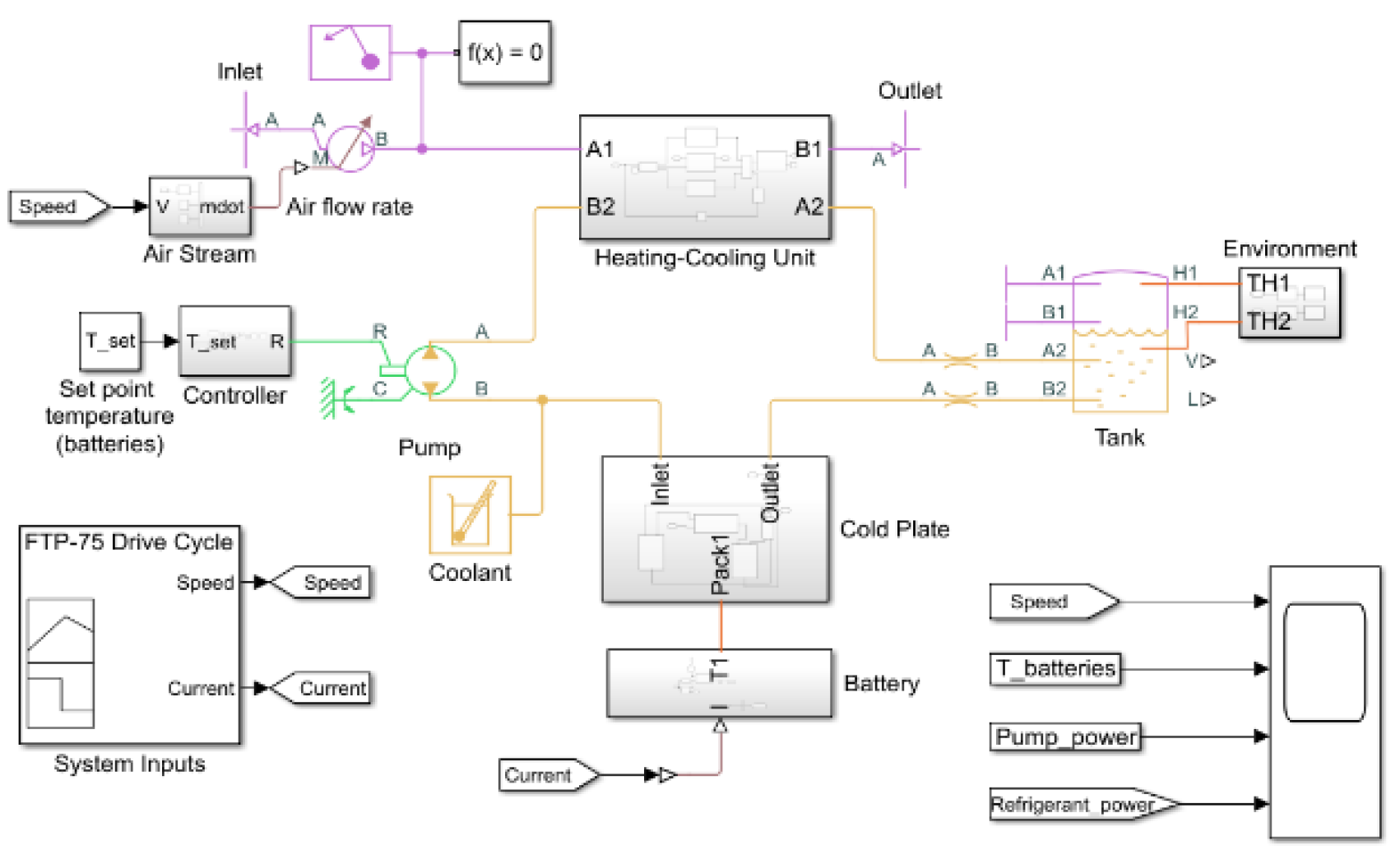
In this section, a single LIB cell of 21,700 configuration form factor, 2.4Ah is selected. The specifications of this battery are listed in Table 1. We delve into our numerical modeling methodology, which seamlessly combines finite-element discretization using COMSOL Multiphysics, a robust commercial CFD software, to ensure precise representation of the governing equations that dictate the behavior of the Battery Thermal Management System. Our approach is notably grounded in a transient study, aiming to capture dynamic effects and variations over time. The pivotal application of the Semi-Implicit Method for Pressure Linked Equation (SIMPLE) algorithm establishes a critical pressure-velocity connection and contributes to the numerical stability, ensuring the reliability of our simulations. Following the completion of simulations, the acquired data is efficiently imported into the MATLAB/Simulink environment, and to enhance clarity, we incorporate an illustrative architecture diagram (Figure 1) of our MATLAB/Simulink model for in-depth analysis. Our methodology extends to a lumped study conducted through Simscape Fluid; a powerful physical modeling tool developed within the MATLAB/Simulink framework. This tool facilitates a comprehensive understanding of the holistic behavior and interactions among the various components of the BTMS, thereby complementing our detailed numerical simulations. Our primary objectives center around determining key parameters, including pump power consumption, refrigerant power, and the peak temperature of the battery, which are pivotal for assessing the efficiency and overall performance of the system. This comprehensive and timedependent approach empowers us to gain a profound understanding of the dynamic behavior of the BTMS, enabling us to make informed decisions regarding its design and operation.

2.1. Problem description

This research is dedicated to a dual-pronged exploration. Firstly, it entails a comprehensive assessment of the thermal performance of diverse liquid-cooled Battery Thermal Management System, featuring a 31Ah Li-ion cell with NMC configuration, across a range of C-rates. The primary focus of this assessment is to investigate the influence of discharge rates and coolant flow rates on cell temperature. This investigation encompasses two principal cooling methods: bottom plate cooling and immersion cooling. It also seeks to highlight the specific advantages of the immersion cooling system through a detailed analysis of temperature profiles and fluid flow distributions across varying coolant flow rates and C-rates. Secondly, the research conducts a direct comparative analysis of the thermal performance between the immersion cooling system and a bottom plate cooling system with a similar cell and geometric configuration. This multifaceted inquiry aims to shed light on the distinct advantages and trade-offs between these cooling methods, contributing to the advancement of Battery Thermal Management System design and optimization.

2.1.1. Geometric description

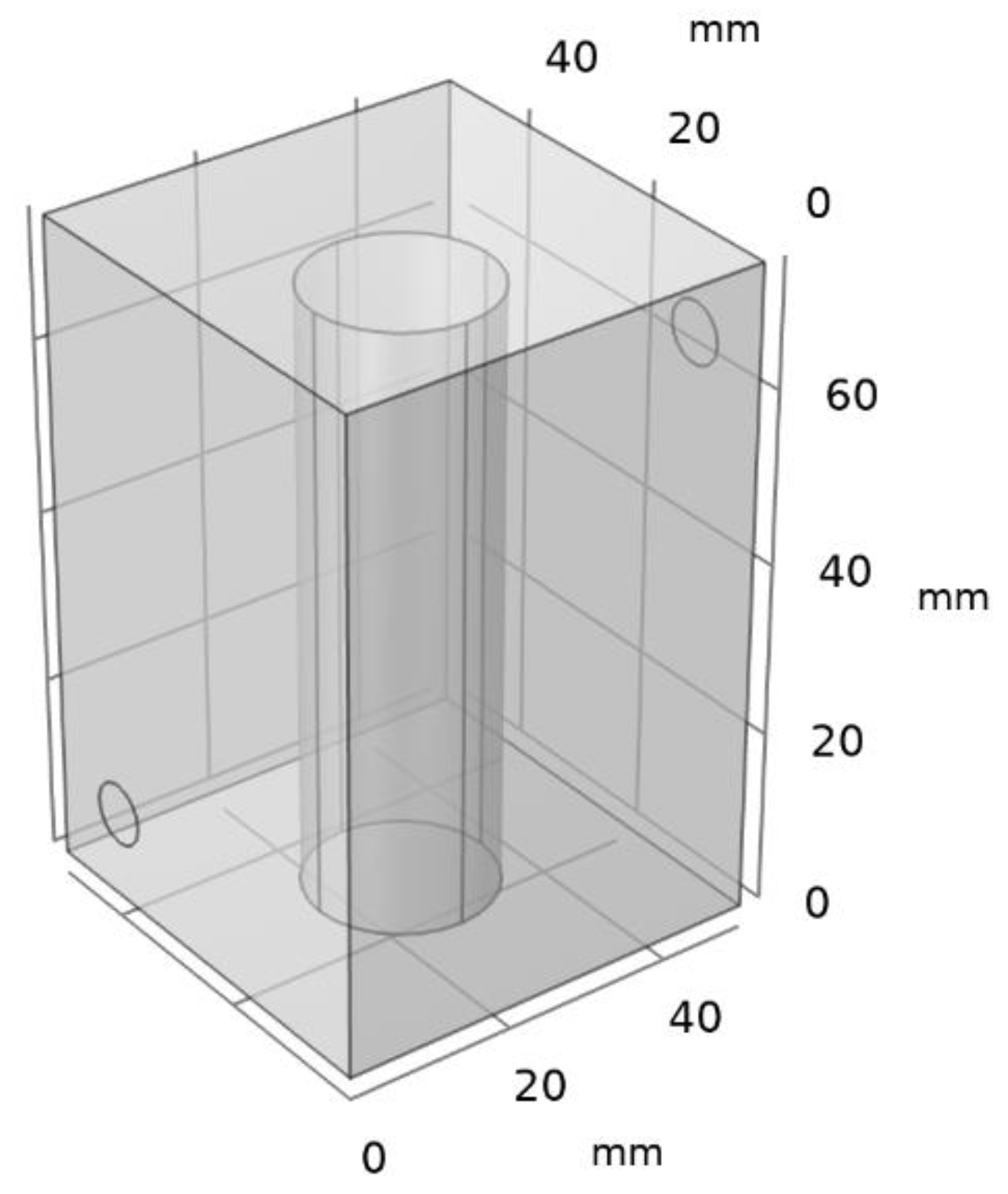
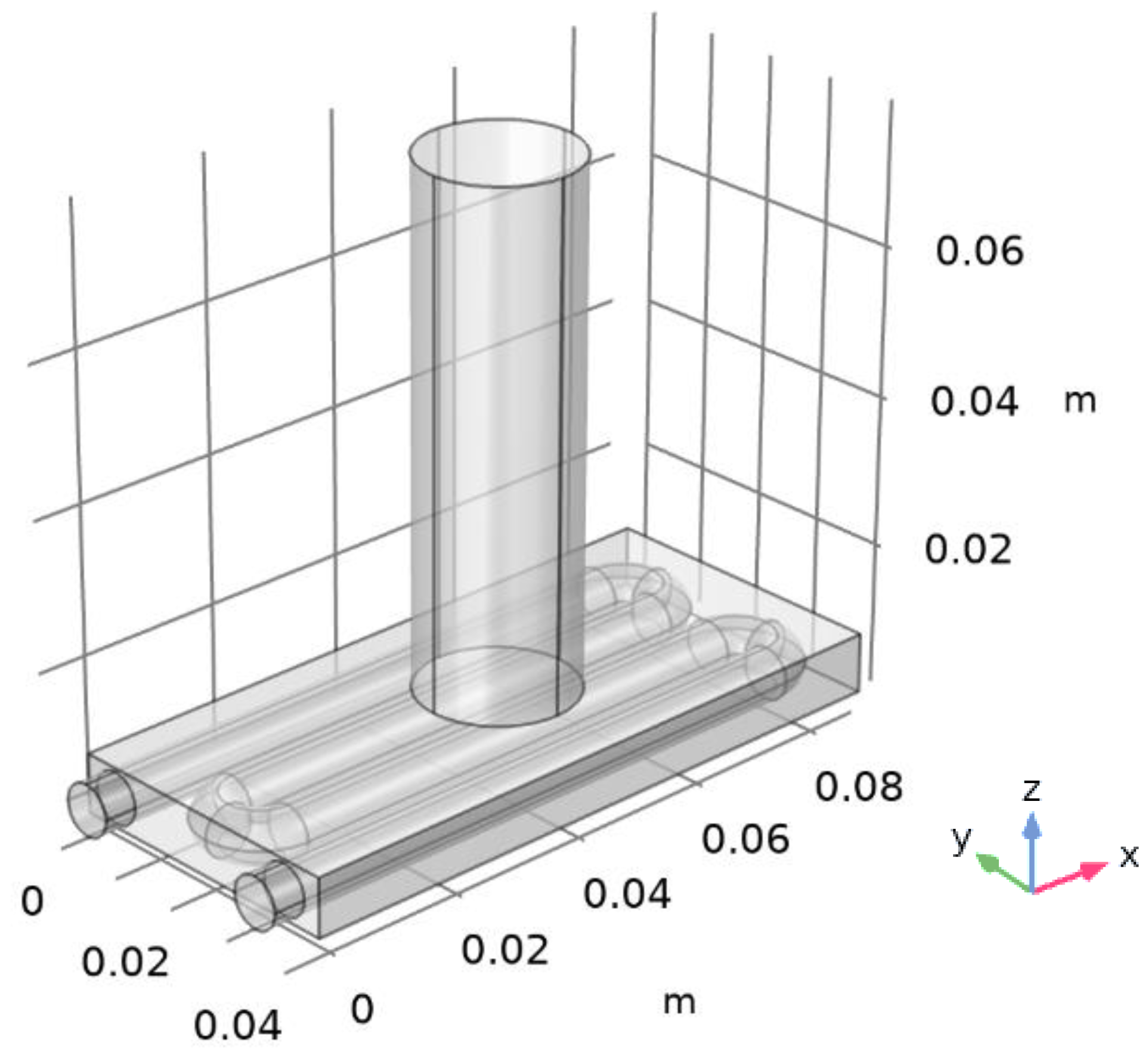
In this research, we explore two distinct thermal management configurations: Direct Liquid Cooling (Immersion Cooled) and Indirect Liquid Cooling (Bottom Plate Cooled). For the Immersion-cooled approach, as depicted in Figure 2, a single Lithium-ion cell is carefully enclosed within a polycarbonate structure measuring 50mm x 50mm x 75mm. This structure incorporates inlet and outlet ports to regulate coolant flow while maintaining an airtight seal to prevent coolant leakage. The simulation region focuses on heat transfer through the sides of the cell, excluding the top and bottom surfaces. Immersion Cooling employs water as the coolant medium. Conversely, in the Indirect Liquid Cooling configuration, illustrated in Figure 3, a single cell is securely mounted on an 8mm-thick aluminum plate measuring 41mm x 90mm. A copper tube with a 7mm inner diameter functions as the conduit for coolant flow, harnessing the superior axial thermal conductivity of the cell. The cold plate serves as a protective enclosure at the base of the cell.
Internal channels ensure even coolant distribution. Water is employed as the coolant for this model. These carefully designed geometrical configurations are central to our comprehensive analysis of thermal performance within the Battery Thermal Management System, facilitating a direct comparative study of these two distinct cooling methodologies.

2.2. Governing equations

The foundation of our CFD analysis lies in a set of critical assumptions and governing equations meticulously tailored to the distinctive features of our system. These assumptions encapsulate the behavior of the coolant flow, characterized by its laminar, Newtonian, and incompressible nature, while consciously excluding the influences of buoyancy and gravitational forces. Moreover, heat transfer mechanisms predominantly involve convection and conduction, with the central source of heat generation within the Li-ion battery being joule heating.
𝑞̇𝑐𝑒𝑙𝑙 = 𝑖2𝑅
The governing equations, pivotal to our CFD analysis, describe the fluid flow dynamics and heat transfer phenomena within the system, In the domain of the coolant, we have the continuity equation, the momentum equation, and the energy balance equation. These equations, characterized by their mathematical precision, enable us to explore the behavior of fluid flow and temperature distribution within the coolant medium [30].
Ijtst 12 120202 i001
In the context of the battery cell, we employ the energy balance equation to unravel temperature variations and heat generation within the cell.
Ijtst 12 120202 i002
For the bottom plate or immersion enclosure, we employ the energy balance equation to comprehensively comprehend temperature dynamics and heat transfer within this component.
Ijtst 12 120202 i003
In the above equations, · is divergence operator, is gradient operator, (u) is the velocity in m/s, T is the temperature in K, p is the pressure in Pa, k/ ρCp is the thermal conductivity in m2/s, and μ is the dynamic viscosity in Pa.s. These governing equations, presented with mathematical precision, serve as the linchpin of our CFD analysis, enhancing the quality and rigor of our research endeavors. The Reynolds number for the cooling water is calculated using Eq. 7:
Ijtst 12 120202 i004

2.2.1. Boundary conditions

This section outlines the boundary and initial conditions employed in the numerical simulations to analyze the flow and temperature distributions. The initial assumption is that all computational domains start at ambient temperature. Three inlet velocity conditions (v=0.14 m/s, 0.10 m/s, and 0.06 m/s) are selected, corresponding to different mass flow rates of 0.0053 kg/s, 0.0038 kg/s, and 0.0023 kg/s for both bottom plate cooling and immersion cooling systems. The inlet velocity is determined based on the flow rates and the cross-sectional area of the inlet port. Adiabatic conditions are assumed for the external walls, and the no-slip condition is applied at all solid-liquid interfaces. The cold plate material’s thermal conductivity is assigned a value of 205 W/m-K. The volumetric heat generation rates from the Li-ion cell are 124,016.3 W/m3, 61,782.58 W/m3, and 20,444 W/m3, which act as the heat source, vary with discharge rates of 3C, 2C, and 1C [45]. Pressure boundary conditions are implemented at the coolant outlet. The heat production in both the bottom plate-cooled and immersion-cooled battery modules is estimated using Equation 1.

2.2.2. Parameter Considerations and Grid Independence Assessment

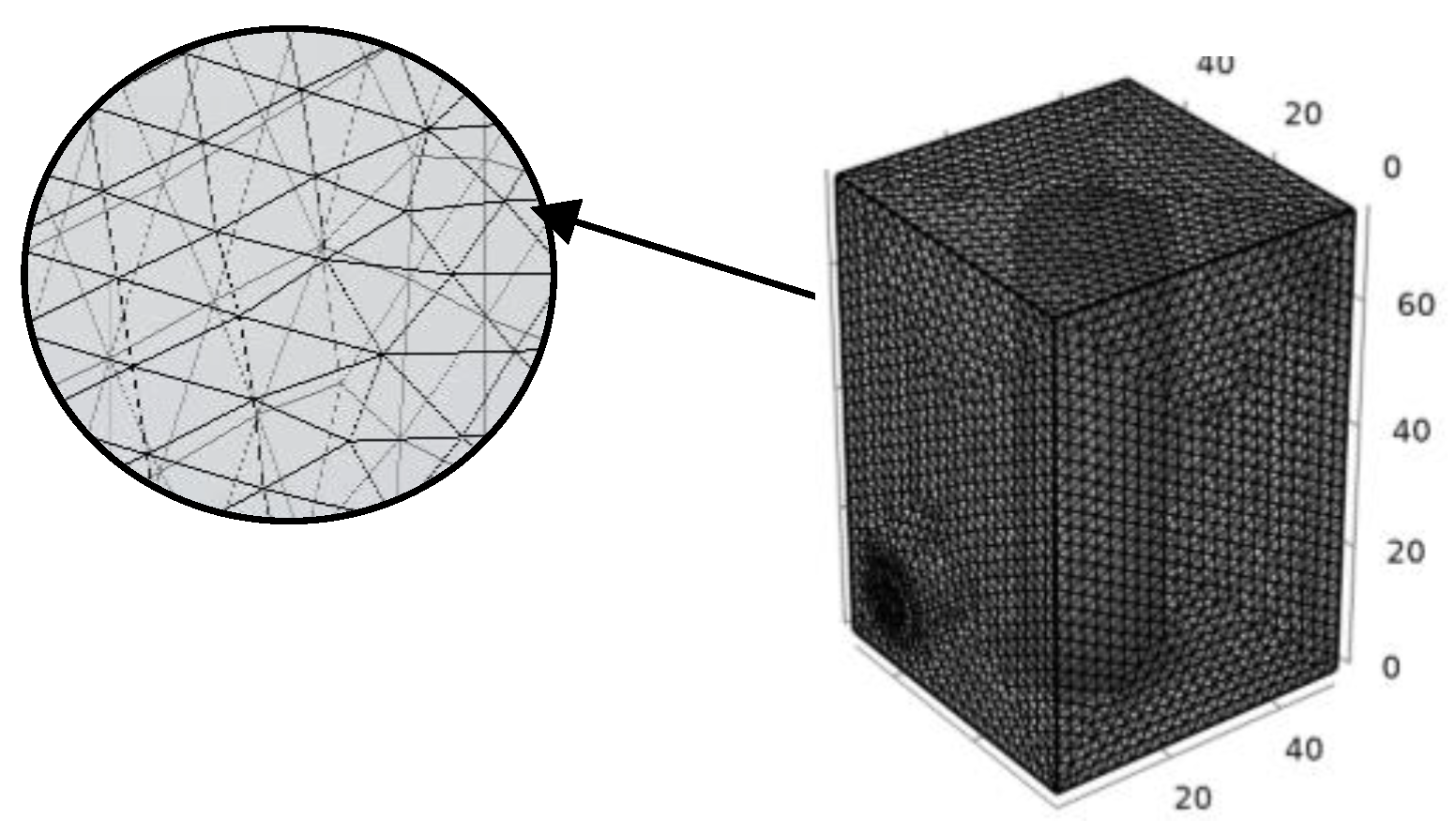
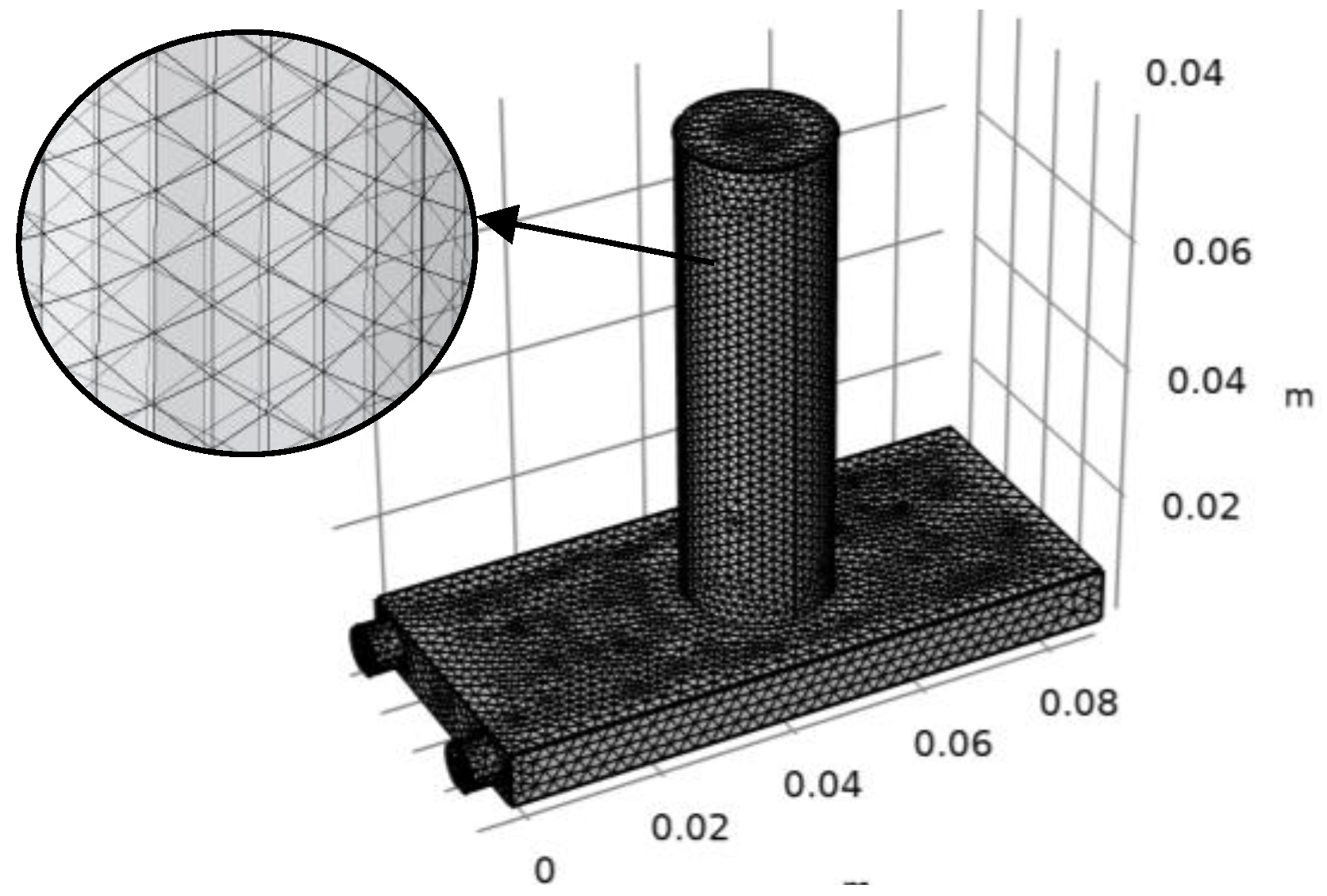
In this section, we carefully assessed several critical parameters to ensure the accurate representation of two different battery module cooling methods. The maximum liquid flow velocity was determined to be 0.14 m/s for immersion cooling, corresponding to a Reynolds number of 450.65. For bottom plate cooling, the maximum Reynolds number reached 1488. Both Reynolds numbers were below the pivotal threshold of 2300. To ensure an accurate depiction of the solid-liquid interface boundary layer, we meticulously designed a refined mesh. The immersioncooled model utilized a mesh with 3.1 x 10⁵ volume elements, while the bottom-plate-cooled model employed a more extensive mesh with 4.6 x 10⁵ volume elements. We employed normal grids, as depicted in Figure 4 for immersion cooling and Figure 5 for bottom plate cooling, to capture temperature distribution and heat transfer coefficients. To address this initial uncertainty, we conducted a Grid Independence Test using the Grid Convergence Index (GCI) methodology [46]. This test was performed under specific conditions, including an inlet velocity of 0.14 m/s, a mass flow rate of 0.0053 kg/s, and a base heat source equivalent to a 3C discharge rate. The primary objective of this test was to determine the optimal grid scheme that strikes a harmonious balance between accuracy and computational efficiency. In this process, we compared the peak cell temperature and heat transfer coefficients obtained from different grid schemes. We aimed to quantify the degree of discrepancy in the simulation results and select the grid scheme that provided the most reliable and precise outcomes. To achieve this, we employed the following equation:
Ijtst 12 120202 i005
Where, E% represents the percentage deviation between the predictions of the parameter under the fine grid scheme (X_fine)and the coarse or medium grid scheme (X_(Coarse, medium)). Table 2 provides computational details for the grid independence study related to immersion cooling, while Table 3 presents similar data for the grid independence study focused on bottom plate cooling. In both cases, the medium grid scheme was chosen to ensure accuracy and computational efficiency in our simulations. This thorough consideration of parameters and the diligent execution of grid independence testing are essential elements of our study. They guarantee that our simulations accurately represent battery module behavior under varying cooling conditions while also optimizing the use of computational resources.
Figure 4. Mesh model for immersion-cooled system.
Ijtst 12 120202 g004
Figure 5. Mesh model for bottom plate cooled system.
Ijtst 12 120202 g005

2.2.3. Validation study

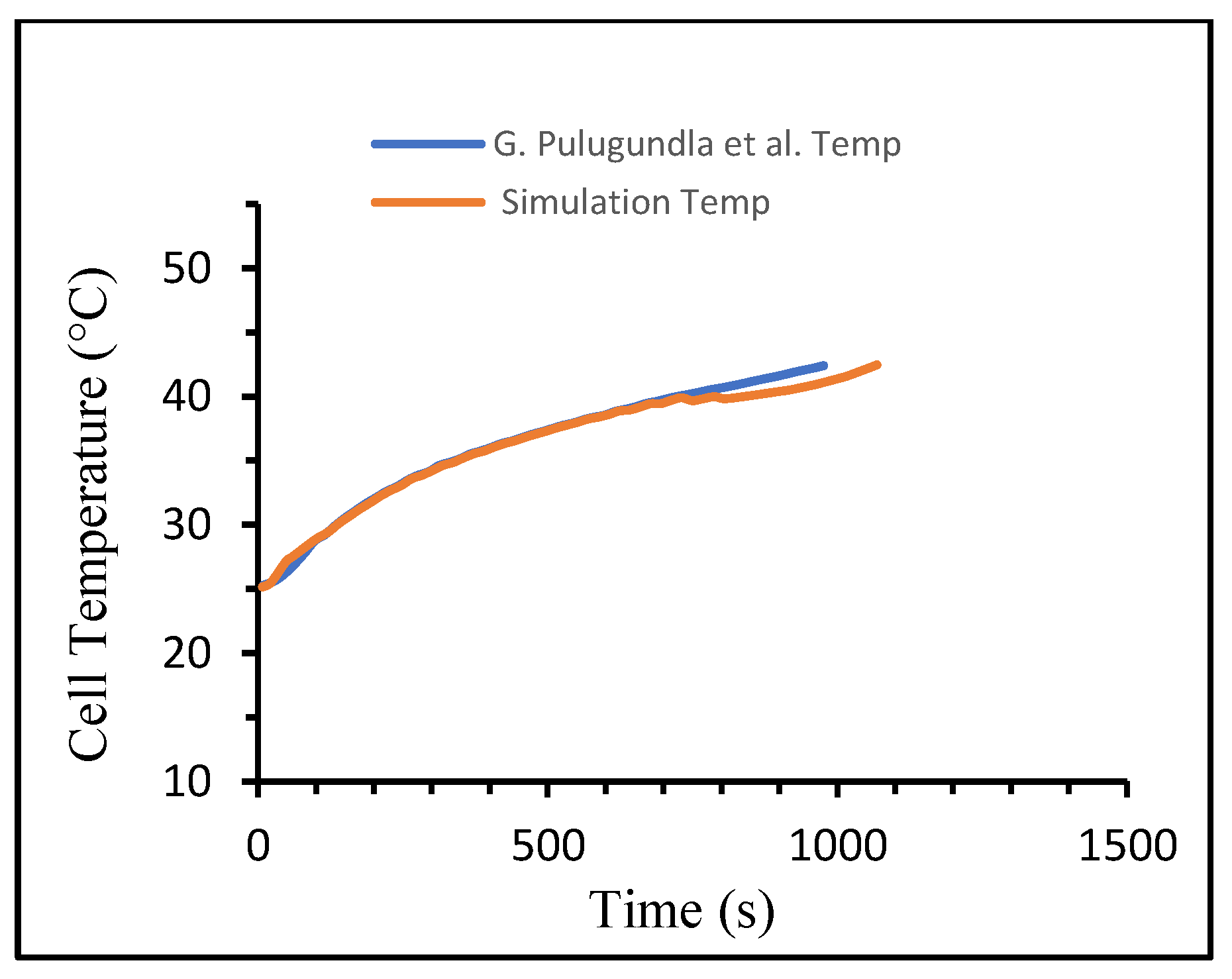
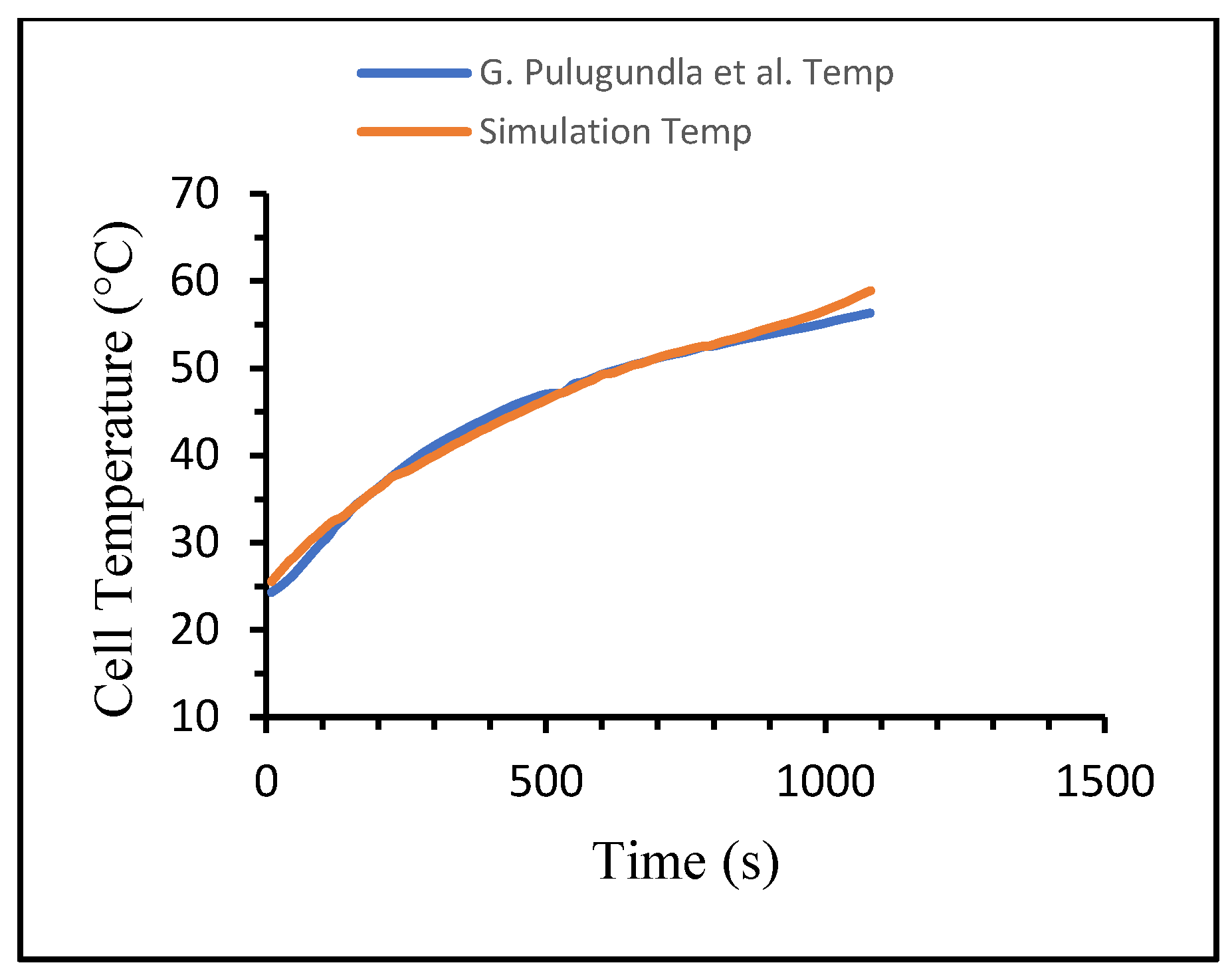
The current phase of our research involves an essential validation process, where we subject our numerical framework to a rigorous evaluation by contrasting it with experimental data. This critical step serves to affirm the reliability and applicability of our approach. To execute this validation, we harnessed a cylindrical lithium-ion cell in the 21700 format, constructing dedicated Computational Fluid Dynamics simulation setups for both immersion and bottom-plate cooling configurations, focusing on the single-cell level. In this rigorous validation exercise, our focus centers on a single cell undergoing a 3C discharge rate. We sourced experimental data for this specific discharge scenario, along with the corresponding 3D simulation results for immersion and bottom-plate cooling, from the comprehensive study conducted by Pulugundla et al. [25]. The comparative assessment, as illustrated in Figure 6 for the immersion cooling setup and Figure 7 for the bottom-plate cooling method, unveils critical insights into the temperature dynamics of the cell during discharge. Notably, both cooling configurations exhibit a temperature increase as the discharge progresses. Yet, what stands out is the discernible difference in the rate of change of the temperature curve, indicative of more efficient heat transfer from the cell to the coolant. As the discharge nears its conclusion, there is a notable rise in cell impedance, leading to an augmented heat generation. The reduction in the state of charge (SOC) introduces a potential concern, as it may lead to a rapid temperature increase with consequential thermal implications.
In the context of the bottom-plate cooling setup, we observe a pronounced temperature surge toward the end of the discharge, with temperatures approaching a peak of 60 °C. In stark contrast, the immersion cooling technique adeptly maintains the cell temperature below 43 °C, even under demanding operational conditions. This significant finding not only serves to validate our chosen CFD simulation methodology but also endows us with a robust simulation framework. This framework empowers us to comprehensively assess the two cooling configurations across diverse operational scenarios, underscoring the authenticity and versatility of our research findings.

3. Results and discussions

3.1. Comparative Analysis of Thermal Performance

The evaluation of thermal performance within our study is predicated on a meticulous comparative analysis. This analysis encompasses an examination of temperature contours and the highest temperature recorded on the cell’s surface across a spectrum of inlet velocities for the coolant. Furthermore, the performance in terms of heat transfer is scrutinized by assessing the convective heat transfer coefficients obtained at these varying velocities. In addition to this, a comprehensive evaluation of hydraulic performance and the amalgamation of total thermal performance has been undertaken by integrating the outcomes derived from COMSOL MULTIPHYSICS into SIMSCAPE FLUIDS. This multifaceted approach allows for a holistic understanding of the interplay between temperature, heat transfer, and hydraulic dynamics, shedding light on the nuanced behavior of the cooling systems under varying operational conditions. Thermal performance is analyzed by comparing the results of temperature contours and the highest temperature on the cell’s surface at various inlet velocities of the coolant. Similarly, heat transfer performance is compared by the various convective heat transfer coefficient obtained at these velocities. Further hydraulic performance and total thermal performance have been compared by incorporating the COMSOL MULTIPHYSICS results into the SIMSCAPE FLUIDS.

3.1.1. Reference Case Comparison

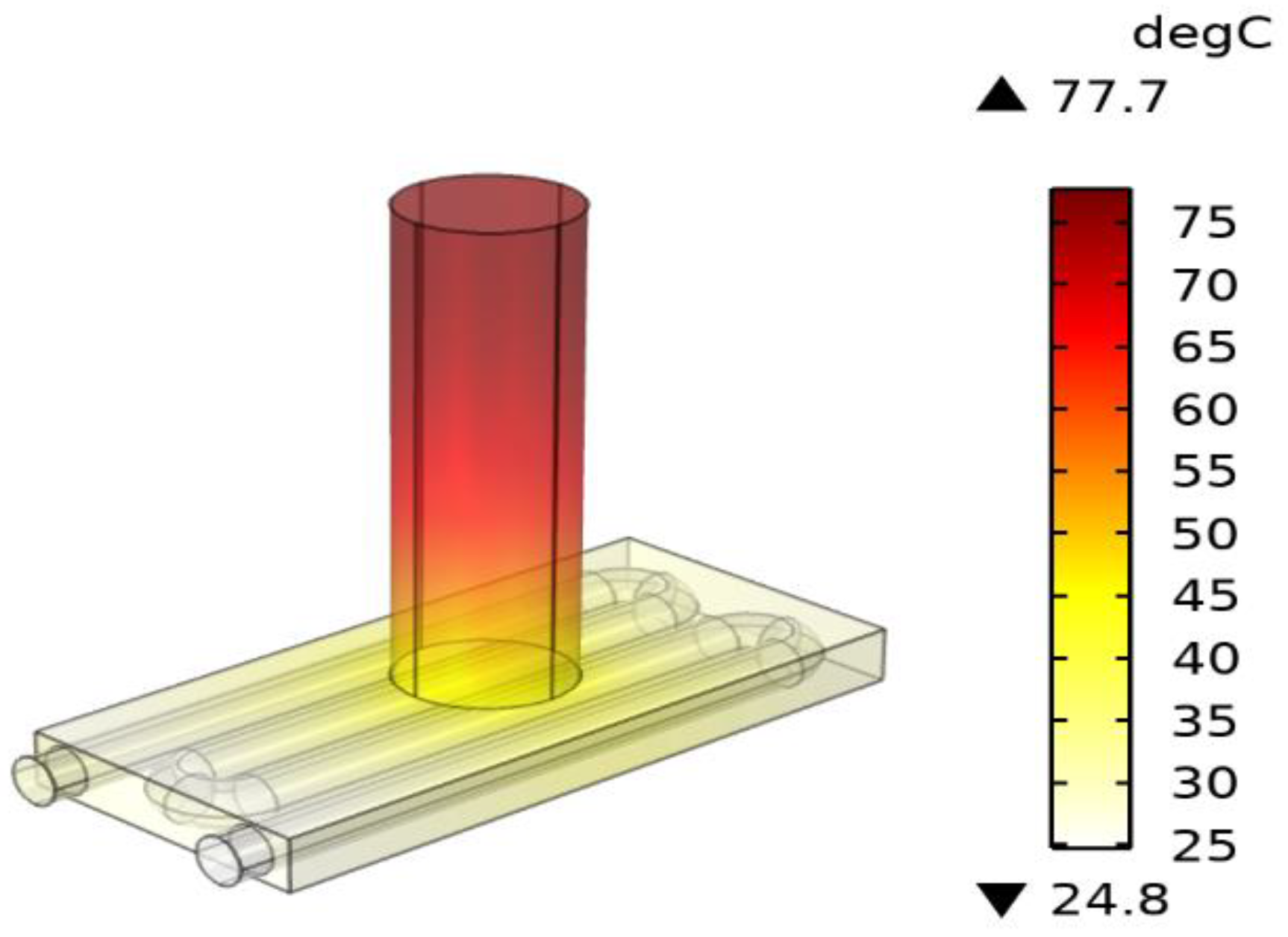
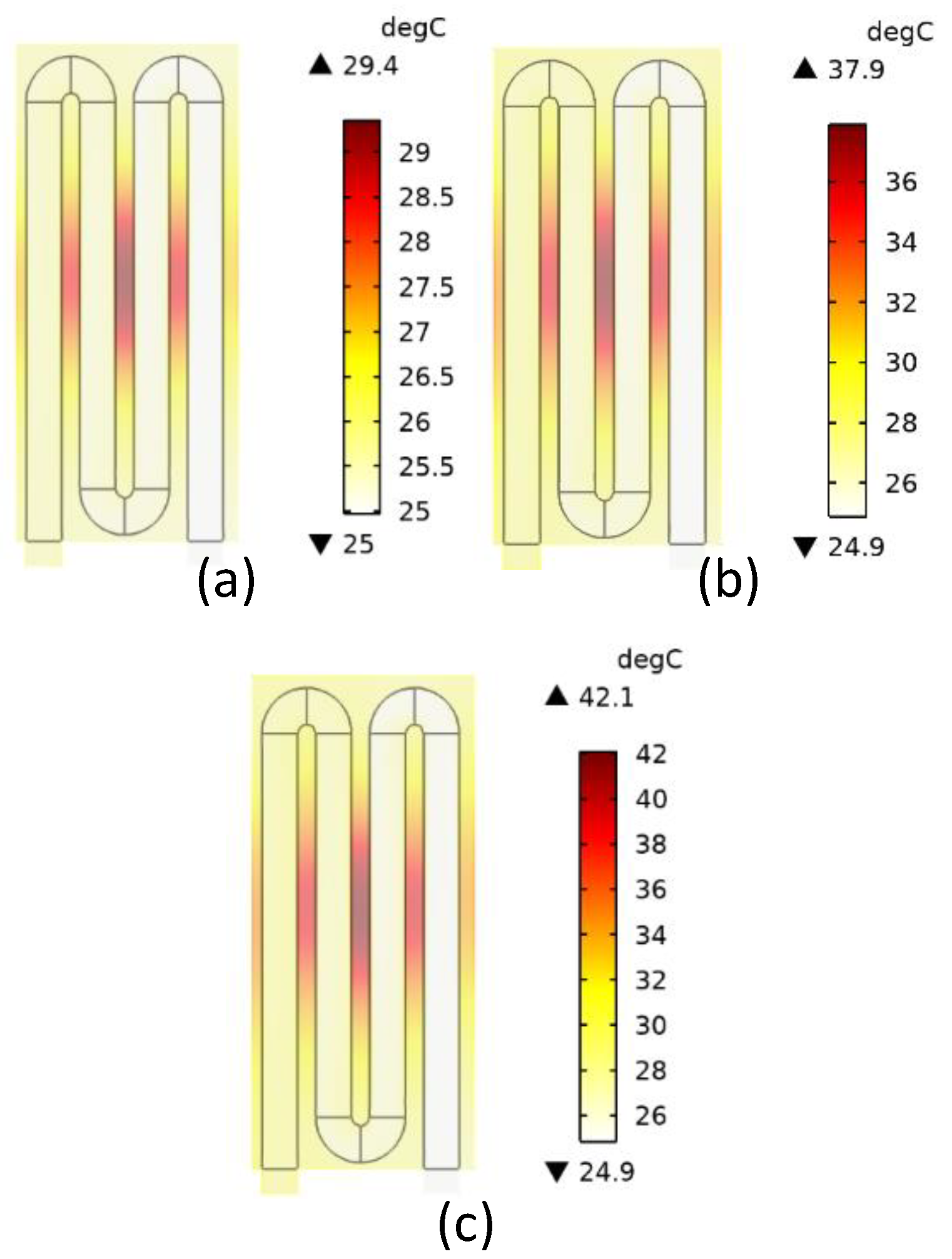
Our endeavor to achieve a comprehensive understanding of thermal performance is marked by a rigorous analysis of temperature contours, meticulously depicted in Figure 8, Figure 9, Figure 10, Figure 11, Figure 12 and Figure 13. These figures provide valuable insights into the thermal characteristics of both the bottom plate cooling system and the immersion cooling system under the conditions of a 3C discharge rate. Figure 8 provides a vivid snapshot of the temperature contours at the conclusion of the discharge process within the bottom plate cooling system. Here, we discern a distinct temperature peak at the cell’s head, situated proximate to the coolant exit periphery. This localized temperature elevation can be attributed to the unique configuration, where only the base of the cell maintains contact with the coolant channel via the cold plate. The lower section of the cell, in direct contact with the coolant channel, exhibits relatively lower temperatures when juxtaposed with the upper surface. Additionally, Figure 9 offers a crosssectional view across the middle of the copper tubes and cold plate, offering a perspective on temperature dispersion. Notably, the temperature of the coolant steadily rises as it traverses from the inlet to the outlet. This temperature elevation is a consequence of the heat exchange process with the cell’s base. The temperature profile within the cell follows suit, culminating in a localized region of heightened cell temperature towards the outlet.
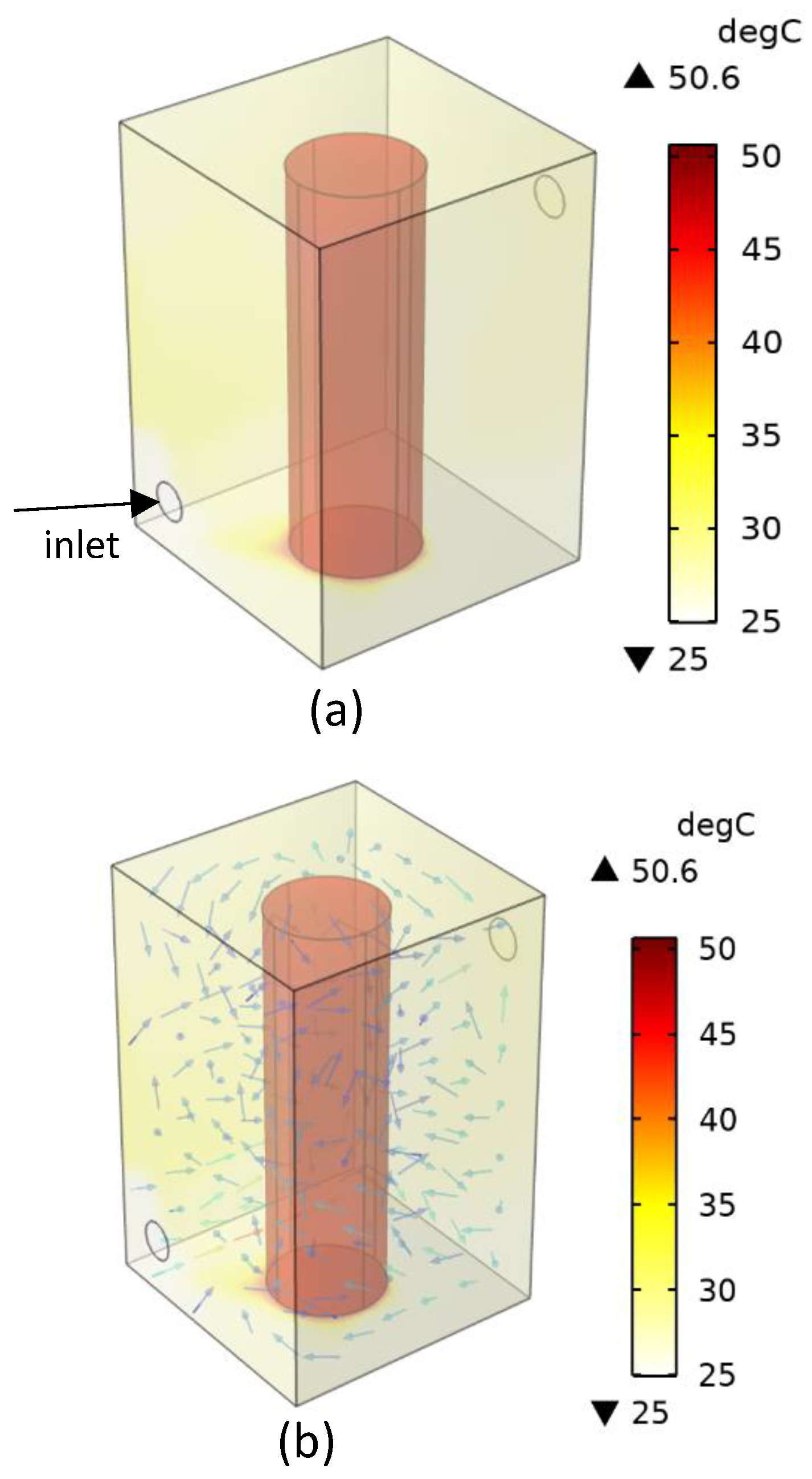
In the immersion-cooled system, as delineated in Figure 10, a distinctive approach is adopted. Here, the coolant is introduced into the cell module enclosure through the bottom inlet and subsequently exits through the top outlet. This intriguing reversal of the conventional coolant flow direction is orchestrated to ensure an even distribution of coolant temperature throughout the vertical cross-sectional plane, as elegantly portrayed in the figure. The temperature of the coolant ascends progressively as it advances from the inlet to the outlet, a result of the thermal exchange with the cell. This phenomenon, in turn, leads to an incremental temperature rise within the cell, in alignment with the flow direction towards the module’s exit.
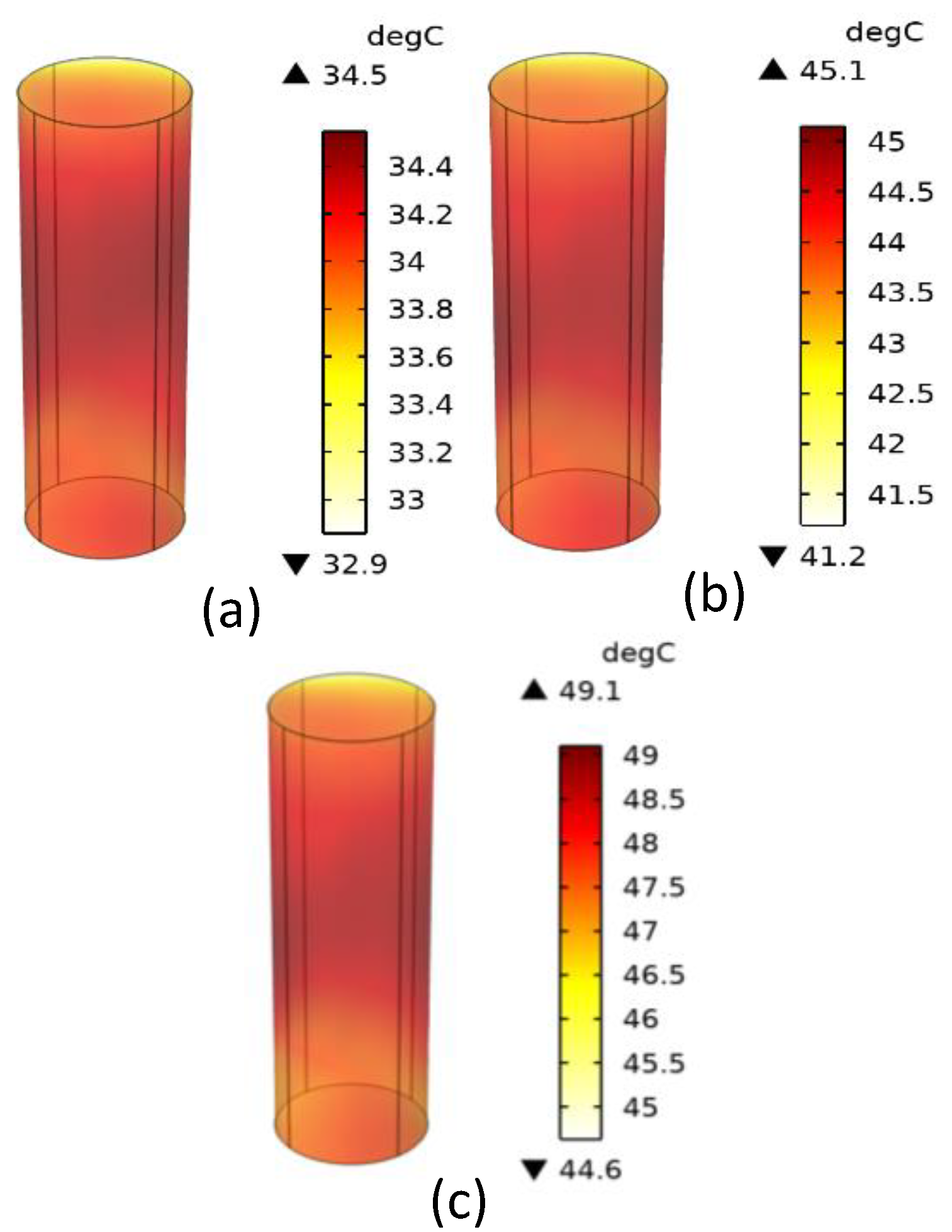
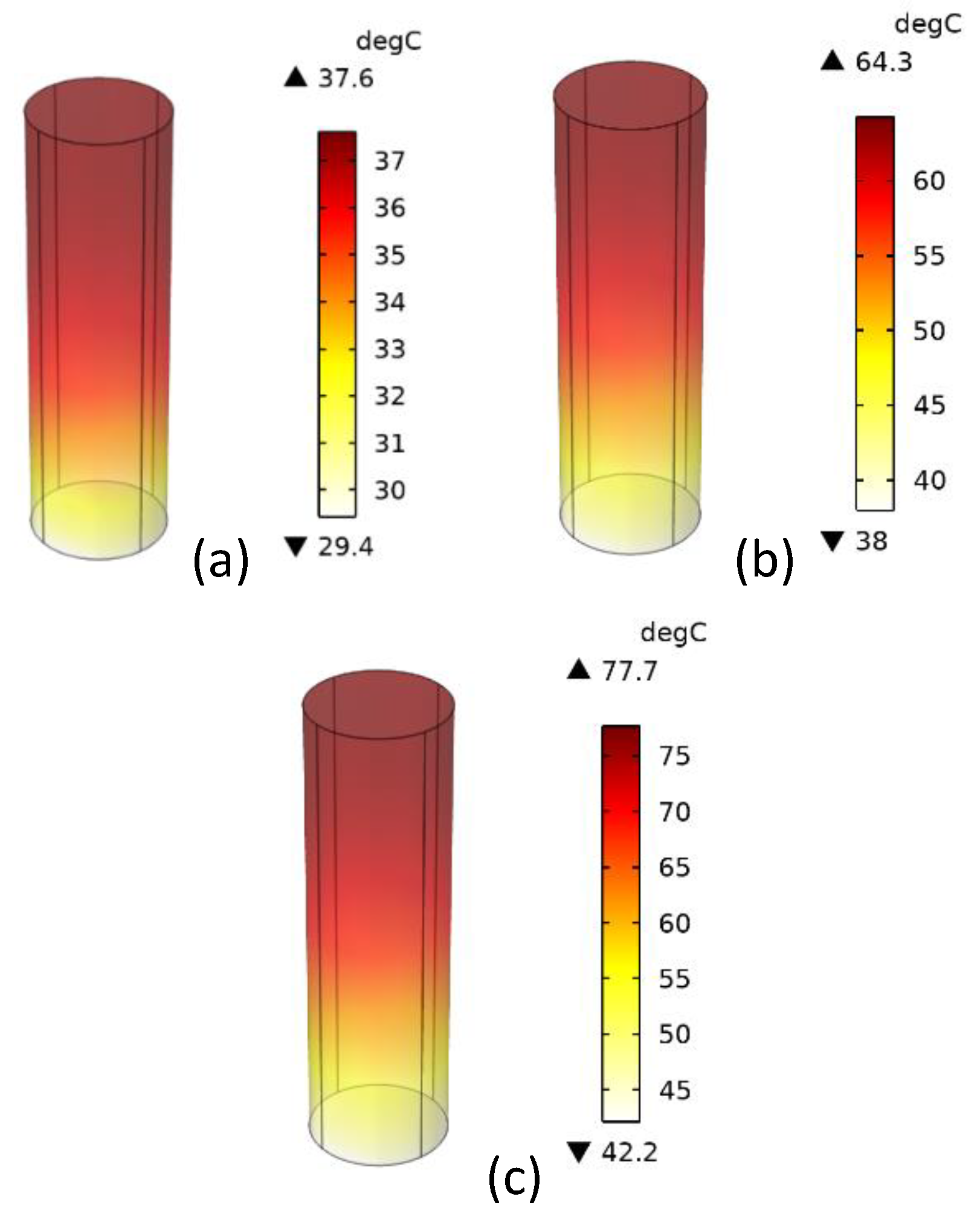
Figure 11 underscores a noteworthy facet of the bottom plate cooled system. Specifically, it highlights the potential for a substantial temperature gradient along the cell’s height. This gradient is predominantly a consequence of the cell’s heightened thermal resistance, which engenders heat transfer from the cell’s bottom to the cold plate. Conversely, the immersion-cooled configuration, as portrayed in Figure 12, orchestrates the entry of coolant through the bottom inlet and its egress from a top outlet positioned at the opposite end. The specific cell arrangement within the system is engineered to assure the uniform distribution of coolant temperature throughout the vertical cross-sectional plane, as beautifully depicted. Here, too, we witness a progressive increase in the coolant’s temperature as it journeys from the inlet to the enclosure’s outlet, a direct result of the thermal interaction with the cell. This naturally occasions a concomitant rise in the cell’s temperature, mirroring the flow direction towards the enclosure’s exit.
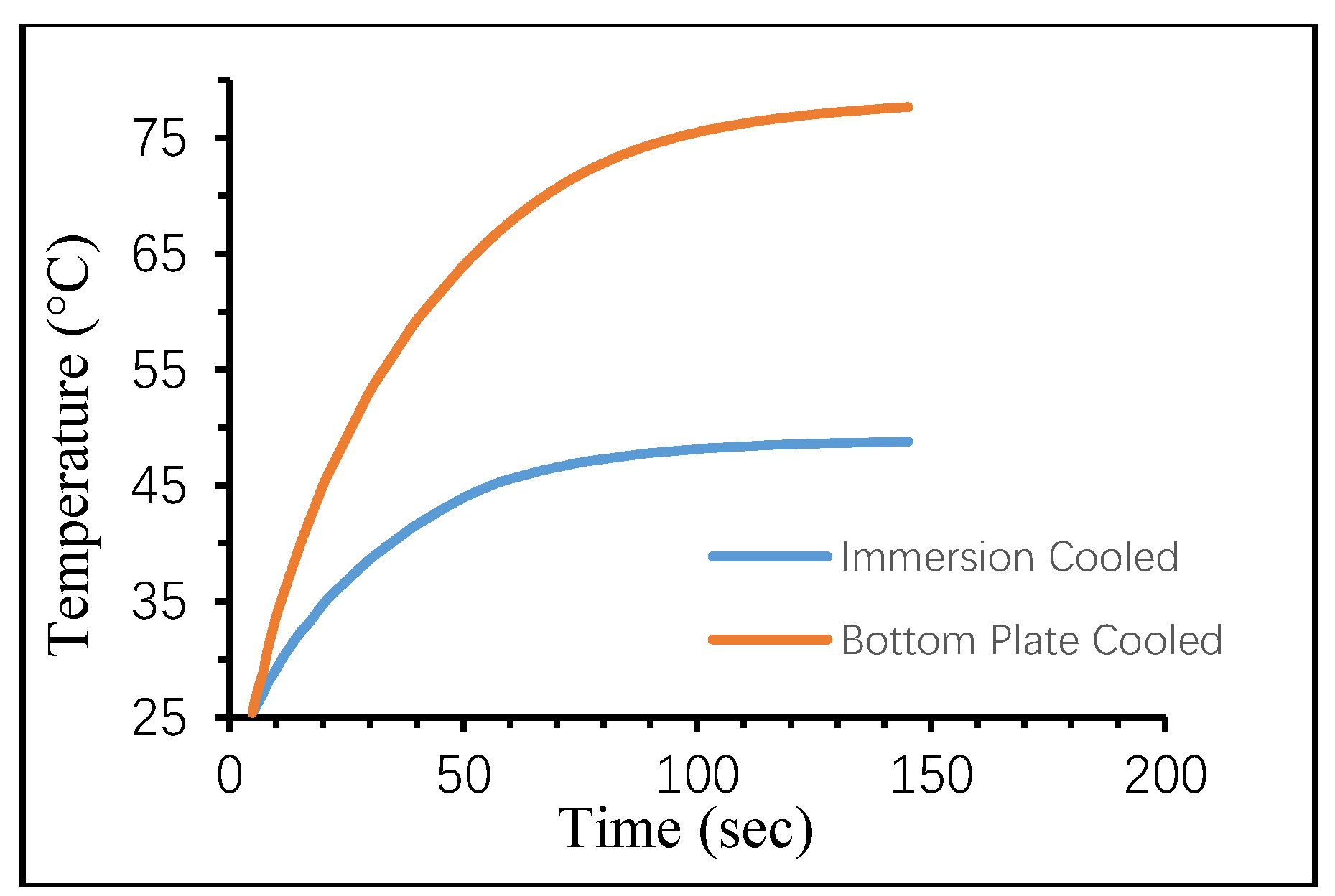
The culmination of this insightful analysis unfolds in Figure 13, where we discern the variation in the maximum cell temperature for both the immersion-cooled and bottom-platecooled systems. Under the conditions of a 3C discharge and a mass flow rate of 0.0053 kg/s, both systems exhibit an inevitable temperature rise as the cell discharges. However, it is the differing slopes of these temperature curves that stand out. This discrepancy finds its roots in variations in mean thermal conductance and a notably higher heat transfer coefficient associated with immersion cooling, resulting in an earlier flattening of the temperature curve when contrasted with bottom plate cooling. Immersion cooling, with its unique capacity for the entire cell surface to come into direct contact with the coolant, allows for an extended contact time and, consequently, a faster temperature increase. To be precise, the bottom-plate-cooled system reaches a considerably elevated temperature of 77.7 °C, while the immersion cooling method skillfully maintains the highest cell temperature at approximately 50.6 °C. These compelling findings underscore the superior thermal performance of the immersion cooling system, particularly in its ability to curtail maximum cell temperatures.

3.1.2. Impact of Discharge C-rate

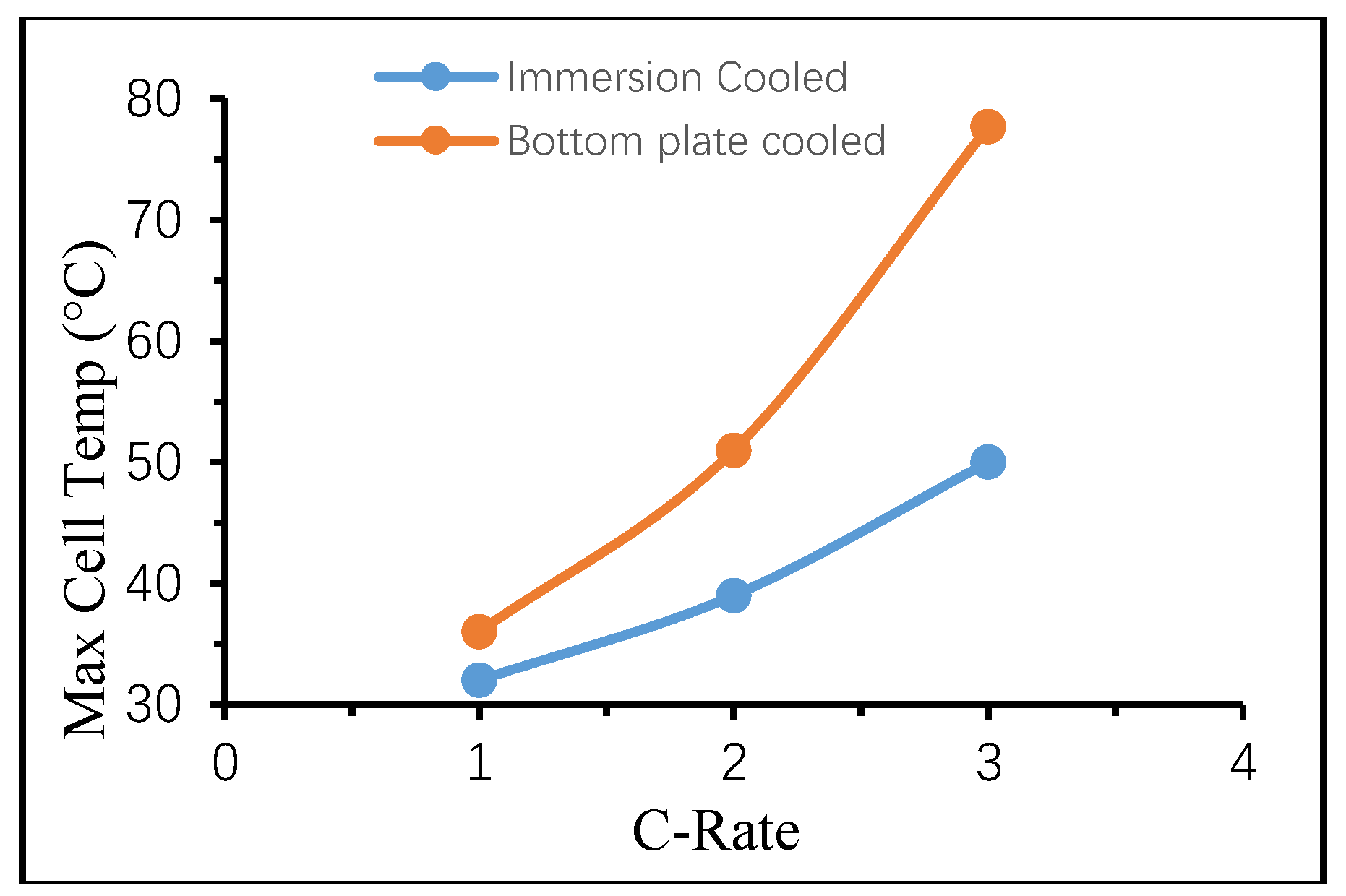
In Figure 14, we delve into the compelling effect of varying discharge C-rates on the cell’s peak temperature within the ambit of both cooling strategies. The discharge rates of 1C, 2C, and 3C are meticulously examined while maintaining a constant flow rate of 0.0053 kg/s throughout this series of simulations. As expected, the cell’s peak temperatures exhibit a notable elevation under these increased discharge rates. At a modest discharge rate of 1C, the discrepancy in peak temperatures between immersion cooling and bottom plate cooling diminishes to a mere 3 °C. With further reductions in the C-rates, the graph reveals a convergence, with both cooling methods yielding nearly identical temperature distributions. It becomes evident that under circumstances of lower C-rate operation, the preference leans towards bottom plate cooled battery systems. These systems offer the advantage of cost-effectiveness and a simpler design. However, a pertinent consideration arises in the context of non-uniform temperature distribution. As C-rates decline, the disparity in temperature distribution lessens. A pronounced non-uniformity in temperature distribution could lead to accelerated cell aging within the system, subsequently resulting in a wider range of resistance and capacity discrepancies. It is noteworthy that the temperature has a significant influence on the aging process of a Li-ion cell, as substantiated by previous studies [5,6,7]. Non-uniform heat generation over the cell’s lifespan can exacerbate operational challenges, particularly in terms of voltage imbalances among cells within the system [45]. The variance in cell temperature between the two cooling techniques primarily emanates from the immersion-cooled cell’s heightened heat dissipation to the coolant. Consequently, the coolant temperature exhibits a more pronounced increase in the immersion-cooled system as it flows toward the outlet. It is imperative to underscore that the distinctive flow passageway design of the immersioncooled system further accentuates the temperature differential among cells.
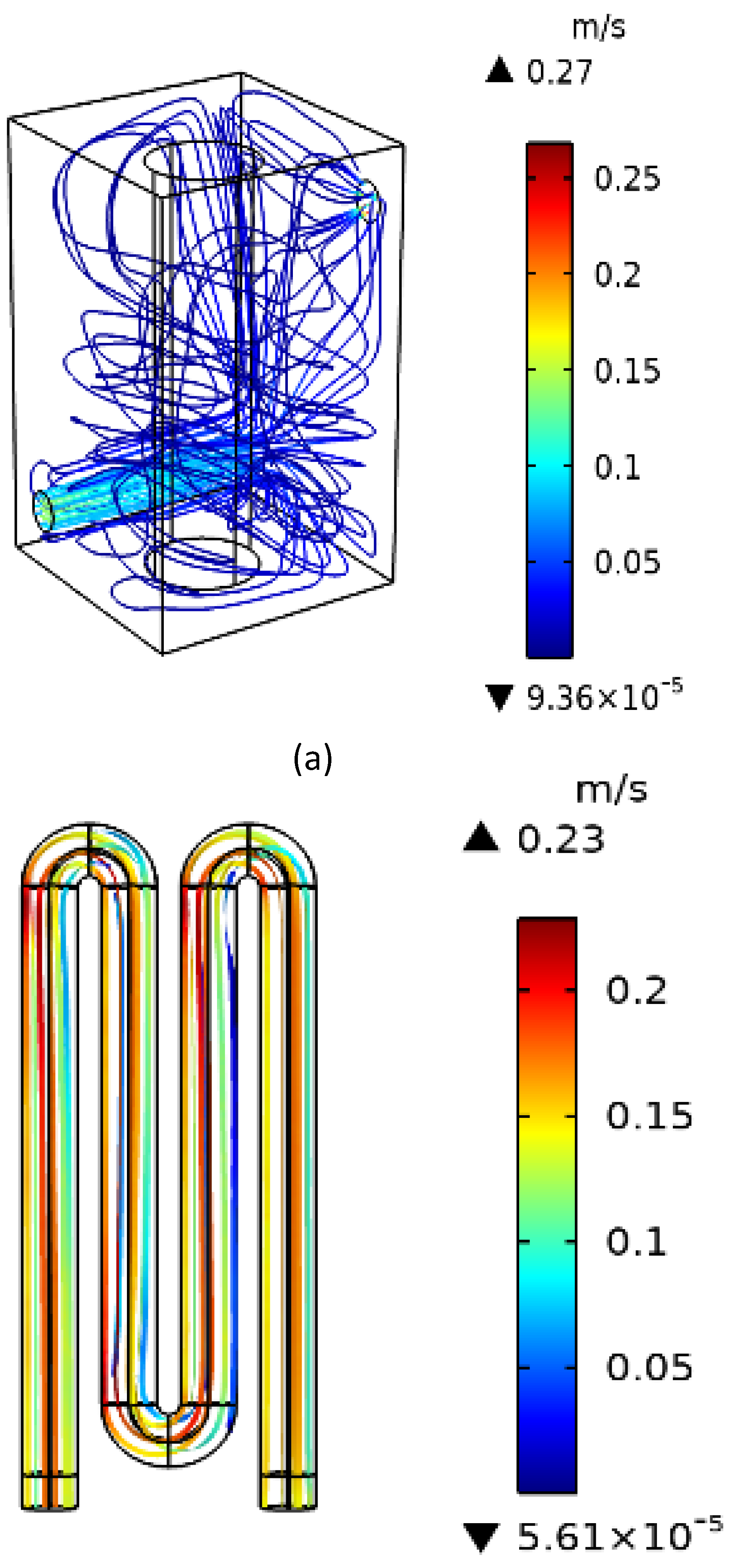
Turning to Figure 15, we unveil the pivotal role played by the velocity streamlines of the coolant in both cooling methodologies. This figure vividly illustrates the coolant’s serpentine flow pattern, characterized by the positioning of the cold plate’s input and outflow ports on the same side, as showcased in Figure 16b. This specific configuration results in a relatively more uniform distribution of cell temperature. However, it comes at the trade-off of higher maximum cell temperature. In contrast, within the immersion-cooled system, the pathway of the coolant is significantly influenced by the precise positioning of the cell and the outlet port, as exemplified in Figure 15a. This straightforward design of the immersion-cooled module tends to generate regions of low velocity within the coolant flow. Consequently, these regions are associated with elevated cell temperatures, particularly further from the outlet port along the outlet manifold. This observation underscores the intricate interplay between coolant flow dynamics and the resulting thermal characteristics in the immersion cooling system.
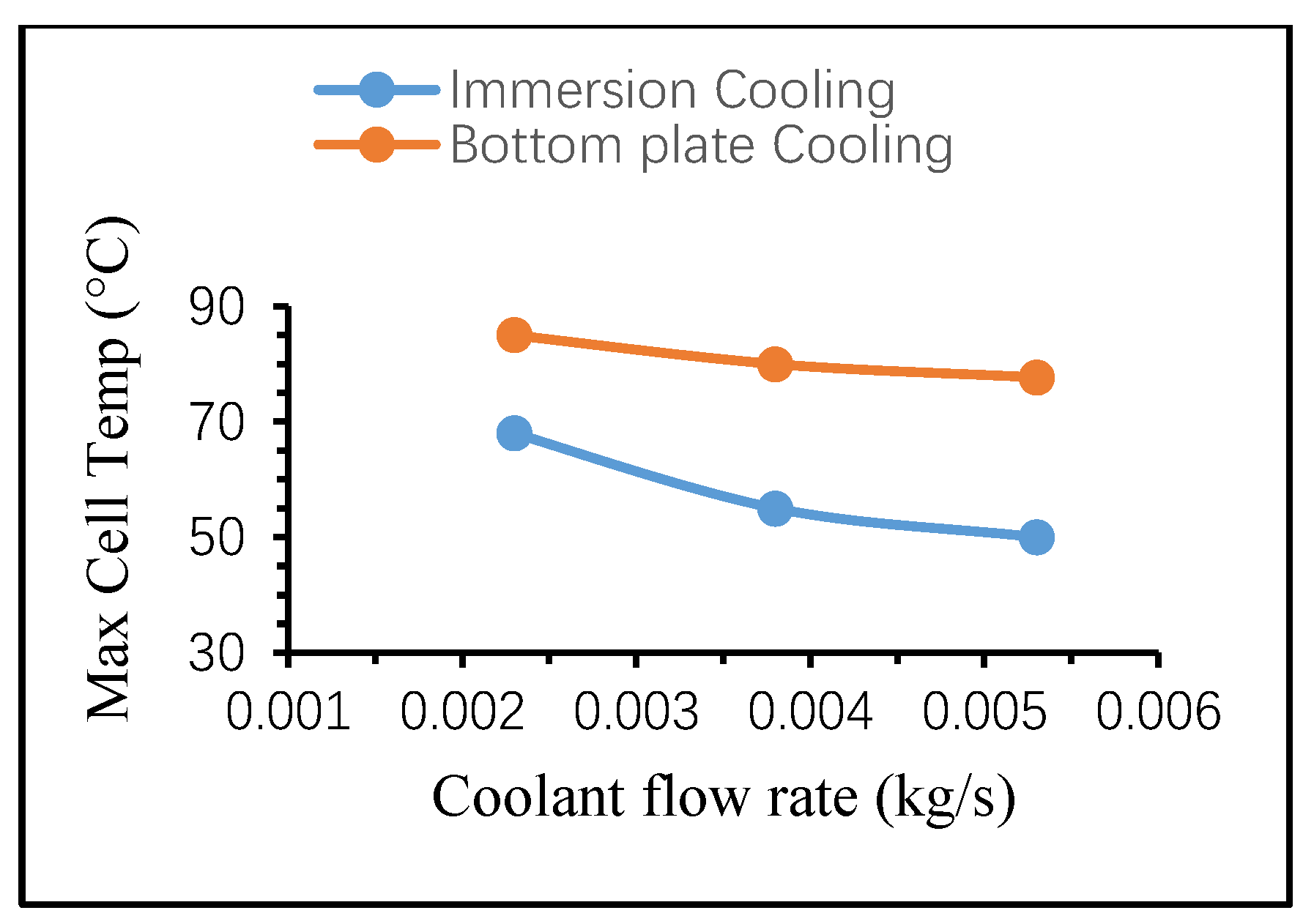
Figure 17. Effect of flow rate variation on maximum cell temperature in (°C).
Ijtst 12 120202 g017

3.2. Lumped element study

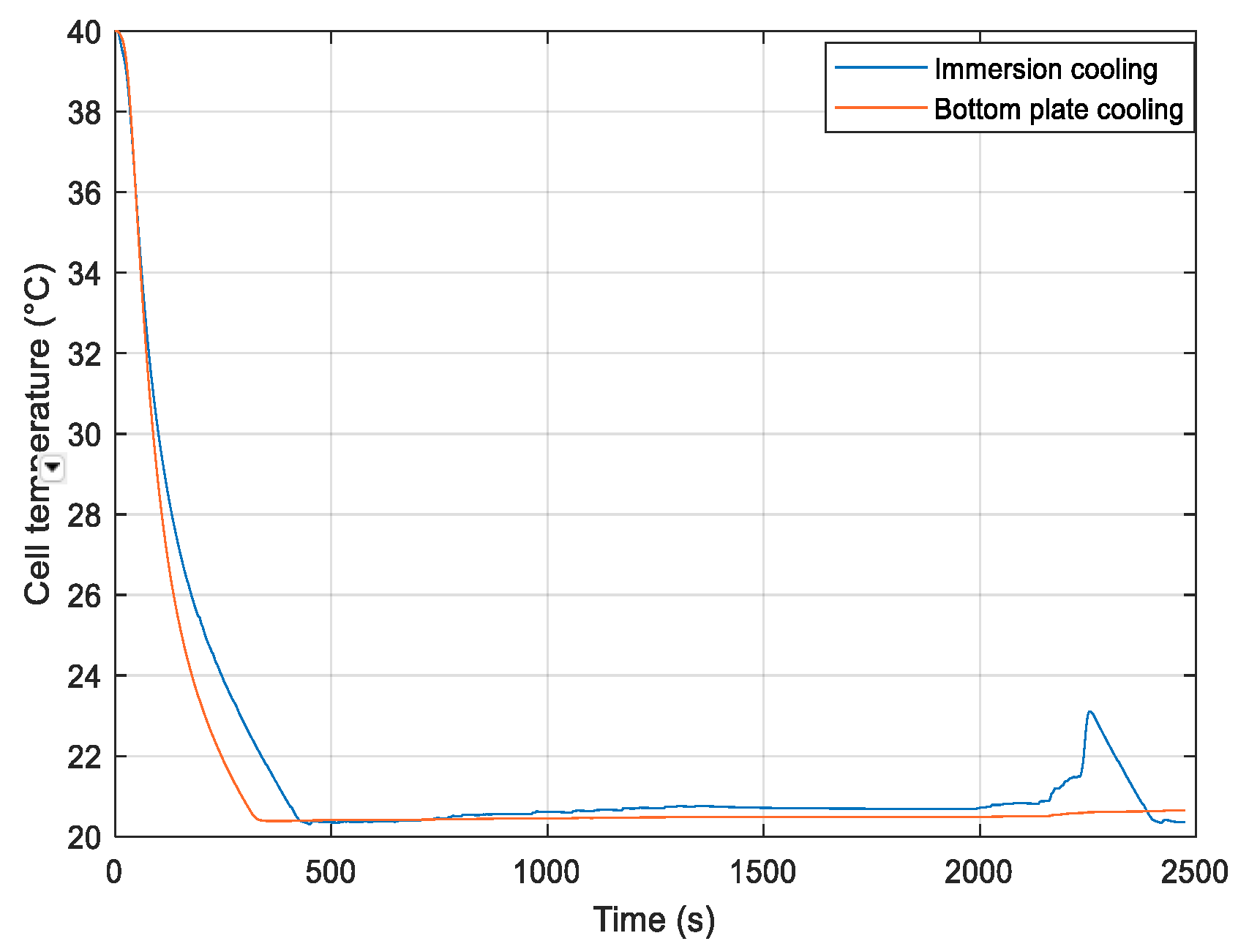
In this section, we employ a 1-D Simulink tool to conduct a comprehensive assessment of the performance and efficiency of two distinctive cooling strategies, as illustrated in Figure 1. For the closed-loop motor drive, our inputs encompass vehicle speed and current. The temperature is initially set at 20.5 °C, at which point the pump operates at a moderate speed. If the temperature exceeds this threshold, the motor pump switches to full speed. The discharged water is directed to another reservoir. The data outputs encompass vehicle speed in m/s, battery temperature in °C, pump power in kW, and refrigerant power in kW. This segment provides an insightful overview of the project executed using MATLAB/Simulink. The core focus is on circulating water through a controlled pump that regulates the flow rate in response to the battery’s temperature fluctuations. The ultimate objective is to juxtapose the heat transfer characteristics of immersion-cooled and bottom-plate-cooled systems by leveraging the convective heat transfer coefficients obtained from COMSOL MULTIPHYSICS and integrating them into Simulink. A higher heat transfer coefficient denotes more efficient heat dissipation from the battery cell’s surface through the coolant. This project harnesses these findings to enhance comprehension and facilitate decision-making in battery thermal management.
The heat transfer coefficient values for the immersion-cooled and bottom-plate-cooled systems are obtained at different mass flow rates, with a fixed volumetric heat generation rate of 124,016.3 W/cm³ for 3C rate and 61,782.7 W/cm³ for 2C rate, as derived from Zhiguo et al [45]. The selected flow rates are 0.0053 kg/s and 0.0038 kg/s respectively. Figure 18 showcases the plot of battery cell temperature, revealing that both cooling strategies exhibit almost identical behaviors. However, at the commencement of the simulation, the bottom plate cell temperature reaches the set point earlier than in immersion cooling. This disparity arises from the higher heat transfer coefficient in immersion cooling compared to bottom plate cooling.
Consequently, the pump operates at a faster rate, facilitating a more robust coolant flow around the cell. Subsequently, both methods exhibit analogous behaviors. Toward the end of the discharge cycle, in immersion cooling, there’s a sudden surge in cell temperature, prompting the pump to run proportionally. The coolant circulates around the cell to restore the battery temperature to its normal operating conditions.
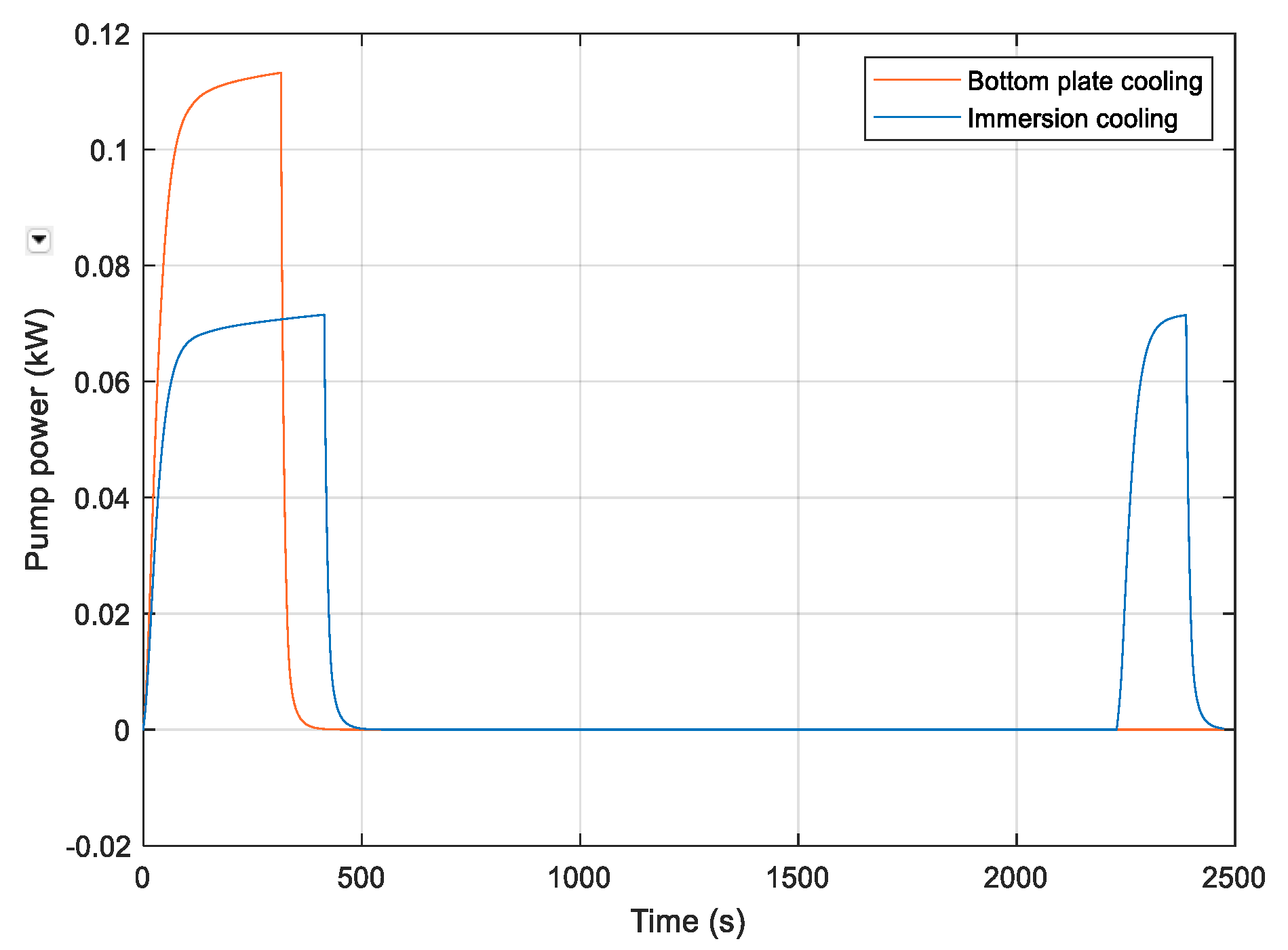
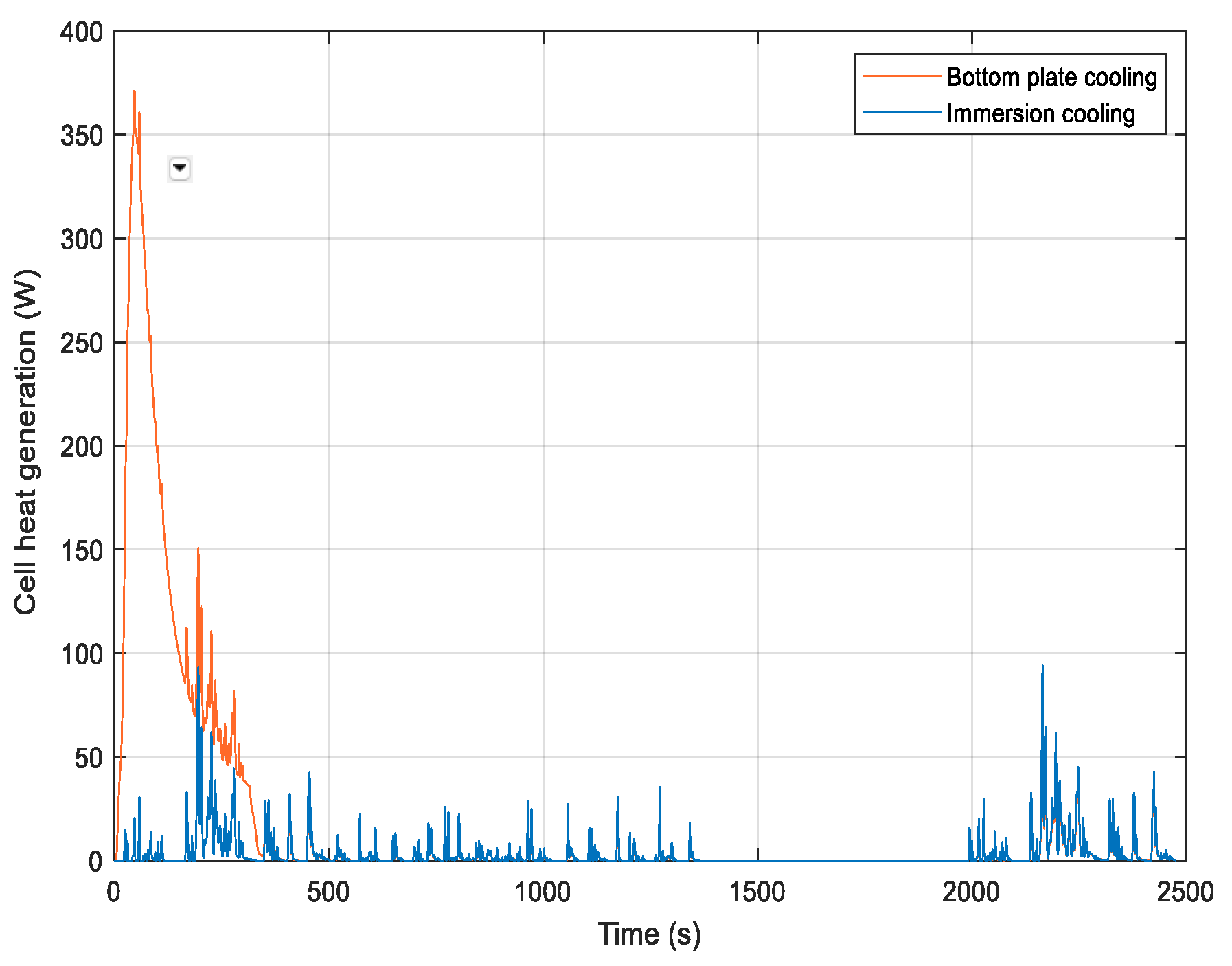
The pump operates solely when the battery temperature exceeds the designated threshold. The motor’s speed varies in response to the temperature increase, intensifying heat dissipation during battery charging and discharging. Figure 19 portrays the mechanical power input required by the pump in both cooling strategies. In the initial phase of the simulation, as the battery temperature rises beyond the set limit, the pump springs into action promptly, responding to the controller’s command to cool down the battery. More pumping power is necessary for bottom plate cooling due to the lower heat transfer coefficient and excessive heat generation at the outset of the simulation. In the case of immersion cooling, as the discharge cycle nears its end, the graph illustrates the pump’s activation in response to the rapid spike in battery temperature. The pump efficiently mitigates the abrupt temperature rise, restoring the battery to its normal operating conditions. Figure 20 provides insights into the heat generation within the cell during the simulation. Notably, the heat generation in the bottom plate cooling system surpasses that in immersion cooling due to the lower thermal conductance. However, after the initial 400 seconds, both cooling strategies exhibit nearly identical heat generation patterns until the end of the discharge. To maintain the optimal cell temperature, a significant amount of heat transfer is required, especially in comparison to immersion cooling.
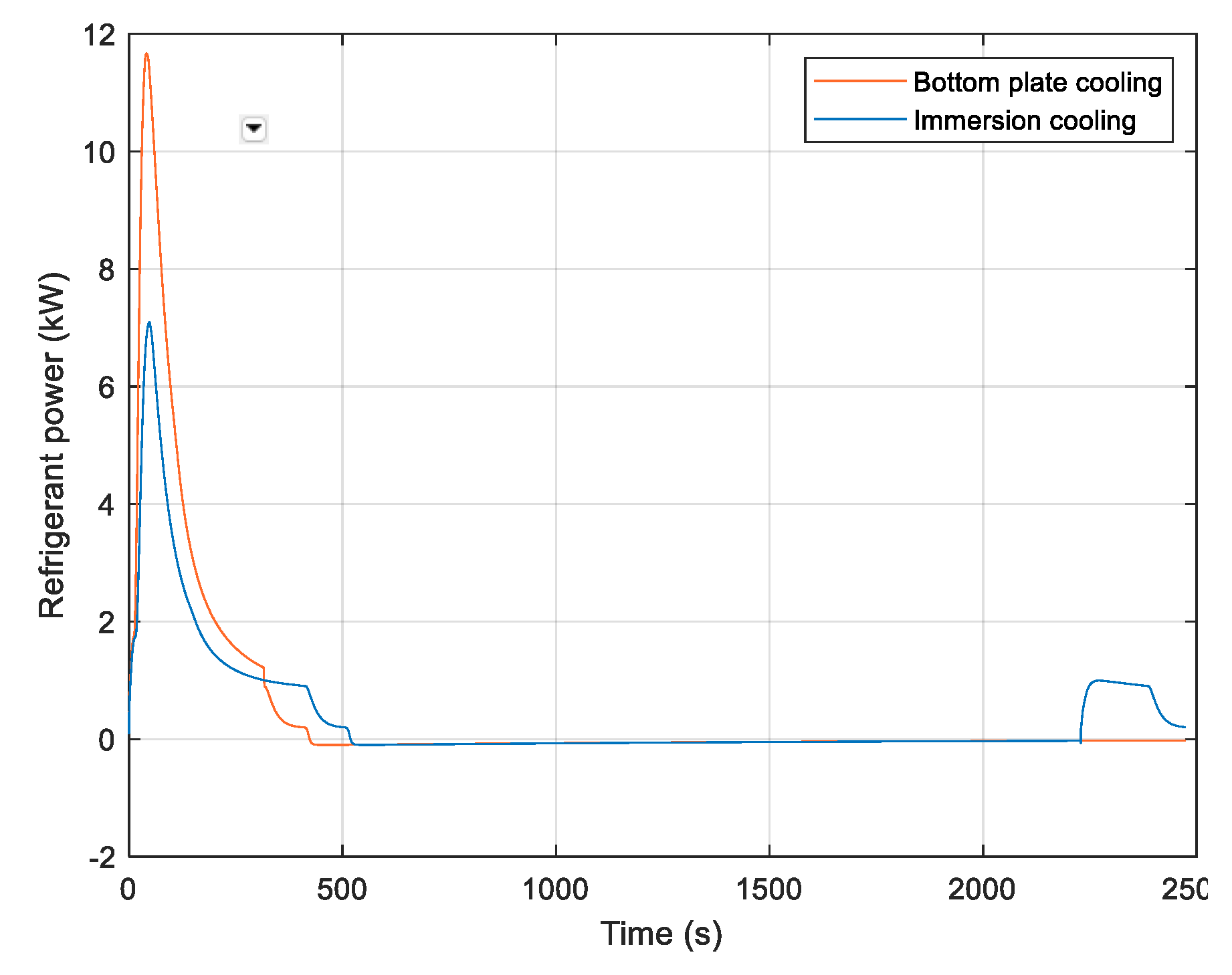
The simulation results, depicted in Figure 21, compare the refrigerant power input in both cooling strategies. Initially, more refrigerant power is required in bottom plate cooling due to higher heat generation and the lower heat transfer coefficient. However, after 500 seconds, both strategies follow a consistent pattern as a result of the uniform battery temperature observed in Figure 18. Toward the end of the discharge, refrigerant power spikes in immersion cooling, responding to the sudden increase in battery temperature and the need to bring it back to the designated set point.

4. Conclusion

In this study, the thermal performance of two cooling methods immersion cooling and bottom plate cooling were systematically analyzed for a 21700-format cylindrical Lithium-ion battery cell under various operational conditions using 3D Computational Fluid Dynamics (CFD) modeling. The key findings from this comparative analysis are as follows:
  • Immersion cooling demonstrated superior thermal control, reducing the maximum cell temperature by approximately 34%, reaching 50.6 °C at a 3C discharge rate compared to 77.7 °C with bottom plate cooling at the same conditions.
  • The immersion cooling system achieved a significantly higher heat transfer coefficient of 225.08 W/m²K, outperforming the bottom plate cooling system, which had a heat transfer coefficient of 193.49 W/m²K.
  • Immersion cooling proved effective in maintaining a more uniform temperature distribution across the battery cell, which is crucial for improving the overall thermal management and preventing localized heating. The difference in peak temperatures between the two methods was minimized at lower discharge rates, with a reduction of only 3 °C at 1C.
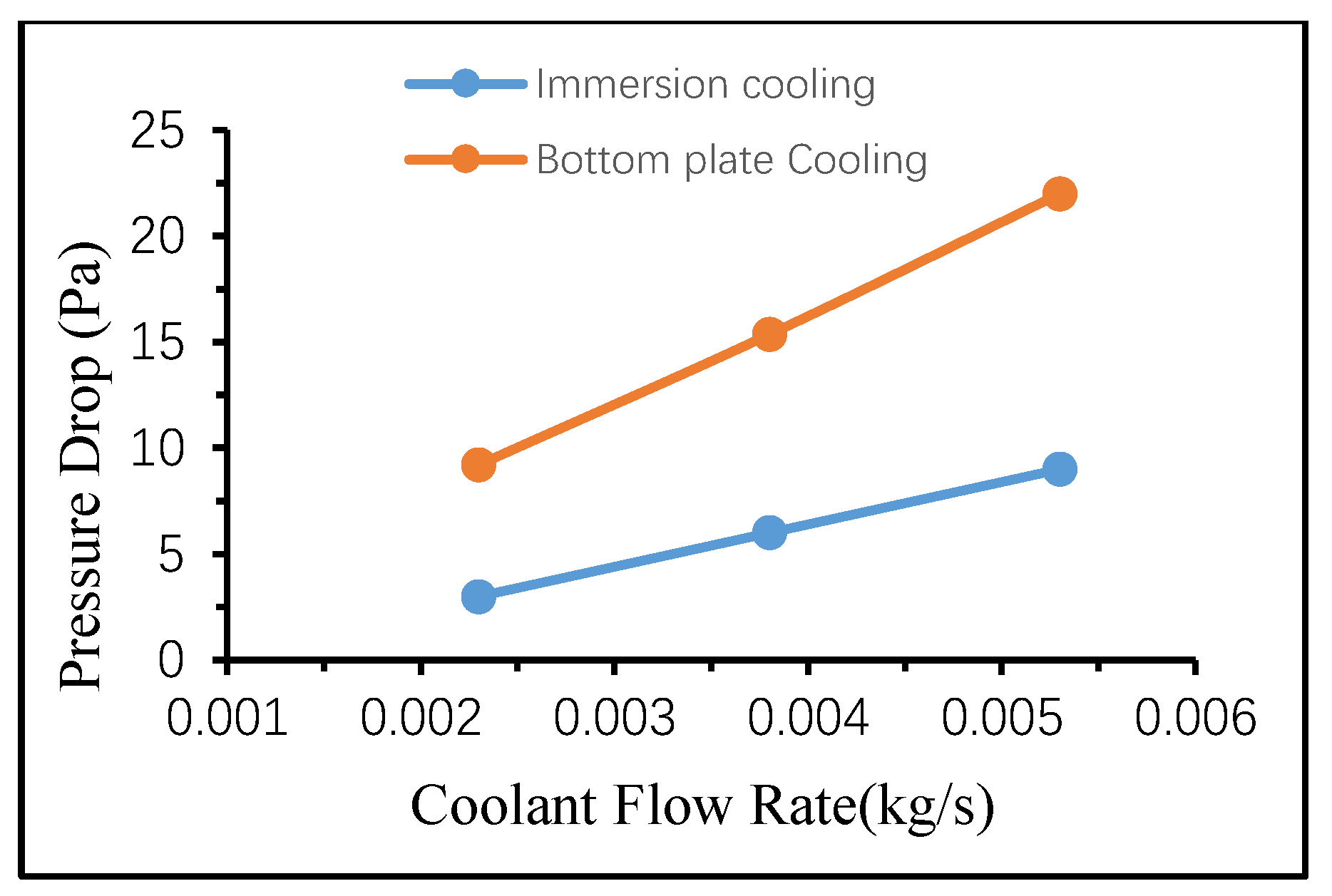
  • Immersion cooling led to a 59% lower pressure drop compared to bottom plate cooling, which translates to a more energyefficient system due to reduced pumping power requirements.
  • The increase in coolant flow rate consistently reduced the maximum cell temperature for both cooling systems. However, immersion cooling allowed for a higher coolant flow rate with less pressure drop, enhancing its thermal performance.
Ijtst 12 120202 i006

References

  1. Cicconi, P.; Landi, D.; Germani, M. Thermal analysis and simulation of a Li-ion battery pack for a lightweight commercial EV. Applied energy 2017, 192, 159–177. [Google Scholar] [CrossRef]
  2. Duan, J.; Tang, X.; Dai, H.; Yang, Y.; Wu, W.; Wei, X.; Huang, Y. Building safe lithium-ion batteries for electric vehicles: a review. Electrochemical Energy Reviews 2020, 3, pp.142. [Google Scholar] [CrossRef]
  3. Liao, Z.; Zhang, S.; Li, K.; Zhang, G.; Habetler, T.G. A survey of methods for monitoring and detecting thermal runaway of lithium-ion batteries. Journal of Power Sources 2019, 436, 226879. [Google Scholar] [CrossRef]
  4. Saw, L.H.; Ye, Y.; Tay, A.A.; Chong, W.T.; Kuan, S.H.; Yew, M.C. Computational fluid dynamic and thermal analysis of Lithium-ion battery pack with air cooling. Applied energy 2016, 177, 783–792. [Google Scholar] [CrossRef]
  5. Liu, J.; Li, H.; Li, W.; Shi, J.; Wang, H.; Chen, J. Thermal characteristics of power battery pack with liquid-based thermal management. Applied Thermal Engineering 2020, 164, 114421. [Google Scholar] [CrossRef]
  6. Wang, Q.; Jiang, B.; Li, B.; Yan, Y. A critical review of thermal management models and solutions of lithium-ion batteries for the development of pure electric vehicles. Renewable and Sustainable Energy Reviews 2016, 64, 106–128. [Google Scholar] [CrossRef]
  7. Liu, H.; Wei, Z.; He, W.; Zhao, J. Thermal issues about Li-ion batteries and recent progress in battery thermal management systems: A review. Energy conversion and management 2017, 150, 304–330. [Google Scholar] [CrossRef]
  8. Jiang, K.; Liao, G.; Jiaqiang, E.; Zhang, F.; Chen, J.; Leng, E. Thermal management technology of power lithium-ion batteries based on the phase transition of materials: a review. Journal of Energy Storage 2020, 32, 101816. [Google Scholar] [CrossRef]
  9. Nayak, M.K.; Hakeem, A.A.; Ganga, B. Influence of non-uniform heat source/sink and variable viscosity on mixed convection flow of third grade nanofluid over an inclined stretched Riga plate. International Journal of Thermofluid Science and Technology 2019, 6(4), 19060401. [Google Scholar] [CrossRef]
  10. Madani, F.; Mahfoud, B.; Mahfoud, H.E. Influences of electrical conductivity of the cylindrical walls on heat transfer enhancement of nanofluid swirling flow. International Journal of Thermofluid Science and Technology 2023, 10(2). [Google Scholar] [CrossRef]
  11. Karimi, D.; Behi, M.; Ghanbarpour, M.; Jaguemont, J.; Sokkeh, M.A.; Gandoman, F.H.; Berecibar, M.; Van Mierlo, J. A new concept of thermal management system in Li-ion battery using air cooling and heat pipe for electric vehicles. Applied Thermal Engineering 2020, 174, 115280. [Google Scholar] [CrossRef]
  12. Zhang, Z.; Wei, K. Experimental and numerical study of a passive thermal management system using flat heat pipes for lithium-ion batteries. Applied Thermal Engineering 2020, 166, 114660. [Google Scholar] [CrossRef]
  13. Panchal, S. Enhancing Efficiency in AirCooled Cylindrical Battery Temperature Management Systems for Electric Vehicles: A Cfd Analysis of a Novel Uniform Flow Distribution Plate.
  14. Wang, H.; Tao, T.; Xu, J.; Mei, X.; Liu, X.; Gou, P. Cooling capacity of a novel modular liquid-cooled battery thermal management system for cylindrical lithium ion batteries. Applied Thermal Engineering 2020, 178, 115591. [Google Scholar] [CrossRef]
  15. Pu, J.H.; Li, Y.; Li, R.C.; Hua, N.; Zhang, H.; Lu, Y.; Panchal, S.; Fraser, R.; Fowler, M.; Zhang, X.K. Design and performance of a compact lightweight hybrid thermal management system using phase change material and liquid cooling with a honeycomb-like structure for prismatic lithium-ion batteries. Journal of Power Sources 2024, 624, 235632. [Google Scholar] [CrossRef]
  16. Xie, Y.; Wang, X.; Li, W.; Zhang, Y.; Dan, D.; Li, K.; Feng, F.; Wu, C.; Wang, P. A resistance-based electro-thermal coupled model for an air-cooled battery pack that considers branch current variation. International Journal of Thermal Sciences 2021, 159, 106611. [Google Scholar] [CrossRef]
  17. Zhang, F.; Lin, A.; Wang, P.; Liu, P. Optimization design of a parallel air-cooled battery thermal management system with spoilers. Applied thermal engineering 2021, 182, 116062. [Google Scholar] [CrossRef]
  18. Li, W.; Xie, Y.; Hu, X.; Zhang, B.; Fowler, M.; Panchal, S.; Fraser, R.; Zhang, Y. An efficient two-stage heating strategy for embedded heat pipe system considering power and energy requirements from battery. Applied Thermal Engineering 2024, 257, 124499. [Google Scholar] [CrossRef]
  19. Wang, S.; Ji, S.; Zhu, Y. A comparative study of cooling schemes for laminated lithium-ion batteries. Applied Thermal Engineering 2021, 182, 116040. [Google Scholar] [CrossRef]
  20. Khan, M.A.; Suhaib, M.; Ansari, M.A. Investigations on fluid flow and mixing in fractal tree like biomimetic microchannel based on Murray’s law. Chemical Engineering and Processing-Process Intensification 2023, 194, 109564. [Google Scholar] [CrossRef]
  21. Khan, M.A.; Qamreen, A.; Ansari, M.A. Investigation on Fluid Flow in Biomimetic Microchannel. In International Conference on Advances in heat Transfer and Fluid Dynamics; Springer Nature Singapore: Singapore, December 2022; pp. 63–76. [Google Scholar]
  22. Patil, M.S.; Seo, J.H.; Bang, Y.M.; Kim, D.W.; Ekanayake, G.; Singh, G.; Kim, H.M.; Choi, Y.H.; Lee, M.Y. A novel design for lithium ion battery cooling using mineral oil. In Proceedings of the 3rd International MegaConference on Green and Smart Technology (GST 2016), Jeju National University, Jeju island, Korea, 2016, December; pp. 21–23. [Google Scholar]
  23. Deng, Y.; Feng, C.; Jiaqiang, E.; Zhu, H.; Chen, J.; Wen, M.; Yin, H. Effects of different coolants and cooling strategies on the cooling performance of the power lithium ion battery system: A review. Applied Thermal Engineering 2018, 142, 10–29. [Google Scholar] [CrossRef]
  24. Sundin, D.W.; Sponholtz, S. Thermal management of Li-ion batteries with single-phase liquid immersion cooling. IEEE open journal of vehicular technology 2020, 1, 82–92. [Google Scholar] [CrossRef]
  25. Pulugundla, G.; Dubey, P.; Wu, Z.; Wang, Q.; Srouji, A.K. Thermal management of lithium ion cells at high discharge rate using submerged-cell cooling. 2020 IEEE Transportation Electrification Conference & Expo (ITEC), 2020, June; IEEE; pp. 1–5. [Google Scholar]
  26. Rao, Z.; Qian, Z.; Kuang, Y.; Li, Y. Thermal performance of liquid cooling based thermal management system for cylindrical lithiumion battery module with variable contact surface. Applied Thermal Engineering 2017, 123, 1514–1522. [Google Scholar] [CrossRef]
  27. Jin, L.W.; Lee, P.S.; Kong, X.X.; Fan, Y.; Chou, S.K. Ultra-thin minichannel LCP for EV battery thermal management. Applied energy 2014, 113, 1786–1794. [Google Scholar] [CrossRef]
  28. Siruvuri, S.V.; Budarapu, P.R. Studies on thermal management of Lithium-ion battery pack using water as the cooling fluid. Journal of Energy Storage 2020, 29, 101377. [Google Scholar] [CrossRef]
  29. Yang, Y.; Xu, X.; Li, W.; Tong, G. Simulation analysis of the influence of internal surface morphology of mini-channel on battery thermal management. International Journal of Energy Research 2020, 44(11), 8854–8864. [Google Scholar] [CrossRef]
  30. Pulugundla, G.; Dubey, P.; Srouji, A. No. 2019-01-0500; Time-accurate CFD analysis of liquid cold plates for efficient thermal performance of electric vehicle Li-ion battery modules. SAE Technical Paper, 2019.
  31. Li, K.; Yan, J.; Chen, H.; Wang, Q. Water cooling based strategy for lithium ion battery pack dynamic cycling for thermal management system. Applied Thermal Engineering 2018, 132, 575–585. [Google Scholar] [CrossRef]
  32. Jarrett, A.; Kim, I.Y. Influence of operating conditions on the optimum design of electric vehicle battery cooling plates. Journal of Power sources 2014, 245, 644–655. [Google Scholar] [CrossRef]
  33. Zhang, H.; Li, C.; Zhang, R.; Lin, Y.; Fang, H. Thermal analysis of a 6s4p Lithiumion battery pack cooled by cold plates based on a multi-domain modeling framework. Applied Thermal Engineering 2020, 173, 115216. [Google Scholar] [CrossRef]
  34. Jiaqiang, E.; Han, D.; Qiu, A.; Zhu, H.; Deng, Y.; Chen, J.; Zhao, X.; Zuo, W.; Wang, H.; Chen, J.; Peng, Q. Orthogonal experimental design of liquid-cooling structure on the cooling effect of a liquid-cooled battery thermal management system. Applied Thermal Engineering 2018, 132, 508–520. [Google Scholar]
  35. Gan, Y.; Wang, J.; Liang, J.; Huang, Z.; Hu, M. Development of thermal equivalent circuit model of heat pipe-based thermal management system for a battery module with cylindrical cells. Applied Thermal Engineering 2020, 164, 114523. [Google Scholar] [CrossRef]
  36. Huo, Y.; Rao, Z.; Liu, X.; Zhao, J. Investigation of power battery thermal management by using mini-channel cold plate. Energy Conversion and Management 2015, 89, 387–395. [Google Scholar] [CrossRef]
  37. Dong, F.; Song, D.; Ni, J. Investigation of the effect of U-shaped mini-channel structure on the thermal performance of liquidcooled prismatic batteries. Numerical Heat Transfer, Part A: Applications 2020, 77(1), 105–120. [Google Scholar] [CrossRef]
  38. Panchal, S.; Mathew, M.; Fraser, R.; Fowler, M. Electrochemical thermal modeling and experimental measurements of 18650 cylindrical lithium-ion battery during discharge cycle for an EV. Applied Thermal Engineering 2018, 135, 123–132. [Google Scholar] [CrossRef]
  39. Mevawalla, A.; Panchal, S.; Tran, M.K.; Fowler, M.; Fraser, R. Mathematical heat transfer modeling and experimental validation of lithium-ion battery considering: tab and surface temperature, separator, electrolyte resistance, anode-cathode irreversible and reversible heat. Batteries 2020, 6(4), 61. [Google Scholar] [CrossRef]
  40. Rugh, J.; Hovland, V.; Andersen, S.O. Significant fuel savings and emission reductions by improving vehicle air conditioning. Mobile Air Conditioning Summit, Washington, DC, 2004. [Google Scholar]
  41. Francfort, J.; Murphy, T. Operational and Fleet Testing, A. Hybrid Electric Vehicle Testing. Chapter V. Advanced Vehicle Technology Analysis and Evaluation Activities: FY 2007 Annual Report; Vehicle Technologies Program, US Department of Energy: Washington, DC, 2007; p. 145. [Google Scholar]
  42. O., Dessaint, L.A. and Dekkiche, A.I., 2007, September. A generic battery model for the dynamic simulation of hybrid electric vehicles. In 2007 IEEE vehicle power and propulsion conference (pp. 284-289). Ieee.
  43. Zhang, H.; Chow, M.Y. Comprehensive dynamic battery modeling for PHEV applications. iEEE PES General Meeting, 2010, July; IEEE; pp. 1–6. [Google Scholar]
  44. Knauff, M.; McLaughlin, J.; Dafis, C.; Niebur, D.; Singh, P.; Kwatny, H.; Nwankpa, C. Simulink model of a lithium-ion battery for the hybrid power system testbed. In Proceedings of the ASNE Itelligent Ships Symposium (p. 8), 2007, May. [Google Scholar]
  45. An, Z.; Chen, X.; Zhao, L.; Gao, Z. Numerical investigation on integrated thermal management for a lithium-ion battery module with a composite phase change material and liquid cooling. Applied Thermal Engineering 2019, 163, 114345. [Google Scholar] [CrossRef]
  46. Kumar, R.; Abiev, R.; Ribatski, G.; Abdullah, S.; Vasilev, M. New approach of triumphing temperature nonuniformity and heat transfer performance augmentation in micro pin fin heat sinks. Journal of Heat Transfer 2020, 142(6), 062501. [Google Scholar] [CrossRef]
Figure 1. Simscape Model of Closed Loop BTMS.
Ijtst 12 120202 g001
Figure 2. Model of immersion-cooled system.
Ijtst 12 120202 g002
Figure 3. Model of bottom plate cooling system.
Ijtst 12 120202 g003
Figure 6. Comparison between reference and simulation temperature for immersion cooling system.
Ijtst 12 120202 g006
Figure 7. Comparison between reference and simulation temperature for bottom plate cooling system.
Ijtst 12 120202 g007
Figure 8. Contour of temp (˚C) at the discharge end of the cell within the bottom plate cooled system.
Ijtst 12 120202 g008
Figure 9. Contour of temperature (°C) to the midplane across the copper tube at different time duration (a) at 10s, (b) at 75s, (c) at 150s.
Ijtst 12 120202 g009
Figure 10. Contour of (a) temperature (°C) and (b) Velocity vector at inlet and outlet for immersion cooling in Isometric view.
Ijtst 12 120202 g010
Figure 11. Cell temperature (°C) at 3C discharge rate for Bottom plate cooling at different time duration (a) at 10s, (b) at 75s, (c) at 150s.
Ijtst 12 120202 g011
Figure 12. Cell temperature (°C) at 3C discharge rate for immersion cooling at different time duration (a) at 10s, (b) at 75s, (c) at 150s.
Ijtst 12 120202 g012
Figure 13. Comparison of maximum cell temperature (°C) at 3C discharge rate.
Ijtst 12 120202 g013
Figure 14. illustrates the impact of discharge rate variation on the maximum cell temperature (°C) within both cooling modules.
Ijtst 12 120202 g014
Figure 15. Coolant velocity streamlines (m/s) (a) across the exit port within the immersion cooled system, and (b) along the top middle plane through the bottom plate serpentine tube.
Ijtst 12 120202 g015
Figure 16. Effect of flow rate variation on coolant pressure drop (Pa).
Ijtst 12 120202 g016
Figure 18. Comparison of cell temperature of both cooling strategies in lumped system.
Ijtst 12 120202 g018
Figure 19. Comparison of pump power input in both cooling strategy in lumped system.
Ijtst 12 120202 g019
Figure 20. Comparison of heat generation in both cooling strategy in lumped system.
Ijtst 12 120202 g020
Figure 21. Comparison of refrigerant power input in both cooling strategy in lumped system.
Ijtst 12 120202 g021
Table 1. Specifications for commercial LIB cell a.
Property Specification
Dimension (mm) 21 × 70
Density (kg.m-3) 2720
Heat capacity (j.kg-1.K-1) 300
Mass (g) 44.5
Thermal conductivity (W.m-1.K-1) 3
Nominal voltage (V) 3.6
Nominal capacity (Ah) 2.4
Internal resistance (mΩ) 30
a Provided by the battery manufacturer.
Table 2. Computational elements for grid independence study (immersion cooling, 3C discharge rate, coolant flow rate of 0.0053 kg/s).
Parameter coarse grid E% medium grid E% fine grid
No. of elements 90670 23924 386456
Tmax (K) 322.79 0.37 323.75 0.11 323.98
havg 224.17 3.47 225.08 0.78 225.46
Table 3. Computational elements for grid independence study (bottom plate cooling, 3C discharge rate, coolant flow rate of 0.0053 kg/s).
Parameter Coarse grid E% Medium grid E% fine grid
No. of elements 120179 280026 540452
Tmax (K) 349.23 0.20 350.85 0.08 351.36
havg 193.06 1.14 193.49 0.11 193.81