1. Introduction
CFCs and HCFCs have a high ozone depletion potential (ODP) while HFCs are refrigerants with high global warming potential (GWP); therefore, the refrigeration and air conditioning industries have been conducting extensive research to find highly efficient alternative refrigerants with a low ODP and a GWP below 150.
In this context, many investigations were proceeded to find eventual alternative refrigerants like natural refrigerants and refrigerant mixtures [
1]. Due to their environmental benefits, natural compound carbon dioxide (CO
2) and its mixtures are part of these alternative refrigerants; however, they present serious drawbacks especially a very high vapor pressure and a lower efficiency of the thermodynamic cycle [
2].
The study of the performance of the standard vapor compression cycle has revealed that it is influenced by isenthalpic losses, so it presents an interesting challenge to decrease these losses to improve the COP of the cycle.
As a first solution to this problem, Kornhauser [
3] proposed the substitution of the expansion valve by the ejector expansion. This requires changing the isenthalpic expansion process into an isentropic one that will produce work and allow the reduction of the pressure ratio of the compressor, the enthalpy of the refrigerant entering the evaporator, and the specific consumption. Characterization for a CO
2 ejector, based on experimental data, was presented by Lucas et al. [
4]. Correlations were developed to express the ejector efficiency and the entrainment mass flow rate. It was found that those correlations represented the experimental data within an error margin of 10% and 5%, respectively. Then they were used to simulate a simple CO
2 ejector cycle to demonstrate their feasibility. Nakagawa et al. [
5] performed an experimental study on the dynamics of the CO
2 ejector refrigeration system and compared the effect of the internal heat exchanger (IHX) on the performance of the ejector refrigeration system compared to the conventional expansion refrigeration system.
Recently, many research works, either theoretical and experimental, were devoted to the evaluation of transcritical ejector cycles from different aspects. Liu et al. [
6] performed a thermodynamic analysis of the ejector transcritical CO
2 refrigeration cycle by using Kornhauser’s modeling approach, and they found a theoretical COP improvement between 6% and 14% for a transcriticalCO
2 system with a two-phase ejector.
A transcritical CO
2 refrigeration cycle with an ejector expansion device was analyzed by Li and Groll [
7] using a constant pressure mixing model for the ejector expansion device. The system was simulated at a typical airconditioning operating condition to investigate its performance improvement over a basic transcritical CO
2 refrigeration system.
Elbel and Hrnjak [
8] presented experimental data obtained from a transcritical CO
2 system with an ejector and compared the results to a baseline system with an expansion valve, which has been studied under the same laboratory conditions. Important parameters such as the ambient outdoor temperature, the CO
2 high-side pressure, and the ejector’s diffuser angle were varied, and their impacts on performance were studied.
Sarkar [
9] analyzed and compared three natural-refrigerants based vapour compression refrigeration cycles -ammonia, isobutane, and propane- using a constant pressure mixing ejector as an expansion device. He showed, by using the ejector as an expansion device, the optimum parameters and performance were strongly dependent on the refrigerant properties as well as the operating conditions. Studies on the ejector expansion refrigeration cycle have been carried out by Zhang et al. [
10,
11] and Xu et al. [
12]; they investigated the effect of the internal heat exchanger on a transcritical ejector cycle using CO
2 as refrigerant and the effect of suction nozzle pressure drop on the performance of an ejector-expansion transcritical CO
2 refrigeration cycle. Ahammed et al. [
13] used a simulation model to design a two-phase ejector suitable as an expansion device in a CO
2 based transcritical vapor compression refrigeration system. The effects of varying operating conditions on the system simulation have been comprehensively evaluated for the given geometry of the ejector. Their results showed a COP improvement of 21% compared to an equivalent conventional CO
2 system. The comprehensive exergy analysis of the system justified the replacement of the throttle valve by an ejector in such systems. Theoretical analysis of a transcritical CO
2 ejector expansion refrigeration cycle (EERC), which uses an ejector as the main expansion device instead of an expansion valve, was carried out by Deng et al. [
14]. For the studied working conditions, they concluded that the ejector expansion system maximum cooling COP is up to 18.6% which is better than the internal heat exchanger cycle (IHEC) cooling COP and 22.0% better than the conventional vapor compression refrigeration cycle (VCRC) cooling COP.
Several studies have been carried out on the mixtures. Zhao et al. [
15] analyzed the performance of the expansion refrigerant cycle by a constant pressure ejector model for several zeotropic mixtures in terms of the COP and its improvement. Yan et al. [
16] studied a modified ejector expansion refrigeration cycle with zeotropic mixture (R290 / R600a) for freezers. Also, a transcritical CO
2 refrigeration cycle integrated with mechanical sub-cooling cycle operating with zeotropic mixture was proposed by Dai et al. [
17].
However, few studies have been focused on refrigeration systems or heat pumps using mixtures based on CO
2 [
18] due to the insufficient calorimetric data which makes it difficult to validate results. Yu et al. [
19] proposed a study of a safety issue and a theoretical analysis of CO
2-propane mixture; the possibilities of performance improvements of various mass fractions have been carried out experimentally to see their effects on the automobile air conditioning.
J. Sarkar et al. [
20] proposed a study of CO
2-butane and CO
2-isobutane mixtures as working fluids for heat pumps. Performance was evaluated for binary zeotropic mixtures with various compositions and comparisons based on COP, compressor pressure ratio, volumetric heating effect, throttling loss and exergy effect.
L. Pan, et al., X. Wei [
21] focused their work on the study of the properties and performance of a refrigeration cycle with a zeotropic mixture composed of R290 and CO
2. This work aimed to study an ejector refrigeration cycle using three binary mixtures based on CO
2 (CO
2+R290, CO
2+R1234yf and CO
2 +R600a) as working fluids in subcritical regimes and one binary mixture (CO
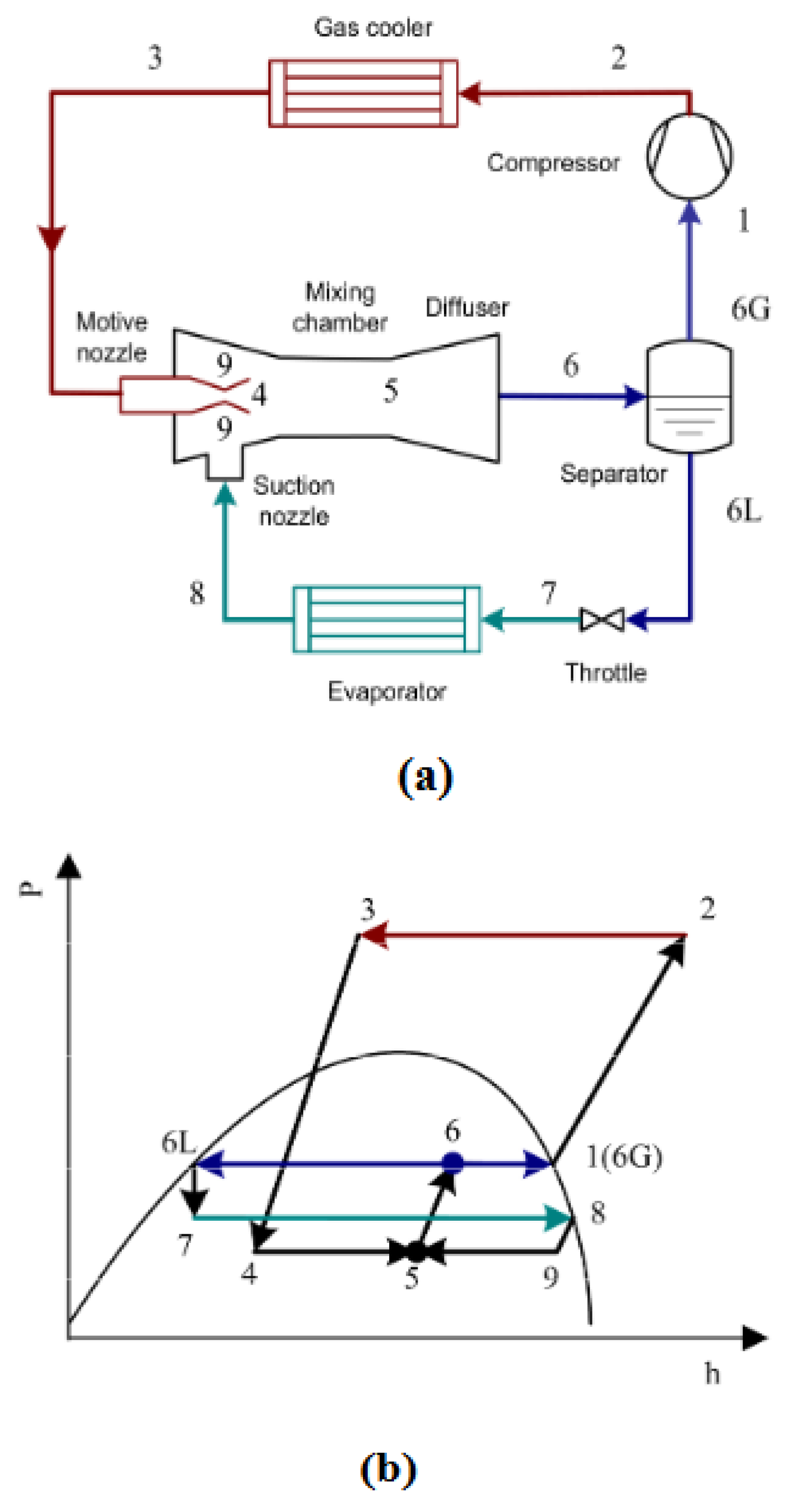
2+R116) in the transcritical regimes. The simulation of the flow of the working fluid in the various devices constituting the cycle is based on the thermodynamic, energy, and mass balance.
To improve the performance of the cycle, the effects on the COP of the SNPD, the high pressure, and both temperatures of the condenser and evaporator are investigated.
3. Thermodynamic Modeling
The model is based on the fundamental principles of conservation of mass, momentum, and energy. The losses during the expansion of the primary fluid and the secondary fluid as well as the compression of the mixture in the diffuser are taken into account when using isentropic yields.
To simplify the calculations, the following assumptions were made [
11]:
The working fluid’s flow in the system is one-dimensional stationary.
The pressure difference between the outlet of the motive nozzle, the outlet of the suction nozzle and the mixing chamber is negligible.
The pressure drop in the heat exchangers, in the separator, and in the connections tubes is negligible.
At the outlet of the separator, the liquid and vapor stream are saturated.
The expansion and compression processes are all adiabatic.
The efficiency coefficients of the motive nozzle, the suction nozzle, and the ejector diffuser have constant values.
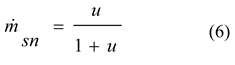
The ejector entrainment ratio u is defined as the suction mass flow rate of the ejector at (8) divided by the motive mass flow at (3).
Based on the assumptions above, the pressure recovery of the ejector is given by
Suction nozzle Pressure drop (SNPD) is
The following energy balance equations can be set up in the motive and suction nozzle sections of the ejector [
10,
11,
13]
3.1. Motive nozzle
The motive mass flow is
The flow specific enthalpy h4 can be
calculated from the isentropic efficiency of the motive nozzle ηmn as follow:
where h3 is the inlet flow specific enthalpy, h4 is the exit flow specific enthalpy, and h4s is the exit flow specific enthalpy with an isentropic expansion process from condenser pressure P3 to mixing pressure P4. h4s can be calculated through P4 and s3; therefore, h4 can be determined for a given nozzle efficiency ηmn. Using the equation of the energy balance in the motive nozzle, the speed of the nozzle exit flow can be calculated as follows
3.2. Suction nozzle
The suction mass flow is
The secondary flow specific enthalpy at the suction nozzle exit h9 can be expressed from the definition of the suction nozzle isentropic efficiency given by
where h8 is the inlet flow specific enthalpy and h9s the exit flow specific enthalpy with an isentropic expansion process. Using the equation of the energy balance in the suction nozzle, the speed of the nozzle exit flow can be calculated as follows:
3.3. Mixing section
Using momentum and energy balances, the output speed and specific enthalpy of the mixing chamber at constant pressure of the ejector are given by
3.4. Diffuser section model
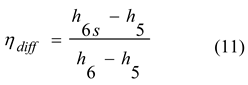
The isentropic efficiency of the diffuser is defined as
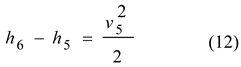
And for the diffuser section, the energy balance is given by
Where h6 is the exit flow specific enthalpy, h6s is the exit flow specific enthalpy with an isentropic compression process, and h5 is the inlet flow specific enthalpy.
The specific enthalpy of the flow at the diffuser outlet h6 can also be determined from the global equation of the energy balance of the ejector.
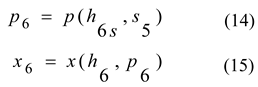
The pressure and mass fraction of the refrigerant at the ejector exit are determined by
To verify the initial value assumed for entrainment ratio, the following condition should be satisfied at a reasonable accuracy.
3.5. System performance evaluation
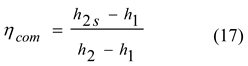
The isentropic efficiency of the compressor is
Where h2s is the specific enthalpy of the compressor exit flow with an isentropic compression process, h2 is the specific enthalpy of compressor outlet flow, and h1 is the specific enthalpy of compressor inlet flow.
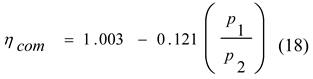
The empirical relation [
11] gives the isentropic efficiency of the compressor.
The specific work of the compressor and the refrigeration capacity are, respectively, expressed by
The coefficient of performance COP of the refrigeration cycle fitted with an ejector can be calculated by
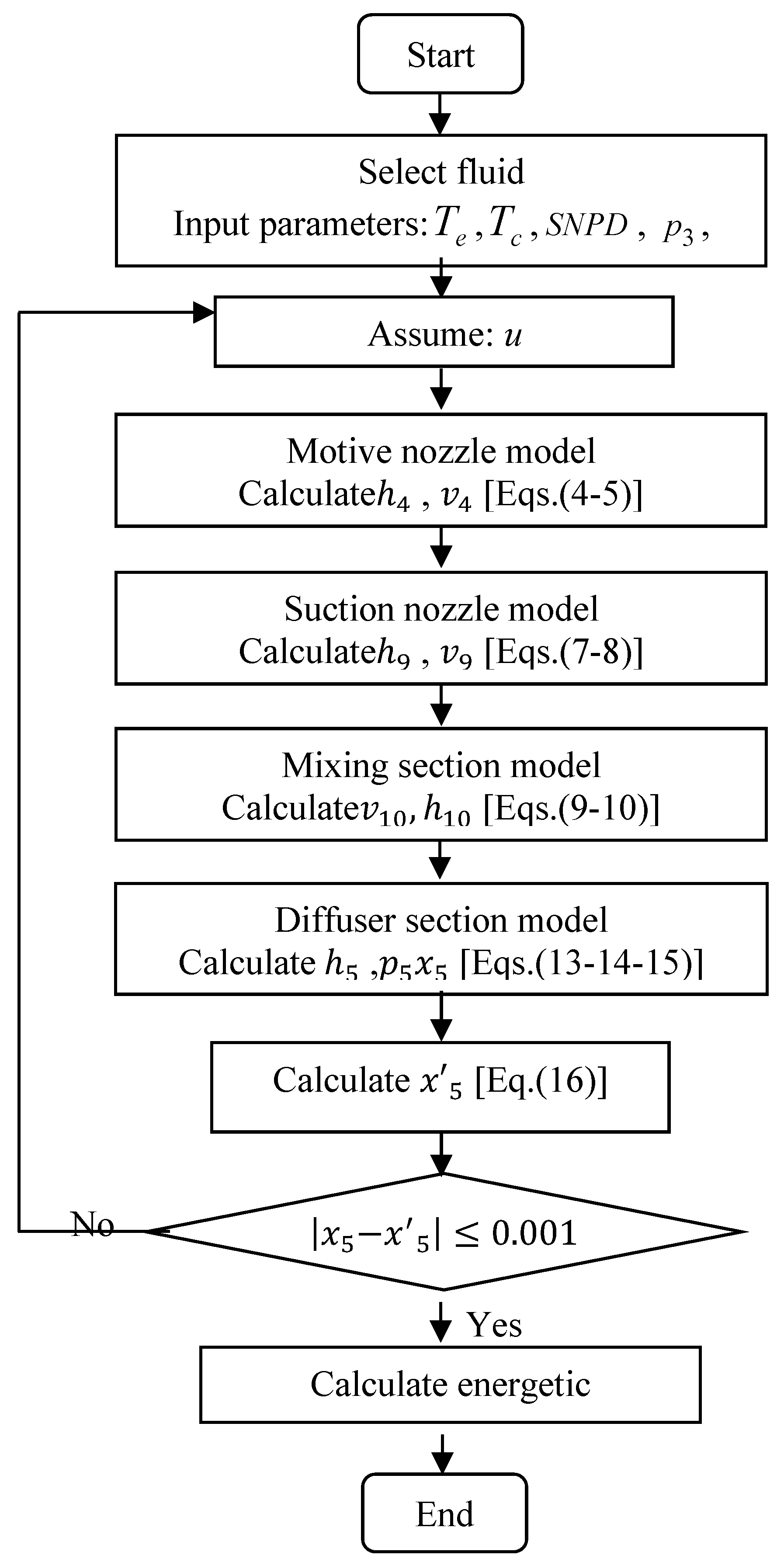
Based on the theoretical model described above, a simulation program was developed to investigate the performances of an ejector refrigeration cycle working with four CO
2 based mixtures in subcritical and transcritical mode, the modelling procedure of the ejector is illustrated by the flowchart presented in
Figure 2, and the thermodynamic properties of the pure compounds associated with CO
2 and their mixtures are shown in
Table 1.
4. Results and discussions
Due to poor experimental data for CO
2- based mixtures, with a reference to B. Yu et al. [
19], J. Sarkar et al. [
20] and L.Pan et al. [
21] carried studies; different mass fractions were studied to investigate the performance of CO
2 based mixtures. It was found that the discharge pressure and temperature drop significantly at a mass fraction of 50% of CO
2 and 50% of propane than the other mass fractions, in the remainder of this studies, the mass fraction of 50% of CO
2 and 50% of one of the other pure components was adopted.
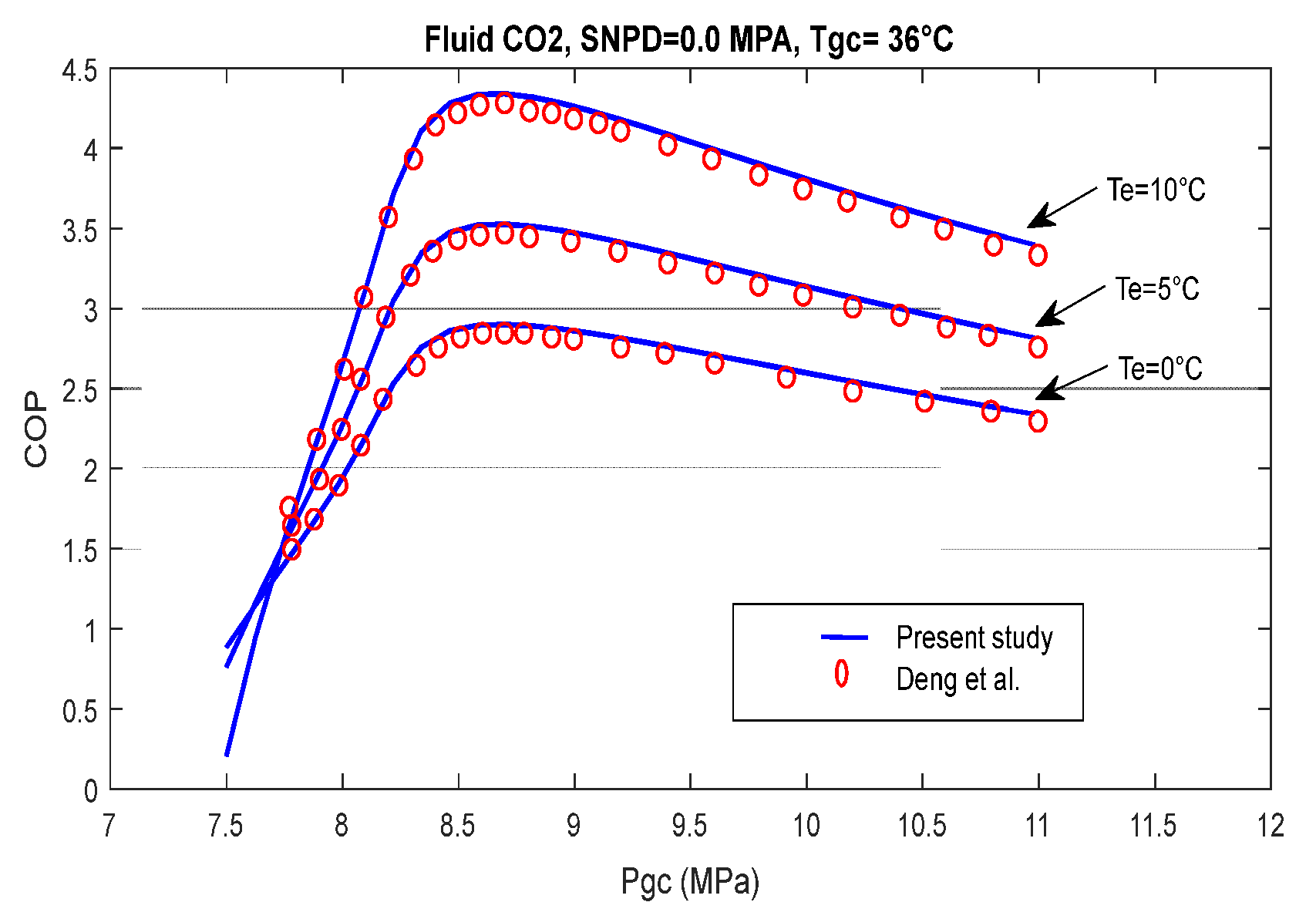
Before presenting the results, the present program is validated with the theoretical values reported by Deng et al. [
14]. The variation of the COP is presented depending on the gas cooler pressure in
Figure 3; the same operating conditions mentioned in the figure were used in our program. A fine agreement between the values calculated using the present model and those of Deng et al can be observed.
4.1. Subcritical cycle
The operating conditions for the subcritical cycle using the binary mixture with the low GWP refrigerants such as CO
2+R1234yf, CO
2+R290 and CO
2+R600a as working fluids are given in
Table 2. The performance of an ejector cycle is usually described by the entrainment ratio, the recovery pressure, and the high pressure. In the following analysis, results are obtained by varying one parameter as a function of the high-pressure HP, SNPD, and the condenser and evaporator temperatures, while other parameters are kept at optimal values.
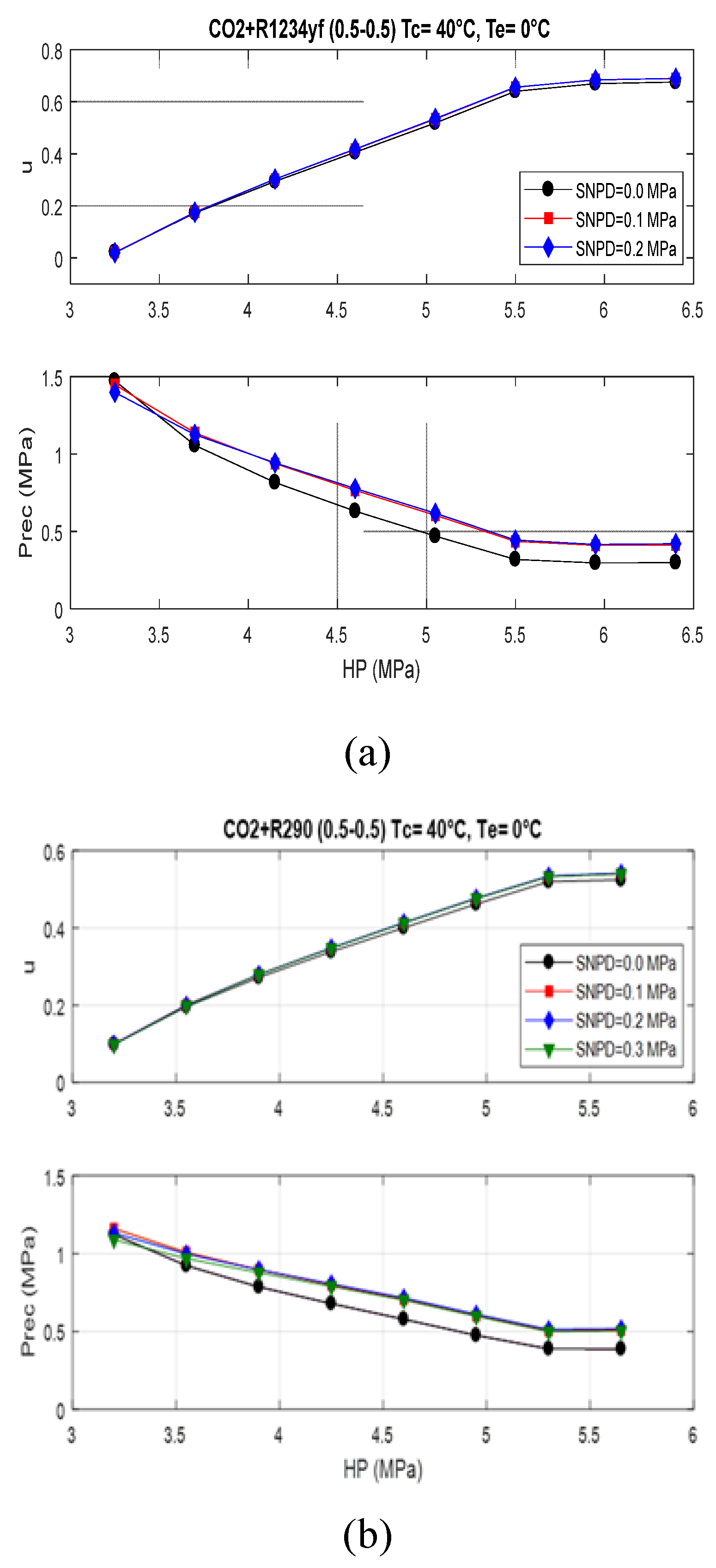
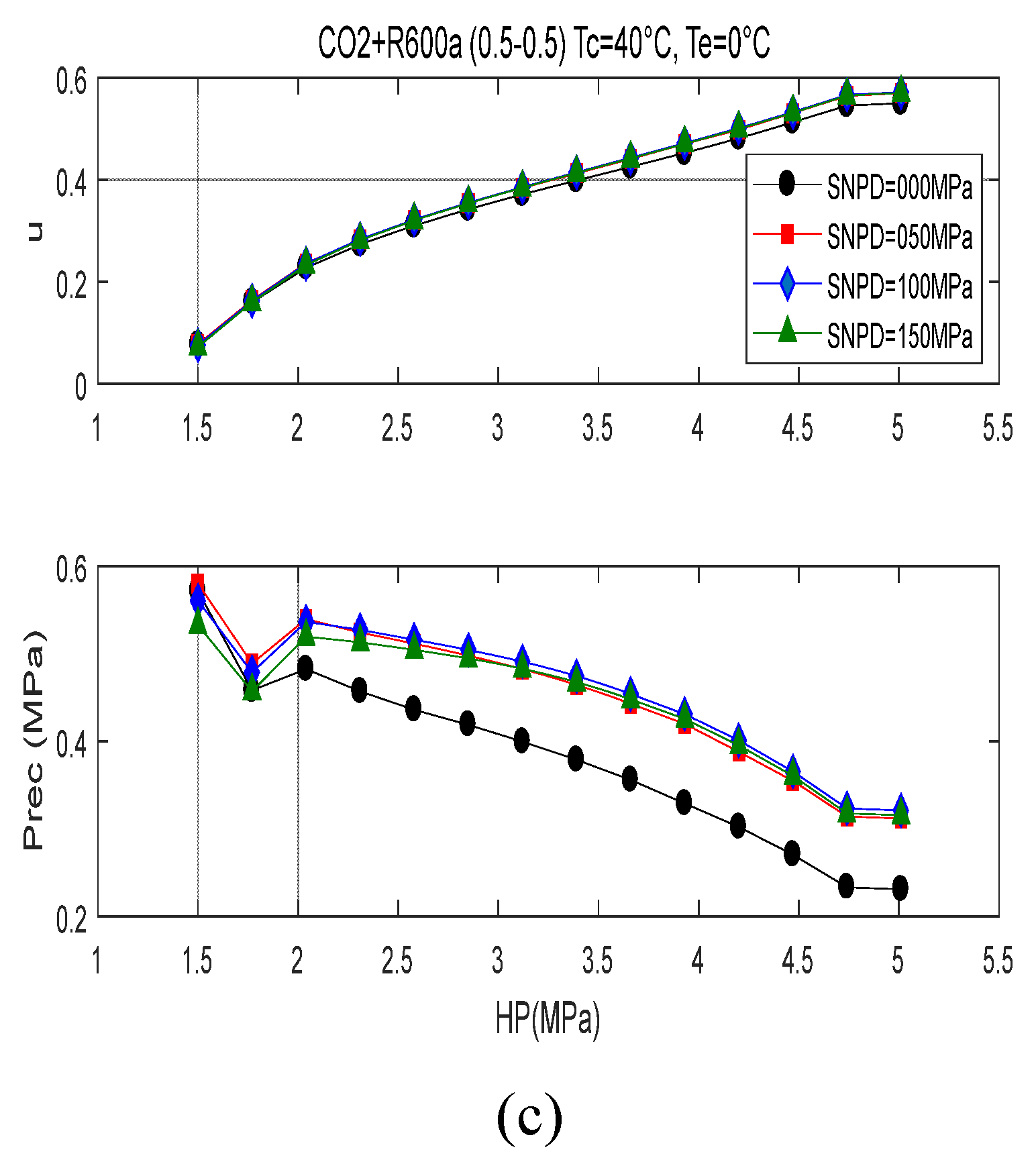
The variation of the entrainment ratio and the recovery pressure, with the variation of the high-pressure HP (discharge pressure) for different values of the SNPD, are presented in
Figure 4, for CO
2+R1234yf (a), CO
2+R290 (b)
and for CO2+R600a (c). It can be noticed that the entrainment ratio increases rapidly for the first pressure values then slows down, stabilizing between 0.5 and 0.6. It can be also noted that the entrainment ratio is independent of the SNPD.
The recovery pressure (Prec) decreases to reach a minimum value of 0.5, 0.6 and 0.31 MPa for the mixtures CO2+R1234yf, CO2+R290 and CO2+R600a respectively.
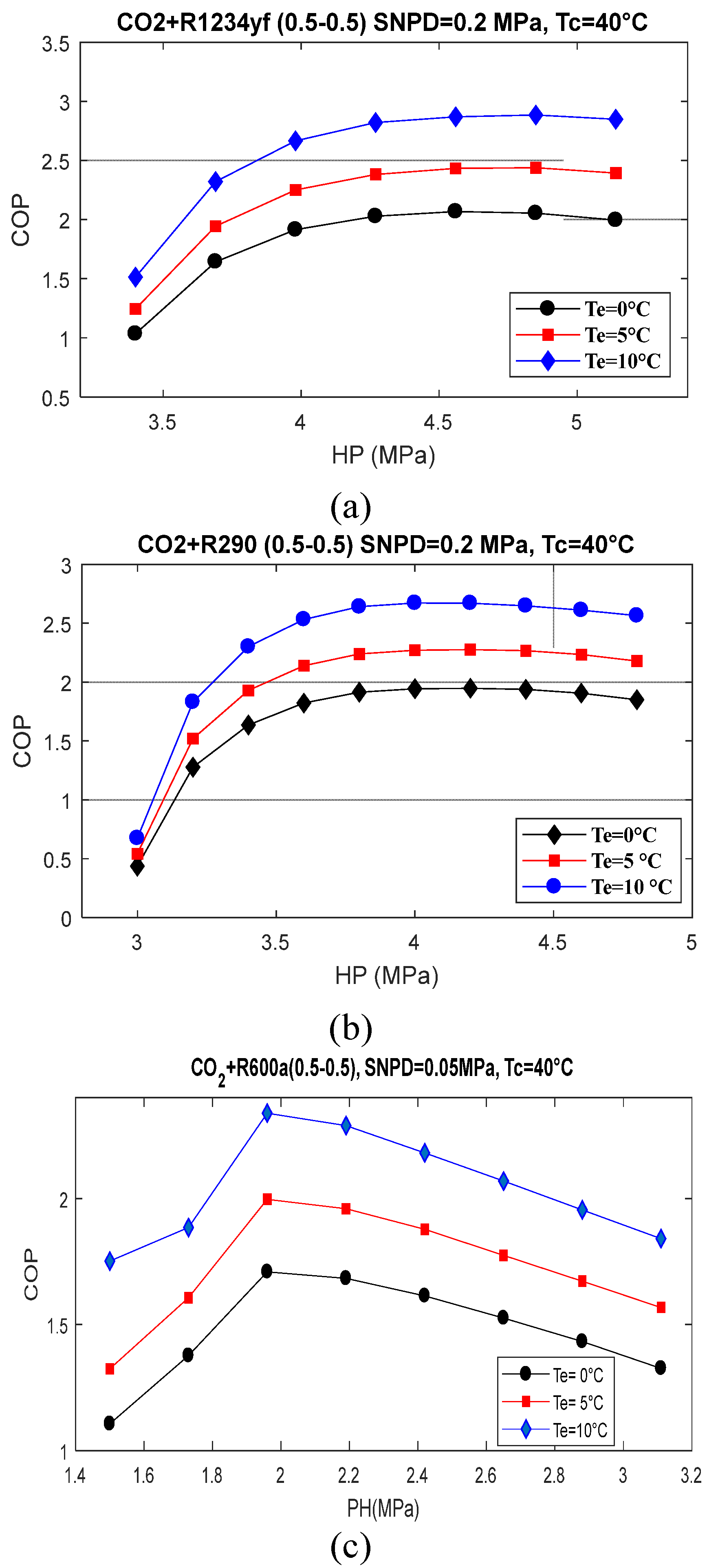
The variation of the coefficient of performance (COP) as function of highpressure (HP) for several values of evaporating temperatures is presented in
Figure 5. It should be noted that the COP of the ejector cycle reaches a maximum value for an optimal value of the high pressure that is 4.7 MPa for the CO
2 + R1234yf, 4.2 MPa for the CO
2 + R290 and 1.96 MPa for CO
2+R600a mixtures. These values do not depend on evaporator temperatures.
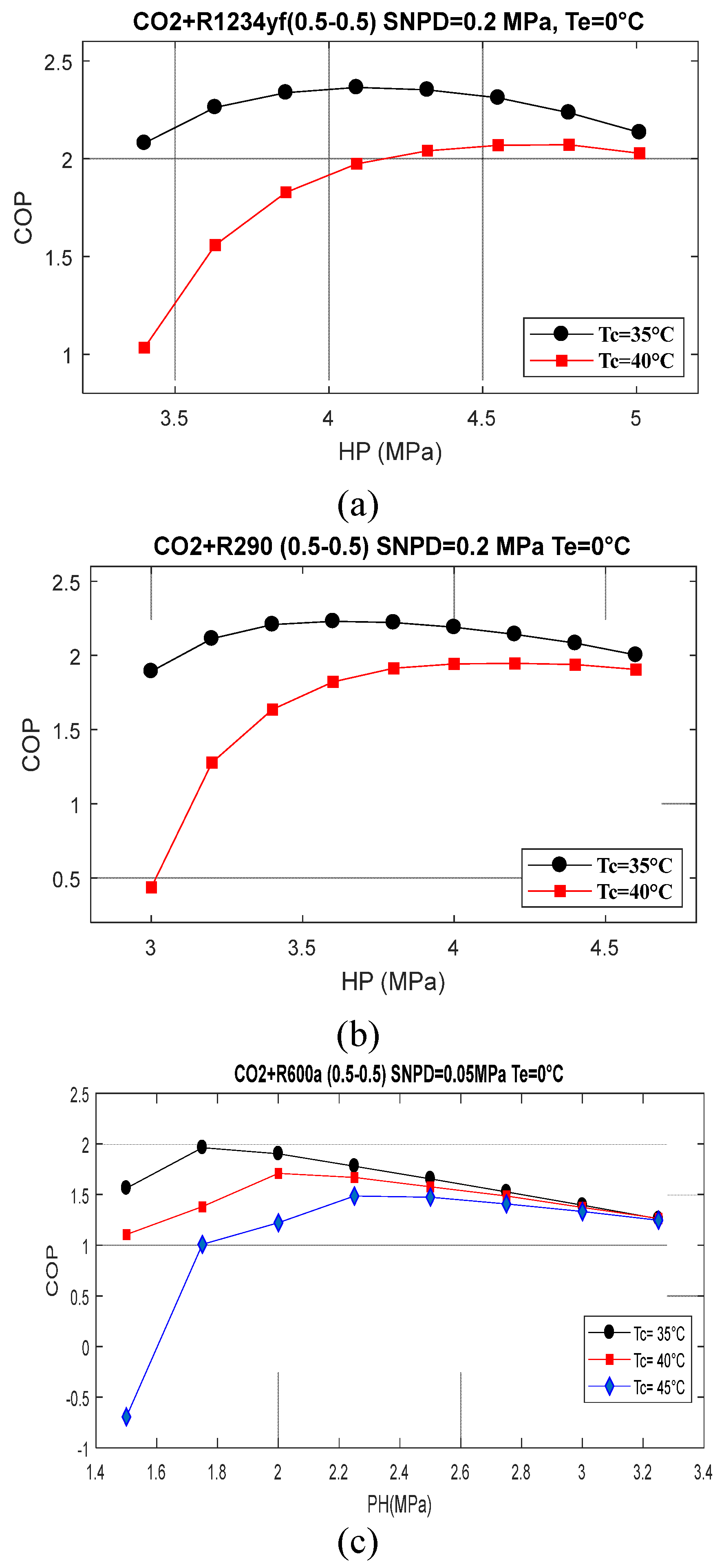
The same variation is presented in
Figure 6, but for several values of condenser temperatures, the maximum value of the COP is obtained for an optimal value of the high pressure; in this case, those values are strongly depended on condenser temperatures.
The physical phenomena concerning the evolution of the COP according to the high pressure justify the trends seen in the graphs that when high pressure increases in a refrigeration system, it can affect the COP in several ways:
1. Increased energy consumption: As the pressure increases, the compressor must supply more energy to compress the refrigerant. This leads to an increase in electrical energy consumption, which reduces the COP.
2. Increase in condensing temperature: Higher pressure in the condenser leads to an increase in condensing temperature. This means that the heat rejected by the refrigerant when it condenses is higher. If the ambient temperature remains constant, the temperature difference between the condenser and the ambient air decreases, thus reducing the heat transfer efficiency. This leads to a decrease in COP.
3. Increase in evaporation temperature: Higher pressure in the evaporator causes an increase in evaporation temperature. This can lead to a decrease in the temperature difference between the ambient air and the evaporator, which reduces the efficiency of the heat exchange between the air and the refrigerant. This also leads to a decrease in COP.
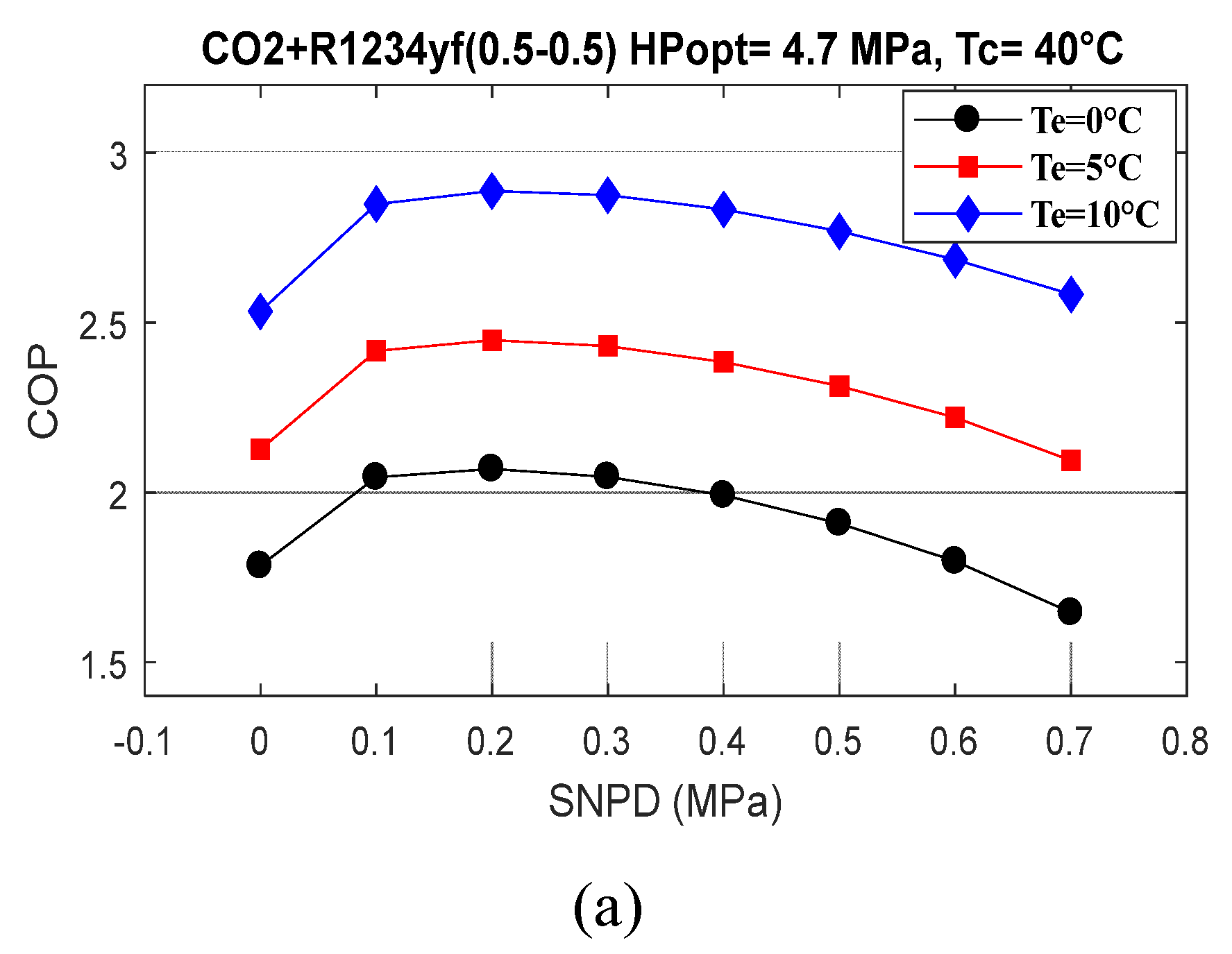
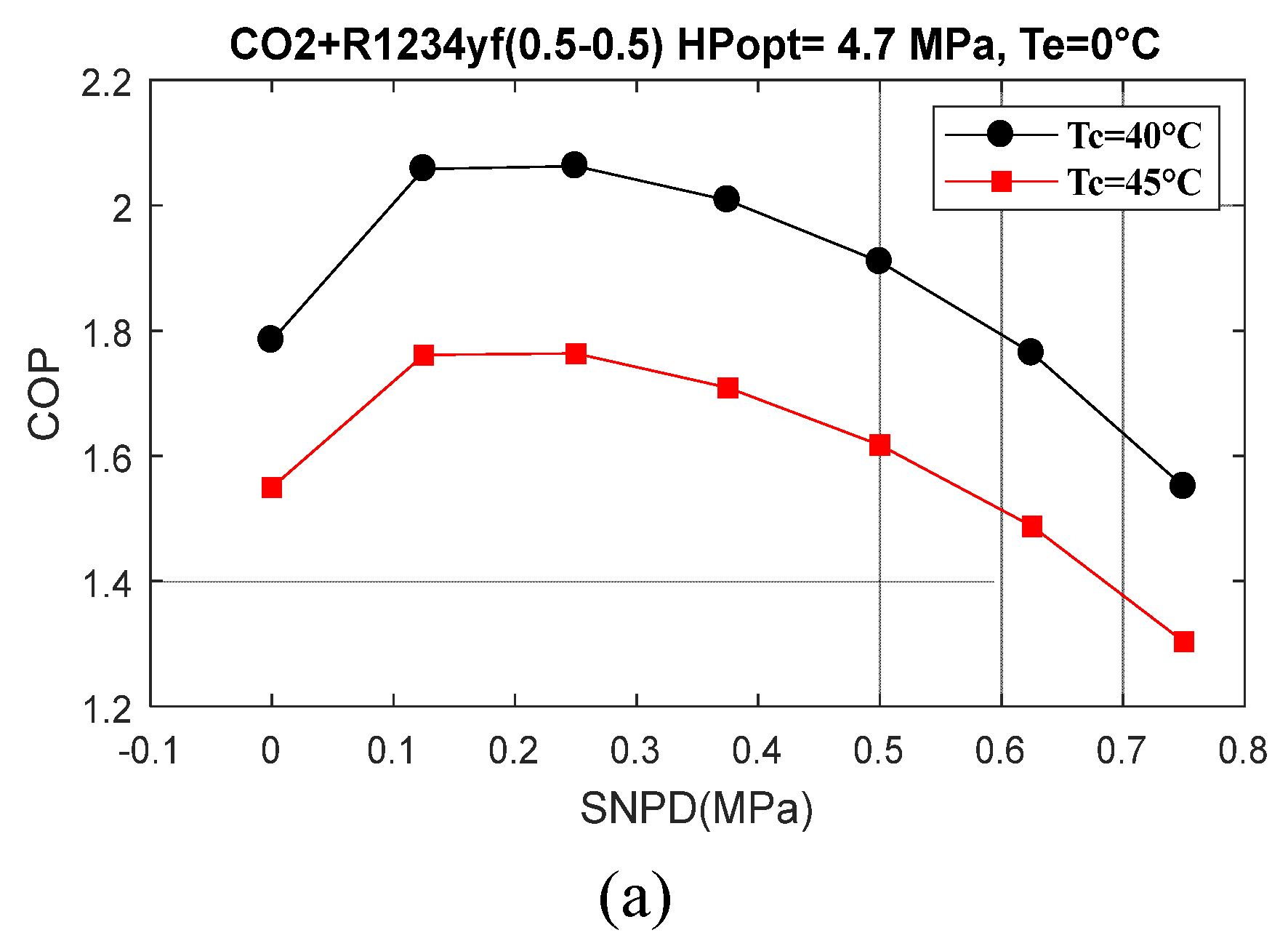
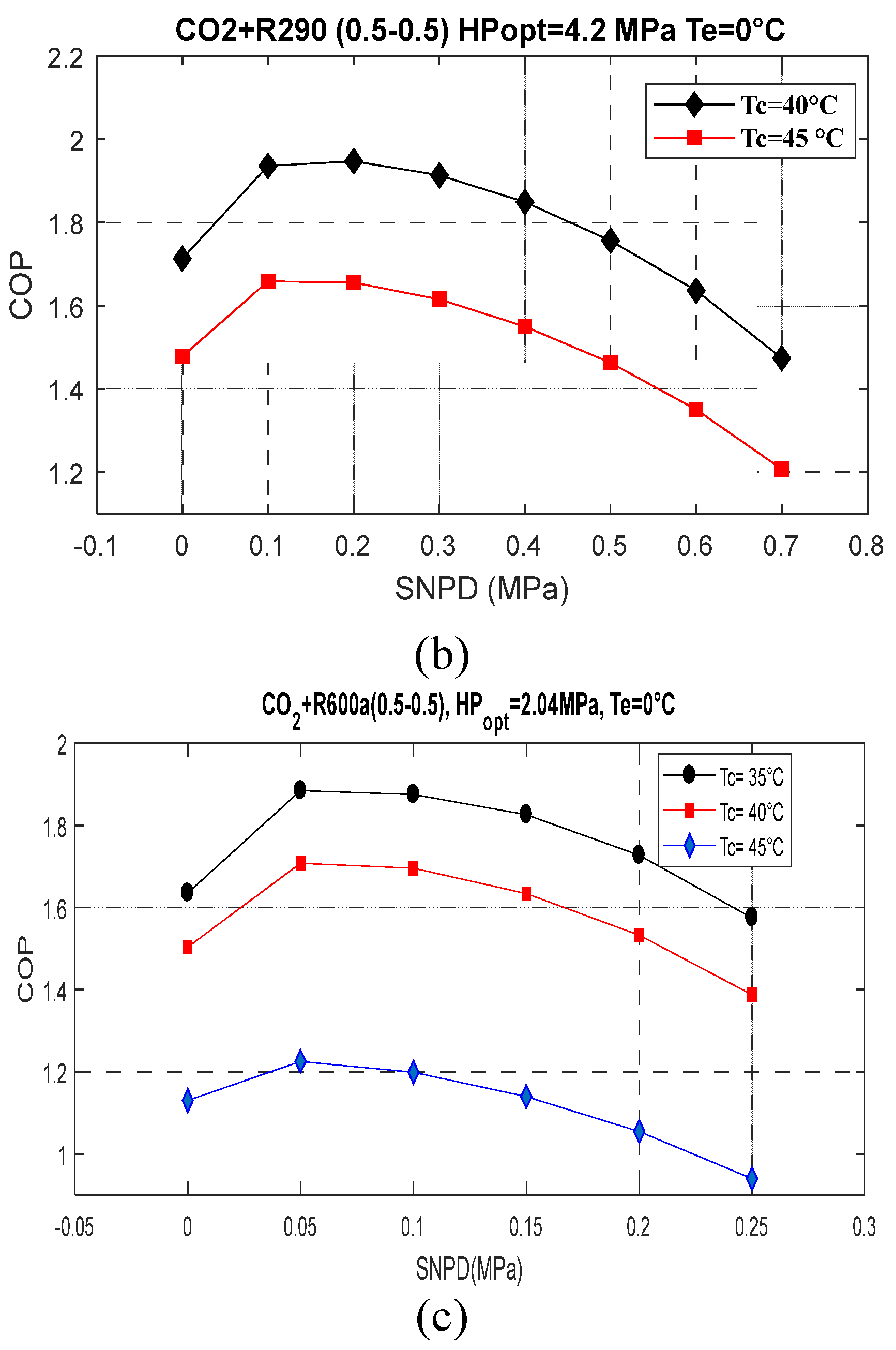
From
Figure 7 and
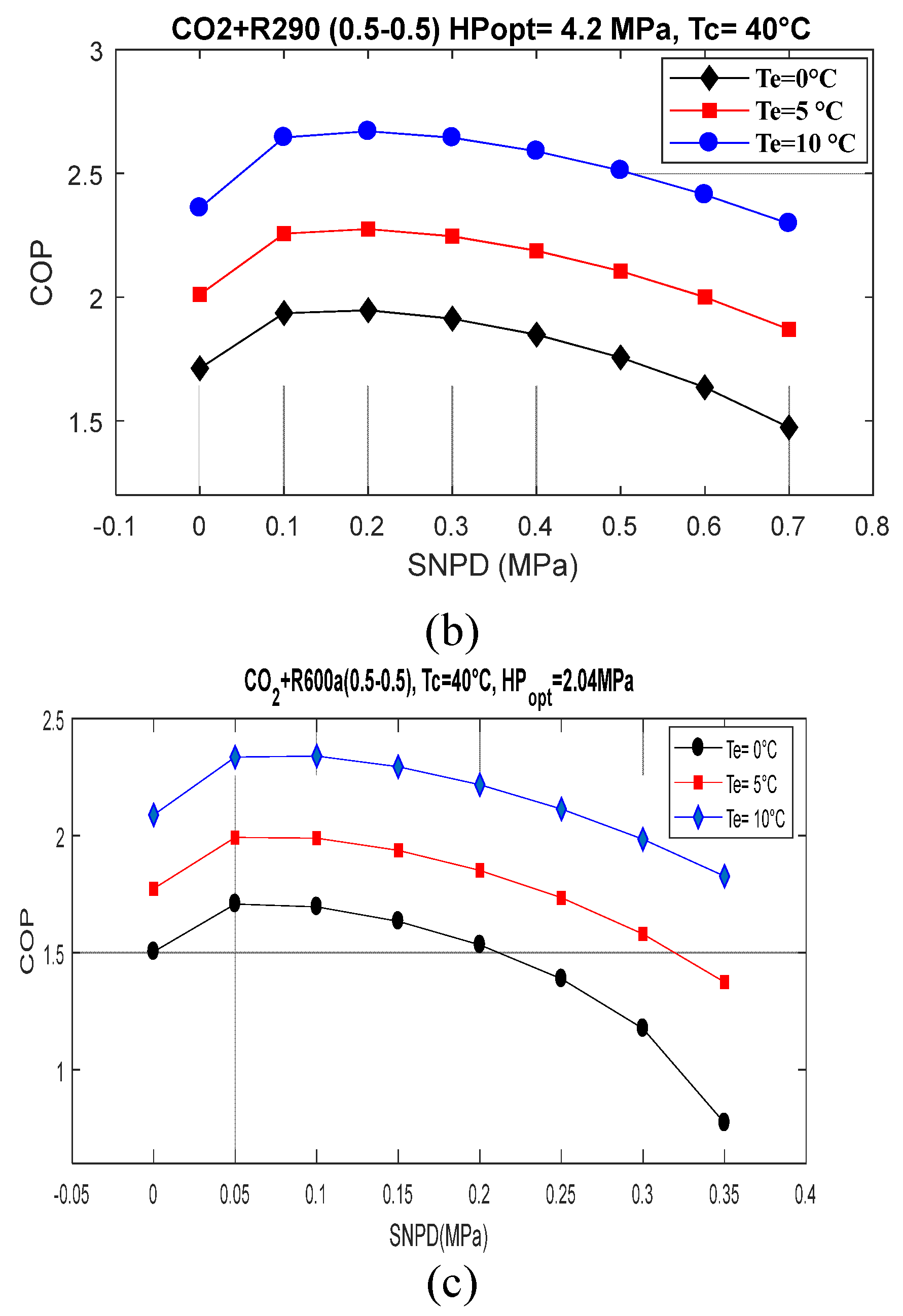
Figure 8, it should be noted that the COP of the cycle reaches a maximum value and then decreases; furthermore, it can be seen that there is an optimal value of the SNPD which gives a maximum COP for a given evaporation and condensation temperatures.
This optimal value of the SNPD is not affected by the evaporator temperature; however, it decreases slightly with the increase of the condenser temperature.
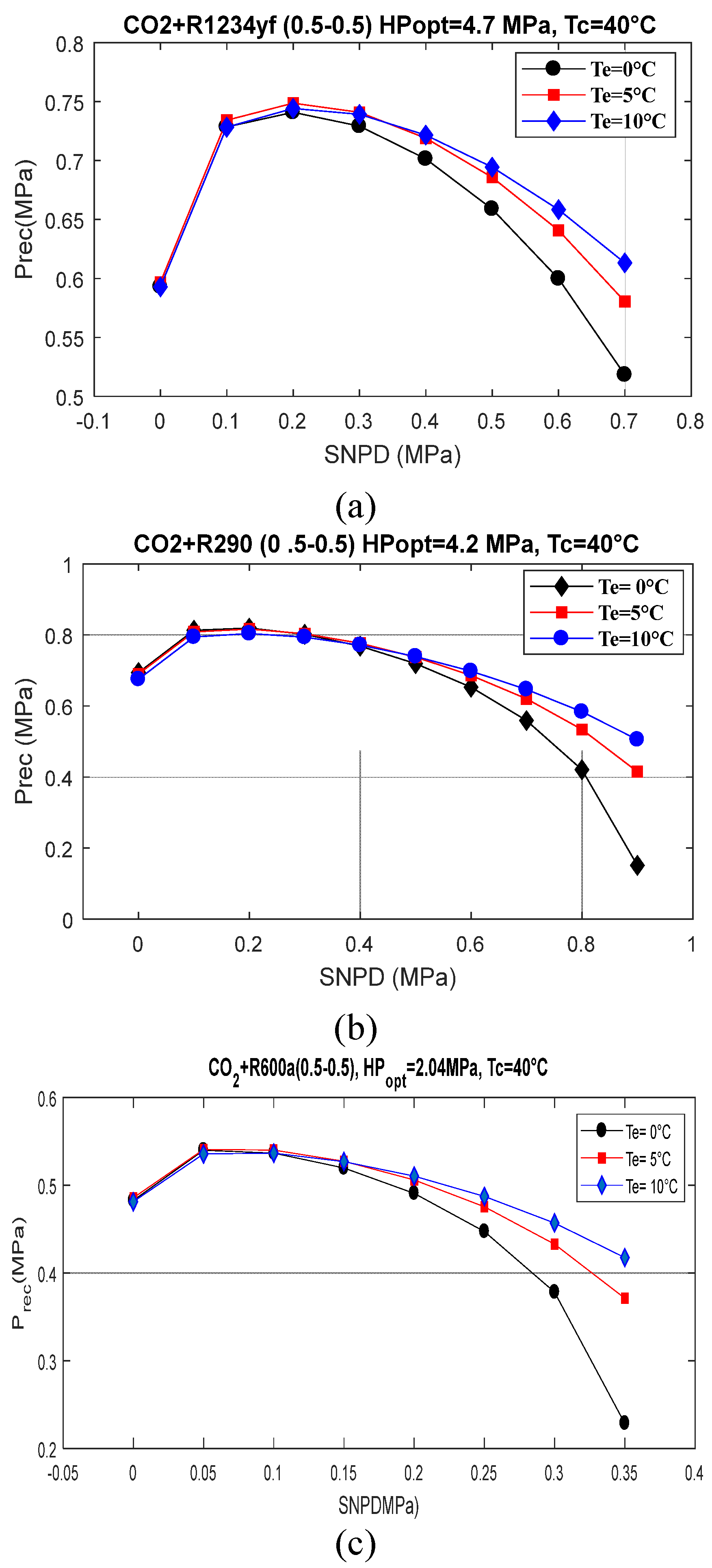
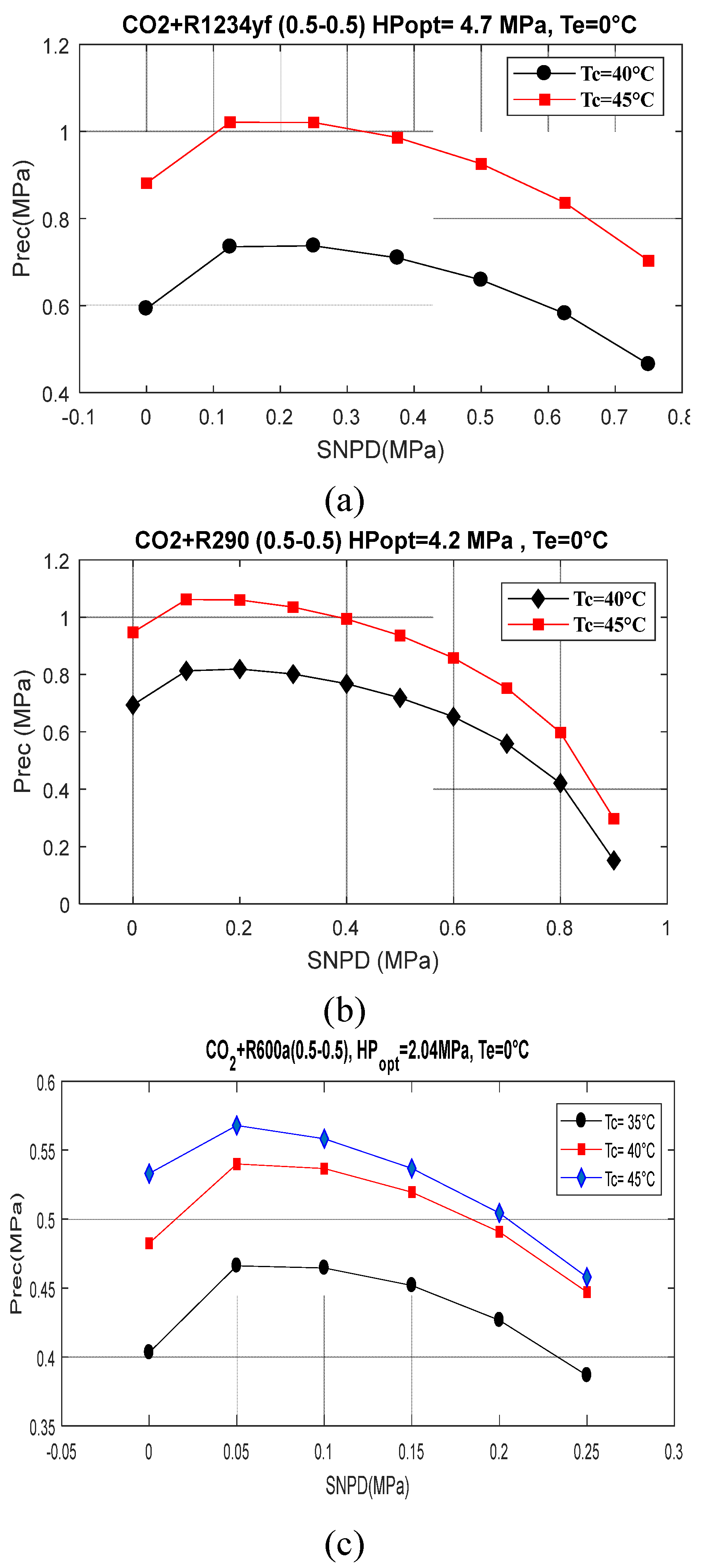
The influence of the SNPD on the recovery pressure was presented for several evaporator temperatures in
Figure 9 and several condenser temperatures in
Figure 10, for both mixtures. It was observed that the increase in the evaporator temperature caused a reduction in the recovery pressure in the proximity of the optimal SNPD; the same reduction was also observed when the condenser temperature is decreasing.
Pressure Losses: At higher pressures, pressure losses in pipes, heat exchangers, and ejector may increase. These pressure losses require more work to maintain the flow of the refrigerant, resulting in increased energy consumption.
It is important to note that the impact of high pressure on the COP can vary depending on the specific system design, the refrigerant used and other operating parameters. Appropriate system and component adjustments may be required to optimize COP under high-pressure conditions.
A summary for the results the subcritical cycle was presented in
Table 3. It can be noted that a slight improvement in the COP and in the high pressure was obtained for CO
2+R1234yf mixture, yet the optimal value of SNPD remains the same for both mixtures.
4.2. Transcritical cycle
The operating parameters for this cycle using CO
2+R116 as working fluid were presented in
Table 2.
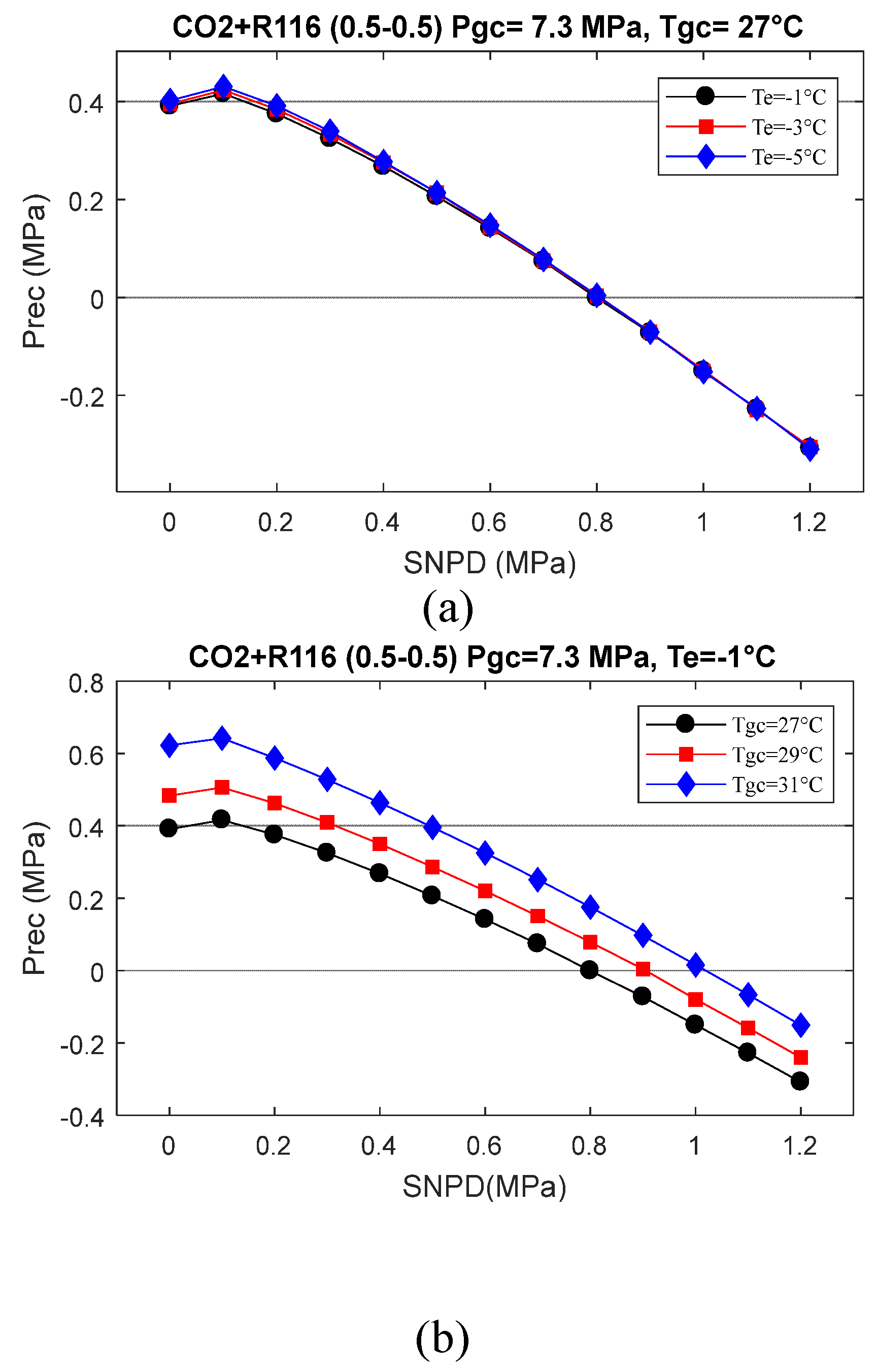
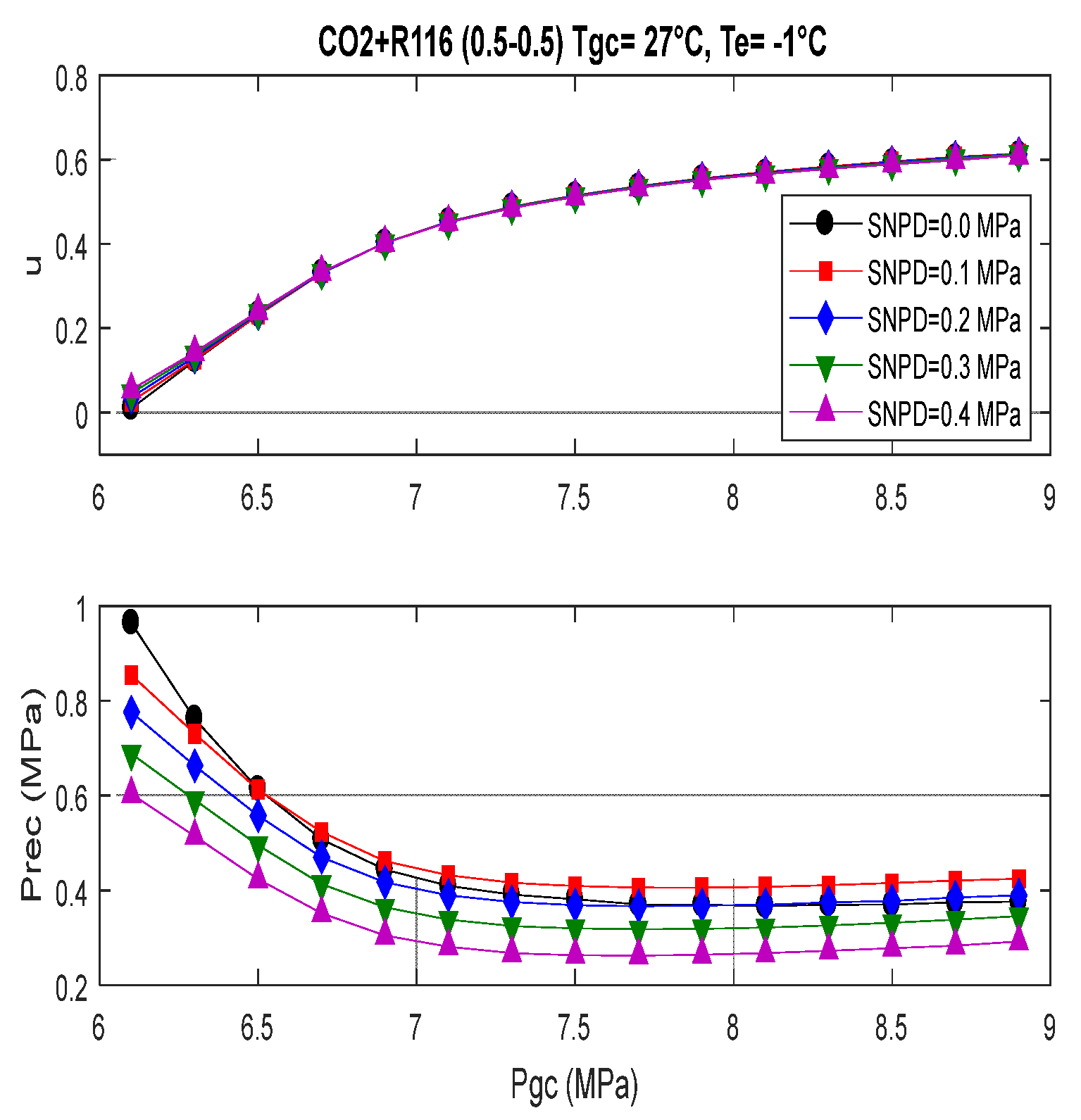
The variation of the entrainment ratio, the recovery pressure, with the variation of the high-pressure HP (discharge pressure) for different values of the SNPD are presented in
Figure 11 for CO
2+R116. It can be seen that the entrainment ratio increases to reaches 0.6. It can be also noted that the entrainment ratio is independent of the SNPD
The recovery pressure (Prec) decreases to reach a minimum value of 0.5 MPa for the CO2+R116.
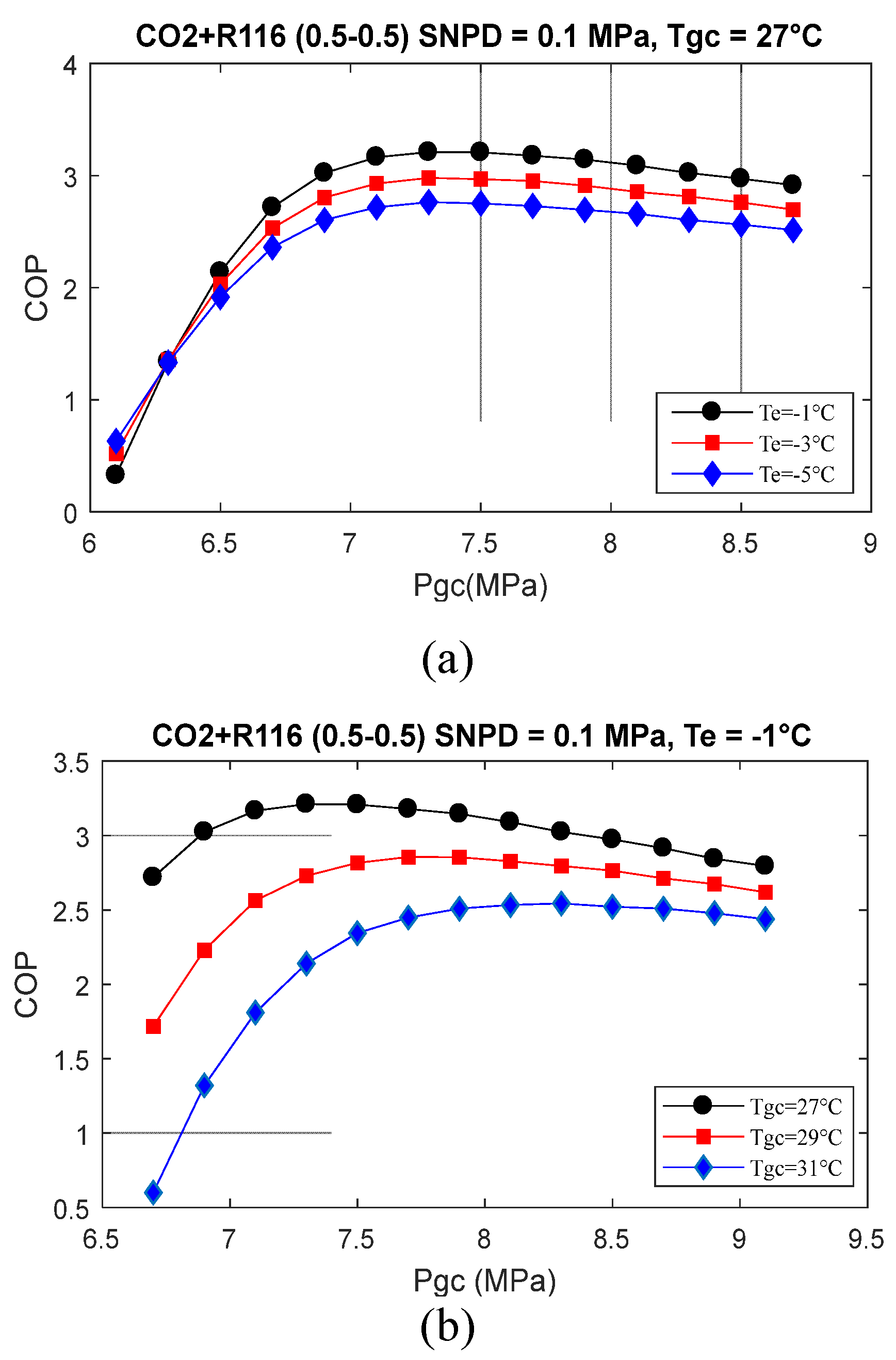
The variation of the coefficient of performance (COP) as function of gas cooler pressure (Pgc) for several values of evaporating
and gas cooler temperatures was presented in
Figure 12. It should be noted that the optimal gas cooler pressure which gives the better COP is 7.3 MPa, it increases when the gas cooler temperature decreases.
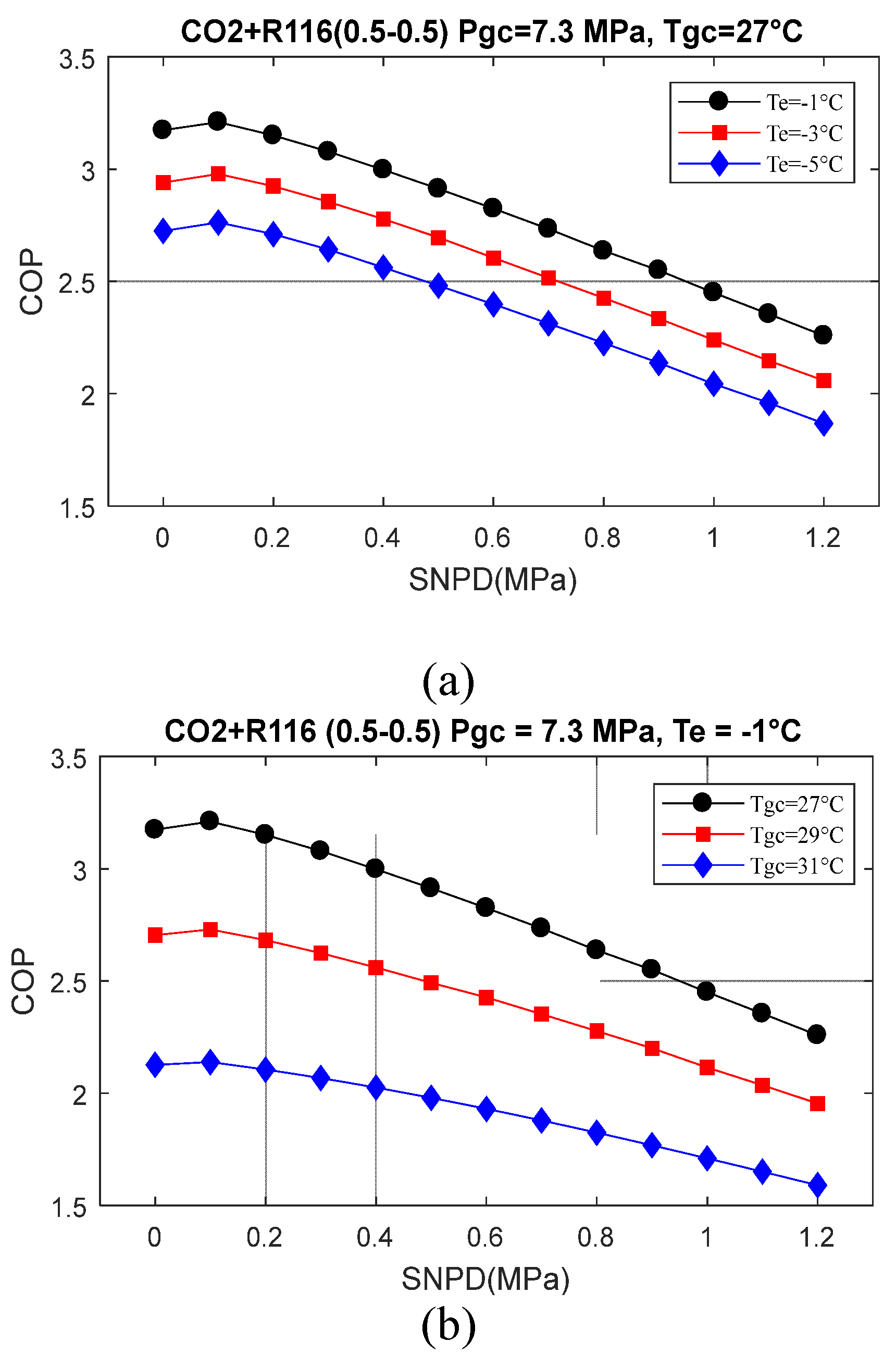
For transcritical cycle, and from
Figure 13, it can be seen that there is an optimal value of the SNPD which gives a maximum COP for a given evaporation and gas cooler temperatures, this optimal value of the SNPD is not affected by the evaporator temperatures but it decreases slightly with the increase of the gas cooler temperatures.
The influence of the SNPD on the recovery pressure was presented for several evaporator and gas cooler temperatures in
Figure 14 for the mixture.
The same comments as those of the subcritical cycle were observed: the increase in the evaporator temperature has caused a reduction in the recovery pressure in the evaporator temperature has caused a reduction in the recovery pressure in the proximity of the optimal SNPD, the same reduction was observed when the condenser temperature is decreasing.
A summary of the results was shown in
Table 4, as can be seen, a significant improvement in the COP is obtained for CO
2+R116 mixture, a slight drop can be observed for the gas cooler pressure, and the optimal value of SNPD remains the same for both mixtures.
At last, a comparison between the performances of the ejector refrigeration cycle- using the three studied mixtures- and those of A comparative study of CO
2 refrigeration systems [
22] and the result of a heat pump cycle -using CO
2 with butane and isobutene as working fluid presented by [
20] was performed.
Results show that the COP in the subcritical cycle of the two mixture CO2+R1234yf and CO2 + R290 is lower than that of the reference cycle with a relative decrease of 8.21% and 15.64%, respectively, but with CO2 + R600a mixture an improvement of 4.39% was observed. However, a significant relative decrease in the two optimal high pressures (55.38% and 58.39% respectively) was observed; this decrease allows better security and lower cost of the devices.