
Article

The Tool for Optimal Tongue Rest Posture: Measurement-Based Surgical Technique and Checkpoint Derivation for Lingual Frenotomy Under General Anesthesia


by
Alison Sigal
Little Bird Pediatric Dentistry, 345 Steeles Avenue East, Unit 200, Milton, ON L9T 3G6, Canada
Int. J. Orofac. Myol. Myofunct. Ther. 2026, 52(2), 15; https://doi.org/10.3390/ijom52020015
Submission received: 28 July 2026 / Revised: 28 August 2026 / Accepted: 9 September 2026 / Published: 16 September 2026

Abstract

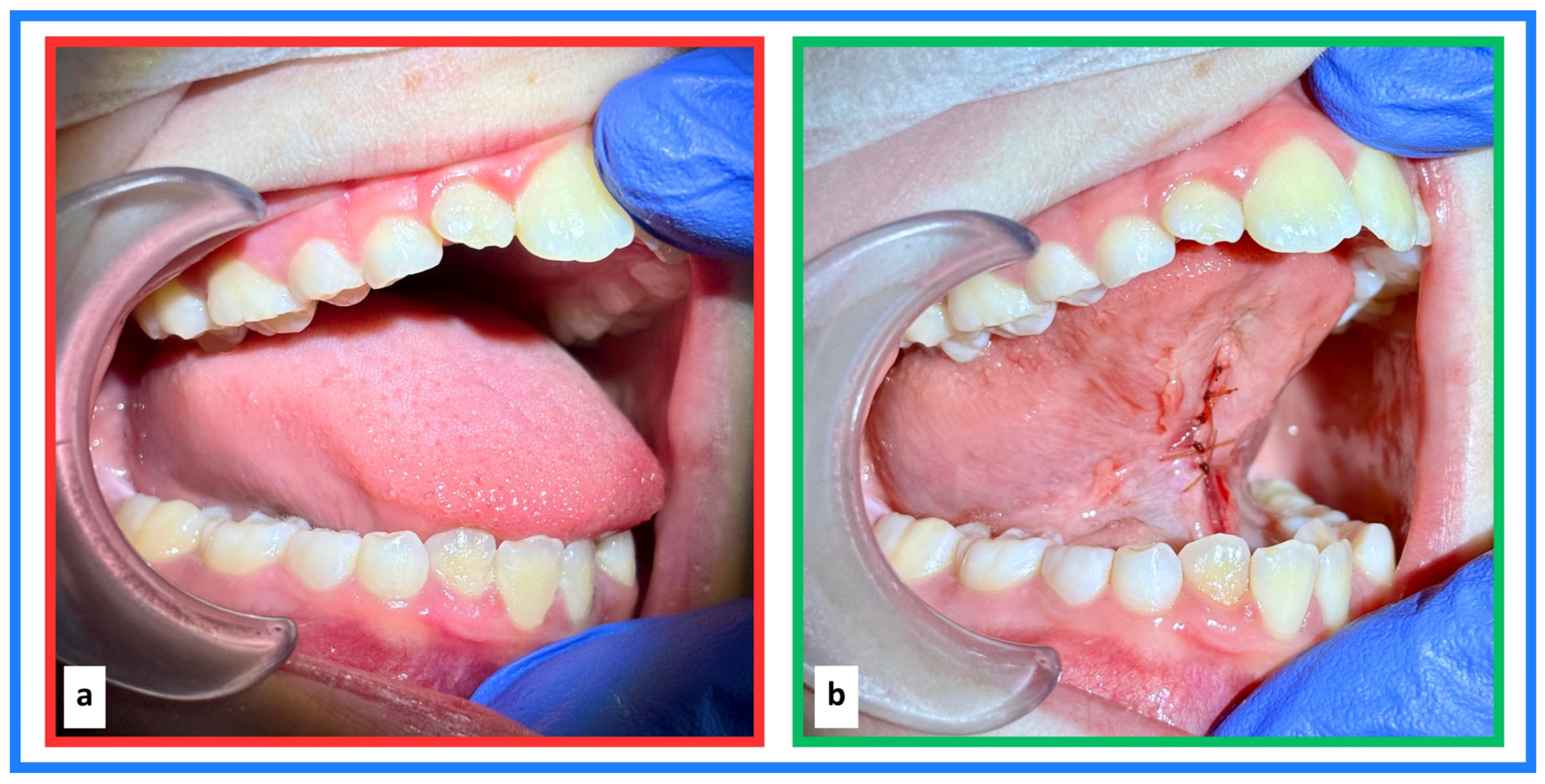
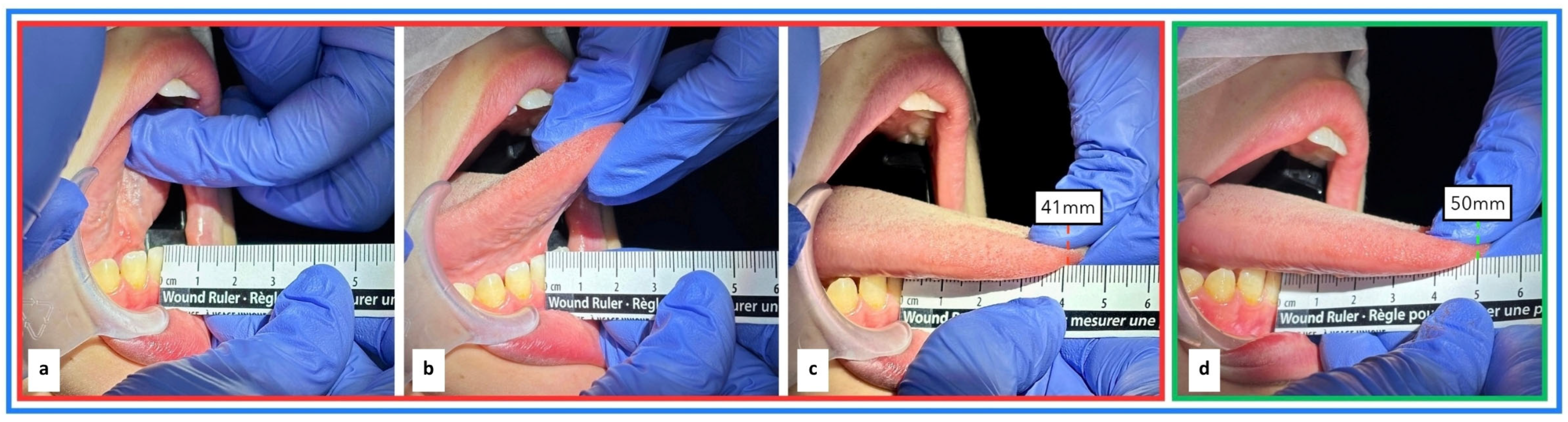
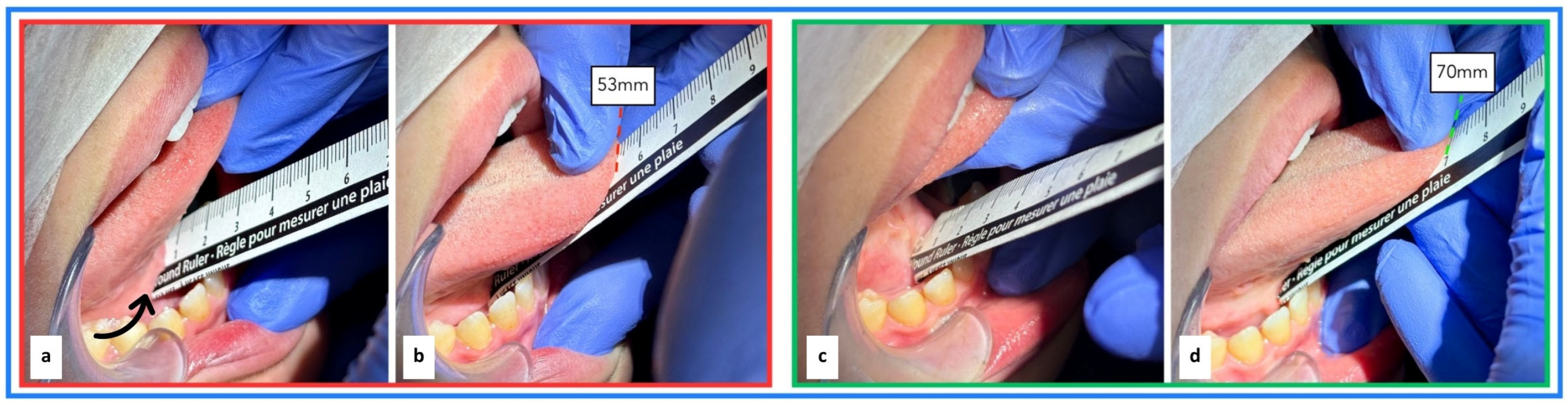
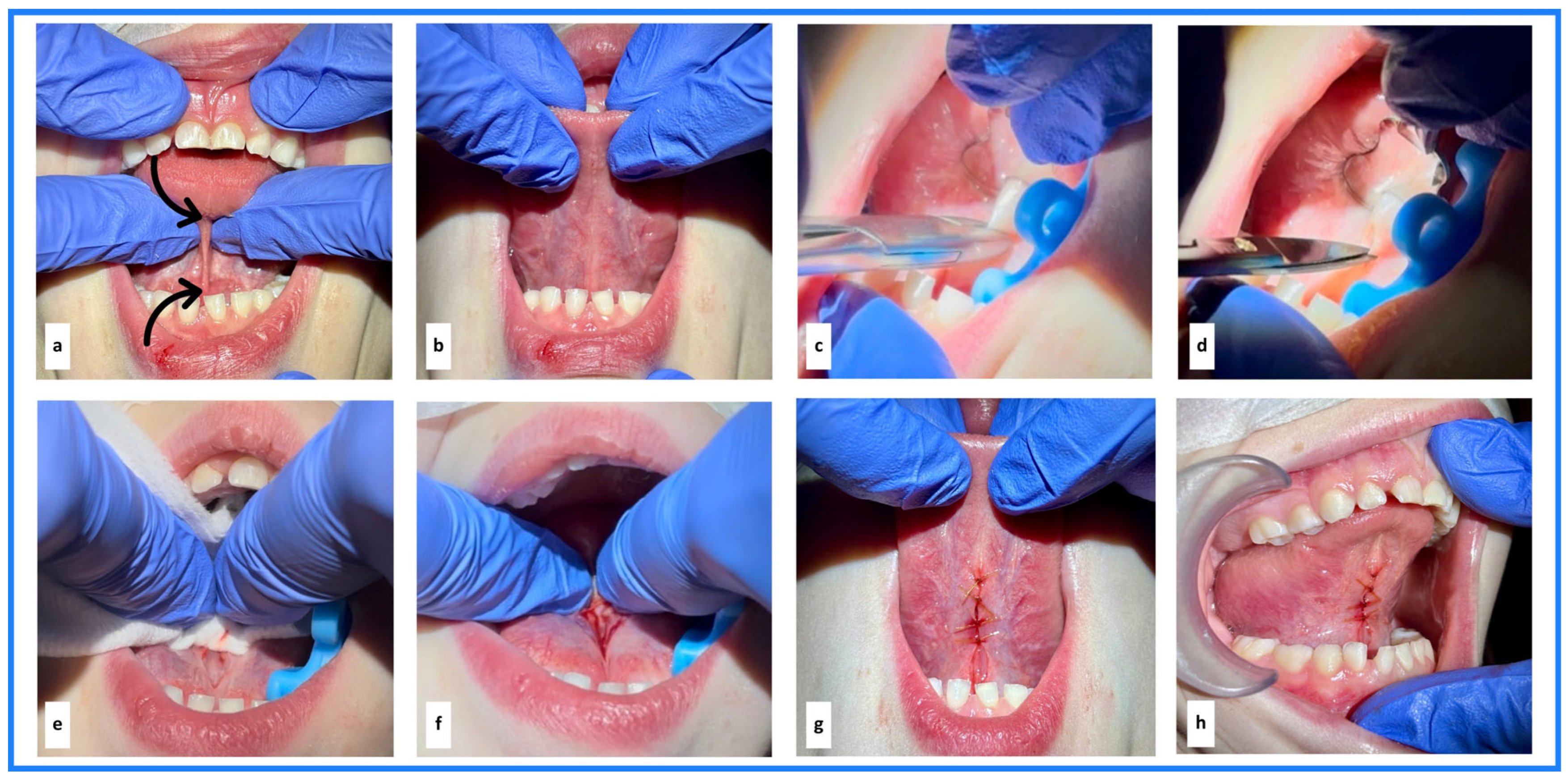
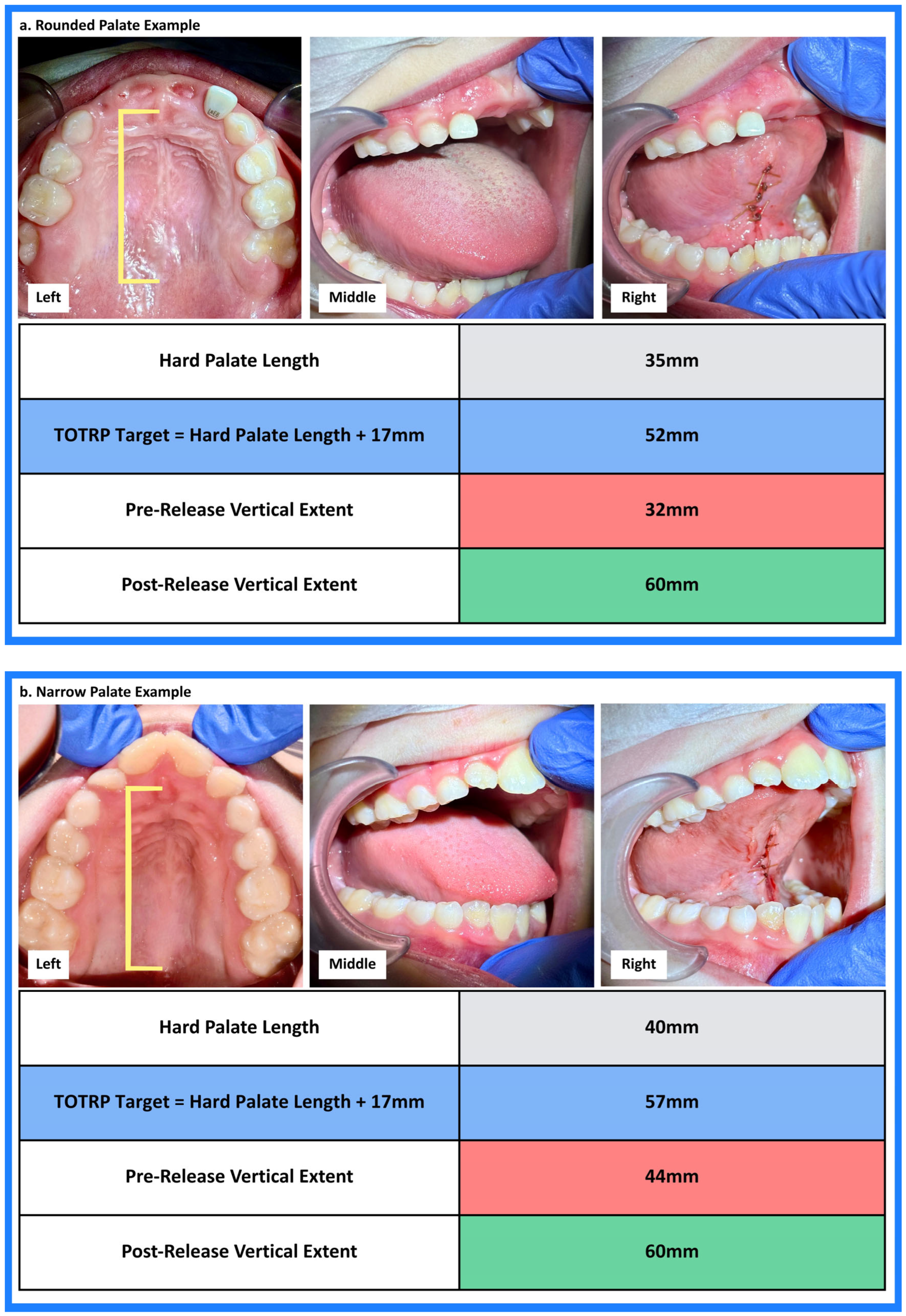
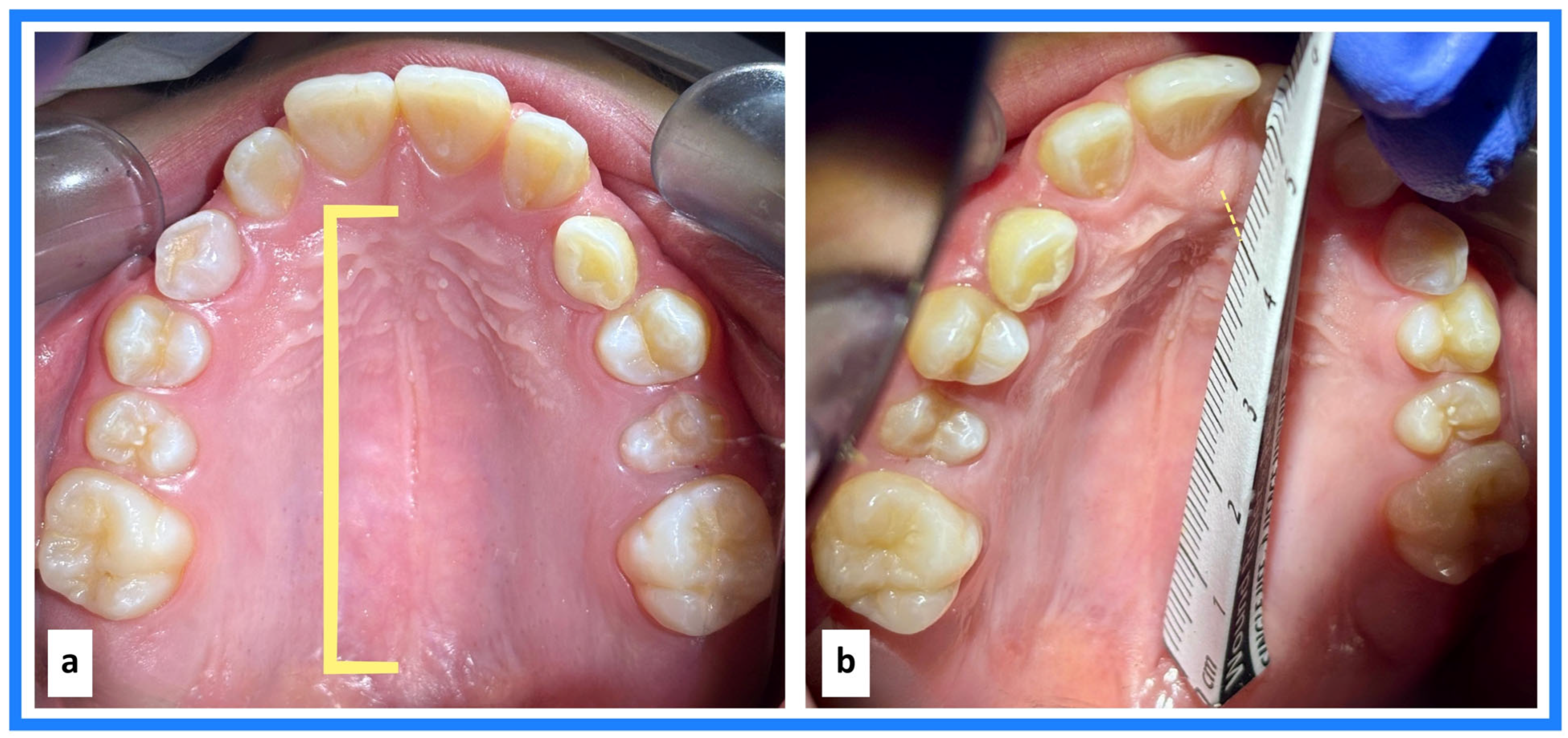
Lingual frenotomy is commonly evaluated by release location, wound appearance, or general improvement in tongue mobility; however, an objective measurement-based framework for guiding surgical completeness has not been established. The purpose of this retrospective cohort study was to describe a standardized functional lingual frenotomy technique under general anesthesia and derive the Tool for Optimal Tongue Rest Posture (TOTRP) as a patient-specific surgical guide and intraoperative checkpoint for the attainment of optimal tongue rest posture. A total of 390 patients aged 3.0–52.2 years underwent lingual frenotomy under general anesthesia with intraoperative assessment of tongue protrusion, tongue vertical extent, and tongue resting posture before and after release. Complete passive palatal suction, defined as full-length passive tongue contact against the hard palate, was used as the clinical endpoint of optimal tongue rest posture. Hard palate length was available for 192 patients and served as the patient-specific anatomic reference for TOTRP derivation. Two candidate formulations were evaluated: post-release tongue vertical extent relative to hard palate length, and post-release tongue protrusion relative to hard palate length. All patients demonstrated a non-palatal tongue resting posture before release and complete passive palatal suction after release, regardless of palatal morphology. The vertical extent-based TOTRP constant demonstrated a mean value of 24.20 mm (SD, 4.94), with a 5th percentile lower-bound threshold of 17 mm (bootstrap 95% CI, 16.66–17.34). In contrast, the protrusion-based formulation demonstrated greater variability and less stable lower-bound estimates. The resulting TOTRP formula was defined as measured hard palate length plus 17 mm, representing the minimum post-release tongue vertical extent associated with confirmed complete passive palatal suction in this cohort. Age-stratified analysis demonstrated increasing hard palate length during childhood with relative plateauing in adulthood; however, residual inter-individual variability remained within age groups, supporting direct hard palate measurement rather than age-based estimation. Awake and asleep protrusion measurements were not interchangeable, with asleep protrusion exceeding awake protrusion by a mean of 3.36 mm and wide Bland–Altman limits of agreement. The TOTRP provides a reproducible, measurement-based framework linking surgical technique, patient-specific anatomy, functional release, and post-release tongue vertical extent as an intraoperative surgical adequacy guide for attaining the mobility associated with optimal tongue rest posture under general anesthesia.
Keywords: Tool for Optimal Tongue Rest Posture (TOTRP); lingual frenotomy; tongue tie; ankyloglossia; tongue vertical extent; muscular hydrostat; surgical checkpoint Tool for Optimal Tongue Rest Posture (TOTRP); lingual frenotomy; tongue tie; ankyloglossia; tongue vertical extent; muscular hydrostat; surgical checkpoint