Article

Discovery and Activity Evaluation of Quorum-Sensing Inhibitors from an Endophytic Bacillus Strain W10-B1 Isolated from Coelothrix irregularis


1
College of Pharmacy, Hainan University, Haikou 570228, China
2
Key Laboratory of Tropical Biological Resources of Ministry of Education, School of Life and Health Sciences, Hainan University, Haikou 570228, China
*
Authors to whom correspondence should be addressed.
Bacteria 2026, 5(1), 3; https://doi.org/10.3390/bacteria5010003

Submission received: 16 October 2025 / Revised: 10 December 2025 / Accepted: 18 December 2025 / Published: 5 January 2026

Abstract

This study focuses on discovering novel quorum-sensing inhibitors (QSIs) from endophytes of Coelothrix irregularis, aiming to develop new strategies against drug-resistant bacterial infections. From the endophytic bacterial strain Bacillus strain W10-B1, isolated from C. irregularis, twelve compounds were isolated and structurally identified. Subsequent screening against Serratia marcescens NJ01 revealed that compound (12), 3,3′-dibromo-4,4′-biphenyldiol, exhibited significant inhibitory activity against the quorum-sensing system of S. marcescens NJ01. It effectively suppressed biofilm formation, swimming, and swarming motilities of the bacterium. This work is the first to demonstrate that endophytes from C. irregularis are a novel source of potent QSIs, providing both material and theoretical foundations for combating pathogen virulence, drug resistance, and pathogenicity.

1. Introduction

The bacterial quorum-sensing (QS) system regulates a wide range of pathogenic phenotypes, including virulence and biofilm formation. As it is closely associated with bacterial infection and pathogenicity, QS is recognized as a promising therapeutic target. Consequently, inhibiting the QS system of pathogens may offer an alternative therapeutic strategy for treating microbial infections. For years, marine drug discovery has attracted considerable attention, driven by the discovery of numerous compounds with considerable pharmaceutical potential from microorganisms inhabiting marine animals, plankton, algae, seabed sediments, seawater, and marine plants. These include novel compounds exhibiting antimicrobial activities [1,2,3].
Since the initial discovery of the first QS inhibitor, bromofuranone, from the red alga Delisea pulchra in Australian waters in 1999 [4], red algae have remained a focal point in the search for novel QSIs. The species Coelothrix irregularis, investigated in this study, grows on coral branches approximately 1 m below the low tide line within reef platforms and exhibits fluorescence in its aquatic habitat [5]. It is distributed across the South China Sea near Hainan Island, China, as well as in regions including Japan, the Philippines, the Marshall Islands, Bermuda, the Caribbean Sea, Key West (FL, USA), and Honduras [6].
Given that only one species of the genus Coelothrix has been reported in China, exclusively in the South China Sea, no experimental studies on this alga have been documented in the domestic literature. Furthermore, the difficulty in sampling and the ecological concerns regarding large-scale collection—which could cause damage to marine ecosystems, particularly coral reefs [7]—led us to address this resource by focusing on its endophytes for the discovery of QS inhibitors. In this study, we isolated and purified the endophytic bacterium Bacillus strain W10-B1 from C. irregularis. Fermentation of this strain, followed by compound extraction and purification, yielded twelve metabolites. Subsequent QS activity screening against Serratia marcescens NJ01 identified 3,3′-dibromo-4,4′-biphenyldiol as a potent inhibitor, effectively suppressing virulence factors, biofilm formation, and swarming motility of the pathogen. This work constitutes the first report confirming that endophytes of C. irregularis are a premium source of novel QSIs. The highly active compound discovered herein provides a promising lead molecule for developing new anti-virulence agents that can circumvent bacterial resistance, while also highlighting the value of marine microbial resources in sustainable drug discovery.

2. Materials and Methods

2.1. Regents, Strains, and Instrument

All fermentation reagents were obtained from Sinopharm Chemical Reagent Co., Ltd (Shanghai, China). Solvents for separation and isolation, including petroleum ether (PE), dichloromethane (DCM), ethyl acetate (EtOAc), and methanol (MeOH), were of analytical grade. Silica gel (in 200–300 and 300–400 mesh grades) and TLC plates (silica gel GF 254) were procured from Qingdao Haiyang Chemical Co., Ltd. (Qingdao, China). Sephadex LH-20 was acquired from GE Healthcare (Uppsala, Sweden). Reverse-phase (RP) C18 silica gel was procured from YMC Co., Ltd. (Kyoto, Japan), and RP-18 F254 TLC plates were sourced from Merck (Darmstadt, Germany). Coelothrix irregularis was collected from the Zhaoshu Island reef flat in the Xisha Islands, Hainan Province, China. S. marcescens NJ01 and Bacillus strain W10-B1 (Gene Bank ID: PX460989) were stored in our laboratory.
The following instruments were employed in this experimental work. All NMR spectra were recorded on Bruker AVANCE Ш spectrometers operating at 400 MHz or 600 MHz (Bruker, Ettlingen, Germany). Liquid chromatography–mass spectrometry (LC-MS) analysis was conducted using a Shimadzu LC-MS-IT-TOF system (Shimadzu, Kyoto, Japan). For detection in chromatography, a ZF-2 UV detector (Shanghai Anting Electronic Instrument Factory, Shanghai, China) was used. Solvent removal was performed on a R-1001VN rotary evaporator (Zhengzhou Great Wall Science and Industry Trade Co., Ltd., Zhengzhou, China). Analytical and semi-preparative high-performance liquid chromatography (HPLC) separations were carried out using Shimadzu LC-20A (Shimadzu, Japan) and LC-52 (Beijing Sepures, Beijing China) systems, respectively.

2.2. Strain Isolation and Identification

The endophytic bacterial strain was isolated from the marine red alga Coelothrix irregularis. The algal samples were thoroughly washed with sterile seawater to remove epiphytic bacteria and loosely attached debris. The algal thalli were immersed in 75% (v/v) ethanol for 1 min, followed by rinsing three times with sterile artificial seawater to ensure complete removal of the disinfectant and any residual surface-associated microorganisms. The effectiveness of the surface sterilization was verified by imprinting the treated algal tissue onto LB agar plates and observing no microbial growth after incubation. The surface-sterilized algal tissues were then aseptically cut into small pieces (approximately 0.5 cm × 0.5 cm) using a sterile scalpel. The tissue fragments were ground with a sterile pestle and mortar in 1 mL of sterile artificial seawater to release the endophytic bacteria. The resulting homogenate was serially diluted (10-fold dilutions) in sterile artificial seawater. An aliquot of 100 μL from appropriate dilutions (e.g., 10−2 and 10−3) was spread onto LB agar plates supplemented with artificial sea salts. The plates were incubated at 37 °C for 17–24 h until distinct bacterial colonies appeared.
The bacterial strain Bacillus strain W10-B1, preserved at −80 °C, was revived by streaking onto an LB agar plate and incubating at 37 °C for 17–24 h. A single colony from the pure culture was used for genomic DNA extraction. The nearly full-length 16S rRNA gene was amplified by polymerase chain reaction (PCR) using the universal bacterial primers 27F (5′-AGAGTTTGATCMTGGCTCAG-3′) and 1492R (5′-GGTTACCTTGTTACGACTT-3′), which target a conserved region yielding an amplicon of approximately 1422 bp. The PCR amplification was performed under the following conditions: initial denaturation at 95 °C for 4 min; 25 cycles of denaturation at 94 °C for 30 s, annealing at 57 °C for 30 s, and extension at 72 °C for 90 s; and a final extension at 72 °C for 10 min.
The PCR product was purified, and Sanger sequencing was performed by Sangon Biotech (Shanghai, China). The obtained sequence was assembled and edited to obtain a consensus sequence. This consensus 16S rRNA gene sequence was deposited in the NCBI GenBank database under the accession number PX460989. The obtained sequence was analyzed by BLASTn 2.17.1 comparison against the NCBI nucleotide database (http://www.ncbi.nlm.nih.gov; accessed on 1 August 2025). To construct a reliable phylogenetic tree, the 16S rRNA gene sequence of strain W10-B1 was aligned with corresponding sequences from closely related Bacillus type strains, retrieved from the NCBI Nucleotide database. The selection criterion was that all reference sequences must be derived from the type strains of validly published species. Multiple sequence alignment was performed using the ClustalW algorithm integrated in MEGA software (version 4.1). The phylogenetic tree was inferred using the neighbor-joining method with bootstrap analysis based on 1000 replicates to assess the robustness of the tree topology.

2.3. Large-Scale Cultivation, Extraction, and Isolation

A single colony of Bacillus strain W10-B1 was inoculated into 100 mL of Tryptic Soy Broth (TSB) liquid medium prepared with seawater and incubated at 37 °C with shaking at 180 rpm for 17 h to prepare the seed culture. Then, 10 mL of this seed culture was transferred into a 1 L Erlenmeyer flask containing fresh seawater-based TSB medium and fermented under the same conditions (37 °C, 180 rpm) for 48 h.
For large-scale compound production, the fermentation was carried out in multiple batches. Bacillus strain W10-B1 was cultivated using the method described above, with each batch consisting of a 2 L Erlenmeyer flask containing 1 L of TSB medium. Specifically, a total of 240 individual 1-L batches were processed.
After fermentation, the 240 L of total broth from all batches was combined and centrifuged at 4 °C and 6000× g for 20 min to remove bacterial cells. The supernatant was collected and extracted three times with an equal volume of ethyl acetate (EtOAc). The combined EtOAc extracts were concentrated under reduced pressure at 45 °C to obtain a crude extract.
The crude extract was thoroughly dissolved in methanol and adsorbed onto 200–300 mesh silica gel (in a ratio corresponding to the extract weight) for dry loading. The sample-loaded silica gel was dried at 45 °C, ground into a homogeneous powder, and then carefully loaded onto a pre-packed normal-phase silica gel column for chromatography. The column was eluted with a stepped gradient of petroleum ether (PE), PE/EtOAc, and finally EtOAc/methanol (MeOH) with the following volume ratios: 1:0 (PE), 20:1, 15:1, 9:1, 5:1, 2:1, 1:1, and 0:1 (EtOAc/MeOH).
The eluted fractions were monitored by thin-layer chromatography (TLC). Based on their TLC profiles, similar fractions were combined and concentrated, yielding 12 primary fractions. These fractions were subsequently subjected to further purification using a combination of techniques. Sephadex LH-20 gel filtration was employed for size-exclusion and desalting purposes. The sample was loaded onto a column packed with Sephadex LH-20 and isocratically eluted with a mixture of CH2Cl2/MeOH (1:1, v/v) at a flow rate of 0.5 mL/min. Final purification of the target compounds was achieved by semi-preparative HPLC on an Essentia Prep LC-16P (Shimadzu, Japan) system equipped with a UV-Vis detector and a ChromCore HP C18 (10 µm, 4.6 × 250 mm, NanoChrom, Suzhou, China). The mobile phase consisted of H2O (with 0.1% Formic Acid) and CH3CN, using an isocratic or gradient elution program at a flow rate of 2 mL/min. Detection was set at 280 nm.

2.4. Screening for Anti-Quorum-Sensing Activity

A starter culture of S. marcescens NJ01 was grown from a single colony in LB medium at 28 °C for 17 h with shaking at 180 rpm. The culture was then diluted with fresh LB medium to achieve an OD620 of 0.05. Subsequently, 1 mL of this suspension was supplemented into 100 mL of molten LB agar medium (cooled to 45–50 °C). The mixture was poured into a 9 cm Petri dish and allowed to solidify. After solidification, wells were punched into the agar using a sterile cork borer. Then, 50 μL of each test compound (10 mg/mL) was applied directly into the respective wells. A separate disc treated with an equal volume of DMSO was used as a negative control. All plates were incubated statically at 28 °C for 24 h. The plates were examined for two distinct phenomena: (1) a clear zone, indicating growth inhibition (bactericidal/bacteriostatic activity), and (2) a decolorized (white or pale) zone within the confluent red bacterial lawn, indicating specific inhibition of QS-controlled prodigiosin production. The anti-QS activity was recorded based on the presence and size of the decolorized zones.

2.5. Growth Curve Analysis

The growth kinetics of S. marcescens in the presence of the test compound were monitored over 24 h using a broth microdilution method with slight modifications. Briefly, an overnight culture of S. marcescens was diluted in fresh LB to a final density of approximately 1 × 10⁶ CFU/mL (OD600 ≈ 0.001). This bacterial suspension was aliquoted into a sterile 96-well microtiter plate. The test compound, 3,3′-dibromo-4,4′-biphenyldiol, was added to the wells to achieve final concentrations of 5, 10, and 20 μg/mL. The solvent control contained an equivalent volume of DMSO, which did not exceed 1% (v/v) and was confirmed to have no effect on bacterial growth. The plate was incubated at 37 °C and 180 rpm. The optical density at 600 nm was automatically measured at 4 h intervals for a total duration of 24 h. All experiments were performed in triplicate.

2.6. Motility Assays

Swarming Motility Assay: An 18 h overnight culture of S. marcescens NJ01 in LB medium was prepared. For each plate, 100 mL of swarming medium (LB broth containing 0.5% agar and 0.25% glucose) was supplemented with different concentrations of 3,3′-dibromo-4,4′-biphenyldiol (5, 10, and 20 μg/mL). The medium was thoroughly mixed and poured into Petri dishes to solidify. For controls, dimethyl sulfoxide (DMSO) and 20 µg/mL resveratrol were employed as the negative and positive controls, respectively. After solidification, 5 µL of the adjusted bacterial culture (OD600 = 0.05) was spotted onto the center of the agar surface. The plates were incubated at 28 °C for 72 h, after which the diameter of the swarming motility zone was measured. The experiment was performed with three independent biological replicates (n = 3).
Swimming Motility Assay: The swimming medium consisted of LB broth and 0.3% agar. Different concentrations of 3,3′-dibromo-4,4′-biphenyldiol (5, 10, and 20 μg/mL), along with DMSO (negative control) and 20 µg/mL resveratrol (positive control), were added to the medium. The medium was mixed and poured evenly into Petri dishes. Once solidified, the center of each plate was spot-inoculated with 5 µL of the adjusted bacterial culture (OD600 = 0.05). Following inoculation, the plates were incubated at 28 °C for 72 h, and the swimming zone diameter was measured. The experiment was performed with three independent biological replicates (n = 3).

2.7. Biofilm Formation Assay

S. marcescens NJ01 was cultured in LB broth for 24 h. The culture was diluted with fresh LB broth to an optical density at 600 nm of 0.05 and aliquoted, and then treated with different concentrations of 3,3′-dibromo-4,4′-biphenyldiol (specifically, 0, 5, 10, 20, and 40 μg/mL), or DMSO (negative control). The treatment was carried out statically at 28 °C for a period of 24 h. Then, 200 µL of each sample was added to a 96-well plate and incubated statically at 28 °C for 24 h. The experiment was performed with three independent biological replicates, each containing three technical replicates (n = 3).
Following incubation, non-adherent cells were discarded by gently washing with ultrapure water. The remaining adherent biofilms were then fixed with methanol and stained with 0.4% crystal violet. After staining, the bound dye was eluted using absolute ethanol, and the biofilm biomass was quantified by measuring the optical density of the solution at 570 nm. The percentage of biofilm inhibition was calculated using the following formula (Equation (1)):
Biofilm   Inhibition ( % ) = [ 1 ( O D s a m p l e O D b l a n k O D c o n t r o l O D b l a n k ) ] × 100 % ,
where ODsample is the optical density at 570 nm of the well treated with the test compound, ODcontrol is the optical density of the negative control (DMSO), and ODblank is the optical density of the well containing only LB broth (without bacteria and compound) to account for background signal.

2.8. Determination of Viable Bacteria in Biofilm by Colony Counting

To quantify the number of viable bacteria within the biofilm, the colony-forming unit (CFU) assay was performed following the biofilm formation procedure described in Section 2.7. After the 24 h incubation and subsequent gentle washing to remove non-adherent cells, the adherent biofilms in the 96-well plate were disaggregated by adding 200 μL of sterile PBS and vigorously pipetting repeatedly. The resulting bacterial suspensions from each well were serially diluted 10-fold in PBS. A volume of 100 μL from each appropriate dilution was spread onto fresh LB agar plates. The plates were then incubated at 28 °C for 24 h, after which the developed colonies were counted. The number of viable adherent bacteria was expressed as log CFU per biofilm. The percentage of bacterial survival in the biofilm was calculated using the following formula (Equation (2)):
Bacterial   Survival   in   Biofilm ( % ) = ( C F U s a m p l e C F U c o n t r o l ) × 100 % ,
where CFUsample is the number of colony-forming units recovered from the biofilm treated with the test compound, and CFUcontrol is the number of colony-forming units recovered from the biofilm in the negative control (DMSO-treated) group.

2.9. Statistical Analysis

All quantitative experiments in this study were performed with at least three independent replicates (biological repeats), and the specific sample size (n) for each experiment is provided in the corresponding figure legend. Data are presented as the mean ± standard deviation (SD). Statistical analysis was performed using GraphPad Prism (version 10.2.1). For comparisons among multiple groups, one-way analysis of variance (ANOVA) was employed, followed by the Tukey–Kramer post hoc test for detailed inter-group comparisons. A p-value of less than 0.05 was considered statistically significant. The specific significance levels are denoted in the figures as follows: * p < 0.05, ** p < 0.01, and *** p < 0.001.

3. Results

3.1. Strain Identification

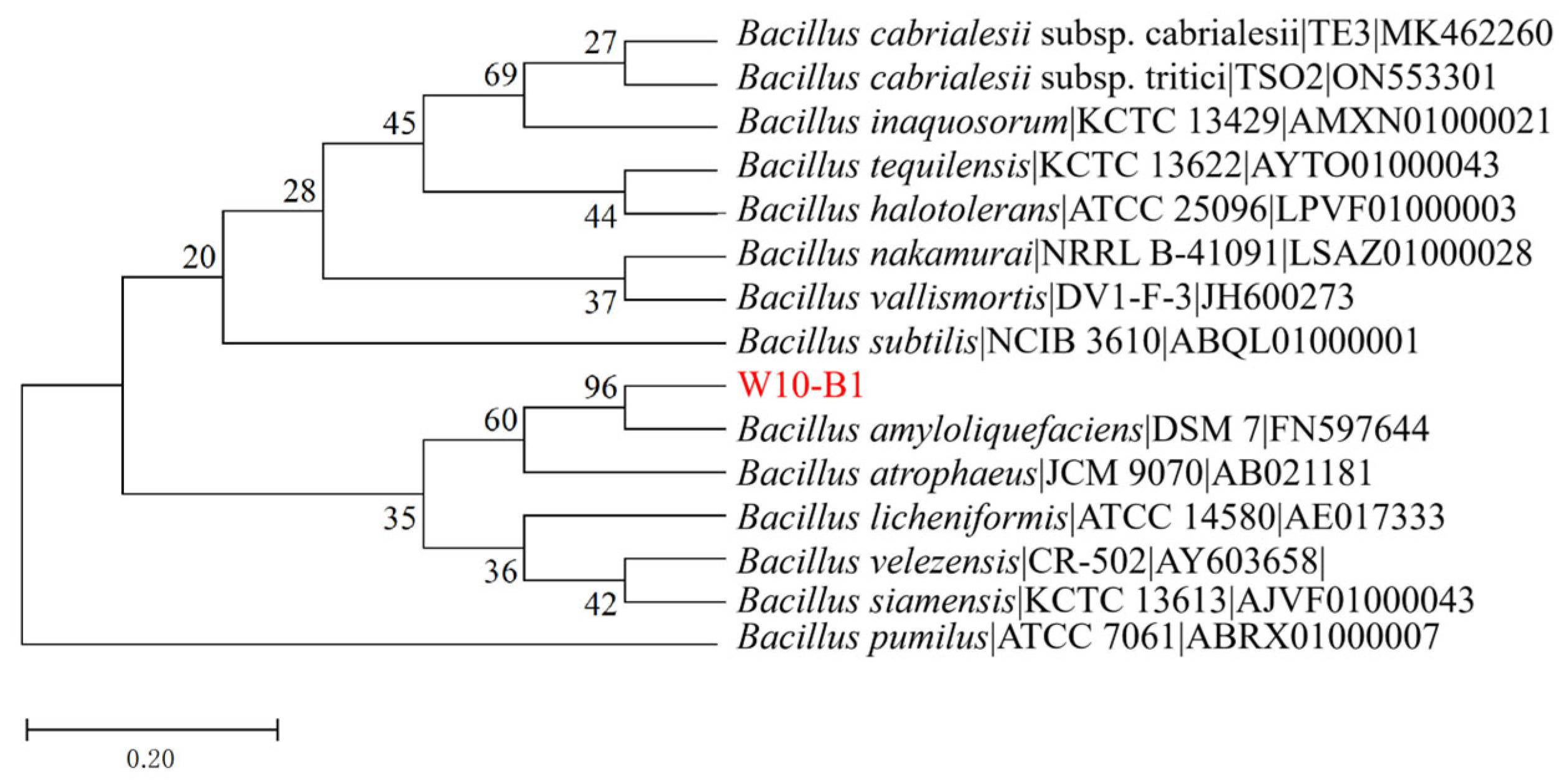
As shown in Figure 1, molecular biological identification based on 16S rDNA sequencing revealed that strain W10-B1 belongs to the Bacillus genus. The obtained 16S rDNA sequence was deposited into the NCBI GenBank database (GenBank accession no. PX460989).

3.2. Results of Compound Isolation and Purification

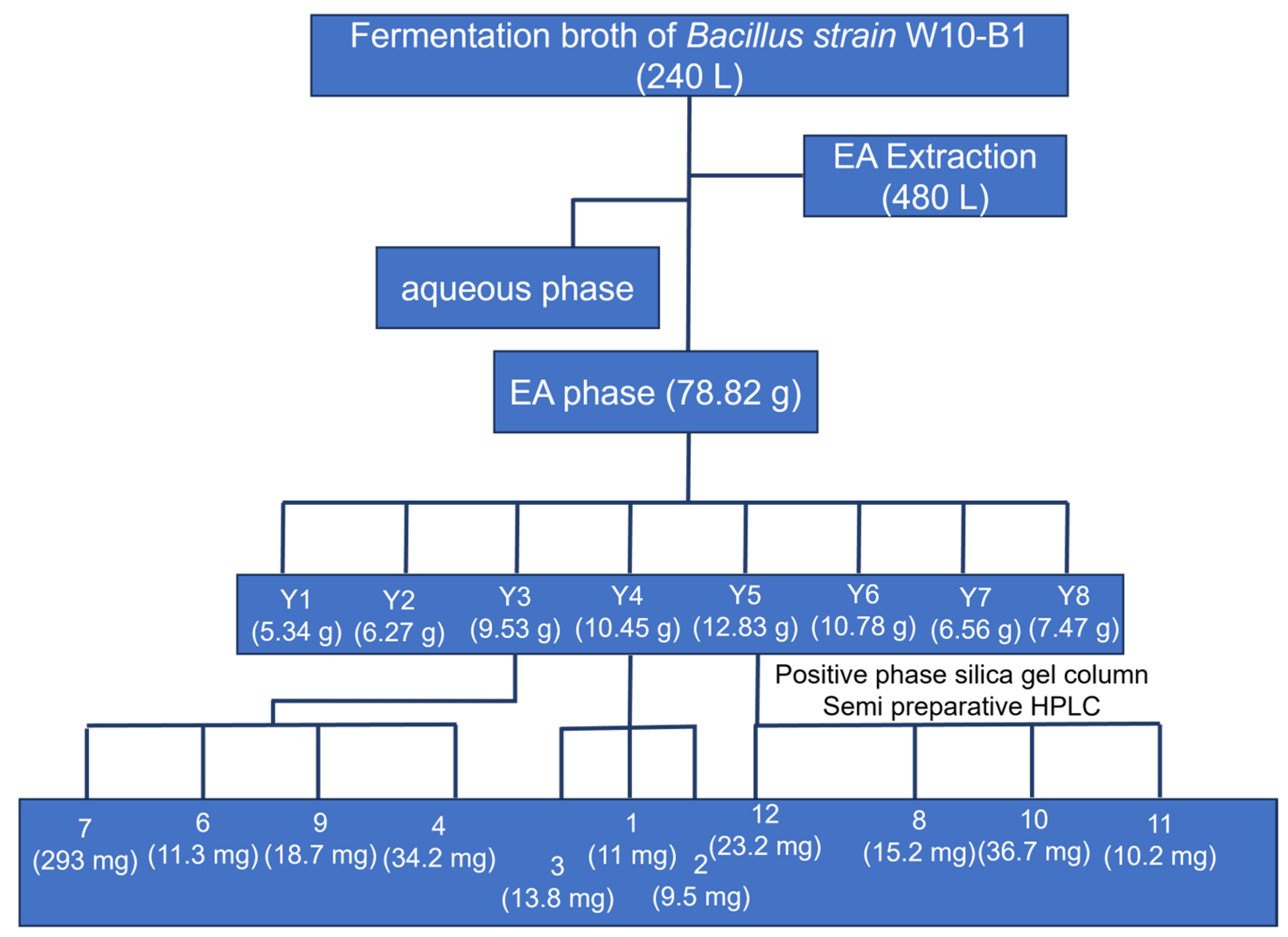
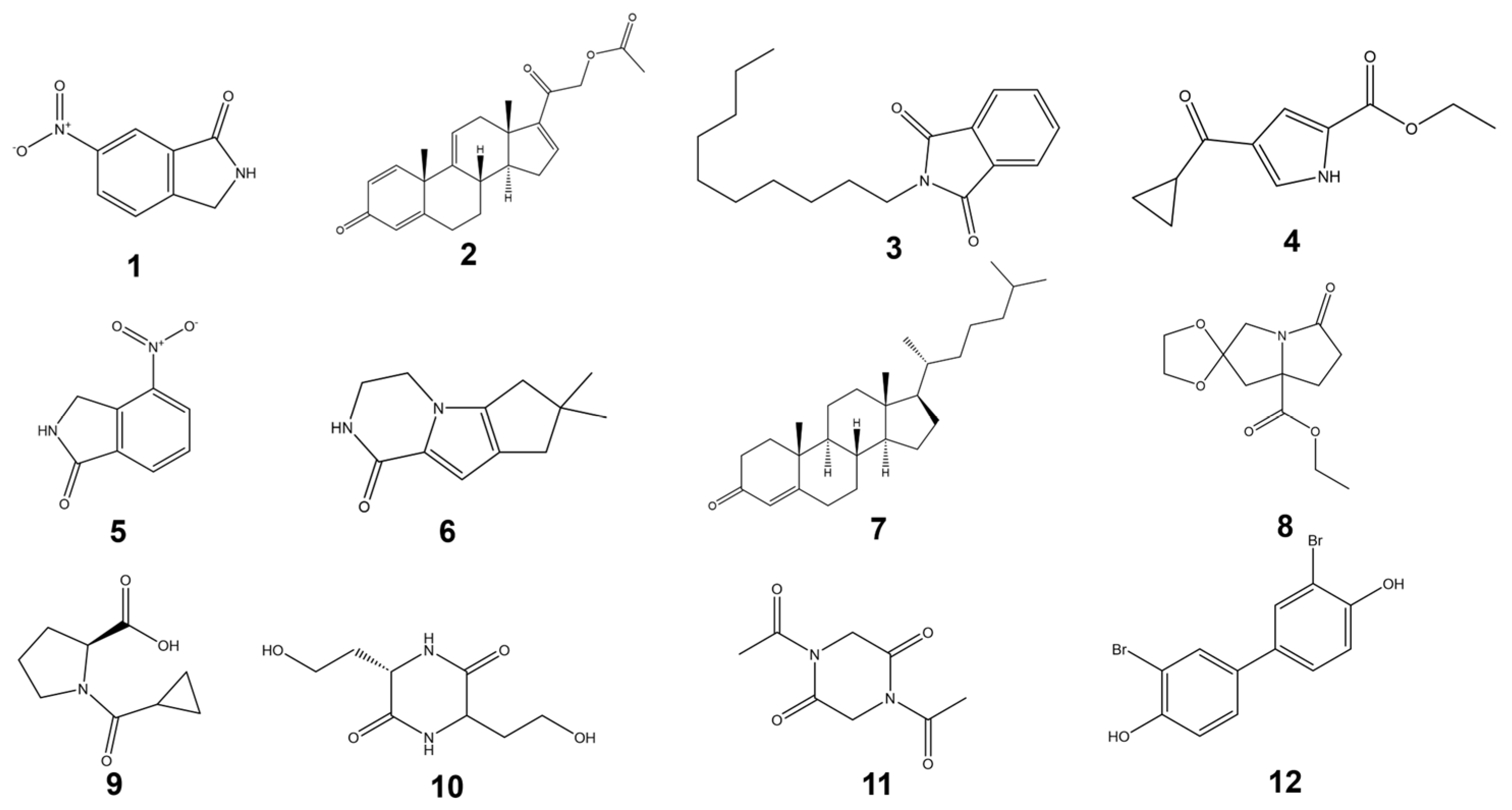
Large-scale fermentation of Bacillus strain W10-B1, followed by concentration and ethyl acetate extraction, yielded 78.82 g of a crude ethyl acetate extract. This extract was subsequently subjected to a series of chromatographic purification steps, including normal-phase silica gel, C18 reverse-phase, MCI gel, Sephadex LH-20, and preparative HPLC, leading to the isolation of twelve pure compounds. A schematic flowchart detailing the isolation procedure is presented in Figure 2. These compounds comprised three indoline derivatives (compounds 1, 3, and 5), two steroids (compounds 2 and 7), four pyrrole-derived compounds (compounds 4, 6, 8, and 9), two piperazine derivatives (compounds 10 and 11), and one brominated phenolic compound (compound 12).

3.3. Structural Elucidation of Compounds

The six isolated compounds were characterized by NMR and MS, and their structures were established by comparison with literature data (Figure 3).
Compound 1 was obtained as a white fine powder, soluble in DMSO but sparingly soluble in methanol or chloroform. 1H NMR (400 MHz, DMSO-d6) δ 8.98 (1H, br s, 1-NH), 8.44 (1H, dd, J = 8.3, 2.2 Hz, H-5), 8.33 (1H, d, J = 2.2 Hz, H-7), 7.86 (1H, d, J = 8.1 Hz, H-8), 4.54 (2H, s, H-4). 13C NMR (101 MHz, DMSO-d6) δ 167.9 (C-1), 150.6 (C-3), 147.8 (C-6), 134.0 (C-2), 126.2 (C-8), 125.5 (C-7), 117.7 (C-5), 45.4 (C-4). The excellent agreement of these spectral data with literature values confirmed the identity of Compound 1 as 6-nitro-isoindolin-1-one (C8H6N2O3) [8].
Compound 2 was obtained as a white amorphous powder, soluble in chloroform. HR-ESI-MS exhibited a protonated molecular ion at m/z 366.4556 [M+H]+. 1H NMR (400 MHz, CDCl3) δ 7.18 (d, J = 10.2 Hz, 1H, H-1), 6.74 (dd, J = 3.4, 1.9 Hz, 1H, H-16), 6.23 (dd, J = 10.2, 1.9 Hz, 1H, H-2), 6.02 (s, 1H, H-4), 5.52 (m, 1H, H-11), 5.00 (d, J = 16.1 Hz, 1H, H-21), 4.86 (d, J = 16.1 Hz, 1H, H’-21), 2.49 (m, 5H), 2.13 (s, 3H, 21-OAc), 2.10 (m, 3H), 1.48 (m, 1H), 1.39 (s, 3H, 19- CH3), 1.18 (m, 1H), 0.87 (s, 3H, 18-CH3) 13C NMR (101 MHz, CDCl3) δ 190.2 (C-20), 186.1 (C-3), 170.2 (C-22), 166.4 (C-5), 154.5 (C-1), 149.9 (C-17), 143.5 (C-16), 143.3 (C-2), 127.1 (C-4), 123.7 (C-21), 121.0 (C-14), 65.4 (C-9), 52.2 (C-13), 45.9 (C-10), 45.0 (C-12), 37.3 (C-8), 34.2 (C-15), 34.1 (C-6), 33.3 (C-17), 31.8 (C-11), 26.6 (C-20), 20.4 (C-18), 15.3 (C-19). The excellent agreement of these spectral data with literature values confirmed the identity of Compound 2 as 21-hydroxypregna-1,4,9(11),16-tetraene-3,20-dione 21-acetate (C23H28O4) [9].
Compound 3 was obtained as a yellow powder, soluble in chloroform. 1H NMR (400 MHz, CDCl3) δ 7.82 (d, J = 3.1 Hz, 1H, H-7), 7.81 (d, J = 3.1 Hz, 1H, H-8), 7.69 (d, J = 3.1 Hz, 1H, H-6), 7.68 (d, J = 3.1 Hz, 1H, H-9), 3.65 (t, J = 7.2 Hz, 1H, H-10), 1.65 (m, 2H, H-11), 1.27 (m, 14H, H-12,13,14,15,16,17,18), 0.85 (t, J = 6.8 Hz, 3H, H-19). 13C NMR (101 MHz, CDCl3) δ 168.4(C-2,5), 133.7(C-3,4), 132.1(C-7,8), 123.1(C-6,9), 38.0(C-10), 31.8(C-17), 29.5(C-11), 29.4(C-15), 29.2(C-14), 29.1(C-13), 28.5(C-16), 26.8(C-12), 22.6(C-18), 14.1(C-19). The excellent agreement of these spectral data with literature values confirmed the identity of Compound 3 as 2-decylisoindoline-1,3-dione (C18H25NO2) [10].
Compound 4 was obtained as a yellow oil, soluble in methanol. 1H NMR (400 MHz, CDCl3) δ 10.09 (1H, br s, 1-NH), 7.60 (1H, dd, J = 3.3, 1.6 Hz, H-5), 7.38 (1H, dd, J = 2.5, 1.6 Hz, H-3), 2.39 (1H, tt, J = 7.8, 4.5 Hz, H-7), 1.36 (3H, t, J = 7.1 Hz, H-12), 1.18 (2H, dt, J = 4.5, 3.3 Hz, H-8), 0.95 (2H, dq, J = 7.3, 3.6 Hz, H-9). 13C NMR (101 MHz, CDCl3) δ 195.7 (C-6), 161.1 (C-10), 127.7 (C-4), 126.0 (C-5), 124.1 (C-2), 114.7 (C-3), 60.9 (C-11), 18.0 (C-7), 14.3 (C-12), 10.8 (C-8,9). The excellent agreement of these spectral data with literature values confirmed the identity of Compound 4 as ethyl 4-(cyclopropanecarbonyl)-1H-pyrrole-2-carboxylate (C11H13NO3) [11].
Compound 5 was obtained as a brown amorphous powder, soluble in dimethyl sulfoxide. 1H NMR (400 MHz, DMSO-d6) δ9.01 (1-NH, br s), 8.42 (1H, d, J = 7.4 Hz, H-5), 8.10 (1H, d, J = 7.0 Hz, H-7), 7.78 (1H, m, H-6), 4.77 (2H, d, J = 6.8 Hz, H-2). 13C NMR (101 MHz, DMSO-d6) δ 167.9 (C-1), 143.6 (C-4), 139.6 (C-3), 136.0 (C-7), 130.1 (C-8), 129.7 (C-5), 126.9 (C-6), 46.2 (C-2). The excellent agreement of these spectral data with literature values confirmed the identity of Compound 5 as 4-nitro-isoindolin-1-one (C8H6N2O3) [12].
Compound 6 was obtained as a white solid, soluble in chloroform. 1H NMR (400 MHz, CDCl3) δ 7.09 (1H, br s, 2-NH), 6.66 (1H, s, H-10), 3.92 (2H, dd, J = 6.5, 5.3 Hz, H-4), 3.64 (2H, m, H-3), 2.47 (4H, d, J = 15.1 Hz, H-6,8), 1.21 (6H, s, 7-CH3). 13C NMR (101 MHz, CDCl3) δ 162.1 (C-1), 140.7 (C-5), 126.3 (C-11), 126.2 (C-10), 108.7 (C-9), 45.6 (C-6), 42.3 (C-3), 40.9 (C-4), 40.4 (C-8), 39.5 (C-7), 30.3 (7-CH3). The excellent agreement of these spectral data with literature values confirmed the identity of Compound 6 as 7,7-dimethyl-2,3,4,6,7,8-hexahydro-1H-cyclopenta [4,5]pyrrolo [1,2-a]pyrazin-1-one (C12H16N2O) [13].
Compound 7 was obtained as a colorless oil, soluble in chloroform. 1H NMR (400 MHz, CDCl3) δ 5.71 (1H, d, J = 1.7 Hz, H-4), 2.39 (3H, m), 2.26 (2H, m), 2.01 (2H, m), 1.83 (3H, m), 1.68 (1H, m), 1.41 (8H, m), 1.17 (3H, s, H-18), 1.06 (6H, m), 0.90 (3H, d, J = 6.5 Hz, 20-CH3), 0.86 (3H, d, J = 1.9 Hz, H-25), 0.84 (3H, d, J = 1.9 Hz, H-26), 0.69 (3H, s, H-19). 13C NMR (101 MHz, CDCl3) δ 199.6 (C-3), 171.7 (C-5), 123.7 (C-4), 56.0 (C-17), 55.8 (C-14), 53.8 (C-9), 42.3 (C-13), 39.6 (C-23), 39.4 (C-12), 38.6 (C-10), 36.1 (C-21), 35.7 (C-20), 35.6 (C-8), 35.6 (C-1), 33.9 (C-2), 32.9 (C-6), 32.0 (C-7), 28.1 (C-16), 28.0 (C-24), 24.1 (C-15), 23.8 (C-22), 22.8 (C-25), 22.5 (C-26), 21.0(C-11), 18.6(20-CH3), 17.3 (C-18), 11.9 (C-19). The excellent agreement of these spectral data with literature values confirmed the identity of Compound 7 as cholest-4-en-3-one (C27H44O) [14].
Compound 8 was obtained as a white powder, soluble in chloroform. 1H NMR (400 MHz, CDCl3) δ 4.13 (2H, m, H-1″), 3.82 (4H, m, H-1′,2′), 3.68 (1H, d, J = 12.2 Hz, H-6a), 3.07 (1H, d, J = 12.2 Hz, H-6b), 2.58 (2H, d, J = 13.4 Hz, H-8), 2.42 (1H, m, H-4a), 2.27 (1H, m, H-5a), 2.06 (1H, m, H-5b), 1.92 (1H, m, H-4b), 1.19 (3H, t, J = 7.1 Hz, H-2″). 13C NMR (101 MHz, CDCl3) δ 175.0 (C-9), 172.8 (C-5), 115.8 (C-7), 70.7 (C-), 64.6 (C-1′), 64.6 (C-2′), 61.6 (C-1″), 50.9 (C-6), 45.9 (C-8), 32.5 (C-3), 32.0 (C-4), 13.9 (C-2″). The excellent agreement of these spectral data with literature values confirmed the identity of Compound 8 as ethyl 5-oxo-1H,3H-spiro[pyrrolizine-2,2′-[1,3]dioxolane]-7a(5H)-carboxylate (C12H17NO5) [15].
Compound 9 was obtained as a white powder, soluble in chloroform. 1H NMR (400 MHz, CDCl3) δ 9.20 (1H, br s, 10-OH), 4.55 (1H, m, H-2), 3.79 (1H, m, H-5a), 3.65 (1H, mH-5b), 2.36 (1H, m, H-3a), 2.04 (3H, m, H-4,3b), 1.67 (1H, m, H-7), 1.07 (2H, m, H-8a,9a), 0.86 (2H, m, H-8b,9b). 13C NMR (101 MHz, CDCl3) δ 175.4 (C-10), 172.9 (C-6), 60.0 (C-2), 47.7 (C-5), 27.6 (C-3), 24.6 (C-4), 12.5 (C-7), 8.8 (C-8), 8.2 (C-9). The excellent agreement of these spectral data with literature values confirmed the identity of Compound 9 as (2S)-1-(cyclopropanecarbonyl)pyrrolidine-2-carboxylic acid (C9H13NO3) [16].
Compound 10 was obtained as a white powder, soluble in chloroform. 1H NMR (400 MHz, DMSO-d6) δ 8.03 (2H, br s, 1,4-NH), 4.62 (2H, t, J = 5.00 Hz, 8,10-OH), 3.87 (2H, t, J = 5.08 Hz, H-3,6), 3.51 (4H, m, H-8,10), 1.90 (2H, m, H-7a,9a), 1.76 (2H, m, H-7b,9b). 13C NMR (101 MHz, DMSO-d6) δ168.6 (C-2,5), 57.2 (C-8,10), 51.8 (C-3,6), 35.2 (C-7,9). The excellent agreement of these spectral data with literature values confirmed the identity of Compound 10 as cis-3,6-bis(2-hydroxyethyl)piperazine-2,5-dione (C8H14N2O4) [17].
Compound 11 was obtained as a white powder, soluble in chloroform. 1H NMR (400 MHz, DMSO-d6) δ 4. 53 (d, J = 1.46 Hz, 4H, H-3,6), 2.50 (d, J = 1.24 Hz, 6H, H-8,10). 13C NMR (101 MHz, DMSO- d6) δ 170.4 (C-7,9), 166.9 (C-2,5), 47.0 (C-3,6), 26.3 (C-8,10). The excellent agreement of these spectral data with literature values confirmed the identity of Compound 11 as 1,4-diacetylpiperazine-2,5-dione (C8H10N2O4) [18].
Compound 12 was obtained as a white powder, soluble in chloroform and dimethyl sulfoxide. 1H NMR (400 MHz, DMSO-d6) δ 10.31 (s, 2H, 4,4′-OH), 7.69 (s, 2H, H-2,2′), 7.41 (d, J = 8.5Hz, 2H, H-6,6′), 6.98 (d, J = 8.5Hz, 2H, H-5,5′) 13C NMR (101 MHz, DMSO-d6) δ 153.3 (C-4,4′), 131.4 (C-2,2′), 130.2 (C-1,1′), 126.5 (C-6,6′), 116.6 (C-5,5′), 109.9 (C-3,3′). The excellent agreement of these spectral data with literature values confirmed the identity of Compound 12 as identified as 3,3′-dibromo-4,4′-biphenyldiol (C12H8Br2O2) [19].

3.4. Screening for QSI Compounds

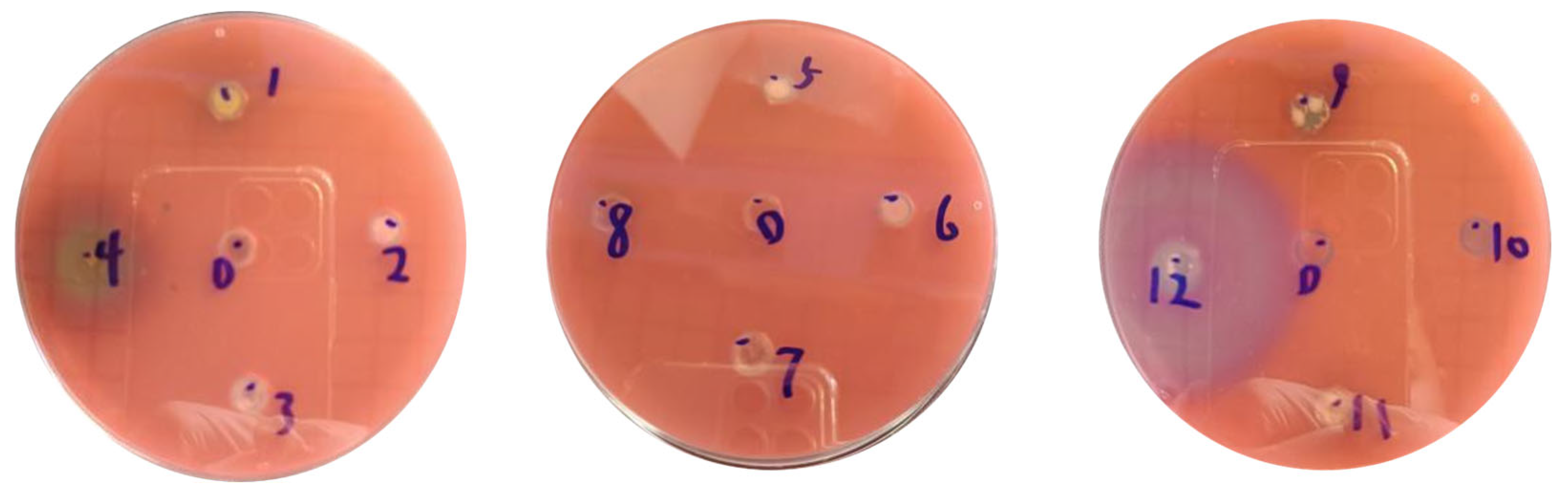
Screening against S. marcescens NJ01 (Figure 4) led to the identification of two active compounds. Compound 12 (3,3′-dibromo-4,4′-biphenyldiol) exhibited significant anti-quorum-sensing activity, as evidenced by a distinct decolorized zone. In contrast, compound 4 produced a clear inhibition zone, indicating potent antibacterial activity. The other tested compounds showed no significant activity compared to the DMSO control.

3.5. Quorum-Sensing Inhibitory Activity of 3,3′-Dibromo-4,4′-Biphenyldiol Against S. marcescens NJ01

3.5.1. Growth Curve

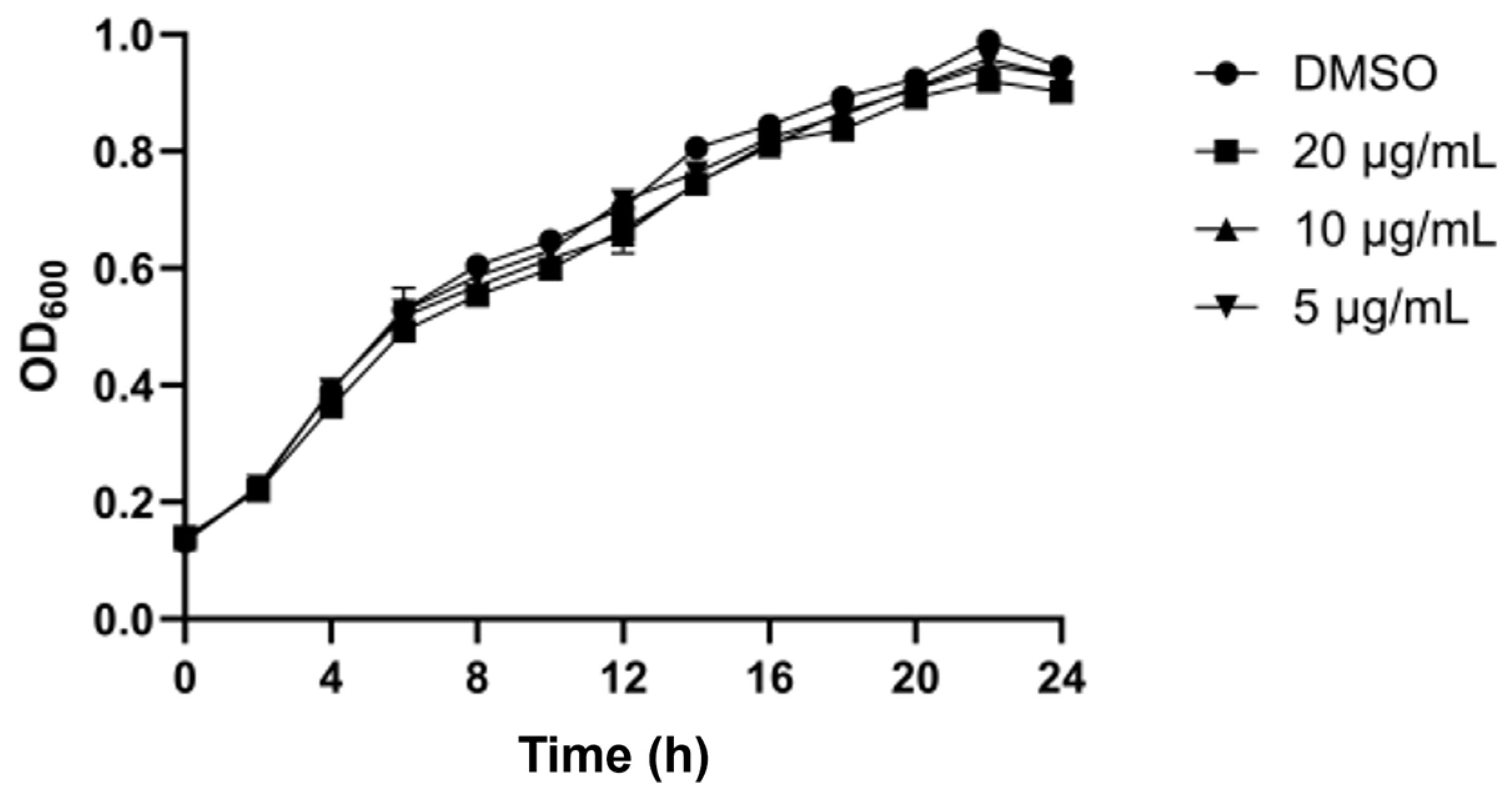
3,3′-Dibromo-4,4′-biphenyldiol, at concentrations ranging from 5 to 20 μg/mL, did not significantly inhibit the growth of S. marcescens NJ01 (Figure 5). Therefore, this concentration range was deemed suitable for assessing its specific QSI activity against the bacterium. The observation that bacterial growth was largely unaffected at these sub-inhibitory concentrations (below 20 μg/mL) is consistent with the characteristic profile of a classic quorum-sensing inhibitor.

3.5.2. Inhibitory Effect on Biofilm Formation

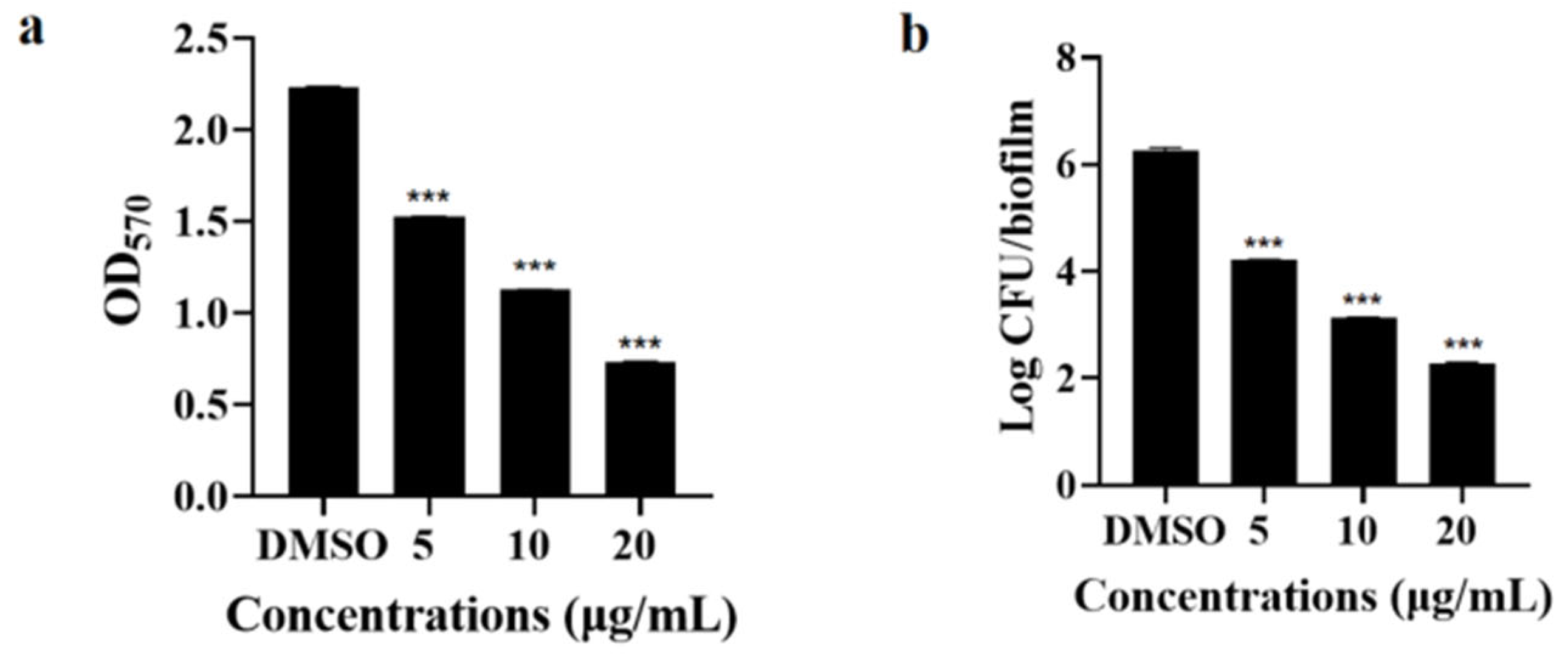
Treatment of S. marcescens NJ01 with 3,3′-dibromo-4,4′-biphenyldiol at concentrations of 5, 10, and 20 µg/mL resulted in a significant and concentration-dependent reduction in biofilm biomass. Compared to the DMSO control, biofilm formation was inhibited by 31.7%, 49.5%, and 67.1%, respectively (Figure 6a). A similar trend was observed using the colony counting method, which measures the number of viable cells within the biofilm. Consistent with the biomass reduction, the viable cell count decreased by 32.6%, 49.9%, and 63.6% at concentrations of 5, 10, and 20 µg/mL, respectively (Figure 6b). These parallel results from two independent methods confirm that 3,3′-dibromo-4,4′-biphenyldiol not only inhibits the formation of the biofilm matrix but also effectively reduces the bacterial load within the biofilms.

3.5.3. Motility Inhibition Analysis

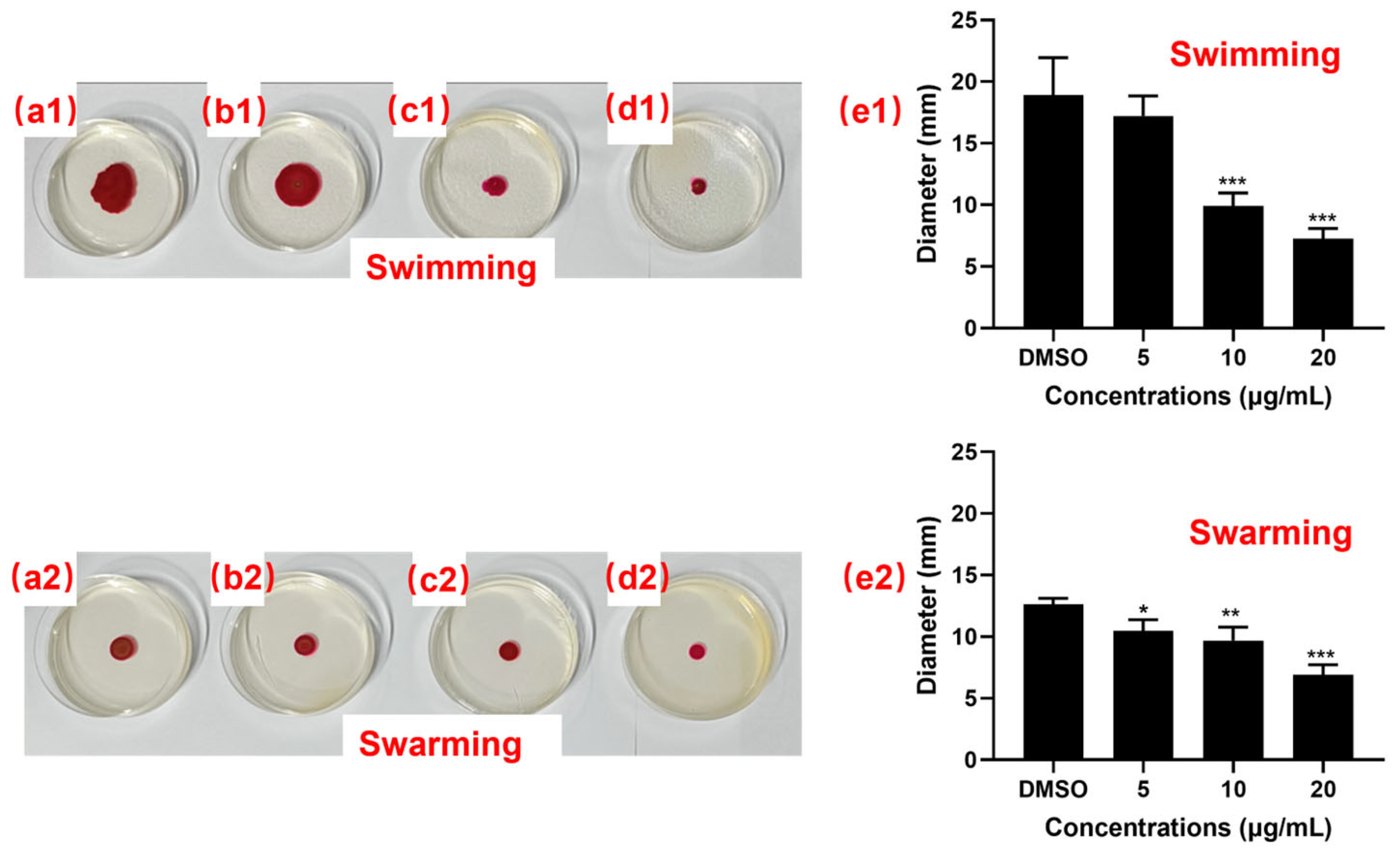
As shown in Figure 7, 3,3′-dibromo-4,4′-biphenyldiol significantly inhibited both swimming and swarming motilities of S. marcescens NJ01 in a concentration-dependent manner. A notable reduction in the motility zone diameters was observed even at the concentration of 10 µg/mL compared to the DMSO control. This inhibitory effect became more pronounced with increasing compound concentration, as evidenced by progressively smaller motility zones.

4. Discussion

This study successfully isolated endophytic bacterial communities from the marine macroalga C. irregularis. Notably, while prior research has documented the taxonomy, morphology, geographical distribution, and representative toxic compounds (e.g., domoic acid) of C. irregularis, and molecular techniques (such as 16S rRNA gene sequencing) have characterized the composition of its endophytic microbiota, no studies have previously reported the successful cultivation and functional investigation of specific endophytic strains from this alga [20,21]. Our isolation work addresses this gap, thereby laying a foundation for exploring the chemical ecological roles of its endophytes and the pharmaceutical potential of their secondary metabolites [22].
Among the isolated endophytes, strain W10-B1 was identified as a Bacillus strain. It is important to acknowledge the inherent limitations of using the 16S rRNA gene sequence as the sole criterion for precise species-level identification within the genus Bacillus. As highlighted by Xu and Kovács [23], the high degree of conservation in the 16S rRNA gene among closely related Bacillus species often results in sequence similarities exceeding 99%, which can preclude definitive taxonomic assignment at the species level. Therefore, while our phylogenetic analysis robustly places strain W10-B1 within the Bacillus genus, a more comprehensive polyphasic taxonomic approach—incorporating genomic, phenotypic, and chemotaxonomic data—would be required for an unambiguous determination of its species identity. Nevertheless, the primary focus of this study was the chemical exploration of this endophytic bacterium, and the genus-level identification provided a sufficient phylogenetic context for the discovery of its novel metabolites.
Given that Bacillus strain is a well-known prolific producer of diverse secondary metabolites, with reported compounds including peptides, alkaloids, quinolines, piperazine pyrrole derivatives, carboxylic acid esters, and fatty acids [24,25,26,27,28,29], we were prompted to investigate its chemical profile. This study led to the isolation and structural elucidation (via NMR spectroscopy) of twelve compounds from this strain. Notably, we identified a halogenated biphenyl compound, 3,3′-dibromo-4,4′-biphenyldiol. To our knowledge, this represents the first report of this specific halogenated biphenol from a Bacillus strain. A comprehensive literature survey confirms that this compound is a newly discovered natural product, reported here for the first time. This finding significantly expands the structural diversity of secondary metabolites known from Bacillus and introduces halogenated biphenols as a novel chemical class from this genus.
While halogenated biphenyl derivatives have been previously identified from other microbial sources such as marine fungi and actinomycetes [30,31], their occurrence in Bacillus, particularly from a marine algal endophyte, is rare. We acknowledge that this brominated compound is also known as an industrial chemical, raising a valid question regarding its potential origin as a laboratory contaminant. To address this, we emphasize that the fermentation was conducted using a seawater-based medium, and all subsequent extraction and purification steps were meticulously performed using glassware to eliminate potential leaching from plastics. Furthermore, the marine origin of both the endophyte (Bacillus sp. W10-B1) and its algal host (C. irregularis) provides a compelling ecological context. The biosynthesis of brominated compounds is a well-established hallmark of marine organisms, driven by the abundance of halides such as bromide in the marine environment. Therefore, the production of 12 by this marine-derived Bacillus strain is not only plausible but also aligns with recognized chemical defense strategies in its niche. Collectively, these experimental precautions and ecological considerations strongly support that compound 12 is a genuine secondary metabolite, underscoring the vast and underexplored chemical potential of marine endophytes to produce unique scaffolds.
This study focused on QSI as a novel strategy to combat bacterial resistance. Unlike conventional bactericidal approaches, QSI interferes with the bacterial QS signaling system, thereby reducing the expression of virulence factors and the formation of biofilms, which subsequently attenuates pathogenicity and drug resistance [32,33]. We systematically evaluated the twelve isolated compounds for their inhibitory activity against a QS reporter strain. A key finding was that 3,3′-dibromo-4,4′-biphenyldiol significantly inhibited prodigiosin production in S. marcescens NJ01. The inhibition of prodigiosin, a QS-regulated pigment in S. marcescens, serves as a reliable indicator of QS interference. Our compound demonstrates a potency that is comparable to, or even surpasses, some well-studied QS inhibitors like furanones and halogenated furanones when assessed in similar systems [34,35]. However, its distinct biphenyl scaffold differentiates it from these known QSI chemotypes, suggesting a potentially novel mechanism of action. This structural novelty is crucial, as it could help circumvent the resistance issues that might emerge against more common QSI frameworks.
Based on this initial discovery, we further concentrated on this active compound and investigated its effects on the virulence phenotypes of S. marcescens NJ01. Results demonstrated that 3,3′-dibromo-4,4′-biphenyldiol not only markedly inhibited biofilm formation by NJ01 but also effectively suppressed other virulence phenotypes. Specifically, the compound significantly impaired bacterial motility (both swimming and swarming). These findings suggest that the compound may restrict bacterial migration and physical contact, thereby hindering spatial communication within the bacterial community and ultimately attenuating the efficiency of QS. This provides a novel mechanistic perspective for explaining its QSI activity. Given these anti-virulence properties, 3,3′-dibromo-4,4′-biphenyldiol shows potential as an anti-virulence agent. Such agents could be used in combination with conventional antibiotics to enhance treatment efficacy and help address the growing challenge of bacterial resistance.

5. Conclusions

This study successfully isolated and identified twelve compounds from the endophytic bacterium Bacillus strain W10-B1. Through a targeted screening strategy, 3,3′-dibromo-4,4′-biphenyldiol was identified as a potent QSI against S. marcescens NJ01. Specifically, this compound significantly suppressed key QS-regulated virulence factors, including biofilm formation, prodigiosin production, and swarming motility, without inhibiting bacterial growth at the active concentration. Our findings establish, for the first time, that endophytes associated with the marine alga C. irregularis are a promising source of novel anti-virulence agents. The discovery of 3,3′-dibromo-4,4′-biphenyldiol provides a new chemical scaffold for the development of anti-QS therapies. Future work will focus on elucidating its precise molecular target within the QS circuitry, evaluating its efficacy in vivo, and exploring its synergistic potential with conventional antibiotics. This work not only expands the chemical diversity of known QSIs but also provides a solid material and theoretical foundation for developing new strategies to combat pathogenicity and drug resistance.

Author Contributions

Writing—original draft preparation, investigation, methodology, validation, C.Y.; formal analysis and writing—review and editing, Z.-W.D.; writing—review and editing, K.-Z.X.; visualization, writing—review and editing, supervision, project administration, and funding acquisition, A.-Q.J. All authors have read and agreed to the published version of the manuscript.

Funding

This research was funded by the National Natural Science Foundation of China (Grant No. 82160664) and Hainan Province Science and Technology Special Fund (ZDYF2024SHFZ103).

Institutional Review Board Statement

Not applicable.

Informed Consent Statement

Not applicable.

Data Availability Statement

The data presented in this study are openly available in GenBank ID: PX460989. [GenBank] [https://www.ncbi.nlm.nih.gov/nuccore/PX460989/] [PX460989] (accessed on 16 October 2025).

Acknowledgments

The authors extend their sincere thanks to Zhikai Guo for his assistance in collecting the Coelothrix irregularis material.

Conflicts of Interest

The authors declare no conflicts of interest.

References

  1. Bates, S.S.; Hubbard, K.A.; Lundholm, N.; Montresor, M.; Leaw, C.P. Pseudo-nitzschia, Nitzschia, and domoic acid: New research since 2011. Harmful Algae 2018, 79, 3–43. [Google Scholar] [CrossRef]
  2. Borg, M. Red algae. Curr. Biol. 2024, 34, R841–R842. [Google Scholar] [CrossRef] [PubMed]
  3. Shikov, A.N.; Flisyuk, E.V.; Obluchinskaya, E.D.; Pozharitskaya, O.N. Pharmacokinetics of marine-derived drugs. Mar. Drugs 2020, 18, 557. [Google Scholar] [CrossRef]
  4. Piruthiviraj, P.; Swetha, B.M.; Balasubramanian, C.; Krishnamoorthy, R.; Gatasheh, M.K.; Ahmad, A.; Parthasarathi, R.; Pandurangan, P.; Bhuvaneshwari, V.; Vijayakumar, N. Exploring the potential: Inhibiting quorum sensing through marine red seaweed extracts—A study on Amphiroa fragilissima. J. King Saud Univ. Sci. 2024, 36, 103118. [Google Scholar] [CrossRef]
  5. Klumpp, D.W.; Polunin, N.V.C. Partitioning among grazers of food resources within damselfish territories on a coral reef. J. Exp. Mar. Biol. Ecol. 1989, 125, 145–169. [Google Scholar] [CrossRef]
  6. Xiao, X.; Agusti, S.; Lin, F.; Li, K.; Pan, Y.; Yu, Y.; Zheng, Y.; Wu, J.; Duarte, C.M. Nutrient removal from Chinese coastal waters by large-scale seaweed aquaculture. Sci. Rep. 2017, 7, 46613. [Google Scholar] [CrossRef]
  7. Rodrigues, I.G.; Miguel, M.G.; Mnif, W. A brief review on new naturally occurring cembranoid diterpene derivatives from the soft corals of the genera Sarcophyton, Sinularia, and Lobophytum since 2016. Molecules 2019, 24, 781. [Google Scholar] [CrossRef] [PubMed]
  8. Fu, L.; Liu, X.; Ling, C.; Cheng, J.; Guo, X.; He, H.; Ding, S.; Yang, Y. Design, synthesis, and structure-activity relationship studies of conformationally restricted mutilin 14-carbamates. Bioorg. Med. Chem. Lett. 2012, 22, 814–819. [Google Scholar] [CrossRef]
  9. Hulcoop, D.G.; Shapland, P.D. Expedient synthesis of 17α,21-dihydroxy-9β,11β-epoxy-16α-methylpregna-1,4-diene-3,20-dione 21-acetate from prednisolone utilising a novel Mattox rearrangement. Steroids 2013, 78, 1281–1287. [Google Scholar] [CrossRef]
  10. Ji, F.; Li, J.; Li, X.; Guo, W.; Wu, W.; Jiang, H. Carbonylation access to phthalimides using self-sufficient directing group and nucleophile. J. Org. Chem. 2018, 83, 104–112. [Google Scholar] [CrossRef]
  11. Yamawaki, I.; Matsushita, Y.; Asaka, N.; Ohmori, K.; Nomura, N.; Ogawa, K. Synthesis and aldose reductase inhibitory activity of acetic acid derivatives of pyrrolo[1,2-c]imidazole. Eur. J. Med. Chem. 1993, 28, 481–498. [Google Scholar] [CrossRef]
  12. Jagtap, P.G.; Southan, G.J.; Baloglu, E.; Ram, S.; Mabley, J.G.; Marton, A.; Salzman, A.; Szabó, C. The discovery and synthesis of novel adenosine substituted 2,3-dihydro-1H-isoindol-1-ones: Potent inhibitors of poly(ADP-ribose) polymerase-1 (PARP-1). Bioorg. Med. Chem. Lett. 2004, 14, 81–85. [Google Scholar] [CrossRef] [PubMed]
  13. Zhang, H.; Cravillion, T.; Lim, N.-K.; Tian, Q.; Beaudry, D.; Defreese, J.L.; Fettes, A.; James, P.; Linder, D.; Malhotra, S.; et al. Development of an efficient manufacturing process for reversible Bruton’s tyrosine kinase inhibitor GDC-0853. Org. Process Res. Dev. 2018, 22, 978–990. [Google Scholar] [CrossRef]
  14. Ferlin, N.; Courty, M.; Van Nhien, A.N.; Gatard, S.; Pour, M.; Quilty, B.; Ghavre, M.; Haiß, A.; Kümmerer, K.; Gathergood, N.; et al. Tetrabutylammonium prolinate-based ionic liquids: A combined asymmetric catalysis, antimicrobial toxicity and biodegradation assessment. RSC Adv. 2013, 3, 26241–26251. [Google Scholar] [CrossRef]
  15. McShan, D.; Kathman, S.; Lowe, B.; Xu, Z.; Zhan, J.; Statsyuk, A.; Ogungbe, I.V. Identification of non-peptidic cysteine reactive fragments as inhibitors of cysteine protease rhodesain. Bioorg. Med. Chem. Lett. 2015, 25, 4509–4512. [Google Scholar] [CrossRef] [PubMed]
  16. Baker, S.R.; Parsons, A.F.; Pons, J.-F.; Wilson, M. Tandem radical cyclisations leading to indolizidinones and pyrrolizidinones. Tetrahedron Lett. 1998, 39, 7197–7200. [Google Scholar] [CrossRef]
  17. Xu, H.; Wochele, A.; Luo, M.; Schnakenburg, G.; Sun, Y.; Brötz-Oesterhelt, H.; Dickschat, J.S. Synthesis of tryptophan-dehydrobutyrine diketopiperazine and biological activity of hangtaimycin and its co-metabolites. Beilstein J. Org. Chem. 2022, 18, 1159–1165. [Google Scholar] [CrossRef]
  18. Anderson, C.L.; Liang, J.; Teat, S.J.; Garzón-Ruiz, A.; Nenon, D.P.; Navarro, A.; Liu, Y. A highly substituted pyrazinophane generated from a quinoidal system via a cascade reaction. Chem. Commun. 2020, 56, 4472–4475. [Google Scholar] [CrossRef]
  19. Dettori, M.A.; Fabbri, D.; Dessì, A.; Dallocchio, R.; Carta, P.; Honisch, C.; Ruzza, P.; Farina, D.; Migheli, R.; Serra, P.A.; et al. Synthesis and studies of the inhibitory effect of hydroxylated phenylpropanoids and biphenols derivatives on tyrosinase and laccase enzymes. Molecules 2020, 25, 2709. [Google Scholar] [CrossRef]
  20. Steele, T.S.; Brunson, J.K.; Maeno, Y.; Terada, R.; Allen, A.E.; Yotsu-Yamashita, M.; Chekan, J.R.; Moore, B.S. Domoic acid biosynthesis in the red alga Chondria armata suggests a complex evolutionary history for toxin production. Proc. Natl. Acad. Sci. USA 2022, 119, e2117407119. [Google Scholar] [CrossRef]
  21. Gajski, G.; Gerić, M.; Baričević, A.; Smodlaka Tanković, M. Domoic acid: A review of its cytogenotoxicity within the one health approach. Antioxidants 2024, 13, 1366. [Google Scholar] [CrossRef] [PubMed]
  22. Vega-Portalatino, E.J.; Rosales-Cuentas, M.M.; Tamariz-Angeles, C.; Olivera-Gonzales, P.; Espinoza-Espinoza, L.A.; Moreno-Quispe, L.A.; Portalatino-Zevallos, J.C. Diversity of endophytic bacteria with antimicrobial potential isolated from marine macroalgae from Yacila and Cangrejos beaches, Piura-Peru. Arch. Microbiol. 2024, 206, 372. [Google Scholar] [CrossRef]
  23. Xu, X.; Kovács, Á.T. How to identify and quantify the members of the Bacillus genus? Environ. Microbiol. 2024, 26, e16593. [Google Scholar] [CrossRef]
  24. Liu, X.; Yang, W.; Gu, H.; Bughio, A.A.; Liu, J. Optimization of fermentation conditions for 2,3,5-trimethylpyrazine produced by Bacillus amyloliquefaciens from Daqu. Fermentation 2024, 10, 112. [Google Scholar] [CrossRef]
  25. Wang, Q.; Wang, F.; Tang, L.; Wang, Y.; Zhou, Y.; Li, X.; Jin, M.; Fu, A.; Li, W. Bacillus amyloliquefaciens SC06 alleviated intestinal damage induced by inflammatory via modulating intestinal microbiota and intestinal stem cell proliferation and differentiation. Int. Immunopharmacol. 2024, 130, 111675. [Google Scholar] [CrossRef] [PubMed]
  26. Horyanto, D.; Bajagai, Y.S.; Kayal, A.; von Hellens, J.; Chen, X.; Van, T.T.H.; Radovanović, A.; Stanley, D. Bacillus amyloliquefaciens probiotics mix supplementation in a broiler leaky gut model. Microorganisms 2024, 12, 419. [Google Scholar] [CrossRef] [PubMed]
  27. Sun, J.; Nie, L.; Xie, W.; Zheng, X.; Zhou, W.-W. Potentiation effect of the AI-2 signaling molecule on postharvest disease control of pear and loquat by Bacillus amyloliquefaciens and its mechanism. Food Chem. 2024, 441, 138373. [Google Scholar] [CrossRef]
  28. Rodrigues, R.A.; Silva, L.A.; Brugnera, H.C.; Pereira, N.; Casagrande, M.F.; Makino, L.C.; Bragança, C.R.; Schocken-Iturrino, R.P.; Cardozo, M.V. Association of Bacillus subtilis and Bacillus amyloliquefaciens: Minimizes the adverse effects of necrotic enteritis in the gastrointestinal tract and improves zootechnical performance in broiler chickens. Poult. Sci. 2024, 103, 103394. [Google Scholar] [CrossRef]
  29. Kang, J.; Zhang, X.; Huang, Y.; Zhu, Y.; Liu, L.; Sun, B.; Qu, M.; Zhu, X. Understanding the effect and mechanism of ε-polylysine on the improvement of tofu storage quality via biofilm inhibition by Bacillus licheniformis and Bacillus amyloliquefaciens. Food Biosci. 2025, 66, 106314. [Google Scholar] [CrossRef]
  30. Wu, J.-S.; Shi, X.-H.; Zhang, Y.-H.; Shao, C.-L.; Fu, X.-M.; Li, X.; Yao, G.-S.; Wang, C.-Y. Benzyl Furanones and Pyrones from the Marine-Derived Fungus Aspergillus terreus Induced by Chemical Epigenetic Modification. Molecules 2020, 25, 3927. [Google Scholar] [CrossRef]
  31. Pinheiro, J.; Lyons, T.; Heras, V.L.; Recio, M.V.; Gahan, C.G.; O’SUllivan, T.P. Investigation of halogenated furanones as inhibitors of quorum sensing-regulated bioluminescence in Vibrio harveyi. Future Med. Chem. 2023, 15, 317–332. [Google Scholar] [CrossRef]
  32. Wei, G.; Lo, C.; Walsh, C.; Hiller, N.L.; Marculescu, R. In silico evaluation of the impacts of quorum sensing inhibition (QSI) on strain competition and development of QSI resistance. Sci. Rep. 2016, 6, 35136. [Google Scholar] [CrossRef] [PubMed]
  33. Lim, K.C.; Yusoff, F.M.; Natrah, F.M.; De Zoysa, M.; Yasin, I.S.M.; Yaminudin, J.; Karim, M. Biological strategies in aquaculture disease management: Towards a sustainable blue revolution. Aquac. Fish. 2025, 10, 743–763. [Google Scholar] [CrossRef]
  34. Alum, E.U.; Gulumbe, B.H.; Izah, S.C.; Uti, D.E.; Aja, P.M.; Igwenyi, I.O.; Offor, C.E. Natural product-based inhibitors of quorum sensing: A novel approach to combat antibiotic resistance. Biochem. Biophys. Rep. 2025, 43, 102111. [Google Scholar] [CrossRef] [PubMed]
  35. Xu, Z.; Dong, X.; Tan, Y.; Soteyome, T.; Yuan, L.; Li, Y.; Liu, J. Quorum sensing inhibition of hordenine on Bacillus cereus: Potential application of barley extract in food storage. LWT 2025, 227, 117952. [Google Scholar] [CrossRef]
Figure 1. Phylogenetic tree of endophytic bacteria W10-B1. Phylogenetic tree showing the relationship of the endophytic strain W10-B1 with related bacterial species. The tree was constructed based on the alignment of the 16S rRNA gene sequences using the neighbor-joining method. The strain isolated and characterized in this study, W10-B1, is highlighted in red.
Bacteria 05 00003 g001
Figure 2. The purification process of metabolites in the Bacillus strain W10-B1.
Bacteria 05 00003 g002
Figure 3. The chemical structures of the isolated compounds (112).
Bacteria 05 00003 g003
Figure 4. Screening of 12 compounds for their quorum-sensing inhibitory activity against S. marcescens NJO1. The experiment was independently repeated three times with consistent results. A representative image is shown.
Bacteria 05 00003 g004
Figure 5. Effect of 3,3′-dibromo-4,4′-biphenyl on S. marcescens NJ01 growth.
Bacteria 05 00003 g005
Figure 6. Inhibition of S. marcescens NJ01 biofilm by 3,3′-dibromo-4,4′-biphenyldiol: (a) Biofilm biomass measured with crystal violet staining. (b) Viable cell count within the biofilm. Data are shown as mean ± SD (n = 6). *** p < 0.001 vs. DMSO control (one-way ANOVA with Tukey–Kramer test).
Bacteria 05 00003 g006
Figure 7. Effect of Compound 12 on the swimming and swarming motilities of S. marcescens NJ01. Panels from left to right show (a1,a2) DMSO control, (b1,b2) 5 μg/mL, (c1,c2) 10 μg/mL, (d1,d2) 20 μg/mL of Compound 12, and (e1,e2) Quantification of motility zone diameters. The diameters of the swimming and swarming zones were measured and are presented as mean ± SD from three independent experiments. *** p < 0.001, ** p < 0.01, * p < 0.05 vs. DMSO control (one-way ANOVA with Tukey–Kramer test).
Bacteria 05 00003 g007
Disclaimer/Publisher’s Note: The statements, opinions and data contained in all publications are solely those of the individual author(s) and contributor(s) and not of MDPI and/or the editor(s). MDPI and/or the editor(s) disclaim responsibility for any injury to people or property resulting from any ideas, methods, instructions or products referred to in the content.