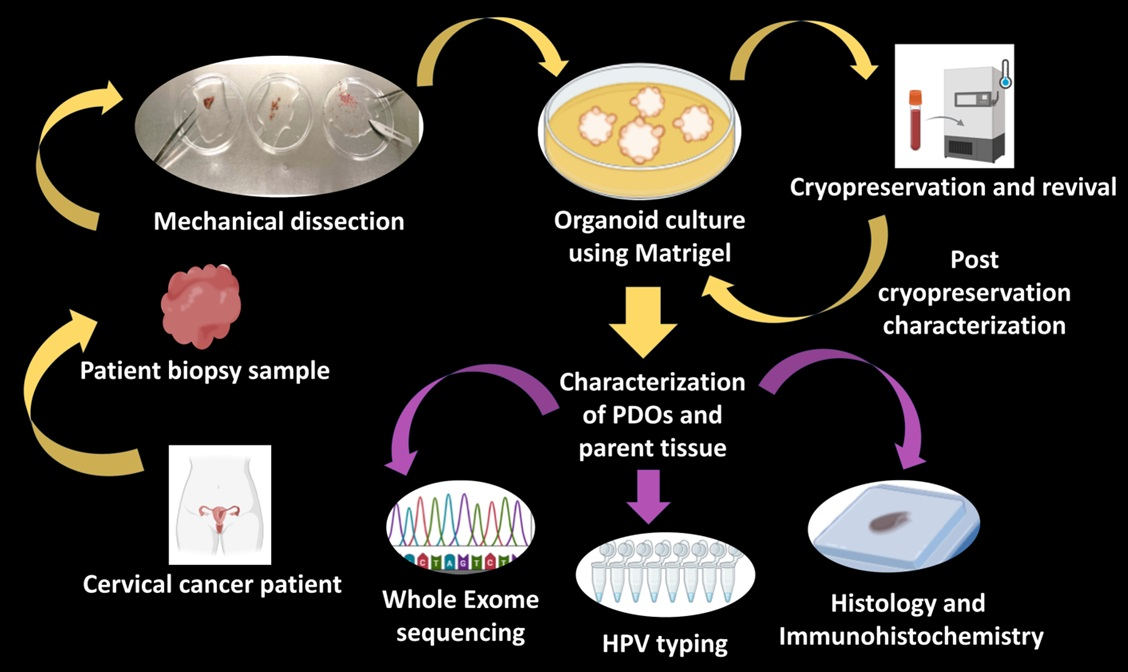

Organoid Culture Using Single-Layer Matrigel Method Recapitulates Cervical Cancer Subtypes In Vitro—A Tool for Precision Medicine Applications

 , , , and
Abstract
1. Introduction
2. Materials and Methods
2.1. Patient Sample Collection
2.2. Tissue Processing
2.3. Matrigel Dome Method
2.4. Matrigel Bilayer Organoid Culture (MBOC) Method
2.5. Matrigel Single-Layer Method
2.6. Immunofluorescence Staining
2.7. Scanning Electron Microscopy
2.8. Histology and Immunohistochemistry
2.9. Whole-Exome Sequencing
2.10. Variant Filtering and Annotation
2.11. CNV Analysis
2.12. HPV Genotyping
2.13. Passaging of Organoids
2.14. Cryopreservation and Revival of Organoids
2.15. Statistical Analysis
3. Results
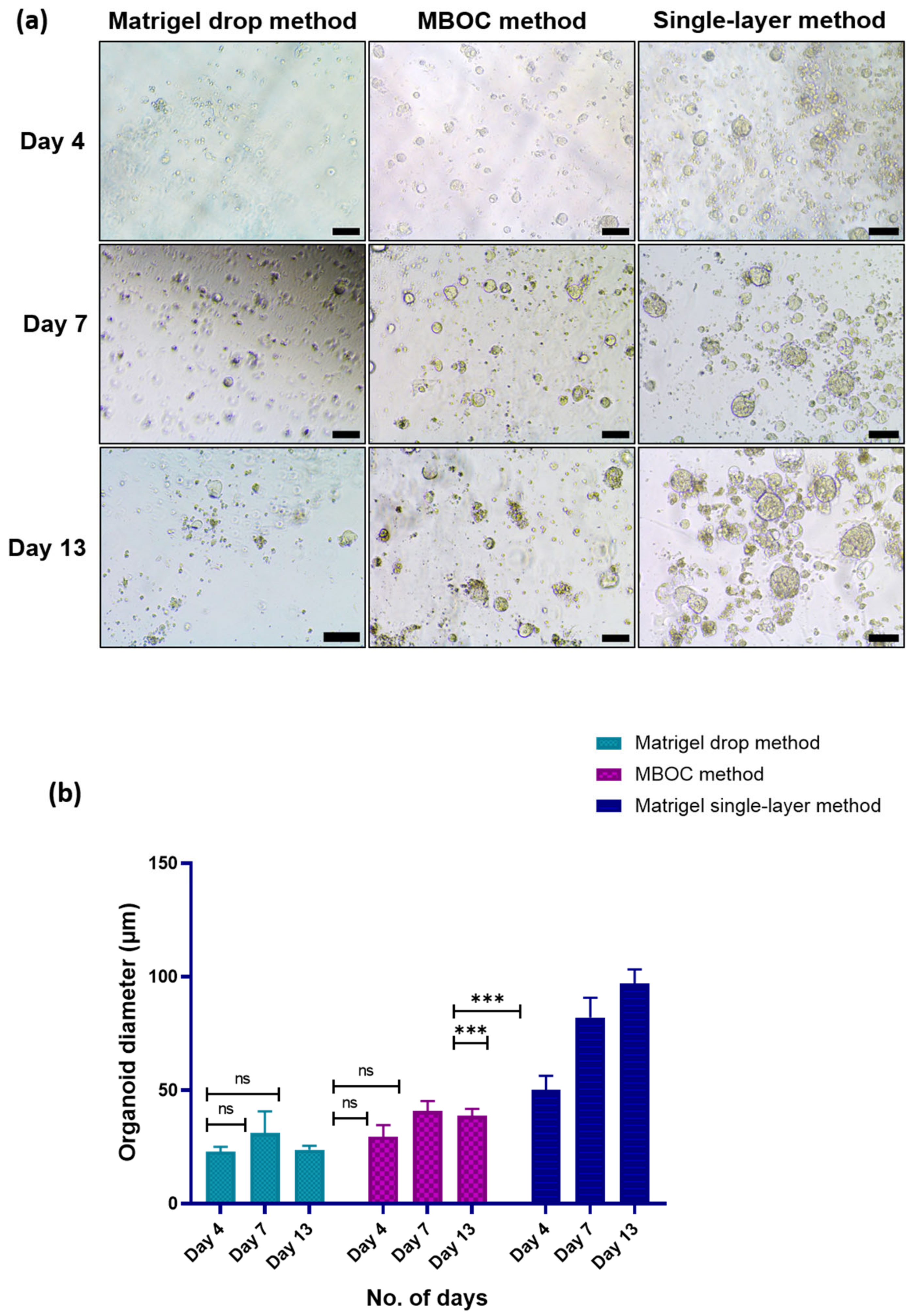
3.1. Optimization of Organoid Culture
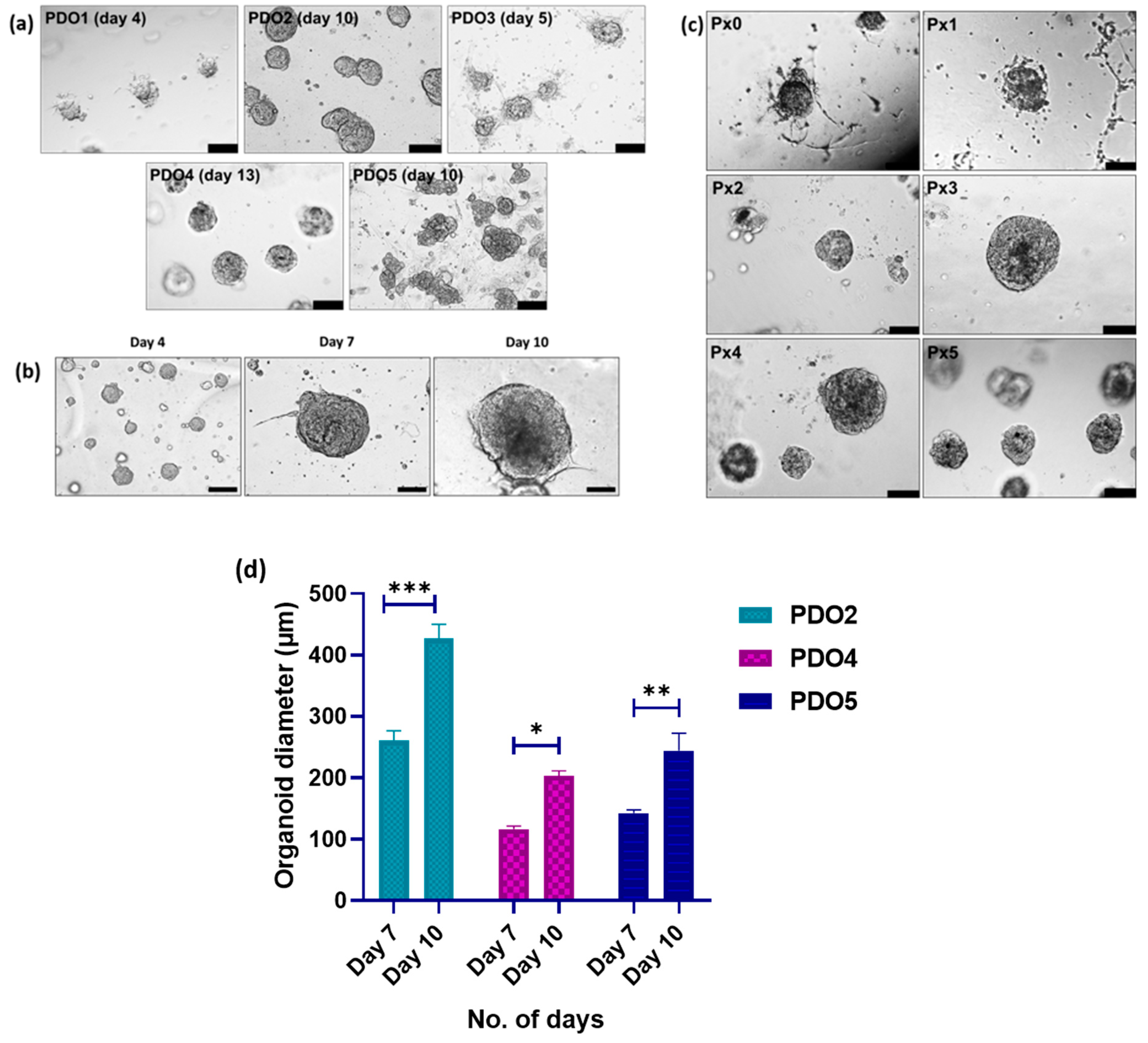
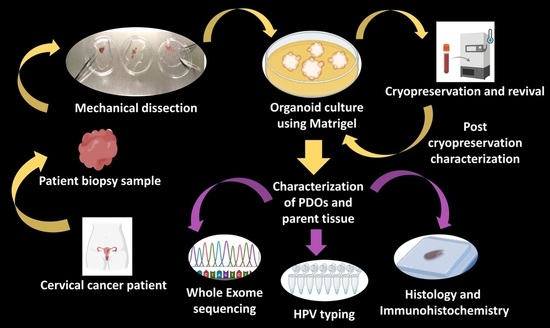
3.2. Establishment of Patient-Derived Organoids (PDOs) Using Matrigel Single-Layer Method
3.3. Expansion of PDOs
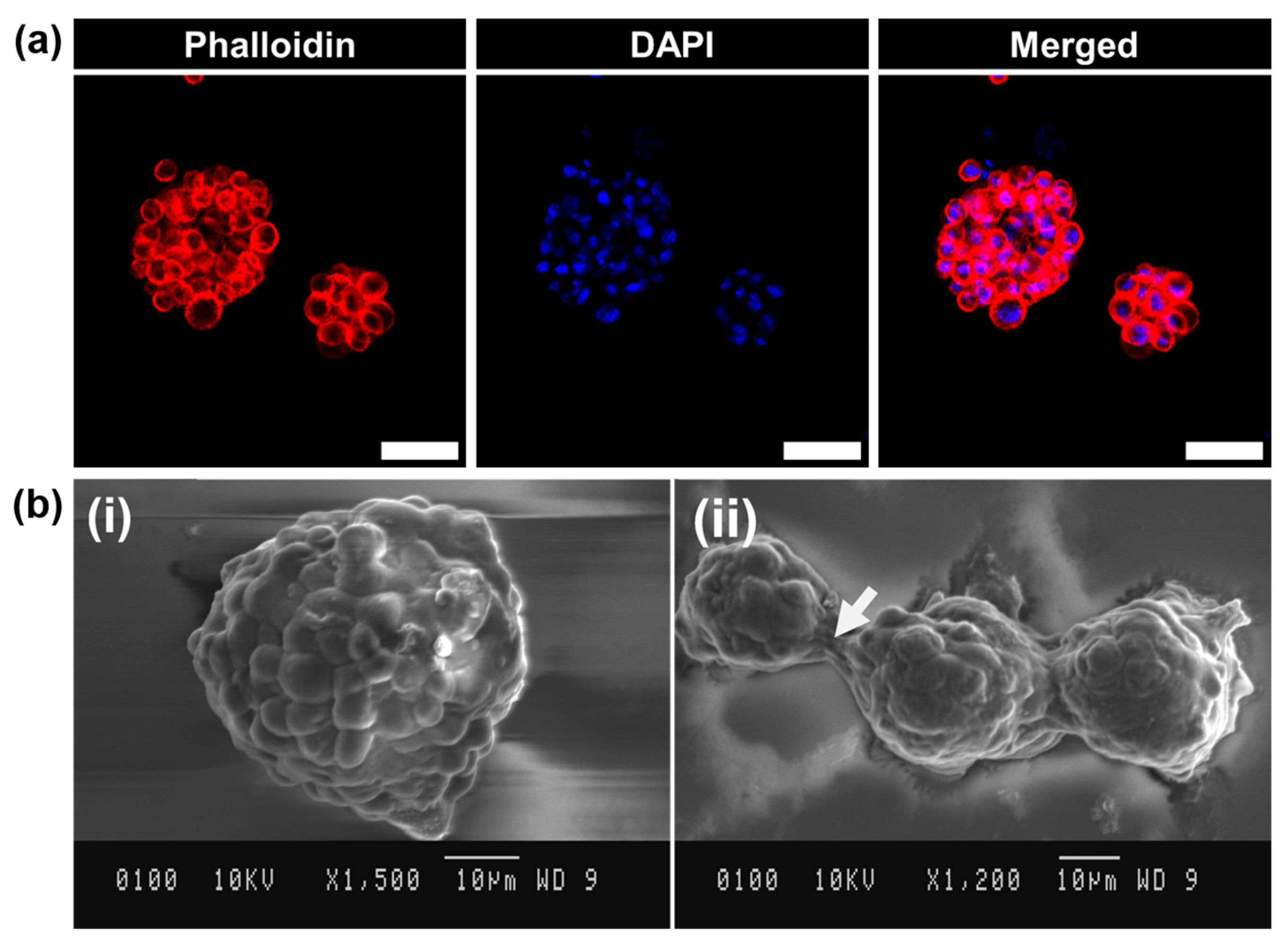
3.4. Visualization of Actin Cytoskeleton
3.5. Analysis of Ultrastructure by SEM
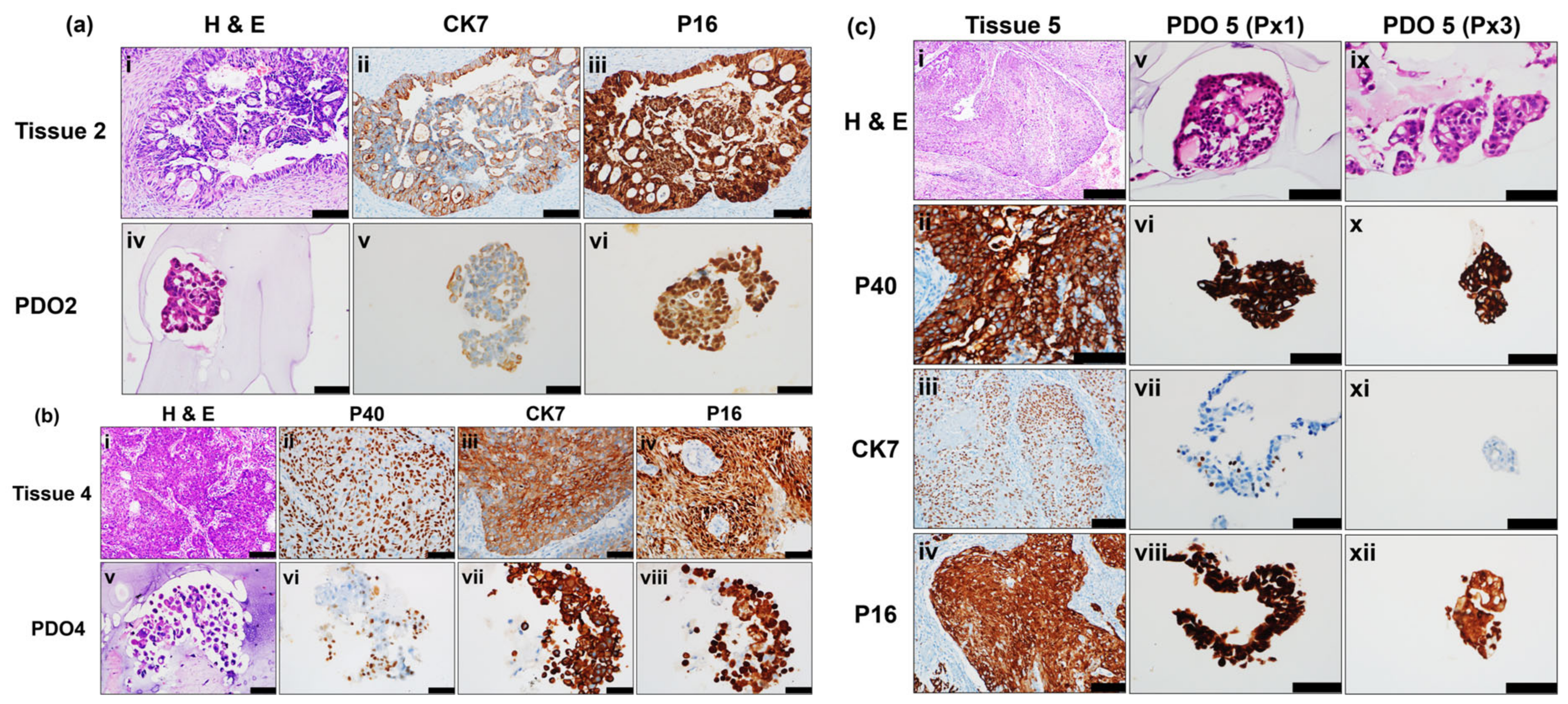
3.6. Histology and Immunohistochemical Analysis
3.7. Retention of HPV Genotype in Patient-Derived Organoids
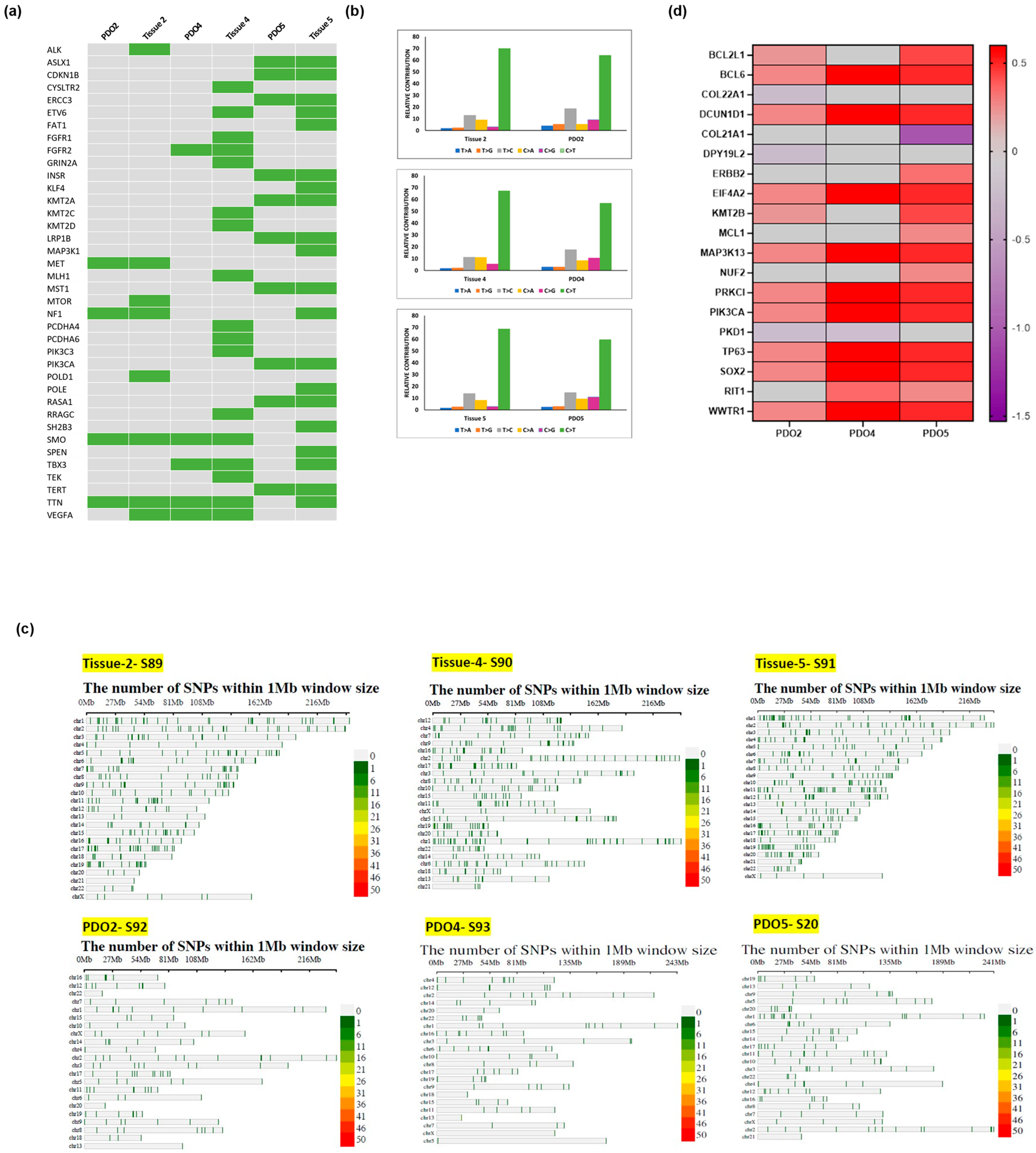
3.8. Whole-Exome Sequencing Data from Tissues and Corresponding Organoids
3.9. Common Variants Related to Cervical Cancer Development
3.10. Copy Number Variation (CNV) Calling
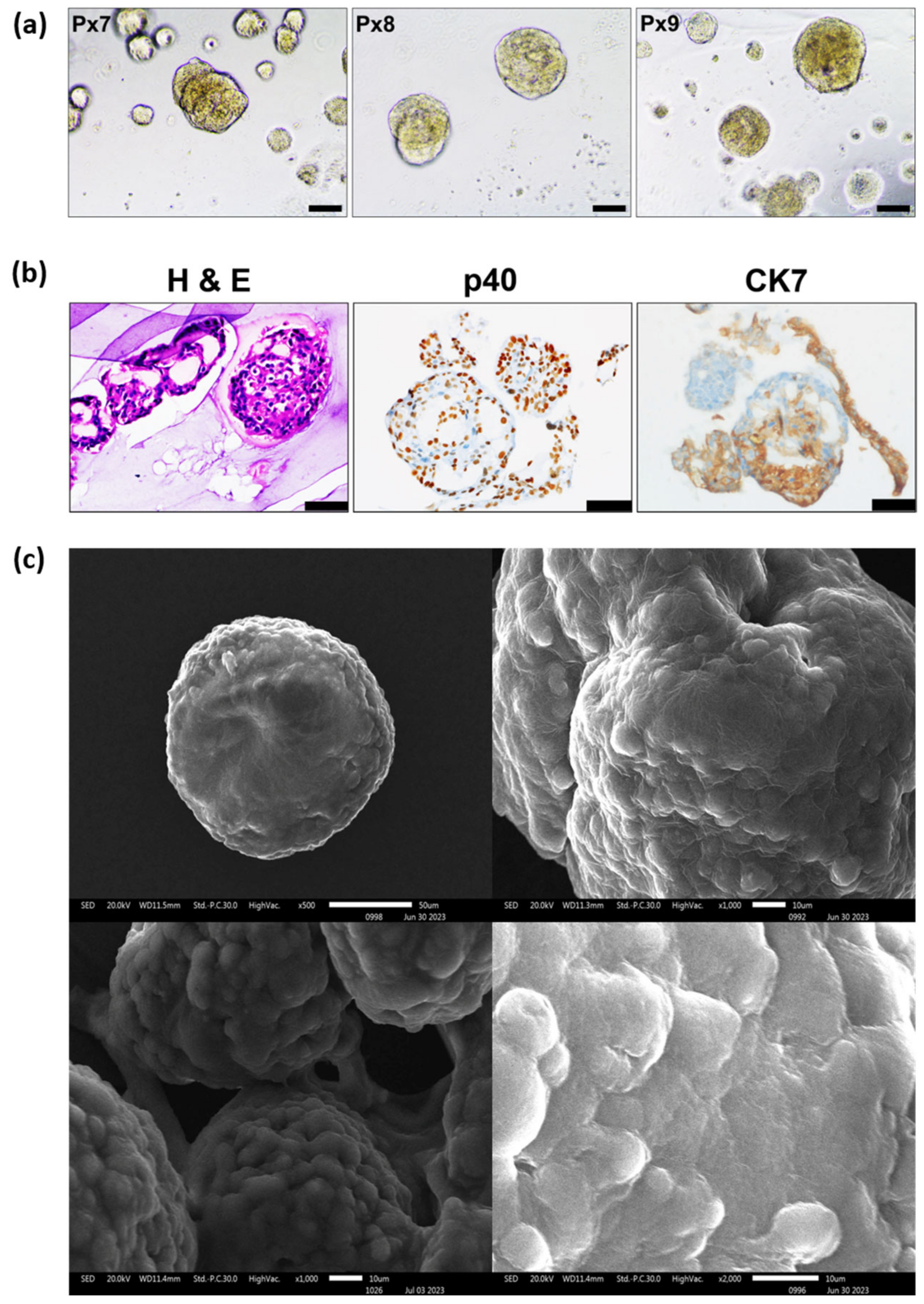
3.11. Characterization of PDOs After Cryopreservation and Revival
3.12. Histology
3.13. SEM
4. Discussion
5. Conclusions
Supplementary Materials
Author Contributions
Funding
Institutional Review Board Statement
Informed Consent Statement
Data Availability Statement
Acknowledgments
Conflicts of Interest
Abbreviations
| CK7 | Cytokeratin 7 |
| CNV | Copy Number variation |
| GFR Matrigel | Growth Factor Reduced Matrigel |
| HPV | Human Papillomavirus |
| MBOC | Matrigel Bilayer organoid culture |
| PDO | Patient-derived organoids |
| SEM | Scanning Electron Microscope |
| SNP | Single-Nucleotide Polymorphism |
References
- Fang, Z.; Li, P.; Du, F.; Shang, L.; Li, L. The role of organoids in cancer research. Exp. Hematol. Oncol. 2023, 12, 69. [Google Scholar] [CrossRef] [Scilit]
- Guillen, K.P.; Fujita, M.; Butterfield, A.J.; Scherer, S.D.; Bailey, M.H.; Chu, Z.; DeRose, Y.S.; Zhao, L.; Cortes-Sanchez, E.; Yang, C.-H.; et al. A human breast cancer-derived xenograft and organoid platform for drug discovery and precision oncology. Nat. Cancer 2022, 3, 232–250. [Google Scholar] [CrossRef] [Scilit]
- Campaner, E.; Zannini, A.; Santorsola, M.; Bonazza, D.; Bottin, C.; Cancila, V.; Tripodo, C.; Bortul, M.; Zanconati, F.; Schoeftner, S.; et al. Breast cancer organoids model patient-specific response to drug treatment. Cancers 2020, 12, 3869. [Google Scholar] [CrossRef] [Scilit]
- Tiriac, H.; Belleau, P.; Engle, D.D.; Plenker, D.; Deschenes, A.; Somerville, T.D.D.; Froeling, F.E.M.; Burkhart, R.A.; Denroche, R.E.; Jang, G.H.; et al. Organoid profiling identifies common responders to chemotherapy in pancreatic cancer. Cancer Discov. 2018, 8, 1112–1129. [Google Scholar] [CrossRef] [Scilit]
- Kim, M.; Mun, H.; Sung, C.O.; Cho, E.J.; Jeon, H.-J.; Chun, S.-M.; Jung, D.J.; Shin, T.H.; Jeong, G.S.; Kim, D.K.; et al. Patient-derived lung cancer organoids as in vitro cancer models for therapeutic screening. Nat. Commun. 2019, 10, 3991. [Google Scholar] [CrossRef] [Scilit]
- Ganesh, K.; Wu, C.; O’Rourke, K.P.; Szeglin, B.C.; Zheng, Y.; Sauvé, C.-E.G.; Adileh, M.; Wasserman, I.; Marco, M.R.; Kim, A.S.; et al. A rectal cancer organoid platform to study individual responses to chemoradiation. Nat. Med. 2019, 25, 1607–1614. [Google Scholar] [CrossRef] [Scilit]
- Yao, Y.; Xu, X.; Yang, L.; Zhu, J.; Wan, J.; Shen, L.; Xia, F.; Fu, G.; Deng, Y.; Pan, M.; et al. Patient-Derived Organoids Predict Chemoradiation Responses of Locally Advanced Rectal Cancer. Cell Stem Cell 2020, 26, 17–26.e6. [Google Scholar] [CrossRef] [Scilit]
- Kopper, O.; de Witte, C.J.; Lõhmussaar, K.; Valle-Inclan, J.E.; Hami, N.; Kester, L.; Balgobind, A.V.; Korving, J.; Proost, N.; Begthel, H.; et al. An organoid platform for ovarian cancer captures intra- and interpatient heterogeneity. Nat. Med. 2019, 25, 838–849. [Google Scholar] [CrossRef] [Scilit]
- Nanki, Y.; Chiyoda, T.; Hirasawa, A.; Ookubo, A.; Itoh, M.; Ueno, M.; Akahane, T.; Kameyama, K.; Yamagami, W.; Kataoka, F.; et al. Patient-derived ovarian cancer organoids capture the genomic profiles of primary tumours applicable for drug sensitivity and resistance testing. Sci. Rep. 2020, 10, 12581. [Google Scholar] [CrossRef] [Scilit]
- Sachs, N.; de Ligt, J.; Kopper, O.; Gogola, E.; Bounova, G.; Weeber, F.; Balgobind, A.V.; Wind, K.; Gracanin, A.; Begthel, H.; et al. A Living Biobank of Breast Cancer Organoids Captures Disease Heterogeneity. Cell 2018, 172, 373–386.e10. [Google Scholar] [CrossRef] [Scilit]
- Villa, P.L.; Jackson, R.; Eade, S.; Escott, N.; Zehbe, I. Isolation of Biopsy-Derived, Human Cervical Keratinocytes Propagated as Monolayer and Organoid Cultures. Sci. Rep. 2018, 8, 17869. [Google Scholar] [CrossRef] [Scilit]
- Maru, Y.; Tanaka, N.; Ebisawa, K.; Odaka, A.; Sugiyama, T.; Itami, M.; Hippo, Y. Establishment and characterization of patient-derived organoids from a young patient with cervical clear cell carcinoma. Cancer Sci. 2019, 110, 2992–3005. [Google Scholar] [CrossRef] [Scilit]
- Seol, H.S.; Oh, J.H.; Choi, E.; Kim, S.; Kim, H.; Nam, E.J. Preclinical investigation of patient-derived cervical cancer organoids for precision medicine. J. Gynecol. Oncol. 2023, 34, e35. [Google Scholar] [CrossRef] [Scilit]
- Lõhmussaar, K.; Oka, R.; Valle-Inclan, J.E.; Smits, M.H.; Wardak, H.; Korving, J.; Begthel, H.; Proost, N.; van de Ven, M.; Kranenburg, O.W.; et al. Patient-derived organoids model cervical tissue dynamics and viral oncogenesis in cervical cancer. Cell Stem Cell 2021, 28, 1380–1396.e6. [Google Scholar] [CrossRef] [Scilit]
- Drost, J.; Clevers, H. Organoids in cancer research. Nat. Rev. Cancer 2018, 18, 407–418. [Google Scholar] [CrossRef] [Scilit]
- Driehuis, E.; Kretzschmar, K.; Clevers, H. Establishment of patient-derived cancer organoids for drug-screening applications. Nat. Protoc. 2020, 15, 3380–3409, Correction in Nat. Protoc. 2021, 16, 5739. https://doi.org/10.1038/s41596-020-0379-4.. [Google Scholar] [CrossRef] [Scilit]
- Ma, Y.S.; Yang, X.L.; Xin, R.; Wu, T.-M.; Shi, Y.; Zhang, D.D.; Wang, H.-M.; Wang, P.-Y.; Liu, J.-B.; Fu, D. The power and the promise of organoid models for cancer precision medicine with next-generation functional diagnostics and pharmaceutical exploitation. Transl. Oncol. 2021, 14, 101126. [Google Scholar] [CrossRef] [Scilit]
- Maru, Y.; Tanaka, N.; Itami, M.; Hippo, Y. Efficient use of patient-derived organoids as a preclinical model for gynecologic tumors. Gynecol. Oncol. 2019, 154, 189–198. [Google Scholar] [CrossRef] [Scilit]
- Deynoux, M.; Sunter, N.; Ducrocq, E.; Dakik, H.; Guibon, R.; Burlaud-Gaillard, J.; Brisson, L.; Rouleux-Bonnin, F.; Le Nail, L.-R.; Hérault, O.; et al. A comparative study of the capacity of mesenchymal stromal cell lines to form spheroids. PLoS ONE 2020, 15, e0225485. [Google Scholar] [CrossRef] [Scilit]
- Ware, M.J.; Colbert, K.; Keshishian, V.; Ho, J.C.-S.; Corr, S.J.; Curley, S.A.; Godin, B. Generation of homogenous three-dimensional pancreatic cancer cell spheroids using an improved hanging drop technique. Tissue Eng. Part C Methods 2016, 22, 312–321. [Google Scholar] [CrossRef] [Scilit]
- Clevers, H. Modeling Development and Disease with Organoids. Cell 2016, 165, 1586–1597. [Google Scholar] [CrossRef] [Scilit]
- Zhou, Z.; Cong, L.; Cong, X. Patient-Derived Organoids in Precision Medicine: Drug Screening, Organoid-on-a-Chip and Living Organoid Biobank. Front. Oncol. 2021, 11, 762184. [Google Scholar] [CrossRef] [Scilit]
- Kondo, J.; Inoue, M. Application of cancer organoid model for drug screening and personalized therapy. Cells 2019, 8, 470. [Google Scholar] [CrossRef] [Scilit]
- Clinton, J.; McWilliams-Koeppen, P. Initiation, Expansion, and Cryopreservation of Human Primary Tissue-Derived Normal and Diseased Organoids in Embedded Three-Dimensional Culture. Curr. Protoc. Cell Biol. 2019, 82, e66. [Google Scholar] [CrossRef] [Scilit]
- Ross, A.D.B.; Perrone, F.; Elmentaite, R.; Teichmann, S.A.; Zilbauer, M. Obtaining purified human intestinal epithelia for single-cell analysis and organoid culture. STAR Protoc. 2021, 2, 100597. [Google Scholar] [CrossRef] [Scilit]
- Smyrek, I.; Mathew, B.; Fischer, S.C.; Lissek, S.M.; Becker, S.; Stelzer, E.H.K. E-cadherin, actin, microtubules and FAK dominate different spheroid formation phases and important elements of tissue integrity. Biol. Open 2019, 8, bio037051. [Google Scholar] [CrossRef] [Scilit]
- Tzanakakis, E.S.; Hansen, L.K.; Hu, W.S. The Role of Actin Filaments and Microtubules in Hepatocyte Spheroid Self-Assembly. Cell Motil. Cytoskelet. 2001, 48, 175–189. [Google Scholar] [CrossRef] [Scilit]
- Wulf, E.; Deboben, A.; Bautz, F.A.; Faulstich, H.; Wieland, T. Fluorescent phallotoxin, a tool for the visualization of cellular actin. Proc. Natl. Acad. Sci. USA 1979, 76, 4498–4502. [Google Scholar] [CrossRef] [Scilit]
- Lancaster, M.A.; Knoblich, J.A. Organogenesis in a dish: Modeling development and disease using organoid technologies. Science 2014, 345, 1247125. [Google Scholar] [CrossRef] [Scilit]
- Park, S.; Park, J.W.; Pitot, H.C.; Lambert, P.F. Loss of Dependence on Continued Expression of the Human Papillomavirus 16 E7 Oncogene in Cervical Cancers and Precancerous Lesions Arising in Fanconi Anemia Pathway-Deficient Mice. mBio 2016, 7, 3. [Google Scholar] [CrossRef] [Scilit]
- Xu, Y.; Luo, H.; Hu, Q.; Zhu, H. Identification of Potential Driver Genes Based on Multi-Genomic Data in Cervical Cancer. Front Genet. 2021, 12, 598304. [Google Scholar] [CrossRef] [Scilit]
- Zhang, Y. The effects of PIK3CA mutations on cervical cancer. E3S Web Conf. 2024, 553, 05025. [Google Scholar] [CrossRef] [Scilit]
- Chaudary, N.; Pm, H.D.; Faw, M.M.; Hrp, C.B. Hedgehog pathway signaling in cervical carcinoma and outcome after chemoradiation. Cancer 2012, 118, 3105–3115. [Google Scholar] [CrossRef] [Scilit]
- Sharma, A.; De, R.; Javed, S.; Srinivasan, R.; Pal, A.; Bhattacharyya, S. Sonic hedgehog pathway activation regulates cervical cancer stem cell characteristics during epithelial to mesenchymal transition. J. Cell. Physiol. 2019, 234, 15726–15741. [Google Scholar] [CrossRef] [Scilit]
- Sharma, A.; Kaur, H.; De, R.; Srinivasan, R.; Pal, A.; Bhattacharyya, S. Knockdown of E-Cadherin induces cancer stem-cell-like phenotype and drug resistance in cervical cancer cells. Biochem. Cell Biol. 2021, 99, 587–595. [Google Scholar] [CrossRef] [Scilit]
- Liu, C.; Wang, R. The Roles of Hedgehog Signaling Pathway in Radioresistance of Cervical Cancer. Dose Response 2019, 17, 1559325819885293. [Google Scholar] [CrossRef] [Scilit]
- Boretto, M.; Maenhoudt, N.; Luo, X.; Hennes, A.; Boeckx, B.; Bui, B.; Heremans, R.; Perneel, L.; Kobayashi, H.; Van Zundert, I.; et al. Patient-derived organoids from endometrial disease capture clinical heterogeneity and are amenable to drug screening. Nat. Cell Biol. 2019, 21, 1041–1051. [Google Scholar] [CrossRef] [Scilit]
- Chiaradia, I.; Imaz-Rosshandler, I.; Nilges, B.S.; Boulanger, J.; Pellegrini, L.; Das, R.; Kashikar, N.D.; Lancaster, M.A. Tissue morphology influences the temporal program of human brain organoid development. Cell Stem Cell 2023, 30, 1351–1367.e10. [Google Scholar] [CrossRef] [Scilit]
- Li, Y.; Muffat, J.; Omer, A.; Bosch, I.; Lancaster, M.A.; Sur, M.; Gehrke, L.; Knoblich, J.A.; Jaenisch, R. Induction of Expansion and Folding in Human Cerebral Organoids. Cell Stem Cell 2017, 20, 385–396.e3. [Google Scholar] [CrossRef] [Scilit]



| Patient ID | Age | Cervical Cancer Subtype | Sampling Event | Tumor Grade (Code) | Tumor FIGO Stage | Treatment Status |
|---|---|---|---|---|---|---|
| P1 | 43 | Squamous cell carcinoma, NOS | Biopsy | - | IIB | Treatment naïve |
| P2 | 50 | Adenocarcinoma in situ | Biopsy | - | IIB | Treatment naïve |
| P3 | 60 | Moderately differentiated squamous cell carcinoma | Biopsy | 2 | IIB | Treatment naïve |
| P4 | 49 | Moderately differentiated squamous cell carcinoma | Biopsy | 2 | IIIC | Treatment naïve |
| P5 | 42 | Moderately differentiated squamous cell carcinoma | Biopsy | 2 | IIIC | Treatment naïve |
| Patient Id | PDO Id | Age | Cervical Cancer Subtype | Expansion | HPV Typing | Histological Characterization | Whole-Exome Sequencing | Cryopreservation |
|---|---|---|---|---|---|---|---|---|
| P1 | PDO1 | 43 | Squamous Cell Carcinoma | − | − | + | − | − |
| P2 | PDO2 | 50 | Adenocarcinoma | + | + | + | + | − |
| P3 | PDO3 | 60 | Squamous Cell Carcinoma | − | − | − | − | − |
| P4 | PDO4 | 49 | Squamous Cell Carcinoma | + | + | + | + | + |
| P5 | PDO5 | 42 | Squamous Cell Carcinoma | + | + | + | + | + |
Disclaimer/Publisher’s Note: The statements, opinions and data contained in all publications are solely those of the individual author(s) and contributor(s) and not of MDPI and/or the editor(s). MDPI and/or the editor(s) disclaim responsibility for any injury to people or property resulting from any ideas, methods, instructions or products referred to in the content. |
© 2026 by the authors. Licensee MDPI, Basel, Switzerland. This article is an open access article distributed under the terms and conditions of the Creative Commons Attribution (CC BY) license.
Share and Cite
Singla, S.; Bagga, R.; Srinivasan, R.; Bhatia, P.; Bhattacharyya, S. Organoid Culture Using Single-Layer Matrigel Method Recapitulates Cervical Cancer Subtypes In Vitro—A Tool for Precision Medicine Applications. Organoids 2026, 5, 31. https://doi.org/10.3390/organoids5030031
Singla S, Bagga R, Srinivasan R, Bhatia P, Bhattacharyya S. Organoid Culture Using Single-Layer Matrigel Method Recapitulates Cervical Cancer Subtypes In Vitro—A Tool for Precision Medicine Applications. Organoids. 2026; 5(3):31. https://doi.org/10.3390/organoids5030031
Chicago/Turabian StyleSingla, Surbhi, Rashmi Bagga, Radhika Srinivasan, Prateek Bhatia, and Shalmoli Bhattacharyya. 2026. "Organoid Culture Using Single-Layer Matrigel Method Recapitulates Cervical Cancer Subtypes In Vitro—A Tool for Precision Medicine Applications" Organoids 5, no. 3: 31. https://doi.org/10.3390/organoids5030031
APA StyleSingla, S., Bagga, R., Srinivasan, R., Bhatia, P., & Bhattacharyya, S. (2026). Organoid Culture Using Single-Layer Matrigel Method Recapitulates Cervical Cancer Subtypes In Vitro—A Tool for Precision Medicine Applications. Organoids, 5(3), 31. https://doi.org/10.3390/organoids5030031