
Understanding Alzheimer’s Disease Through Neurodevelopment: Insights from Human Cerebral Organoids

 , , , , , , and
Abstract
1. Introduction
2. Genetics of Familial (Early Onset) Alzheimer’s Disease
2.1. Amyloid Precursor Protein (APP)
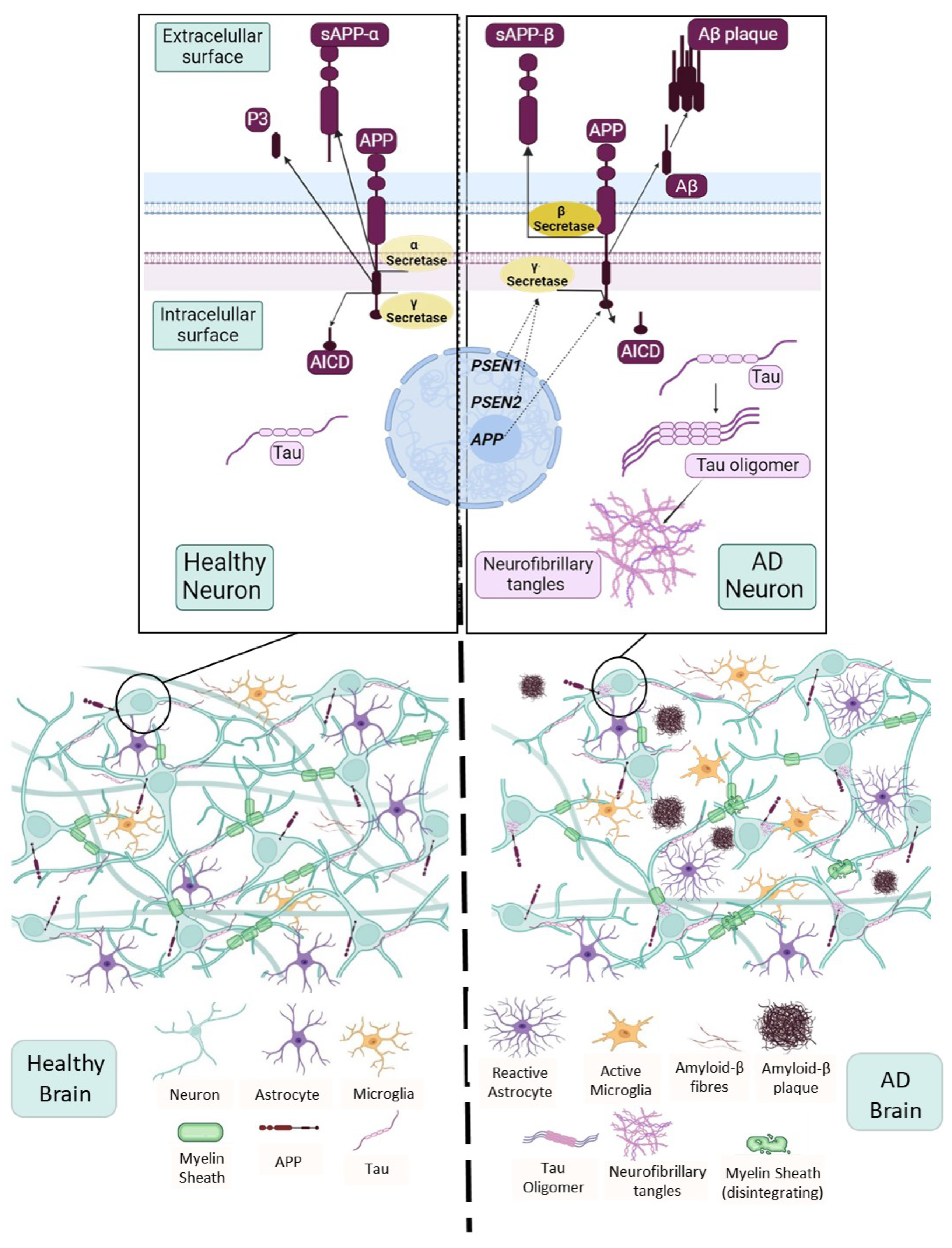
2.1.1. Amyloid Precursor Protein (APP) Pathogenic Variants and Processing in Alzheimer’s Disease
2.1.2. Importance of APP for Neural Development and Function
2.2. Presenilin 1 (PSEN1) and Presenilin 2 (PSEN2) Function and Pathogenic Variants in Alzheimer’s Disease
Importance of PSEN1/2 for Neural Development and Function
3. Human Cerebral Organoids
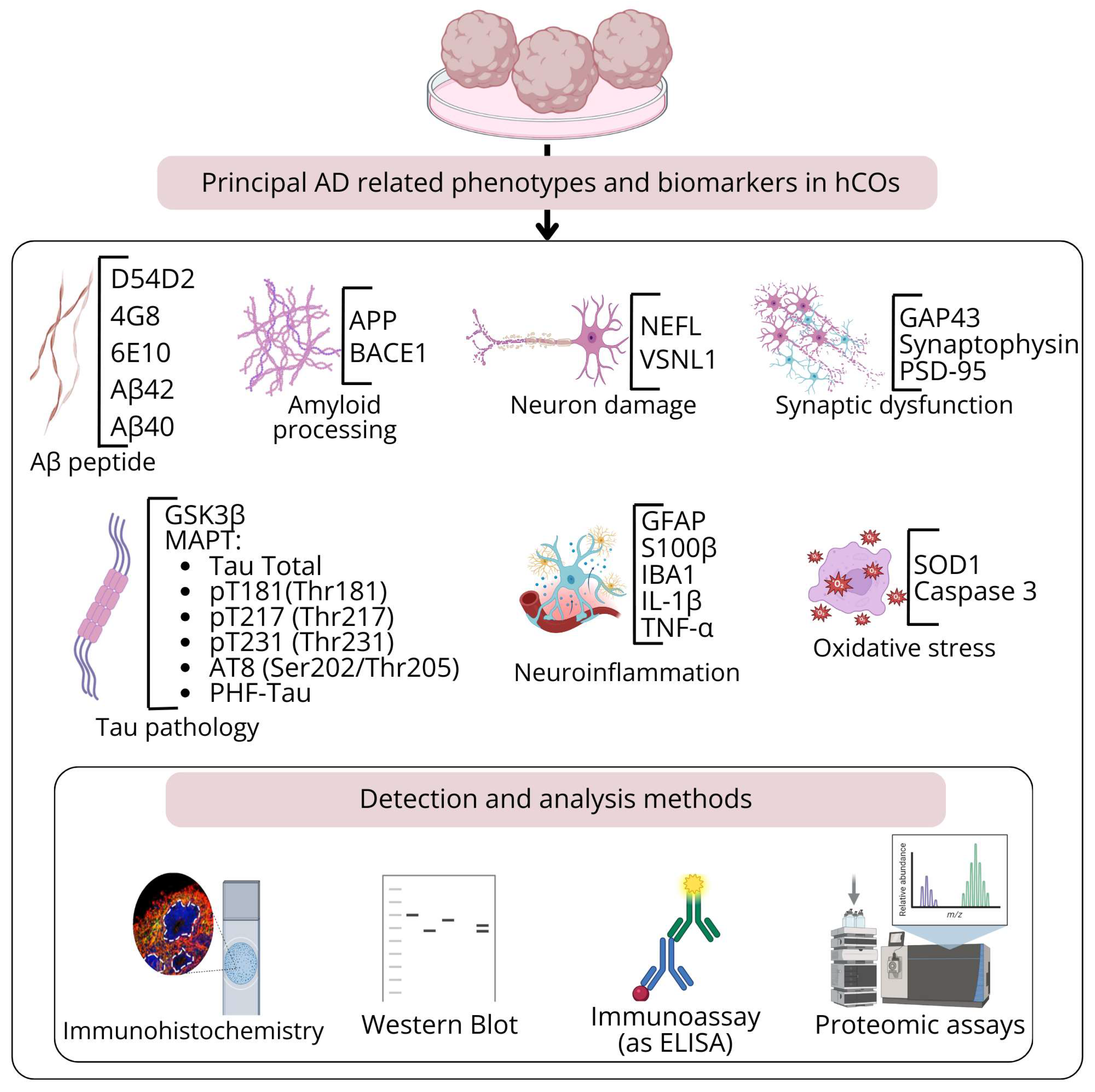
4. Human Cerebral Organoids (hCOs) as a Model to Study Alzheimer’s Disease
5. Modeling the Developmental Origin and Molecular Mechanisms of Alzheimer’s Disease Using hCOs
6. Challenges for Future Research with hCOs in the Study of Alzheimer’s Disease
Author Contributions
Funding
Institutional Review Board Statement
Informed Consent Statement
Data Availability Statement
Conflicts of Interest
Abbreviations
| AD | Alzheimer’s disease |
| Aβ | amyloid-β |
| NFTs | neurofibrillary tangles |
| EOAD | early-onset AD |
| LOAD | late-onset AD |
| fAD | familial AD |
| sAD | sporadic AD |
| ARIA | amyloid-related imaging abnormalities |
| pGlu3-Aβ | truncated pyroglutamate form of Aβ at position 3 |
| 2D | two-dimensional |
| iPSCs | induced pluripotent stem cells |
| hCOs | human cerebral organoids |
| APP | amyloid precursor protein |
| PSEN1 | presenilin 1 |
| PSEN2 | presenilin 2 |
| CNS | central nervous system |
| 3D | three-dimensional |
| PSCs | pluripotent stem cells |
| ESCs | embryonic stem cells |
| AdSCs | adult tissue stem cells |
| EBs | embryoid bodies |
| p-Tau | hyperphosphorylated Tau |
| ER | endoplasmic reticulum |
| NF-L | neurofilament light chain |
| CSF | cerebrospinal fluid |
| BBB | blood–brain barrier |
References
- Amemori, T.; Jendelova, P.; Ruzicka, J.; Urdzikova, L.M.; Sykova, E. Alzheimer’s Disease: Mechanism and Approach to Cell Therapy. Int. J. Mol. Sci. 2015, 16, 26417–26451. [Google Scholar] [CrossRef] [PubMed]
- Soria Lopez, J.A.; González, H.M.; Léger, G.C. Alzheimer’s Disease. In Handbook of Clinical Neurology; DeKosky, S., Asthana, S., Eds.; Elsevier B.V.: Amsterdam, The Netherlands, 2019; Volume 167, pp. 231–255. [Google Scholar]
- Price, D.L.; Sisodia, S.S.; Gandy, S.E. Amyloid Beta Amyloidosis in Alzheimer’s Disease. Curr. Opin. Neurol. 1995, 8, 268–274. [Google Scholar] [CrossRef] [PubMed]
- Blazquez-Llorca, L.; Garcia-Marin, V.; Merino-Serrais, P.; Ávila, J.; DeFelipe, J. Abnormal Tau Phosphorylation in the Thorny Excrescences of CA3 Hippocampal Neurons in Patients with Alzheimer’s Disease. J. Alzheimer’s Dis. 2011, 26, 683–698. [Google Scholar] [CrossRef] [PubMed]
- Spires, T.L.; Hyman, B.T. Transgenic Models of Alzheimer’s Disease: Learning from Animals. NeuroRx 2005, 2, 423–437. [Google Scholar] [CrossRef]
- Van Cauwenberghe, C.; Van Broeckhoven, C.; Sleegers, K. The Genetic Landscape of Alzheimer Disease: Clinical Implications and Perspectives. Genet. Med. 2016, 18, 421–430. [Google Scholar] [CrossRef]
- Lin, Y.T.; Seo, J.; Gao, F.; Feldman, H.M.; Wen, H.L.; Penney, J.; Camandola, S.; Kim, R.V.; Reyna, S.M.; Shirakawa, S.R.; et al. APOE4 Causes Widespread Molecular and Cellular Alterations Associated with Alzheimer’s Disease Phenotypes in Human iPSC-Derived Brain Cell Types. Neuron 2018, 98, 1141–1154.e7. [Google Scholar] [CrossRef]
- Bekris, L.M.; Yu, C.E.; Bird, T.D.; Tsuang, D.W. Genetics of Alzheimer Disease. J. Geriatr. Psychiatry Neurol. 2010, 23, 213–227. [Google Scholar] [CrossRef]
- Busche, M.A.; Hyman, B.T. Synergy between Amyloid-β and Tau in Alzheimer’s Disease. Nat. Neurosci. 2020, 23, 1183–1193. [Google Scholar] [CrossRef]
- Zhang, H.; Wei, W.; Zhao, M.; Ma, L.; Jiang, X.; Pei, H.; Cao, Y.; Li, H. Interaction between Aβ and Tau in the Pathogenesis of Alzheimer’s Disease. Int. J. Biol. Sci. 2021, 17, 2181–2192. [Google Scholar] [CrossRef]
- McShane, R.; Westby, M.J.; Roberts, E.; Minakaran, N.; Schneider, L.; Farrimond, L.E.; Maayan, N.; Ware, J.; Debarros, J. Memantine for Dementia. Cochrane Database Syst. Rev. 2019. [Google Scholar] [CrossRef]
- Chowdhury, S.; Chowdhury, N.S. Novel Anti-Amyloid-Beta (Aβ) Monoclonal Antibody Lecanemab for Alzheimer’s Disease: A Systematic Review. Int. J. Immunopathol. Pharmacol. 2023, 37, 3946320231209839. [Google Scholar] [CrossRef] [PubMed]
- van Dyck, C.H.; Swanson, C.J.; Aisen, P.; Bateman, R.J.; Chen, C.; Gee, M.; Kanekiyo, M.; Li, D.; Reyderman, L.; Cohen, S.; et al. Lecanemab in Early Alzheimer’s Disease. N. Engl. J. Med. 2023, 388, 9–21. [Google Scholar] [CrossRef]
- Villain, N.; Planche, V.; Lilamand, M.; Cordonnier, C.; Soto-Martin, M.; Mollion, H.; Bombois, S.; Delrieu, J. Lecanemab for Early Alzheimer’s Disease: Appropriate Use Recommendations from the French Federation of Memory Clinics. J. Prev. Alzheimers Dis. 2025, 12, 100094. [Google Scholar] [CrossRef]
- Fertan, E.; Lam, J.Y.L.; Albertini, G.; Dewilde, M.; Wu, Y.; Akingbade, O.E.S.; Böken, D.; English, E.A.; De Strooper, B.; Klenerman, D. Lecanemab Preferentially Binds to Smaller Aggregates Present at Early Alzheimer’s Disease. Alzheimer’s Dement. 2025, 21, e70086. [Google Scholar] [CrossRef]
- Smith, E.E.; Phillips, N.A.; Feldman, H.H.; Borrie, M.; Ganesh, A.; Henri-Bhargava, A.; Desmarais, P.; Frank, A.; Badhwar, A.P.; Barlow, L.; et al. Use of Lecanemab and Donanemab in the Canadian Healthcare System: Evidence, Challenges, and Areas for Future Research. J. Prev. Alzheimers Dis. 2025, 12, 100068. [Google Scholar] [CrossRef]
- Benito-Kwiecinski, S.; Giandomenico, S.L.; Sutcliffe, M.; Riis, E.S.; Freire-Pritchett, P.; Kelava, I.; Wunderlich, S.; Martin, U.; Wray, G.A.; McDole, K.; et al. An Early Cell Shape Transition Drives Evolutionary Expansion of the Human Forebrain. Cell 2021, 184, 2084–2102.e19. [Google Scholar] [CrossRef]
- Drummond, E.; Wisniewski, T. Alzheimer’s Disease: Experimental Models and Reality. Acta Neuropathol. 2017, 133, 155–175. [Google Scholar] [CrossRef]
- Kumar, A.; Singh, A.; Ekavali. A Review on Alzheimer’s Disease Pathophysiology and Its Management: An Update. Pharmacol. Rep. 2015, 67, 195–203. [Google Scholar] [CrossRef]
- Pistollato, F.; Ohayon, E.L.; Lam, A.; Langley, G.R.; Novak, T.J.; Pamies, D.; Perry, G.; Trushina, E.; Williams, R.S.B.; Roher, A.E.; et al. Alzheimer Disease Research in the 21st Century: Past and Current Failures, New Perspectives and Funding Priorities. Oncotarget 2016, 7, 38999–39016. [Google Scholar] [CrossRef]
- Qin, T.; Prins, S.; Groeneveld, G.J.; Van Westen, G.; de Vries, H.E.; Wong, Y.C.; Bischoff, L.J.M.; de Lange, E.C.M. Utility of Animal Models to Understand Human Alzheimer’s Disease, Using the Mastermind Research Approach to Avoid Unnecessary Further Sacrifices of Animals. Int. J. Mol. Sci. 2020, 21, 3158. [Google Scholar] [CrossRef] [PubMed]
- Israel, M.A.; Yuan, S.H.; Bardy, C.; Reyna, S.M.; Mu, Y.; Herrera, C.; Hefferan, M.P.; Van Gorp, S.; Nazor, K.L.; Boscolo, F.S.; et al. Probing Sporadic and Familial Alzheimer’s Disease Using Induced Pluripotent Stem Cells. Nature 2012, 482, 216–220. [Google Scholar] [CrossRef]
- Nascimento, J.M.; Saia-Cereda, V.M.; Sartore, R.C.; da Costa, R.M.; Schitine, C.S.; Freitas, H.R.; Murgu, M.; de Melo Reis, R.A.; Rehen, S.K.; Martins-de-Souza, D. Human Cerebral Organoids and Fetal Brain Tissue Share Proteomic Similarities. Front. Cell Dev. Biol. 2019, 7, 303. [Google Scholar] [CrossRef]
- Penney, J.; Ralvenius, W.T.; Tsai, L.H. Modeling Alzheimer’s Disease with iPSC-Derived Brain Cells. Mol. Psychiatry 2020, 25, 148–167. [Google Scholar] [CrossRef]
- Si, Z.; Wang, X. Stem Cell Therapies in Alzheimer’s Disease: Applications for Disease Modeling. J. Pharmacol. Exp. Ther. 2021, 377, 207–217. [Google Scholar] [CrossRef]
- Tan, H.Y.; Cho, H.; Lee, L.P. Human Mini-Brain Models. Nat. Biomed. Eng. 2021, 5, 11–25. [Google Scholar] [CrossRef]
- Gralle, M.; Ferreira, S.T. Structure and Functions of the Human Amyloid Precursor Protein: The Whole Is More than the Sum of Its Parts. Prog. Neurobiol. 2007, 82, 11–32. [Google Scholar] [CrossRef]
- Liu, T.; Zhang, T.; Nicolas, M.; Boussicault, L.; Rice, H.; Soldano, A.; Claeys, A.; Petrova, I.; Fradkin, L.; De Strooper, B.; et al. The Amyloid Precursor Protein Is a Conserved Wnt Receptor. eLife 2021, 10, e69199. [Google Scholar] [CrossRef] [PubMed]
- Lourenço, F.C.; Galvan, V.; Fombonne, J.; Corset, V.; Llambi, F.; Muller, U.; Bredesen, D.E.; Mehlen, P. Netrin-1 Interacts with Amyloid Precursor Protein and Regulates Amyloid-Beta Production. Cell Death Differ. 2009, 16, 655–663. [Google Scholar] [CrossRef] [PubMed]
- Ho, A.; Südhof, T.C. Binding of F-Spondin to Amyloid-Beta Precursor Protein: A Candidate Amyloid-Beta Precursor Protein Ligand That Modulates Amyloid-Beta Precursor Protein Cleavage. Proc. Natl. Acad. Sci. USA 2004, 101, 2548–2553. [Google Scholar] [CrossRef] [PubMed]
- Matsuda, S.; Matsuda, Y.; D’Adamio, L. BRI3 Inhibits Amyloid Precursor Protein Processing in a Mechanistically Distinct Manner from Its Homologue Dementia Gene BRI2. J. Biol. Chem. 2009, 284, 15815–15825. [Google Scholar] [CrossRef]
- Gralle, M.; Botelho, M.G.; Wouters, F.S. Neuroprotective Secreted Amyloid Precursor Protein Acts by Disrupting Amyloid Precursor Protein Dimers. J. Biol. Chem. 2009, 284, 15016–15025. [Google Scholar] [CrossRef] [PubMed]
- Shaked, G.M.; Kummer, M.P.; Lu, D.C.; Galvan, V.; Bredesen, D.E.; Koo, E.H. Abeta Induces Cell Death by Direct Interaction with Its Cognate Extracellular Domain on APP (APP 597-624). FASEB J. 2006, 20, 1254–1256. [Google Scholar] [CrossRef]
- Hitschler, L.; Lang, T. The Transmembrane Domain of the Amyloid Precursor Protein Is Required for Antiamyloidogenic Processing by Alpha-Secretase ADAM10. J. Biol. Chem. 2022, 298, 101911. [Google Scholar] [CrossRef]
- Barbagallo, A.P.; Weldon, R.; Tamayev, R.; Zhou, D.; Giliberto, L.; Foreman, O.; D’Adamio, L. Tyr(682) in the Intracellular Domain of APP Regulates Amyloidogenic APP Processing In Vivo. PLoS ONE 2010, 5, e15503. [Google Scholar] [CrossRef]
- Coronel, R.; Palmer, C.; Bernabeu-Zornoza, A.; Monteagudo, M.; Rosca, A.; Zambrano, A.; Liste, I. Physiological Effects of Amyloid Precursor Protein and Its Derivatives on Neural Stem Cell Biology and Signaling Pathways Involved. Neural Regen. Res. 2019, 14, 1661–1671. [Google Scholar] [CrossRef] [PubMed]
- Bernabeu-Zornoza, A.; Coronel, R.; Palmer, C.; López-Alonso, V.; Liste, I. Oligomeric and Fibrillar Species of Aβ42 Diversely Affect Human Neural Stem Cells. Int. J. Mol. Sci. 2021, 22, 9537. [Google Scholar] [CrossRef]
- Bernabeu-Zornoza, A.; Coronel, R.; Palmer, C.; Martín, A.; López-Alonso, V.; Liste, I. Neurogenesis Is Increased in Human Neural Stem Cells by Aβ40 Peptide. Int. J. Mol. Sci. 2022, 23, 5820. [Google Scholar] [CrossRef]
- Seto, M.; Weiner, R.L.; Dumitrescu, L.; Hohman, T.J. Protective Genes and Pathways in Alzheimer’s Disease: Moving towards Precision Interventions. Mol. Neurodegener. 2021, 16, 29. [Google Scholar] [CrossRef]
- Frederiksen, H.R.; Holst, B.; Ramakrishna, S.; Muddashetty, R.; Schmid, B.; Freude, K. Generation of Two iPSC Lines with Either a Heterozygous V717I or a Heterozygous KM670/671NL Mutation in the APP Gene. Stem Cell Res. 2019, 34, 101368. [Google Scholar] [CrossRef] [PubMed]
- Muratore, C.R.; Rice, H.C.; Srikanth, P.; Callahan, D.G.; Shin, T.; Benjamin, L.N.P.; Walsh, D.M.; Selkoe, D.J.; Young-Pearse, T.L. The Familial Alzheimer’s Disease APPV717I Mutation Alters APP Processing and Tau Expression in iPSC-Derived Neurons. Hum. Mol. Genet. 2014, 23, 3523–3536. [Google Scholar] [CrossRef] [PubMed]
- Haass, C.; Lemere, C.A.; Capell, A.; Citron, M.; Seubert, P.; Schenk, D.; Lannfelt, L.; Selkoe, D.J. The Swedish Mutation Causes Early-Onset Alzheimer’s Disease by Beta-Secretase Cleavage within the Secretory Pathway. Nat. Med. 1995, 1, 1291–1296. [Google Scholar] [CrossRef]
- Nilsberth, C.; Westlind-Danielsson, A.; Eckman, C.B.; Condron, M.M.; Axelman, K.; Forsell, C.; Stenh, C.; Luthman, J.; Teplow, D.B.; Younkin, S.G.; et al. The “Arctic” APP Mutation (E693G) Causes Alzheimer’s Disease by Enhanced Aβ Protofibril Formation. Nat. Neurosci. 2001, 4, 887–893. [Google Scholar] [CrossRef]
- De Jonghe, C.; Zehr, C.; Yager, D.; Prada, C.M.; Younkin, S.; Hendriks, L.; Van Broeckhoven, C.; Eckman, C.B. Flemish and Dutch Mutations in Amyloid Beta Precursor Protein Have Different Effects on Amyloid Beta Secretion. Neurobiol. Dis. 1998, 5, 281–286. [Google Scholar] [CrossRef] [PubMed]
- Tomiyama, T.; Shimada, H. APP Osaka Mutation in Familial Alzheimer’s Disease-Its Discovery, Phenotypes, and Mechanism of Recessive Inheritance. Int. J. Mol. Sci. 2020, 21, 1413. [Google Scholar] [CrossRef]
- Jonsson, T.; Atwal, J.K.; Steinberg, S.; Snaedal, J.; Jonsson, P.V.; Bjornsson, S.; Stefansson, H.; Sulem, P.; Gudbjartsson, D.; Maloney, J.; et al. A Mutation in APP Protects against Alzheimer’s Disease and Age-Related Cognitive Decline. Nature 2012, 488, 96–99. [Google Scholar] [CrossRef] [PubMed]
- Small, D.H.; Nurcombe, V.; Reed, G.; Clarris, H.; Moir, R.; Beyreuther, K.; Masters, C.L. A Heparin-Binding Domain in the Amyloid Protein Precursor of Alzheimer’s Disease Is Involved in the Regulation of Neurite Outgrowth. J. Neurosci. 1994, 14, 2117–2127. [Google Scholar] [CrossRef] [PubMed]
- Moya, K.L.; Benowitz, L.I.; Schneider, G.E.; Allinquant, B. The Amyloid Precursor Protein Is Developmentally Regulated and Correlated with Synaptogenesis. Dev. Biol. 1994, 161, 597–603. [Google Scholar] [CrossRef]
- Araki, W.; Kitaguchi, N.; Tokushima, Y.; Ishii, K.; Aratake, H.; Shimohama, S.; Nakamura, S.; Kimura, J. Trophic Effect of Beta-Amyloid Precursor Protein on Cerebral Cortical Neurons in Culture. Biochem. Biophys. Res. Commun. 1991, 181, 265–271. [Google Scholar] [CrossRef]
- Hung, C.O.Y.; Livesey, F.J. Altered γ-Secretase Processing of APP Disrupts Lysosome and Autophagosome Function in Monogenic Alzheimer’s Disease. Cell Rep. 2018, 25, 3647–3660.e2. [Google Scholar] [CrossRef]
- Müller, U.C.; Deller, T.; Korte, M. Not Just Amyloid: Physiological Functions of the Amyloid Precursor Protein Family. Nat. Rev. Neurosci. 2017, 18, 281–298. [Google Scholar] [CrossRef]
- Bergmans, B.A.; Shariati, S.A.M.; Habets, R.L.P.; Verstreken, P.; Schoonjans, L.; Müller, U.; Dotti, C.G.; De Strooper, B. Neurons Generated from APP/APLP1/APLP2 Triple Knockout Embryonic Stem Cells Behave Normally In Vitro and In Vivo: Lack of Evidence for a Cell Autonomous Role of the Amyloid Precursor Protein in Neuronal Differentiation. Stem Cells 2010, 28, 399–406. [Google Scholar] [CrossRef]
- Hu, Y.; Hung, A.C.; Cui, H.; Dawkins, E.; Bolós, M.; Foa, L.; Young, K.M.; Small, D.H. Role of Cystatin C in Amyloid Precursor Protein-Induced Proliferation of Neural Stem/Progenitor Cells. J. Biol. Chem. 2013, 288, 18853–18862. [Google Scholar] [CrossRef]
- Nicolas, M.; Hassan, B.A. Amyloid precursor protein and neural development. Development 2014, 141, 2543–2558. [Google Scholar] [CrossRef]
- Shariati, S.A.M.; Lau, P.; Hassan, B.A.; Müller, U.; Dotti, C.G.; De Strooper, B.; Gärtner, A. APLP2 Regulates Neuronal Stem Cell Differentiation during Cortical Development. J. Cell Sci. 2013, 126, 1268–1277. [Google Scholar] [CrossRef] [PubMed]
- Young-Pearse, T.L.; Bai, J.; Chang, R.; Zheng, J.B.; LoTurco, J.J.; Selkoe, D.J. A Critical Function for β-Amyloid Precursor Protein in Neuronal Migration Revealed by In Utero RNA Interference. J. Neurosci. 2007, 27, 14459–14469. [Google Scholar] [CrossRef] [PubMed]
- Coronel, R.; Lachgar, M.; Bernabeu-Zornoza, A.; Palmer, C.; Domínguez-Alvaro, M.; Revilla, A.; Ocaña, I.; Fernández, A.; Martínez-Serrano, A.; Cano, E.; et al. Neuronal and Glial Differentiation of Human Neural Stem Cells Is Regulated by Amyloid Precursor Protein (APP) Levels. Mol. Neurobiol. 2019, 56, 1248–1261. [Google Scholar] [CrossRef] [PubMed]
- Shabani, K.; Hassan, B.A. The Brain on Time: Links between Development and Neurodegeneration. Development 2023, 150, dev200397. [Google Scholar] [CrossRef]
- Shabani, K.; Pigeon, J.; Benaissa Touil Zariouh, M.; Liu, T.; Saffarian, A.; Komatsu, J.; Liu, E.; Danda, N.; Becmeur Lefebvre, M.; Limame, R.; et al. The Temporal Balance between Self-Renewal and Differentiation of Human Neural Stem Cells Requires the Amyloid Precursor Protein. Sci. Adv. 2023, 9, add5002. [Google Scholar] [CrossRef]
- Sun, Y.; Islam, S.; Michikawa, M.; Zou, K. Presenilin: A Multi-Functional Molecule in the Pathogenesis of Alzheimer’s Disease and Other Neurodegenerative Diseases. Int. J. Mol. Sci. 2024, 25, 1757. [Google Scholar] [CrossRef]
- Dehury, B.; Tang, N.; Blundell, T.L.; Kepp, K.P. Structure and Dynamics of Gamma-Secretase with Presenilin 2 Compared to Presenilin 1. RSC Adv. 2019, 9, 20901–20916. [Google Scholar] [CrossRef] [PubMed]
- Johnson, D.S.; Li, Y.M.; Pettersson, M.; St George-Hyslop, P.H. Structural and Chemical Biology of Presenilin Complexes. Cold Spring Harb. Perspect. Med. 2017, 7, a024067. [Google Scholar] [CrossRef]
- Acx, H.; Chavez-Gutierrez, L.; Serneels, L.; Lismont, S.; Benurwar, M.; Elad, N.; De Strooper, B. Signature Amyloid Beta Profiles Are Produced by Different Gamma-Secretase Complexes. J. Biol. Chem. 2014, 289, 4346–4355. [Google Scholar] [CrossRef]
- Meckler, X.; Checler, F. Presenilin 1 and Presenilin 2 Target Gamma-Secretase Complexes to Distinct Cellular Compartments. J. Biol. Chem. 2016, 291, 12821–12837. [Google Scholar] [CrossRef] [PubMed]
- Valdes, P.; Caldwell, A.B.; Liu, Q.; Fitzgerald, M.Q.; Ramachandran, S.; Karch, C.M.; Dominantly Inherited Alzheimer, N.; Galasko, D.R.; Yuan, S.H.; Wagner, S.L.; et al. Integrative Multiomics Reveals Common Endotypes across PSEN1, PSEN2, and APP Mutations in Familial Alzheimer’s Disease. Alzheimer’s Res. Ther. 2025, 17, 5. [Google Scholar] [CrossRef] [PubMed]
- Shea, Y.F.; Chu, L.W.; Chan, A.O.; Ha, J.; Li, Y.; Song, Y.Q. A Systematic Review of Familial Alzheimer’s Disease: Differences in Presentation of Clinical Features among Three Mutated Genes and Potential Ethnic Differences. J. Formos. Med. Assoc. 2016, 115, 67–75. [Google Scholar] [CrossRef]
- Gatto, E.M.; Rojas, G.J.; Nemirovsky, S.I.; Da Prat, G.; Persi, G.; Cesarini, M.; Etcheverry, J.L.; Rojas, N.G.; Parisi, V.; Cordoba, M.; et al. A Novel Mutation in PSEN1 (p.Arg41Ser) in an Argentinian Woman with Early Onset Parkinsonism. Park. Relat. Disord. 2020, 77, 21–25. [Google Scholar] [CrossRef]
- Snider, B.J.; Norton, J.; Coats, M.A.; Chakraverty, S.; Hou, C.E.; Jervis, R.; Lendon, C.L.; Goate, A.M.; McKeel, D.W., Jr.; Morris, J.C. Novel Presenilin 1 Mutation (S170F) Causing Alzheimer Disease with Lewy Bodies in the Third Decade of Life. Arch. Neurol. 2005, 62, 1821–1830. [Google Scholar] [CrossRef]
- Halliday, G.M.; Song, Y.J.; Lepar, G.; Brooks, W.S.; Kwok, J.B.; Kersaitis, C.; Gregory, G.; Shepherd, C.E.; Rahimi, F.; Schofield, P.R.; et al. Pick Bodies in a Family with Presenilin-1 Alzheimer’s Disease. Ann. Neurol. 2005, 57, 139–143. [Google Scholar] [CrossRef] [PubMed]
- Kelleher, R.J.; Shen, J. Presenilin-1 Mutations and Alzheimer’s Disease. Proc. Natl. Acad. Sci. USA 2017, 114, 629–631. [Google Scholar] [CrossRef]
- Andrade-Guerrero, J.; Santiago-Balmaseda, A.; Jeronimo-Aguilar, P.; Vargas-Rodriguez, I.; Cadena-Suarez, A.R.; Sanchez-Garibay, C.; Pozo-Molina, G.; Mendez-Catala, C.F.; Cardenas-Aguayo, M.D.; Diaz-Cintra, S.; et al. Alzheimer’s Disease: An Updated Overview of Its Genetics. Int. J. Mol. Sci. 2023, 24, 3754. [Google Scholar] [CrossRef]
- De Strooper, B.; Annaert, W.; Cupers, P.; Saftig, P.; Craessaerts, K.; Mumm, J.S.; Schroeter, E.H.; Schrijvers, V.; Wolfe, M.S.; Ray, W.J.; et al. A Presenilin-1-Dependent Gamma-Secretase-like Protease Mediates Release of Notch Intracellular Domain. Nature 1999, 398, 518–522. [Google Scholar] [CrossRef]
- Shen, J.; Bronson, R.T.; Chen, D.F.; Xia, W.; Selkoe, D.J.; Tonegawa, S. Skeletal and CNS Defects in Presenilin-1-Deficient Mice. Cell 1997, 89, 629–639. [Google Scholar] [CrossRef] [PubMed]
- Hartmann, D.; De Strooper, B.; Saftig, P. Presenilin-1 Deficiency Leads to Loss of Cajal-Retzius Neurons and Cortical Dysplasia Similar to Human Type 2 Lissencephaly. Curr. Biol. 1999, 9, 719–727. [Google Scholar] [CrossRef]
- Yan, K.; Zhang, C.; Kang, J.; Montenegro, P.; Shen, J. Cortical Neurodegeneration Caused by Psen1 Mutations Is Independent of Abeta. Proc. Natl. Acad. Sci. USA 2024, 121, e2409343121. [Google Scholar] [CrossRef] [PubMed]
- Soto-Faguas, C.M.; Sanchez-Molina, P.; Saura, C.A. Loss of Presenilin Function Enhances Tau Phosphorylation and Aggregation in Mice. Acta Neuropathol. Commun. 2021, 9, 162. [Google Scholar] [CrossRef]
- Soldano, A.; Hassan, B.A. Beyond Pathology: APP, Brain Development and Alzheimer’s Disease. Curr. Opin. Neurobiol. 2014, 27, 61–67. [Google Scholar] [CrossRef]
- Sreenivasamurthy, S.; Laul, M.; Zhao, N.; Kim, T.; Zhu, D. Current Progress of Cerebral Organoids for Modeling Alzheimer’s Disease Origins and Mechanisms. Bioeng. Transl. Med. 2023, 8, e10484. [Google Scholar] [CrossRef]
- Fernandes, S.; Revanna, J.; Pratt, J.; Hayes, N.; Marchetto, M.C.; Gage, F.H. Modeling Alzheimer’s Disease Using Human Cell Derived Brain Organoids and 3D Models. Front. Neurosci. 2024, 18, 1374246. [Google Scholar] [CrossRef] [PubMed]
- Shankaran, A.; Prasad, K.; Chaudhari, S.; Brand, A.; Satyamoorthy, K. Advances in Development and Application of Human Organoids. 3 Biotech 2021, 11, 257. [Google Scholar] [CrossRef]
- Coronel, R.; Gonzalez-Sastre, R.; Mateos-Martinez, P.; Maeso, L.; Llorente-Beneyto, E.; Martin-Benito, S.; Gagosian, V.S.C.; Foti, L.; Gonzalez-Caballero, M.C.; Lopez-Alonso, V.; et al. Human Cerebral Organoids: Complex, Versatile, and Human-Relevant Models of Neural Development and Brain Diseases. Neural Regen. Res. 2026, 21, 837–854. [Google Scholar] [CrossRef]
- Tang, X.Y.; Wu, S.; Wang, D.; Chu, C.; Hong, Y.; Tao, M.; Hu, H.; Xu, M.; Guo, X.; Liu, Y. Human Organoids in Basic Research and Clinical Applications. Signal Transduct. Target. Ther. 2022, 7, 168. [Google Scholar] [CrossRef] [PubMed]
- Lancaster, M.A.; Knoblich, J.A. Organogenesis in a Dish: Modeling Development and Disease Using Organoid Technologies. Science 2014, 345, 1247125. [Google Scholar] [CrossRef]
- Lancaster, M.A.; Renner, M.; Martin, C.A.; Wenzel, D.; Bicknell, L.S.; Hurles, M.E.; Homfray, T.; Penninger, J.M.; Jackson, A.P.; Knoblich, J.A. Cerebral Organoids Model Human Brain Development and Microcephaly. Nature 2013, 501, 373–379. [Google Scholar] [CrossRef]
- Quadrato, G.; Nguyen, T.; Macosko, E.Z.; Sherwood, J.L.; Min Yang, S.; Berger, D.R.; Maria, N.; Scholvin, J.; Goldman, M.; Kinney, J.P.; et al. Cell Diversity and Network Dynamics in Photosensitive Human Brain Organoids. Nature 2017, 545, 48–53. [Google Scholar] [CrossRef]
- Velasco, S.; Kedaigle, A.J.; Simmons, S.K.; Nash, A.; Rocha, M.; Quadrato, G.; Paulsen, B.; Nguyen, L.; Adiconis, X.; Regev, A.; et al. Individual Brain Organoids Reproducibly Form Cell Diversity of the Human Cerebral Cortex. Nature 2019, 570, 523–527. [Google Scholar] [CrossRef]
- Sloan, S.A.; Andersen, J.; Pașca, A.M.; Birey, F.; Pașca, S.P. Generation and Assembly of Human Brain Region–Specific Three-Dimensional Cultures. Nat. Protoc. 2018, 13, 2062–2085. [Google Scholar] [CrossRef]
- Pașca, A.M.; Sloan, S.A.; Clarke, L.E.; Tian, Y.; Makinson, C.D.; Huber, N.; Kim, C.H.; Park, J.Y.; O’Rourke, N.A.; Nguyen, K.D.; et al. Functional Cortical Neurons and Astrocytes from Human Pluripotent Stem Cells in 3D Culture. Nat. Methods 2015, 12, 671–678. [Google Scholar] [CrossRef]
- Qian, X.; Nguyen, H.N.; Song, M.M.; Hadiono, C.; Ogden, S.C.; Hammack, C.; Yao, B.; Hamersky, G.R.; Jacob, F.; Zhong, C.; et al. Brain-Region-Specific Organoids Using Mini-Bioreactors for Modeling ZIKV Exposure. Cell 2016, 165, 1238–1254. [Google Scholar] [CrossRef]
- Cakir, B.; Tanaka, Y.; Kiral, F.R.; Xiang, Y.; Dagliyan, O.; Wang, J.; Lee, M.; Greaney, A.M.; Yang, W.S.; duBoulay, C.; et al. Expression of the Transcription Factor PU.1 Induces the Generation of Microglia-like Cells in Human Cortical Organoids. Nat. Commun. 2022, 13, 430. [Google Scholar] [CrossRef]
- González-Sastre, R.; Coronel, R.; Bernabeu-Zornoza, A.; Mateos-Martínez, P.; Rosca, A.; López-Alonso, V.; Liste, I. Efficient Generation of Human Cerebral Organoids Directly from Adherent Cultures of Pluripotent Stem Cells. J. Tissue Eng. 2024, 15, 20417314231226021. [Google Scholar] [CrossRef] [PubMed]
- González-Sastre, R.; Coronel, R.; Mateos-Martínez, P.; Maeso, L.; Llorente-Beneyto, E.; Luque, A.; Anta, B.; López-Alonso, V.; Liste, I. Protocol for Generating Human Cerebral Organoids from Two-Dimensional Cultures of Pluripotent Stem Cells Bypassing Embryoid Body Aggregation. STAR Protoc. 2025, 6, 103678. [Google Scholar] [CrossRef]
- Coronel, R.; García-Moreno, E.; Siendones, E.; Barrero, M.J.; Martínez-Delgado, B.; Santos-Ocaña, C.; Liste, I.; Cascajo-Almenara, M.V. Brain Organoid as a Model to Study the Role of Mitochondria in Neurodevelopmental Disorders: Achievements and Weaknesses. Front. Cell. Neurosci. 2024, 18, 1419754. [Google Scholar] [CrossRef]
- Sainz, A.; Pérez-Cerdá, F.; Pérez-Samartín, A.; Panicker, M.; Ruiz, A.; Matute, C. Pros and Cons of Human Brain Organoids to Study Alzheimer’s Disease. Aging Dis. 2024, 15, 3483–3504. [Google Scholar] [CrossRef]
- Raja, W.K.; Mungenast, A.E.; Lin, Y.T.; Ko, T.; Abdurrob, F.; Seo, J.; Tsai, L.H. Self-Organizing 3D Human Neural Tissue Derived from Induced Pluripotent Stem Cells Recapitulate Alzheimer’s Disease Phenotypes. PLoS ONE 2016, 11, e0161969. [Google Scholar] [CrossRef]
- Park, H.J.; Kim, J.; Ryou, C. A Three-Dimensional Spheroid Co-Culture System of Neurons and Astrocytes Derived from Alzheimer’s Disease Patients for Drug Efficacy Testing. Cell Prolif. 2023, 56, e13399. [Google Scholar] [CrossRef] [PubMed]
- Kim, J.I.; Imaizumi, K.; Thete, M.V.; Hudacova, Z.; Jurjut, O.; Amin, N.D.; Scherrer, G.; Pasca, S.P. Human Assembloid Model of the Ascending Neural Sensory Pathway. bioRxiv 2024. [Google Scholar] [CrossRef] [PubMed]
- Pomeshchik, Y.; Klementieva, O.; Gil, J.; Martinsson, I.; Hansen, M.G.; de Vries, T.; Sancho-Balsells, A.; Russ, K.; Savchenko, E.; Collin, A.; et al. Human iPSC-Derived Hippocampal Spheroids: An Innovative Tool for Stratifying Alzheimer Disease Patient-Specific Cellular Phenotypes and Developing Therapies. Stem Cell Rep. 2020, 15, 256–273. [Google Scholar] [CrossRef]
- Ghatak, S.; Dolatabadi, N.; Trudler, D.; Zhang, X.; Wu, Y.; Mohata, M.; Ambasudhan, R.; Talantova, M.; Lipton, S.A. Mechanisms of Hyperexcitability in Alzheimer’s Disease hiPSC-Derived Neurons and Cerebral Organoids vs. Isogenic Control. eLife 2019, 8, e50333. [Google Scholar] [CrossRef]
- Yan, Y.; Song, L.; Bejoy, J.; Zhao, J.; Kanekiyo, T.; Bu, G.; Zhou, Y.; Li, Y. Modeling Neurodegenerative Microenvironment Using Cortical Organoids Derived from Human Stem Cells. Tissue Eng. Part A 2018, 24, 1125–1137. [Google Scholar] [CrossRef]
- Kuehner, J.N.; Chen, J.; Bruggeman, E.C.; Wang, F.; Li, Y.; Xu, C.; McEachin, Z.T.; Li, Z.; Chen, L.; Hales, C.M.; et al. 5-Hydroxymethylcytosine Is Dynamically Regulated during Forebrain Organoid Development and Aberrantly Altered in Alzheimer’s Disease. Cell Rep. 2021, 35, 109042. [Google Scholar] [CrossRef] [PubMed]
- Choe, M.S.; Yeo, H.C.; Kim, J.S.; Lee, J.; Lee, H.J.; Kim, H.R.; Baek, K.M.; Jung, N.Y.; Choi, M.; Lee, M.Y. Simple Modeling of Familial Alzheimer’s Disease Using Human Pluripotent Stem Cell-Derived Cerebral Organoid Technology. Stem Cell Res. Ther. 2024, 15, 176. [Google Scholar] [CrossRef]
- Arber, C.; Lovejoy, C.; Harris, L.; Willumsen, N.; Alatza, A.; Casey, J.M.; Lines, G.; Kerins, C.; Mueller, A.K.; Zetterberg, H.; et al. Familial Alzheimer’s Disease Mutations in PSEN1 Lead to Premature Human Stem Cell Neurogenesis. Cell Rep. 2021, 34, 108615. [Google Scholar] [CrossRef]
- Vanova, T.; Sedmik, J.; Raska, J.; Amruz Cerna, K.; Taus, P.; Pospisilova, V.; Nezvedova, M.; Fedorova, V.; Kadakova, S.; Klimova, H.; et al. Cerebral Organoids Derived from Patients with Alzheimer’s Disease with PSEN1/2 Mutations Have Defective Tissue Patterning and Altered Development. Cell Rep. 2023, 42, 113310. [Google Scholar] [CrossRef]
- Hurley, E.M.; Mozolewski, P.; Dobrowolski, R.; Hsieh, J. Familial Alzheimer’s Disease-Associated PSEN1 Mutations Affect Neurodevelopment through Increased Notch Signaling. Stem Cell Rep. 2023, 18, 1516–1533. [Google Scholar] [CrossRef]
- Labra, S.R.; Compher, J.; Prabhavalkar, A.; Almaraz, M.; Cedeño Kwong, C.; Baal, C.; Talantova, M.; Dolatabadi, N.; Piña-Sanz, J.; Wang, Y.; et al. Autophagy Activators Normalize Aberrant Tau Proteostasis and Rescue Synapses in Human Familial Alzheimer’s Disease iPSC-Derived Cortical Organoids. bioRxiv 2025. [Google Scholar] [CrossRef] [PubMed]
- Zeng, P.M.; Sun, X.Y.; Li, Y.; Wu, W.D.; Huang, J.; Cao, D.D.; Qian, P.J.; Ju, X.C.; Luo, Z.G. Thymosin Beta 4 as an Alzheimer Disease Intervention Target Identified Using Human Brain Organoids. Stem Cell Rep. 2025, 20, 102601. [Google Scholar] [CrossRef]
- Lanoiselée, H.M.; Nicolas, G.; Wallon, D.; Rovelet-Lecrux, A.; Lacour, M.; Rousseau, S.; Richard, A.C.; Pasquier, F.; Rollin-Sillaire, A.; Martinaud, O.; et al. APP, PSEN1, and PSEN2 Mutations in Early-Onset Alzheimer Disease: A Genetic Screening Study of Familial and Sporadic Cases. PLoS Med. 2017, 14, e1002270. [Google Scholar] [CrossRef]
- Shimada, H.; Sato, Y.; Sasaki, T.; Shimozawa, A.; Imaizumi, K.; Shindo, T.; Miyao, S.; Kiyama, K.; Kondo, T.; Shibata, S.; et al. A Next-Generation iPSC-Derived Forebrain Organoid Model of Tauopathy with Tau Fibrils by AAV-Mediated Gene Transfer. Cell Rep. Methods 2022, 2, 100289. [Google Scholar] [CrossRef]
- Yin, J.; Vandongen, A.M. Enhanced Neuronal Activity and Asynchronous Calcium Transients Revealed in a 3D Organoid Model of Alzheimer’s Disease. ACS Biomater. Sci. Eng. 2021, 7, 254–264. [Google Scholar] [CrossRef]
- Kuhn, M.K.; Kang, R.Y.; Kim, C.; Tagay, Y.; Morris, N.; Tabdanov, E.D.; Elcheva, I.A.; Proctor, E.A. Dynamic Neuroinflammatory Profiles Predict Alzheimer’s Disease Pathology in Microglia-Containing Cerebral Organoids. bioRxiv 2024. [Google Scholar] [CrossRef]
- Becerra-Calixto, A.; Banerjee, A.; Fan, H.; Tan, C.; Lee, E.; McCullough, L.D.; Lee, J. A Neuroimmune Cerebral Assembloid Model to Study the Pathophysiology of Familial Alzheimer’s Disease. J. Neuroinflamm. 2025, 22, 227. [Google Scholar] [CrossRef]
- Kim, N.G.; Jung, D.J.; Jung, Y.K.; Kang, K.S. The Effect of a Novel Mica Nanoparticle, STB-MP, on an Alzheimer’s Disease Patient-Induced PSC-Derived Cortical Brain Organoid Model. Nanomaterials 2023, 13, 893. [Google Scholar] [CrossRef]
- Ghatak, S.; Dolatabadi, N.; Gao, R.; Wu, Y.; Scott, H.; Trudler, D.; Sultan, A.; Ambasudhan, R.; Nakamura, T.; Masliah, E.; et al. NitroSynapsin Ameliorates Hypersynchronous Neural Network Activity in Alzheimer HiPSC Models. Mol. Psychiatry 2021, 26, 5751–5765. [Google Scholar] [CrossRef]
- Bi, F.-C.; Yang, X.-H.; Cheng, X.-Y.; Deng, W.-B.; Guo, X.-L.; Yang, H.; Wang, Y.; Li, J.; Yao, Y. Optimization of Cerebral Organoids: A More Qualified Model for Alzheimer’s Disease Research. Transl. Neurodegener. 2021, 10, 27. [Google Scholar] [CrossRef]
- Gordon, A.; Yoon, S.J.; Tran, S.S.; Makinson, C.D.; Park, J.Y.; Andersen, J.; Valencia, A.M.; Horvath, S.; Xiao, X.; Huguenard, J.R.; et al. Long-Term Maturation of Human Cortical Organoids Matches Key Early Postnatal Transitions. Nat. Neurosci. 2021, 24, 331–342. [Google Scholar] [CrossRef]
- Kanton, S.; Boyle, M.J.; He, Z.; Santel, M.; Weigert, A.; Sanchís-Calleja, F.; Guijarro, P.; Sidow, L.; Fleck, J.S.; Camp, J.G.; et al. Organoid single-cell genomic atlas uncovers human-specific features of brain development. Nature 2019, 574, 418–422. [Google Scholar] [CrossRef]
- Coronel, R.; López-Alonso, V.; Gallego, M.I.; Liste, I. Low Levels of Amyloid Precursor Protein (APP) Promote Neurogenesis and Decrease Gliogenesis in Human Neural Stem Cells. Int. J. Mol. Sci. 2023, 24, 14635. [Google Scholar] [CrossRef] [PubMed]
- Maksour, S.; Finol-Urdaneta, R.K.; Hulme, A.J.; Cabral-da-Silva, M.E.C.; Targa Dias Anastacio, H.; Balez, R.; Berg, T.; Turner, C.; Sanz Munoz, S.; Engel, M.; et al. Alzheimer’s Disease Induced Neurons Bearing PSEN1 Mutations Exhibit Reduced Excitability. Front. Cell. Neurosci. 2024, 18, 1406970. [Google Scholar] [CrossRef] [PubMed]
- Hawkins, K.E.; Duchen, M. Modelling Mitochondrial Dysfunction in Alzheimer’s Disease Using Human Induced Pluripotent Stem Cells. World J. Stem Cells 2019, 11, 236–253. [Google Scholar] [CrossRef]
- D’Alessandro, M.C.B.; Kanaan, S.; Geller, M.; Pratico, D.; Daher, J.P.L. Mitochondrial Dysfunction in Alzheimer’s Disease. Ageing Res. Rev. 2025, 107, 102713. [Google Scholar] [CrossRef] [PubMed]
- Devina, T.; Wong, Y.H.; Hsiao, C.W.; Li, Y.J.; Lien, C.C.; Cheng, I.H. Endoplasmic Reticulum Stress Induces Alzheimer Disease-like Phenotypes in the Neuron Derived from the Induced Pluripotent Stem Cell with D678H Mutation on Amyloid Precursor Protein. J. Neurochem. 2022, 163, 26–39. [Google Scholar] [CrossRef] [PubMed]
- Yan, Y.; Gao, Y.; Kumar, G.; Fang, Q.; Yan, H.; Zhang, N.; Zhang, Y.; Song, L.; Li, J.; Zheng, Y.; et al. Exosomal MicroRNAs Modulate the Cognitive Function in Fasudil Treated APPswe/PSEN1dE9 Transgenic (APP/PS1) Mice Model of Alzheimer’s Disease. Metab. Brain Dis. 2024, 39, 1335–1351. [Google Scholar] [CrossRef]
- Schaap, T.; Thropp, P.; Tosun, D.; Alzheimer’s Disease Neuroimaging Initiative (ADNI). Timing of Alzheimer’s Disease Biomarker Progressions: A Two-Decade Observational Study from the Alzheimer’s Disease Neuroimaging Initiative (ADNI). Alzheimer’s Dement. 2024, 20, 9060–9067. [Google Scholar] [CrossRef] [PubMed]
- An, C.; Cai, H.; Ren, Z.; Fu, X.; Quan, S.; Jia, L. Biofluid Biomarkers for Alzheimer’s Disease: Past, Present, and Future. Med. Rev. 2024, 4, 467–491. [Google Scholar] [CrossRef] [PubMed]
- Park, J.C.; Jang, S.Y.; Lee, D.; Lee, J.; Kang, U.; Chang, H.; Kim, H.J.; Han, S.H.; Seo, J.; Choi, M.; et al. A Logical Network-Based Drug-Screening Platform for Alzheimer’s Disease Representing Pathological Features of Human Brain Organoids. Nat. Commun. 2021, 12, 280. [Google Scholar] [CrossRef]
- Ji, Y.; Chen, X.; Wang, Z.; Meek, C.J.; McLean, J.L.; Yang, Y.; Yuan, C.; Rochet, J.C.; Liu, F.; Xu, R. Alzheimer’s Disease Patient Brain Extracts Induce Multiple Pathologies in Novel Vascularized Neuroimmune Organoids for Disease Modeling and Drug Discovery. Mol. Psychiatry 2025, 30, 4558–4575. [Google Scholar] [CrossRef]
- Hu, D.; Cao, Y.; Cai, C.; Wang, G.; Zhou, M.; Peng, L.; Fan, Y.; Lai, Q.; Gao, Z. Establishment of Human Cerebral Organoid Systems to Model Early Neural Development and Assess the Central Neurotoxicity of Environmental Toxins. Neural Regen. Res. 2025, 20, 242–252. [Google Scholar] [CrossRef]
- Gonzalez, C.; Armijo, E.; Bravo-Alegria, J.; Becerra-Calixto, A.; Mays, C.E.; Soto, C. Modeling Amyloid Beta and Tau Pathology in Human Cerebral Organoids. Mol. Psychiatry 2018, 23, 2363–2374. [Google Scholar] [CrossRef]
- Shi, Y.; Sun, L.; Wang, M.; Liu, J.; Zhong, S.; Li, R.; Li, P.; Guo, L.; Fang, A.; Chen, R.; et al. Vascularized Human Cortical Organoids (VOrganoids) Model Cortical Development In Vivo. PLoS Biol. 2020, 18, e3000705. [Google Scholar] [CrossRef]
- Cakir, B.; Xiang, Y.; Tanaka, Y.; Kural, M.H.; Parent, M.; Kang, Y.-J.; Chapeton, K.; Patterson, B.; Yuan, Y.; He, C.-S.; et al. Engineering of Human Brain Organoids with a Functional Vascular-like System. Nat. Methods 2019, 16, 1169–1175. [Google Scholar] [CrossRef]
- Revah, O.; Gore, F.; Kelley, K.W.; Andersen, J.; Sakai, N.; Chen, X.; Li, M.Y.; Birey, F.; Baker, S.W.; Amin, N.D.; et al. Maturation and circuit integration of transplanted human cortical organoids. Nature 2022, 610, 319–326. [Google Scholar] [CrossRef] [PubMed]
- Cho, A.-N.; Jin, Y.; An, Y.; Kim, J.; Choi, Y.S.; Lee, J.S.; Kim, J.; Choi, W.-Y.; Koo, D.-J.; Yu, W.; et al. Microfluidic Device with Brain Extracellular Matrix Promotes Structural and Functional Maturation of Human Brain Organoids. Nat. Commun. 2021, 12, 4730. [Google Scholar] [CrossRef]
- Abud, E.M.; Ramirez, R.N.; Martinez, E.S.; Healy, L.M.; Nguyen, C.H.H.; Newman, S.A.; Yeromin, A.V.; Scarfone, V.M.; Marsh, S.E.; Fimbres, C.; et al. iPSC-Derived Human Microglia-like Cells to Study Neurological Diseases. Neuron 2017, 94, 278–293.e9. [Google Scholar] [CrossRef] [PubMed]
- Madhavan, M.; Nevin, Z.S.; Shick, H.E.; Garrison, E.; Clarkson-Paredes, C.; Karl, M.; Clayton, B.L.L.; Factor, D.C.; Allan, K.C.; Barbar, L.; et al. Induction of Myelinating Oligodendrocytes in Human Cortical Spheroids. Nat. Methods 2018, 15, 700–706. [Google Scholar] [CrossRef]
- Garreta, E.; Oria, R.; Tarantino, C.; Pla-Roca, M.; Prado, P.; Fernández-Avilés, F.; Campistol, J.M.; Samitier, J.; Montserrat, N. Tissue Engineering by Decellularization and 3D Bioprinting. Mater. Today 2017, 20, 166–178. [Google Scholar] [CrossRef]
- Trapecar, M.; Wogram, E.; Svoboda, D.; Communal, C.; Omer, A.; Lungjangwa, T.; Sphabmixay, P.; Velazquez, J.; Schneider, K.; Wright, C.W.; et al. Human Physiomimetic Model Integrating Microphysiological Systems of the Gut, Liver, and Brain for Studies of Neurodegenerative Diseases. Sci. Adv. 2021, 7, eabd1707. [Google Scholar] [CrossRef]
- Matthews, J.M.; Schuster, B.; Kashaf, S.S.; Liu, P.; Ben-Yishay, R.; Ishay-Ronen, D.; Izumchenko, E.; Shen, L.; Weber, C.R.; Bielski, M.; et al. OrganoID: A Versatile Deep Learning Platform for Tracking and Analysis of Single-Organoid Dynamics. PLoS Comput. Biol. 2022, 18, e1010584. [Google Scholar] [CrossRef]



| First Author (Year) | Genetic Background | AD Relevance | Molecular Mechanisms | Biomarkers Detected | CSF/Plasma/ Tissue Validation | Drug Tested |
|---|---|---|---|---|---|---|
| Raja (2016) [95] | fAD | Proof-of-concept AD modeling | Amyloid accumulation, Tau hyperphosphorylation, endosomal abnormalities | Aβ42, phospho-Tau, endosomal markers | Postmortem fAD brain | β- and γ-secretase inhibitors |
| Gonzalez (2018) [129] | fAD | Hallmark pathology | Aβ aggregation and endosome abnormalities | Aβ species (oligomers, fibrils), phospho-Tau, APP-CTF fragments | Postmortem fAD brain | β- and γ-secretase inhibitors |
| Park (2021) [126] | fAD + sAD (mixed patients) | Multi-mutation comparison | Aβ production, Tau phosphorylation, endosomal abnormalities | fAD-specific proteomic profiles | Clinical cohorts | 1300 FDA-approved compounds |
| Arber (2021) [103] | fAD (PSEN1 mutations) | Neurodevelopmental origin of AD | Premature neurogenesis, disrupted neural development | Cleaved Notch (NICD), FABP7 expression, Tau hyperphosphorylation | Postmortem fAD brain | Notch pathway modulation |
| Choe (2024) [102] | sAD patient- derived | Individual trajectory modeling | Patient-specific proteomic heterogeneity, Aβ/Tau pathology | scRNA-seq and proteomics (patient-specific responses) | scRNA-seq and proteomics correlation | Compound screening (patient-specific responses) |
| Ji (2025) [127] | sAD (brain extracts) | Intermediate AD stages | Aβ/Tau aggregates, neuroinflammation, microglial pruning, synaptic/neuronal loss, impaired network activity | Pro-inflammatory cytokines, synaptic markers and axonal (SNAP-25, SYT1) markers | CSF biomarkers in clinical literature | Lecanemab |
| Zeng (2025) [107] | fAD (APP mutations) | Neurodevelopmental origin of AD | Decreased mature neurons, increased cell senescence, elevated Aβ production, reduced neurogenesis | TMSB4X (thymosin β4) downregulation, elevated Aβ, increased cleaved caspase-3 | Postmortem AD patient neurons and 5xfAD mice | Thymosin β4 |
| Labra (2025) [106] | fAD (PSEN1 M146V, APP Swe, PSEN1 ΔE9) | Early pathological phenotypes | Synapse loss, neuronal hyperexcitability, excitatory/inhibitory imbalance, failure autophagy, cellular stress, synaptic dysfunction | pT217 and pT181. p21 (CDKN1A), p16 (CDKN2A), SASP. LC3-II, p62 | CSF/Plasma biomarkers in clinical literature | mTor pathway: inhibitor: CCT020312 controls: Rapamycin Torin 1 |
Disclaimer/Publisher’s Note: The statements, opinions and data contained in all publications are solely those of the individual author(s) and contributor(s) and not of MDPI and/or the editor(s). MDPI and/or the editor(s) disclaim responsibility for any injury to people or property resulting from any ideas, methods, instructions or products referred to in the content. |
© 2026 by the authors. Licensee MDPI, Basel, Switzerland. This article is an open access article distributed under the terms and conditions of the Creative Commons Attribution (CC BY) license.
Share and Cite
Mateos-Martínez, P.; Patrone, D.; González-Flores, M.; Soriano-Amador, C.; González-Sastre, R.; Martín-Benito, S.; Rosca, A.; Coronel, R.; López-Alonso, V.; Liste, I. Understanding Alzheimer’s Disease Through Neurodevelopment: Insights from Human Cerebral Organoids. Organoids 2026, 5, 8. https://doi.org/10.3390/organoids5010008
Mateos-Martínez P, Patrone D, González-Flores M, Soriano-Amador C, González-Sastre R, Martín-Benito S, Rosca A, Coronel R, López-Alonso V, Liste I. Understanding Alzheimer’s Disease Through Neurodevelopment: Insights from Human Cerebral Organoids. Organoids. 2026; 5(1):8. https://doi.org/10.3390/organoids5010008
Chicago/Turabian StyleMateos-Martínez, Patricia, Deanira Patrone, Milagros González-Flores, Cristina Soriano-Amador, Rosa González-Sastre, Sabela Martín-Benito, Andreea Rosca, Raquel Coronel, Victoria López-Alonso, and Isabel Liste. 2026. "Understanding Alzheimer’s Disease Through Neurodevelopment: Insights from Human Cerebral Organoids" Organoids 5, no. 1: 8. https://doi.org/10.3390/organoids5010008
APA StyleMateos-Martínez, P., Patrone, D., González-Flores, M., Soriano-Amador, C., González-Sastre, R., Martín-Benito, S., Rosca, A., Coronel, R., López-Alonso, V., & Liste, I. (2026). Understanding Alzheimer’s Disease Through Neurodevelopment: Insights from Human Cerebral Organoids. Organoids, 5(1), 8. https://doi.org/10.3390/organoids5010008