Article

Organic Acids Treatment Attenuates Cecal Microbiota Dysbiosis During Salmonella Minnesota Challenge in Broilers


by
Mariana Costa Torres
1,2,
André Luis Costa Rabelo
3,
Adriana Maria de Almeida
3,
Renato Ravetti
4,
Cyanna Valéria Leonardi Ravetti
4,
Mauro de Mesquita Souza Saraiva
3 and
Franciele Maboni Siqueira
1,2,*
1
Laboratory of Veterinary Bacteriology, Department of Veterinary Clinical Pathology, Faculty of Veterinary Medicine, Federal University of Rio Grande do Sul, 9090 Bento Gonçalves Ave. 42704, Porto Alegre 91540-000, RS, Brazil
2
Postgraduate Program in Veterinary Science, Federal University of Rio Grande do Sul, Porto Alegre 91540-000, RS, Brazil
3
School of Agricultural and Veterinary Sciences, São Paulo State University (Unesp), Jaboticabal 14884-900, SP, Brazil
4
Salmix Industria e Comercio Ltda, Piedade 18170-000, SP, Brazil
*
Author to whom correspondence should be addressed.
Poultry 2026, 5(4), 56; https://doi.org/10.3390/poultry5040056
Submission received: 25 June 2026 / Revised: 30 July 2026 / Accepted: 31 July 2026 / Published: 4 August 2026

Abstract

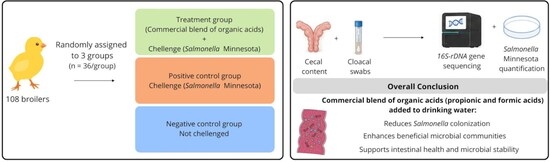
In this study, we evaluated the effects of a commercial blend of organic acids (formic acid and propionic acid) added to drinking water on the microbiota of broilers experimentally challenged with Salmonella enterica serovar Minnesota. A total of 108 broilers were randomly assigned to three groups, each with 36 birds: the Treatment group (treated with organic acids + challenge), a Positive Control group (challenge only), and a Negative Control group (no challenge). At seven days of age, broilers in the Treatment group received the organic acid blend through their drinking water (0.2 mL/L/drinking water). At nine days of age, broilers from the challenged groups were inoculated via feed with S. Minnesota (Treatment group—mean: 1.45 × 10⁴ CFU/g; Positive Control group—mean: 3.47 × 10⁴ CFU/g). Swab samples were collected for Salmonella enumeration and cecal content for bacterial community profiling using 16S-rDNA gene sequencing. Our results demonstrated that supplementation with organic acids positively modulated the cecal microbiota of broilers under S. Minnesota challenge. Broilers receiving the organic acid blend showed improvements in microbial community composition, including an increased abundance of bacterial genera associated with butyrate production, which are recognized for their beneficial effects on intestinal health. Overall, our findings suggest that the blend of organic acids may serve as a nutritional strategy for supporting intestinal health and microbiota stability in broilers challenged with S. Minnesota.

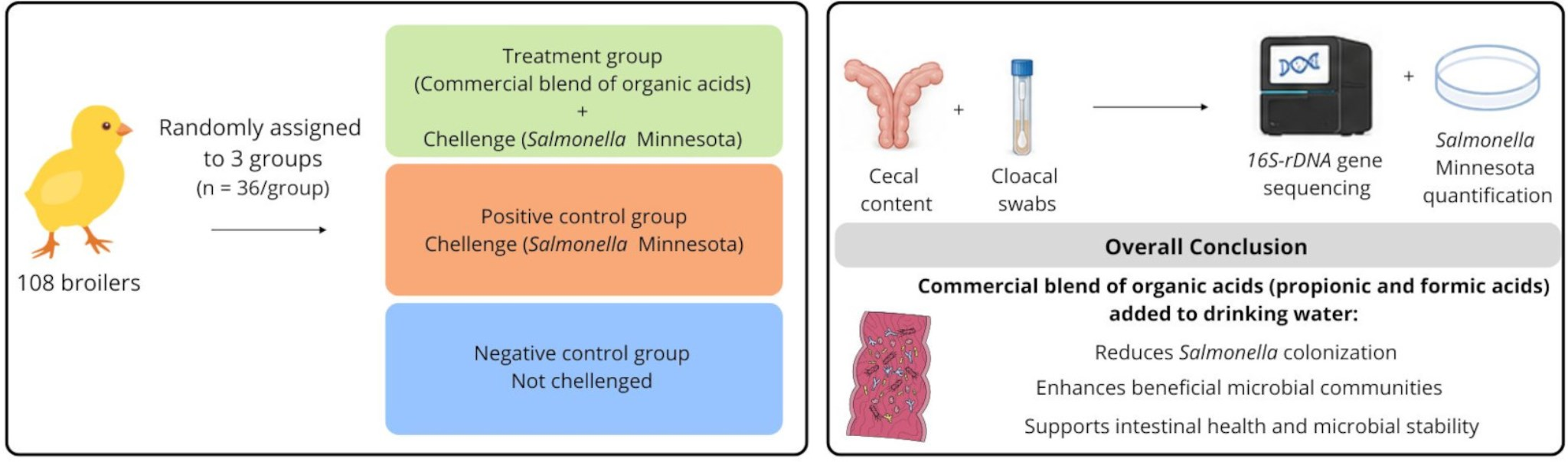
Graphical Abstract

1. Introduction

Antibiotic use in broiler production has been prohibited in many countries worldwide due to the accelerating spread of antimicrobial resistance and the risks to human health [1,2]. In this context, alternatives to antibiotics have increasingly been explored, including organic acids, probiotics, prebiotics, symbiotics, enzymes, phytogenics, antimicrobial peptides, hyperimmune egg antibodies, bacteriophages, clay, and metals. These additives have been reported to improve intestinal health through different mechanisms that include modulating the gut microbiota, enhancing intestinal barrier function, stimulating the immune response, and reducing pathogen colonization [3].
Among these alternatives, organic acids have received considerable attention due to their broad antimicrobial activity and their ability to promote intestinal health. Organic acids, such as formic, propionic, lactic, and citric acids, reduce the pH of the gastrointestinal tract, creating an unfavorable environment for acid-sensitive pathogens such as Salmonella spp. Furthermore, the undissociated forms of these acids can diffuse across bacterial cell membranes, disrupting intracellular pH homeostasis, enzyme activity, and essential metabolic pathways, thereby inhibiting bacterial growth [4,5].
Previous studies have shown that supplementation with organic acids in poultry feed or water can enhance growth performance and meat quality [6,7]. In addition, the ability of OAs to reduce the pH of the upper gastrointestinal tract improves nutrient digestion and inhibits pathogenic bacteria [8].
Among pathogenic bacteria, serovars of Salmonella enterica are significant in poultry production, as this microorganism can have effects ranging from asymptomatic infections to acute systemic disease in broilers, leading to economic losses for producers due to mortality and reduced weight gain [9]. In addition, the vast majority of Salmonella serovars are zoonotic bacteria, which pose a significant risk to the human population [9]. Salmonella is among the most common enteric bacterial pathogens, accounting for 5.2% of pediatric cases diagnosed with acute gastroenteritis [10].
Organic acids added to poultry feed can reduce Salmonella spp. growth [11] and colonization in the crop and ceca of broilers [12]. Some studies have used Salmonella Enteritidis or Salmonella Typhimurium as marker strains [12], leaving the effect of organic acids poorly understood for serovars such as Salmonella Minnesota, an important pathogen for humans and animals [13]. Despite the high importance and wide use of metagenomic approaches, the use of deep sequencing to determine the performance of the bacteriome of broilers after experimental challenge remains unexplored.
Thus, in this study, the effect of a commercial blend of organic acids (formic acid and propionic acid) added to drinking water on the cecal microbiota of broilers experimentally challenged with S. Minnesota was determined.

2. Materials and Methods

2.1. Preparation of Salmonella Minnesota Inoculum

A strain of Salmonella Minnesota previously isolated from broilers and resistant to nalidixic acid and spectinomycin (SMNalSpc) was used. The strain was inoculated into Luria–Bertani (LB) broth and incubated at 37 °C for 18 h under agitation. The resulting culture contained approximately 108 to 109 colony-forming units per milliliter (CFU/mL).

2.2. Organic Acid Products

Axeed® Liquid (Salmix, Piedade, SP, Brazil) is a commercial drinking water additive composed of a blend of formic and propionic acids, indicated as an alternative to antibiotic growth promoters in poultry production. According to the manufacturer, the same proportions of both formic and propionic acids compose the commercial product.

2.3. Experimental Design

Before starting the experiment, samples from the transport boxes of one-day-old broilers were collected to provide information about Salmonella spp. circulation in the flock. In summary, sterile swabs with Buffered Peptone Water were rubbed over the meconium present in the transport boxes. Swabs were then placed into a flask containing 50 mL of Selenite broth supplemented with novobiocin (4 mg/mL) (SN broth), and samples were incubated at 37 °C for 24 h. Subsequently, aliquots from SN broth were streaked onto Brilliant Green agar (Himedia, Mumbai, MS, India) and MacConkey agar (Himedia, Mumbai, MS, India). The plates were incubated at 37 °C for 24 h and then examined for confirmation of the Salmonella spp. suggestive colonies’ absence.
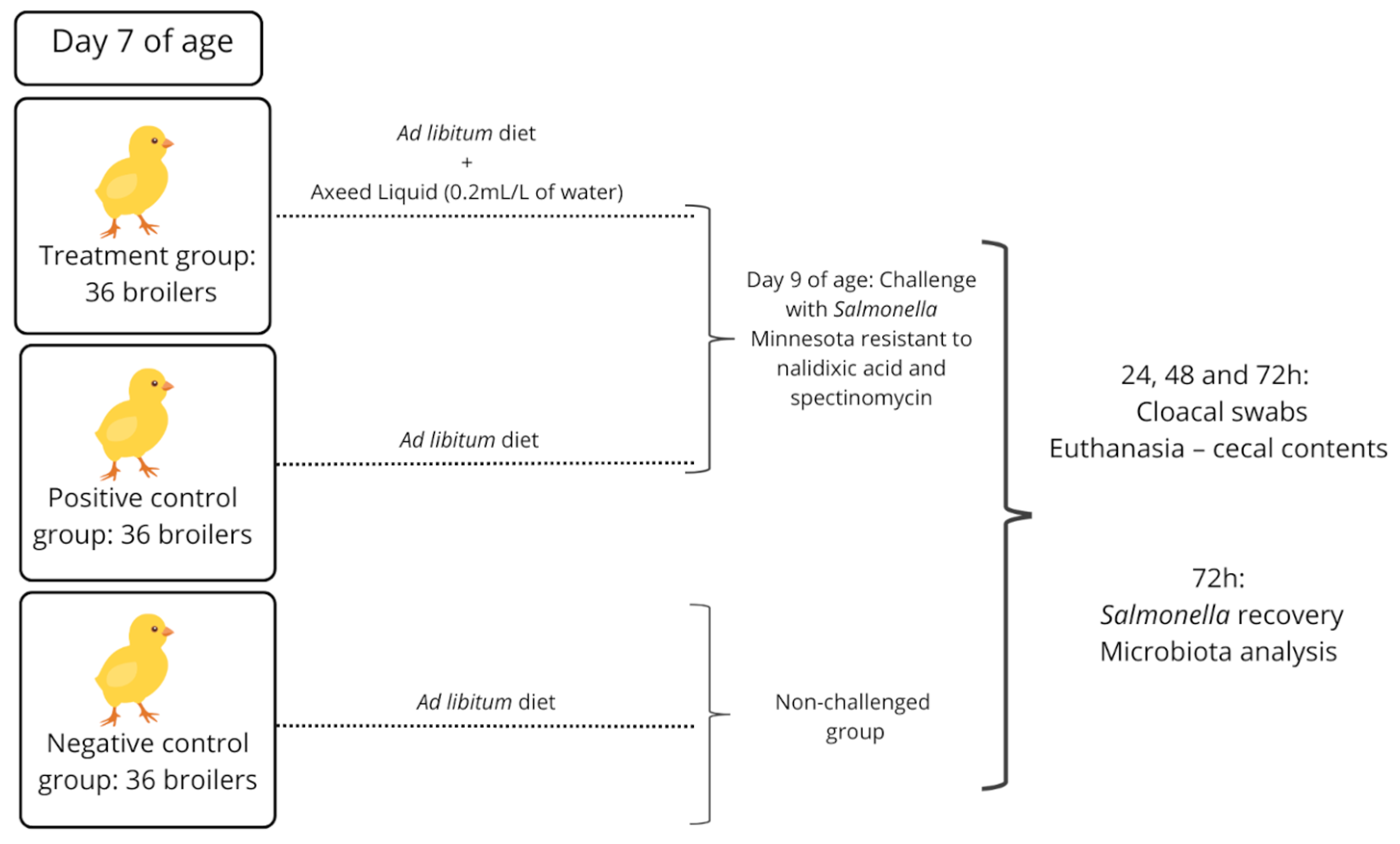
Figure 1 summarizes the experimental design. In this experiment, one-day-old broiler chickens (52.7 g ± 0.8 g) were randomly allocated into three groups (comprising 36 poultry; 18 poultry/m2) housed in metal battery cages in a climate-controlled and negative pressure room, where they were kept until the end of the experiment. The metal battery vertical cages include metal trays for fecal collection, which were sanitized twice daily, preventing reinfection of the animals during the experimental period. Chicks were acquired from a commercial hatchery (JBS Food®—Nuporanga, SP, Brazil), while birds from the Cobb lineage were obtained at one day old directly from the hatchery to the research facility, carried in craft boxes (with up to 50 chicks in each) under temperature-controlled conditions.
Each group was further subdivided into three subgroups with 12 animals each (Table 1). The Treatment group encompassed animals that were challenged with S. Minnesota and that received a commercial blend of organic acids composed of formic acid and propionic acid (Axeed® Liquid—Salmix); the Positive Control group included animals that were challenged with S. Minnesota and that did not receive any treatment; and the Negative Control group included animals that were neither challenged nor treated. The sample size was determined in accordance with ARRIVE guidelines (β = 90%; α = 5%; detection limit: 100 CFU/g).
Animals received both water and feed ad libitum during the full experimental period. A corn–soybean meal diet was formulated for the initial phase with the following levels: 22% crude protein, 2950 kcal of metabolizable energy/kg of diet, 1.2% digestible lysine, 0.94% digestible methionine + cystine, and 0.85% digestible threonine (Table 2). No antimicrobial agents, anticoccidials, animal-derived by-products, or oils were used.
At seven days of age, the animals from the Treatment group started receiving organic acids in water, which persisted until the end of the assay (Figure 1). The organic acid treatment was prepared daily with 0.2 mL/L/drinking water, and the mean water pH was 4.52 after product addition. At this age, the broilers had an average body weight of 177.3 ± 2.0 g.
At nine days of age, broilers were challenged via feed with Salmonella Minnesota (SMNalSpc). Feed contamination was achieved with 2 mL of LB broth containing 108 and 109 CFU/mL added to 10 g of feed. After homogenization for approximately 5 min, small portions were transferred to a plastic bag and mixed with additional feed to a total of 2 kg. Samples from different parts of the feed were analyzed to ensure SMNalSpc homogeneity in the feed. The SMNalSpc counts in the feed on the day of challenge are presented in Table 3.

2.4. Salmonella Minnesota Excretion and Cecal Colonization

Two kinds of samples were collected from each animal: cloacal swabs and cecal content. Four animals from each subgroup (12 animals per experimental group) were euthanized at 24 h, 48 h, and 72 h post-infection to collect cecal contents. Prior to the euthanasian procedure, cloacal swabs from each animal were also collected (Figure 1).
Swabs were placed into tubes containing 3 mL of SN broth. After homogenization, samples were plated onto Brilliant Green agar supplemented with nalidixic acid and spectinomycin (VBNal/Spc) and incubated at 37 °C for 24 h. Enumeration of SMNalSpc followed the previously described method [14].
Cecal contents were diluted in phosphate-buffered saline (PBS, pH 7.4) at a 1:10 ratio, followed by serial tenfold dilutions in PBS, and were plated onto VBNal/Spc agar (Kasvi, Pinhais, PR, Brazil) at a concentration of 100 μg/mL for SMNalSpc enumeration. Plates were read after 24 h of incubation at 37 °C. Colony-forming units per gram (CFU/g) were determined, and values were log10-transformed for data analysis and interpretation. Bacterial counts less than 102 CFU/g (limit of detection) of the cecal content were considered to be negative results.

2.5. Statistical Analysis of SMNalSpc Excretion and Cecal Counts

The differential excretion of SMNalSpc among groups was evaluated with cloacal swab counts using a non-parametric chi-square test, with a significance level of 5%. Cecal contents were compared using the t-test at a 5% significance level.

2.6. Microbial Community Profiling Through 16S-rDNA Gene Sequencing

Fresh cecal contents from animals euthanized at 72 h post-infection were subjected to metagenomic DNA extraction using the DNeasy PowerSoil Pro Kit (Qiagen, Hilden Germany) according to the manufacturer’s protocol. DNA quantity and quality were assessed through fluorometry using QubitTM (Thermo Fisher Scientific, Waltham, MA, USA) and spectrophotometry using the NanoDrop OneC (Thermo Fisher Scientific, Waltham, MA, USA). Subsequently, the V4 region of the 16S-rDNA gene was sequenced using the Illumina MiSeq platform (Illumina, San Diego, CA, USA) with paired-end reads (2 × 300 bp).
Microbiome analysis was performed only at 72 h post-infection, representing the acute phase of infection [15]. Therefore, our results reflect the microbial community at this specific time point and should not be interpreted as the peak of Salmonella-induced dysbiosis, which may vary according to the experimental model.
Raw reads were assessed using FastQC (v0.11.9) [16], and low-quality sequences were removed using Trimmomatic (v0.39) [17]. Clean reads were imported into QIIME 2 (2025.10) [18] and processed using DADA2 [19], and taxonomic assignment was performed against the SILVA database (release 138) [20]. Additional analyses were conducted in R (version 4.5.2) using the packages microbiome (v1.32.0) [21], microbiomeutilities (v1.00.17) [22], phyloseq (v1.54.0) [23], and ranacapa (v0.1.0) [24]. The package microDecon (v1.0.2) [25] was used to remove contaminant reads based on a blank control community library. Reads assigned to eukaryotes, archaea, chloroplasts, mitochondria, unclassified taxa, and taxa with confidence scores < 0.8 were removed from the dataset.
Alpha diversity (Shannon index) and beta diversity (Bray–Curtis dissimilarity) analyses were performed, including principal coordinates analysis (PCoA) and permutational multivariate analysis of variance (PERMANOVA), with pairwise comparisons conducted using the pairwiseAdonis package (v0.4.1) [26]. The microeco package (v1.16.1) [27] was used to calculate Linear Discriminant Analysis (LDA) Effect Size. For exploratory dysbiosis analysis, the dysbiosisR package (v1.0.4) [28] was applied using a binary approach, contrasting the Negative Control group with the other two groups, which were classified as dysbiotic. Group comparisons were performed using the Wilcoxon rank-sum test, with a significance level of p < 0.05.

2.7. Data Availability

All sequencing data were submitted to the NCBI Sequence Read Archive (SRA) database under the BIOPROJECT Accession PRJNA1464506.

2.8. Ethical Statement

In vivo experiments were performed according to the Ethical Principles on Animal Experimentation of the National Council for the Control of Animal Experimentation (CONCEA). The protocol was approved by the Ethical Committee on Animal Experimentation (CEUA) of the School of Agriculture and Veterinary Sciences (FCAV) on 19 November 2025 (protocol number: 9877460435/2025). Experimental assays were carried out in the Department of Pathology, Reproduction, and One Health at São Paulo State University (FCAV/Unesp).
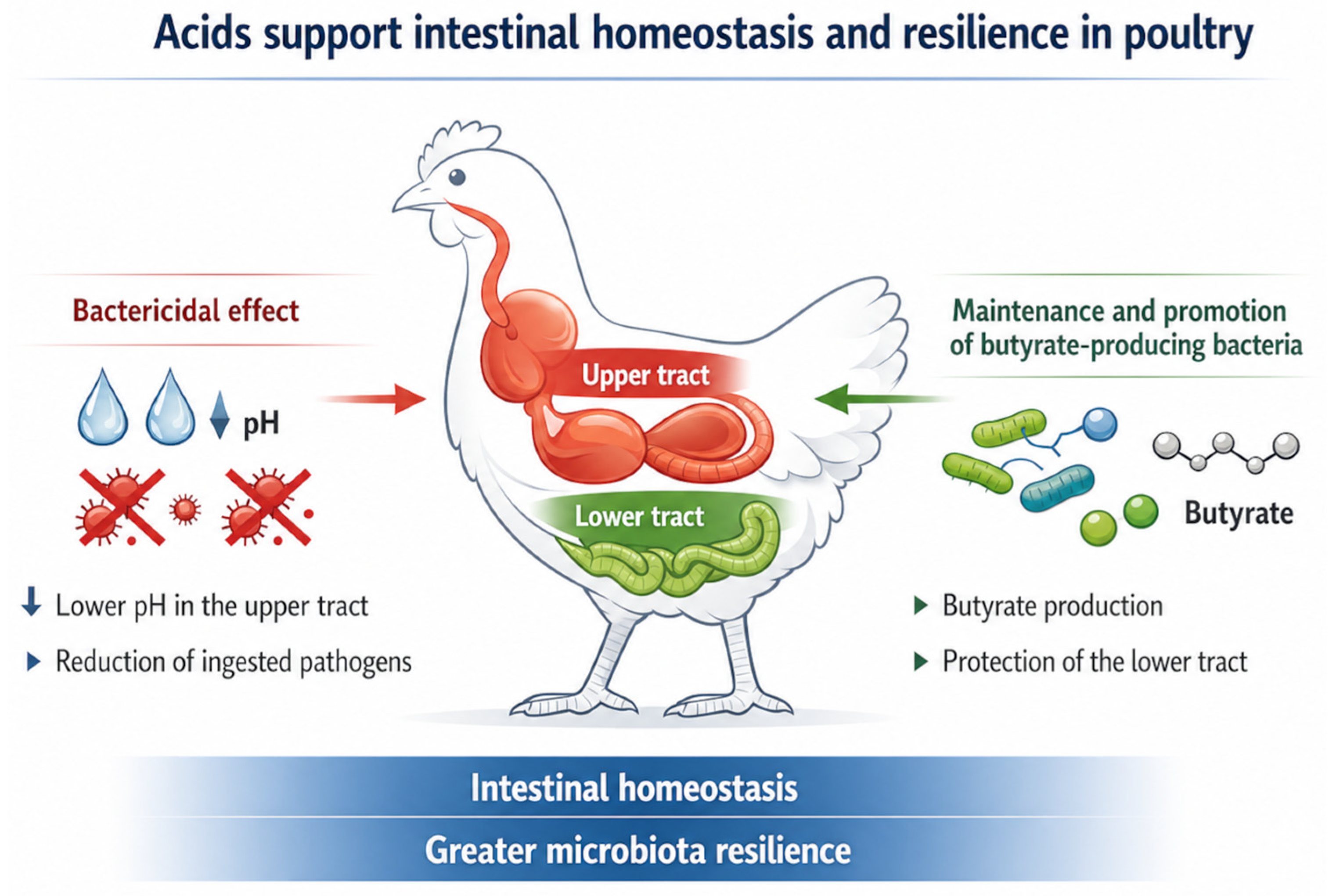
Figure 6 was generated with the assistance of ChatGPT (OpenAI, version 5.2) to support the initial design and visual organization of the figure. The authors subsequently refined the figure, verified its scientific accuracy, and approved the final version.

3. Results

Although the use of organic acids in broiler chicken production is a widespread practice, its effectiveness against S. Minnesota and its impacts on the cecal microbiota remain unclear. In this study, the proportion of animals excreting S. Minnesota after treatment with a blend of formic acid and propionic acid in liquid form was lower in the Treatment group than in the Positive Control group (p < 0.05) (Table 4). In contrast, the SMNalSpc counts in cecal contents did not differ significantly among the evaluated groups (Supplementary Figure S1). To exclude the possibility of external contamination in the studied animals, transport box swabs were screened for Salmonella prior to the initiation of the experiment, with all samples testing negative.
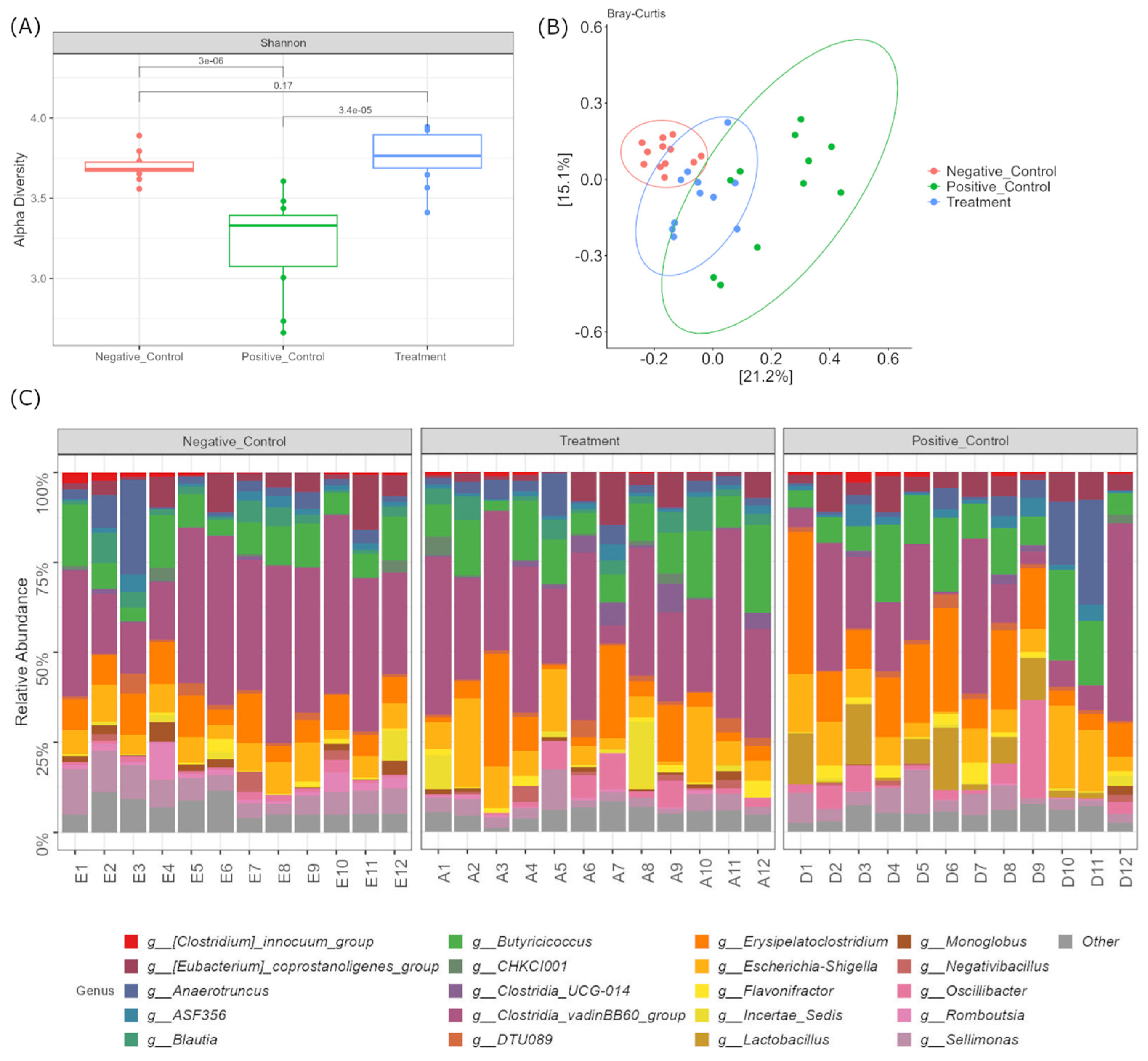
In relation to the bacteriome, the total output reads obtained are described in Supplementary Table S1. Rarefaction curves reached a plateau, indicating that the sequencing depth was sufficient to capture the taxonomic richness of the samples (Supplementary Figure S2). The alpha diversity analysis showed that both the Negative Control group and the Treatment group had higher and significantly different diversity values compared to the Positive Control group (Figure 2A), while the beta diversity analysis was consistent with the patterns previously described. Samples exhibited spatial clustering according to group distribution (p < 0.05) (Figure 2B), with clear differences in microbiota composition between pairwise groups (p < 0.05) (Table 5).
The relative abundance at the bacterial genus level highlights the microbial profile within each experimental group (Figure 2C). A marked shift in the abundance of bacterial genera was observed in the group challenged with S. Minnesota without treatment (Positive Control group). In contrast, in the challenged group treated with formic acid and propionic acid, the bacterial abundance profile tended to resemble that of the Negative Control group. Additionally, in the Treatment group, certain bacterial genera became highly prominent, exhibiting higher relative abundance (Figure 2C).
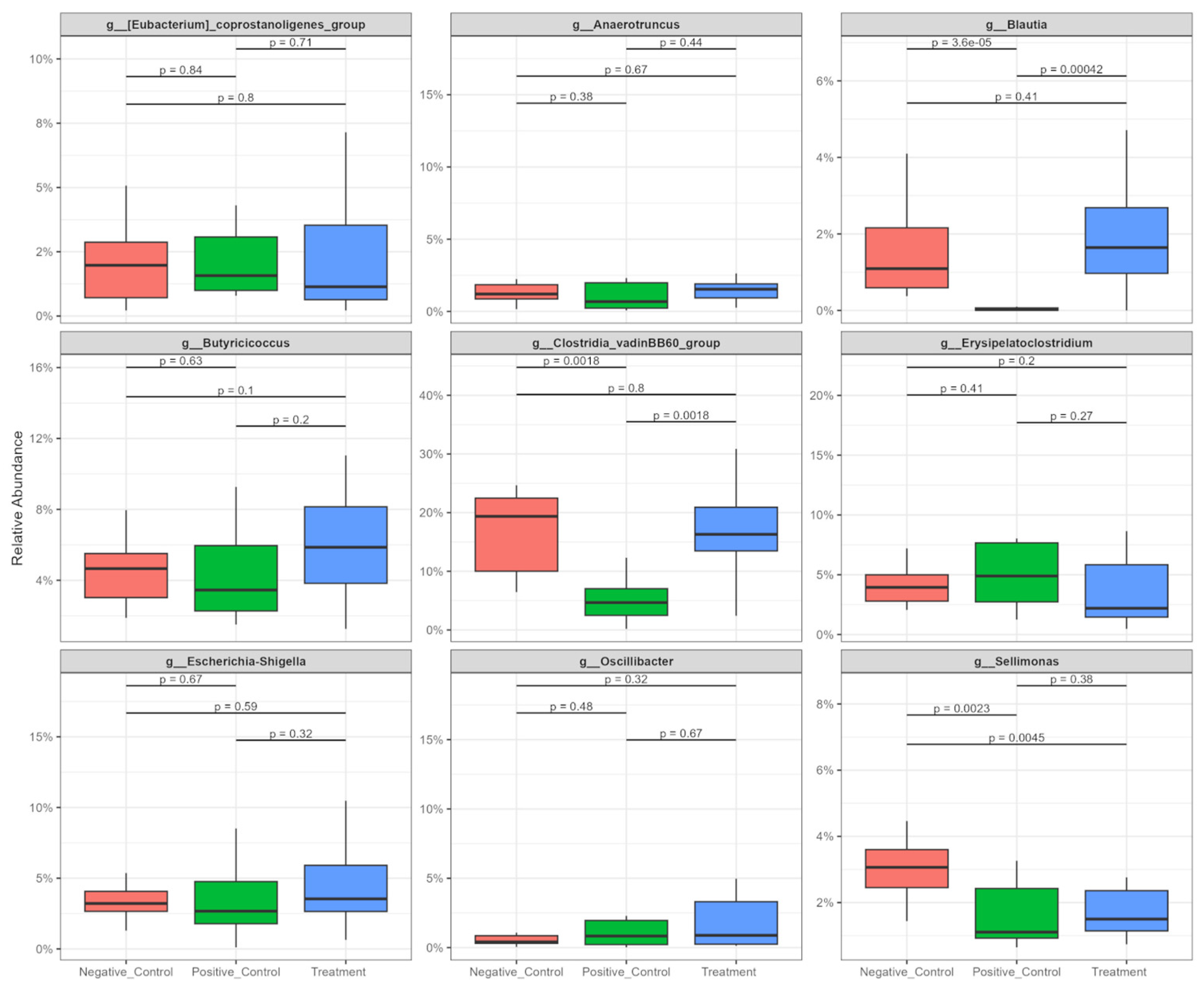
As shown in Figure 3, which presents the bacterial genera with the highest relative abundance, Blautia, an uncultured group within the class Clostridia (Clostridia_vadinBB60_group), and Butyricicoccus stand out as the most abundant genera within the cecal content. Blautia and Clostridia_vadinBB60_group showed higher abundances in the Treatment and the Negative Control groups compared to the Positive Control group (p < 0.05) (Figure 3).
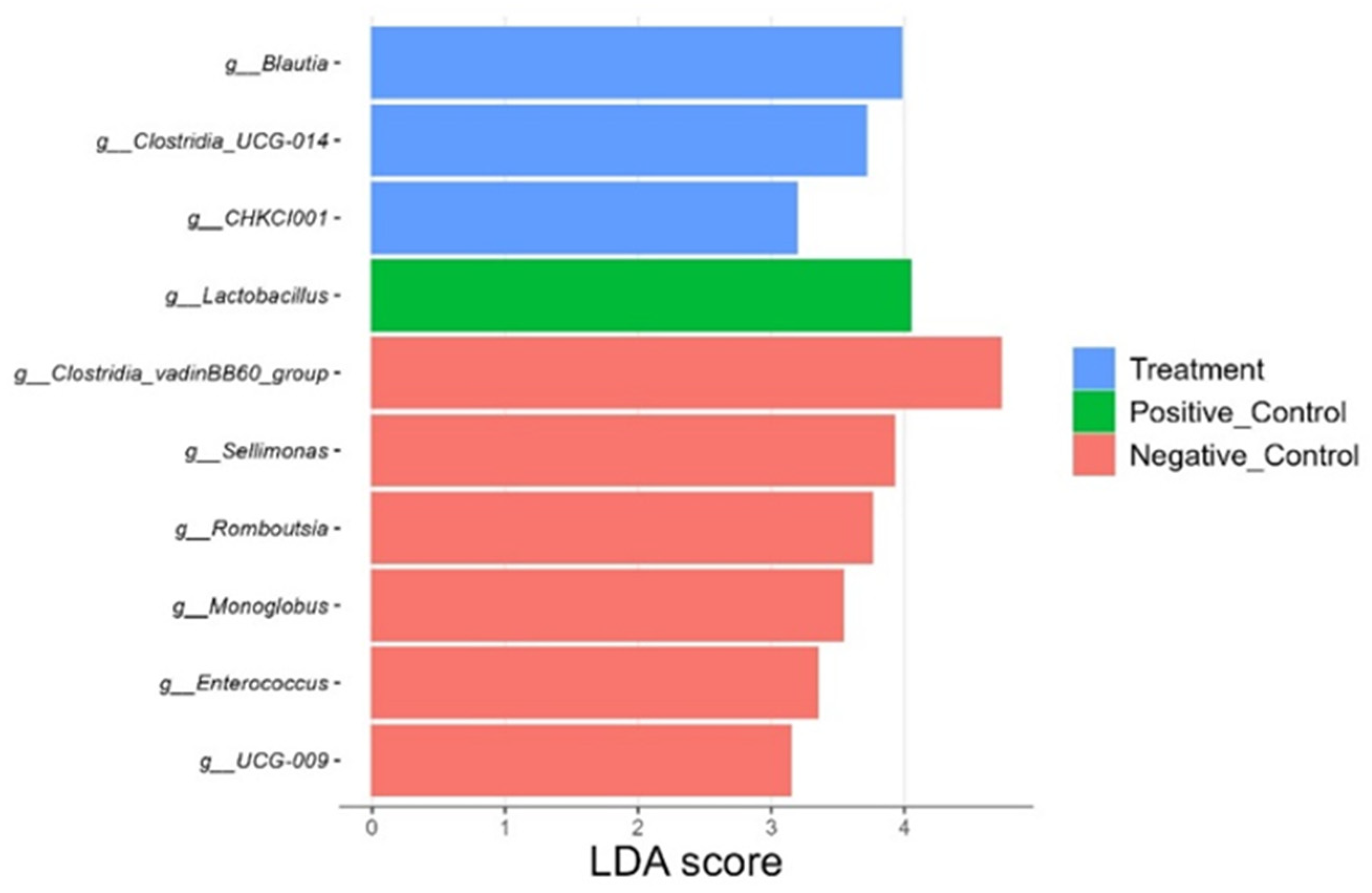
We have found discriminative bacteria in the group challenged with SMNalSpc and treated with formic acid and propionic acid (Treated group). The genera Blautia and Clostridia_UCG-014 and the family Lachnospiraceae_CHKCI001 were identified as biomarkers (Figure 4). The Negative Control group exhibited a greater diversity of taxa, while the Positive Control group maintained a lower representation of bacterial genera.
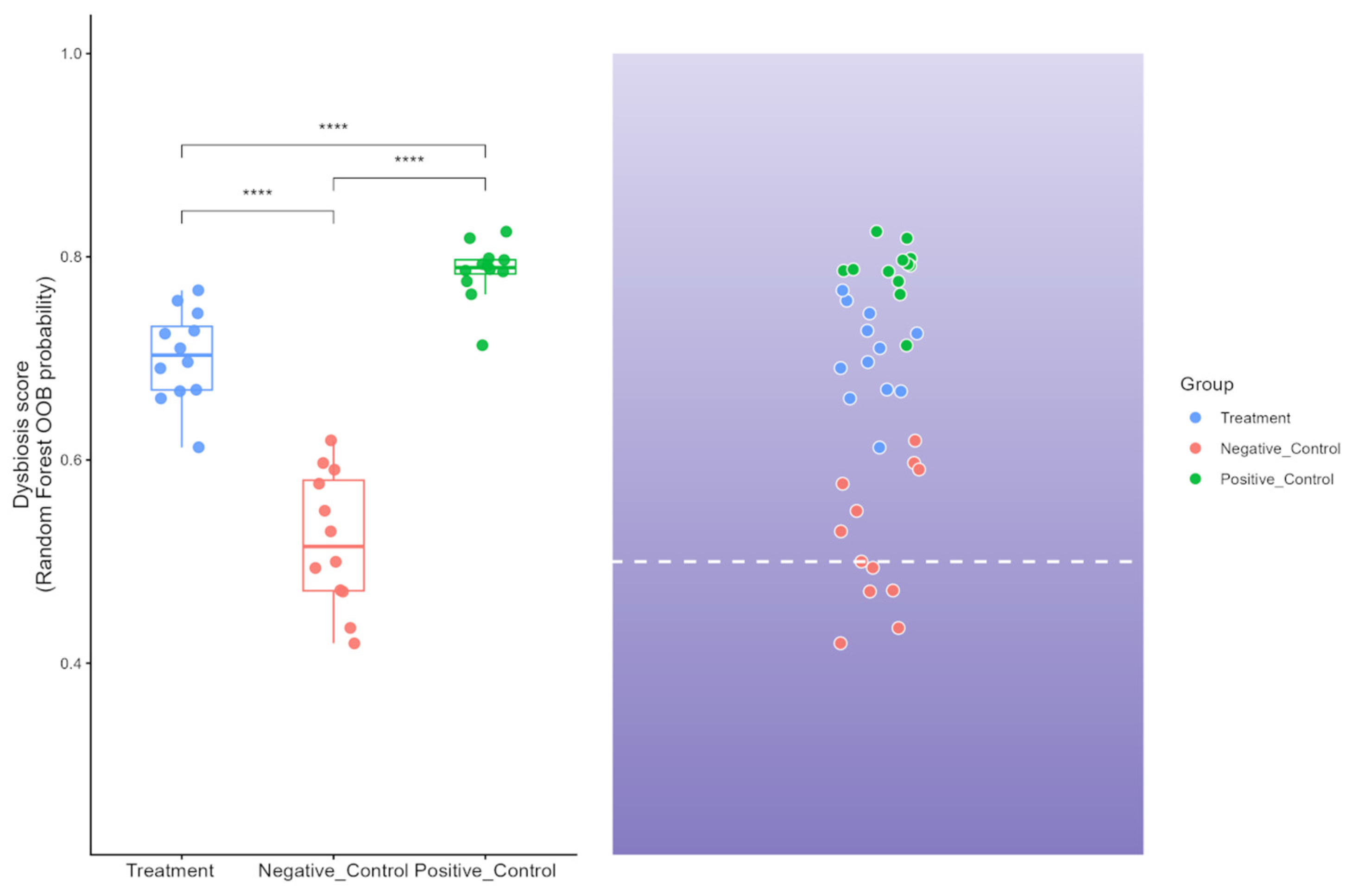
Following dysbiosis analysis, a separation between the Negative Control and Positive Control groups was observed, while the Treatment group exhibited an intermediate profile, suggesting either a partial disruption of the microbiota or a restoration of homeostasis (Figure 5). Consequently, organic acids seem to drive both the homeostasis and resilience of intestinal microbiota (Figure 6).

4. Discussion

The inflammation induced by Salmonella infection stimulates chemical changes in the gut environment, which favor the proliferation of opportunistic bacteria while impairing the growth of health-associated bacterial taxa [29]. Disruptions are characterized by reduced microbial diversity, a loss of beneficial commensals, and increased instability of the microbial ecosystem, reflecting a dysbiotic state [30].
Treatment with the commercial blend of formic acid and propionic acid restored the bacterial diversity to levels comparable to the Negative Control group. These results support the role of organic acids in modulating and stabilizing gut microbial communities, inhibiting pathogenic bacteria [31,32] without the harmful effects of antimicrobial use [33]. Notably, feed supplementation with organic acids has been previously associated with a decrease in Salmonella spp. in the intestinal content [34].
In this study, although organic acid supplementation significantly reduced cloacal shedding of S. Minnesota, it did not significantly decrease cecal bacterial counts during the experimental period. This discrepancy may reflect differences in the site of action of organic acids. When administered in drinking water, organic acids are expected to exert their greatest antimicrobial activity in the upper gastrointestinal tract [35]. Consequently, their concentration and antimicrobial activity may be reduced before reaching the ceca due to absorption and dissociation along the gastrointestinal tract, limiting their ability to decrease cecal colonization. Furthermore, cecal samples were collected only up to 72 h post-challenge, which may have been insufficient for detecting changes in bacterial persistence at this site, as Salmonella colonization dynamics may vary over time [15].
When observing the highest relative abundance of bacterial genera, Blautia, class Clostridia (Clostridia_vadinBB60_group), and Butyricicoccus stood out in the Treatment and Negative Control groups. These genera are well-known producers of both butyrate and other short-chain fatty acids (SCFAs) [36,37,38]. Additionally, Sellimonas, frequently identified in the Treatment group, has been associated with butyrate-producing bacterial species, and this genus has been described as a potential marker of microbiota recovery following disturbances in humans [39]. Dietary supplementation with butyrate has been recognized as an effective strategy for improving gut health and performance in broiler chickens [40]. The increase in butyrate-producing bacteria has a high positive impact on intestinal health, strengthening the intestinal barrier and modulating Salmonella virulence ability, anti-inflammatory action, and the maintenance of low cecal pH, which reduces pathogenic bacteria adhesion [36,37,38]. The increased abundance of putative butyrate-producing genera may have contributed to improved intestinal health and increased colonization resistance, as suggested in previous studies. However, since SCFA concentrations were not measured, these functional effects remain speculative.
Remarkably, Blautia was the most discriminative genus in the organic acid blend treatment. Blautia has frequently been associated with microbial intestinal stability in swine [41] and gut health in broilers [42]. Although the mechanisms underlying its enrichment remain unclear, the higher representation of this genus in the organic acid treatment may indicate a favorable modulation of the intestinal microbial ecosystem, warranting further investigation into its potential role as a biomarker of gut health in broilers.
In the discriminative analysis, the Negative Control group exhibited a greater diversity of taxa. These findings are consistent with the expected profile of healthy, unchallenged broilers, in which a complex and diverse microbiota is associated with intestinal functional stability [43]. In contrast, the Positive Control group maintained a lower representation of bacterial genera, indicating that Salmonella infection promoted microbiota alterations. This pattern has been reported in poultry, where pathogen challenge promoted shifts in microbial composition [44].
The present study has some limitations that should be considered when interpreting the results. The gut microbiota was evaluated only at 72 h post-infection, preventing the assessment of the temporal dynamics of microbial changes following Salmonella challenge. In addition, the efficacy of the organic acid blend was not directly compared with other feed additives under identical experimental conditions. However, the microbial profile of the Treatment group suggested a partial preservation of the intestinal bacterial community compared with the Positive Control group. Although the bacterial composition did not completely resemble that of the Negative Control group, the representation of beneficial taxa indicates that formic and propionic acid supplementation in water may have mitigated some of the microbiota disturbances associated with Salmonella challenge. These findings support the hypothesis that dietary organic acids contribute to maintaining intestinal microbial balance during enteric pathogen infection, potentially enhancing gut resilience in broiler chickens.
Compared with other alternatives to antimicrobials, organic acids offer practical advantages, including ease of administration through drinking water, broad-spectrum antimicrobial activity against enteric pathogens, and compatibility with commercial poultry production systems [34]. Nevertheless, alternative feed additives are not mutually exclusive, and growing evidence suggests that combinations of organic acids with other compounds may exert complementary or synergistic effects on intestinal health, gut microbiota modulation, and pathogen control [3].

5. Conclusions

The administration of the organic acid blend (formic and propionic acid) in drinking water reduced Salmonella Minnesota cloacal shedding and promoted beneficial changes in the cecal microbiota of experimentally challenged broilers, including an increased relative abundance of bacterial genera commonly associated with intestinal health. Our results suggest that the organic acid blend contributed to limiting pathogen dissemination while favorably modulating the intestinal microbial community during the acute phase of infection. These findings support the potential use of organic acids administered through drinking water as a practical complementary strategy for Salmonella control in poultry production.

Supplementary Materials

The following supporting information can be downloaded at https://www.mdpi.com/article/10.3390/poultry5040056/s1, Figure S1: SMNalSpc counts in cecal contents per hours post-infection; Figure S2: Sample-based rarefaction curves of taxonomic richness; Table S1: Read counts after quality filtering.

Author Contributions

Conceptualization, F.M.S., M.d.M.S.S. and R.R.; methodology, F.M.S., M.d.M.S.S. and M.C.T.; formal analysis, F.M.S., M.d.M.S.S. and M.C.T.; investigation, F.M.S., M.d.M.S.S., A.L.C.R., A.M.d.A. and M.C.T.; resources, R.R., C.V.L.R., A.L.C.R. and A.M.d.A.; writing, original draft preparation, M.C.T.; writing, review and editing, F.M.S., M.d.M.S.S. and M.C.T.; supervision, F.M.S.; project administration, F.M.S. and M.d.M.S.S. All authors have read and agreed to the published version of the manuscript.

Funding

Coordenação de Aperfeiçoamento de Pessoal de Nível Superior (CAPES, Finance Code 001), the Fundação de Amparo à Pesquisa do Estado do Rio Grande do Sul (FAPERGS), and the Conselho Nacional de Desenvolvimento Científico e Tecnológico—CNPq (grant number 305939/2022-04).

Institutional Review Board Statement

In vivo experiments were performed according to the Ethical Principles on Animal Experimentation of the National Council for the Control of Animal Experimentation (CONCEA). The protocol was approved by the Ethical Committee on Animal Experi-mentation (CEUA) of the School of Agriculture and Veterinary Sciences (FCAV) on 19 November 2025 (protocol number: 9877460435/2025). Experimental assays were carried out in the Department of Pathology, Reproduction, and One Health at São Paulo State University (FCAV/Unesp).

Informed Consent Statement

Not applicable.

Data Availability Statement

All sequencing data were submitted to the NCBI Sequence Read Archive (SRA) database under the BIOPROJECT Accession PRJNA1464506.

Acknowledgments

The authors used ChatGPT (OpenAI) to assist in the preparation of Figure 6. All scientific content, interpretation, verification, and final editing were performed by the authors, who take full responsibility for the published figure.

Conflicts of Interest

Authors Renato Ravetti and Cyanna Ravetti were employed by the company Salmix Industria e Comercio Ltda. The remaining authors declare that the research was conducted in the absence of any commercial or financial relationships that could be construed as a potential conflict of interest. The company Salmix Industria e Comercio Ltda provides the drinking water additive. The company Salmix Industria e Comercio Ltda had no role in the design of the study; in the collection, analyses, or interpretation of data; in the writing of the manuscript; or in the decision to publish the results.

Abbreviations

The following abbreviations are used in this manuscript:
SMNalSpcSalmonella Minnesota, previously isolated from broilers and resistant to nalidixic acid and spectinomycin
VBNal/SpcBrilliant Green Agar supplemented with nalidixic acid and spectinomycin
PCoAPrincipal coordinates analysis
PERMANOVAPermutational multivariate analysis of variance
CFU/gColony-forming units per gram

References

  1. World Health Organization. WHO Guidelines on Use of Medically Important Antimicrobials in Food-Producing Animals. 2017. Available online: https://iris.who.int/server/api/core/bitstreams/89b0d9ca-9522-4b40-9eaa-9898bd62dbe7/content (accessed on 17 December 2025).
  2. European Union. Regulation (EU) 2019/4 of the European Parliament and of the Council of 11 December 2018. 2018. Available online: https://eur-lex.europa.eu/eli/reg/2019/4/oj/eng (accessed on 17 December 2025).
  3. Gadde, U.; Kim, W.H.; Oh, S.T.; Lillehoj, H.S. Alternatives to antibiotics for maximizing growth performance and feed efficiency in poultry: A review. Anim. Health Res. Rev. 2017, 18, 26–45. [Google Scholar] [CrossRef] [Scilit] [PubMed]
  4. El-Ghany, W.A. Applications of organic acids in poultry production: An updated and comprehensive review. Agriculture 2024, 14, 1756. [Google Scholar] [CrossRef] [Scilit]
  5. Gerzilov, V.; Hristakieva, P. Organic acids supplementation in poultry nutrition: A review. Open Vet. J. 2025, 15, 3448–3458. [Google Scholar] [CrossRef] [Scilit] [PubMed]
  6. Cai, F.; Huang, M.; Liu, W.; Wan, X.; Qiu, K.; Xu, X. Dietary addition of compound organic acids improves the growth performance, carcass trait, and body health of broilers. Front. Nutr. 2025, 12, 1536606. [Google Scholar] [CrossRef] [Scilit] [PubMed]
  7. Sharifuzzaman, M.; Mun, H.S.; Ampode, K.M.B.; Lagua, E.B.; Park, H.R.; Kim, Y.H.; Hasan, M.K.; Yang, C.J. Optimizing broiler growth, health, and meat quality with citric acid: Assessing the optimal dose and environmental impact. Poult. Sci. 2025, 104, 104668. [Google Scholar] [CrossRef] [Scilit] [PubMed]
  8. Han, M.; Chen, B.; Dong, Y.; Miao, Z.; Su, Y.; Liu, C.; Li, J. Evaluation of liquid organic acids on the performance, chyme pH, nutrient utilization, and gut microbiota in broilers under high stocking density. Animals 2023, 13, 257. [Google Scholar] [CrossRef] [Scilit] [PubMed]
  9. Shaji, S.; Selvaraj, R.K.; Shanmugasundaram, R. Salmonella infection in poultry: A review on the pathogen and control strategies. Microorganisms 2023, 11, 2814. [Google Scholar] [CrossRef] [Scilit] [PubMed]
  10. Hung, Y.T.; Lay, C.J.; Wang, C.L.; Koo, M. Characteristics of nontyphoidal Salmonella gastroenteritis in Taiwanese children: A 9-year retrospective medical record review. J. Infect. Public Health 2017, 10, 518–521. [Google Scholar] [CrossRef] [Scilit] [PubMed]
  11. Huang, J.; Sengers, M.J.; Xie, X.; Cheng, T.; Liu, L.; Hu, Z.; Guo, F.; Zhang, K.; Wang, Z. Emulsified essential oil-organic acid mixtures in drinking water reduce Salmonella Typhimurium infection and improve intestinal health in broilers. Poult. Sci. 2026, 105, 106138. [Google Scholar] [CrossRef] [Scilit] [PubMed]
  12. Wang, J.; Mallavarapu, B.; Subedi, D.; Patil, P.S.; Bhumanapalli, S.; Vaddu, S.; Singh, A.K.; Kim, W.K.; Kumar, S.; Poudel, S.; et al. A systematic review and meta-analysis of the efficacy of organic acids in reducing Salmonella colonization in the crop and ceca of broilers. Poult. Sci. 2025, 104, 106075. [Google Scholar] [CrossRef] [Scilit] [PubMed]
  13. Moreira, J.P.F.F.; do Monte, D.F.M.; Lima, C.D.; de Oliveira, C.J.B.; da Silva Martins, N.R.; Junior, A.B.; de Freitas Neto, O.C. Molecular genotyping reveals inter-regional relatedness among antimicrobial resistant Salmonella Minnesota strains isolated from poultry farm and humans, Brazil. Braz. J. Microbiol. 2022, 53, 503–508. [Google Scholar] [CrossRef] [Scilit] [PubMed]
  14. Berchieri Junior, A.; Barrow, P.A. Further studies on the inhibition on colonization of the chicken alimentary tract with Salmonella Typhimurium by pre-colonization with an avirulent mutant. Epidemiol. Infect. 1990, 104, 427–441. [Google Scholar] [CrossRef] [Scilit] [PubMed]
  15. Rogers, A.W.L.; Radlinski, L.C.; Nguyen, H.; Tiffany, C.R.; Carvalho, T.P.; Masson, H.L.P.; Goodson, M.L.; Bechtold, L.; Yamazaki, K.; Liou, M.J.; et al. Salmonella re-engineers the intestinal environment to break colonization resistance in the presence of a compositionally intact microbiota. Cell Host Microbe 2024, 32, 1774–1786. [Google Scholar] [CrossRef] [Scilit] [PubMed]
  16. Andrews, S. FastQC: A Quality Control Tool for High Throughput Sequence Data. 2010. Available online: http://www.bioinformatics.babraham.ac.uk/projects/fastqc (accessed on 17 December 2025).
  17. Bolger, A.M.; Lohse, M.; Usadel, B. Trimmomatic: A flexible trimmer for Illumina sequence data. Bioinformatics 2014, 30, 2114–2120. [Google Scholar] [CrossRef] [Scilit] [PubMed]
  18. Bolyen, E.; Rideout, J.R.; Dillon, M.R.; Bokulich, N.A.; Abnet, C.C.; Al-Ghalith, G.A.; Alexander, H.; Alm, E.J.; Arumugam, M.; Asnicar, F.; et al. Reproducible, interactive, scalable and extensible microbiome data science using QIIME 2. Nat. Biotechnol. 2019, 37, 852–857. [Google Scholar] [CrossRef] [Scilit] [PubMed]
  19. Callahan, B.J.; McMurdie, P.J.; Rosen, M.J.; Han, A.W.; Johnson, A.J.A.; Holmes, S.P. DADA2: High-resolution sample inference from Illumina amplicon data. Nat. Methods 2016, 13, 581–583. [Google Scholar] [CrossRef] [Scilit] [PubMed]
  20. Bokulich, N.A.; Dillon, M.R.; Bolyen, E.; Kaehler, B.D.; Huttley, G.A.; Caporaso, J.G. q2-sample-classifier: Machine-learning tools for microbiome classification and regression. J. Open Source Softw. 2018, 3, 934. [Google Scholar] [CrossRef] [Scilit] [PubMed]
  21. Lahti, L.; Shetty, S.; Blake, T.; Salojarvi, J. Tools for Microbiome Analysis in R. 2017. Available online: https://microbiome.github.io/tutorials/ (accessed on 17 December 2025).
  22. Sudarshan, A.S.; Lahti, L. microbiomeutilities: Utilities for Microbiome Analytics. 2020. Available online: https://microsud.github.io/microbiomeutilities/articles/microbiomeutilities.html (accessed on 17 December 2025).
  23. McMurdie, P.J.; Holmes, S. Phyloseq: An R package for reproducible interactive analysis and graphics of microbiome census data. PLoS ONE 2013, 8, e61217. [Google Scholar] [CrossRef] [Scilit] [PubMed]
  24. Kandlikar, G.S.; Gold, Z.J.; Cowen, M.C.; Meyer, R.S.; Freise, A.C.; Kraft, N.J.B.; Moberg-Parker, J.; Sprague, J.; Kushner, D.J.; Curd, E.E. ranacapa: An R package and Shiny web app to explore environmental DNA data with exploratory statistics and interactive visualizations. F1000Res 2018, 7, 1734. [Google Scholar] [CrossRef] [Scilit] [PubMed]
  25. McKnight, D.T.; Huerlimann, R.; Bower, D.S.; Schwarzkopf, L.; Alford, R.A.; Zenger, K.R. microDecon: A highly accurate read-subtraction tool for the post-sequencing removal of contamination in metabarcoding studies. Environ. DNA 2019, 1, 14–25. [Google Scholar] [CrossRef] [Scilit]
  26. Martinez Arbizu, P. pairwiseAdonis: Pairwise Multilevel Comparison Using Adonis. R Package Version 0.4. 2020. Available online: https://github.com/pmartinezarbizu/pairwiseadonis (accessed on 17 December 2025).
  27. Liu, C.; Cui, Y.; Li, X.; Yao, M. Microeco: An R package for data mining in microbial community ecology. FEMS Microbiol. Ecol. 2021, 97, fiaa255. [Google Scholar] [CrossRef] [Scilit] [PubMed]
  28. Shetty, S.A.; de Steenhuijsen Piters, W.A.A. dysbiosisR: An R Package for Calculating Microbiome Dysbiosis Measures. 2022. Available online: https://microsud.github.io/dysbiosisR/articles/Introduction.html (accessed on 17 December 2025).
  29. Zhang, X.; Akhtar, M.; Chen, Y.; Ma, Z.; Liang, Y.; Shi, D.; Cheng, R.; Cui, L.; Hu, Y.; Nafady, A.A.; et al. Chicken jejunal microbiota improves growth performance by mitigating intestinal inflammation. Microbiome 2022, 10, 107. [Google Scholar] [CrossRef] [Scilit] [PubMed]
  30. Khan, S.; Chousalkar, K.K. Salmonella Typhimurium infection disrupts but continuous feeding of Bacillus based probiotic restores gut microbiota in infected hens. J. Anim. Sci. Biotechnol. 2020, 11, 43. [Google Scholar] [CrossRef] [Scilit] [PubMed]
  31. Kumar, A.; Toghyani, M.; Kheravii, S.K.; Pineda, L.; Han, Y.; Swick, R.A.; Wu, S.B. Organic acid blends improve intestinal integrity, modulate short-chain fatty acids profiles and alter microbiota of broilers under necrotic enteritis challenge. Anim. Nutr. 2022, 8, 82–90. [Google Scholar] [CrossRef] [Scilit] [PubMed]
  32. Hu, Z.; Liu, L.; Guo, F.; Huang, J.; Qiao, J.; Bi, R.; Huang, J.; Zhang, K.; Guo, Y.; Wang, Z. Dietary supplemental coated essential oils and organic acids mixture improves growth performance and gut health along with reduces Salmonella load of broiler chickens infected with Salmonella Enteritidis. J. Anim. Sci. Biotechnol. 2023, 14, 89. [Google Scholar] [CrossRef] [Scilit] [PubMed]
  33. Lemos, M.P.; Saraiva, M.M.; Leite, E.L.; Silva, N.M.; Vasconcelos, P.C.; Giachetto, P.F.; Neto, O.C.F.; Givisiez, P.E.N.; Gebreyes, W.A.; Oliveira, C.J. The posthatch prophylactic use of ceftiofur affects the cecal microbiota similar to the dietary sanguinarine supplementation in broilers. Poult. Sci. 2020, 99, 6013–6021. [Google Scholar] [CrossRef] [Scilit] [PubMed]
  34. Dittoe, K.D.; Ricke, S.C.; Kiess, A.S. Organic acids and potential for modifying the avian gastrointestinal tract and reducing pathogens and disease. Front. Vet. Sci. 2018, 5, 216. [Google Scholar] [CrossRef] [Scilit] [PubMed]
  35. Dong, Y.; Gao, X.; Qiao, C.; Han, M.; Miao, Z.; Liu, C.; Yan, L.; Li, J. Effects of mixed organic acids and essential oils in drinking water on growth performance, intestinal digestive capacity, and immune status in broiler chickens. Animals 2024, 14, 2160. [Google Scholar] [CrossRef] [Scilit] [PubMed]
  36. Geirnaert, A.; Steyaert, A.; Eeckhaut, V.; Debruyne, B.; Arends, J.B.A.; Van Immerseel, F.; Boon, N.; Van de Wiele, T. Butyricicoccus pullicaecorum, a butyrate producer with probiotic potential, is intrinsically tolerant to stomach and small intestine conditions. Anaerobe 2014, 30, 70–74. [Google Scholar] [CrossRef] [Scilit] [PubMed]
  37. Stoeva, M.K.; Garcia-So, J.; Justice, N.; Myers, J.; Tyagi, S.; Nemchek, M.; McMurdie, P.J.; Kolterman, O.; Eid, J. Butyrate-producing human gut symbiont, Clostridium butyricum, and its role in health and disease. Gut Microbes 2021, 13, 1–28. [Google Scholar] [CrossRef] [Scilit] [PubMed]
  38. Liu, J.; Lv, X.; Ye, T.; Zhao, M.; Chen, Z.; Zhang, Y.; Yang, W.; Xie, H.; Zhan, L.; Chen, L.; et al. Microbiota-microglia crosstalk between Blautia producta and neuroinflammation of Parkinson’s disease: A bench-to-bedside translational approach. Brain Behav. Immun. 2024, 117, 270–282. [Google Scholar] [CrossRef] [Scilit] [PubMed]
  39. Radjabzadeh, D.; Bosch, J.A.; Uitterlinden, A.G.; Zwinderman, A.H.; Ikram, M.A.; van Meurs, J.B.J.; Luik, A.I.; Nieuwdorp, M.; Lok, A.; van Duijn, C.M.; et al. Gut microbiome-wide association study of depressive symptoms. Nat. Commun. 2022, 13, 7128. [Google Scholar] [CrossRef] [Scilit] [PubMed]
  40. Aziz, A.A.M.; Aziz, E.S.A.A.; Khairy, M.H.; Fadel, C.; Giorgi, M.; Abdelaziz, A.S. The effect of butyric acid and nucleotides supplementation on broiler (Gallus gallus domesticus) growth performance, immune status, intestinal histology, and serum parameters. Open Vet. J. 2024, 14, 324–334. [Google Scholar] [CrossRef] [Scilit] [PubMed]
  41. Wei, J.; Liu, Y.; Li, H.; Lu, Z.; Liu, Y.; Zhang, Y.; Lan, C.; Wu, A.; He, J.; Cai, J.; et al. Unlocking the power of swine gut bacteria: Newly isolated Blautia strain and its metabolites inhibit the replication of Salmonella Typhimurium in macrophages and alleviate DSS-induced colitis in mice. J. Anim. Sci. Biotechnol. 2025, 16, 87. [Google Scholar] [CrossRef] [Scilit] [PubMed]
  42. Apajalahti, J.; Vienola, K. Interaction between chicken intestinal microbiota and protein digestion. Anim. Feed Sci. Technol. 2016, 221, 323–330. [Google Scholar] [CrossRef] [Scilit]
  43. Kogut, M.H. The effect of microbiome modulation on the intestinal health of poultry. Anim. Feed Sci. Technol. 2019, 250, 32–40. [Google Scholar] [CrossRef] [Scilit]
  44. Mon, K.K.Z.; Saelao, P.; Halstead, M.M.; Chanthavixay, G.; Chang, H.C.; Garas, L.; Maga, E.A.; Zhou, H. Salmonella enterica serovars Enteritidis infection alters the indigenous microbiota diversity in young layer chicks. Front. Vet. Sci. 2015, 2, 61. [Google Scholar] [CrossRef] [Scilit] [PubMed]
Figure 1. Overview of the experimental design.
Poultry 05 00056 g001
Figure 2. Bacterial composition following challenge with Salmonella enterica subsp. enterica serovar Minnesota and treatment with Axeed® Liquid. (A) Shannon alpha diversity analysis. For this analysis, outliers (A3 and D7) were removed. The Wilcoxon rank-sum test was used for statistical analysis, with p < 0.05 considered statistically significant. (B) Bray–Curtis beta diversity analysis (PERMANOVA: R2 = 0.25845, p < 0.05). For this analysis, outliers (A3 and D7) were removed. (C) Relative abundance at the bacterial genus level.
Poultry 05 00056 g002
Figure 3. The most abundant bacterial genera identified in the analyzed samples. Statistical significance was assessed using the Wilcoxon rank-sum test, with p < 0.05 considered significant.
Poultry 05 00056 g003
Figure 4. Potential bacteria genera as biomarkers. Identification by linear discriminant analysis (LEfSe).
Poultry 05 00056 g004
Figure 5. Dysbiosis score derived from a Random Forest model (out-of-bag probability) across experimental groups. Statistical significance was assessed using the Wilcoxon rank-sum test; **** indicates p < 0.05. The dashed line represents 0.5.
Poultry 05 00056 g005
Figure 6. Schematic representation of the proposed role of organic acids in intestinal homeostasis and resilience in poultry. Red and green arrows represent the effect of bactericidal and butyrate in the upper and lower tracts, respectively. The figure was created with the assistance of artificial intelligence (ChatGPT, OpenAI, Version 5.2) and refined by the authors.
Poultry 05 00056 g006
Table 1. Overview of the experimental design and treatments.
Experimental GroupDosage (Axeed® Liquid)N° Animals
Treatment0.2 mL/L/drinking water36 broilers divided into three subgroups
Positive controlNot treated36 broilers divided into three subgroups
Negative controlNot treated36 broilers divided into three subgroups
Table 2. Guaranteed nutrient composition of the corn–soybean meal starter diet for broilers.
Nutrient/ComponentSpecification
Folic acidMinimum: 0.63 mg/kg
BHT-antioxidantMinimum: 100.00 mg/kg
BiotinMinimum: 0.12 mg/kg
CalciumMinimum: 9.20 g/kg; Maximum: 11.00 g/kg
CopperMinimum: 10.00 mg/kg
CholineMinimum: 400.00 mg/kg
Ether extractMinimum: 30.00 g/kg
IronMinimum: 56.00 mg/kg
PhosphorusMinimum: 7000.00 mg/kg
IodineMinimum: 0.62 mg/kg
LysineMinimum: 12.00 g/kg
ManganeseMinimum: 75.00 mg/kg
Crude fiberMaximum: 50.00 g/kg
AshMaximum: 100.00 g/kg
MethionineMinimum: 5200.00 mg/kg
Calcium pantothenateMinimum: 15.00 mg/kg
Crude proteinMinimum: 220.00 g/kg
SeleniumMinimum: 0.20 mg/kg
SodiumMinimum: 1800.00 mg/kg
MoistureMaximum: 130.00 g/kg
Vitamin AMinimum: 7000.00 IU/kg
Vitamin B1Minimum: 1.80 mg/kg
Vitamin B12Minimum: 15.00 mcg/kg
Vitamin B2Minimum: 4.00 mg/kg
Vitamin B6Minimum: 3.50 mg/kg
Vitamin D3Minimum: 2000.00 IU/kg
Vitamin EMinimum: 16.00 IU/kg
Vitamin K3Minimum: 3.50 mg/kg
ZincMinimum: 50.00 mg/kg
Table 3. Salmonella Minnesota (SMNalSpc) in the prepared feed immediately after contamination.
SubgroupsTreatment Group (log10-CFU/g)Positive Control (log10-CFU/g)
14.365.04
24.003.93
34.114.64
Mean4.164.54
SMNalSpc: Salmonella Minnesota resistant to nalidixic acid and spectinomycin isolated from broilers.
Table 4. Challenged broilers excreting SMNalSpc.
hpi (h)Treatment GroupPositive Control
2454
4828
72610
Total13 b22 a
SMNalSpc: Salmonella Minnesota from cloacal swab samples. Proportions followed by different letters differ statistically from each other (χ2 test, p < 0.05). hpi = hours post-infection.
Table 5. Comparisons of microbiota composition between groups.
GroupsR2p
Treatment_vs._Positive_Control0.342020.001
Treatment_vs._Negative_Control0.265670.001
Positive_Control_vs._Negative_Control0.445750.001
Permutational multivariate analysis of variance (PERMANOVA) with pairwise comparisons.
Disclaimer/Publisher’s Note: The statements, opinions and data contained in all publications are solely those of the individual author(s) and contributor(s) and not of MDPI and/or the editor(s). MDPI and/or the editor(s) disclaim responsibility for any injury to people or property resulting from any ideas, methods, instructions or products referred to in the content.