
Nutritional and Bioactive Seed Components in Chickpea Advanced Breeding Lines Assessed by Chemical Analysis and LC–MS Profiling
 , , and
Abstract
1. Introduction
2. Materials and Methods
2.1. Field Experiment
2.1.1. Germplasm and Experimental Design
2.1.2. Observations and Measurements
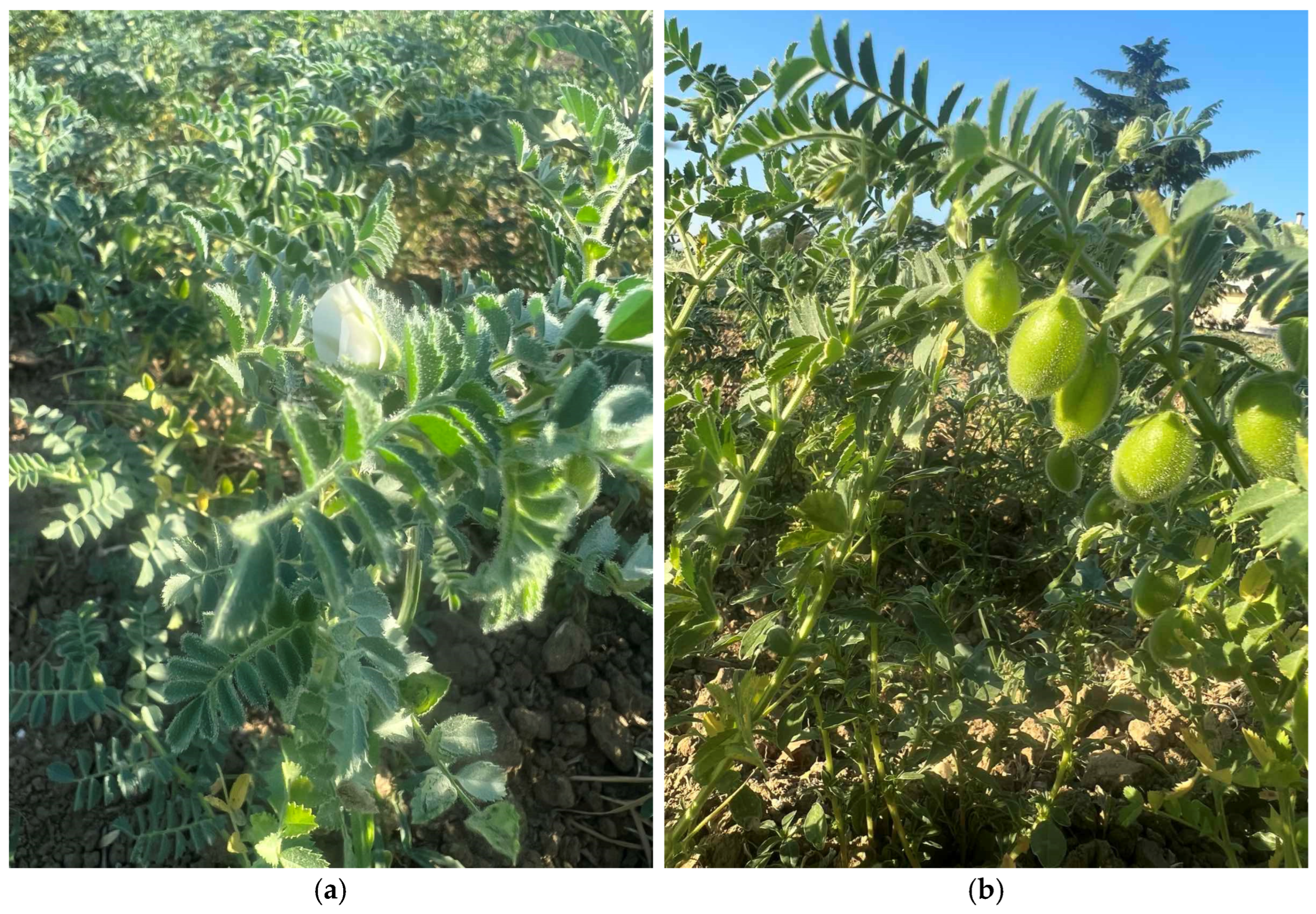
- Plant traits: Leaf type (char. 7), flowering time (char. 8), flower color (char. 9), pod size (char. 11), pod green color intensity (char. 12), beak length (char. 13), seeds per pod (char. 14), seed color (char. 15), shape and ribbing (char. 18 and 19).
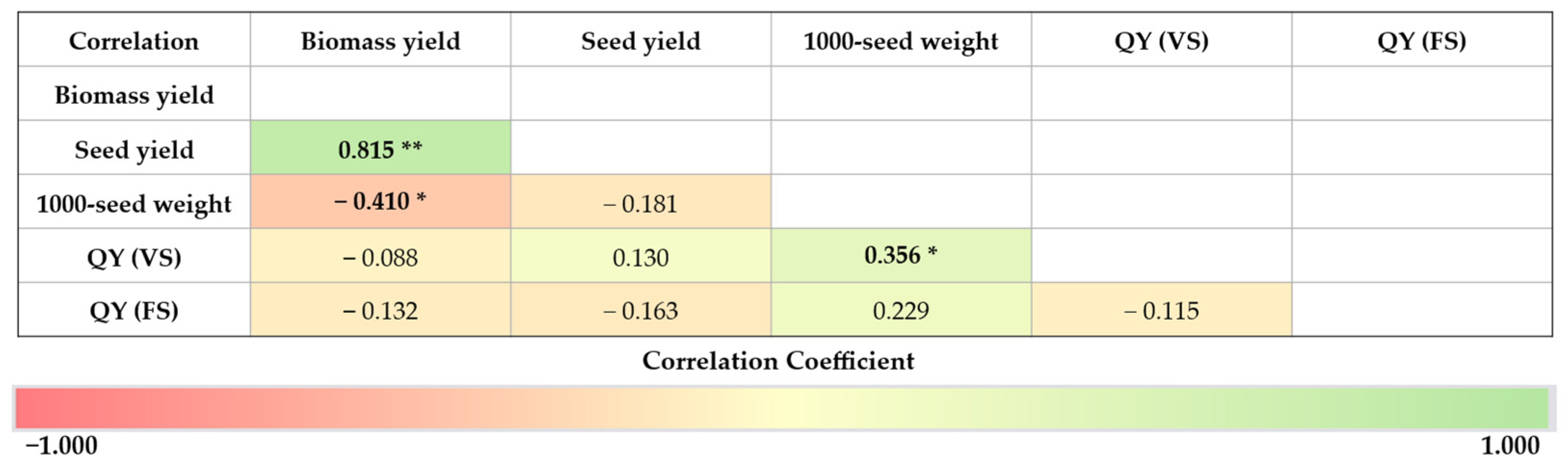
- Physiological traits: Chlorophyll content index (CCI) was determined using a SPAD-502 Plus chlorophyll meter (Konica Minolta, Osaka, Japan), photosynthetic efficiency (Quantum yield, QY) was measured with a FluorPen FP 110 portable fluorometer (PSI Instruments, Drásov, Czech Republic), and leaf area index (LAI) was quantified using an AccuPAR LP-80 ceptometer (METER Group, formerly Decagon Devices, Pullman, WA, USA). Measurements were conducted twice during the growing season (vegetative and flowering stages), on 10 randomly selected plants per plot from the four central rows.
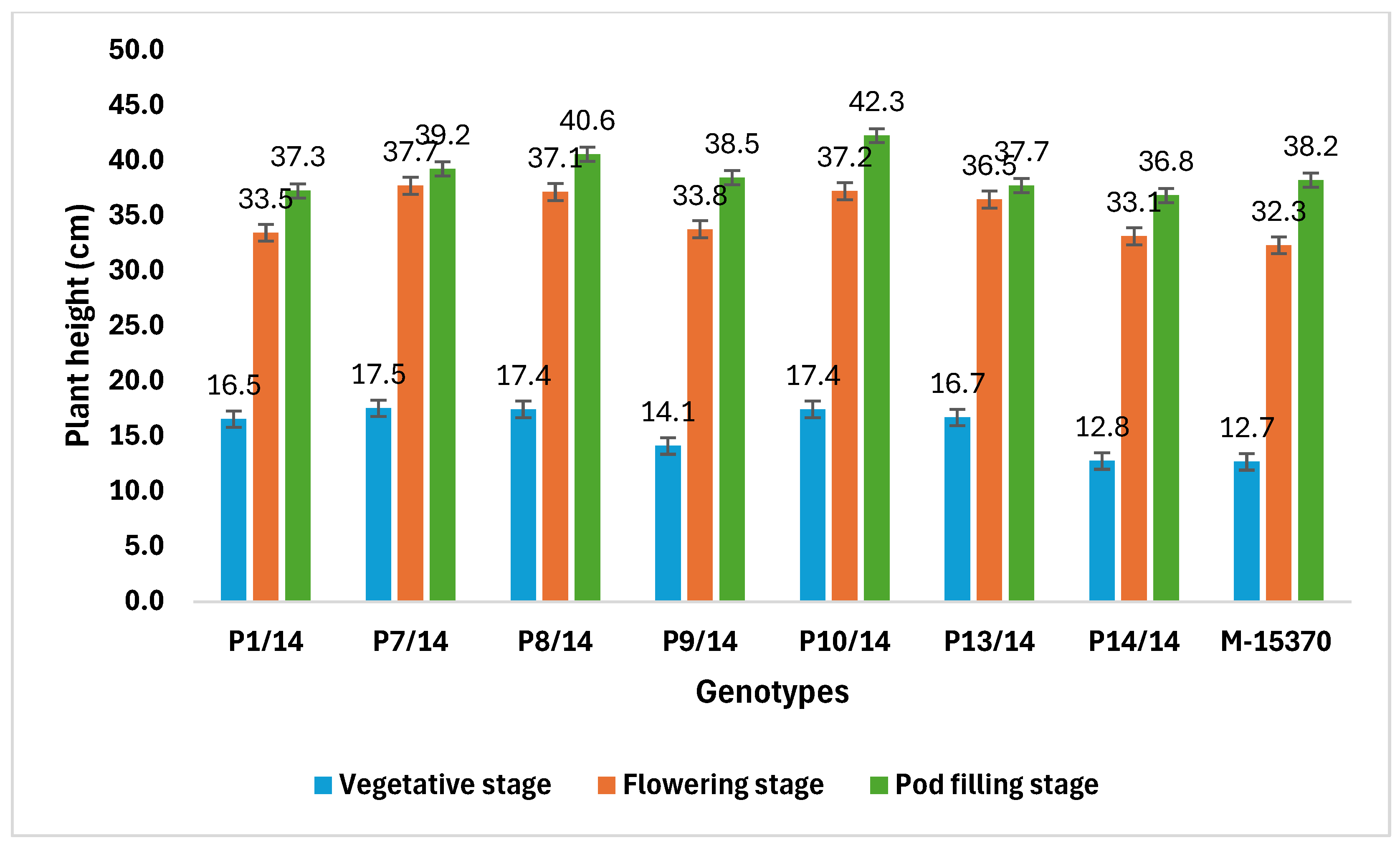
- Growth and yield components: Height at three developmental stages (cm), biomass yield (g/10 plants), seed yield (g/10 plants), and 1000-seed weight (g) were recorded.
2.1.3. Agronomic Practices, Harvesting, and Post-Harvest Management
2.1.4. Data Analysis
2.2. Laboratory Experiment
2.2.1. Plant Genetic Material
2.2.2. Physicochemical Quality Traits
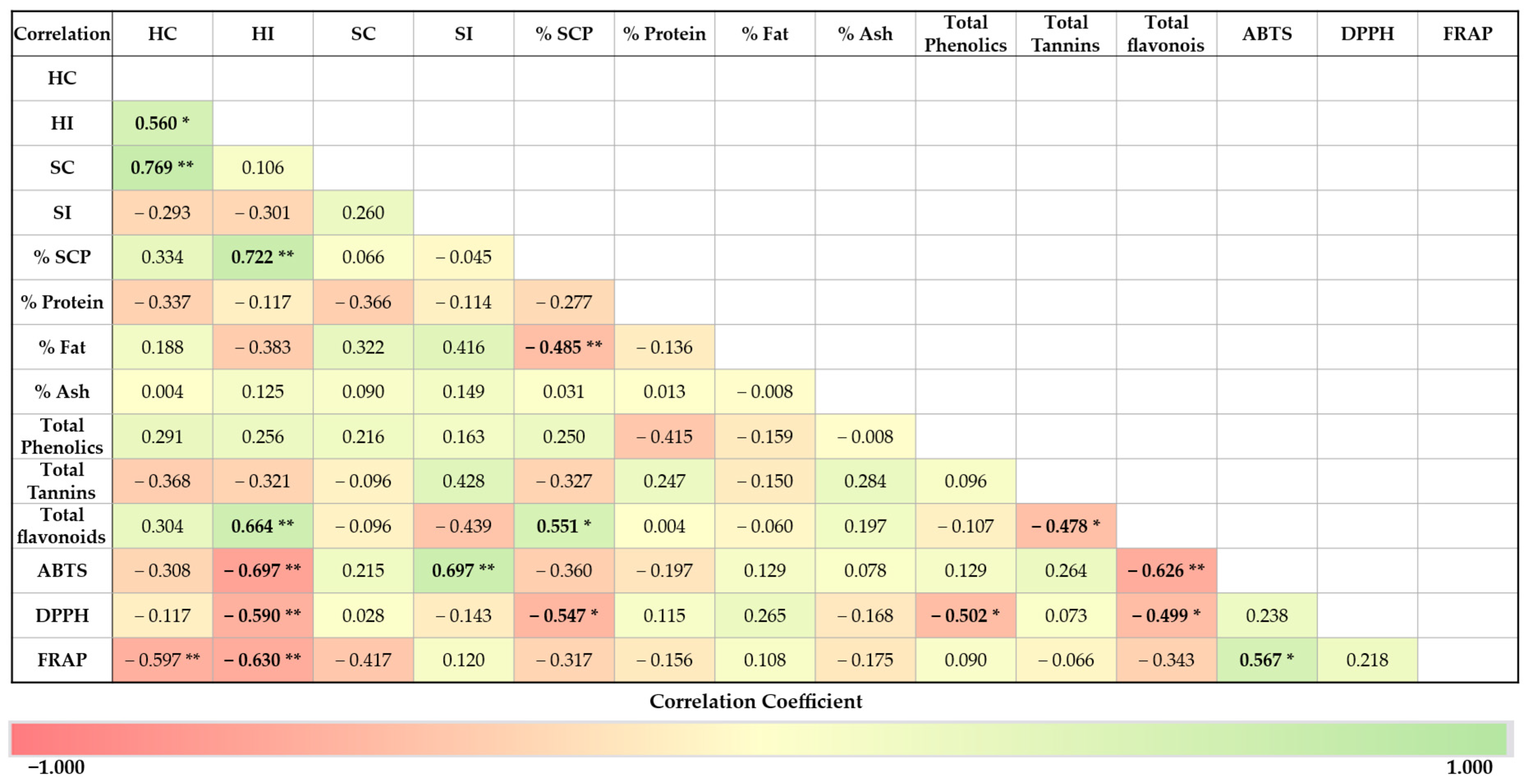
- Hydration Capacity (HC) and Hydration Index (HI): Ten pre-weighed seeds were soaked in 40 mL of distilled water for 24 h at room temperature. After soaking, the seeds were drained, blotted to remove excess water, and weighed. HC was calculated as the increase in seed weight per g of dry seed, and HI was expressed as the ratio of HC to the weight of a single seed [19].
- Swelling Capacity (SC) and Swelling Index (SI): After hydration, the volume of seeds was measured using a graduated cylinder. SC was calculated as the increase in seed volume per g of dry seed, and SI was expressed as the ratio of SC to volume of a single seed [20].
- Seed Coat Percentage (% SCP): Seeds were manually dehulled, and the weight of the seed coat was recorded. % SCP was calculated as the ratio of seed coat weight to total seed weight × 100.
2.2.3. Proximate Composition
- Moisture content: 5 g of seed flour was oven-dried at 105 °C until a constant weight was achieved, and moisture content was expressed as a percentage of the initial weight.
- Protein content: It was determined using the Kjeldahl method, with a conversion factor of 6.25 applied to convert nitrogen content to protein [21].
- Fat content: Fat was extracted using a Soxhlet apparatus with petroleum ether as the solvent and expressed as a percentage of dry seed weight [21].
- Ash content: It was determined by dry ashing 5 g seed flour in a muffle furnace at 550 °C until a constant weight was obtained [21].
- Carbohydrate content: It was assessed by the difference: Carbohydrate % = 100 − (moisture% + protein% + fat% + ash%)
2.2.4. Bioactive Traits
- Phenolic seed extraction: 0.5 g of the seed flour sample was extracted with 10 mL of 70% aqueous acetone using a sonication bath for 20 min. Following sonication, the extracts were centrifuged at 4000 rpm for 10 min, and the supernatants were collected and stored at –20 °C for subsequent analysis of bioactive compounds.
- Total Phenolic Content (TPC): TPC was determined using the Folin–Ciocalteu method according to Singelton et al. [22]. Briefly, phenolic seed extract (200 μL) was mixed with Folin–Ciocalteu reagent diluted 1:10 with water (800 μL) and sodium carbonate solution (2 mL), incubated at room temperature for 60 min, and the absorbance was measured at 725 nm. Gallic acid was used as a standard, and results were expressed as mg gallic acid equivalents (GAE) per 100 g of dry seed.
- Total Tannins (TT): Total tannins were quantified by measuring the difference in TPC before and after treatment with polyvinylpyrrolidone (PVP). The seed extract was mixed with PVP, incubated, and centrifuged. The TPC of the supernatant was measured using the Folin–Ciocalteu method [23].
- Total Flavonoid Content (TFC): TFC was determined based on the reaction of the phenolic extract with NaNO2, followed by aluminum chloride (AlCl3) to form a flavonoid complex [24]. After incubation, absorbance was measured at 510 nm. Catechin was used as a standard, and results were expressed as mg catechin equivalents (CATE) per 100 g of dry seed.
- Antioxidant capacity was assessed using the ABTS, DPPH, and FRAP assays. For the ABTS assay, radical scavenging activity was measured using the ABTS•+ radical cation, with absorbance read at 734 nm. Results were expressed as Trolox equivalents (TE) per 100 g of dry seed [25]. For the DPPH assay, the ability of the seed extract to scavenge DPPH radicals was measured at 516 nm, with results expressed as TE/100 g dry seed [26]. Ferric reducing antioxidant power (FRAP) was determined by measuring the reduction of Fe3+ to Fe2+, with absorbance read at 593 nm, and results expressed as TE/100 g dry seed [27].
- Phenolic Composition/Phenolic Profile: 0.5 g of homogenized chickpea flour was mixed with 5 mL of 70% aqueous acetone and treated for 25 min in an ultrasonic bath. After spinning in a centrifuge at 4000 rpm, the supernatant was evaporated to dryness under a nitrogen stream, reconstituted in 0.3 mL of 50% aqueous methanol, and kept at −20 °C until analyzed. Analysis of phenolic compounds was performed according to the protocol described in Irakli et al. [28]. Briefly, LC–MS measurements were carried out using a Nexera HPLC system (Shimadzu, Kyoto, Japan) equipped with a diode array detector (DAD) and a single quadrupole mass spectrometer equipped with an electrospray ionization (ESI) source. The samples were injected (10 μL) into a reversed-phase column (Poroshell 120 EC-C18, 4 μm, 4.6 × 150 mm, Agilent Technologies). The mobile phase consisted of a mixture of 0.1% formic acid (solvent A) and ACN (solvent B) at a flow rate of 0.4 mL/min. The linear gradient consisted of 15% B for 0 min, 10–25% B for 5 min, 25–35% B for 10 min, 35–60% B for 28 min, 60–100% B for 35 min, and back to 15% B for 40 min. The DAD was set to operate in full scan mode, while the ESI was operated in negative scan mode under the following conditions: interface voltage, +4.5 kV; curved desolvation line (CDL) voltage, 20 V; nebulizing gas (nitrogen) flow, 1.5 L/min; drying gas flow, 15 L/min; block heater temperature, 200 °C; CDL temperature, 250 °C. Lab Solutions LC-MS software (Ver. 5.128.2) was used for data acquisition and processing (Shimadzu, Kyoto, Japan). By contrasting the retention times, UV profiles, and mass spectra of unknown peaks with those of standards, the major phenolic compounds were identified. Both UV and MS spectra were compared with the available literature [29,30,31] to identify isoflavonoid derivatives in the extracts. Quantification was carried out in selective ion monitoring (SIM) mode, constructing calibration curves of corresponding standard solutions at five concentration levels. However, quantification of isoflavonoid isomers was based on standard curves generated by the galangin. All standards and reagents were of the LC-MS purity and purchased from Sigma-Aldrich (Steinheim, Germany). Each analysis was carried out thrice.
2.2.5. Data Analysis
3. Results
3.1. Field Experiment
3.1.1. Analysis of Measurements According to UPOV
3.1.2. Comparative Analysis of Plant Height Across Three Growth Stages
3.1.3. Comparative Analysis of Physiological Measurements
3.1.4. Comparative Analysis of Yield Components
3.1.5. Correlation Coefficient (r) for Photosynthetic Efficiency and Yield Components
3.2. Analytical Measurements
3.2.1. Comparative Analysis of Physicochemical Properties
3.2.2. Comparative Analysis of Nutritional Composition
3.2.3. Comparative Analysis of Bioactive Compounds
3.2.4. Correlation Coefficient (r) Among Physicochemical Properties, Quality Characteristics, and Bioactive Constituents of Chickpea Seeds
3.2.5. Phenolic Profile of Chickpea Genotypes
4. Discussion
5. Conclusions
Supplementary Materials
Author Contributions
Funding
Institutional Review Board Statement
Informed Consent Statement
Data Availability Statement
Acknowledgments
Conflicts of Interest
Abbreviations
| BCA | Biochanin A |
| DAD | Diode array detector |
| CDL | Curved desolvation line |
| Char. | Characteristic |
| HRMS | High-resolution mass spectrometry |
| RCBD | Randomized Complete Block Design |
| UPOV | Union for the Protection Of new Varieties of Plants |
| SPAD | Soil Plant Analysis Development |
| QY | Quantum yield |
| LAI | Leaf area index |
| ANOVA | Analysis of variance |
| CV | Coefficient of variation |
| HC | Hydration capacity |
| HI | Hydration index |
| SC | Swelling capacity |
| SI | Swelling index |
| SCP | Seed coat percentage |
| TPC | Total phenolic content |
| TT | Total tannins |
| PVP | Polyvinylpyrrolidone |
| TFC | Total flavonoid content |
| LC-MS | Liquid chromatography–mass spectrometry |
| ESI | Electrospray ionization |
| SIM | Selective ion monitoring |
| DW | Dry weight |
References
- Singh, R.; Sharma, P.; Varshney, R.K.; Sharma, S.K.; Singh, N.K. Chickpea improvement: Role of wild species and genetic markers. Biotechnol. Genet. Eng. Rev. 2008, 25, 267–314. [Google Scholar] [CrossRef] [PubMed]
- Varshney, R.K.; Thudi, M.; Nayak, S.N.; Gaur, P.M.; Kashiwagi, J.; Krishnamurthy, L.; Jaganathan, D.; Koppolu, J.; Bohra, A.; Tripathi, S.; et al. Genomic strategies for improving drought tolerance in chickpea. Theor. Appl. Genet. 2014, 127, 445–462. [Google Scholar] [CrossRef] [PubMed]
- Devasirvatham, V.; Tan, D.K.Y.; Gaur, P.M.; Raju, T.N.; Trethowan, R.M. High temperature tolerance in chickpea and its implications for plant improvement. Crop Pasture Sci. 2012, 63, 419–428. [Google Scholar] [CrossRef]
- Jukanti, A.K.; Gaur, P.M.; Gowda, C.L.L.; Chibbar, R.N. Nutritional quality and health benefits of chickpea (Cicer arietinum L.): A review. Br. J. Nutr. 2012, 108, S11–S26. [Google Scholar] [CrossRef] [PubMed]
- Zia-Ul-Haq, M.; Iqbal, S.; Ahmad, S.; Imran, M.; Niaz, A.; Bhanger, M.I. Nutritional and compositional study of Desi chickpea (Cicer arietinum L.) cultivars grown in Punjab, Pakistan. Food Chem. 2007, 105, 1357–1363. [Google Scholar] [CrossRef]
- Rocchetti, G.; Chiodelli, G.; Giuberti, G.; Masoero, F.; Trevisan, M.; Lucini, L. Evaluation of phenolic profile and antioxidant capacity in gluten-free flours. Food Chem. 2017, 228, 367–373. [Google Scholar] [CrossRef]
- Zalidis, A.P.; Kalogiouri, N.P.; Mourtzinos, I.; Sarris, D.; Gkatzionis, K. Development and Validation of a LC-QTOF-MS/MS Method to Assess the Phenolic Profile of Pulse Flours. Molecules 2025, 30, 2730. [Google Scholar] [CrossRef]
- Wood, J.A.; Malcolmson, L.J. Pulse milling technologies. In Pulse Foods, 2nd ed.; Tiwari, B.K., Gowen, A., Mckenna, B., Eds.; Academic Press: Cambridge, MA, USA, 2021; pp. 213–263. [Google Scholar] [CrossRef]
- Zhong, L.; Fang, Z.; Wahlqvist, M.L.; Wu, G.; Hodgson, J.M.; Johnson, S.K. Seed coats of pulses as a food ingredient: Characterization, processing, and applications. Trends Food Sci. Technol. 2018, 80, 35–42. [Google Scholar] [CrossRef]
- Grewal, S.K.; Sharma, K.P.; Bharadwaj, R.D.; Hegde, V.; Sidhu, S.K.; Singh, S.; Jain, P.K.; Rasool, S.; Arya, D.K.; Agrawal, P.K.; et al. Characterization of chickpea cultivars and trait specific germplasm for grain protein content and amino acids composition and identification of potential donors for genetic improvement of its nutritional quality. Plant Genet. Resour. Charact. Util. 2022, 20, 383–393. [Google Scholar] [CrossRef]
- Wang, J.; Li, Y.; Li, A.; Liu, R.H.; Gao, X.; Li, D.; Kou, X.; Xue, Z. Nutritional constituent and health benefits of chickpea (Cicer arietinum L.): A review. Food Res. Int. 2021, 150, 110790. [Google Scholar] [CrossRef]
- Gupta, R.K.; Gupta, K.; Sharma, A.; Das, M.; Ansari, I.A.; Dwivedi, P.D. Health risks and benefits of chickpea (Cicer arietinum) consumption. J. Agric. Food Chem. 2017, 65, 6–22. [Google Scholar] [CrossRef] [PubMed]
- Kaur, R.; Prasad, K. Technological, processing and nutritional aspects of chickpea (Cicer arietinum)—A review. Trends Food Sci. Technol. 2021, 109, 448–463. [Google Scholar] [CrossRef]
- Acevedo Martinez, K.A.; Yang, M.M.; Gonzalez de Mejia, E. Technological properties of chickpea (Cicer arietinum): Production of snacks and health benefits related to type 2 diabetes. Compr. Rev. Food Sci. Food Saf. 2021, 20, 3762–3787. [Google Scholar] [CrossRef] [PubMed]
- Gaur, P.M.; Samineni, S.; Thudi, M.; Tripathi, S.; Sajja, S.B.; Jayalakshmi, V.; Mannur, D.M.; Vijayakumar, A.G.; Ganga Rao, N.V.; Ojiewo, C.; et al. Integrated breeding approaches for improving drought and heat adaptation in chickpea (Cicer arietinum L.). Plant Breed. 2019, 138, 389–400. [Google Scholar] [CrossRef]
- Krishnamurthy, L.; Kashiwagi, J.; Gaur, P.M.; Upadhyaya, H.D.; Vadez, V. Sources of tolerance to terminal drought in the chickpea (Cicer arietinum L.) minicore germplasm. Field Crops Res. 2010, 119, 322–330. [Google Scholar] [CrossRef]
- Aguilera, Y.; Estrella, I.; Benitez, V.; Mollá, E.; Martín-Cabrejas, M.A. Phenolic profile and antioxidant capacity of chickpeas (Cicer arietinum L.) as affected by a dehydration process. Plant Foods Hum. Nutr. 2011, 66, 187–195. [Google Scholar] [CrossRef]
- Llorach, R.; Favari, C.; Alonso, D.; Garcia-Aloy, M.; Andres-Lacueva, C.; Urpi-Sarda, M. Comparative metabolite fingerprinting of legumes using LC-MS-based untargeted metabolomics. Food Res. Int. 2019, 126, 108666. [Google Scholar] [CrossRef]
- Williams, P.M.; El-Haramein, F.J.; Nakkoul, H.; Rihawi, S. Crop Quality Evaluation Methods and Guidelines. In Technical Manual No. 14; ICARDA: Aleppo, Syria, 1986. [Google Scholar]
- Badshah, A.; Ahmed, M.; Zeb, A.; Bibi, N.; Tila, M.; Khan, I. Relationships between physicochemical characters and cooking time in chickpea (Cicer arietinum L.). Pak. J. Sci. Ind. Res. 1987, 30, 795–798. [Google Scholar]
- AOAC International. Official Methods of Analysis, 17th ed.; AOAC International: Gaithersburg, MD, USA, 2005. [Google Scholar]
- Singleton, V.L.; Orthofer, R.; Lamuela-Raventos, R.M. Analysis of total phenols and other oxidation substrates and antioxidants by means of Folin–Ciocalteu reagent. Methods Enzymol. 1999, 299, 152–178. [Google Scholar] [CrossRef]
- Makkar, H.P.S.; Blümmel, M.; Borowy, N.K.; Becker, K. Gravimetric determination of tannins and their correlations with chemical and protein precipitation methods. J. Sci. Food Agric. 1993, 61, 161–165. [Google Scholar] [CrossRef]
- Bao, J.; Cai, Y.; Sun, M.; Wang, G.; Corke, H. Anthocyanins, flavonols, and free radical scavenging activity of Chinese bayberry (Myrica rubra) extracts and their color properties and stability. J. Agric. Food Chem. 2005, 53, 2327–2332. [Google Scholar] [CrossRef]
- Re, R.; Pellegrini, N.; Proteggente, A.; Pannala, A.; Yang, M.; Rice-Evans, C. Antioxidant activity applying an improved ABTS radical cation decolorization assay. Free Radic. Biol. Med. 1999, 26, 1231–1237. [Google Scholar] [CrossRef] [PubMed]
- Yen, G.C.; Chen, H.Y. Antioxidant activity of various tea extracts in relation to their antimutagenicity. J. Agric. Food Chem. 1995, 43, 27–32. [Google Scholar] [CrossRef]
- Benzie, I.F.F.; Strain, J.J. Ferric reducing/antioxidant power assay: Direct measure of total antioxidant activity of biological fluids and modified version for simultaneous measurement of total antioxidant power and ascorbic acid concentration. Methods Enzymol. 1999, 299, 15–23. [Google Scholar] [CrossRef] [PubMed]
- Irakli, M.; Skendi, A.; Bouloumpasi, E.; Chatzopoulou, P.; Biliaderis, C.G. LC–MS identification and quantification of phenolic compounds in solid residues from the essential oil industry. Antioxidants 2021, 10, 2016. [Google Scholar] [CrossRef]
- Shang, X.; Dou, Y.; Zhang, Y.; Tan, J.N.; Liu, X.; Zhang, Z. Tailor-made natural deep eutectic solvents for green extraction of isoflavones from chickpea (Cicer arietinum L.) sprouts. Ind. Crops Prod. 2019, 140, 111724. [Google Scholar] [CrossRef]
- Vacek, J.; Klejdus, B.; Lojková, L.; Kubán, V. Current trends in isolation, separation, determination and identification of isoflavones: A review. J. Sep. Sci. 2008, 31, 2054–2067. [Google Scholar] [CrossRef]
- Zhao, S.; Zhang, L.; Gao, P.; Shao, Z. Isolation and characterisation of the isoflavones from sprouted chickpea seeds. Food Chem. 2009, 114, 869–873. [Google Scholar] [CrossRef]
- Boukid, F. Chickpea (Cicer arietinum L.) protein as a prospective plant-based ingredient: A review. Int. J. Food Sci. Technol. 2021, 56, 5435–5444. [Google Scholar] [CrossRef]
- Sandhu, J.S.; Tripathi, S.; Chaturvedi, S.K. Chickpea Nutritional Status and Value Chain for Sustainable Development. In Sustainable Food Value Chain Development: Perspectives from Developing and Emerging Economies; Springer: Singapore, 2023; pp. 175–183. [Google Scholar] [CrossRef]
- Koskosidis, A.; Khah, E.; Mavromatis, A.; Irakli, M.; Vlachostergios, D.N. Effect of genotype and sowing period on chickpea quality, bioactive and antioxidant traits. Legume Res. 2025, 44, 1026–1031. [Google Scholar] [CrossRef]
- Aydemir, L.Y.; Yemenicioğlu, A. Potential of Turkish Kabuli type chickpea and green and red lentil cultivars as source of soy and animal origin functional protein alternatives. LWT-Food Sci. Technol. 2013, 50, 686–694. [Google Scholar] [CrossRef]
- Martínez-Preciado, A.H.; Ponce-Simental, J.A.; Schorno, A.L.; Contreras-Pacheco, M.L.; Michel, C.R.; Rivera-Ortiz, K.G.; Soltero, J.F.A. Characterization of nutritional and functional properties of “Blanco Sinaloa” chickpea (Cicer arietinum L.) variety, and study of the rheological behavior of hummus pastes. J. Food Sci. Technol. 2020, 57, 1856–1865. [Google Scholar] [CrossRef] [PubMed]
- Heiras-Palazuelos, M.J.; Ochoa-Lugo, M.I.; Gutiérrez-Dorado, R.; López-Valenzuela, J.A.; Mora-Rochín, S.; Milán-Carrillo, J.; Garzón-Tiznado, J.A.; Reyes-Moreno, C. Technological properties, antioxidant activity and total phenolic and flavonoid content of pigmented chickpea (Cicer arietinum L.) cultivars. Int. J. Food Sci. Nutr. 2013, 64, 69–76. [Google Scholar] [CrossRef] [PubMed]
- Kaur, M.; Singh, N.; Singh Sodhi, N. Physicochemical, cooking, textural and roasting characteristics of chickpea (Cicer arietinum L.) cultivars. J. Food Eng. 2005, 69, 511–517. [Google Scholar] [CrossRef]
- Yegrem, L. Nutritional composition, antinutritional factors, and utilization trends of Ethiopian chickpea (Cicer arietinum L.). Int. J. Food Sci. 2021, 2021, 5570753. [Google Scholar] [CrossRef]
- Xu, B.J.; Yuan, S.H.; Chang, S.K.C. Comparative analyses of phenolic composition, antioxidant capacity, and color of cool season legumes and other selected food legumes. J. Food Sci. 2007, 72, S167–S177. [Google Scholar] [CrossRef]
- Kaur, K.; Grewal, S.K.; Gill, P.S.; Singh, S. Comparison of cultivated and wild chickpea genotypes for nutritional quality and antioxidant potential. J. Food Sci. Technol. 2019, 56, 1864–1876. [Google Scholar] [CrossRef]
- Idate, A.; Shah, R.; Gaikwad, V.; Kumathekar, S.; Temgire, S. A comprehensive review on antinutritional factors of chickpea (Cicer arietinum L.). Pharma Innov. J. 2021, 10, 816–823. [Google Scholar] [CrossRef]
- Alajaji, S.A.; El-Adawy, T.A. Nutritional composition of chickpea (Cicer arietinum L.) as affected by microwave cooking and other traditional cooking methods. J. Food Compos. Anal. 2006, 19, 806–812. [Google Scholar] [CrossRef]
- Abd El Hady, E.A.; Habiba, R.A. Effect of soaking and extrusion conditions on antinutrients and protein digestibility of legume seeds. LWT-Food Sci. Technol. 2003, 36, 285–293. [Google Scholar] [CrossRef]
- Kumar, R. Antinutritional factors, the potential risks of toxicity and methods to alleviate them. In Legume Trees and Other Fodder Trees as Protein Sources for Livestock; Speedy, A., Pugliese, P.C., Eds.; FAO Corporate Document Repository: Kuala Lumpur, Malaysia, 1991; pp. 145–160. Available online: https://www.fao.org/4/t0632e/t0632e10.htm (accessed on 10 November 2025).
- Magalhães, S.C.Q.; Taveira, M.; Cabrita, A.R.J.; Fonseca, A.J.M.; Valentão, P.; Andrade, P.B. European marketable grain legume seeds: Further insight into phenolic compounds profiles. Food Chem. 2017, 215, 177–184. [Google Scholar] [CrossRef]
- Wu, Z.; Song, L.; Feng, S.; Liu, Y.; He, G.; Yioe, Y.; Liu, S.Q.; Huang, D. Germination dramatically increases isoflavonoid content and diversity in chickpea (Cicer arietinum L.) seeds. J. Agric. Food Chem. 2012, 60, 8606–8615. [Google Scholar] [CrossRef]
- Megías, C.; Cortés-Giraldo, I.; Alaiz, M.; Vioque, J.; Girón-Calle, J. Isoflavones in chickpea (Cicer arietinum) protein concentrates. J. Funct. Foods 2016, 21, 186–192. [Google Scholar] [CrossRef]
- Olika, E.; Abera, S.; Fikre, A. Physicochemical properties and effect of processing methods on mineral composition and antinutritional factors of improved chickpea (Cicer arietinum L.) varieties grown in Ethiopia. Int. J. Food Sci. 2019, 2019, 9614570. [Google Scholar] [CrossRef]



| Genotype | CCI | QY | LAI | |||
|---|---|---|---|---|---|---|
| VS | FS | VS | FS | VS | FS | |
| P1/14 | 57.7 a | 64.9 a | 0.73 a | 0.71 a | 0.67 a | 1.4 a |
| P7/14 | 67.6 a | 60.0 ab | 0.72 a | 0.69 ab | 0.62 a | 1.1 a |
| P8/14 | 66.8 a | 66.5 a | 0.74 a | 0.71 a | 0.98 a | 2.1 a |
| P9/14 | 65.0 a | 55.5 ab | 0.72 a | 0.70 ab | 1.0 a | 1.7 a |
| P10/14 | 68.3 a | 66.4 a | 0.73 a | 0.72 a | 0.88 a | 1.9 a |
| P13/14 | 64.9 a | 62.0 ab | 0.72 a | 0.70 ab | 0.48 a | 0.8 a |
| P14/14 | 63. 6 a | 54.3 ab | 0.72 a | 0.67 b | 0.71 a | 1.8 a |
| M-15370 | 45.2 b | 51.9 b | 0.70 a | 0.70 ab | 0.82 a | 1.7 a |
| Genotype | Biomass Yield | Seed Yield | 1000-Seed Weight |
|---|---|---|---|
| (g/10 Plants) | (g/10 Plants) | (g) | |
| P1/14 | 303.5 bc | 84.5 a | 457.1 c |
| P7/14 | 282.5 c | 89.2 a | 473.8 bc |
| P8/14 | 360 bc | 101.5 a | 490.8 abc |
| P9/14 | 981.8 a | 131 a | 436.7 c |
| P10/14 | 417.4 bc | 104.6 a | 534.6 a |
| P13/14 | 292.3 c | 83.1 a | 516.7 ab |
| P14/14 | 663.8 ab | 133.7 a | 461.3 c |
| M-15370 | 924.4 a | 149.5 a | 296.7 d |
| Genotype | HC | HI | SC | SI | %SCP |
|---|---|---|---|---|---|
| P1/14 | 0.588 bc | 1.08 abc | 0.50 c | 1.0 d | 4.7 abcd |
| P7/14 | 0.626 ab | 1.12 ab | 0.58 bc | 1.4 bcd | 5.0 ab |
| P8/14 | 0.645 ab | 1.16 a | 0.65 b | 1.6 ab | 5.2 a |
| P9/14 | 0.525 cd | 1.02 bcde | 0.50 c | 1.3 cd | 4.2 d |
| P10/14 | 0.658 ab | 1.07 abcd | 0.60 bc | 1.2 cd | 4. 8 abc |
| P13/14 | 0.655 ab | 1.09 abc | 0.60 bc | 1.2 cd | 4.7 abcd |
| P14/14 | 0.508 d | 0.95 e | 0.60 bc | 1.5 abc | 4.2 d |
| M-15370 | 0.331 e | 0.97 de | 0.35 d | 1.8 a | 4.4 bcd |
| Blanco Sinaloa | 0.698 a | 1.00 cde | 0.85 a | 1.7 ab | 4.4 cd |
| Genotype | % Protein DW | % Fat DW | % Ash DW | % Carbohydrates DW |
|---|---|---|---|---|
| P1/14 | 24.3 ab | 6.0 ab | 4.3 a | 65.5 bc |
| P7/14 | 22.6 d | 5.7 ab | 4.2 a | 67.5 a |
| P8/14 | 24.7 ab | 4.7 c | 4.2 a | 66.4 b |
| P9/14 | 25.4 a | 6.2 a | 3.9 a | 64.5 c |
| P10/14 | 22.9 cd | 5.8 ab | 3.9 a | 67.5 a |
| P13/14 | 23.8 bc | 5.5 abc | 4.3 a | 66.4 b |
| P14/14 | 24.3 ab | 5.7 ab | 4.3 a | 65.8 bc |
| M-15370 | 23.9 bc | 5.1 bc | 4.2 a | 66.8 ab |
| Blanco Sinaloa | 22.8 cd | 6.4 a | 4.2 a | 66.7 ab |
| Genotype | TPC (mg GAE/100 g DW) | TT (mg GAE/100 g DW) | TFC (mg CATE/100 g DW) |
|---|---|---|---|
| P1/14 | 44.9 ab | 17.0 b | 20.8 a |
| P7/14 | 48.1 ab | 23.1 a | 18.8 ab |
| P8/14 | 47.7 ab | 22.0 a | 16.8 abc |
| P9/14 | 43.5 ab | 23.8 a | 13.0 cd |
| P10/14 | 46.7 ab | 10.5 c | 15.0 bcd |
| P13/14 | 43.9 ab | 24.8 a | 15.4 bcd |
| P14/14 | 42.0 b | 24.5 a | 12.1 cd |
| M-15370 | 46.8 ab | 27.1 a | 11.9 d |
| Blanco Sinaloa | 49.2 a | 24.6 a | 11.2 d |
| Genotype | ABTS (mg TE/100 g DW) | DPPH (mg TE/100 g DW) | FRAP (mg TE/100 g DW) |
|---|---|---|---|
| P1/14 | 46.0 d | 9.7 bc | 69.7 b |
| P7/14 | 45.5 d | 6.3 c | 61.3 bc |
| P8/14 | 49.3 d | 6.2 c | 58.8 c |
| P9/14 | 46.4 d | 12.4 bc | 63.1 bc |
| P10/14 | 52.8 cd | 13.3 b | 70.0 b |
| P13/14 | 47.3 d | 15.0 ab | 60.7 bc |
| P14/14 | 57.1 bc | 19.9 a | 67.0 bc |
| M-15370 | 63.1 ab | 10.5 bc | 78.6 a |
| Blanco Sinaloa | 65.1 a | 11.5 bc | 68.2 b |
| Isoflavones | P1/14 | P7/14 | P8/14 | P9/14 | P10/14 | P13/14 | P14/14 | BS 1 | M-15370 |
|---|---|---|---|---|---|---|---|---|---|
| biochanin B | 4.6 ± 0.57 2 | 2.6 ± 0.44 | 2.1 ± 0.23 | 1.3 ± 0.20 | 3.4 ± 0.42 | 1.2 ± 0.17 | 3.5 ± 0.49 | 1.2 ± 0.20 | 3.2 ± 0.27 |
| biochanin B derivative | 2.7 ± 0.29 | 8.6 ± 0.55 | 1. 8 ± 0.28 | 2.2 ± 0.38 | 2.9 ± 0.47 | 2.8 ± 0.26 | 3.7 ± 0.34 | 3.4 ± 0.33 | 5.3 ± 0.61 |
| biochanin A | 15.6 ± 1.10 | 5.9 ± 0.66 | 11. 5 ± 0.83 | 16.0 ± 1.00 | 13.6 ± 0.46 | 13.7 ± 0.54 | 19.4 ± 0.25 | 24.3 ± 1.02 | 21.1 ± 0.54 |
| biochanin A derivative | 9.6 ± 0.44 | 21. 0 ± 1.04 | 2.8 ± 0.10 | 10.7 ± 0.30 | 15.1 ± 0.93 | 9.1 ± 0.54 | 20.6 ± 1.40 | 15.0 ± 0.88 | 30.6 ± 1.02 |
| biochanin A 7-O-glucoside | 4.2 ± 0.38 | 5.7 ± 0.66 | 3.2 ± 0.32 | 5.1 ± 0.06 | 4.4 ± 0.39 | 4.1 ± 0.41 | 5.5 ± 0.48 | 6.1 ± 0.83 | 6.1 ± 0.18 |
| Total isoflavones | 36.7 | 43.6 | 21.3 | 35.2 | 39.4 | 30.8 | 52.7 | 50.1 | 66.2 |
Disclaimer/Publisher’s Note: The statements, opinions and data contained in all publications are solely those of the individual author(s) and contributor(s) and not of MDPI and/or the editor(s). MDPI and/or the editor(s) disclaim responsibility for any injury to people or property resulting from any ideas, methods, instructions or products referred to in the content. |
© 2026 by the authors. Licensee MDPI, Basel, Switzerland. This article is an open access article distributed under the terms and conditions of the Creative Commons Attribution (CC BY) license.
Share and Cite
Papanikolaou, A.; Irakli, M.; Kampas, K.; Pankou, C.; Nianiou-Obeidat, I.; Mavromatis, A.G. Nutritional and Bioactive Seed Components in Chickpea Advanced Breeding Lines Assessed by Chemical Analysis and LC–MS Profiling. Seeds 2026, 5, 8. https://doi.org/10.3390/seeds5010008
Papanikolaou A, Irakli M, Kampas K, Pankou C, Nianiou-Obeidat I, Mavromatis AG. Nutritional and Bioactive Seed Components in Chickpea Advanced Breeding Lines Assessed by Chemical Analysis and LC–MS Profiling. Seeds. 2026; 5(1):8. https://doi.org/10.3390/seeds5010008
Chicago/Turabian StylePapanikolaou, Aikaterini, Maria Irakli, Konstantinos Kampas, Chrysanthi Pankou, Irini Nianiou-Obeidat, and Athanasios G. Mavromatis. 2026. "Nutritional and Bioactive Seed Components in Chickpea Advanced Breeding Lines Assessed by Chemical Analysis and LC–MS Profiling" Seeds 5, no. 1: 8. https://doi.org/10.3390/seeds5010008
APA StylePapanikolaou, A., Irakli, M., Kampas, K., Pankou, C., Nianiou-Obeidat, I., & Mavromatis, A. G. (2026). Nutritional and Bioactive Seed Components in Chickpea Advanced Breeding Lines Assessed by Chemical Analysis and LC–MS Profiling. Seeds, 5(1), 8. https://doi.org/10.3390/seeds5010008