Article

Factors Associated with STI Screening Uptake Among Adolescent Girls and Young Women in Namibia

1
School of Health Systems and Public Health, Faculty of Health Sciences, University of Pretoria, Pretoria 0028, South Africa
2
Department of Mechanical and Metallurgical Engineering, Faculty of Engineering and Information and Technology, University of Namibia, Ongwediva 15006, Namibia
3
Project HOPE—The People-to-People Health Foundation, Inc., Windhoek 10005, Namibia
4
Project HOPE Namibia, Windhoek 10005, Namibia
5
Medical Centre Oshakati, Oshakati 15001, Namibia
6
School of Nursing & Public Health, College of Health Sciences, University of Kwa-Zulu Natal, Durban 4041, South Africa
7
Department of Applied Information Systems, University of Johannesburg, Johannesburg 2006, South Africa
8
Department of Information Technology, Faculty of Engineering and Technology, Botho University, Maseru 100, Lesotho
9
Graduate Business School, Chinhoyi University of Technology, Chinhoyi Private Bag 7724, Zimbabwe
10
Department of Production Animal Clinical Studies, School of Veterinary Medicine, University of Namibia, Windhoek 10026, Namibia
11
Africa Centre for Inclusive Health Management, Faculty of Economic and Management Sciences, Stellenbosch University, Stellenbosch 7600, South Africa
*
Author to whom correspondence should be addressed.
Venereology 2026, 5(2), 15; https://doi.org/10.3390/venereology5020015
Submission received: 27 April 2026 / Revised: 30 May 2026 / Accepted: 2 June 2026 / Published: 3 June 2026

Abstract

Background: Sexually transmitted infections (STIs) remain a major public health concern among adolescent girls and young women (AGYW) in sub-Saharan Africa (SSA). Although routine STI screening is essential for early diagnosis and prevention, uptake among AGYW is often suboptimal and influenced by multiple individual and contextual factors. This study assessed factors associated with STI screening uptake among AGYW enrolled in HIV prevention programs in Namibia. Methods: A secondary analysis of anonymized programmatic data was conducted among AGYW aged 15–24 years who received services through the DREAMS project and REACH PHN activity between 2018 and 2024. Descriptive statistics, Chi-square tests, and multivariable logistic regression analyses were performed to identify factors associated with STI screening uptake. Results: A total of 26,689 AGYW were included in the analysis, of whom 97.2% were screened for STIs. STI screening uptake was significantly associated with district of residence, year of enrolment, inconsistent or no condom use, perceived risk of HIV infection, use of family planning, and having had sex under the influence of alcohol or drugs. AGYW who perceived themselves to be at risk of HIV and those using family planning methods had higher odds of STI screening, while those who reported sex under the influence of alcohol or drugs were less likely to be screened. Significant geographic disparities in screening uptake were also observed across districts. Conclusions: STI screening uptake among AGYW enrolled in HIV prevention programs in Namibia was high. While this may reflect the effectiveness of integrated, community-based service delivery models, the results should be interpreted with caution, as they are based on a convenience sample. However, behavioural and geographic disparities persist. Strengthening integrated sexual and reproductive health services, addressing substance-related barriers, and implementing targeted district-level interventions may further improve equitable access to STI screening among AGYW.

1. Introduction

Sexually transmitted infections (STIs) continue posing a significant global health concern, disproportionately affecting adolescents and young adults. The global burden of STIs is substantial and has a significant impact on sexual and reproductive health, which may lead to potentially serious complications. For instance, the World Health Organization reports that every day, globally, more than 1 million curable STIs (trichomoniasis, syphilis, chlamydia, and gonorrhoea) are acquired by people 15–49 years old, the majority of which are asymptomatic [1]. An estimated 374 million new infections occur annually in people aged 15–49 years [2,3]. STIs predominantly spread through unprotected sexual contact, such as vaginal, anal, and oral sex [4]. However, some STIs, such as syphilis, chlamydia, and gonorrhoea, can be transmitted through contact with infected blood or blood products, injecting drug use, during pregnancy, and childbirth. Among other population groups, adolescent girls and young women (AGYW) are particularly vulnerable [4] due to a combination of biological susceptibility, gender inequality [5], early sexual debut [6], alcohol and substance use [7,8], age-disparate relationships, inconsistent condom use [9], limited autonomy in sexual decision-making and barriers to accessing health services [10]. Untreated STIs can result in serious reproductive health complications, such as infertility [11], pelvic inflammatory disease [12,13], adverse pregnancy outcomes [14], and increased risk of HIV acquisition [11].
In sub-Saharan Africa (SSA), STI prevalence remains high [15], yet screening and early diagnosis among young populations are often inadequate [8,16], and access to resources remains limited [17,18]. Although many STIs are asymptomatic, routine screening is paramount for timely treatment and prevention of onward transmission. However, screening uptake among AGYW is influenced by multiple factors. Such factors include age [4,19], education, socio-economic status, sexual behaviour, stigma [6], health system accessibility, and awareness of STI services. In Namibia, significant progress has been made in strengthening sexual and reproductive health (SRH) services [20], particularly through integration with HIV prevention programs. Nevertheless, disparities in service utilization persist among adolescents and young women. Cultural norms, stigma [16,19], fear of discrimination [21], gender-based violence [22], sociocultural barriers [23], confidentiality concerns, and limited youth-friendly services continue to impede access to STI screening uptake. Moreover, evidence on the determinants of STI screening uptake among AGYW in Namibia remains limited. Therefore, this study seeks to address this gap by analysing individual-level factors associated with STI screening uptake among AGYW in Namibia to inform targeted public health interventions and improve sexual and reproductive health outcomes.

2. Methods

2.1. Study Design and Ethical Considerations

This secondary analysis examined programmatic data from AGYW aged 15–24 who received services through the Determined, Resilient, Empowered, AIDS-free, Mentored, and Safe (DREAMS) project and Reducing HIV Vulnerability: Integrated Child and Youth Health (REACH) Project Hope Namibia (PHN) activity, implemented by the PHN-led consortium from 4 June 2018 to 31 July 2023 and from 31 June 2023 to 31 August 2024, respectively. The study used a convenience sample of AGYW, as they were already enrolled in the DREAMS program. The study focused on STI screening among AGYW in the programs. The ethical considerations for the DREAMS program are explained in another publication [5]. No ethical clearance application was required for this study, as it involved secondary analysis of anonymized data.

2.2. Program Intervention and Population

Community engagement was conducted before the program was implemented. The program delivered a comprehensive package of SRH and HIV services through outreach teams linked to high-volume healthcare facilities. These teams, comprising nurses, peer educators, and social workers, extended services from health facilities into surrounding communities. Key interventions included HIV testing, rapid initiation of ART, provision of PrEP, distribution of short-acting contraceptive methods and condoms, post-violence care, and syndromic management of sexually transmitted infections (STIs).
To ensure that AGYW received services tailored to their specific needs, outreach teams conducted regular visits to group-based community platforms. Private and confidential consultations were provided in a variety of settings, including schools, church premises, temporary tents, and program vehicles. Awareness of service availability, schedules, and healthcare options was promoted through multiple communication channels, including flyers, posters, local radio broadcasts, social media platforms, and direct engagement by program personnel.
Medical supplies and commodities were procured through hub health facilities using established supply chain management systems. All services were delivered in accordance with national guidelines and documented using MOHSS-approved registers. Clinical oversight and quality assurance were maintained through supervision by nurse mentors and a program physician. Screening and management of sexually transmitted infections constituted a core component of the DREAMS intervention package and were integrated as essential elements of the program’s service delivery model. The other core components of the DREAMS intervention are discussed in other publications [5,20]. DREAMS supported STI prevention and control by training staff on STI management, increasing AGYW and sexual partner literacy about STIs, implementing routine STI screening at all entry points and using the syndromic management approach to diagnose and treat STIs.

2.3. Data Source

Anonymised data from the DREAMS program databases, including the DREAMS project and the REACH PHN activity, were used in this study. PrEP client records and clinical registers were the source documents for the data.

2.4. Outcome Variable (STI Screening: Screened vs. Non-Screened)

The outcome variable for this study was ‘STI screening.’ The responses to this statement were ‘Not screened,’ ‘Screened, needs treatment,’ ‘Screened, already on treatment,’ ‘Screened, no treatment needed,’ and ‘Refused.’ Participants who stated they were not screened were excluded from the analysis, as the reasons for non-screening were related to healthcare providers. Participants who declined screening were reclassified as ‘Not screened’, while the rest were reclassified as ‘Screened.’ Participants who were screened were assigned a code of ‘2,’ while those not screened were assigned a code of ‘1.’

2.5. Explanatory Variables

There were 15 explanatory variables in this study. The variables included the participants’ age, the number of biological children they had, their district, their participation in safe space HIV prevention sessions, their year of enrolment, their use of family planning, and knowledge of their partner’s HIV status. Additionally, the other explanatory variables were the consistency of condom use, experience of sexual violence, status of recurrent use of PEP, status of having sex under the influence of alcohol and drugs, the number of sexual partners, consideration of risk of HIV, and pregnancy or breastfeeding status.
The dataset’s discrete numerical age was recoded into 15–19 and 20–24 age categories. Pregnancy or breastfeeding status was categorized as ‘pregnant,’ ‘breastfeeding,’ or ‘neither.’ The number of biological children was categorized as ‘0 children,’ ‘1–2 children,’ or ‘≥three children.’ Responses to participation in safe space HIV prevention sessions, use of family planning, knowledge of partner’s HIV status, the consistency of condom use, experience of sexual violence, status of recurrent use of PEP, status of having sex under the influence of alcohol and drugs, the number of sexual partners, and consideration of risk of HIV were either ‘yes,’ or ‘no.’

2.6. Data Analysis

Data from DHIS2 were analysed with IBM SPSS version 29. Statistics such as percentages and frequencies were used to analyse nominal and ordinal data. Chi-square testing examined STI screening and participants’ characteristics. Statistically significant characteristics revealed in Chi-square tests were examined using binomial logistic regression to assess their associations with STI screening. Statistically significant characteristics revealed in binomial logistic regression were included in the multivariable logistic regression model. Multivariable logistic regression was used to calculate adjusted odds ratios for characteristics with statistically significant associations with STI screening at p-values < 0.05.

3. Results

3.1. Characteristics and Risk Factors of Participants

A total of 26,689 participants were included in this analysis. The majority of the participants were in the 20–24-years age group (n = 15,537; 58.2%), did not have children (n = 22,589; 84.6%), had not participated in safe space HIV prevention sessions (22,472; 84.2%), were not using any family planning method (19,455; 72.9%), knew their partner’s HIV status (n = 14,181; 53.1%), were not victims of sexual violence (n = 26,633; 99.8%), and were not recurrent PEP users (n = 26,658; 99.9%). Additionally, the majority of the participants did not have sex under the influence of alcohol or drugs (n = 26,521; 99.4%), did not have multiple or recurrent sexual partners (n = 26,241; 98.3%), considered themselves at risk of HIV (n = 17,381; 65.1%), and were neither pregnant nor breastfeeding (n = 25,794; 96.6%). Refer to Table 1 for more details.

3.2. STI Screening Status

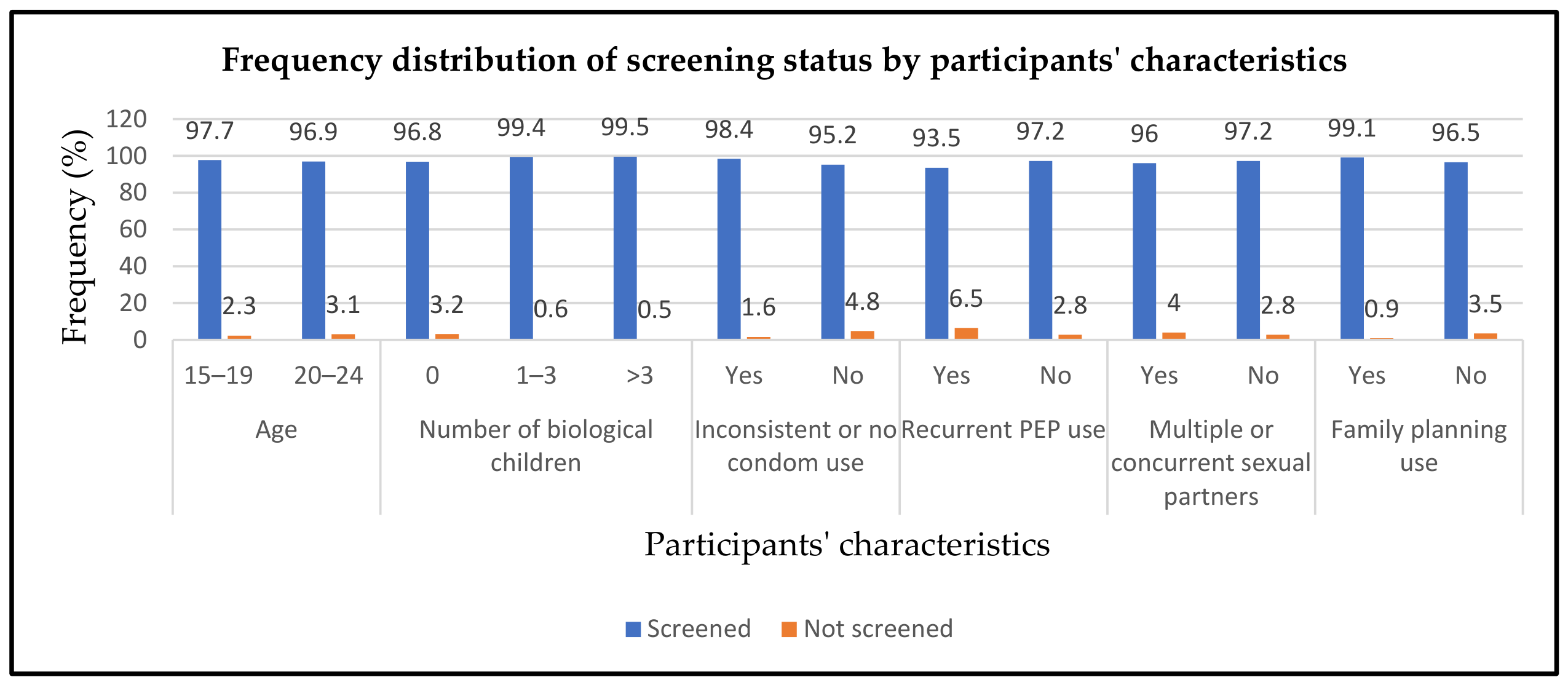
Among the 26,689 AGYW included in the analysis, 25,948 (97.2%) were screened for STIs. The results also reveal that more than 95% of participants in each age group and the biological children group were screened for STIs. More than 95% of participants who used or did not use condoms, were recurrent PEP users or not, used family planning or not, and had multiple or concurrent sexual partners or not, were screened for STIs. More details are in Figure 1.
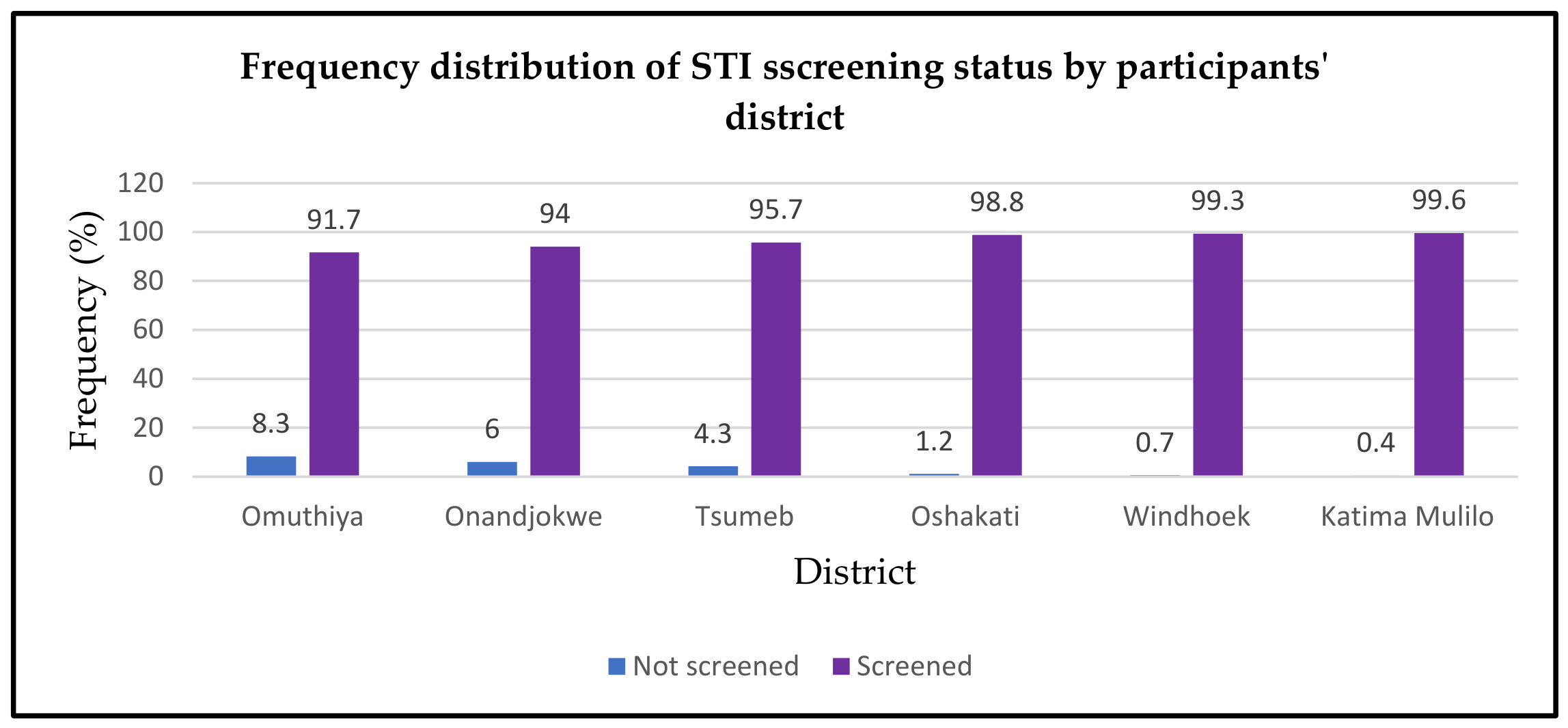
The results also show that Katima Mulilo had the highest prevalence of STI screening (99.6%), while Omuthiya had the lowest (91.7%). More details are in Figure 2 below.

3.3. Participants’ Characteristics Associated with STI Screening

The Chi-square test results reveal that STI screening was associated with the participants’ age group, number of biological children, district, year of enrolment, participation in safe space HIV prevention sessions, knowledge of partner’s HIV status, consistency in condom use, recurrence of PEP use, having had sex under the influence of alcohol or drugs, consideration of HIV risk, and family planning use status (p < 0.05).
Participants aged 15–19 years were more likely than those in the 20–24-years age group to have been screened for STIs, with a crude odds ratio (COR) = 1.35, 95% CI (1.16–1.57). However, this association did not hold in the adjusted analysis. Participants from Omuthiya, Onandjokwe, Oshakati, and Tsumeb were less likely to be screened for STIs than those from Katima Mulilo, with an adjusted odds ratio (AOR) = 0.08, 95% CI (0.05–0.12); AOR = 0.10, 95% CI (0.06–0.17); AOR = 0.39, 95% CI (0.18–0.87); and AOR = 0.15, 95% CI (0.09–0.25), respectively. Participants who were enrolled in 2018 and 2019 were less likely to be screened for STIs than those enrolled in 2024, with an AOR = 0.16, 95% CI (0.10–0.25), and AOR = 0.59, 95% CI (0.40–0.87), respectively. However, participants who were enrolled in 2022 and 2023 were more likely to be screened for STIs than those enrolled in 2024, with an AOR = 2.87, 95% CI (1.73–4.74), and AOR = 4.04, 95% CI (1.86–8.80), respectively. Participants who inconsistently or did not use condoms were more likely to be screened for STIs than those who consistently used condoms, with an AOR = 1.59, 95% CI (1.31–1.92). Furthermore, participants who considered themselves at risk of HIV and those who were using family planning were more likely to be screened for STIs, with an AOR = 1.63, 95% CI (1.35–1.96), and AOR = 2.25, 95% CI (1.72–2.93), respectively. However, participants who had sex under the influence of alcohol or drugs were less likely to be screened for STIs, with an AOR = 0.38, 95% CI (0.20–0.72). Refer to Table 2 for more details.

4. Discussion

Our study examined factors associated with STI screening uptake among AGYW enrolled in the DREAMS and REACH PHN programs in Namibia. Of the 26,689 participants included in this analysis, 25,948 (97.2%) were screened for STIs, while 741 (2.8%) refused STI screening. High STI screening uptake (97%) shows the effectiveness of community-based, facility-linked outreach models embedded within the DREAMS program. Such models reduce structural barriers to SRH services and offer youth-friendly, confidential care. Similar high STI test uptake has been reported in other community-based interventions in other SSA countries, including Zimbabwe [18], South Africa [24], and Zambia [2]. However, the findings should be interpreted with caution, as the study included a convenience sample of AGYW who were already enrolled in the DREAMS program.
Our findings reveal that STI screening was associated with the participants’ age group, consistency in condom use, year of enrolment, knowledge of their partner’s HIV status, number of biological children, participation in safe space HIV prevention sessions, district, consideration of HIV risk, recurrence of PEP use, having had sex under the influence of alcohol or drugs, and family planning use. This also corroborates the findings of Hensen et al. (2024) [2], who posit that age, marital status, educational attainment, and having ever given birth are associated with STI screening. Additionally, district-level variations in STI screening were observed. For instance, participants from Omuthiya, Onandjokwe, Oshakati, and Tsumeb were significantly less likely to be screened than those from Katima Mulilo. These geographic disparities may reflect differences in service availability [25], outreach intensity, inequalities in access to health facilities [26], health workforce distribution, and sociocultural factors [27]. Urban and peri-urban areas, such as Katima Mulilo, may benefit from stronger program implementation, improved health infrastructure, and greater exposure to health promotion activities. These findings highlight the need for geographically targeted strategies and tailored counselling to ensure equitable access to STI screening services and resources across districts.
Nevertheless, the year of enrolment was also significantly associated with STI screening uptake. Participants enrolled in earlier years of the program (2018–2019) were less likely to be screened than those enrolled in 2024. Notably, participants enrolled in 2022 and 2023 had higher odds of screening. This pattern likely reflects program maturation, improvements in service integration, and increased emphasis on routine STI screening over time. The DREAMS program has been evolving positively over time in addressing bottlenecks in accessing care among AGYW [28] through expanded SRH services for AGYW [29]; improved HIV education, training, and awareness [30]; strengthened monitoring systems; and greater community trust, which may have contributed to improved screening uptake.
Furthermore, AGYW who inconsistently or did not use condoms were more likely to be screened, suggesting that perceived vulnerability may motivate health-seeking behaviour. Similarly, participants who considered themselves at risk of HIV had significantly higher odds of STI screening. These findings align with evidence indicating that risk perception is a key driver of preventive health service utilization among young people [31,32,33]. Conversely, AGYW who reported having sex under the influence of alcohol or drugs were less likely to be screened, highlighting how substance use may impair judgment [34,35], reduce engagement with health services [36], and exacerbate vulnerability to untreated STIs. The strong association between family planning use and uptake of STI screening underscores the benefits of integrated SRH services. AGYW accessing contraceptive services are more likely to interact with healthcare providers and receive comprehensive advice on SRH counselling and STI screening. This finding supports the existing literature [37,38,39,40] that advocates for integrating STI services within family planning and HIV prevention platforms to improve coverage and continuity of care among AGYW. An alternative explanation is that AGYW who are more motivated to seek healthcare are more likely to use both services. There is also a need to improve peer support, expand SRH [41], enhance partner services to increase STI screening uptake, and enhance point-of-care diagnostics [2].

4.1. Implications of the Study in Policy and Practice

From a policy perspective, policymakers should prioritize the scale-up and sustained funding of integrated outreach programs that bring STI screening services closer to AGYW, particularly in rural districts. Secondly, the observed district-level disparities highlight the need for targeted resource allocation and differentiated service delivery approaches. Strengthening outreach intensity, workforce capacity, and service availability in lower-performing districts could reduce inequities in STI screening uptake. Routine program monitoring should incorporate geographic performance indicators to guide adaptive implementation. Thirdly, the statistical significance between STI screening, HIV risk perception, and family planning use shows the value of service integration. Policies should promote the routine integration of STI screening into family planning, HIV testing, PrEP, and antenatal care services for AGYW. Such integration can normalize STI screening, reduce stigma, and maximize opportunities for early detection and treatment. Finally, the reduced likelihood of screening among AGYW who engage in substance use highlights the need for targeted interventions addressing alcohol and drug use within SRH programs. Integrating anti-substance use campaigns and screening, counselling, and referral services into AGYW-focused programs may enhance engagement with STI screening and reduce sexual health risks.

4.2. Study Limitations

Despite the important insights derived from the analysis, this study has several limitations. First, the analysis relied on secondary programmatic data, which may be subject to reporting inaccuracies and missing information. Second, the cross-sectional nature of the data limits causal inference, as associations observed cannot establish temporal relationships. Additionally, the study population comprised a convenience sample of AGYW enrolled in the DREAMS program, which may limit generalisability to AGYW not engaged in similar interventions. Despite these limitations, the large sample size and real-world programmatic context strengthen the relevance of the findings for policy and practice.

5. Conclusions

Our study shows high uptake of STI screening among AGYW participating in the DREAMS and REACH PHN programs in Namibia. However, the findings should be interpreted with caution since the study included a convenience sample of AGYW already enrolled in the DREAMS program. STI screening was influenced by several factors, such as age group, number of biological children, district, year of enrolment, participation in safe space HIV prevention sessions, knowledge of partner’s HIV status, consistency in condom use, recurrence of PEP use, having had sex under the influence of alcohol or drugs, consideration of HIV risk, and family planning use. The findings show the importance of integrated, community-based SRH service delivery models. The study also revealed important gaps across districts and behavioural subgroups. Strengthening integrated services, addressing geographic inequities, and tailoring interventions for AGYW at higher behavioural risk becomes imperative. Such interventions can sustain and improve STI screening coverage, inform youth-responsive STI prevention strategies, and, in turn, contribute to improved SRH outcomes among AGYW in Namibia.

Author Contributions

T.D.—Conceptualization; Writing—original draft. M.C.—Conceptualization; Data analysis; Writing original draft. E.M. (Endalkachew Melese)—Conceptualization; Writing—review and editing. H.M.—Data abstraction; Writing—review and editing. S.T.—Data abstraction; Writing—review and editing. B.H.—Data analysis; Writing—review and editing. R.I.—Writing original draft; Writing—review and editing. P.M. (Perseverance Moyo)—Writing original draftWriting review and editing. N.M.N.—Data analysis; Writing—review and editing. E.M. (Elliot Mbunge)—Data analysis; Writing—review and editing. J.B.—Data analysis; Writing—review and editing. B.M.—Data analysis; Writing—review and editing. P.M. (Pricilla Mbiri)—Writing—review and editing; Supervision. E.M. (Enos Moyo)—Conceptualization; Data analysis; Writing—original draft; Supervision. All authors have read and agreed to the published version of the manuscript.

Funding

No funding was received for this study.

Institutional Review Board Statement

Ethical review and approval were not sought because anonymized data were used. The DREAMS component of Reach PHN has been approved by the Namibian Ministry of Health and Social Services (MHSS), the Ministry of Education, Arts, and Culture (MoEAC), the Ministry of Gender Equality, Poverty Eradication and Social Welfare (MGEPESW), and the Ministry of Sport, Youth and National Service (MSYNS). All minors in the program provided assent, and their parents or caregivers granted consent. AGYW of legal age completed a consent form. Approval from an institutional review board was not necessary for the secondary data analysis due to the utilization of anonymous programmatic and publicly available NamPHIA and Namibia census data. PHN permits the utilization of its anonymized programmatic data. As per institutional policy, this secondary analysis of anonymized program and publicly available data was deemed not human subjects research and therefore, exempt from an institutional review board ethical clearance. The secondary data analysis complied with the national data-sharing agreements by ensuring that all the national data used were publicly available and the PHN data were anonymized.

Informed Consent Statement

No informed consent was required since the data used were anonymized.

Data Availability Statement

The dataset associated with this manuscript can be provided on request from the lead author.

Conflicts of Interest

Author Endalkachew Melese is employed by the company The People-to-People Health Foundation, Inc. The remaining authors declare that the research was conducted in the absence of any commercial or financial relationships that could be construed as a potential conflict of interest.

References

  1. Stary, G.; Stary, A. Sexually Transmitted Infections. In Dermatology: Volume 1–2, 5th ed.; Wiley: Hoboken, NJ, USA, 2024; Volume 2, pp. 1461–1484. [Google Scholar]
  2. Hensen, B.; Phiri, M.M.; Sigande, L.; Schaap, A.; Simuyaba, M.; Zulu-Phiri, R.; Mwape, L.; Floyd, S.; Fidler, S.; Hayes, R.; et al. Self-reported uptake of STI testing services among adolescents and young people aged 15–24 years: Findings from the Yathu Yathu cluster randomized trial in Lusaka, Zambia. PLoS Glob. Public Health 2024, 4, e0002491. [Google Scholar] [CrossRef] [Scilit] [PubMed]
  3. Shahsavand, A.; Reis, L.O.; Golestani, A.; Shabestari, A.N.; Aghsaeifard, Z.; Tabatabaei-Malazy, O.; Oskouie, I.M.; Larijani, B.; Aghamir, S.M.K. Burden of six common sexually transmitted infections groups in North Africa and Middle East Region from 1990 to 2021: A systematic analysis of global burden of diseases. J. Infect. Public Health 2025, 18, 102793. [Google Scholar] [CrossRef] [Scilit] [PubMed]
  4. Dadzie, L.K.; Agbaglo, E.; Okyere, J.; Aboagye, R.G.; Arthur-Holmes, F.; Seidu, A.A.; Ahinkorah, B.O. Self-reported sexually transmitted infections among adolescent girls and young women in sub-Saharan Africa. Int. Health 2022, 14, 545–553. [Google Scholar] [CrossRef] [Scilit]
  5. Moyo, E.; Melese, E.; Mangwana, H.; Takawira, S.; Harases, B.; Indongo, R.; Moyo, P.; Nyoni, N.M.; Dzinamarira, T. Modern contraception utilization and associated factors among adolescent girls and young women (AGYW) who participated in the Namibia DREAMS program. Discov. Public Health 2025, 22, 784. [Google Scholar] [CrossRef] [Scilit]
  6. Mackworth-Young, C.R.S.; Busza, J.; Karumazondo, J.; Bernays, S.; Tshuma, M.; Nyamyanza, R.; Nzombe, P.; Mavodza, C.; Ferrand, R.A.; Chikwari, C.D. How and why do young people engage in STI screening, treatment, and partner notification? A qualitative positive deviance study in Zimbabwe. Glob. Public Health 2025, 20, 2557312. [Google Scholar] [CrossRef] [Scilit]
  7. Hlahla, K.; Azizi, S.C.; Simms, V.; Dziva Chikwari, C.; Dauya, E.; Bandason, T.; Tembo, M.; Mavodza, C.; Kranzer, K.; Ferrand, R. Prevalence of substance and hazardous alcohol use and their association with risky sexual behaviour among youth: Findings from a population-based survey in Zimbabwe. BMJ Open 2024, 14, e080993. [Google Scholar] [CrossRef] [Scilit]
  8. Masese, L.N.; Wanje, G.; Kabare, E.; Budambula, V.; Mutuku, F.; Omoni, G.; Baghazal, A.; Richardson, B.A.; McClelland, R.S. Screening for sexually transmitted infections in adolescent girls and young women in Mombasa, Kenya: Feasibility, prevalence, and correlates. Sex. Transm. Dis. 2017, 44, 725. [Google Scholar] [CrossRef] [Scilit]
  9. Mahoto, S.K.; Mitonga, H.K.; Likando, E.S. Risky sexual behaviors and associated factors among university young adults in Zambezi, Namibia. Health SA Gesondheid 2025, 30, 2725. [Google Scholar] [CrossRef] [Scilit]
  10. Williams, A.J.; Ali, T.P.; Griffith, I.D.; Jeremie, S.T.; Mahabir, S.; Sudan, C.A.; Stüven, K.C.; Ivey, M.A. Prevalence and risk factors associated with sexually transmitted infections among adults attending an STI clinic in a small island developing state. BMC Infect. Dis. 2025, 25, 923. [Google Scholar] [CrossRef] [Scilit]
  11. Mwatelah, R.; McKinnon, L.R.; Baxter, C.; Abdool Karim, Q.; Abdool Karim, S.S. Mechanisms of sexually transmitted infection-induced inflammation in women: Implications for HIV risk. J. Int. AIDS Soc. 2019, 22, e25346. [Google Scholar] [CrossRef] [Scilit]
  12. Kaida, A.; Dietrich, J.J.; Laher, F.; Beksinska, M.; Jaggernath, M.; Bardsley, M.; Smith, P.; Cotton, L.; Chitneni, P.; Closson, K.; et al. A high burden of asymptomatic genital tract infections undermines the syndromic management approach among adolescents and young adults in South Africa: Implications for HIV prevention efforts. BMC Infect. Dis. 2018, 18, 499. [Google Scholar] [CrossRef] [Scilit] [PubMed]
  13. Ortayli, N.; Ringheim, K.; Collins, L.; Sladden, T. Sexually transmitted infections: Progress and challenges since the 1994 International Conference on Population and Development (ICPD). Contraception 2014, 90, S22–S31. [Google Scholar] [CrossRef] [Scilit] [PubMed]
  14. Ngobese, B.; Abbai, N.S. Sexually transmitted infections in pregnant women from sub-Saharan Africa. S. Afr. J. Infect. Dis. 2021, 36, 312. [Google Scholar] [CrossRef] [Scilit]
  15. Lariat, J.; Chikwari, C.D.; Dauya, E.; Baumu, V.T.; Kaisi, V.; Kafata, L.; Meza, E.; Simms, V.; Mackworth-Young, C.; Rochford, H.; et al. “It’s not safe for me and what would it achieve?” Acceptability of patient-referral partner notification for sexually transmitted infections to young people, a mixed methods study from Zimbabwe. Sex. Reprod. Health Matters 2023, 31, 2220188. [Google Scholar] [CrossRef] [Scilit]
  16. Martin, K.; Wenlock, R.; Roper, T.; Butler, C.; Vera, J.H. Facilitators and barriers to point-of-care testing for sexually transmitted infections in low- and middle-income countries: A scoping review. BMC Infect. Dis. 2022, 22, 561. [Google Scholar] [CrossRef] [Scilit]
  17. Chikwari, C.D.; Simms, V.; Kranzer, K.; Dauya, E.; Bandason, T.; Tembo, M.; Mavodza, C.; Machiha, A.; Mugurungi, O.; Musiyandaka, P.; et al. Evaluation of a community-based aetiological approach for sexually transmitted infections management for youth in Zimbabwe: Intervention findings from the STICH cluster randomised trial. EClinicalMedicine 2023, 62, 102125. [Google Scholar] [CrossRef] [Scilit] [PubMed]
  18. Martin, K.; Olaru, I.D.; Buwu, N.; Bandason, T.; Marks, M.; Dauya, E.; Muzangwa, J.; Mabey, D.; Dziva Chikwari, C.; Francis, S.C.; et al. Uptake of and factors associated with testing for sexually transmitted infections in community-based settings among youth in Zimbabwe: A mixed-methods study. Lancet Child Adolesc. Health 2021, 5, 122–132. [Google Scholar] [CrossRef] [Scilit]
  19. Kwagala, B.; Chidwick, H.; Mensah, D.; Asiimwe, J.B.; Wandera, S.O.; Mutabazi, M.; Ngabirano, F.; Osei, L.; Kapiriri, L. Determinants of sexually transmitted infections among adolescent girls and young women in artisanal and small-scale mining communities of Uganda. BMC Public Health 2025, 25, 1921. [Google Scholar] [CrossRef] [Scilit]
  20. Moyo, E.; Melese, E.; Mangwana, H.; Takawira, S.; Indongo, R.; Harases, B.; Moyo, P.; Makurira Nyoni, N.; Robert, K.; Dzinamarira, T. One Month Preexposure Prophylaxis Retention Rate and Associated Factors Among Adolescent Girls and Young Women Who Participated in the Namibia DREAMS Program (2018–2024). Infect. Dis. Rep. 2025, 17, 110. [Google Scholar] [CrossRef] [Scilit]
  21. Elendu, C.; Amaechi, D.C.; Elendu, I.D.; Elendu, T.C.; Amaechi, E.C.; Usoro, E.U.; Chima-Ogbuiyi, N.L.; Arrey Agbor, D.B.; Onwuegbule, C.J.; Afolayan, E.F.; et al. Global perspectives on the burden of sexually transmitted diseases: A narrative review. Medicine 2024, 103, E38199. [Google Scholar] [CrossRef] [Scilit]
  22. Kasenda, G.M.; Kone, B.M.; Ramdé, J.; Anne, A.; Dogba, M.J.; Diabaté, S. Prevalence and determinants of unmet sexual and reproductive health needs among adolescent girls and young women in the Haut-Sassandra Region, Côte d’Ivoire. Public Health Pract. 2026, 11, 100698. [Google Scholar] [CrossRef] [Scilit]
  23. Martin, K.; Mackworth-Young, C.R.S.; Nyamwanza, R.; Chikwari, C.D.; Dauya, E.; Tucker, J.D.; Simms, V.; Bandason, T.; Ndowa, F.; Machiha, A.; et al. Financial incentives to improve uptake of partner treatment for sexually transmitted infections in antenatal care: A cluster randomised trial in Zimbabwe. Lancet Glob. Health 2025, 13, e2097–e2110. [Google Scholar] [CrossRef] [Scilit]
  24. Marcus, R.; Gill, K.; Smith, P.; Rouhani, S.; Mendelsohn, A.; Mendel, E.; Lince-Deroche, N.; Naidoo, K.; Ahmed, N.; Stirrup, O.; et al. Acceptability, feasibility and cost of point of care testing for sexually transmitted infections among South African adolescents where syndromic management is standard of care. BMC Health Serv. Res. 2023, 23, 1078. [Google Scholar] [CrossRef] [Scilit] [PubMed]
  25. van Rooy, G.; Amadhila, E.M.; Mufune, P.; Swartz, L.; Mannan, H.; MacLachlan, M. Perceived barriers to accessing health services among people with disabilities in rural northern Namibia. Disabil. Soc. 2012, 27, 761–775. [Google Scholar] [CrossRef] [Scilit]
  26. Van Rooy, G.; Mufune, P.; Amadhila, E. Experiences and Perceptions of Barriers to Health Services for Elderly in Rural Namibia: A Qualitative Study. SAGE Open 2015, 5, 2158244015596049. [Google Scholar] [CrossRef] [Scilit]
  27. Bakare, K.; Gentz, S. Experiences of forced sterilisation and coercion to sterilise among women living with HIV (WLHIV) in Namibia: An analysis of the psychological and sociocultural effects. Sex. Reprod. Health Matters 2020, 28, 1758439. [Google Scholar] [CrossRef] [Scilit] [PubMed]
  28. MacLachlan, E.W.; Korn, A.K.; Ensminger, A.L.; Zambwe, S.; Kueyo, T.; Kahuure, R.; Barnabee, G.; Nghipangelwa, J.; Mudabeti, J.; Tambo, P.; et al. Bottlenecks and Solutions During Implementation of the DREAMS Program for Adolescent Girls and Young Women in Namibia. Glob. Health Sci. Pract. 2022, 10, e2200226. [Google Scholar] [CrossRef] [Scilit]
  29. Moyo, E.; Melese, E.; Mangwana, H.; Takawira, S.; Indongo, R.; Harases, B.; Moyo, P.; Makurira Nyoni, N.; Robert, K.; Dzinamarira, T. Profiling HIV Risk and Determined, Resilient, Empowered AIDS-Free, Mentored, and Safe (DREAMS) Program Reach Among Adolescent Girls and Young Women (AGYW) in Namibia: Secondary Analysis of Population and Program Data. Trop. Med. Infect. Dis. 2025, 10, 240. [Google Scholar] [CrossRef] [Scilit]
  30. Moyo, E.; Melese, E.; Mangwana, H.; Takawira, S.; Indongo, R.; Harases, B.; Moyo, P.; Peresu, E.; Robert, K.; Dzinamarira, T. Factors associated with the initiation of daily oral pre-exposure prophylaxis among adolescent girls and young women: Findings from the Namibia DREAMS program. Front. Public Health 2025, 13, 1665752. [Google Scholar] [CrossRef] [Scilit]
  31. Clifton, S.; Mercer, C.H.; Sonnenberg, P.; Tanton, C.; Field, N.; Gravningen, K.; Hughes, G.; Mapp, F.; Johnson, A.M. STI Risk Perception in the British Population and How It Relates to Sexual Behaviour and STI Healthcare Use: Findings from a Cross-sectional Survey (Natsal-3). EClinicalMedicine 2018, 2–3, 29–36. [Google Scholar] [CrossRef] [Scilit]
  32. Driver, M.; Katz, D.A.; Manyeki, V.; Mungala, C.; Otiso, L.; Mugo, C.; McClelland, S.; Kohler, P.; Simoni, J.M.; Inwani, I.; et al. Condom Use Behaviors, Risk Perception, and Partner Communication Following Oral HIV Self-testing Among Adolescents and Young Adults in Kenya: A Cohort Study. AIDS Behav. 2022, 27, 1727–1740. [Google Scholar] [CrossRef] [Scilit] [PubMed]
  33. Sychareun, V.; Thomsen, S.; Chaleunvong, K.; Faxelid, E. Risk perceptions of STIs/HIV and sexual risk behaviours among sexually experienced adolescents in the Northern part of Lao PDR. BMC Public Health 2013, 13, 1126. [Google Scholar] [CrossRef] [Scilit]
  34. Murali, V.; Jayaraman, S. Substance use disorders and sexually transmitted infections: A public health perspective. BJPsych Adv. 2018, 24, 161–166. [Google Scholar] [CrossRef] [Scilit]
  35. Wainberg, M.L.; Pinho, V.; McKinnon, K.; Cournos, F.; Elkington, K.S.; Ertl, M.M.; Singh, A.; Tross, S. Listening to Adolescents in Substance Use Treatment: A Qualitative Study of Perspectives on Sexuality and Substance Use. J. Prev. Health Promot. 2025, 6, 238–274. [Google Scholar] [CrossRef] [Scilit]
  36. Gamarel, K.E.; Nichols, S.; Kahler, C.W.; Westfall, A.O.; Lally, M.A.; Wilson, C.M. A cross-sectional study examining associations between substance use frequency, problematic use and STIs among youth living with HIV. Sex. Transm. Infect. 2018, 94, 304–308. [Google Scholar] [CrossRef] [Scilit] [PubMed]
  37. Haberlen, S.A.; Narasimhan, M.; Beres, L.K.; Kennedy, C.E. Integration of Family Planning Services into HIV Care and Treatment Services: A Systematic Review. Stud. Fam. Plan. 2017, 48, 153–177. [Google Scholar] [CrossRef] [Scilit]
  38. Narasimhan, M.; Yeh, P.T.; Haberlen, S.; Warren, C.E.; Kennedy, C.E. Integration of HIV testing services into family planning services: A systematic review. Reprod. Health 2019, 16, 61. [Google Scholar] [CrossRef] [Scilit] [PubMed]
  39. Shinde, S.; Yelverton, C.; Ali, N.B.; Partap, U.; Ouédraogo, M.; Yusufu, I.; Shah, I.; Fawzi, W. Integrating family planning with nutrition and other sexual and reproductive health services in low-income and middle-income countries: Findings from a scoping review. BMJ Glob. Health 2025, 10, 17482. [Google Scholar] [CrossRef] [Scilit]
  40. Tumusiime, J.K.; Canagasabey, D.; Mudiope, P.; Kitaka, S.; Namagembe, A.; Walugembe, F.; Nakankaka, B.; Nabuuma, J.; Nasunku, J.; Cover, J.; et al. Integrating HIV prevention with family planning services for adolescent girls and young women in Uganda: Perspectives of adolescent girls and young women, health care providers, and policymakers. Front. Reprod. Health 2025, 7, 1441829. [Google Scholar] [CrossRef] [Scilit]
  41. Jarolimova, J.; Okesola, N.; Smit, T.; Harling, G.; McGrath, N.; Copas, A.; Seeley, J.; Baisley, K.; Shahmanesh, M.; Herbst, C.; et al. Youth-Friendly Sexual Health Services and Peer Support for Improved Sexual and Reproductive Health Outcomes Among Adolescents and Young Adults in South Africa: Results of a Factorial Randomized Controlled Trial. Sex. Transm. Dis. 2025, 52, 659–667. [Google Scholar] [CrossRef] [Scilit]
Figure 1. Screening status by participants’ characteristics.
Venereology 05 00015 g001
Figure 2. Screening status by participants’ district.
Venereology 05 00015 g002
Table 1. Frequency distribution of characteristics and risk factors of participants.
CharacteristicsFrequency
n (%)
Age group (years)
              15–1911,152 (41.8)
              20–24 15,537 (58.2)
Number of biological children
              022,589 (84.6)
              1–2 3908 (14.7)
              ≥3192 (0.7)
Participated in safe space HIV prevention sessions
              Yes4217 (15.8)
              No22,472 (84.2)
District
              Katima4550 (17.0)
              Omuthiya3524 (13.2)
              Onandjokwe3914 (14.7)
              Oshakati977 (3.7)
              Tsumeb2431 (9.1)
              Windhoek11,293 (42.3)
Year of enrolment
              2018394 (1.5)
              20192623 (9.8)
              20207749 (29.0)
              20216689 (25.1)
              20224432 (16.6)
              20231929 (7.2)
              20242873 (10.8)
Using a family planning method
              Yes7234 (27.1)
              No19,455 (72.9)
Partner’s HIV status is unknown
              Yes14,181 (53.1)
              No12,508 (46.9)
Inconsistent or no condom use
              Yes17,222 (64.5)
              No9467 (35.5)
A victim of sexual violence
              Yes56 (0.2)
              No26,633 (99.8)
Recurrent HIV post-exposure prophylaxis (PEP) use
              Yes31 (0.1)
              No26,658 (99.9)
Having had sex under the influence of alcohol or drugs
              Yes168 (0.6)
              No26,521 (99.4)
Has multiple or recurrent sexual partners
              Yes448 (1.7)
              No26,241 (98.3)
Considers self at risk of HIV
              Yes17,381 (65.1)
              No9308 (34.9)
Pregnancy or breastfeeding status
              Pregnant831 (3.2)
              Breastfeeding64 (0.2)
              Neither25,794 (96.6)
Table 2. Participants’ characteristics associated with STI screening.
CharacteristicsCrude Odds Ratio95% CI *Adjusted ** Odds Ratio95% CI *Chi-Square Test p-Value
Age group (years)<0.01
              15–19 1.351.16–1.571.170.99–1.37
              20–24 ReferenceReferenceReferenceReference
Number of biological children<0.01
              00.160.02–1.14NINI
              1–2 0.850.11–6.30NINI
              ≥3ReferenceReferenceNINI
District<0.01
              Katima MuliloReferenceReferenceReferenceReference
              Omuthiya0.050.03–0.070.080.05–0.12
              Onandjokwe0.070.04–0.110.100.06–0.17
              Oshakati0.340.16–0.700.390.18–0.87
              Tsumeb0.090.06–0.150.150.09–0.25
              Windhoek0.580.35–0.960.610.37–1.02
Year of enrolment<0.01
              20180.060.04–0.090.160.10–0.25
              20190.250.18–0.360.590.40–0.87
              20200.450.33–0.630.750.51–1.09
              20210.600.43–0.840.770.53–1.13
              20222.281.43–3.642.871.73–4.74
              20233.741.75–7.954.041.86–8.80
              2024ReferenceReferenceReferenceReference
Pregnancy or breastfeeding status0.059
              Pregnant1.690.99–2.89NINI
              BreastfeedingUndefinedUndefinedNINI
              NeitherReferenceReferenceNINI
Participated in safe space HIV prevention sessions<0.01
              Yes0.670.56–0.800.830.69–1.01
              NoReferenceReferenceReferenceReference
Partner’s HIV status is unknown<0.01
              Yes2.051.76–2.390.910.75–1.10
              NoReferenceReferenceReferenceReference
Inconsistent or no condom use<0.01
              Yes3.062.63–3.561.591.31–1.92
              NoReferenceReferenceReferenceReference
Recurrent HIV post-exposure prophylaxis (PEP) use<0.01
              Yes0.410.10–1.74NINI
              NoReferenceReferenceNINI
Having had sex under the influence of alcohol or drugs<0.01
              Yes0.400.22–0.750.380.20–0.72
              NoReferenceReferenceReferenceReference
A victim of sexual violence0.651
              Yes1.570.22–11.37NINI
              NoReferenceReferenceNINI
Has multiple or recurrent sexual partners0.11
              Yes0.680.42–1.09NINI
              NoReferenceReferenceNINI
Considers self at risk of HIV<0.01
              Yes3.703.17–4.321.631.35–1.96
              NoReferenceReferenceReferenceReference
Using a family planning method<0.01
              Yes4.043.12–5.232.251.72–2.93
              NoReferenceReferenceReferenceReference
Bold numbers show statistically significant results; NI—Not included; * CI is the 95% confidence interval; ** Adjusted for Age, District, Year of Enrolment, Participation in safe space HIV prevention sessions, Knowledge of partner’s HIV status, Condom use, Having had sex under the influence of alcohol or drugs, Consideration of HIV self-risk, and Use of a family planning method.
Disclaimer/Publisher’s Note: The statements, opinions and data contained in all publications are solely those of the individual author(s) and contributor(s) and not of MDPI and/or the editor(s). MDPI and/or the editor(s) disclaim responsibility for any injury to people or property resulting from any ideas, methods, instructions or products referred to in the content.