Article

Fracture Risk Assessment in People with Osteoporosis/Osteopenia with Urine NTx (Urinary N-Terminal Telopeptides): An Exploratory Retrospective Study


1
Rheumatology Department, Faculty of Medicine, Cairo University, Kasr Al-Ainy St, Cairo 11562, Egypt
2
Radiology Department, Faculty of Medicine, Cairo University, Kasr Al-Ainy St, Cairo 11562, Egypt
3
Department of Clinical Pathology, Faculty of Medicine for Girls, Al-Azhar University, Cairo 11754, Egypt
4
Department of Clinical Pathology, Dr. Erfan and Bagedo General Hospital, Jeddah 21452, Saudi Arabia
5
Radiology Department, Dr. Erfan General Hospital, Jeddah 21452, Saudi Arabia
6
Orthopedic Department, Faculty of Medicine, Cairo University, Kasr Al-Ainy St, Cairo 11562, Egypt
7
Internal Medicine Department, Dr. Erfan General Hospital, Jeddah 21452, Saudi Arabia
8
Department of Physical Medicine, Rheumatology and Rehabilitation, Faculty of Medicine, Mansoura University, Mansoura 35516, Egypt
9
Rheumatology Departments, Faculty of Medicine, Assuit University, Assuit 71515, Egypt
10
Faculty of Behavioral, Management and Social Sciences, Department Psychology, Health and Technology, University of Twente, Drienerlolaan 5, 7522 NB Enschede, The Netherlands
*
Author to whom correspondence should be addressed.
Rheumato 2026, 6(3), 14; https://doi.org/10.3390/rheumato6030014 (registering DOI)
Submission received: 13 March 2026 / Revised: 15 May 2026 / Accepted: 12 June 2026 / Published: 23 June 2026

Abstract

Background and Aims: The “quantity” of bone can be evaluated by dual-energy X-ray absorptiometry (DXA) scans, but not its “quality. We aim to study the clinical relevance of urinary-N-terminal telopeptide (NTx) in a retrospective exploratory study. Patients and Methods: The medical records of patients with osteoporosis, osteopenia with or without fractures, and with available urinary NTx were retrospectively reviewed; those on anti-osteoporotic medication before the start of the study were excluded. In all NTx levels, bone-specific alkaline phosphatase (BSAP), parathormone, serum calcium, and vitamin D were measured. In all cases, a recent DXA scan and fracture risk assessment (FRAX) had been performed. Appropriate statistics were applied using SPSS. 15. Results: Included were 93 patients (17.2% males); thirty-one (33.33%) had osteoporosis, 56 (60.21%) osteopenia, whereas 36 (38.7%) had prior or existing fractures. Older participants had lower NTx levels, and females had higher NTx levels, albeit NS. A negative correlation was found between the T-score of the left hip and NTx levels (p = 0.015) but not of the right hip or lumbar spine. In multivariate analysis, NTx levels (p = 0.013) and FRAX (p = 0.001) were significantly associated with fractures. Patients with osteoporosis had higher NTx levels when compared to patients with osteopenia (p = 0.015). NTx at a cut-off value of 207.4 showed a sensitivity of 80.6% and a specificity of 56.1% for the diagnosis of previous fracture with an area under the curve (AUC) of 0.72 (95% CI: 0.61, 0.83). Conclusions: Elevated NTx levels were significantly associated with existing or prior fractures. Combining DXA scan and FRAX, with NTx testing, may provide a comprehensive approach to osteoporosis assessment and treatment. Further prospective studies are warranted to validate its clinical utility.

1. Introduction

Osteoporosis is a silent disease until it is complicated by fractures from often trivial falls. These fractures may cause an enormous financial, medical, and personal burden to the patients and to society. Osteoporosis may affect both women and men; in men, osteoporosis is underrecognized and thus undertreated. Through a dual-energy X-ray absorptiometry (DXA) scan, one may determine the “quantity” of bone, but not its “quality”. Importantly, DXA scan results may be influenced by a number of variables, including artifacts (e.g., surgical material, calcifications, and contrast media), musculoskeletal deformities, equipment, patient positioning, and different operators [1].
Another major limitation of DXA is the lack of consistency in measurements of soft tissues and bones. The degree of hydration of the patient, the tissue’s thickness, and the composition of soft tissue in bony regions can all affect the outcome of DXA scans [2]. Given that, the current “gold standard” is hampered by the fact that managing every element separately is nearly impossible [2].
On the other hand, bone turnover markers (BTMs) are used widely in both research and clinical practice. A great deal of experience has been gained in measuring and interpreting these BTMs over the past 20 years. Certain BTMs, such as serum bone-specific alkaline phosphatase (BSAP), osteocalcin, and procollagen I N-propeptide (PINP), indicate new bone formation, whereas other BTMs, such as urinary N-terminal telopeptide (NTx), tartrate-resistant acid phosphatase type 5 b (TRACP5b), and serum C-telopeptides of type I collagen (CTX), indicate the resorption of existing bone. Importantly, BTMs correlate with other methods for measuring bone turnover, such as radiotracer kinetics and bone biopsies. They can also be helpful in the diagnosis and treatment of a number of bone diseases, including osteoporosis, primary hyperparathyroidism, osteomalacia, Paget’s disease, fibrous dysplasia, hypophosphatasia, and chronic kidney disease-mineral bone disorder [3].
Immunoassays such as BSAP as markers for bone formation and urinary NTx as markers of bone resorption seem to be sufficiently selective clinical tools [4]. As osteoporosis is becoming more prevalent among the elderly, the availability of improved BTMs for risk assessment for osteoporosis prevention is important [1].
Bone resorption markers are essential indicators of the severity of the disease in patients with osteoporosis. The disease and its management can be established using normalized data for these parameters. Urinary NTx has long been applied to monitor the efficacy of osteoporosis medications, but physicians are also using it to predict when osteoporosis will manifest [1]. On the other hand, BSAP is a marker of bone formation; the latter is synthesized by osteoblasts and is presumed to be involved in the calcification of the bone matrix. Thus, BSAP has been a sensitive and reliable marker of bone metabolic activity [5].
The aim of the current study was to compare the bone resorption marker urinary NTx, bone formation marker BSAP, PTH levels, serum calcium, vitamin D, and DXA scan, which is the gold standard for osteoporosis diagnosis, and the Fracture Risk Assessment Tool (FRAX). Our rationale is to assess the clinical utility of NTx in the appropriate management of challenging cases with osteoporosis and/or osteopenia and in some patients with normal BMD who experienced recurrent, inexplicable fractures.

Key Points

I.
The “gold standard” for osteoporosis screening and therapy monitoring has been and still is the quantitative measurement of bone mineral density (BMD) using a dual-energy X-ray absorptiometry (DXA) scan. Nonetheless, up to 90% of DXA reports contain at least one error.
II.
DXA scans may assess the “quantity” of bone, but not its “quality.” Elevated urinary NTx is suggestive of increasing bone turnover and progressive bone deterioration, which can eventually lead to osteoporotic fractures.
III.
In evaluating fracture risk, urinary N-terminal telopeptides NTx (NTx) can be crucial, irrespective of the BMD results.
IV.
For osteoporosis diagnosis and treatment, NTx may be utilized as a sensitive and supportive biomarker in addition to DXA and FRAX.

2. Patients and Methods

Retrospective data from medical records of all patients with available urinary NTx, bone formation marker (BSAP), PTH levels, serum calcium, vitamin D, and DXA scan, and naïve to any anti-osteoporotic therapy were reviewed and included in the study for patients following up from January 2020 until January 2025. Patients were only included in the study when all data were available. All patient data were recruited from the Rheumatology clinic or orthopedic clinics at Dr. Erfan and Bagedo General Hospital, Jeddah, Saudi Arabia.
From January 2020 onward, we started to collect all these data in an arbitrary group of patients with BMD indicating osteoporosis or osteopenia, regardless of their age, gender, menopausal status, or with inexplicable fractures, and regardless of their DXA scan results. Patients on long-term corticosteroids and a younger age group of patients were also included if their DXA findings indicated osteoporosis and/or osteopenia. In order to ascertain the true levels at the time of inclusion, none of the patients received anti-osteoporotic medication prior to the initial evaluation of NTx values. However, anti-osteoporotic therapy had obviously been initiated if clinically indicated after an initial assessment of NTx levels and other aforementioned investigations.
This study included 93 eligible patients; 82.8% were female, and 17.2% were male. PACS (Picture Archiving and Communication System) was searched to gather information regarding DXA scan results and to screen for previous or coexisting fractures. A variety of imaging modalities had been used, primarily plain radiographs for the axial spine or peripheral bone, or MRI studies for suspected fatigue non-displaced fractures in the axial spine and/or peripheral bone.

2.1. Exclusion Criteria

-
Patients already diagnosed with either senile osteoporosis or PMO who received prior anti-osteoporotic medication were excluded in order to assess the true measure of urinary NTx.
-
Patients with post-traumatic fractures.
-
Patients with medical conditions known to cause secondary osteoporosis or affect bone loss, such as Paget’s disease, severe renal disease or kidney failure, primary hyperparathyroidism or hyperthyroidism, multiple myeloma or other cancers affecting bone, and Cushing’s syndrome.

2.2. Study Design

DXA scan and Vertebral Fracture Assessment (VFA): To accurately estimate BMD values, DXA scans and VFAs were performed on all patients using a single Lunar Prodigy enCORE version-18 machine. The latter provides BMD and body composition in one easy, unified workflow. With scanning options that improve operator efficiency and shorten exam time, enCORE version 18 provides up to 40% faster scan times. Scans use two low-dosage X-ray beams of different energies to precisely measure lean and fat mass in the body, thus offering precise measurements with very low dose radiation.
DXA scan BMD results interpretation was performed in accordance with the World Health Organization (WHO) diagnostic classification for osteoporosis, which was based on the T-scores derived from BMD measurements. The diagnosis is classified as normal, osteopenia, or osteoporosis according to the following parameters; Normal: BMD not more than 1.0 standard deviation (SD) below young adult mean (T-score ≥ −1.0); osteopenia BMD between 1.0 and 2.5 SDs below young adult mean (T-score −1.0 to −2.5); osteoporosis BMD 2.5 or more SDs below young adult mean (T-score ≤ −2.5), severe osteoporosis BMD ≥ −2.5 (SDs) below the young adult mean and the presence of one or more fragility fractures (T score ≤ −2.5 + fractures) [6].
Laboratory investigations: In all patients at inclusion, laboratory investigations included serum calcium levels, 25-hydroxy vitamin D, parathormone (PTH) levels, urinary NTx, and BSAP.

2.3. Samples Collection

2.3.1. Blood Samples

Venous blood samples were collected aseptically from patients and control subjects in sterile serum separator tubes, which were used for biochemical analysis by putting them into plain tubes without anticoagulants. After coagulation, samples were centrifuged (for 15 min at 1000× g), and serum was harvested, divided into aliquots, and stored at −200 °C and used for estimation of serum calcium, 25-hydroxy vitamin D, Parathormone (PTH), and Bone-specific alkaline phosphatase (BSAP).

2.3.2. Urine Samples

  • Collect a second void of the morning (spot) urine specimen or a 24 h urine specimen in an appropriate collection device with a tight-fitting lid.
  • Do not add preservatives to urine specimens.
  • Specimens with visible whole blood contamination or visible hemolysis may interfere with the assay and should be discarded. Collection of a new specimen is recommended.
  • Store refrigerated (2–8 °C) for up to 72 h or at room temperature for up to 24 h. Store frozen (−20 °C or below) for longer-term storage. Specimens may undergo three freeze/thaw cycles.
  • When monitoring therapy, baseline samples should be collected prior to the initiation of therapy. Subsequent specimens for comparison should be collected at the same time of day as the baseline specimen.

2.4. Laboratory Investigations

-
Serum calcium was measured on a Cobas autoanalyzer, Roche Diagnostics, Rotkreuz, Basel, Switzerland.
-
Parathormone (PTH) analysis was performed on an Immulite 2000 (Automated Chemiluminescence immunoassay system), Siemens Medical Solutions Diagnostics, Norwood, MA, USA.
-
25-hydroxy vitamin D was assessed using Cobas e immunoassay analyzers, which utilize an electro-chemiluminescence binding assay for the in vitro quantitative determination of total 25-hydroxyvitamin D in human serum and plasma. Briefly, the 1st incubation involved incubating the sample with pretreatment reagents 1 and 2, and bound 25-hydroxyvitamin D is released from the Vitamin D Binding Protein (VDBP). The 2nd incubation involved incubating the pretreated sample with the ruthenium-labeled VDBP; a complex between the 25-hydroxyvitamin D and the ruthenylated VDBP is formed. A specific unlabeled antibody binds to 24,25-dihydroxyvitamin D present in the sample and inhibits cross-reactivity to this vitamin D metabolite. 3rd incubation: After addition of streptavidin-coated microparticles and 25-hydroxyvitamin D labeled with biotin, unbound ruthenylated labeled VDBP becomes occupied. A complex consisting of the ruthenylated VDBP and the biotinylated 25-hydroxyvitamin D is formed and becomes bound to the solid phase via the interaction of biotin and streptavidin. The reaction mixture is aspirated into the measuring cell, where the microparticles are magnetically captured onto the surface of the electrode. Unbound substances are then removed with ProCell II M. Application of a voltage to the electrode then induces chemiluminescent emission, which is measured by a photomultiplier. Results are determined via a calibration curve, which is instrument-specifically generated by 2-point calibration and a master curve provided via the Cobas link.
-
Bone-specific alkaline phosphatase (BSAP): BSAP Immunoassay was performed by quantitative determination of alkaline phosphatase (ALP) activity in human serum using Beckman Coulter AU analyzers. The ALP procedure is based on the method developed by Bowers and McComb2 and has been formulated as recommended by the AACC and IFCC3. ALP activity is determined by measuring the rate of conversion of p-nitro-phenylphosphate (pNPP) in the presence of 2-amino-2-methyl-1-propanol (AMP) at pH 10.4. ALP, pNPP+AMP pNP+AMP-PO4, Mg2+. The rate of change in absorbance due to the formation of pNP is measured bichromatically at 410/480 nm and is directly proportional to the ALP activity in the sample. Expected Values. Adult7: 34–104 U/L. Expected values may vary with age, sex, diet, and geographical location. Each laboratory should determine its own expected values as dictated by good laboratory practice.
NTx Immunoassay: Urinary NTx was measured using the ZEUS ELISA NTx urine Test System, which is an immunoassay that provides a quantitative measurement of the excretion of cross-linked N-telopeptides of type I collagen (NTx) in human urine samples. Sample collection: Collected as a second void of the morning (spot) urine specimen.
Elevated levels of urinary NTx indicate increased human bone resorption. The ZEUS NTx Urine assay is a competitive-inhibition enzyme-linked immunosorbent assay (ELISA) that utilizes microwells as the solid phase onto which NTx has been adsorbed. NTx in the specimen competes with the solid phase NTx for binding sites of a monoclonal antibody labeled with horseradish peroxidase. The amount of antibody bound to the solid phase is therefore inversely proportional to the amount of NTx in the specimen. Quantization of the NTx concentration in the specimen is determined spectrophotometrically and calculated from a standard calibration curve. Assay values are corrected for urinary dilution by urinary creatinine analysis and expressed in nanomoles bone collagen equivalents per liter (nM BCE) per millimole creatinine per liter (mM creatinine). Specimen collection and storage are performed according to the instructions of ZEUS NTx.
Urine NTx concentrations are dependent upon multiple factors. The NTx assay predicted values in relation to age and gender are summarized in Table 1.
Assessment of creatinine was performed on Cobas c systems by using an in vitro test for the quantitative determination of creatinine concentration in human urine. Briefly, this enzymatic method is based on the conversion of creatinine with the aid of creatininase, creatinase, and sarcosine oxidase to glycine, formaldehyde, and hydrogen peroxide. Catalyzed by peroxidase, the liberated hydrogen peroxide reacts with 4-aminophenazone and HTIBa to form a quinone imine chromogen. The color intensity of the quinone imine chromogen formed is directly proportional to the creatinine concentration in the reaction mixture.
Statistical analysis: Data analysis was performed using Stata software version 15 (Stata Corp., College Station, TX, USA). Descriptive statistics are presented as mean ± standard deviation (SD) for continuous variables and as frequencies (percentages) for categorical variables. The independent t-test was used to compare normally distributed continuous variables, while the Mann–Whitney U test was applied for non-normally distributed variables. Categorical variables were compared using the chi-squared test. To adjust for multiple comparisons, the Benjamini–Hochberg procedure was applied to control the false discovery rate (FDR). Given the exploratory nature of this retrospective analysis, a more permissive Benjamini–Hochberg FDR threshold (0.30 and 0.25) was applied to reduce the risk of false-negative findings and to allow the identification of potentially relevant associations for future prospective studies. Variables were ranked according to ascending p-values, and statistical significance was defined as an individual p-value lower than its corresponding Benjamini–Hochberg critical value.
Correlation analyses were performed to identify relevant associations using Pearson or Spearman correlation coefficients, as appropriate, depending on the normality of variable distributions. Variables demonstrating significant associations were subsequently included in multivariable analyses. Multivariable logistic regression was used to evaluate factors independently associated with previous fracture status (yes/no), which was specified as the dependent variable. NTx levels and FRAX score were included as independent predictors in the final model. Results are reported as odds ratios (ORs) with 95% confidence intervals (CIs). The optimal NTx cut-off value was determined using Youden’s index derived from receiver operating characteristic (ROC) curve analysis.
Ethics: This study was approved by the Ethics Committee at Dr. Erfan and Bagedo General Hospital (EBGH), Jeddah, Saudi Arabia, under the reference number EBGH/2025/02. The study was conducted following the principles of the Declaration of Helsinki, and informed consent was obtained from all participants before enrollment.

3. Results

Data from 93 patients fulfilled the inclusion and exclusion criteria, 82.8% female and 17.2% male. Another 11 patients were excluded: seven patients had already initiated anti-osteoporotic therapy, one patient had multiple myeloma, and three patients had renal failure. The mean body mass index (BMI) was 25.93 ± 4.53. There were 36 (38.7%) who had previous and/or existing fractures, with 31 (33.33%), and 56 (60.21%) had osteoporosis and osteopenia, respectively. The detailed demographic, disease characteristics, and laboratory findings among the studied group of patients are summarized in Table 2.
A significant negative correlation was found between age and urinary NTx (r = −0.301, p = 0.003), and females had significantly higher NTx levels. Positive correlations were found between previous and/or existing fractures and urinary NTx (r = 0.375, p = <0.001); a weak negative correlation was found between urinary NTx levels and T-score of left hip (r = −0.224, p = 0.032), the right hip (r = −0.301, p = 0.003) and lumbar spine (r = −0.260, p = 0.012). Patients with lower vitamin D had significantly higher NTx values (r= −0.303, p = 0.003), Table 3. In the multivariable regression analysis adjusted for age, sex, and BMI, the T-score of the left femoral neck remained independently and significantly associated with NTx levels (β = −81.78, 95% CI −154.7 to −8.9, p = 0.028).
In multivariate logistic analysis, NTx levels (OR 1.0, 95CI%: 1.01–1.00, p = 0.007), and FRAX 10-year risk for major osteoporotic fractures (OR1.21, 95%CI of 1.08–1.37, p = 0.002) are significantly associated with previous and/or existing fracture, while BSAP and DXA values were not (Table 4).
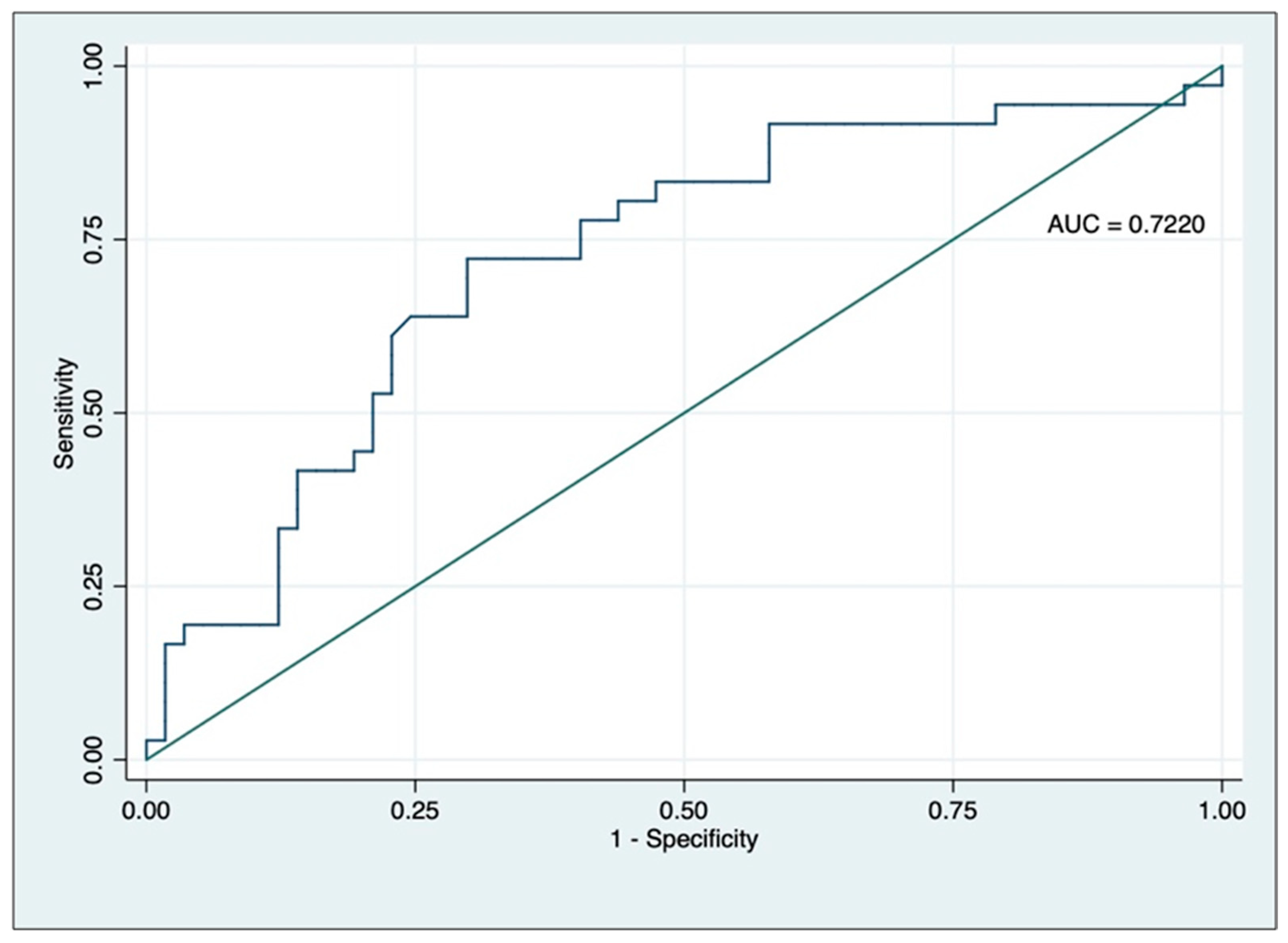
The NTx at a cut-off value of 207.4 demonstrated a sensitivity of 80.561% and a specificity of 56.14% for the diagnosis of prior fracture, with an area under the curve (AUC) of 0.72 (95% CI: 0.61, 0.83), Figure 1.
When patients were compared to those with osteoporosis and osteopenia, it was found that patients with osteoporosis had a higher score for the FRAX 10-year risk for major osteoporotic fractures (p = 0.042). Most significantly, patients with osteoporosis had higher levels of urinary NTx compared to those with osteopenia. The latter indicates that patients with osteoporosis have higher degrees of bone loss and degradation compared to those with osteopenia (p = 0.015), Table 5.

4. Discussion

The current study emphasizes that DEXA scans should not be solely relied upon for assessing osteoporosis due to specific limitations. For instance, patients with osteomalacia can have fractures despite normal type I collagen, as reflected by DEXA scans indicating osteoporotic T-scores. Conversely, those with Osteogenesis imperfecta may experience fractures from a genetic defect in type I collagen, while DEXA might report normal BMD values. Type I collagen is crucial for bone strength, comprising 90% of the organic matrix.
The aforementioned concept inspired us to evaluate the clinical utility of urinary NTx as a sensitive biomarker of bone turnover and to establish correlations between urinary NTx versus clinical, demographic, and laboratory findings and the gold standard “DXA scan” for the diagnosis of osteoporosis. Despite limitations of DXA scans in certain aspects, Trabecular Bone Score (TBS) is a validated, non-invasive imaging tool that evaluates lumbar spine DXA images to assess bone microarchitecture, offering insights into bone quality beyond what BMD results.
Our cohort included 93 patients naïve to any anti-osteoporotic therapy, irrespective of their gender, BMD results, or prior fractures. Our results indicated that urinary NTx is positively correlated with existing and/or prior fractures (p = 0.001), negatively correlated with vitamin D levels, positively correlated with the T-score of the left hip (p = 0.015), and negatively correlated with age (p = 0.005).
In the aging population worldwide, osteoporosis is a major risk factor for severe fractures, which presents a substantial public health concern. By quantitatively measuring BMD by DXA scan, it has been and continues to be the “gold standard” for osteoporosis screening and treatment monitoring [7]. However, it has been reported that up to 90% of DXA reports contain at least 1 error. Errors can be the result of technique or interpretative in nature or both, and can result in inappropriate diagnosis and management [8].
One major limitation of DXA at the moment is the lack of consistency in measurements of soft tissues and bones. The degree of hydration of the patient, the tissue’s thickness, and the composition of soft tissue in bony regions can all affect the outcome of DXA scan results [2]. Nonetheless, other factors should also be considered when interpreting the DXA results, which may affect its accuracy, such as marked distortions of skeletal architecture, e.g., osteophytes, degenerative disc disease, spondylolisthesis, kyphoscoliosis, vertebral fractures, and significant calcium deposits in the aorta, which can falsely elevate spine BMD values [7]. Therefore, the DXA scan analysis must not take into consideration regions that have these dystrophic calcifications. Most importantly, a DXA scan cannot identify bone quality, which is currently a key factor in osteoporosis management. In osteoporosis, previous studies have measured urine NTx to measure the response of anti-osteoporotic therapy [9,10,11,12,13,14,15]. While other studies assessed serum bone resorption marker serum C-telopeptide cross-link of type 1 collagen (sCTX) [16,17,18]. NTx can be used to compare two anti-osteoporotic therapies regarding efficacy [19,20] or to assess bone deterioration after discontinuing certain anti-osteoporotic therapies [21]. These studies show the clinical utility of NTx in various diagnostic and prognostic directions and compare the efficacy among different therapeutics [16,17,18,19,20,21].
In a series of 88 men with ankylosing spondylitis, levels of osteocalcin and NTx were measured by Shevchuk et al. [22]; they found an association of elevated NTx levels with high inflammatory activity and low BMD, while the concentration of osteocalcin was increased in cases with syndesmophytes but not associated with disease progression.
The current study shows that measuring NTx may play a role in determining which patients should receive anti-osteoporotic therapy, particularly middle-aged individuals with osteopenia and/or normal BMD results who sustained a fracture, or experienced recurrent inexplicable fractures and show a high FRAX index, and who may be at risk of developing further fractures. In such clinical scenarios, anti-osteoporotic medication should be started with great confidence if the aforementioned factors are linked to higher urinary NTx values, as these indicate a high degree of bone turnover and progressive bone loss.
It’s not always straightforward to decide on the best course of action in some clinical scenarios related to osteoporosis. Some examples from our study population explain such situations: a 52-year-old female patient who is early menopausal, with a BMI of 21.5, experienced a rib fracture. She also has a positive family history of osteoporotic fractures, normal PTH, and DXA scan results showing osteopenia, and normal VFA. Her NTx levels are noticeably elevated (1083.23 NMOL/L) (normal [5–65 NMOL/L]), which indicates ongoing bone deterioration. Another example is a 37-year-old female patient with a regular menstrual cycle, with a BMI of 29.1, who experienced repeated, inexplicable fractures after minor trauma. She also has a positive family history of osteoporotic fractures, normal PTH, and a DXA scan showing osteopenia, with normal VFA. Her NTx level is elevated (827.9 NMOL/L). Regardless of the patient’s age, gender, or DXA scan findings (osteopenia), it was decided in both cases to begin effective anti-osteoporotic medication; this choice was reached in light of the high NTx levels, which suggest a high degree of bone turnover and progressive bone loss that eventually led to fracture in the aforementioned two cases.
In our study, we found that previous and/or existing osteoporotic fractures as a dependent variable are substantially associated with higher levels of urinary NTx (p = 0.013) and a high FRAX index for the likelihood of a 10-year probability of developing major osteoporotic fracture (p = 0.001) in multivariate regression analysis. Regarding its diagnostic performance, we observed that NTx at a cut-off value of 207.4 showed a sensitivity of 80.561% and a specificity of 56.14% for the diagnosis of previous fracture with AUC equal to 0.72 (95% CI: 0.61, 0.83). The latter findings highlight the clinical significance of NTx and its inclusion as a crucial tool of investigations in the evaluation of osteoporosis and/or osteopenia identified by DXA scan, and more importantly, in the younger and middle-aged population with normal BMD results and experienced recurrent, inexplicable fractures.
Bone turnover markers (BTMs) are biochemical markers released during bone remodeling and reflect the work of osteoblasts and osteoclasts. The production of osteoid by osteoblasts is reflected by the production of bone alkaline phosphatase (ALP), osteocalcin (OC), and procollagen I N-propeptide (PINP) [22,23]. The removal of the bone organic matrix following enzymatic digestion is reflected by the production of fragments of the degradation of type I collagen (N- and C-telopeptides of type I collagen, or NTx and CTX) and by the release of the enzyme tartrate-resistant acid phosphatase type 5 b (TRACP5b) [24].
The current study revealed a significant negative correlation between age and urinary NTx (p = 0.003); females had higher NTx levels, albeit not significantly. In a young adult skeleton (around age 40), the amount of bone removed during bone resorption in the bone multicellular units (BMUs) is equal to the amount of bone formed, so there is a “remodeling balance”. In the older adult skeleton (after age 50 years), the amount of bone resorbed no longer matches the amount of bone formed, and so there is a “negative remodeling imbalance” [25]. It was established that reduced osteoblasts, precursors, or osteoid production could be the cause of the decline in bone formation [26]. This decline in bone production is a major factor in age-related bone loss. Particularly in women, a lack of estrogen during menopause causes the rate of bone turnover to rise by 50% to 100% [27,28]. This doubles the number of basic multicellular units (BMUs) and adds to the age-related loss of bone. This explains why women lose more bone than men do.
The type of bone and whether the bone marrow is cellular also affect the rate of bone remodeling. As a result, bone turnover is lower in the cortical bone of the limbs (fatty marrow) and higher in the trabecular bone of the spine and pelvis (cellular marrow). Since the skeleton is made up of four times as much cortical bone as trabecular bone, the total contributions of the two types of bone are similar, despite estimates that the rate of bone turnover in trabecular bone is four times higher than in cortical bone [29].
The fundamental structure and tensile strength of bone tissue are formed by the cross-linking of telopeptides from Type I collagen, which accounts for 90% of the organic bone matrix. One particular and sensitive indicator of bone resorption is urinary NTx [30]. The stable degradation end product, NTx, is quantifiable in both serum and urine. Proteolysis and osteoclastic action produce the NTx sequence. Therefore, additional breakdown or metabolism by the kidney or liver is not necessary for its synthesis [31,32]. The range of the urinary NTx value remains relatively constant as the patient reaches menopause, and it does not differ considerably between genders (Table 1). Since nutrition has little effect on urine excretion, it varies less than other traditional markers [1].
Okano et al. performed a cross-sectional study investigating the relationship between uNTx levels and Fourier transform infrared spectroscopy (FTIR) as parameters, using prospectively collected data from patients who underwent lumbar fusion surgery. Women showed significantly higher uNTx levels p < 0.033). In men, they found associations between FTIR parameters and uNTx, but not in women [33].
Finally, because of its unique amino acid sequence, N-telopeptide is unique to bone, making it a valuable tool for investigations in osteoporosis management. On the other hand, DXA measurements give a static image of the bone, but are less sensitive to change and cannot ascertain whether bone loss is ongoing. While urinary NTx measures the dynamic state of bone at any given moment. Apart from that, urinary NTx evaluation is less expensive than DXA when the financial aspects of the inquiry are taken into account.
Taken together, when assessing osteoporosis and bone quality, urinary NTx may provide consistent findings and serve as a reliable indicator of a person’s fracture risk. Therefore, urine-based NTx testing may provide an additional osteoporosis diagnostic modality [1].
A limitation of the current study is the small number of patients. We did not differentiate according to menopausal status. The optimal cut-off value was derived from the same dataset, which may introduce overfitting. Given the modest discriminatory ability, indicating that the NTx alone may have limited predictive performance and should be viewed as a screening-oriented, hypothesis-generating marker, its clinical application would require balancing sensitivity against the risk of false-positive classification. For this reason, this biomarker should be validated in larger independent cohorts, and we plan to extend the study to larger groups and conduct prospective studies evaluating the effects of treatments.
The strength of the current study is that we measured urinary NTx levels in a cohort of patients regardless of their DXA scan results, gender, or menopausal status.
Collective analysis allows for the capturing of true clinical complexity despite the varied nature of the cohort being studied. Nonetheless, in real clinical practice, we see a group of individuals with osteopenia and/or normal BMD who experience recurrent, inexplicable fractures; therefore, ordering NTx is crucial in certain clinical situations.
Finally, when it comes to clinical practice, we frequently see patients with osteopenia or with normal BMD who experience repeated inexplicable fractures, making NTx an important assessment tool in certain clinical situations and a way to justify starting an effective line of treatment.

5. Conclusions

Elevated urinary NTx is suggestive of increasing bone turnover and progressive bone deterioration, which can eventually lead to osteoporotic fractures. According to the results of our study, using urinary NTx in conjunction with DXA scans offers a more thorough and objective method of evaluating osteoporosis than using DXA scans alone, which supports our hypothesis. Combining DXA scan and FRAX, with NTx testing, may provide a comprehensive approach to osteoporosis assessment and treatment. Further prospective clinical studies are required.

Author Contributions

Y.E.: Writing—editing, writing—original draft, methodology, investigation, data curation, and conceptualization. T.A.G.: Writing—editing, writing—original draft, methodology, investigation, data curation, and conceptualization. Y.R.: Methodology, investigation, and conceptualization. N.A.K.: Methodology, investigation, and data curation. I.A.K.: Writing—editing, methodology, investigation, data curation, and conceptualization. K.A.: Writing—original draft, methodology, investigation, and data curation. A.E.: Methodology, investigation, and data curation. S.O.: Writing—original draft, methodology, and investigation. E.M.H.: Writing—editing, methodology, investigation, and data curation. N.H.: Writing—editing, writing—original draft, methodology, data curation, investigation, and conceptualization. J.J.R.: Review, writing—editing, writing—original draft, methodology, investigation, data curation, and conceptualization. All authors have read and agreed to the published version of the manuscript.

Funding

No specific funding was received from any funding bodies in the public, commercial, or not-for-profit sectors to carry out the work described in this manuscript.

Institutional Review Board Statement

This study was approved by the Ethics Committee at Dr. Erfan and Bagedo General Hospital (EBGH), Jeddah, Saudi Arabia, under the reference number EBGH/2025/02. Approval date 1 July 2024. This study was conducted following the principles of the Declaration of Helsinki.

Informed Consent Statement

Patient consent was waived due to the fact that this is a retrospective study, the method applied was part of a standard clinical investigation, no drugs were involved, and data from medical records were only used in an anonymized manner.

Data Availability Statement

Research data can be made available by Nevin Hammam and Yasser Emad.

Acknowledgments

We thank the patients for their willingness to participate in the study.

Conflicts of Interest

The authors declare no conflict of interest regarding this study.

Abbreviations

ALPAlkaline Phosphatase
BALPBone-specific alkaline phosphatase
BMDBone Mineral Density
BMIBody mass index
BSAPBone-specific Alkaline Phosphatase
BTMsbone turnover markers
sCTXserum C-telopeptide cross-link of type 1 collagen
DXADual-energy X-ray absorptiometry
nM BCEnanomoles of bone collagen equivalents per liter
ELISAenzyme-linked immunosorbent assay
FRAXFracture Risk Assessment Tool
IQRinterquartile range
NTxN-Terminal Telopeptide
PINPprocollagen I N-propeptide
PTHparathormone
ROCreceiver operating characteristic
TRACP5btartrate-resistant acid phosphatase type 5 b
VFAVertebral fracture assessment
WHOWorld Health Organization

References

  1. Ganesan, G.R.; Vijayaraghavan, P.V. Urinary N-telopeptide: The New Diagnostic Test for Osteoporosis. Surg. J. 2019, 5, e1–e4. [Google Scholar] [CrossRef] [PubMed]
  2. Rothney, M.P.; Brychta, R.J.; Schaefer, E.V.; Chen, K.Y.; Skarulis, M.C. Body composition measured by dual-energy X-ray absorptiometry half-body scans in obese adults. Obesity 2009, 17, 1281–1286. [Google Scholar] [CrossRef] [PubMed]
  3. Schini, M.; Vilaca, T.; Gossiel, F.; Salam, S.; Eastell, R. Bone Turnover Markers: Basic Biology to Clinical Applications. Endocr. Rev. 2023, 44, 417–473. [Google Scholar] [CrossRef] [PubMed]
  4. Kleerekoper, M.; Edelson, G.W. Biochemical studies in the evaluation and management of osteoporosis: Current status and future prospects. Endocr. Pract. 1996, 2, 13–19. [Google Scholar] [CrossRef] [PubMed]
  5. Rastogi, D.; Gautam, N.; Ara, Z.; Waliullah, S.; Srivastava, R.N. Prevalence of Abnormal Bone-Specific Alkaline Phosphatase in Orthopaedic Trauma Patients: A Cross-Sectional Study From a Tertiary Trauma Centre. Cureus 2022, 14, e24264. [Google Scholar] [CrossRef] [PubMed]
  6. World Health Organization. Assessment of Fracture Risk and Its Application to Screening for Postmenopausal Osteoporosis. Report of a WHO Study Group; World Health Organization Technical Report Series; World Health Organization: Geneva, Switzerland, 1994; Volume 843, pp. 1–129. [Google Scholar]
  7. Wong, C.P.; Gani, L.U.; Chong, L.R. Dual-energy X-ray absorptiometry bone densitometry and pitfalls in the assessment of osteoporosis: A primer for the practicing clinician. Arch. Osteoporos. 2020, 15, 135. [Google Scholar] [CrossRef] [PubMed]
  8. Martineau, P.; Morgan, S.L.; Leslie, W.D. Bone Mineral Densitometry Reporting: Pearls and Pitfalls. Can. Assoc. Radiol. J. 2021, 72, 490–504. [Google Scholar] [CrossRef] [PubMed]
  9. Baxter, I.; Rogers, A.; Eastell, R.; Peel, N. Evaluation of urinary N-telopeptide of type I collagen measurements in the management of osteoporosis in clinical practice. Osteoporos. Int. 2013, 24, 941–947. [Google Scholar] [CrossRef] [PubMed]
  10. Kim, S.W.; Park, D.J.; Park, K.S.; Kim, S.Y.; Cho, B.Y.; Lee, H.K.; Shin, C.S. Early changes in biochemical markers of bone turnover predict bone mineral density response to antiresorptive therapy in Korean postmenopausal women with osteoporosis. Endocr. J. 2005, 52, 667–674. [Google Scholar] [CrossRef] [PubMed]
  11. Ravn, P.; Clemmesen, B.; Christiansen, C.; Alendronate Osteoporosis Prevention Study Group. Biochemical markers can predict the response in bone mass during alendronate treatment in early postmenopausal women. Bone 1999, 24, 237–244. [Google Scholar] [CrossRef] [PubMed]
  12. Ravn, P.; Hosking, D.; Thompson, D.; Cizza, G.; Wasnich, R.D.; McClung, M.; Yates, A.J.; Bjarnason, N.H.; Christiansen, C. Monitoring of alendronate treatment and prediction of effect on bone mass by biochemical markers in the early postmenopausal intervention cohort study. J. Clin. Endocrinol. Metab. 1999, 84, 2363–2368. [Google Scholar] [CrossRef] [PubMed]
  13. Greenspan, S.L.; Parker, R.A.; Ferguson, L.; Rosen, H.N.; Maitland-Ramsey, L.; Karpf, D.B. Early changes in biochemical markers of bone turnover predict the long-term response to alendronate therapy in representative elderly women: A randomized clinical trial. J. Bone Miner. Res. 1998, 13, 1431–1438. [Google Scholar] [CrossRef] [PubMed]
  14. Li, M.; Zhang, Z.L.; Liao, E.Y.; Chen, D.C.; Liu, J.; Tao, T.Z.; Wu, W.; Xia, W.B.; Lu, Y.J.; Sheng, Z.F.; et al. Effect of low-dose alendronate treatment on bone mineral density and bone turnover markers in Chinese postmenopausal women with osteopenia and osteoporosis. Menopause 2013, 20, 72–78. [Google Scholar] [CrossRef] [PubMed]
  15. Iba, K.; Takada, J.; Hatakeyama, N.; Ozasa, Y.; Wada, T.; Yamashita, T. Changes in urinary NTx levels in patients with primary osteoporosis undergoing long-term bisphosphonate treatment. J. Orthop. Sci. 2008, 13, 438–441. [Google Scholar] [CrossRef] [PubMed]
  16. Baim, S.; Miller, P.D. Assessing the clinical utility of serum CTX in postmenopausal osteoporosis and its use in predicting risk of osteonecrosis of the jaw. J. Bone Miner. Res. 2009, 24, 561–574. [Google Scholar] [CrossRef] [PubMed]
  17. Chavassieux, P.; Roux, J.P.; Chapurlat, R. Pre-treatment bone turnover does not influence the level of the response to alendronate in postmenopausal osteoporosis at the bone tissue level. Osteoporos. Int. 2024, 35, 653–658. [Google Scholar] [CrossRef] [PubMed]
  18. Roux, C.; Hofbauer, L.C.; Ho, P.R.; Wark, J.D.; Zillikens, M.C.; Fahrleitner-Pammer, A.; Hawkins, F.; Micaelo, M.; Minisola, S.; Papaioannou, N.; et al. Denosumab compared with risedronate in postmenopausal women suboptimally adherent to alendronate therapy: Efficacy and safety results from a randomized open-label study. Bone 2014, 58, 48–54. [Google Scholar] [CrossRef] [PubMed]
  19. Sanad, Z.; Ellakwa, H.; Desouky, B. Comparison of alendronate and raloxifene in postmenopausal women with osteoporosis. Climacteric 2011, 14, 369–377. [Google Scholar] [CrossRef] [PubMed]
  20. Brown, J.P.; Roux, C.; Ho, P.R.; Bolognese, M.A.; Hall, J.; Bone, H.G.; Bonnick, S.; van den Bergh, J.P.; Ferreira, I.; Dakin, P.; et al. Denosumab significantly increases bone mineral density and reduces bone turnover compared with monthly oral ibandronate and risedronate in postmenopausal women who remained at higher risk for fracture despite previous suboptimal treatment with an oral bisphosphonate. Osteoporos. Int. 2014, 25, 1953–1961. [Google Scholar] [CrossRef] [PubMed][Green Version]
  21. Naylor, K.E.; Jacques, R.M.; Paggiosi, M.; Gossiel, F.; Peel, N.F.; McCloskey, E.V.; Walsh, J.S.; Eastell, R. Response of bone turnover markers to three oral bisphosphonate therapies in postmenopausal osteoporosis: The TRIO study. Osteoporos. Int. 2016, 27, 21–31. [Google Scholar] [CrossRef] [PubMed]
  22. Shevchuk, S.; Pavliuk, O.; Shevchuk, O. Levels of osteocalcin and N-terminal telopeptide of type I collagen in men with ankylosing spondylitis: Associations with disease course and structural-functional status of bone tissue. Rheumatology 2025, 63, 144–151. [Google Scholar] [CrossRef] [PubMed]
  23. Borgen, T.T.; Solberg, L.B.; Lauritzen, T.; Apalset, E.M.; Bjørnerem, Å.; Eriksen, E.F. Target Values and Daytime Variation of Bone Turnover Markers in Monitoring Osteoporosis Treatment After Fractures. JBMR Plus 2022, 6, e10633. [Google Scholar] [CrossRef] [PubMed]
  24. Eastell, R.; Szulc, P. Use of bone turnover markers in postmenopausal osteoporosis. Lancet Diabetes Endocrinol. 2017, 5, 908–923. [Google Scholar] [CrossRef] [PubMed]
  25. Lips, P.; Courpron, P.; Meunier, P.J. Mean wall thickness of trabecular bone packets in the human iliac crest: Changes with age. Calcif. Tissue Res. 1978, 26, 13–17. [Google Scholar] [CrossRef] [PubMed]
  26. Oreffo, R.O.; Bord, S.; Triffitt, J.T. Skeletal progenitor cells and ageing human populations. Clin. Sci. 1998, 94, 549–555. [Google Scholar] [CrossRef] [PubMed]
  27. Heaney, R.P.; Recker, R.R.; Saville, P.D. Menopausal changes in bone remodeling. J. Lab. Clin. Med. 1978, 92, 964–970. [Google Scholar] [PubMed]
  28. Eastell, R.; Delmas, P.D.; Hodgson, S.F.; Eriksen, E.F.; Mann, K.G.; Riggs, B.L. Bone formation rate in older normal women: Concurrent assessment with bone histomorphometry, calcium kinetics, and biochemical markers. J. Clin. Endocrinol. Metab. 1988, 67, 741–748. [Google Scholar] [CrossRef] [PubMed]
  29. Zebaze, R.M.; Ghasem-Zadeh, A.; Bohte, A.; Iuliano-Burns, S.; Mirams, M.; Price, R.I.; Mackie, E.J.; Seeman, E. Intracortical remodelling and porosity in the distal radius and post-mortem femurs of women: A cross-sectional study. Lancet 2010, 375, 1729–1736. [Google Scholar] [CrossRef] [PubMed]
  30. Singer, F.R.; Eyre, D.R. Using biochemical markers of bone turnover in clinical practice. Clevel. Clin. J. Med. 2008, 75, 739–750. [Google Scholar] [CrossRef] [PubMed]
  31. Takada, J.; Iba, K.; Imoto, K.; Yamashita, T. Changes in bone resorption markers among Japanese patients with postmenopausal osteoporosis treated with alendronate and risedronate. J. Bone Miner. Metab. 2007, 25, 142–146. [Google Scholar] [CrossRef] [PubMed]
  32. Bettica, P.; Moro, L.; Robins, S.P.; Taylor, A.K.; Talbot, J.; Singer, F.R.; Baylink, D.J. Bone-resorption markers galactosyl hydroxylysine, pyridinium crosslinks, and hydroxyproline compared. Clin. Chem. 1992, 38, 2313–2318. [Google Scholar] [CrossRef] [PubMed]
  33. Okano, I.; Salzmann, S.N.; Miller, C.O.; Rentenberger, C.; Schadler, P.; Sax, O.C.; Shue, J.; Sama, A.A.; Cammisa, F.P.; Girardi, F.P.; et al. Correlation between Urine N-Terminal Telopeptide and Fourier Transform Infrared Spectroscopy Parameters: A Preliminary Study. J. Osteoporos. 2020, 2020, 5725086. [Google Scholar] [CrossRef] [PubMed]
Figure 1. Legend. Graph representing Receiver-operating characteristic curve (ROC) with a cut-off value of 207.4 urinary NTx showed a sensitivity of 80.56% and a specificity of 56.14% for the diagnosis of previous fracture with AUC of 0.72 (95% CI: 0.61, 0.83). ROC curve generated from 93 patients, including 36 with prior fractures.
Rheumato 06 00014 g001
Table 1. NTx assay predicted values in relation to age and gender as provided by ZEUS ELISA™ (NTx9006). NTx Urine Test System.
CategoryNumberAverage NTxMin NTxMax NTxMedian NTx
(nM BCE)(nM BCE)(nM BCE)(nM BCE)
Males: <25 (Years)2518213331501740
Males: 26–50 (Years)257431281862704
Males: >50 (Years)25780792602744
Females: 18–35 (Years)25723642685525
Females: >50 (Years)50601491852481
nM BCE: nmol of bone collagen equivalents.
Table 2. Demographic, disease characteristics, and laboratory findings in the studied group of patients and in male and female patients.
Variables
Mean ± SD or Frequency(%) or Median (IQR)
All Patients
(n = 93)
Female
(n = 77, 82.8%)
Male
(n = 16, 17.2%)
p Value
Age (Years)67.74 ± 11.2466.41 ± 10.4174.12 ± 13.200.015 *
BMI25.93 ± 4.5326.07 ± 4.8725.21 ± 2.400.157
Previous fractures36 (38.71)30 (83.33)6 (16.67)0.253
Family history of fractures27 (29.03)23 (85.19)4 (14.81)0.221
Previous steroid therapy10 (10.75)7 (70.0)3 (30.0)0.094
Osteoporosis31 (33.33)25 (23.47)6 (37.50)
0.268
Osteopenia56 (60.21)47 (61.04)9 (56.25)
T-score of the lumbar spine [L1–L4]−1.45 ± 1.43−1.49 ± 1.34−1.25 ± 1.810.189
T-score of the left hip [neck]−1.61 ± 1.09−1.68 ± 0.92−1.23 ± 1.640.063
T-score of the right hip [neck]−1.78 ± 1.82−1.83 ± 1.89−1.52 ± 1.470.174
VFA
Patients with normal VFA
Patients with wedge fracture
Patients with fracture

76 (81.72)
5 (5.38)
11 (11.83)

66 (85.71)
4 (5.19)
6 (1.30)

10 (62.50)
1 (6.25)
5 (31.25)

Group 1 vs. 2 (p = 0.665)
Group 1 vs. 3 (p = 0.008)
Group 2 vs. 3 (p = 0.330)
FRAX major8.05 (4.3–16)8.05 (4.3–16)7.3 (3.5–17)0.126
FRAX hip1.85 (1.05–3.35)2.8 (1.3–9.8)1.75 (1–3.1)0.110
Calcium (8.8–10.2 mg/dL)9.56 ± 0.399.55 ± 0.419.6 ± 0.310.205
Vitamin D (60–200 nmol/L)87.31 ± 30.8184.34 ± 29.12101.63 ± 35.540.047
PTH (15–65 pg/mL)33.1 (21–50.3)33.1 (20.4–50.3)31.5 (27.5–47.7)0.284
NTx (5–65 NMOL/L)244.3 (109.5–550.2)259.8 (113.5–555.4)153.78 (101.5–490.8)0.078
NTx/CREA ratio44.59 (22.47–77.33)47.98 (22.47–77.91)39.06 (24.28–65.03)0.236
BSAP (5.5–22.9 UCG)10.70 ± 3.3110.58 ± 3.2511.26 ± 3.680.142
Anti-osteoporotic therapy initiated after assessment of NTx levels
Denosumab69 (74.2)60 (86.96)9 (13.04)0.300
Teriparatide17 (18.3)12 (70.59)5 (29.41)
Romosozumab3 (3.23)3 (100.0)0 (0.0)
BMI: Body mass index; VFA: Vertebral fracture assessment; NTx: N-Terminal Telopeptide; Bone-specific alkaline phosphatase (BALP). IQR: interquartile range. Statistically significant p-values after applying the Benjamini–Hochberg procedure with a false discovery rate of 0.30 are denoted in bold. * statistically significant.
Table 3. Correlation between urinary NTx and BSAP versus demographic, laboratory findings, DXA, and FRAX 10-year probability of hip and major osteoporotic fractures.
Correlation AnalysisNTxBSAP
Variablesrprp
Age (Years) −0.3010.003−0.1370.192
Sex (Male) −0.0960.3570.0780.455
BMI0.2010.055−0.1240.239
Previous fracture0.375<0.001−0.0630.551
Serum Calcium (8.8–10.2 mg/dL)0.0420.691−0.0010.995
Vitamin D (60–200 nmol/L)−0.3030.0030.1500.153
PTH (15–65 pg/mL)0.0810.4390.1380.189
BSAP (5.5–22.9 UCG)−0.0040.968
T-score of the lumbar spine [L1–L4]−0.2600.0120.1100.297
T-score of the right hip [neck]−0.3010.003−0.0390.386
T-score of the left hip [neck]−0.2240.0320.0910.386
FRAX 10-year risk of major osteoporotic fracture 0.2160.0390.0620.559
FRAX 10-year risk of hip osteoporotic fracture0.1590.129−0.0860.417
NTx: N-Terminal Telopeptide; Bone-specific Alkaline Phosphatase (BSAP); DXA: Dual-energy X-ray absorptiometry; BMI: Body mass index; BMD: Bone Mineral Density; FRAX: Fracture Risk Assessment Tool.
Table 4. The result of multivariate regression analysis, where the previous fracture is the dependent variable.
VariablesOR (95%CI)p Value
Age 0.99 (0.93–1.04)0.621
Sex (male: female)3.02 (0.68–13.28)0.144
BMI0.86 (0.73–1.02)0.093
Calcium (8.8–10.2 mg/dL)0.54 (0.12–2.31)0.405
Vitamin D (60–200 nmol/L)0.99 (0.98–1.02)0.782
PTH (15–65 pg/mL)0.99 (0.97–1.02)0.690
NTx (5–65 NMOL/L)1.0 (1.01–1.00)0.007
BSAP (5.5–22.9 UCG)0.89 (0.74–1.08)0.269
T-score of the lumbar spine [L1–L4]0.91 (0.55–1.48) 0.702
T-score of the right hip [neck]1.05 (0.70–1.57)0.824
T-score of the left hip [neck]1.34 (0.64–2.79)0.431
FRAX (10-year probability of major osteoporotic fracture)1.21 (1.08–1.37)0.002
FRAX (10-year probability of hip osteoporotic fracture)0.84 (0.72–0.99)0.038
BMI: Body mass index; FRAX: Fracture Risk Assessment Tool; OR: Odds ratio.
Table 5. Demographic, disease characteristics, and laboratory findings among patients with osteopenia versus patients with osteoporosis.
Variables
Mean ± SD or Frequency (%) or Median (IQR)
Patients with Abnormal DXA
(n = 87)
Patients with Osteopenia
(n = 56, 64.36%)
Patients with Osteoporosis
(n = 31, 35.63%)
p Value
Age (Years) 67.57 ± 11.4368.30 ± 10.1366.26 ± 13.560.184
Sex (Female)72 (82.75)47 (65.28)25 (34.72)0.224
BMI25.85 ± 4.6425.80 ± 5.2825.95 ± 3.280.250
Previous fractures 34 (39.08)18 (52.94)16 (47.06)0.132
Family history of fractures 26 (29.89)16 (61.54)10 (38.46)0.237
Previous steroid therapy 10 (11.49)4 (40.0)6 (60.0)0.145
BMD of the lumbar spine [L1–L4]−1.61 ± 1.29−1.05 ± 1.15−2.61 ± 0.850.013
BMD of the left hip [neck]−1.74 ± 0.97−1.30 ± 0.81−2.51 ± 0.740.026
BMD of the right hip [neck]−1.92 ± 1.80−1.30 ± 0.78−3.01 ± 2.470.039
VFA
Patients with normal VFA
Patients with wedge fractures
Patients with other fractures

70 (81.40)
5 (5.81)
11 (12.79)

47 (67.14)
3 (60.0)
5 (45.45)

23 (32.86)
2 (40.0)
6 (45.55)

0.171
FRAX 10-year risk for major osteoporotic fractures8.45 (3.9–17)6.8 (3.7–12)15.0 (7.3–27)0.042
FRAX 10-year risk for hip osteoporotic fractures 2.0 (1.1–3.8)1.3 (0.8–2)4.8 (2.8–13)0.053
Calcium (8.8–10.2 mg/dL)9.56 ± 0.399.55 ± 0.419.6 ± 0.310.063
Vitamin D (60–200 nmol/L)86.84 ± 30.1091.87 ± 29.7877.76 ± 28.960.095
PTH (15–65 pg/mL)39.24 ± 25.040.14 ± 22.0337.62 ± 29.960.211
NTx (5–65 NMOL/L)259.78 (109.5–550.12)227.5 (106.65–439.52) 450.8 (122.33–827.9)0.015
NTx/CREA ratio47.94 (25.0–74.88)44.585 (22.07–70.66)50.34 (26.93–90.23)0.158
BSAP (5.5–22.9 UCG)10.66 ± 3.3910.58 ± 3.1510.34 ± 3.790.197
BMI: Body mass index; VFA: Vertebral fracture assessment; NTx: N-Terminal Telopeptide; Bone-specific alkaline phosphatase (BSAP). IQR: interquartile range. Statistically significant p-values after applying the Benjamini–Hochberg procedure with a false discovery rate of 0.25 are denoted in bold.
Disclaimer/Publisher’s Note: The statements, opinions and data contained in all publications are solely those of the individual author(s) and contributor(s) and not of MDPI and/or the editor(s). MDPI and/or the editor(s) disclaim responsibility for any injury to people or property resulting from any ideas, methods, instructions or products referred to in the content.