
Article

Identification of a Glycosyltransferase Capable of Modifying a Second Site on the Amphotericin B Macrolactone

1
School of Biomolecular and Biomedical Science, University College Dublin, D04 V1W8 Dublin, Ireland
2
School of Chemistry and Centre for Synthesis and Chemical Biology, University College Dublin, D04 V1W8 Dublin, Ireland
*
Author to whom correspondence should be addressed.
SynBio 2026, 4(3), 12; https://doi.org/10.3390/synbio4030012
Submission received: 22 May 2026 / Revised: 27 June 2026 / Accepted: 30 June 2026 / Published: 2 July 2026

Abstract

Many species of actinomycete bacteria synthesise glycosylated polyene macrolides that have potential as antifungal drugs. The sugar residues of these compounds have profound effects on potency, toxicity and water-solubility. The medically important antibiotics amphotericin B and nystatin A1 have a single D-mycosamine sugar on C19 of the polyene macrolactone. A few naturally occurring polyenes have a second sugar residue. This may be attached to C35 of 38-membered macrolactones like nystatins or to the equivalent C27 of 30-membered pentaenes like selvamicin. The recently discovered mandimycin has a C35 disaccharide that changes the mode of action, reduces adverse side effects, and delays the emergence of resistance in laboratory cultures of fungal pathogens. Glycosyltransferases that can modify the C27 and C35 positions are of interest to synthetic biologists. The GloSV enzyme is predicted to add a 2,6-dideoxy-D-hexose to C27 of a pentaene in Saccharopolyspora gloriosae. Here we assess GloSV in strains of the amphotericin producer, Streptomyces nodosus. Low levels of new amphotericin analogues modified with D-oliose or D-digitoxose were identified through HR-LCMS. The identification of this glycosyltransferase will assist the development of streptomycete systems for production of non-toxic polyene glycoanalogues.

1. Introduction

There is an urgent need to develop new drugs for treatment of treat life-threatening systemic mycoses [1,2]. The gold standard among antifungal antibiotics is amphotericin B (Figure 1), one of the glycosylated polyene macrolides [3]. These natural products are obtained from many species of actinomycete bacteria. Polyenes are highly active but have many liabilities such as low water-solubility and unacceptable toxicity [1]. Improved analogues have been developed by genetic engineering of producer micro-organisms. This area of synthetic biology can complement medicinal chemistry as a means for developing better antifungal drugs.
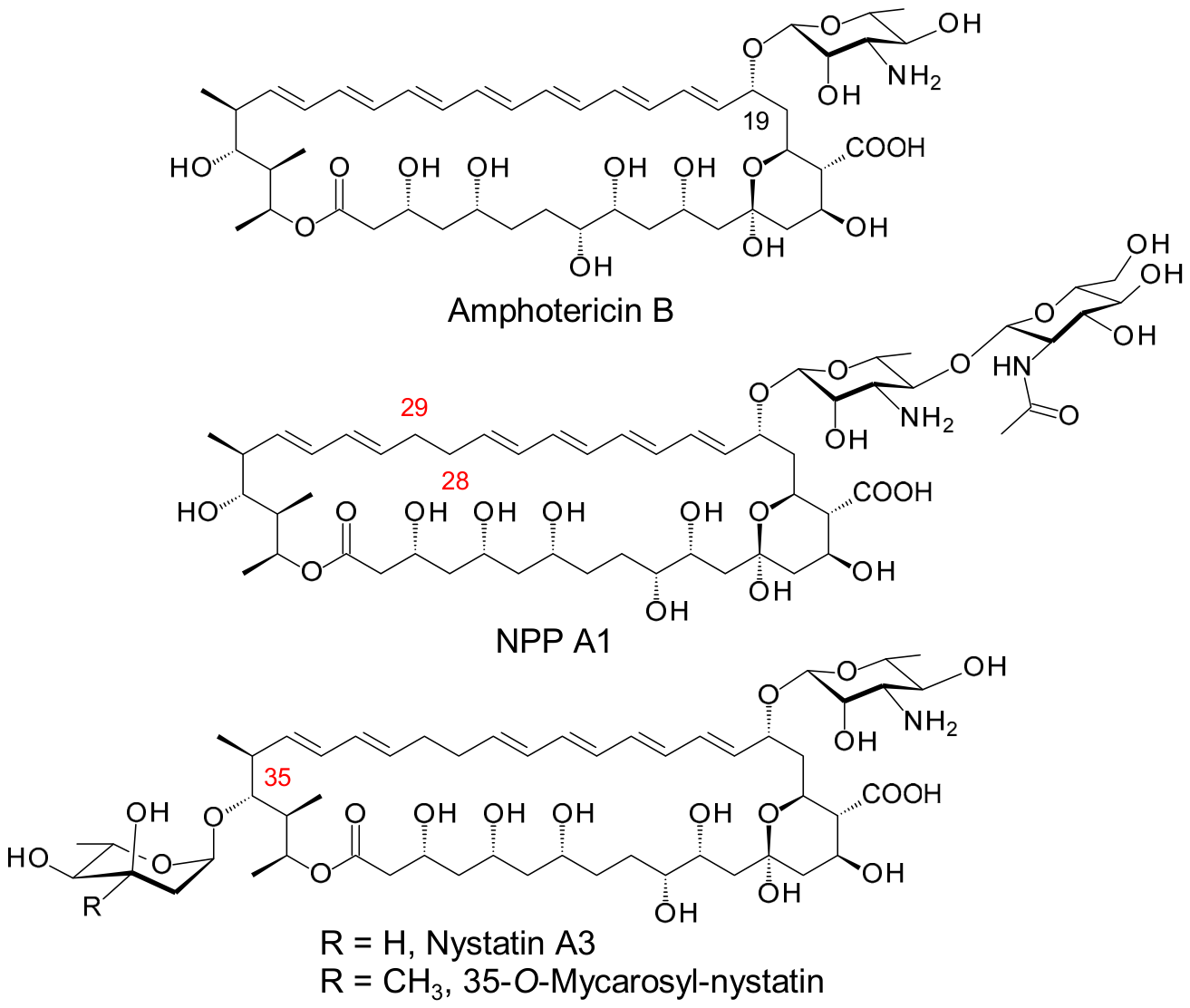
A typical polyene consists of a macrolactone ring modified with a single mycosamine sugar that is essential for biological activity. A few naturally occurring polyenes have additional sugars that increase water-solubility and improve pharmacological properties [3]. The extra sugars may be attached at one of two positions during biosynthesis of the final polyene (Figure 1 and Figure S1) [4,5,6,7]. Some Pseudonocardia species synthesise nystatins with a D-hexose attached to the C4′ OH of mycosamine. This is D-GlcNAc in NPP A1 (Figure 1); D-mannose occurs in nystatin P1 (Figure S1). The extending glycosyltransferases (GTs) modifying the mycosamine residue are encoded by genes close to the main polyene biosynthetic gene clusters (BGCs) [3].
A different enzymatic glycosylation can occur at C35 in the nystatin macrolactone ring. The strain used for commercial production of nystatin, Streptomyces noursei, can modify this position with a 2,6-dideoxysugar, L-digitoxose or the related L-mycarose. Nystatin A3 and mycarosyl-nystatin (Figure 1) are produced as minor congeners along with nystatin A1 [4]. The genes for biosynthesis and attachment of the 2,6-dideoxyhexoses to C35 are not located within the main nystatin BGC in S. noursei (see below).
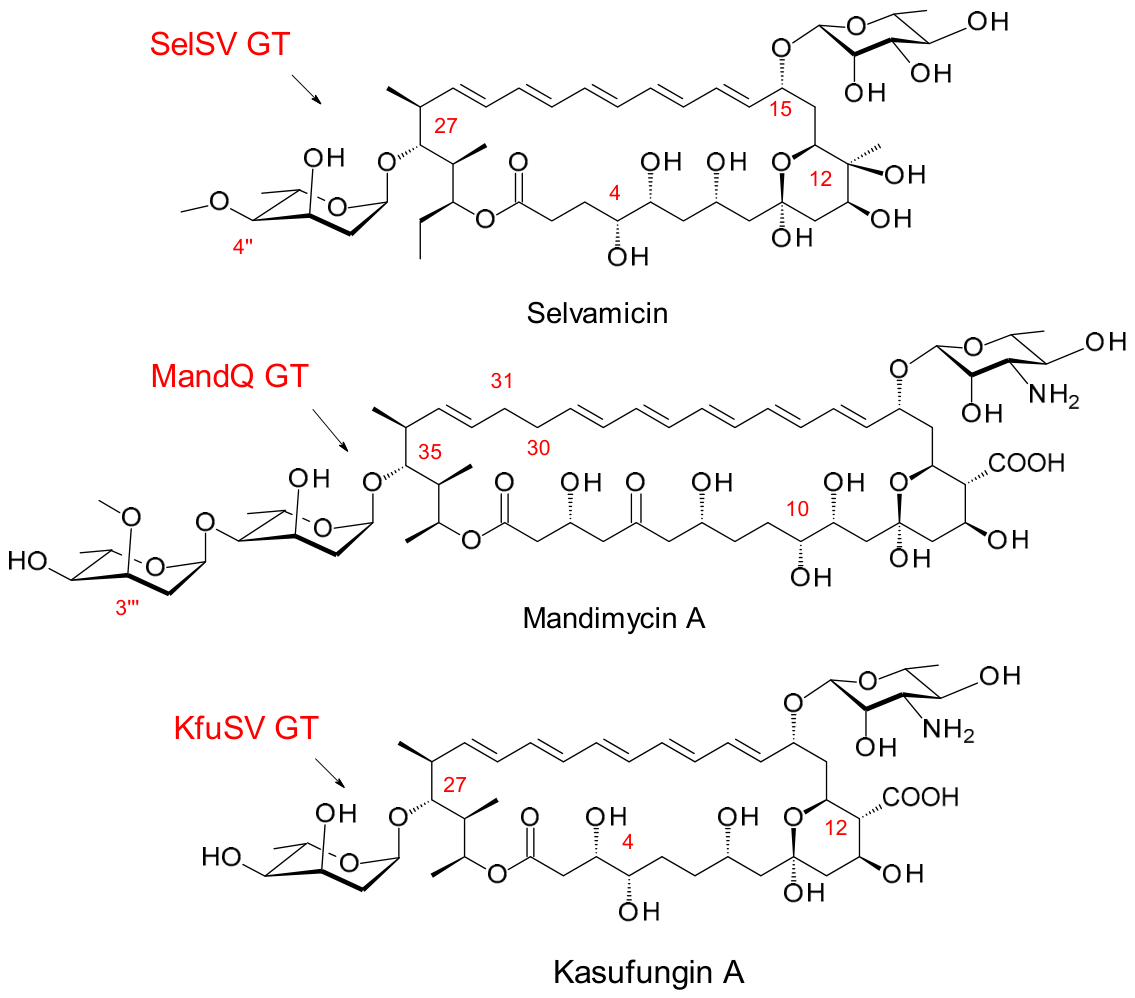
The pentaene selvamicin was identified in 2016 [8]. Selvamycin has 4″ O-methyl-L-digitoxose at C27, the position corresponding to C35 in nystatin and other 38-membered polyene macrolactones. Other unusual features of selvamicin are listed in the legend to Figure 2. The selvamicin BGC includes genes for biosynthesis of the 4″-O-methyl-L-digitoxose residue, as well as the selSV gene for the digitoxosyltransferase. SelSV was the first identified GT that modifies this second position on a polyene macrolactone.
Mandimycin (Figure 2) has recently been discovered as an important new antifungal. It is similar to amphotericin B and nystatin A1 but has a disaccharide chain attached to C35 [9,10,11]. Mandimycin binds phosphatidyl inositol and other phospholipids in fungal membranes, unlike other polyenes that interact with ergosterol. In addition to changing the mode of action, the disaccharide chain significantly reduced toxicity in animal models of systemic mycoses.
Six or seven genes are required for biosynthesis of the 2,6-dideoxysugar residues of mandimycin but the BGC contains only four [9] (Figure S2). The remaining genes must be located elsewhere in the genome of the mandimycin-producing organism Streptomyces netropsis DSM40259.
Inactivation of the mandQ gene abolished glycosylation of the mandimycin aglycone at the C35 position. This indicates that the MandQ GT catalyses transfer of the first 2,6-dideoxysugar. MandQ may also add the second deoxysugar residue. Iterative GTs occur infrequently in macrolide biosynthesis. One example is the AveB1 GT that adds both of the 2,6-dideoxy-L-hexose residues that appear in the disaccharide of avermectin [12,13]. It is also possible that MandQ is not iterative and a second GT is required to complete the disaccharide chain of mandimycin. So far, no candidate gene for such a GT has been identified in the S. netropsis DSM40259 genome.
Figure 2. Structures of polyenes glycosylated at C27 or C35. Selvamicin from Pseudonocardia HH130629-09 is modified at C27 with 4″ O-methyl-L-digitoxose. At C15, D-rhamnose is present in place of D-mycosamine and this results in low antifungal activity. The methyl branch at C12 is not oxidised to form the exocyclic carboxyl group characteristic of most other polyene macrolides. The SelP 2-ketoglutarate-dependent dioxygenase hydroxylates this C12 atom to form a tertiary alcohol. Mandimycin is a degenerate heptaene in which the polyene unit is interrupted by an alkane between C30 and C31. It has the UV-visible absorption spectrum of a pentaene. Mandimycin has a disaccharide chain at C35 that is drawn as 3-O-methyl-β-L-digitoxose-(1 → 4)- β-L-digitoxose in the literature [9,10,11]. This is similar but not identical to anthracynose, a plant disaccharide with the structure α-L-oleandrose-(1 → 4)-β-D-digitoxose [14]. Kasufungin A has L-digitoxose at C27 [15].
Synbio 04 00012 g002
A recent patent application reports progress in understanding the process of nystatin C35 glycosylation in S. noursei [15]. In this host, biosynthesis of nystatin A3 and mycarosyl-nystatin requires cross-talk between different biosynthetic gene clusters. Biosynthetic genes for dTDP-β-L-digitoxose are located near a gene for an epsilon-poly-L-lysine non-ribosomal peptide synthase (protein sequence accession = ANZ14680.1). Those for dTDP-β-L-mycarose are located within a cluster for a macrolide related to erythromycin [3]. These clusters also contain candidate genes for L-digitoxosyl- and L-mycarosyl-transferases. The GT (ANZ14691.1) from the L-digitoxose/NRPS cluster has been shown to glucosylate C35 of nystatin in vitro [15]. This GT has been named NysSV.
Bioinformatic searches uncovered a NysSV homologue in a mycoheptin-producing strain of S. netropsis. The MycS3 GT (WP_242626303.1) is 55% identical to NysSV, 88% identical to MandQ, and 32% identical to SelSV [15] (Table S1). The S. netropsis strain produced mycoheptin, mycopentin and congeners modified at C35 with either a 3-O-methyl-6-deoxyhexose or a disaccharide formed by addition of a 2,3,6-trideoxyhexose (Figure S3). This disaccharide chain is different from that of mandimycin A. Genome sequencing revealed that the mycoheptin/mycopentin BGC is similar to that of mandimycin. Both clusters lack complete sets of genes for the neutral deoxysugars attached at C35.
Another NysSV homologue was identified in Streptomyces kasugaensis. This strain produces a pentaene named kasufungin that is similar to selvamicin but has “standard” polyene modifications, mycosamine at C15 and an exocyclic carboxyl group at C12 (Figure 2). The polyketide chain is initiated with an acetyl primer rather than a propionyl primer. The KfuSV GT (WP_094790982.1) is 59.9% identical to NysSV, 63.7% identical to MandQ, and 33.8% identical to SelSV (Table S1). Sequencing of the S. kasugaensis genome revealed that the kasufungin BGC contained all of the genes required for biosynthesis of dTDP-β-L-digitoxose except for the 4-ketoreductase (Figure S2).
Recombinant NysSV, MycS3 and KfuSV enzymes were capable of using dTDP-D-glucose to modify amphotericin B and nystatin A1 with D-glucose in vitro [15]. MycS3 and KfuSV were over 20 times more active than NysSV. MycS3 showed a preference for nystatin A1 over amphotericin B. KfuSV showed good activity against both nystatin A1 and amphotericin B and had the highest overall activity of all three GTs.
KfuSV was tested with a range of dTDP-sugars and was capable of modifying amphotericin B and nystatin A1 with D-glucose, L-fucose, D-mannose, D-galactose and D-GlcNAc. The D-glucosyl and L-fucosyl analogues were obtained in good yield and could be detected by HPLC. The other analogues were only detectable through HR-LCMS [15].
The S. kasugaenesis genes for KfuSV GT and dTDP-β-L-digitoxose bioynthesis were cloned into an integrating expression vector pSET-ermE*. Transformation of S. nodosus with the resulting plasmid construct led to efficient production of 35-O-L-digitoxosyl-amphotericins A and B. Chemical analysis of these analogues confirmed the identity of the kasufungin 2,6-dideoxysugar as L-digitoxose [15].
Micklefield and co-workers also found that modification of amphotericin B and nystatin A1 with L-digitoxose at C35 improved antifungal activity and reduced haemolytic activity, especially if glycosylation was combined with enzymatic conversion of the C16 exocyclic group to an amide [15].
Overall these recent results indicate that engineered biosynthesis may be able to deliver polyene analogues with two unlinked disaccharide chains at either end of the macrolactone. This approach may be combined with a chemical method for glycosylating the amino group of mycosamine [16]. Chemical glycosylation has delivered improved amphotericin analogues such as MFAME and MS8209 (Figure S4) [17,18].
An example of a highly glycosylated polyene analogue that might be obtained through synthetic biology is shown in Figure S5. Three extending GTs that modify C4′ OH of mycosamine have been partially characterised and exploited, NppY, NypY and PegA [5,19,20,21,22,23,24,25]. In contrast, studies on GTs that can modify C35 of 38-membered macrolactones are still at an early stage.
An important goal of synthetic biology is to engineer the biosynthesis of amphotericin analogues glycosylated at the C35 position. We previously investigated whether SelSV-catalysed glycosylation of amphotericin could be achieved using an in vivo system [19]. A synthetic gene for SelSV was transformed into the amphotericin producer, Streptomyces nodosus, along with plasmid pFL942 [26] that specifies biosynthesis of dTDP-β-L-mycarose and dTDP-β-L-digitoxose. The engineered strain did not produce detectable amounts of any new glycoanalogues.
Further work assessed a glycosyl transferase from Pseudonocardia endophytica DSM44969, which has a silent cluster predicted to synthesise nystatin A3 [3]. In this micro-organism, the polyene polyketide synthase genes are linked to biosynthetic genes for dTDP-β-L-digitoxose. There is also a gene for a putative L-digitoxose-specific glycosyl transferase, PenSV, which is 64% identical to SelSV. A synthetic gene for PenSV was transformed into S. nodosus along with pFL942 but no digitoxosyl- or mycarosyl-amphotericin analogues could be identified [19].
These failures may result from low production of dTDP-L-deoxyhexoses in S. nodosus, lack of recognition of amphotericin acceptors by SelSV or PenSV, removal of non-native sugars by endogenous O-glycosyl hydrolases, or export of native amphotericins before unnatural heterologous glycosylations can occur.
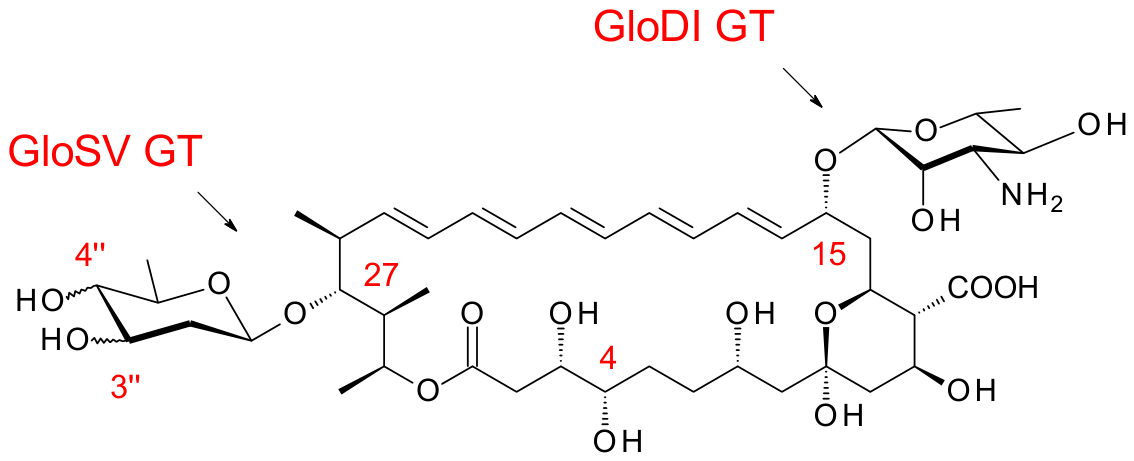
In previous studies we identified a silent BGC for a selvamicin-related pentaene. This cluster occurs in genome sequence of Saccharopolyspora gloriosae DSM45582 [3]. The predicted structure is shown in Figure 3. It is now clear that the macrolactone core is identical to that of kasufungin produced by S. kasugaensis [15]. The Sacc. gloriosae cluster also contains the genes required for synthesis of a dTDP-dideoxy-D-hexose from dTDP-4-keto-6-deoxyglucose. The GloSV GT is thought to transfer this D-sugar onto C27 of the Sacc. gloriosae pentaene core. GloSV is 60% identical to SelSV.
The GloDI mycosaminyltransferase from Sacc. gloriosae normally acts on a 30-membered pentaene macrolactone but can also efficiently mycosaminylate larger heptaene amphoteronolides [19]. This observation led us to investigate whether the GloSV GT can also act on heptaene substrates and modify C35 of amphotericin macrolactones. In this study we equip S. nodosus strains with GloSV and biosynthetic gene cassettes for 2,6-dideoxy-D-hexoses. We report production of low but detectable amounts of amphotericin analogues modified with D-oliose and D-digitoxose. This indicates that GloSV will be useful in production of C35 modified polyene analogues through synthetic biology.

2. Results

2.1. Transformation of S. nodosus with Genes for Biosynthesis and Attachment of 2,6-Dideoxy-D-Hexoses

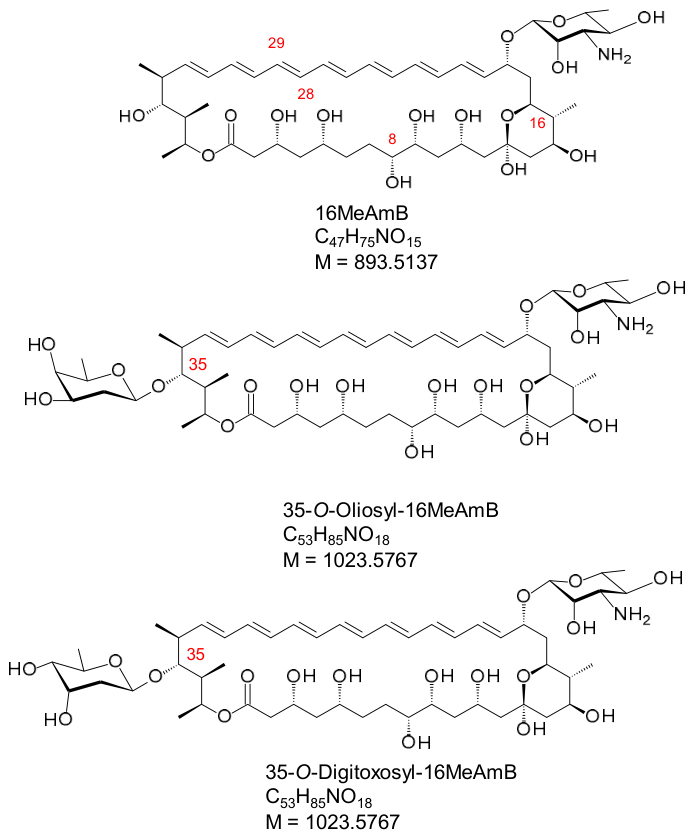
The gloSV gene was amplified from Sacc. gloriosae genomic DNA with primers GloSVF and GloSVR. These add NdeI and HindIII sites to either end of the gene in PCR-amplified DNA. The NdeI-HindIII fragment containing gloSV was cloned between the NdeI and HindIII sites of the integrating plasmid pIJ10257. This positions the gene downstream from a strong ermE promoter and a ribosome-binding site. The resulting pIJ10257-GloSV plasmid was transformed into S. nodosus NM, which lacks the AmphN cytochrome P450 and produces polyenes 16-descarboxyl-16-methyl-amphotericin B (16MeAmB) and 8-deoxy-16-descarboxyl-16-methyl-amphotericin A (8-deoxy-16MeAmA) [27] (Figure 4). These analogues lack exocyclic carboxyl groups and are less haemolytic than amphotericins A and B.
The Salas group have constructed and validated biosynthetic gene cassettes for all four dTDP-2,6-dideoxy-α-D-hexoses [28] (Figure S6). Two of these plasmids were readily available for this work. Plasmid pMP1*UII contains operons for dTDP-α-D-oliose biosynthesis. Plasmid pMP3*BII contains operons for dTDP-α-D-digitoxose biosynthesis [28].
S. nodosus NM pIJ10257-GloSV was transformed with pIAGO, the empty vector control, pMP1*UII for biosynthesis of dTDP-α-D-oliose, or pMP3*BII for biosynthesis of dTDP-α-D-digitoxose. Polyenes produced by all three transformants were analysed through HPLC and HR-LCMS.

2.2. Analysis of Polyenes Synthesised by Engineered Strains

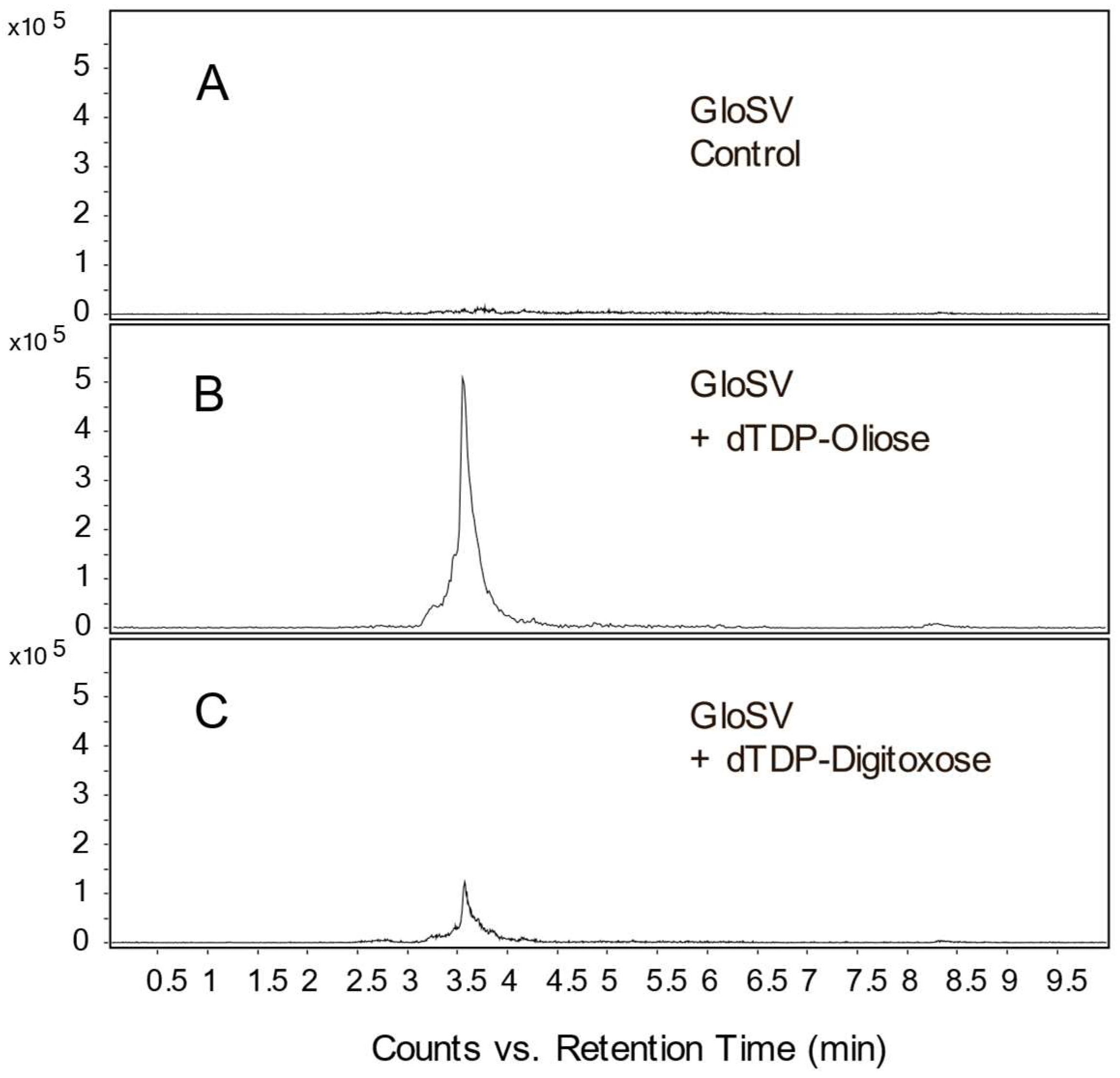
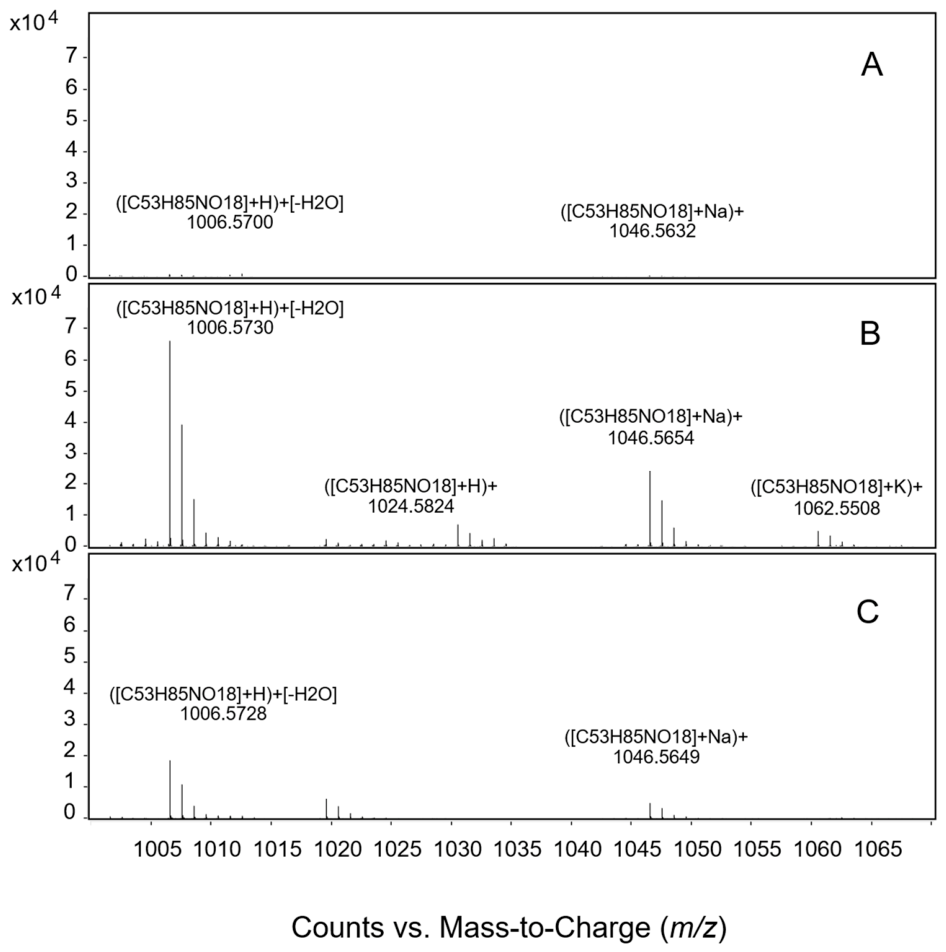
HPLC analysis indicated that 16MeAmB and 8-deoxy-16MeAmA (Figure 4) dominated the extracts of the control strain, as expected from our previous work [27]. LC-MS analysis confirmed that A320 tetraene peaks contained ions characteristic of 8-deoxy-16MeAmA (C47H77NO14, [M − H2O + H]+ = 862.5, [M + H]+ = 880.5, [M + Na]+ = 902.5). The A405 heptaene peaks contained ions corresponding to 16MeAmB (C47H75NO15, [M − H2O + H]+ = 876.5, [M + H]+ = 894.5, [M + Na]+ = 916.5). These polyenes were also abundant in extracts of potential biotransformation strains containing pIJ10257-GloSV and biosynthetic genes for dTDP-α-D-oliose or dTDP-α-D-digitoxose. It was necessary to use high-resolution LC-MS to search for low levels of polyenes with extra sugar residues. Attempts were made to detect ions corresponding to 2,6-dideoxyhexosylated 16MeAmB and 8-deoxy-16MeAmA, as well as other possibilities such as 2,6-dideoxyhexosylated forms of mycosamine-free macrolactones representing earlier intermediates in the biosynthetic pathway. Of these, only 2,6-dideoxyhexosyl-16MeAmB analogues were identified (Figure 5, Figure 6, Figure 7 and Figure 8). For strains containing GloSV and biosynthetic genes for dTDP-α-D-oliose or dTDP-α-D-digitoxose, ions were detected with masses appropriate for 2,6-dideoxyhexosyl analogues of 16MeAmB (C53H85NO18, [M − H2O + H]+ = 1006.5, [M + H]+ = 1024.5, [M + Na]+ = 1046.5). These putative dideoxyhexosyl analogues were absent from the negative control strain containing the empty pIAGO vector. The D-oliosyl analogue was produced in higher quantities than the D-digitoxosyl-analogue. Extracted ion chromatograms (EICs) for C53H85NO18 are shown in Figure 5. Mass spectra are shown in Figure 6. Table 1 lists calculated masses, observed masses and mass errors.
It was not possible to separate 16MeAmB and oliosyl-16MeAmB through HPLC using methanol or acetonitrile gradients. The total ion count (TIC) and A405 chromatograms are shown in Figure S7. Both 16MeAmB and oliosyl-16MeAmB were present in the main heptaene peak. The EICs for the two compounds are compared in Figure S8. The ion count for 16MeAmB was 1.2 × 10⁷ whereas that for oliosyl-16MeAmB was 1.6 × 10⁵. This indicates that only about 1% of the 16MeAmB was converted to the oliosyl analogue. This conversion rate was low but reproducible. Oliosyl-16MeAmB was detected in extracts of three different cultures of S. nodosus pIJ-GloSV pMP1*UII grown on different dates. This compound was not present in the three corresponding control cultures of S. nodosus pIJ-GloSV pIAGO.

2.3. MS-MS Analysis of Oliosyl-16MeAmB

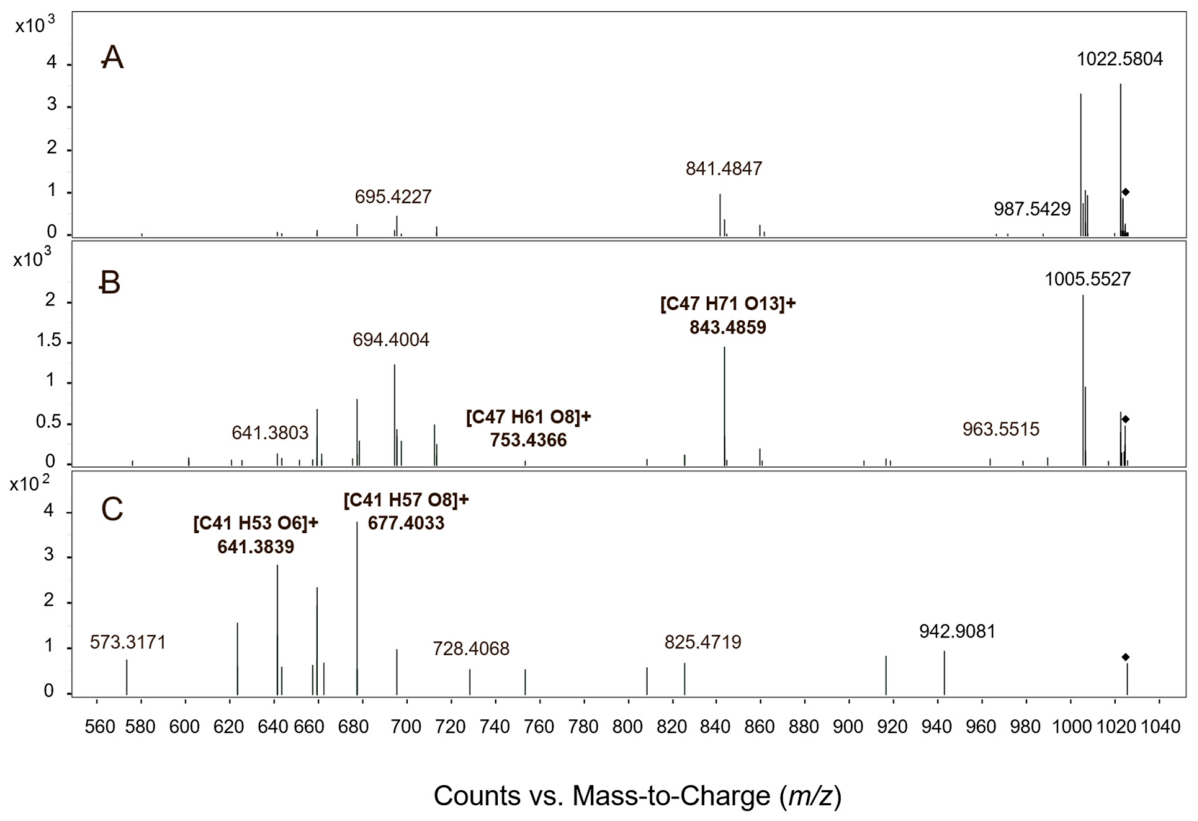
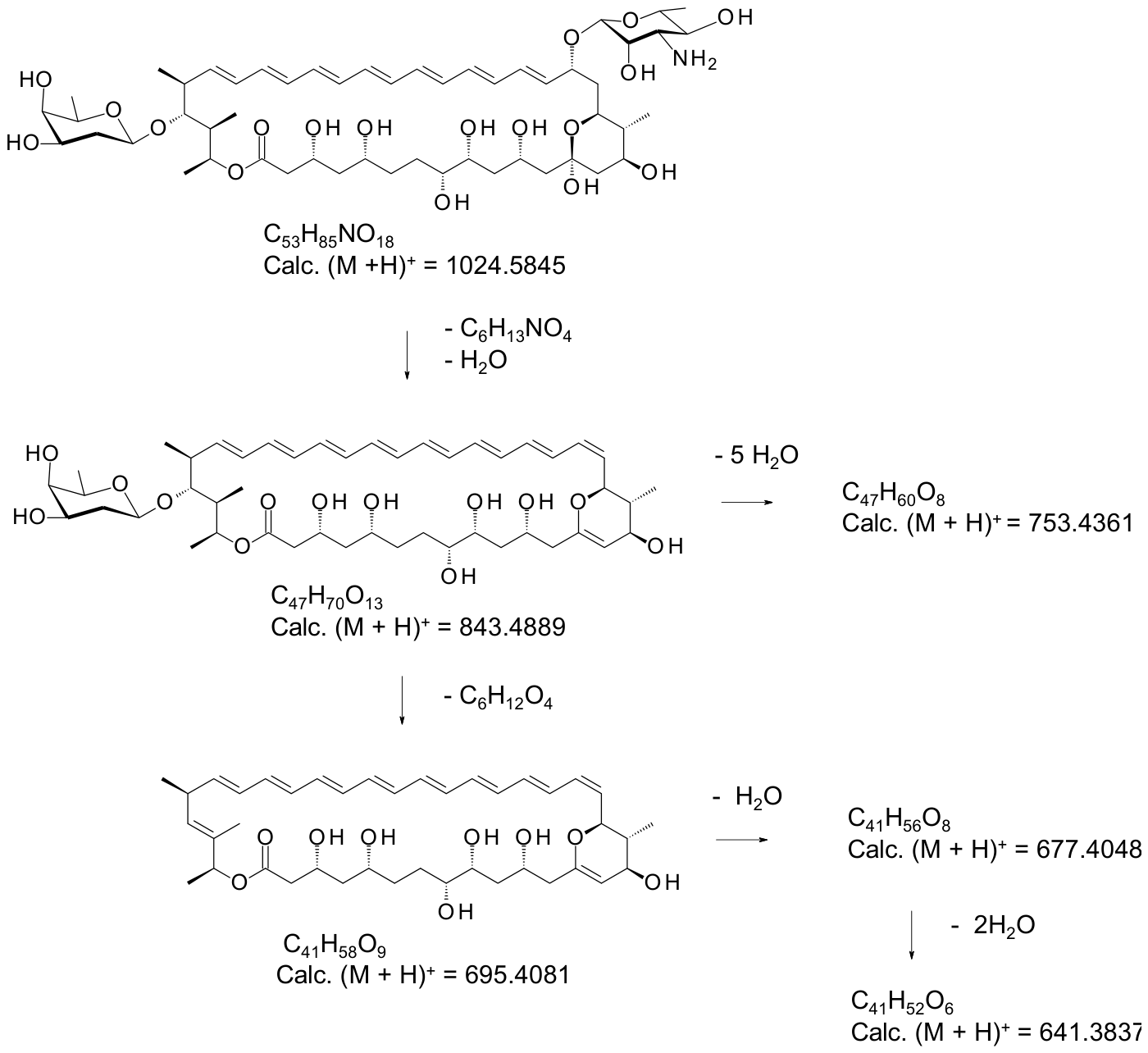
MS-MS fragmentation analysis was used to verify the structure of the most abundant dideoxyhexosyl analogue, D-oliosyl-16MeAmB. Previous MS-MS analyses on nystatins and amphotericin B were used to interpret the fragmentation pattern [29,30,31] (Figure 7 and Figure 8). With moderate collision energies (20 eV), oliosyl-16MeAmB gave a prominent fragment ion with m/z = 843.4859, molecular formula (C47H70O13 + H)+ (Figure 7B and Figure 8). This is consistent with elimination of mycosamine and C13-C14 dehydration, as occurs with nystatin A1 [29]. Loss of a further five water molecules accounts for the low abundance fragment of m/z 753.4366, molecular formula (C47H60O8 + H)+. A separate fragmentation pathway giving loss of oliose and one water molecule would explain the product with m/z of 677.4033, molecular formula (C41H56O8 + H)+ (Figure 7C and Figure 8). Finally, loss of two further water molecules accounts for the ion of m/z 641.3839, molecular formula (C41H52O6 + H)+ (Figure 7C and Figure 8). The calculated and observed masses for these four fragments are summarised in Table 2, along with mass errors.

2.4. Assessment of Possible GloSV Activity Towards Aglycones 8-Deoxy-16-Descarboxyl-16-Methyl-Amphoteronolides A and B

S. nodosus DI-DII-NM lacks the AmphDI GT, the AmphDII GDP-mycosamine synthase and the AmphN P450. This strain synthesises the aglycones 8-deoxy-16-descarboxyl-16-methyl-amphoteronolides A and B [32]. This strain does not carry out mycosaminylation or any other late modification. Further experiments were carried out to investigate whether these aglycones can act as substrates for GloSV-catalysed dideoxyhexosylation. The pIJ-GloSV plasmid was integrated into the genome of S. nodosus DI-DII-NM. The resulting strain was further transformed with pIAGO or pMP1*UII (for dTDP-α-D-oliose). Polyenes were extracted from the two strains and analysed through LC-MS. No oliosyl amphoteronolides were detected.

3. Discussion

The mycosamine residue of glycosylated polyene macrolides is essential for antifungal antibiotic activity. Addition of further sugars can have profound effects on mode of action, antifungal activity and water-solubility. Extra sugars are added by two classes of glycosyltransferase: (1) the extending glycosyltransferases that glycosylate C4′ of mycosaminyl residues and (2) and the GTs that modify C27 of 30-membered polyene macrolactones or C35 of 38-membered polyene macrolactones. Both classes are valuable tools in synthetic biology, especially those that show flexibility towards NDP-sugar donors and aglycone acceptors. The C27/C35 GTs have only recently been identified and studies on this group are less well advanced.
Here we have shown that GloSV can catalyse formation of D-oliosyl and D-digitoxosyl analogues of 16MeAmB in engineered S. nodosus strains. Although the yields were low, these new compounds were identified through sensitive high-resolution LC-MS and MS-MS fragmentation studies. Because the D-oliose sugar residue is released at low to moderate collision energies, MS-MS fragmentation did not give any information about the position of the sugar on the amphotericin macrolactone. The homology between SelSV and GloSV suggests that GloSV modifies the C27 position of the Sacc. gloriosae pentaene and the corresponding C35 position of 16MeAmB. Glycosylation of a different hydroxyl group seems less likely but would still be of interest. In future work, yields could be improved to allow purification of sufficient material for structural analysis by NMR.
GloSV-catalysed glycosylation of 16MeAmB with D-oliose and D-digitoxose was detectable whereas in previous work [19] SelSV and PenSV-catalysed glycosylation with L-digitoxose or L-mycarose was not. Possibly dTDP-α-D-dideoxysugars are synthesised in higher yields than dTDP-β-L-dideoxysugars. The C5 epimerization that occurs in biosynthesis of L-deoxysugars is rate-limiting [33]. The dTDP-α-D-oliose and dTDP-α-D-digitoxose biosynthetic gene cassettes have been validated in aromatic polyketide-producing strains. This work shows that pMP1*UII and pMP3BII also direct dTDP-α-D-oliose and dTDP-α-D-digitoxose synthesis in S. nodosus.
In our in vivo system, GloSV apparently recognises the heptaene 16MeAmB but not the aglycones 8-deoxy-16-descarboxyl-16-methyl-amphoteronolides A and B. This suggests that C35 glycosylation occurs at a late stage in polyene biosynthesis, after addition of mycosamine.
Basic bioinformatic analysis suggests that SelSV, PenSV and GloSV are related to each other but less closely related to NysSV, KfuSV, MycS3 and MandQ (Figure S9 and Table S1). At present KfuSV shows the most potential as a tool in synthetic biology but MycS3 and MandQ may be iterative GTs capable of adding disaccharide chains. All of these GTs are of interest for glycosylation engineering of antifungal polyenes.
Introduction of a mycosamine C4′ extending GT and a C27/C35 GT into a polyene-producing host bacterium could lead to production of hyperglycosylated polyene analogues. These could be further glycosylated by the chemical method to give compounds like the hypothetical example shown in Figure S5. Glycodiversification of the various carbohydrate chains could give libraries of structures from which new candidate drug compounds might be obtained.
Introducing a new late glycosylation into a polyene-producing strain is often challenging because the pathway pre-existing in the host efficiently exports the native natural product before the heterologous modification can occur. Efficient production of hyperglycosylated polyenes through synthetic biology may require protein engineering of ABC transporters. The aim would be to develop export systems that specifically act on macrolactones containing the full complement of carbohydrate chains. This approach could also improve S. netropsis strains producing mandimycins and mycopentins. These appear to synthesise a range of polyenes with zero, one or two sugars attached to C35 [9,11,15].
Finally, genome mining suggests that silent polyene BGCs contain genes for further glycosylations that have not yet been detected in isolated polyenes. This work indicates that investigation of these clusters may be rewarding. High-resolution LC-MS is a sensitive method for detecting enzymatic activity when candidate GT genes are expressed in heterologous hosts.

4. Materials and Methods

4.1. Bacterial Strains and Plasmids

E. coli DH5α was used as a general cloning host for construction of plasmids. S. nodosus NM and S. nodosus DI-DII-NM were from this laboratory collection. Sacc. gloriosae DSM45582 was obtained from DSMZ.
Plasmids pMP1*UII and pMP3*BII [28] were a kind gift from Professor Jose A. Salas and Professor Carmen Mendez.

4.2. DNA Methods

Genomic DNA was isolated from Sacc. gloriosae using the small-scale method described by Kieser and co-workers [34]. Oligonucleotides GloSVF 5′ AAGCGGCATATGCGCGTGTTGTTCGCGGTGTCCTCGT 3′ and GloSVR 5′ ATCTAGAAGCTTCATCCACACCGCGACACGGGTCAG 3′ were synthesised by Eurofins Genomics (Ebersberg, Germany).
PCR was carried out using Phusion Hi-fidelity DNA polymerase from TThermo Fisher Scientific Baltics (Vilnius, Lithuania). Amplified DNA was purified using a QIAquick PCR product purification kit (QIAGEN, Manchester, UK). Restriction enzymes, alkaline phosphatase and T4 DNA ligase were obtained from New England Biolabs. Plasmids were isolated on a small scale using a GeneJET miniprep kit from Thermo Fisher Scientific Baltics (Vilnius, Lithuania).
E. coli DH5α was transformed using the calcium chloride method. PEG-mediated transformation of S. nodosus strains was carried out as described in [34].
Re-sequencing of the pIJ10257-GloSV plasmid was carried out by Source Bioscience (Cambridge, UK).

4.3. Purification and Analysis of Polyenes

Amphotericin analogues were isolated essentially as described previously [19]. Total polyenes were extracted from S. nodosus NM pIJ-GloSV strains containing pIAGO, pMP1*UII or pMP3*BII. Starter cultures were grown on TS broth for 40 h at 30 °C. These precultures were used to inoculate flasks containing polyene production medium (2 g fructose, 6 g dextrin, 3 g soya flour, 1 g CaCO3, 1 g glycerol, 5 g Amberlite XAD16 per 100 mL) supplemented with 50 mg/mL hygromycin and 25 mg/mL thiostrepton. Each 250 mL flask contained 100 mL medium and was fitted with a stainless steel spring to enhance aeration and disperse mycelia. Inoculated flasks were incubated at 30 °C with shaking at 180 rpm for 5 days. Each 100 mL culture was centrifuged at 10,000× g for 10 min at 4 °C. The sedimented mycelial cells and Amberlite resin beads were resuspended with 100 mL methanol and held at room temperature for 4 h with intermittent stirring. The suspension was centrifuged at 10,000× g for 10 min. The methanol extract (supernatant fraction) was removed and concentrated to 5 mL through rotary evaporation. The samples of the concentrated extracts were diluted with an equal volume of methanol before the analysis through HPLC or LC-MS. Polyenes from S. nodosus DI-DII-NM pIJ-GloSV strains containing pIAGO or pMP1*UII were extracted in the same way.
HPLC was carried out using an Agilent Infinity system (Agilent Technologies Ireland, Cork, Ireland).
Solvent A was 0.1% (v/v) formic acid in water; solvent B was 0.1% (v/v) in methanol. An Agilent Zorbax SB-C18 column (9.4 × 150 mm, 5 mm) was equilibrated with 50% solvent A: 50% solvent B. Polyene samples in a volume 400 mL methanol were applied. Bound polyenes were eluted by applying a gradient of 60 to 90% solvent B over 45 min. The flow rate was 4 mL/min throughout.

4.4. Mass Spectrometry

Mass spectrometry was carried out using an Agilent 6546 series Q-TOF LC/MS system (Agilent Technologies Ireland, Cork, Ireland) equipped with an Agilent Jetstream electrospray ionisation source, coupled to an Agilent 1260 infinity prime II LC system. Chromatography was carried out using an Agilent InfinityLab Poroshell 120 SB-C18 column, 2.7 micron particle size, 2.1 × 50 mm. The mobile phase was formed by mixing two solvents, A and B. Solvent A was 0.1% (v/v) formic acid in H2O, solvent B was 0.1% (v/v) formic acid in acetonitrile. These were used to form a linear gradient in which the acetonitrile concentration increased from 10% to 90% over 5 min at a flow rate of 0.6 mL min−1. Isocratic elution with 90% acetonitrile was continued for a further 5 min.
MS spectra were acquired in positive ion mode, with a capillary voltage of 4000 V, nozzle voltage of 2000 V, fragmentor voltage 175 V, skimmer voltage of 65 V, drying gas temperature of 325 °C, sheath gas of 350 °C, and nebuliser pressure of 40 psi. Data were processed using Agilent MassHunter Qualitative Analysis software (version 10.0).
Data for MS-MS experiments were acquired with similar LC conditions, with a targeted precursor window of 4 m/z centred at the appropriate retention time with an RT window of 0.1 min, with interleaved acquisition of MS1 data and of MS2 data at collision energies of 10, 20 and 40 eV. The scan rate was 4 spectra/s for MS1 and MS2 over a spectral window of 50 to 1100 m/z. MS2 spectra are shown deisotoped and stacked at acquired collision energies.

5. Conclusions

  • The GloSV glycosyl transferase can function in biosynthesis of D-oliosyl- and D-digitoxosyl-analogues of 16-descarboxyl-16-methyl-amphotericin B in S. nodosus. The yields were low but detectable.
  • GloSV showed some tolerance towards both NDP-sugar substrates but the D-oliosyl-amphotericin analogue was obtained in higher levels than the D-digitoxosyl-analogue.
  • Further protein engineering of GloSV and polyene ABC transporters will improve the yields of new glycosylated analogues.

Supplementary Materials

The following supporting information can be downloaded at: https://www.mdpi.com/article/10.3390/synbio4030012/s1, Figure S1: Further polyenes modified with mycosamine and one other sugar; Figure S2: Biosynthesis of dTDP-2,6-dideoxy-L-hexoses; Figure S3: Structures of mycopentins B and C; Figure S4: Semi-synthetic amphotericins resulting from derivatization of the mycosamine amino group with a glucose sugar; Figure S5: Hypothetical example of a hyperglycosylated polyene analogue that may be accessible by synthetic biology; Figure S6: Biosynthesis of dTDP-2,6-dideoxy-D-hexoses; Figure S7: LC-MS analysis of polyene extract from S. nodosus NM pIJ-GloSV pMP1*UII. Figure S8: Comparison of EICs for 16MeAmB and oliosyl-16MeAmB. Figure S9: Amino sequences of polyene C27/C35 glycosyltransferases; Table S1: Matrix showing per cent identity between polyene C27 and C35 glycosyltransferases.

Author Contributions

Conceptualization, P.C.; investigation, P.C. and J.M.; Mass spectrometry, J.M.; writing—original draft preparation, P.C.; writing—review and editing, P.C. and J.M. All authors have read and agreed to the published version of the manuscript.

Funding

MS facilities were funded through The Comprehensive Molecular Analysis Platform (CMAP) initiative under The SFI Research Infrastructure Programme in 2019, reference 18/RI/5702, and BiOrboic—the SFI Bioeconomy Research Centre, and with the support of the School of Chemistry and UCD.

Institutional Review Board Statement

Not applicable.

Informed Consent Statement

Not applicable.

Data Availability Statement

The original contributions presented in this study are included in the article/Supplementary Materials. Further inquiries can be directed to the corresponding author(s).

Conflicts of Interest

The authors declare no conflicts of interest.

References

  1. Chang, Y.L.; Yu, S.J.; Heitman, J.; Wellington, M.; Chen, Y.L. New facets of antifungal therapy. Virulence 2017, 8, 222–236. [Google Scholar] [CrossRef] [PubMed]
  2. Denning, D.W. Global incidence and mortality of severe fungal disease. Lancet Infect. Dis. 2024, 24, e428–e438. [Google Scholar] [CrossRef] [PubMed]
  3. Caffrey, P.; Hogan, M.; Song, Y. New glycosylated polyene macrolides: Refining the ore from genome mining. Antibiotics 2022, 11, 334. [Google Scholar] [CrossRef] [PubMed]
  4. Bruheim, P.; Borgos, S.E.; Tsan, P.; Sletta, H.; Ellingsen, T.E.; Lancelin, J.M.; Zotchev, S.B. Chemical diversity of polyene macrolides produced by Streptomyces noursei ATCC 11455 and recombinant strain ERD44 with genetically altered polyketide synthase NysC. Antimicrob. Agents Chemother. 2004, 48, 4120–4129. [Google Scholar] [CrossRef] [PubMed]
  5. Stephens, N.; Rawlings, B.; Caffrey, P. Versatility of enzymes catalyzing late steps in polyene 67-121C biosynthesis. Biosci. Biotechnol. Biochem. 2013, 77, 880–883. [Google Scholar] [CrossRef] [PubMed]
  6. Zielinski, J.; Jereczek, E.; Sowinski, P.; Falkowski, L.; Rudowski, A.; Borowski, E. The structure of a novel sugar component of polyene macrolide antibiotics: 2,6-Dideoxy-L-ribohexopyranose. J. Antibiot. 1979, 32, 565–568. [Google Scholar] [CrossRef] [PubMed]
  7. Synak, R.; Zielinski, J.; Golik, J.; Borowski, E. The structure of candidoin a component of the candidin antibiotic complex. J. Antibiot. 1983, 36, 1415–1417. [Google Scholar] [CrossRef] [PubMed]
  8. Van Arnam, E.B.; Ruzzini, A.C.; Sit, C.S.; Horn, H.; Pinto-Tomás, A.A.; Currie, C.R.; Clardy, J. Selvamicin, an atypical antifungal polyene from two alternative genomic contexts. Proc. Natl. Acad. Sci. USA 2016, 113, 12940–12945. [Google Scholar] [CrossRef] [PubMed]
  9. Deng, Q.; Li, Y.; He, W.; Chen, T.; Liu, N.; Ma, L.; Qiu, Z.; Shang, Z.; Wang, Z. A polyene macrolide targeting phospholipids in the fungal cell membrane. Nature 2025, 640, 743–751. [Google Scholar] [CrossRef] [PubMed]
  10. Manahelohe, G.M.; Zhao, X.-Y.; Gao, J.; Chen, Z.; Jin, B.; Sha, Q.; Gu, Y.-C.; Zhang, M.-Z. Mandimycin: A phospholipid-targeting natural polyene macrolide overcoming multidrug resistance in invasive fungal infections. Adv. Agrochem. 2025, 4, 169–172. [Google Scholar] [CrossRef]
  11. Han, X.; Cheng, Y.; Zhang, C.; Jia, X.; Shen, F.; Zhang, Y.; Zhang, B.; Li, L. Functional insights into the biosynthesis of antifungal mandimycin. Pest Manag. Sci. 2026, 82, 6342–6353. [Google Scholar] [CrossRef] [PubMed]
  12. Wohlert, S.; Lomovskaya, N.; Kulowski, K.; Fonstein, L.; Occi, J.L.; Gewain, K.M.; MacNeil, D.J.; Hutchinson, C.R. Insights about the biosynthesis of the avermectin deoxysugar L-oleandrose through heterologous expression of Streptomyces avermitilis deoxysugar genes in Streptomyces lividans. Chem. Biol. 2001, 8, 681–700. [Google Scholar] [CrossRef] [PubMed]
  13. Zhang, C.; Albermann, C.; Fu, X.; Thorson, J.S. The in vitro characterization of the iterative avermectin glycosyltransferase AveBI reveals reaction reversibility and sugar nucleotide flexibility. J. Am. Chem. Soc. 2006, 128, 16420–16421. [Google Scholar] [CrossRef] [PubMed]
  14. Zhang, Z.-J.; Ding, M.-L.; Tao, L.-J.; Zhang, M.; Xu, X.-H.; Zhang, C.-F. Immunosuppressive C21 steroidal glycosides from the root of Cynanchum atratum. Fitoterapia 2015, 105, 194–201. [Google Scholar] [CrossRef] [PubMed]
  15. Micklefield, J.; Mirza, S.N.; Carella, A. Antifungal Polyene Macrolides. International Patent Application PCT/GB2025/051043, 20 November 2025. Available online: https://patentscope.wipo.int/search/en/detail.jsf?docId=WO2025238361&_cid=P10-MO5UH6-08309-1 (accessed on 19 April 2026).
  16. Falkowski, L.; Golik, J.; Kolodziejczyk, P.; Pawlak, J.; Zielinski, J.; Ziminski, T.; Borowski, E. N-glycosyl derivatives of polyene macrolide antibiotics. J. Antibiot. 1975, 28, 244–245. [Google Scholar] [CrossRef]
  17. Grzybowska, J.; Sowinski, P.; Gumieniak, J.; Zieniawa, T.; Borowski, E. N-Methyl-N-D-fructopyranosylamphotericin B methyl ester, new amphotericin B derivative of low toxicity. J. Antibiot. 1997, 50, 709–711. [Google Scholar]
  18. Saint-Julien, L.; Joly, V.; Seman, M.; Carbon, C.; Yeni, P. Activity of MS-8209, a nonester amphotericin B derivative, in treatment of experimental systemic mycoses. Antimicrob. Agents Chemother. 1992, 36, 2722–2728. [Google Scholar] [CrossRef] [PubMed]
  19. Hogan, M.; Song, Y.; Muldoon, J.; Caffrey, P. Generation of new glycoanalogues of polyene antibiotics by synthetic biology—Testing current technical boundaries. SynBio 2024, 2, 31–55. [Google Scholar] [CrossRef]
  20. Kim, M.K.; Won, H.J.; Kim, H.J.; Choi, S.S.; Lee, H.S.; Kim, P.; Kim, E.S. Carboxyl-terminal domain characterization of polyene-specific P450 hydroxylase in Pseudonocardia autotrophica. J. Ind. Microbiol. Biotechnol. 2016, 43, 1625–1630. [Google Scholar] [CrossRef] [PubMed]
  21. Kim, H.-J.; Kang, S.-H.; Choi, S.-S.; Kim, E.-S. Redesign of antifungal polyene glycosylation: Engineered biosynthesis of disaccharide-modified NPP. Appl. Microbiol. Biotechnol. 2017, 101, 5131–5137. [Google Scholar] [CrossRef] [PubMed]
  22. Kim, H.-J.; Han, C.-Y.; Park, J.-S.; Oh, S.-H.; Kang, S.-H.; Choi, S.-S.; Kim, J.-M.; Kwak, J.-H.; Kim, E.-S. Nystatin-like Pseudonocardia polyene B1, a novel disaccharide-containing antifungal heptaene antibiotic. Sci. Rep. 2018, 8, 13584. [Google Scholar] [CrossRef] [PubMed]
  23. Park, H.-S.; Kim, H.-J.; Han, C.-Y.; Nah, H.-J.; Choi, S.-S.; Kim, E.-S. Stimulated biosynthesis of a C10-deoxy heptaene NPP B2 via regulatory gene overexpression in Pseudonocardia autotrophica. Front. Microbiol. 2020, 11, 19. [Google Scholar] [CrossRef] [PubMed]
  24. De Poire, E.; Stephens, N.; Rawlings, B.; Caffrey, P. Engineered biosynthesis of disaccharide-modified polyene macrolides. Appl. Environ. Microbiol. 2013, 79, 6156–6159. [Google Scholar] [CrossRef] [PubMed]
  25. Zuo, X.; Qiao, L.; Dong, Y.; Jin, X.; Ren, Z.; Cui, H. Engineered biosynthesis and characterization of disaccharide-pimaricin. Microb. Cell Fact. 2025, 24, 121. [Google Scholar] [CrossRef] [PubMed]
  26. Lombó, F.; Gibson, M.; Greenwell, L.; Braña, A.F.; Rohr, J.; Salas, J.A.; Méndez, C. Engineering biosynthetic pathways for deoxysugars: Branched-chain sugar pathways and derivatives from the antitumor tetracenomycin. Chem. Biol. 2004, 11, 1709–1718. [Google Scholar] [CrossRef] [PubMed]
  27. Carmody, M.; Murphy, B.; Byrne, B.; Power, P.; Rai, D.; Rawlings, B.; Caffrey, P. Biosynthesis of amphotericin derivatives lacking exocyclic carboxyl groups. J. Biol. Chem. 2005, 280, 34420–34426. [Google Scholar] [CrossRef] [PubMed]
  28. Pérez, M.; Lombó, F.; Baig, I.; Braña, A.F.; Rohr, J.; Salas, J.A.; Méndez, C. Combinatorial biosynthesis of antitumor deoxysugar pathways in Streptomyces griseus: Reconstitution of “unnatural natural gene clusters” for the biosynthesis of four 2,6-D-dideoxyhexoses. Appl. Environ. Microbiol. 2006, 72, 6644–6652. [Google Scholar] [CrossRef] [PubMed]
  29. Ulrych, A.; Derrick, P.J.; Adamek, F.; Novák, P.; Lemr, K.; Havlicek, V. Dissociation of nystatin and amphotericin analogues: Characterisation of minor anti-fungal macrolides. Eur. J. Mass Spectrom. 2010, 16, 73–80. [Google Scholar] [CrossRef] [PubMed]
  30. Wang, Y.H.; Zhang, J.P.; Chang, Y.; Hu, C.Q. A newly identified derivative of amphotericin B: Isolation, structure determination and primary evaluation of the activity and toxicity. J. Antibiot. 2010, 63, 553–557. [Google Scholar] [CrossRef] [PubMed]
  31. Montenegro, M.B.; de Souza, S.P.; Leão, R.A.C.; Rocha, H.V.A.; de Rezended, C.M.; de Souza, R.O.M.A. Methodology development and validation of amphotericin B stability by HPLC-DAD. J. Braz. Chem. Soc. 2020, 31, 916–926. [Google Scholar] [CrossRef]
  32. Stephens, N.; Rawlings, B.; Caffrey, P. Streptomyces nodosus host strains optimized for polyene glycosylation engineering. Biosci. Biotechnol. Biochem. 2013, 77, 880–883. [Google Scholar] [CrossRef] [PubMed]
  33. Takahashi, H.; Liu, Y.N.; Chen, H.; Liu, H.-W. Biosynthesis of TDP-L-mycarose: The specificity of a single enzyme governs the outcome of the pathway. J. Am. Chem. Soc. 2005, 127, 9340–9341. [Google Scholar] [CrossRef] [PubMed]
  34. Kieser, T.; Bibb, M.J.; Buttner, M.J.; Chater, K.F.; Hopwood, D.A. Practical Streptomyces Genetics: A Laboratory Manual; John Innes Foundation: Norwich, UK, 2000. [Google Scholar]
Figure 1. Examples of 38-membered polyenes with different levels of enzymatic glycosylation. Amphotericin B has D-mycosamine at C19. The nystatin analogue NPP A1 has N-acetyl D-glucosamine (D-GlcNAc) attached to C4′ of mycosamine. Nystatin A3 has L-digitoxose at C35 of the polyene macrolactone. 35-O-Mycarosyl-nystatin has L-mycarose at this position. Unlike amphotericin B, nystatins have a single bond between C28 and C29.
Synbio 04 00012 g001
Figure 3. Saccharopolyspora gloriosae predicted pentaene. The BGC contains a complete set of genes for biosynthesis of the 2,6-dideoxy-D-hexose attached to C27. It is not possible to predict the stereochemistry at C3″ or C4″ in this deoxysugar.
Synbio 04 00012 g003
Figure 4. 16MeAmB made by S. nodosus NM and proposed structures of 35-O-oliosyl and 35-O-digitoxosyl analogues made by engineered strains. Both analogues have the molecular formula C53H85NO18 and the calculated exact mass 1023.5767. 8-Deoxy-16MeAmA lacks the hydroxyl group at C8 and has an alkane between C28 and C29.
Synbio 04 00012 g004
Figure 5. Extracted ion chromatograms (EICs) for dideoxyhexosyl analogues of 16MeAmB from S. nodosus NM pIJ-GloSV strains containing the empty pIAGO vector (A), genes for biosynthesis of dTDP-α-D-oliose (B), or genes for biosynthesis of dTDP-α-D-digitoxose (C). The EICs show combined counts for [M − H2O + H]+, [M + H]+ and [M + Na]+.
Synbio 04 00012 g005
Figure 6. Mass spectra for dideoxyhexosyl analogues of 16MeAmB from S. nodosus NM pIJ-GloSV strains containing the empty pIAGO vector (A), genes for biosynthesis of dTDP-α-D-oliose (B), or genes for biosynthesis of dTDP-α-D-digitoxose (C).
Synbio 04 00012 g006
Figure 7. MS-MS analysis of the 1024.5824 ion (C53H84NO18 + H)+. This ion is indicated by ♦. Spectra obtained with collision energies of 10, 20 and 40 eV are shown in panels (AC).
Synbio 04 00012 g007
Figure 8. Proposed fragmentation of oliosyl-16MeAmB based on the study by Ulrych and co-workers [29].
Synbio 04 00012 g008
Table 1. Molecular masses of ions detected for 2,6-dideoxyhexosyl analogues of 16MeAmB.
Molecular FormulaCalc. MassObservedError
Oliosyl-16MeAmB
C53H85NO181023.5767--
(C53H85NO18 + H)+1024.58391024.5824−1.50 ppm
(C53H85NO18 + Na)+1046.56591046.5654−0.46 ppm
(C53H85NO18 − H2O + H)+1006.57341006.5730−0.37 ppm
Digitoxosyl-16MeAmB
C53H85NO181023.5767--
(C53H85NO18 + H)+1024.58391024.58682.79 ppm
(C53H85NO18 + Na)+1046.56591046.5649−0.94 ppm
(C53H85NO18 − H2O + H)+1006.57341006.5728−0.57 ppm
Table 2. Masses of product ions identified during MS-MS fragmentation of oliosyl-16MeAmB.
Molecular FormulaCalc. MassObservedErrorLosses
(C47H70O13 + H)+843.4889843.4859−3.58 ppm−Mycosamine − H2O
(C47H60O8 + H)+753.4361753.43660.67 ppm−Mycosamine − 6H2O
(C41H56O8 + H)+677.4048677.4033−2.21 ppm−Mycosamine − oliose − 2H2O
(C41H52O6 + H)+641.3837641.38390.37 ppm−Mycosamine − oliose − 4H2O
Disclaimer/Publisher’s Note: The statements, opinions and data contained in all publications are solely those of the individual author(s) and contributor(s) and not of MDPI and/or the editor(s). MDPI and/or the editor(s) disclaim responsibility for any injury to people or property resulting from any ideas, methods, instructions or products referred to in the content.