1. Introduction
It is indisputable that the climate has undergone significant changes in recent decades, with global warming intensifying and exerting increasingly harmful impacts on natural and social systems [
1,
2,
3,
4]. Addressing this alarming trend requires urgent measures to mitigate its adverse consequences. Developing effective and sustainable solutions must begin with a detailed examination of the historical evolution of processes based on existing monitoring records. This represents a crucial and indispensable first step in any analysis. It is equally important to recognize that climate change manifests differently across regions, even between locations in proximity.
Drought is among the most complex and impactful climate-related hazards affecting water resources, agriculture, ecosystems, and socio-economic systems across a wide range of climatic regimes. Its assessment requires robust and climate-sensitive indicators capable of capturing both precipitation deficits and temperature-driven intensification under ongoing global warming. In recent decades, rising air temperatures have amplified drought severity even in humid regions, rendering traditional precipitation-based approaches insufficient. Consequently, standardized drought indices that explicitly integrate the combined effects of precipitation and temperature, such as the Standardized Precipitation Evapotranspiration Index (SPEI) and the New Drought Index (NDI), are increasingly used for drought monitoring, early warning, and impact assessment.
For this reason, a detailed analysis of recent climatic parameters, particularly air temperature and precipitation, is essential as these parameters represent the primary drivers of drought development. Understanding historical variability in complex extreme events and their drivers is key to managing climate-related risks, especially those associated with drought.
Empirical studies have shown that rising temperatures markedly increase the severity of droughts [
5]. Climate change models project a substantial intensification of droughts during the twenty-first century [
6]. As a direct consequence of global temperature rise in recent decades, droughts have increasingly and more dangerously affected water-dependent sectors, including water supply, agriculture, energy, and forestry, even in otherwise humid regions [
7]. For this reason, numerous studies have sought to assess meteorological, agricultural, and hydrological drought risk using a range of drought indices [
7,
8,
9,
10,
11,
12]. Some regions are more prone to atmospheric droughts, and regionalization of drought risk according to frequency and intensity can significantly contribute to the development of more effective mitigation strategies for this increasingly dangerous natural hazard.
Droughts are generally considered to be slow-moving natural hazards that can occur at various temporal scales. In recent decades, however, the phenomenon of “flash droughts” has attracted growing attention [
13]. Flash droughts are characterized by a rapid onset or intensification of a drought, typically caused by the combined effects of low precipitation, high temperatures, strong winds, and intense solar radiation, leading to rapid soil moisture depletion [
14]. These rapid-onset droughts can devastate ecosystems and agriculture [
15]. They are increasingly associated with episodes of extreme heat, i.e., heatwaves accompanied by strong winds, which accelerate water loss from soil and vegetation, inflicting severe damage on agriculture, ecosystems, and local economies [
15]. During flash droughts, human health is also at significant risk. Moreover, they often trigger frequent and destructive wildfires, particularly in the Mediterranean region [
16,
17,
18,
19].
Despite the widespread use of standardized drought indices their performance depends strongly on timescale, climatic regime, and methodological assumptions. Prajapati et al. [
20] emphasized that the performance of drought indices depends on the timescale considered and the geographical context. Improved drought monitoring and early warning systems are urgently required to address current and future drought patterns [
21]. These considerations underline the importance of selecting drought indices that are both climatically sensitive and methodologically robust for specific regional settings.
In this study, two monthly drought indices, SPEI and NDI, were calculated and analyzed for the period January 1961–December 2024. SPEI was selected as a widely used and well-established drought index that integrates precipitation and temperature effects and therefore serves as a reference framework for drought assessment under climate warming. NDI was used as a complementary, conceptually simpler index that directly incorporates standardized precipitation and temperature without relying on evapotranspiration modeling or distribution fitting [
22]. The use of both indices enables an objective assessment of drought evolution from two methodologically distinct but climate-sensitive perspectives, particularly relevant for humid regions where temperature-driven drought intensification may be underestimated.
The study examines precipitation and air temperature trends during this period and their impacts on drought occurrence in the continental part of the Istrian Peninsula. The objective was not to directly compare the results obtained with the two indices but rather to highlight that, even on a relatively small peninsula with a humid or wet climate, there is a serious risk of future drought intensification, including flash droughts.
2. Study Area
Istria is a peninsula located in the northern part of the Adriatic Sea, covering an area of 3558 km
2. It is divided among three countries (
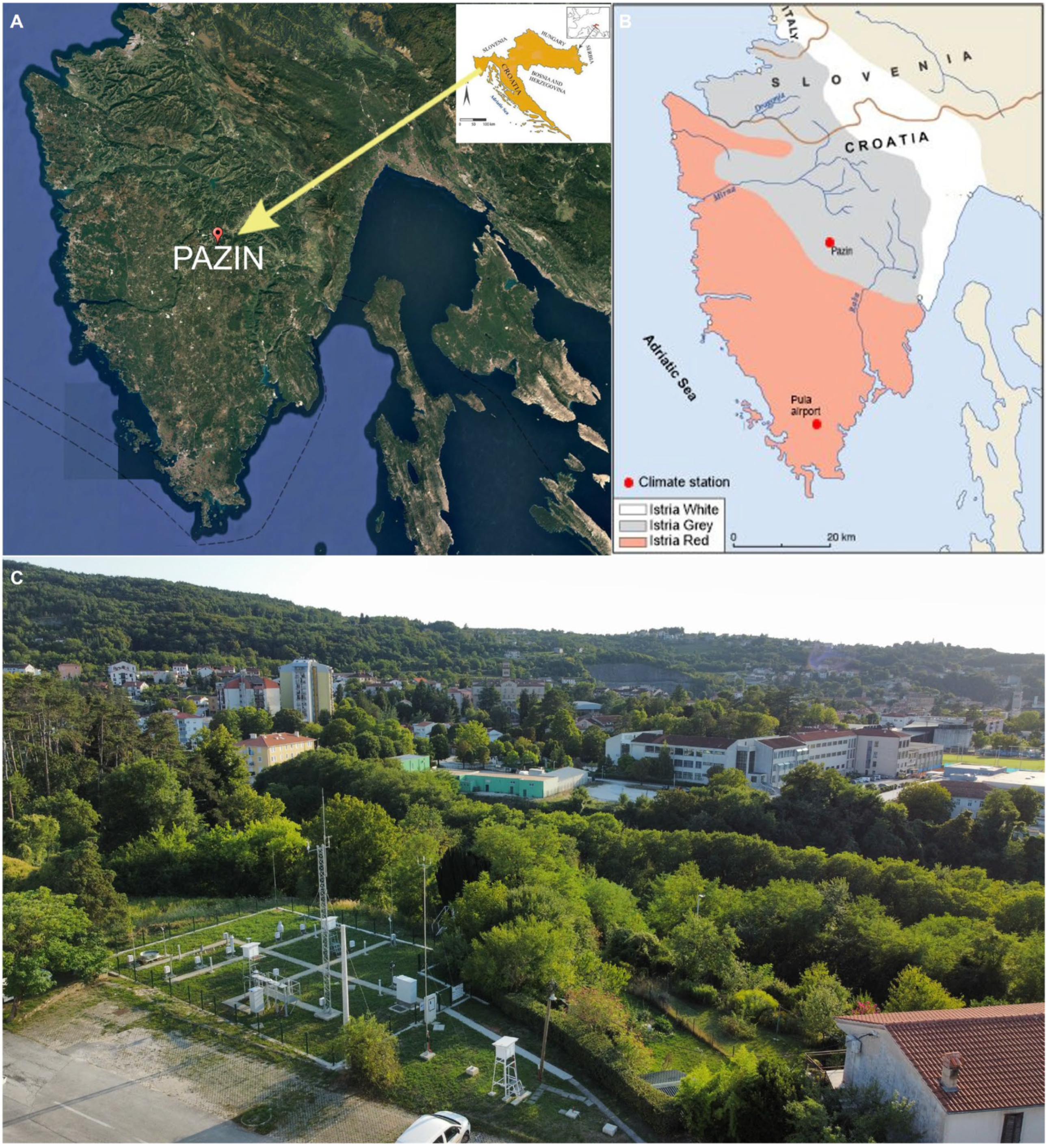
Figure 1A,B): Croatia (3132 km
2), Slovenia (385 km
2), and Italy (38 km
2), with the small Italian portion of the peninsula not fully depicted in the figures [
23]. It should be noted, however, that according to different sources, the surface area varies, ranging from 3306 km
2 [
24] to the above-mentioned 3558 km
2. The geographical coordinates are as follows: (1) northernmost point: 45°32′ N, 13°44′ E; (2) southernmost point: 44°45′ N, 13°56′ E; (3) westernmost point: 45°12′ N, 13°30′ E; (4) easternmost point: 45°03′ N, 14°13′ E.
Understanding the natural processes of this peninsula, particularly the spatial and temporal characteristics of its climate, requires emphasizing that the Adriatic Sea is the northernmost extension of the Mediterranean into the European mainland. Within this relatively small area, three distinct geomorphological units have been defined based on geological composition and soil types (
Figure 1B). The hilly northern margin is known as White Istria. It is dominated by bare karst terrain, including the Učka mountain ridge with its highest peak Vojak (1401 m a.s.l.) and the Ćićarija range with its highest peak Planik (1272 m a.s.l.) The central part of the peninsula is formed by lower flysch hills. Due to the abundance of gray clay within the flysch deposits, this region is referred to as Gray Istria. It is separated from the higher zone by a fault line. Owing to the low permeability of flysch, this area has been significantly lowered by both fluvial and aeolian erosion. Numerous open watercourses are also found here. The coastal lowlands consist of limestone plateaus, known as Red Istria. The bedrock is predominantly limestone, characterized by typical karst landforms such as karren, dolines, caves, shafts, and sinkholes. Because of the gentle slopes, “terra rossa” (red soil) accumulates on the surface, giving this region its name.
Climatic influences are shaped by both the Mediterranean and continental settings. From the west and northwest, the Atlantic provides heat and moisture. The Mediterranean and Adriatic seas moderate the effects of hot, dry air masses from North Africa. As the warm Saharan air (the jugo wind) passes over the sea, it absorbs moisture, resulting in mild and wet winters, while summers in Istria are typically hot and humid. During winter, cold, dry air masses from continental Europe flow across the Alps and Dinarides, producing the bora wind, a strong, dry, cold, and turbulent downslope wind that can significantly lower temperatures and cause frost.
Despite Istria’s generally humid climate, high variability in precipitation increases the risk of drought. This risk is most pronounced along the western coast, where rainfall is lowest and periods of very high temperature may last up to three months. Karst areas, despite receiving higher rainfall, are also drought-prone due to their low soil water retention capacity.
Moving inland, the Mediterranean climate transitions relatively quickly into a temperate continental climate [
25], influenced by cold mountain air circulation and proximity to the Alps. Climate change projections for coastal and shallow seas are strongly influenced by the complex interactions of atmosphere, ocean, and land—particularly evident in the northern Adriatic, the shallowest shelf of the Mediterranean [
26]. Kuzmić et al. [
27] demonstrated the strong role of the bora in shaping the climate of both the northern Adriatic and Istria. In Istria, the bora is especially notable for its gustiness and sudden temperature drops, which can intensify frost risk despite generally favorable humidity conditions.
The climate of Pazin is influenced by three main factors: its mid-latitude position, the land–sea relationship, and local topography. In the temperate latitudes, the alternation between cold polar and arctic air masses and warm tropical air masses strongly characterizes climatic conditions, with frequency and duration of these influences playing a key role. Pazin is located in the central part of the Istrian peninsula, where maritime influences are limited. There are no extensive open sea areas surrounding Istria, and the Adriatic Sea in this region is relatively shallow and maritime moderation therefore depends more on the sea volume than on surface area. As a result, continental influence dominates over much of the peninsula. Local topography modulates climatic conditions. Pazin is surrounded by hills and characterized by a basin-like relief which enhances cold-air pooling and produces pronounced temperature inversion, particularly during winter mornings. This so-called basin effect often results in lower cold-season temperatures compared to the surrounding area. Consequently, the climate of Pazin inland and topographic controls more strongly than maritime influences for several climatic parameters [
28]. Because regional-scale atmospheric forcing acts across the entire Istrian Peninsula while local relief and geology modulate the climatic response, drought conditions may vary substantially between coastal, central and mountainous areas.
This study analyzed long-term climate observations of minimum, mean, and maximum annual air temperatures, mean monthly air temperatures, and annual and monthly precipitation recorded at the Pazin meteorological station (45°14′27″ N, 13°56′43″ E) from 1961 to 2024. The station is located in the central part of the peninsula, in Gray Istria, at an elevation of 291 m a.s.l. (
Figure 1B), approximately 25 km inland from the coast.
To highlight regional and local differences in the behavior of two key climatic variables, temperature and precipitation, data were also analyzed from the Pula Airport meteorological station (44°53′51″ N, 13°55′13″ E) for the period 1968–2024. This station is located in Red Istria, in the southern part of the peninsula, at an elevation of 63 m a.s.l. (
Figure 1B), about 6 km from the western coastline and 3 km from the eastern coastline.
The Pazin station lies 38.23 km north and 1.97 km east of Pula Airport. For both stations, only official records from the Croatian Meteorological and Hydrological Service (DHMZ), Zagreb, were used in this study.
3. Methods Used
Time series analysis was applied to detect and quantify trends and fluctuations in the climatic records. Linear regression and correlation analyses, F-tests,
t-tests [
29], the Mann–Kendall test [
30,
31], and Rescaled Adjusted Partial Sums (RAPS) [
32], were employed to describe changes in the analyzed time series over the 1961–2024 period. Linear trends were estimated using regression analyses, while the coefficient of determination (R
2) was calculated to assess the strength of relationships between variables.
Fluctuations within the analyzed time series were explored using the RAPS method [
32]. A graphical representation of RAPS can highlight the existence of sub-periods with different statistical properties, multiple trends, abrupt shifts, irregular fluctuations, and potential periodicities. While the identification of sub-periods using RAPS involves a degree of visual interpretation, all detected breakpoints were subsequently tested for statistical significance to ensure objective differentiation between adjacent subseries. The RAPS statistic is defined as:
where
Yav, is the average value of the time series consisting of,
n, members,
SY, the standard deviation of the series, while
k = 1, 2, …,
n, the summation counter.
The statistical significance of linear trends was tested using the non-parametric Mann–Kendall (M-K) test [
30,
31]. The null hypothesis assumes no statistically significant monotonic trend, while the alternative assumes the existence of one. The criterion for accepting statistical significance was set at
p < 0.05.
To assess the significance of differences between mean values of two adjacent sub-periods, F-tests and
t-tests were applied [
29]. The F-test evaluated the equality of variances between two normally distributed populations, while the
t-test quantified whether mean values differed significantly. In both tests, the level of significance was set at
p < 0.05 for accepting differences in the mean values and/or variances of the subseries.
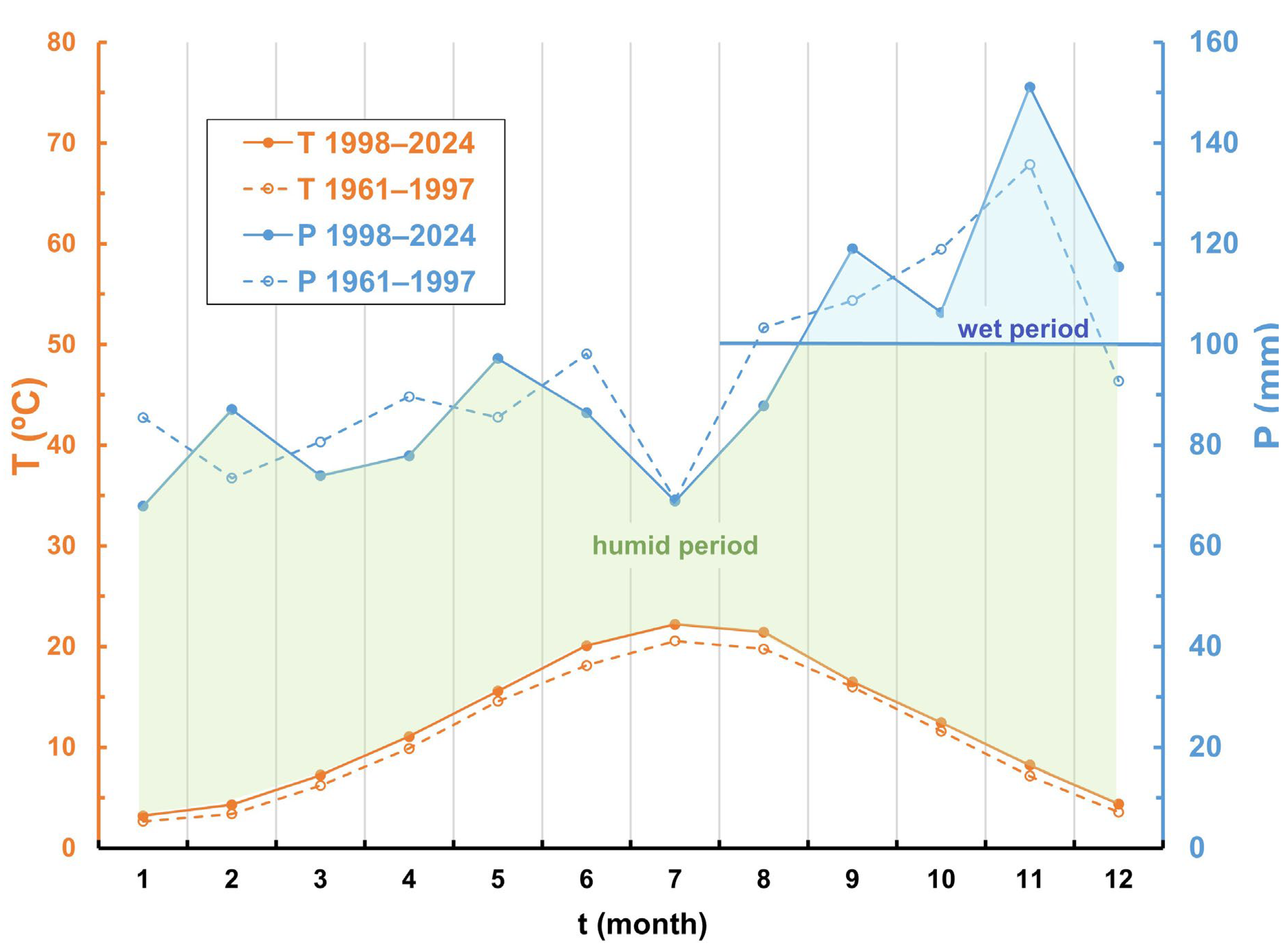
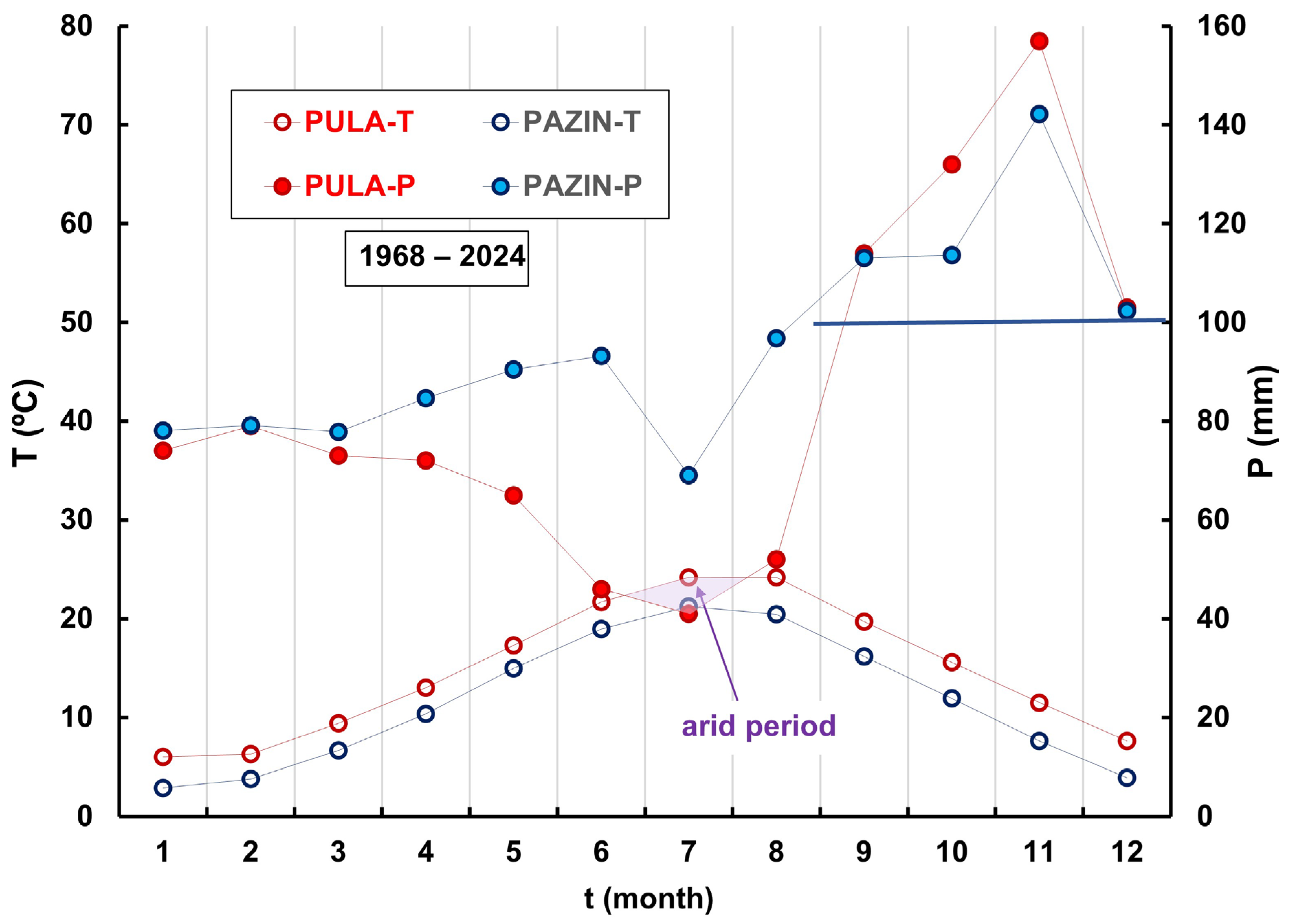
A comparative graphical representation of average air temperature and average precipitation during a given period, for each month of the year at a particular location, is known as the Gaussen–Walter diagram [
33,
34,
35]. This diagram illustrates the average behavior of temperature and precipitation, as key climatic characteristics of the analyzed site, highlighting variations in their relationship throughout the twelve months of the year. The climatic diagram clearly indicates the distribution of humid and arid periods over the year. These diagrams visually represent the monthly average temperature and precipitation, with the scale set to that 20 mm of precipitation corresponds to 10 °C. When the precipitation curve falls below the temperature curve, the intervening area denotes aridity; when the precipitation curve lies above the temperature curve, conditions are humid; and when precipitation exceeds 100 mm, conditions are classified as wet.
To study droughts, one of the most hazardous natural disasters, numerous methods have been developed, along with a variety of quantitative indicators, commonly referred to as drought indices [
36,
37,
38,
39]. In this study, monthly values of two drought indices, SPEI [
5] and NDI [
22], were calculated and compared.
The SPEI builds on the Standardized Precipitation Index (SPI) by incorporating air temperature, allowing it to account for the effect of temperature on drought development through a basic water balance calculation. Potential evapotranspiration was estimated using the Thornthwaite equation [
40]. The Thornthwaite equation was selected due to its minimal data requirements over the full 1961–2024 period. While this method may overestimate potential evapotranspiration in Mediterranean climates, potentially affecting absolute SPEI magnitudes, this known bias primarily influences magnitude rather than long-term trends and further justifies the complementary use of NDI. Monthly SPEI values for Pazin were calculated for the period January 1961–December 2024, using the SPI Generator tool [
41]. SPEI is calculated by standardizing the difference between precipitation and potential evapotranspiration as:
where
Pi is the precipitation in the year or month
i,
Pav is the mean precipitation of the analyzed period,
EToi is the potential evapotranspiration in the year or month
i, EToav is the mean potential evapotranspiration of the analyzed period,
σ is the standard deviation of the (
P −
ETo) series, and
n is the length of the time series.
The SPEI was selected as a widely used and well-established drought index that integrates precipitation and air temperature through a climatic water balance, making it particularly suitable for assessing drought conditions under ongoing climate warming. By incorporating potential evapotranspiration, SPEI accounts for temperature-driven drought intensification that may not be captured by precipitation-only indices. Previous drought studies conducted under comparable climatic conditions have demonstrated SPEI’s suitability, especially in regions experiencing significant increases in air temperature.
The NDI is a transparent, climate-sensitive index based solely on standardized precipitation and air temperature. By relying on just two fundamental and widely available climatic parameters, for which long-term, reliable data exist globally, the NDI provides a practical tool for understanding and quantifying drought phenomena [
42]. It was designed to capture temperature-driven droughts, which are becoming increasingly frequent under global climate change, particularly in regions such as the Mediterranean, Southeastern Europe, and subtropical zones. To assess drought severity, monthly NDI values for Pazin were determined for the period January 1961–December 2024. The NDI is defined as:
where
Pi is the precipitation in year
i,
Pav is the average precipitation value of the analyzed period,
SP is the standard deviation of precipitation,
Ti is the mean annual air temperature in year
i,
Tav is the mean air temperature of the analyzed time series, and
ST is the standard deviation of air temperature.
Drought intensity categories are identical for both indices: mild droughts range from 0 to −1.0, moderate droughts from −1.0 to −1.5, severe droughts from −1.5 to −2.0, and extreme droughts occur when values fall below −2.0.
4. Results
4.1. Air Temperature
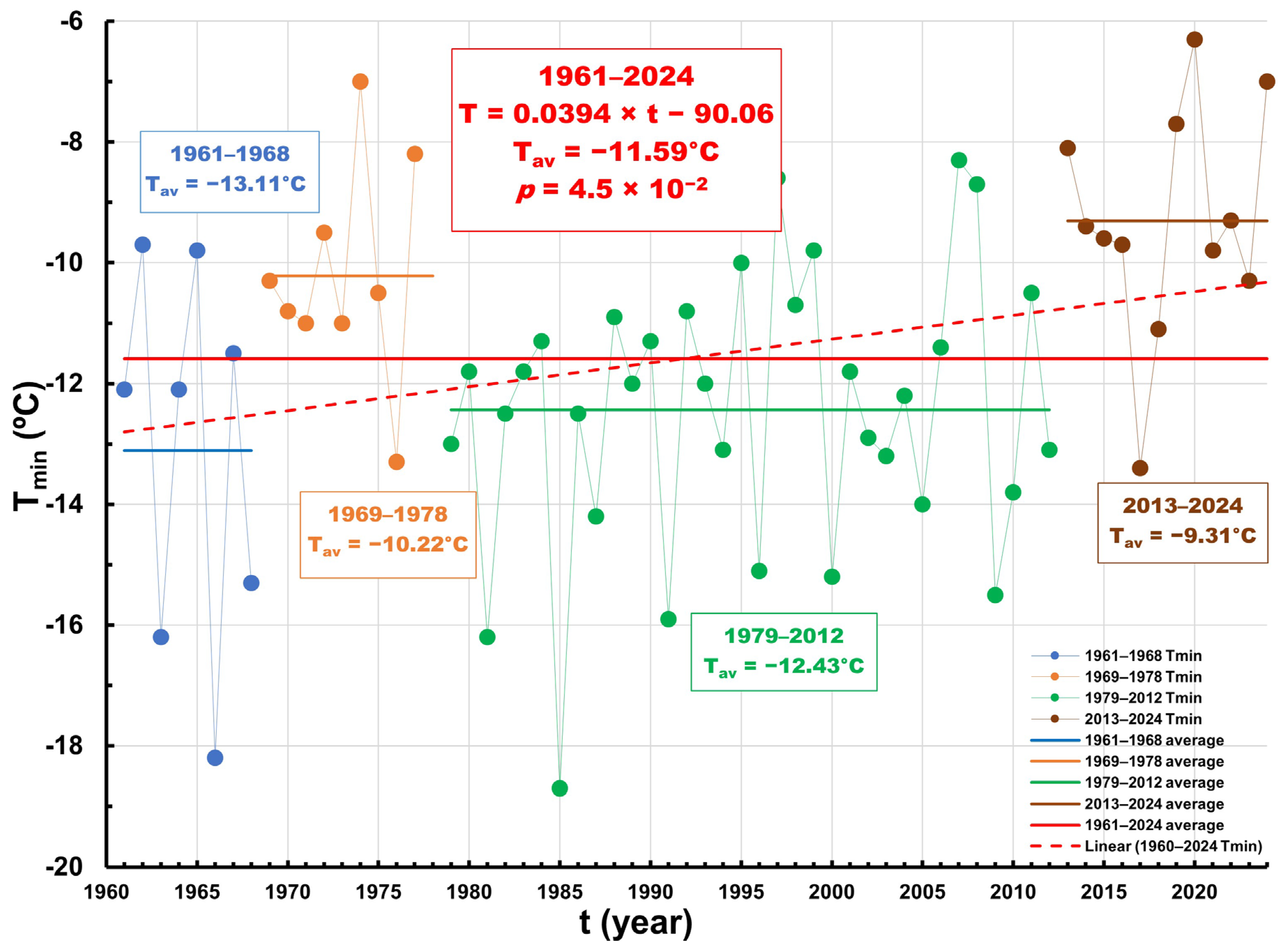
The series of annual minimum (
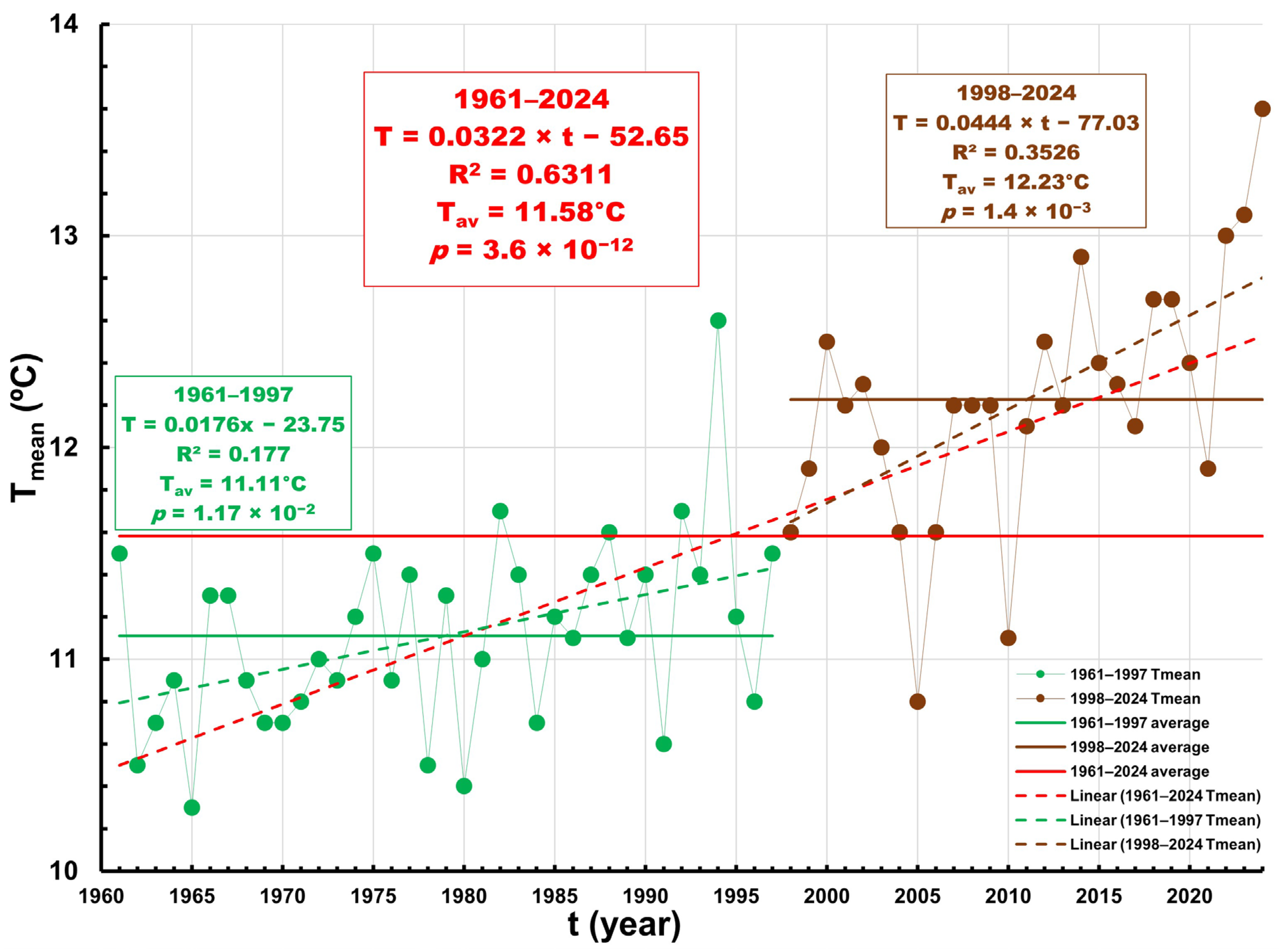
Figure 2), mean (
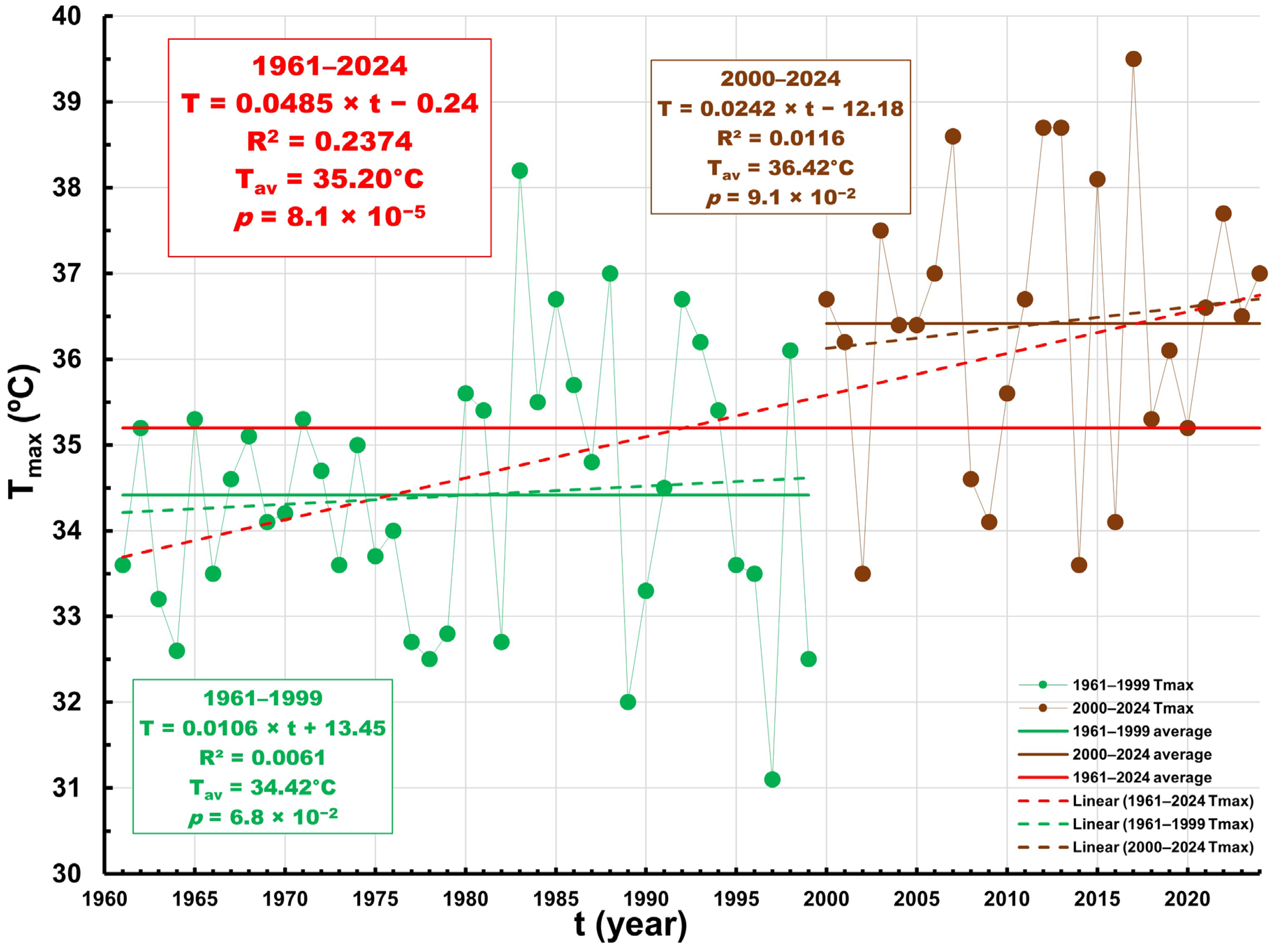
Figure 3), and maximum (
Figure 4) air temperatures observed over 64 years (1961–2024) reveal strong warming trends in recent decades. The most pronounced increase is in mean annual temperatures, particularly during 1998–2024, when the average trend amounted to 0.44 °C per decade.
Application of the RAPS method revealed subsequences with statistically significant differences between the average values of adjacent segments. Four subsequences were detected for minimum annual temperatures: (1) 1961–1968; (2) 1969–1978; (3) 1979–2012; (4) 2013–2024. Two subsequences were identified for mean annual temperatures: (1) 1961–1997; (2) 1998–2024, and likewise for maximum annual temperatures: (1) 1961–1999; (2) 2000–2024.
Table 1 reports the average values of characteristic temperatures for each subsequence, together with the corresponding
p-values of statistical significance derived from the F-test and
t-test.
The average values of mean monthly temperatures in Pazin for the period 1961–2024 and the
p-values of trend significance calculated using the Mann–Kendall test are presented in
Table 2. A warming trend is evident in every month, though it is not statistically significant in January and September. The most pronounced increases occur in the warm part of the year, from May to August.
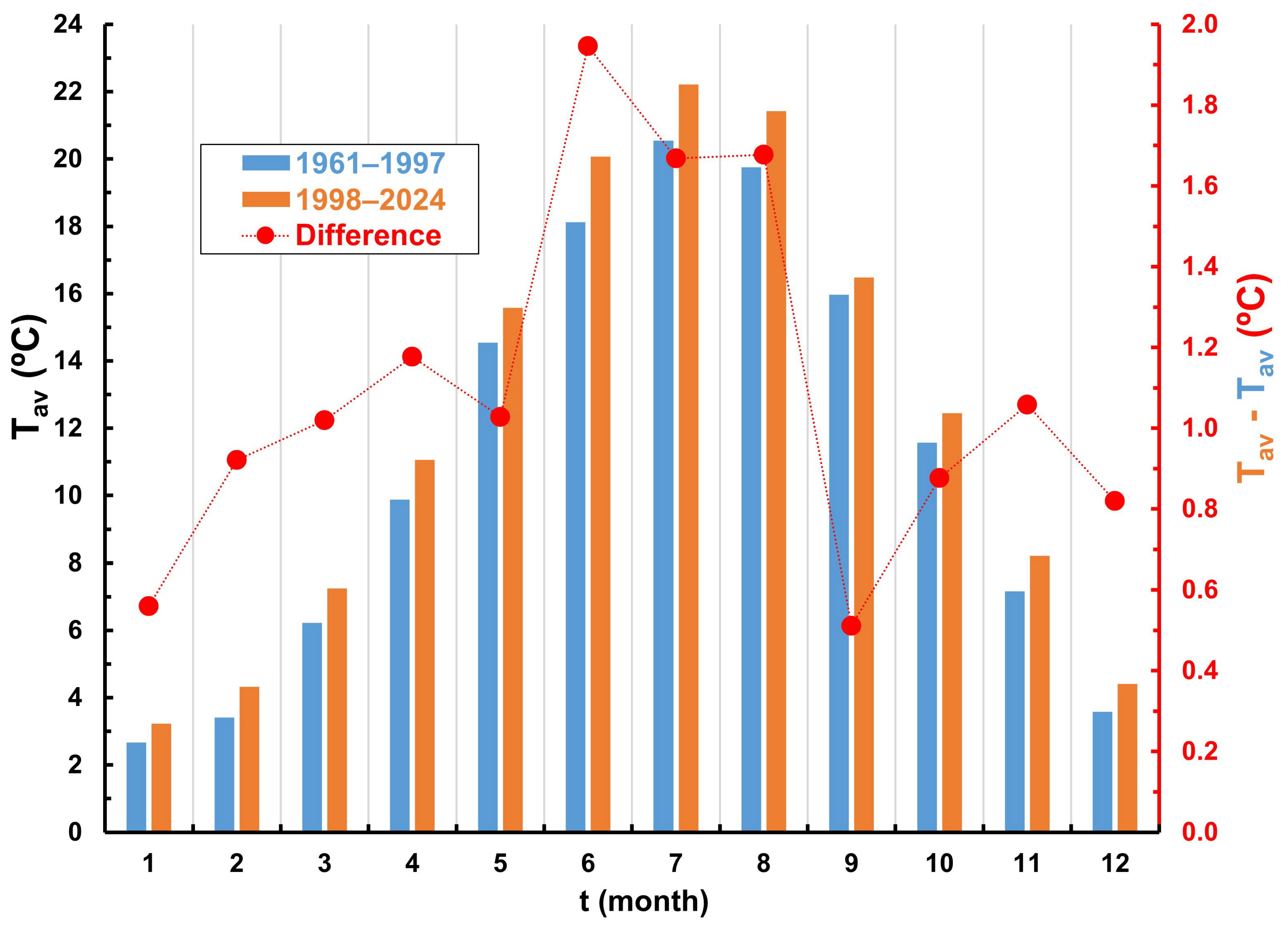
Figure 5 shows histograms of the average mean monthly air temperatures in Pazin measured for two sub-periods: (1) 1961–1997; (2) 1998–2024. Their differences for individual months are plotted as points connected by lines. The largest differences, ranging from 1.66 °C to 1.95 °C, appear in the hottest part of the year, from June to August, while the smallest difference of 0.51 °C occurs in September.
4.2. Precipitation
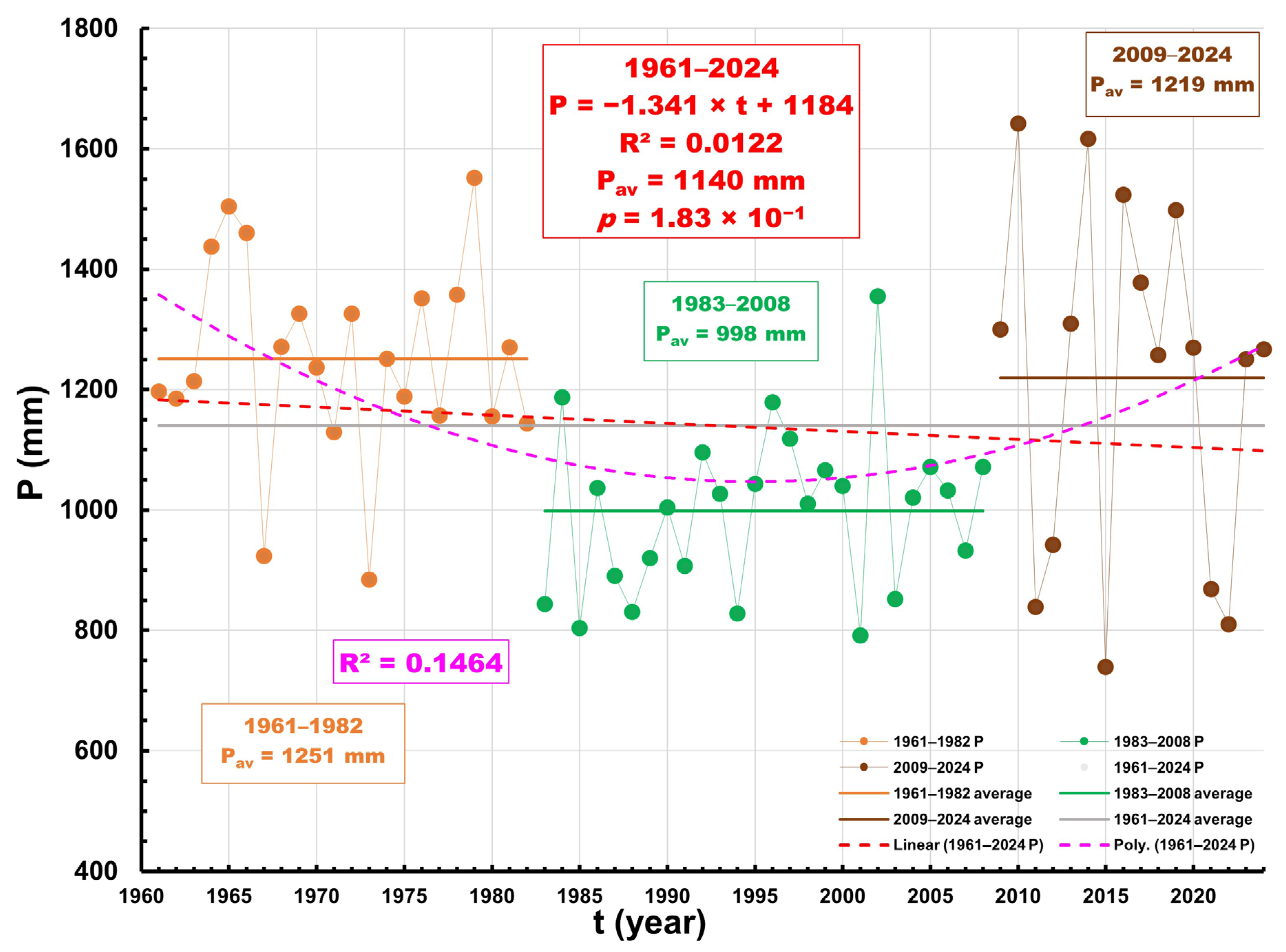
The series of annual precipitation totals recorded at Pazin for the period 1961–2024 is shown in
Figure 6. The average precipitation over this 64-year period was 1140 mm, with values ranging from a minimum of 738.8 mm in 2015 to a maximum of 1642 mm in 2010. The observed downward trend is not statistically significant, with
p = 0.180, well above the critical threshold.
Using the RAPS method, three sub-periods with statistically significant differences in mean values were identified: (1) 1961–1982; (2) 1983–2008; (3) 2009–2024.
Table 1 lists the average precipitation for each of these sub-periods and the
p-values for the statistical significance of the differences, as determined by the F-test and
t-test.
The last two columns of
Table 2 present the average monthly precipitation at Pazin for 1961–2024 and the significance of the trend calculated using the Mann–Kendall test. A statistically significant decreasing trend is observed only in April, while downward trends in January, June, August, October, and November are not statistically significant. In February, March, May, July, September, and December, non-significant increasing trends were noted over the 64-year period.
November has the highest average monthly precipitation at 142.2 mm and also the largest standard deviation (83.5 mm), indicating that precipitation variability is greatest during this month compared to others. Conversely, July has the lowest average monthly precipitation of 69.0 mm.
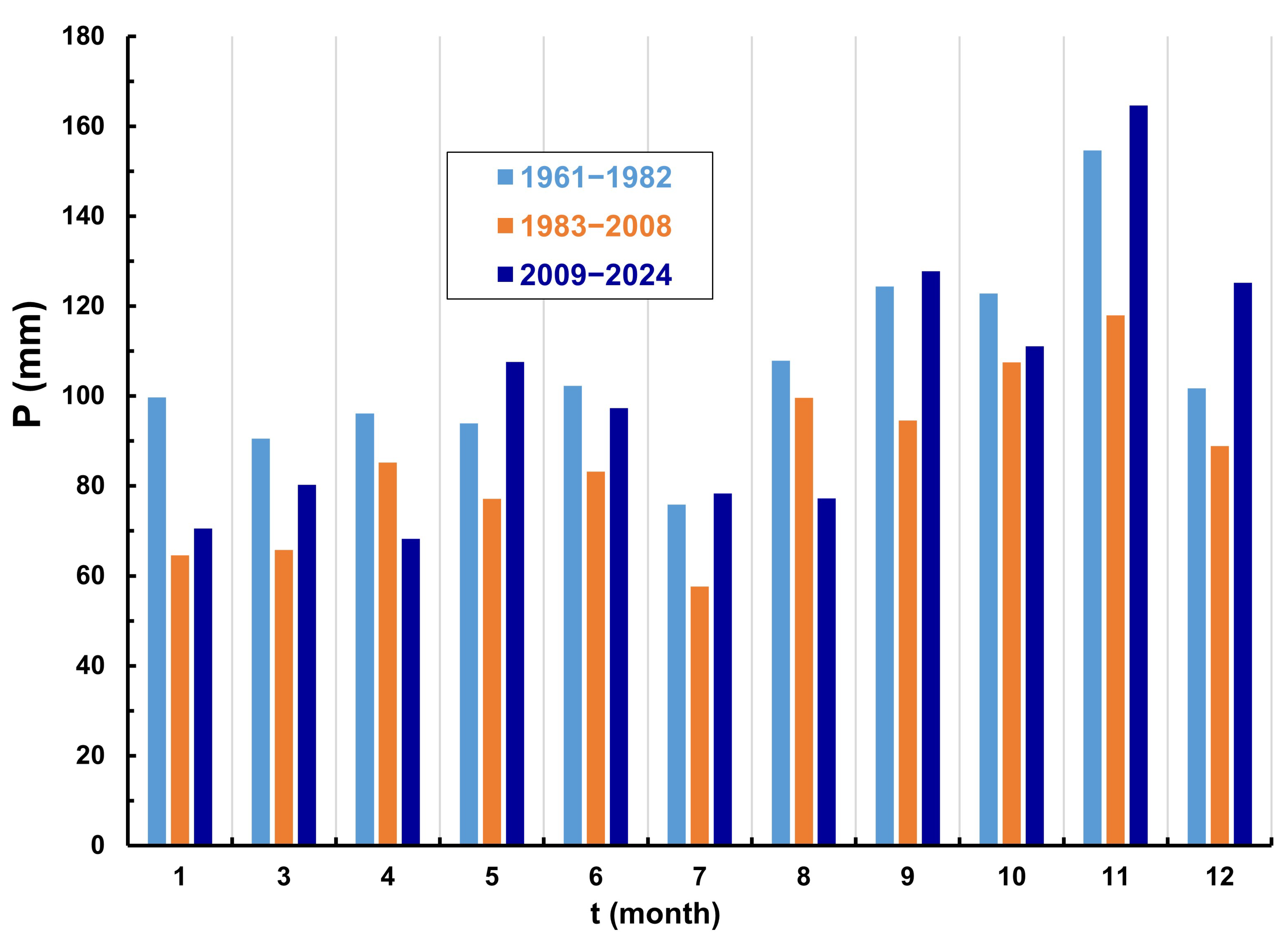
Figure 7 presents histograms of average monthly precipitation at Pazin for the three RAPS sub-periods:1961–1982 (light blue), 1983–2008 (orange), and 2009–2024 (dark blue). The figure highlights seasonal precipitation patterns and inter-period variability. November consistently shows the highest precipitation values across all periods, while July exhibits the lowest. Variations between sub-periods are visually represented by the relative heights of the bars for each month, indicating that although overall precipitation fluctuates, the seasonal distribution remains broadly consistent.
Overall, it can be concluded that in Pazin, and likely in the wider central Istria region, precipitation exhibits considerable variability on monthly to annual timescales, but there are no significant long-term trends of increase or decrease.
4.3. Gaussen-Walter Climate Diagram
The Gaussen-Walter climate diagram for Pazin is presented in
Figure 8 for two sub-periods: (1) 1961–1997 (dashed lines) and (2) 1998–2024 (solid lines). The diagram highlights that during the more recent period, from January to August the climate is predominantly humid, whereas from September to December it exhibits wet climatic characteristics.
It should be noted that the diagram represents average climate conditions over the entire 64-year period. Within this timeframe, individual years with arid conditions did occur.
Given the strong precipitation variability and the ongoing increase in air temperature, arid episodes in central Istria are expected to become more frequent, especially during the summer months.
Figure 9 shows a comparison of Gaussen-Walter diagrams for Pazin (blue) and Pula Airport (red) for the period 1968–2024.
At Pula Airport, arid conditions typically occur in July. Considering the recent decades’ pronounced temperature increase, it is likely that arid conditions will extend from June to August across the entire coastal area of the peninsula.
4.4. Drought Analyses
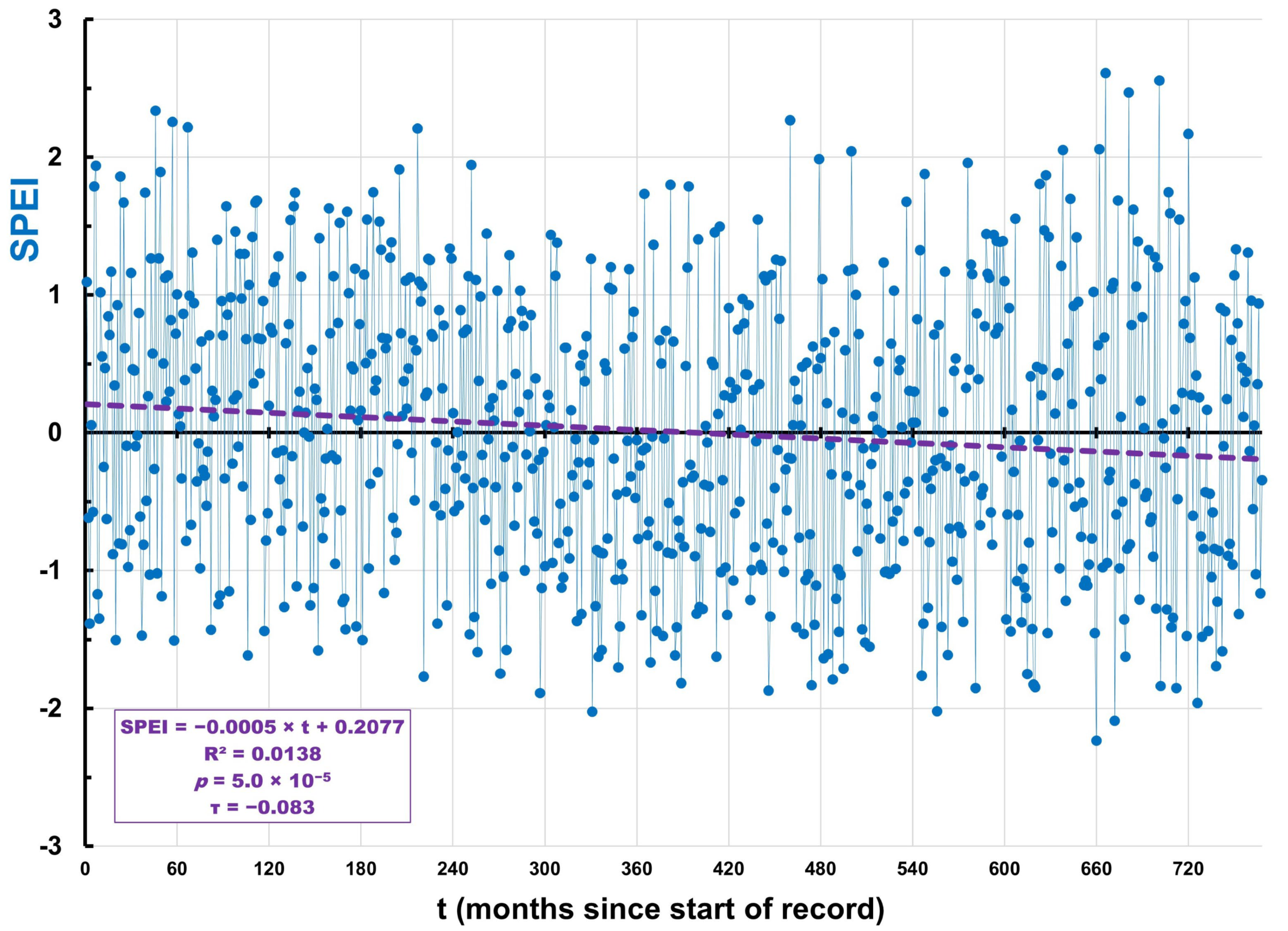
Figure 10 presents the series of monthly SPEI values for Pazin (January 1961–December 2024), comprising 768 data points. The regression line shows a statistically significant downward trend (
p = 5.0 ×10
−5), indicating that the occurrence of dry months has become more frequent in recent decades.
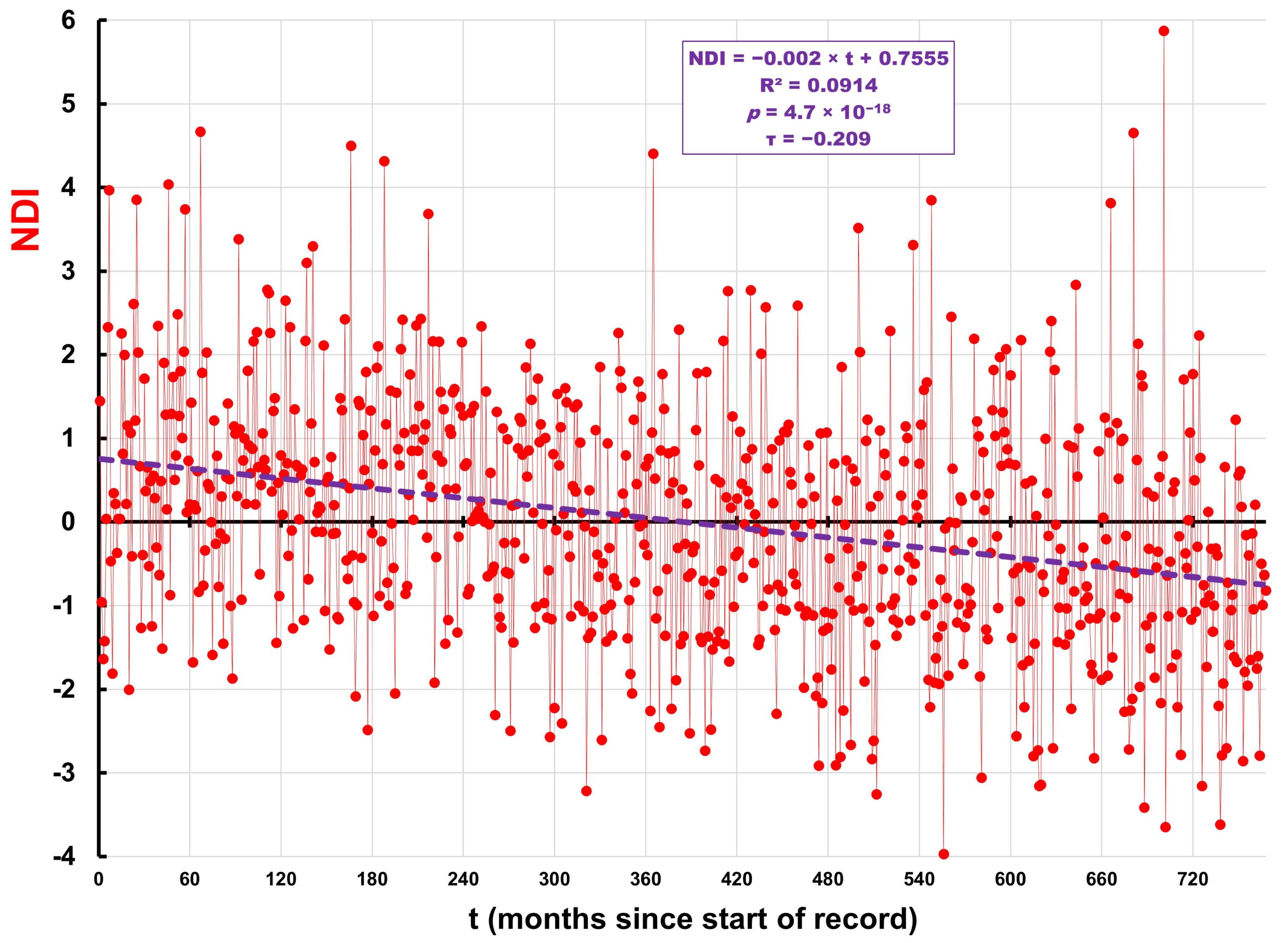
Figure 11 shows the series of monthly NDI series for Pazin for the same period (January 1961–December 2024), also totaling 768 data points. Here, the regression line likewise displays a statistically significant downward trend (
p = 4.7 × 10
−18), again suggesting that drought months are increasingly frequent. Notably, the NDI values indicate a stronger intensification of drought processes compared to SPEI.
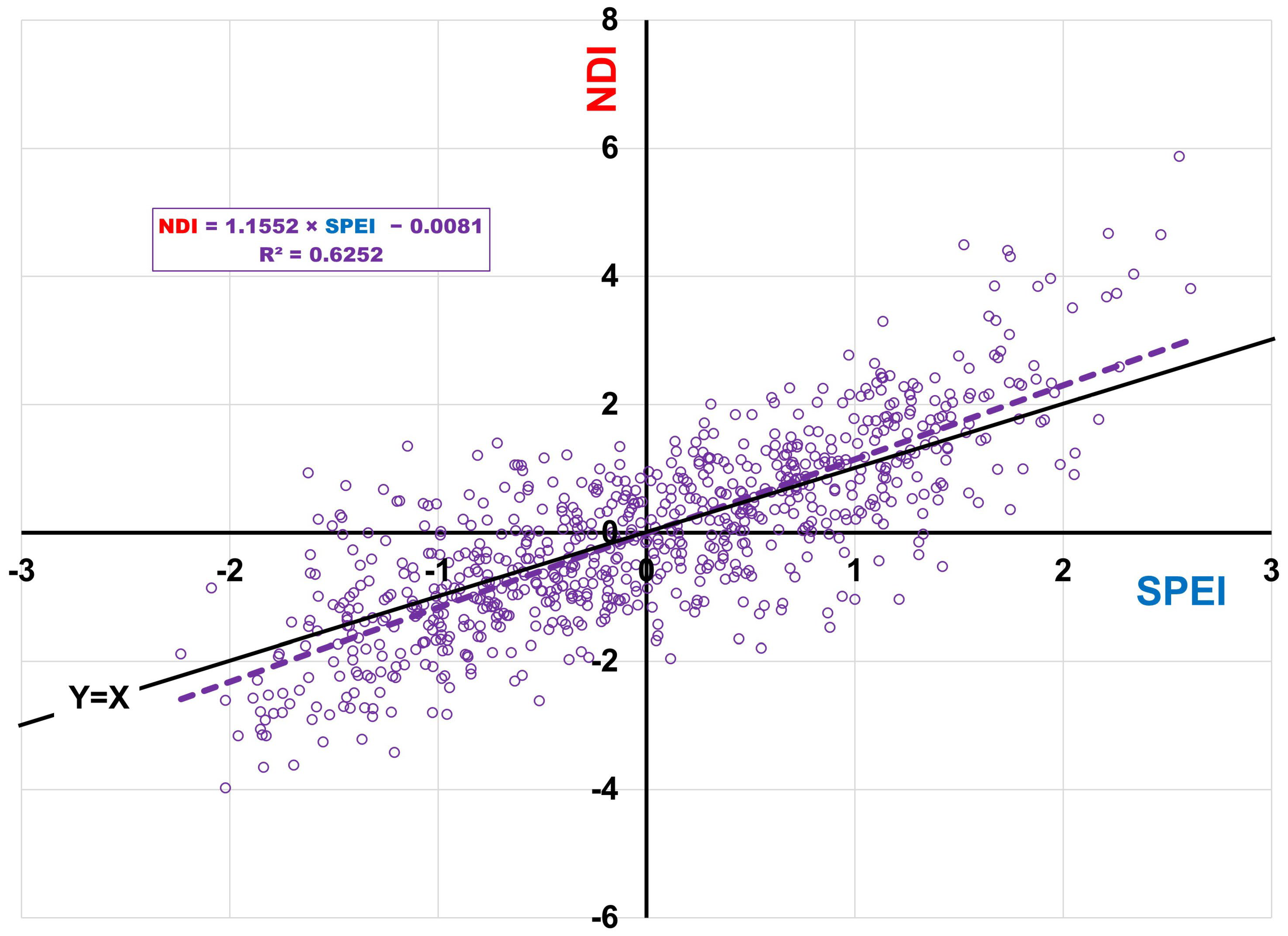
The graphical relationship between NDI (
Y-axis) and SPEI (
X-axis), shown in
Figure 12, demonstrates that both indices describe dryness and/or wetness characteristics in a largely consistent manner. The coefficient of determination is high (R
2 = 0.6252). Furthermore, the regression line nearly coincides with the bisector of the first and third quadrants, i.e., the line Y = X.
It is important to assess how the relationship between the two indices behaves across individual months of the year.
Table 3 presents the monthly coefficients of determination for the period 1961–2024. The highest value occurs in August (R
2 = 0.889), while the lowest is in November (R
2 = 0.276). Overall, the results indicate that both indices yield highly similar outcomes during the warm part of the year (May–August), with coefficients of determination ranging between R
2 = 0.835 and R
2 = 0.889.
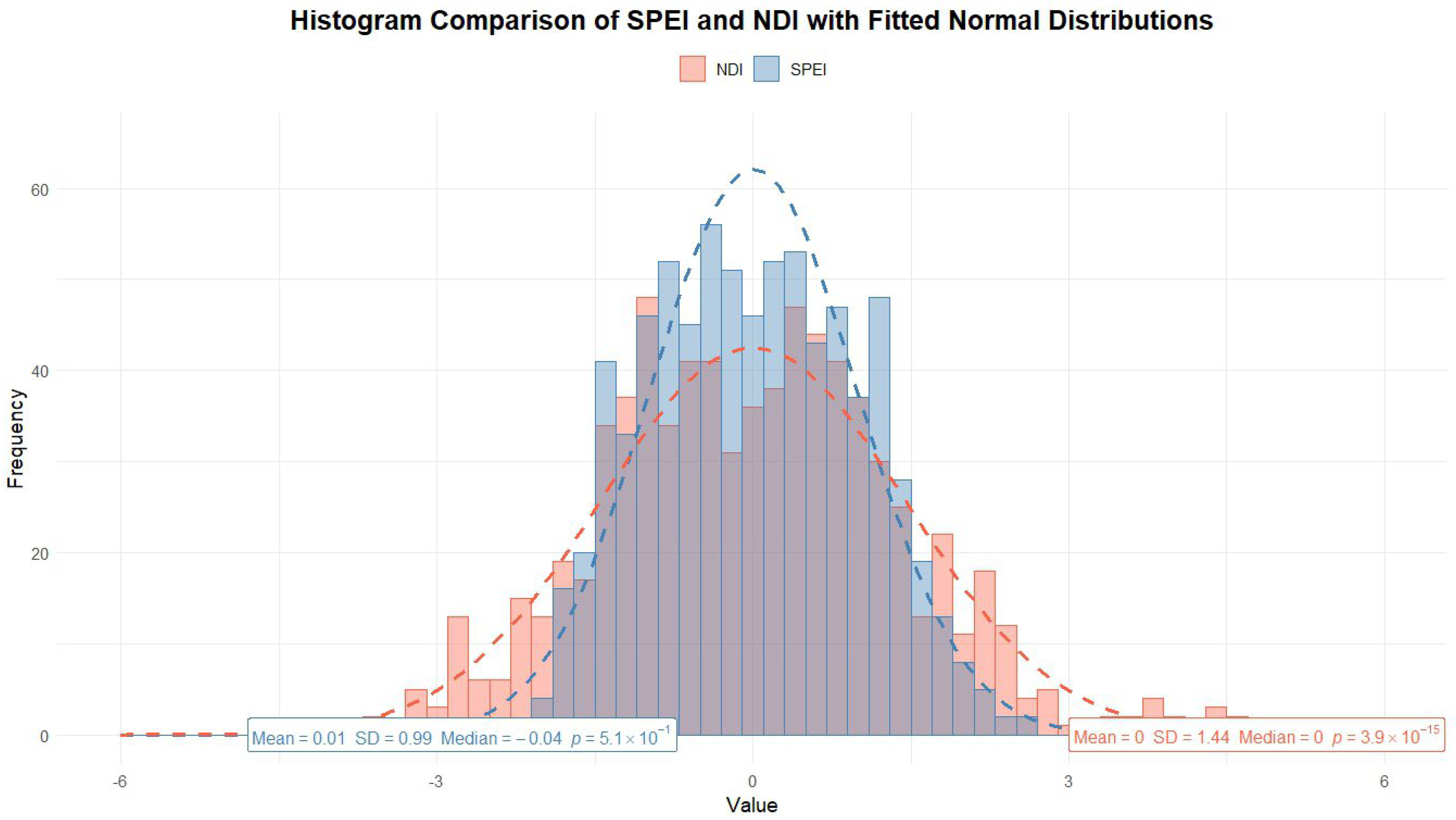
Figure 13 displays histograms of monthly SPEI (blue) and NDI (red) values, overlaid with fitted normal distribution curves. These illustrate the distribution and frequency of drought severity values over the study period, with the
X-axis representing index values and the
Y-axis their frequency.
NDI assumes a linear combination of standardized precipitation and temperature anomalies, following the conceptual framework of widely used drought indices such as SPI and SPEI. This linear formulation serves as a statistical ranking mechanism for drought severity and does not imply a linear physical relationship between climate drivers and drought impacts [
5,
22,
43]. Standardization does not require strict normality of the data. As shown in
Figure 13, both SPEI and NDI exhibit distributional skewness, which is common in drought indices due to the asymmetric occurrence of extreme dry and wet events. Rather than reducing index reliability, this skewness enhances the discrimination of extreme drought conditions. The heavier negative tail in the NDI distribution indicates increased sensitivity to temperature-driven drought intensification, consistent with the intended purpose of the NDI.
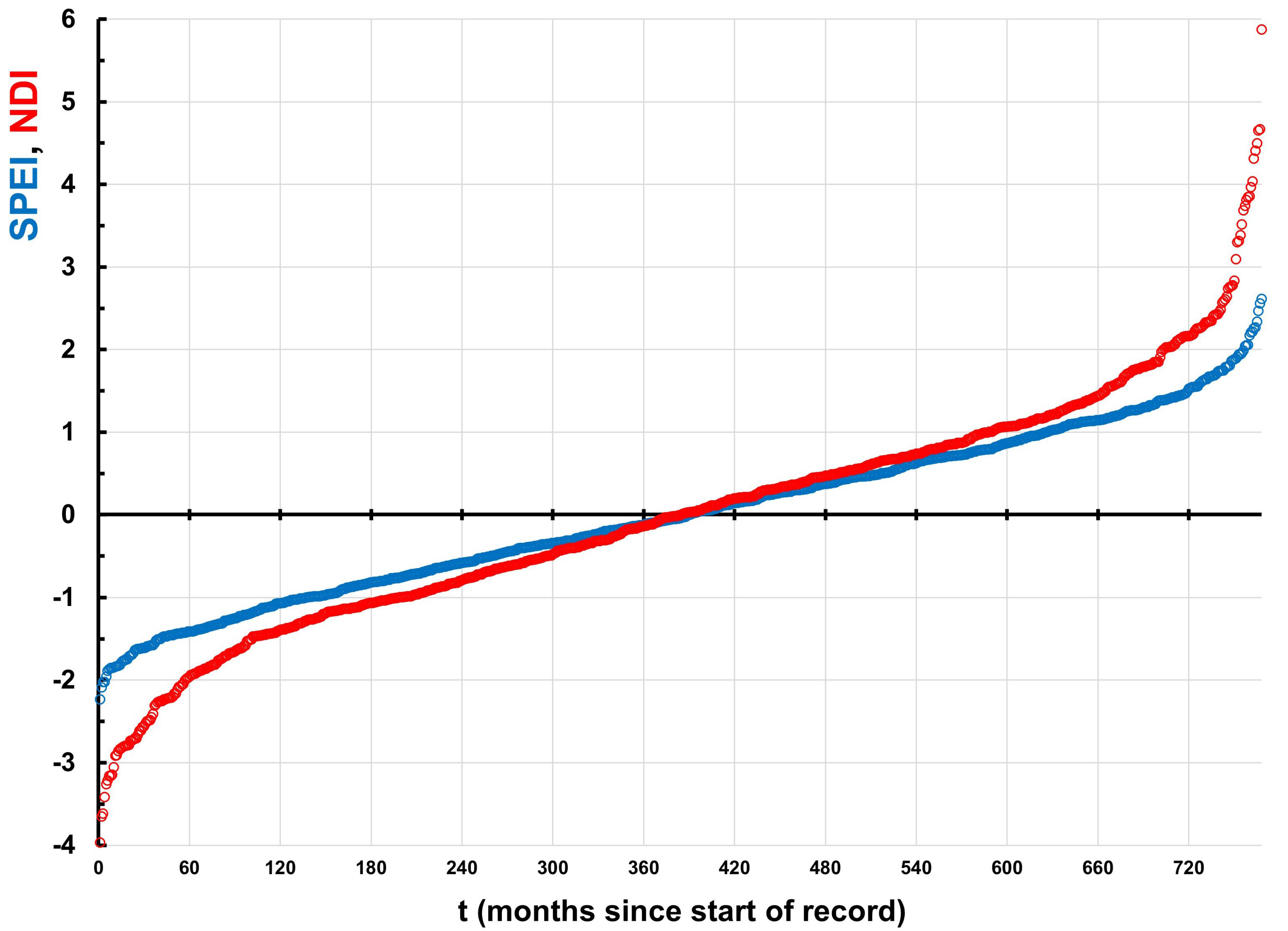
Figure 14 illustrates the duration curves of the monthly SPEI (blue) and NDI (red), highlighting systematic differences in how the two indices represent drought severity over the analyzed period. The NDI curve shows a wider spread at both the lower and upper tails, indicating a stronger sensitivity to extreme and wet conditions. The extension of the NDI curve toward more negative values suggests a greater sensitivity to extreme drought conditions, consistent with its stronger response to temperature-driven drought intensification. The closer alignment of the curves near median values suggests that both indices provide comparable representations of moderate conditions while differing primarily in their depiction of extremes.
Table 4 lists the minimum and maximum values of SPEI and NDI, as well as the
p-values of the Mann–Kendall trend test for the monthly series in Pazin (1961–2024). The NDI values show a wider range than those of SPEI across all months. It is also evident that NDI exhibits a downward (drought-intensifying) trend in every month, with the strongest declines in June, followed by July and August. These trends are not statistically significant in February, September, October, and December. For the SPEI series, the situation differs: statistically significant downward trends, indicating drought intensification, appear only in April, June, and August. Moreover, in February, October, and December, the trend is very slightly positive (though statistically insignificant), while in the remaining six months (January, March, May, July, September, and November), insignificant downward trends are observed.
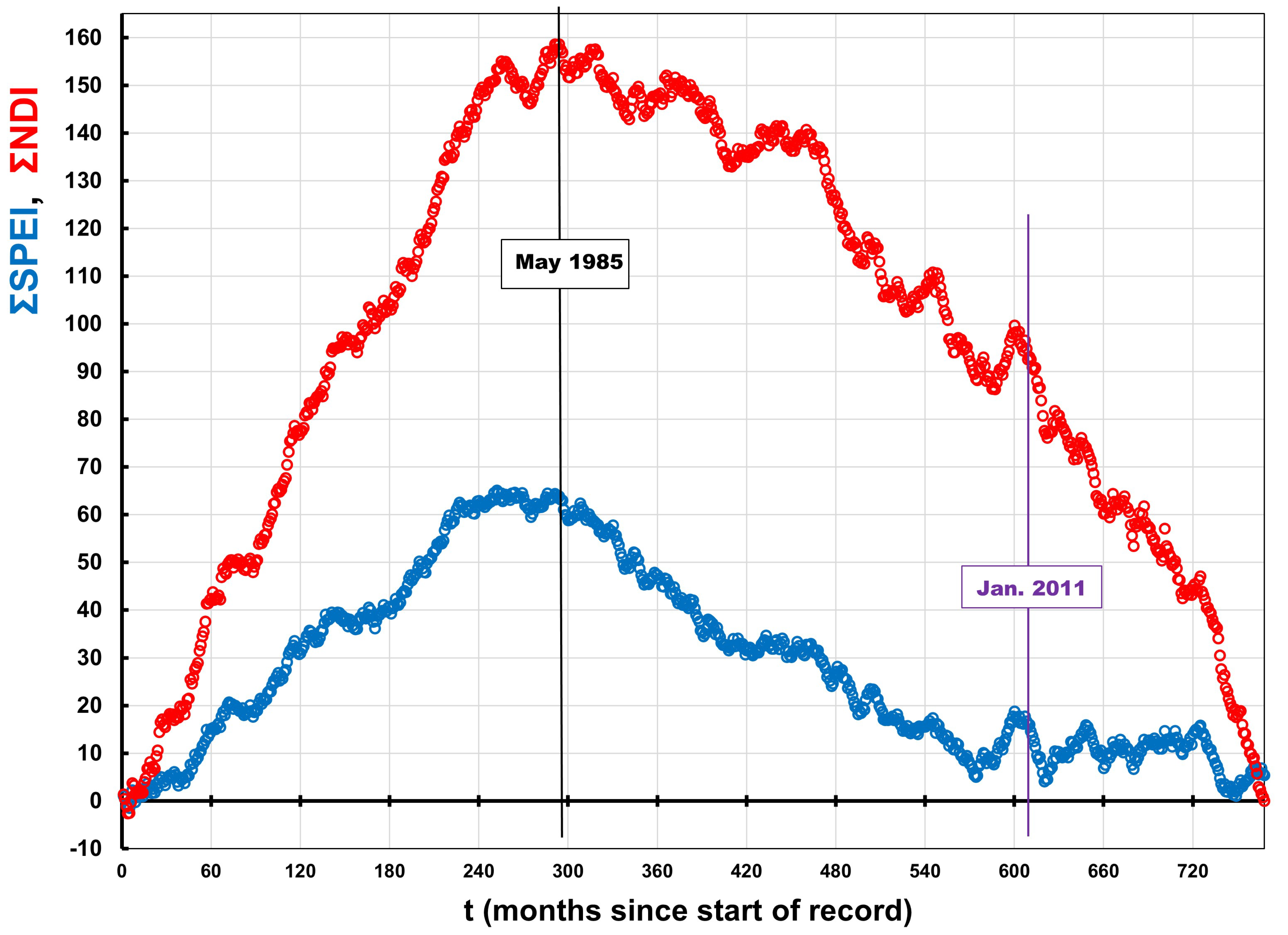
A cumulative analysis of the monthly SPEI and NDI values provides further insight into alternating wet and dry sub-periods. The cumulative of SPEI (blue) and NDI (red) are graphically presented in
Figure 15. Both cumulative series display broadly similar patterns. The interval from January 1961 to May 1985 was predominantly wet, punctuated by short dry spells. From June 1985 through December 2024, dry periods increasingly dominate. A striking divergence emerges between the two cumulative series from January 2011 onward: while the NDI cumulative curve continues to decline sharply, the cumulative SPEI curve shows no decline, only oscillations.
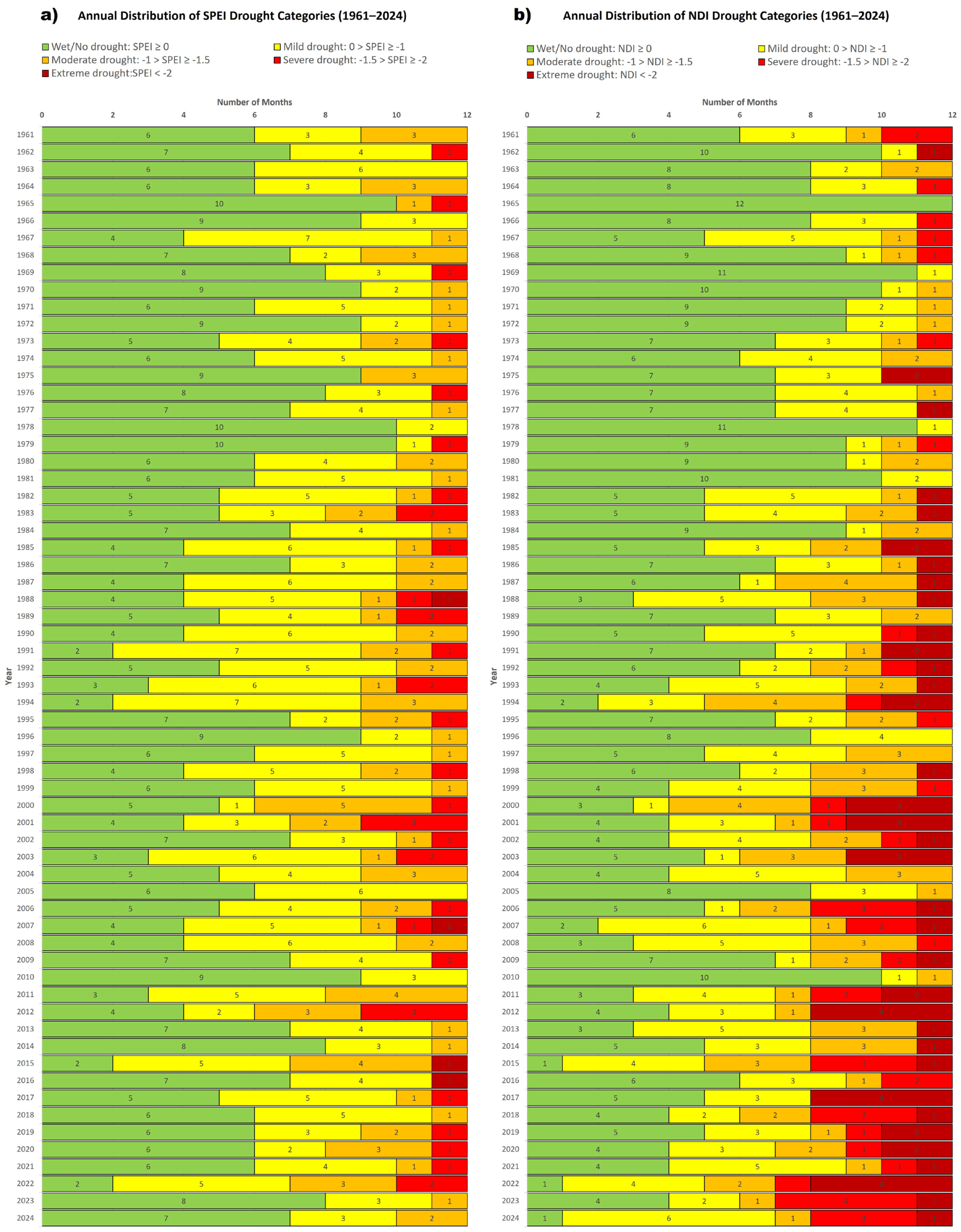
Finally,
Figure 16a,b present the annual distribution of drought categories based on SPEI and NDI, respectively, for the period January 1961–December 2024. The two indices reveal broadly consistent long-term variability but differ in how drought frequency, severity, and persistence are expressed. The SPEI-based distribution (
Figure 16a), reflecting a climatic water balance perspective, shows a sustained predominance of wet/no drought and mild drought months across most of the record, with severe and extreme drought categories occurring intermittently and generally for shorter durations. In contrast, the NDI-based distribution (
Figure 16b), which responds more directly to combined precipitation and temperature anomalies, indicates a higher relative occurrence of moderate to extreme drought months, particularly from the late 1990s onward, along with a notable decline in wet/no drought conditions. This pattern suggests that NDI is particularly effective in capturing temperature-driven drought intensification and prolonged dry spells under warming climatic conditions.
These contrasts reflect the distinct conceptual and computational foundations of the two indices rather than contradictory drought signals. SPEI provides a physically based measure of moisture balance, making it well-suited for tracking hydrological drought conditions, whereas NDI offers a more temperature-sensitive and transparent representation of drought evolution, enhancing its responsiveness to heat-driven intensification and prolonged dry periods. This makes NDI especially valuable for detecting climate change-related shifts in drought dynamics when temperature effects become increasingly important.
The divergence becomes especially pronounced in the post-2000 period, consistent with the increasing influence of warming on drought classification. These findings underscore the importance of using drought indices that incorporate thermally driven water stress when assessing long-term water availability. Taken together,
Figure 16 demonstrates that SPEI and NDI provide complementary insights into drought dynamics, and their joint use supports a more comprehensive interpretation of long-term drought evolution under climate warming.
5. Discussion
The findings of this study provide clear evidence that droughts in the humid central part of the Istrian peninsula have become more frequent and more intense over the past several decades. Although the 64-year precipitation record (1961–2024) does not exhibit a statistically significant downward trend, it demonstrates substantial interannual variability and three sub-periods with statistically significant differences in mean values. In contrast, mean annual temperatures show a statistically significant increasing trend, beginning around 2000, which has played a central role in identifying drought conditions.
Both SPEI and NDI indicate an increase in drought frequency and severity since May 1985. However, differences emerge in their sensitivity to recent warming. In the case of Pazin, NDI proves more effective than SPEI in capturing drought intensification driven primarily by rising air temperatures in the absence of a significant long-term precipitation decrease. NDI exhibits stronger and more persistent negative trends and shows clearer cumulative deterioration after 2010, whereas SPEI displays weaker or stagnating signals over the same period.
A key methodological insight emerging from this study is that NDI, unlike SPEI, does not rely on precipitation minus evapotranspiration (P−ETP). Since evapotranspiration is widely regarded as the least reliable component of drought indices, owing to the diversity of estimation methods and associated variability, NDI reduces sensitivity to this source of uncertainty. By relying exclusively on precipitation and air temperature, two directly measured and relatively robust variables, NDI offers conceptual simplicity and limits dependence on parameters that may introduce additional methodological variability. In contrast, SPEI requires parametric distribution fitting and calibration, including the selection of statistical distributions and parameter estimation, which may not be equally appropriate across different climatic regimes [
9].
An additional advantage of NDI, supported by empirical evidence from previous studies, is its ability to identify a higher proportion of severe and extreme droughts than SPEI across multiple time scales. For example, in the Valle de Bravo basin in Mexico, NDI classified 67% of drought months as severe at the 3-month scale, compared with 44% for SPEI [
44].
These findings reinforce the conceptual and practical advantages of NDI, particularly under conditions of accelerated warming such as those projected by the IPCC [
45]. As heat extremes become more frequent, traditional indices that rely on P–ETP may underestimate temperature-driven drought impacts. By explicitly incorporating temperature anomalies, NDI is better suited to capturing heat-enhanced droughts, which are becoming increasingly common across mid-latitude regions.
Given the complexity of drought manifestation and the diversity of drought definitions, individual drought events should ideally be studied in greater detail and separately, taking into account their impact on different sectors. However, the lack of continuous long-term observations and sector-specific datasets limits the possibility of a comprehensive impact-based analysis. Despite these constraints, the results indicate that drought occurrence in central Istria is irregular yet characterized by clearly identifiable drought periods using both indices.
A pronounced tendency toward more frequent and intense droughts is evident, particularly when comparing the periods 1961–1997 and 1998–2024. Although SPEI and NDI do not produce identical results, they exhibit a high degree of consistency. The linear trend in SPEI shows a decline of approximately −0.003 units per year, whereas the linear trend in NDI is more pronounced at about −0.008 units per year, indicating a stronger deterioration of drought conditions when temperature effects are more explicitly captured.
This study intended to contribute to a better understanding of how drought intensification varies across space and time in Istria and to support the development of more effective early-warning systems and climate adaptation policies.
Looking ahead, expanding the comparative analysis of drought indices to other Mediterranean and continental regions would help assess the transferability and robustness of the findings obtained for Istria. The integration of high-resolution climate model projections and remote sensing data could further enhance early warning capabilities and provide a more comprehensive representation of spatial drought variability. In addition, linking drought indices with hydrological, ecological, and socio-economic datasets would enable a more integrated assessment of sector-specific vulnerabilities, including water supply, agriculture, and forest fire risk. Finally, given the increasing occurrence of flash droughts, future research should prioritize the development of monitoring frameworks capable of capturing both slow-onset and rapid-onset drought processes in near real time.
A key issue remaining is the selection of appropriate indicators or indices for drought quantification in a given research context. The crucial question is whether a particular index is suitable for a specific location, catchment, or region. As with drought definitions themselves, no single index can be universally applied to all climate zones (arid, Mediterranean, temperate), drought types (agricultural, meteorological, or hydrological), or management sectors (water management, agriculture, water supply, etc.). Consequently, a range of scientific and practical considerations must inform index selection. In practice, researchers often opt for the most accessible and/or the simplest method. In this respect, a simple and transparent drought index such as NDI offers a distinct advantage.
6. Conclusions
The analyses conducted in this study show that droughts in the humid central part of the Istrian peninsula have become more frequent and more intense over the past several decades. Although long-term precipitation records do not indicate a statistically significant downward trend, substantial interannual variability and distinct sub-periods were identified. In contrast, mean annual temperatures exhibit a pronounced upward trend contributing to the increasing severity of drought events. Both SPEI and NDI captured these changes, with NDI demonstrating greater sensitivity to rising temperatures, reflecting the influence of heat anomalies on drought intensification.
By relying solely on precipitation and temperature, NDI avoids the uncertainty associated with evapotranspiration estimates, maintaining statistical stability and transparency. Its simplicity and minimal data requirements make it well-suited for operational monitoring, real-time early-warning systems, and engineering applications in regions with limited meteorological infrastructure.
Overall, the findings highlight the value of applying robust drought indices to assess spatial and temporal variations in drought under a warming climate. Such analyses are essential for supporting water resource management, informing adaptation strategies, and developing effective early-warning systems in drought-impacted regions.




 ,
,