1. Introduction
Choline is a quaternary ammonium compound that was first discovered in pig bile in 1849 by German chemist Adolph Strecker, but was not analyzed in detail by him until 1862, when it was first named choline (after the Greek word “chole” for bile) [
1]. Originally categorized as vitamin B
4, choline lost its vitamin status in the years following its vitamin categorization due to the fact that it can also be synthesized endogenously in the human organism to a certain extent [
2].
Kennedy (1954) was the first to identify the metabolic pathway in which free choline is converted to phosphatidylcholine (cytidine-5-diphosphocholine pathway), and Bremer & Greenberg (1960) demonstrated an alternative metabolic pathway for the endogenous synthesis of phosphatidylcholine with the PEMT pathway (phosphatidylethanolamine N-methyltransferase pathway) [
3,
4]. Due to various influencing factors, endogenous choline synthesis is not equally pronounced in all individuals, and there are therefore large interindividual differences in the degree to which endogenous choline requirements are met and in the degree of dependence on external choline intake through food. Although there appear to be so-called “facultative cholinivores” within the population who are able to meet their requirements with a relatively low intake of choline through food, there are also a large number of individuals whose endogenous choline synthesis is significantly too low to meet their requirements, making them dependent on an adequate supply of preformed choline.
However, during periods of particularly high choline requirements (e.g., pregnancy, breastfeeding, competitive sports, etc.), it is questionable whether even “facultative cholinivores” can meet their needs without an external choline supply during these times.
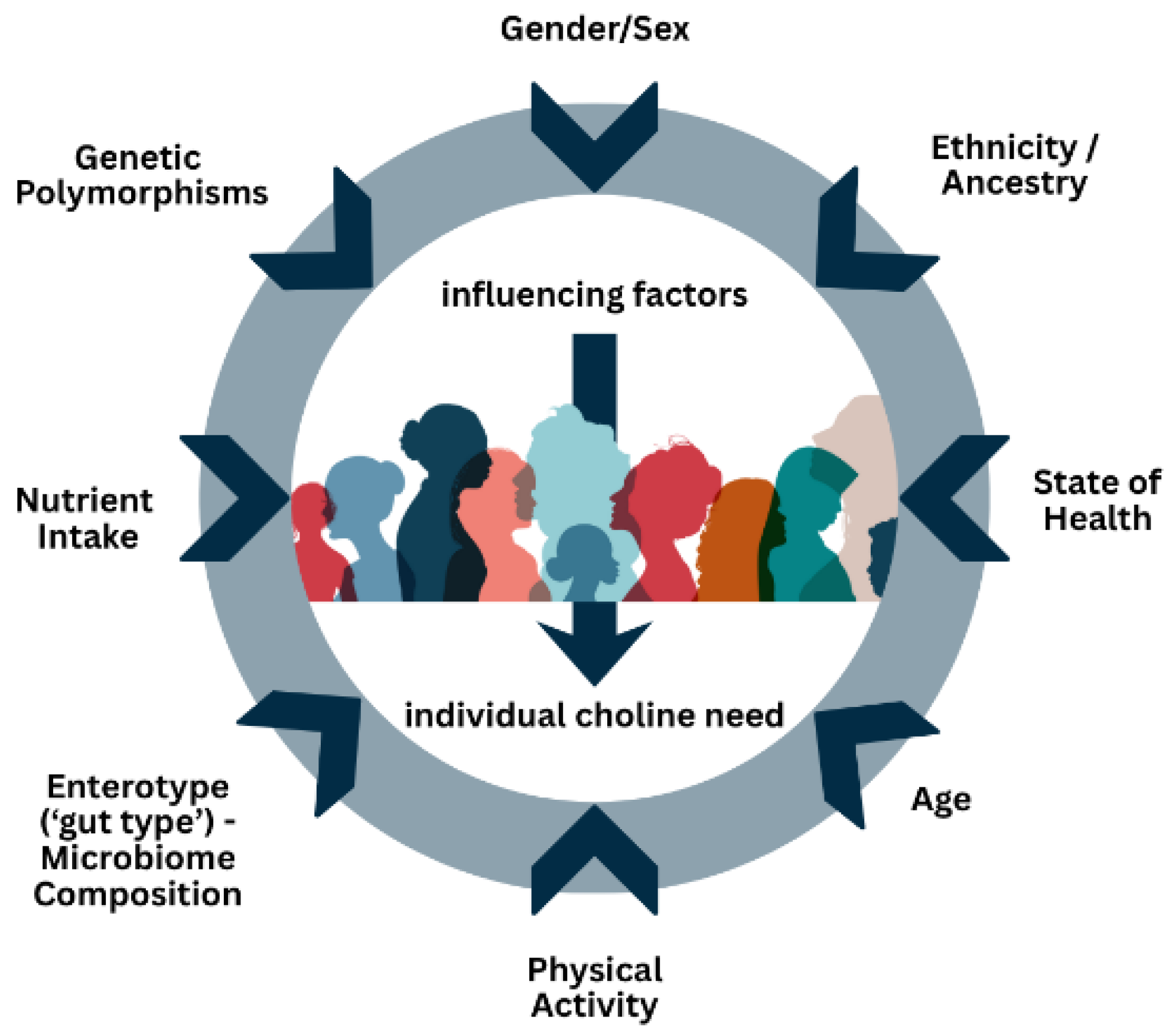
Figure 1 illustrates the most important factors influencing human choline requirements, which cause choline nutritional requirements to vary from person to person.
Gender is an important factor influencing choline synthesis. Women are, on average, better at producing choline than men, at least during their fertile years, as the enzymes responsible for the body’s own choline synthesis are estrogen-dependent and therefore more active in premenopausal women than in men of the same age [
6]. Estimates suggest that the estrogen-dependent increase in choline synthesis in premenopausal women is between 10 and 50% compared to men and postmenopausal women [
7]. This also explains why, in studies with choline-restricted diets, men and postmenopausal women developed signs of choline deficiency faster on average than premenopausal women.
Another factor influencing choline requirements is the level of physical activity. For example, strenuous physical exertion during a 26 km run led to a significant reduction in choline levels by an average of 40% compared to choline levels before the start [
8]. In a crossover study during another run, the administration of a choline-containing drink not only compensated for the reduction in plasma choline levels compared to a choline-free drink, but also led to a significant improvement in running performance in the group with the choline-containing drink [
9]. It should be noted that reductions in circulating or tissue choline concentrations do not necessarily reflect reduced dietary intake, but may also result from increased metabolic demand, altered endogenous synthesis, or enhanced utilization.
In addition, the supply of other nutrients involved in choline metabolism plays a role in the amount of choline required, as choline interacts with vitamins such as folate (B
9) and methyl group donors such as betaine [
10]. A folate deficiency in the diet therefore leads to a higher choline requirement, whereas a very good folate supply can potentially reduce the choline requirement [
11]. The amount of betaine intake also has an influence on the necessary amount of choline intake, and thus the requirement for dietary choline appears to decrease in betaine-rich diets [
12].
Another relevant—and often overlooked—factor influencing choline requirements is an individual’s genetics. In particular, gene variants that influence phosphatidylethanolamine N-methyltransferase (PEMT) activity play a decisive role in influencing the need for externally supplied choline, as the activity of this enzyme causes the body to produce phosphatidylcholine (PC) from phosphatidylethanolamine (PE).
Single-nucleotide polymorphisms (SNPs) with a negative influence on PEMT activity have been shown to be significantly more common on average in subjects of European descent than in subjects of African or Asian descent, underscoring the influence of ethnicity on choline requirements.
Da Costa et al. (2014) showed that origin, genetics, age, and gender have a decisive influence on choline requirements in a study in which 200 SNPs in 10 genes influencing choline metabolism and the influence of gender and age on the choline status of subjects were investigated [
13]. The study showed that there was a correlation between the ancestry of the subjects and the occurrence of different SNPs, which were represented with varying frequency depending on the origin of the subjects or their roots, and that this in turn had an influence on their choline requirements. After ten days of a choline-rich diet (550 mg/70 kg/day) and sufficient betaine and folate intake, all subjects in the study were given a low-choline diet (50 mg/70 kg per day) until the participants began to show signs of choline deficiency. If a person did not develop any functional disorders during the trial period, the trial ended after 42 days.
During the study, 63% of the subjects developed early choline-associated liver dysfunction (diagnosed by elevated alanine aminotransferase levels; ALT) or muscle dysfunction (diagnosed by elevated creatine phosphokinase levels; CPK) due to the low-choline diet. 77% of postmenopausal female subjects and 73% of male subjects, but only 41% of premenopausal female subjects, showed choline deficiency-related symptoms during the trial period. The remaining subjects did not show any symptoms associated with choline deficiency during the study period, but it has not been investigated to what extent they can supply themselves with choline in the long term through their own synthesis, even with a low-choline diet.
DNA samples from subjects who experienced organ dysfunction showed that several SNPs are associated with the occurrence of these dysfunctions and that whether muscle or liver dysfunction occurred first was also associated with polymorphisms in genes that influence choline metabolism.
Da Costa et al. (2006) showed in a further study that more than half of the European subjects analyzed had polymorphisms with a negative influence on choline metabolism, leading to a partial loss of PEMT enzyme function and thus to reduced endogenous choline synthesis, suggesting a widespread increased dependence on dietary choline in European populations [
14].
This circumstance makes it particularly important for European nutrition societies to focus more on choline in the interests of public health and to share the study results on the essentiality of choline with the population.
2. Research on the Essentiality of Choline
The first indications that choline is an essential nutrient, at least for certain species, were provided by Best & Huntsman (1932) in the early 1930s, who observed that the additional administration of choline as part of a low-choline diet can prevent the development of fatty liver in dogs and rodents [
15].
From the mid-1950s onwards, various studies on other laboratory animals such as calves, pigs, baboons, and other animals showed that low-choline diets can also lead to insufficient choline supply in these animals, with negative effects on their liver function and even the development of liver cancer [
16].
When Burt et al. (1980) demonstrated several decades later that human subjects on a completely parenteral diet with low choline content also developed liver dysfunction and that this could be improved by adding choline, interest in researching the essentiality of choline for humans grew [
17]. This observation is biochemically plausible, as choline is, among other things, a starting material for the synthesis of phosphatidylcholine, which in turn is an important component of very low-density lipoproteins (VLDL), which transport triglycerides from the liver [
10].
In addition, long-term choline deficiency promoted the development of hepatocellular carcinoma in animal models by damaging liver cells [
18,
19]. This makes choline deficiency the only known nutrient deficiency to date that is directly linked to the development of cancer [
10]. Despite the interesting observations made by Burt et al. (1980) [
17] in patients receiving total parenteral nutrition, it was not until more than a decade later that a groundbreaking intervention by Zeisel et al. (1991) really got the ball rolling in choline research [
20].
This study showed that a low-choline diet (13 mg choline/day) compared to a high-choline diet (500 mg/day) also has negative effects on liver function—measured by serum alanine aminotransferase activity as a biomarker of liver function—which could be reversed by increasing choline intake in these subjects [
20].
For the purpose of the study, subjects were hospitalized and received a semi-synthetic, almost choline-free diet during the study period, which was enriched with 500 mg of choline per day for one week before they were randomized into two groups for three weeks, either with a choline-rich (500 mg/day) or choline-poor (13 mg/day) diet.
In the low-choline diet group, plasma choline and phosphatidylcholine levels decreased by an average of 30% during the 3 weeks, and serum alanine aminotransferase activity increased by an average of just under 50% during the trial period, even though their diet contained adequate amounts of other nutrients that influence choline metabolism. No such changes occurred in the group with a choline-rich diet.
As this study was conducted only on men, it was unclear at the time whether this observation applied to the same extent to women in different stages of life. However, studies conducted in subsequent decades, such as that by Da Costa et al. (2014) with pre- and postmenopausal women, showed that the majority of postmenopausal women and a significant proportion of premenopausal women on a low-choline diet suffer negative health effects on, among other things, liver and muscle function [
13].
Particularly in premenopausal women who wish to have children, special attention should be paid to ensuring an adequate intake of choline due to its particular importance during the first 1000 days of a child’s life from conception [
21]. Studies have shown that women with low choline intake (<300 mg/day) have approximately four times the risk of birth defects in their offspring compared to those with high choline intake (>500 mg/day) [
13,
22,
23].
Choline is also involved in the synthesis of the neurotransmitter acetylcholine, which regulates several aspects of early childhood brain development [
24]. A review by McCann et al. (2006) using 34 animal models showed that a good supply of choline contributes to positive neurological changes in fetuses and improves the performance of offspring in postnatal behavioral and cognitive tests [
25]. Of all the regions in the brain, the hippocampus appears to be most affected by choline [
26]. This region plays a central role in learning and memory performance and is one of the few areas of the brain where nerve cells continue to multiply even during adulthood.
Due to the high degree of similarity in brain development between humans and rodents, these findings are also relevant for humans and are supported by initial human data. Bahnfleth et al. (2022) studied pregnant women and tracked the development of their children up to the age of seven [
27]. In a controlled feeding trial in which the mothers were randomly assigned to two supplementation groups (480 mg choline/day or 930 mg choline/day), all women received specially prepared meals with a precisely defined nutrient profile and a choline content of 380 mg/day throughout the third trimester, to which they received either 100 mg or 550 mg of choline chloride as a supplement.
At the age of seven, their offspring were tested for sustained attention. The children whose mothers received the higher choline intake of 930 mg/day during the third trimester achieved significantly better results in SAT (Sustained Attention Task) tests and other behavioral analyses. These results are consistent with earlier findings from studies of choline supplementation in pregnant mice on the results of rodent-specific SAT attention tests [
28].
In one of the animal models, even choline supplementation of the mother for only six days during pregnancy resulted in improved performance in memory and spatial reasoning tests in offspring at the age of two years, compared to the control group of pregnant animals without 6-day choline supplementation [
29]. Different levels of choline supplementation in pregnant laboratory animals caused lifelong changes in the brains of their offspring, depending on the amount of choline intake [
10]. The choline supply of the mother also played a role in the risk of pathological changes in the brains of the offspring in later life, even across several generations [
30,
31]. Since 2018, the
American Academy of Pediatrics (AAP) has designated choline as an important “brain-building” nutrient, and in 2017, the
American Medical Association (AMA) published new recommendations regarding supplementation during pregnancy, which now include a recommendation for the inclusion of choline as part of supplementation [
12]. The European Food Safety Authority (EFSA) has also confirmed several scientifically proven effects in the form of “health claims.” These include “Choline contributes to the maintenance of normal liver function,” “Choline contributes to normal fat metabolism,” “Choline contributes to normal homocysteine metabolism,” and “Choline contributes to normal fetal and child development” [
32,
33]. Based on this data, choline intake through food should be ensured at every stage of life and given special attention in the consumption recommendations of professional associations.
Choline is currently also being discussed as an important regulator in the activation and function of immune cells [
34], and the substance is believed to have many other important functions in the body [
35].
3. Choline Content of Common Foodstuffs
In order to ensure that sufficient choline requirements are met, it is essential to understand the uneven distribution of choline in common foods. The most comprehensive database on the choline content of foods to date was published in 2008 by
the United States Department of Agriculture (USDA) and not only contains information on the total choline content of the foods examined, but also breaks this down into the proportions of the different choline esters [
36].
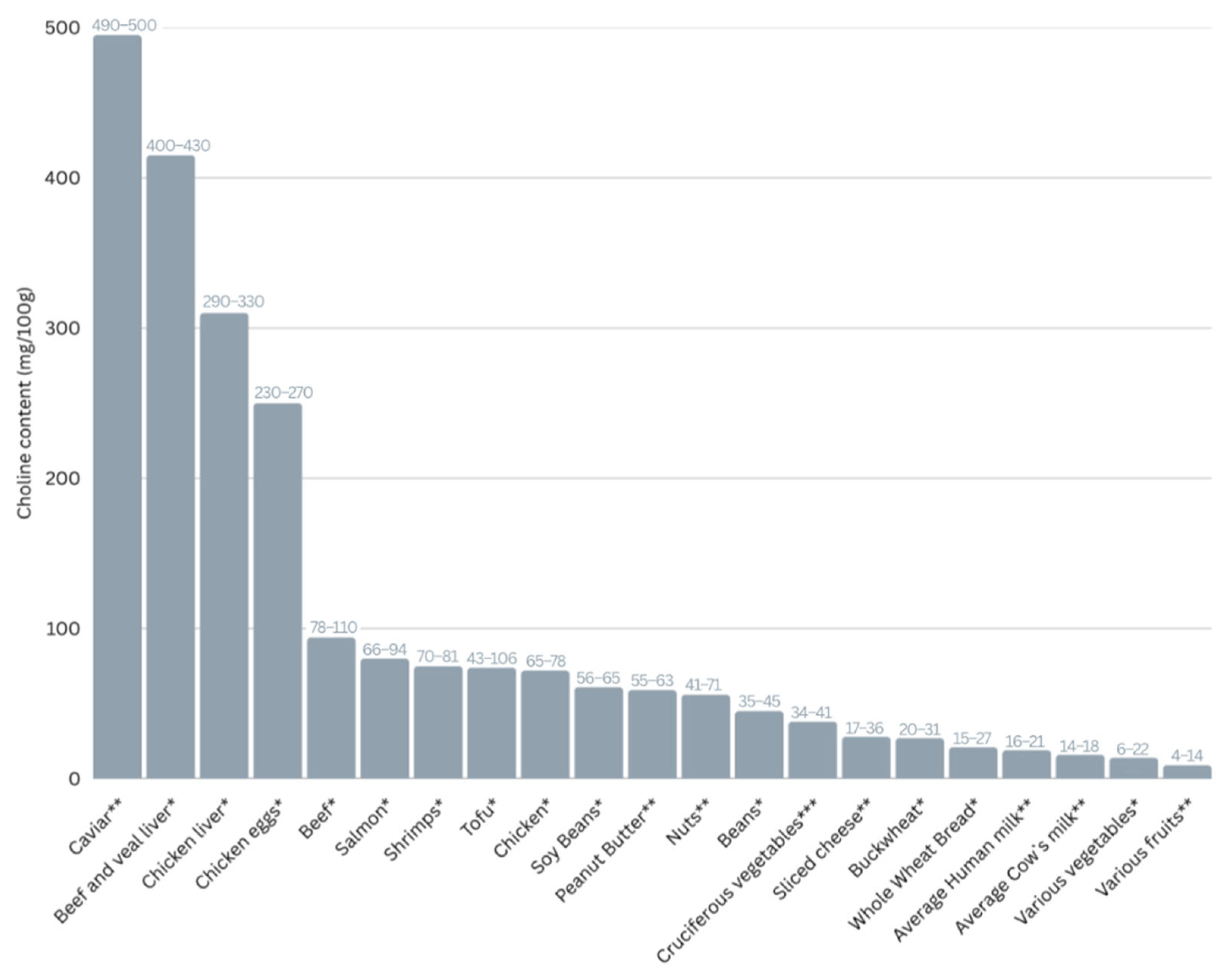
Figure 2 shows the total choline content of various animal and plant-based foods and illustrates how large the differences in average choline content are between individual foods (categories).
As
Figure 2 illustrates, caviar and liver (other organs have not yet been sufficiently studied for their choline content) are by far the most choline-rich foods in the human diet. However, since neither of these foods is a regular part of the European diet, chicken eggs are by far the most important source of choline.
The muscle meat of animals (especially that of ruminants such as cattle) and certain fish and seafood (especially salmon and shrimp) also contain relevant amounts of choline.
As
Figure 2 also shows, the choline content of plant-based foods is significantly lower on average, meaning that a diet that is completely or predominantly free of animal-based foods does not, in most cases, provide sufficient choline [
40]. Only soybeans and soy products such as tofu and tempeh are relatively rich in choline and can contribute significantly to meeting choline requirements.
However, it should be noted that soy products should not be consumed in excessive amounts over a long period of time due to their very high isoflavone content and should therefore not be made a main source of choline. The European Food Safety Authority (EFSA) considers 150 mg of isoflavones per day to be safe, which corresponds to approximately 500 g of tofu [
41]. It should be emphasized that consumption of whole soy foods is generally considered safe and is not associated with increased cancer risk; concerns raised by regulatory authorities mainly relate to high-dose isolated isoflavone supplements rather than naturally occurring isoflavones in foods.
Certain nuts (especially peanuts) are also quite rich in choline in relation to their weight, but due to their high calorie content, they can only play a minor role in choline supply. Plant-based foods that are particularly rich in choline in relation to their calorie density include vegetables from the cruciferous family, such as broccoli, cauliflower, Brussels sprouts, and others. However, in terms of volume or weight, these are not particularly rich in choline and can therefore only cover a small part of the daily choline requirement.
To put their choline content into a practical perspective, to obtain the same amount of choline from 100 g of chicken egg, you would have to consume almost 700 g of broccoli or cauliflower. A comparison of different foods based on their choline content therefore clearly shows that eggs have the highest choline content among common foods and, in terms of their overall nutrient density, they are also among the most nutrient-dense foods in the European population. Although the cholesterol restrictions established by professional associations in previous decades have already been lifted, and there are therefore no health objections to regular egg consumption, some European nutrition associations still unnecessarily restrict egg consumption, thereby risking choline deficiencies in the population.
4. Current Worldwide Choline Recommendations
Starting with the groundbreaking choline studies by Zeisel et al. (1991) [
20] and the subsequent establishment of choline intake recommendations in the USA at the end of the 1990s, choline was finally established as an essential nutrient almost 150 years after its initial discovery by Adolph Strecker. Several other professional associations have also pointed out the importance of adequate choline intake over the last two decades.
In 1998, the former Institute of Medicine (IOM), now the National Academy of Medicine (NAM), was the first Institute in the world to publish intake recommendations for choline. In 2006, the Australian National Health and Medical Research Council (NHMRC) published its choline intake recommendations, followed in 2013 by the Chinese Nutrition Society (CNS).
In 2016, the European Food Safety Authority (EFSA) also published intake recommendations for choline, and in 2023, the Nordic Nutrition Recommendations (NNR) of the Nordic-Baltic Eight (NB8) published choline intake recommendations for the first time as part of country-specific dietary guidelines within the European Union.
Despite these numerous examples, apart from the NNR guidelines of the NB8 countries Denmark, Finland, Iceland, Norway, Sweden, Estonia, Lithuania, and Latvia, there is still a lack of specific intake recommendations for choline and sufficient discussion of the nutritional value of this essential nutrient on the part of nutritional societies in other European countries. To date, the existing data is not yet sufficient to determine the exact amount of choline required and, consequently, exact choline reference values (Recommended Dietary Allowance; RDA), which is why all professional associations have so far only specified estimates for adequate choline intake (Adequate Intake, AI).
Table 1 and
Table 2 show the Adequate Intake recommendations published to date by the aforementioned professional associations for different stages of life and also show, where available, the maximum long-term choline intake levels set by the professional associations within the framework of the Tolerable Upper Intake Level (UL).
In 1998, the then IOM established an adequate intake of choline of 7 mg/kg body weight, which was used as the basis for the current recommended intake of 550 mg choline per day, based on the average weight of adult men [
7].
Since no choline intervention studies with healthy adult women in different stages of life were available at the time the AI values were established, the IOM set the reference values for women based on the average weight differences compared to men and has since recommended 425 mg of choline per day for adult women. The fact that this approach is acceptable, at least for postmenopausal women, was justified on the basis of an early study by Buchmann et al. (1995), in which postmenopausal women on parenteral nutrition were comparably susceptible to liver dysfunction on a low-choline diet as men [
46]. However, these intake recommendations did not take into account the hormonal differences in premenopausal women that influence choline synthesis.
The Australian NHMRC also adopted the IOM’s intake recommendations in 2006. Due to the average weight differences between the Asian and American populations, the Chinese CNS set the daily adequate intake recommendations slightly lower at 500 mg for men and 400 mg for women.
In contrast to the IOM’s 1998 derivation, the European EFSA set its lower intake of 400 mg of choline per day for both sexes based on the average choline intake of the healthy average European population in conjunction with repletion study results on the required level of choline intake to eliminate deficiency [
44]. Due to the limited data available, the choline intake recommendations for different age groups were derived based on weight differences. The intake recommendation for infants under six months of age, on the other hand, is based on the average choline intake that infants receive through breast milk (160–210 mg/L) and is therefore largely consistent across all professional societies.
The AI recommendations for seven- to twelve-month-olds were determined—depending on the professional association—either on the basis of the amount of choline that infants would receive if they were still fully breastfed at this stage of life, or on the basis of a derivation from the choline AI recommendations for the adult population using the average weight of this age group. Both derivations yield similar results. For children from one to 18 years of age, the intake recommendations were derived entirely from the AI recommendations for adults based on the average body weight of the respective age group, resulting in significant differences between the recommendations of the professional societies shown in
Table 1 and
Table 2 for these stages of life.
Although there was already evidence at the time the IOM set the Adequate Intakes that older adults have reduced choline transport across the blood–brain barrier compared to younger adults and thus potentially increased choline requirements [
47], the IOM (and no other professional association) has yet to set higher AI values for older adults.
At the time the AI was determined, there were also no data on changes in de novo synthesis of choline during pregnancy and lactation, and therefore the intake recommendations were set assuming an unchanged endogenous synthesis capacity, and the additional requirement was based solely on the amount of choline accumulated by the fetus and placenta during pregnancy and the amount transferred from the mother to the child through breast milk during lactation.
However, as suggested by a study by Bahnfleth et al. (2022) described earlier, a higher choline intake appears to be potentially even more beneficial during these two stages of life [
27]. Study results such as these suggest that the derivation of choline intake recommendations for pregnancy and lactation may underestimate the actual needs of offspring in terms of optimal cognitive development [
48].
Furthermore, none of the intake recommendations issued by professional associations take into account individual genetic differences that influence choline requirements. As a result, these recommendations may be higher than necessary for some segments of the population, while others may need even higher amounts to meet their requirements, as suggested by a study by Fischer et al. (2007) [
49].
This study also showed not only that 77% of men, 80% of postmenopausal women, and 44% of premenopausal women suffered initial signs of liver or muscle damage due to a low-choline diet (<50 mg/70 kg body weight per day), but also that 19% of the subjects still showed early signs of organ damage (despite an adequate folate-rich diet) when their choline intake was at the adequate intake level (550 mg/70 kg BW per day), which could only be compensated for by an even higher choline intake (825 mg/70 kg) [
49].
Based on these data, several levels of choline intake in men and women were tested for the first time since the AI values were established (137.5 mg, 275 mg, 412.5 mg, 550 mg, and 825 mg/70 kg body weight per day) and showed that even the highest of the currently established adequate intake recommendations of the professional associations are likely to be insufficient for certain individuals to meet their optimal needs.
Furthermore, it has been shown that although intake levels at the choline AI are sufficient for the majority of subjects to prevent signs of liver dysfunction, other biomarkers (including methionine loading tests with an increase in homocysteine concentrations) could only be optimized in certain subjects with intake levels in the range of twice the estimated value for choline [
50].
Since the upper levels for maximum choline intake (as shown in
Table 1) in adults range from 3000 to 3500 mg per day, depending on the professional association, which is a multiple of the daily AI intake recommendation for choline, there appears to be no risk to the general population from slightly higher choline intakes to ensure that requirements are met. These UL limits naturally only apply to healthy individuals.
A number of primary diseases can increase sensitivity to higher doses of choline. These include people with trimethylaminuria (“fishy odor syndrome”), who, due to an enzyme deficiency, reduce the oxidation of trimethylamine (TMA; produced in the metabolism from choline, among other things) to odorless trimethylamine N-oxide (TMAO), which in turn contributes to the development of the characteristic, unpleasant body odor that occurs in affected individuals even at lower choline intakes below the UL. Furthermore, the upper levels do not apply to individuals with other primary diseases such as impaired kidney function, impaired liver function, Parkinson’s disease, and others [
7].
The upper level value of 3500 mg for adults of both sexes, established by the IOM in 1998, was primarily determined on the basis of the available data on choline-induced hypotension and the development of foul-smelling body odor and is derived from the LOAEL value (Lowest Observed Adverse Effect Level) taking into account a safety factor [
7]. The lowest dose with observed adverse effects (LOAEL) was set at 7500 mg/day based on a pilot study on the effects of high doses of choline in patients with Alzheimer’s disease (Boyd et al., 1977) and several reports of fishy body odor at high doses of choline (Gelenberg et al., 1979 & Lawrence et al., 1980) [
51,
52,
53].
Boyd et al. (1977) administered 4000 mg of choline to seniors for four weeks, followed by 7500 mg per day for another four weeks. No negative effects occurred during the first four weeks, but at 7500 mg/day, some subjects experienced nausea, diarrhea, and a slight drop in blood pressure [
51].
Due to the limited data available and the large interindividual differences, the IOM set an uncertainty factor (UF) of 2 to determine the upper level. Thus, based on the LOAEL of 7500 with an UF of 2, a rounded upper level of 3500 mg/day was set for adults of both sexes, which also applies to pregnant and breastfeeding women to the same extent and was adjusted for children according to their body weight.
Such publications on choline intake recommendations and the associated sensitization of the European population to the topic of choline should also be published by other European countries in their national dietary guidelines in the future, following the example of NB8, as consumer surveys show that, given the current lack of public awareness, a large proportion of Europeans have an inadequate intake.
5. Current Choline Intake in (Non-)European Countries
Mixed diets with a focus on the inclusion of choline-rich foods can provide up to 1000 mg or more of choline per day [
7]. The actual choline content of a given diet depends heavily on the exact food choices, as shown in
Figure 2 above.
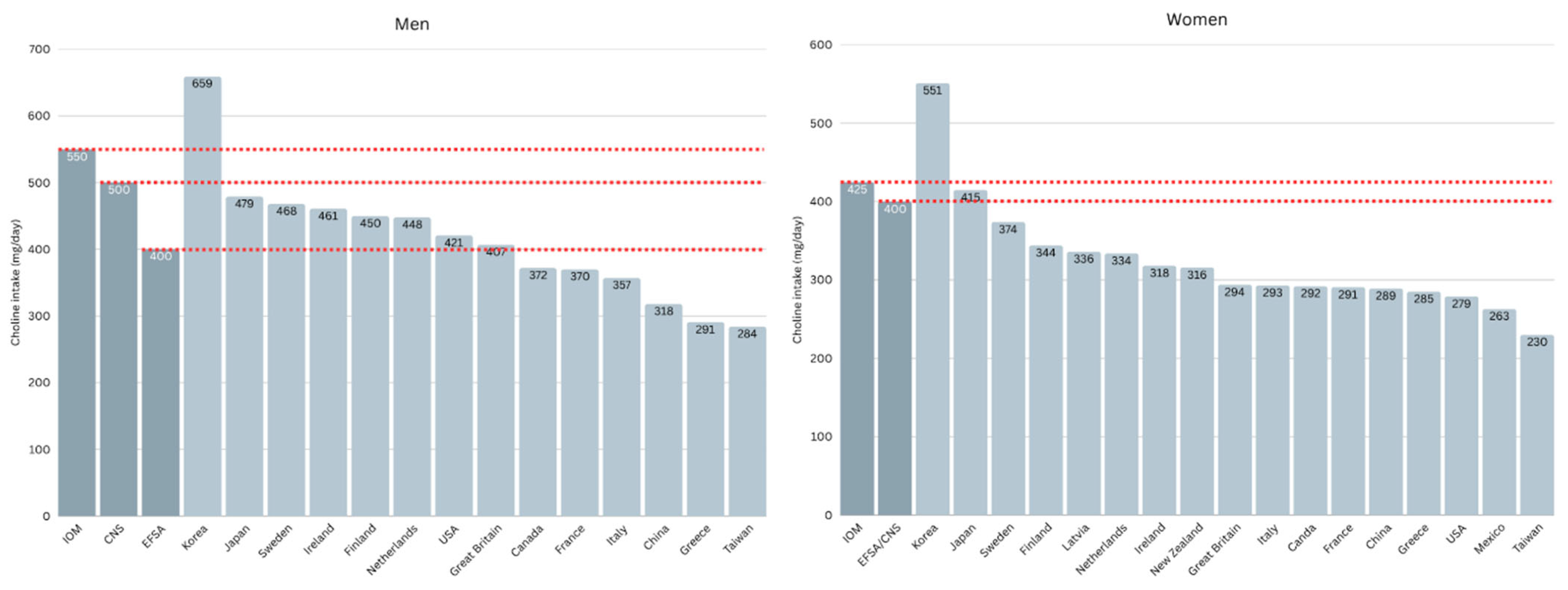
Figure 3 illustrates the average choline intake of men and women in different countries on an omnivorous diet in relation to the choline recommendations of the IOM, the CNS, and the EFSA, and highlights why better education on the subject of choline would be so important.
As
Figure 3 shows, the majority of men and women on a mixed diet do not meet the choline recommendations of either the IOM or the CNS. Even the significantly lower recommendations of the EFSA are only met by slightly more than half of the male test groups examined. Among women, only those female subjects from Korea and Japan achieve the intake recommendations for choline set by the professional associations. The consumption surveys on the choline content of food conducted as part of the National Health and Nutrition Examination Survey (NHANES; 2009–2012) in the USA also showed significantly low intakes: over 90% of the American adults examined did not meet the choline intake recommendations and about a quarter of the population tested consumed less than half of the choline intake recommendations [
57].
Low choline intake is a particularly significant risk factor during sensitive stages of life, and dietary analyses of pregnant women in Germany (median intake: 269 mg/day), Belgium (median intake: 268 mg/day), Canada (median intake: 347 mg/day), Australia (median intake: 372 mg/day), and the USA (median intake: 356 mg/day) show that the median choline intake in this group of people is considered insufficient [
48,
54,
58,
59]. Only three percent of the pregnant women from Canada and Australia and only five percent of the pregnant women from Germany who were examined supplemented their inadequate dietary intake of choline with choline-containing dietary supplements, which, however, with a median dose of 25 to 50 mg of choline per daily serving, were too low to make a relevant contribution to meeting their requirements. In one study, 93% of German pregnant women did not meet the EFSA recommendations of 480 mg per day, and in the Canadian test group, 77% did not meet the IOM’s adequate intake recommendations for pregnant women of 450 mg. In the Australian test group, the Australian NHMRC’s intake recommendations of 440 mg per day were used as AI recommendations, and 76% of pregnant women did not reach this adequate intake level. To date, there are no surveys on the choline supply status of infants, but it is known that maternal nutrition has a significant influence on the choline concentration in breast milk, and current Western diets are so low in choline due to changes in food choices that in one study, about 2/3 of breast milk samples did not contain enough choline to meet the adequate intake recommendations for infants set by professional associations—which were originally determined based on the average choline content of breast milk in the 1990s [
60,
61].
Comparative studies show a linear relationship between maternal choline intake and choline content in breast milk, with choline content increasing with supplementation [
62,
63]. Although a comparative study (Perrin et al., 2020) found no significant difference in milk choline concentration between vegan, vegetarian, and mixed-diet breastfeeding mothers, this publication did not determine choline intake from food and supplements or the choline status of the mothers [
61]. The study’s authors reported that (based on milk samples from breastfeeding mothers within the first six months) 63% of the breast milk samples from mothers contained so little choline that the AI value for infants (125 mg/day) was not achieved due to their low-choline milk, it can be assumed that the group of omnivorous women also had a fairly low-choline diet and therefore there was no significant difference between the three groups in terms of dietary patterns.
Compared to traditional diets with a high choline content, the choline content of many of today’s diets is insufficient, and the trend toward more plant-based diets further worsens choline intake, as the foods richest in choline are of animal origin. The poorer choline supply in a purely plant-based diet was also confirmed by a menu analysis of a vegan weekly plan, which showed that the analyzed dishes contained an average of only 163 mg of choline per day, which is about one-third of the recommended intake for men and less than half of the IOM’s recommended intake for women [
40].
An analysis of the diets of vegetarian–vegan women in Germany also showed that they consumed a median of only 205 mg of choline per day [
58]. Another analysis of Australian pregnant women with a vegetarian–vegan diet also showed that these women consumed an average of 296 mg of choline per day, which is about 76 mg less than the women in this test group who ate a mixed diet [
48]. Since the groups of vegan women in both studies were too small to be evaluated separately, they were combined with the vegetarian women in one group (“vegetarian–vegan”). However, it can be assumed that, due to the high choline content of eggs, pregnant vegetarians have a significantly better average choline supply than vegans, and that the median intake of vegan pregnant women in both groups is significantly below the median of the combined vegetarian–vegan groups.
6. Conclusions—Recommended Actions to Take
A considerable number of European nutrition societies have not yet included choline in their reference value systems. The lack of formal guidelines should not be interpreted as a rejection of its importance, but rather reflects a gap in the evaluation and dissemination of an already well-established evidence base. All international authorities that have reviewed the literature classify choline—in accordance with the expert consensus in choline research—as an essential nutrient that is required in addition to limited endogenous synthesis.
Given the proven widespread inadequacy of intake in Europe, a structural underestimation of physiological requirements is likely, particularly in individuals with genetically reduced PEMT capacity and additionally in postmenopausal women and in physiological states of increased requirement such as pregnancy and lactation. Without explicit dietary recommendations and public education, the ongoing decline in animal food consumption across Europe could further exacerbate the risk of undersupply, particularly in vulnerable populations.
Position papers such as that by Derbyshire (2019), which asks whether a potential “choline crisis” in the United Kingdom is being overlooked, seem equally applicable to much of the European Union [
64]. Systematic communication in the field of public health and the integration of choline into dietary recommendations are therefore essential.
Dietary models and observational data show that regular consumption of eggs is one of the most effective strategies for achieving the recommended intake levels [
65]. Without eggs or other choline-containing animal products, even mixed diets often fail to reach the threshold values, and a purely plant-based diet carries a significantly increased risk of deficiency. Therefore, educational campaigns, nutritional counseling, and clinical advice should explicitly highlight the most important foods that contribute to choline intake.
To enable evidence-based decision-making, data gaps regarding choline intake, biomarkers of status, and the distribution of genetic polymorphisms affecting choline metabolism in European populations need to be filled. Research should also refine life stage-specific requirements, particularly for pregnancy and lactation, taking into account solid human evidence showing cognitive benefits at intakes above current European AI values. New evidence suggests that the nutrient requirements of the developing brain may be systematically underestimated when relying on current guidelines.
Until precise recommendations based on genetic, biochemical, and physiological profiles are possible, it would be safest from a public health perspective to apply adequate intake values that are equal to or above those of the US IOM (550 mg for adult men; 450 mg for adult women), with higher recommended intakes during pregnancy (600–650 mg/day) and lactation (650–700 mg/day). For older adults, AI values consistent with those for adults are currently justified, although additional research is needed regarding age-related impairments in choline transport across the blood–brain barrier.
Finally, implementation requires the establishment of reliable clinical biomarkers with validated reference intervals to detect subclinical deficiencies and monitor prevalence across Europe. Only through a combination of revised intake recommendations, monitoring infrastructure, and targeted education can the nutritional risks associated with inadequate choline intake in Europe be mitigated.