Proceeding Paper

Spatial Assessment and Mapping of Soil Micronutrient Status in Cultivated Lands of Karaikal District, Puducherry, India †

by
Muhilan Gangadaran
1,*,
Bagavathi Ammal Uma
1,
Sankar Ramasamy
1,
Mummadi Thrivikram Reddy
1 and
Hemavathi Manivannan
2
1
Department of Soil Science & Agricultural Chemistry, Pandit Jawaharlal Nehru College of Agriculture and Research Institute, Nedungadu Post, Karaikal 609603, Puducherry, India
2
Department of Agricultural Economics and Extension, Division of Agricultural Statistics, Pandit Jawaharlal Nehru College of Agriculture and Research Institute, Nedungadu Post, Karaikal 609603, Puducherry, India
*
Author to whom correspondence should be addressed.
Presented at the 3rd International Online Conference on Agriculture (IOCAG 2025), 22–24 October 2025; Available online: https://sciforum.net/event/IOCAG2025.
Biol. Life Sci. Forum 2025, 54(1), 10; https://doi.org/10.3390/blsf2025054010
Published: 23 January 2026
(This article belongs to the Proceedings of The 3rd International Online Conference on Agriculture)

Abstract

Soil micronutrient assessment is crucial for ensuring sustainable crop production and environmental quality, particularly in intensively cultivated regions. This study aimed to evaluate and map the spatial distribution of Diethylenetriamine Pentaacetic Acid (DTPA)-extractable micronutrients (Fe, Mn, Zn and Cu) in agricultural lands of Thirunallar commune, Karaikal, for augmenting site-specific nutrient management. A total of 233 geo-referenced surface soil samples (0–20 cm) were collected using a handheld GPS on a pre-defined grid and analyzed for available micronutrients. The spatial variability and distribution patterns were generated in ArcGIS 10.8.2 using semivariogram-based kriging interpolation. The results indicated that Fe, Mn and Cu were sufficient across the study area, with concentrations ranging from 4.74 to 99.80 ppm, 3.70–97.40 ppm, and 1.46–12.40 ppm, respectively, mainly due to the presence of iron-rich minerals, reduced manganese forms, and continuous application of copper-based inputs. Zinc showed greater variability (0.52–17.20 ppm), ranging from deficient to sufficient levels, likely influenced by fertilizer application and organic matter additions. The findings emphasize the importance of site-specific nutrient management to optimize fertilizer usage and crop productivity, particularly in fine-textured clay soils. This study demonstrates the effectiveness of geostatistical approaches for supporting precision agriculture in micronutrient-deficient areas.

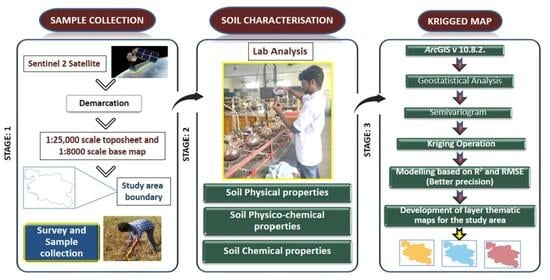
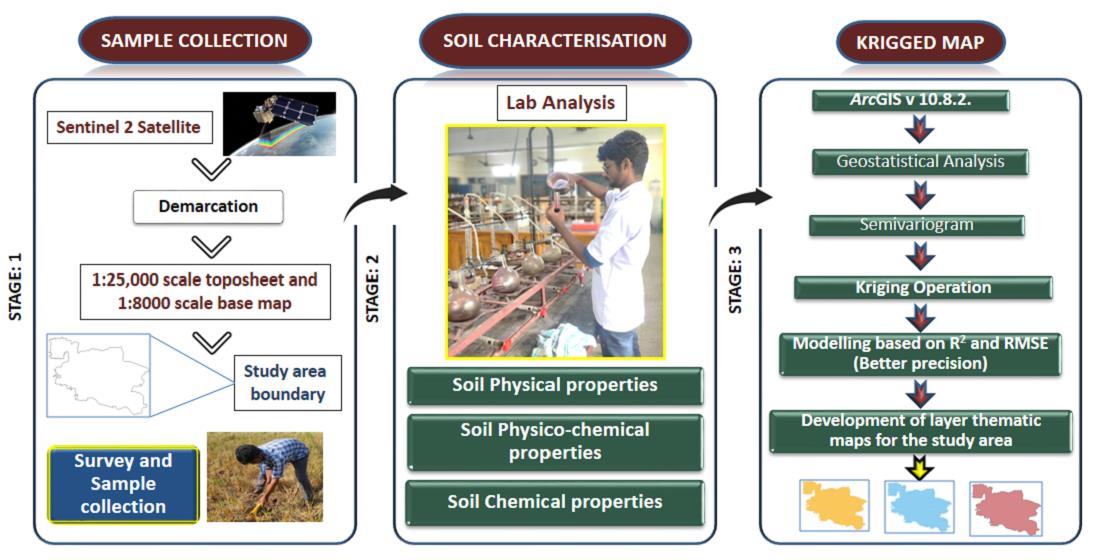
Graphical Abstract

1. Introduction

Soil, land, and water are essential resources for sustaining human life and forming the foundation of agricultural development [1]. Soil is a critical component of the Earth’s system, functioning not only in the production of food, fodder, and fibre but also in maintaining local, regional, and global environmental quality [2]. The rapid rise in population during the twenty-first century has compelled farmers to adopt intensive cultivation practices and high-yielding varieties to meet growing food demands. However, this has caused a considerable decline in soil fertility across Indian agricultural lands [3].
Soil fertility is a dynamic property that can rapidly change due to natural factors and agricultural management practices. It refers to the availability of essential nutrients and the soil’s ability to supply adequate nutrients and moisture for healthy crop growth. Ensuring soil fertility and overall soil health is crucial for achieving optimum crop productivity and improving the quality of agricultural produce. Therefore, soil nutrient assessment and spatial mapping play a vital role in accurately determining regional soil fertility status. These maps support site-specific nutrient management and enable continuous soil health monitoring for present and future agricultural sustainability.
Over recent decades, Remote Sensing and Geographic Information Systems (GISs) have advanced significantly, offering efficient tools for soil monitoring, evaluation, mapping, and facilitating decision support systems [4,5]. The region of Thirunallar Commune in Karaikal District, located within the southern Cauvery deltaic zone, is predominantly cultivated with paddy, black gram, and cotton due to its natural clay loam soil texture [6]. In recent years, this region has experienced dynamic shifts in its fertility gradient, mainly due to improper nutrient management, excessive fertilizer dosage, poor land-use planning, and emerging micronutrient deficiencies and toxicities in crops. Furthermore, indiscriminate and repeated application of micronutrient fertilizers such as zinc sulphate (ZnSO4) and iron sulphate (FeSO4.7H2O) by farmers has been reported to interfere with the availability and uptake of other essential nutrients, particularly phosphorus, thereby affecting the overall soil nutrient balance and crop productivity. Hence, a comprehensive study is essential to characterize the cultivated soils of Thirunallar Commune for micronutrient status, which will help in understanding soil nutrient supplying capacity and in formulating commune-specific, optimal nutrient management strategies. The resulting datasets can also be used to generate detailed soil thematic maps through kriging interpolation techniques.

2. Materials and Methods

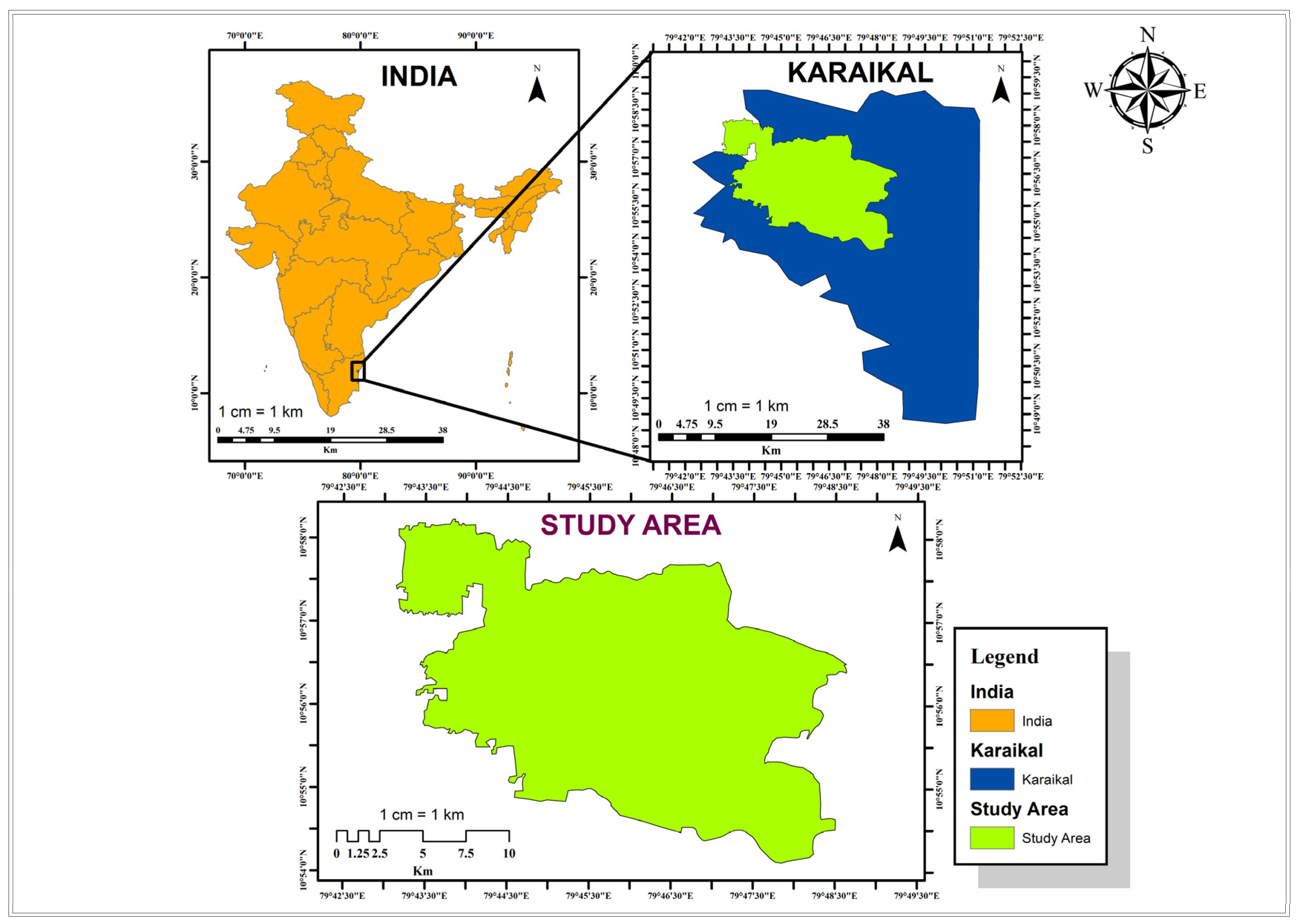
The study area Thirunallar is one of the communes in the Karaikal district of the U.T of Puducherry. The study area (Figure 1) lies between 10°90′ to 10°96′ north in latitude and 79°79′ to 79°73′ east in longitude with a total geographical area of 4379.88 ha. There are 11 revenue villages that fall under the Thirunallar commune (Ambagarathur, Nallazhundur, Thevamapuram, Sorakudy, Subrayapuram, Keezhavoor, Thirunallar, Thennankudy, Sethur, Sellur and Pettai). The demarcation of the study area was performed using a 1:25,000 scale toposheet and a 1:8000 scale base map; Sentinel 2 imagery was used for soil surveys. Using a handheld GPS device and available grid points, the sampling was performed over entire Thirunallar commune. A total of 233 sample points were selected and soils were collected at surface level (0–20 cm).
The collected soil samples were air dried, ground with a wooden mallet, sieved through a 2 mm sieve (0.2 mm sieve for organic carbon), labelled and stored in plastic cover bags. These samples were further subjected to soil micronutrient analysis (Diethylenetriamine Pentaacetic Acid (DTPA) extractable Fe, Mn, Zn, and Cu). The available micronutrients were determined using DTPA extractant (0.01 M CaCl2 + 0.005 M DTPA + 0.1 M Triethanolamine (TEA), pH maintained at 7.3) [7].
The ArcGIS v 10.8.2. software was used in this study. Based on the location data obtained, point features were prepared showing the position of samples in MS Excel format and linked with the spatial data by the join option in ArcMap. A suitable model was derived by using weighted least squares and parameters from analysis of the experimental semivariogram. By interpolation of point data based on soil test values, soil spatial variability maps were prepared. The soil test values for available micronutrients were mapped using ArcGIS software. Soil test values were grouped into different classes representing deficient/sufficient for micronutrients. Subsequently, the point data was interpolated to create a continuous surface in the map. The principle interpolation method that was used to generate the soil fertility maps is Kriging.

3. Results and Discussion

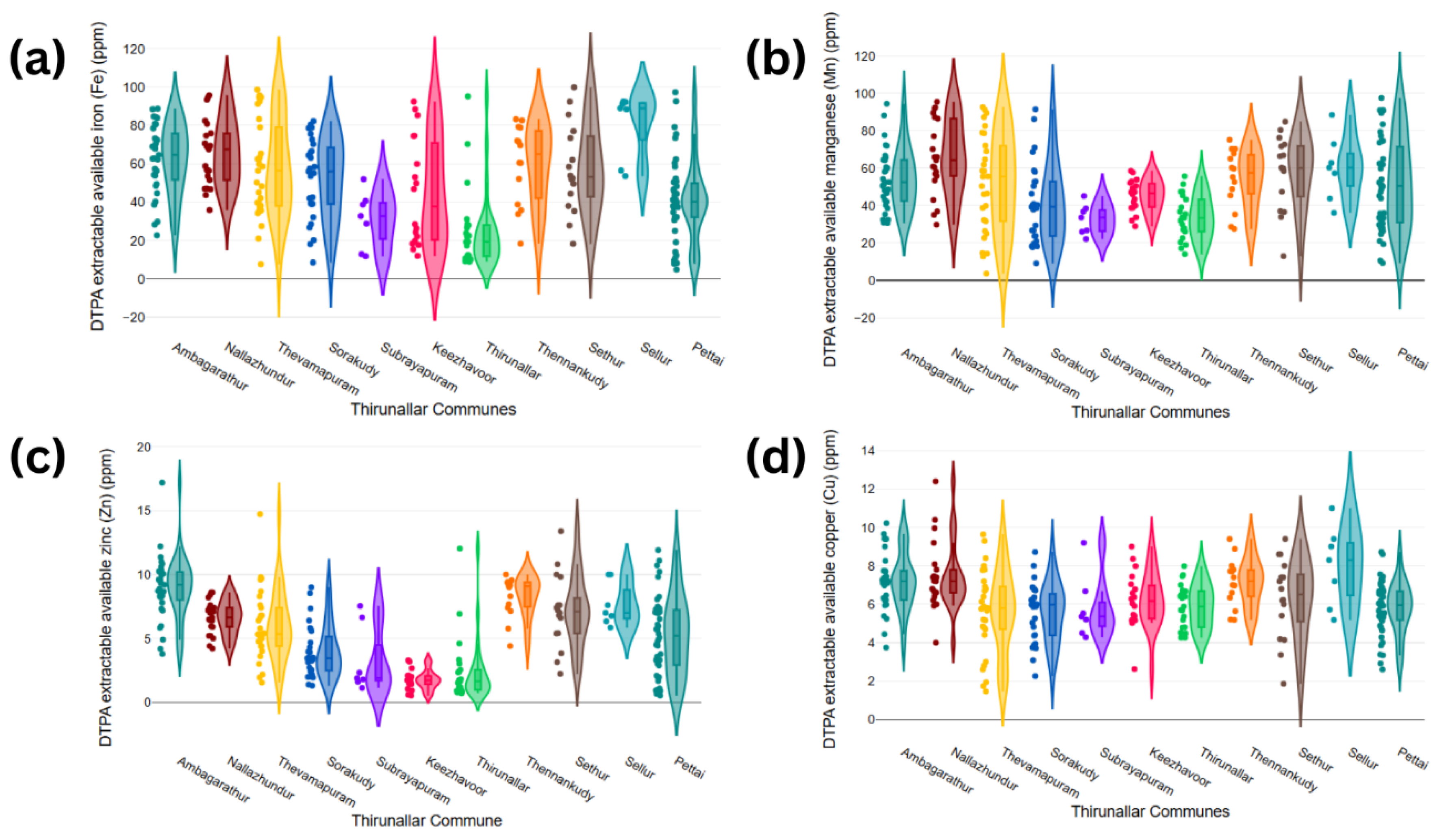
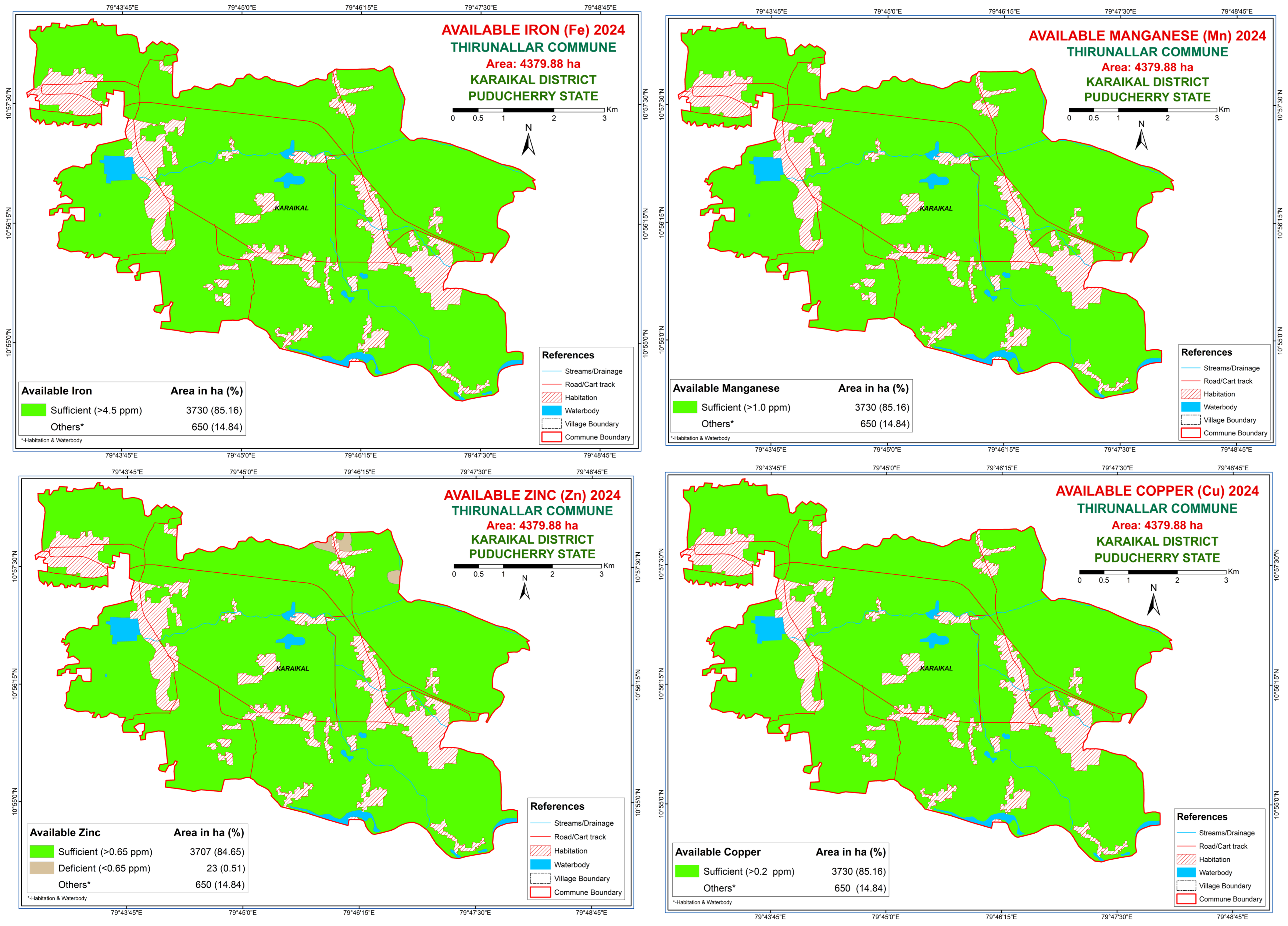
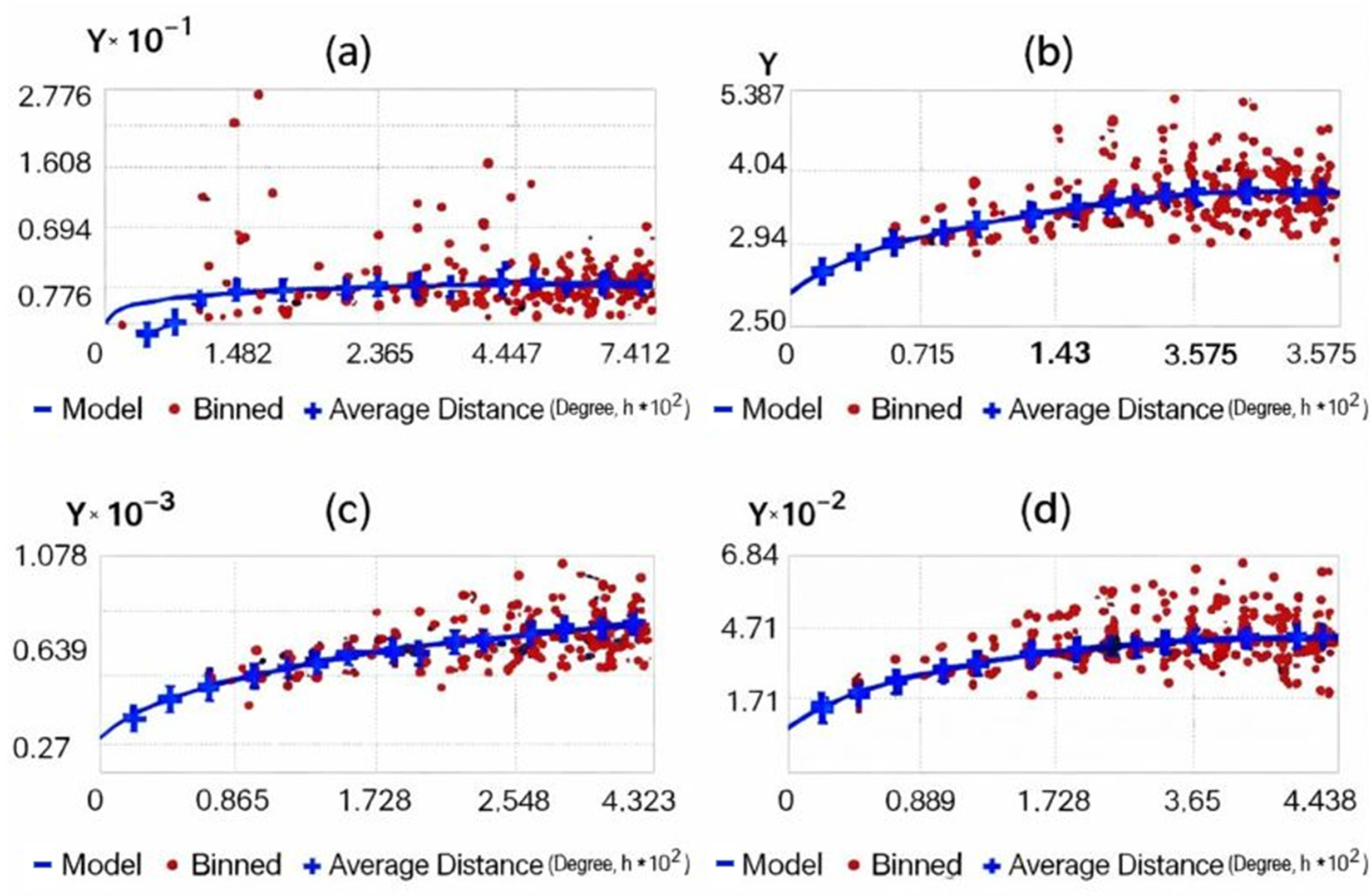
The statistical description is given in Table 1. The concentration of iron was sufficient in the study area and ranged from 4.74 to 99.80 ppm, with a mean and standard deviation (SD) of 51.50 ppm and 24.80 (Table 1; Figure 2). The spatial distribution map (Figure 3), after employing the best fit semivariogram circular model (Table 2; Figure 4), indicates that the entire study area was sufficient in range (>4.5 ppm) and this might be due to the presence of numerous primary and secondary iron minerals, including olivine, siderite, goethite, and magnetite. The submergence state of rice cultivation could also be the reason for high iron contents, as the submerged condition reduces Fe3+ to Fe2+, which is made available [6]. A high coefficient of variation (C.V.) of 48.16% was observed. The concentration of manganese was sufficient and ranged from 3.70 to 97.40 ppm, which is higher than the critical limit (>1 ppm) with a mean and SD of 50.13 ppm and 21.19. The best-fitting model is circular (Table 2; Figure 4) and the GIS map revealed that the entire study area was sufficient in range (85.16%) (Figure 3), whereas the remaining area was occupied by habitation and water bodies. This sufficient status was attributed to the presence of the reduced (Mn+2) form in the surface soil, which contributed to the available manganese pool in the soil. These results are in line with the findings of [8]. High variability was observed (42.27%) (Table 1).
Zinc is the most limiting element in soil among all the micronutrients [9]. The concentration of zinc in the study area ranged from 0.52 to 17.20 ppm with a mean and SD of 5.62 ppm and 3.26 (Table 1). The best fitted model for available zinc is spherical with an RMSE of 3.266 (Table 3; Figure 4), and the spatial distribution map clearly exhibits deficient (<0.65 ppm) to sufficient (>0.65 ppm) ranges in 0.51% and 84.65% of the study area, respectively (Figure 3), whereas the remaining 14.84% was occupied by habitation and waterbodies. This sufficiency level might be due to prolonged continuous application of zinc-containing fertilizer like zinc sulphate (ZnSO4) and the adequate addition of organic matter content in the soil [10,11], which acts as a natural chelating agent. Similar findings were reported by [12]. Variability of very high status (57.98%) was observed (Table 1).
Copper is another micronutrient which is essential for plant growth and development as an enzyme activator [13]. In the chloroplasts of leaves, there is an enzyme which is concerned with the oxidation–reduction processes. The presence of copper is essential for this enzyme to function [14]. The concentration of copper was sufficient in the study area and ranged from 1.46 to 12.40, with a mean and SD of 6.30 ppm and 1.77 (Table 1). Ordinary kriging is employed and the best fitted model is spherical with an RMSE of 1.987 (Table 2 and Table 3; Figure 4). This indicates that available copper levels are sufficient (>0.2 ppm) in 85.16% of the study area (Figure 3). This sufficiency may be due to continuous application of copper sulphate (CuSO4) or any other source of copper fertilizer or fungicides in the area [15]. Also, the increased biological activity and chelating action of organic compounds released during the breakdown of organic matter left over after crop harvest may be the cause of the elevated concentration of copper in the surface horizon [14]. Similar findings were reported by [16,17]. A moderate variability of 28.06% was seen in the available copper concentration in the sampled soil.
Table 3 represents the parameters of various best-fit semivariogram models and respective error values for each soil property. Circular and spherical were the two best-fitting models based on the minimum root mean square error (RMSE) value (Table 3). The best-fit semivariogram model for each soil property is given in Figure 4. For each model, the closer the parameter is to 1, the better the interpolation model is. The circular model for Fe and Mn and the spherical model for Zn and Cu have also been reported by several researchers using same criteria for selecting the best-fit prediction model for interpolation using the kriging function [18,19,20].

4. Conclusions

The spatial dependence and distribution patterns observed through kriging-based mapping provide a linear understanding of micronutrient heterogeneity and demonstrate the applicability of geostatistical tools in delineating site-specific nutrient management zones. Although the clay-dominated soils possess a high nutrient-holding capacity, they are also susceptible to poor drainage and redox-induced nutrient imbalances under flooding, particularly in paddy-based systems. Therefore, integrated drainage management and judicious nutrient application are essential to sustain soil functionality, nutrient mobilization and crop uptake performance.
These findings suggested that the Diethylenetriamine Pentaacetic Acid (DTPA)-extractable Fe, Mn and Cu were sufficient, and Zn was deficient to sufficient in range. The findings highlight the potential of site-specific micronutrient management, particularly zinc supplementation, to reduce indiscriminate fertilizer use, optimize input efficiency, lower cultivation costs, and minimize environmental risks. Considering the prevailing soil and nutrient conditions, crops such as paddy and cotton can be sustainably cultivated in a region when supported by appropriate irrigation water quality and soil–water management practices.
Future research should extend beyond surface soil assessment to include subsurface profiling assessment, enabling a better understanding of vertical micronutrient dynamics and nutrient mobility. Additionally, integrating stratigraphic soil information and terrain attributes such as slope and elevation, along with nutrient mobilization strategies and sensor-based precision agriculture approaches, would further refine micronutrient enrichment assessment and facilitate the transition from blanket fertilizer recommendations to scientifically grounded, location-specific nutrient management strategies that support long-term soil sustainability.

Author Contributions

M.G.: conceptualization, investigation, writing—initial original draft, validation, visualization, writing—review and editing and formal analysis; B.A.U.: methodology, investigation, writing—review, editing and data analysis; S.R.: methodology, investigation and data analysis; M.T.R.: overall review; H.M.: modelling draft, software and investigation. All authors have read and agreed to the published version of the manuscript.

Funding

This research did not receive any specific grant from funding agencies in the public, commercial, or not-for-profit sectors.

Data Availability Statement

The data that support the findings of this study are available from the corresponding author upon reasonable request.

Acknowledgments

My sincere gratitude to my Chairperson and my dear friends, seniors and colleagues who stood with me in completing my research proposal. The authors express their sincere gratitude to the Department of Soil Science and Agricultural Chemistry, Pandit Jawaharlal Nehru College of Agriculture and Research Institute (PAJANCOA&RI), Karaikal, for supporting the completion of this research work. The authors would like to acknowledge ICAR-NBSS-LUP, Bengaluru, for providing the technical support in preparing maps. Finally, we appreciate the encouragement and patience of our families during the course of this work.

Conflicts of Interest

The authors declare no conflicts of interest.

References

  1. Das, B.S.; Wani, S.P.; Benbi, D.K.; Muddu, S.; Bhattacharyya, T.; Mandal, B.; Santra, P.; Chakraborty, D.; Bhattacharyya, R.; Basak, N.; et al. Soil health and its relationship with food security and human health to meet the sustainable development goals in India. Soil Secur. 2022, 8, 100071. [Google Scholar] [CrossRef]
  2. Sadiq, F.K.; Anyebe, O.; Tanko, F.; Abdulkadir, A.; Manono, B.O.; Matsika, T.A.; Abubakar, F.; Bello, S.K. Conservation agriculture for sustainable soil health management: A review of impacts, benefits and future directions. Soil Syst. 2025, 9, 103. [Google Scholar] [CrossRef]
  3. Muhilan, G.; Bagavathi Ammal, U. Mycorrhizal Association and Plant Growth Under Salinity Stress: An Insight by Linking Microbial Approaches Towards Salt Stress. Commun. Soil Sci. Plant Anal. 2025, 56, 3058–3086. [Google Scholar] [CrossRef]
  4. Preetha, P.; Joseph, N. Evaluating Modified Soil Erodibility Factors with the Aid of Pedotransfer Functions and Dynamic Remote-Sensing Data for Soil Health Management. Land 2025, 14, 657. [Google Scholar] [CrossRef]
  5. Allu, A.R.; Mesapam, S. Impact of remote sensing data fusion on agriculture applications: A review. Eur. J. Agron. 2025, 164, 127478. [Google Scholar] [CrossRef]
  6. Mir, I.A. Micronutrients and contaminants in the grazing and agricultural soils of Kashmir Valley, India. Sci. Rep. 2025, 15, 10949. [Google Scholar] [CrossRef] [PubMed]
  7. Lindsay, W.L.; Norvell, W.A. Development of a Dtpa Soil Test for Zinc, Iron, Manganese, and Copper. Soil Sci. Soc. Am. J. 1978, 42, 421–428. [Google Scholar] [CrossRef]
  8. Takkar, P.N.; Chhibba, I.M.; Mehta, S.K. Twenty Years of Coordinated Research on Micronutrients in Soils and Plants; IISS Bulletin; Indian Institute of Soil Science: Bhopal, India, 1989; Volume i.1, p. 76. [Google Scholar]
  9. Anand, S.; Ravikumar, D.; Gurumurthy, K.T.; Thippeshappa, G.N.; Sridhara, C.J.; Shoba, S. Assessment and mapping of soil fertility status in Byrapura micro-watershed of Nandi sub-watershed using geospatial techniques. Int. J. Adv. Biochem. Res. 2025, 9, 653–665. [Google Scholar] [CrossRef]
  10. Bolan, N.; Srinivasarao, C.; Rocco, C.; Bolan, S.; Mansoor, S.; Wani, O.A.; Ahmad, P.; Weiss, D.; Northover, G.; Sánchez-Palacios, J.T.; et al. Chapter One-Zinc in soil-crop-animal-human health continuum. In Advances in Agronomy; Sparks, D.L., Ed.; Academic Press: Cambridge, MA, USA, 2025; Volume 189, pp. 1–61. ISBN 9780443314346. [Google Scholar] [CrossRef]
  11. Venkateswarlu, M.; Rallapalli, S.; Singh, A.; Chalapathi, G.S.S.; Kumar, S.; Katpatal, Y.B.; Sujatha, G. Macro and micronutrient based soil fertility zonation using fuzzy logic and geospatial techniques. Sci. Rep. 2025, 15, 26772. [Google Scholar] [CrossRef] [PubMed]
  12. Pradhan, A.K.; Beura, K.S.; Das, R.; Ingle, S.N.; Mandal, B.; Hazra, G.C.; De, N.; Polara, K.B.; Kachroo, D.; Sharma, A.; et al. Zinc in the soil–plant continuum: A long-term perspective from selected Inceptisols in India. Soil Use Manag. 2025, 41, e70056. [Google Scholar] [CrossRef]
  13. Ingle, S.N.; Gadge, P.S.; Thaokar, A.C.; Sahare, V. Perpendicular distribution of macro nutrients and micronutrients of Ghatpipariya Village of Dhanora Block in Seoni district, Madhya Pradesh, India. Int. J. Agric. Sci. 2022, 7, 162–171. [Google Scholar]
  14. Vasarevičius, S.; Paliulienė, V. Immobilization of Cadmium, Lead, and Copper in Soil Using Bacteria: A Literature Review. Land 2025, 14, 1547. [Google Scholar] [CrossRef]
  15. Chen, G.; Li, J.; Han, H.; Du, R.; Wang, X. Physiological and Molecular Mechanisms of Plant Responses to Copper Stress. Int. J. Mol. Sci. 2022, 23, 12950. [Google Scholar] [CrossRef] [PubMed]
  16. Sashikala, G.; Naidu, M.V.S.; Ramana, K.V.; Nagamadhuri, K.V.; Reddy, A.P.K.; Sushakar, P. Soil fertility status in Tatrakallu Village of Andhra Pradesh for site specific recommendations. Int. J. Curr. Microbiol. Appl. Sci. 2019, 8, 1016–1023. [Google Scholar] [CrossRef]
  17. Leelavathy, G.P.; Naidu, M.V.S.; Krishna, T.G.; Ramana, K.V.; Chandrika, V.; Sudhakar, P. Vertical distribution of nutrients in groundnut growing soils in semiarid region of Varathuru watershed in Chittoor district. J. Res. ANGRAU 2021, 49, 18–26. [Google Scholar]
  18. Adriana, H.; Fauzan, A.F. Spatial modeling of hotel prices in the Yogyakarta city area using ordinary kriging and cokriging approaches. Maj. Ilm. Mat. Dan Stat. 2025, 25, 47–63. [Google Scholar]
  19. Wen, X.; Luo, W.; Yang, X.; Li, F.; Zhang, Z. Comparative analysis of soil organic carbon across different land types in plateau wetlands using Kriging interpolation based on spatial heterogeneity. PLoS ONE 2025, 20, e0328246. [Google Scholar]
  20. Hidalgo-Arellano, I.; Fernández-Avilés, G. Spatial depopulation risk assessment through spatial principal component analysis and indicator kriging in Castilla-La Mancha (Spain). J. Rural Stud. 2025, 119, 103771. [Google Scholar] [CrossRef]
Figure 1. Study location of Thirunallar commune. (Created from ArcGIS v 10.8.2.).
Blsf 54 00010 g001
Figure 2. Violin plot of the soil micronutrient properties (a)—Diethylenetriamine Pentaacetic Acid (DTPA)-extractable available Fe; (b)—DTPA-extractable available Mn, (c)—DTPA-extractable available Zn, (d)—DTPA-extractable available Cu. (The violin plots represent the distribution and density of DTPA-extractable micronutrient concentrations, where the width indicates data density; individual dots denote observed soil samples, and the central line represents the median value.).
Blsf 54 00010 g002
Figure 3. Krigged map showing soil micronutrient status (Top left to right)—Diethylenetriamine Pentaacetic Acid (DTPA)-extractable available Fe and DTPA-extractable available Mn, (Bottom left to right)—DTPA-extractable available Zn and DTPA-extractable available Cu.
Blsf 54 00010 g003
Figure 4. Best fit semivariogram model for soil (a)—Diethylenetriamine Pentaacetic Acid (DTPA)-extractable available Fe; (b)—DTPA-extractable available Mn, (c)—DTPA-extractable available Zn, (d)—DTPA-extractable available Cu.
Blsf 54 00010 g004
Table 1. Descriptive statistics of soil micronutrient properties.
Revenue Villages in the Thirunallar Commune
Diethylenetriamine Pentaacetic Acid extractableStatisticsAmbagarathurNallazhundurThevamapuramSorakudySubrayapuramKeezhavoorThirunallarThennankudySethurSellurPettai
Av. Fe (ppm)Min22.7035.807.588.5011.7811.948.9218.3618.2653.564.74
Max88.6895.6098.6082.1851.9292.4095.0883.2099.8092.4097.24
Mean62.5865.2757.2252.3931.0544.9325.7059.7457.5180.4541.19
SD18.2417.6425.1621.0814.7028.1221.7020.8723.1617.4521.67
C.V. (%)29.1427.0343.9740.2447.3462.6084.4434.9340.2821.6952.60
Av. Mn (ppm)Min30.6029.803.709.1422.1028.9214.0627.4812.9436.109.30
Max94.3695.4092.6091.4045.0658.5655.6875.1484.8088.4097.40
Mean54.0865.5051.7541.0232.6745.1433.5954.3957.7960.1851.55
SD16.2519.8726.3021.358.128.6211.7715.5819.5417.4324.14
C.V. (%)30.0430.3450.8152.0624.8519.1035.0528.6433.8128.9646.83
Av. Zn (ppm)Min3.784.201.541.301.120.520.704.402.225.840.52
Max17.208.6014.749.007.543.2812.0410.0013.4010.0011.92
Mean8.986.636.013.973.271.742.508.277.147.655.22
SD2.571.322.792.072.650.772.651.632.901.703.09
C.V. (%)28.6019.9246.4152.1281.0044.04106.1919.6540.6222.1759.20
Av. Cu (ppm)Min3.744.001.462.264.282.624.265.181.865.182.60
Max10.2212.409.648.729.209.007.989.409.4011.008.72
Mean7.197.445.615.575.826.215.907.136.307.975.80
SD1.521.812.191.531.681.481.131.272.082.081.39
C.V. (%)21.1224.2839.0327.5028.8923.8019.1717.7633.0526.0323.97
Thirunallar CommuneAv. Fe (ppm)Av. Mn (ppm)Av. Zn (ppm)Av. Cu (ppm)
Min4.743.700.521.46
Max99.8097.4017.2012.40
Mean51.5050.135.626.30
SD24.8021.193.261.77
C.V. (%)48.1642.2757.9828.06
SD—standard deviation; C.V.—coefficient of variation.
Table 2. Semivariogram parameters of soil micronutrient properties.
Sl. NoSoil PropertyModelData TransformationNugget (m) (co)Partial Sill (m) cSill (m) (Co + c)Nugget/Sill RatioLag SizeRange (m) (a) (km)SpD LevelY (Regression Function)
1Available iron (Fe)CircularNone388.943189.711578.6540.670.0040.020Moderate0.225x + 40.78
2Available manganese (Mn)CircularNone351.609123.648475.2570.740.00370.021Moderate0.193x + 40.289
3Available zinc (Zn)SphericalNone3.7361.4985.2340.710.00060.005Moderate0.637x + 1.800
4Available copper (Cu)SphericalNone1.9971.4893.4860.570.00300.027Moderate0.260x + 4.589
[SpD—Spatial Dependency].
Table 3. The anticipated error values obtained by the Kriging method.
Sl. NoSoil PropertyModelRMSERMSSE
1Available iron (Fe)Circular2.2041.024
2Available manganese (Mn)Circular9.7620.980
3Available zinc (Zn)Spherical3.2661.055
4Available copper (Cu)Spherical1.9870.946
[RMSE—root mean square error; RMSSE—root mean square standardized error].
Disclaimer/Publisher’s Note: The statements, opinions and data contained in all publications are solely those of the individual author(s) and contributor(s) and not of MDPI and/or the editor(s). MDPI and/or the editor(s) disclaim responsibility for any injury to people or property resulting from any ideas, methods, instructions or products referred to in the content.