
Proceeding Paper

Evaluation of Harvesting Driving Modes from Environmental Point of View †

by
Eglė Jotautienė
1,
Antanas Juostas
1,* and
Kęstutis Venslauskas
2
1
Institute of Agricultural Engineering and Safety, Agriculture Academy, Vytautas Magnus University, Studentu 15, Akademija, LT-53362 Kaunas, Lithuania
2
Institute of Energy and Biotechnology Engineering, Agriculture Academy, Vytautas Magnus University, Studentu 15, Akademija, LT-53362 Kaunas, Lithuania
*
Author to whom correspondence should be addressed.
Presented at the 1st International Electronic Conference on Agronomy, 3–17 May 2021; Available online: https://sciforum.net/conference/IECAG2021.
Biol. Life Sci. Forum 2021, 3(1), 44; https://doi.org/10.3390/IECAG2021-10178

Published: 24 May 2021
(This article belongs to the Proceedings of The 1st International Electronic Conference on Agronomy)

Abstract

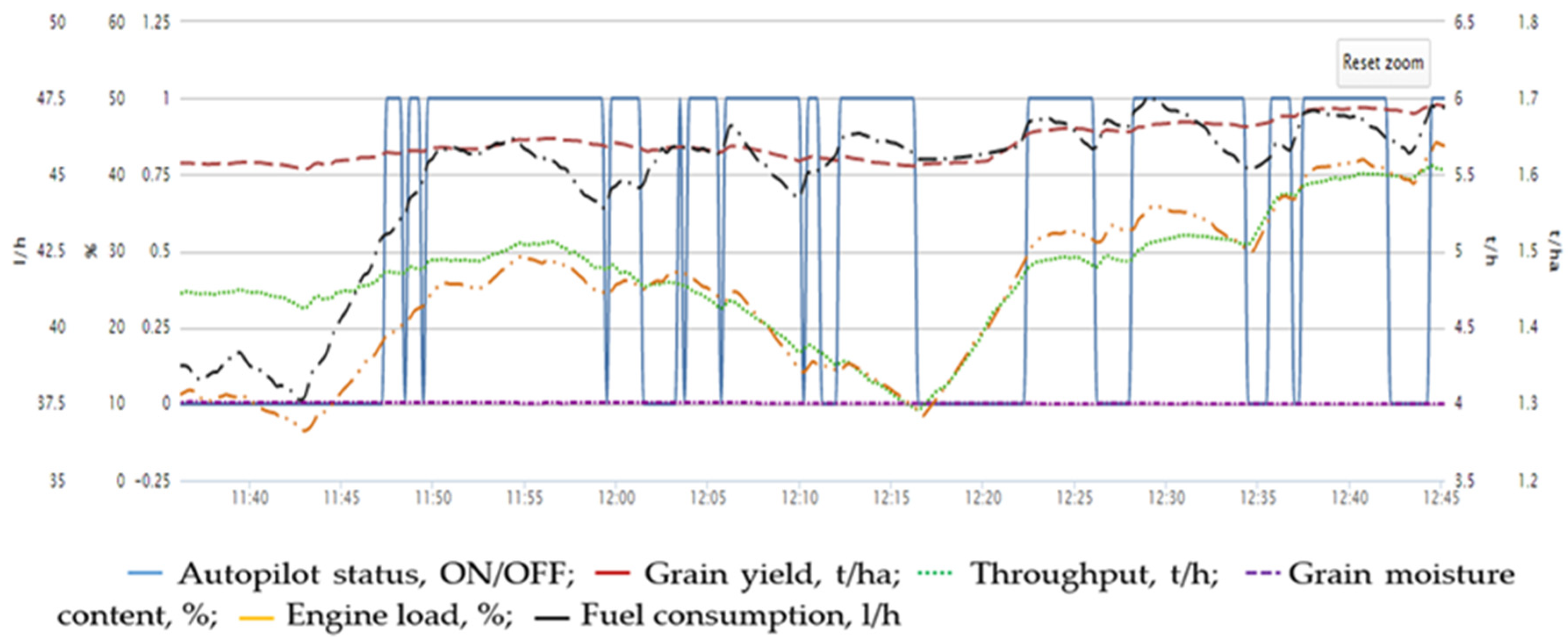
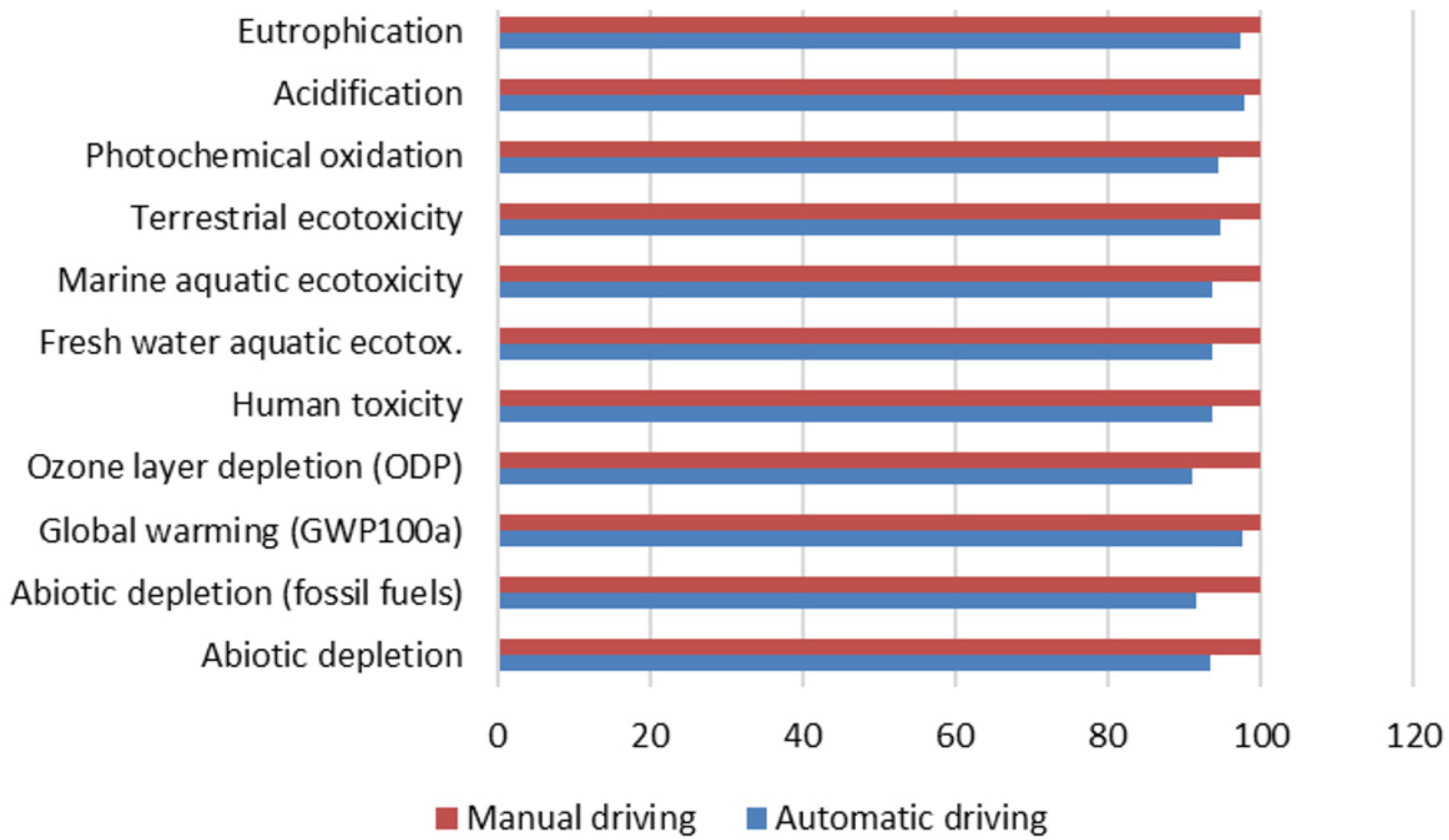
Numerous automatic technological processes control systems are implemented in modern agriculture equipment. Automation facilitates technological processes. These control systems help customers to save fertilizer and crop protection products as well as fuel. Machinery performance data is collected and stored via the Telemetry system can be sent to a customer’s computer for overview and decision-making for the following years. However, a significant quantity of data is not automatically processed by the Telemetry system. Currently, the final decisions are done on the customer’s feelings. Farmers want to be sure that the equipment they use will not only depend on the technological process but also reduce the negative impact on the environment. The aim of this study is to analyze the combine harvester data collected in the Telemetry system during harvesting at manual and auto-steering modes. The study compares the influence of combine harvester steering modes on GHG emissions and diesel fuel consumption using the Life Cycle Assessment (LCA) modules. The results show that global warming emission, using automatic steering mode, was reduced by 2.45% as compared to the manual driving mode. The diesel fuel consumption at automatic steering mode was reduced by 9.45% compared to manual driving. The working time analysis has shown a more rational and more accurate technological operation during linear steering mode. In summary, the analysis of the structure work process provides detailed information that can increase the overall productivity of the machine and optimize the work process.
Keywords: telemetry; auto-steering; GHG emission; combine harvester; environment telemetry; auto-steering; GHG emission; combine harvester; environment