Next Article in Journal
Bioactive Ingredients of Custard Apple (Annona cherimola Mill.) by-Products as an Industrial Interest for the Development of Products with High Added Value
Previous Article in Journal
Adaptation of the INFOGEST Digestion for the Elderly Population to Assess Sterol Bioaccessibility in a Plant Sterol-Enriched Wholemeal Rye Bread
 
 
Correction published on 3 July 2023, see Biol. Life Sci. Forum 2022, 18(1), 77.
Proceeding Paper

Octyl Gallate Use to Protect Seeds from Foodborne Fungal Pathogens †

Foodborne Toxin Detection and Prevention Research Unit, Western Regional Research Center, USDA-ARS, 800 Buchanan St., Albany, CA 94710, USA
*
Author to whom correspondence should be addressed.
Presented at the 3rd International Electronic Conference on Foods: Food, Microbiome, and Health—A Celebration of the 10th Anniversary of Foods’ Impact on Our Wellbeing, 1–15 October 2022; Available online: https://sciforum.net/event/Foods2022.
Biol. Life Sci. Forum 2022, 18(1), 7; https://doi.org/10.3390/Foods2022-12926

Published: 30 September 2022 / Corrected: 3 July 2023

Abstract

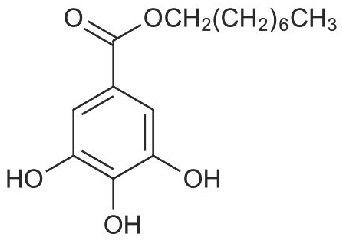
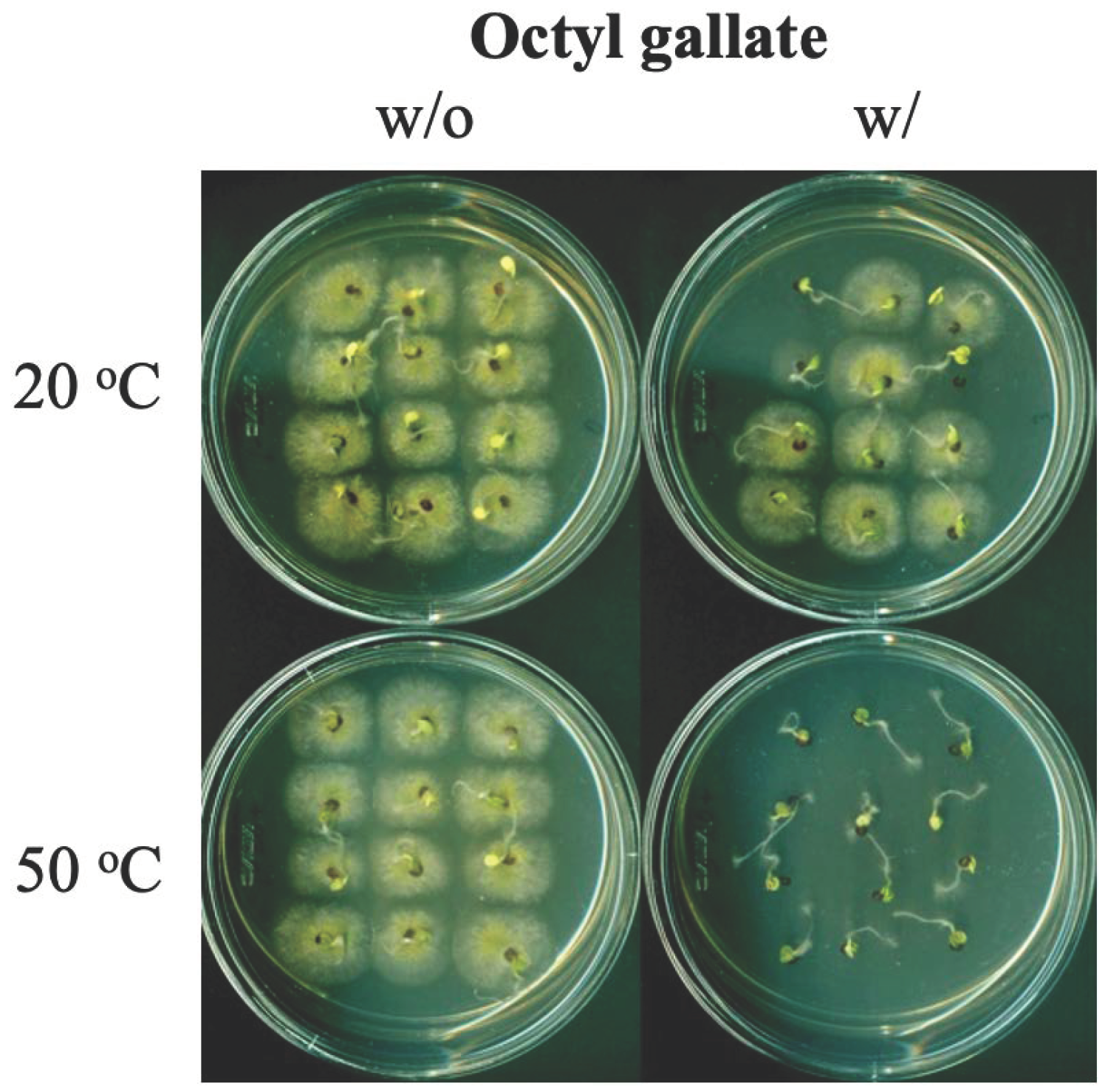
There is limited efficacy with conventional seed sanitation methods, directly affecting food safety. Insufficient elimination of mycotoxin-producing fungi contaminating seed surfaces can result in high mycotoxin contamination. In this study, a new seed sanitation formula was investigated by examining molecules repurposed from the United States Food and Drug Administration (FDA)-approved food additives as active ingredients. The selected benzaldehyde analog, octyl gallate (OG; octyl 3,4,5-trihydroxybenzoic acid), previously shown to inhibit mycotoxin production, could function as heat-sensitizing agents when co-applied with mild heat. The co-application substantially enhanced the sanitation efficacy against fungi contaminating crop seeds, whereas the seed germination rate was unaffected. Therefore, OG-based heat sensitization could be a promising tool to achieve safe and cost-effective pathogen control in agriculture/food production.
Keywords: antifungal; benzaldehyde analogs; drug repurposing; food safety; heat sensitization; mycotoxins; octyl gallate (OG); seed sanitation antifungal; benzaldehyde analogs; drug repurposing; food safety; heat sensitization; mycotoxins; octyl gallate (OG); seed sanitation